






















































Busque também em nossas outras coleções:

Data da imagem:
Pauta
ver mais opções...
Agência
Fotógrafo
ver mais opções...
Estado
Cidade
ver mais opções...
Local
ver mais opções...
Tipo de licença
Orientação
Coleção

Total de Resultados: 32

Página 1 de 1

alb2037662 Juan de Valdés Leal / 'Allegory of Death: In Ictu Oculi', 1672, Oil on canvas, 220 x 216 cm. Museum: HOSPITAL DE LA CARIDAD, Sevilla, SPAIN.
DC
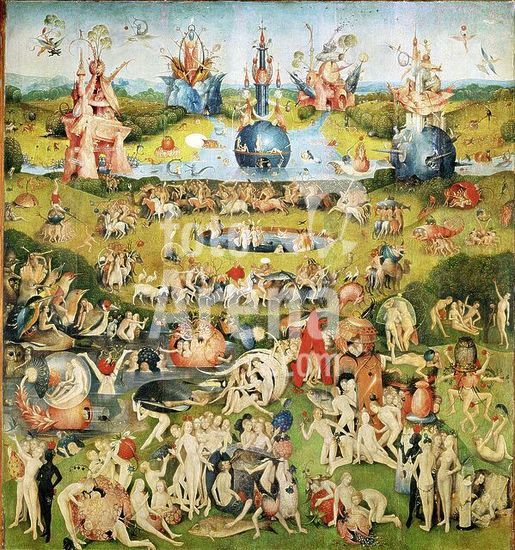
alb342612 The Garden of Earthly Delights". Centre panel of the triptych. On wood, 220 x 195cm. Museum: MUSEO DEL PRADO, MADRID, SPAIN. Author: HIERONYMUS BOSCH.
DC
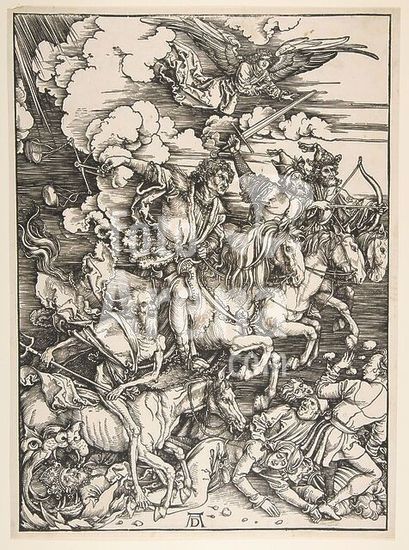
alb3669708 Four Horsemen of the Apocalypse. Artist: Albrecht Dürer (German, Nuremberg 1471-1528 Nuremberg). Date: ca. 1497/1498.The third woodcut from Dürer's Apocalypse, the Four Horsemen presents a dramatically distilled version of the passage from the book of Revelation (6:1-8). Transforming what was a relatively staid and unthreatening image in earlier illustrated Bibles, Dürer injects motion and danger into this climactic moment through his subtle manipulation of the wood block. The parallel lines across the image establish a basic middle tone, against which the artist silhouettes and overlaps the powerful forms of the four horses and riders--from left to right, Death on his pale horse, Famine with his scales, War carrying a sword, and Plague (or Pestilence) with his bow and crown. The Mouth of Hell, ready for victims, opens up at bottom left. Museum: Metropolitan Museum of Art, New York, USA.
DC
alb3892569 The Four Elements: Air. A Poultry Market with the Prodigal Son in the Background. Date/Period: 1570. Painting. Oil on canvas. Height: 157.7 cm (62 in); Width: 215.5 cm (84.8 in). Author: JOACHIM BEUCKELAER.
DC
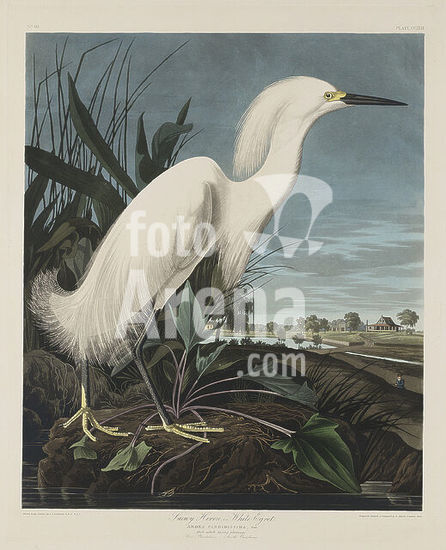
alb3723777 Snowy Heron, or White Egret. Dated: 1835. Dimensions: plate: 65.4 x 52.7 cm (25 3/4 x 20 3/4 in.) sheet: 100 x 68 cm (39 3/8 x 26 3/4 in.). Medium: hand-colored engraving and aquatint on Whatman wove paper. Museum: National Gallery of Art, Washington DC. Author: Robert Havell after John James Audubon.
DC
alb4104472 Allegorical Representation of the Birth of William Frederick, Prince of Orange-Nassau, later King William I. Dating: 1772. Place: Northern Netherlands. Measurements: h 36.3 cm × w 28.8 cm × t 1.8 cm; h 44.9 cm × w 37.4 cm × d 9.8 cm. Museum: Rijksmuseum, Amsterdam.
DC
alb5568620 A scene portraying the early stages of a solar system forming, when the (proto-)planet(-s) are heavily bombarded with smaller bodies, such as asteroids and comets. The presence of the bombarding objects is abundant, as you can see here. This hadean condition may have been sparked by a gas giant migrating closer to the star, hence nudging the rocks into unstable orbits.. Some astronomers believe this late heavy bombardment occured 3.8-4.1 GYs ago. Asteroid and comet impacts were much greater in number than today, very early in Earth's history.
DC
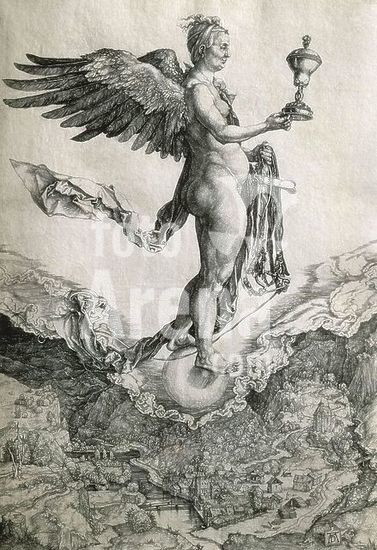
alb3661585 Nemesis (The Great Fortune). Artist: Albrecht Dürer (German, Nuremberg 1471-1528 Nuremberg). Dimensions: Sheet: 14 in. × 10 1/16 in. (35.6 × 25.5 cm). Date: ca. 1501. Museum: Metropolitan Museum of Art, New York, USA.
DC
alb5566072 Evidence exists that make astronomers believe that the Earth and the Moon were created when a Mars-sized object slammed into the early proto-earth, about 4.6 billion years ago. Recent findings suggest that heavier metals like gold, platinum, palladium and other iron-loving elements found in Earth's and the Moon's crusts and mantles came from similar, but much smaller impacts at the final stage of formation.
DC
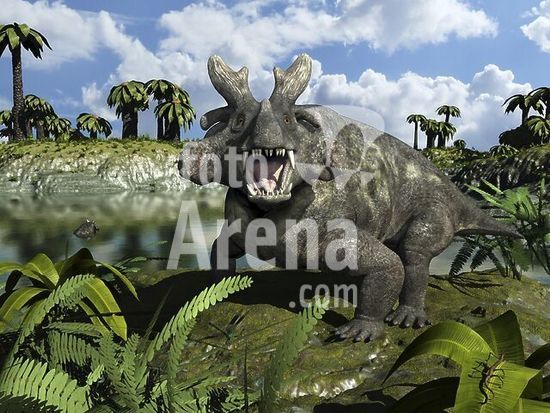
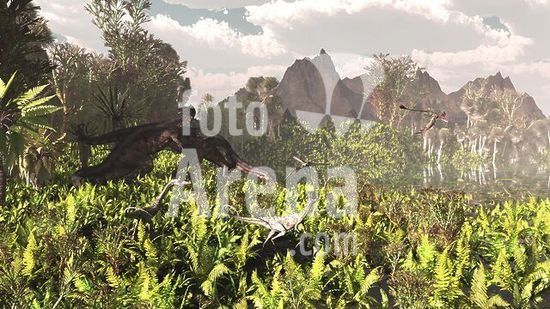
alb3893248 An Estemmenosuchus mirabilis stands before a lake 255 million years ago in what is today the Perm region of Russia near the Ural Mountains. An ungainly plant-eater, it was the largest animal of its day and is known for its distinctive horns. Maybe not the most handsome of beasts, Estemmenosuchus mirabilis was an early ancestor of today's mammals. In this image it stands among several varieties of fern while cycads known as Bjuvia simplex populate the far side of the lake.
DC
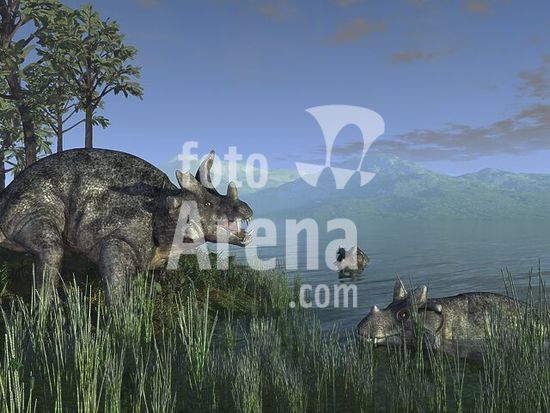
alb3885361 Resembling modern day hippopotami, three Estemmenosuchus mirabilis face off in a Paleozoic lake 255 million years ago in what is today the Perm region of Russia near the Ural Mountains. About the size of a modern adult bull, Estemmenosuchus mirabilis was a plant-eating early ancestor of today's mammals.
DC
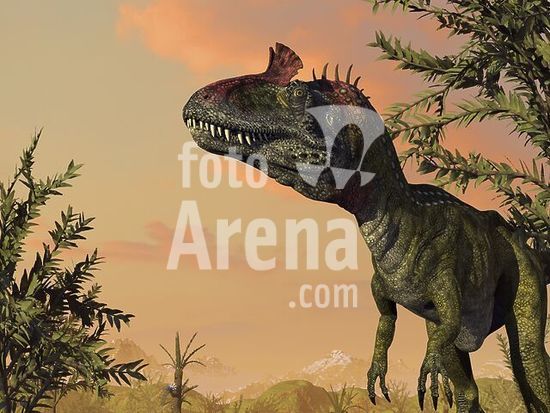
alb3883973 Over 20 feet long and weighing as much as a ton, Cryolophosaurus is the first dinosaur to have been unearthed by paleontologists in Antarctica. This formidable predator hunted 190 million years ago during the Early Jurassic period. While the Earth was warmer and Antarctica closer to the equator during Cryolophosaurus' time, the continent was still far enough south for the climate to be temperate rather than tropical. Much of Antarctica was likely covered by dense forests, at least near the coasts. Cryolophosaurus' remains were found on a mountain range that would have placed it at an altitude of about 10,000 feet and 1,000 miles from the South Pole during its reign.
DC
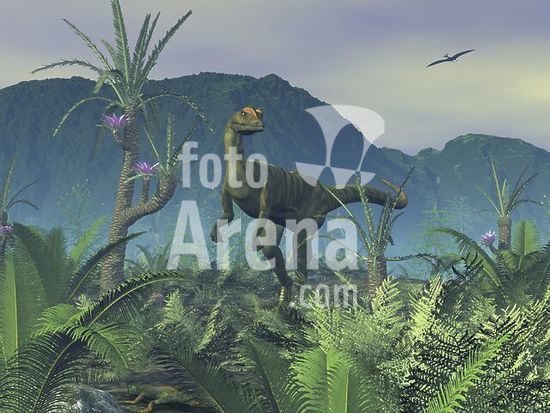
alb3885206 A colorful adult male Dilophosaurus explores a hilltop that is host to Williamsonia gigas, Sago Palms, and ferns. The tree-like Williamsonia gigas was a seed plant belonging to the order of Bennettitales and reigned for 130 million years before becoming extinct. Williamsonia gigas produced what appears to be large flowers, which were really a group of seeds surrounded by a crown of leaf-like structures known as bracteae. True flowers didn't begin to dominate the landscape until relatively recently, about 50 million years ago. The 0ther flora illustrated here live to this day, including the coniferous Araucaria, ferns, and Sago Palms (which in reality are not palms but a type of gymnosperm).. The first known predatory dinosaur appeared 190 million years ago during the early Jurassic period. Christened Dilophosaurus (meaning two-crested lizard, because it had a pair of distinctive bony crests on its head) this bipedal saurischian grew up to 20 feet long, stood 8 feet tall, and weighed as much as a half ton. Dilophosaurus roamed the Earth 100 million years before its larger and more celebrated cousin Tyrannosaurus Rex roared onto the scene.
DC
alb3880018 The late Triassic period circa 215 million years ago, featuring the large prosauropod Plateosaurus and the early dinosaur predator Ceolophysis.
DC
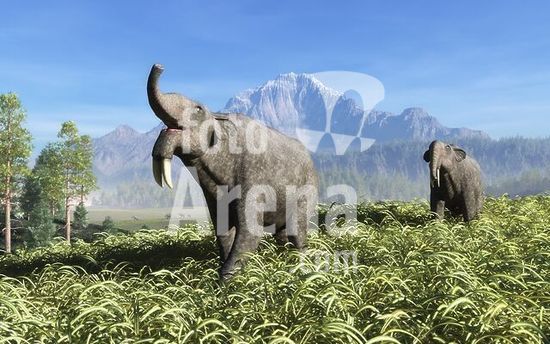
alb3888016 Deinotherium traverse the rolling plains of what is today Europe. A prehistoric relative of modern elephants, Deinotherium was larger and had a shorter trunk and downward-curving tusks attached to its lower jaw. Deinotherium is the third largest land mammal known to have existed; only Paraceratherium and some mammoths were larger. Deinotherium likely behaved like modern elephants and may have lived side-by-side with the early human ancestor Australopithecus.
DC
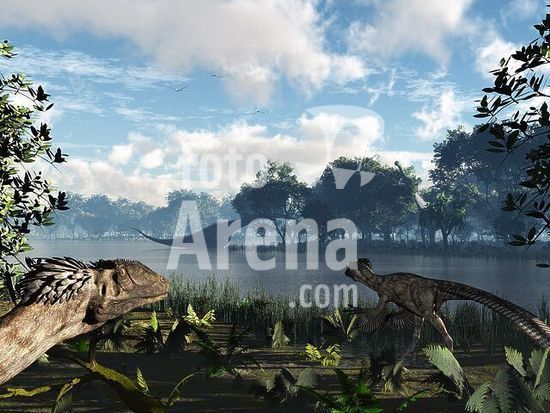
alb3884754 Sauroposeidon graze on American Sycamore and Flowering Magnolia while feathered Deinonychus look on. The location is a river delta on the Western Interior Seaway 110 million years ago during the Early Cretaceous Period in what is today southeastern Oklahoma.. Sauroposeidon is the tallest known dinosaur with a neck that could reach up to 56 feet high. Deinonychus on the other hand was a relatively small predator, 11 feet long and standing about three feet tall at the hip. It was a close relative to the smaller velociraptor which emerged later in Central Asia. Deinonychus wasn't powerful enough to bring down a giant like an adult sauroposeidon, however they did likely prey on juvenile or sick adults of the species.
DC
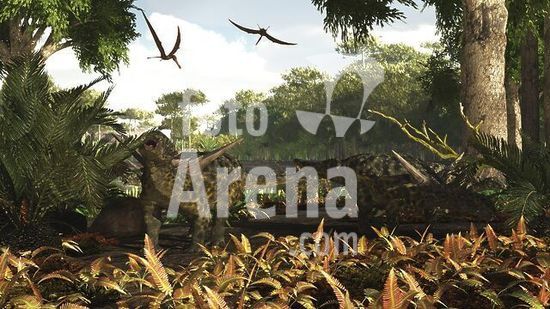
alb3882934 An group of Ankylosaurid dinosaurs from the early Cretaceous in Western North America.
DC
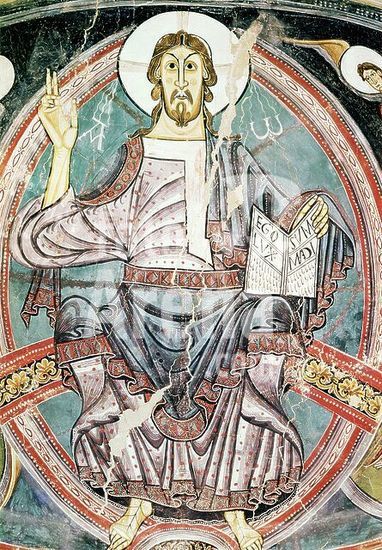
alb339694 Christ Pantocrator, Sant Climent of Taüll, 7th century. Museum: Museu Nacional d'Art de Catalunya (MNAC), Barcelona, SPAIN.
DC
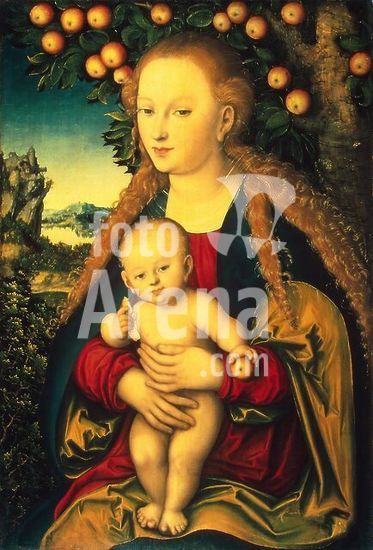
alb4218935 'The Virgin and Child Under an Apple Tree'. Germany, Circa 1530s. Dimensions: 87x59 cm. Museum: State Hermitage, St. Petersburg. Author: Lucas Cranach I.
DC
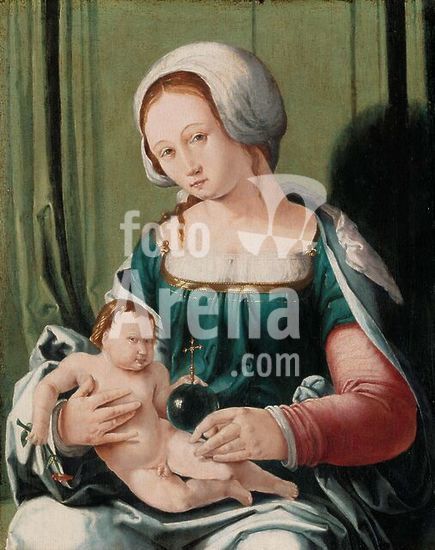
alb4104034 Virgin and Child. Madonna and Child. Dating: c. 1530. Place: Leiden. Measurements: support: h 34.5 cm × w 27.5 cm. Museum: Rijksmuseum, Amsterdam. Author: Lucas van Leyden (attributed to).
DC
alb3672539 Salvator Mundi. Artist: Workshop of Hans Memling (Netherlandish, Seligenstadt, active by 1465-died 1494 Bruges). Dimensions: Overall, with integral frame, diameter 10 3/4 in. (27.3 cm); painted surface 8 in. (20.3 cm). Date: 1475-99.Christ is shown as the Savior of the World (Salvator Mundi), a popular image in fifteenth-century painting. Front-faced, he holds a cross-topped globe and raises his right hand in blessing, merging the themes of the Holy Face (Christ's features miraculously imprinted on a cloth) and Christ in Majesty. The small, circular format made this picture appropriate for hanging above a bed. Museum: Metropolitan Museum of Art, New York, USA. Author: Workshop of Hans Memling.
DC
alb3892572 The Four Elements: Fire. A Kitchen Scene with Christ in the House of Martha and Mary in the Background. Date/Period: 1570. Painting. Oil on canvas. Height: 157.5 cm (62 in); Width: 215.5 cm (84.8 in). Author: JOACHIM BEUCKELAER.
DC
alb15272431 Curtis's Botanical Magazine, London, New York, botanical illustration, botany, periodicals, pictorial works, plants ornamental, Curtis, The illustration depicts a trio of crocus flowers, showcasing their delicate, elongated petals that transition from a soft lavender hue to a pale white at the base. Each flower stands upright, revealing a cluster of bright yellow stamens at the center. The slender green stems emerge from bulbous roots, which are partially visible beneath the soil. Surrounding the flowers are fine details of the foliage, enhancing the natural beauty and elegance of these early spring bloomers, often associated with warmth and renewal. This artwork captures the intricate anatomy and vivid colors of the crocus, celebrating its place in botanical studies and nature.
DC
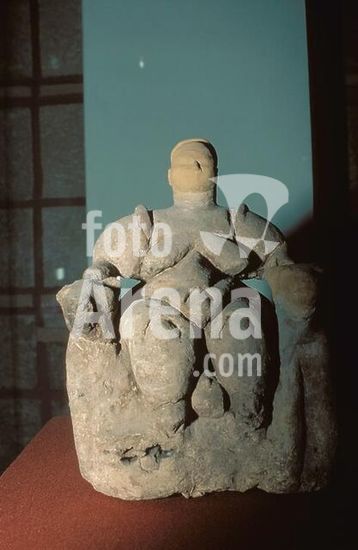
akg2128470 Neolithic, Anatolia. - Statue of an Earth Mother seated on a throne flanked by leopards. Clay, c. 5000 BC. Found in Catal Hüyük, Konya plain, level II. Ankara, Hittite Museum. Museum: Ankara, Hittite Museum.
DC
akg419985 Neolithic, Anatolia. - Statue of an Earth Mother seated on a throne flanked by leopards. Clay, c. 5000 BC. Found in Catal Hüyük, Konya plain, level II. Ankara, Hittite Museum. Museum: Ankara, Hittite Museum.
DC
alb3898245 Hina Tefatou / The Moon and the Earth. Date/Period: 1893. Painting. Oil on burlap. Height: 114.3 cm (45 in); Width: 62.2 cm (24.4 in). Author: PAUL GAUGUIN.
DC
alb3607253 South Wind, Clear Sky (Gaifu kaisei), also known as Red Fuji, from the series Thirty-six Views of Mount Fuji (Fugaku sanjurokkei). Artist: Katsushika Hokusai (Japanese, Tokyo (Edo) 1760-1849 Tokyo (Edo)). Culture: Japan. Dimensions: Oban 10 x 14 7/8 in. (25.4 x 37.8 cm). Date: ca. 1830-32.Mount Fuji is said to have a reddish hue at dawn in early autumn. Known as "Red Fuji," this print presents Hokusai's uncompromising vision of Mount Fuji without a human presence. The majestic snow-capped Mount Fuji embodies an iconic spirituality that approaches the religious. Trees are reduced to tiny triangles of green stretching along Fuji's base, and the blue sky with a white-paper-like pattern of clouds adds a decorative flourish to the design. Museum: Metropolitan Museum of Art, New York, USA.
DC
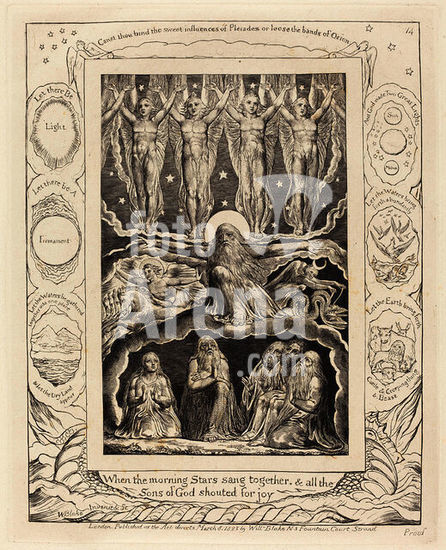
alb3704008 The Creation. Dated: 1825. Medium: engraving on India paper. Museum: National Gallery of Art, Washington DC. Author: William Blake.
DC
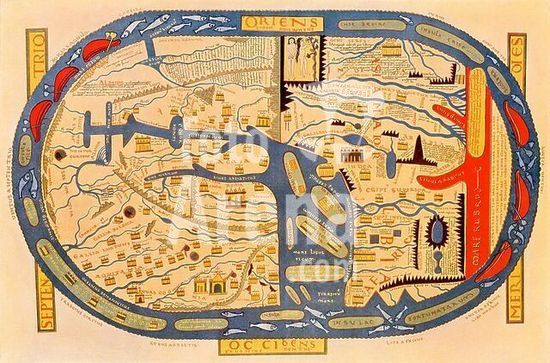
akg913567 World map of the flat earth printed by Beatus Rhenanus Bildaus Rheinau early 1500s-North is left, Mediterranean Sea middle Printed color lithograph reproduction 19th century.
DC
alb4221474 'Great Pine near Aix'. France, Between 1895 - 1897. Dimensions: 72x91 cm. Museum: State Hermitage, St. Petersburg. Author: PAUL CEZANNE.
DC
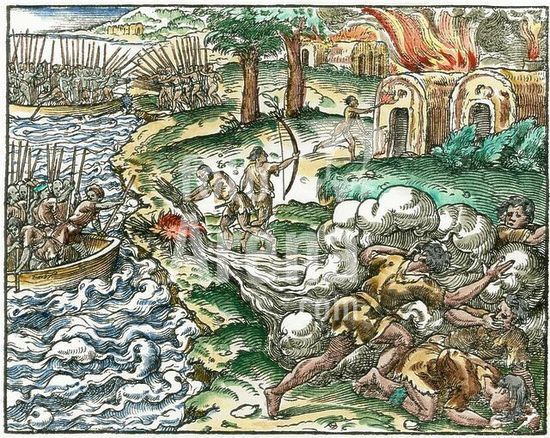
akg895620 Völkerkunde / Amerika.-Indianer in Booten überfallen ein Dorf; die Verteidiger legen Feuer.-Holzschnitt nach Zeichnung von André Thévet (1504-1592). Aus: F.André Thévet, Les singularitez de la France Antartique, autrement nommée Amerique (...), Paris (Maurice de la Porte), 1558. Spätere Kolorierung.
DC
alb371772 Pieter Brueghel the Elder / 'The Triumph of Death', c. 1562, Oil on wood, 117 × 162 cm, P01393. Artwork also known as: El triunfo de la muerte. Museum: MUSEO DEL PRADO.
DC

Total de Resultados: 32

Página 1 de 1