



















































Busque também em nossas outras coleções:

Tipo de arquivo:

Tipo do arquivo:

Tipo da licença:

Orientação:

Total de Resultados: 66

Página 1 de 1

LAL337716 Opening of the Liverpool and Manchester Railway on 15 September 1830
DC
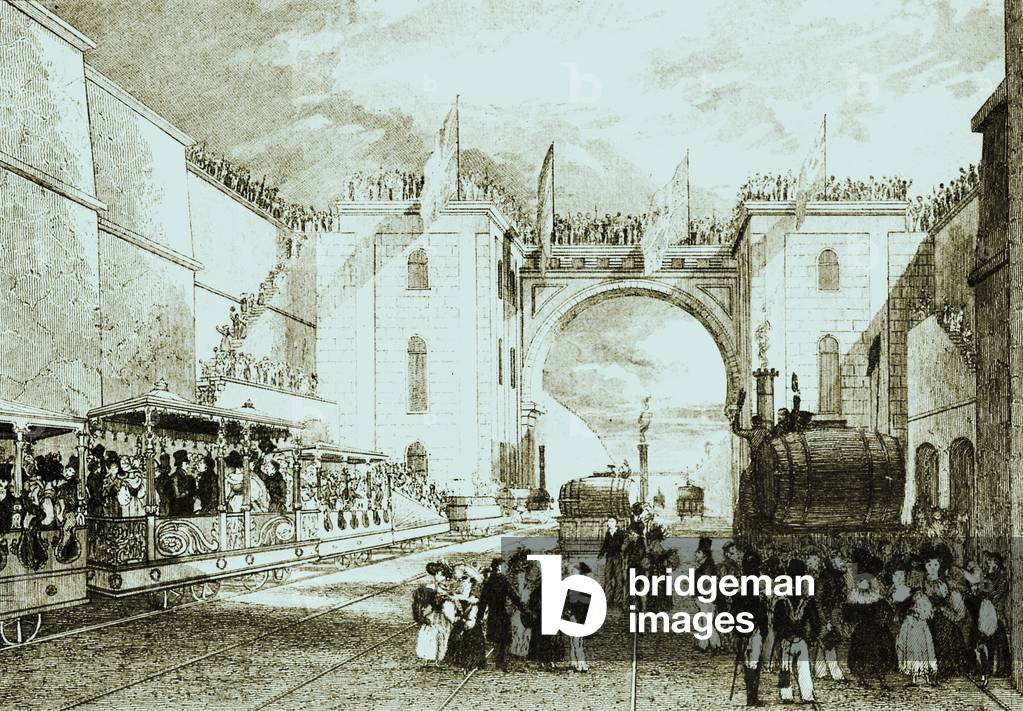
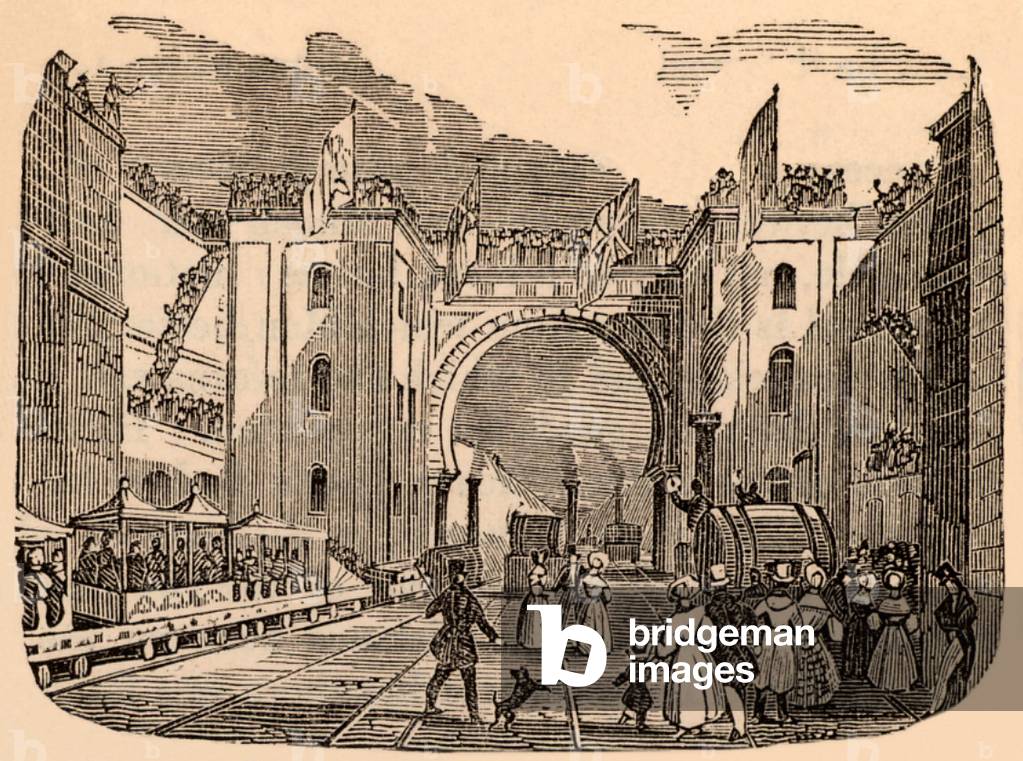
XLF3784034 Inauguration of the railway between Liverpool and Manchester, 15 September 1830. The official convoy was stopped in front of the 'Moorish Arc' at Liverpool Railway Station. After engraving by I. Shaw.
DC
XLF3783624 Inauguration of the railway between Liverpool and Manchester, 15 September 1830. The official convoy was stopped in front of the 'Moorish Arc' at Liverpool Railway Station. After engraving by I. Shaw.'Histoire de la Locomotion terrestre: les chemins de fer', by Charles Dollfus and Edgar de Geoffroy (Paris 1935/1942)
DC
XJF867823
RF
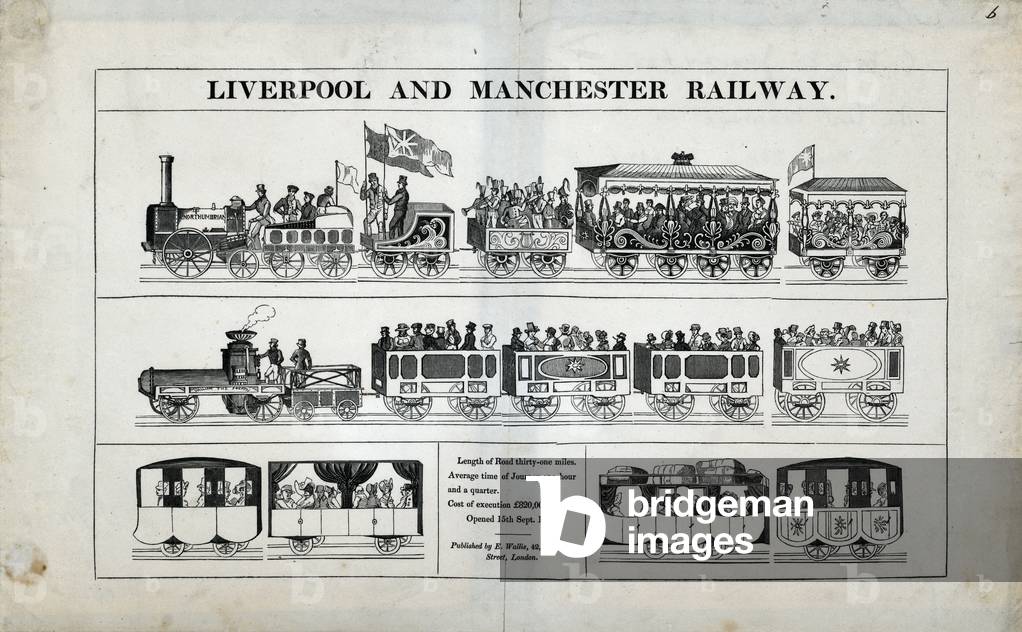
IGM7394207 By E. Wallis (publisher)View of 0-2-2 tender steam locomotive `Northumbrian' and train at top of image, with Duke of Wellington travelling as passenger in carriage at second right, 2-2-0 tender steam locomotive `William the Fourth' and 4 open carriages of passengers in centre of image, 4 enclosed carriages at bottom of image, `LIVERPOOL AND MANCHESTER RAILWAY. ' printed at top of image. `Length of Road thirty-one miles. Average time of journey one hour and a quarter. Cost of execution £820,000. Opened 15th Sept. 1830. Published by E. Wallis, 42, Skinner Street, London'
DC
NRM11077
DC
UIG864015 Opening of the Liverpool and Manchester Railway, England on 15 September 1830. The engineer for the work was George Stephenson (1781-1848). Woodcut from "Roads and Railroads, Vehicles, and Modes of Travelling" (London, c1840).
DC
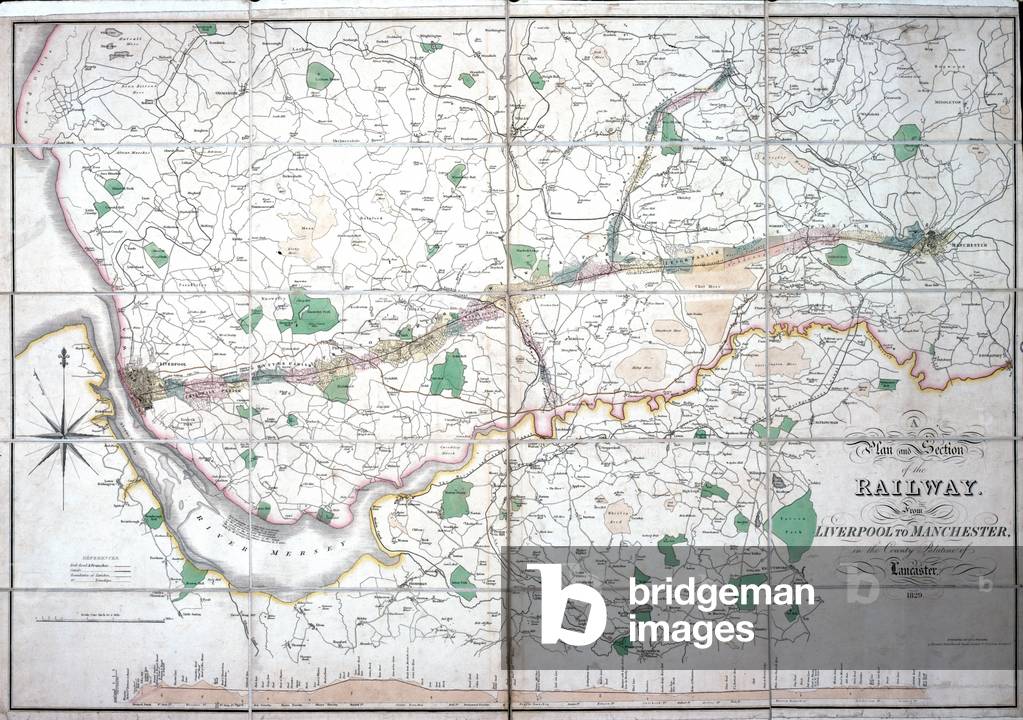
UIS3697584 Constructed under the guidance of chief engineer George Stephenson (1781-1848), the line laid between Liverpool and Manchester was the world"s first intercity railway. The opening ceremony on 15 September 1830 included a procession of eight locomotives, including Robert Stephenson"s (1803-1859) famous "Rocket". This map is one of a set of seven relating to the Liverpool & Manchester Railway, formerly belonging to Stephenson and bearing his signature on the cover.
DC
TAD1741814 First railway linking Liverpool to Manchester in England, opened in 1830, drawing
DC
LAL262345 George Stephenson (1781-1848) (inset portrait) prepared to drive the train which carried the Duke of Wellington on the inaugural run of the Liverpool and Manchester Railway. Picture shows the 'Wapping Cutting'; Left inset shows two competitors defeated by George Stephenson's Rocket in the Rainhill trials: 'Novelty' (top) and Timothy Hackworth's 'Sans Pareil';
DC
TAD1750569 First railway linking Liverpool to Manchester in England, opened in 1830, contemporary engraving
DC
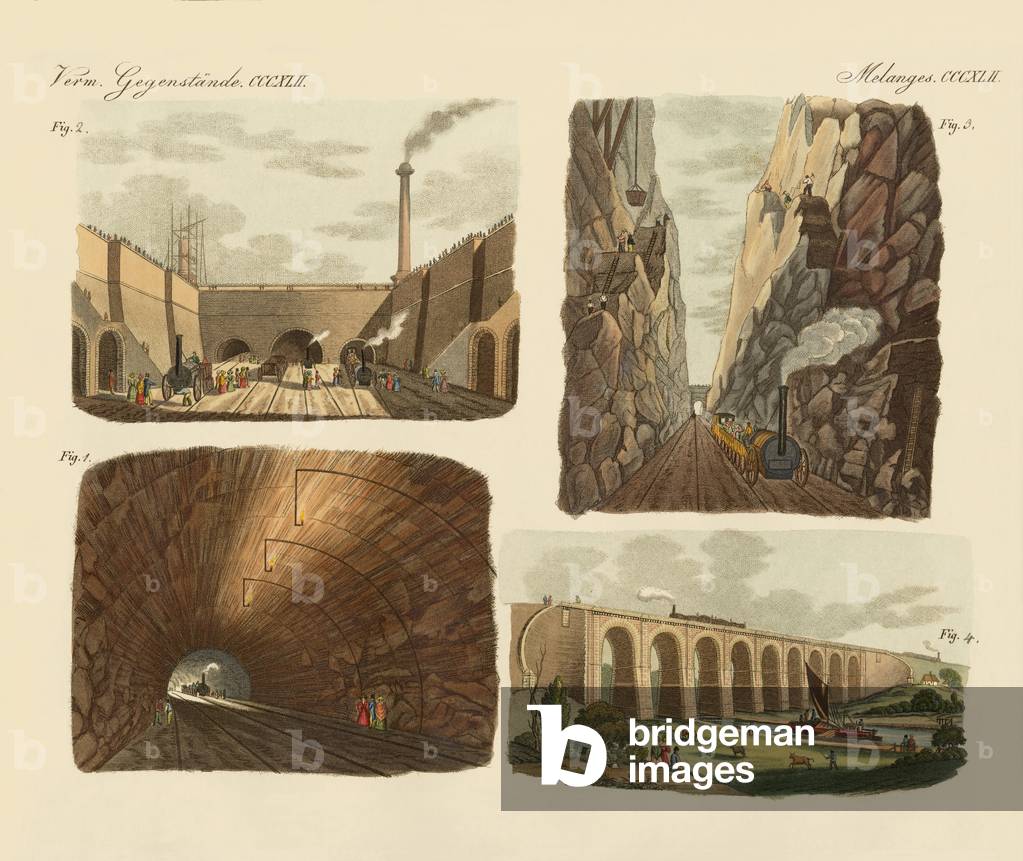
PRX998522 From ‘Bilderbuch für Kinder’ (Picture Book for Children) 1790-1830, published by Friedrich Justin Bertuch (1747-1822) Die Eisenbahn zwischen Manchester und LiverpoolDie Eisenbahn zwischen Manchester und Liverpool, Eisenbahnen
DC
PRX998521 From ‘Bilderbuch für Kinder’ (Picture Book for Children) 1790-1830, published by Friedrich Justin Bertuch (1747-1822) Die Eisenbahn zwischen Manchester und LiverpoolDie Eisenbahn zwischen Manchester und Liverpool, Eisenbahnen
DC
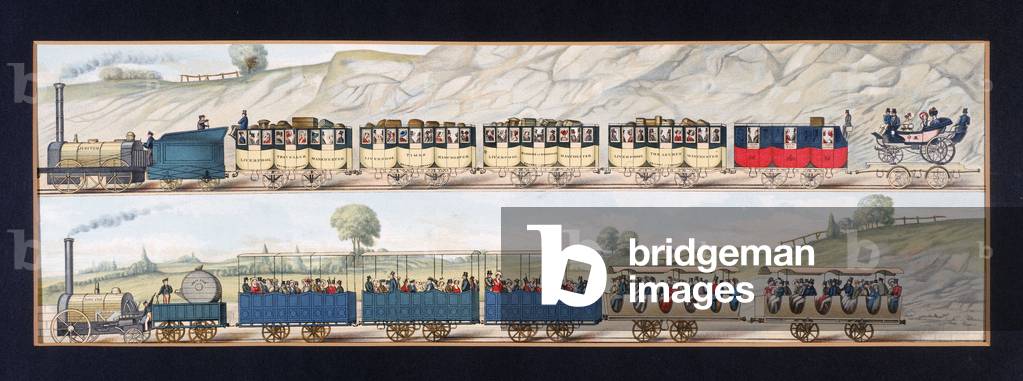
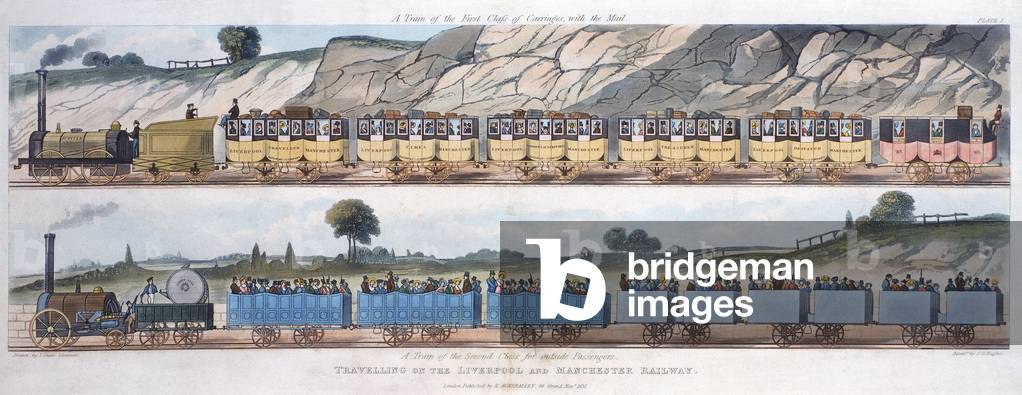
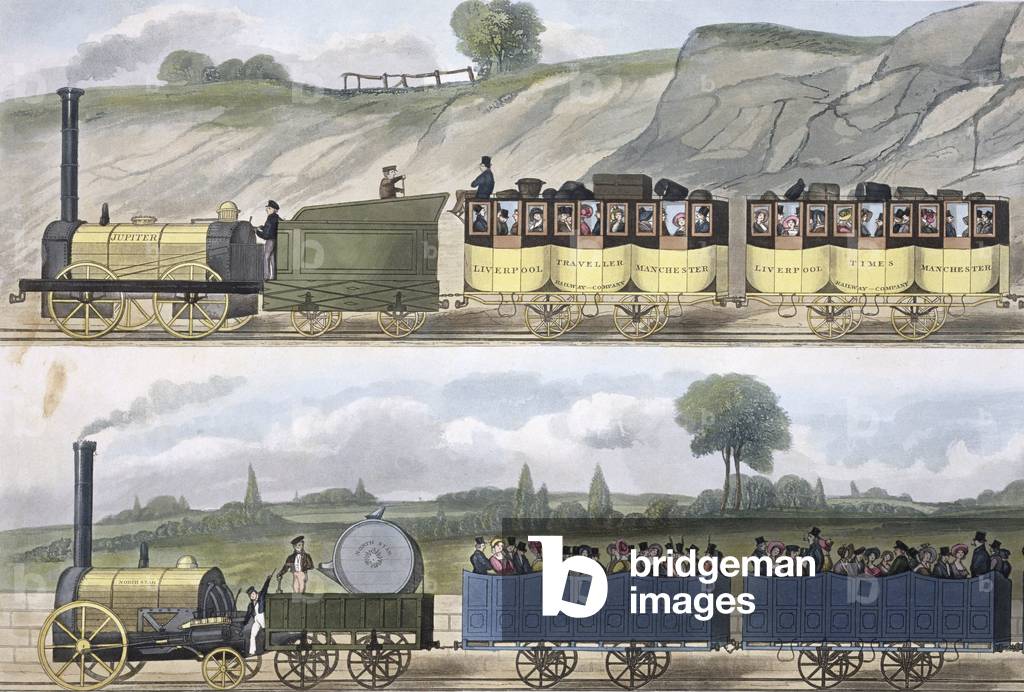
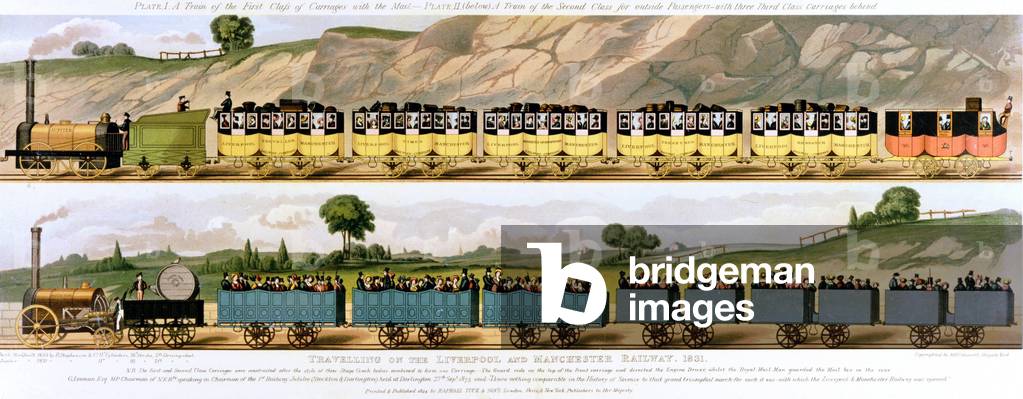
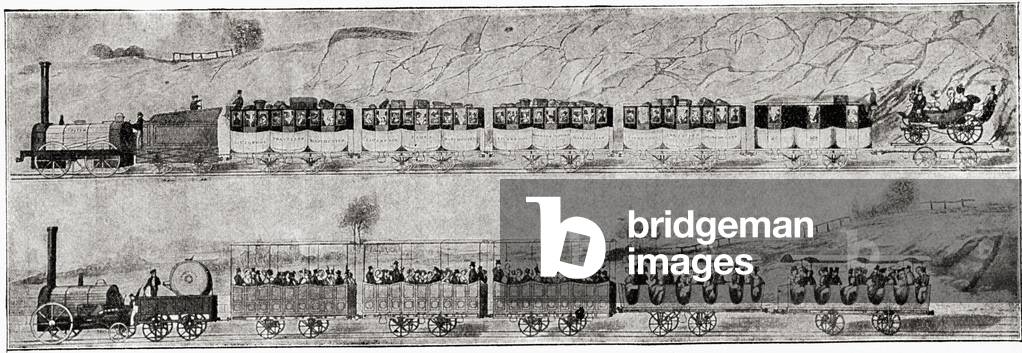
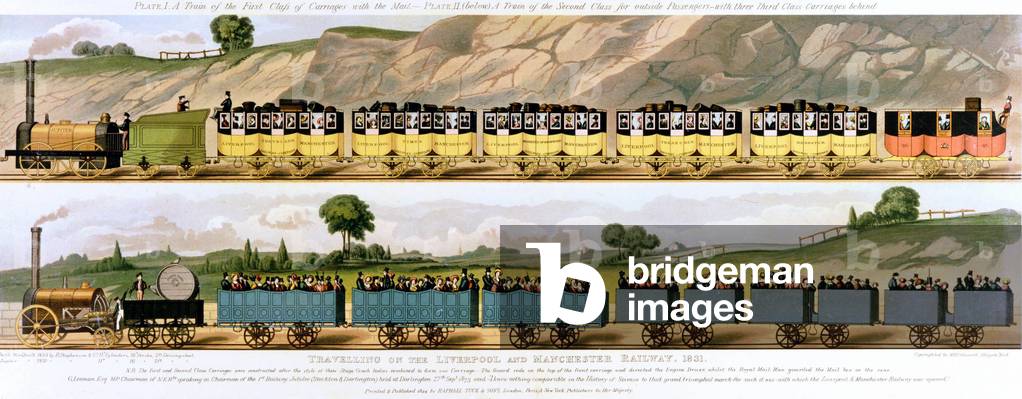
UIS5063855 Travelling on the Liverpool and Manchester Railway', 1831. Coloured aquatint engraving by S G Hughes after a drawing by Isaac Shaw, of two views representing a journey on the Liverpool & Manchester Railway, the world's first intercity railway, which opened in 1830. The first view shows the locomotive 'Jupiter' hauling first class carriages, a Royal Mail carriage and a horse-drawn carriage on a wagon, illustrating the way in which the gentry were transported in the early years of the railways. The second view shows the locomotive 'North Star' pulling second class carriages in which passengers were exposed to the elements, thus illustrating the differences in standard. Published by R Ackermann, 96 The Strand, London, in November 1831. ©SSPL/NRM/Pictorial Collection
DC
UIS5063885 Travelling on the Liverpool and Manchester Railway', 1831. Coloured aquatint engraving by S G Hughes after a drawing by Isaac Shaw, of two views representing a journey on the Liverpool & Manchester Railway, the world's first intercity railway, which opened in 1830. The first view shows the locomotive 'Jupiter' hauling first class carriages, a Royal Mail carriage and a horse-drawn carriage on a wagon, illustrating the way in which the gentry were transported in the early years of the railways. The second view shows the locomotive 'North Star' pulling second class carriages in which passengers were exposed to the elements, thus illustrating the differences in standards for different users. Published by R Ackermann, 96 The Strand, London, in November 1831. ©SSPL/NRM/Pictorial Collection
DC
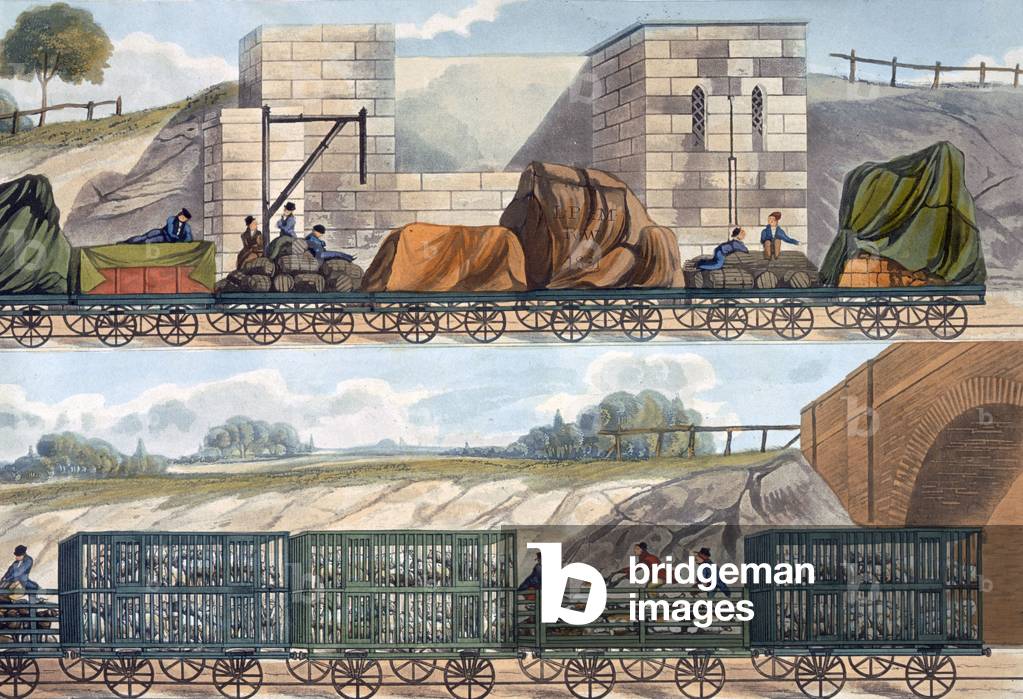
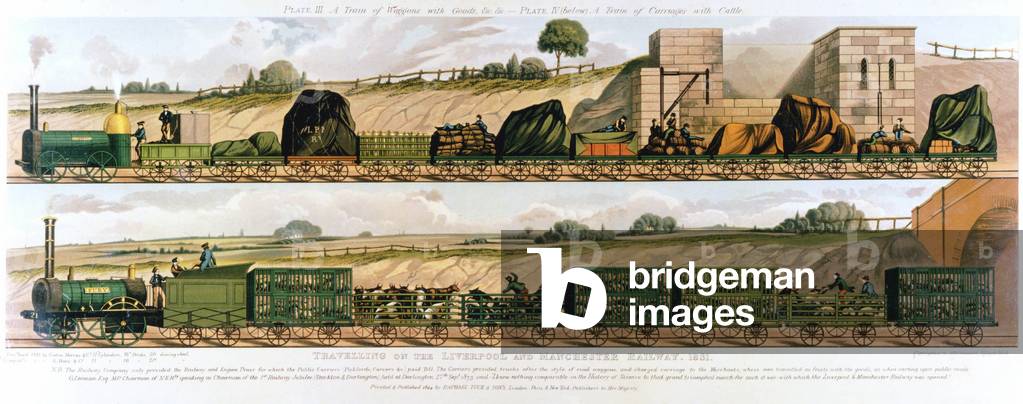
HIM5473641 . A train of wagons (top) and a train of cattle, sheep and pigs (bottom), on the world's first intercity railway, that opened on 15 September 1830. From ""Coloured view of the Liverpool & Manchester Railway"". (London, 1832-1833). George Stephenson,Robert Stephenson,SG Hughes (creator)Thomas Talbot Bury,
DC
HIM5473644 A train of wagons (top) and a train of cattle, sheep and pigs (bottom), on the world's first intercity railway, that opened on 15 September 1830. From ""Coloured view of the Liverpool & Manchester Railway"". (London, 1832-1833). George Stephenson,J Shaw,Robert Stephenson,SG Hughes (creator)
DC
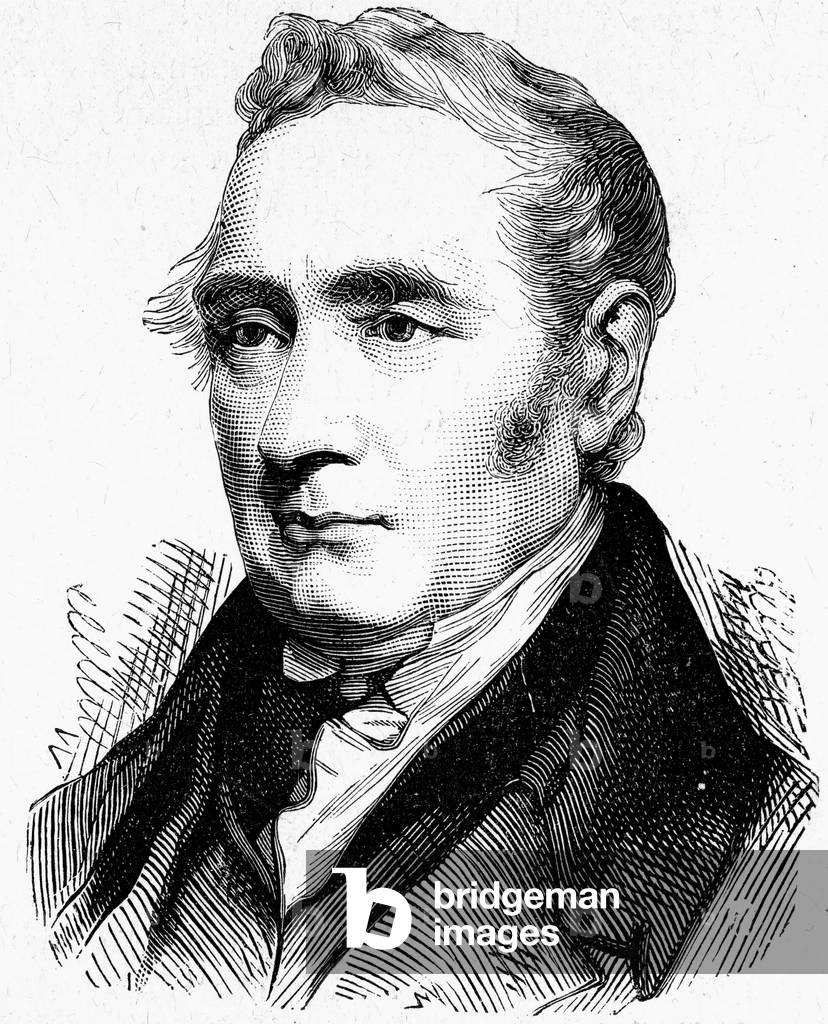
UIG3585582 George Stephenson (9 June 1781 - 12 August 1848) was an English civil engineer and mechanical engineer who built the first public inter-city railway line in the world to use steam locomotives, the Liverpool and Manchester Railway which opened in 1830. Renowned as the 'Father of Railways'.
DC
JLJ4564131 Transport progress: railway, line linking Liverpool to Manchester opened on 15/09/1830. The engineer is Georges Stephenson. United Kingdom - Travelling on the Liverpool to Manchester Railway - train of the First Class of carriages with the Mail - A Train of the Second Class, for Outside passengers - train of Waggons with Goods - engraving
DC
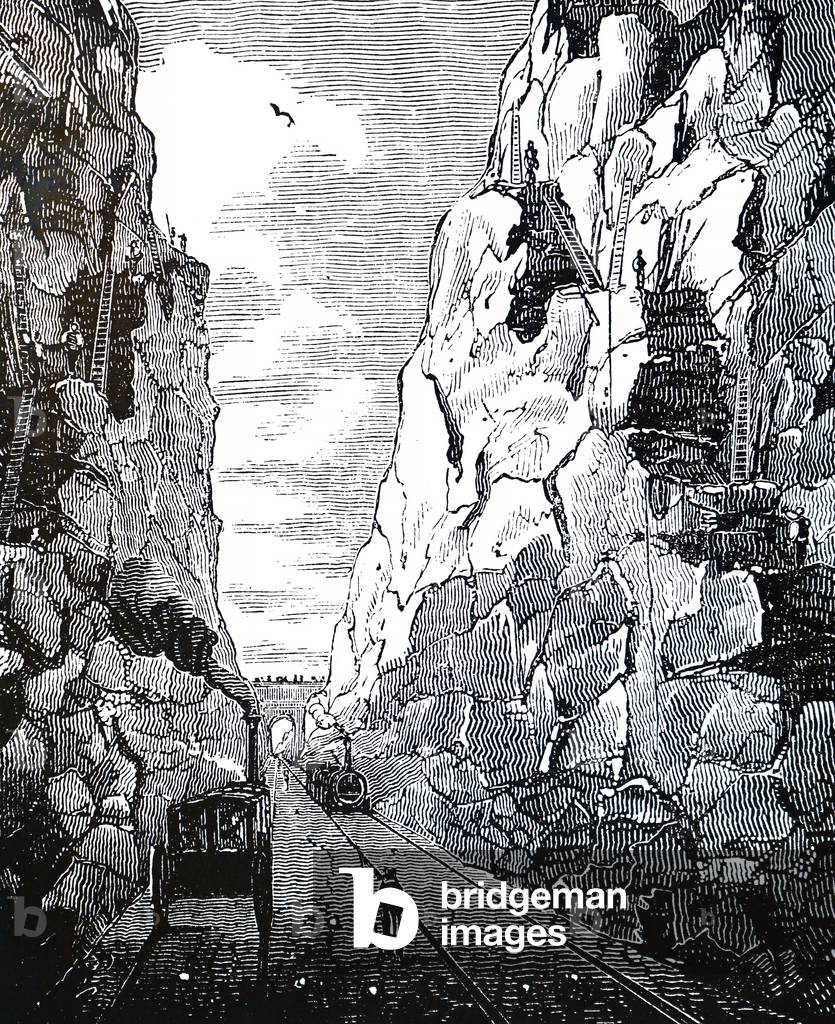
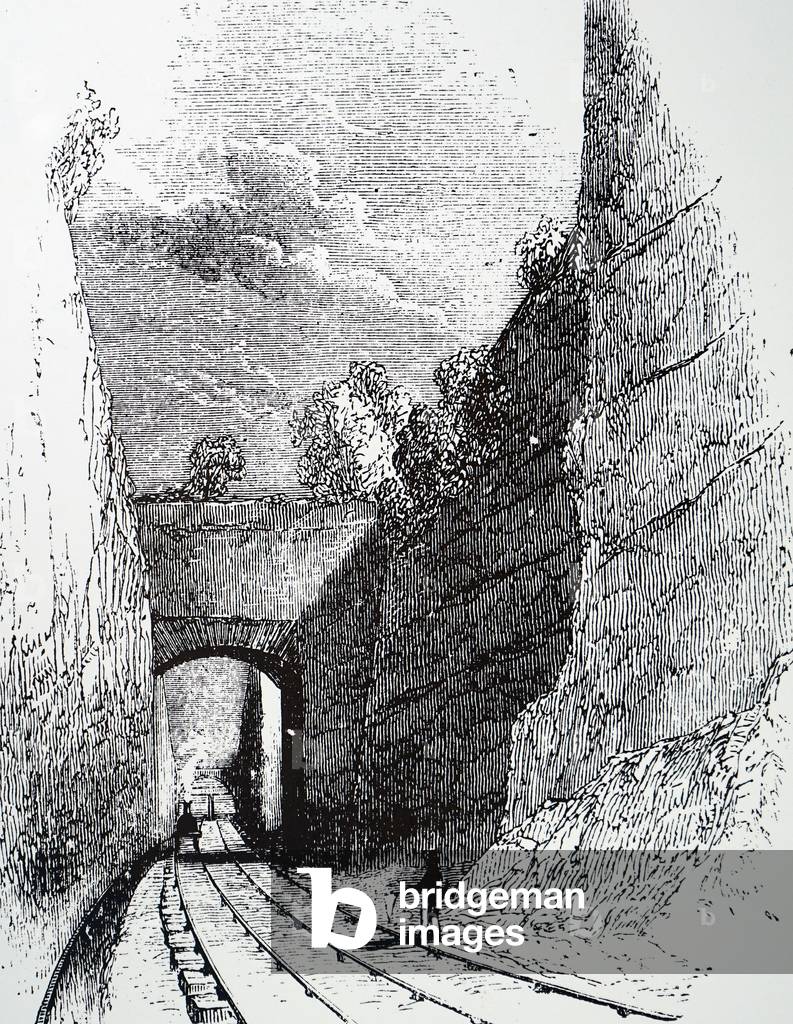
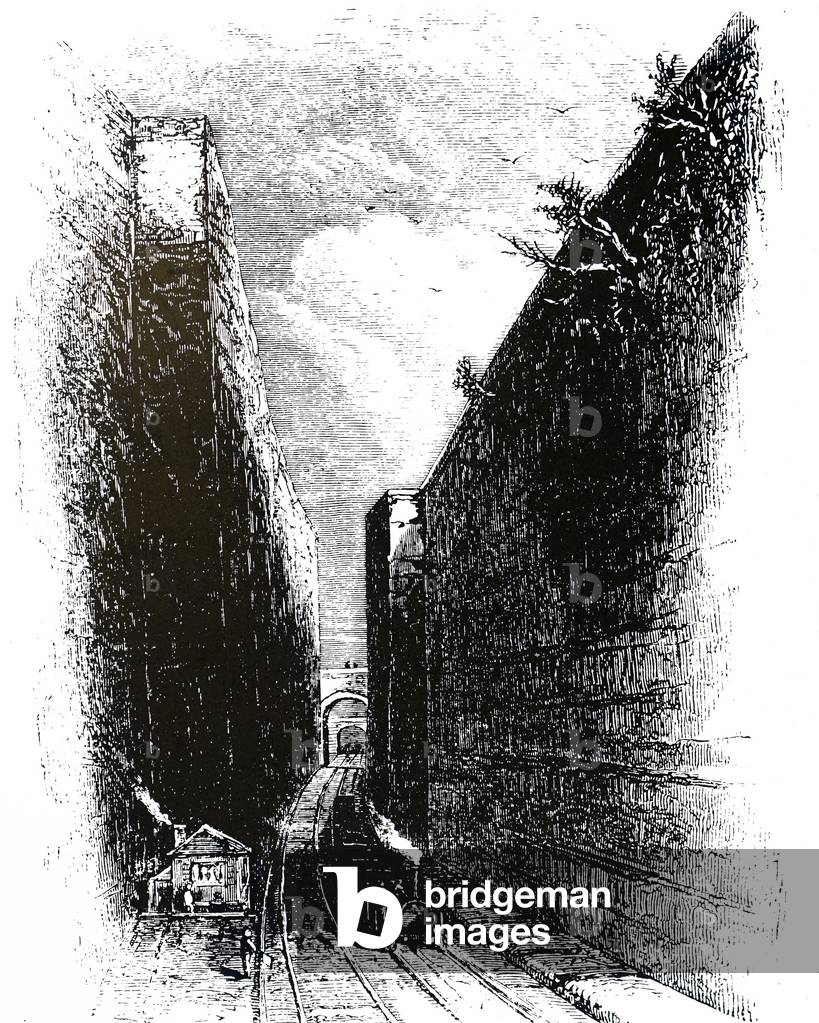
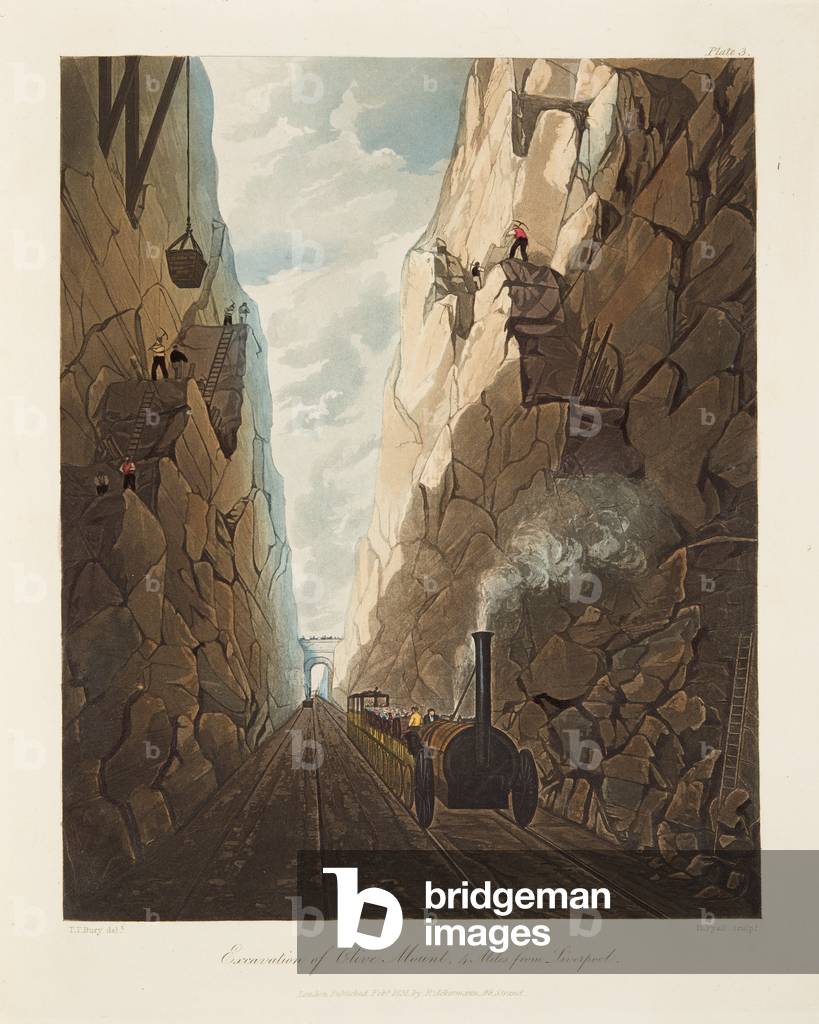
UIG5308499 Engraving depicting the Olive Mount cutting, a 2 miles sandstone railway cutting, 4 miles from Liverpool, along the railway to Manchester, which was opened in 1830. Dated 19th century. 01/01/1830
DC
UIG5308497 Engraving depicting the Olive Mount cutting, a 2 miles sandstone railway cutting, 4 miles from Liverpool, along the railway to Manchester, which was opened in 1830. Dated 19th century. 01/01/1830
DC
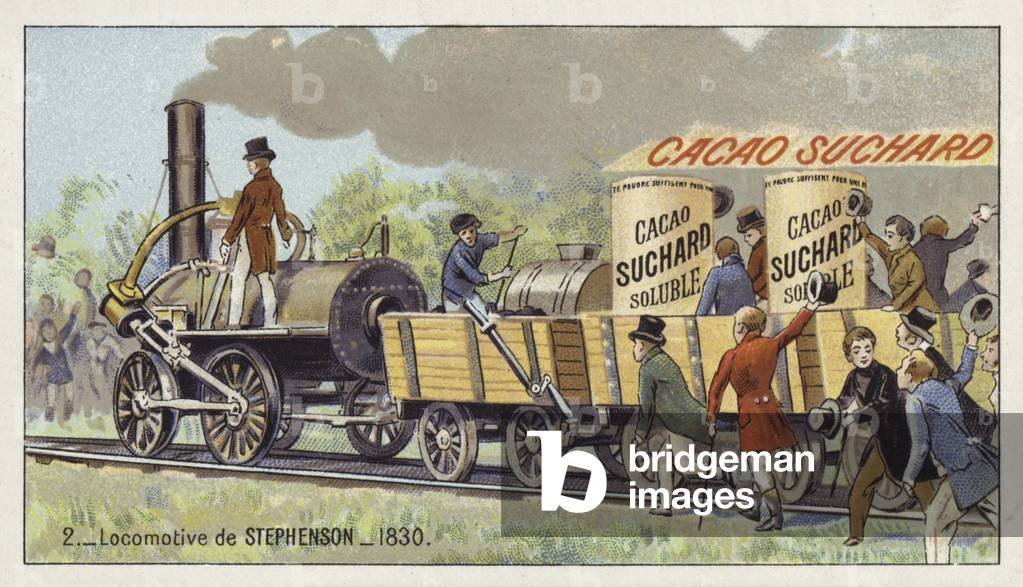
LLM974174 George Stephenson's locomotive Rocket, 1830. Educational card, late 19th or early 20th century.
DC
UIG5308498 Engraving depicting the Olive Mount cutting, a 2 miles sandstone railway cutting, 4 miles from Liverpool, along the railway to Manchester, which was opened in 1830. Dated 19th century. 01/01/1850
DC
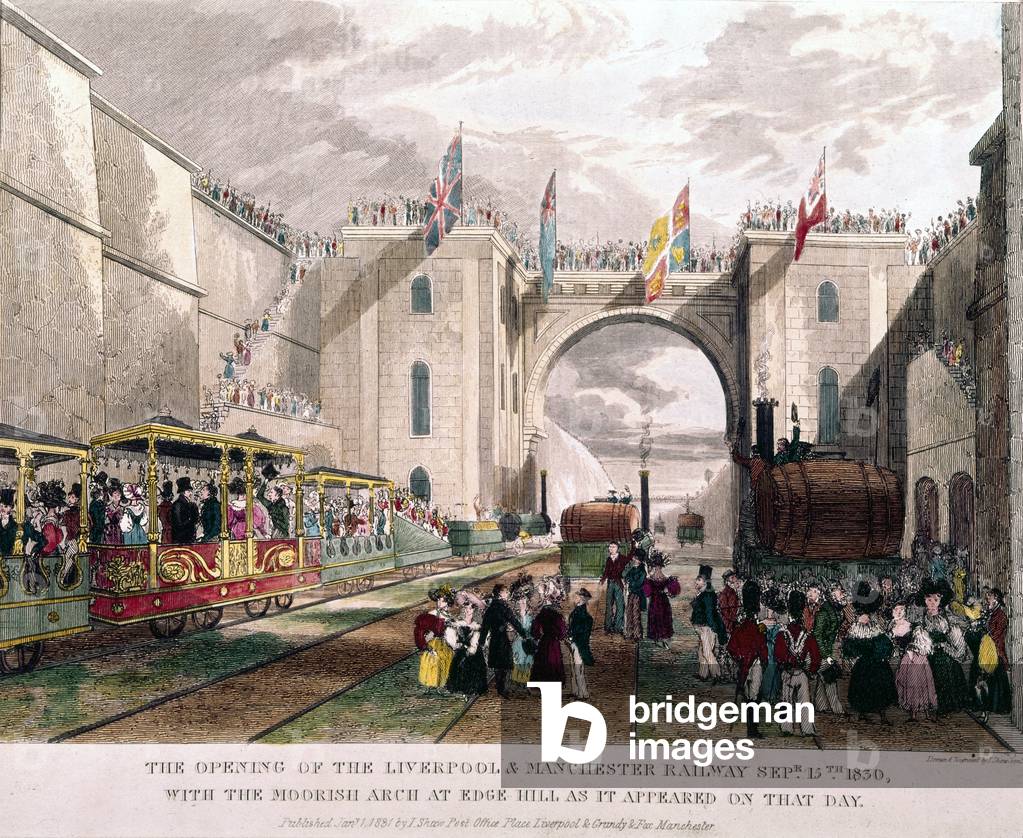
UIS5063857 Inauguration de la ligne de chemin de fer Liverpool Manchester, 1830. Opening of the Liverpool & Manchester Railway, 15 September 1830. Engraving, drawn and engraved by Isaac Shaw Junior, showing crowds of onlookers beside the Moorish Arch at Edge Hill, Liverpool, observing the newly opened railway. George Stephenson became principal engineer of the Liverpool & Manchester Railway, the world's first intercity line, in 1826, and after a competition was organised in 1829 at Rainhill to determine the most efficient locomotive engine, Robert Stephenson's 'Rocket' was declared the winner. Published on 1 January 1831 by I Shaw, Liverpool, and Grundy & Fox, Manchester. ©SSPL/NRM/Pictorial Collection
DC
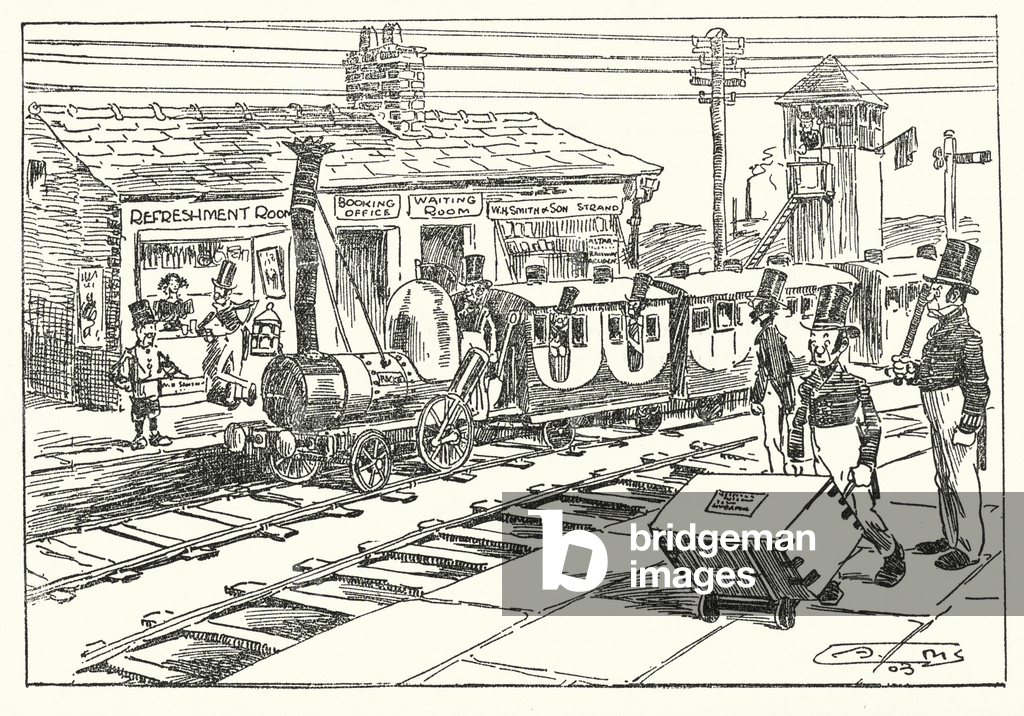
LLM11723404 15th September 1830, The First Railway Train. In the reign of William IV, George Stephenson invented the locomotive engine, and on the 15th September, 1830, the first passenger railway was opened between Manchester and Liverpool. Illustration for Humours of History, 160 Drawings by Arthur Moreland (Revised edition, Daily News, c.1920).By Arthur Moreland
DC
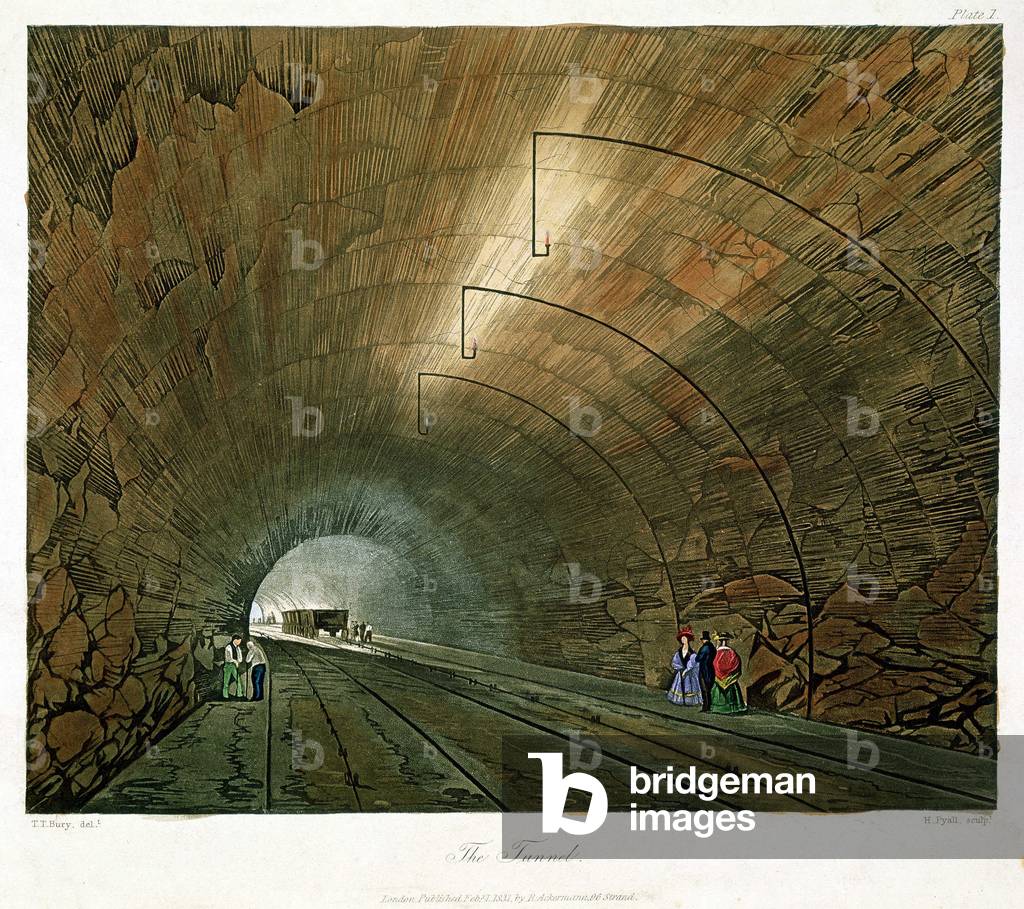
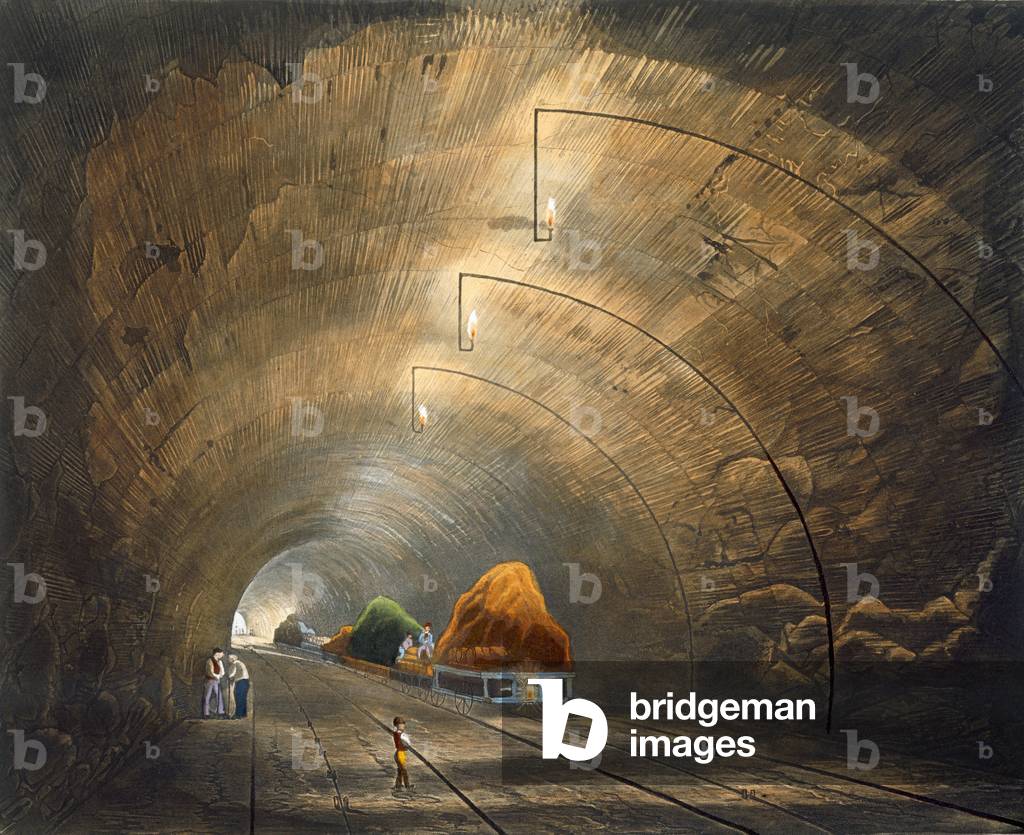
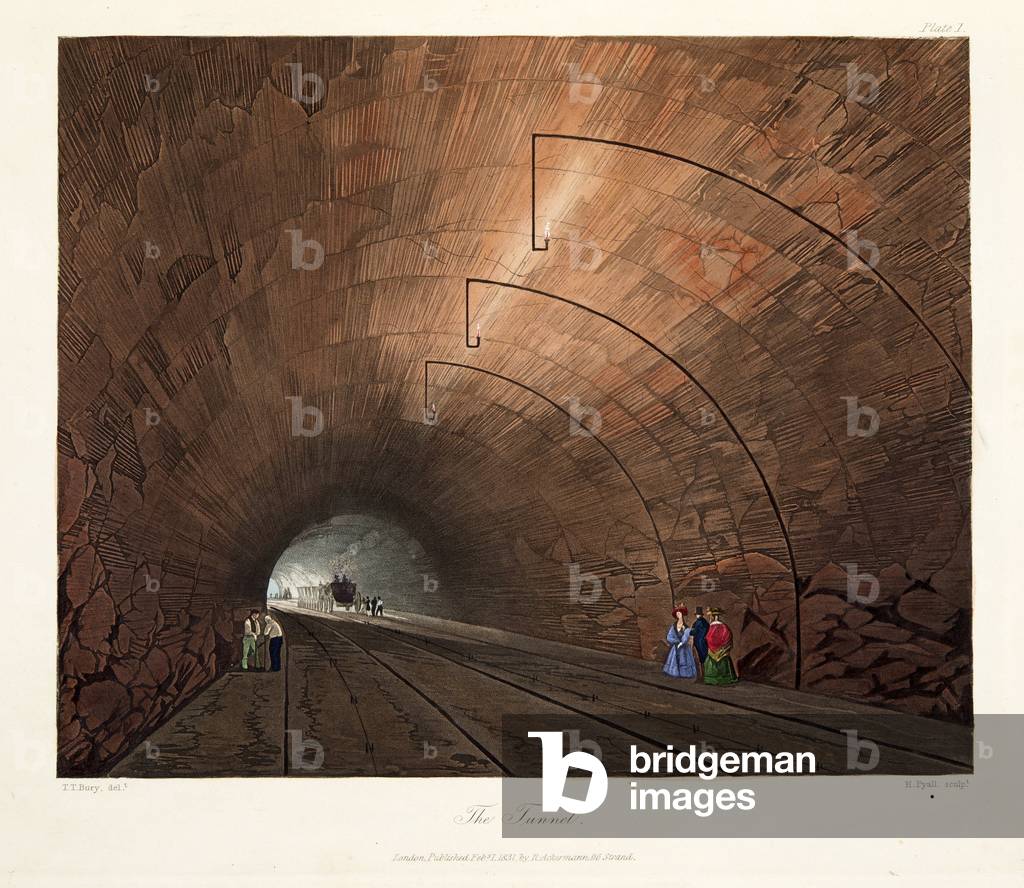
HIM5253935 Le tunnel: premiere ligne de chemin de fer entre Liverpool et Manchester inauguree le 15/09/1830. Illustration tiree de ""Coloured Views on the Liverpool and Manchester Railway"", par TT Bury. 'The Tunnel', 1831. The world's first passenger railway, the Liverpool and Manchester opened on 15 September 1830. Its principal engineer was George Stephenson (1781-1848). From ""Coloured Views on the Liverpool and Manchester Railway"", by TT Bury.
DC
LAL263198 the Member of Parliament for Liverpool is run down by George Stevenson's (1781-1848) Rocket; he is known as the world's first railway casualty;
DC
HIM5473655
DC
UIG540385
DC
HIM5473666
DC
UIG533470
DC
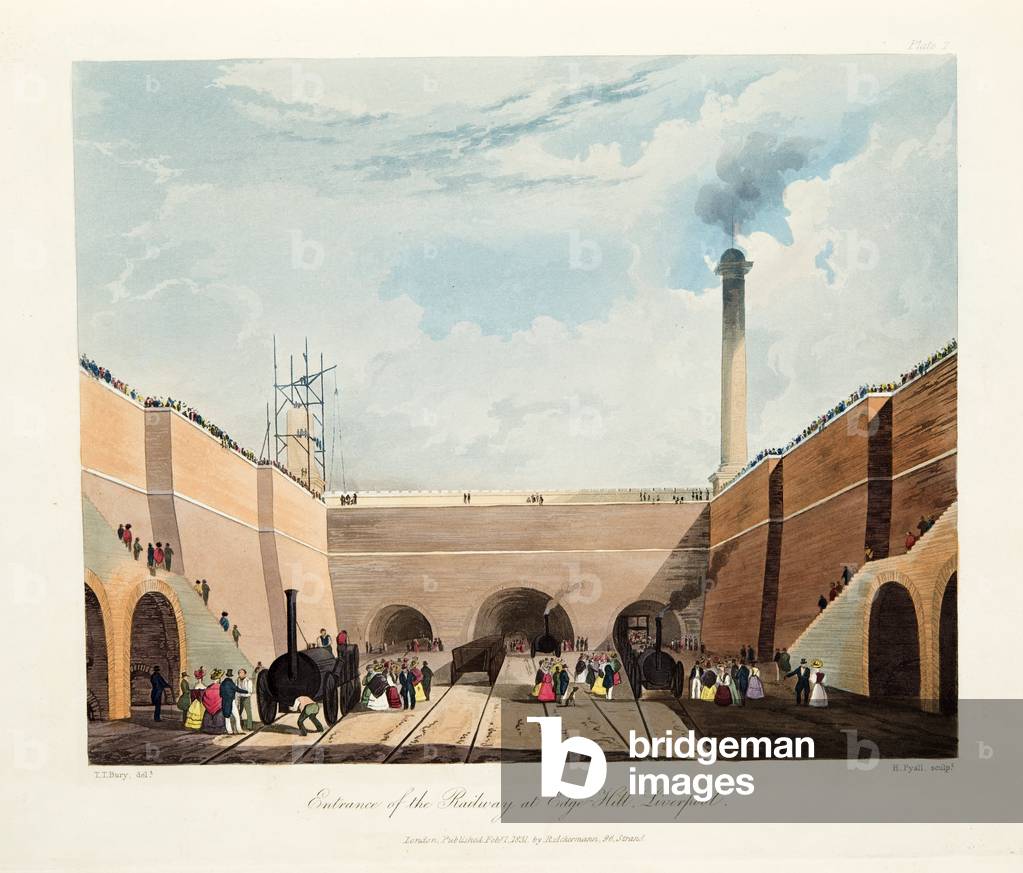
HIM5295691 Entrance of the Railway at Edge Hill, Liverpool, published 1831 (hand coloured engraving). From 'Six Coloured Views on the Liverpool and Manchester Railway with a plate of The Coaches, Machines, etc' by Thomas Talbory Bury, published 1831
DC
HIM5473659
DC
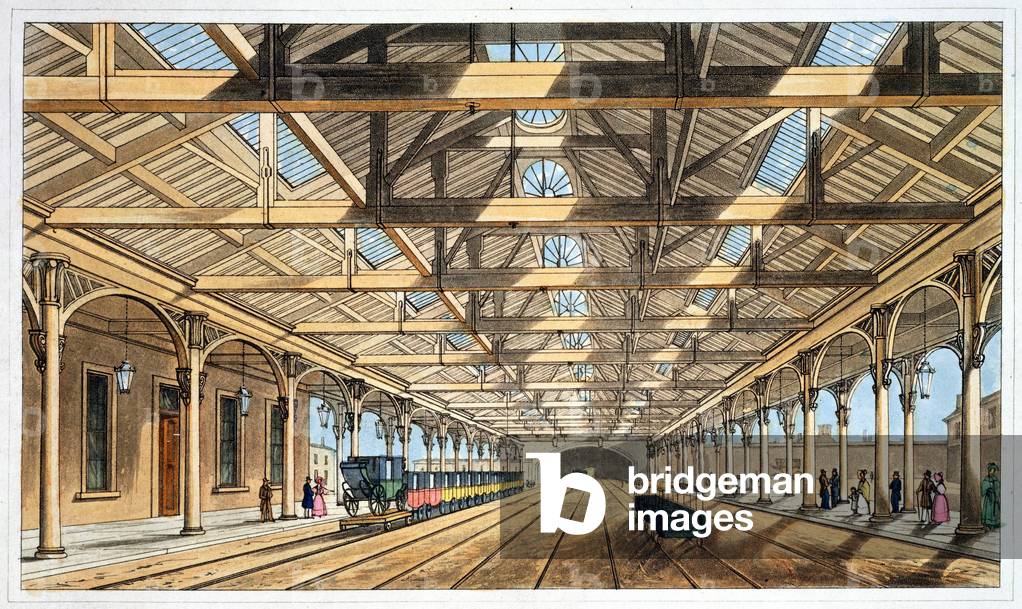
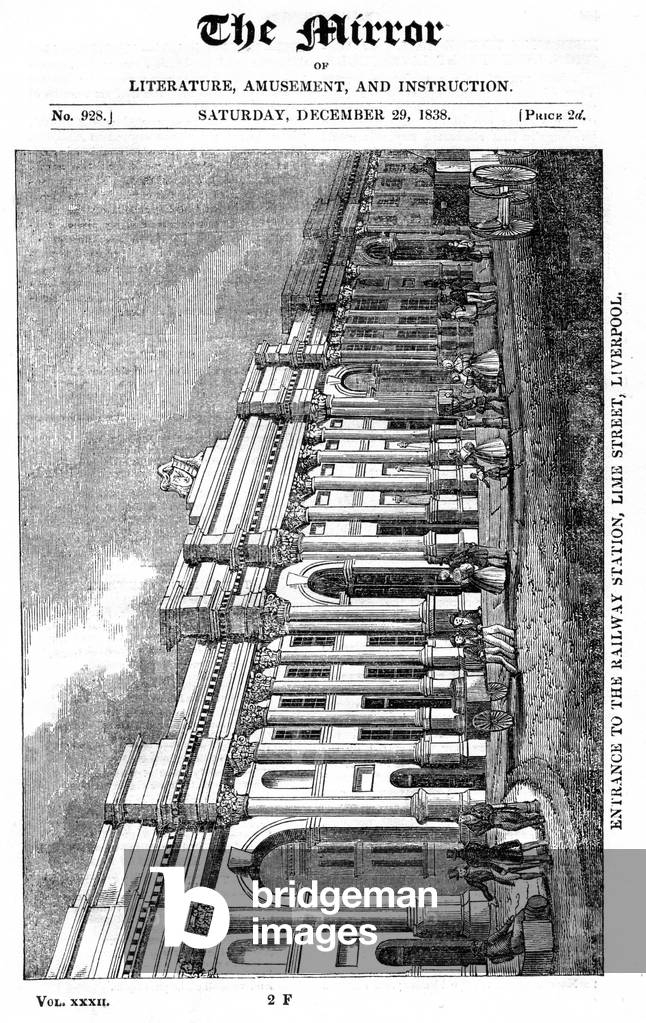
HIM5263886 Entrance to the tunnel and booking offices New Station, Lime Street, Liverpool, 1836. The Liverpool & Manchester Railway was built under the guidance of chief engineer George Stephenson (1803-1859). It opened on 15th September 1830, becoming the world's first inter-city railway. From ""Liverpool and Manchester Railway"", 1836. Engraved by John Harris II (1791-1873)
DC
MOR3058422
DC
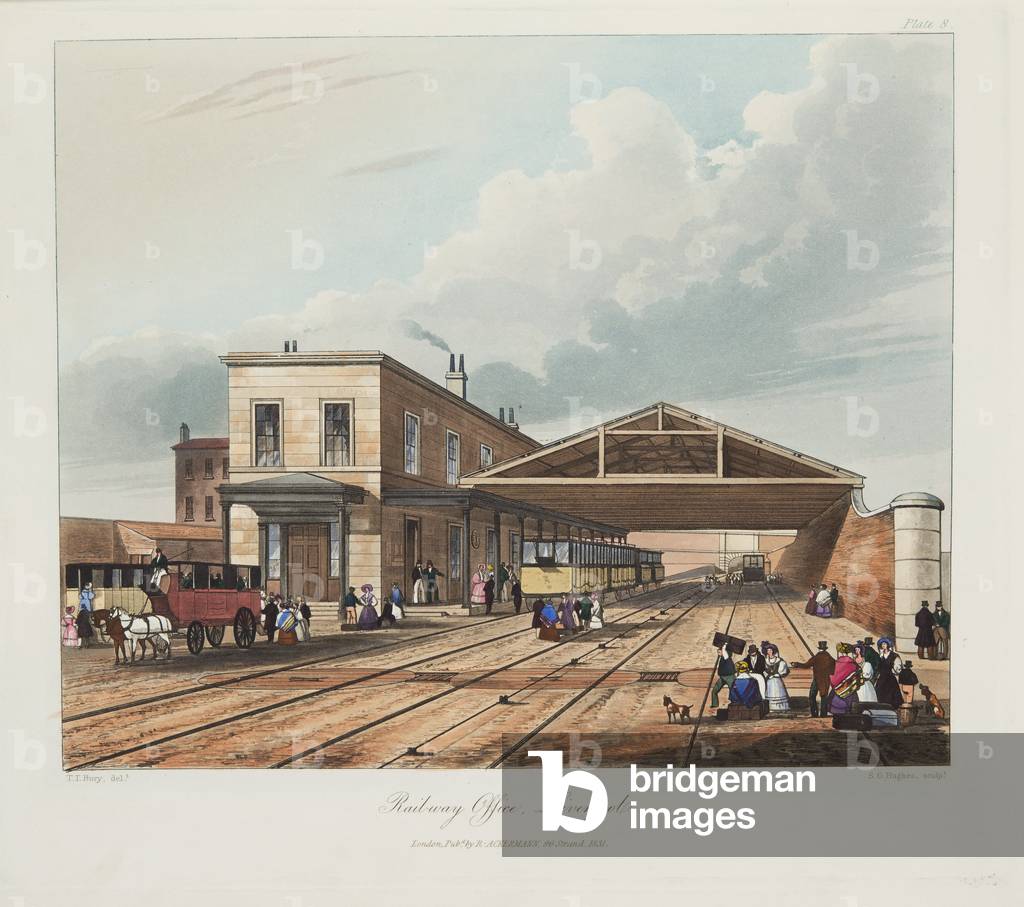
HIM5295705 Railway Office, Liverpool, published 1831 (hand coloured engraving). From 'Coloured Views on the Liverpool and Manchester Railway with plates of the Coaches, Machines, etc. from Drawings made on the Spot' by Thomas Talbot Bury, published 1831
DC
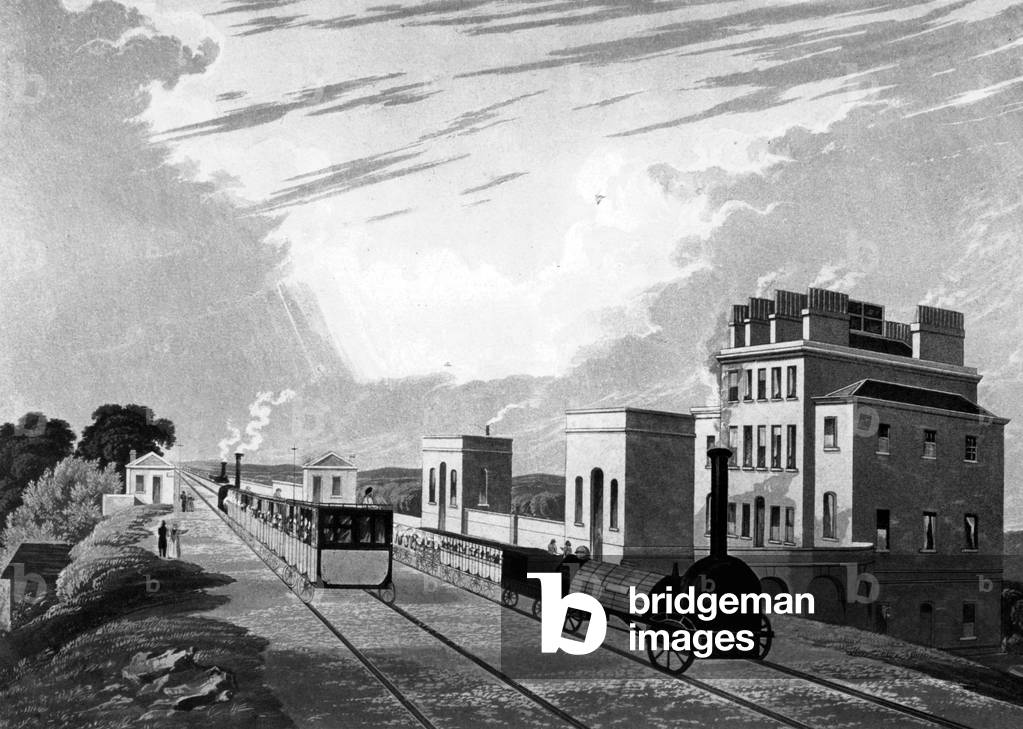
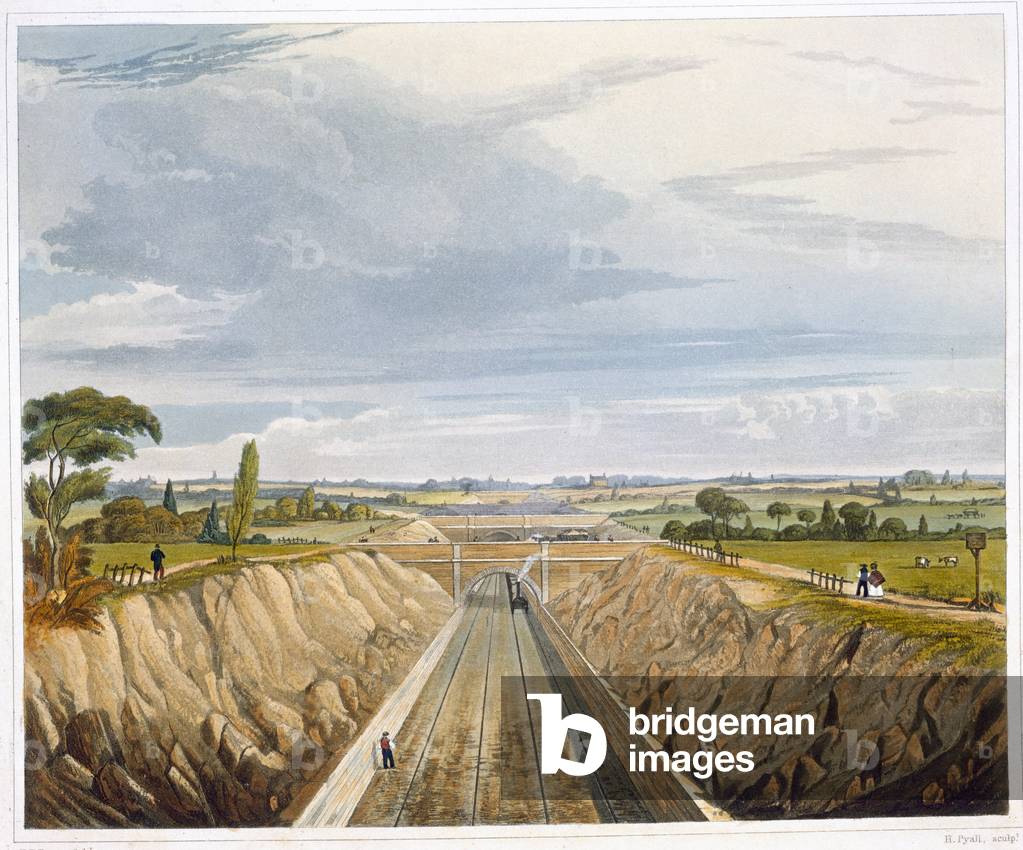
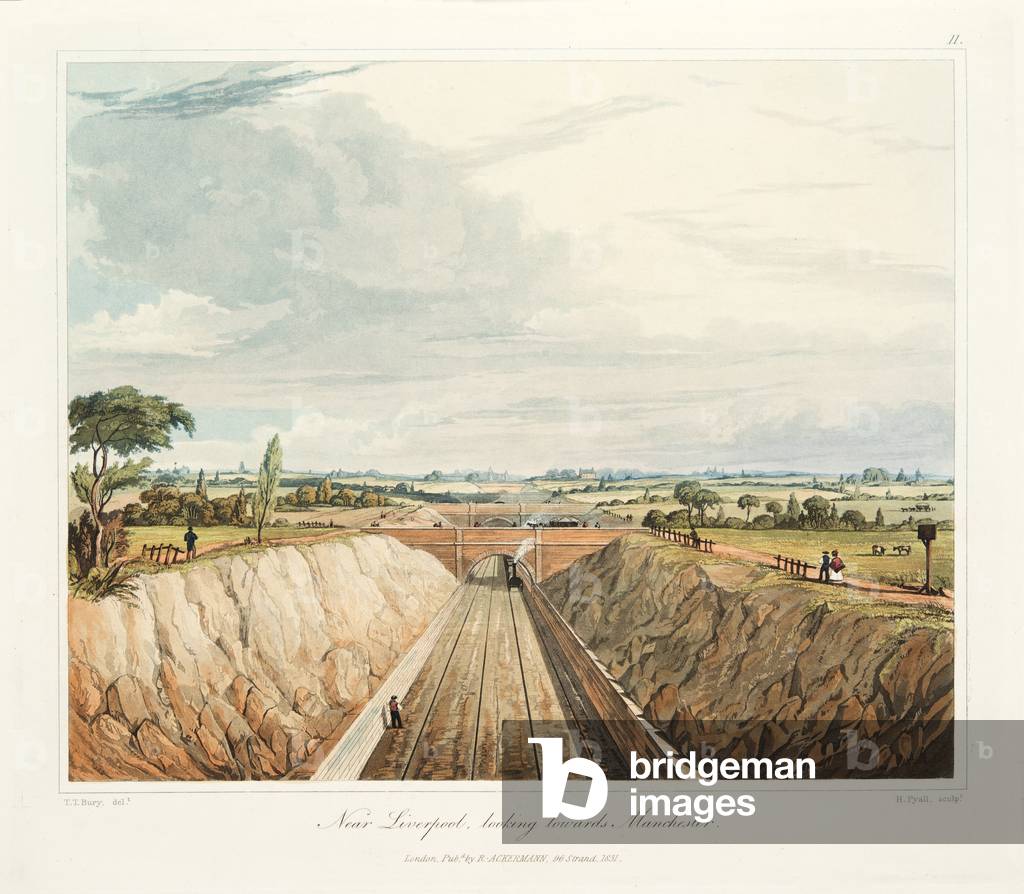
HIM5295698 Near Liverpool, looking towards Manchester, published 1831 (hand coloured engraving). From 'Coloured Views on the Liverpool and Manchester Railway with plates of the Coaches, Machines, etc. from Drawings made on the Spot' by Thomas Talbot Bury, published 1831
DC
HIM5473668
DC
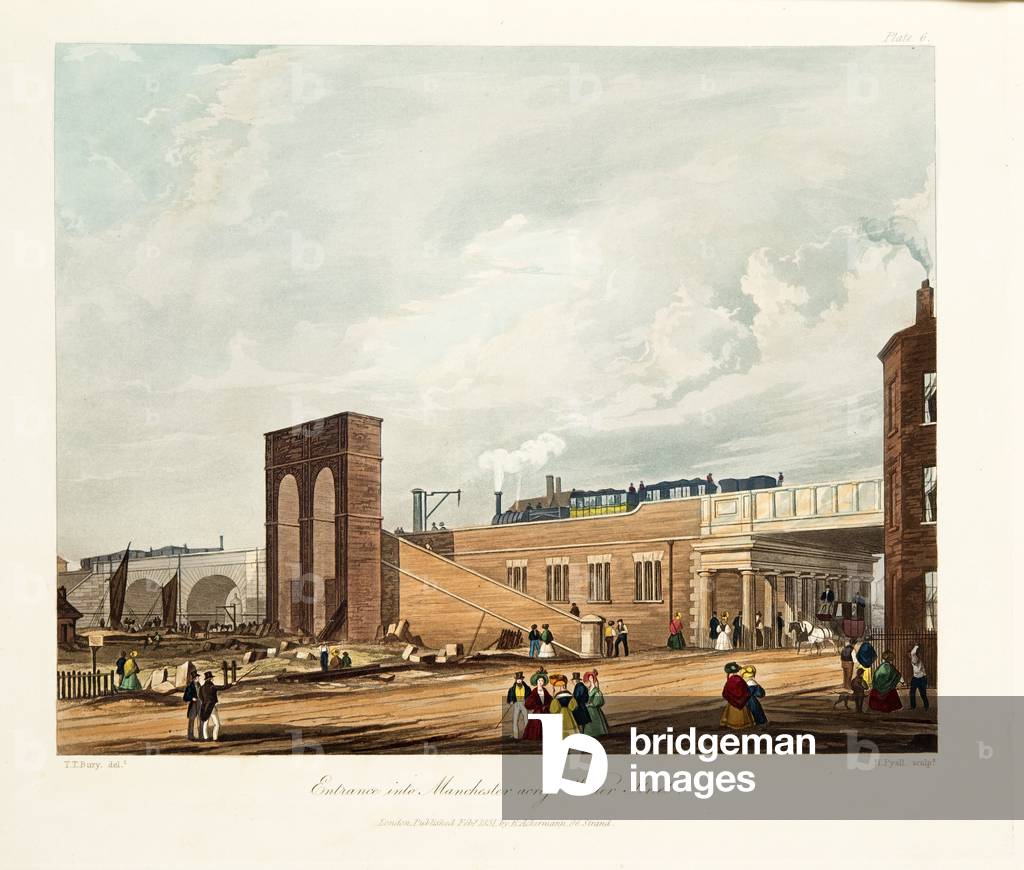
HIM5295693 Entrance into Manchester Across Water Street, published 1831 (hand coloured engraving). From 'Six Coloured Views on the Liverpool and Manchester Railway with a plate of The Coaches, Machines, etc' by Thomas Talbory Bury, published 1831
DC
HIM5295677 The Tunnel, published 1831 (hand coloured engraving). From 'Six Coloured Views on the Liverpool and Manchester Railway with a plate of The Coaches, Machines, etc' by Thomas Talbory Bury, published 1831
DC
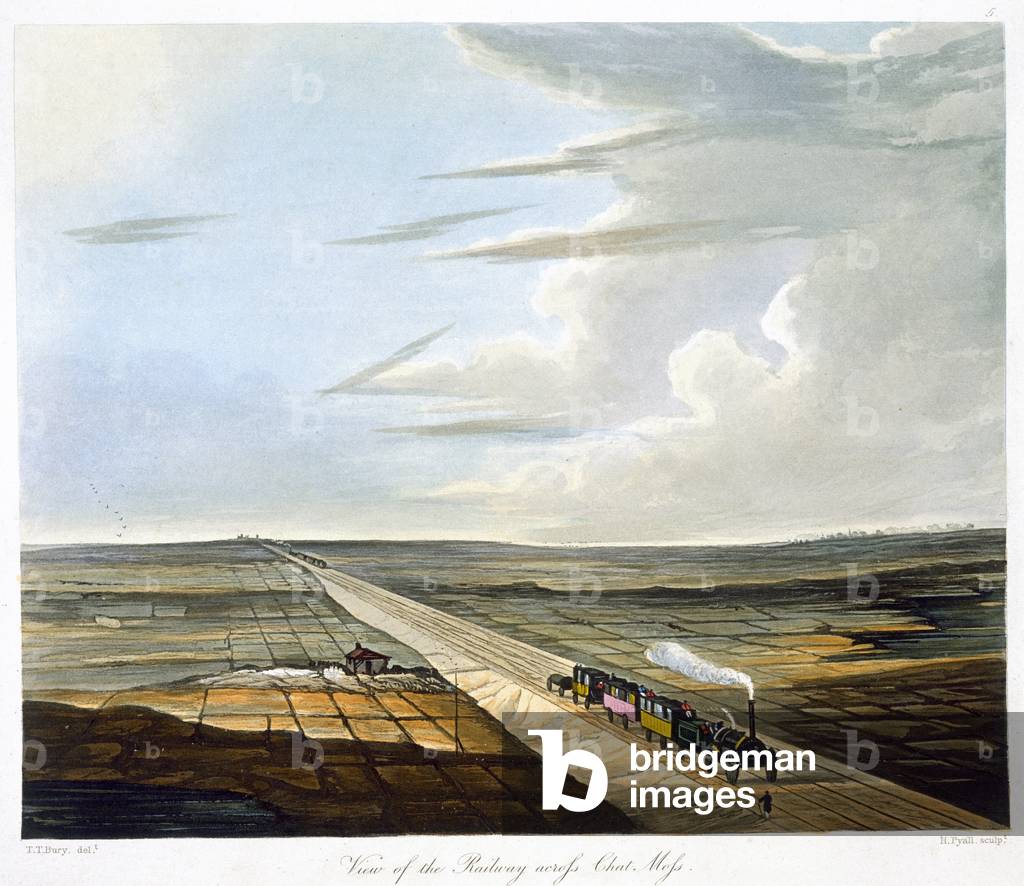
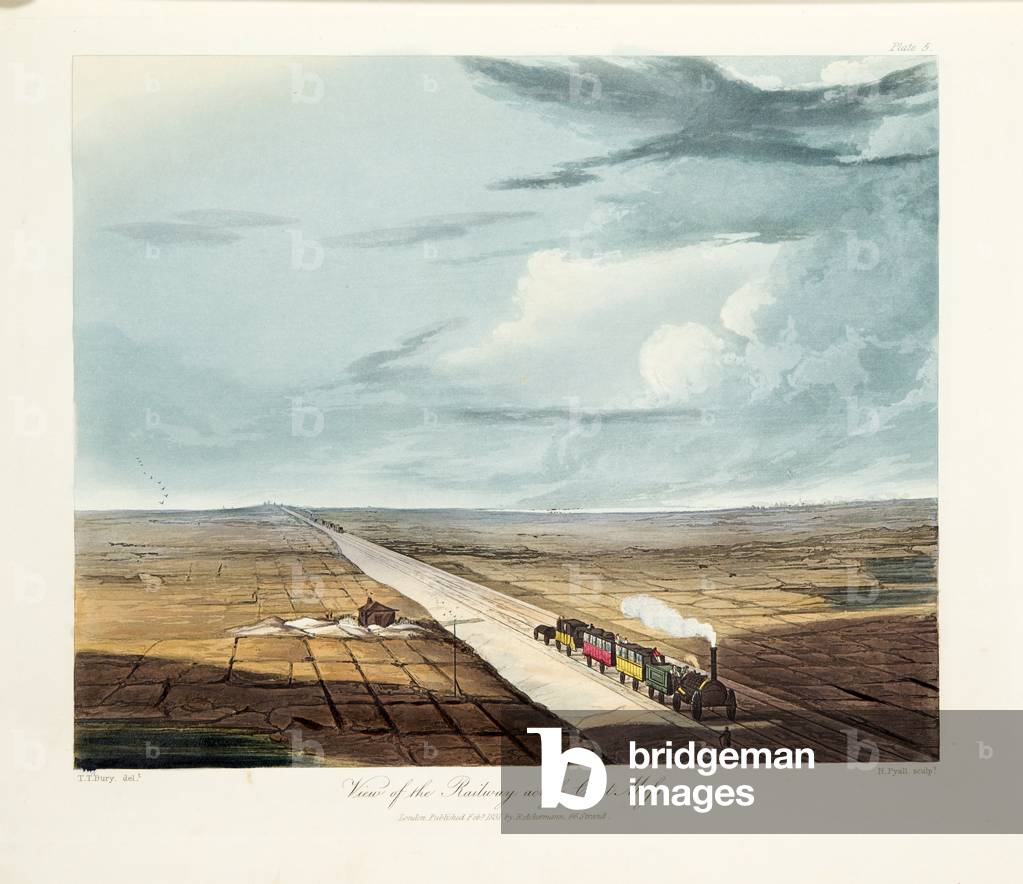
HIM5295692 View of the Railway Across Chat Moss, published 1831 (hand coloured engraving). From 'Six Coloured Views on the Liverpool and Manchester Railway with a plate of The Coaches, Machines, etc' by Thomas Talbory Bury, published 1831. Rainhill Bridge, Chat Moss, near Liverpool, 1831
DC
HIM5295697 'Excavation of Olive Mount, 4 Miles from Liverpool', published 1831 (hand coloured engraving). From 'Six Coloured Views on the Liverpool and Manchester Railway with a plate of The Coaches, Machines, etc' by Thomas Talbory Bury, published 1831
DC
HIM5473642
DC
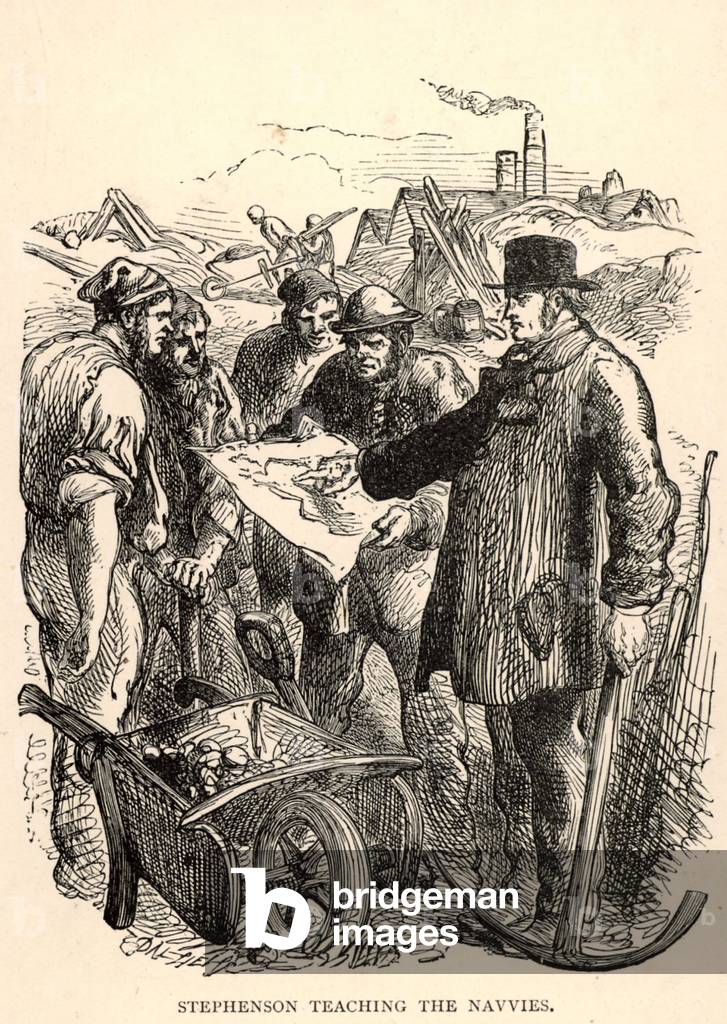
UIG865038 George Stephenson (1781-1848) English mechanical engineer and railway pioneer, born at Wylam, near Newcastle upon Tyne, Northumberland. Stephenson instructing the navvies constructing the Liverpool and Manchester Railway, England, which was opened in September 1830. From "The Triumphs of Steam" by Henry Frith (London, c1898). Engraving.
DC
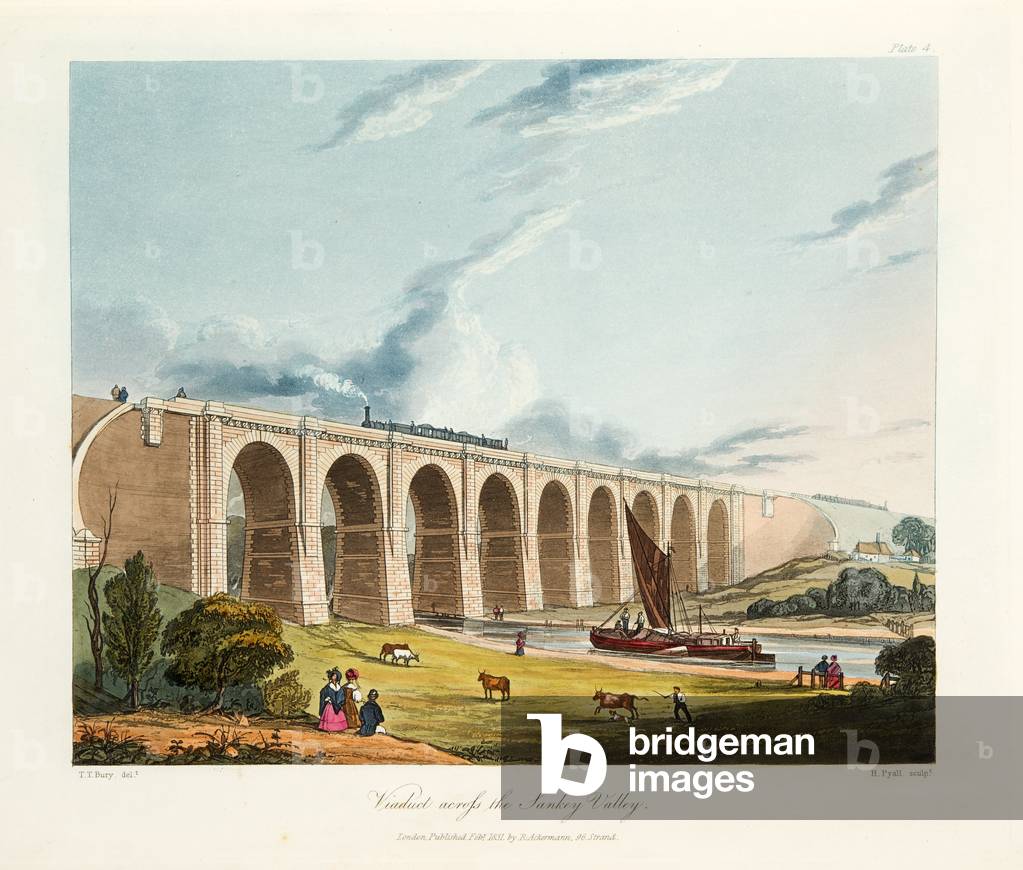
HIM5295689 Viaduct Across the Sankey Valley, published 1831 (hand coloured engraving). From 'Six Coloured Views on the Liverpool and Manchester Railway with a plate of The Coaches, Machines, etc' by Thomas Talbory Bury, published 1831
DC
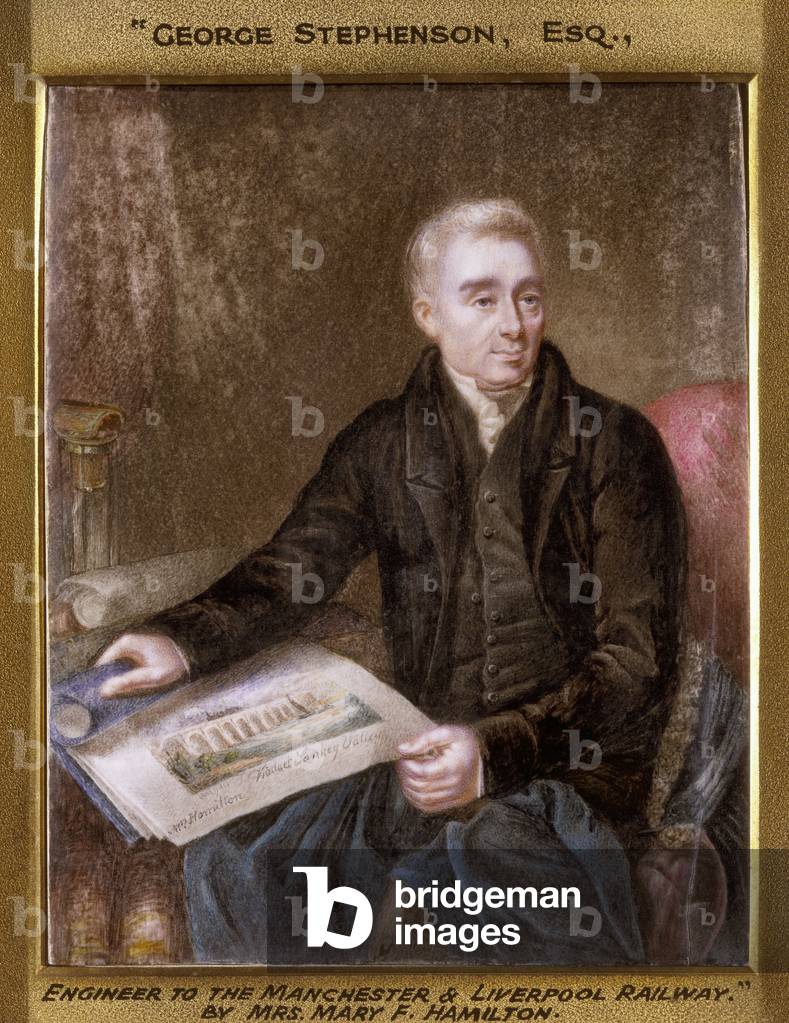
UIS5063667 George Stephenson, English railway engineer, 1830-36. Watercolour portrait on ivory by Mrs Mary F Hamilton, showing Stephenson holding an aquatint of the Sankey Valley Viaduct, which he designed for the Liverpool & Manchester Railway. A largely self-educated man, Stephenson's (1781-1848) early working life was spent as a brakesman and in collieries maintaining stationary engines. In 1813 he was commissioned to design his first steam locomotive, 'Blucher', for the Killingworth Colliery in Tyne and Wear. Later, he became the engineer for the Stockton & Darlington Railway (1825), and the Liverpool & Manchester Railway (1829). He advised on the construction of many of the English railways and the Belgian State Railway (1835), hence his nickname 'the father of railways'. Dimensions (+ frame): 170mm x 145mm. ©SSPL/Science Museum
DC
UIS5062539 George Stephenson, railway engineer, 1830-1836. Watercolour miniature by Mary F Hamilton of George Stephenson (1781-1848). Stephenson commenced his working life as a cowherd, later working in coalpits. His mechanical mind was noticed by his employers and by 1812 he was an engine-wright earning 100 pounds a year. In 1813 he was commissioned to design a steam locomotive for the Killingworth wagonway. He was the engineer for the Stockton & Darlington Railway (opened 1825) and the Liverpool & Manchester Railway (opened 1829). He advised on the construction of the Belgian State Railway (opened 1835) and was involved with the construction of many of the English railways, hence his nickname 'the father of railways'. ©SSPL/Science Museum
DC
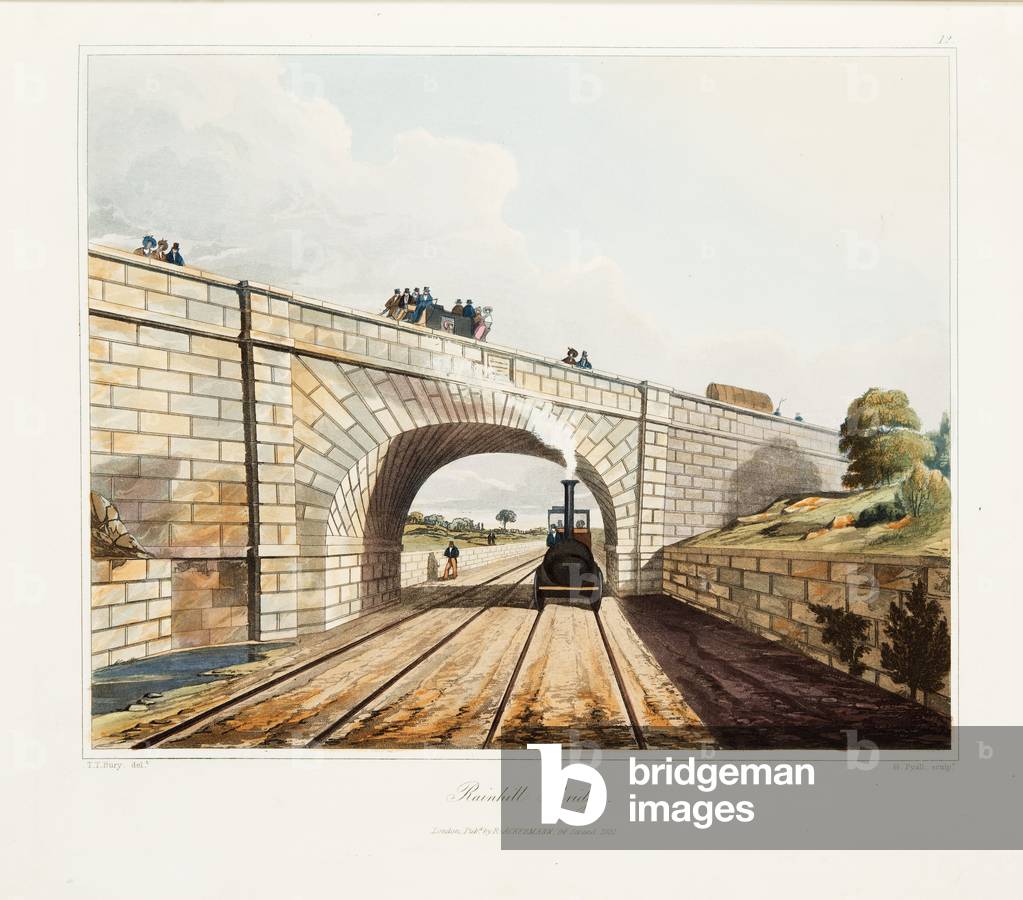
HIM5295708 Rainhill Bridge, published 1831 (hand coloured engraving). From 'Coloured Views on the Liverpool and Manchester Railway with plates of the Coaches, Machines, etc. from Drawings made on the Spot' by Thomas Talbot Bury, published 1831
DC
HIM5251787 Le voyage sur la ligne de chemin de fer entre Liverpool et Manchester inauguree le 15/09/1830. On y apercot les trois classes differentes. Planche de 1831.
DC
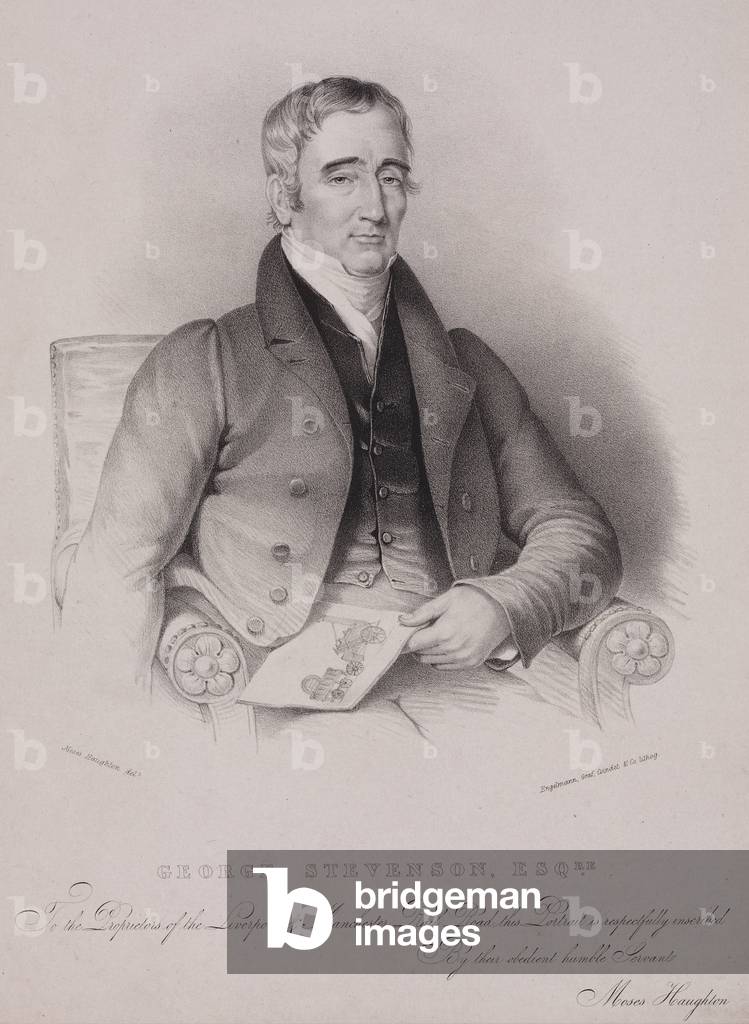
UIS5092387 George Stephenson, English railway engineer, 1830-31. Lithograph by Engelmann, Graf, Coindet & Co after an original drawing by Moses Haughton. A largely self-educated man, George Stephenson's (1781-1848) early working life was spent as a brakesman and in collieries maintaining stationary engines. His mechanical mind was noticed by his employers, and by 1812 he was an engine-wright earning 100 pounds a year. In 1813 he was commissioned to design his first steam locomotive, 'Blucher', for the Killingworth Colliery in Tyne and Wear. Later, he became the engineer for the Stockton & Darlington Railway (1825), and the Liverpool & Manchester Railway (1829). He advised on the construction of many of the English railways and the Belgian State Railway (1835), hence his nickname 'the father of railways'. ©SSPL/Science Museum
DC
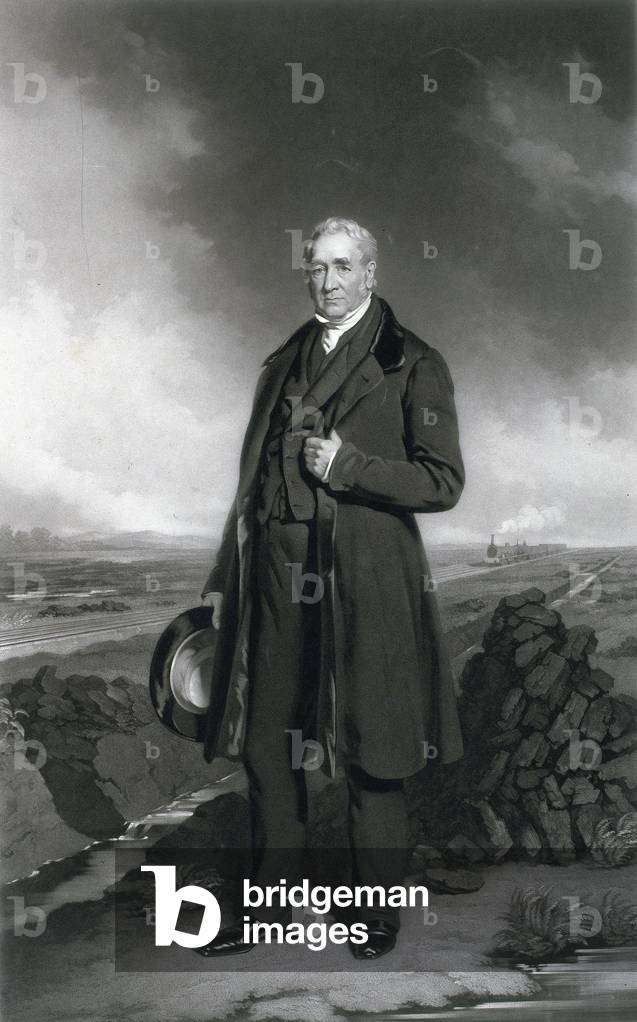
UIS5087659 George Stephenson, English railway engineer, c 1830. Mezzotint by Thomas Lewis Atkinson after an original oil painting by John Lucas, c 1830s. A largely self-educated man, George Stephenson's (1781-1848) early working life was spent as a brakesman and in collieries maintaining stationary engines. His mechanical mind was noticed by his employers, and by 1812 he was an engine-wright earning 100 pounds a year. In 1813 he was commissioned to design his first steam locomotive, 'Blucher', for the Killingworth Colliery in Tyne and Wear. Later, he became the engineer for the Stockton & Darlington Railway (1825), and the Liverpool & Manchester Railway (1829). He advised on the construction of many of the English railways and the Belgian State Railway (1835), hence his nickname 'the father of railways'. ©SSPL/Science Museum
DC
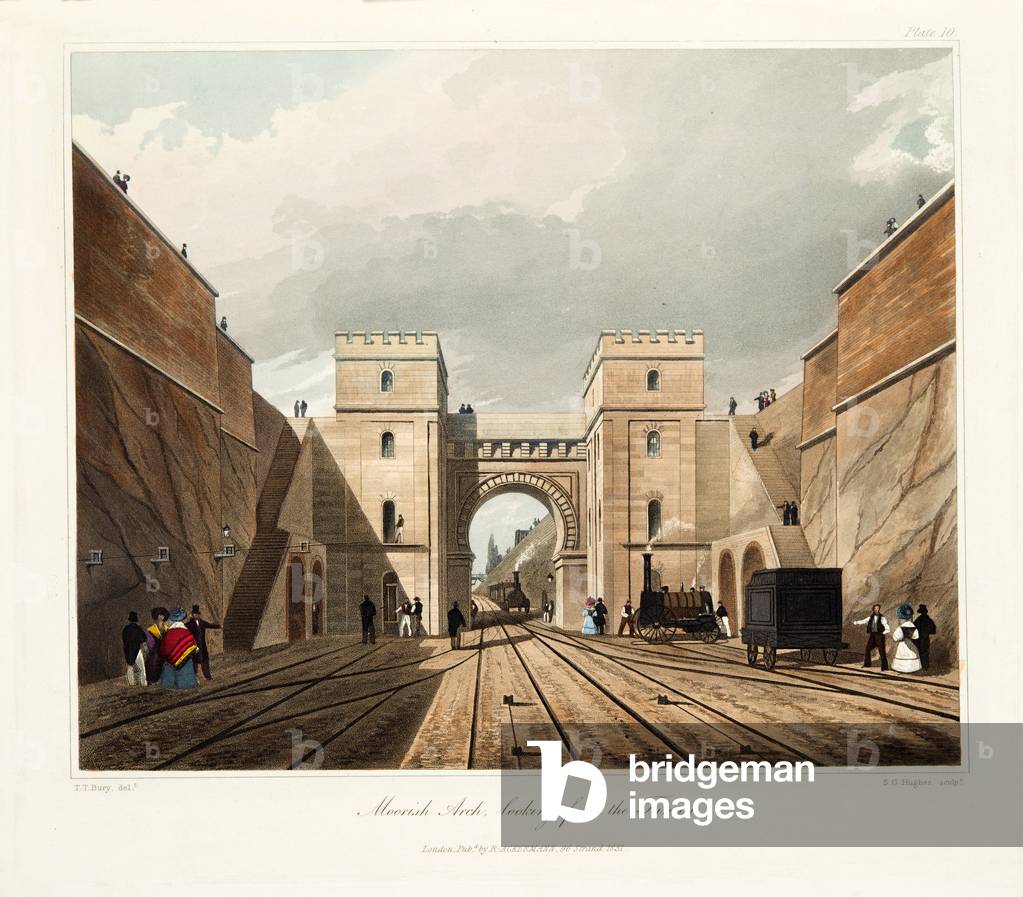
HIM5295685 Moorish Arch, looking from the Tunnel, published 1831 (hand coloured engraving). From 'Coloured Views on the Liverpool and Manchester Railway with plates of the Coaches, Machines, etc. from Drawings made on the Spot' by Thomas Talbot Bury, published 1831
DC
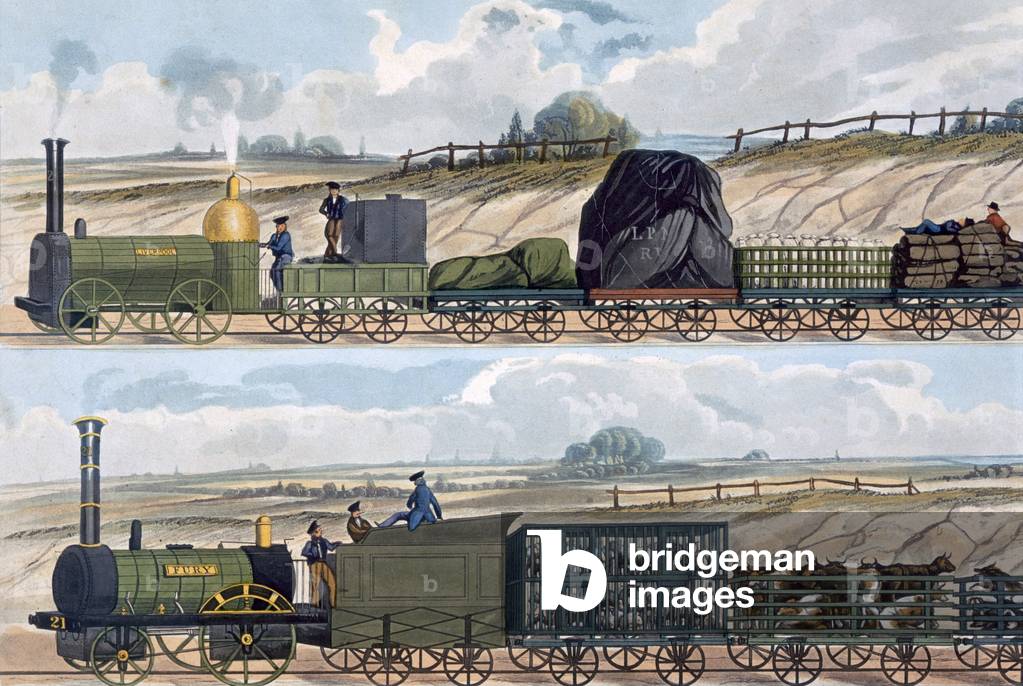
HIM5251810 Revolution industrielle : voyage en train sur la ligne entre Liverpool et Manchester : en haut : les bons wagons tire par la locomotive ""Liverpool"" En bas : train de marchandises tire par la locomotive ""Fury"". La ligne fut inauguree le 15/09/1830.
DC
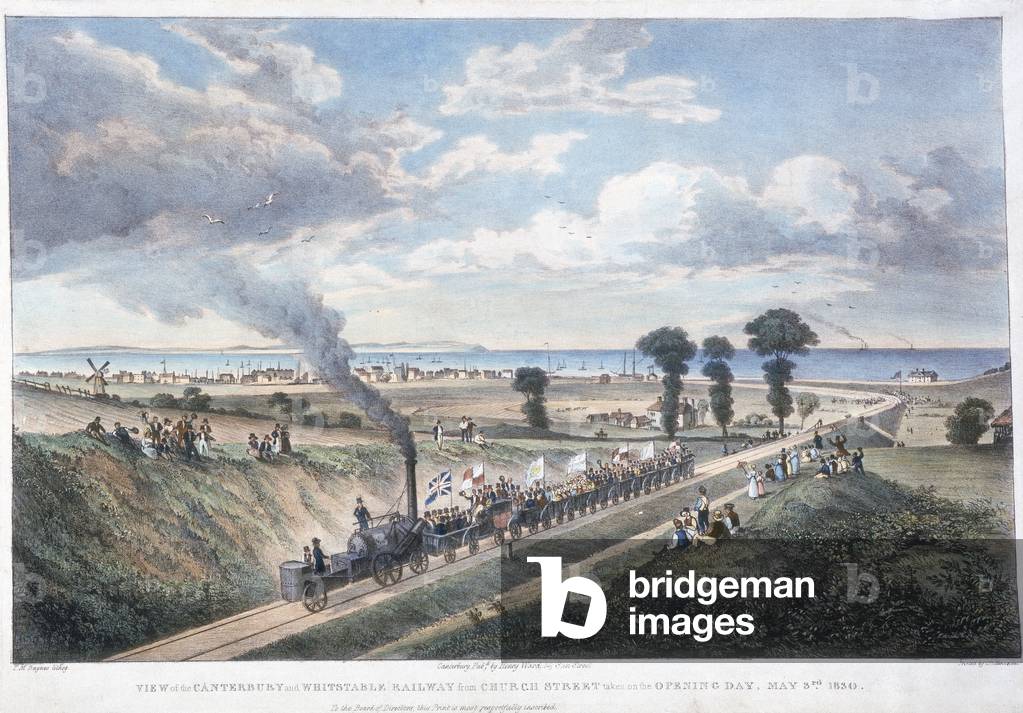
UIS5068577 The opening of the Canterbury & Whitstable Railway, Kent, 3 mai 1830. Coloured lithograph by T M Baynes, of the view from Church Street with Whitstable in the distance, showing the steam locomotive 'Invicta'. The Invicta was built for the Canterbury and Whitstable line by Robert Stephenson & Company. English engineer and mechanic Stephenson (1803-1859) based the design of the Invicta on that of the 'Rocket' that became famous after winning the Rainhill Trials on the Liverpool & Manchester Railway in 1829. The Canterbury & Whitstable Railway was known locally as the 'Crab and Winkle' line. It was taken over by the South Eastern Railway in 1844, and remained in operation until 1952. Printed by C Hullmandel and published by Henry Ward, 14 Sun Street, Canterbury. ©SSPL/Science Museum
DC
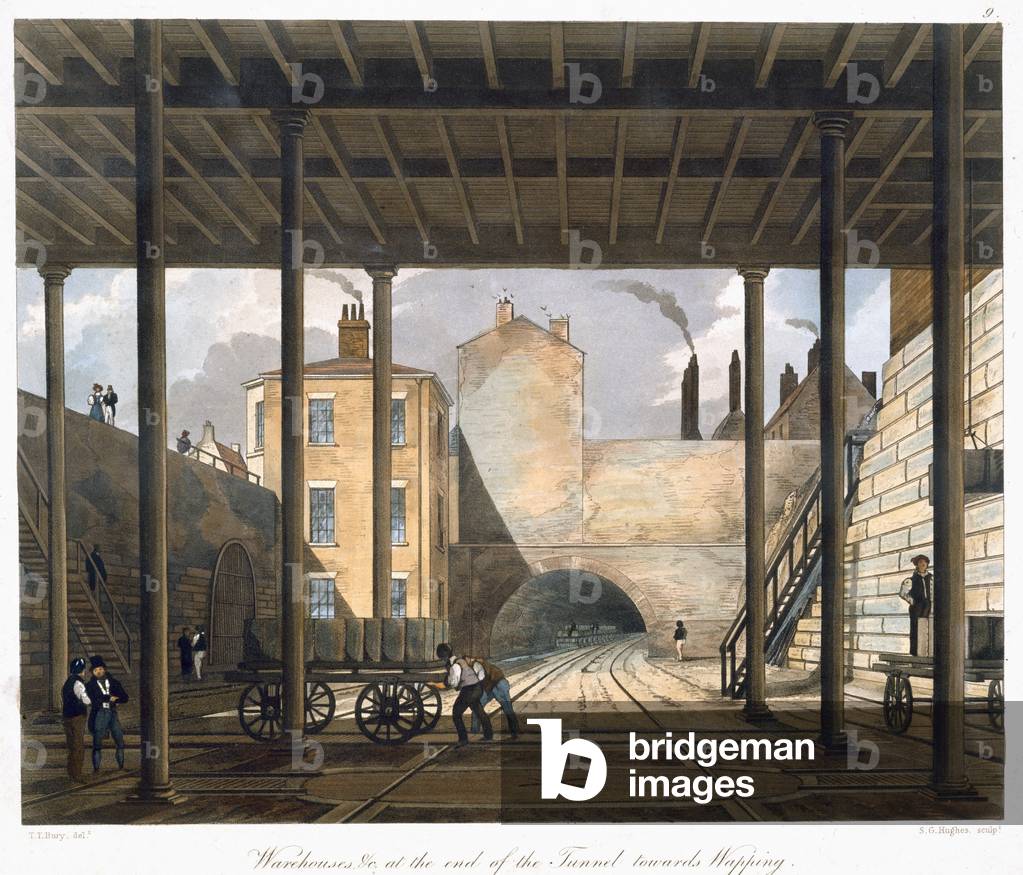
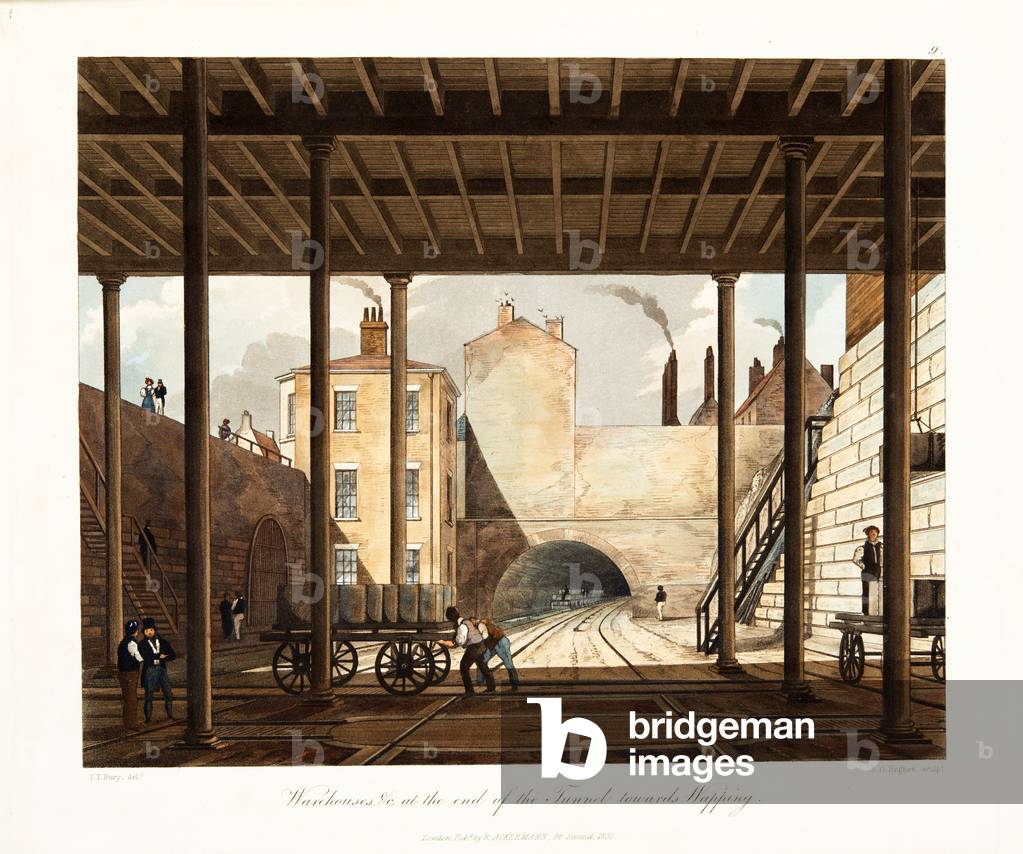
HIM5295720 Warehouses etc at the end of the Tunnel towards Wapping, published 1831 (hand coloured engraving). From 'Coloured Views on the Liverpool and Manchester Railway with plates of the Coaches, Machines, etc. from Drawings made on the Spot' by Thomas Talbot Bury, published 1831
DC
HIM5264245 'Coloured view of the Liverpool & Manchester Railway', 1832-1833. The world's first steam railway opened on 15 September 1830. First class passengers in closed carriages (top) and second class passengers in open wagons, (bottom). Illustration by SG Hughes, published by Ackermann & Co, (London, 1832-1833)
DC
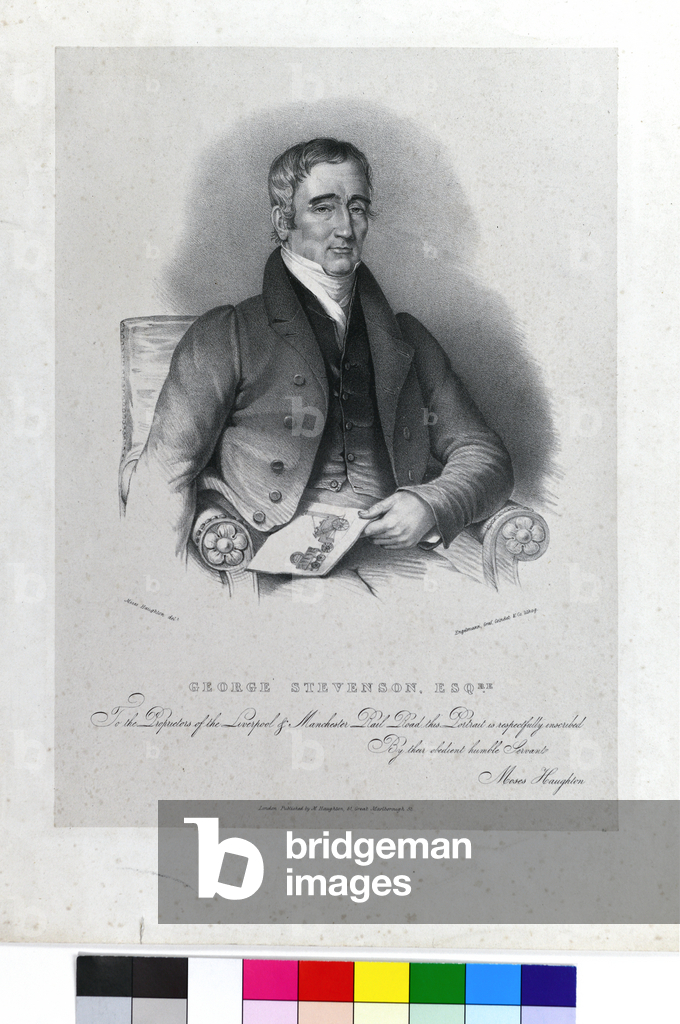
IGM9005703 View of George Stephenson, seated and holding a drawing of `Rocket' in his left hand, ‘To the Proprietors of the Liverpool & Manchester Rail Road, this Portrait is respectfully inscribed by their obedient humble Servant Moses Haughton'. Lithograph by Engelmann, Graf, Coindet & Co after an original drawing by Moses Haughton the Younger (1773-1849) of 51, Great Marlborough St. LondonAs a colliery overseer near Newcastle, in 1814 George Stephenson (1781-1848) developed the early use of locomotives for hauling coal waggons at Killingworth Colliery. In 1825 his Stockton and Darlington Railway opened and later the same year he was appointed engineer to the Liverpool and Manchester Railway and was largely responsible for promoting it as a locomotive-hauled line. The practical development of his 1829 engine ‘Rocket’ (seen on the drawing in his left hand) was more the work of his son Robert. The Rainhill Trials of that same year proved the viability of locomotives beyond any doubt, and the next four years saw a rapid evolution, laying the foundation of all subsequent locomotive design for the next 125 years.
DC
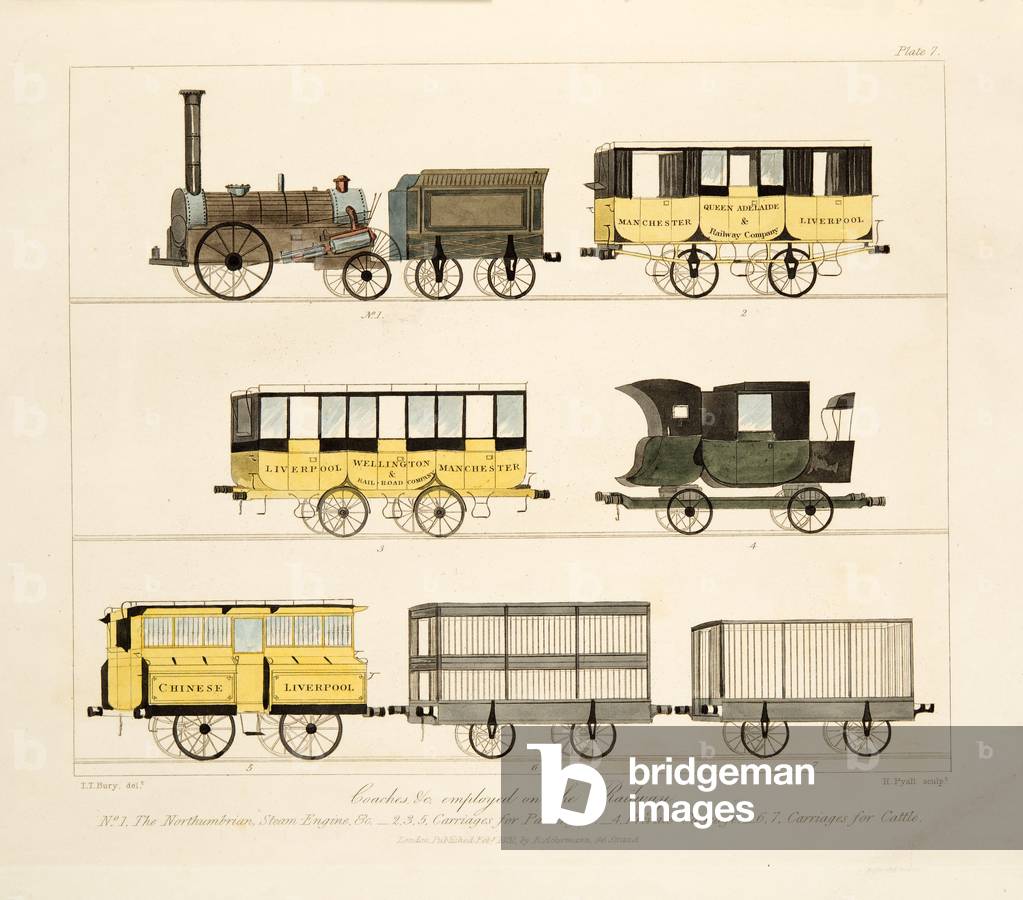
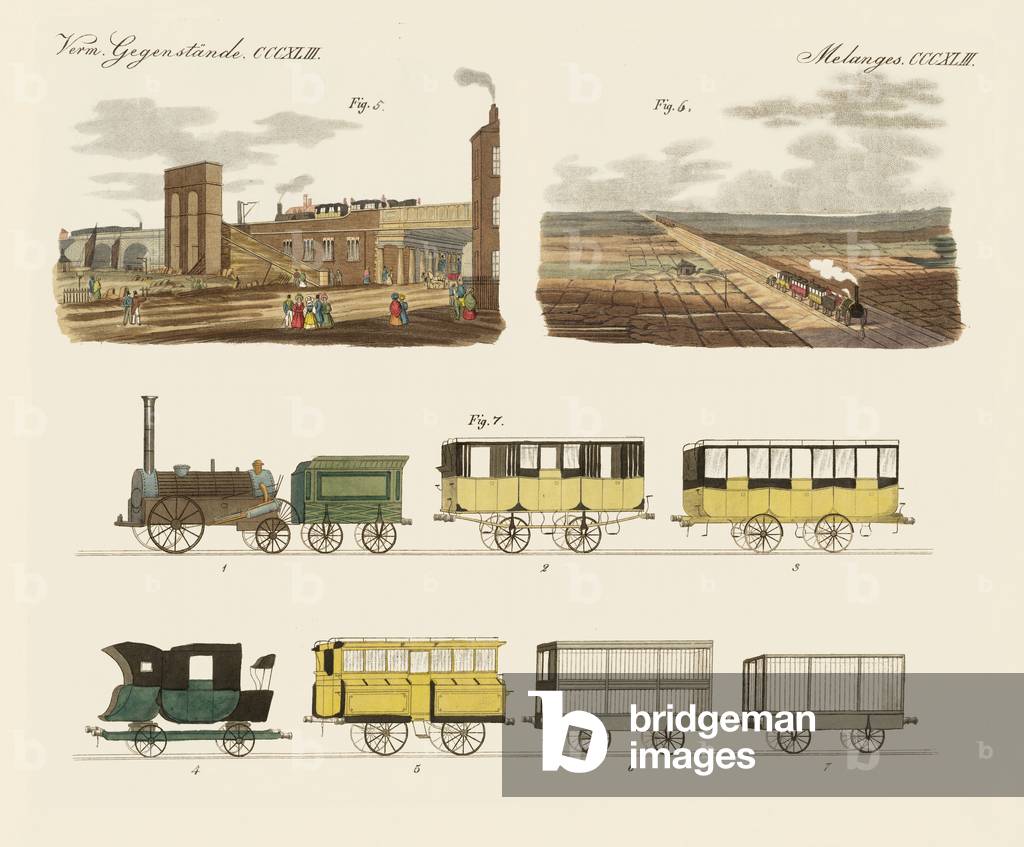
HIM5295703 Coaches etc. employed on the Railway, published 1831 (hand coloured engraving). No.1 The Northumbrian Steam Engine etc._ 2, 3, 5, Carriages for Passengers _ 4. Private Carriage _ 6,7, Carriages for Cattle. From 'Six Coloured Views on the Liverpool and Manchester Railway with a plate of The Coaches, Machines, etc' by Thomas Talbory Bury, published 1831
DC
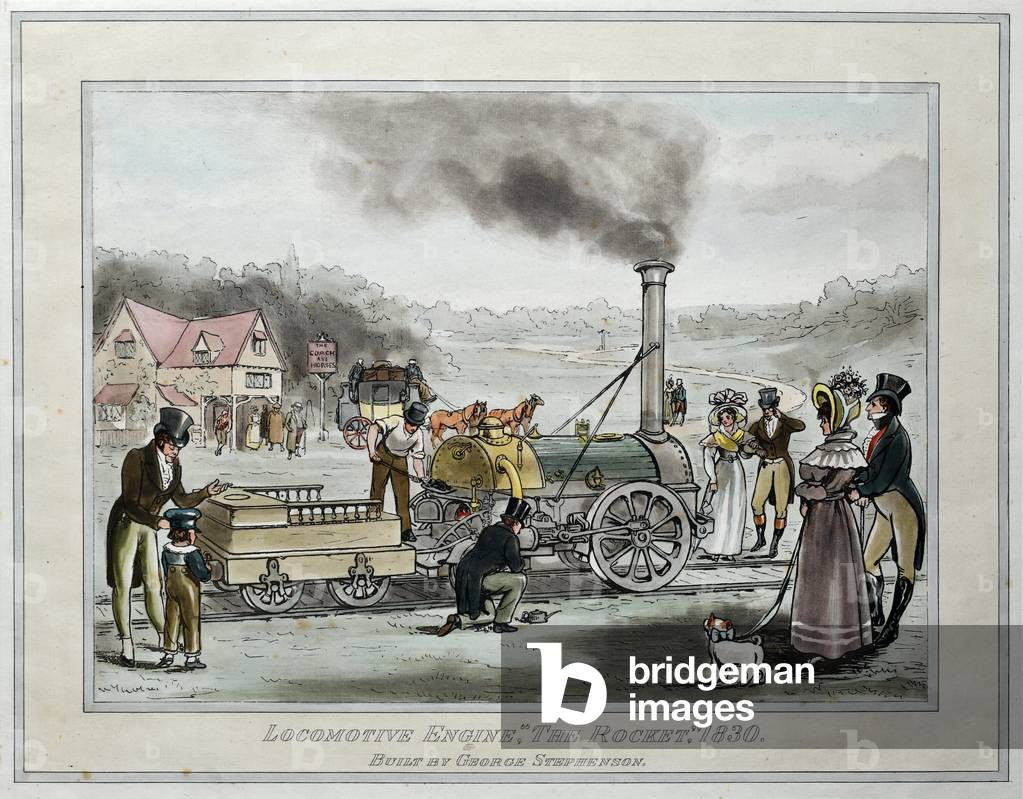
IGM7394209 By Unknown (after James Naysmith (1807-1890))View of 0-2-2 tender steam locomotive with George Stephenson as engine driver in foreground, watched by spectators, `The Coach and Horses' inn in background. Reproduced in E. F. Dendy Marshall's Centenary History of the Liverpool and Manchester Railway.
DC
NRM264152 warehouses at Wapping, Liverpool, on the Liverpool & Manchester Railway (LMR); opened in 1830, it was the world's first intercity railway;
DC
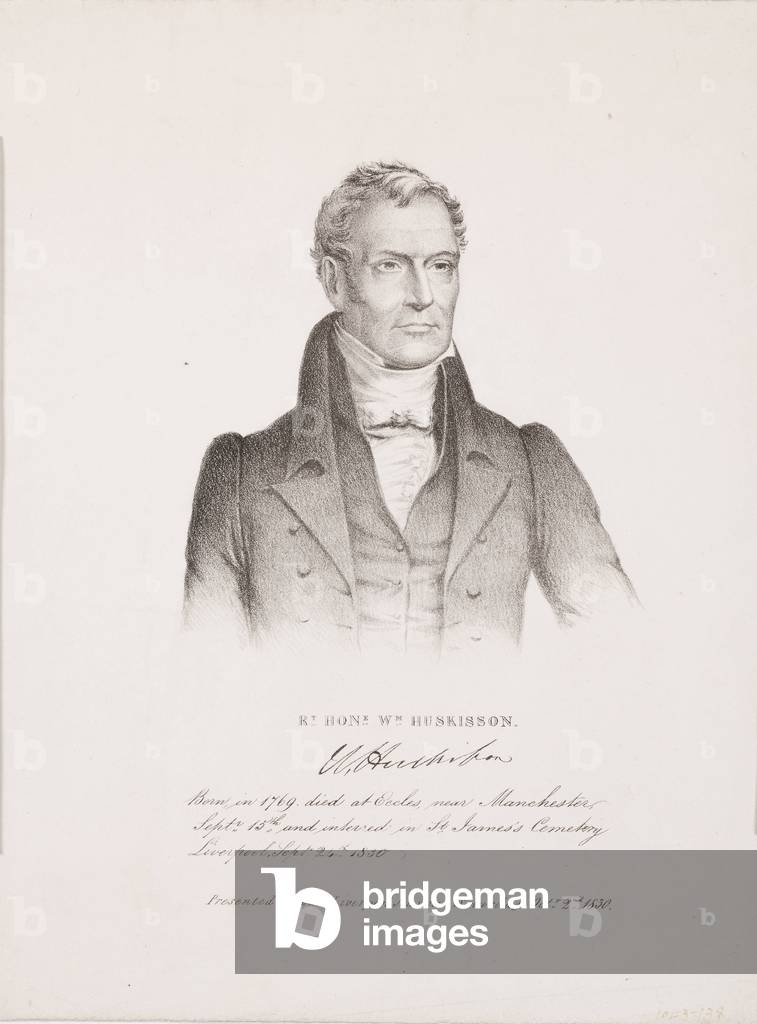
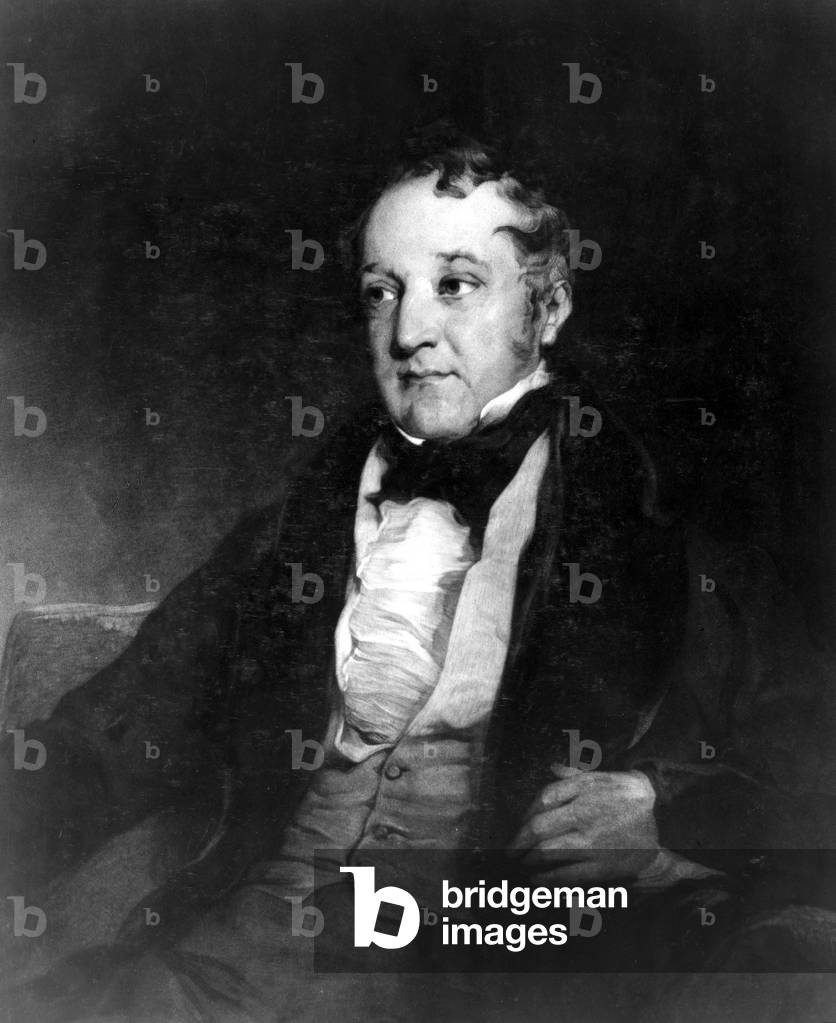
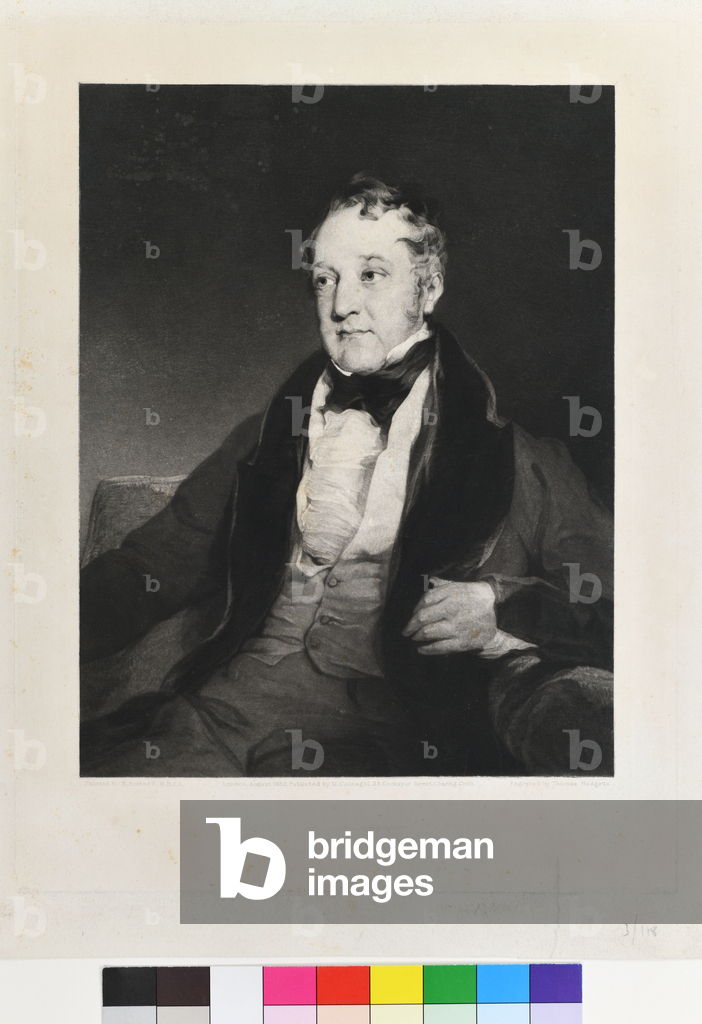
UIS5092609 William Huskisson, British politician, c 1820s. Mezzotint by Thomas Hodges after an original painting by R Rothwell. William Huskisson (1769-1830), was Member of Parliament for Morpeth, Liskeard, Harwich, Chichester and Liverpool. He was run over and killed at the opening of the Liverpool and Manchester Railway in 1830. Published by Colnaghi, London, August 1832. ©SSPL/Science Museum
DC
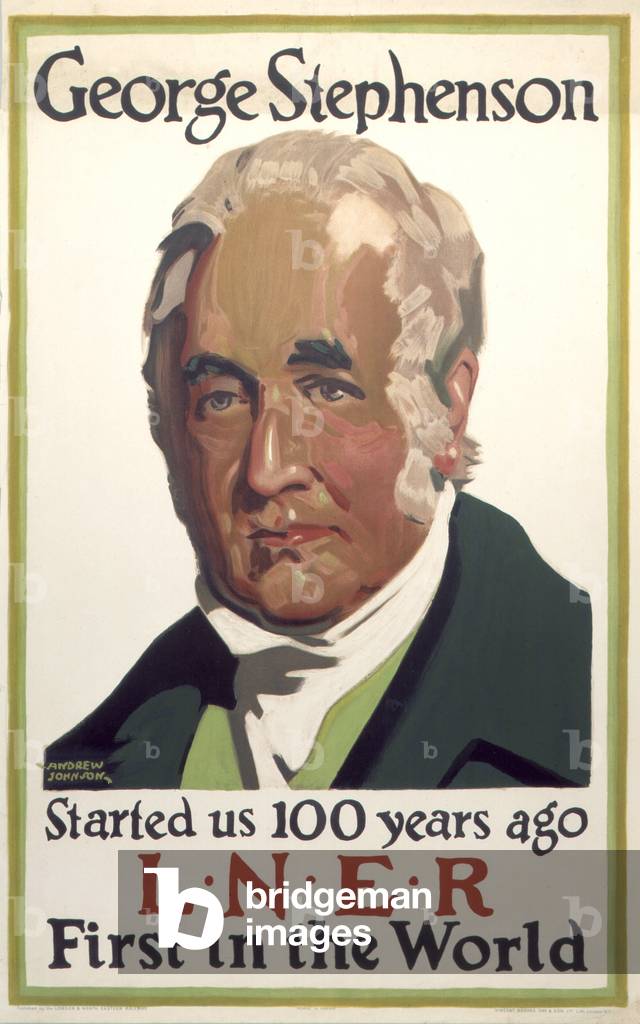
UIS5061061 George Stephenson', LNER poster, 1930. Poster produced for the London & North Eastern Railway (LNER), showing a portrait of the founder of the first commercial steam railway and forerunners of the LNER, George Stephenson (1781-1848). In 1825, Stephenson launched the Stockton & Darlington Railway, and four years later his steam locomotive 'Rocket' won the Rainhill Trials competition, leading to the opening of the Liverpool & Manchester Railway in 1830. Artwork by Andrew Johnson. ©SSPL/NRM/Pictorial Collection
DC
UIS5062476 William Huskisson, English politician, c 1820s. Mezzotint by Thomas Hodges after R Rothwell, published by Colnaghi, London, August 1832. William Huskisson (1769-1830) was Member of Parliament for Morpeth, Liskeard, Harwich, Chichester and Liverpool. On 15th September 1830 Huskisson was killed when he tried to cross the track at the opening of the Liverpool and Manchester Railway to speak to the Duke of Wellington. He was hit by Stephenson's 'Rocket', driven by Joseph Locke, and died of his injuries later that day. ©SSPL/Science Museum
DC
IGM8941333 Portrait of William Huskisson (1770-1830), Statesman, financier, and Member of Parliament for several constituencies, including Liverpool.A loyal follower of George Canning, Huskisson held a series of minor political offices before being appointed President of the Board of Trade (1823-27). On Canning's death he became leader of the 'Canningite' Tories. A political advocate of free trade, modernity and progress, Huskisson was a great supporter of the engineer George Stephenson. Ironically, he was run over and killed at the opening ceremony of Stephenson's Manchester and Liverpool Railway (1830).Published by Martin Colnaghi (circa 1792-1851), 23 Cockspur Street, Charing Cross. Engraved by Thomas Hodgetts (circa 1781-1858) after a painting by Richard Rothwell (MRIA) (1800-1868)
DC
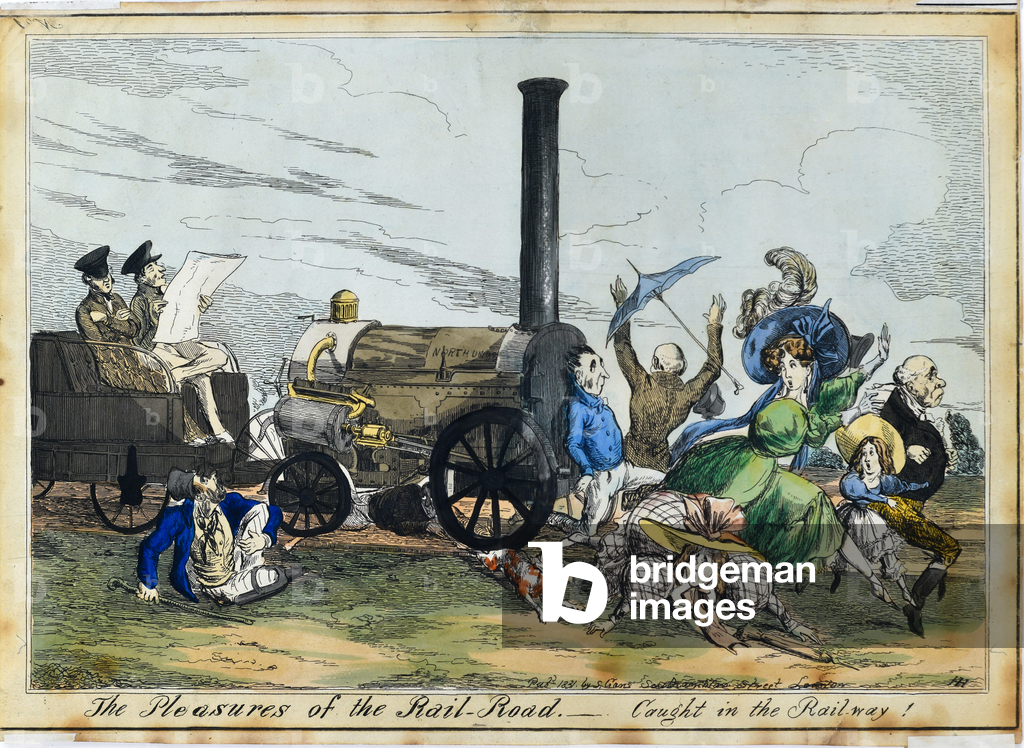
IGM9028785 By Henry Heath (1801-1858) View of men, women, a girl and a dog trying to get out of the way of a steam locomotive which is mowing them down due to the inattention of the driver and fireman, one of whom is reading a newspaper, the other being asleep with his arms folded. The image features the locomotive `Northumbrian' which made its first run on the opening day of the Liverpool and Manchester Railway in September 1830. It was on that occasion and from that train that the unfortunate William Huskisson, MP for Liverpool, stepped only to be knocked down and killed by `Rocket' coming in the opposite direction.Henry Heath (1801-1858) was a draughtsman, etcher of political caricatures and lithographer who switched from etching to lithography in 1831. In 1846, following the death of his wife Mary, he emigrated with two of his surviving sons to Australia on the ship ‘Calcutta’, travelling as Henry Heath Glover. Having first run a pub, Heath continued to produce art and many of his works are now held at Australia's National and State Libraries. Heath died in Adelaide in 1858.Published (not necessarily legitimately) by Sigismond Gans (1860-1861). Gans was a German-born print publisher specialising in caricatures and satires. He operated from 15 Southampton Street London between 1829 and 1831; by 1851 he was living at 44 Regent Square, St Pancras and operating as a bill broker.
DC
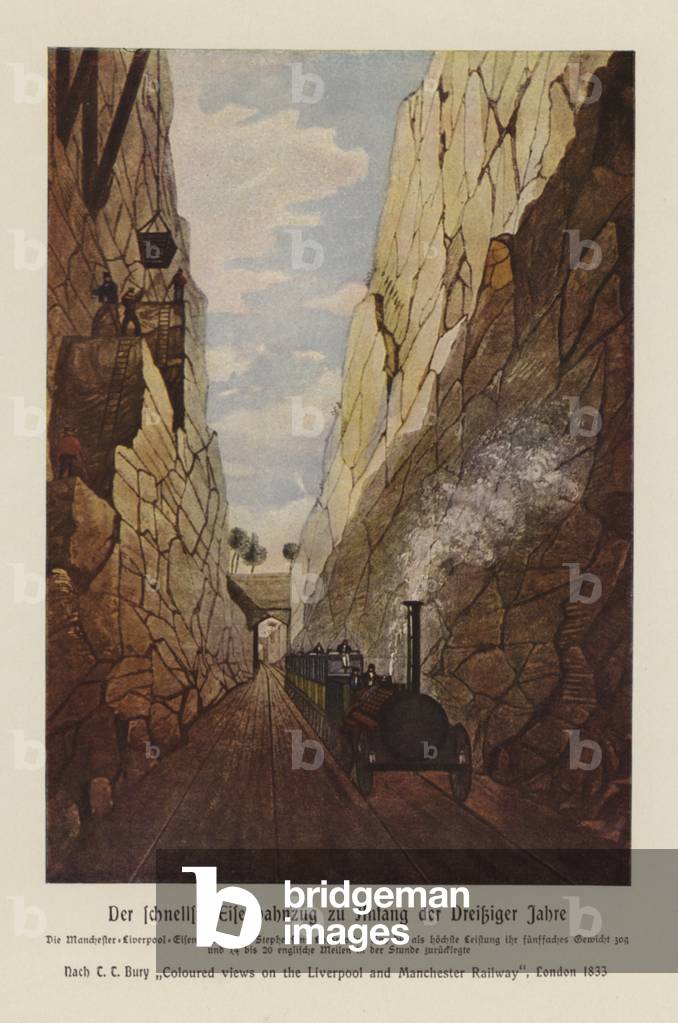
LLM8663513 The fastest train in the early 1830s. From Coloured Views on the Liverpool and Manchester Railway. Illustration for Der Mensch und die Erde by Hans Kraemer (Deutsches Verlagshaus Bong, 1906-1913).
DC

Total de Resultados: 66

Página 1 de 1