Busque também em nossas outras coleções:

Data da imagem:
Pauta
ver mais opções...
Agência
Fotógrafo
ver mais opções...
Artista
ver mais opções...
Pais
ver mais opções...
Estado
ver mais opções...
Cidade
ver mais opções...
Local
ver mais opções...
Tipo de licença
Orientação
Coleção
ver mais opções...

Total de Resultados: 2.300

Página 1 de 23

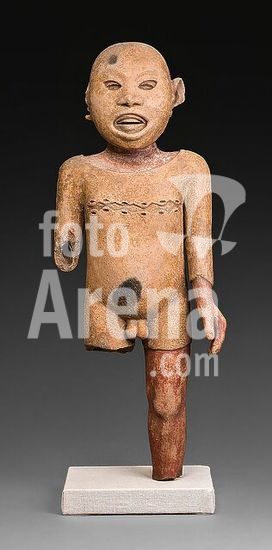
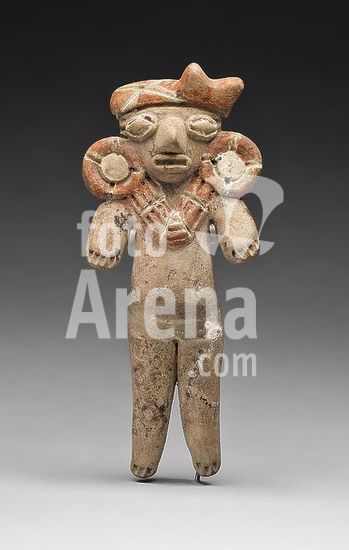
alb4131130 Ritual Impersonator of the Deity Xipe Totec. Aztec (Mexica); Possibly central Veracruz, Mexico. Date: 1450-1500. Dimensions: H. 58.4 cm (23 in.). Ceramic and pigment. Origin: Veracruz. Museum: The Chicago Art Institute, USA.
DC
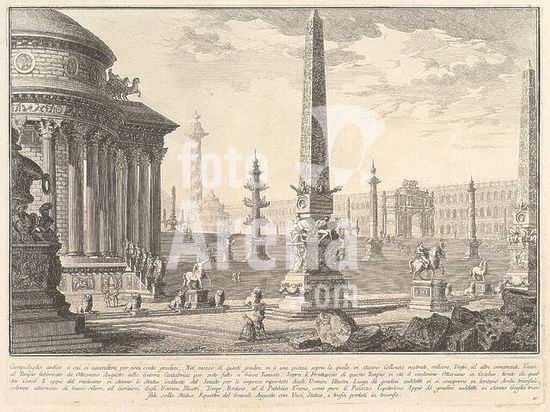
alb3628474 The ancient Capitol ascended by approximately one hundred steps . (Campidoglio antico a cui si ascendeva per circa cento gradini .). Artist: Giovanni Battista Piranesi (Italian, Mogliano Veneto 1720-1778 Rome). Dimensions: Plate (Image): 9 5/16 × 14 3/16 in. (23.7 × 36.1 cm)Plate (Inscription): 1 3/16 × 14 1/4 in. (3 × 36.2 cm)Sheet: 13 3/16 × 19 7/16 in. (33.5 × 49.4 cm). Series/Portfolio: Prima Parte di Architettura, e Prospettive (Part One of Architecture and Perspectives). Date: ca. 1750. Museum: Metropolitan Museum of Art, New York, USA.
DC
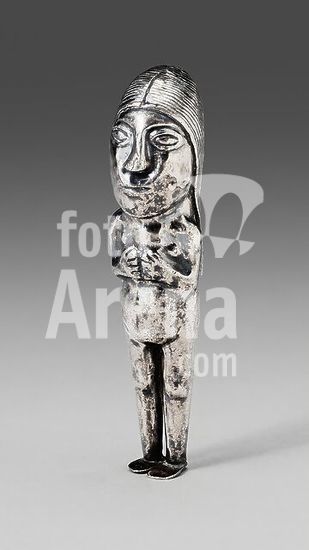
alb4133825 Female Figurine. Inca; South coast or southern highlands, Peru. Date: 1450-1532. Dimensions: 6.4 × 1.6 cm (2 1/2 × 5/8 in.). Silver. Origin: Peru. Museum: The Chicago Art Institute, USA.
DC
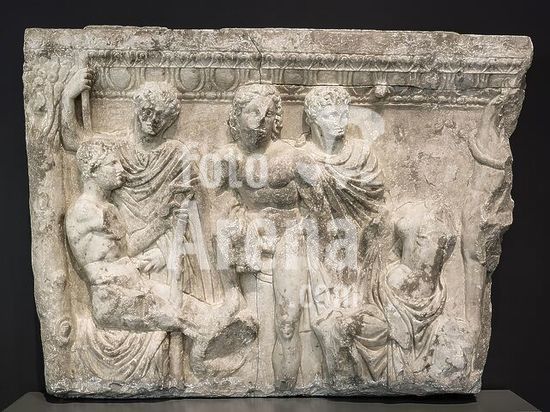
alb4131136 Side Panel of a Sarcophagus. Roman. Date: 200 AD-250 AD. Dimensions: 96 × 140.5 × 22 cm (37 5/16 × 55 3/8 × 8 5/8 in.). Marble. Origin: Antioch. Museum: The Chicago Art Institute, USA. Author: ANCIENT ROMAN.
DC
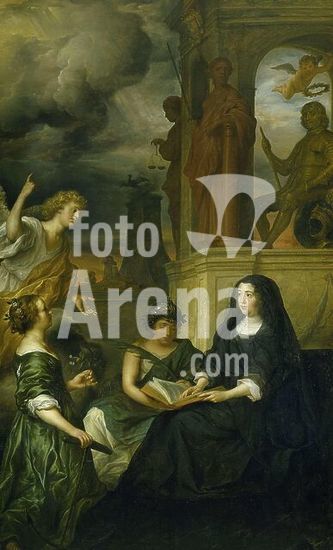
alb4105450 Allegory on the Memory of Frederik Hendrik (1584-1647), Prince of Orange, with the Portrait of his Widow Amalia van Solms. Dating: 1654. Measurements: h 307 cm × w 189 cm. Museum: Rijksmuseum, Amsterdam. Author: Govert Flinck.
DC
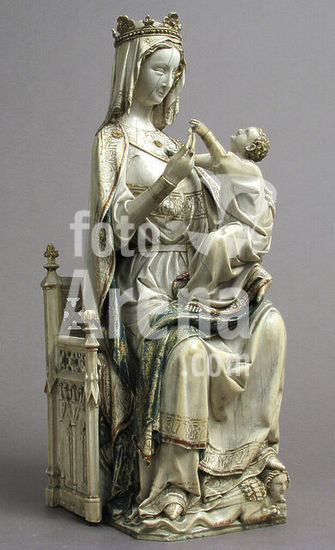
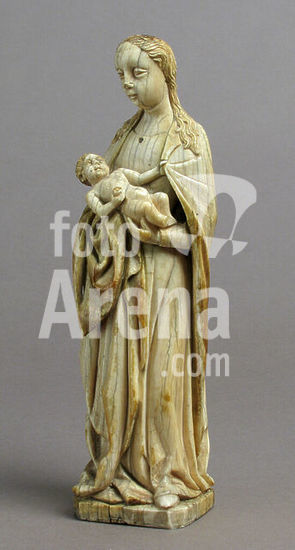
alb3616600 Virgin and Child. Culture: French. Dimensions: Overall (without crown): 8 1/8 x 2 3/8 x 1 15/16 in. (20.6 x 6 x 4.9 cm)Overall (with crown): 8 5/16 x 2 3/8 x 1 15/16 in. (21.1 x 6 x 4.9 cm). Date: 15th-16th century (?). Museum: Metropolitan Museum of Art, New York, USA.
DC
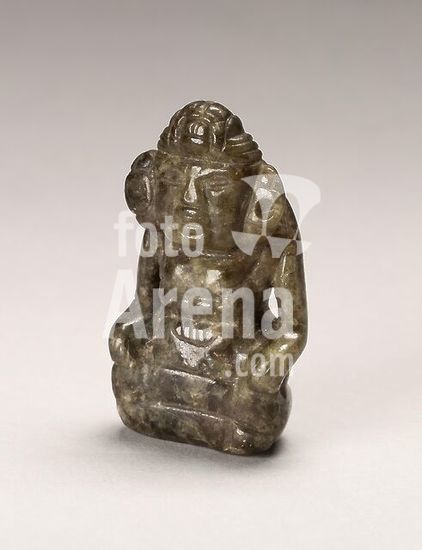
alb4134215 Figurine. Classic Maya; Mexico, Guatemala, or Honduras. Date: 250 AD-900 AD. Dimensions: H. 5.4 cm (2 1/8 in.). Jadeite. Origin: Central America. Museum: The Chicago Art Institute, USA.
DC
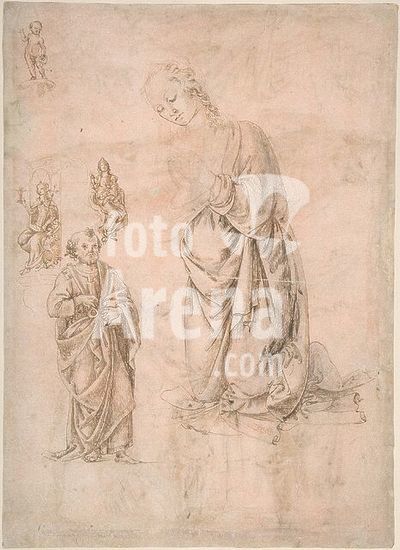
alb3681836 Sketches of Figures of the Virgin Kneeling, Saint Peter Standing, Seated Allegorical Figures of Faith and Charity, and Child Standing on a Corbel (?) (recto); Sketches of Figures of Saint Sebastian Standing and the Virgin and Child with Angels (verso). Artist: Attributed to Francesco di Simone Ferrucci (Italian, Fiesole 1437-1493 Florence). Dimensions: 10 13/16 x 7 13/16in. (27.4 x 19.8cm). Date: 1487-88.To judge from the drawing style and subject matter, Ferrucci was strongly influenced by the Florentine sculptor Andrea Verrocchio (1435-1488). Although he was trained by his father, Ferrucci may have been Verrocchio's assistant in the 1470s; Verrocchio's workshop offered a training ground for many of the brilliant draftsmen of late-fifteenth-century Florence. This drawing once formed part of the sketchbook formerly attributed to Verrocchio himself: the great nineteenth-century art historian and connoisseur Giovanni Morelli was the first to propose the name of Francesco di Simone, and this attribution has been generally accepted by later scholars.This boldly drawn double-sided sheet is part of a well-known dismembered Florentine sketchbook (now dispersed in a variety of collections) that apparently records sculptural models, most of which can be associated with the style of Andrea del Verrocchio's workshop. It also includes, however, motifs inspired by the work of such other Florentine sculptors as Antonio del Pollaiuolo, Benedetto da Maiano, Desiderio da Settignano, Luca della Robbia, and Bernardo Rossellino. This and nineteen other pages of the sketchbook are currently known, all of a similar size and drawing technique on rose-washed paper, and at least nine of these bear the same watermark (a Gothic M). The codicological evidence has been examined with particular attention by Albert J. Elen. Like catalogue number 8, most of the sheets are also drawn on both sides and bear inscriptions of many types, from dates to debit accounts to the names of individuals. The following collections own pages of this sketchbook: the Musée Condé, Chantilly (eight); Musée du Louvre, Paris (three); École des Beaux-Arts, Paris (two); British Museum, London (two); Kupferstichkabinett, Berlin (one); Musée des Beaux-Arts, Dijon (one); Hamburger Kunsthalle (one). An additional sheet was last recorded in a private collection in 1983.1 Two of the Chantilly sheets (21[15]; 22[16]) bear the date 1487, while one of the sheets in the École des Beaux-Arts, Paris (374 v), bears the date 1488.To judge from the very eclectic choices of sculptural motifs and styles, the sketchbook may have served as a visual record or sourcebook for the use of a modestly talented sculptor, or even a sculptor's apprentice. (Similar motifs are sometimes naively repeated in page after page of the sketchbook.) About 1850, when the sketchbook seems to have gotten noticed by scholars, it was ascribed to Andrea del Verrocchio himself, since his name is inscribed on one of the sheets used for the purpose of settling an account, and thus it became nicknamed the Verrocchio Sketchbook. In 1893, Giovanni Morelli (Ivan Lermolieff) attributed the sketchbook to the sculptor Francesco di Simone Ferrucci da Fiesole (Francesco di Simone Fiorentino), who was said by Giorgio Vasari to have been Verrocchio's pupil but who was in actuality Verrocchio's near contemporary.2 From the little that is known about Francesco di Simone (he is not documented until 1463), he was likely a collaborator in the Verrocchio workshop. Scholars have usually accepted Morelli's attribution, though often with reservations (Georg Gronau expressing the most doubt in 1896), for the inscriptions on the pages seem to be by another hand than that of the artist of the sketches, and the names "Lorenzo" and "Gabrielo" also turn up.That the draftsman of the sketchbook is probably not the author of the actual motifs can be surmised from the fact that the main motif of the kneeling Virgin seen here in the center of the recto seems to be copied repeatedly on the other sheets, recording the incomplete state of the original work that served as a model. One such kneeling Virgin appears in a sheet at Chantilly (Musée Condé, 23[17] verso), while at least two further variants in drawings that were not part of the so-called Verrocchio Sketchbook are at the Palazzo Abatellis, Palermo, and the British Museum, London (1963-11-9-23). On the one hand, the drawings are close in style to a design in the Nationalmuseum, Stockholm, that may well be Francesco di Simone's original study for the tomb of the jurist Alessandro Tartagni (San Domenico, Bologna), from about 1477 to 1480 and mentioned by Vasari. On the other hand, some of the annotations on the sheets conflict with the thesis of Francesco's authorship. (Carmen C. Bambach, 2003). Museum: Metropolitan Museum of Art, New York, USA.
DC
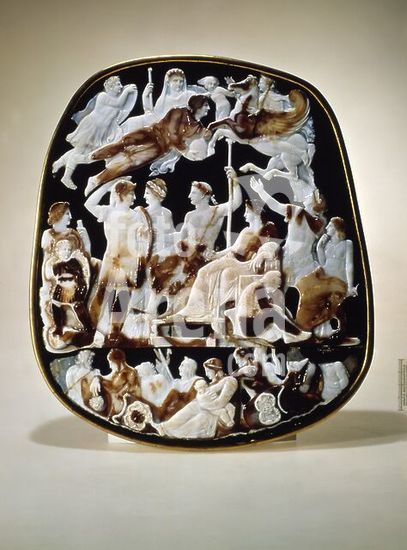
alb2033209 Grand Cameo of France 20 AD showing above Germanicus (left) to (right) Julius Caesar, August, Aeneas, Tiberius, Livia , Caligula. Museum: BIBLIOTHEQUE NATIONALE, BUDAPEST, France. AUGUSTUS. JULIO CESAR. CLAUDIO NERÓN TIBERIO.
DC
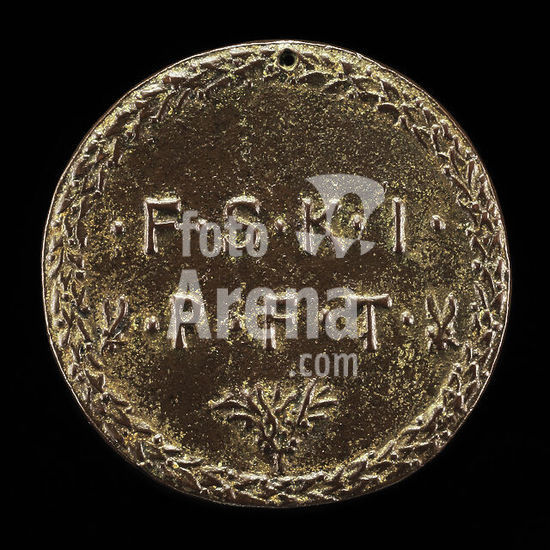
alb3699769 Initials of the Seven Virtues [reverse]. Dated: c. 1440/1443. Dimensions: overall (diameter): 5.81 cm (2 5/16 in.) gross weight: 69.13 gr (0.152 lb.) axis: 12:00. Medium: bronze. Museum: National Gallery of Art, Washington DC. Author: Antonio Marescotti.
DC
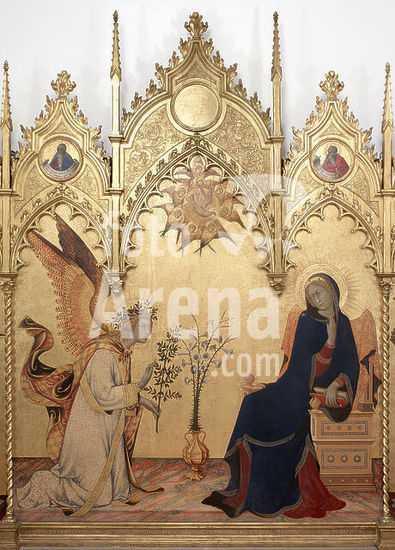
alb3907599 Annunciazione / The Annunciation. Date/Period: 1333. Painting / triptych. Tempera on panel. Height: 184 cm (72.4 in); Width: 210 cm (82.6 in). Author: SIMONE MARTINI. LIPPO MEMMI.
DC
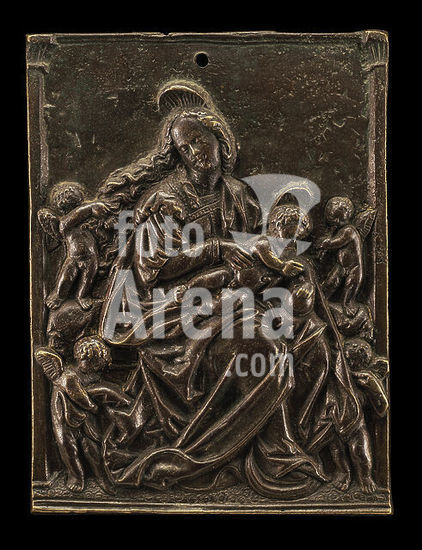
alb3721888 The Virgin & Child with Four Angels. Dated: early 16th century. Dimensions: overall: 13.4 x 10.3 cm (5 1/4 x 4 1/16 in.) gross weight: 397 gr. Medium: bronze//Dark brown patina. Museum: National Gallery of Art, Washington DC. Author: German 16th Century.
DC
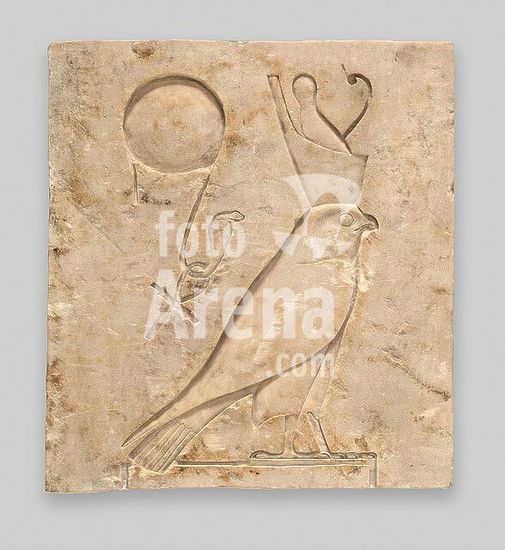
alb4129532 Relief Plaque Depicting the God Horus as a Falcon. Egyptian. Date: 664 BC-30 BC. Dimensions: 31.1 × 28.3 × 3.2 cm (12 1/4 × 11 1/8 × 1 1/4 in.). Limestone. Origin: Egypt. Museum: The Chicago Art Institute, USA. Author: Ancient Egyptian.
DC
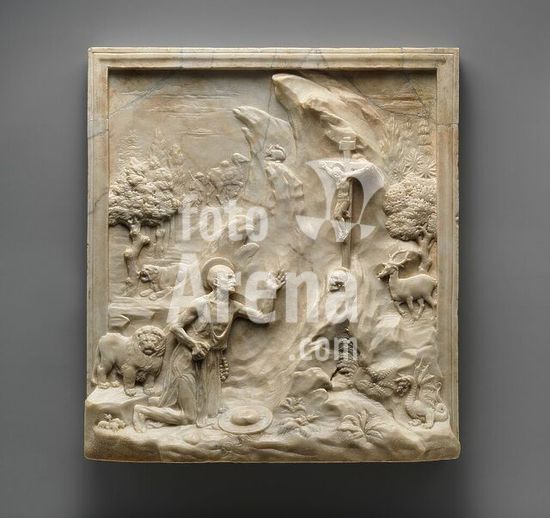
alb3659959 Saint Jerome in the Wilderness. Artist: Probably by Antonio Rossellino (Italian, Settignano 1427-ca. 1479 Florence). Culture: Italian, Florence. Dimensions: Overall (confirmed): 16 5/8 × 15 1/4 × 2 7/8 in., 31 lb. (42.2 × 38.7 × 7.3 cm, 14.0615kg). Date: ca. 1470.The Metropolitan displays in its galleries an important group of quattrocento reliefs of the Madonna and Child by such Italian Renaissance masters as Antonio Rossellino (see acc. no. 14.40.675) and Benedetto da Maiano (see acc. no. 41.190.137). Until Saint Jerome in the Wilderness entered the collection, however, the Museum had no example of a classic narrative relief. Beginning in 1424, when Lorenzo Ghiberti's first set of bronze doors for the Baptistery was set in place, narrative reliefs held signal importance in Florentine art. (It was Ghiberti who invented the device, echoed here, of showing the foreground spilling over the frame in the reliefs for his second set of Baptistery doors, the "Gates of Paradise.")[1] Small reliefs like this marble were often made for private devotions in a family chapel. The 1553 inventory of the Palazzo della Signoria, Florence, for example, mentions a low relief of Saint Jerome,[2] which could have been this one, although it is usually associated with a work by Desiderio da Settignano in the National Gallery of Art in Washington, D.C.[3] The subject is unsurprising: images of this gaunt ascetic abounded in the 1470s, as is attested by paintings attributed to Andrea del Verrocchio (Palazzo Pitti, Florence) and by Leonardo da Vinci (Pinacoteca, Vatican).Widely read during the Renaissance, Jerome's letters vividly describe his physical and spiritual trials in the desert outside Bethlehem, where, he tells us, he would "set up my oratory, and make that spot a place of torture for my unhappy flesh."[ 4] Furthermore, the best-selling compilation of saints' lives, Jacobus de Voragine's Golden Legend, relates charming stories of his relationships with animals, which are often woven into depictions of the present scene. We learn that he befriended a lion; the lion teamed up with a donkey to carry wood to Jerome's monastery; and some camel-driving merchants stole the donkey. These tales account for the lion, lioness, and camel in the relief. It is, in fact, a virtual bestiary: the stag, for instance, may be explained by the following passage from the Song of Solomon, "Behold, he cometh leaping upon the mountains, skipping upon the hills. My beloved is like a roe or a young hart," which is often interpreted in Renaissance exegesis as a reference to Christ, whose cross rises above the animal here. Other creatures -- a squirrel and a dragon -- also carried symbolic meaning in contemporary writings.[5]The references to religious and secular literature made this a stirring image in fifteenth-century Florence, yet it is the airy landscape that draws the viewer into the scene and encourages him or her to linger over its delightful details. Jerome and the animals inhabit a mountainous region that conjures atmosphere and depth within the compact limits of the relief. Twin peaks curve toward the saint as if sheltering him within the hollow at their base. As Jerome kneels on the rocky stage in the foreground, the lions stand or sit on ledges receding to the left; in the distance a trader and his camel disappear behind a crag. Jutting from an outcrop, the crucifix separates Jerome from the right side of the pictorial space, where beasts and foliage hint at a passage behind the peaks. Using a mountainous landscape to separate a composition into discrete areas was pioneered by Ghiberti in the Baptistery reliefs and by such artists as Domenico Veneziano in painting. Borrowing that formal device, the sculptor of this relief carved the marble intuitively, suggesting recession into depth rather than constructing it through the rules of one-point perspective. Careful observations of striated rock, different varieties of leaves, and wispy clouds breathe life into this natural world.The style of the work closely resembles that of a set of reliefs in Faenza Cathedral. Giorgio Vasari credited them to Benedetto da Maiano, but many later scholars have attributed them to Benedetto's master, Antonio Rossellino. [6] In 1985, however, Gary M. Radke returned the attribution to Benedetto, finding that they forecast another, slightly later set of reliefs by him in the chapel of Santa Fina, San Gimignano.7 Radke pointed out that in the Faenza reliefs the manner in which the foreground figure is related to the mountains, the use of foliage to fill out the middle ground, and the placement of animals in the background are all aspects of Benedetto's sensibility as well as Rossellino's. Even Mario Scalini, a scholar who attributes the Museum's relief to Rossellino, dates it to the 1470s by relating it to Benedetto's Stigmatization of Saint Francis in the church of Santa Croce, Florence.[8] And because it is clearly dependent on Rossellino's sculptural formulas, our relief was not surprisingly identified as his work when it was auctioned in New York in 1918.[9] Radke's arguments for Benedetto's authorship of the Faenza reliefs -- citing Benedetto's keen interest in narrative and his blocky figures and rich surface ornamentation -- are attractive, but the eminent scholar Francesco Caglioti continues to believe that Rossellino and his workshop were responsible.[10] Clearly, whoever carved the Faenza reliefs also carved the Museum's Saint Jerome in the Wilderness.Although we have no written record of its authorship, this relief's renown in the Renaissance is confirmed by the existence of two copies. A glazed terracotta of about 1510 attributed to Luca della Robbia the Younger (1475 - 1548) in the Casa Buonarroti, Florence, is clearly based on the composition, which the artist clarified through color, thereby losing atmospheric perspective.[11] There are a few changes in the details, but the basic form and the dimensions are the same. In another version (Victoria and Albert Museum, London), also attributed to Luca della Robbia the Younger, a bearded Jerome has been turned into a contemplative saint reading a book, not mortifying himself with a rock.[12] Rather, his arms are spread wide in adoration of Christ. This different interpretation may have been more appealing in a less fervently religious period than the 1470s, but the survival of the composition speaks for the fame of the relief long after its original conception.[Ian Wardropper. European Sculpture, 1400-1900, in the Metropolitan Museum of Art. New York, 2011, no. 5, pp. 23-25.]Footnotes:[1] See Andrew Butterfield. "Art and Innovation in Ghiberti's Gates of Paradise." In The Gates of Paradise: Lorenzo Ghiberti's Renaissance Masterpiece, pp. 16-41. Exh. cat. edited by Gary M. Radke, with Contributions by Andrew Butterfield et al. High Museum of Art, Atlanta; Art Institute of Chicago; The Metropolitan Museum of Art; 2007-8. Atlanta and New Haven, 2007, pp. 23 - 26.[2] "quadro marmoreo in rilievo schiacciato che rappresenta S. Girolamo"; quoted in Ida Cardellini. Desiderio da Settignano. Studi e documenti di storia dell'arte 3. Milan, 1962, p. 244.[3] Rudolph Wittkower. "Desiderio da Settignano's 'St. Jerome in the Desert.'" In Idea and Image: Studies in the Italian Renaissance, pp. 137-49. London, 1978, pp. 145 - 46.[4] Saint Jerome. Select Letters of St. Jerome. Translated by F.A. Wright. Cambridge, Mass., 1933, letter no. 12, pp. 66 - 69.[5] Song of Solomon 2: 8 - 9. For a general study of the symbolic meaning of animals in the Renaissance, see Herbert Friedmann. A Bestiary for Saint Jerome: Animal Symbolism in European Religious Art. Washington, D.C., 1980.[6] Giancarlo Gentilini. I Della Robbia: La scultura invetriata nel Rinascimento. 2 vols. Florence, 1992, p. 361.[7] Gary M. Radke. "The Sources and Composition of Benedetto da Maiano's San Savino Monument in Faenza." Studies in the History of Art (National Gallery of Art, Washington, D.C.) 18, 1985, pp. 7-27.[8] Mario Scalini in Un tesoro rilevato: Capolavori dalla Collezione Carle De Carlo. Exh. cat. edited by Mario Scalini and Angelo Tartuferi. Galleria dell'Accademia, Florence; 2001. Florence, 2001, p. 57, no. 18[9] See The Beautiful Art Treasures and Antiquities, The Property of Signor Stefano Bardini, sale cat., at American Art Galleries, New York, April 23 - 27, 1918, no. 420.[10] Francesco Caglioti. Donatello e i Medici: Storia del "David" e della "Giuditta." 2 vols. Florence, 2000, vol. 1, p. 133, n. 133, vol. 2, fig. 329.[11] Alfredo Bellandi in I Della Robbiae l'arte nuova della scultura invetriata. Exh. cat. edited by Giancarlo Gentilini. Basilica di Sant'Alessandro, Fiesole; 1998. Florence, 1998, pp. 291 - 92, no. iv.1.[12] Ibid., pp. 292 - 93, no. iv.2. Museum: Metropolitan Museum of Art, New York, USA.
DC
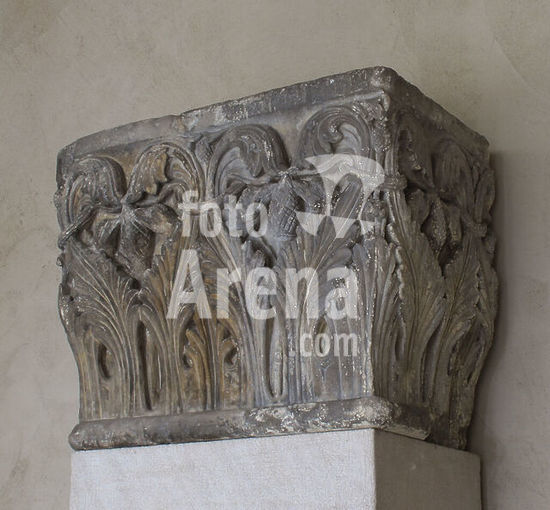
alb3636436 Impost Block with Acanthus Decoration. Culture: French. Dimensions: Overall: 20 1/4 x 25 x 15 3/8 in. (51.4 x 63.5 x 39.1 cm). Date: 12th century.This capital resembles sculpture in the crypt of the royal abbey of Saint-Denis, north of Paris. As the burial place of French kings, Saint-Denis enjoyed unrivaled prestige; artistic innovations adopted there resonated throughout the region and indeed, throughout France. The choir of the abbey constructed under Abbot Suger is often considered the first example of a new architectural style, known today as Gothic. In the wake of the French Revolution, sculpture and building materials from a number of monuments were sent to Saint-Denis for storage; this piece may, therefore, come from another church in the area. Museum: Metropolitan Museum of Art, New York, USA.
DC

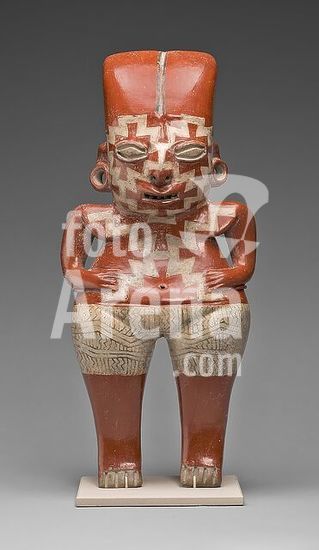
alb4129128 Female Figure with Bold, Geometric Face and Body Paint. Chupícuaro; Guanajuato or Michoacán, Mexico. Date: 200 BC-100 BC. Dimensions: 44.8 × 20 × 8.7 cm (17 5/8 × 7 7/8 × 3 7/16 in.). Terracotta and pigmented slip. Origin: Mexico. Museum: The Chicago Art Institute, USA. Author: TEOTIHUACAN.
DC
alb4129577 Female Figurine. Chupícuaro; Guanajuato or Michoacán, Mexico. Date: 500 BC-300 BC. Dimensions: H. 13.3 cm (5 1/4 in.). Ceramic and pigment. Origin: Guanajuato state. Museum: The Chicago Art Institute, USA.
DC
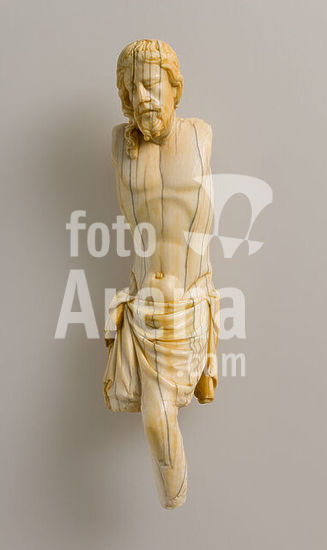
alb3682921 Crucified Christ. Culture: French. Dimensions: Overall: 6 5/8 x 1 11/16 x 1 5/16in. (16.8 x 4.3 x 3.4cm). Date: ca. 1260-80.The suffering of Christ on the cross was so important in Gothic art that the mid-thirteenth-century statute of the corporations of Paris included a guild dedicated to the carving of such images, including ones in ivory. This ivory sculpture of Christ, whose pathos and agony are beautifully conveyed, was executed in the round and most certainly was intended for an altar cross. In spite of the loss of both arms and parts of the legs (which originally were attached to the body by means of pegs), the modeling of the figure reveals a profound sensitivity to form and expression. The powerful anatomical structure--portraying, naturally, the corporeality of the dying Christ--is remarkable for a crucifix of this period. The closed eyes and the long hair, which falls down the back and right side of the head, reveal the emotional impact of death. A subtle twist in the torso was produced in part by the positioning of the legs, which were crossed and mounted on the cross with a single nail. Museum: Metropolitan Museum of Art, New York, USA.
DC
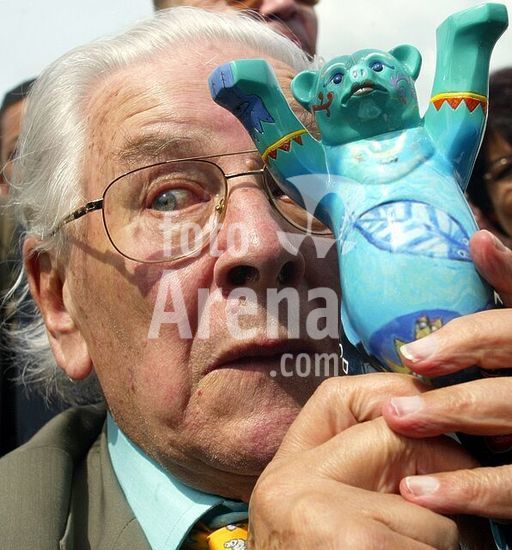
dpa7373155 (dpa) - British actor Sir Peter Ustinov holds up a small buddy bear as he opens the second open air exhibition 'United Buddy Bears 2003' in Berlin, 29 July 2003. Approximately 125 buddy bears will be shown on the compound of the US embassy in Berlin and then go on tour. The individual bear sculptures designed by various artists will later be auctioned off in New York for the benefit of the United Nations Children's Fund (UNICEF).
DC
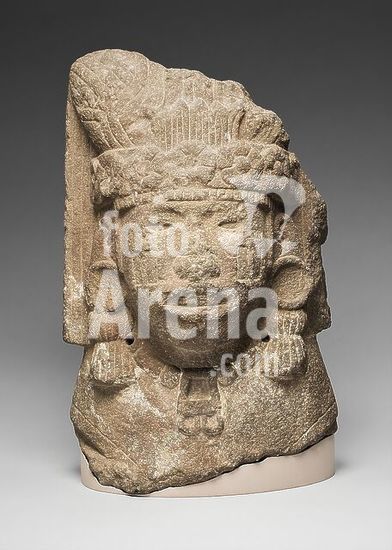
alb4131127 Head of Xilonen, the Goddess of Young Maize. Aztec (Mexica); Tenochtitlan, Mexico. Date: 1400-1500. Dimensions: 32.4 × 20.3 × 12.1 cm (12 3/4 × 8 × 4 3/4 in.). Basalt. Origin: Tenochtitlan. Museum: The Chicago Art Institute, USA. Author: Aztec (Mexica).
DC
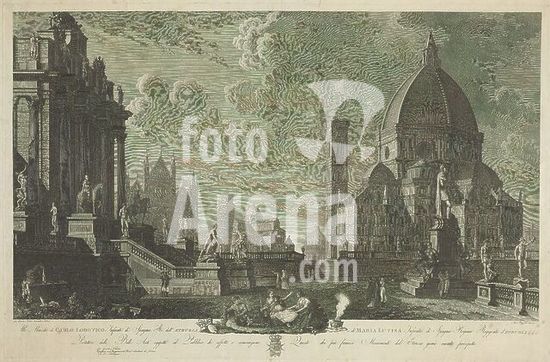
alb9434451 Fantasy cityscape with buildings and sculptures from various Tuscan cities, A fantasy cityscape with buildings and sculptures from various Tuscan cities. From left to right: the Cathedral of Siena, the tower, cathedral and baptistery of Pisa and the Cathedral with campanile of Florence. In the foreground are, among others, the statue of Ferdinando I de' Medici with the statues of the four enslaved 'Moors' (I Quattro Mori) from the port of Livorno, the Sabine Virgin robbery by Giambologna, Perseus by Benvenuto Cellini and Hercules and Cacus by Baccio Bandinelli. Assignment in lower margin., print maker: Antonio Poggioli, (mentioned on object), after drawing by: Giovanni Giosue Nascio, (mentioned on object), Giovanni Giosue Nascio, (mentioned on object), print maker: Italy, after drawing by: Italy, Italy, Etrurië, Etrurië, c. 1801 - c. 1803, paper, etching, height 590 mm × width 894 mm.
DC
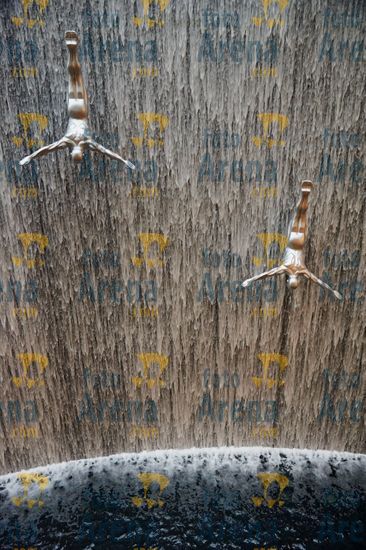
841-1325 Fountain of the Mall of the Emirates Commercial Center, Dubai, United Arab Emirates, Middle EastLegenda da Fotoarena:Fountain of the Mall of the Emirates Commercial Center, Dubai, United Arab Emirates, Middle East
DC
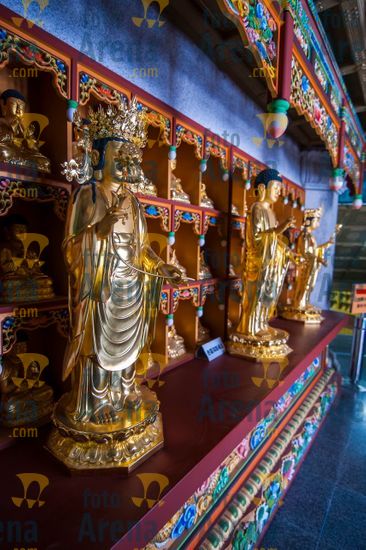
816-6346 Buddha collection under the Golden Maitreya Statue, Beopjusa Temple Complex, South Korea, AsiaLegenda da Fotoarena:Buddha collection under the Golden Maitreya Statue, Beopjusa Temple Complex, South Korea, Asia
DC
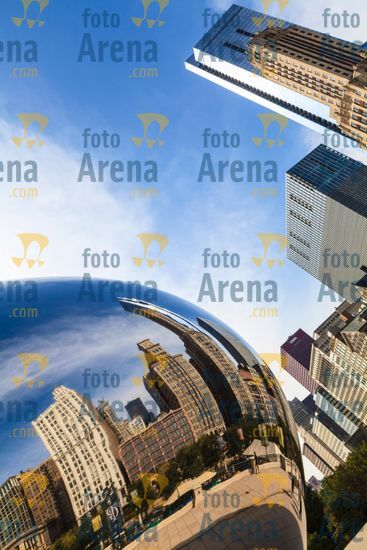
808-900 Tall buildings on North Michigan Avenue reflecting in the Cloud Gate steel sculpture by Anish Kapoor, Millennium Park, Chicago, Illinois, United States of America, North AmericaLegenda da Fotoarena:Tall buildings on North Michigan Avenue reflecting in the Cloud Gate steel sculpture by Anish Kapoor, Millennium Park, Chicago, Illinois, United States of America, North America
DC
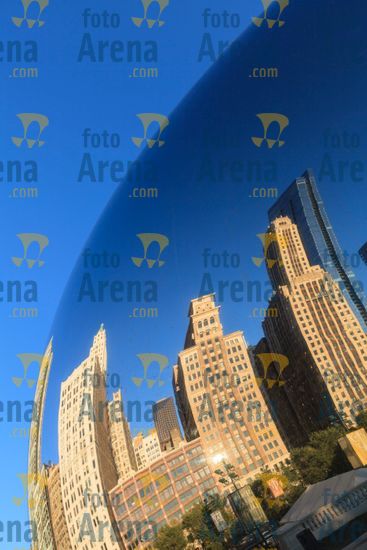
808-866 Skyscrapers reflecting in the Cloud Gate steel sculpture by Anish Kapoor, Millennium Park, Chicago, Illinois, United States of America, North AmericaLegenda da Fotoarena:Skyscrapers reflecting in the Cloud Gate steel sculpture by Anish Kapoor, Millennium Park, Chicago, Illinois, United States of America, North America
DC
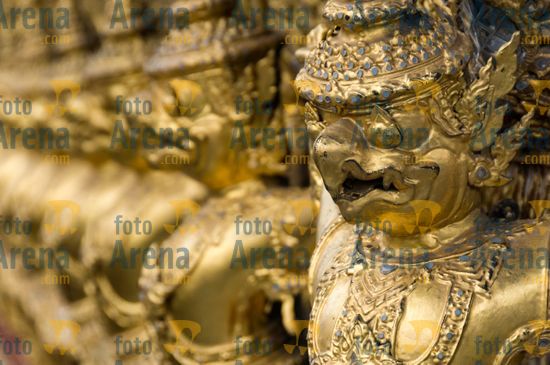
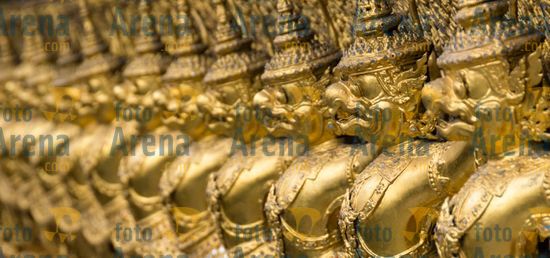
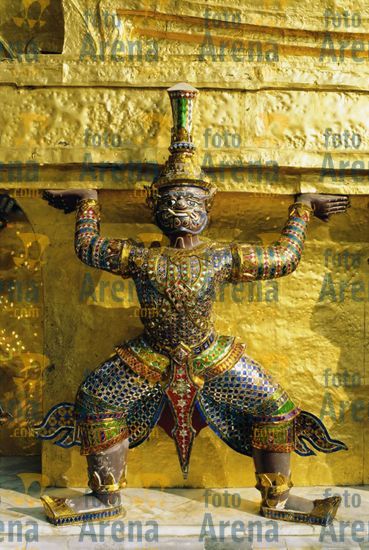
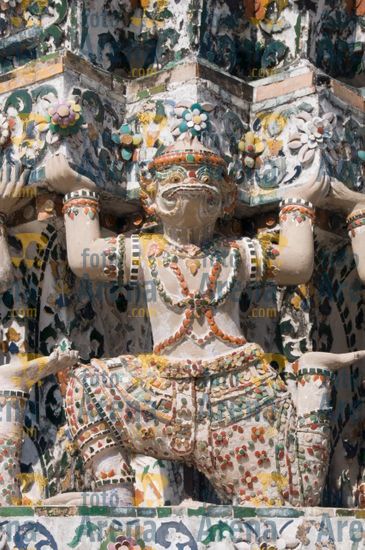
803-176 Detail at the Temple of the Emerald Buddha (Wat Phra Kaew), the Royal Palace, Bangkok, Thailand, Southeast Asia, AsiaLegenda da Fotoarena:Detail at the Temple of the Emerald Buddha (Wat Phra Kaew), the Royal Palace, Bangkok, Thailand, Southeast Asia, Asia
DC
803-175 Detail of the Temple of the Emerald Buddha (Wat Phra Kaew), the Royal Palace, Bangkok, Thailand, Southeast Asia, AsiaLegenda da Fotoarena:Detail of the Temple of the Emerald Buddha (Wat Phra Kaew), the Royal Palace, Bangkok, Thailand, Southeast Asia, Asia
DC
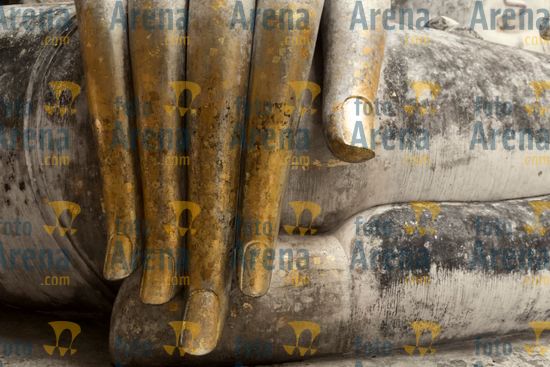
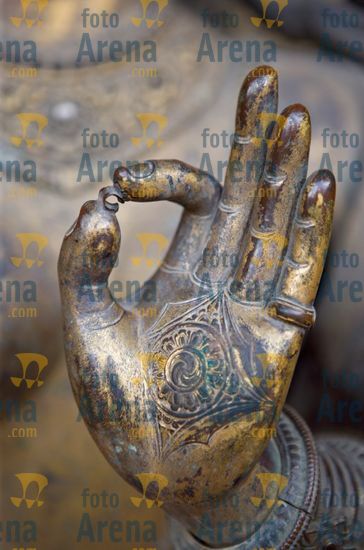
1176-198 Hand of the Phra Achana Buddha figure, covered in gold leaf, Wat Si Chum (Temple of the Bodhi Tree), Sukhothai Historical Park, UNESCO World Heritage Site, Thailand, Southeast Asia, AsiaLegenda da Fotoarena:Hand of the Phra Achana Buddha figure, covered in gold leaf, Wat Si Chum (Temple of the Bodhi Tree), Sukhothai Historical Park, UNESCO World Heritage Site, Thailand, Southeast Asia, Asia
DC
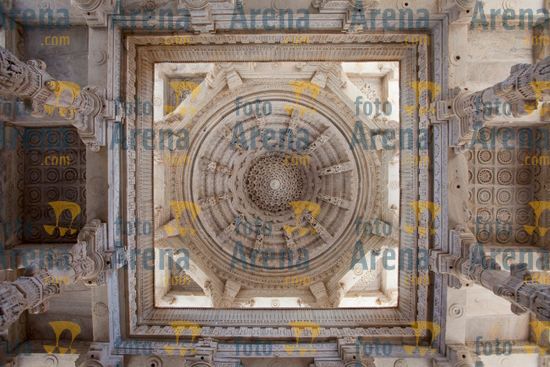
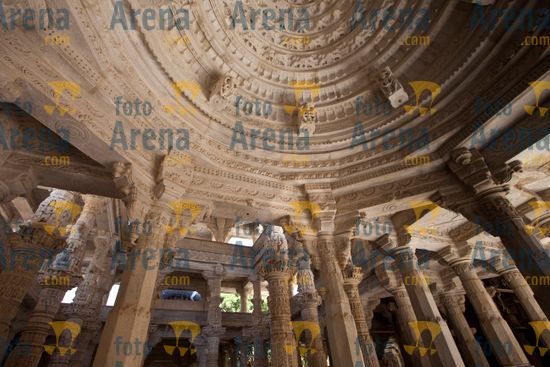
1161-5179 Dome of central hall ceiling detail at The Ranakpur Jain Temple at Desuri Tehsil in Pali District of Rajasthan, Western IndiaLegenda da Fotoarena:Dome of central hall ceiling detail at The Ranakpur Jain Temple at Desuri Tehsil in Pali District of Rajasthan, Western India
DC
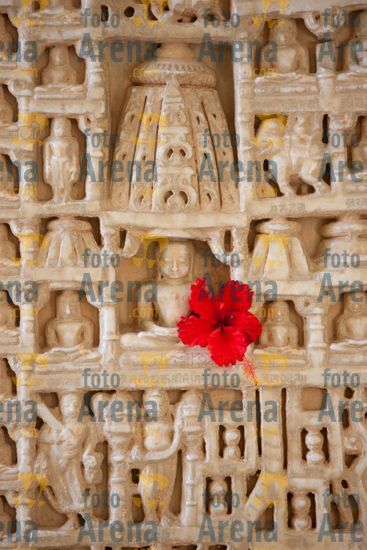
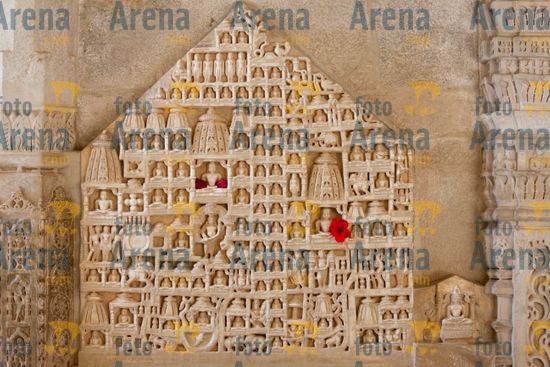
1161-5172 White marble religious icon carvings at The Ranakpur Jain Temple at Desuri Tehsil in Pali District of Rajasthan, IndiaLegenda da Fotoarena:White marble religious icon carvings at The Ranakpur Jain Temple at Desuri Tehsil in Pali District of Rajasthan, India
DC
1161-5170 White marble religious icon carvings at The Ranakpur Jain Temple at Desuri Tehsil in Pali District of Rajasthan, IndiaLegenda da Fotoarena:White marble religious icon carvings at The Ranakpur Jain Temple at Desuri Tehsil in Pali District of Rajasthan, India
DC
1161-5168 White marble pillars and ceiling at The Ranakpur Jain Temple at Desuri Tehsil in Pali District of Rajasthan, Western IndiaLegenda da Fotoarena:White marble pillars and ceiling at The Ranakpur Jain Temple at Desuri Tehsil in Pali District of Rajasthan, Western India
DC
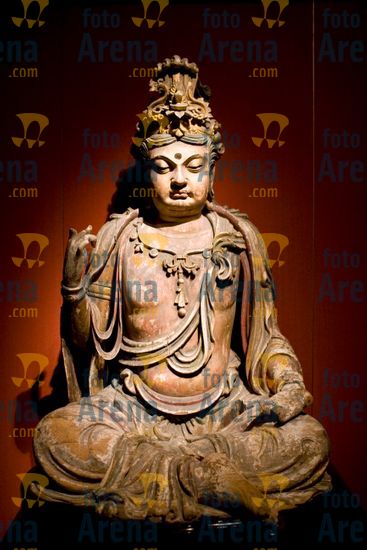
1161-3173 Stone Buddha figure of Bodhisattva on display in the Shanghai Museum, ChinaLegenda da Fotoarena:Stone Buddha figure of Bodhisattva on display in the Shanghai Museum, China
DC
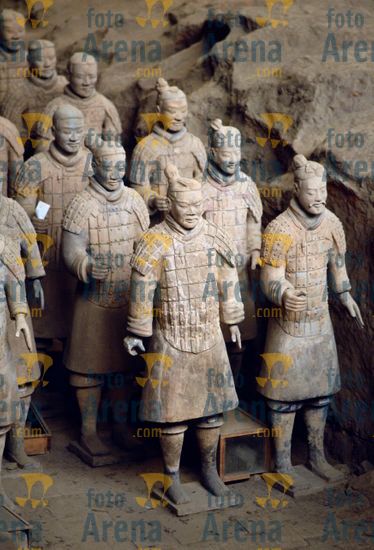
1161-1777 Terracotta army warriors at tomb of Emperor Qin Shi Huangdi at Lingtong in Xian, ChinaLegenda da Fotoarena:Terracotta army warriors at tomb of Emperor Qin Shi Huangdi at Lingtong in Xian, China
DC
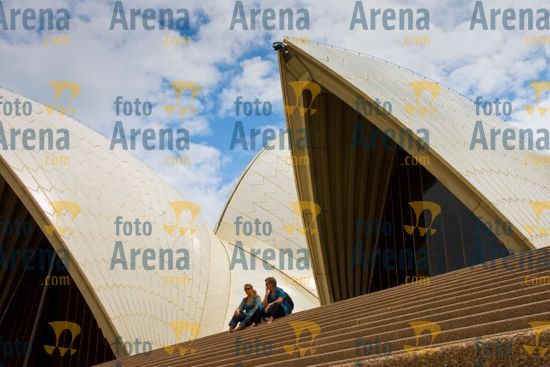
1161-1385 Tourists sit on the steps infront of the Sydney Opera House, AustraliaLegenda da Fotoarena:Tourists sit on the steps infront of the Sydney Opera House, Australia
DC
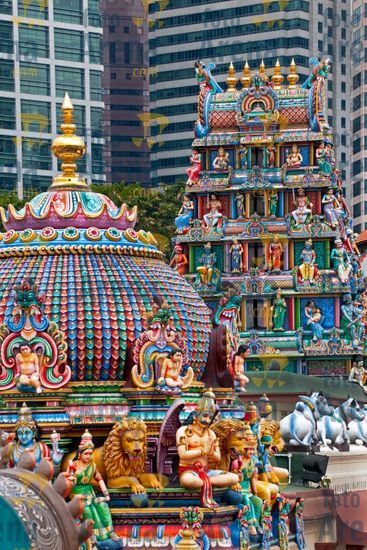
794-1701 Close up of the Gopuram of the Sri Mariamman Temple, a Dravidian style temple in Chinatown, Singapore, Southeast Asia, AsiaLegenda da Fotoarena:Close up of the Gopuram of the Sri Mariamman Temple, a Dravidian style temple in Chinatown, Singapore, Southeast Asia, Asia
RF
755-12 Close-up of the hand of Ganga, a river goddess statue in Mul Cowk courtyard, Durbar Square, Patan, Kathmandu Valley, Nepal, AsiaLegenda da Fotoarena:Close-up of the hand of Ganga, a river goddess statue in Mul Cowk courtyard, Durbar Square, Patan, Kathmandu Valley, Nepal, Asia
DC
737-124 Close-up of a statue of a female nude in the garden, art nouveau period, Otto Wagner Villa No 26, Penzing, Vienna, Austria, EuropeLegenda da Fotoarena:Close-up of a statue of a female nude in the garden, art nouveau period, Otto Wagner Villa No 26, Penzing, Vienna, Austria, Europe
DC
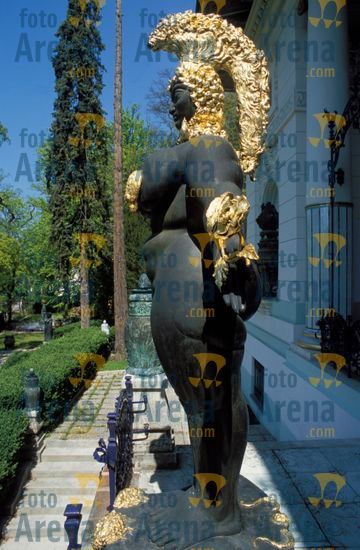
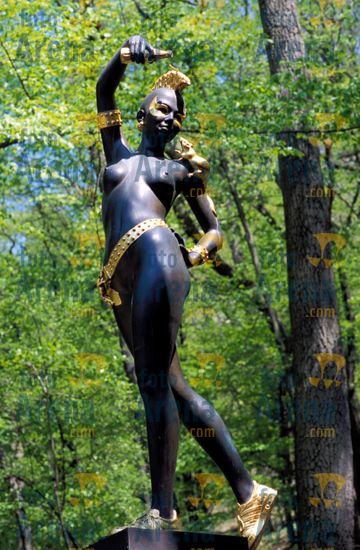
737-121 Close-up, side view of a female nude statuewith gold headdress in front of the building, art nouveau period, Otto Wagner Villa No 26, Penzing, Vienna, Austria, EuropeLegenda da Fotoarena:Close-up, side view of a female nude statuewith gold headdress in front of the building, art nouveau period, Otto Wagner Villa No 26, Penzing, Vienna, Austria, Europe
DC
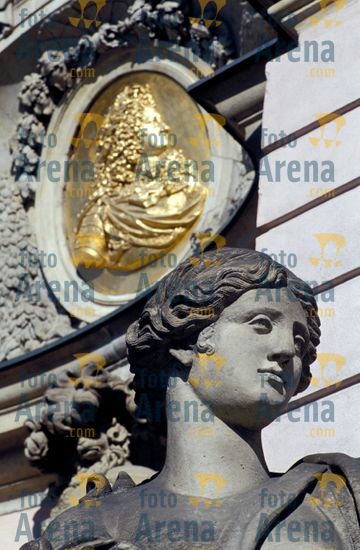
737-105 Close-up of the head of a female statue and frieze behind at Zeughaus, Mitte, Berlin, Germany, EuropeLegenda da Fotoarena:Close-up of the head of a female statue and frieze behind at Zeughaus, Mitte, Berlin, Germany, Europe
DC
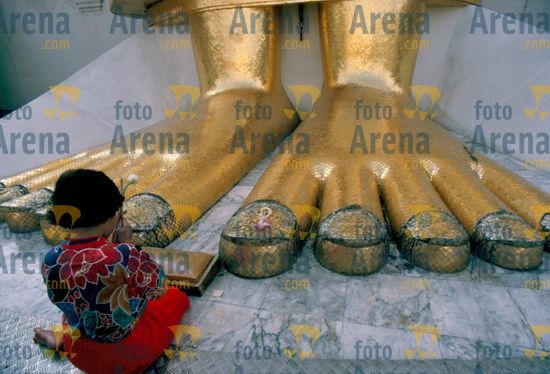
724-1102 Woman praying at the feet of the Buddha in the temple of the Standing Buddha, Wat Intrawiharn, Bangkok, Thailand, Southeast Asia, AsiaLegenda da Fotoarena:Woman praying at the feet of the Buddha in the temple of the Standing Buddha, Wat Intrawiharn, Bangkok, Thailand, Southeast Asia, Asia
DC
712-454 Wat Phra Kaeo (Wat Phra Kaew) (Wat Phra Keo), Temple of the Emerald Buddha, Grand Palace, Bangkok, Thailand, AsiaLegenda da Fotoarena:Wat Phra Kaeo (Wat Phra Kaew) (Wat Phra Keo), Temple of the Emerald Buddha, Grand Palace, Bangkok, Thailand, Asia
DC
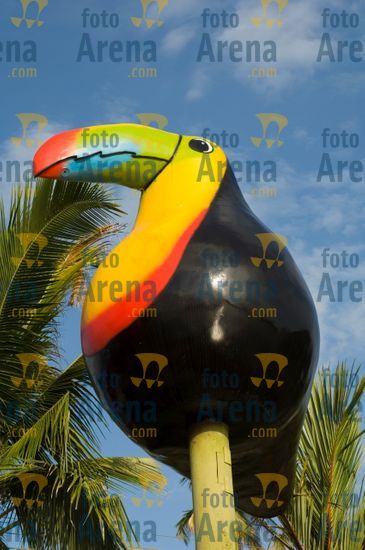
641-6207 Giant statue of Toucan at the dock at the town of Tortuguero, Costa Rica, Central AmericaLegenda da Fotoarena:Giant statue of Toucan at the dock at the town of Tortuguero, Costa Rica, Central America
DC
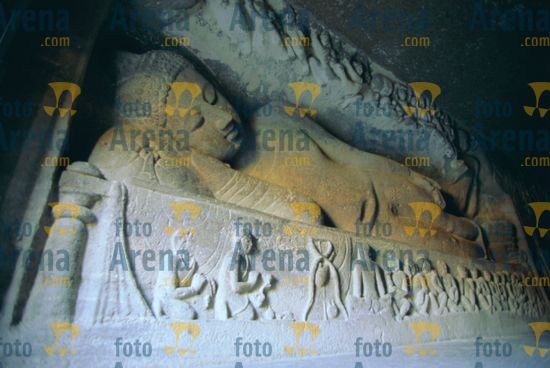
83-10721 Rock cut reclining statue of the Buddha preparing to enter nirvana, in cave 26, a chaitya in the Buddhist cave site at Ajanta, carved from a gorge in the Waghore River, Ajanta, Maharashtra State, India.Legenda da Fotoarena:Rock cut reclining statue of the Buddha preparing to enter nirvana, in cave 26, a chaitya in the Buddhist cave site at Ajanta, carved from a gorge in the Waghore River, Ajanta, Maharashtra State, India.
DC
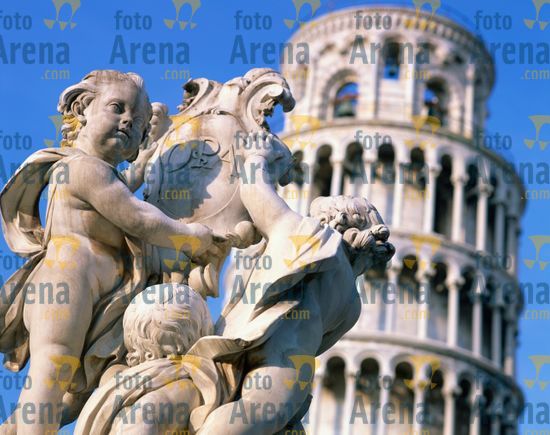
350-3309 Statues in front of the Leaning Tower in Pisa, UNESCO World Heritage Site, Tuscany, Italy, EuropeLegenda da Fotoarena:Statues in front of the Leaning Tower in Pisa, UNESCO World Heritage Site, Tuscany, Italy, Europe
DC
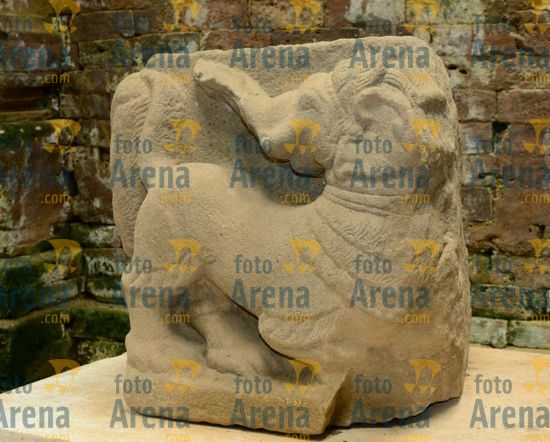
238-6408 Gajasimha. conservatory of My Son, UNESCO World Heritage Site, Vietnam, Indochina, Southeast Asia, AsiaLegenda da Fotoarena:Gajasimha. conservatory of My Son, UNESCO World Heritage Site, Vietnam, Indochina, Southeast Asia, Asia
DC
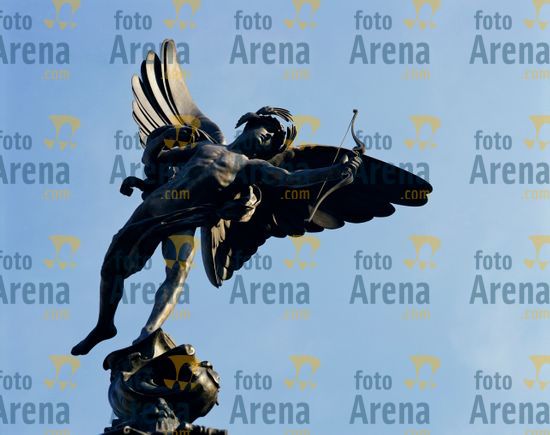
190-7666 Close-up of the statue of Eros on the Shaftesbury Memorial, Piccadilly Circus, London, England, United Kingdom, EuropeLegenda da Fotoarena:Close-up of the statue of Eros on the Shaftesbury Memorial, Piccadilly Circus, London, England, United Kingdom, Europe
DC
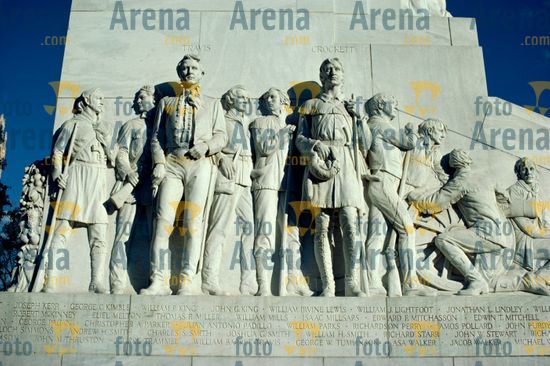
190-2814 Close-up of sculptures of Travis and Crockett on the San Antonio Memorial, Texas, United States of America, North AmericaLegenda da Fotoarena:Close-up of sculptures of Travis and Crockett on the San Antonio Memorial, Texas, United States of America, North America
DC
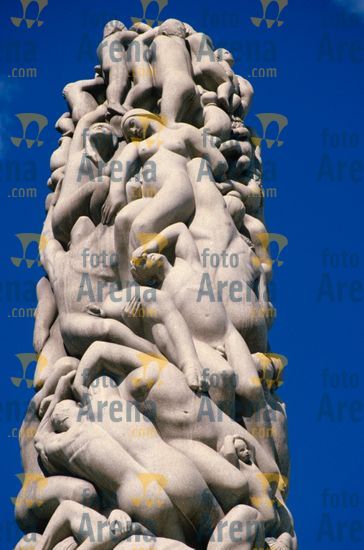
110-1713 Detail of sculpture of figures on the central stele in Frogner Park (Vigeland's Park), Oslo, Norway, Scandinavia, EuropeLegenda da Fotoarena:Detail of sculpture of figures on the central stele in Frogner Park (Vigeland's Park), Oslo, Norway, Scandinavia, Europe
DC
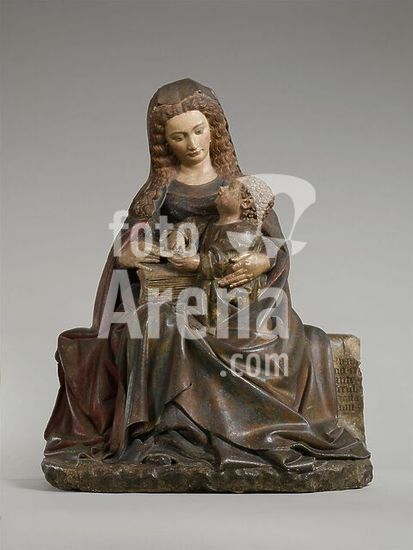
alb3678219 Virgin and Child. Artist: Attributed to Claus de Werve (Netherlandish, active in France, ca. 1380-1439, active Burgundy, 1396-ca. 1439). Culture: French. Dimensions: Overall: 53 3/8 x 41 1/8 x 27 in. (135.5 x 104.5 x 68.6 cm). Date: ca. 1415-17.This monumental yet intimate image of the Virgin and Child was probably a gift of John the Fearless, Duke of Burgundy (d. 1419), or his wife, Margaret of Bavaria (d. 1424), to the convent they founded dedicated to the Franciscan order of Poor Clares at Poligny. As court sculptor to the Burgundian dukes in Dijon, the influential artist Claus de Werve, to whom this sculpture is attributed, created many works for his patrons, and this sculpture is one of his masterpieces. The curly-headed child Jesus looks up at his mother as she balances him and a large book on her lap. This tender moment between mother and son is, at the same time, a presentation of a sophisticated theological theme. The clue to understanding it is the Latin inscription on the bench. Taken from the Book of Ecclesiasticus, dedicated to and extolling wisdom, it reads, "From the beginning, and before the world, was I created" (24:14). Although by the thirteenth century the Church applied this text, which refers to Wisdom as a feminine entity, to discuss Mary, it was Christ as God incarnate who was seen as the personification of divine Wisdom on earth and Mary the vessel, or throne, that bore him. Museum: Metropolitan Museum of Art, New York, USA.
DC

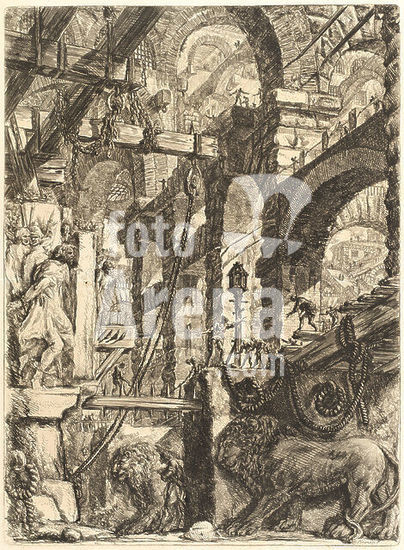
alb3739204 The Lion Bas-Reliefs. Dated: published 1761. Dimensions: sheet: 76.7 x 53.6 cm (30 3/16 x 21 1/8 in.). Medium: etching and engraving on laid paper. Museum: National Gallery of Art, Washington DC. Author: GIOVANNI BATTISTA PIRANESI.
DC
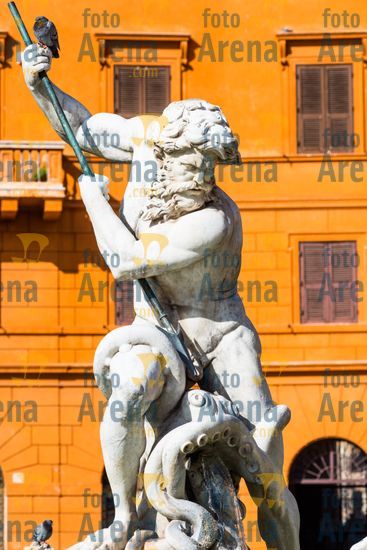
1267-313 The Fountain of Neptune (Fontana del Nettuno), a fountain located at the north end of the Piazza Navona, Rome, Lazio, Italy, EuropeLegenda da Fotoarena:The Fountain of Neptune (Fontana del Nettuno), a fountain located at the north end of the Piazza Navona, Rome, Lazio, Italy, Europe
RF
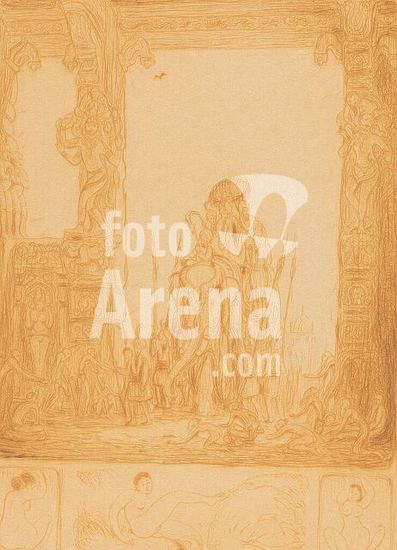
alb15591100 Figures on an elephant under a gate in Madurai, Rich and Poor (original title), The elephant is accompanied by figures with lances. The gate is decorated with sculptures. In the foreground there are kneeling figures holding up their hands in a begging gesture. In this sixth state of the print, three naked women in different poses have been added at the bottom., print, print maker: Wijnand Otto Jan Nieuwenkamp, 1917, paper, drypoint, height, 303 mm × width, 222 mm.
DC
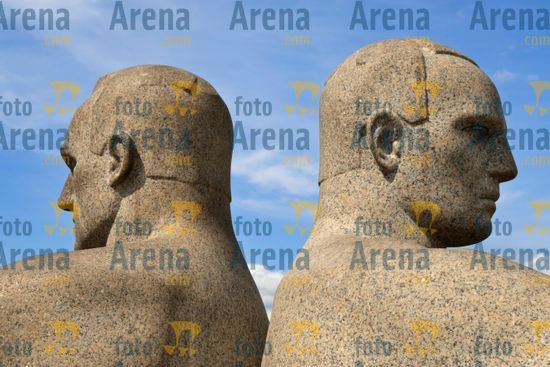
1167-525 Back to back, detail of a sculptural group on the Monolith Plateau by Gustav Vigeland, Frogner Park, Oslo, Norway, Scandinavia, EuropeLegenda da Fotoarena:Back to back, detail of a sculptural group on the Monolith Plateau by Gustav Vigeland, Frogner Park, Oslo, Norway, Scandinavia, Europe
RF
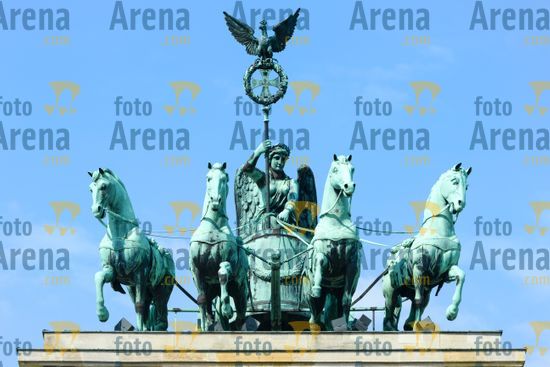
1131-689 Quadriga on top of the Brandenburger Tor, Berlin, Brandenburg, Germany, EuropeLegenda da Fotoarena:Quadriga on top of the Brandenburger Tor, Berlin, Brandenburg, Germany, Europe
RF
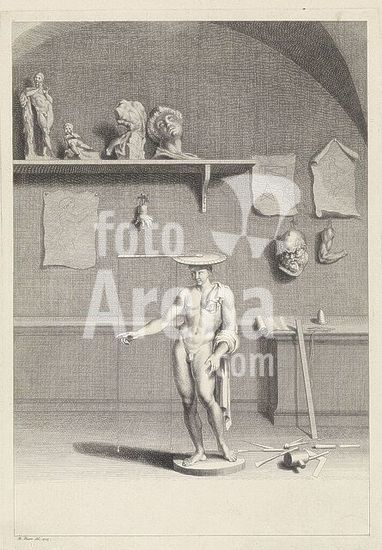
alb15551992 Amsterdam, Picart, Bernard, Ways to Sculpt the Human Figure, verso lower left - stamped, Room containing all kinds of supplies for the art of sculpting. In the foreground a statue and measuring instruments and chisels on the floor. On the wall drawing examples and small sculptures., print, prent, prints, prenten, height 333 mm, width 223 mm, Noord-Nederlands, 1673-06-11 - 1733-05-08, print maker, printmaker, 1727 - 1727, second quarter 18th century, tweede kwart 18e eeuw, paper, papier, etching, engraving, graveren (drukprocedé), intermediary draughtsman.
DC
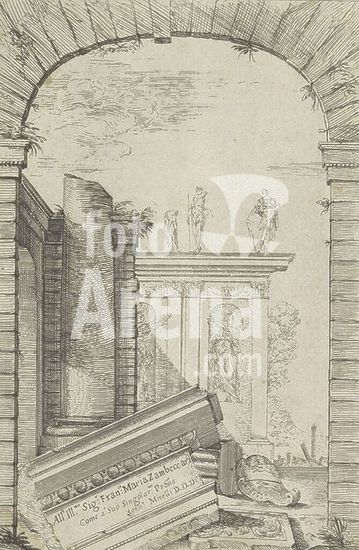
alb15550087 Rome, Parisino, Agostino, Bologna, Mitelli, Cartouches par Mitelli, Cartouches, Dedication on marble block in garden with ruins, verso - stamped, View through an arch of a garden with ruins of buildings and sculptures. In the foreground on the left lies a piece of a marble architrave with a dedication on it. The print is part of an album., print, picture, album sheet, prints, pictures, height 249 mm, width 169 mm, 1609 - 1660-08-02, print maker, printmaker, 1636 - 1636, paper, etching, etchings, Publication (Event), Publication, Italian, publisher.
DC
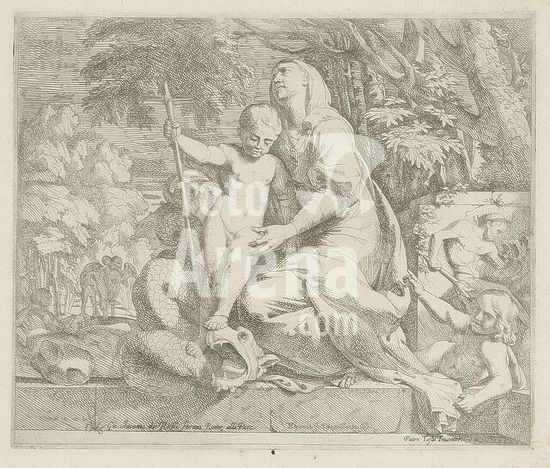
alb15554082 Rome, Rossi, Giovanni Giacomo de', Italy, Testa, Pietro, Giovanni Cesare, Rest on the Flight into Egypt, verso - stamped, Mary sits in a landscape and looks up. The Christ Child, with cross staff, leans against her lap and stands on a dragon. In the foreground on the right the young John the Baptist points to the staff of Christ. Behind him a sculpted relief with Hercules killing the Hydra of Lerna. In the background on the left a fallen sculpture, the resting Joseph and a putto by the donkey., print, prent, prints, height 214 mm, width 255 mm, Italian, 1625 - 1660, print maker, printmaker, 1637 - 1691, paper, papier, etching, etchings, Work conception, 1612 - 1650, after a design by, Publication (Event), Publication, 1627 - 1691, publisher.
DC
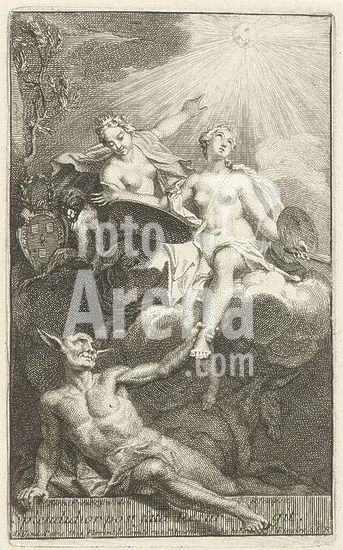
alb15528040 Louis XIV (King of France), Paris, Comte, Florent le, Picart, Bernard, Title page for: F. Le Comte, Cabinet des singularitez d'architecture, peinture, sculpture, et engraving, 1699-1700, Splendidior post fata resurgit, Allegorical representation with the personification of painting, verso lower right - stamped, The laureated Painting looks up to the sky. She is accompanied by a crowned woman who points to the sun. On the left a monkey with a coat of arms. In the foreground a man with donkey ears, who is trying to pull Painting at the foot of the cloud., print, engraving, title page, prints, height 144 mm, width 88 mm, Noord-Nederlands, 1673-06-11 - 1733-05-08, print maker, printmaker, 1699 - 1700, paper, papier, etching, etchings, engraving (printing process), intermediary draughtsman, after a drawing by, Publication (Event), Publication, Frans, 1655 - 1712, publisher, uitgever, 1638-09-05 - 1715-09-01, verlener van privilege.
DC
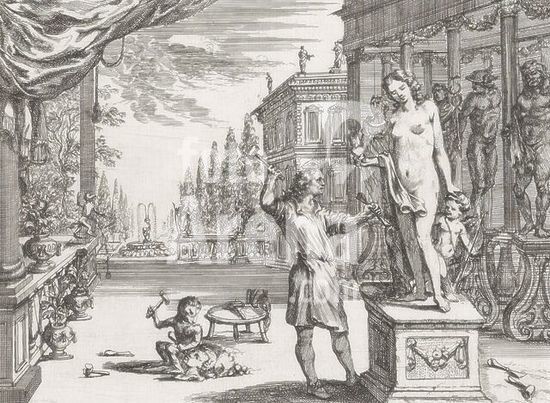
alb15513816 Augsburg, Küsel, Mathäus, Fine arts, Sculpture, verso - stamped, A sculptor is working on a statue of Venus and Amor. On the right are four other sculptures on a plinth, including a statue of Mercury and Hercules. In the foreground, a monkey is carving a human head from a stone. Below the image are four lines of text in Latin. The print is part of an album., print, prent, albumblad, prints, prenten, height 130 mm, width 157 mm, German, 1629-02-12 - 1681, print maker, printmaker, 1680 - 1680, paper, papier, etching, etchings.
DC
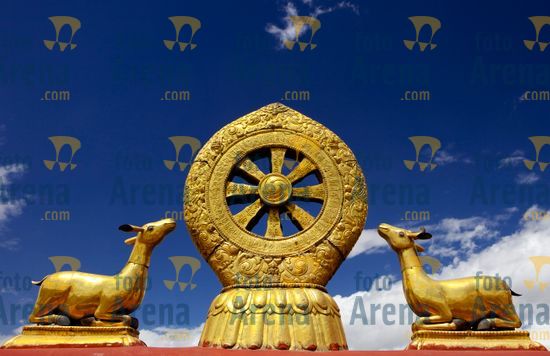
851-423 A golden dharma wheel and deer sculptures on the sacred Jokhang Temple roof, Barkhor Square, Lhasa, Tibet, ChinaLegenda da Fotoarena:A golden dharma wheel and deer sculptures on the sacred Jokhang Temple roof, Barkhor Square, Lhasa, Tibet, China
RF
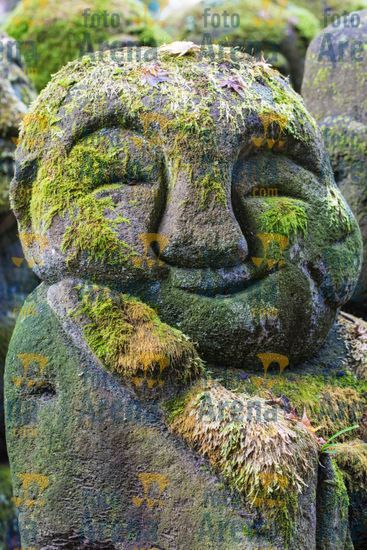
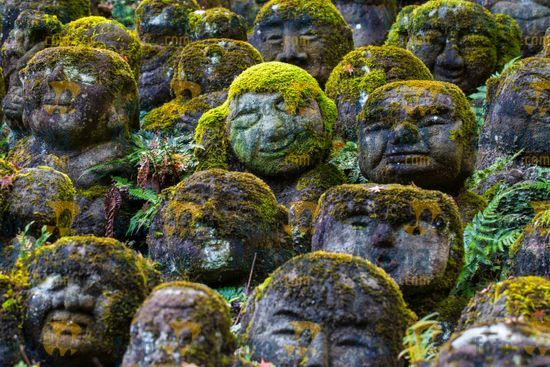
1104-1305 Rakan (disciples of Shaka, the founder of Buddhism) Buddhist images, Otagi Nenbutsu-ji Temple, Arashiyama, Kyoto, Japan, AsiaLegenda da Fotoarena:Rakan (disciples of Shaka, the founder of Buddhism) Buddhist images, Otagi Nenbutsu-ji Temple, Arashiyama, Kyoto, Japan, Asia
RF
1104-1302 Rakan (disciples of Shaka, the founder of Buddhism) Buddhist images, Otagi Nenbutsu-ji Temple, Arashiyama, Kyoto, Japan, AsiaLegenda da Fotoarena:Rakan (disciples of Shaka, the founder of Buddhism) Buddhist images, Otagi Nenbutsu-ji Temple, Arashiyama, Kyoto, Japan, Asia
RF
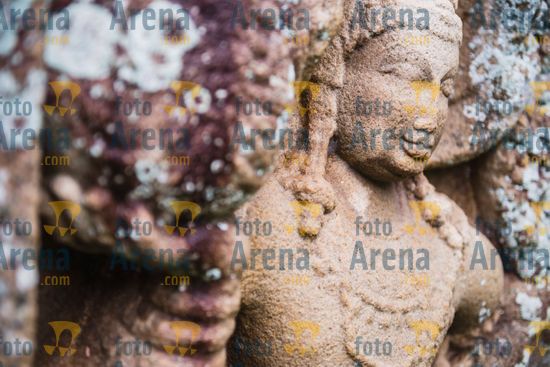
1109-917 Guardian statue at Thuparama Dagoba, Mahavihara (The Great Monastery), Anuradhapura, UNESCO World Heritage Site, Sri Lanka, AsiaLegenda da Fotoarena:Guardian statue at Thuparama Dagoba, Mahavihara (The Great Monastery), Anuradhapura, UNESCO World Heritage Site, Sri Lanka, Asia
RF
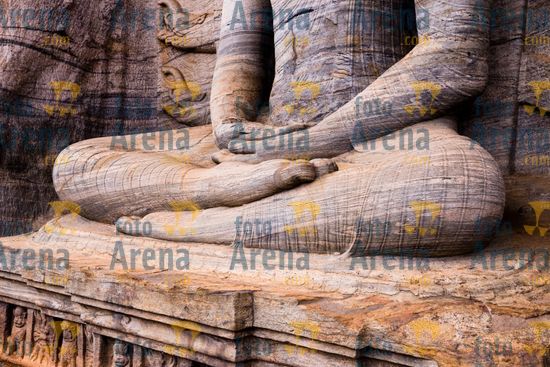
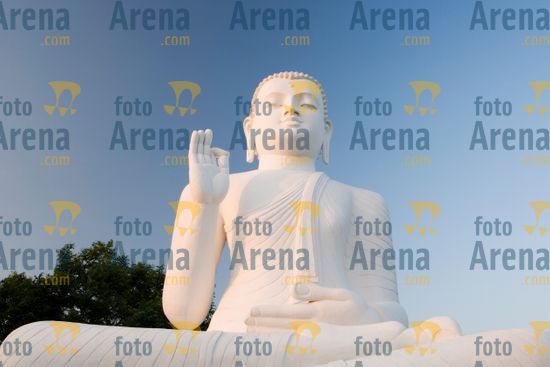
1109-978 Seated Buddha in meditation, Gal Vihara Rock Temple, Polonnaruwa, UNESCO World Heritage Site, Sri Lanka, AsiaLegenda da Fotoarena:Seated Buddha in meditation, Gal Vihara Rock Temple, Polonnaruwa, UNESCO World Heritage Site, Sri Lanka, Asia
RF
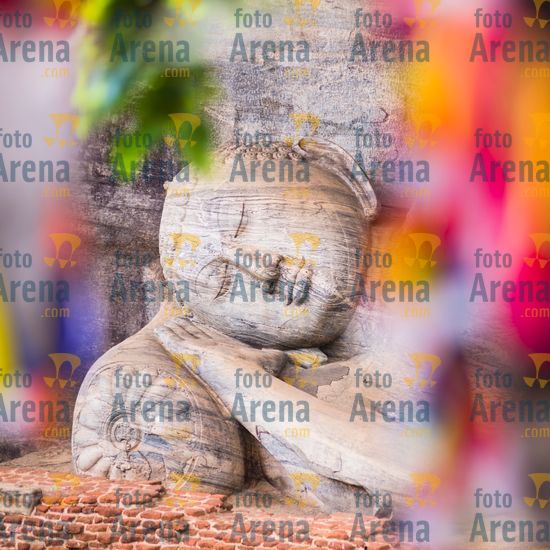
1109-981 Buddhist prayer flags and reclining Buddha in Nirvana at Gal Vihara Rock Temple, Polonnaruwa, UNESCO World Heritage Site, Sri Lanka, AsiaLegenda da Fotoarena:Buddhist prayer flags and reclining Buddha in Nirvana at Gal Vihara Rock Temple, Polonnaruwa, UNESCO World Heritage Site, Sri Lanka, Asia
RF
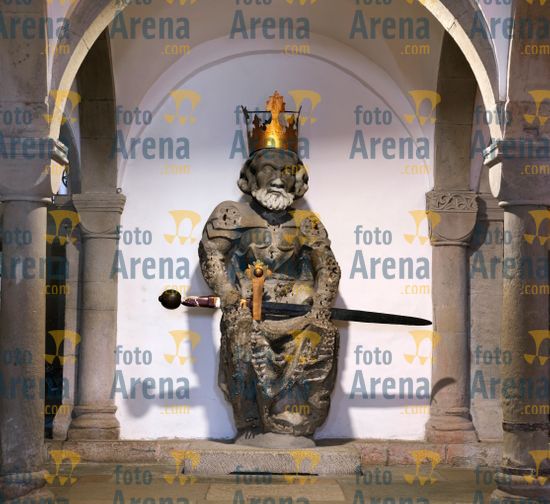
818-160 Statue of Emperor Ludwig (Louis the German), grandson of Charlemagne, in the crypt of Fraumunster Church, Zurich, Switzerland, EuropeLegenda da Fotoarena:Statue of Emperor Ludwig (Louis the German), grandson of Charlemagne, in the crypt of Fraumunster Church, Zurich, Switzerland, Europe
RF
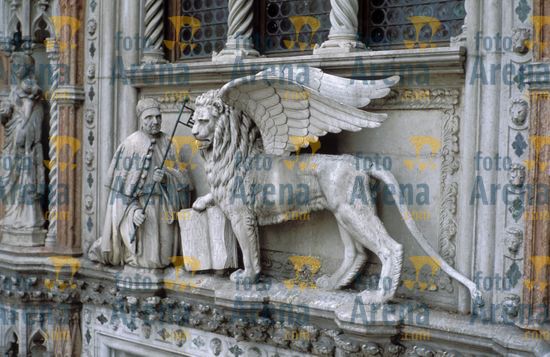
818-783 Statue of winged lion over the portal gate, Doge's Palace, Venice, UNESCO World Heritage Site, Veneto, Italy, EuropeLegenda da Fotoarena:Statue of winged lion over the portal gate, Doge's Palace, Venice, UNESCO World Heritage Site, Veneto, Italy, Europe
RF
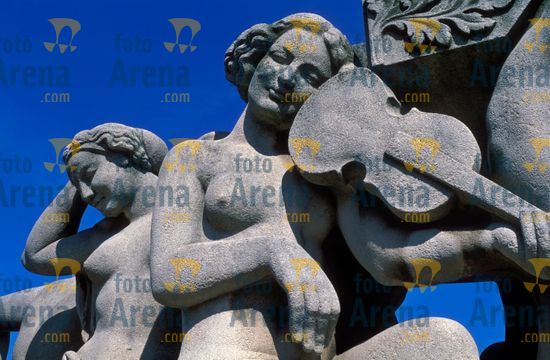
818-315 Statues of women at the Trocadero, Paris, France, EuropeLegenda da Fotoarena:Statues of women at the Trocadero, Paris, France, Europe
RF
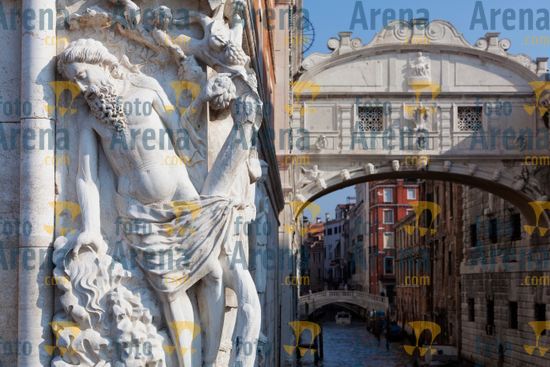
785-1623 The Bridge of Sighs and Palazzo Ducale (Doges Palace), Venice, UNESCO World Heritage Site, Veneto, Italy, EuropeLegenda da Fotoarena:The Bridge of Sighs and Palazzo Ducale (Doges Palace), Venice, UNESCO World Heritage Site, Veneto, Italy, Europe
RF
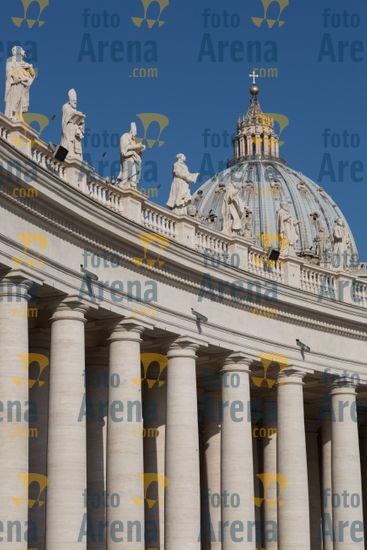
785-1855 The Basilica of St. Peter's from Piazza San Pietro, UNESCO World Heritage Site, Vatican, Rome, Lazio, Italy, EuropeLegenda da Fotoarena:The Basilica of St. Peter's from Piazza San Pietro, UNESCO World Heritage Site, Vatican, Rome, Lazio, Italy, Europe
RF
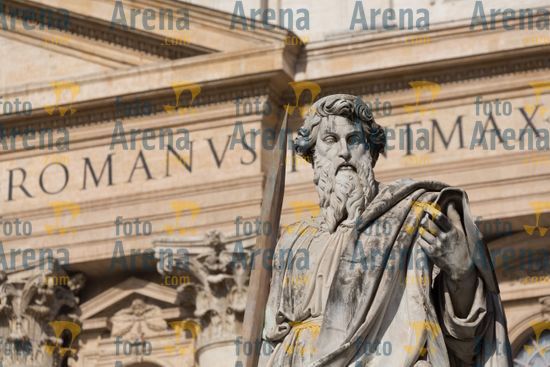
785-1857 Statue and the facade of the Basilica of St. Peter's, UNESCO World Heritage Site, Vatican, Rome, Lazio, Italy, EuropeLegenda da Fotoarena:Statue and the facade of the Basilica of St. Peter's, UNESCO World Heritage Site, Vatican, Rome, Lazio, Italy, Europe
RF
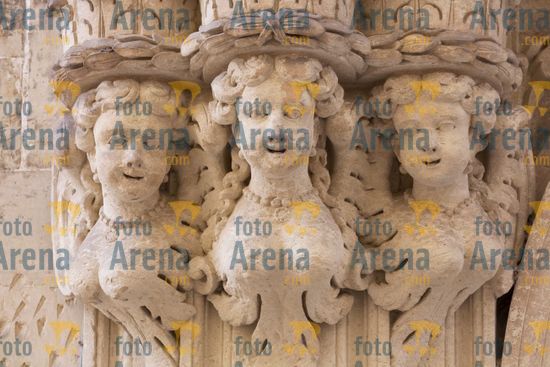
785-1730 Statue of angels outside a church in the baroque city of Lecce, Puglia, Italy, EuropeLegenda da Fotoarena:Statue of angels outside a church in the baroque city of Lecce, Puglia, Italy, Europe
RF
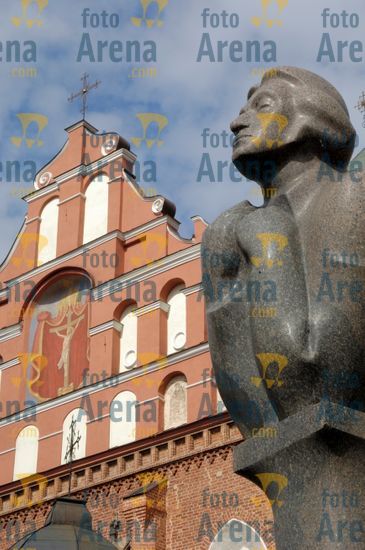
762-221 Statue of Adam Mickiewicz with Bernardine church and monastery in the background, Vilnius, UNESCO World Heritage Site, Lithuania, Baltic States, EuropeLegenda da Fotoarena:Statue of Adam Mickiewicz with Bernardine church and monastery in the background, Vilnius, UNESCO World Heritage Site, Lithuania, Baltic States, Europe
RF
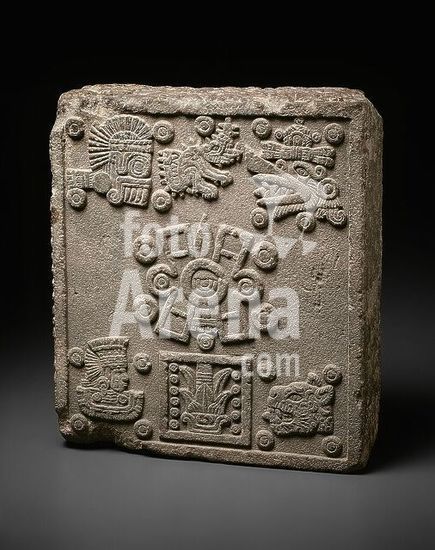
alb4131044 Coronation Stone of Motecuhzoma II (Stone of the Five Suns), Coronation Stone of Moctezuma II ("Stone of the Five Suns"), Stone of the Five Suns. Aztec (Mexica); Tenochtitlan, Mexico. Date: 1503. Dimensions: 55.9 × 66 × 22.9 cm (22 × 26 × 9 in.). Basalt. Origin: . Museum: The Chicago Art Institute, USA. Author: Aztec (Mexica) (Culture).
DC
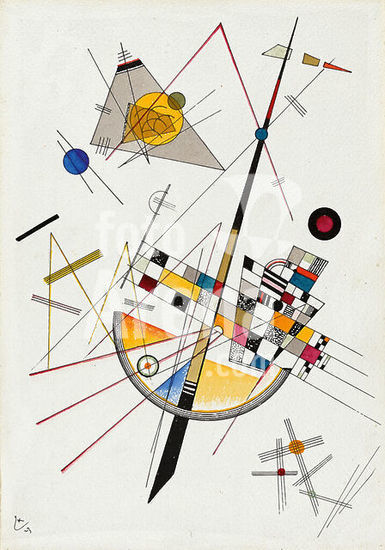
alb4156621 Wassily Kandinsky (Moscow, 1866-Neuilly-sur-Seine, 1944). Delicate Tension. No. 85 (1923). Watercolor and ink on paper. 35.5 x 25 cm. Museum: Museo Nacional Thyssen-Bornemisza, Madrid.
DC
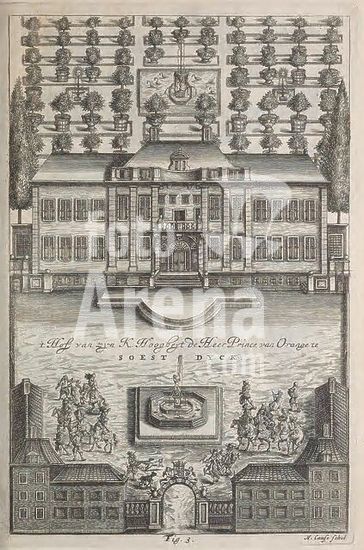
alb15388026 De Koninglycke Hovenier Aanwyzende De Middelen Om Boomen T'Amsterdam By Marcus Doornick Netherlands Horticulture, A detailed illustration of an ornate estate, showcasing a grand central building with a symmetrical facade, expansive gardens, and meticulously arranged avenues of trees. The upper section features a layout of the garden, highlighting various plants and sculptures. In the foreground, a decorative fountain is surrounded by elegantly mounted horse riders, suggesting a historical significance and opulence associated with the location. Emblems of nobility and grandeur are evident throughout the design, featuring intricate architectural details and landscaping that emphasize the residence's status. The title reflects important historical connections, hinting at ties to royal lineage and heritage.
DC
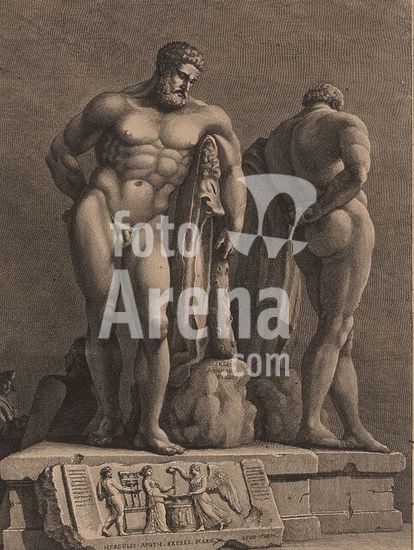
alb15455639 unknown, Italy, Vasi, Giuseppe, L'Ercole di Farnese disegnato in due vedute opposte, Le Hercule de Farnese dessine sous deux points de vue opposez, Hercules Farnese, verso mounting sheet - stamped, Antique sculpture known as the Hercules Farnese, shown twice at the back and a bas-relief in the foreground. In the bottom margin titles, five-line Italian text and seven-line French text., print, prints, height 502 mm, width 320 mm, Italian, 1710-08-28 - 1782-04-16, print maker, printmaker, 1773 - 1773, third quarter 18th century, paper, etching, Work conception, after own design of, after image of.
DC
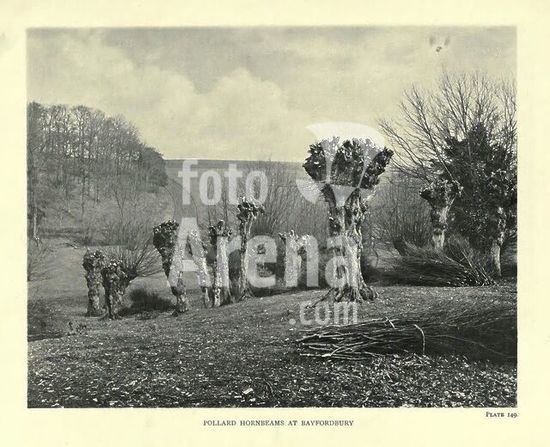
alb15360316 The, trees, of, Great Britain, &, Ireland, Edinburgh, Priv, print, 1906-13, Great Britain, Ireland, trees,, The scene features a serene landscape filled with unique, sculptural trees that have an unusual, gnarled appearance. These trees dominate the foreground, standing tall with trunks that twist and bend in various directions, their branches reaching outward like arms. In the background, the landscape transitions into rolling hills that recede into the distance, partially shrouded by a soft haze that adds depth to the scene. The sky above is adorned with wispy clouds, contributing to an overall tranquil and somewhat mysterious atmosphere. Scattered patches of grass and bare shrubs can be seen throughout, hinting at the seasonal changes in the environment.
DC
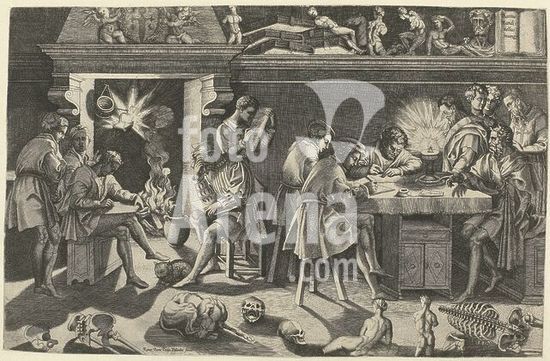
alb15499827 Rome, Palombo, Pietro Paolo, Italy, Bandinelli, Baccio, Vico, Enea, Academy of sculptor Baccio Bandinelli, verso - stamped, In the workshop of Baccio Bandinelli, men and boys of various ages sit drawing at a table and in front of an open fire. The Florentine sculptor held one of the earliest drawing academies in the Cortile del Belvedere in the Vatican. In the foreground, among other things, a sleeping dog, a skeleton, bones and a skull. Against the wall a shelf with books and casts of ancient sculptures., print, prints, height 307 mm, width 476 mm, Italian, 1523 - 1567, print maker, printmaker, 1533 - 1567, second quarter 16th century, third quarter 16th century, paper, engraving, engraving (printing process), Work conception, 1493 - 1560-02-07, after a design by, Publication (Event), Publication, publisher.
DC
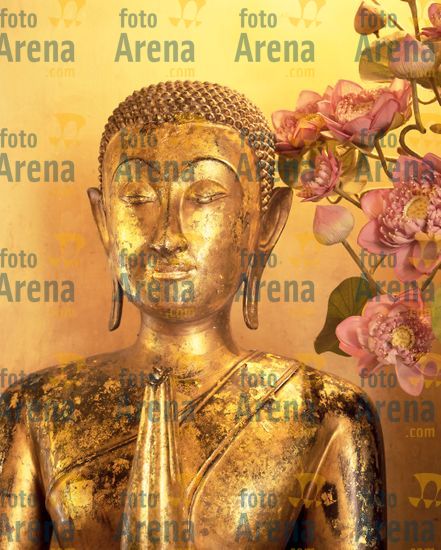
252-10594 Close-up of statue of the Buddha, Wat Pho (Wat Po) (Wat Phra Chetuphon), Bangkok, Thailand, Southeast Asia, AsiaLegenda da Fotoarena:Close-up of statue of the Buddha, Wat Pho (Wat Po) (Wat Phra Chetuphon), Bangkok, Thailand, Southeast Asia, Asia
RF
252-11124 Great seated figure of the Buddha, Mihintale, Sri Lanka, AsiaLegenda da Fotoarena:Great seated figure of the Buddha, Mihintale, Sri Lanka, Asia
RF
641-9653 Wat Arun (Temple of the Dawn), Bangkok, Thailand, Southeast Asia, AsiaLegenda da Fotoarena:Wat Arun (Temple of the Dawn), Bangkok, Thailand, Southeast Asia, Asia
RF
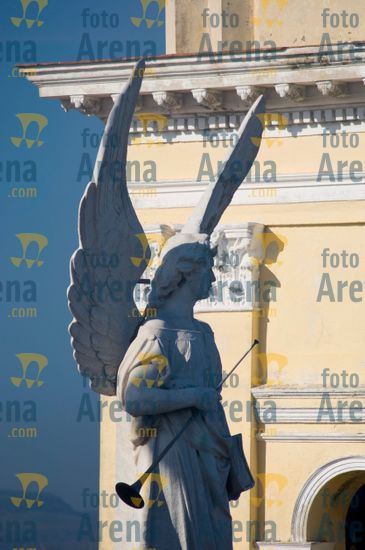
149-5003 The statue of an angel on the Catedral de Nuestra Senora de la Asuncion, Parque Cespedes, Santiago de Cuba, Cuba, West Indies, Central AmericaLegenda da Fotoarena:The statue of an angel on the Catedral de Nuestra Senora de la Asuncion, Parque Cespedes, Santiago de Cuba, Cuba, West Indies, Central America
RF
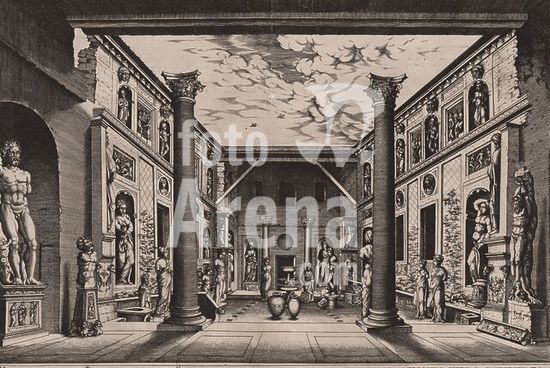
alb15507526 Cock, Hieronymus, Heemskerck, Maarten van, Southern Netherlands, Sculpture garden in Palazzo Valle, Capranica, Capranica. Courtyard of the palace with two Corinthian columns in the foreground. Antique sculptures, free-standing and in niches., print, prints, l on base: 'Cock exc. 1553', In margin at the bottom: HAEC VISVNTVT ROMAE, IN HORTO CARD, EIUS BENEFICIO, EX ANTIQUITATIS, RELIQUIIS IBIDEM CONSERVATA., height 289 mm, width 416 mm, print maker, printmaker, 1553 - 1553, third quarter 16th century, paper, engraving, engraving (printing process), Work conception, Northern Netherlands, 1498 - 1574, after a design by, Publication (Event), Publication, 1518 - 1570-03-10, publisher.
DC
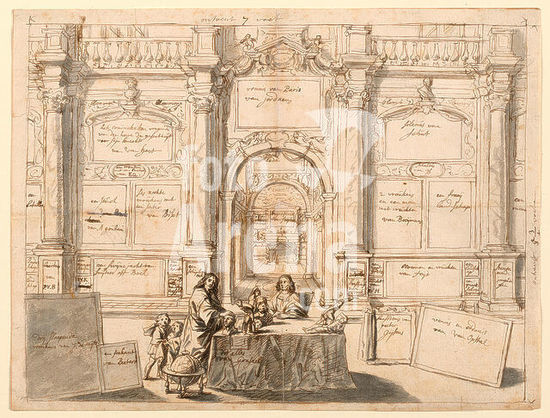
alb9529252 Interior of a large gallery, the walls of which are lined with frames containing written inscriptions referring to the pictures to be contained therein. A view through a central arched opening reveals a corridor, and another gallery beyond it. In the foreground, the collector and his family are beside a table on which sculptured objects are displayed. Date: ca. 1700. Pen and sepia ink, brush and gray wash on paper. Museum: Cooper Hewitt, Smithsonian Design Museum.
DC
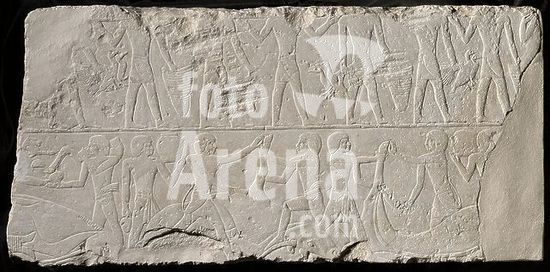
alb4129193 Fragment of a Tomb Wall Depicting Offering Bearers and Butchers. Egyptian, Saqqara. Date: 2445 BC-2287 BC. Dimensions: 45 × 94.3 × 13.65 cm (17 3/4 × 37 1/8 × 5 3/8 in.). Limestone. Origin: Egypt. Museum: The Chicago Art Institute, USA. Author: Ancient Egyptian.
DC
alb3635721 Virgin and Child. Culture: French. Dimensions: 14 1/2 × 6 1/2 × 5 in. (36.8 × 16.5 × 12.7 cm)Other (weight): 11 lb. (5003g)Other (cavity in bottom): 11/16 × 3/4 × 1 13/16 in. (1.8 × 1.9 × 4.6 cm). Date: ca. 1275-1300.The Virgin tramples a quasi-human winged serpent, an allusion to her triumph over the devil, as foretold in Genesis (3:15): "I will put enmity between thee and the woman, and thy seed and her seed; she shall crush thy head, and thou shalt lie in wait for her heel." Probably from the Marcy workshop, this sculpture attempts to be a convincing evocation of Gothic ivories, such as those displayed nearby. Museum: Metropolitan Museum of Art, New York, USA.
DC

alb3606217 Pair of five-light candelabra. Culture: Italian, Rome. Dimensions: Overall (each): 27 × 15 15/16 in. (68.6 × 40.5 cm). Maker: Luigi Valadier (Italian, Rome 1726-1785 Rome); Possibly in collaboration with Lorenzo Cardelli. Date: 1774.After the death of his father in 1763, Prince Marcantonio Borghese (1730-1800) inherited a great fortune that included the finest private art collection in the Eternal City.[1] His subsequent role as one of the most important collector-patrons of the Neoclassical period -rivaling, in his own family, Cardinal Scipione Borghese (1576-1633) in the Early Baroque era - has not received the attention that it deserves.[2] The creator of this pair of candelabra, Luigi Valadier (1726-1785), became the principal goldsmith for Prince Marcantonio, who was close to him in age, thus extending the ties that the artisan's father, the goldsmith Andrea Valadier (d. 1757), had established to the Borghese court decades earlier.[3]The superior design and precise, finely detailed craftsmanship of the present five-light candelabra place them among the most distinguished art objects created in the second half of the eighteenth century, an exciting period of Roman creativity influenced by the theories of Johann Joachim Winckelmann and the progressive inventions of Giovanni Battista Piranesi.[4] Thanks to the archival research of Alvar González-Palacios, we know a great deal about the circumstances of their manufacture. They were made for the suite of public rooms in the Palazzo Borghese in Rome that the architect Antonio Asprucci was redecorating for Prince Marcantonio.[5] They were to be displayed on two small tables - also executed in the color scheme of deep red porphyry and gilded bronze - in the Galleriola dei Cesari (so called because sixteen ancient porphyry busts of Roman emperors were on view there in niches).[6] Porphyry has been associated since Roman times with personages "born in the purple"; it is also a difficult stone to work. González-Palacios suggests that Lorenzo Cardelli, a stone carver who collaborated with Valadier on several mantelpieces of porphyry and marble the following year, made the porphyry elements for these candelabra.[7]Rising from each candelabrum's porphyry drum decorated with gilded bronze bucrania and swags in the classical style, the porphyry shaft curves up in the form of a baluster to become a small bowl at the top, decorated with gilded lions' heads and three whimsical Roman theatrical masks, from which sprout clusters of gilded bronze leaves and long branches that terminate in sockets for candles. Standing on the drum and encircling the baluster are three bronze female figures that appear to support the basin but in fact are purely decorative. Valadier's invoice for works he executed for the palazzo Borghese (dated September 6, 1774) identifies the figures as a Venus, an Amazon, and a Muse and says they were based on clsasical Roman statues.[8] The Venus, shown turned toward the shaft - the better to display her beautiful posterior - was based on an ancient marble then at the Villa Farnesina in Rome and now in the Museo Archeologico Nazionale in Naples. Often reproduced, in various media, it was a popular souvenir with foreign visitors on the grand tour. The figure Valadier describes as a Muse recalls the huntress Diana in the collection of the Palazzo Verospi in Rome. The prototype of the Amazon is a marble sculpture today in the Musei Vaticani. Valadier reproduced it in 1780 as a large bronze statue (now at the Château de Malmaison, outside Paris).[9]Valadier's idea of grouping three caryatid figures around the shaft of his candelabra may have originated with Piranesi, who engraved a celebrated ancient statue of the three Graces that was at the time on display in the Villa Borghese.[10] Nevertheless, both the forward-looking design and the daring combination of decorative elements with such divergent roots show that Valadier was well ahead of most contemporary makers of decorative objects. He had an important influence on English artists and metalwork, as a comparison of the upper part of his candelabra with English goldsmiths' work of the 1810s to the 1840s shows. Future research may reveal whether a similar pair of candelabra entered an influential English collection during the late eighteenth or early nineteenth century, or whether an English artisan in Italy bought drawings of the candelabra home to the British Isles during those years.[11] Parallels with the oeuvre of Benjamin Lewis Vulliamy (1780-1854) are especially striking. In 1811 his British firm made for the Prince Regent a pair of candelabra with simpler ornaments and with sculptural details after English plasters that nevertheless reflect the design of the Metropolitan's candelabra.[12][Wolfram Koeppe 2008][1] González-Palacios 1995b, p. 97[2] Ibid.[3] Bulgari 1958-59, vol. 2, pp. 494, 496, 499.[4] See Koeppe in Kisluk-Grosheide, Koeppe, and Rieder 2006, p. 168, no. 70; Lawrence 2007.[5] On the redecoration of the suite of rooms on the ground floor of the palace, see Hibbard 1962.[6] On the tables, see González-Palacios in González-Palacios 1996, pp. 127-28, no. 26, pl. X.[7] González-Palacios 1995b, p. 101.[8] Alvar González-Palacios identified this document in the Archivio Segredo Vaticano, Archivio Borghese, fol. 5298 (no. 3169). It reads, in part, "due Candelabrij di profido tutti guarniti con dell'ornati e figure di metallo dorato . La Venere delle belle chiappe, L'Amazone et una Musa."[9] Note by James David Draper in the files of the Department of European Sculpture and Decorative Arts, Metropolitan Museum. Compare also the related Statue of a Wounded Amazon, an ancient Roman marble in the collection of the Metropolitan Museum (32.11.4).[10] Fuhring 1989, vol. 1, p. 360, no. 557, fig. 27; Lawrence 2007.[11] Valadier created a pair of candelabra that are very similar to the present examples, today at Pavlovsk Palace, near Saint Petersburg. González-Palacios suggests they may have been commissioned by Grand Duke Paul of Russia and his wife Maria Feodorovna; see González-Palacios 1995b, p. 102, n. 8; Kuchumov 1974, pl. 184.[12] This hitherto unobserved influence demands a separate study. The following sources may cast some light on the question: Carlton House 1991, p. 178, no. 151; Christie's, Monaco, July 1, 1995, sale cat., lot 30 (a similar pair). Museum: Metropolitan Museum of Art, New York, USA.
DC

alb4131151 Head of Mars. Roman. Date: 101 AD-200 AD. Dimensions: 59.2 x 29.5 x 37.8 cm (23 1/3 x 11 5/8 x 14 7/8 in.). Marble. Origin: Roman Empire. Museum: The Chicago Art Institute, USA. Author: ANCIENT ROMAN.
DC
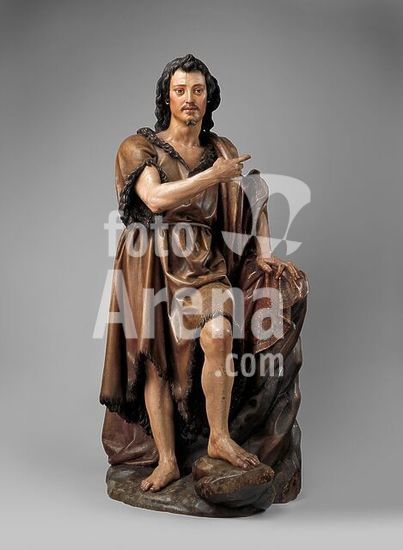
alb3625749 Saint John the Baptist. Artist: Juan Martínez Montañés (Spanish, Alcalá la Real 1568-1649 Seville). Culture: Spanish, Seville. Dimensions: Overall (confirmed): H. 60 5/8 x W. 29 5/8 x D. 27 5/8 in. (154 x 75.2 x 70.2 cm). Date: ca. 1620-30.Juan Martínez Montañés was one of the greatest spanish sculptors of the first half of the seventeenth century. Based in Seville, he carved numerous wooden statues and reliefs that were painted and integrated into large altar screens called retablos (English: retables) for churches in his native region or to be shipped to the New World. His forte as an artist was the single figure, standing or seated, usually robust, naturally posed, and richly robed. Somewhat defensively, he gave his reason for this: "As for the appearance of the statues when they are seen away from their settings by those who do not understand or maliciously criticize them, we say that once they are in their places they will be very effective, and if they did not have so much drapery they would look very insignificant when they were put in compartments at a distance." [Note 1] To modern eyes, his works even when removed from their original contexts have a powerfully sculptural form; but it is important to remember how critical the original church setting was in the artist's conception. The Museum's statue of Saint John the Baptist, a rare work by the master in a collection outside Spain or South America, illustrates these points. A mature man with a powerful physique, he wears a short brown tunic cinched with a rope around the waist. A crimson robe patterned with foliage and cherub heads is draped over his shoulder and partially covers the rock formation on which he stands and leans. His left hand rests on the rock while his right reaches across his body to point. This gesture was certainly toward a missing Lamb of God on an altar in the monastery church for which Saint John was made or toward the top of a banderole with the message "Behold the Lamb of God" stuck in the ground by the saint's left foot (where a hole exists) and rising to his left shoulder. The altar of Saint John the Baptist (1635 - 37) in the Convento de Santa Paula, Seville (fig. 31), gives an idea of how this might have appeared. [Note 2] His strongly defined carved features include a thin, split goatee -- the rest of his light beard and mustache are painted -- a knot of hair over the forehead and long tousled locks, a creased forehead, and straight, subtly carved eyebrows. Made of Spanish cedar, the statue has held up relatively well over the centuries, although some fingers of the right hand have been recarved and the right arm rejoined. [Note 3]As a physical type, John the Baptist is like other statues of the saint carved by the artist. The one he made for the retablo of San Isidoro del Campo at Santiponce (after 1609) is generally similar in pose, though the raised foot of the Museum's figure makes the saint's gesture more emphatic, and its face is smoother and not quite as eloquent as here. [Note 4] Closer to this one in its powerful presence and expressive face is the Saint John the Baptist in high relief on the retablo of the Convento de San Leandro, Seville (1622 - 23). [Note 5] A dating of the Museum's statue during the artist's mature years seems to be borne out by these comparisons. Beatrice Proske assigned it to the 1620s or early 1630s. José Hernández Díaz preferred to date the figure to the first decade of the century, before the retablo of San Isidoro at Santiponce. [Note 6] He viewed the Museum's Saint John as a striking and characteristic work entirely by Martínez Montañés, but Proske thought she detected the intervention of another artist in the sculptor's workshop and described it as in the style of Montañés.Documents connect the statue to the Sevillian Convento de la Nuestra Señora de la Concepción, which was suppressed in 1837. In a notice published in 1844 that inventoried the contents of the monastery church, Félix González de León described one of its retablos: Under a big molded arch with pilasters supporting a cornice, on a high pedestal placed over the base of the retable itself stood the most beautiful figure of Saint John the Baptist ever made by the celebrated Martínez Montañés. One can hardly explain the beauties of the design and the treatment of draperies and body of this famous image, the honor of its author and its country. [Note 7]He further noted niches on either side of the statue decorated with pediments and angels and filled with paintings of stories about the saint. Relatively modest by the standards of the time, the retablo must have been somewhat like those in the Convento de Santa Paula, centered on the statue of the saint. Martínez Montañés's resolutely straightforward image with pleasing partial side views would have been well suited to such a frame. The emphatic gesture was designed to be read from a distance, and as the sculptor himself explained, the voluminous drapery would give the figure weight and solidity in the midst of such splendid decorations. The sculptor's father was an embroiderer in the city of Alcalá la Real, and the son's taste for richly decorated textiles must have developed early in life. Traditionally, Spanish sculpture of this period was painted by specialists other than the carver. This figure's relatively simple painted patterns and colors only enhance the power of the carving. NOTES1. Quoted in Proske 1967, p. 4 (translated from López Martínez 1932, p. 238).2. Proske 1967, pp. 125 - 27, figs. 193, 194.3. U.S. Department of Agriculture, Madison, Wisconsin, letter of April 25, 1966, in the curatorial files of the Department of European Sculpture and Decorative Arts, Metropolitan Museum. The statue was cleaned by Christine Faltermeier and the right arm reset by Rudolph Colban in the summer of 1975.4. Proske 1967, pp. 61 - 69, figs. 73, 76.5. Ibid., pp. 93 - 95, figs. 108, 109, 131. 6. Hernández Díaz 1987, pp. 261, 264.7. González de León 1844, vol. 1, pp. 228 - 29. Museum: Metropolitan Museum of Art, New York, USA.
DC

alb3681486 Study of a Young Woman in Three-quarter Bust-Length. Artist: Bronzino (Agnolo di Cosimo di Mariano) (Italian, Monticelli 1503-1572 Florence). Dimensions: Sheet: 7 5/8 × 5 5/16 in. (19.4 × 13.5 cm). Date: ca. 1540-42.The surviving corpus of securely attributed drawings by Bronzino numbers around sixty-two, or so sheets. This is by all accounts an extraordinarily small number for a Tuscan artist of his generation. The Museum was fortunate to acquire this drawing which was unknown until its discovery at auction in 2013. It is a sketch after a living model, and belongs with a small group of Bronzino's sheets of ca. 1540-45 for the frescoes and altarpiece in the Chapel of Eleonora di Toledo (Palazzo Vecchio, Florence), because of its style, technique, design, and pictorial approach to life drawing. As is seen here, the most plentiful kind of drawing by Bronzino to have survived, his life-studies of the figure (or "ritratti dal naturale") are quietly about the humble, flesh-and-blood models who were his subjects, and who posed in the studio for the invention of his pictures. The Met's study is drawn in the artist's typical style and technique of the early 1540s in black chalk on off-white paper that was prepared with a thinly applied gray-blue wash layer; the paper on the verso is left without color. The closest comparison for the Met's drawing is Bronzino's life study of ca. 1540-41, for St. Michael on the vault fresco of the Chapel of Eleonora (Musée du Louvre 6356, Paris), which exhibits an identical technique of execution in black chalk on off-white paper colored with a preparation of gray-blue wash: the paper on the verso is left similarly unprepared. The technique of Bronzino's modello of ca. 1540 for the vault fresco of the chapel (Städelsches Kunstinstitut 4344, Frankfurt), which was probably produced before the architect Giambattista di Marco del Tasso had fully completed the building (hence the great differences of design), is also similarly on off-white paper prepared with gray-blue wash, although it was drawn with a combination of media in pen and brown ink with wash and white gouache highlights. Bronzino used off-white papers prepared with colored wash mostly in the Chapel of Eleonora drawings, as in the study of ca. 1541-42, for the youth seen from behind in the Crossing of the Red Sea and Moses Appointing Joshua, in which the paper is prepared with wash of a mustard or pale yellow hue (Gabinetto Disegni e Stampe degli Uffizi 6704 F, Florence). Soon after 1545-46, however, when Bronzino was urgently pressed for time and practicality as he started to produce copious designs for the tapestries commissioned by Cosimo de' Medici, he began using manufactured blue paper (carta azzurra) as in the modello for the tapestry of Justice Liberating Innocence (Biblioteca Pinacoteca Ambrosiana F 261 inf. no. 65, fol. 61, Milan), and in the drawing for the borders of the Story of Joseph Tapestries (British Museum Pp. 2-95, London), rather than laboriously hand-preparing off-white paper with colored wash as in the Chapel of Eleonora drawings. The figure in the Met's sheet is closely observed from life without embellishment of head or body. As seen here, in almost all of Bronzino's figure studies for paintings of the 1530s and 1540s the individual identity of his models in both a physical and psychological sense shines through. Drawn in black chalk on unprepared off-white paper, and also very closely related in style, the study of ca. 1543-45 for the head of the aristocratic woman onlooker toward the center in the Besançon version of the altarpiece of the Lamentation portrays the model wearing a simple, adherent cap instead of the eventual, intricately jeweled coiffure (Gabinetto Disegni e Stampe degli Uffizi 10894 F, Florence). Moreover, the fine, portrait-like features of the woman in the Uffizi study, in which the sharp angle of view adds to the mood of nearly familial intimacy, assume in the painting the idealized physiognomy of a marble Roman matron, who is meant to be dressed like a lady in the Duchess Eleonora di Toledo's court. In the Met's sheet, the bodice of the woman's humble dress and a veil or shawl wrapping over her left shoulder are also lightly indicated. Some tendrils of hair are evident toward the right side of the forehead. The short nose with an almost rectilinear nostril, the small, somewhat square chin (which is very forcefully outlined), and the smooth fleshiness of the cheeks communicate the quiet, portrait-like dimension of this particular study of the living model. This is yet a further hallmark of Bronzino's figural style and approach in his life drawings of the early 1540s: as seen here, many, subtly naturalistic details closely observed from the model begin to inform the limpid clarity of form, with outlines always delicately descriptive, and with interior modeling that always clearly defines the sculptural values of the figure. As is also characteristic for Bronzino at this time, the contours defining the figure throughout the Met's drawing pulsate with dynamic effects of tone: the outlines vary in darkness and light in concert with the inner modeling, and dark outlines are often immediately edged with light. Evident only close-up, so subtle is the pulitezza (the ideal of cleanliness) of Bronzino's draftsmanship, are the lighter strokes of the chalk in minutely parallel, searching outlines that ubiquitously accompany the firmer, bolder contours. Light catches the outline of the neck as if it were a delicate edge of form in a way that is entirely typical of his drawings of the late 1530s to early 1540s. Her head is inclined with an elegant though credibly life-like turn of the long neck as she pensively lowers her eyes; her mouth with just a hint of the parting of the lips communicates life, as if the figure had momentarily arrested breathing. It is this immediacy and the portrait-like individuality and naturalism which Bronzino all too often thoroughly sacrificed in his finished paintings (though not in the Medici portraits), almost to the point of lifelessness, in order to produce the monumental, profoundly idealized, abstracted figures that intricately inform the complex layers of illusionistic form and iconographic meaning in his elegant compositions. This is especially the case in the virtuosic fresco program of the Chapel of Eleonora.(Carmen C. Bambach; April 23, 2015). Museum: Metropolitan Museum of Art, New York, USA.
DC

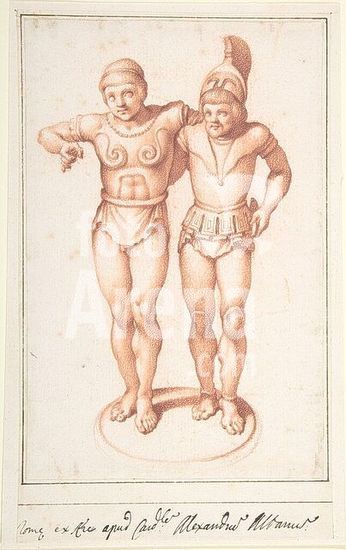
alb3652404 Etruscan Candelabrum Finial (from Cassiano dal Pozzo's 'Paper Museum'). Artist: Anonymous, Italian, Roman-Bolognese, 17th century. Dimensions: 8-1/4 x 5-5/16 in. (21.0 x 13.5 cm). Date: 1620-40.This highly worked up drawing in red chalk portrays in great detail an Etruscan bronze candelabrum finial, of the late Archaic period and datable about 510-480 BC, that is also in the Metropolitan Museum of Art's collection (47.11.3), and is on view in Gallery 170, Department of Greek and Roman Art. This drawing is surprisingly close in scale to the actual object. The bronze finial represents a pair of warriors, one wounded and limping who is supported by the other. This is therefore a rare and felicitous instance in which both the visual source and the drawing are owned by the same institution.This drawing is in a style and on an annotated mount that are typical of the "Paper Museum," or Museo Cartaceo, that was compiled in Rome by Cassiano dal Pozzo (1598-1657) with the help of his brother, Carlo Antonio. The original of the Etruscan sculpture represented in the drawing was at the time in the collection of Cardinal Albani, as is stated in the inscription on the mount. Henrietta Ryan (Deputy Curator of the Print Room, Royal Library, Windsor Castle) examined this drawing in 1999, on behalf of the Cassiano dal Pozzo Catalogue Committee, and plans to publish it along with other sheets in the forthcoming catalogue of Cassiano dal Pozzo's Museo Cartaceo. Another drawing copying a Sleeping Cupid also emanates from Cassiano dal Pozzo's Museo Cartaceo and is in the Metropolitan Museum of Art (45.36).The most exact comparisons for the style and drawing technique in red chalk are the illustrations of antiquities found in the MS Franks, vol. 2 (especially fols. 83, 84, 125, 126, 128, nos. 418, 419, 514, 515, 517), at the British Museum, London. The Metropolitan Museum's drawing is pasted onto a characteristic "Type A" mount trimmed at the top and the sides (Mark McDonald, communication on August 5, 2014). Part of Cassiano dal Pozzo's collection of drawings focused on recording the archaeological and sculptural remains of antiquity with an encyclopedic range and systematic rigor of graphic description. Cassiano commissioned a variety of artists to execute his drawings. The Museo Cartaceo was probably enriched by Cardinal Alessandro Albani (1692-1779), the eminent collector and nephew of Pope Clement XI and who is mentioned in the inscription on the mount of the present drawing. The albums comprising the Museo Cartaceo constitute one of the milestones in the history of taste during the 17th and 18th centuries. The interpretation of Classical antiquity was among the chief concerns of artists and intellectuals of the period.As reconstructed by John Gere and Henrietta Ryan, the distinguished provenance for this and related drawings from Cassiano dal Pozzo's Museo Cartaceo is uninterrupted into modern times. The various owners of the drawings were among the most erudite antiquarians of their day, and the drawings as a group constitute a major chapter in the history of taste and collecting. See ex-collectors.(Carmen C. Bambach; August 5, 2014). Museum: Metropolitan Museum of Art, New York, USA.
DC

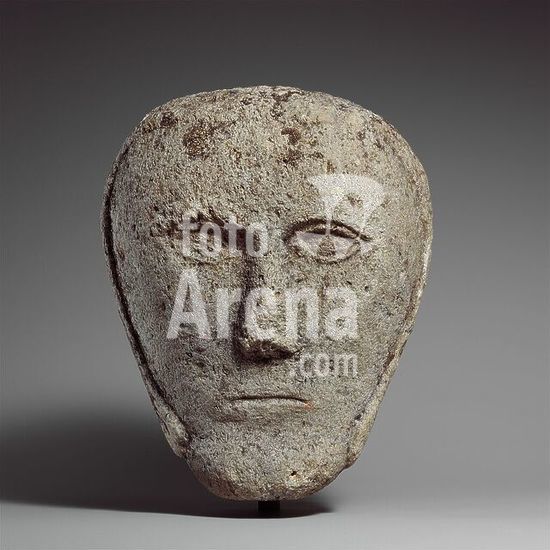
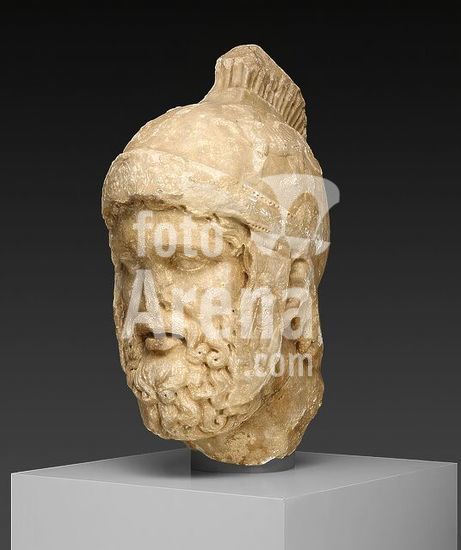
alb3611868 Head of a Man Wearing a Cap or Helmet. Culture: Celtic. Dimensions: H. 9 in. (24.1 cm). Date: possibly 2nd-3rd century.The facial features are like those on numerous Celtic heads found in Yorkshire. Many, however, are actually products of later periods, continuing the simplicity of forms characteristic of Celtic sculpture. Stone heads like this one may have functioned as surrogates for actual human heads, thus retaining a certain aura of power. The military appearance of the headgear could indicate the man's status and significance. Museum: Metropolitan Museum of Art, New York, USA.
DC

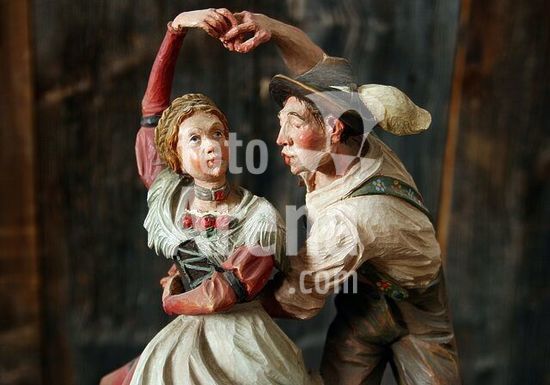
dpa7408390 (dpa) - Dancing figurines carved out of wood in a workshop in Oberammergau, Germany, 29 March 2004. Wood carving in Oberammergau can be traced back to the 12th century and aside from cribs numerous custom made pieces are produced.
DC
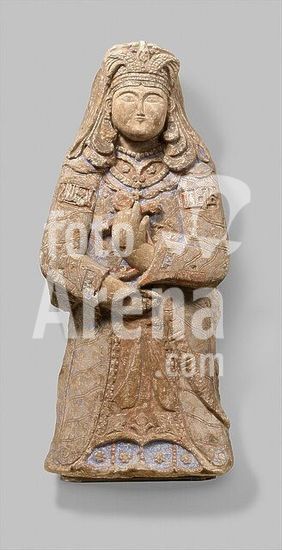
alb3680311 Standing Figure with Feathered Headdress. Dimensions: H. 47 in. (119.4 cm)W. 20 1/2 in. (52.1 cm)D. 8 3/4 in. (22.2 cm) (including wall mount)Wt. 170 lbs. (77.1 kg)from the bottom of the coat to the top of the crown: 46 in. (116.8 cm). Date: 12th-early 13th century.The ornamented headdress, arms, and rich vestments of this figure suggests that figures like this one most likely represent a sovereign's personal guard, viziers or amirs. Probably meant to decorate the reception hall of a ruler's court, be it the Seljuq sultan or one of his local vassals or successors, they would parallel and enhance actual ceremonies in the very setting in which they took place. Recent analyses have proven that a traditionally-made gypsum plaster is consistently employed on these figures and on archaeological stuccoes. The figures also display integrated restoration of the first half of the twentieth century, including additions in a more refined gypsum, and modern pigments (some of the reds and synthetic ultramarine blue). Museum: Metropolitan Museum of Art, New York, USA.
DC

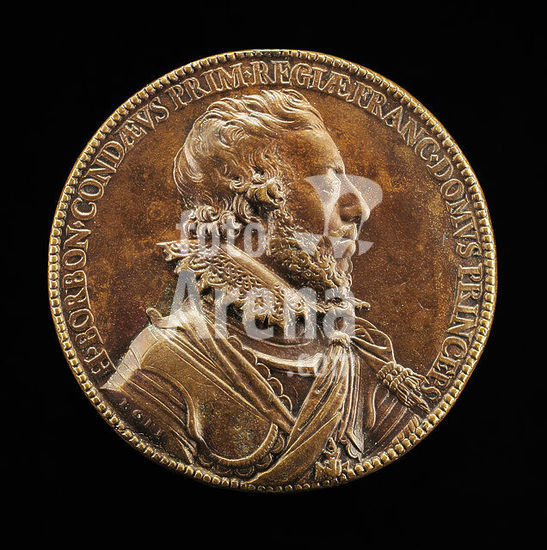
alb3701828 Henri II de Bourbon, 1588-1646, 3rd Prince of Condé, first Prince of the Blood [obverse]. Dated: 1611. Dimensions: overall (diameter): 5.68 cm (2 1/4 in.) gross weight: 49.22 gr (0.109 lb.) axis: 12:00. Medium: bronze. Museum: National Gallery of Art, Washington DC. Author: Guillaume Dupré.
DC
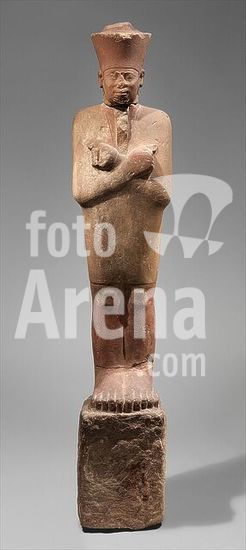
alb3674467 Statue of Nebhepetre Mentuhotep II in the Jubilee Garment. Dimensions: H. 252.9 cm (99 9/16 in.); W. 47.7 cm (18 3/4 in.); D. 43.7 cm (17 3/16 in.). Dynasty: Dynasty 11. Reign: reign of Mentuhotep II. Date: ca. 2051-2000 B.C..Twenty two statues of this type stood beside (but not in the shadow of) sycomore and tamarisk trees that lined the processional path through the forecourt of the mortuary temple of Mentuhotep II at Deir el-Bahri. The rough, rectangular base was inserted into the ground. The king wears the traditional short mantle of the pharaoh's thirty-year jubilee festival (Heb Sed). In his fists were the now missing scepter and flail of Egyptian kings and the god Osiris, probably made of metal. The head on this piece wears the "red" crown of Lower Egypt. No head with the "white" crown of Upper Egypt was found; but it is conceivable that the statues along the south side of the path wore the "white" Upper Egyptian crown, the ones along the north side the "red" Lower Egyptian one. At some later time all statues from the forecourt were decapitated and broken up. Some bodies were buried close to their original places, others were moved around. Most heads are missing. Both the body and head of the Museum's statue were found in the area of the temple of Hatshepsut that is adjacent to the Mentuhotep temple. It is not certain that the head really belonged to this particular body.The style of the statue is intentionally archaic, presumably because Mentuhotep II is commemorated as the ruler who reunified the country after the First Intermediate Period and thus restored Egypt to its original state first created during the late Predynastic and early Dynastic Period. Museum: Metropolitan Museum of Art, New York, USA.
DC

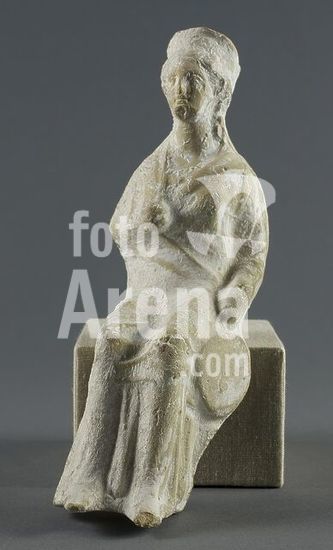
alb4130459 Statuette of a Seated Woman. Greek. Date: 400 BC-350 BC. Dimensions: 18.1 × 6.4 × 7.6 cm (7 1/8 × 2 1/2 × 3 in.). Terra-cotta. Origin: Greece. Museum: The Chicago Art Institute, USA. Author: ANCIENT GREEK.
DC
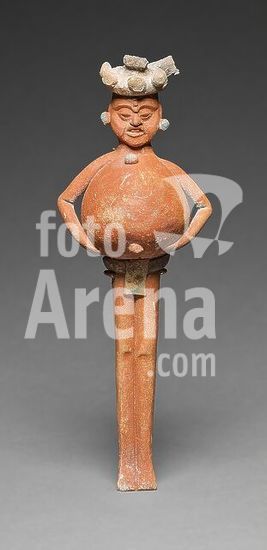
alb4132024 Rattle in the Form of a Mythological Figure. Late Classic Maya, Jaina; Campeche or Yucatán, Mexico. Date: 650 AD-800 AD. Dimensions: H. 18.4 cm (7 1/4 in.). Ceramic and pigment. Origin: Campeche. Museum: The Chicago Art Institute, FLORENCIA, USA.
DC

Total de Resultados: 2.300

Página 1 de 23