


















































Busque também em nossas outras coleções:

Tipo de arquivo:

Tipo do arquivo:

Orientação:

Total de Resultados: 158

Página 1 de 2

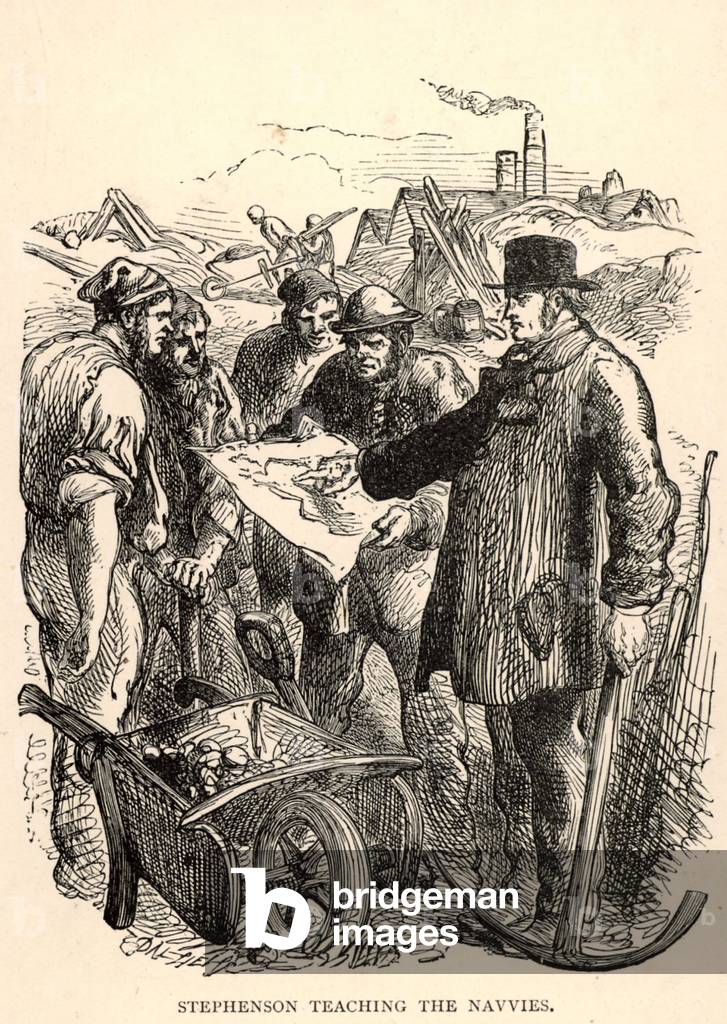
UIG865038 George Stephenson (1781-1848) English mechanical engineer and railway pioneer, born at Wylam, near Newcastle upon Tyne, Northumberland. Stephenson instructing the navvies constructing the Liverpool and Manchester Railway, England, which was opened in September 1830. From "The Triumphs of Steam" by Henry Frith (London, c1898). Engraving.
DC
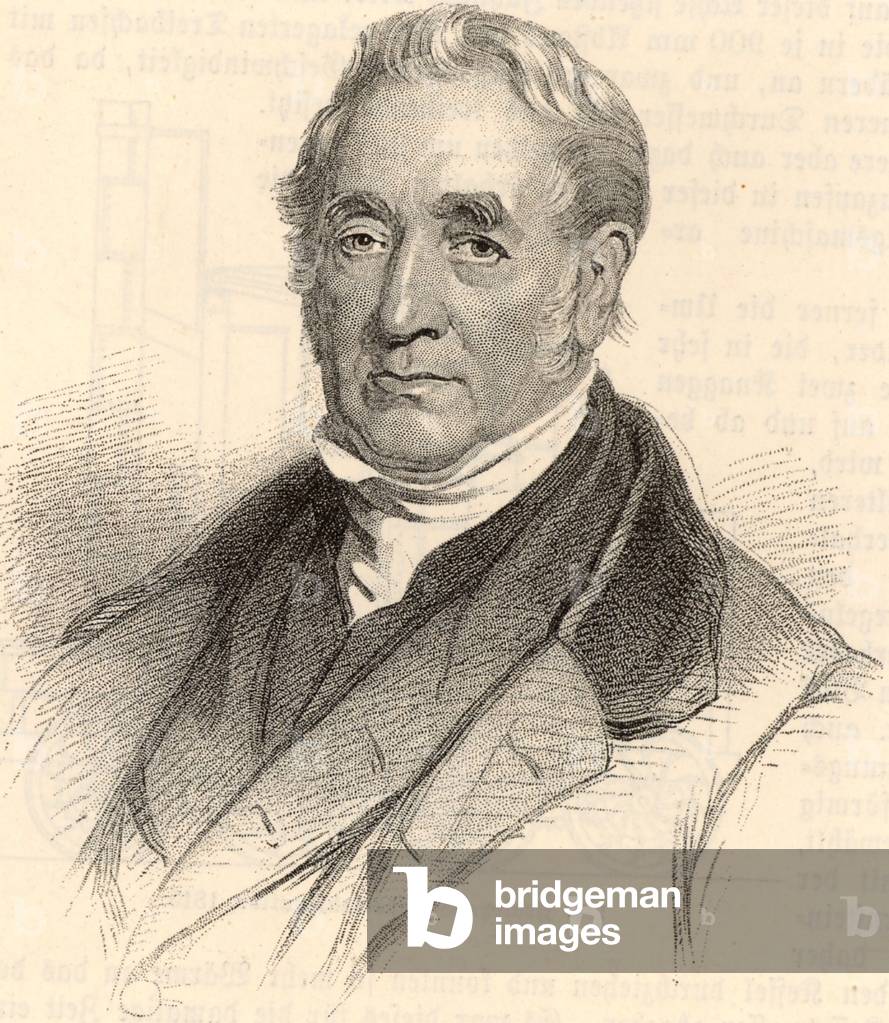
UIG865017 George Stephenson (1781-1848) English mechanical engineer and railway pioneer. Engineer of the Stockton and Darlington Railway (1825), he made a survey for the Liverpool and Manchester Railway (1824) and was appointed engineer to the line 1826. In 1829 he won the Rainhill Trials with his locomotive 'Rocket' which had a tubular boiler. Engraving from "Das Buch der Erfindungen Gewerbe und Industrien" (Leipzig, 1896-1901).
DC
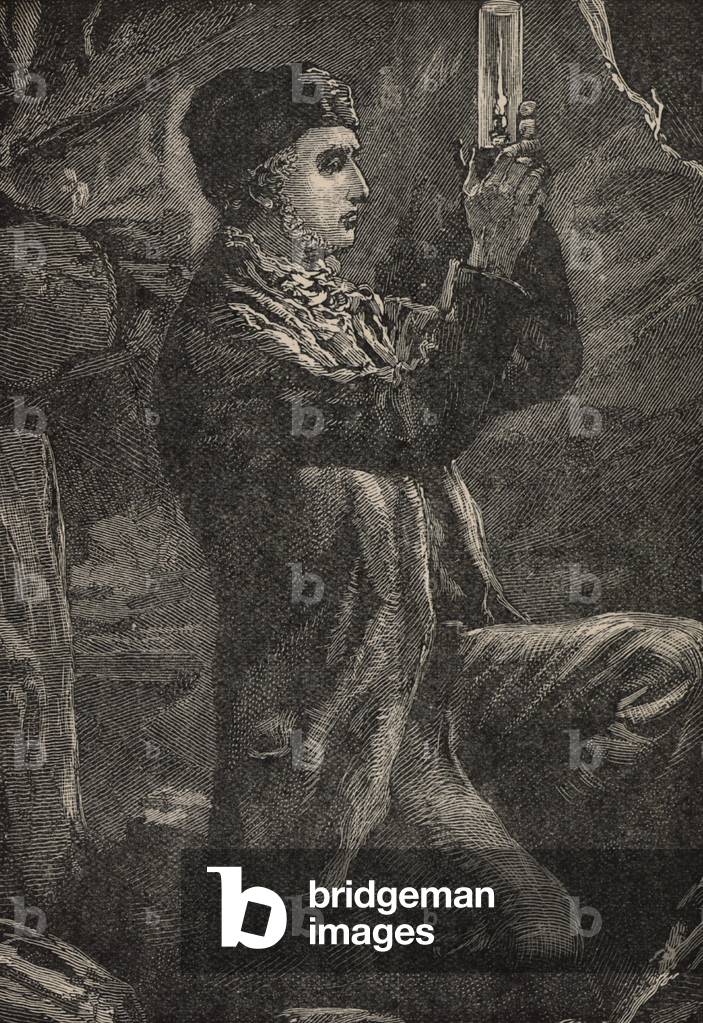
UIG863791 George Stephenson (1781-1848) English mechanical engineer and railway pioneer, born at Wylam, near Newcastle upon Tyne, Northumberland. Artist's impression of Stephenson trying out his miner's safety lamp. He perfected his third lamp in 1815 when he was enginewright at Killingworthworth colliery, and it was widely used in coal mines in the north of England. From "The Triumphs of Steam" by Henry Frith (London, c1898). Engraving.
DC
LIP1037765 George Stephenson. Illustration for The Graphic, 11 June 1881.
DC
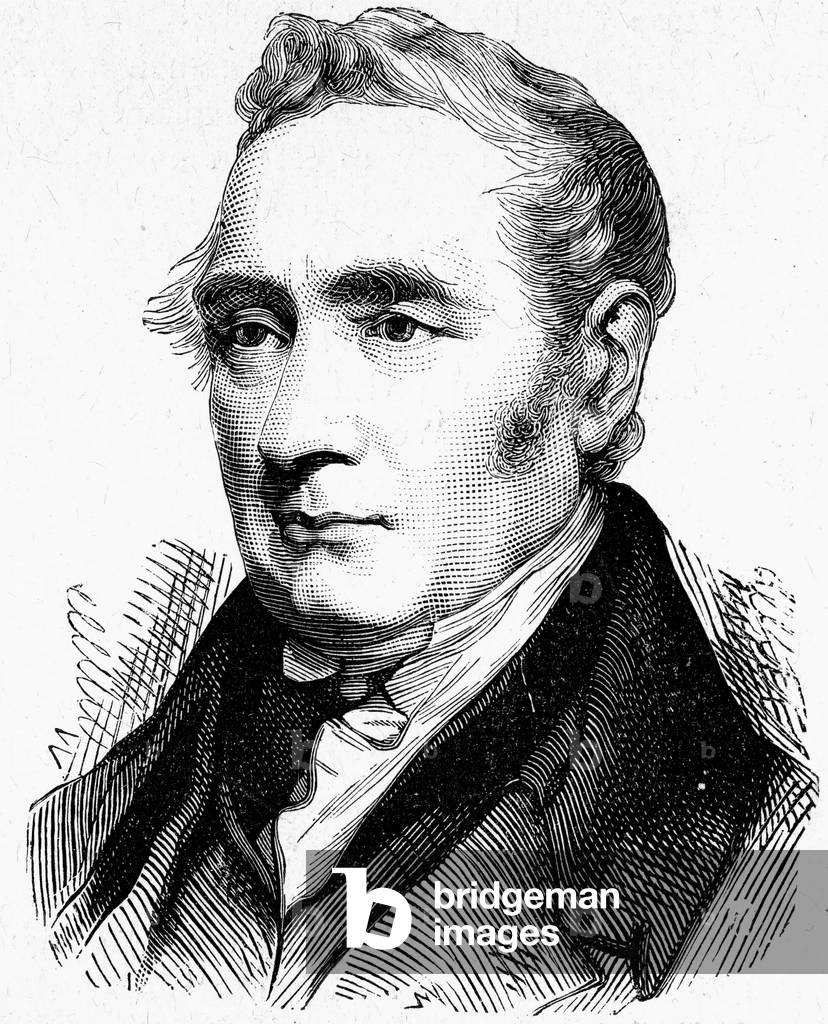
JAB4120891 George STEPHENSON (1781-1848), English engineer, inventor of modern railway.
DC
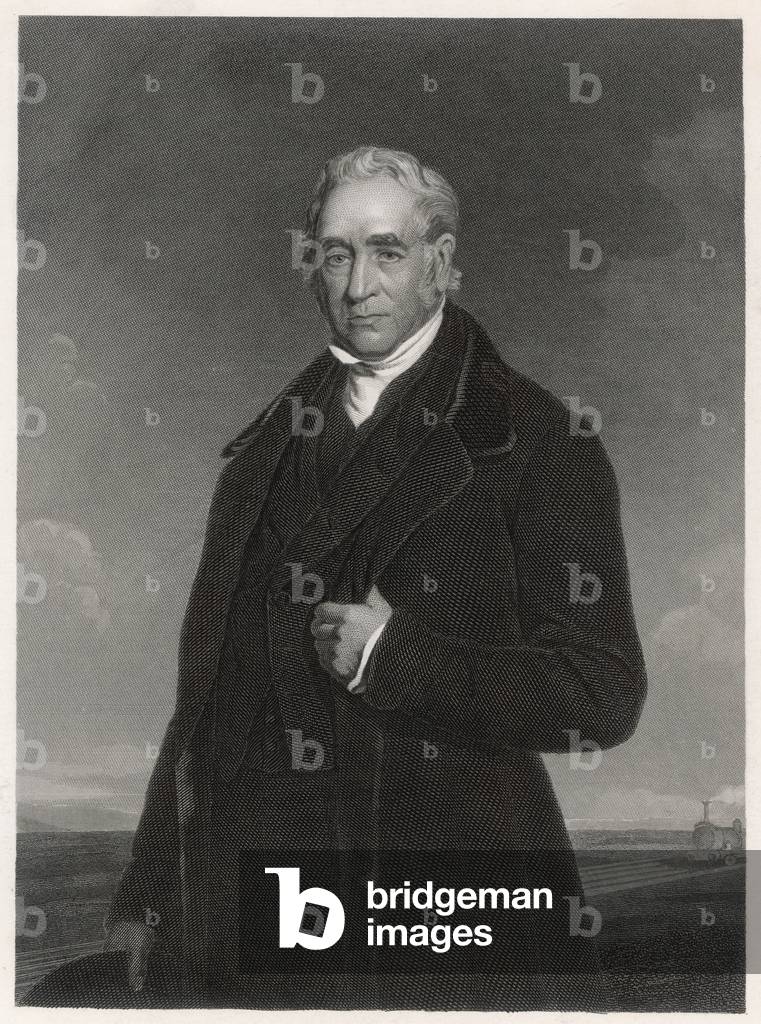
KWE177786
DC
XJF105855
RF
XJF105492
RF
XCF3408 by Thomas Talbot Bury
RF
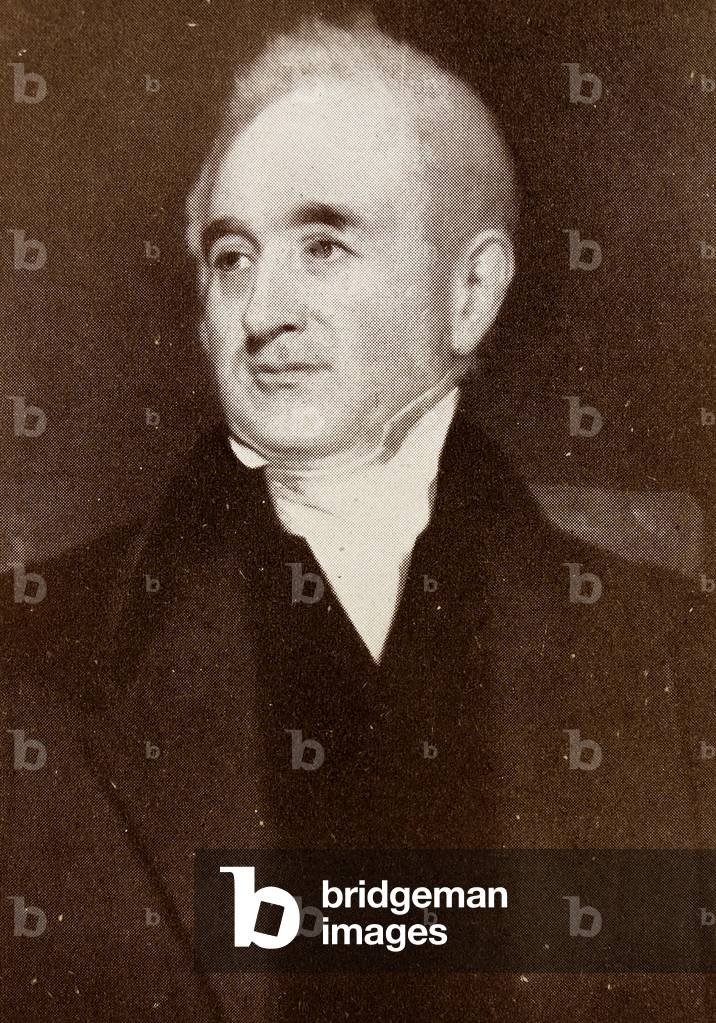
XEE4414924 Portrait of George Stephenson, British engineer (1781-1848).
RF
XEE4117235 Portrait of George Stephenson (1781-1848), British engineer.
RF
BAL3380
RF
PT5300
DC
UIG866172
DC
UIG530627
DC
UIG5415805
DC
XEE4164504 George Stephenson, British engineer (1781-1848) with his son.
RF
XEE4411090 Portrait of George Stephenson (1781-1848). Chromolithography of the late 19th century.
RF
XRH1722567 George Stephenson (1781-1848) English mechanical engineer and railway pioneer. Engineer of the Stockton and Darlington Railway (1825), he made a survey for the Liverpool and Manchester Railway (1824) and was appointed engineer to the line 1826. In 1829 he won the Rainhill Trials with his locomotive 'Rocket' which had a tubular boiler.
DC
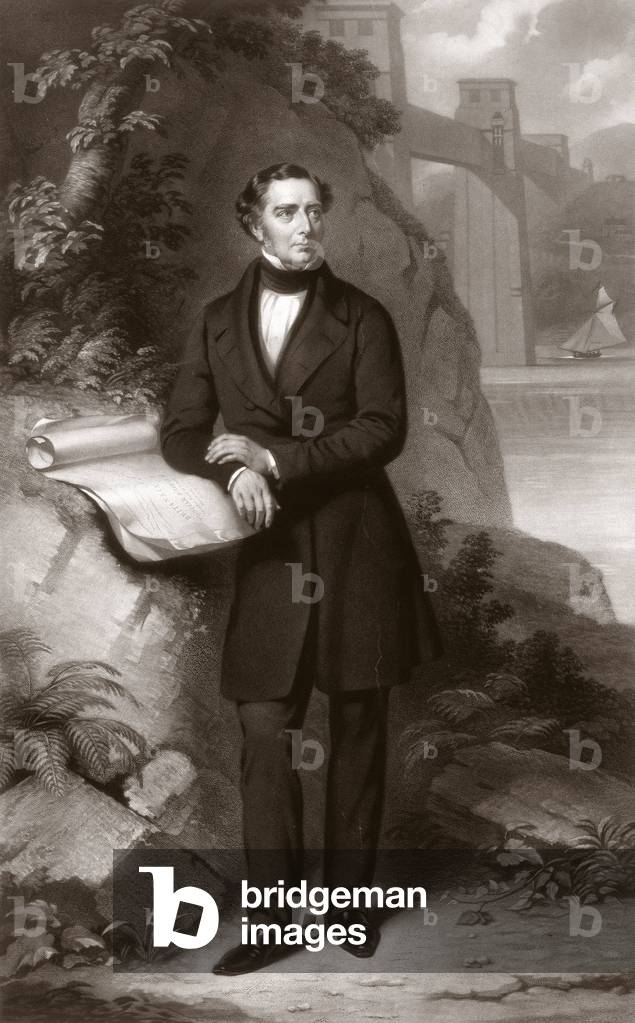
XZL151153 mail coach commenced running in 1706;
RF
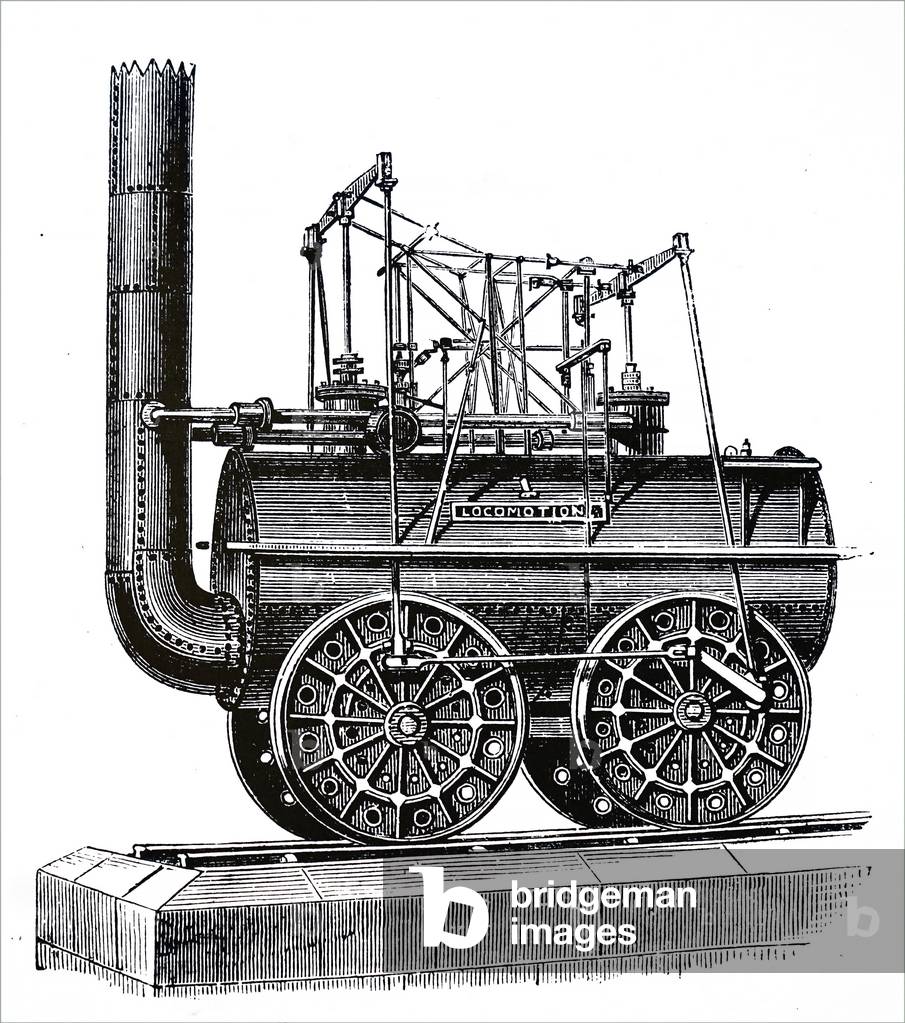
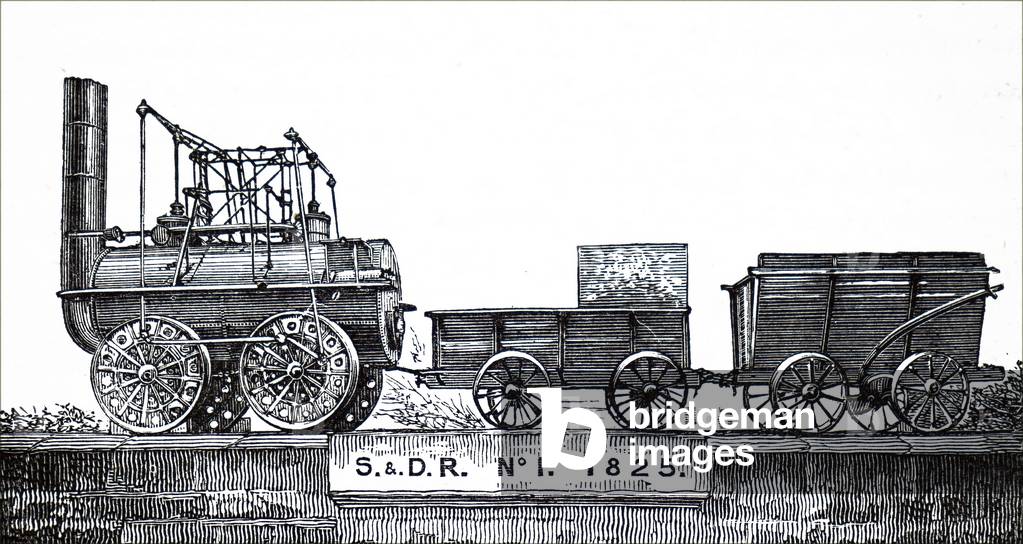
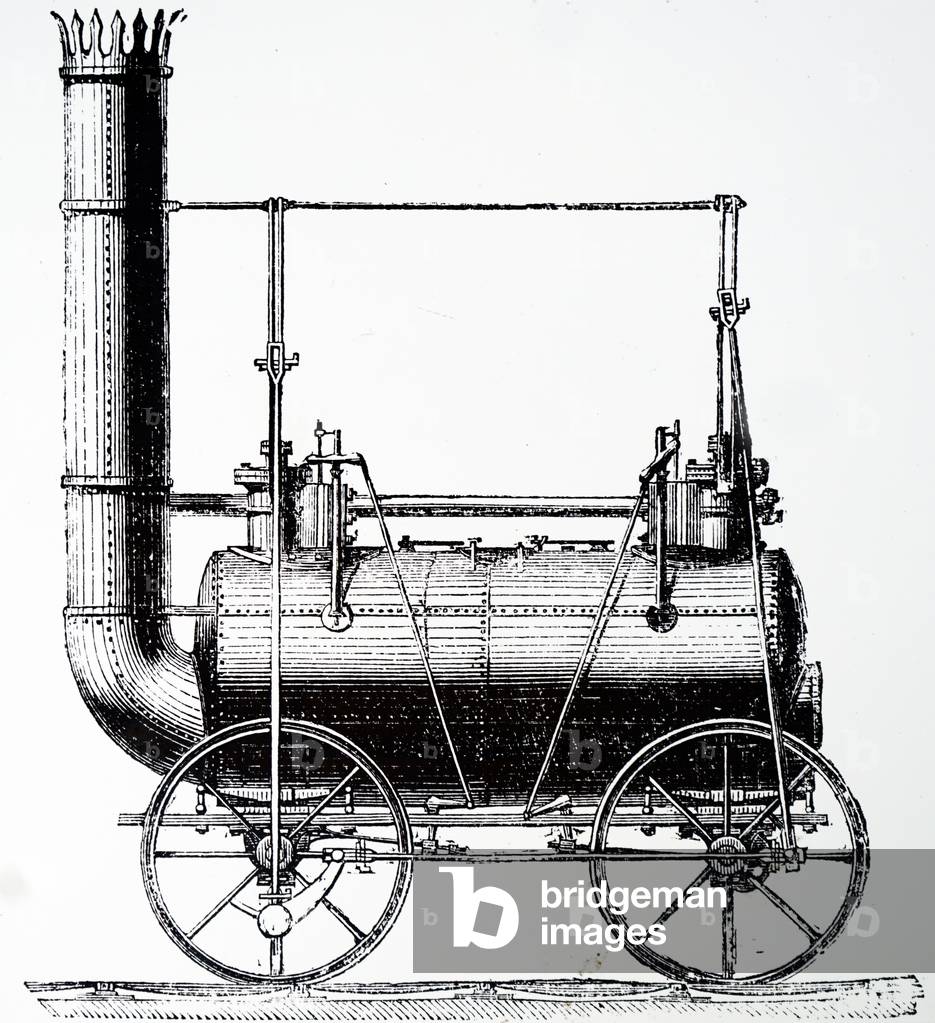
GIA4817603 The first steam locomotive built by British engineer George Stephenson (1781-1848).
DC
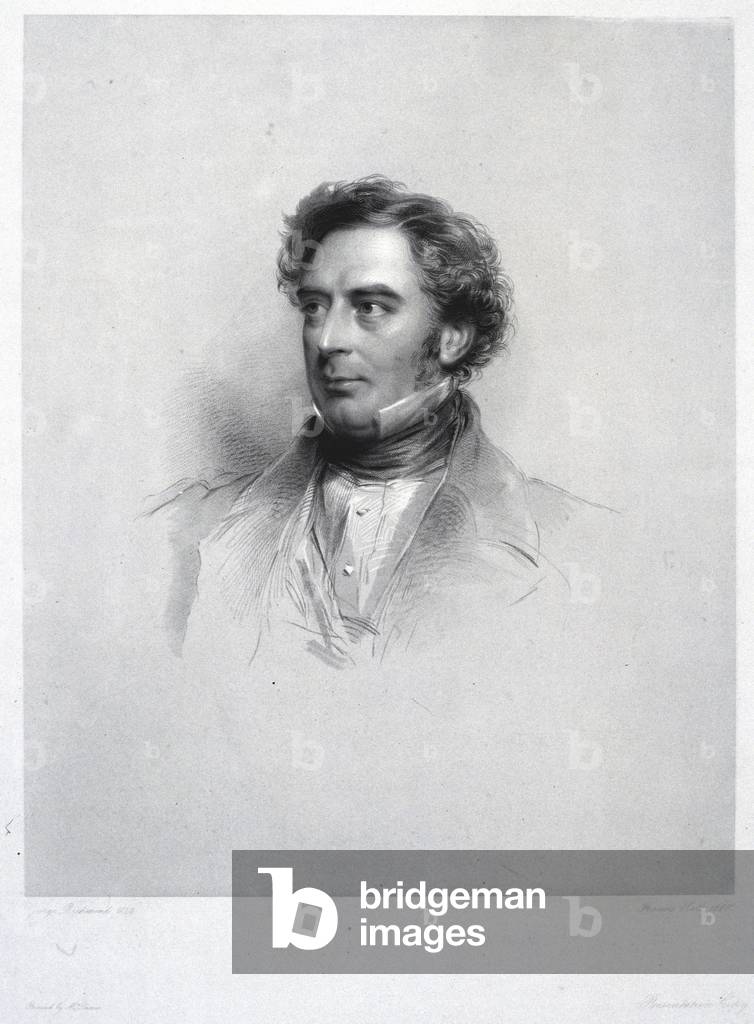
XEE4149485 Portrait of George Stephenson (1781-1848), British engineer and pioneer of railway locomotives
RF
TAD1755010 George Stephenson (1781-1848) inventor of the engine, engraving by Melois, 19th century
DC
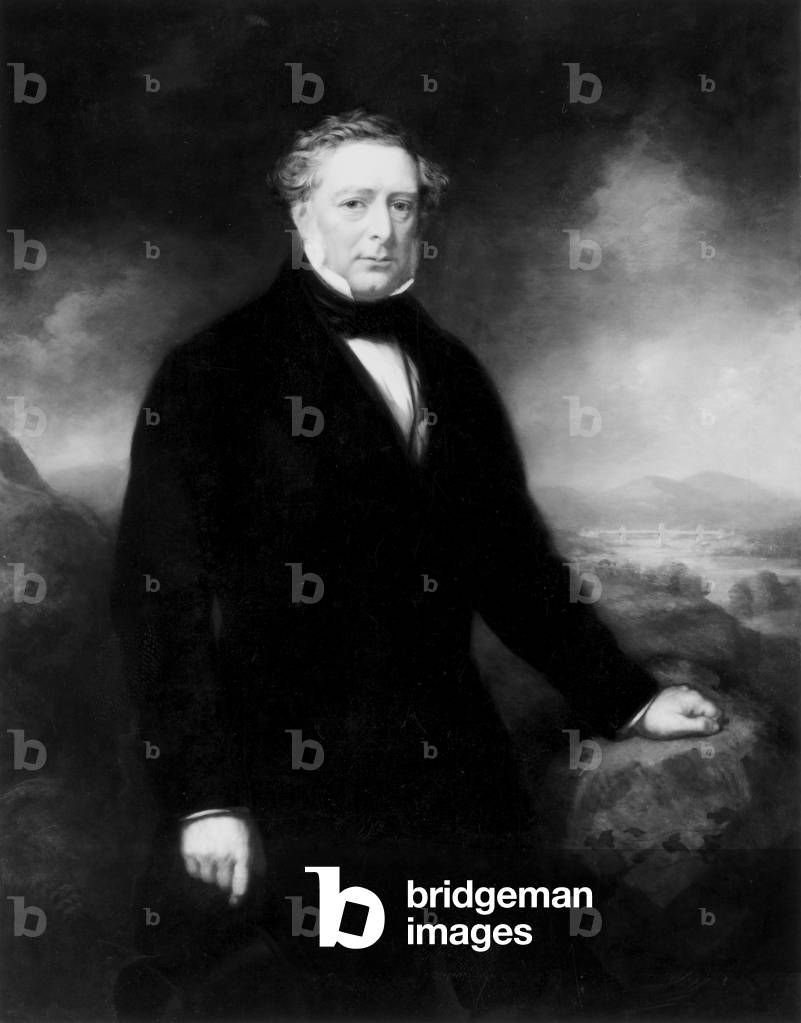
CHT105858 the Coach and Horses inn;
DC
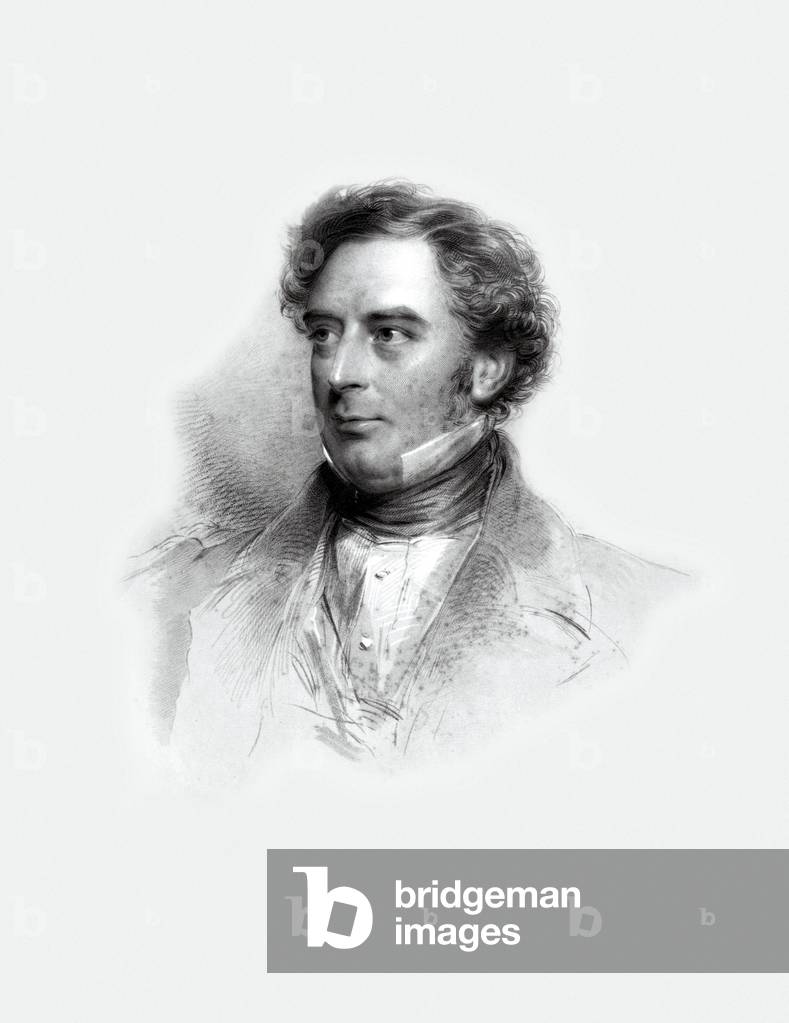
TAD1748572 George Stephenson (1781-1848) inventor of the engine, engraving by TS Atkinson after JohnLucas
DC
STC105278
DC
LIP1037753 The George Stephenson Centenary, Newcastle Illustrated. Illustration for The Graphic, 4 June 1881.
DC
TAD1759210 George Stephenson (1781-1848) inventor of the engine, engraving by Melois, 19th century colourized document
DC
UIG5321577 George Stephenson (9 June 1781 - 12 August 1848) was a British civil engineer and mechanical engineer, digital improved reproduction of an original print from the year 1881
DC
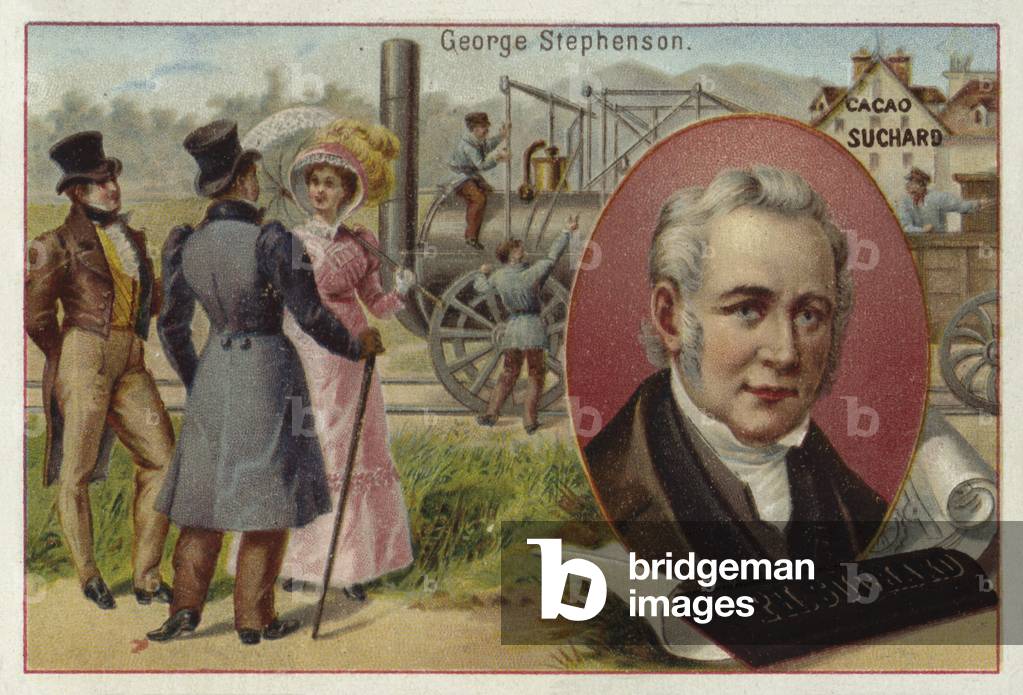
XEE4154775 George Stephenson (1781-1848) represented with one of his inventions: the locomotive. Late chromolithography of the 19th century.
RF
UIG3585582 George Stephenson (9 June 1781 - 12 August 1848) was an English civil engineer and mechanical engineer who built the first public inter-city railway line in the world to use steam locomotives, the Liverpool and Manchester Railway which opened in 1830. Renowned as the 'Father of Railways'.
DC
LLE815672 George Stephenson (1781-1848). English civil and mechanical engineer, built the first railway line to use steam locomotives.
DC
LLM979441 George Stephenson (1781-1848), English engineer. Illustration for London edited by Charles Knight (Virtue, c 1875). Digitally cleaned image.
DC
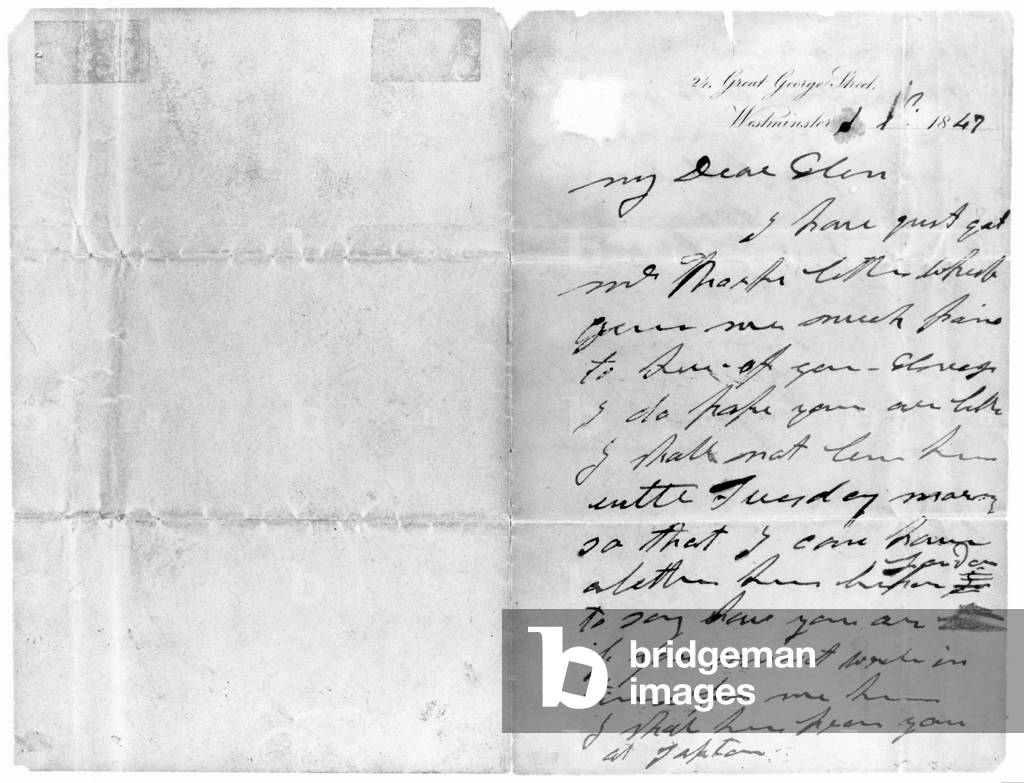
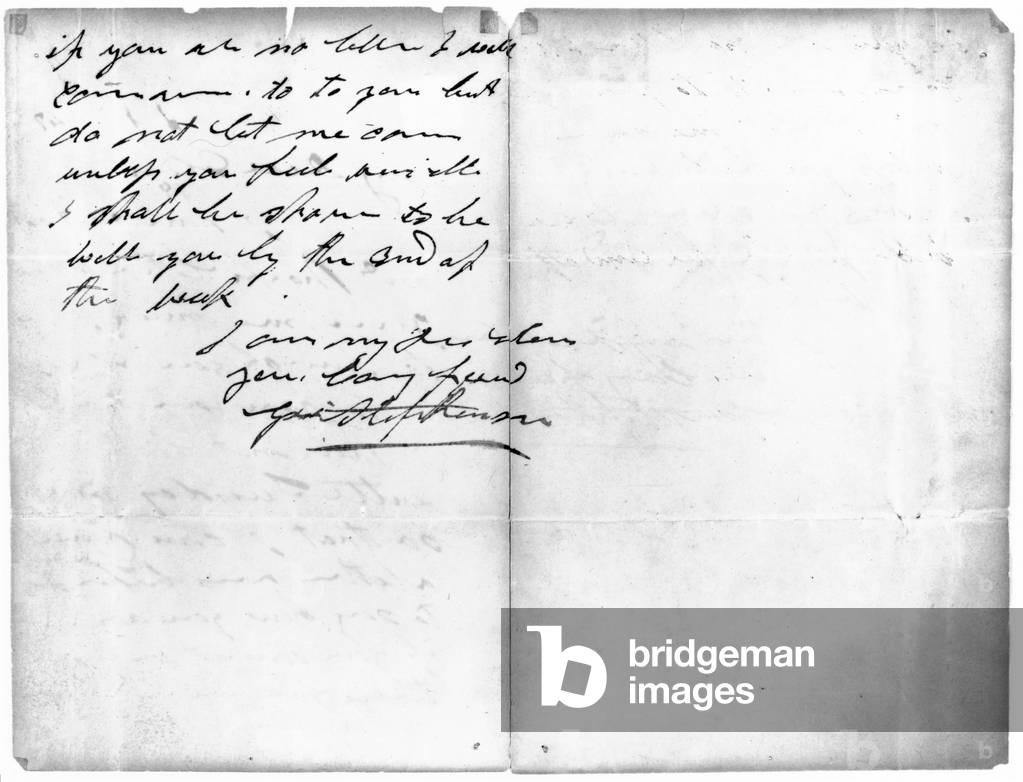
UIS5092289 Letter from George Stephenson to Ellen Gregory, c 1840-1848. Railway pioneer George Stephenson (1781-1848) married Ellen Gregory, his third wife, in 1848, the year of his death. Stephenson had an illustrious career in the railways, being commissioned to design a steam locomotive for the Killingworth wagonway, before becoming the engineer for the Stockton & Darlington Railway (1825), the world's first passenger railway. In 1829, he was chief engineer on the Liverpool & Manchester Railway (1829). Later he worked on an advisory level on the Belgian State Railway (1835) and many English railways. ©SSPL/National Railway Museum
DC
UIS5092292 Letter from George Stephenson to Ellen Gregrory, c 1840-1848. Railway pioneer George Stephenson (1781-1848) married Ellen Gregory, his third wife, in 1848, the year of his death. Stephenson had an illustrious career in the railways, being commissioned to design a steam locomotive for the Killingworth wagonway, before becoming the engineer for the Stockton & Darlington Railway (1825), the world's first passenger railway. In 1829, he was chief engineer on the Liverpool & Manchester Railway (1829). Later he worked on an advisory level on the Belgian State Railway (1835) and many English railways. ©SSPL/National Railway Museum
DC
UIG1578889 Portrait of George Stephenson (1781-1848) English civil engineer and mechanical engineer who built the first public inter-city railway line in the world to use steam locomotives. Dated 1840
DC
XEE4165101 Portrait of George Stephenson, British engineer (1781-1848).
DC
XRH1718832 George Stephenson (9 June 1781 – 12 August 1848) was an English civil engineer and mechanical engineer. Renowned as the "Father of Railways", Stephenson was considered by the Victorians a great example of diligent application and thirst for improvement.
DC
LLM2799154 Chesterfield. Card from a game about the main towns cities of Great Britain.
DC
BAL5735 painting by John LucasGeorge Stephenson (1781-1848), Inventor of the Locomotive; First President of the Institute of Mechanical Engineers;
RF
LLM972174 George Stephenson (1781-1848), English engineer and railway pioneer. Educational card.
DC
LLE1108127 George Stephenson (1781-1848), English civil and mechanical engineer. Scan of small illustration which has been digitally enhanced to assist repro.
DC
LLM974245 George Stephenson (1781-1848), English engineer. Educational card, late 19th or early 20th century.
DC
XCF341950 George Stephenson (1781-1848), Inventor of the Locomotive; First President of the Institute of Mechanical Engineers;
RF
UIG3736020 Engraving depicting an engine Locomotive I built by George Stephenson. George Stephenson (1781-1848) an English civil engineer and mechanical engineer. Dated 19th century.
DC
UIG3736021 Engraving depicting an engine Locomotive I built by George Stephenson. George Stephenson (1781-1848) an English civil engineer and mechanical engineer. Dated 19th century.
DC
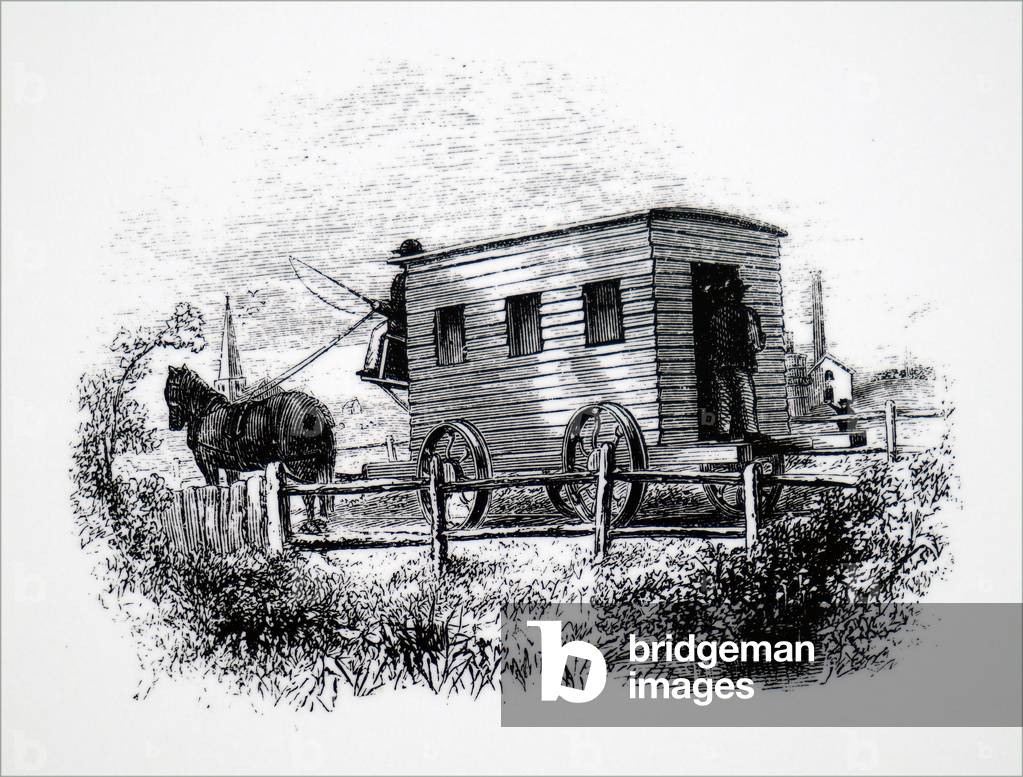
UIG3736007 Engraving depicting the first passenger coach built by George Stephenson (1781-1848) an English civil engineer and mechanical engineer. Dated 19th century.
DC
KWE6867275 Dial Cottage, West Moor, Killingworth, Newcastle Upon Tyne, England. Home of George Stephenson. George Stephenson, 1781-1848. British civil engineer and mechanical engineer. From Great Engineers, published c.1890
DC
UIG540385
DC
UIG3736018 Engraving depicting an engine Locomotive I built by George Stephenson. George Stephenson (1781-1848) an English civil engineer and mechanical engineer. Dated 19th century.
DC
PRX1002495 George Stephenson, 1884-90 (phototype) (1781-1848) Engraving by Charles Turner (1774 - 1851) after Harry P. Briggs (1791 - 1844)‘Allgemeines Historisches Porträtwerk’, 1884-90, published by Dr. Woldemar von Seidlitz (1850-1922)Stich von Charles Turner (1774 - 1851) nach Harry P. Briggs (1791 - 1844)
DC
XJF380219 George Stephenson (1781-1848) English engineer and 'Father of Railways'; built the first public railway line for steam locomotives; he also built The Rocket;
RF
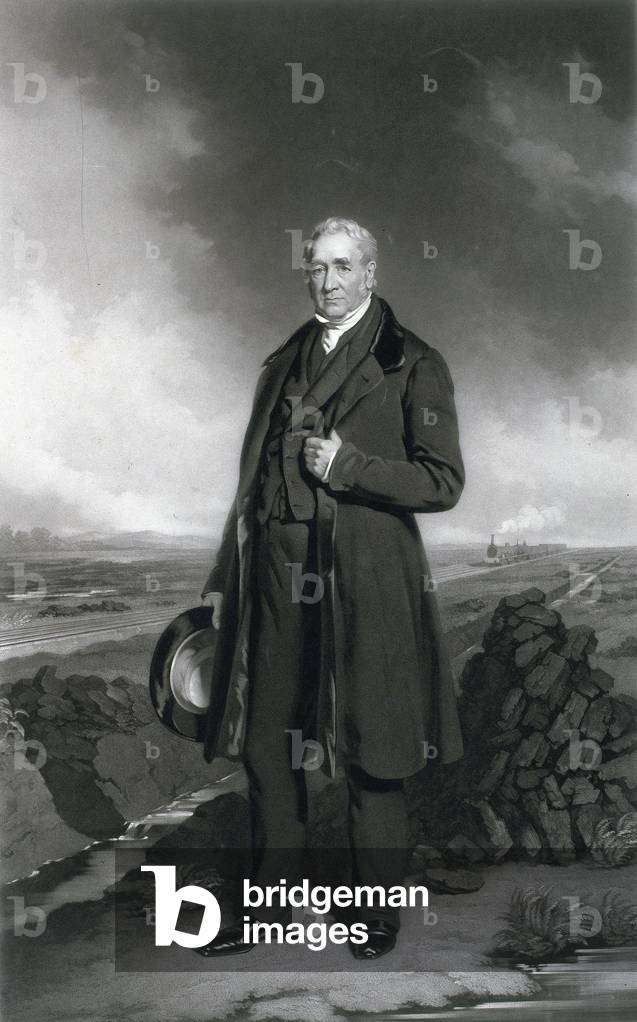
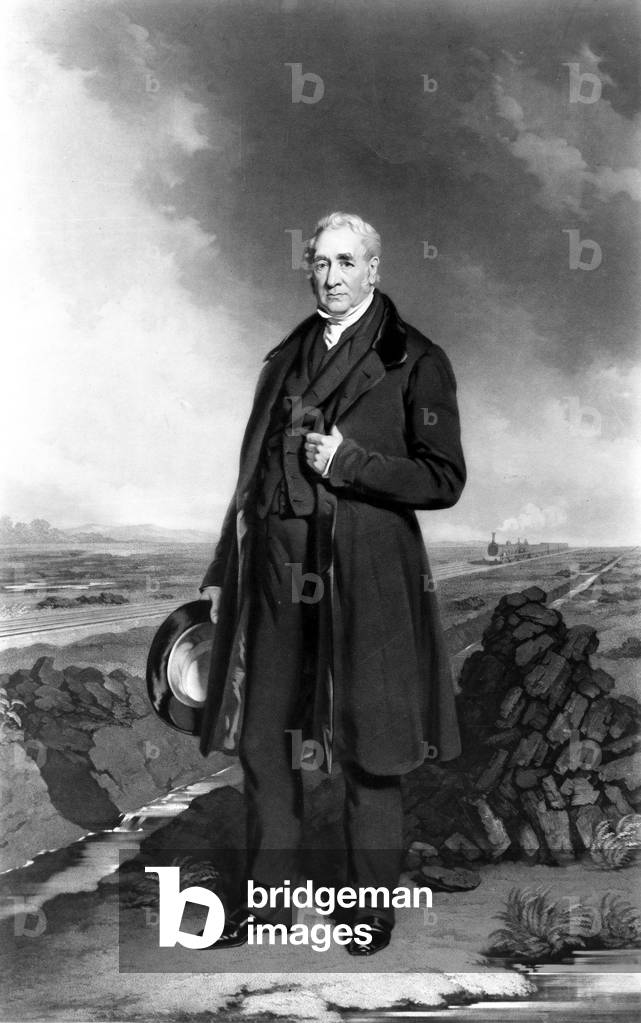
LLE6029739 George Stephenson (1781-1848), English engineer and railway pioneer, pictured above Chat Moss on the Liverpool and Manchester Railway.
DC
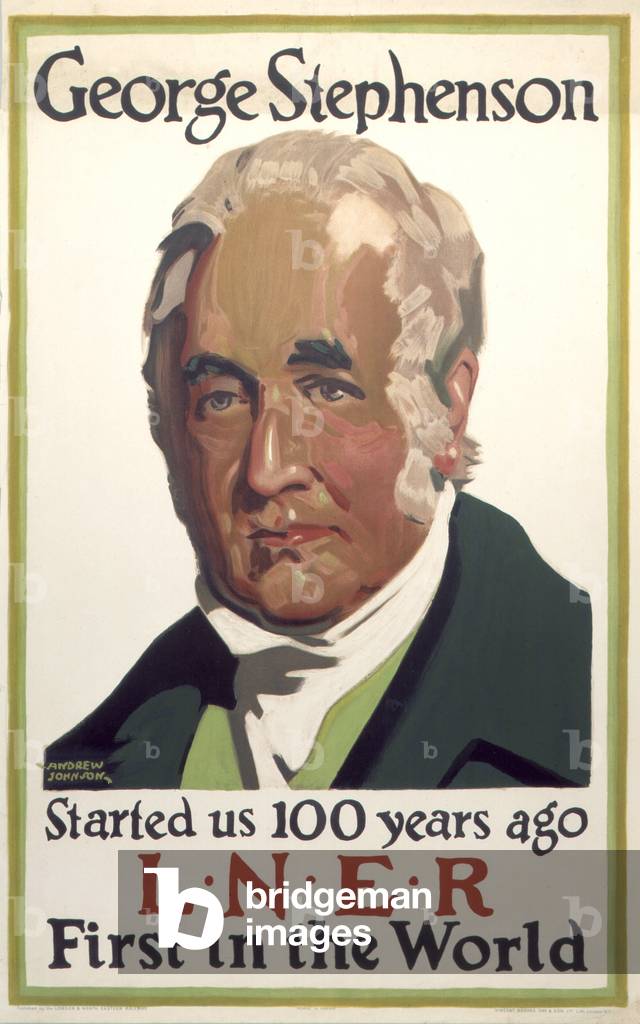
UIS5061061 George Stephenson', LNER poster, 1930. Poster produced for the London & North Eastern Railway (LNER), showing a portrait of the founder of the first commercial steam railway and forerunners of the LNER, George Stephenson (1781-1848). In 1825, Stephenson launched the Stockton & Darlington Railway, and four years later his steam locomotive 'Rocket' won the Rainhill Trials competition, leading to the opening of the Liverpool & Manchester Railway in 1830. Artwork by Andrew Johnson. ©SSPL/NRM/Pictorial Collection
DC
IND11973770 Characters, Britain, XVIII-XIX century. Stephenson, George. (1781 - 1848), British engineer who built the first steam locomotive. Colored engraving from 1870
DC
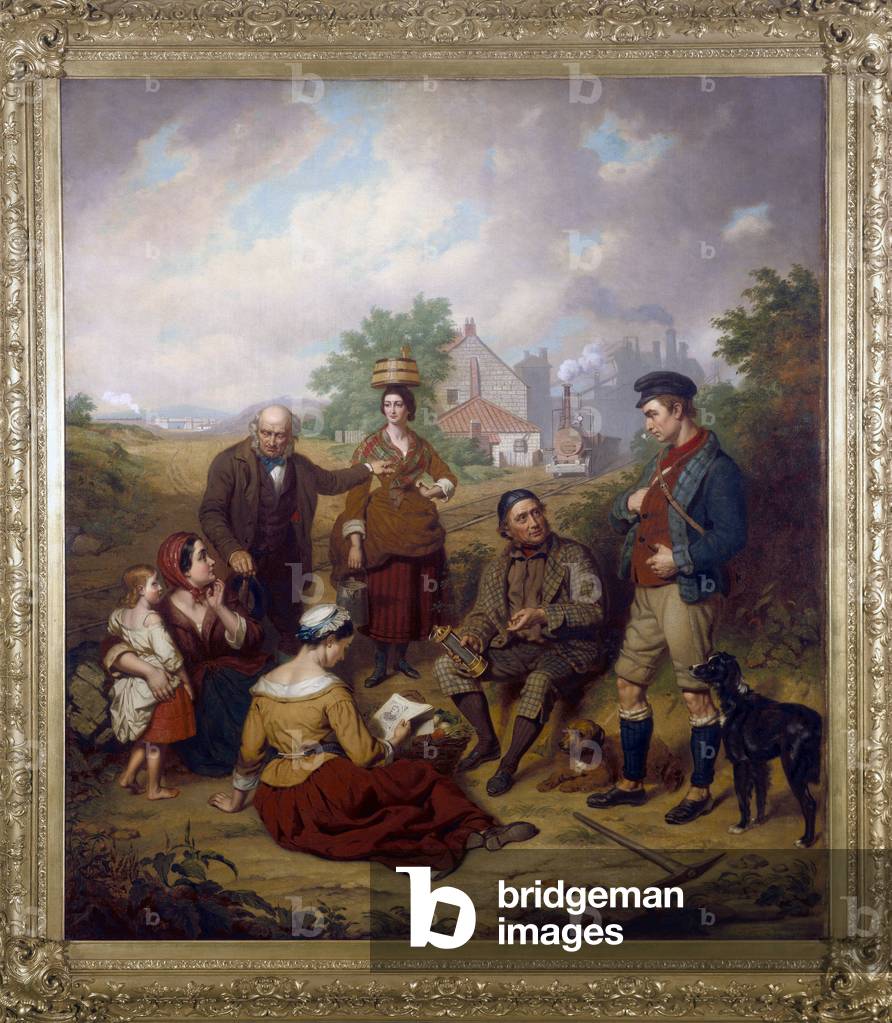
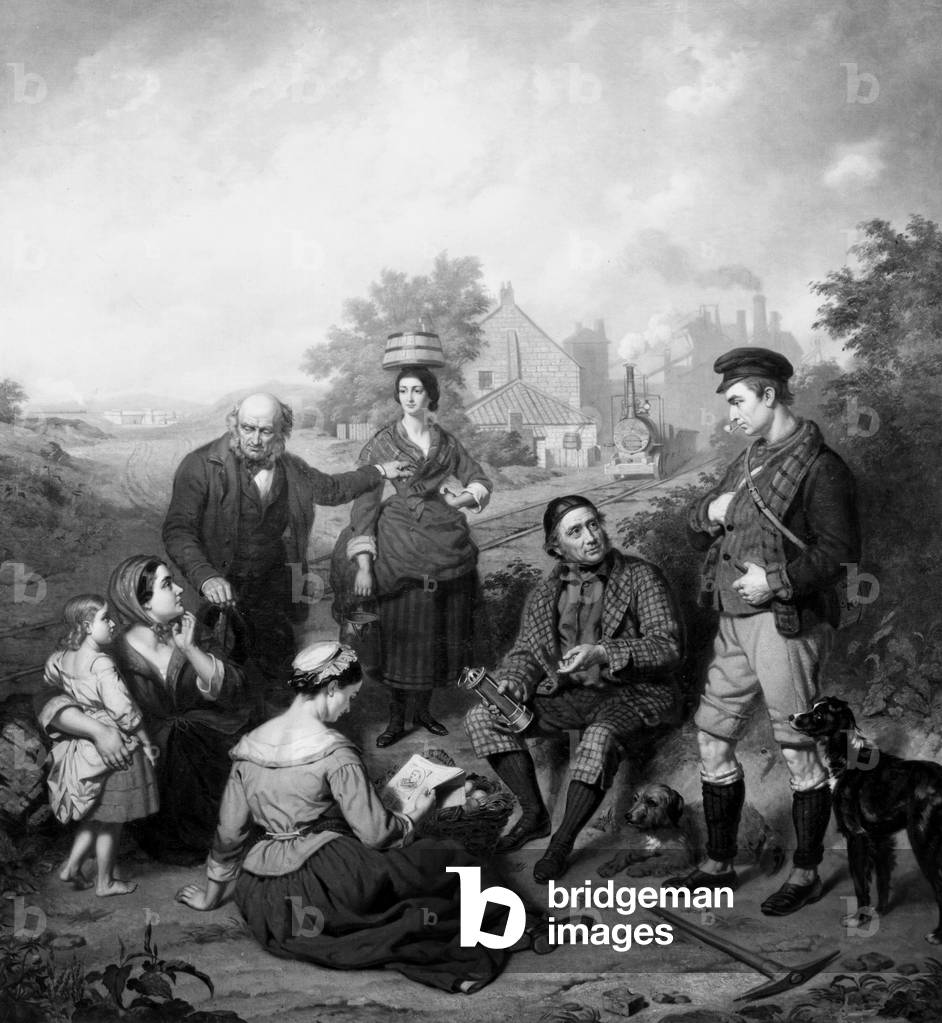
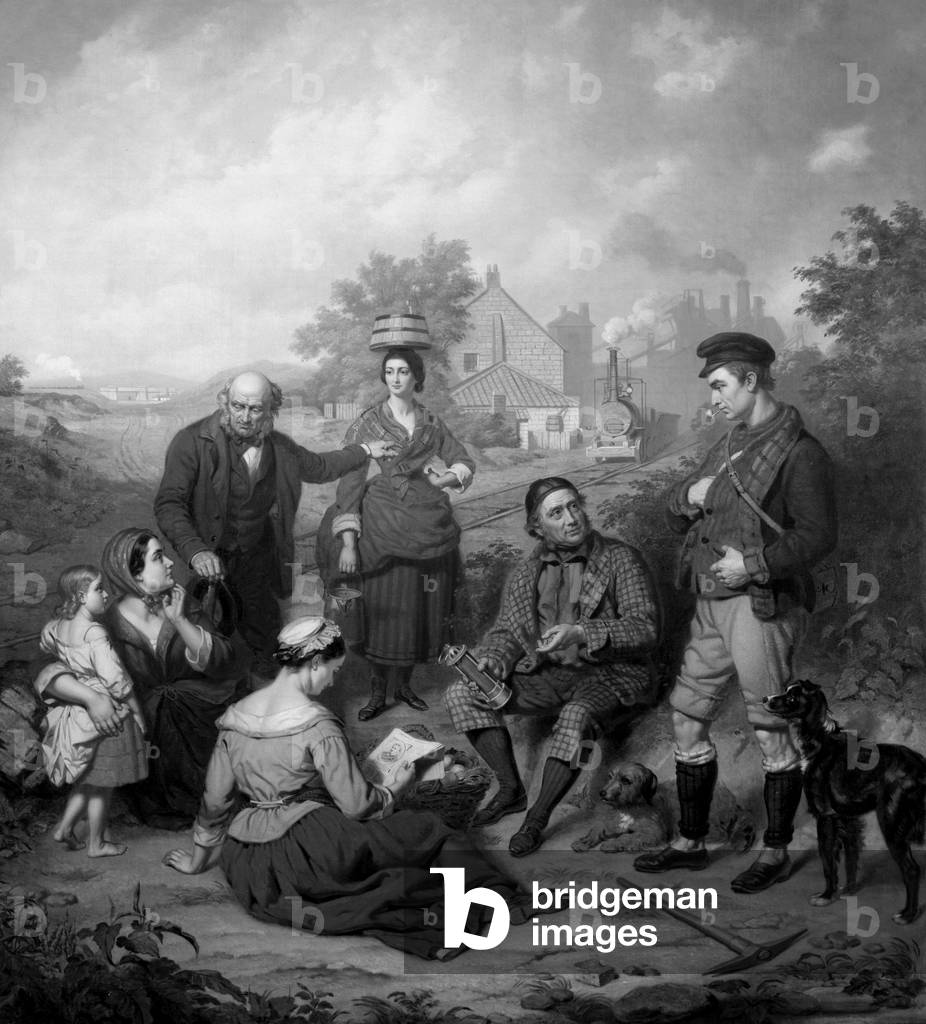
UIS5063660 "La naissance de la locomotive" L'ingenieur anglais George Stephenson (1781-1848) avec sa famille pres d'une voie de chemin de fer a Killingworth (Angleterre). On apercoit dans le fond des mines de charbon et la premiere locomotive a vapeur inventee par Stephenson. Un des personnages tient une lampe de mineur de charbon. Peinture de William Lucas, 1861. Huile sur toile. Dim. 16,4 cm x 14,8 cm. Londres, Science Museum'Birthplace of the Locomotive', 1861. Oil painting by William Lucas showing the celebrated railway engineer, George Stephenson (1781-1848), surrounded by his family and the symbols of his life's achievements - a colliery safety lamp, and his first steam locomotive - on the wagonway at Killingworth Colliery in Tyne and Wear. A largely self-educated man, Stephenson's early working life was spent as a brakesman and in collieries maintaining stationary engines. In 1813 he was commissioned to design his first steam locomotive, 'Blucher', for the Killingworth Colliery. Later, he became the engineer for the Stockton & Darlington Railway (1825), and the Liverpool & Manchester Railway (1829). He advised on the construction of many other English railways, hence his nickname 'the father of railways'. Dimensions: 164mm x 148mm. ©SSPL/Science Museum
DC
XEE4141056 The locomotive: the rocket invented by George Stephenson (1781-1848) in 1829. Anonymous illustration from 1925. Private collection.
RF
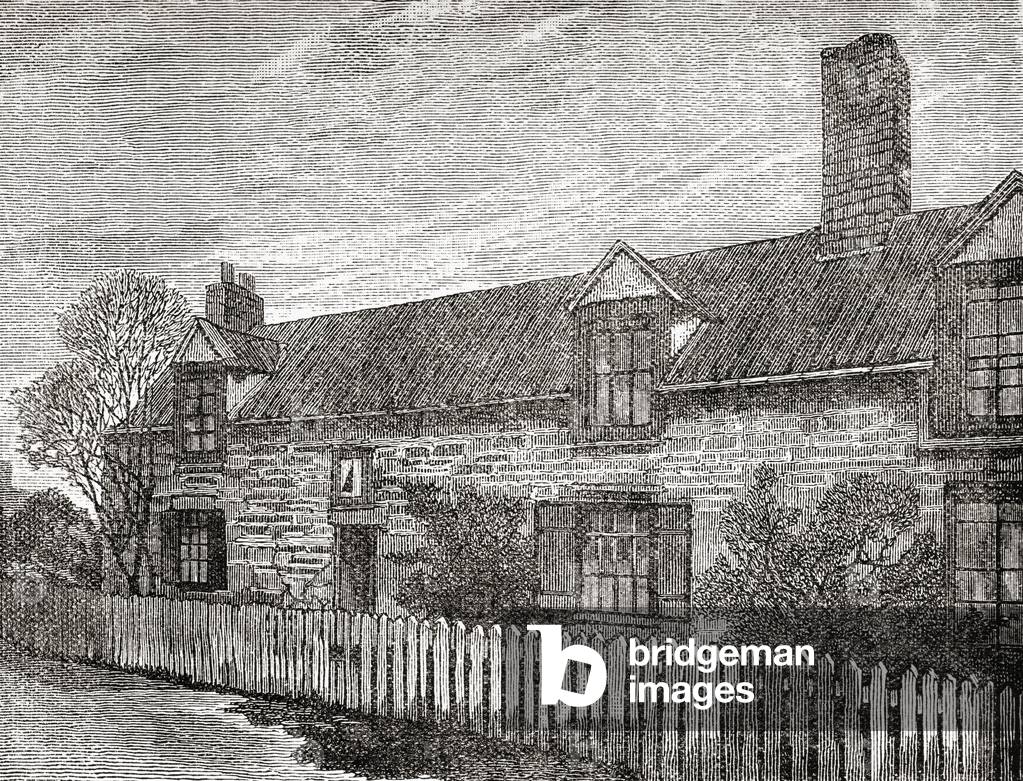
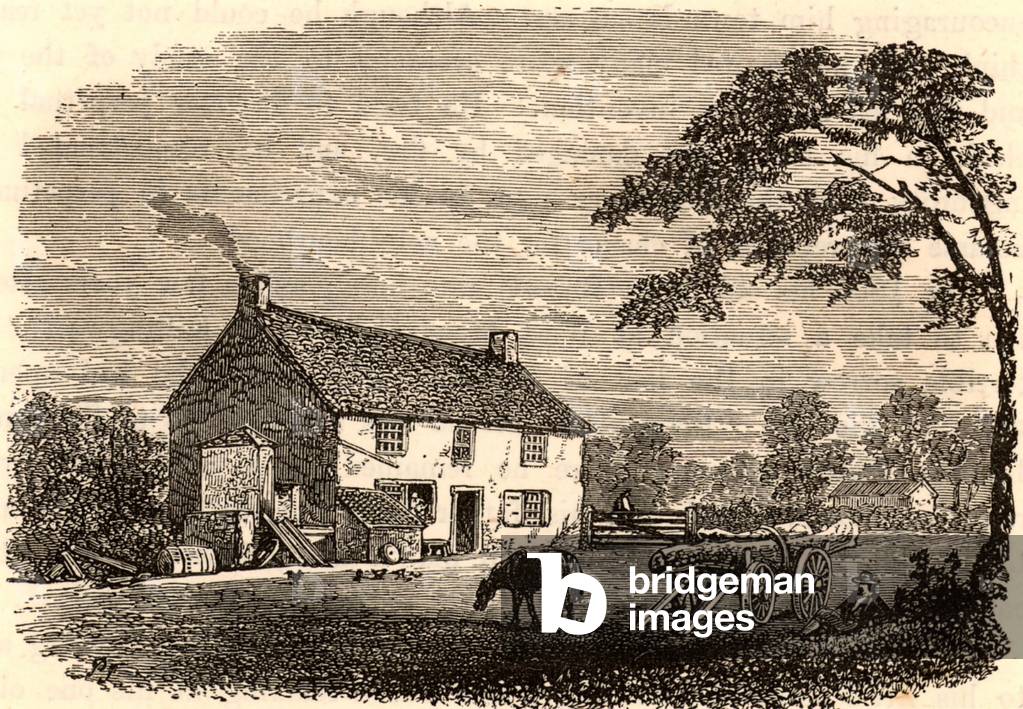
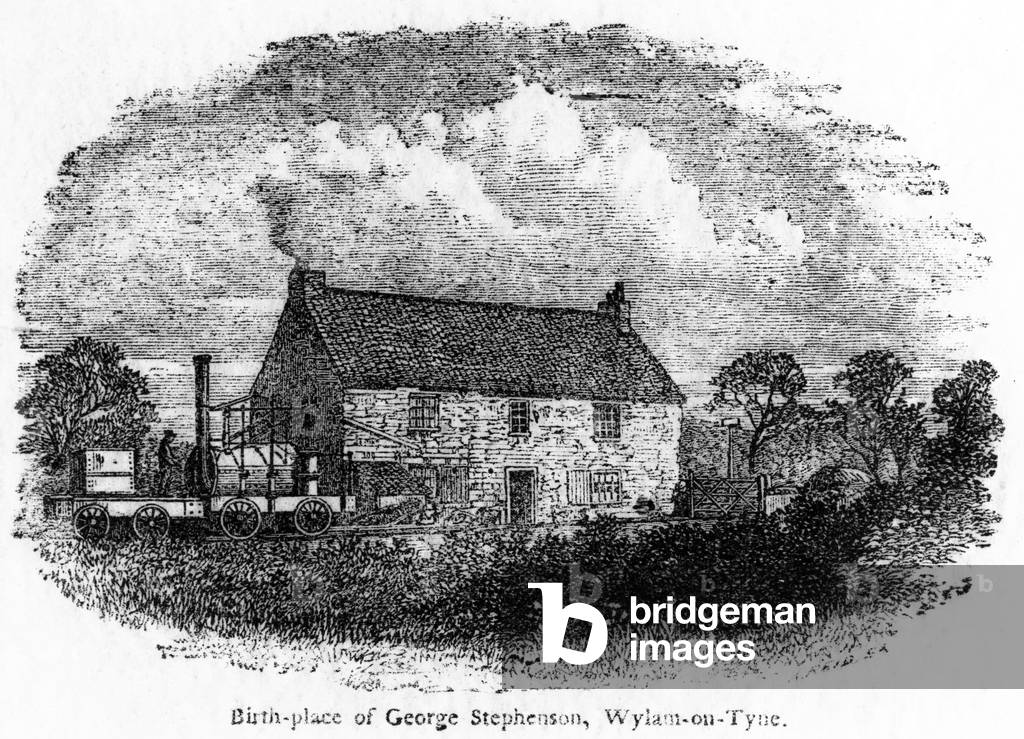
UIG865016 The house at Wylham near Newcastle, Northumberland, in which George Stephenson (1781-1848) English mechanical engineer and railway pioneer was born. Engraving c1850.
DC
XEE4146575 Portrait of George Stephenson (1781-1848), British engineer and pioneer of railway locomotives - Engraving in “” Sciences at the reach of all - Popular physics and chemistry” by Alexis Clerc - End 19th century - Private collection
RF
UIG5308298 Engraving depicting George Stephenson's third locomotive built in 1816. George Stephenson (1781-1848) an English civil engineer and mechanical engineer. Dated 19th century. 01/01/1850
DC
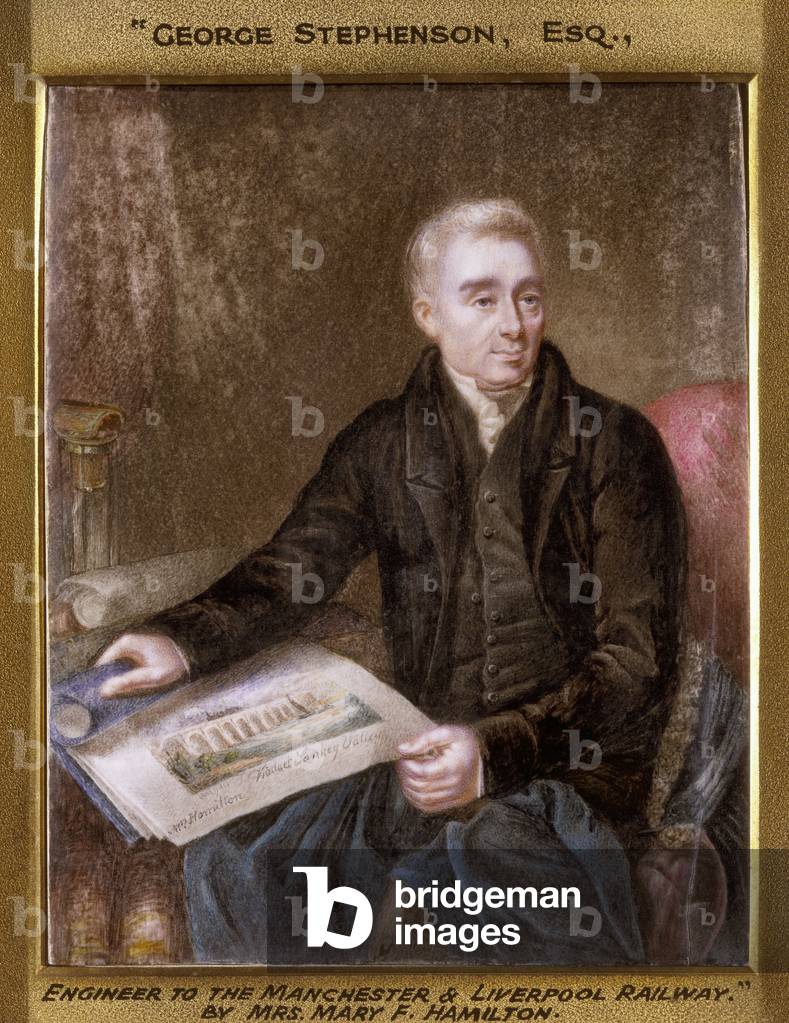
UIS5062539 George Stephenson, railway engineer, 1830-1836. Watercolour miniature by Mary F Hamilton of George Stephenson (1781-1848). Stephenson commenced his working life as a cowherd, later working in coalpits. His mechanical mind was noticed by his employers and by 1812 he was an engine-wright earning 100 pounds a year. In 1813 he was commissioned to design a steam locomotive for the Killingworth wagonway. He was the engineer for the Stockton & Darlington Railway (opened 1825) and the Liverpool & Manchester Railway (opened 1829). He advised on the construction of the Belgian State Railway (opened 1835) and was involved with the construction of many of the English railways, hence his nickname 'the father of railways'. ©SSPL/Science Museum
DC
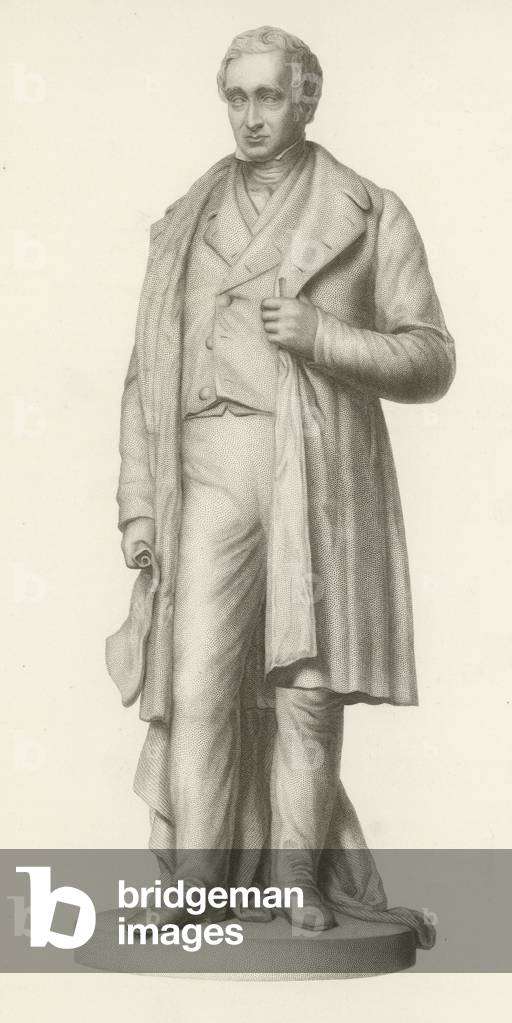
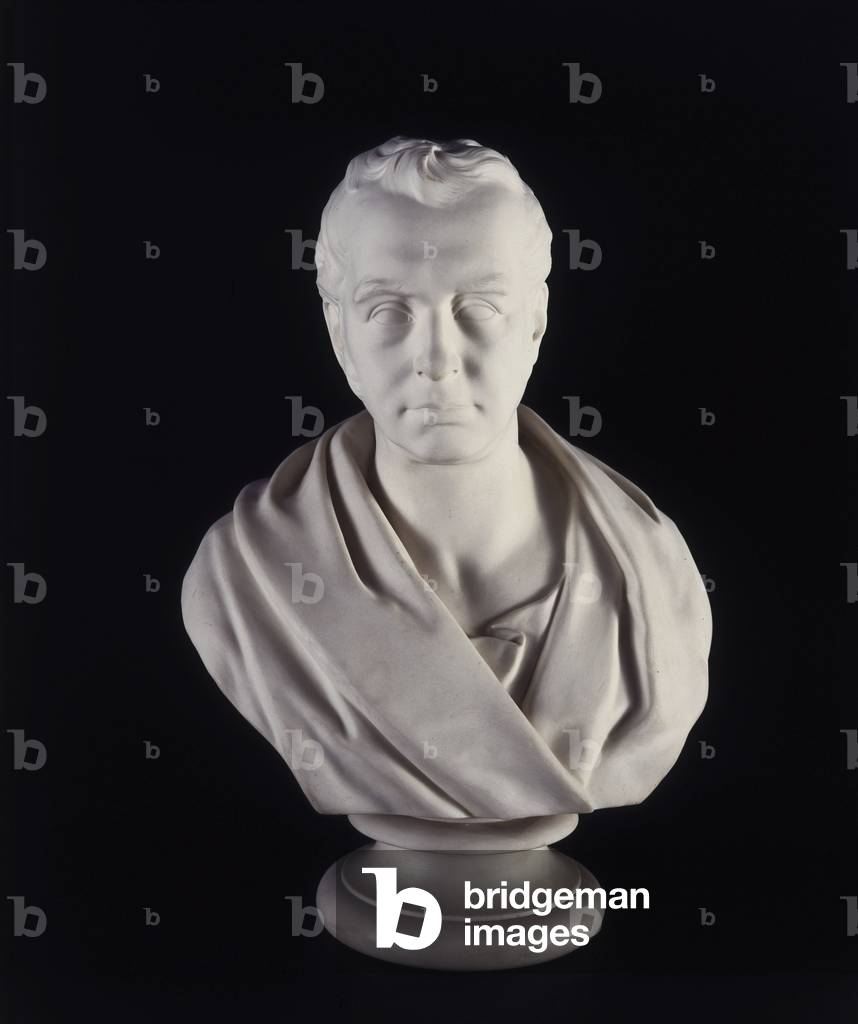
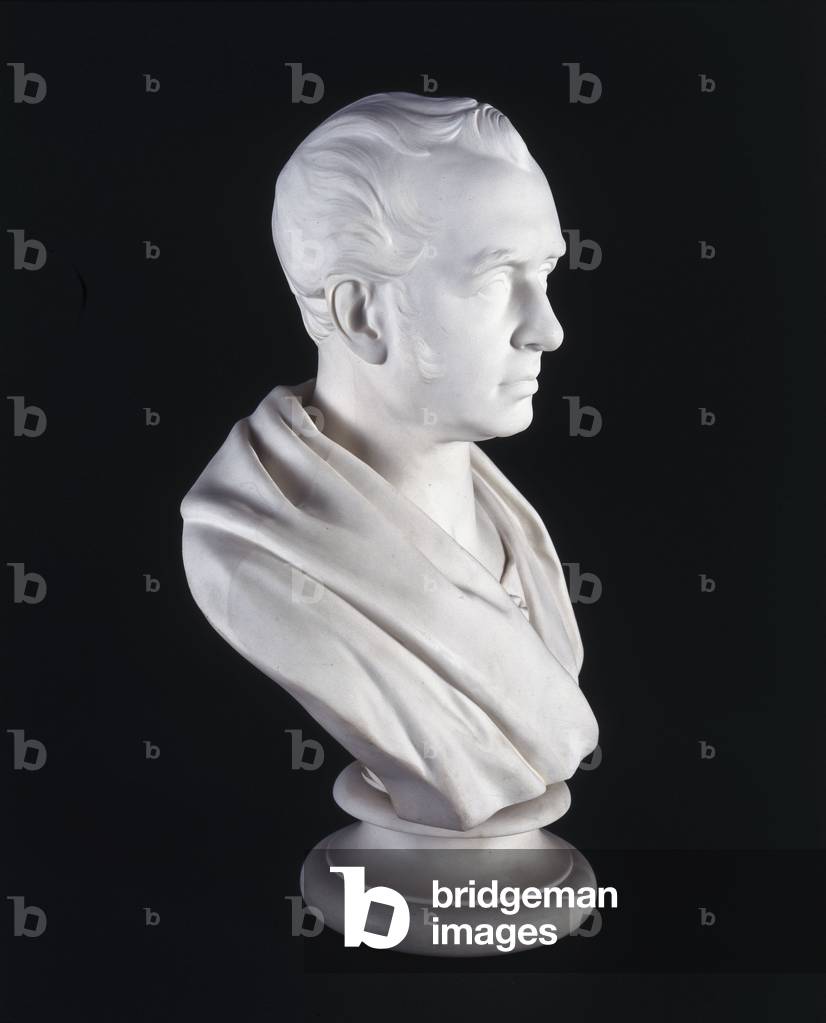
UIS5082044 George Stephenson, English railway engineer, 1859. Parian ware bust of George Stephenson (1781-1848). A largely self-educated man, Stephenson's early working life was spent as a brakesman and in collieries maintaining stationary engines. His mechanical mind was noticed by his employers, and by 1812 he was an engine-wright earning 100 pounds a year. In 1813 he was commissioned to design his first steam locomotive, 'Blucher', for the Killingworth Colliery in Tyne and Wear. Later, he became the engineer for the Stockton & Darlington Railway (1825), and the Liverpool & Manchester Railway (1829). He advised on the construction of many of the English railways and the Belgian State Railway (1835), hence his nickname 'the father of railways'. ©SSPL/National Railway Museum
DC
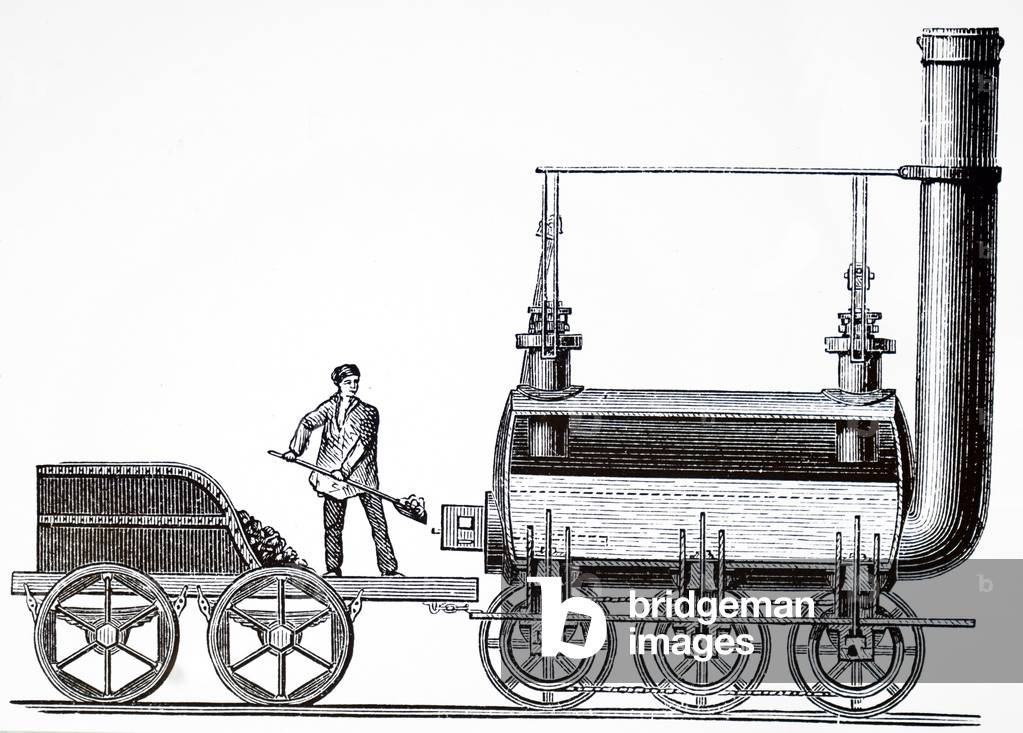
UIG5308299 Engraving depicting George Stephenson's old engine on the Killingworth railway. George Stephenson (1781-1848) an English civil engineer and mechanical engineer. Dated 19th century. 01/01/1850
DC
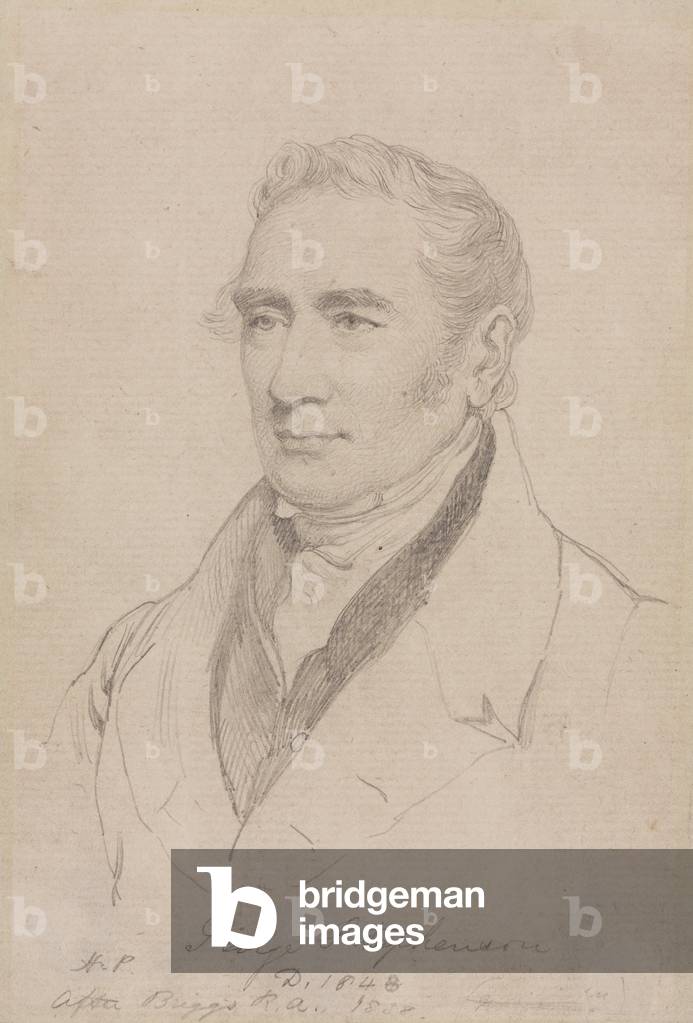
UIS5092902 George Stephenson, English railway engineer, 1838. H P after an original drawing by Briggs. A largely self-educated man, George Stephenson's (1781-1848) early working life was spent as a brakesman and in collieries maintaining stationary engines. His mechanical mind was noticed by his employers, and by 1812 he was an engine-wright earning 100 pounds a year. In 1813 he was commissioned to design his first steam locomotive, 'Blucher', for the Killingworth Colliery in Tyne and Wear. Later, he became the engineer for the Stockton & Darlington Railway (1825), and the Liverpool & Manchester Railway (1829). He advised on the construction of many of the English railways and the Belgian State Railway (1835), hence his nickname 'the father of railways'. ©SSPL/Science Museum
DC
UIS5082043 George Stephenson, English railway engineer, 1859. Parian ware bust of George Stephenson (1781-1848). A largely self-educated man, Stephenson's early working life was spent as a brakesman and in collieries maintaining stationary engines. His mechanical mind was noticed by his employers, and by 1812 he was an engine-wright earning 100 pounds a year. In 1813 he was commissioned to design his first steam locomotive, 'Blucher', for the Killingworth Colliery in Tyne and Wear. Later, he became the engineer for the Stockton & Darlington Railway (1825), and the Liverpool & Manchester Railway (1829). He advised on the construction of many of the English railways and the Belgian State Railway (1835), hence his nickname 'the father of railways'. ©SSPL/National Railway Museum
DC
UIS5092286 Birthplace of George Stephenson, Wylam-on-Tyne', c 1881. One of five woodcuts produced to commemorate the centenary of the birth of railway pioneer George Stephenson (1781-1848). Stephenson was commissioned to design a steam locomotive for the Killingworth wagonway. He was the engineer for the Stockton & Darlington Railway (1825) and the Liverpool & Manchester Railway (1829), before working on an advisory level on the Belgian State Railway (1835) and many English railways. Stephenson is widely considered to be 'the father of railways'. ©SSPL/National Railway Museum
DC
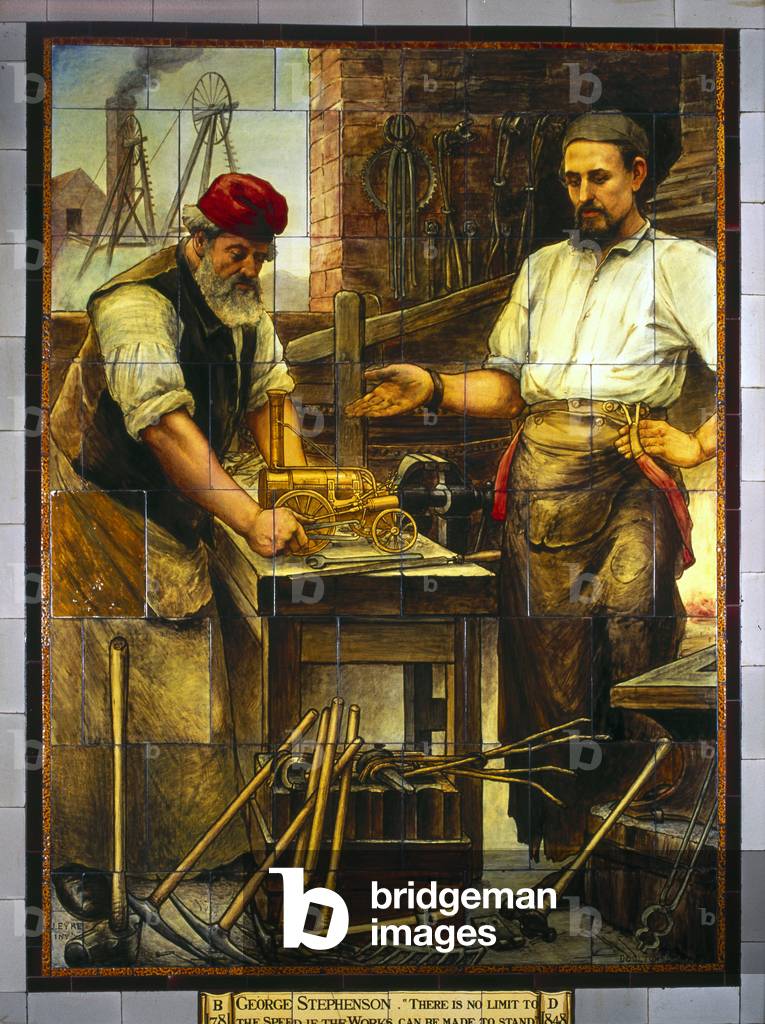
UIS5064862 George Stephenson, English railway engineer, 1886. Painting on tile by John Eyre, produced by Doulton and Co. A largely self-educated man, George Stephenson's (1781-1848) early working life was spent as a brakesman and in collieries maintaining stationary engines. His mechanical mind was noticed by his employers, and by 1812 he was an engine-wright earning 100 pounds a year. In 1813 he was commissioned to design his first steam locomotive, 'Blucher', for the Killingworth Colliery in Tyne and Wear. Later, he became the engineer for the Stockton & Darlington Railway (1825), and the Liverpool & Manchester Railway (1829). He advised on the construction of many of the English railways and the Belgian State Railway (1835), hence his nickname 'the father of railways'. ©SSPL
DC
UIS5062664 George Stephenson, English railway engineer, c 1810s. Oil painting by an unknown artist of George Stephenson (1781-1848). In 1813, Stephenson was commissioned to design a steam locomotive for the Killingworth wagonway. He was the engineer for the Stockton & Darlington Railway (1825) and the Liverpool & Manchester Railway (1829). He advised on the construction of the Belgian State Railway (1835) and was involved with the construction of many of the English railways, hence his nickname 'the father of railways'. ©SSPL/NRM/Pictorial Collection
DC
UIS5073039 George Stephenson, English railway engineer, c 1830s. Engraving by Samuel Bellin, after an original oil painting by John Lucas, c 1830s. A largely self-educated man, Stephenson's (1781-1848) early working life was spent as a brakesman and in collieries maintaining stationary engines. His mechanical mind was noticed by his employers, and by 1812 he was an engine-wright earning 100 pounds a year. In 1813 he was commissioned to design his first steam locomotive, 'Blucher', for the Killingworth Colliery in Tyne and Wear. Later, he became the engineer for the Stockton & Darlington Railway (1825), and the Liverpool & Manchester Railway (1829). He advised on the construction of many of the English railways and the Belgian State Railway (1835), hence his nickname 'the father of railways'. ©SSPL/NRM/Pictorial Collection
DC
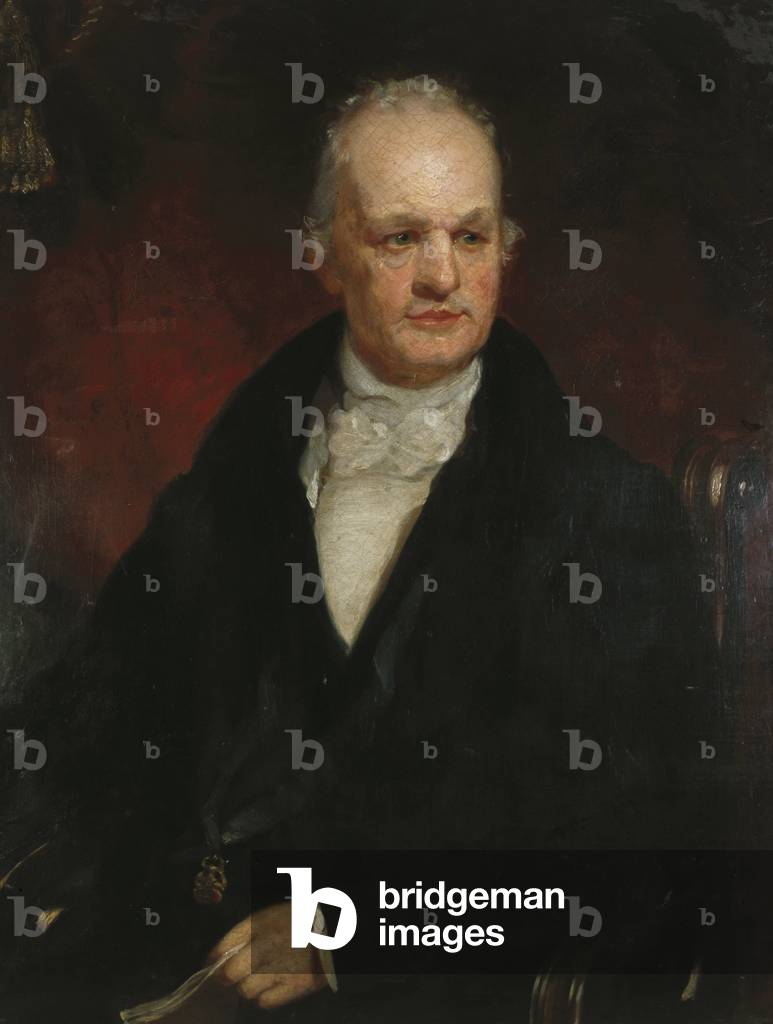
UIS5062700 Portrait of George Stephenson in old age', c 1840s. Oil painting. A largely self-educated man, Stephenson's (1781-1848) early working life was spent as a brakesman and in collieries maintaining stationary engines. His mechanical mind was noticed by his employers, and by 1812 he was an engine-wright earning 100 pounds a year. In 1813 he was commissioned to design his first steam locomotive, 'Blucher', for the Killingworth Colliery in Tyne and Wear. Later, he became the engineer for the Stockton & Darlington Railway (opened in 1825), and the Liverpool & Manchester Railway (opened in 1829). He advised on the construction of many of the English railways and the Belgian State Railway (1835), hence his nickname 'the father of railways'. Dimensions: 1194mm x 991mm. ©SSPL/NRM/Pictorial Collection
DC
UIS5063667 George Stephenson, English railway engineer, 1830-36. Watercolour portrait on ivory by Mrs Mary F Hamilton, showing Stephenson holding an aquatint of the Sankey Valley Viaduct, which he designed for the Liverpool & Manchester Railway. A largely self-educated man, Stephenson's (1781-1848) early working life was spent as a brakesman and in collieries maintaining stationary engines. In 1813 he was commissioned to design his first steam locomotive, 'Blucher', for the Killingworth Colliery in Tyne and Wear. Later, he became the engineer for the Stockton & Darlington Railway (1825), and the Liverpool & Manchester Railway (1829). He advised on the construction of many of the English railways and the Belgian State Railway (1835), hence his nickname 'the father of railways'. Dimensions (+ frame): 170mm x 145mm. ©SSPL/Science Museum
DC
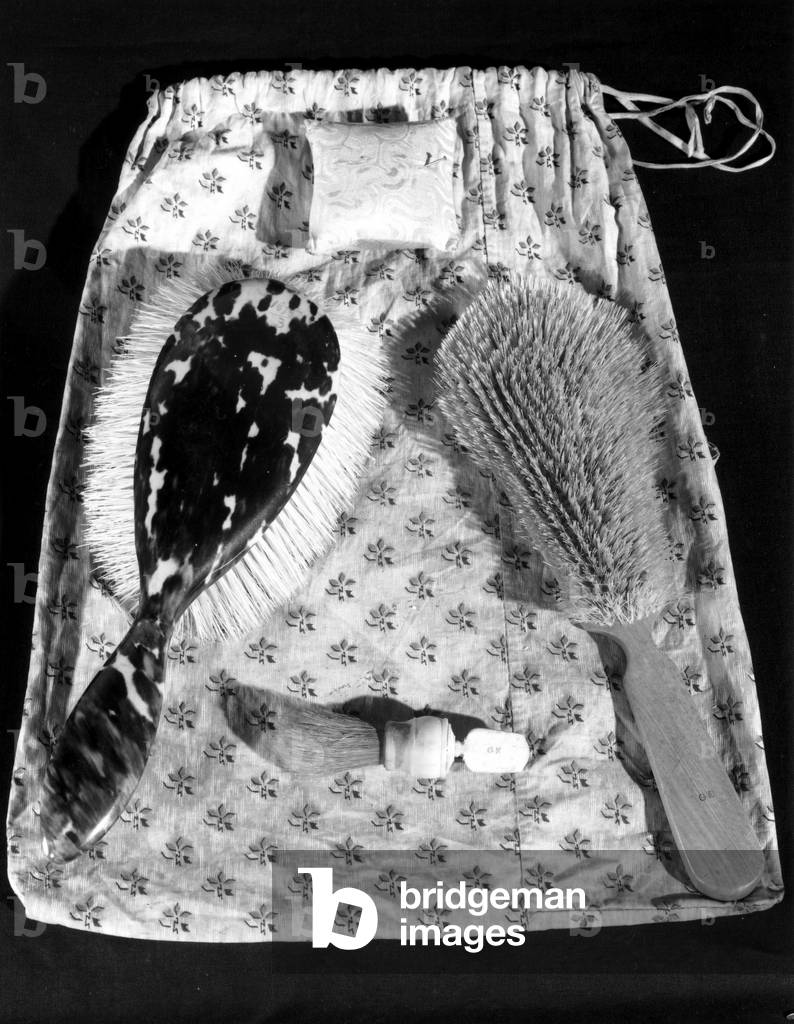
UIS5092296 Relics of George Stephenson, English railway engineer, c 1800-1810. Selection of items owned by railway pioneer George Stephenson (1781-1848), comprising: a shaving brush, pin cushion, hair brush, tortoise hair brush and calico bag. ©SSPL/National Railway Museum
DC
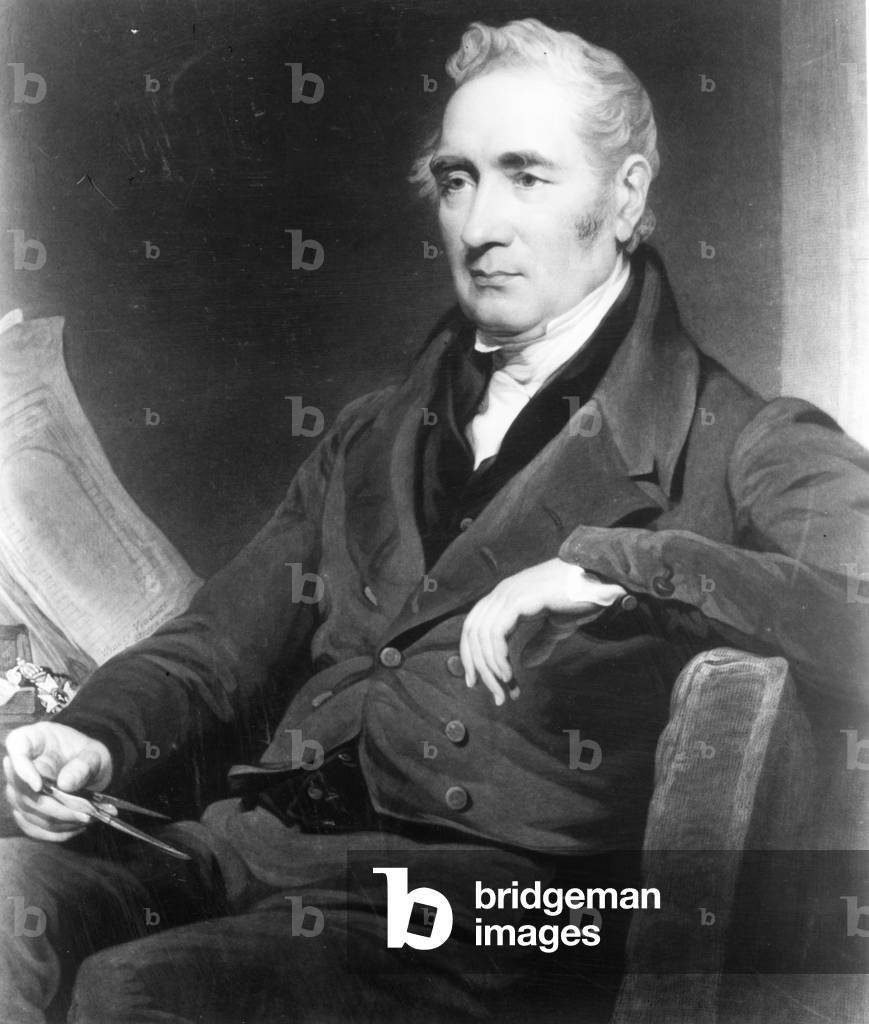
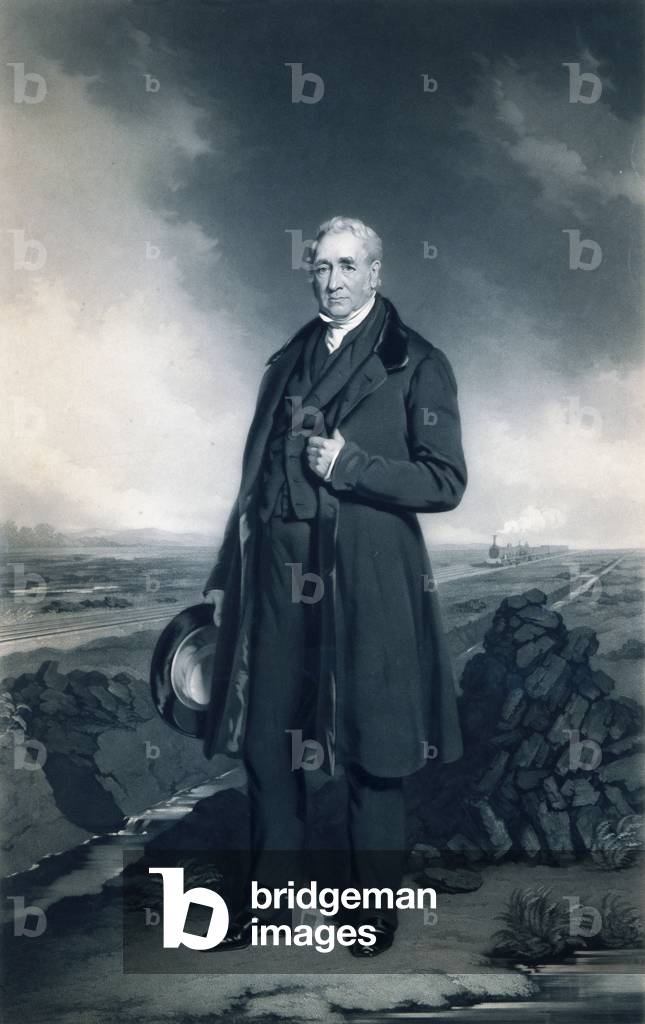
UIS5087659 George Stephenson, English railway engineer, c 1830. Mezzotint by Thomas Lewis Atkinson after an original oil painting by John Lucas, c 1830s. A largely self-educated man, George Stephenson's (1781-1848) early working life was spent as a brakesman and in collieries maintaining stationary engines. His mechanical mind was noticed by his employers, and by 1812 he was an engine-wright earning 100 pounds a year. In 1813 he was commissioned to design his first steam locomotive, 'Blucher', for the Killingworth Colliery in Tyne and Wear. Later, he became the engineer for the Stockton & Darlington Railway (1825), and the Liverpool & Manchester Railway (1829). He advised on the construction of many of the English railways and the Belgian State Railway (1835), hence his nickname 'the father of railways'. ©SSPL/Science Museum
DC
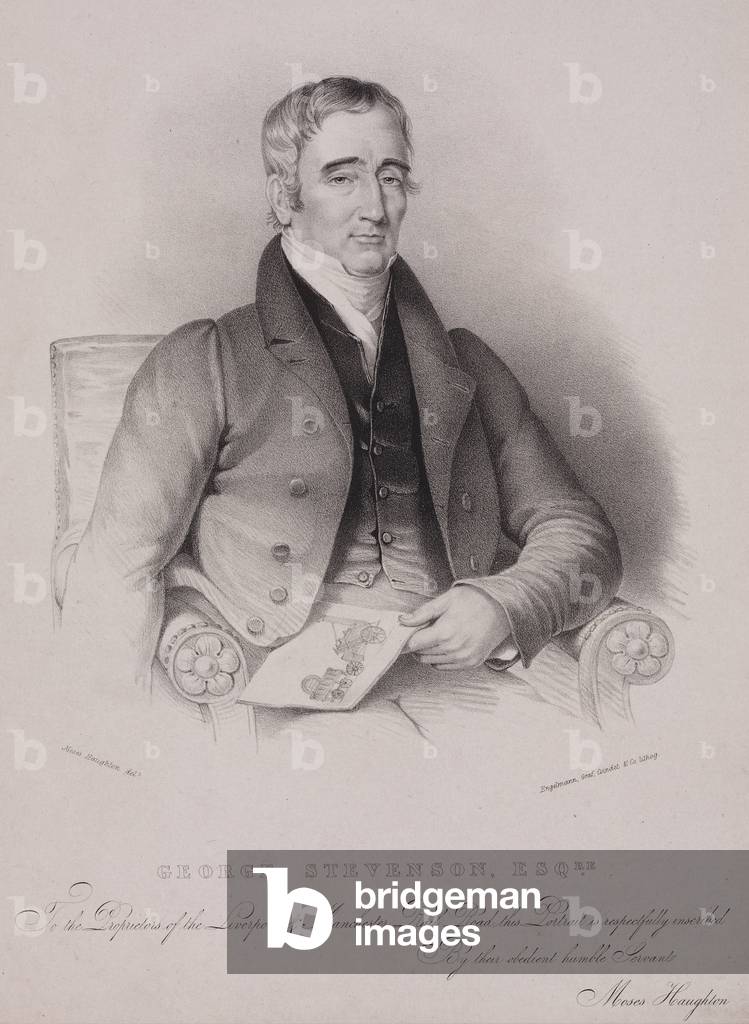
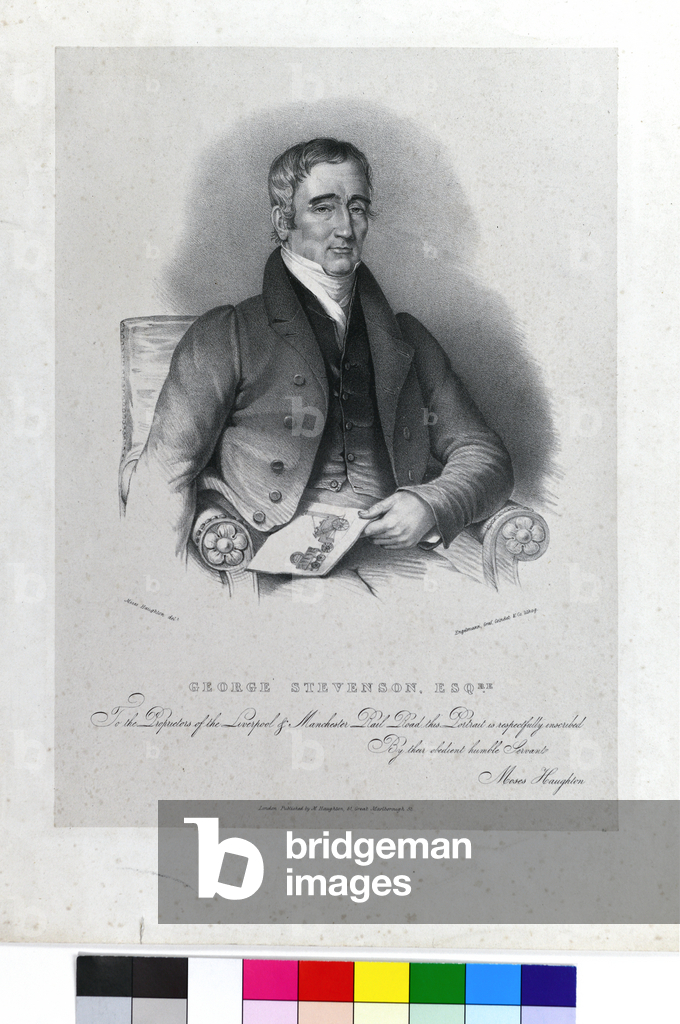
UIS5092387 George Stephenson, English railway engineer, 1830-31. Lithograph by Engelmann, Graf, Coindet & Co after an original drawing by Moses Haughton. A largely self-educated man, George Stephenson's (1781-1848) early working life was spent as a brakesman and in collieries maintaining stationary engines. His mechanical mind was noticed by his employers, and by 1812 he was an engine-wright earning 100 pounds a year. In 1813 he was commissioned to design his first steam locomotive, 'Blucher', for the Killingworth Colliery in Tyne and Wear. Later, he became the engineer for the Stockton & Darlington Railway (1825), and the Liverpool & Manchester Railway (1829). He advised on the construction of many of the English railways and the Belgian State Railway (1835), hence his nickname 'the father of railways'. ©SSPL/Science Museum
DC
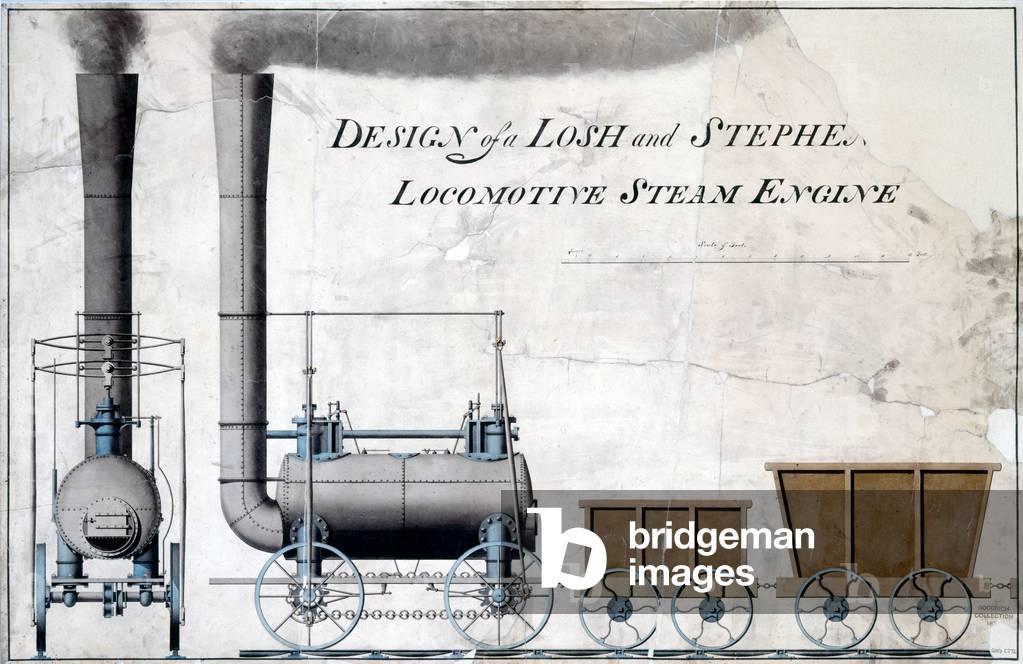
UIS3697578 Line drawing with colour wash copied from "A Practical Treatise on Railroads" by Nicholas Wood, 1825. In the early 1820s, the railway engineer, George Stephenson (1781-1848) began working on the development of cast iron rails, in collaboration with Newcastle ironworks owner William Losh.
DC
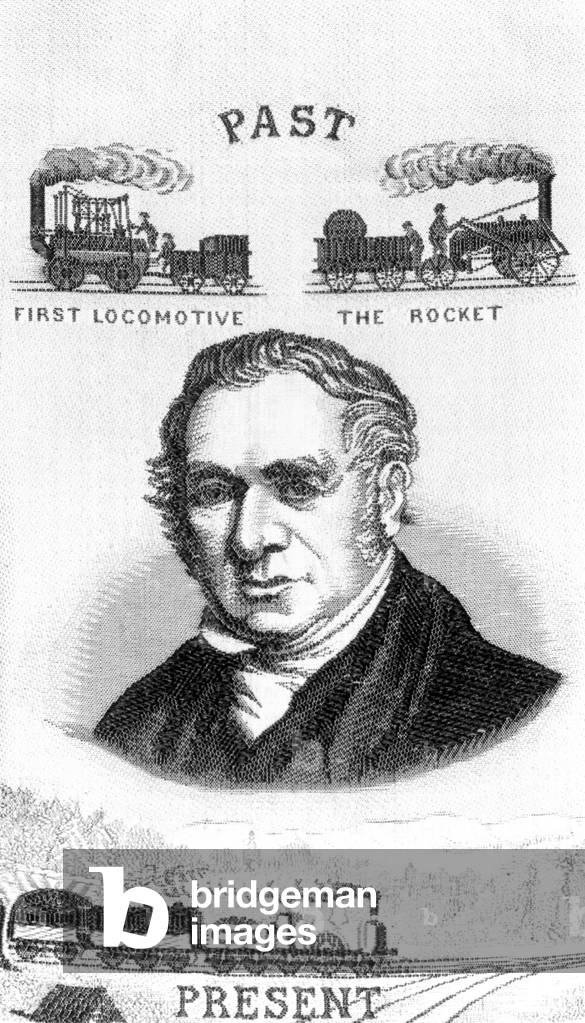
UIS5064847 George Stephenson, railway engineer, mid 19th century. Stevengraph (woven silk picture) depicting George Stephenson (1781-1848) and locomotives. A largely self- taught man, Stephenson commenced his working life as a cowherd, later working in coalpits. His mechanical mind was noticed by his employers and by 1812 he was an engine-wright earning 100 pounds a year. In 1813 he was commissioned to design a steam locomotive for the Killingworth wagonway. He was the engineer for the Stockton & Darlington Railway (1825) and the Liverpool & Manchester Railway (1829). He advised on the construction of the Belgian State Railway (1835) and was involved with the construction of many of the English railways, hence his nickname 'the father of railways'. ©SSPL/NRM/Pictorial Collection
DC
IGM9005703 View of George Stephenson, seated and holding a drawing of `Rocket' in his left hand, ‘To the Proprietors of the Liverpool & Manchester Rail Road, this Portrait is respectfully inscribed by their obedient humble Servant Moses Haughton'. Lithograph by Engelmann, Graf, Coindet & Co after an original drawing by Moses Haughton the Younger (1773-1849) of 51, Great Marlborough St. LondonAs a colliery overseer near Newcastle, in 1814 George Stephenson (1781-1848) developed the early use of locomotives for hauling coal waggons at Killingworth Colliery. In 1825 his Stockton and Darlington Railway opened and later the same year he was appointed engineer to the Liverpool and Manchester Railway and was largely responsible for promoting it as a locomotive-hauled line. The practical development of his 1829 engine ‘Rocket’ (seen on the drawing in his left hand) was more the work of his son Robert. The Rainhill Trials of that same year proved the viability of locomotives beyond any doubt, and the next four years saw a rapid evolution, laying the foundation of all subsequent locomotive design for the next 125 years.
DC
UIS5062452 George Stephenson, English railway engineer, c 1825-1835. Mezzotint by C Turner after a painting by H P Briggs of George Stephenson (1781-1848). A self-educated man, Stephenson commenced his working life as a cowherd, later working in coalpits. His mechanical mind was noticed by his employers & by 1812 he was an engine-wright earning 100 pounds a year. In 1813 he was commissioned to design a steam locomotive for the Killingworth wagonway. He was the engineer for the Stockton & Darlington Railway (opened 1825) and the Liverpool & Manchester Railway (opened 1829). He advised on the construction of the Belgian State Railway (opened 1835) & was involved with the construction of many of the English railways, hence his nickname 'the father of railways'. ©SSPL/Science Museum
DC
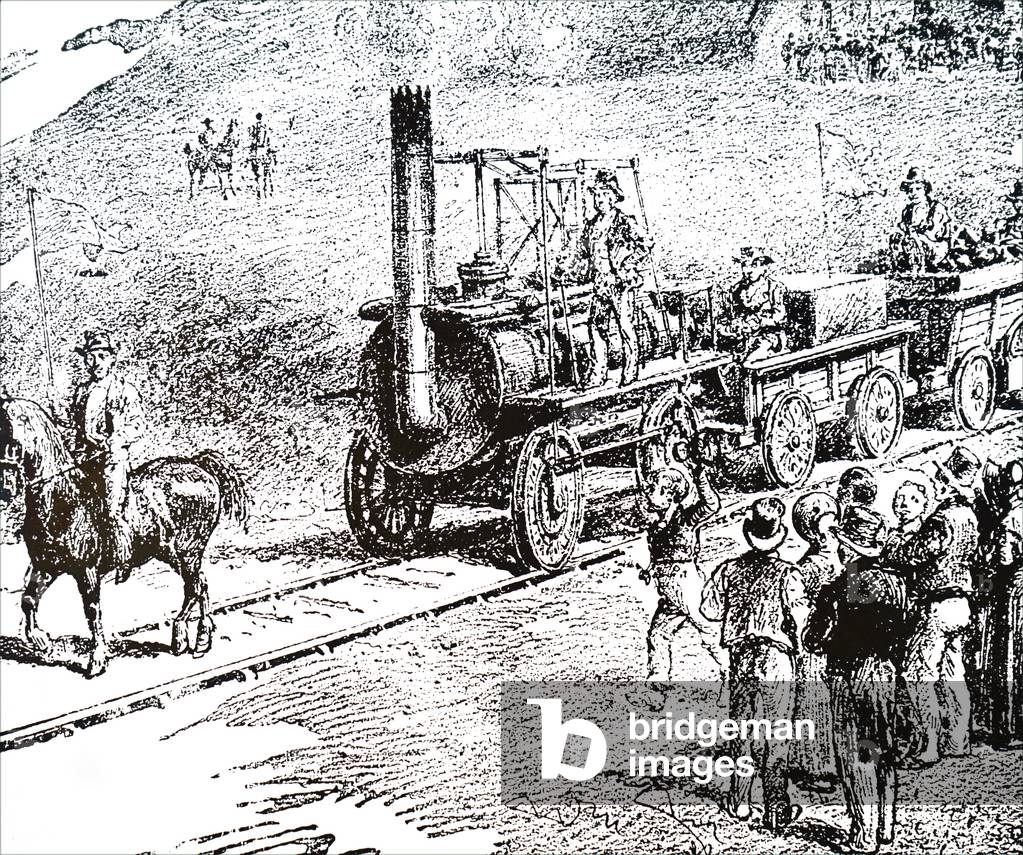
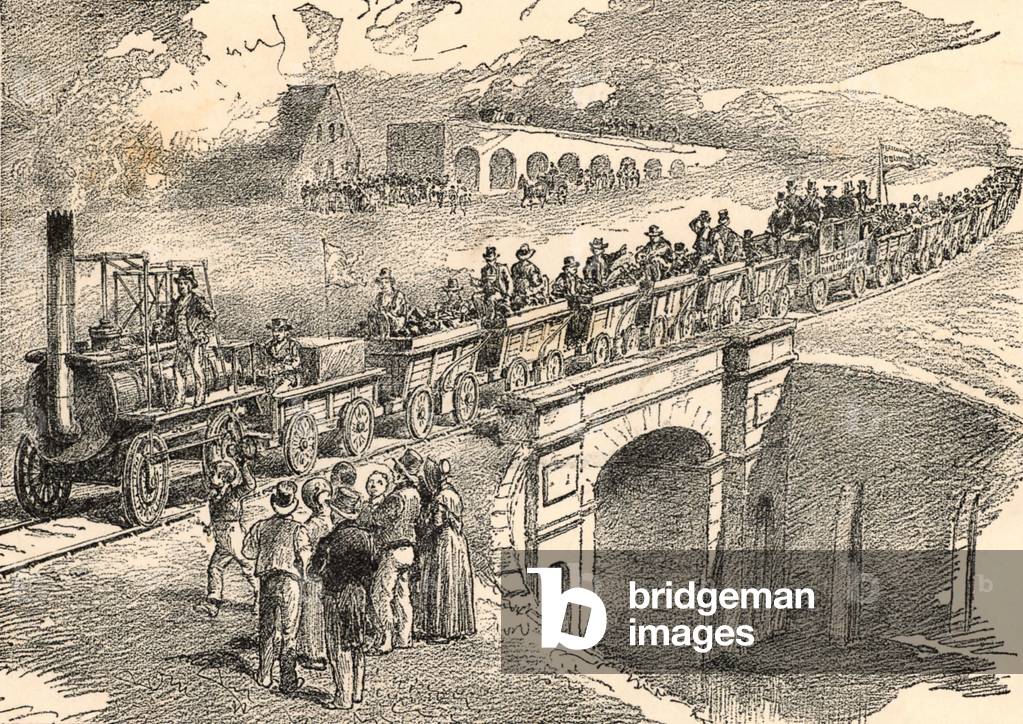
UIG864031 Opening of the Stockton and Darlington Railway, 27 September 1825. The civil engineer for the line was George Stephenson (1781-1848) From "The Triumphs of Steam" by Henry Frith (London, c1898).
DC
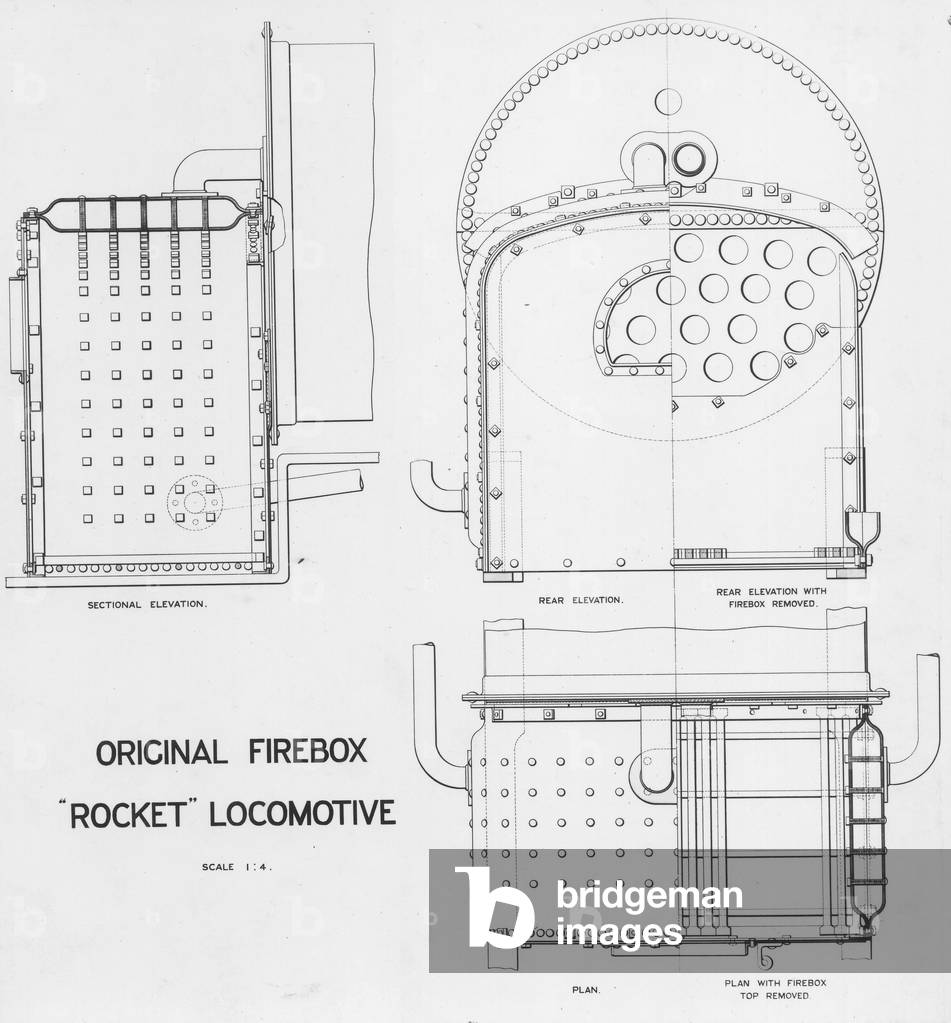
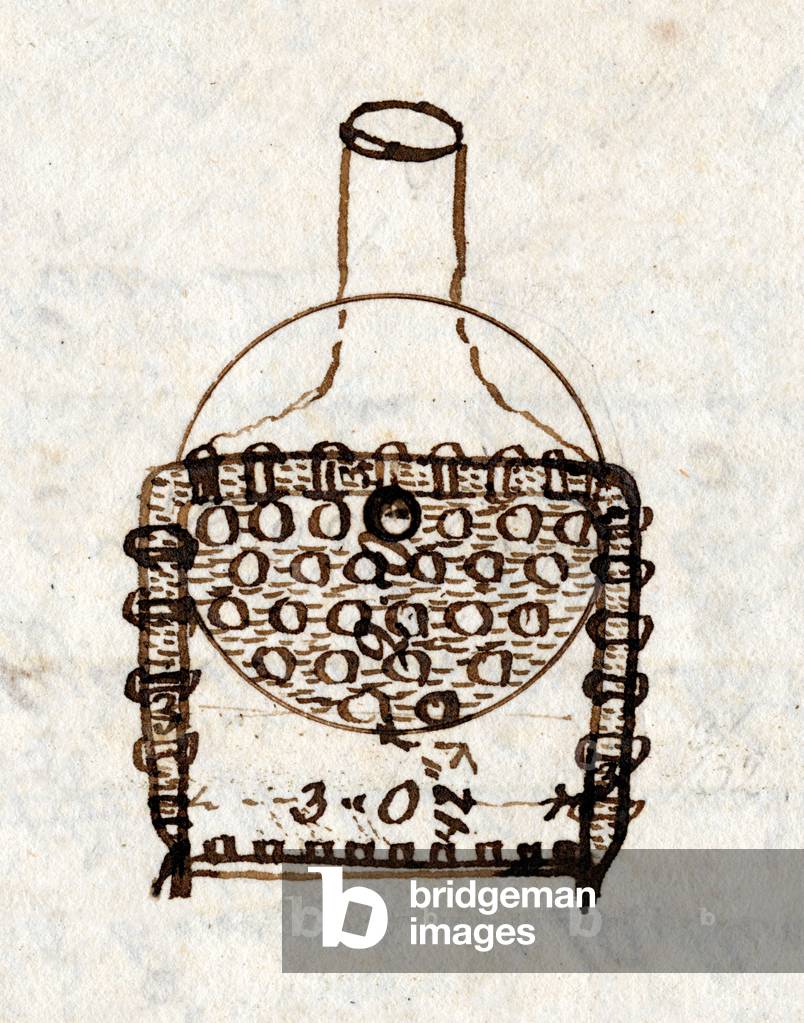
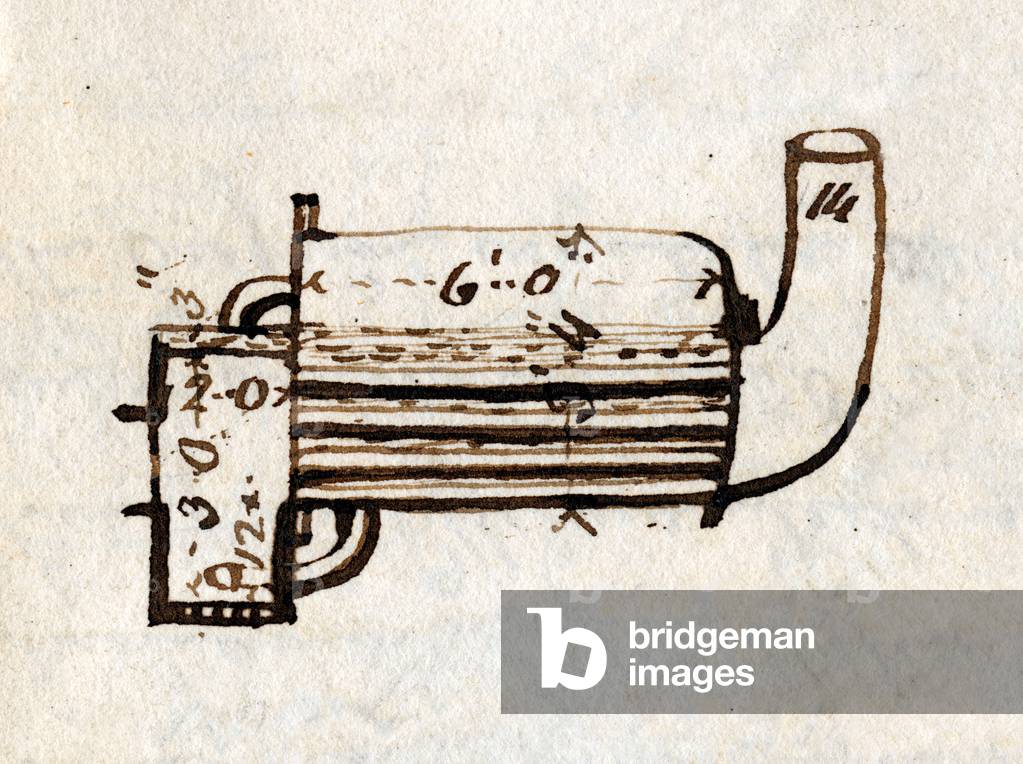
UIS3697571 Drawing of original fire box of Stephenson's 0-2- 2 locomotive 'Rocket', 1829. In 1829, Robert Stephenson (1803-1859) and George Stephenson (1781-1848) designed the 'Rocket' which took part in and subsequently won the 'Rainhill' Trials, a competition set up to find the most suitable locomotive for haulage on the Liverpool & Manchester Railway.
DC
UIS5062249 George Stephenson, English railway engineer, c 1835-1845. Mezzotint by T S Atkinson after a painting by John Lucas of George Stephenson (1781-1848). A self-educated man, Stephenson commenced his working life as a cowherd, later working in coalpits. His mechanical mind was noticed by his employers and by 1812 he was an engine-wright earning 100 pounds a year. In 1813 he was commissioned to design a steam locomotive for the Killingworth wagonway. He was the engineer for the Stockton & Darlington Railway (1825) and the Liverpool & Manchester Railway (1829). He advised on the construction of the Belgian State Railway (1835) and was involved with the construction of many of the English railways, hence his nickname 'the father of railways'. ©SSPL/NRM/Pictorial Collection
DC
UIS5064067 George Stephenson, English railway engineer and crowd, c 1840-1850. Oil painting by John Lucas (1807-1874) showing a group of people, including George Stephenson (1781-1848). Stephenson commenced his working life as a cowherd, later working in coalpits. His mechanical mind was noticed by his employers and by 1812 he was an engine-wright earning 100 pounds a year. In 1813 he was commissioned to design a steam locomotive for the Killingworth wagonway. He was the engineer for the Stockton & Darlington Railway (1825) and the Liverpool & Manchester Railway (1829). He advised on the construction of the Belgian State Railway (1835) and was involved with the construction of many of the English railways. ©SSPL/Science Museum
DC
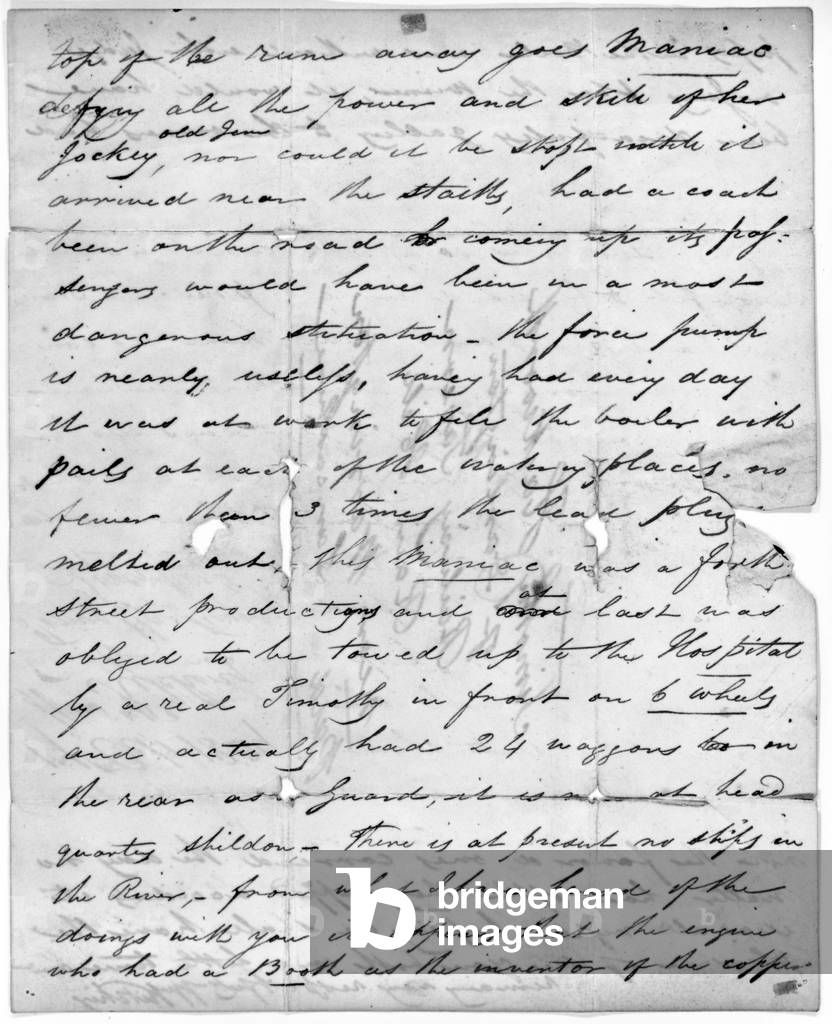
UIS5623024 Letter from George Stephenson, English railway engineer, to W Kitching, 1829. George Stephenson (1781-1848) was commissioned in 1813 to design a steam locomotive for the Killingworth wagonway. He was the engineer for the Stockton & Darlington Railway (1825) and the Liverpool & Manchester Railway (1829). He advised on the construction of the Belgian State Railway (1835) and was involved with the construction of many of the English railways, hence his nickname 'the father of railways'. ©SSPL/Science Museum
DC
UIS5064076 George Stephenson, English railway engineer and crowd, c 1840-1850. Oil painting by John Lucas (1807-1874) showing a group of people, including George Stephenson (1781-1848). Stephenson commenced his working life as a cowherd, later working in coalpits. His mechanical mind was noticed by his employers and by 1812 he was an engine-wright earning 100 pounds a year. In 1813 he was commissioned to design a steam locomotive for the Killingworth wagonway. He was the engineer for the Stockton & Darlington Railway (1825) and the Liverpool & Manchester Railway (1829). He advised on the construction of the Belgian State Railway (1835) and was involved with the construction of many of the English railways ©SSPL/Science Museum
DC
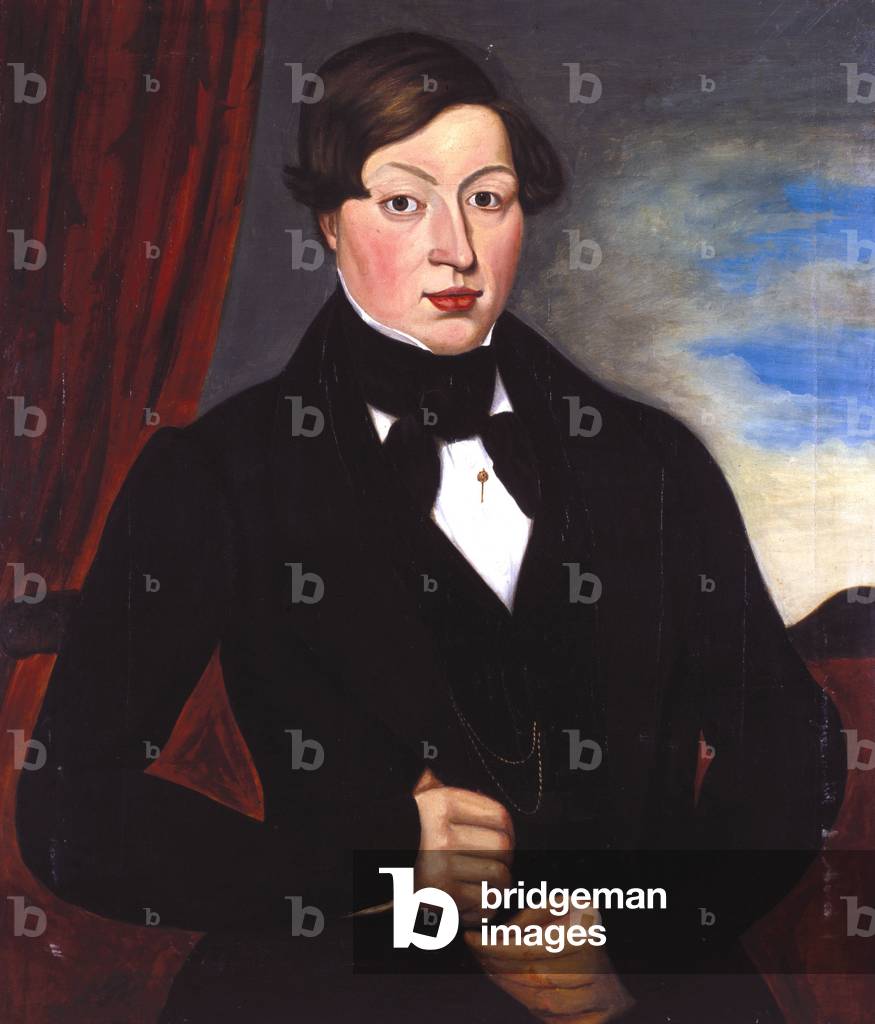
UIS5063668 A gentleman, possibly George Stephenson, English railway engineer, c 1820. Oil painting. A largely self-educated man, Stephenson's (1781-1848) early working life was spent as a brakesman and in collieries maintaining stationary engines. His mechanical mind was noticed by his employers, and by 1812 he was an engine-wright earning 100 pounds a year. In 1813 he was commissioned to design his first steam locomotive, 'Blucher', for the Killingworth Colliery in Tyne and Wear. Later, he became the engineer for the Stockton & Darlington Railway (opened in 1825), and the Liverpool & Manchester Railway (opened in 1829). He advised on the construction of many of the English railways and the Belgian State Railway (1835), hence his nickname 'the father of railways'. ©SSPL/NRM/Pictorial Collection
DC
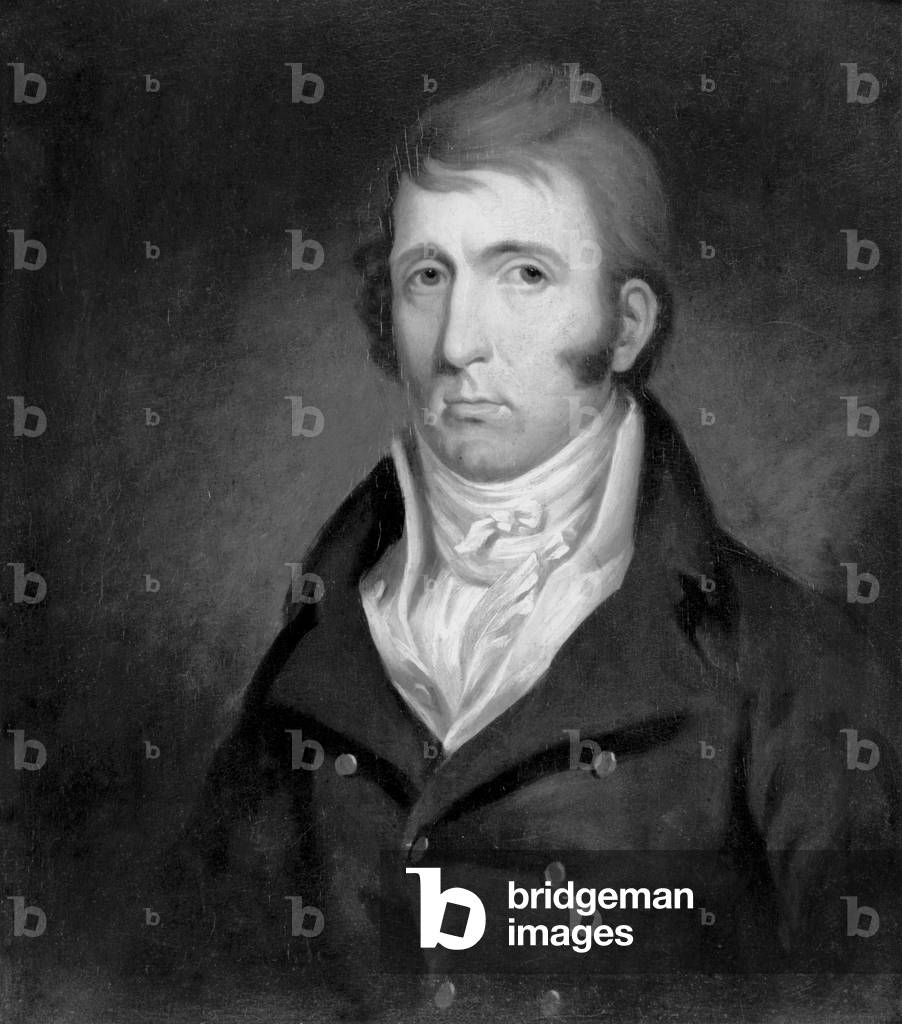
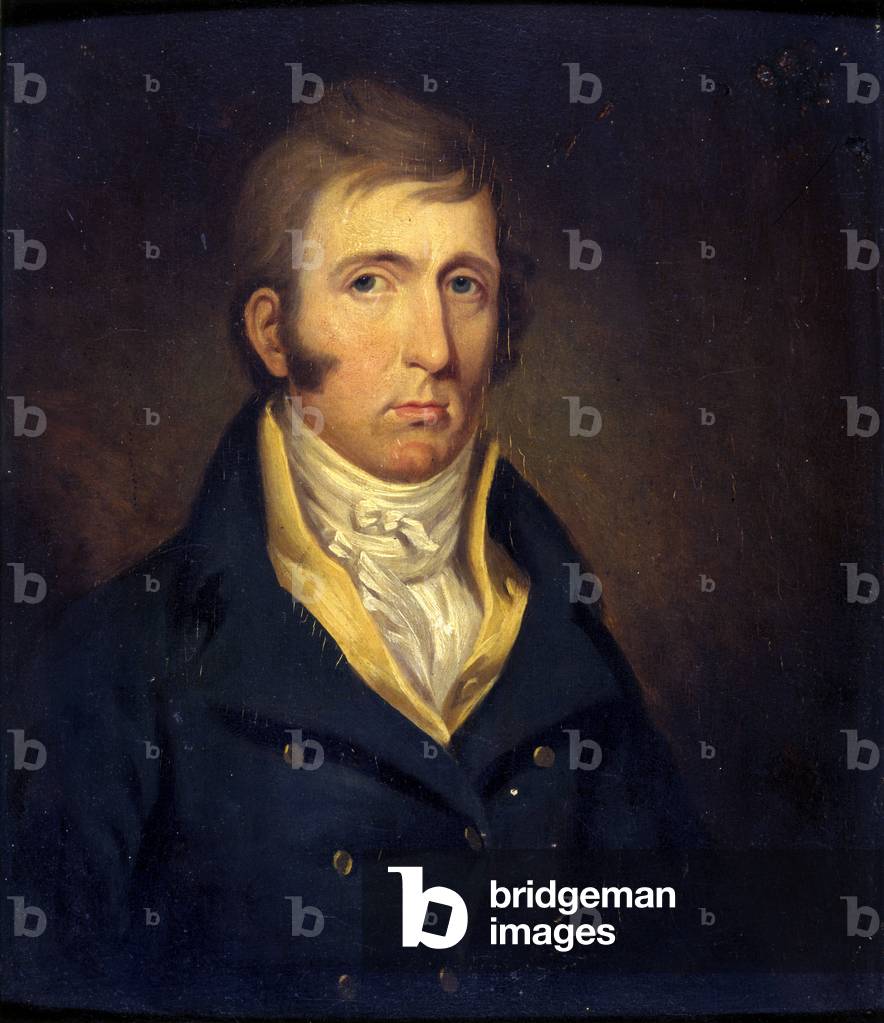
UIS5062796 George Stephenson, English railway engineer, as a young man, c 1800. Oil painting. A largely self-educated man, Stephenson's (1781-1848) early working life was spent as a brakesman and in collieries maintaining stationary engines. His mechanical mind was noticed by his employers, and by 1812 he was an engine-wright earning 100 pounds a year. In 1813 he was commissioned to design his first steam locomotive, 'Blucher', for the Killingworth Colliery in Tyne and Wear. Later, he became the engineer for the Stockton & Darlington Railway (opened in 1825), and the Liverpool & Manchester Railway (opened in 1829). He advised on the construction of many of the English railways and the Belgian State Railway (1835), hence his nickname 'the father of railways'. Dimensions: 807mm x 705mm. ©SSPL/NRM/Pictorial Collection
DC
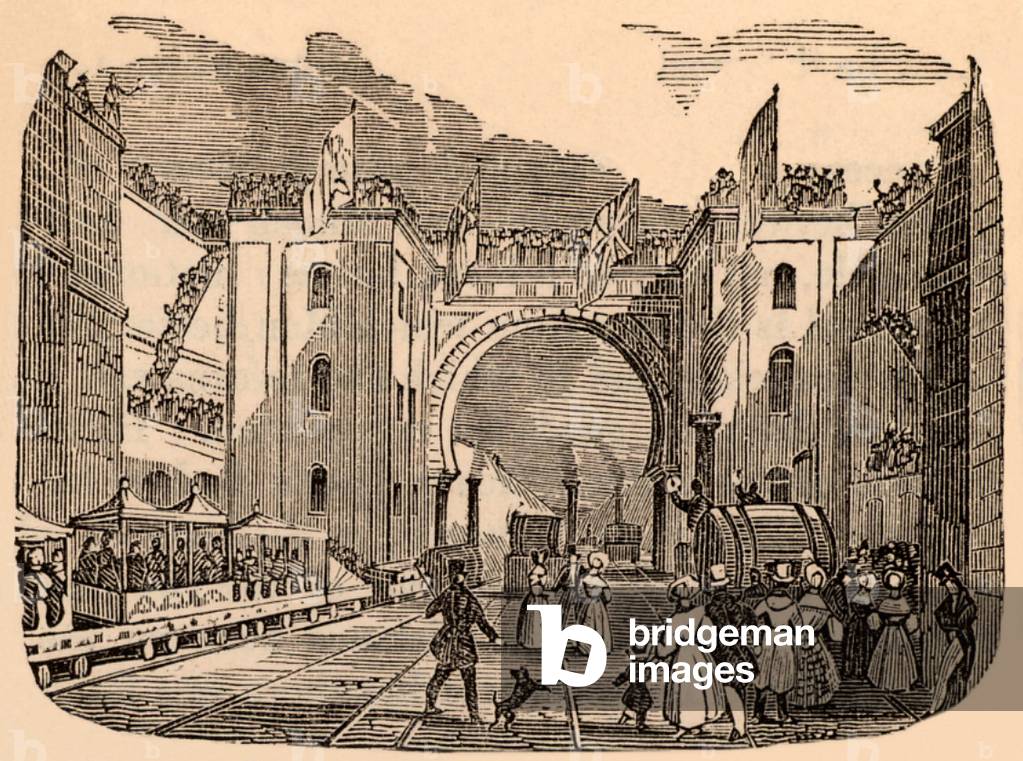
UIG864015 Opening of the Liverpool and Manchester Railway, England on 15 September 1830. The engineer for the work was George Stephenson (1781-1848). Woodcut from "Roads and Railroads, Vehicles, and Modes of Travelling" (London, c1840).
DC
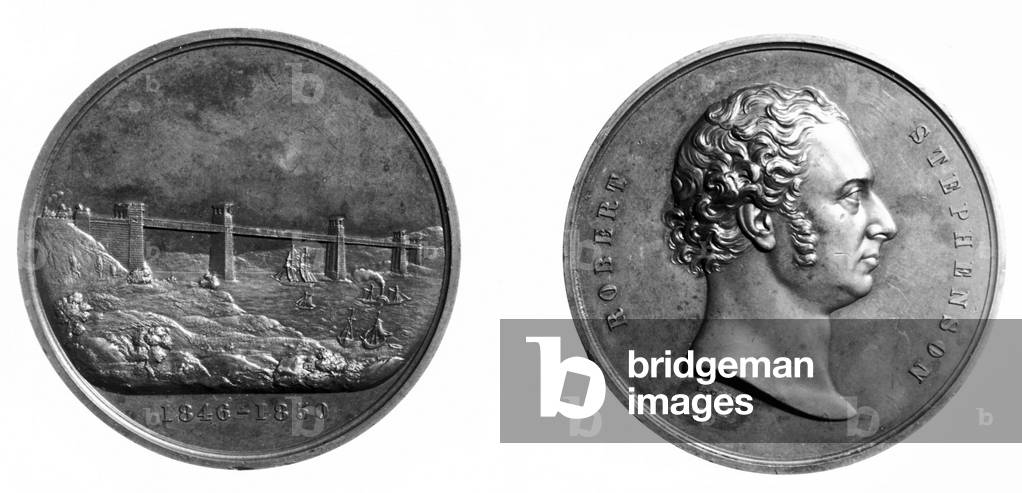
UIS5076631 Robert Stephenson, English mechanical and structural engineer., c 1850-1869. Coin featuring Robert Stephenson (1803-1859) and the Menai Bridge. The son of George Stephenson (1781-1848), whom he assisted with the survey of the Stockton & Darlington Railway, Robert Stephenson (1803-1859) attained independent fame with his designs for ,among others, the Britannia Tubular Bridge and the Royal Border Bridge at Berwick, both constructed in 1850. He was an MP for many years from 1847 and was buried in Westminster Abbey in London. ©SSPL/Science Museum
DC
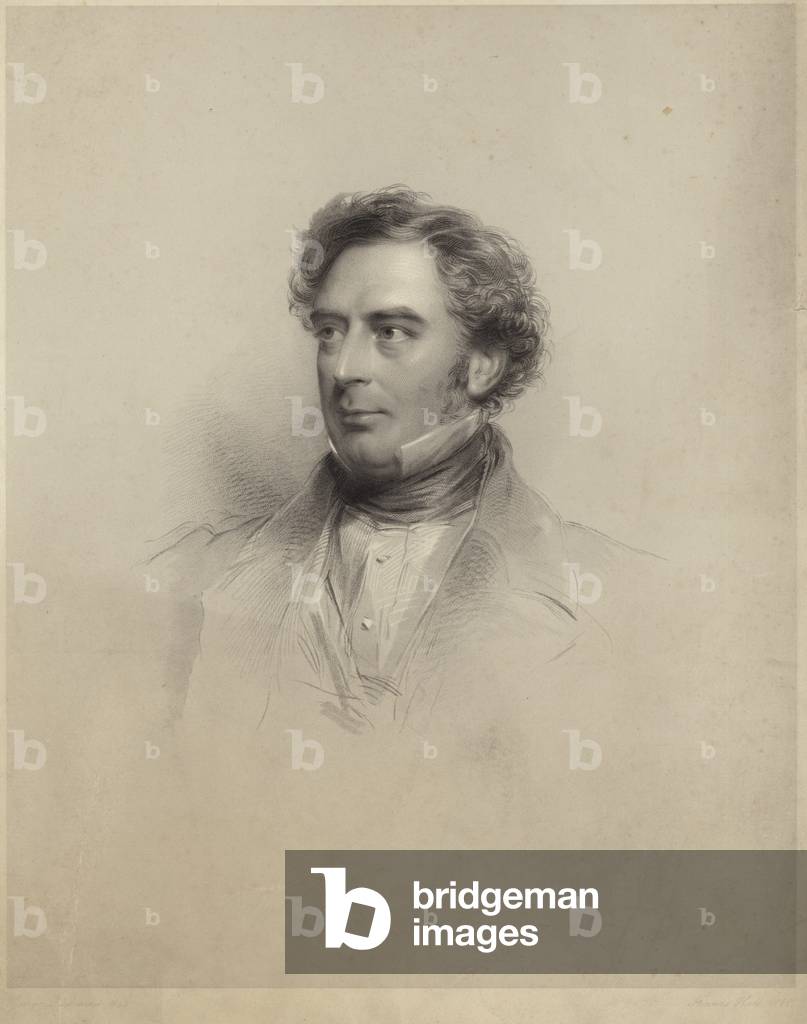
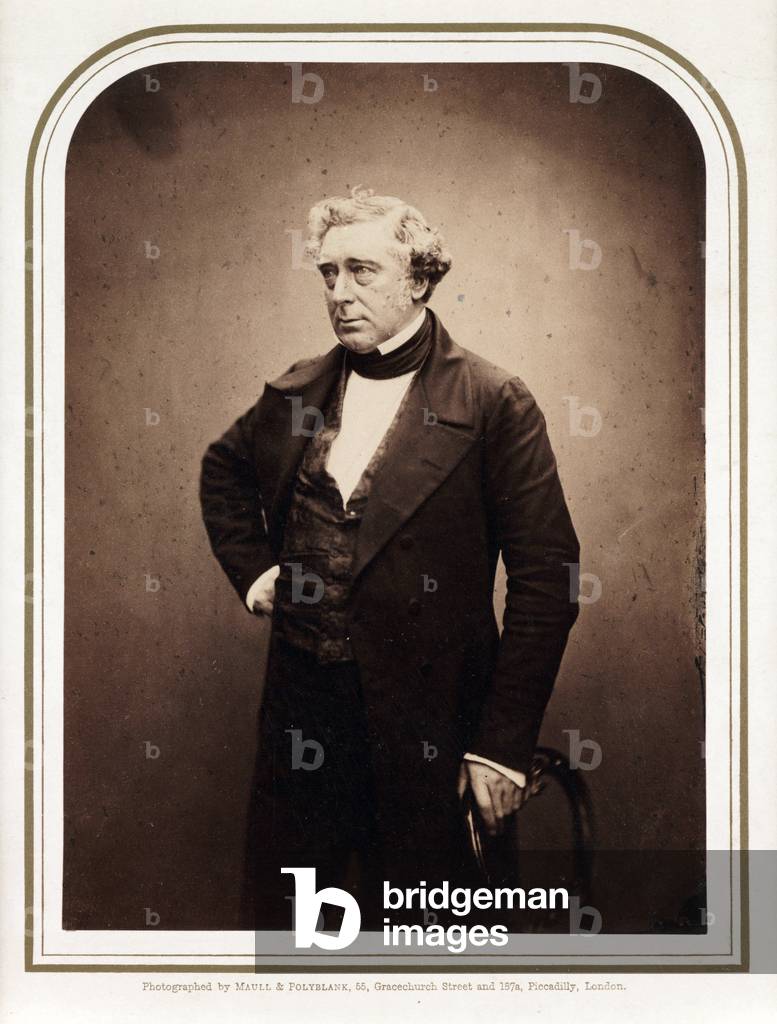
UIS5085769 Robert Stephenson, British engineer, 1856. A photographic portrait of Robert Stephenson (1803-1859), taken at the studio of Maull & Polyblank, London, published as one of a series of 'Photographic Portraits of Living Celebrities'. By the mid-1850s, Maull & Polyblank had become renowned for their publications of celebrity portraits. The son of George Stephenson (1781-1848), Robert helped his father to survey the Stockton & Darlington railway line in 1822. They went on to form a firm called Robert Stephenson & Company and built The Rocket, the locomotive that won the Rainhill Trials, and won the contract to produce locomotives for the Liverpool & Manchester railway. Stephenson was involved in the construction of railways and bridges all over the world. ©SSPL/National Media Museum
DC
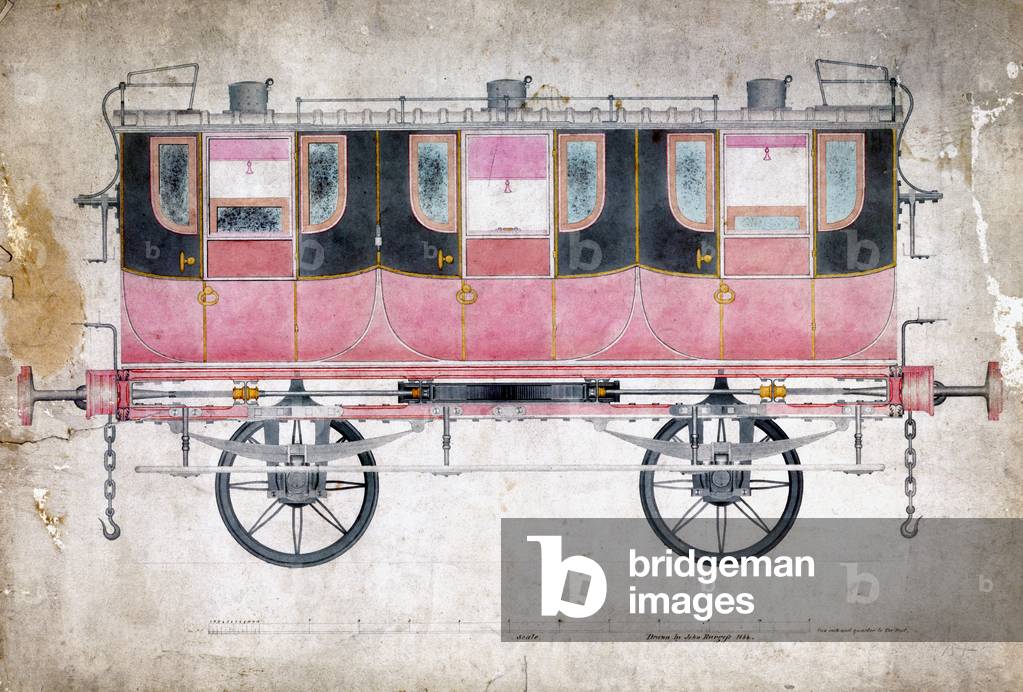
UIS3697570 Side elevation drawing by John Burgess. In 1837 Parliament gave permission for a railway to be built on a 51 mile stretch across the Pennines between Manchester and Leeds, under the supervision of George Stephenson (1781-1848). The Manchester & Leeds line was opened in 1839, with branches continuing to be opened well into the 1840s. The economic and industrial importance of the city of Leeds was greatly enhanced by the completion of the railway.
DC
UIS5062257 Robert Stephenson, English mechanical and structural engineer, 1846. Engraving by J R Jackson after a painting by John Lucas, of of Robert Stephenson (1803-1859). The son of George Stephenson (1781- 1848), whom he assisted with the survey of the Stockton & Darlington Railway, Robert attained independent fame with his designs for, among others, the Britannia Tubular Bridge and the Royal Border Bridge at Berwick, both constructed in 1850. He was an MP for many years from 1847 and was buried in Westminster Abbey in London. ©SSPL/Science Museum
DC
UIS5076619 Robert Stephenson, English mechanical and structural engineer, 1846. Engraving by J R Jackson after a painting by John Lucas, of Robert Stephenson (1803-1859). The son of George Stephenson (1781- 1848), whom he assisted with the survey of the Stockton & Darlington Railway, Robert attained independent fame with his designs for, among others, the Britannia Tubular Bridge and the Royal Border Bridge at Berwick, both constructed in 1850. He was an MP for many years from 1847 and was buried in Westminster Abbey in London. ©SSPL/Science Museum
DC
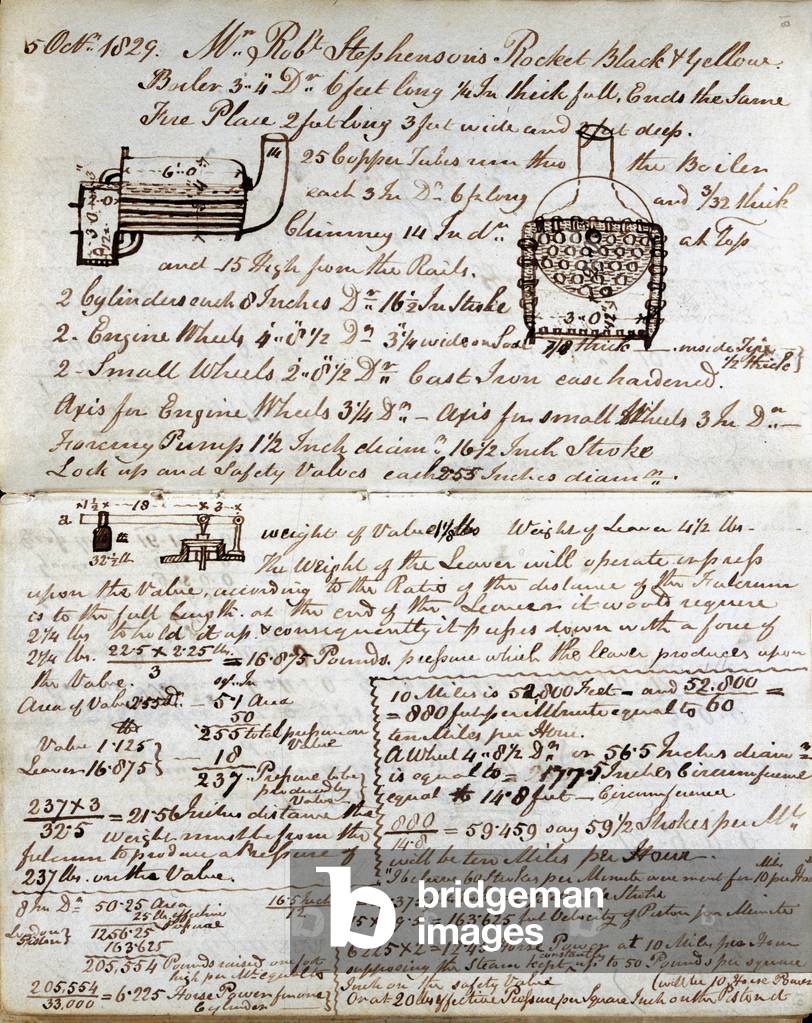
UIS3697575 Pages 18 and 19, dated 5 October 1829 from the notebook, belonging to John Urpeth Rastrick (1780-1856), that was used to record details of the Rainhill locomotive trials in 1829. The Rainhill Trials were set up to find the best locomotive for railway haulage on the Liverpool and Manchester Railway. The competition was won by the 'Rocket', designed by Robert Stephenson (1803-1859) and George Stephenson (1781-1848). Rastrick was one of the judges.
DC
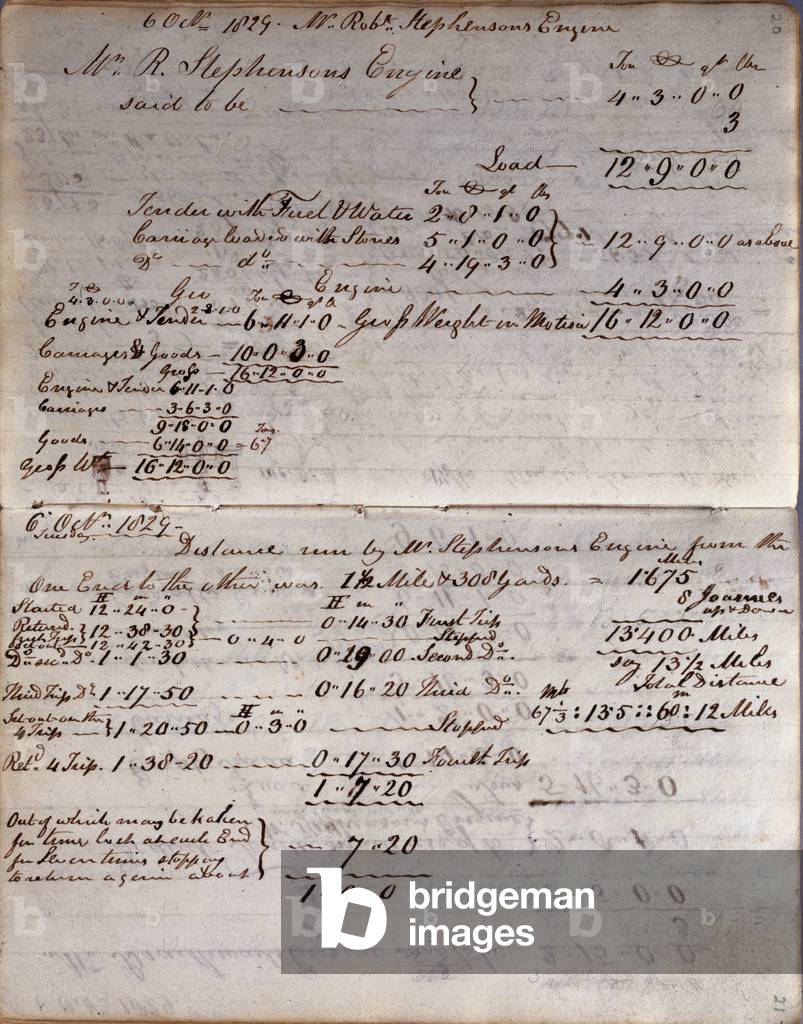
UIS3697572 Pages 20 and 21, dated 6 October 1829, of the notebook belonging to John Urpeth Rastrick (1780-1856) used to record details of the Rainhill locomotive trials in 1829. The Rainhill trials were a competition set up to find the most efficient locomotive for railway haulage on the Liverpool and Manchester Railway. The competition was won by the 'Rocket', designed by Robert Stephenson (1803-1859) and George Stephenson (1781-1848). Rastrick was one of the judges.
DC
UIS3697588 Taken from page 18 of the notebook belonging to John Urpeth Rastrick (1780-1856) that was used to record details of the Rainhill locomotive trials in 1829. The Rainhill trials were a competition set up to find the most efficient locomotive for railway haulage on the Liverpool and Manchester Railway. The competition was won by the Rocket, designed by George Stephenson (1781-1848) and Robert Stephenson (1803-1859). Rastrick was one of the judges.
DC
UIS3697587 Taken from page 18 of the notebook belonging to John Urpeth Rastrick (1780-1856) that was used to record details of the Rainhill locomotive trials in 1829. The Rainhill trials were a competition set up to find the most efficient locomotive for railway haulage on the Liverpool and Manchester Railway. The competition was won by the Rocket, designed by George Stephenson (1781-1848) and Robert Stephenson (1803-1859). Rastrick was one of the judges.
DC
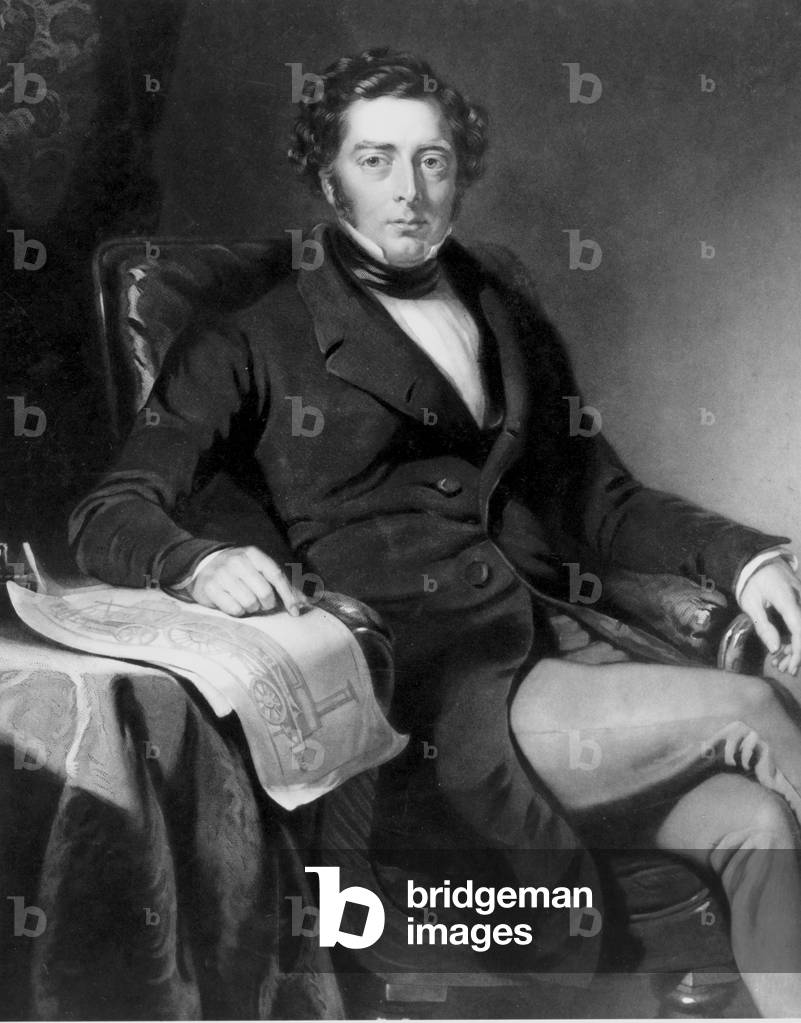
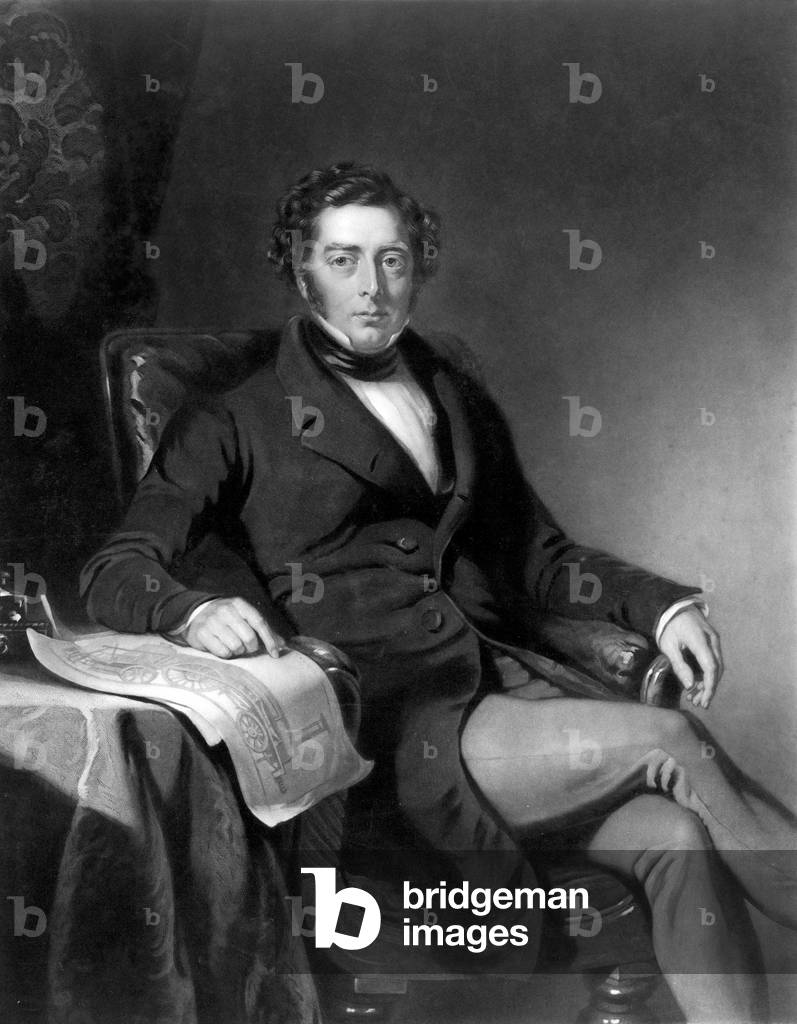
UIS5087663 Robert Stephenson, English mechanical and civil engineer, 1849. Mezzotint by Samuel Bellin, after an original oil painting by John Lucas, showing the engineer resting his arm on plans of the Britannia Tubular Bridge, which can be seen in the background. Robert Stephenson (1803-1859) was the son of George Stephenson (1781-1848), whom he assisted with the survey of the Stockton & Darlington Railway in 1821. In 1829 he designed the 'Rocket' locomotive which won the 'Rainhill Trials', a competition set up to find the most suitable locomotive for haulage on the Liverpool & Manchester Railway. He also designed many bridges, most famously the Royal Border and Britannia Tubular bridges, both constructed in 1850. He is buried in Westminster Abbey in London. Dimensions: 864mm x 575mm. ©SSPL/Science Museum
DC
UIS5087671 Robert Stephenson, English mechanical and civil engineer, c 1850s. Engraving by Francis Holl, 1860, after an original work by George Richmond. Robert Stephenson (1803-1859) was an engineer and the son of George Stephenson (1781-1848), whom he assisted with the survey of the Stockton & Darlington Railway in 1821. In 1829 he designed the 'Rocket' locomotive which won the 'Rainhill Trials', a competition set up to find the most suitable locomotive for haulage on the Liverpool & Manchester Railway. He was also chief engineer of the London & Birmingham Railway, completed in 1838. He designed many bridges, most famously the Royal Border and Britannia Tubular bridges, both constructed in 1850. He is buried in Westminster Abbey in London. ©SSPL/Science Museum
DC
UIS5064107 Robert Stephenson, English mechanical and structural engineer, c 1850-1859. The son of George Stephenson (1781-1848), Robert Stephenson (1803-1859), whom he assisted with the survey of the Stockton & Darlington Railway, attained independent fame with his designs for, among others, the Britannia Tubular Bridge and the Royal Border Bridge at Berwick, both constructed in 1850. He was an MP for many years from 1847 and was buried in Westminster Abbey in London. ©SSPL/Science Museum
DC
UIS5062484 Robert Stephenson, English mechanical and structural engineer, c 1830-1839. Engraving by Holl after Richmond of Robert Stephenson (1803-1859). The son of George Stephenson (1781-1848), whom he assisted with the survey of the Stockton & Darlington Railway, attained independent fame with his designs for, among others, the Britannia Tubular Bridge and the Royal Border Bridge at Berwick,both constructed in 1850. He was an MP for many years from 1847 and was buried in Westminster Abbey in London. ©SSPL/Science Museum
DC

Total de Resultados: 158

Página 1 de 2