
















































Busque também em nossas outras coleções:

Data da imagem:
Agência
Fotógrafo
Estado
Cidade
Local
Tipo de licença
Orientação
Coleção

Total de Resultados: 8

Página 1 de 1

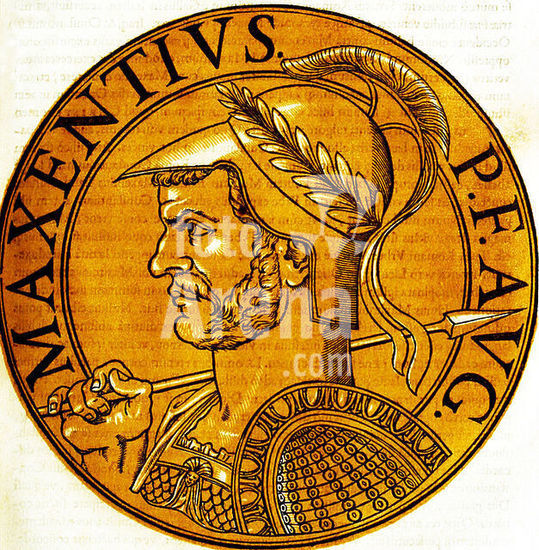
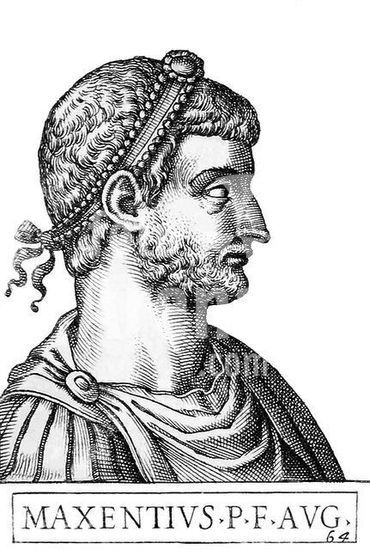
akg7002544 Maxentius (278-312) was the son of former Emperor Maximian, and son-in-law to Emperor Galerius. When his father and Emperor Diocletian stepped down, Maxentius was passed over in the new tetrarchy established by Emperors Constantius and Galerius, the latter nominating Severus and Maximinus Daia as junior co-emperors. Galerius hated Maxentius and used his influence to halt his succession.When Constantius died in 306 and his son Constantine was crowned emperor and accepted into the tetrarchy, Maxentius was publicly proclaimed emperor later in the same year by officers in Rome. Severus marched to Rome in 307 to punish Maxentius, but most of his army defected when they arrived, having served under his father Maximian for many years. Maxentius invited his father back to the capital and named him co-emperor, though this lasted less than a year before Maximian fled to the court of Constantine after a failed coup.Maxentius ruled over his portion of the empire for roughly six years, and was mostly preoccupied with a civil war against Emperors Constantine and Licinius. He allied himself with Emperor Maximinus II to secure his power, but he eventually perished during the Battle of the Milvian Bridge in 312 against Constantine, where he supposedly drowned in the Tiber River while attempting to retreat.
DC
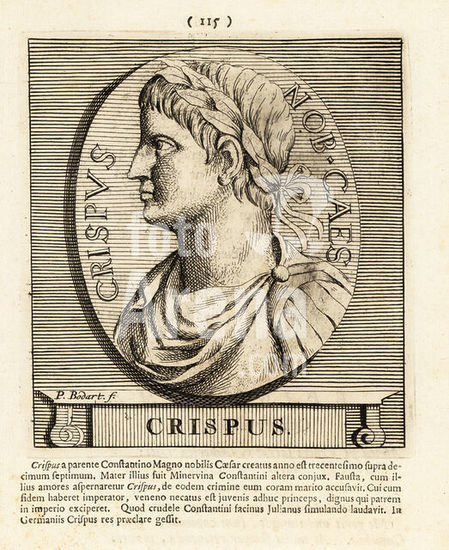
alb9880235 Flavius Julius Crispus, c. 295 326, eldest son of Roman Emperor Constantine the Great and Minervina. Junior caesar from 317 until his execution by his father in 326 From a coin inscribed CRISPUS NOB. CAES. Copperplate engraving by Pieter Bodart (1676-1712) from Henricus Spoors Deorum et Heroum, Virorum et Mulierum Illustrium Imagines Antiquae Illustatae, Gods and Heroes, Men and Women, Illustrated with Antique Images, Petrum, Amsterdam, 1715. First published as Favissæ utriusque antiquitatis tam Romanæ quam Græcæ in 1707. Henricus Spoor was a Dutch physician, classical scholar, poet and writer, fl. 1694-1716.
DC
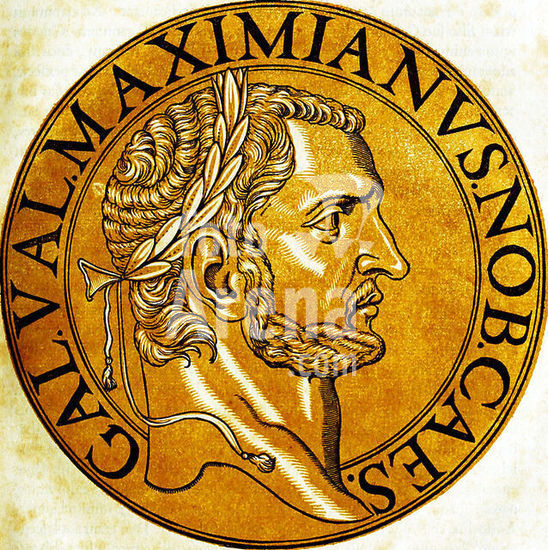
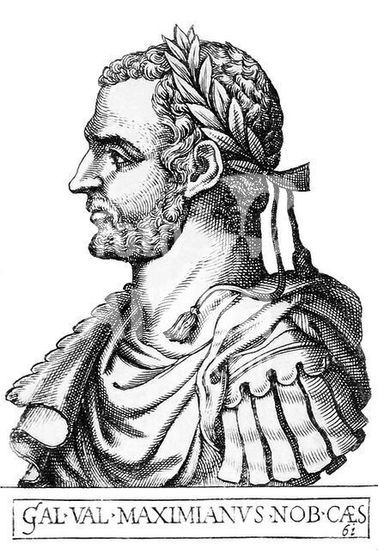
akg5757203 Galerius (260-311) was born in Serdica and was initially a herdsman like his father, before going on to join the Roman army, where he served with distinction under Emperors Aurelian and Probus. When the Tetrarchy was established in 293, he was named as one of the junior co-emperors alongside Constantius, marrying Emperor Diocletian's daughter Valeria.Galerius fought alongside his father-in-law against the resurgent Sassanid Empire, eventually leading to his sacking of the capital Ctesiphon and his capture of the wife and children of the Sassanid king Narseh, with which he was able to negotiate a long-lasting and favourable peace treaty. When Diocletian and Maximian abdicated in 305, Galerius and Constantius became joint emperors, with Galerius conspiring to secure a stronger power base than his co-ruler. His hopes and plans came to naught when Constantius died a year later and his son, Constantine I, ascended to become emperor of the western half of the empire.Galerius had been a staunch opponent of Christianity, supposedly prodding Diocletian into enacting the Diocletianic Persecution, the largest and most violent official persecution of Christians in the empire's history, by burning down the Imperial Palace and blaming it on Christian saboteurs. His attitude changed in 311 when he enacted the Edict of Toleration, asking for Christians to pray for him as he suffered through a painful and fatal illness. He died six days later.
DC
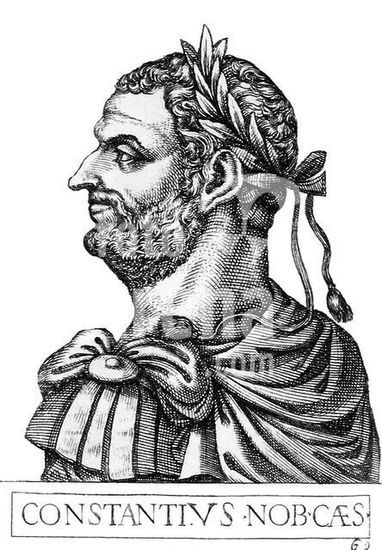
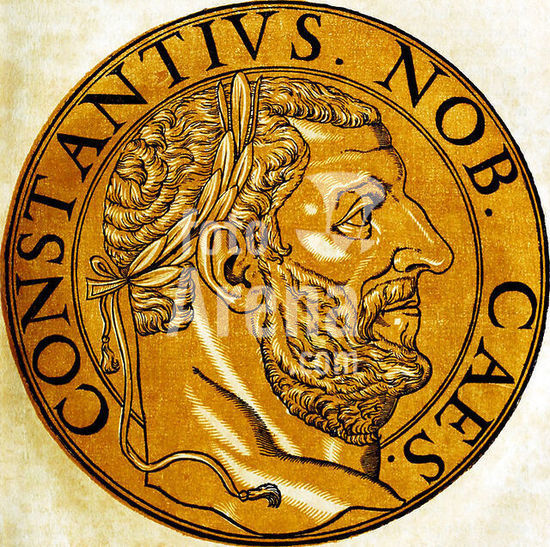
akg7315519 Constantius Chlorus (250-306) was born into a noble framily from Dardania descended from emperors Claudius II and Quintillus, though this may have been a genealogical fabrication by Constantius' son Constantine I, with his real family instead being of humble origins.Constantius joined the Roman army and served under various emperors, eventually being elevated to junior co-emperor alongside Galerius in 293, forming the Tetrarchy. His marriage to Emperor Maximian's daughter made him his son-in-law, and together they defeated the rebel emperor Allectus in Britain and campaigned heavily along the Rhine frontier against various Germanic tribes.In 305, Diocletian and Maximian abdicated, elevating Constantius and Galerius to joint emperors. Constantius was fighting the Picts in Britain beyond the Antonine Wall when the declaration came, but he died suddenly a year later in Eboracum (York). His death led to the collapse of the Tetrarchy. His son would become Constantine the Great, and therefore Constantius was considered the founder of the Constantinian Dynasty.
DC
akg5266610 Galerius (260-311) was born in Serdica and was initially a herdsman like his father, before going on to join the Roman army, where he served with distinction under Emperors Aurelian and Probus. When the Tetrarchy was established in 293, he was named as one of the junior co-emperors alongside Constantius, marrying Emperor Diocletian's daughter Valeria.Galerius fought alongside his father-in-law against the resurgent Sassanid Empire, eventually leading to his sacking of the capital Ctesiphon and his capture of the wife and children of the Sassanid king Narseh, with which he was able to negotiate a long-lasting and favourable peace treaty. When Diocletian and Maximian abdicated in 305, Galerius and Constantius became joint emperors, with Galerius conspiring to secure a stronger power base than his co-ruler. His hopes and plans came to naught when Constantius died a year later and his son, Constantine I, ascended to become emperor of the western half of the empire.Galerius had been a staunch opponent of Christianity, supposedly prodding Diocletian into enacting the Diocletianic Persecution, the largest and most violent official persecution of Christians in the empire's history, by burning down the Imperial Palace and blaming it on Christian saboteurs. His attitude changed in 311 when he enacted the Edict of Toleration, asking for Christians to pray for him as he suffered through a painful and fatal illness. He died six days later.
DC
akg5422038 Maxentius (278-312) was the son of former Emperor Maximian, and son-in-law to Emperor Galerius. When his father and Emperor Diocletian stepped down, Maxentius was passed over in the new tetrarchy established by Emperors Constantius and Galerius, the latter nominating Severus and Maximinus Daia as junior co-emperors. Galerius hated Maxentius and used his influence to halt his succession.When Constantius died in 306 and his son Constantine was crowned emperor and accepted into the tetrarchy, Maxentius was publicly proclaimed emperor later in the same year by officers in Rome. Severus marched to Rome in 307 to punish Maxentius, but most of his army defected when they arrived, having served under his father Maximian for many years. Maxentius invited his father back to the capital and named him co-emperor, though this lasted less than a year before Maximian fled to the court of Constantine after a failed coup.Maxentius ruled over his portion of the empire for roughly six years, and was mostly preoccupied with a civil war against Emperors Constantine and Licinius. He allied himself with Emperor Maximinus II to secure his power, but he eventually perished during the Battle of the Milvian Bridge in 312 against Constantine, where he supposedly drowned in the Tiber River while attempting to retreat.
DC
akg4881644 Constantius Chlorus (250-306) was born into a noble framily from Dardania descended from emperors Claudius II and Quintillus, though this may have been a genealogical fabrication by Constantius' son Constantine I, with his real family instead being of humble origins.Constantius joined the Roman army and served under various emperors, eventually being elevated to junior co-emperor alongside Galerius in 293, forming the Tetrarchy. His marriage to Emperor Maximian's daughter made him his son-in-law, and together they defeated the rebel emperor Allectus in Britain and campaigned heavily along the Rhine frontier against various Germanic tribes.In 305, Diocletian and Maximian abdicated, elevating Constantius and Galerius to joint emperors. Constantius was fighting the Picts in Britain beyond the Antonine Wall when the declaration came, but he died suddenly a year later in Eboracum (York). His death led to the collapse of the Tetrarchy. His son would become Constantine the Great, and therefore Constantius was considered the founder of the Constantinian Dynasty.
DC
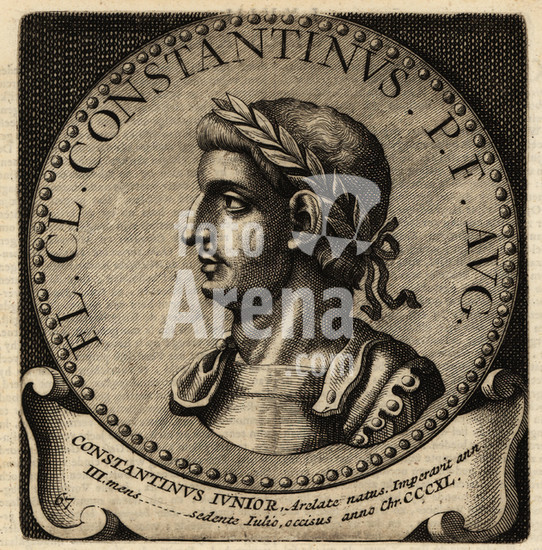
alb4631968 Roman Emperor Constantine II, 316-340. Flavius Claudius Constantinus Augustus or Constantinus Junior. Copperplate engraving from Abraham Bogaerts De Roomsche Monarchy, The Roman Monarchy, Francois Salma, Utrecht, 1697.
DC

Total de Resultados: 8

Página 1 de 1