



















































Busque também em nossas outras coleções:

Data da imagem:
Pauta
Agência
Fotógrafo
ver mais opções...
Estado
Cidade
Local
Tipo de licença
Orientação
Coleção

Total de Resultados: 13

Página 1 de 1

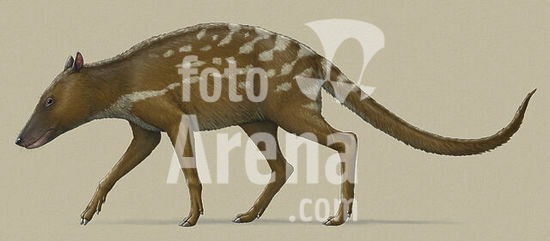
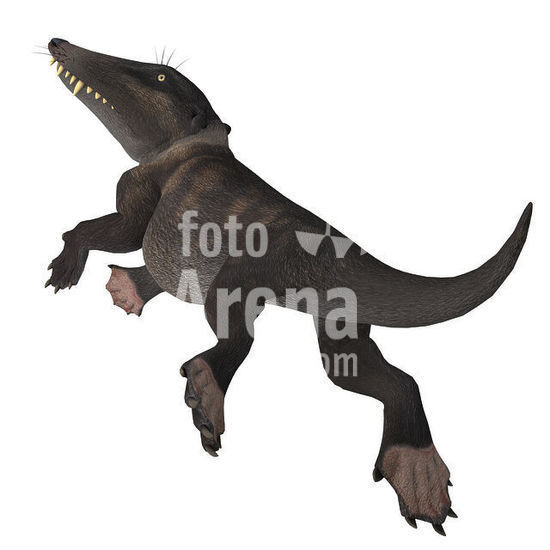
alb5575472 Indohyus prehistoric mammal, side view. Indohyus was a digitigrade artiodactyl that lived during the Eocene in Asia. One of the earliest-known relative of whales.
DC
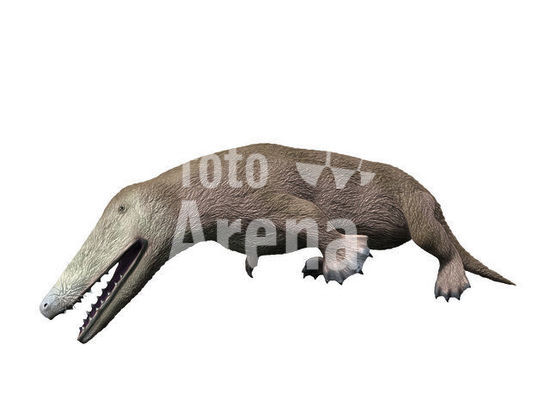
alb5567484 Ambulocetus mammal, white background. Ambulocetus was the primitive otter-like ancestor of the whale and lived in Pakistan and India during the Eocene Period.
DC
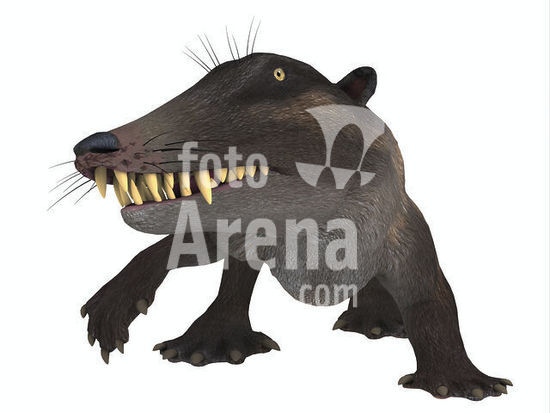
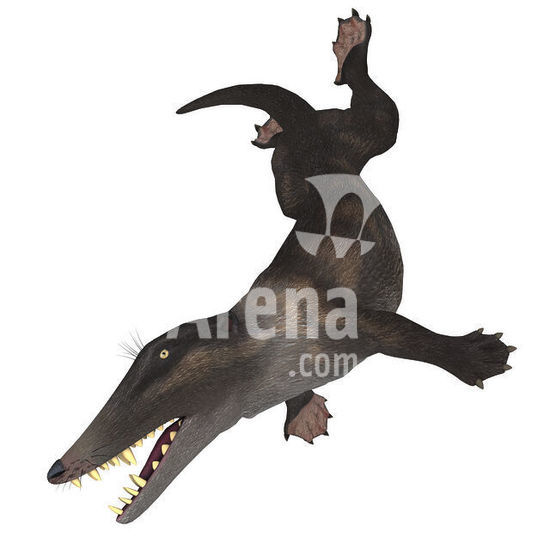
alb5568059 Ambulocetus mammal, front view. Ambulocetus was the primitive otter-like ancestor of the whale and lived in Pakistan and India during the Eocene Period.
DC
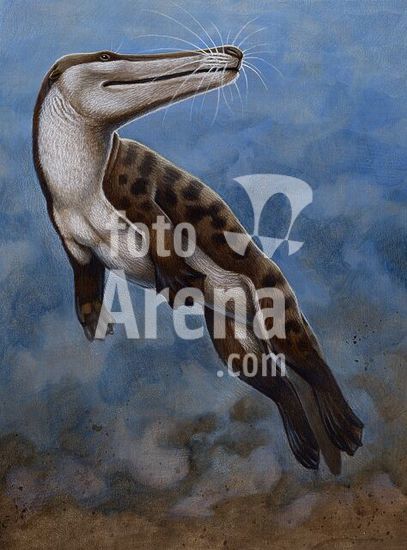
alb5565403 Ambulocetus natans, whale ancestor, Eocene of Pakistan.
DC
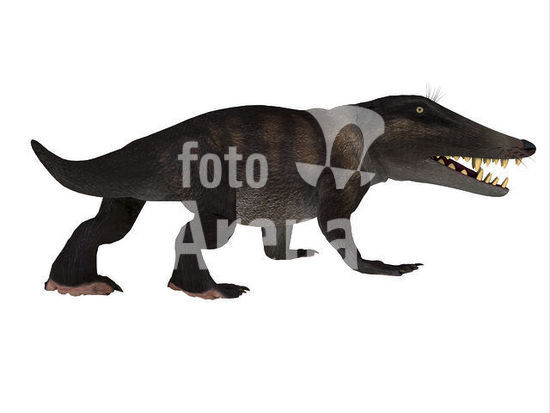
alb5565954 Ambulocetus mammal walking, white background. Ambulocetus was the primitive otter-like ancestor of the whale and lived in Pakistan and India during the Eocene Period.
DC
alb5568393 Ambulocetus natans, whale ancestor, Eocene of Pakistan.
DC
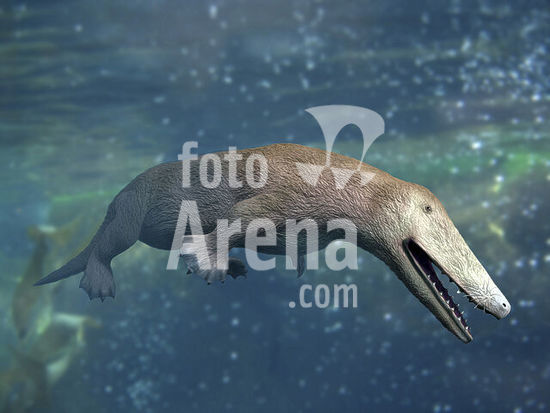
alb5566043 Ambulocetus mammal swimming, white background. Ambulocetus was the primitive otter-like ancestor of the whale and lived in Pakistan and India during the Eocene Period.
DC
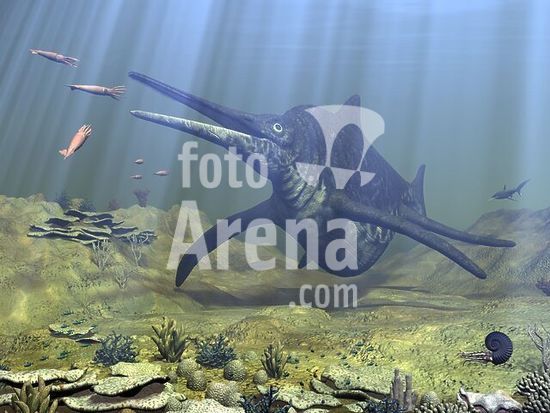
alb3898062 A massive, 30-ton Shonisaurus, the largest known ichthyosaur (marine reptile) attempts to make a meal of a school of squid-like Belemnites. On the far right is a prehistoric shark, and further below is an ancient Ammonite, another squid-like animal with a nautilus-like hard shell.. 230 million years ago Panthalassa, the vast global ocean that surrounded the supercontinent Pangaea, was home to the ichthyosaurs, giant air-breathing reptiles that resembled fish and dolphins. Like modern day dolphins and whales, ichthyosaurs are believed to have evolved from land reptiles that moved back into the water. Ichthyosaurs are notable for having the largest eyes of any land or sea animal. The eye socket of one fossil Shonisaurus skull is over 3 feet in diameter.
DC
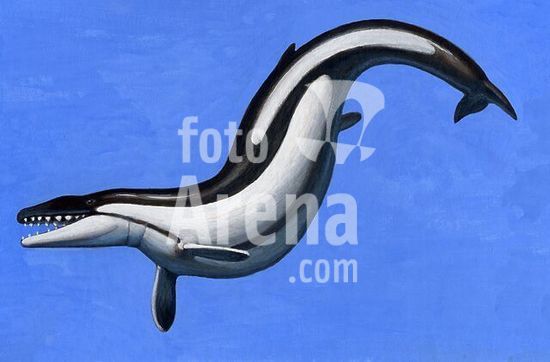
alb3895986 Basilosaurus is a marine mammal that lived in the Late Eocene epoch in the Cenozoic Era. It averaged about 60' in length, and is believed to have been the largest animal to have lived in its time.
DC
alb3888736 Ambulocetus natans, an early cetacean that lived in the Early Eocene epoch during the Cenozoic Era. Ambulocetus is an ancestor of modern day whales. Acrylics and colored pencil.
DC
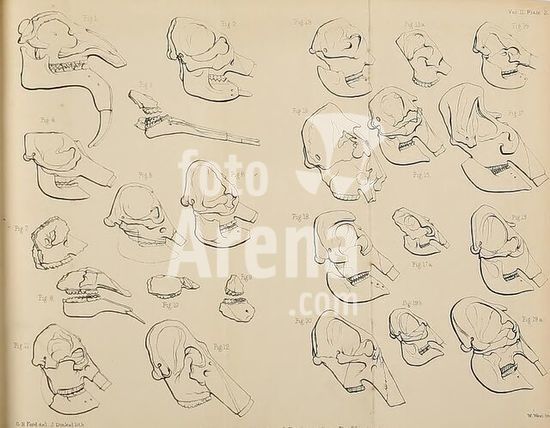
alb15397084 Palaeontological, memoirs, and, notes, of, H. Falconer, with, a, biographical, sketch, of, the, author. London, 1868, A collection of detailed scientific illustrations showcasing various views of skulls and lower jaws from the suborder Protocetidae, a group of ancient whales. The illustrations include profiles, lateral views, and anatomical details that highlight the unique structures and features of each specimen. Each drawing is labeled with a corresponding figure number for reference, contributing to an academic study of evolution and morphology within this prehistoric lineage. This resource serves as an important visual aid for understanding the anatomical adaptations of early cetaceans.
DC
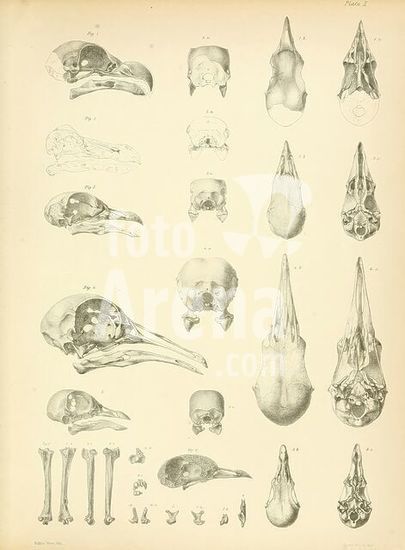
alb15404421 The dodo and its kindred, London, Reeve, Benham, and Reeve, 1848, Indian Ocean, paleontology, dodo, extinct birds, solitaire bird, This illustration showcases a series of detailed anatomical sketches depicting various skulls and skeletal structures of marine mammals. The arrangement includes multiple views of skulls, highlighting distinct features of species such as dolphins and whales. The top row features frontal and lateral views of the skulls, emphasizing the differences in shape and size. The middle section displays various bone structures, illustrating additional skeletal details. The bottom row consists of more skeletal components, allowing for a comprehensive comparison of anatomical features across different marine species. Each segment is meticulously labeled, indicating the specific parts and types of bones, contributing to the understanding of marine mammal anatomy and evolution.
DC
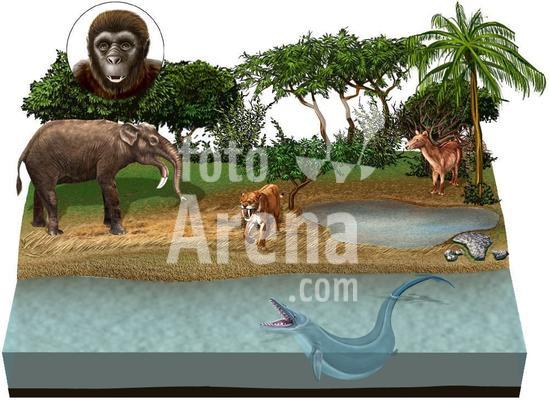
1016_03_46263 Period marked by the diversification and dominance of mammals (appearance of horses, whales and others). First primates also appeared.
DC

Total de Resultados: 13

Página 1 de 1