Busque também em nossas outras coleções:

Data da imagem:
Pauta
ver mais opções...
Agência
Fotógrafo
ver mais opções...
Estado
Cidade
ver mais opções...
Local
ver mais opções...
Tipo de licença
Orientação
Coleção
ver mais opções...

Total de Resultados: 274

Página 1 de 3

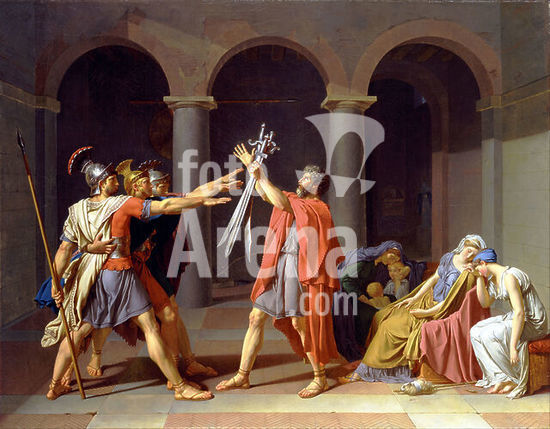
alb3901132 Copy of the Oath of the Horatii - made by Girodet. Date/Period: 1786 (original by David made in 1784). Painting. Oil on canvas. 130,2 x 166,2 cm. Author: JACQUES LOUIS DAVID. Anne-Louis Girodet de Roussy-Trioson.
DC
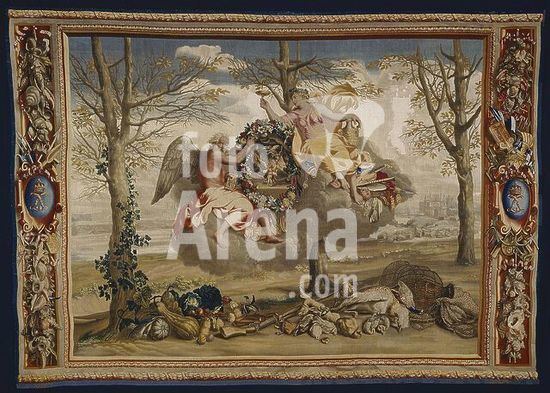
alb4137065 Winter, from The Seasons. After a design by Charles Le Brun (French, 1619-1690); Woven at the workshop of Étienne Le Blond (French, 1652-1727) and Jean de La Croix (French, 1628-1712) at the Manufacture Royale des Gobelins; France, Paris. Date: 1700-1720. Dimensions: 540.07 x 384.81 cm (212 5/8 x 151 1/2 in.). Wool and silk, slit and double interlocking tapestry weave. Origin: Paris. Museum: The Chicago Art Institute, USA. Author: Charles Le Brun.
DC
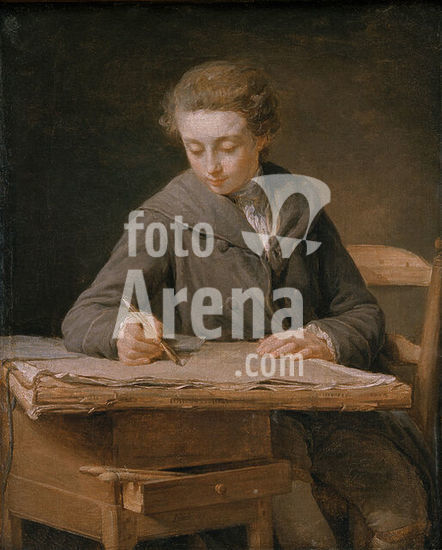
akg255582 Vernet, Carle; French painter; Bordeaux. 14.8.1758 - Paris 21.11.1836. "Le petit dessinateur" or "Le peintre Carle Vernet à l'âge de 14 ans" (The young draughtsman or The Painter Carle Vernet aged 14). Painting, 1772, by Nicolas-Bernard Lépicié (1735-1784). Oil on canvas, 41 × 33cm. R.F. 671 bis. Paris, Musée du Louvre. Museum: Paris, Musée Du Louvre.
DC
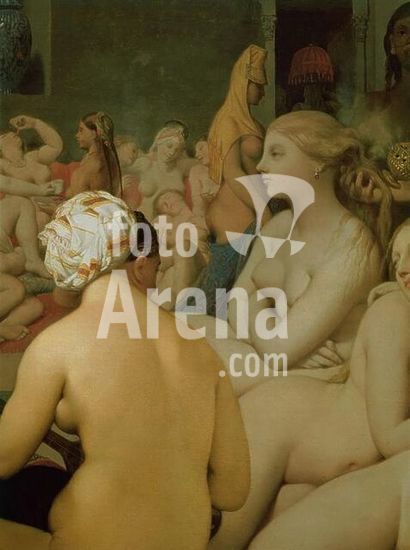
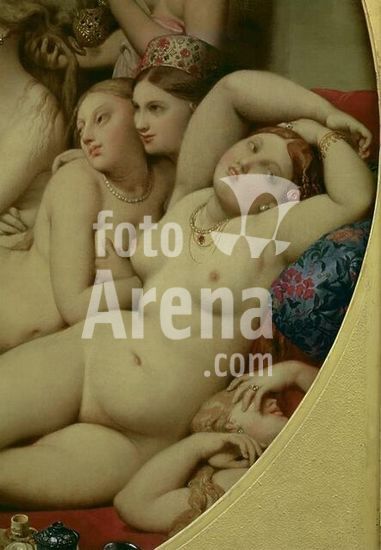
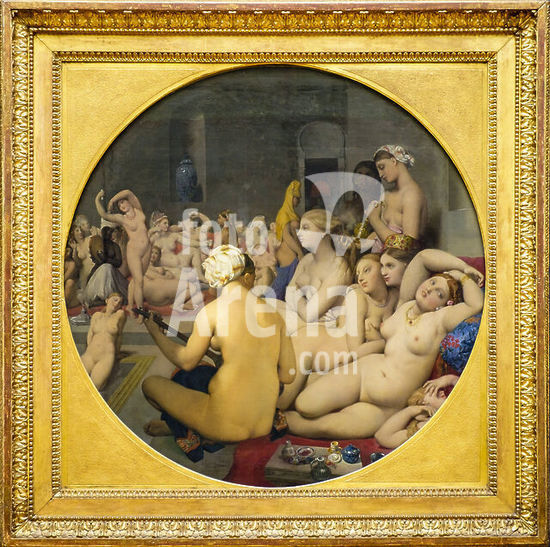
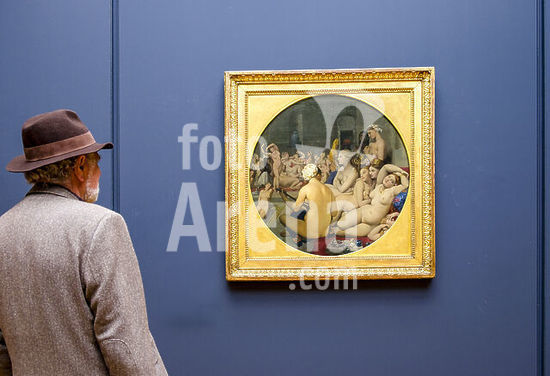
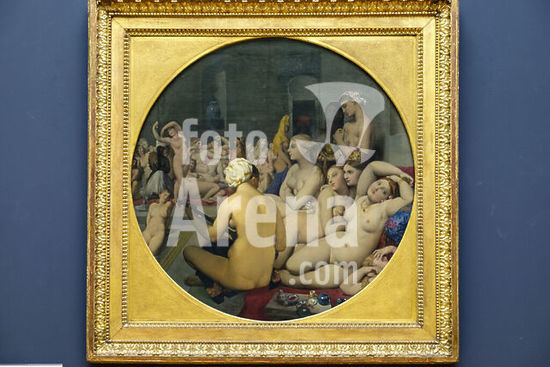
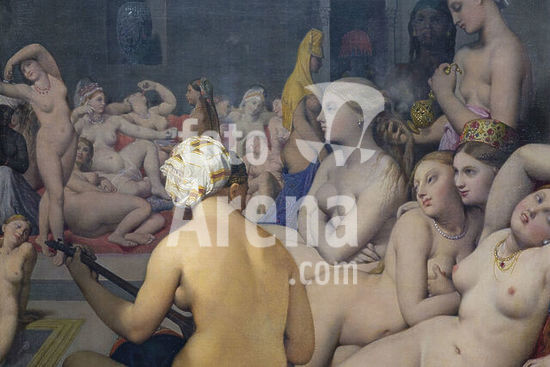
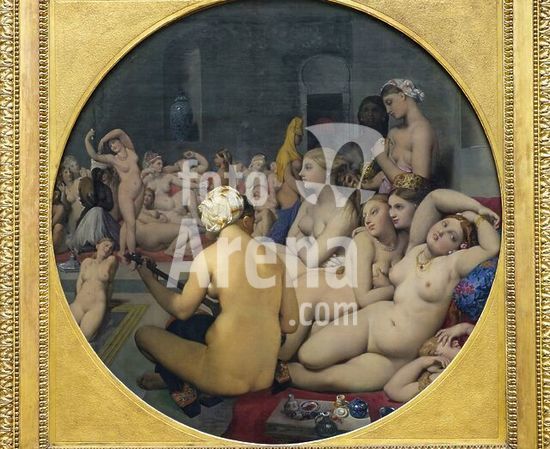
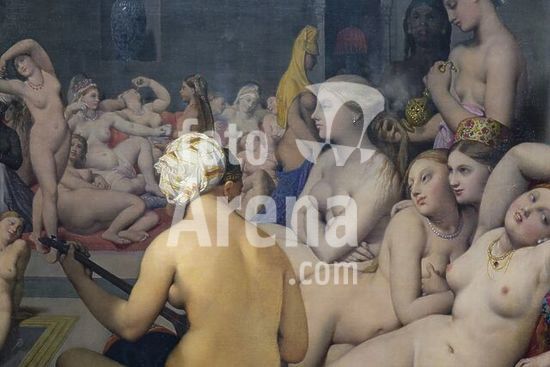
akg619834 Ingres, Jean-Auguste-Dominique. 1780-1867. "Le Bain turc" (Turkish Bath), 1862. Detail. Oil on canvas, 110 × 110 cm, Diameter: 108 cm. R.F. 1934. Museum: Paris, Musée Du Louvre.
DC
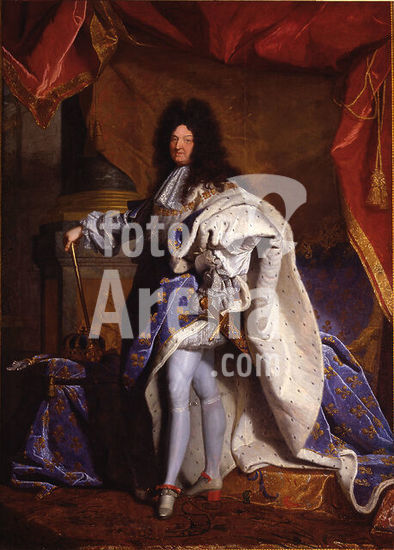
alb3900818 Louis XIV, roi de France (1638-1715) / Louis XIV, King of France (1638-1715). Date/Period: 1702. Painting. Oil on canvas. Height: 313 cm (10.2 ft); Width: 205 cm (80.7 in). Author: Hyacinthe Rigaud.
DC
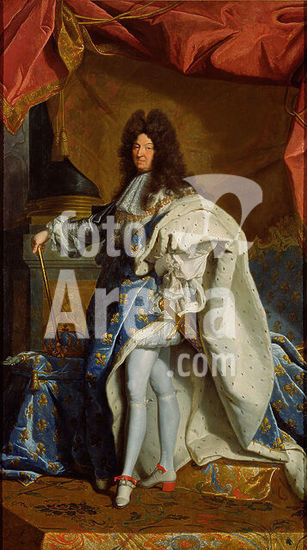
alb3907566 Portrait of Louis XIV. Date/Period: 18th century. Painting. Oil on canvas. Height: 2,896 mm (114.01 in); Width: 1,591 mm (62.63 in). Author: after Hyacinthe Rigaud.
DC
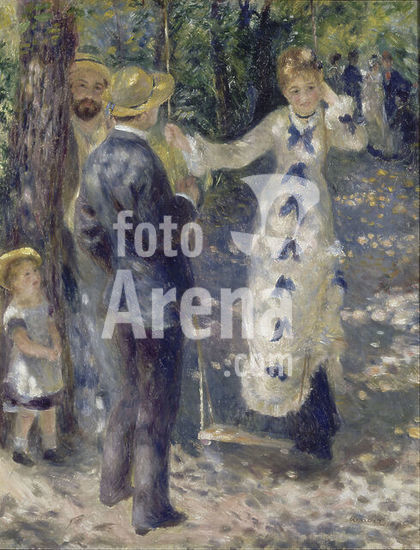
alb3905282 La Balançoire The Swing. Date/Period: 1876. Painting. Oil on canvas. Height: 920 mm (36.22 in); Width: 730 mm (28.74 in). Author: Pierre-Auguste Renoir.
DC
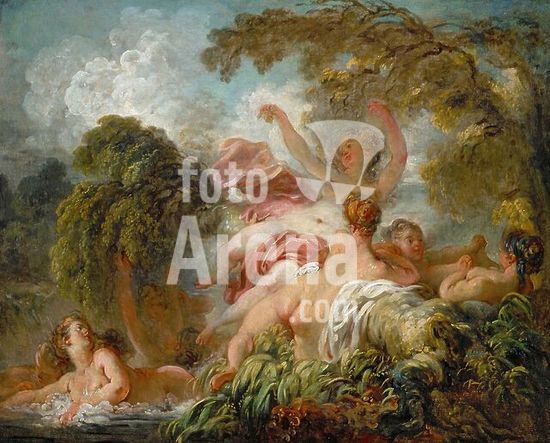
alb2012807 Jean-Honoré Fragonard / 'The Bathers', c. 1765, Oil on canvas, 80 x 64 cm. Museum: MUSEE DU LOUVRE, BUDAPEST, France.
DC
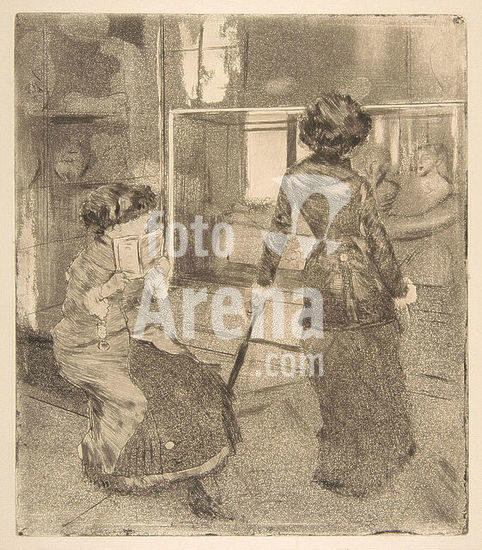
alb3613219 Mary Cassatt at the Louvre: The Etruscan Gallery. Artist: Edgar Degas (French, Paris 1834-1917 Paris). Dimensions: Plate: 10 9/16 x 9 1/8 in. (26.8 x 23.2 cm)Sheet: 17 x 12 in. (43.2 x 30.5 cm). Sitter: Portrait of Mary Cassatt (American, Pittsburgh, Pennsylvania 1844-1926 Le Mesnil-Théribus, Oise) and her sister, Lydia. Date: 1879-80.Among the most technically complex of Degas' prints, this view of Mary Cassatt and her sister in the galleries of the Musée du Louvre was intended, like Pissarro's Wooded Landscape at L'Hermitage, Pontoise (21.46.1), to appear in the first issue of the prospective journal Le Jour et la Nuit, on which the two artists collaborated with Cassatt and Félix Bracquemond. The group was intent on achieving new tonal effects in their prints by innovatively working up the surfaces of etching plates, perhaps spurred by achievements in Impressionist paintings or by advances in photography. Museum: Metropolitan Museum of Art, New York, USA.
DC
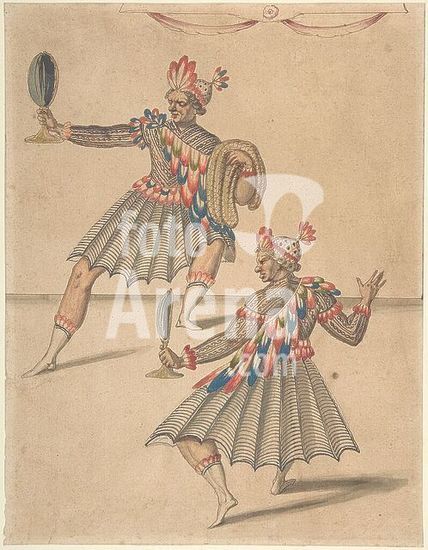
alb3627544 Drawing of Two 'Americans' for Ballet de la Douairière de Billebahaut. Artist: Daniel Rabel (French, Paris 1578-1637 Paris). Dimensions: 8 15/16 x 6 7/8 in. (22.7 x 17.5 cm). Date: 1626.Drawing featuring two theatrical figures in costumes with feather decorations for 'Le Grand Bal de la Douairière de Billebahaut' (The Grand Ball of the Dowager of Billebahaut), a popular ballet burlesque written by René Bordier in 1626. With the young Louis XIII as the star performer, the ballet was performed at the Louvre and the Hôtel de Ville in February of 1626. Featuring an elaborate procession of foreigners arriving from the four parts of the world, the performance lasted over three hours. First arrives 'America,' and the party is lead by King Atabalipa and his musicians. King Atabalipa, ruler of Cuzco, was the fictional leader of Peru, which emphasizes the lack of discernment between North and South America in French lyric literature. The 'Americans' are denoted by feathered headdresses and costumes: in this drawing they wear long-sleeved tonnelets with pleated, scallop-edged skirts, decorated with feather bands and belts, over mid-calf brown breeches bordered with colored feathers. Their feet are bare, and their doublets are skin-colored and with geometric motifs in black, likely simulating the body painting often worn by Native Americans. They wear colorful headpieces, also made up of feathers, and hold large mirrors (?) in their hands. They are represented in movement, possibly performing some kind of dance or in action during some battle. Museum: Metropolitan Museum of Art, New York, USA.
DC
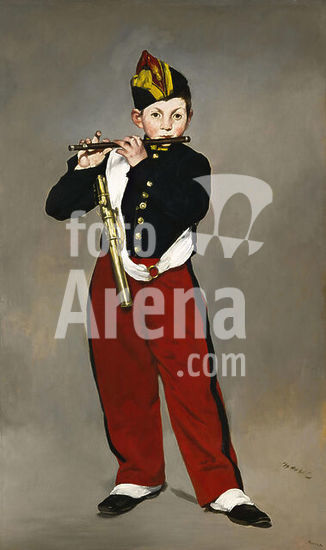
alb2015916 Édouard Manet / 'The Fife Player', 1866, Oil on canvas, 160 × 97 cm. Museum: MUSEE D'ORSAY, BUDAPEST, France.
DC
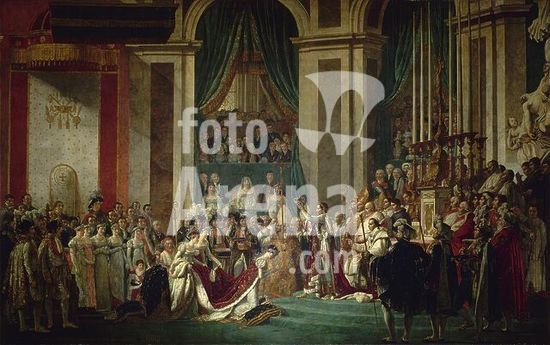
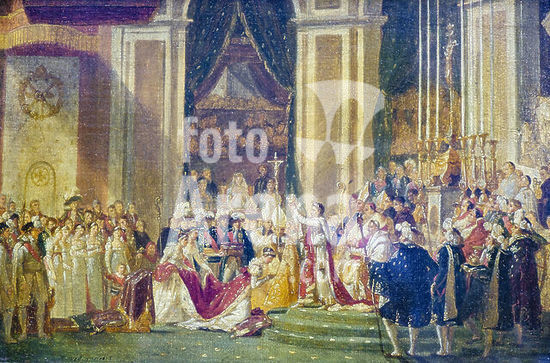
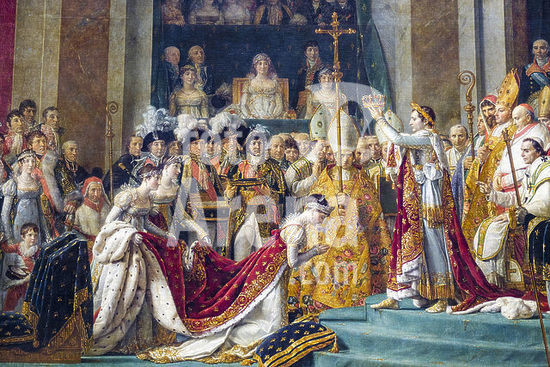
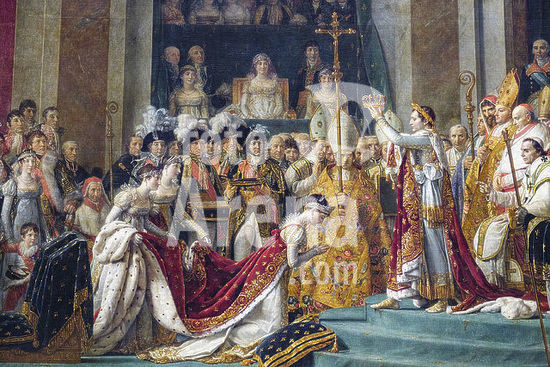
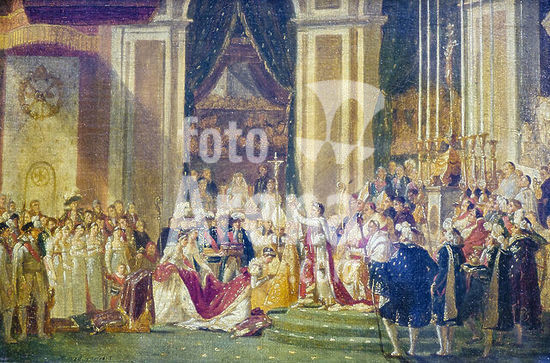
alb3901127 Sacre de l'empereur Napoléon Ier et couronnement de l'impératrice Joséphine dans la cathédrale Notre-Dame de Paris, le 2 décembre 1804 / Coronation of Emperor Napoleon I and Coronation of the Empress Josephine in Notre-Dame de Paris, December 2, 1804. Date/Period: Between 1808 and 1822. Painting. Oil on canvas. Height: 610 cm (20 ft); Width: 931 cm (10.1 yd). Author: JACQUES LOUIS DAVID. GEORGES ROUGET.
DC
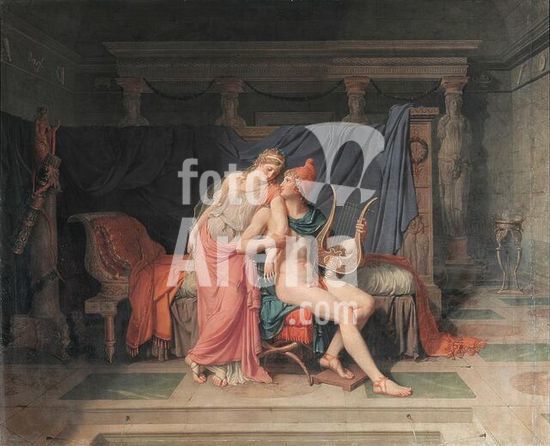
akg809971 David, Jacques Louis. 1748-1825. "Les Amours de Paris et d'Helene" (the love of Paris and Helena), 1788. Oil on canvas, 146 × 181cm. Inv. 3696. Paris, Musée du Louvre. Museum: Paris, Musée Du Louvre.
DC
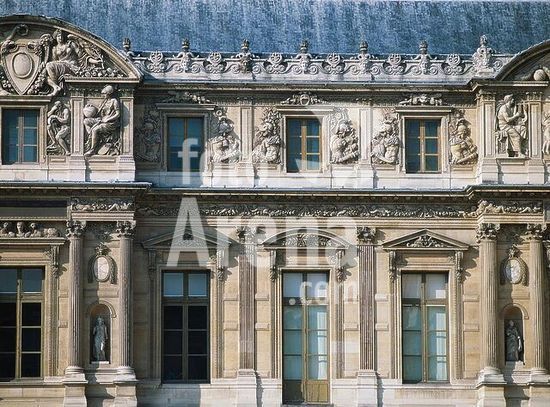
akg1080036 Paris (France), 1st arron., Louvre (royal palace, built 1546-1868, museum since 1793. Cour Carrée, northern west wing / Aile Lemercier (built c. 1630; architect : Jacques Lemercier; Attic sculptures, 1806).-Attic & middle gable: allegorie s of peace, river gods by Philippe Rolan d, 1806; side gable: Homer (sculpture, 1806, by Antoine Chaudet.-Photo, 2009.
DC
alb2002402 Eugène Delacroix / 'Liberty Leading the People', 1830, Oil on canvas, 260 x 325 cm. Museum: MUSEE DU LOUVRE, BUDAPEST, France.
DC
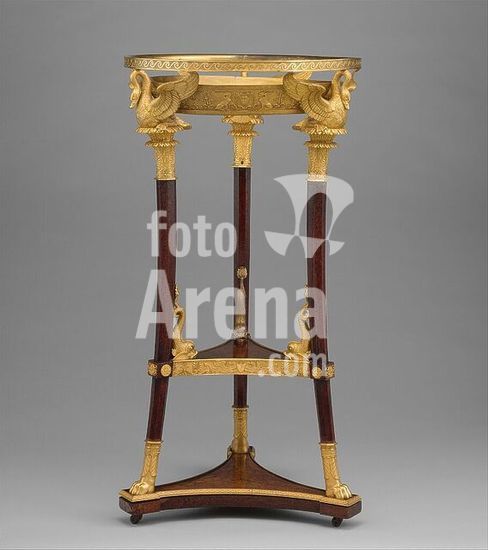
alb3613939 Washstand (athénienne or lavabo). Culture: French, Paris. Designer: Design attributed to Charles Percier (French, Paris 1764-1838 Paris). Dimensions: Height: 36 3/8 in. (92.4 cm); Diameter: 19 1/2 in. (49.5 cm). Maker: Gilt bronze mounts by Martin-Guillaume Biennais (French, 1764-1843, active ca. 1796-1819). Date: 1800-1814.The form of this elegant washstand ultimately derives from the ancient Greco-Roman three-legged perfume burner or brazier, of which the designer Charles Percier had made some study. The decoration reflects his familiarity with the wall decorations in the emperor Nero's Golden House and their adaptation in Raphael's Logge in the Vatican. A reappreciation during the Renaissance of the tripod as a luxury item of the utmost refinement is documented as early as 1499 by an example illustrated in Francesco Colonna's Hypnerotomachia Poliphili, published in Venice that year.[1] A further not-to-be-underestimated influence on Percier was Neoclassical paintings illustrating ancient Greek mythology, such as The Loves of Paris and Helen, commissioned from Jacques-Louis David (1748-1825) by the comte d'Artois in 1788.[2] The designer was also familiar with the richly illustrated seven-volume Recueil d'antiquités (1752-67) by the comte de Caylus (1692-1765),[3] and the Recueil et parallèle des édi fices by Jean-Nicolas-Louis Durand (1760-1834), published between 1799 and 1801 in Paris, in which plate 25 was devoted to tripod forms, among other types of Roman objects.[4]The shape of the base and of the shelf--triangular with canted sides--can be traced back to a famous antique Roman tripod named after the French antiquarian Nicolas-Claude Fabri de Peirese (1580-1637).[5] Percier was probably also acquainted with the athénienne designed about 1773 by Jean-Henri Eberts (acc. no. 1993.355.1), which has the same type of base.The long-accepted attribution of the design of this athénienne to Charles Percier, the imaginative friend of Pierre-François-Léonard Fontaine (1762-1853), who in partnership with Fontaine dominated interior design in France during the Empire period, is based on its close similarity to a large colored drawing ascribed to Percier now in the Musée des Arts Décoratifs in Paris.[6] The maker of the Museum's piece, Martin-Guillaume Biennais, was perhaps the most accomplished goldsmith and entrepreneur of his time in France (see also acc. no. 26.168.77). He owed his economic success to the dissolution of the mighty Parisian guilds, the grandes corporations, which had controlled the activity of all craftsmen and artisans during the ancien régime. Like other skillful young goldsmiths he found himself free after the Revolution to explore business opportunities without corporate obstacles and turned his back on the outdated privileges and jealousies of the habitually conservative former guild masters. One of seven children, Biennais was born into a simple laboring family in 1764. Four decades later, he headed the most important goldsmith's and jeweler's firm in continental Europe. His inventive traveling sets and ostentatious tableware found favor not only with the emperor and his entourage but also with the swarm of nouveaux riches and self-made men who flourished in prosperous post-Revolutionary France.[7] Biennais's products were smartly promoted on his business card of 1806. It shows at the left in an architectural niche a fashionable tripod, most likely a perfume burner or brazier, crowned by a swan with spread wings.[8]There is an iron plate on the underside of the triangular shelf between the legs of the Museum's example. This served as an attachment for a lost, hanging bell-shaped ornament decorated with a stylized acanthus-and-acorn motif. How the bell hung down over the stand can be seen in another version of this model in Fontainebleau.[9] The unusually formed, bold ormolu mount would have shifted the eye slightly toward the gilt-metal parts below, creating a better balance between the warm-colored wood and gilded bronze mounts and the sparkling, moonlight-cold look of the silver basin and ewer (both missing from the Museum's piece). Several simpler washstands are recorded in inventories of Napoleon's palaces.[10]Percier's athénienne is known in three versions: the above-mentioned example at Fontainebleau, which has a probably not original dark, patinated metal basin (the ewer is lost); the present piece; and the famous personal washstand of Napoleon, today at the Musée du Louvre, Paris.[11] Napoleon kept it in his bedroom at the Palais des Tuileries, where he settled early in 1800, the year in which he commissioned the stand. It was one of the few personal luxury items that accompanied the emperor into exile at Saint Helena.Like Napoleon's washstand, this example is decorated with masterfully executed dolphins and swans, both graceful allusions to Napoleon as the rightful successor of the Sun King, Louis XIV. The firstborn son of each French ruler was called the "Dauphin," a word that also means dolphin. That jolly sea-dweller and also the winged sea creatures on the frieze around the triangular shelf suggest the Mediterranean, which forms the southern border of France and surrounds the island of Corsica, the birthplace of Napoleon.[12] The swan, which was believed to utter a beautiful song at the time of its death, was associated with Apollo, god of music, with whom Louis XIV identified himself. The swan is also a symbol of beauty and of parental solicitude. At the approach of danger, with feathers puffed up and anxiously hissing, these birds protect their young within the wall of their white wings. Napoleon's consort, Josephine, and her children were frequently compared to a swan and its cygnets.[13] The swan was chosen as her symbol by Claude, wife of Francis I, the French Renaissance king whom Napoleon greatly admired.The Museum's athénienne was certainly made for a close friend or relative of the emperor. It is a superior example of the new Empire style, through which Napoleon, with the aid of leading artisans, tried to emulate the lavish decors of the ancien régime, modified by the classical restraint and formality of the art of the caesars of ancient Rome. Empire furniture of such superbly calculated plan and proportions may express better than anything else the confidence, fresh ideas, and energy of the age.[Wolfram Koeppe 2006]Footnotes:[1] Peter Thornton. The Italian Renaissance Interior, 1400-1600. New York, 1991, p. 212, pl. 240.[2] Jacques-Louis David, 1748-1825. Exh. cat., Musée du Louvre, Paris, and Musée National du Château, Versailles. Paris, 1989, pp. 184-88, no. 79; and Anne Dion-Tenenbaum. L'orfèvre de Napoléon: Martin-Guillaume Biennais. Exh. cat., Musée du Louvre. Les dossiers due Musée du Louvre. Paris, 2003, p. 20, fig. 9.[3] Claudio Paolini, Alessandra Ponte, and Ornella Selvafolta. Il bello "ritrovato": Gusto, ambienti, mobili dell'Ottocento. Novara, 1990, p. 30.[4] John Morley. The History of Furniture: Twenty-five Centuries of Style and Design in the Western Tradition. Boston, 1999, p. 17, fig. 10 (dated 1802); and D'après l'antique. Exh. cat., Musée du Louvre. Paris, 2000, p. 345, no. 159 (entry by Anne Dion-Tenenbaum).[5] For the Peirese tripod, see John Morley. The History of Furniture: Twenty-five Centuries of Style and Design in the Western Tradition. Boston, 1999, p. 25, fig. 27.[6] Anne Dion-Tenenbaum. L'orfèvre de Napoléon: Martin-Guillaume Biennais. Exh. cat., Musée du Louvre. Les dossiers due Musée du Louvre. Paris, 2003, pp. 19-20, no. 2; in this excellent study Dion-Tenenbaum discusses the evolution of the tripod form in great detail.[7] Ibid., pp. 11-17.[8] Ibid., p. 14, fig. 3.[9] The third known version of this model, in the Musée du Louvre, Paris, has an identical iron plate, but the pendent bell ornament has been lost. On this washstand, see below at n. 11. For the second version, at Fontainebleau, see Anne Dion-Tenenbaum. L'orfèvre de Napoléon: Martin-Guillaume Biennais. Exh. cat., Musée du Louvre. Les dossiers due Musée du Louvre. Paris, 2003, pp. 23-24, no. 4.[10] For example, "une athénienne dorée beau bois d'acajou, pot et jatte dorés" (a gilded athénienne of mahogany, the ewer and bowl gilded) and another with gilded ewer and bowl decorated with palmettes; Archives Nationales, Paris, O2 55.[11] For Napoleon's washstand, see R., G., and C. Ledoux-Lebard. "L'inventaire des appartements de l'empereur Napoléon Ier aux Tuileries." Bulletin de la Société de l'Histoire de l'Art Français, 1952 (pub. 1953), p. 200, no. 872; D'après l'antique. Exh. cat., Musée du Louvre. Paris, 2000, pp. 346-47, no. 160 (entry by Anne Dion-Tenenbaum); Anne Dion-Tenenbaum. L'orfèvre de Napoléon: Martin-Guillaume Biennais. Exh. cat., Musée du Louvre. Les dossiers due Musée du Louvre. Paris, 2003, pp. 21-22, no. 3; Gail Feigenbaum. Jefferson's America and Napoleon's France: An Exhibition for the Louisiana Purchase Bicentennial. Exh. cat., New Orleans Museum of Art. New Orleans, 2003, p. 71, no. 47 (entry by David O'Brien); and Elke Pastré. "Der Goldschmied Napoleons." Weltkunst 73 (December 2003), p. 2109, fig. 4.[12] A Greek mosaic found on the island of Delos is decorated with dolphins and the same wavelike Vitruvian scroll ornament that encircles the upper ring of the basin holder of the Museum's washstand. For the mosaic, see Pierre Arizzoli-Clémental. "Néoclassicisme." In L'art décoratif en Europe, ed. Alain Gruber, vol. 3, Du Néoclassicisme à l'Art Déco, pp. 21-127. Paris, 1994, p. 62.[13] James David Draper, with Clare Le Corbeiller. The Arts under Napoleon: An Exhibition of the Department of European Sculpture and Decorative Arts, with Loans from the Audrey B. Love Foundation and Other New York Collections. Exh. cat., The Metropolitan Museum of Art. New York, 1978, p. [4]. On the symbolism of swans, see James Hall. Dictionary of Subjects and Symbols in Art. Rev. ed. New York, 1979, p. 294. Museum: Metropolitan Museum of Art, New York, USA.
DC
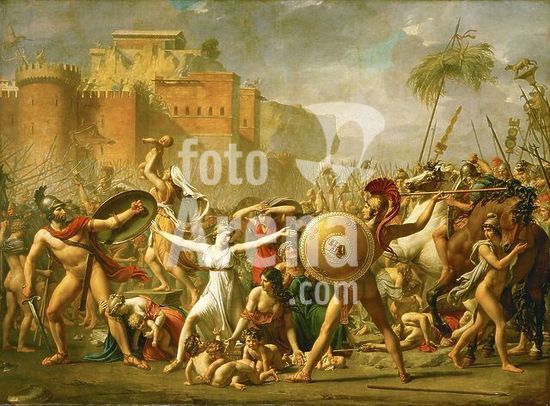
alb2002341 Jacques-Louis David, 'The Intervention of the Sabine Women', 1799, Oil on canvas, 385 × 522 cm, Inv. 3691. Museum: MUSEE DU LOUVRE, BUDAPEST, France. ROMULUS. HERSILIE. TITO TACIO.
DC
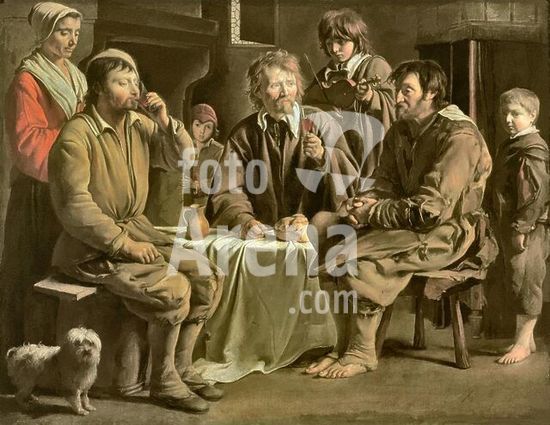
akg974075 Le Nain, Brothers (probably Louis, c.1593-1648). "Repas de paysans" (A Rustic Meal), 1642. Oil on canvas, 97 x 122 cm. MI 1088. Museum: Musée du Louvre., Paris.
DC
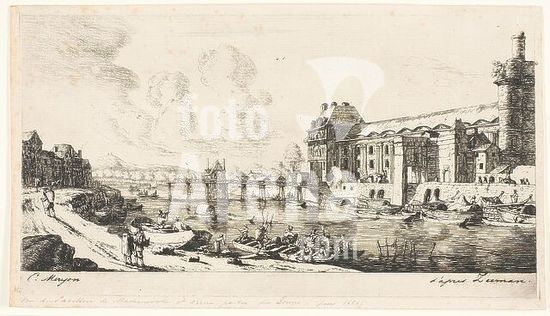
alb4147190 The 'Pavillon de Mademoiselle' and Part of the Louvre. Charles Meryon (French, 1821-1868); after Reinier Nooms (Dutch, c. 1623-c. 1668). Date: 1849. Dimensions: 133 × 244 mm (image); 138 × 246.5 mm (plate); 143 × 252 mm (sheet). Etching, drypoint and roulette on cream laid paper. Origin: France. Museum: The Chicago Art Institute, USA.
DC
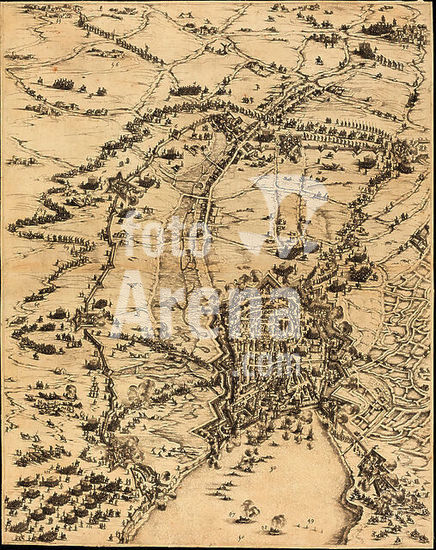
alb3720326 The Siege of La Rochelle [plate 6 of 16; set comprises 1952.8.97-112]. Dated: 1628/1631. Medium: etching and engraving. Museum: National Gallery of Art, Washington DC. Author: JACQUES CALLOT.
DC
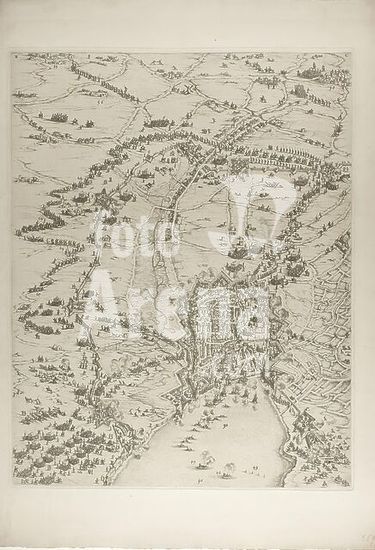
alb4141838 Plate Two from La Siège de la Rochelle. Jacques Callot (French, 1592-1635); printed by Chalcographie du Louvre, Paris. Date: 1631. Dimensions: 567 × 443 mm (image); 576 × 449 mm (plate); 715 × 512 mm (sheet). Etching on paper. Origin: France. Museum: The Chicago Art Institute, USA.
DC
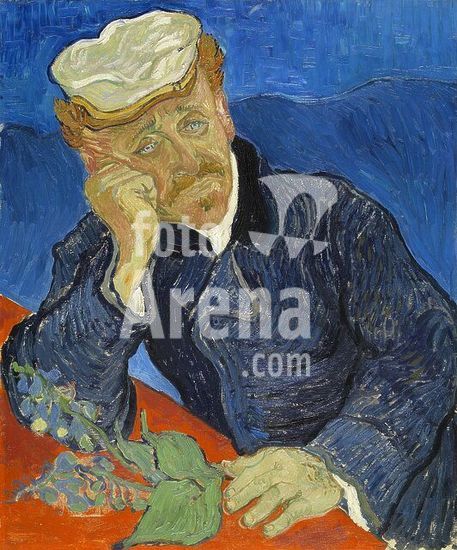
alb3899514 Le docteur Paul Gachet Dr Paul Gachet. Date/Period: 1890. Painting. Oil on canvas. Height: 680 mm (26.77 in); Width: 570 mm (22.44 in). Author: VINCENT VAN GOGH.
DC
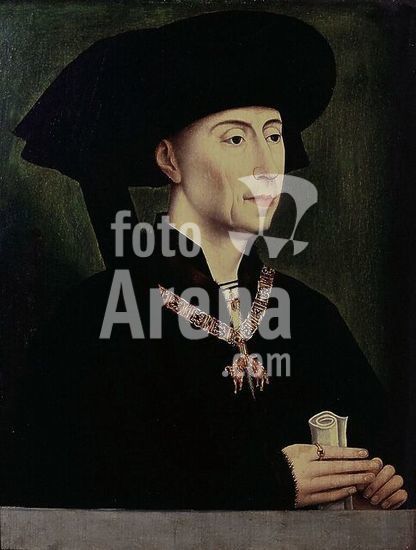
orz189830 'Portrait of Philip the Good', c. 1450, Oil on panel, 29,6 x 21,3 cm. Author: ROGIER VAN DER WEYDEN (1399-1464) ROGIER DE LA PAS. Location: LOUVRE MUSEUM-PAINTINGS. France. Duke of Burgundy Philip II. Duke of Burgundy Philippe le Bon. BORGOÑA DUQUE DE. FELIPE III EL BUENO BORGOÑA.
DC
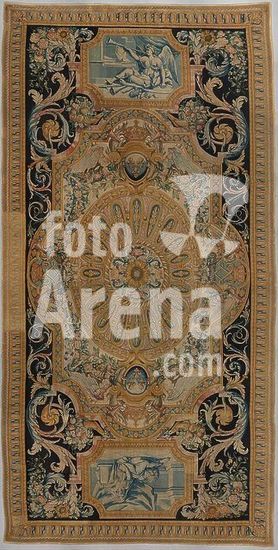
alb3615814 Carpet with Fame and Fortitude. Culture: French, Paris. Designer: after designs by Charles Le Brun (French, Paris 1619-1690 Paris); after designs by Louis Le Vau (French, 1612-1670). Dimensions: Overall: 358 x 181 in. (909.3 x 459.7 cm) [confirmed 5/19/2006]. Manufactory: Savonnerie Manufactory (Manufactory, established 1626; Manufacture Royale, established 1663). Date: 1668-85.In his A New Description of Paris, of 1687, Germain Brice (1652-1727) mentioned work in progress on "a great Footcloath in the manner of Turky-work, . in a place built on purpose at the end of the Cours de la Reine, commonly called the Savonnerie, which is to be the full length of the great Gallery of the Louvre, but is not yet finisht." Brice referred here to a set of ninety-three carpets, of different but related designs, that was being created for the Grande Galerie of the Palais du Louvre in Paris. The Savonnerie manufactory, which received a monopoly from Louis XIII in 1627 to make knotted-pile rugs in the manner of the Levant, experienced its most creative period under Louis XIV, when the workshops were placed under the direction of the king's First Painter, Charles Le Brun. The project to cover with carpets the entire floor of the long gallery at the Louvre, measuring more than 480 yards in length, was the most ambitious commission the Savonnerie ever received. The work space was expanded and extra-wide looms were created to accommodate this monumental task. Contrary to tradition, the size of the looms was based on the length of the carpets (which in turn was determined by the width of the long gallery ). The individual designs of the series most likely reflected in some degree the decoration of the ceiling and walls of the gallery.Set against a black ground with scrolling acanthus leaves in the corners, the main motifs of the Museum's splendid carpet, number thirty-eight of the series, are full of references to the monarchy. The sunflower, symbol of the Sun King, is flanked by the French royal arms and by Louis XIV's crowned monogram of interlaced Ls.A number of the carpets for the Grande Galerie have compartments at either narrow end showing simulated bas-reliefs in grisaille representing different aspects and virtues of good government. Here the personifications of fame, blowing a trumpet, and fortitude, with a lion and a column, are depicted. Although all the carpets of the original commission but one were woven between 1670 and 1689, Louis XIV appears to have lost interest in the interior decoration of the Louvre, and thus in this monumental project, when he focused his attention on Versailles instead, moving his court there in 1682. When Horace Walpole visited the Louvre in August 1771 the palace was in a derelict state. "Saw the great gallery of Le Brun with battles of Alexander, all the ornaments, ceiling, shutters and even locks and bolts designed by Le Brun, but so abominably neglected that it rains in." Perhaps it was not such a bad thing after all that the series of Savonnerie carpets appears never to have been laid out in the Grande Galerie as originally intended. Museum: Metropolitan Museum of Art, New York, USA.
DC

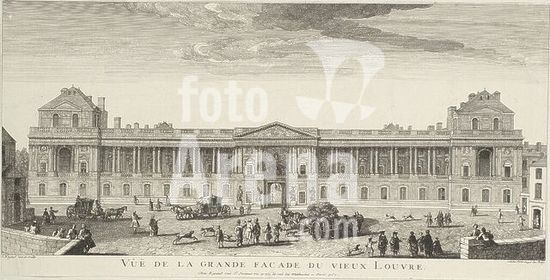
alb3654380 Vue de la Grande Façade du Vieux Louvre. Artist: Jacques Rigaud (French, Marseilles 1681-1754 Paris). Dimensions: sheet: 9 3/16 x 18 3/16 in. (23.4 x 46.2 cm). Date: originally published 1729, inscribed 1752.In a striking horizontal print, one of a series of twenty-one views of Paris, Jacques Rigaud has depicted the long east facade of the Louvre, still a royal palace in the eighteenth century. Designed in the late 1660s by a team including Louis Le Vau, Charles Le Brun, and Claude Perrault, the facade demonstrates the majesty and authority of French Baroque architecture, which is notable for its classical grandeur, restrained ornament, and balanced proportions. As depicted by Rigaud, it is a monument inviting both admiration and admission: near the center foreground, a gentleman gestures as though explaining the building to his companion, and in the center of the facade, the illuminated entrance frames figures strolling in the courtyard beyond. Museum: Metropolitan Museum of Art, New York, USA.
DC
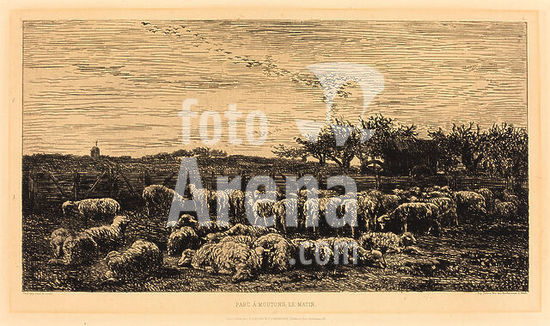
alb3710443 Large Sheepfold (Le Grand parc a moutons). Dated: 1860. Medium: etching. Museum: National Gallery of Art, Washington DC. Author: Charles-Francois Daubigny.
DC
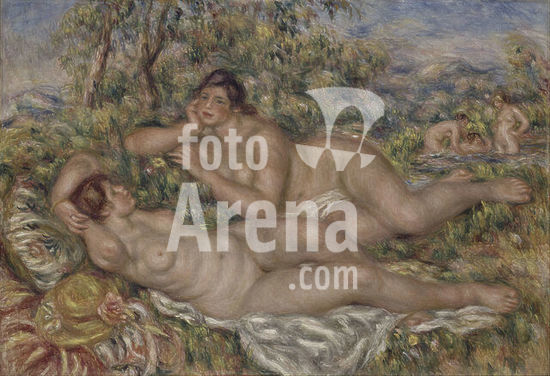
alb3905292 Les Baigneuses The Bathers. Date/Period: 1918 - 1919. Painting. Oil on canvas. Height: 1,100 mm (43.30 in); Width: 1,600 mm (62.99 in). Author: Pierre-Auguste Renoir.
DC
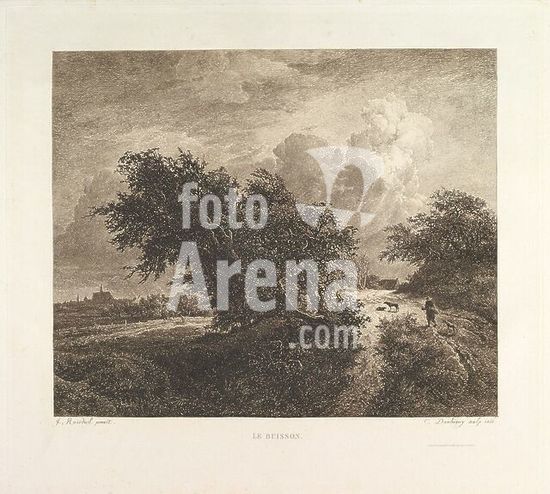
alb3616191 Le Buisson. Artist: After Jacob van Ruisdael (Dutch, Haarlem 1628/29-1682 Amsterdam); Etched by Charles-François Daubigny (French, Paris 1817-1878 Paris). Dimensions: plate: 17 5/16 x 19 3/16 in. (43.9 x 48.8 cm). Series/Portfolio: Chalcographie du Louvre, vol. IV. Date: 1855. Museum: Metropolitan Museum of Art, New York, USA. Author: After Jacob van Ruisdael. Etched by Charles-François Daubigny.
DC
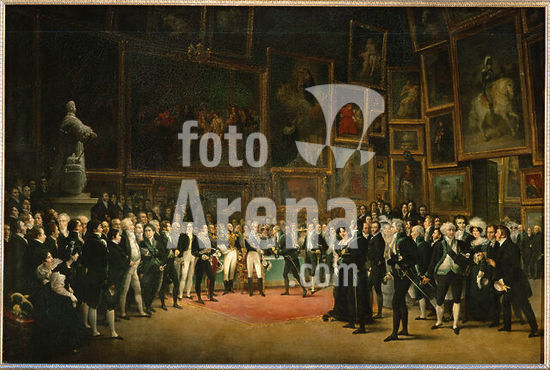
les40110730 At the close of the Salon of 1824, King Charles X distributes prizes to the artists. Among those present: composers Boieldieu, Rossini and Cherubini; painters J. B. Isabey, E. Isabey, A. Couder, L. L. Boilly, Ingres, Heim, Mme. Vigee-Le Brun. Canvas, 173 x 156 cm Inv. 5313 Painted 1827. Author: FRANCOIS-JOSEPH HEIM. Location: Louvre, Dpt. des Peintures, Paris, France.
DC
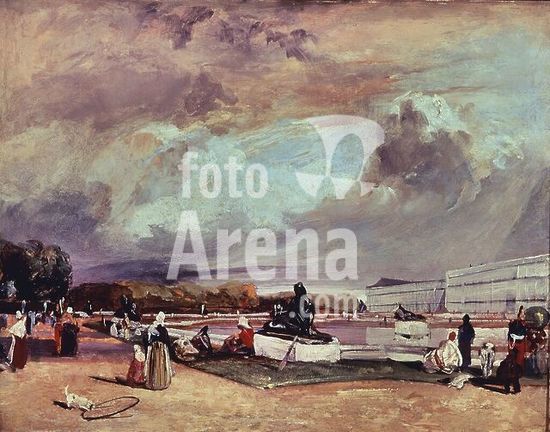
orz116255 LE PARTERRE D EAU A VERSAILLES - SIGLO XIX - ROMANTICISMO INGLES. Author: RICHARD PARKES BONINGTON. Location: LOUVRE MUSEUM-PAINTINGS. France.
DC
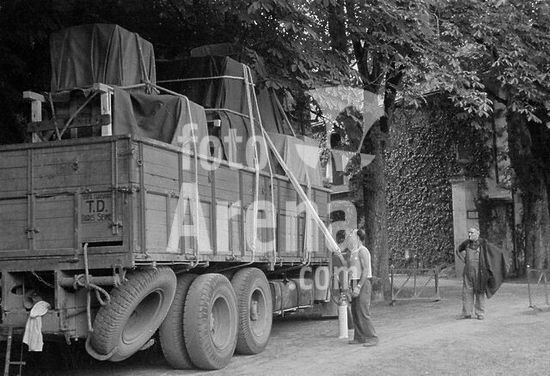
akg2355128 Paris (Frankreich), 1. Arr., Musée du Louvre, Sammlungsgeschichte:. 1945-47 nach Ende des Zweiten Weltkrieges schrittweise Wiedereröffnung und Rückführung der seit 1939 ausgelagerten Kunstwerke. Rücktransport der Venus von Milo und anderer Skulpturen vom Auslagerungsort Schloss Chambord (Dép. Loir-et-Cher) nach Paris am 31. August 1945: Die Holzkisten mit den Skulpturen werden auf einen Lastkraftwagen verladen und mit Seilen gesichert. Foto von Paul Almasy (1906-2003). Aus einer Serie: Le transport des oeuvres de retour de Chambord à Paris.
DC
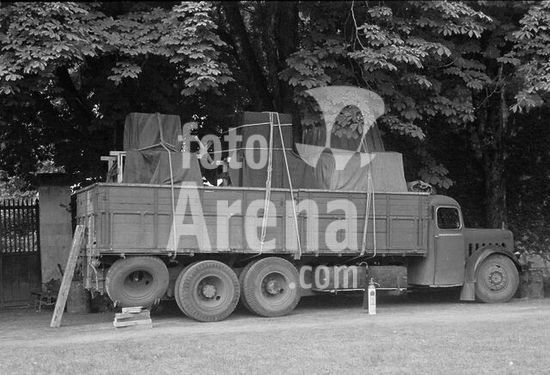
akg2355135 Paris (Frankreich), 1. Arr., Musée du Louvre, Sammlungsgeschichte:. 1945-47 nach Ende des Zweiten Weltkrieges schrittweise Wiedereröffnung und Rückführung der seit 1939 ausgelagerten Kunstwerke. Rücktransport der Venus von Milo und anderer Skulpturen vom Auslagerungsort Schloss Chambord (Dép. Loir-et-Cher) nach Paris am 31. August 1945: Der Lastkraftwagen mit den in Holzkisten verpackten und mit Seilen gesicherten Skulpturen bereit zur Abfahrt aus Chambord. Foto von Paul Almasy (1906-2003). Aus einer Serie: Le transport des oeuvres de retour de Chambord à Paris.
DC
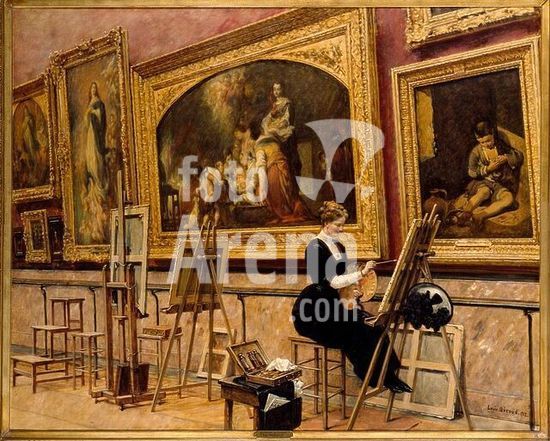
akg2062795 Béroud, Louis, 1852-1930, French painter. "Paintre copiant un Murillo au musée du Louvre" ("Au musée du Louvre. Les "Murillo"") ". (Painter copying a painting by Murillo in the Louvre / (In the Louvre. The Murillos) ). Painting, 1912. Oil on canvas, 132.1 × 160 cm. Sotheby's, London. 23 October 1997, Lot 126.
DC
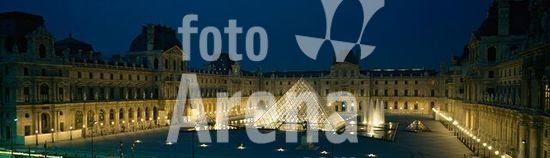
akg1502521 Paris, France. Louvre: Palace of the French Kings; since 1793 museum. Exterior view of the Cour Napoléon with glass pyramid. (built 1983 - 89, architect: Iaeoh Ming Pei), at night. Photo.
DC
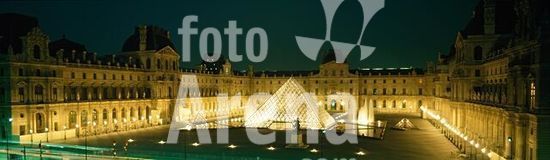
akg1502520 Paris (France), 1st arr., Louvre, Cour Napoléon (built 1853-57 under Napoléon III; architects: L.T.Visconti and H. M.Lefuel). Cour Napoléon with glass pyramid (built 1983-89; architect: Ioeh Ming Pei) in evening light. Panoramic photo, undated.
DC
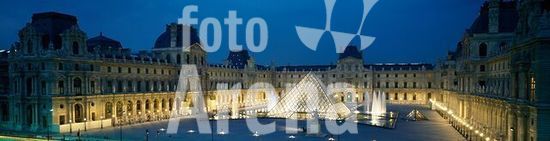
akg1502522 Paris (Frankreich), 1. Arr., Louvre, Cour Napoléon (erbaut 1853-57 unter Napoléon III.; Arch.: L.T.Visconti und H. M.Lefuel). Cour Napoléon mit Glaspyramide (erb. 1983-89; Arch.: Ioeh Ming Pei) in der Abenddämmerung. Panoramafoto, undat.
DC
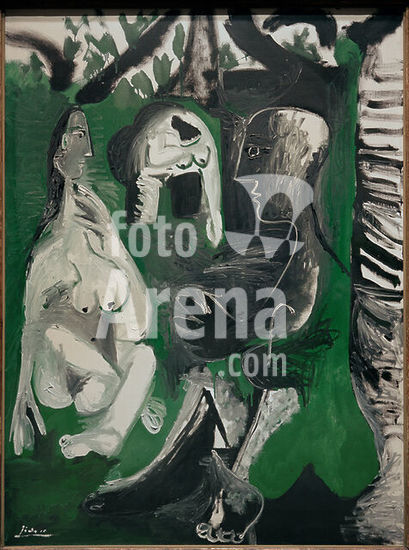
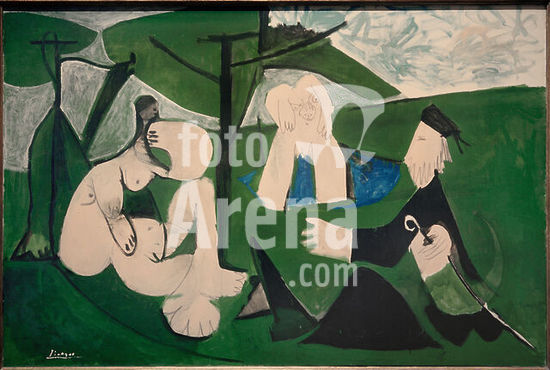
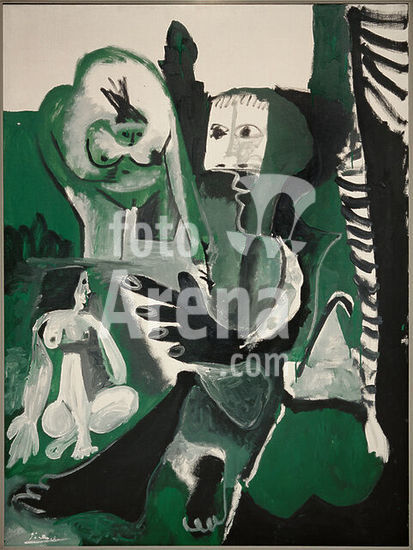
akg4386908 Picasso, Pablo; 1881-1973. "Le déjeuner sur l'herbe (d'après Manet)", 30. Juli 1961. (Das Frühstück im Freien nach Manet). Öl auf Leinwand, 130 × 97 cm. Humlebaek, Louisiana Museum of Modern Art. Donation The Picasso Foundation and The Louisiana Foundation. Humlebaek, Louisiana Museum of Modern Art. Museum: Paris, Musée Du Louvre. Copyright: © Pablo Picasso. This artwork of Picasso is not in the public domain. It is your responsibility to obtain all necessary third party permissions from the copyright handler in your country prior to publication.
DC
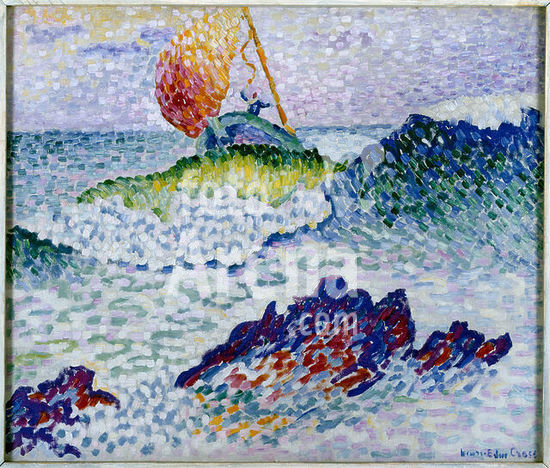
akg4649115 Cross, Henri Edmond; 1856 - 1910. "Le naufrage" (Der Schiffbruch), 1906-1907. Öl auf Leinwand, 46 x 55 cm. RF1976-80, Paris, Musée d'Orsay. Museum: Paris, Musée Du Louvre.
DC
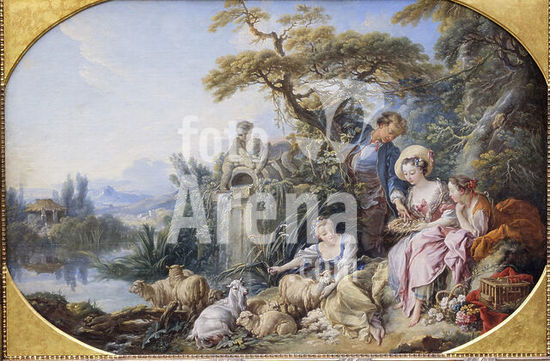
akg6155654 France, Paris, musée du Louvre, François Boucher, 1703, 1770, Les présents du berger, ou Le Nid, vers 1740, huile sur toile.
DC
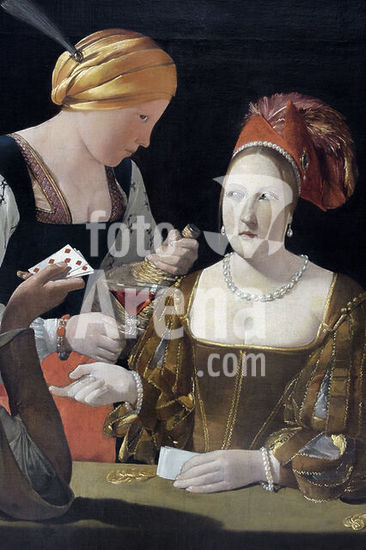
akg6156002 France, Paris, musée du Louvre, Georges de La Tour, 1593-1652, Le Tricheur à l'as de carreau, détail, huile sur toile, vers 1635-1638.
DC
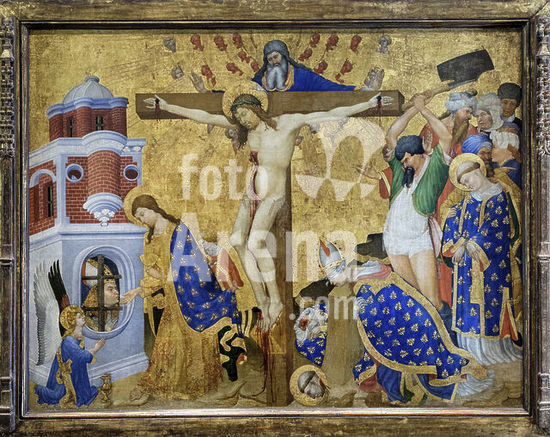
akg6155974 France, Paris, musée du Louvre, Henri Bellechose, connu à Dijon en 1415, le Retable de saint-Denis, bois transposé sur toile en 1852, achevé en 1416.
DC
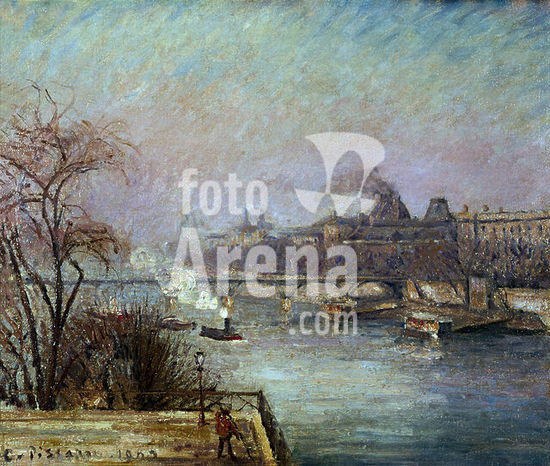
akg5549676 Pissarro, Camille; 1830-1903. "Le Louvre, brume, 32 série (La Seine vue du Pont-Neuf)" (Der Louvre, Nebel, 32. Serie / Blick vom Pont-Neuf auf die Seine), 1902. Öl auf Leinwand, 54 x 65 cm. Kunsthandel 1999. Museum: PRIVATE COLLECTION. Copyright: © Yves Tanguy. This artwork is not in the public domain. It is your responsibility to obtain all necessary third party permissions from the copyright handler in your country prior to publication.
DC
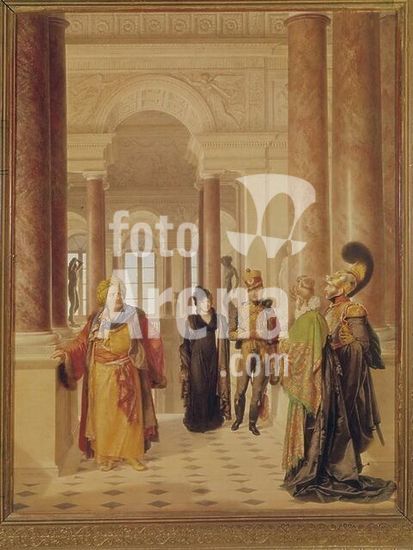
akg394193 Paris (France), Louvre (palace of the French kings; since 1793 museum). "Le Grand Escalier du Musée Napoléon" (interior view of the staircase). Watercolour, 1817, by Jean-Baptiste Isabey (1767-1855). 86 × 66cm. Inv. 27236. Paris, Musée du Louvre. Museum: Paris, Musée Du Louvre.
DC
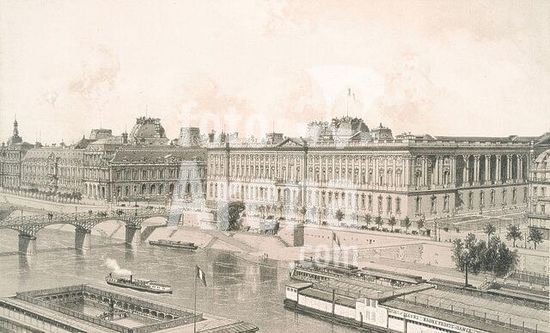
akg261522 Paris, France. Louvre: Palace of the French Kings; since 1793 museum. "Louvre / 1867". Lithograph by Eugène Cicéri (1813-1890) after a drawing by. F. Hoffbauer. From: F.Hoffbauer, Paris à travers les ages (..), volume 1, 2nd edition, Paris (Firmin-Didot et Cie.) 1885, Histoire du Louvre, after p.46. Berlin, Sammlung Archiv für Kunst und Geschichte. Museum: Berlin, Sammlung Archiv für Kunst und Geschichte.
DC
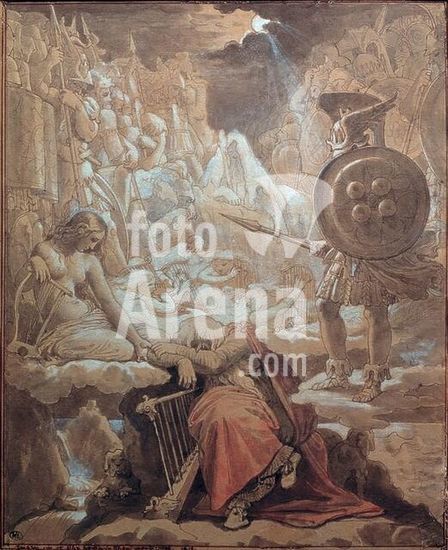
akg579705 Ingres, Jean-Auguste-Dominique; 1780-1867. / "Le songe d'Ossian" (Ossian's Dream) ". Draft for the painting, 1812-13. for Napoleon's bedroom in the Quirinal in rome, now in the Musee Ingres in Montauban. Pen and grey ink, washed, watercolour with white highlights, 26.5 x 14.5 cm. R.F. 1446 recto. Departement des Arts graphiques, Paris, Musée du Louvre. Museum: Paris, Musée Du Louvre.
DC
alb3612388 Christ Carrying the Cross. Artist: Pierre Mignard (French, Troyes 1612-1695 Paris). Dimensions: 17 1/2 x 22 15/16 in. (44.5 x 58.2 cm). Date: ca. 1684.After first training with the mannerist painter Jean Boucher de Bourges at the age of twelve, Pierre Mignard entered Vouet's studio in Paris in 1630, where he would stay until 1634, before leaving for Rome the year after. In a sojourn that lasted over twenty years, Mignard studied the works of the masters of the High Renaissance and the Carracci school and developed his natural facility for portraiture. In the second half of the 17th century, he would become one of the most significant protagonists of classicism in France, his elegantly crafted history paintings reflecting the influence of his extended stay in Italy. After engaging for decades in a fierce rivalry with Charles Le Brun, the death in 1683 of Jean-Baptiste Colbert, Le Brun's backer, cleared the way for Mignard to receive royal commissions. Mignard was finally granted the positions of Premier Peintre and director of the Académie royale following Le Brun's death in 1690. This highly detailed compositional study is for Mignard's Christ Carrying the Cross (Musée du Louvre, Paris). Completed in 1684, the canvas was widely acclaimed by contemporary writers and entered the collection of Louis XIV as a gift of Colbert's son, the Marquis de Seigneley. Mignard must have been pleased with the orchestration of the complex composition in this large red chalk study, for he squared the sheet for transfer, although certain details would ultimately be changed. In the painting, a mother and child replace the seated male onlooker pointing towards Christ in the foreground, the figure of Veronica kneeling before Christ is omitted, and the young man leading the procession has disappeared while three running children have been added. Despite the large number of figures, the complex composition is rendered with clarity. The way to Calvary is portrayed with all the vigor characteristic of Mignard's works. The tragic dimension of the scene is conveyed by the attitudes and facial expressions of the figures, progressing from fear and terror to pain. In the background, Golgotha, the site of Christ's crucifixion, dominates the rolling landscape. This ambitious sheet with its beautiful figure groupings recalling Italian prototypes, represents an advanced stage of planning for one of Mignard's greatest works. Museum: Metropolitan Museum of Art, New York, USA.
DC

akg974120 Le Nain, Louis, um 1590-1648. "Un maréchal dans sa forge" (Ein Hufschmied in seiner Schmiede). Öl auf Leinwand, 69 x 57 cm. INV6838. Museum: Musée du Louvre., Paris.
DC
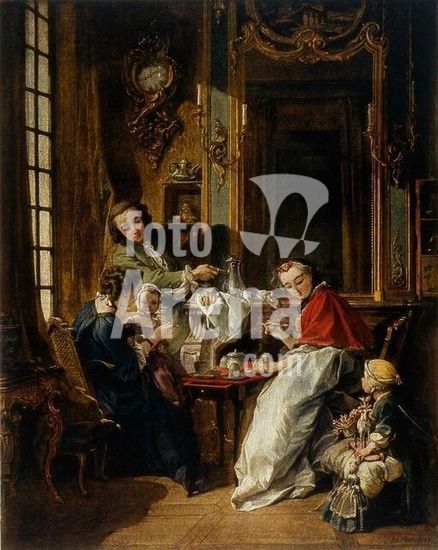
akg045458 Boucher, Francois. 1703-1770. "Le Petit Dejeuner" (The Breakfast), 1739. Oil on canvas, 82 × 65cm. Paris, Musée du Louvre. Museum: Paris, Musée Du Louvre.
DC
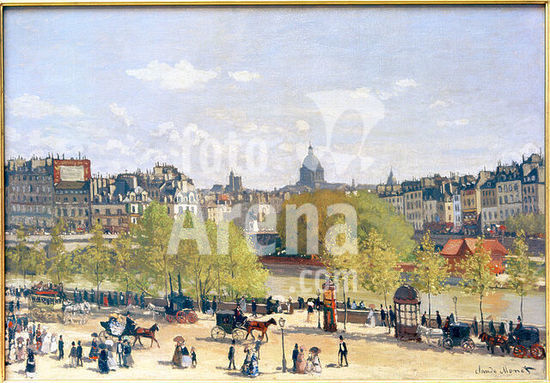
akg335830 Paris (France), Quai des Tuileries - Quai du Louvre. "Le Quai du Louvre". Painting, 1867, by Claude Monet. (1840-1926). Oil on canvas, 65 × 93cm. The Hague, Gemeentemuseum. Museum: Den Haag, Gemeentemuseum.
DC
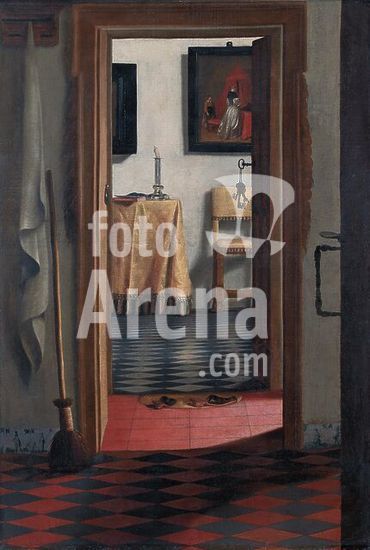
alb4164371 The slippers. oil on canvas. From 1642 until 1678. 103 x 70 cm. Museum: Louvre, Dpt. des Peintures, BUDAPEST, France. Author: Samuel van Hoogstraten.
DC
alb3606146 Denis Diderot (1713-1784). Artist: Jean Antoine Houdon (French, Versailles 1741-1828 Paris). Culture: French, Paris. Dimensions: Height (bust): 15 3/4 in. (40 cm); Height (stand): 4 11/16 in. (11.9 cm). Date: 1773.A philosopher and man of letters, and one of the internationally famous exponents of the French Enlightenment, Denis Diderot is best known for the multivolume encyclopedia that he compiled and coedited with Jean Le Rond d'Alembert (1717-1783) between 1751 and 1772. In the entry for painted portraits, Diderot's Encyclopédie states that the principal merit of the genre is to render the sitter exactly, by capturing both his character and his physiognomy.[1] A portrait bust of Diderot, believed to be the terracotta bust now in the Musée du Louvre, which served as a model for the Museum's marble version, was exhibited by the sculptor Jean-Antoine Houdon at the Salon of 1771. The sitter approved of that work, describing it as très ressemblant ( having a very strong resemblance). It was also well received by contemporary critics, one of whom wrote: "I single out the bald head of the editor of the Encyclopédie. The flame of genius brought that bust to life; there is a fire, an expression, that gives it a striking resemblance; I don't want to say it out loud, but our colleagues the painters have done nothing equal."[2]Winner of the Prix de Rome in 1761, Houdon had spent ten years in Italy and was profoundly influenced by the arts of antiquity. Diderot is shown as a classical philosopher, bare-chested and without wig or other paraphernalia. Justly known for his naturalistic portraiture and his classic simplicity, Houdon was very successful in capturing his sitter's lively eyes and conveying the determination and intelligence that won Diderot many admirers and some enemies--as attested by the words inscribed on the plinth: "il eut de grands Amis et, quelques bas jaloux / le Soleil plait à l'aigle, et blesse les hiboux" ( He had great friends and a few low jealous ones / the sun pleases the eagle and wounds the owls). The slightly parted lips are said to have suggested the brilliance of Diderot's conversation. This is consistent with Horace Walpole's description of the philosopher in his journal entry for September 19, 1765, as "a very lively old man, and great talker."[3]Possibly shown at the Salon of 1773, the Museum's marble bust, signed and dated by the artist, was acquired by a patron of Houdon's, the Russian Francophile Count Alexander Sergeyevich Stroganoff (1733-1811), during a sojourn in Paris. It remained for many years at the Stroganoff palace in Saint Petersburg. In 1773 Diderot himself traveled to Russia, at the invitation of Empress Catherine the Great (1729-1796), a supporter of his work with whom he had corresponded.[Daniëlle Kisluk-Grosheide, 2010]Footnotes:[1] Diderot 1751-72, vol. 13 (1765), p. 153.[2] Journal encyclopédique (Collection Deloynes 49, no. 1320), quoted by Scherf 2008b, p. 44.[3] Walpole 1937-83, vol. 7 (1939), p. 262. Museum: Metropolitan Museum of Art, New York, USA.
DC

alb3667597 The Martyrdom of Saint Cecilia (Cartoon for a Fresco). Artist: Domenichino (Domenico Zampieri) (Italian, Bologna 1581-1641 Naples). Dimensions: Irregular oval: 67 13/16 × 59 9/16 in. (172.2 × 151.3 cm). Date: 1612-14.This monumental, exquisitely rendered composition is among the most significant extant cartoons (full-scale drawings) by Domenichino. It was a preparatory design for the central portion of his fresco of the Martyrdom of Saint Cecilia, painted on the left wall of the Polet chapel at San Luigi dei Francesi, the French church of Rome. Domenichino received the contract for the frescoes on February 16, 1612, from Pierre Polet (died in Rome in 1613), a prelate from the diocese of Noyon who was dedicated to the cult of Saint Cecilia. In 1599, he had attended the exhumation of her relics from a casket underneath the high altar of her titular church at Santa Cecilia in Trastevere in Rome. According to Jacobus de Voragine's Golden Legend, Cecilia (2nd or 3rd century A.D., Rome), a virtuous virgin matron was to be burned in a boiling bath, "but she remained in the bath as in a cool place, nor felt so much as a drop of sweat." She then suffered three decapitating blows of the sword that did not sever her head, and since a fourth blow was prohibited by Roman law, she lived on for three more days, during which she gave all her possessions to the poor. On her last day, Saint Cecilia entrusted to Pope Urban all the Christians that she had converted and beckoned him to consecrate her house as a church. Domenichino's final work alludes to this part of the story, and, here, the moribund Cecilia is seen at center, attended by a maid servant, a bearded man, and a child at right. Domenichino holds a pivotal place in the development of Baroque Classicism in Rome, and his frescoes in the Polet chapel at San Luigi dei Francesi are amongst the principal examples of that style. Since this is the most important Italian Baroque drawing in the United States, the following, more indepth observations may be added. This is the only large cartoon (full-scale drawing) for a major work by an important Renaissance or Baroque artist in this country. Two cartoon fragments by Domenichino, for the left and right sides of the composition of the Martyrdom of Saint Cecilia, are preserved in the Musée du Louvre, Département des arts graphiques inv. nos. 9080 and 9081 (Paris). They too have pricked outlines for the transfer of the design and are drawn in a similar technique and medium on a surface comprised of multiple sheets of paper joined together. The drawing surface of the Metropolitan Museum's cartoon is comprised of fourteen large sheets of paper, which was originally of a blue-gray hue like many other drawings of this time. As is typical of Renaissance and Baroque artistic practice, the sheets of paper of the cartoon were glued together (probably with flour paste), with overlapping seams. This was done in the artist's studio, by the artist himself or by a studio assistant. Domenichino's cartoon is drawn very carefully in charcoal with white chalk hightlighting, but the handling is very broad in many passages and many pentimenti are evident. The strokes of charcoal in important passages of the design are rubbed together to create effects of sfumato, but many other passages of parallel hatching and outlines were left untouched by the artist. The technique of drawing cartoons is often very bold, because such drawings are meant to be seen from a far viewing distance. The outlines of the cartoon were pricked for the transfer of the design, but in this case this was probably to transfer the design to a "substitute cartoon," which was the object actually used on the moist fresco surface itself. This technique of the "substitute cartoon" saved the valuable carefully executed drawing from destruction in the working process. Once Domenichino's beautifully drawn cartoon served its purpose in the artist's studio, it was preserved as a collector's item: it was cut in the shape of an oval, lined with canvas, and was mounted on a stretcher like a picture for display before 1705 or 1706. The cartoon's frame dates to the eighteenth century. Domenichino has focused attention on the drama of Saint Cecilia's suffering, her faith and her spirituality at the moment of death. Her idealized beauty, expression, and corporeal grace of pose are meant to convey the transcendental beauty of her Christian virtue. The viewer's reaction to this scene of the saint's noble suffering and unwavering faith was critically important to the artist's thinking in developing the composition. The figures at right participate as witnesses to the scene. The gestures of these secondary figures at right play out the reactions of empathy and contemplation the artist expected from the viewers seeing the composition: the devout practioners attending church.There are slightly differing accounts on the martyrdom of Saint Cecilia, who was already accepted into the hagiographic canon by the fifth century A.D. The main source on her life, Jacobus de Voragine's Golden Legend (thirteenth century), states that she was to be burned in a boiling bath, "but she remained in the bath as in a cool place, nor felt so much as a drop of sweat." The virtuous virgin matron then suffered three decapitating blows of the sword that did not sever her head, and since a fourth blow was prohibited by law, she lived on for three more days, during which she gave all her possessions to the poor (the mainscene fresoed on the opposite wall of the Polet chapel). On her last day, Saint Cecilia entrusted to Pope Urban all the Christians that she had converted and beckoned him to consecrate her house as a church. Domenichino's composition of the saint's martyrdom includes the pope and the converts in an atemporal arrangement that also alludes to the consecration of her house. Domenichino's biographers, Giovanni Pietro Bellori (1672) and Giambattista Passeri (1772) also describe the particulars of Saint Cecilia's martyrdom.Domenichino represented the agonizing Saint Cecilia within the imposing interior of a Roman bath (presumably the caldarium that was part of her house),where the prefect Almachius had unsuccessfully attempted to have her martyred. The contract between patron and artist governing the commission of this fresco, dated February 16,1612, mentions this setting.In 1599, the patron commissioning the fresco, Pierre Polet had apparently attended the exhumation of the saint's relics from a casket underneath the high altar of the basilica of Santa Cecilia in Trastevere, and this event was recorded. The ceremony of recognition of the relics was officiated by the titular of the basilica, Cardinal Paolo Sfondrati, on October, 19, 1599, and was witnessed by the great debunker of saints of the Counter-Reformation movement, Cesare Baronio, who pronounced the relics authentic.The cartoons by Domenichino for the two main frescoed scenes in the Polet chapel at San Luigi dei Francesi are also cited in the 1612 contract between the patron and the artist. According to the document, the cartoons were to be retained by the priest Don Mass. Bruni, the prior of the church of San Luigi dei Francesi. The cartoons for the sides of the fresco of the Martyrdom of Saint Cecilia (the fragments today in the Louvre) passed to the collection of the painter Charles Le Brun, then to the French royal collections and the Louvre.The cartoons by Domenichino were from the beginning regarded as the key drawings for the Polet Chapel, and the central portion of the composition with the Martyrdom of Saint Cecilia (i.e., the work today at the Met) was probably especially prized. This may well explain why this is the only major surviving cartoon for the project which Charles Le Brun was unable to acquire when he visited Rome after Domenichino's death. It is clear from a reading of the contract of February 16, 1612, between Domenichino and his patron, that the first owner of the proposed cartoon section for the Martyrdom of Saint Cecilia must have been the priest - possibly the prior of San Luigi dei Francesi -- Don Mass. Bruni, who must have also owned the Louvre cartoon fragments for the composition, the ones which Charles Le Brun obtained during his Roman sojourn in 1642-48. The 1664 inventory of the possessions of Francesco Raspantino, Domenichino's pupil in Naples and artistic heir, lists three preparatory cartoon fragments for the Polet chapel decoration by his master: the "Marriage of Saint Cecilia to Valerian," the "Apotheosis of Saint Cecilia," and "Saint Cecilia Refusing to Sacrifice to the Idols." Curiously, none of these are for parts of the fresco decoration that were deemed significant in the 1612 contract. Finally, Charles Le Brun was apparently unable to procure the central and main portion of the composition of the "Martyrdom of Saint Cecilia," for he had it copied in full scale in a large drawing that is in the Musée du Louvre. It may (or may not) be the cartoon referred to in a Chigi inventory of 1705/6. (Carmen C. Bambach, September 2015). Museum: Metropolitan Museum of Art, New York, USA.
DC

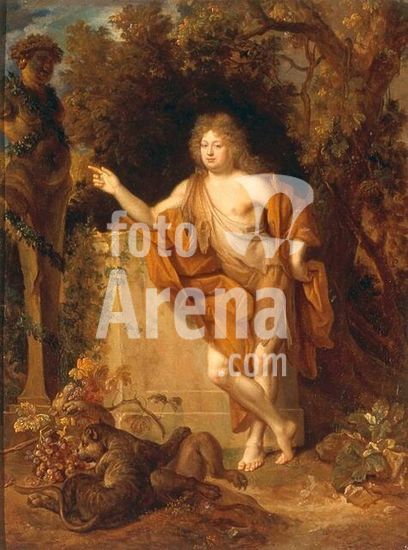
akg362140 Largillière, Nicolas de ; 1656-1746. "Portrait d'homme en Bacchus". (Autrefois considéré comme le portrait du régent Philippe II d'Orléans en Pan). Huile sur toile, v. 1720. H. 0,425 ; L. 0,315. R.F. 2155. Paris, Musée du Louvre. Museum: Paris, Musée Du Louvre.
DC
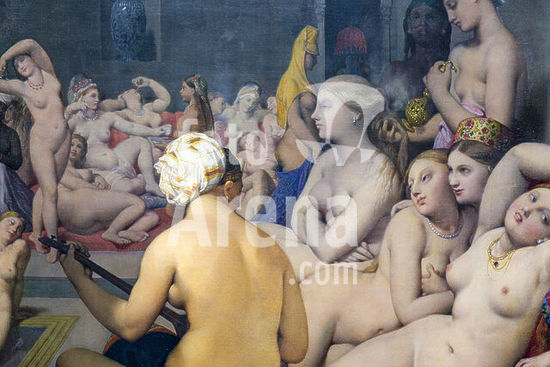
akg619833 Ingres, Jean-Auguste-Dominique. 1780-1867. "Le Bain turc" (Turkish Bath), 1862. Detail. Oil on canvas, 110 × 110 cm, Diameter: 108 cm. R.F. 1934. Museum: Paris, Musée Du Louvre.
DC
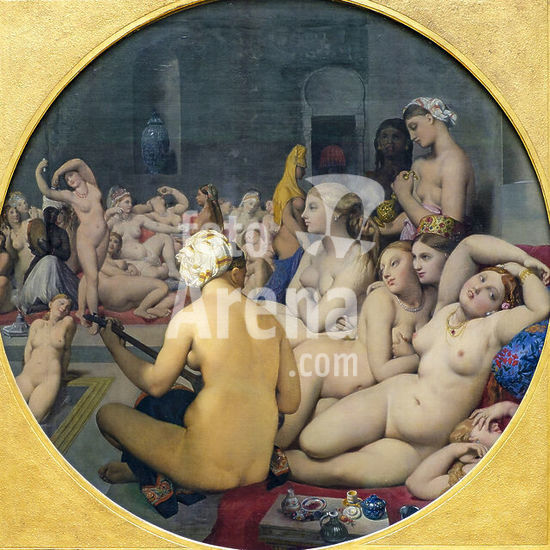
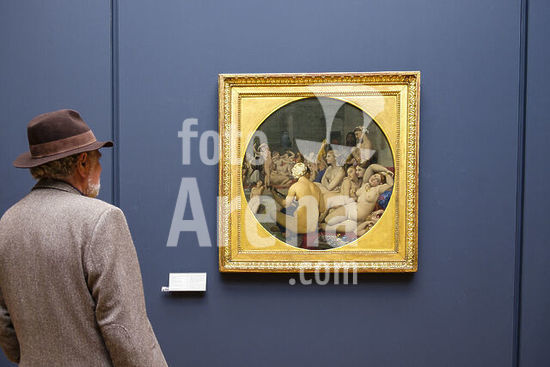
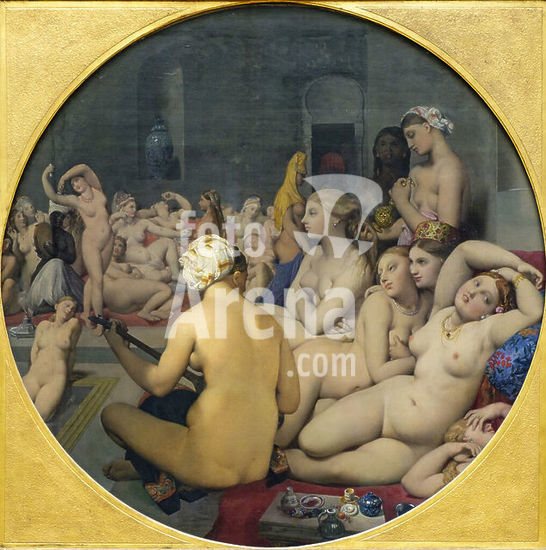
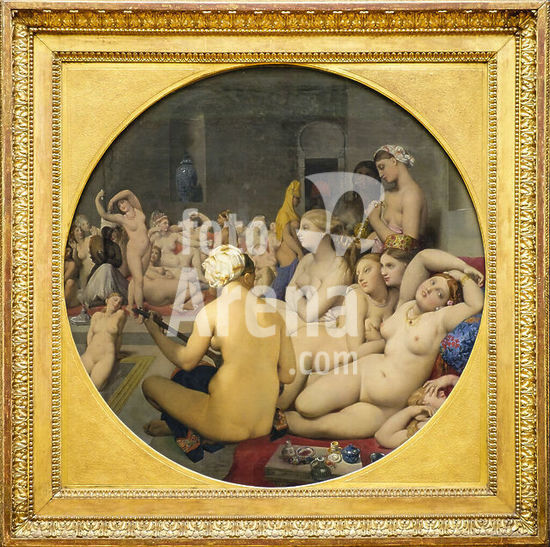
alb13116802 The Turkish Bath, Dominique Ingres, orientalist work, Louvre Museum, Paris, France.
DC
alb13116375 The Turkish Bath, Dominique Ingres, orientalist work, Louvre Museum, Paris, France.
DC
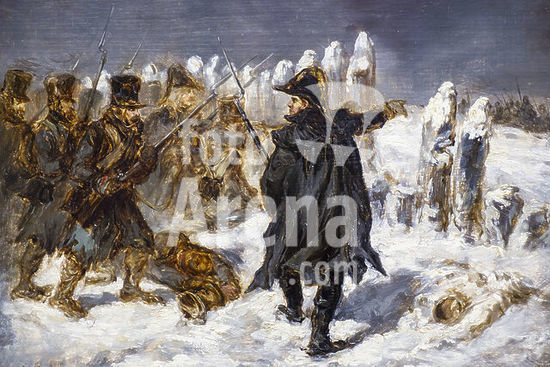
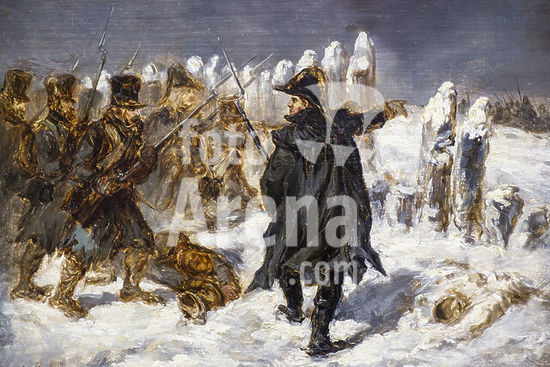
alb13116771 Maréchal Ney a la redoute de Kowno , Auguste Raffet , Museo del Louvre,museo nacional de Francia, Paris, France.
DC
alb13116599 The Turkish Bath, Dominique Ingres, orientalist work, Louvre Museum, Paris, France.
DC
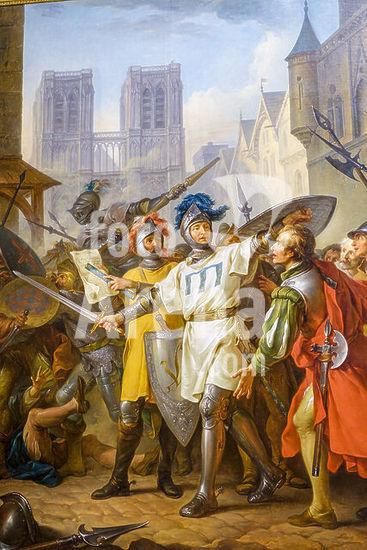
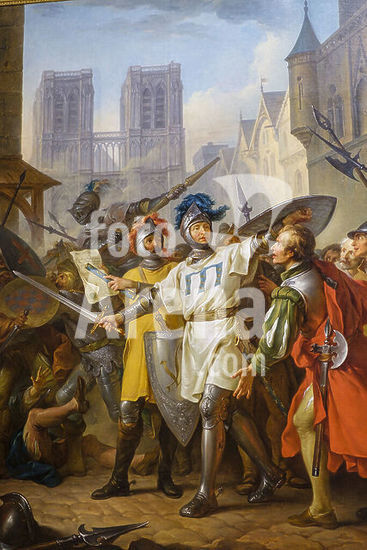
alb13116466 The Return of Paris of the English (April 13, 1436) Jean-Simon Berthelemy, - La Reprise de Paris sur les Anglais -, oil on canvas, 1787. Louvre Museum, Paris, France.
DC
alb13116486 The consecration, Le Sacre de Napoléon, Jacques-Louis David, official painter of Napoleon Bonaparte made between 1805 and 1808, Musée du Louvre, Paris, France.
DC
alb13116630 The Turkish Bath, Dominique Ingres, orientalist work, Louvre Museum, Paris, France.
DC
alb13116651 The Consecration of Napoleon, (Le Sacre de Napoléon), Jacques-Louis David, 1807, Oil on canvas, Neoclassicism, Louvre Museum, Paris, France, Western Europe.
DC
alb3633822 Fête pour la Paix Générale donnée à Paris le 18 Brumaire. Pont Royal. Artist: Francesco Piranesi (Italian, Rome 1758-1810 Paris); François Jean Sablet (French, Morges 1745-1819 Nantes). Dimensions: Sheet: 25 3/16 × 33 1/16 in. (64 × 84 cm). Date: 1801-2.One of two fête prints showing the illuminations of the Tuileries bridges for the celebration of the 'Paix Générale' at Paris, November 9, 1801'. This was the second commemoration of Napoleon's coup d'état of 18 Brumaire 1799. This print shows a night time view from the Rive Gauche looking across the river Seine at the Pont Royal and the Louvre. The bridge and waterside have been decorated with artificial lights and fireworks light up the sky. On the river in the foreground on the left, two small boats have been depicted. A separate piece of paper has been attached on the bottom on which inscriptions have been printed in gold ink. Museum: Metropolitan Museum of Art, New York, USA.
DC

alb3675298 Francesco I de' Medici (1541-1587), Grand Duke of Tuscany. Artist: After a model by Giambologna (Netherlandish, Douai 1529-1608 Florence). Culture: Italian, Florence. Dimensions: Overall (confirmed): H. 30 3/8 x W. 24 1/2 x D. 13 11/16 in. (77.2 x 62.2 x 34.7 cm). Founder: Probably cast by Pietro Tacca (Italian, Carrara 1577-1640 Florence). Date: modeled 1585-87, cast ca. 1611.This imposing portrait of Grand Duke Francesco I de' Medici dates between 1585, when he received the Order of the Golden Fleece (the badge dangles prominently from a chain around his neck) and 1587, when he died. The model for the bronze clearly owes its character to the premier sculptor of the Medici family, Giambologna. Yet its facture is consistent with sculptures that Giambologna produced later in his career, specifically the work characteristic of his principal studio assistant, Pietro Tacca. Documents bear out the supposition that this sculpture is a later interpretation by Tacca of the older master's concept. Giambologna's most famous Medici portrait -- an equestrian monument to Francesco's father, Cosimo I, initiated in 1577 and installed in the Piazza della Signoria, Florence, in 1587 -- became the iconic image of the Florentine rulers and set standards across Europe.[1] When Queen Marie de Médicis (née Maria de' Medici) decided to commission an equestrian monument to her husband, King Henry IV of France, she relied on her family back in Italy to press the busy Giambologna to execute that monument.[2] Following the sculptor's death in 1608, the commission passed to Pietro Tacca. The bronze horse and rider were shipped from Florence to Paris in 1611, together with a bust. On October 7, 1614, Matteo Bartolini, the Tuscan emissary in Paris, wrote to his masters that the queen was sending 300 scudi to Tacca in recompense for the bust in bronze of her father, Francesco I. [3] When the Museum's bust appeared on the market in 1983, it was recognized as the long-lost possession of Marie de Médicis.Its debt to models by Giambologna and its execution by Tacca are evident. What may be Giambologna's earliest bronze bust of Cosimo I (Galleria degli Uffizi, Florence) is the direct prototype for Francesco I.[4] The image of the son follows that of the father: identical Renaissance armor -- with scalloped pauldrons and a rope motif centered across the breastplate -- is in both cases crossed by a sword sash over the right shoulder, topped by the ceremonial chain. The date of the bust of Cosimo is uncertain. It was probably cast after 1553, when the artist moved to Florence. Another scholar suggests, however, that it was made at the time of Cosimo's death, in 1574, and if so, the sculptor may have deliberately paired the busts of Cosimo and Francesco.[5] The parentage of the New York bust is clear, and there are also echoes in it of other Giambologna busts of Francesco, notably an example in marble over the door of the former Teatro Mediceo in Florence.[6] Similarly clad in contemporary armor, though wearing a sash over the left shoulder, that one lacks the badge of the Golden Fleece and thus predates the Museum's bronze; however, the fairly fleshy face and full beard indicate that the two are not far apart in date. Both busts accord with painted portraits, such as that by an anonymous artist in the circle of Scipione Pulzone in the Palazzo Pitti, Florence. [7] Earlier canvases, such as Tommaso d'Antonio Manzuoli's portrait of 1560 (Museo Civico, Prato), and marbles, such as Giovanni Bandini's Francesco I (Galleria degli Uffizi, Florence), with thinner face and beard, show how the duke's physiognomy changed over time; the full sequence of images indicates that the Museum's bronze bust represents the duke toward the end of his life.[8]Crisp chasing of the surface, sharp folds in the drapery, and a translucent reddish lacquer patina are characteristic of bronzes from Giambologna and his workshop later in the sculptor's career.[9] It seems likely that Tacca, a considerable artist in his own right, interpreted Giambologna's model and produced a meticulously clean bronze for his exalted and demanding patron, the queen of France.[10] The idealized, somewhat abstract portrait of Francesco accords with the imperious image the Medici sought for themselves. Created posthumously, the bronze captures the likeness but preserves the dignity of the sitter as an iconic image of a ruler. This was a man more at home in his studiolo, poring over natural specimens or fostering such inventions as Medici porcelain, than with ruling the state from the great hall (today the Salone dei Cinquecento) of the Palazzo Vecchio. Francesco's somewhat vacant stare manages to appear commanding while divulging no secrets of the inner man's true personality.[Ian Wardropper. European Sculpture, 1400-1900, In the Metropolitan Museum of Art. New York, 2011, no. 30, pp. 96-97.]Footnotes:[1] John Pope-Hennessy. An Introduction to Italian Sculpture. 3 vols. Vol. 3, Italian High Renaissance and Baroque Sculpture. 4th ed. London, 1996, pp. 335 - 36, 492 - 93, pl. 316. [2] See Geneviève Bresc-Bautier in Cast in Bronze: French Sculpture from the Renaissance to Revolution. Exh cat. edited by Geneviève Bresc-Bautier and Guilhem Scherf, with James David Draper, and with contributions by Jane Bassett et al. Musée du Louvre, Paris; The Metropolitan Museum of Art; J. Paul Getty Museum, Los Angeles; 2008-9. Paris, 2009. [French ed., Bronzes français 2008.], pp. 164 - 69, nos. 40, 41, for a recent account of the commission.[3] Archivio di Stato, Florence, Carteggio Mediceo, no. 4629 (first published in Giovanni [Johann Wilhelm] Gaye. Carteggio inedito d'artisti dei secoli XIV, XV, XVI. 3 vols. Florence, 1839-40. [Reprint ed., Turin, 1968.], vol. 3,p. 539).[4] Karla Langedijk. The Portraits of the Medici, Fifteenth-Eighteenth Centuries. 3 vols. Florence, 1981-87, vol. 1 pp. 469 - 70, no. 27,122. [5] Charles Avery. Giambologna: The Complete Sculpture. Oxford, 1987, pp. 167, 256, no. 32, pl. 172.[6] Ibid., pp. 169, 254, no. 15, pl. 175.[7] Les Trésors des Médicis, la Florence des Médicis: Une Ville et une cour d'Europe. Exh. cat. edited by Cristina Acidini Luchinat and Mario Scalini. Kunsthalle der Hypo-Kulturstiftung, Munich; Kunsthistorisches Museum, Vienna; Château de Blois; 1998-99. Paris, Munich, and Florence, 1999, p. 95, no. 35.[8] Elena Carrara in Masters of Florence: Glory and Genius of the Court of the Medici. Exh. cat. Pyramid, Memphis; 2004. Memphis, 2004, p. 148; Francesco Vossilla in Magnificenza alla corte dei Medici: Arte a Firenze alla fine del Cinquecento. Exh. cat. Museo degli Argenti, Palazzo Pitti, Florence; 1997-98. Milan, 1997, p. 31. no. 4.[9] Richard E. Stone (Richard E. Stone. "Organic Patinas on Small Bronzes of the Italian Renaissance." Metropolitan Museum Journal 45 (2010), pp. 107-23, p. 109) has analyzed its "magnificent organic patina of a striking color like that of a very old burgundy wine" (but he was unable to identify the resin that gives it its distinctive hue).[10] Jessica Mack-Andrick. Pietro Tacca, Hofbildhauer der Medici (1577-1640): Politische Funktion und Ikonographie des frühabsolutistischen Herrscherdenkmals unter den Grossherzögen Ferdinando I., Cosimo II. und Ferdinando II. Weimar, 2005; Pietro Tacca: Carrara, la Toscana, le grandi corti europee. Exh. cat. edited by Franca Falleti. Centro Internazionale delle Arti Plastiche, Carrara; 2007. Florence, 2007. Museum: Metropolitan Museum of Art, New York, USA.
DC

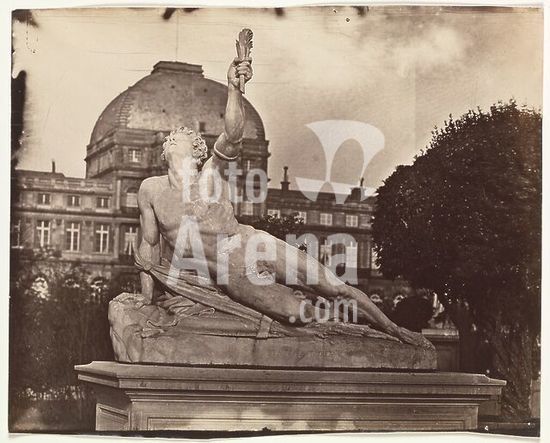
alb3680404 Spartan Soldier. Artist: Charles Nègre (French, 1820-1880). Dimensions: Image: 35.3 x 43.5 cm (13 7/8 x 17 1/8 in.). Date: 1859.Astonished on first seeing daguerreotypes (about 1844) and dreaming of the medium's potential, Charles Nègre immediately resolved to devote himself to the new art, experimenting first with daguerreotypy and, after 1847, with paper photography. Like Le Secq and Le Gray, Nègre had studied painting with Paul Delaroche, and his experience at the easel was the foundation for his photographic work of the early 1850s--genre scenes of Parisian street musicians, chimney sweeps, and vendors, as well as architectural views.Despite his acknowledged talent Nègre failed time and again either to win government support for or to bring to fruition the grand projects he envisioned for the new medium. Bypassed by the Commission des Monuments Historiques in the assignment of "missions héliographiques," Nègre produced some two hundred negatives for a self-initiated project entitled "Midi de la France," only to abandon the publication after issuing two fascicles. Frus trated in his effort to reap any financial benefit from his remarkable photogravure process, he proposed in 1858 that the city of Paris underwrite a 200- to 250-plate photogravure series on the appearance and history of the capital and that the Ministry of State commission a still larger project portraying "the history of humanity" through the collections of the Louvre. Neither proposal was accepted.Finally gaining official sponsorship in 1859 for a series of fifty photogravures depicting statuary in the Tuileries Gardens, Nègre produced a group of large-format glass negatives. Characteristically, the project was stymied before completion, but a few unique prints of Nègre's heroic images survive, printed in reverse for translation into photogravure. Here, outlined against the theatrical backdrop of garden greenery and the central pavilion of the Tuileries Palace, Jean-Pierre Cortot's "Spartan Soldier" (1831) seems to rise toward the light. The fate of this soldier, who collapsed and died of exhaustion immediately after he had run to Athens to announce the rout of the Persian invaders at Marathon, seems an apt metaphor for Nègre's own foundering under the weight of his immense ability and ambition even as he heralded the triumphant potential of the medium. Nègre's unfulfilled project is among the last attempts at true artistry before the pressures of commercialism turned photography into a full-scale industry in the early 1860s. Museum: Metropolitan Museum of Art, New York, USA.
DC

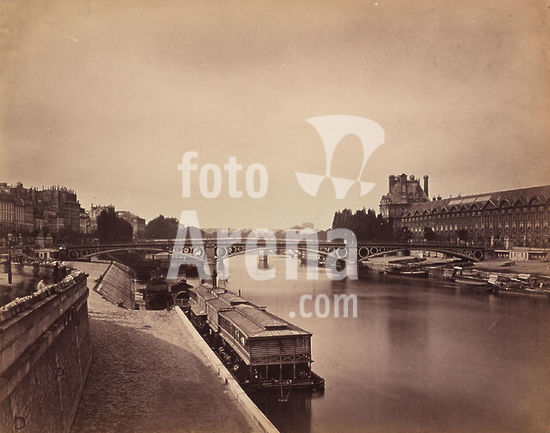
alb3718821 The Pont du Carrousel, Paris: View to the West from the Pont des Arts. Dated: 1856-1858. Dimensions: sheet: 37.8 x 48.8 cm (14 7/8 x 19 3/16 in.) overall: 55.9 x 71.1 cm (22 x 28 in.). Medium: albumen print from collodion negative. Museum: National Gallery of Art, Washington DC. Author: Gustave Le Gray.
DC

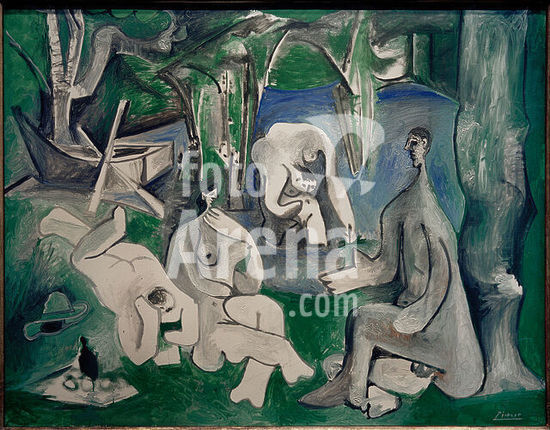
akg4386913 Picasso, Pablo; 1881-1973. "Le déjeuner sur l'herbe (d'après Manet)", 10. Juli 1961. (Das Frühstück im Freien nach Manet). Öl auf Leinwand, 114 × 146 cm. Stuttgart, Staatsgalerie. Museum: Paris, Musée Du Louvre. Copyright: © Pablo Picasso. This artwork of Picasso is not in the public domain. It is your responsibility to obtain all necessary third party permissions from the copyright handler in your country prior to publication.
DC

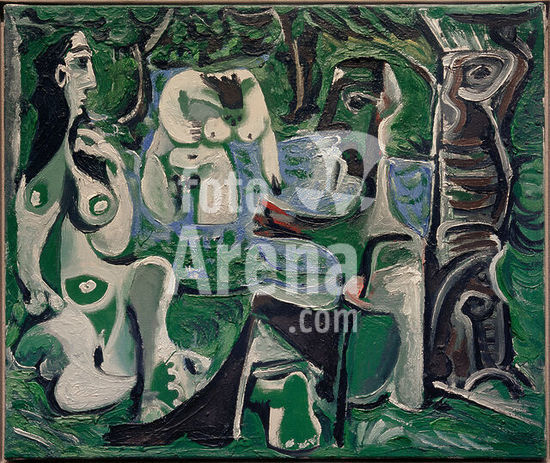
akg4386911 Picasso, Pablo; 1881-1973. "Le déjeuner sur l'herbe (d'après Manet)", 10. August 1961. (Das Frühstück im Freien nach Manet). Öl auf Leinwand, 46 × 55 cm. Privatsammlung. Museum: Paris, Musée Du Louvre. Copyright: This artwork of Picasso is not in the public domain. It is your responsibility to obtain all necessary third party permissions from the copyright handler in your country prior to publication. © Pablo Picasso.
DC

akg4386909 Picasso, Pablo; 1881-1973. "Le déjeuner sur l'herbe (d'après Manet)", 29. Februar 1960. (Das Frühstück im Freien nach Manet). Öl auf Leinwand, 130 × 195 cm. Privatsammlung. Museum: Paris, Musée Du Louvre. Copyright: This artwork of Picasso is not in the public domain. It is your responsibility to obtain all necessary third party permissions from the copyright handler in your country prior to publication. © Pablo Picasso.
DC

akg4386904 Picasso, Pablo; 1881-1973. "Le déjeuner sur l'herbe (d'après Manet)", 30. Juli 1961. (Das Frühstück im Freien nach Manet). Öl auf Leinwand, 129,5 × 97 cm. Hannover, Sprengel Museum. Museum: Paris, Musée Du Louvre. Copyright: © Pablo Picasso. This artwork of Picasso is not in the public domain. It is your responsibility to obtain all necessary third party permissions from the copyright handler in your country prior to publication.
DC
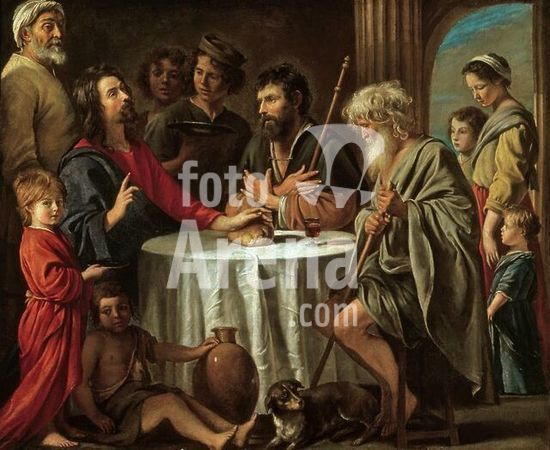
akg974103 Le Nain, Gebrüder (Louis Le Nain, um 1590-1648, zugeschrieben). "Les pèlerins d'Emmaus" (Die Jünger in Emmaus), um 1645(?). Öl auf Leinwand, 75 x 92 cm. RF1950-8. Museum: Musée du Louvre., Paris.
DC
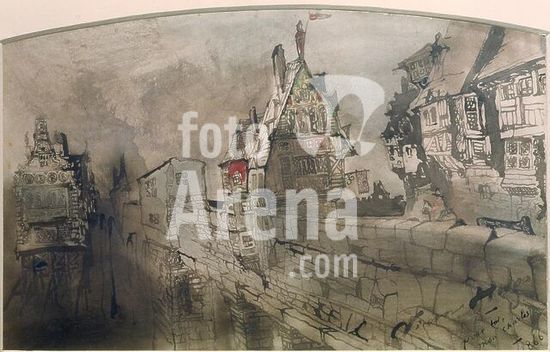
akg965629 Hugo, Victor 1802-1885. "Le Pont (Vue d'un ville Rhénane)" (Die Brücke (Ansicht einer Stadt am Rhein)), 1866. Aquarell, braune Tinte, braun laviert, 31,5 x 49,3 cm. Museum: Musée du Louvre., Paris.
DC
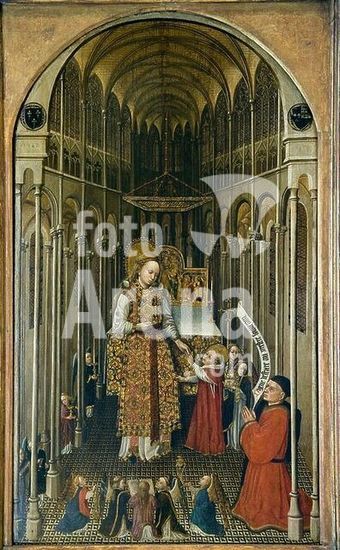
akg928040 Französisch ( Meister des Collin-Stundenbuchs), Amiens, 1438. "Le sacerdoce de la Vierge" (Das Priesterturm der Jungfrau Maria). (Der Stifter Jean du Bos, Meister der Bruderschaft Puy Notre-Dame d'Amiens, vor der Jungfrau Maria). Auf Holz, 99 x 57 cm. R.F. 1938-63. Museum: Musée du Louvre., Paris.
DC
akg967480 Camargo, Marie Anna de Cupis de C.; franz. Tänzerin span. Herkunft (1726-34 u. 1741-51 Pariser Oper); Brüssel 15.4. 1710-Paris 28.4.1760. /-"Jeune famme debout les bras étedndus; étude pour La Camargo dansant" (Junge Frau m. ausgebr. Armen; Studie für die tanzende Camargo). Zeichng.,undat.,v.N.Lancret (1690-1743). Rötel,23,6 x 16,8 cm. / INV27542. Museum: Musée du Louvre., Paris.
DC
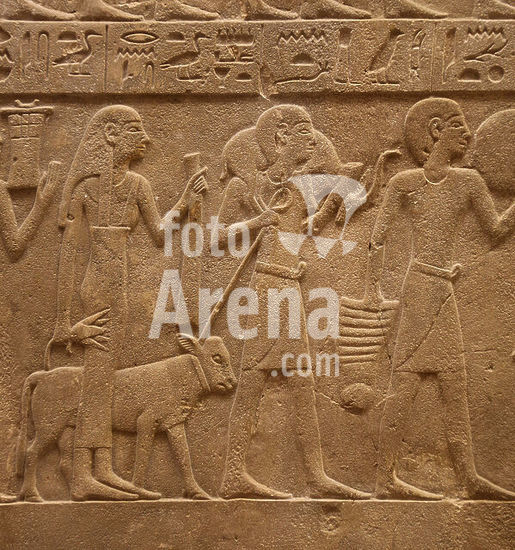
alb11627573 Stele of mayor Intef and his family. 12th Dynasty. Middle Kingdom. Limestone. Louvre Museum. Paris. France.
DC
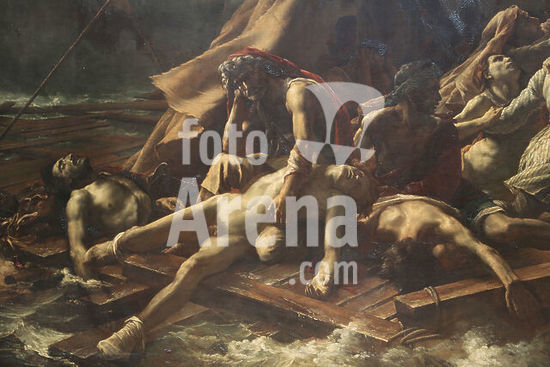
alb11629547 The Raft of the Medusa by French painter Theodore Gericault (1791-1824). 1818-1819. Romantic style. Louvre Museum. Paris. France.
DC
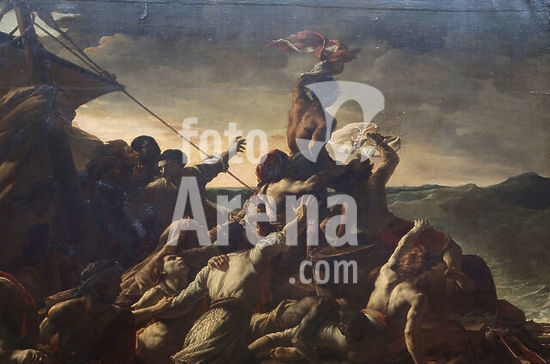
alb11628457 The Raft of the Medusa by French painter Theodore Gericault (1791-1824). 1818-1819. Romantic style. Louvre Museum. Paris. France.
DC
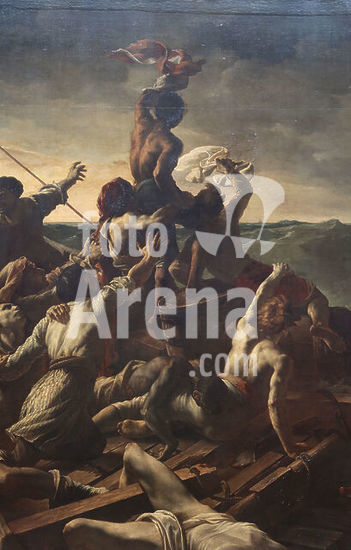
alb11628853 The Raft of the Medusa by French painter Theodore Gericault (1791-1824). 1818-1819. Romantic style. Louvre Museum. Paris. France.
DC
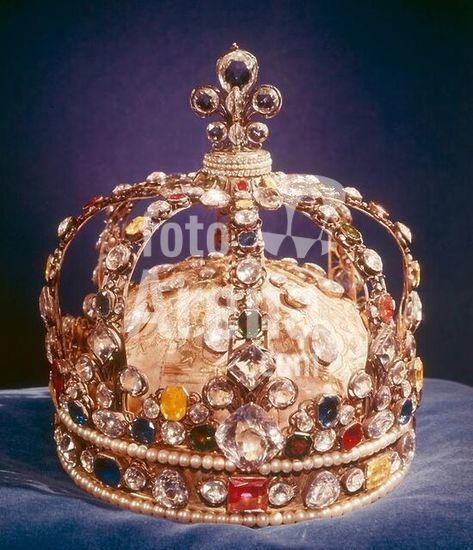
akg362498 Histoire / Insignes. - Couronne du sacre de Louis XV, le 25. 10.1722. - Orfèvrerie, 1722, d'Augustin Duflot. (1715-1774) d'après Claude Rondé. Argent, doré, fac similés de pierres précieuses, satin brodé. H. 0,24 ; L. 0,22. Provenant du trésor de Saint-Denis. Paris, Musée du Louvre. Museum: Paris, Musée Du Louvre.
DC
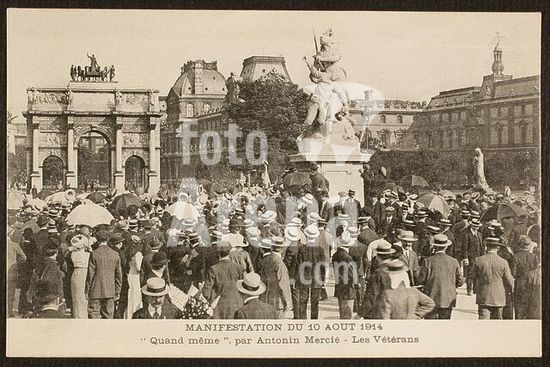
akg2193685 Erster Weltkrieg / Kriegsausbruch / Mobilmachung, Frankreich, August 1014. /-"Manifestation du 10 Août 1914. Quand même, par Antonin Mercié. Les Vétérans".-/ (Patriotische Kundgebung der Veteranen vor dem Denkmal "Quand même" von Antoni Mercié im Jardin des Tuileries in Paris am 10. August 1914; im Hintergrund der Arc de Triomphe du... Museum: Private Collection., Paris.
DC
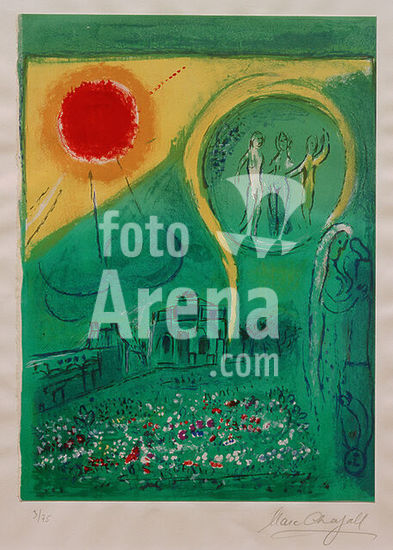
akg3702413 Chagall, Marc; 1887-1985. "Le Carrousel du Louvre", 1954. Lithografie auf Arches-Bütten, 55 x 41 cm. Saint-Paul-de-Vence, Fondation Maeght. Museum: Saint-Paul-de-Vence, Fondation Maeght. Copyright: © Marc Chagall. This artwork is not in the public domain. Additional copyright clearance may be required before use of this image.
DC
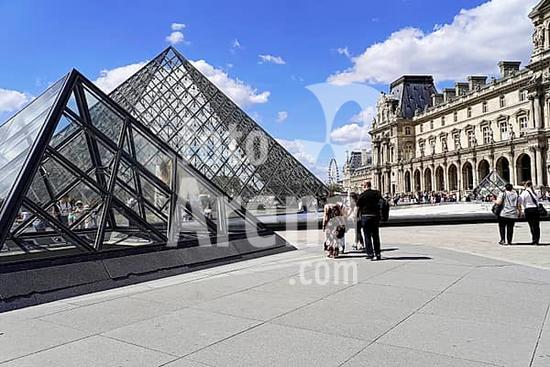
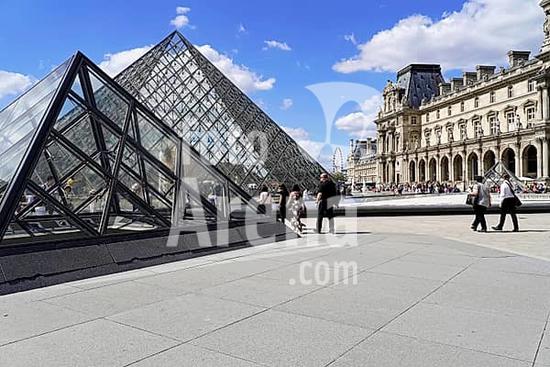
ibxebo10859995 Glass pyramid in the courtyard of the Palais du Louvre, Paris, France, Europe, People walking between the buildings and the glass pyramid of the Louvre in Paris in sunny weather, Europe
RF
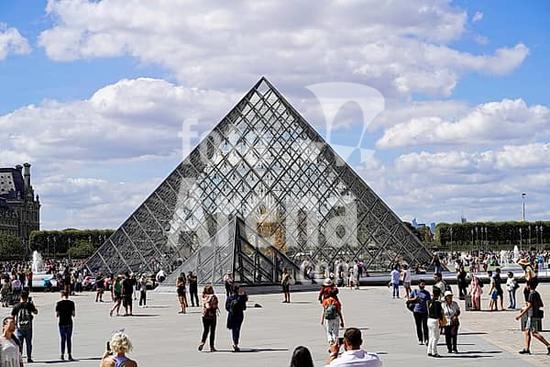
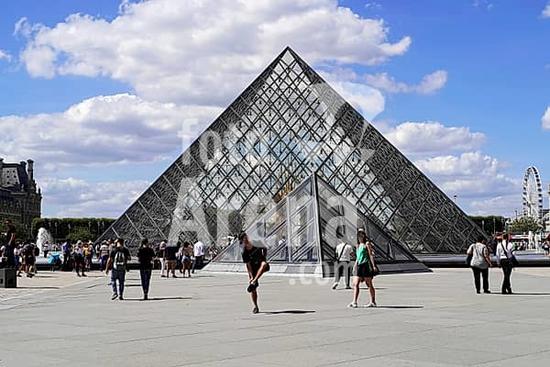
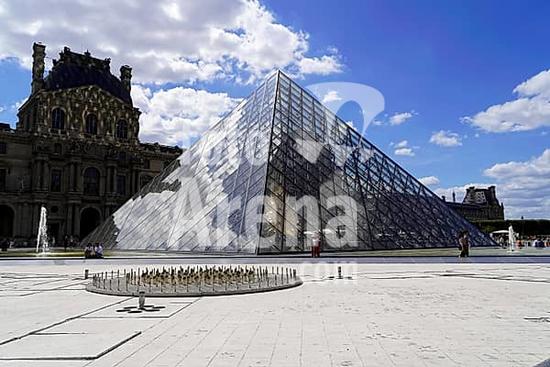
ibxebo10859993 Glass pyramid in the courtyard of the Palais du Louvre, Paris, France, Europe, Glass pyramid of the Louvre in Paris with many tourists in front of it under a cloudy sky, Europe
RF
ibxebo10859994 Glass pyramid in the courtyard of the Palais du Louvre, Paris, France, Europe, Tourists walk in front of the glass pyramid of the Louvre in Paris under a cloudy sky, Europe
RF
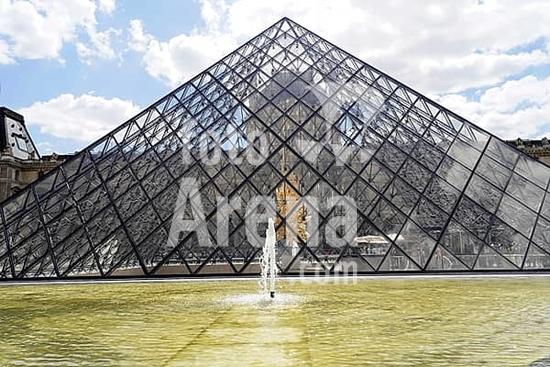
ibxebo10860018 Glass pyramid in the courtyard of the Palais du Louvre, Paris, France, Europe, Glass pyramid of the Louvre in Paris, reflected in the water basin, under a blue sky with clouds, Europe
RF
ibxebo10859996 Glass pyramid in the courtyard of the Palais du Louvre, Paris, France, Europe, Tourists walk in front of the glass pyramid and the historic buildings of the Louvre on a sunny day, Europe
RF
ibxebo10860017 Glass pyramid in the courtyard of the Palais du Louvre, Paris, France, Europe, Historical buildings and the glass pyramid of the Louvre in sunny weather with few people around, Europe
RF
alb9860796 El baño turco ,Dominique Ingres,obra orientalista, Museo del Louvre,museo nacional de Francia, Paris, France,Western Europe.
DC
alb9600516 El baño turco ,Dominique Ingres,obra orientalista, Museo del Louvre,museo nacional de Francia, Paris, France,Western Europe.
DC
alb9607520 La consagración de Napoleón, . (Le Sacre de Napoleón),J acques-Louis David, 1807, Óleo sobre lienzo, Neoclasicismo, Museo del Louvre,museo nacional de Francia, Paris, France,Western Europe.
DC
alb9602308 El Retorno de París de los ingleses por Jean-Simon Berthelemy, - La Reprise de Paris sur les Anglais -, óleo sobre lienzo, 1787. Durante la Guerra de los Cien Años, los ingleses ocuparon París desde 1418 hasta 1436. Esta pintura, encargada por el Comte d'Angivillier, representa el ejército francés retomando la ciudad el 13 de abril de 1436.Museo del Louvre,museo nacional de Francia, Paris, France,Western Europe.
DC
alb9588510 El baño turco ,Dominique Ingres,obra orientalista, Museo del Louvre,museo nacional de Francia, Paris, France,Western Europe.
DC
alb9583011 El baño turco ,Dominique Ingres,obra orientalista, Museo del Louvre,museo nacional de Francia, Paris, France,Western Europe.
DC
alb9587715 Le maréchal Ney a la redoute de Kowno , Auguste Raffet , Museo del Louvre,museo nacional de Francia, Paris, France,Western Europe.
DC
alb9598137 La consagración, Le Sacre de Napoléon, Jacques-Louis David, pintor oficial de Napoleón Bonaparte realizada entre 1805 y 1808, Museo del Louvre,museo nacional de Francia, Paris, France,Western Europe.
DC
alb9594172 El baño turco ,Dominique Ingres,obra orientalista, Museo del Louvre,museo nacional de Francia, Paris, France,Western Europe.
DC
alb4265113 El baño turco ,Dominique Ingres,obra orientalista, Museo del Louvre,museo nacional de Francia, Paris, France,Western Europe.
DC
alb4262371 El baño turco ,Dominique Ingres,obra orientalista, Museo del Louvre,museo nacional de Francia, Paris, France,Western Europe.
DC
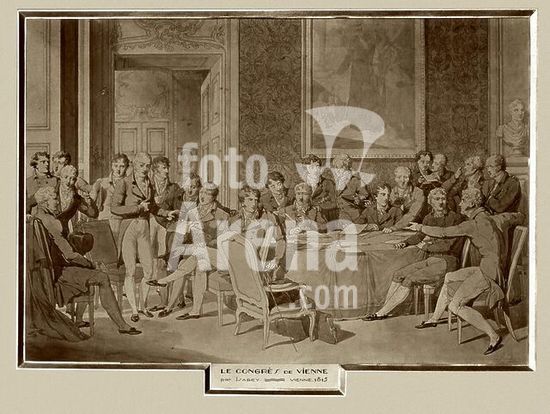
akg145392 Vienna Congress, Autumn 1814 - 9.6.1815. "Le Congres de Vienne" (Meeting of the representatives of the eight powers present at the Treaty of Paris). Sepia drawing, 1814/15, by Jean-Baptiste Isabey (1767-1855). Paris, Musée du Louvre. Museum: Paris, Musée Du Louvre.
DC
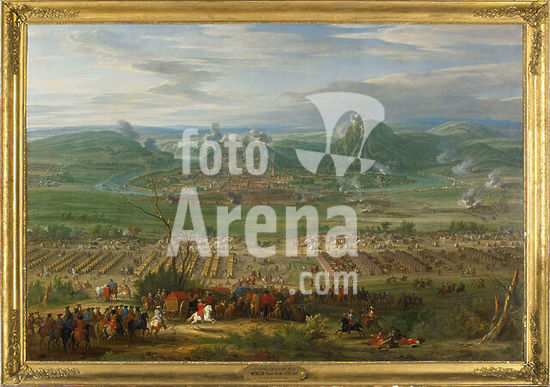
alb11005879 The Siege of Besancon by the Army of Louis XIV in 1674. Museum: Musee du Louvre, Paris. Author: ADAM FRANS VAN DER MEULEN.
DC

Total de Resultados: 274

Página 1 de 3