Busque também em nossas outras coleções:

Data da imagem:
Pauta
ver mais opções...
Agência
ver mais opções...
Fotógrafo
ver mais opções...
Estado
ver mais opções...
Cidade
ver mais opções...
Local
ver mais opções...
Tipo de licença
Orientação
Coleção
ver mais opções...

Total de Resultados: 1.077

Página 1 de 11

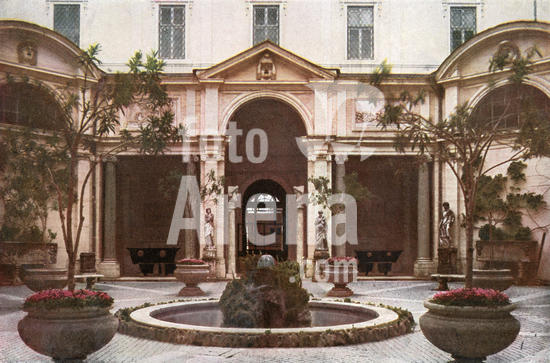
902_05_12310268HighRes The Cortile del Belvedere or the Belvedere Courtyard, Vatican Palace, Vatican City State, Rome, Italy. From Roma Sacra, published 1925.
DC
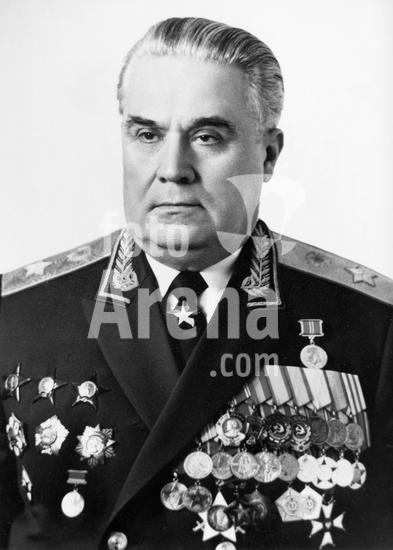
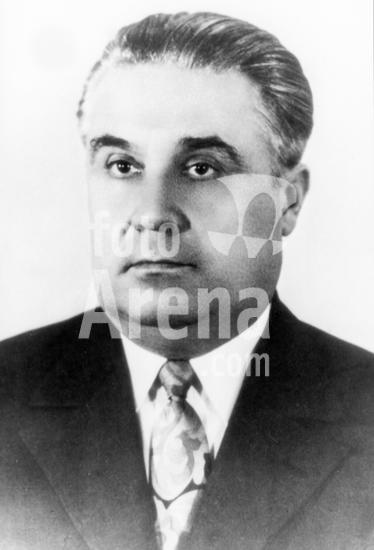
975_05_TASS-B-148230 Vitaly v, fedorchuk, minister of the interior of the ussr and former chairman of the kgb, 1984.
DC
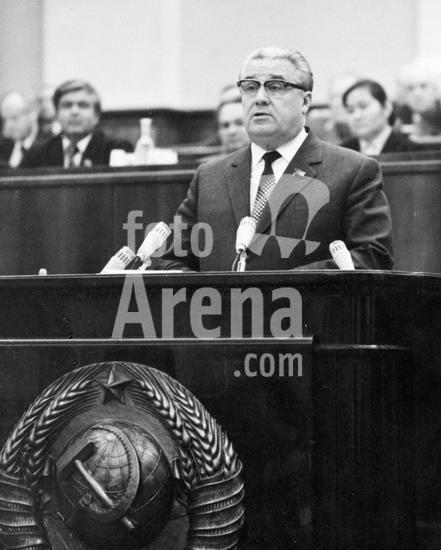
975_05_TASS-B-105814 Vitaly v, fedorchuk, chairman of the state security committee of the ussr(kgb), speaking at the final sitting of the ussr supreme soviet of the 10th convocation, november 24, 1982.
DC
975_05_TASS-B-91054 Vitaly v, fedorchuk, minister of the interior of the ussr and former chairman of the kgb, 1982.
DC
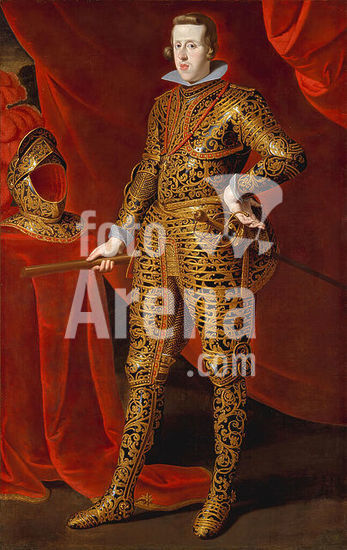
alb3623505 Philip IV (1605-1665) in Parade Armor. Artist: Gaspar de Crayer (Flemish, 1584-1669). Dimensions: 72 x 46 1/2 in. (182.9 x 118.1 cm). Date: ca. 1628.Gaspar de Crayer painted several portraits of Philip IV, probably commissioned by the Marqués de Leganés, who served as Philip's emissary to the Spanish court in Brussels in 1627-28. Here the young king of Spain is presented in a magnificently decorated Flemish cavalry armor. He holds a commander's baton in his right hand and wears an ornate rapier on his left hip. The composition follows a pattern in Spanish portraiture of depicting kings in fine armor, which was established decades earlier by Titian, for example in his portraits of Emperor Charles V and King Philip II. Museum: Metropolitan Museum of Art, New York, USA.
DC
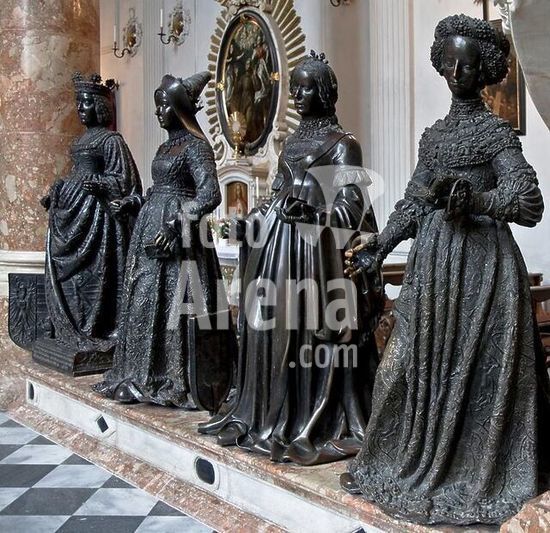
akg1032258 zu: Maximilian I., röm.dt.Kaiser (1493-1519); 1459-1519. Grabmal Maximilians I. in der Hofkirche von Innsbruck, Tirol (Sarkophag, 1584, von Alexander Colin; Bronzestandbilder, 1508-1550, von Gilg Sesselschreiber u.a.)/-Standbilder (v.li.): Elisabeth v.Ungarn,Maria von Burgund, Elisabeth v. Görz u.Kunigunde v.Österreich.-/ Foto.
DC
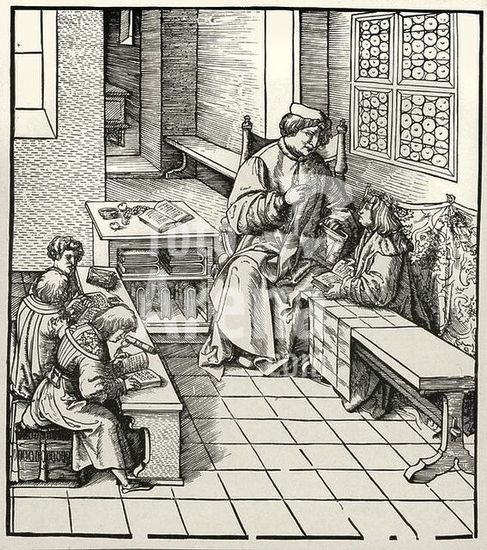
akg008518 Maximilien Ier, empereur romain germanique ; 1459-1519. Le jeune "Weißkunig" (roi blanc) en écolier. Gravure sur bois, v. 1513/18, de Leonhard Beck (v. 1480-1542). Illustration de l'autobiographie de l'empereur Maximilien Ier "Der Weisskunig".
DC
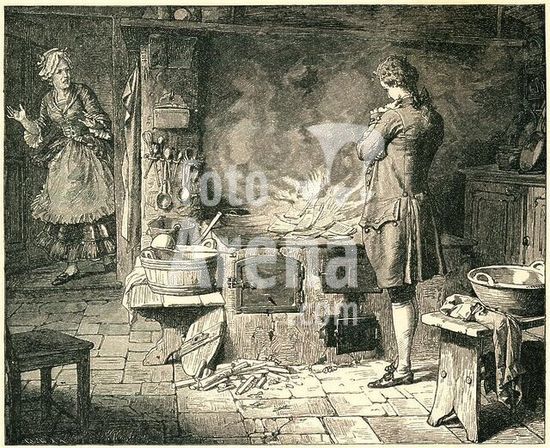
akg004203 Goethe, Johann Wolfgang von; 1749-1832. Werke: Dichtung und Wahrheit (Tl. 1-3, 1811-14, Tl. 4, 1831). "Goethe verbrennt seine Jugendarbeiten" (2. Teil, 6. Buch). Holzstich, um 1880, nach Zeichnung von Kaspar Kögler (1838-1923). Aus: Goethes Werke, hrsg. v. H.Düntzer, Stuttgart und Leipzig, o. J.
DC
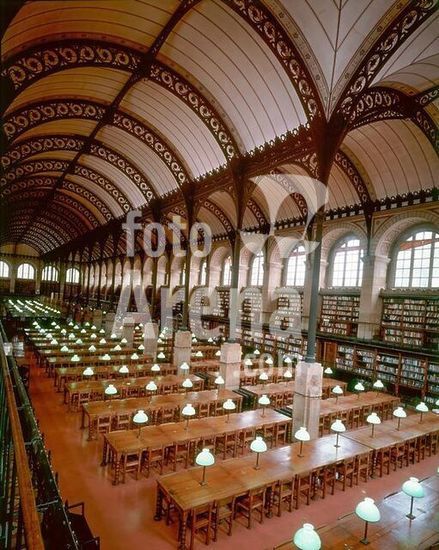
akg284711 Paris (France), Bibliothèque Sainte-Geneviève. (5. Arr., Place du Panthéon Nr. 10; built 1844-50; Arch.: Henri Labrouste). Interior of the reading room with the ceiling of iron konstruction (Mobiliar 1933/34). Photo, 2000.
DC
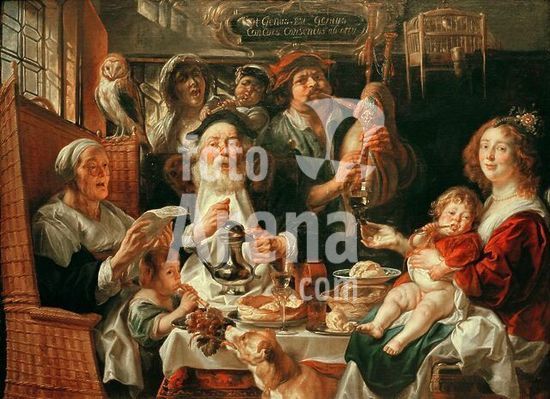
akg095189 Jordaens, Jacob ; 1593-1678. "Les jeunes piaillent comme chantent les vieux", v. 1638-40. Huile sur toile. H. 1,20 ; L. 1,80. Inv. 1407. Valenciennes, Musée des Beaux-Arts. Museum: Valenciennes, Musée des Beaux-Arts.
DC
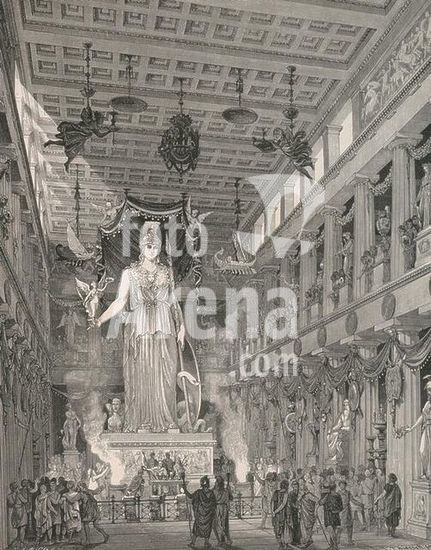
akg193600 Athens (Greece), Parthenon on the Acropolis (Temple of Athena, 447-422 BC built by Iktinos and Kallikrates). - "Inside the Parthenon" (Reconstruction of the naos with statue of Athena Parthenos of Phidias). Wood engraving after a drawing by Friedrich v. Thiersch. (1852-1921). From: J. v. Falke, Hellas and Rome, Stuttgart (W.Spemann) 1879. Berlin, Sammlung Archiv für Kunst und Geschichte. Museum: Berlin, Sammlung Archiv für Kunst und Geschichte. Author: FRIEDRICH VON THIERSCH.
DC
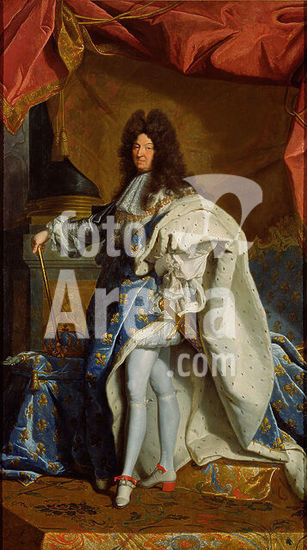
alb3907566 Portrait of Louis XIV. Date/Period: 18th century. Painting. Oil on canvas. Height: 2,896 mm (114.01 in); Width: 1,591 mm (62.63 in). Author: after Hyacinthe Rigaud.
DC
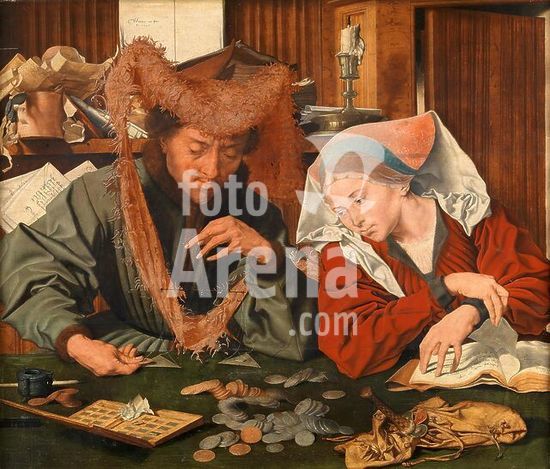
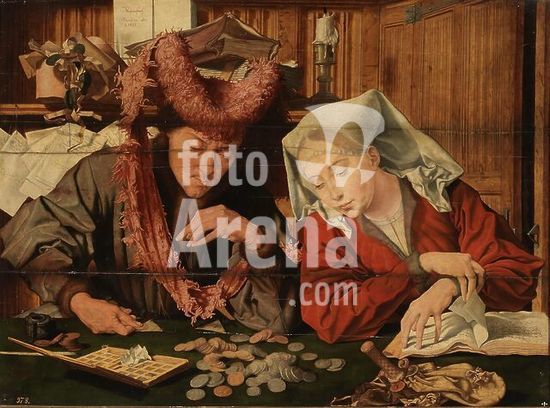
alb2068766 Marinus van Reymerswaele / 'The Moneychanger and his Wife', 1539, Flemish School, Oil on panel, 83 cm x 97 cm, P02567. Museum: MUSEO DEL PRADO, MADRID, SPAIN.
DC
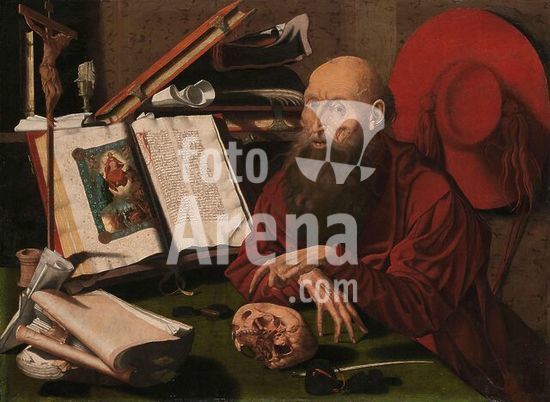
alb4103589 St Jerome in his study. Dating: c. 1535 - c. 1545. Measurements: support: h 80.5 cm × w 109 cm; d 7 cm. Museum: Rijksmuseum, Amsterdam. Author: Marinus van Reymerswale (attributed to).
DC
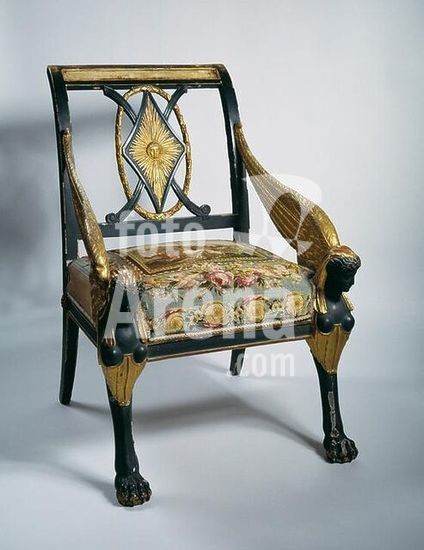
akg367267 Furniture / Chairs. Fauteuil for the bedroom of Maria Feodorovna at the Great Palace of Pavlovsk, Russia. Carved wood, gilded and painted after a design by Andrei Nikiforovitch Voronikhine (1759 - 1814). St. Petersburg, 1804. Inv. No. 311-V. Pavlovsk, Imperial Palace. Museum: Pavlovsk, Imperial Palace.
DC
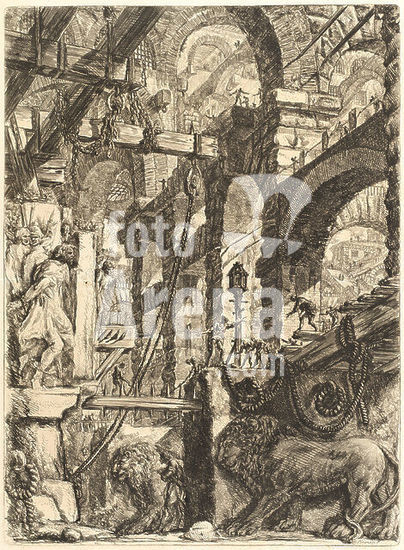
alb3739204 The Lion Bas-Reliefs. Dated: published 1761. Dimensions: sheet: 76.7 x 53.6 cm (30 3/16 x 21 1/8 in.). Medium: etching and engraving on laid paper. Museum: National Gallery of Art, Washington DC. Author: GIOVANNI BATTISTA PIRANESI.
DC
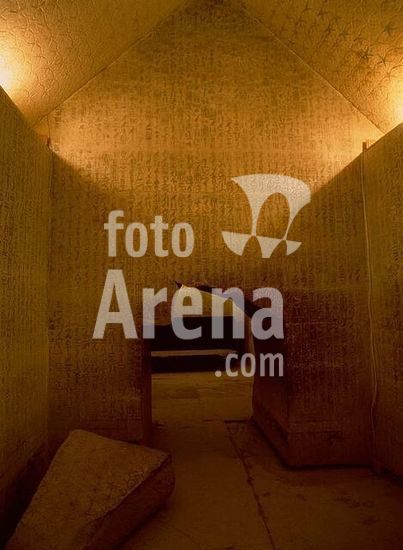
akg222730 Saqqara (Egypt), Pyramid of Unas, (Old Kingdom, 5th dynastym, c. 2500-2350 BC). - Interior view: smaller chamber before the burial chamber, on the walls the so-called Pyramid Texts, ancient religious texts about the burial rituals). Photo, undated.
DC
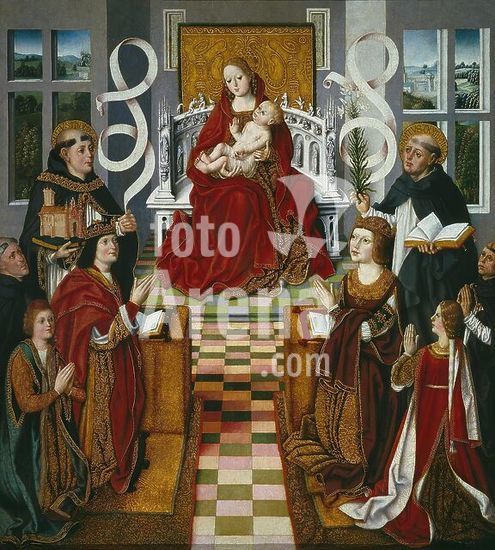
alb2068732 Maestro de la Virgen de los Reyes Católicos / 'The Virgin of the Catholic Kings', 1491-1493, Spanish School, Panel, 123 cm x 112 cm, P01260. Museum: MUSEO DEL PRADO, MADRID, SPAIN.
DC
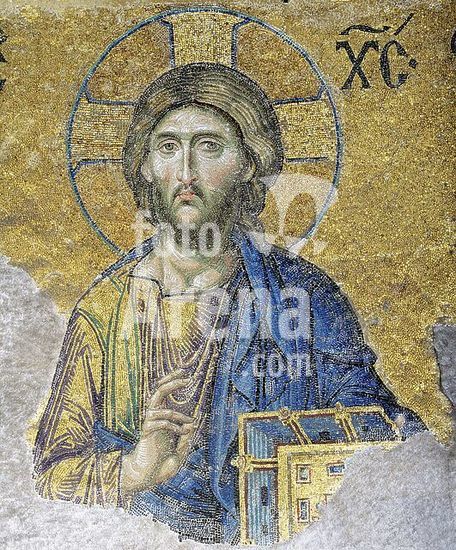
alb331664 Head of Christ. Mosaic from apse at Santa Sophia, Istanbul XIIth century a.D. Museum: Haghia Sofia, ISTANBUL, TURQUIA. JESUS.
DC
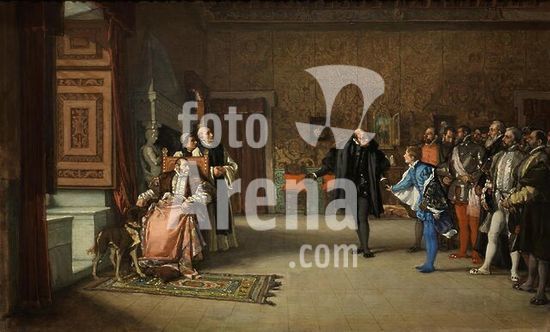
alb2068124 Eduardo Rosales Gallinas / 'Juan de Austria's presentation to Emperor Carlos V in Yuste', 1869, Spanish School, Oil on canvas, 76,5 cm x 123,5 cm, P04610. Museum: MUSEO DEL PRADO, MADRID, SPAIN.
DC
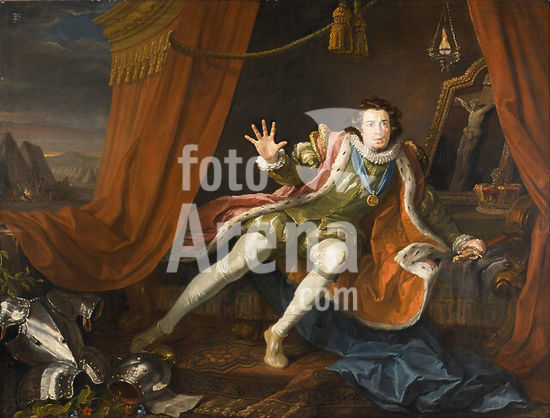
alb3900527 David Garrick as Richard III. Date/Period: Ca. 1745. Painting. Oil on canvas. Height: 1,905 mm (75 in); Width: 2,508 mm (98.74 in). Author: William Hogarth.
DC
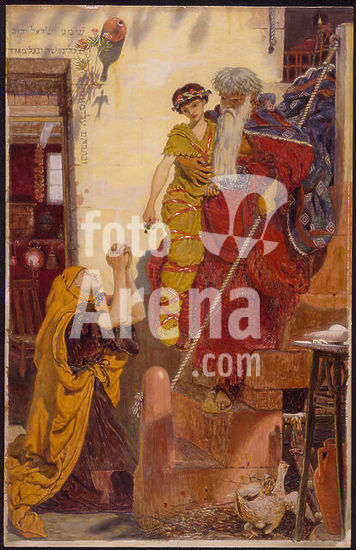
alb3897252 Elijah and the Widow's Son. Date/Period: 1864. Painting. Oil on panel. Width: 343 mm. Height: 525 mm. Author: Ford Madox Brown.
DC
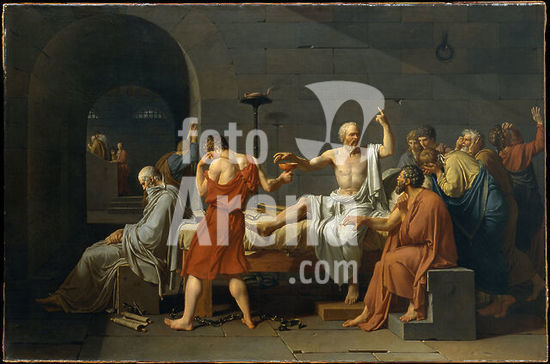
alb3901138 The Death of Socrates. Date/Period: 1787. Painting. Oil on canvas. Height: 129.5 cm (50.9 in); Width: 196.2 cm (77.2 in). Author: JACQUES LOUIS DAVID.
DC
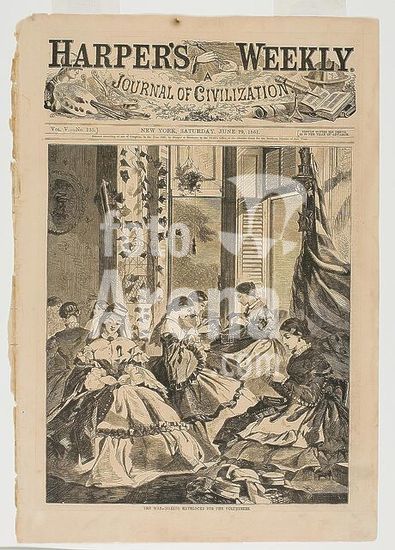
alb4157690 The War--Making Havelocks for the Volunteers. Winslow Homer (American, 1836-1910); published by Harper's Weekly (American, 1857-1916). Date: 1861. Dimensions: 275 x 233 mm (image); 400 x 280 mm (sheet). Wood engraving on paper. Origin: United States. Museum: The Chicago Art Institute, USA.
DC
alb3790400 Marinus Van Reymerswaele / 'The Moneychanger and his Wife'. 1538. Oil on panel. Museum: Museo del Prado, Madrid, España.
DC
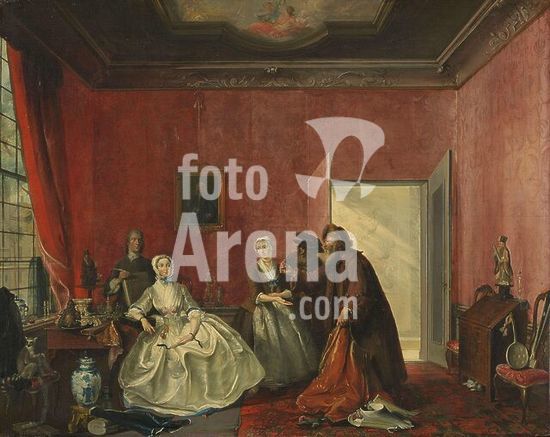
alb4104483 The Spendthrift or the Wasteful Woman, act III, scene V, from the Play by Thomas Asselijn (Joanna and the Polish Jewish Traders). Dating: 1741. Measurements: h 68.5 cm × w 86 cm. Museum: Rijksmuseum, Amsterdam. Author: Cornelis Troost (signed by artist).
DC
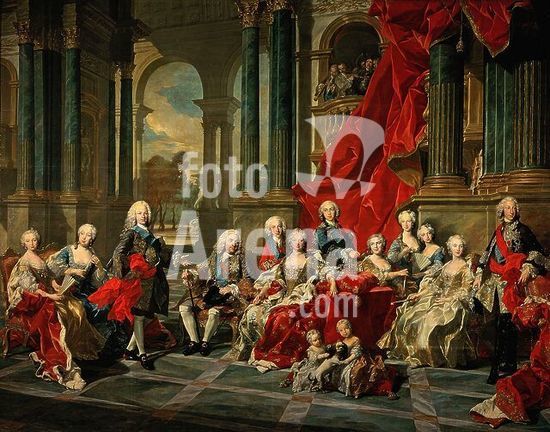
alb2016308 Louis-Michel van Loo / 'The Family of Philip V of Spain', 1743, Oil on canvas, 408 x 520 cm, P02283. Museum: MUSEO DEL PRADO, MADRID, SPAIN. PHILIPP V. VON SPANIEN. ELISABETH FARNESE.
DC
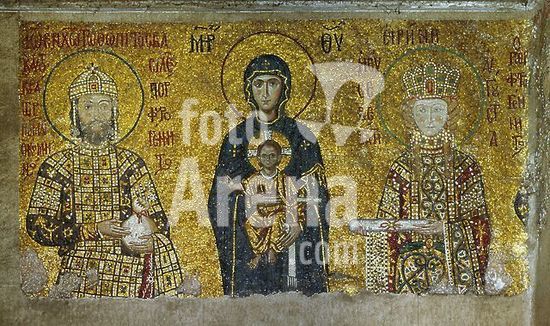
alb2033104 Mosaic of Virgin flanked by Emperor John II Commenus and Empress Irene ruled Byzantine Empire (1118-43). Museum: Haghia Sofia, ISTANBUL, TURQUIA. IRENE DE BIZANCIO.
DC
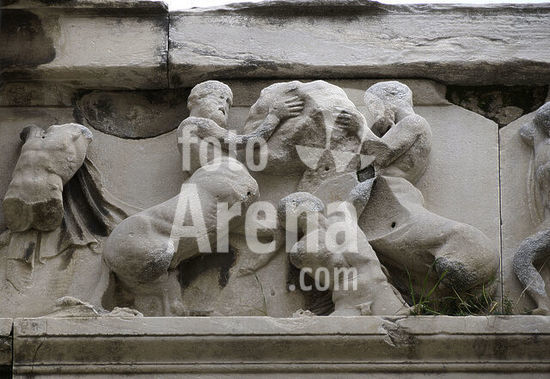
alb22504546 Athens, Greece. Temple of Hephaestus or Hephaisteion. Peripteral Doric temple dedicated to Hephaestus. It was built in the Athenian Agora between 449 and 425 BC. Detail of the sculptural decoration on the frieze of the inner pronaos. Combat between Lapiths and Centaurs.
DC
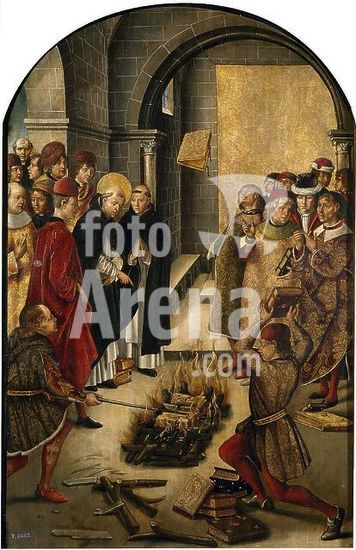
alb2070256 Pedro Berruguete / 'Saint Dominic of Guzman and the Albigensians ', 1493-1499, Spanish School, Oil on panel, 122 cm x 83 cm, P00609. Museum: MUSEO DEL PRADO, MADRID, SPAIN.
DC
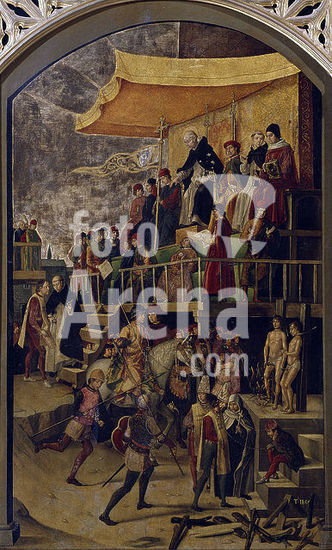
alb2070175 Pedro Berruguete / 'Saint Dominic Guzmán presiding over an Auto-da-fe', 1493-1499, Spanish School, Oil on panel, 154 cm x 92 cm, P00618. Museum: MUSEO DEL PRADO, MADRID, SPAIN.
DC
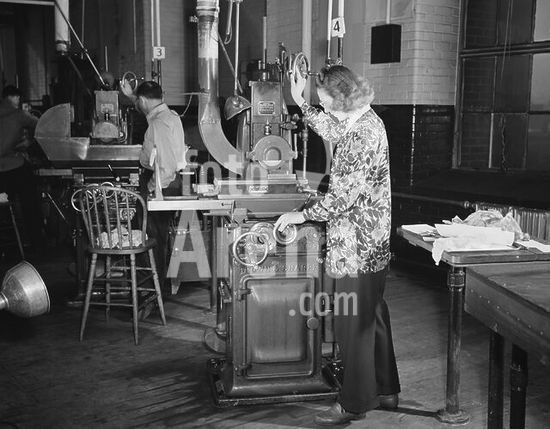
alb3890664 February 1942 - Woman operating surface grinder in production of V-blocks for the machine that makes America's war machine.
DC
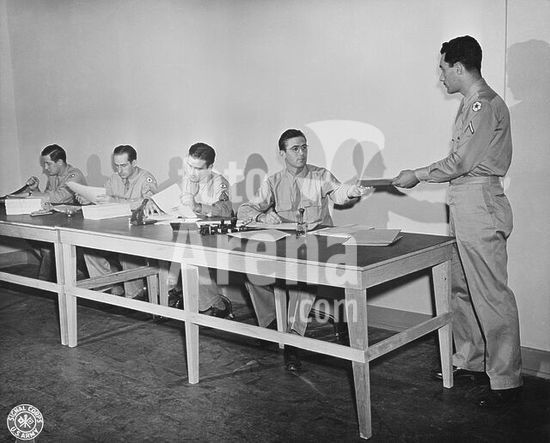
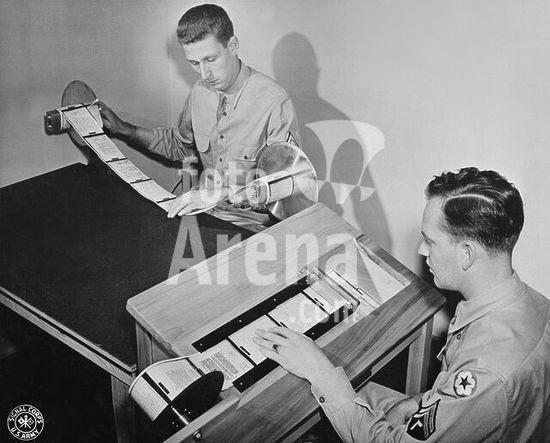
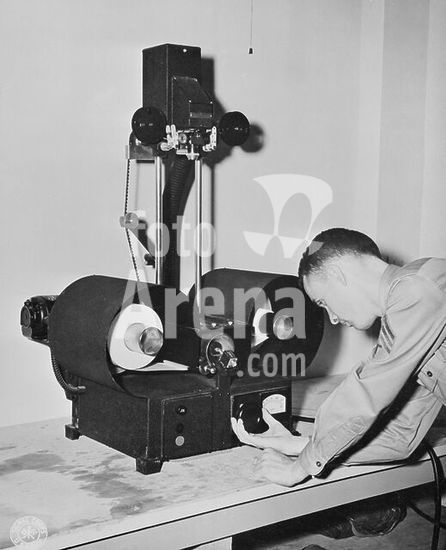
alb3878076 February 1943 - Letters to members of the armed forces overseas are photographed on V-mail microfilm at the Pentagon building, Washington, D.C.
DC
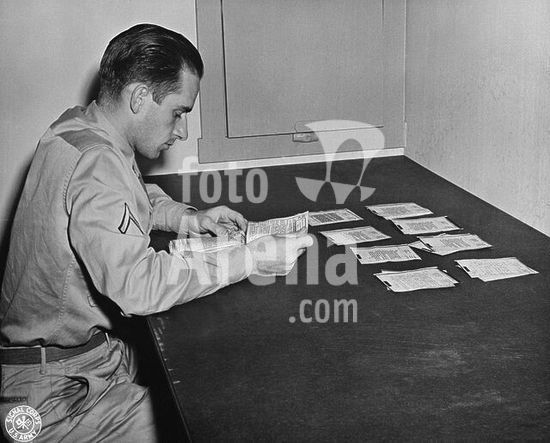
alb3878347 February 1943 - Letters to be microfilmed for V-mail are registered, sorted and prepared for photographing at the Pentagon building, Washington, D.C.
DC
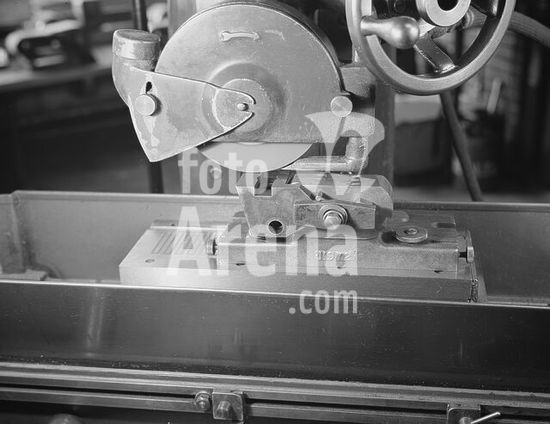
alb3876610 February 1942 - Close-up of grinder converted from production of safety razors to tool-posts. Only conversion necessary in this instance is of the tool holding the V-block, which is held in place by the magnetic chuck.
DC
alb3883972 February 1943 - An armed courier delivers letters for filming and reproducing at the official photo mail station in the V-mail room at the Pentagon building, Washington D.C.
DC
alb3883149 February 1943 - Paper reproduction for V-mail microfilm are inspected and then cut into individual letters by the chopper at the Pentagon building, Washington, D.C.
DC
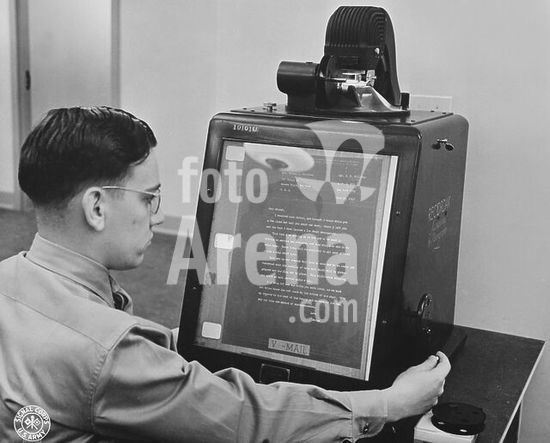
alb3885780 February 1943 - V-mail is inspected for flaws on an enlarging reader at the Pentagon building, Washington, D.C.
DC
alb3885626 February 1943 - Enlarged reproduction from V-mail microfilm are made on a continuous enlarger at the Pentagon building, Washington, D.C.
DC
alb3883830 February 1943 - Finished V-mail letters are sorted and prepared for forwarding to addressees at the Pentagon building, Washington, D.C.
DC
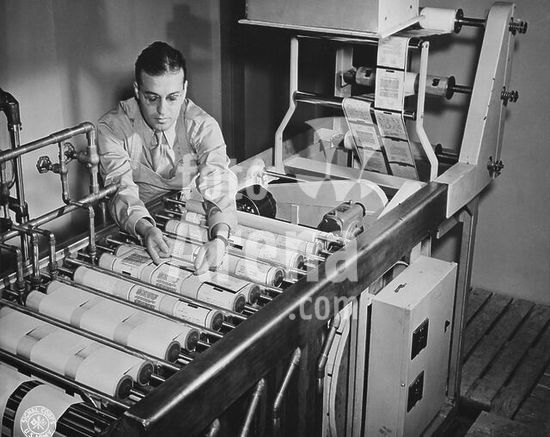
alb3884086 February 1943 - Paper reproductions from V-mail microfilm are developed, fixed washed and dried on a continuous paper processing machine at the Pentagon building, Washington, D.C.
DC
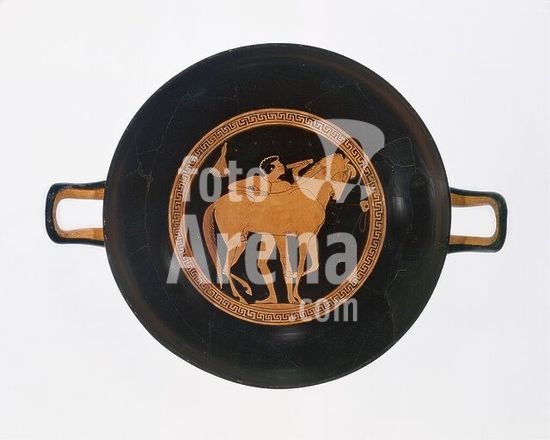
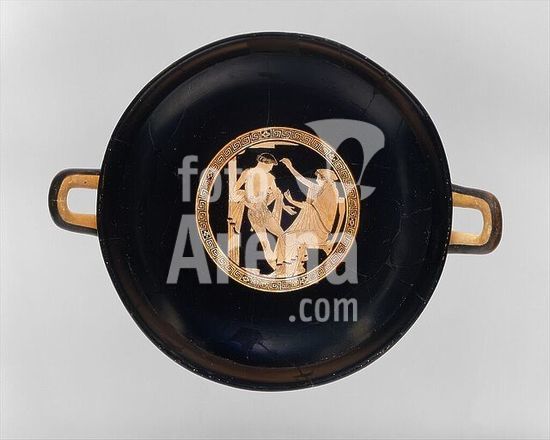
alb3631980 Terracotta kylix (drinking cup). Culture: Greek, Attic. Dimensions: H. 3 9/16 in. (9 cm)diameter 12 1/4 in. (31.1 cm). Date: ca. 490 B.C..Interior, groom with horseIt is rare in red-figure to find representations of a man and a horse as intimate as this one. A black groom is in the process of currying the horse tethered to the perforated fixture at the right of the tondo. On the wall hangs a whisk broom. The horse is restive; the young man rests his arm decisively on its back and goes about his business. Museum: Metropolitan Museum of Art, New York, USA.
DC
alb3674992 Terracotta kylix (drinking cup). Culture: Greek, Attic. Dimensions: Diam.: 9 in. (22.9 cm). Date: 1st quarter of 5th century B.C..Interior, diskos-throwerExterior, obverse and reverse, athletes practicingThe Antiphon Painter and artists around him depicted athletic scenes on their cups frequently and with sympathy. Museum: Metropolitan Museum of Art, New York, USA.
DC
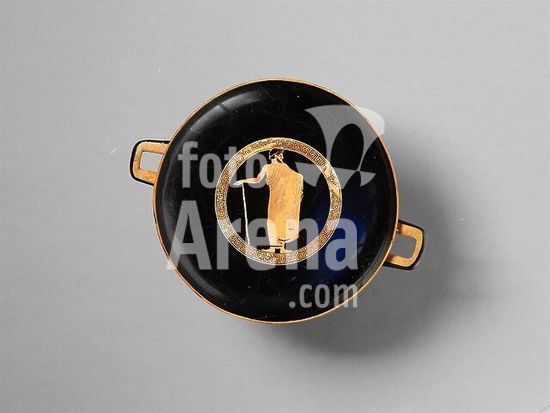
alb3678695 Terracotta kylix (drinking cup). Culture: Greek, Attic. Dimensions: H. 3 7/8 in. (9.9 cm); diameter 9 1/4 in. (23.5 cm). Date: mid-5th century B.C..Interior, man with staffExterior, obverse, warriors arming and youth;reverse, men and youthThe figures depicted on this cup indicate the fine line between athletes and warriors. The young men with their cloaks and staves need only a change of equipment to go to war. Museum: Metropolitan Museum of Art, New York, USA.
DC
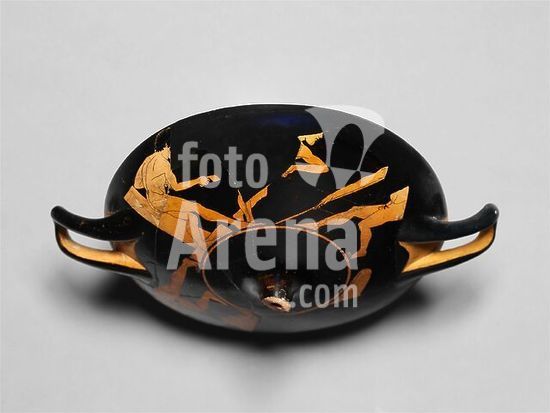
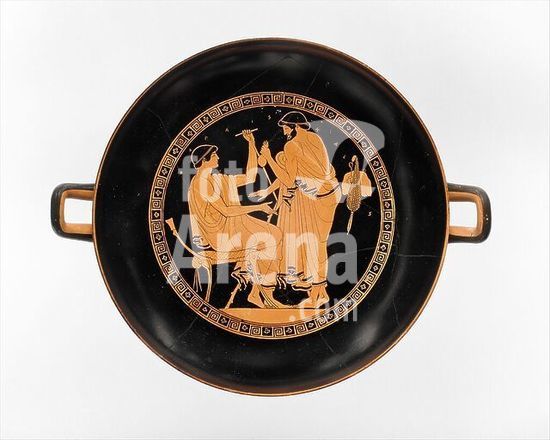
alb3659069 Terracotta kylix (drinking cup). Culture: Greek, Attic. Dimensions: H. 4 3/8 in. (11.1 cm). Date: ca. 480-470 B.C..Interior, youth and manExterior, obverse and reverse, youths and menThe interior shows a man propositioning a youth. The composition is admirable for the easy juxtaposition of the figures, the characterization of the man by the purse and of the youth by the athletic equipment on the wall, and the emphasis placed on the hands in the center. The exterior shows young men with their older mentors or teachers. The fillets and wreaths indicate rewards for accomplishments. Museum: Metropolitan Museum of Art, New York, USA.
DC
alb3656641 Terracotta kylix (drinking cup). Culture: Greek, Attic. Dimensions: H. 3 5/8 in. (9.2 cm)diameter 7 1/4 in. (18.4 cm). Date: ca. 500 B.C..Interior, foreigner with his dogExterior, obverse, symposium (drinking party); reverse, komos (revel)In technique and execution, this cup represents the kind of enterprising and accomplished artist who flourished in Athens during the late sixth and early fifth centuries B.C. The technique is red-figure enhanced by a coral-red slip, a short-lived experiment. The decoration is exceptional for the trenchant observation that underlies the spirited rendering. The man on the interior is often identified as Levantine. His physiognomy would have been as outlandish to an Athenian as the appearance of his dog. Museum: Metropolitan Museum of Art, New York, USA.
DC
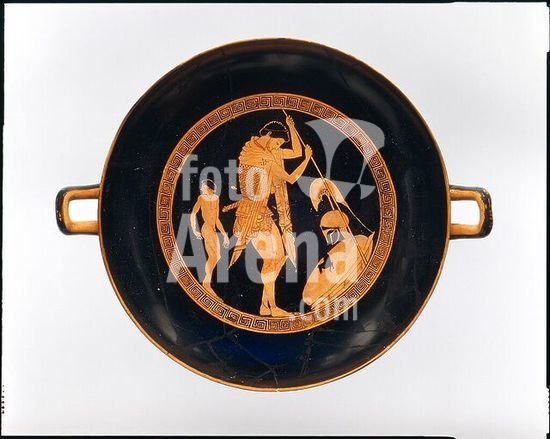
alb3614166 Terracotta kylix (drinking cup). Culture: Greek, Attic. Dimensions: H. 5 3/16 in. (13.2 cm); diameter 13 1/8 in. (33.3 cm). Date: ca. 500 B.C..Interior, warrior and boyExterior, athletesThe interior presents a particularly fine but also sober depiction of a warrior; he grasps a spear and is accompanied by a boy, probably an attendant. The artist carefully articulated the elements of the warrior's dress and armor; by putting the helmet to one side, he could render the pensive, downcast face. The exterior shows more animated scenes--boxing, wrestling, and preparing to throw the diskos. Museum: Metropolitan Museum of Art, New York, USA.
DC
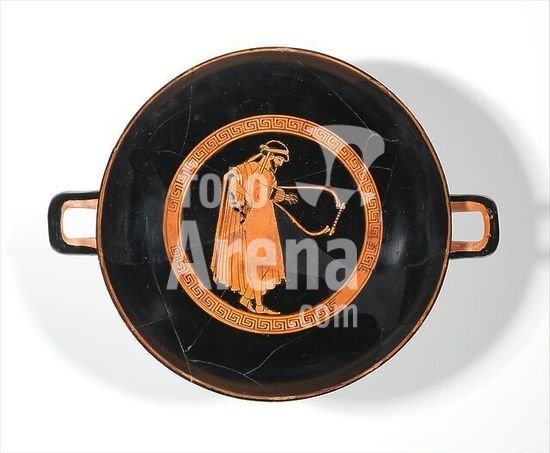
alb3643455 Terracotta kylix (drinking cup). Culture: Greek, Attic. Dimensions: H.: 3 13/16 in. (9.7 cm)Diam.: 9 3/8 in. (23.8 cm). Date: ca. 480 B.C..Interior, man playing lyreExterior, obverse and reverse, komasts (revelers)The decoration of this cup depicts revelers in various moods and actions. On the interior, a pensive man is shown holding a lyre and a plektron (pick). The men and youths on the exterior appear with the paraphernalia of drinking and music, and one of them dances. Museum: Metropolitan Museum of Art, New York, USA.
DC
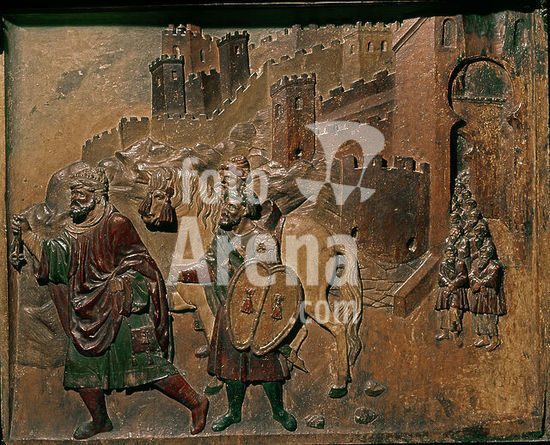
orz003755 BAJORRELIEVE DE BOABDIL ABANDONANDO LA ALHAMBRA - RETABLO MAYOR DE LA CAPILLA REAL DE LA CATEDRAL DE GRANADA - SIGLO XVI. Author: FELIPE BIGARNY (1475/1543). Location: CATEDRAL-CAPILLA REAL-INTERIOR. GRANADA. SPAIN. BOABDIL O MUHAMMAD V (1459-1528).
DC
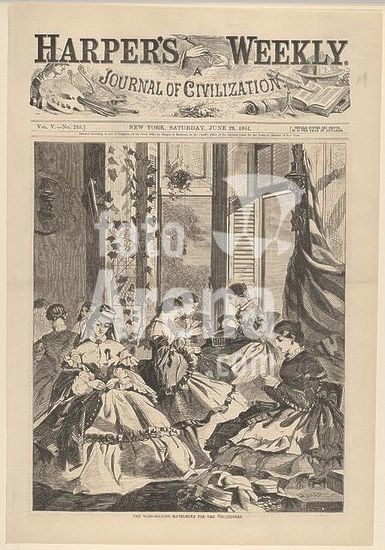
alb3677418 The War - Making Havelocks for the Volunteers (Harper's Weekly, Vol. V). Artist: Winslow Homer (American, Boston, Massachusetts 1836-1910 Prouts Neck, Maine). Dimensions: image: 10 7/8 x 9 1/4 in. (27.6 x 23.5 cm)sheet: 15 13/16 x 10 11/16 in. (40.2 x 27.2 cm). Publisher: Harper's Weekly (American, 1857-1916). Date: June 29, 1861.Homer designed this print in June 1861 during the opening weeks of the Civil War. It shows young women gathered indoors on a summer afternoon to sew uniforms for Union soldiers. They make havelocks, cloth covers for military caps with long flaps at the back that protect the neck from the sun, and one of the seamstresses models a finished example. The lack of a male presence reminds of the men who have departed for the army, leaving wives, sweethearts, and sisters behind. The shadowed portrait of a soldier on the wall foreshadows the loss of life to come. Museum: Metropolitan Museum of Art, New York, USA.
DC
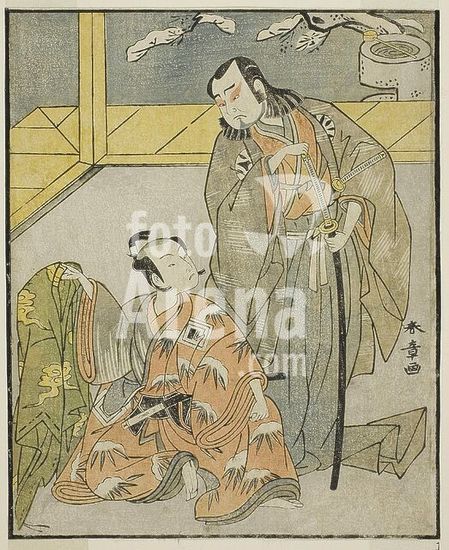
alb4152207 The Actors Nakamura Denkuro II as Suma no Dairyo (right), and Ichikawa Komazo II as Ariwara no Yukihira (left), in the Play Kuni no Hana Ono no Itsumoji, Performed at the Nakamura Theater in the Eleventh Month, 1771. Katsukawa Shunsho ?? ??; Japanese, 1726-1792. Date: 1767-1777. Dimensions: 17.1 x 14.1 cm (6 3/4 x 5 9/16 in.). Color woodblock print; from the illustrated book Yakusha Kuni no Hana (Prominent Actors of Japan). Origin: Japan. Museum: The Chicago Art Institute, USA.
DC
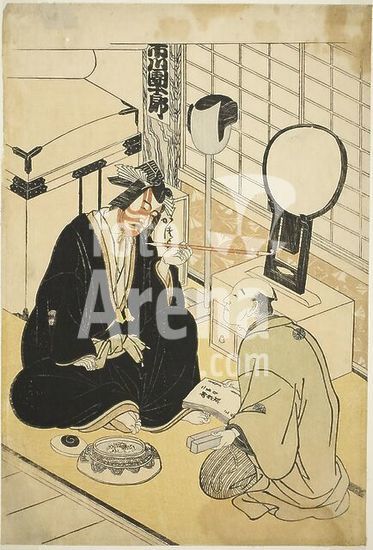
alb4142640 The Actor Ichikawa Danjuro V in His Dressing Room. Katsukawa Shunsho ?? ??; Japanese, 1726-1792. Date: 1778-1788. Dimensions: 38.5 x 26.2cm (15 1/4 x 10 5/16 in.). Color woodblock print; oban. Origin: Japan. Museum: The Chicago Art Institute, USA.
DC
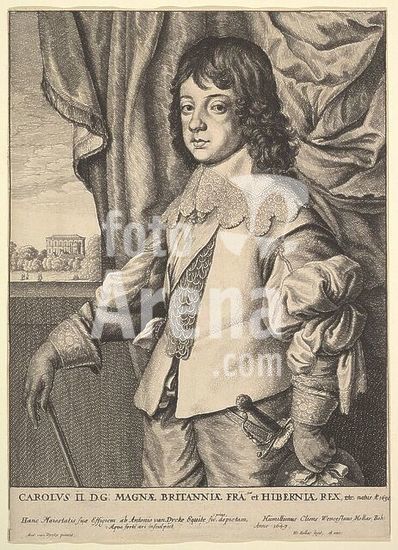
alb3628464 Charles II. Artist: Wenceslaus Hollar (Bohemian, Prague 1607-1677 London). Dimensions: Sheet: 9 7/8 × 7 1/8 in. (25.1 × 18.1 cm)cut within platemark. Sitter: Charles, Prince of Wales (London 1630-1685 London). Date: 1649.Portrait of Charles II as a boy, three-quarter length, standing, wearing collar, coat and sword, leaning on baton and holding hat; curtain in background to right, and view of the banqueting hall in Whitehall, trees and figures in distance to left; after Van Dyck. Museum: Metropolitan Museum of Art, New York, USA.
DC
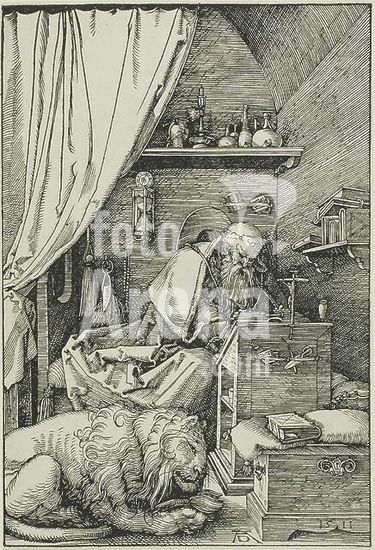
alb4131269 Saint Jerome in his Cell. Albrecht Dürer; German, 1471-1528. Date: 1511. Dimensions: 238 x 162 mm. Woodcut in black on ivory laid paper. Origin: Germany. Museum: The Chicago Art Institute, USA.
DC
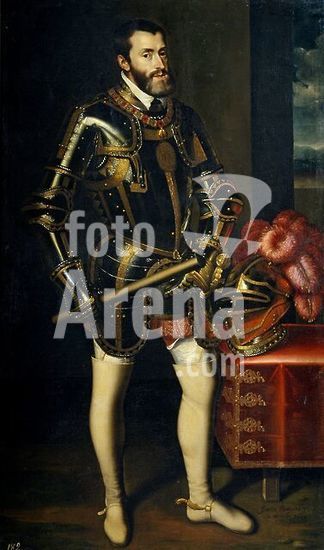
alb2069515 Juan Pantoja de la Cruz / 'Charles V, Holy Roman Emperor', 1605, Spanish School, Oil on canvas, 183 cm x 110 cm, P01033. Museum: MUSEO DEL PRADO, MADRID, SPAIN.
DC
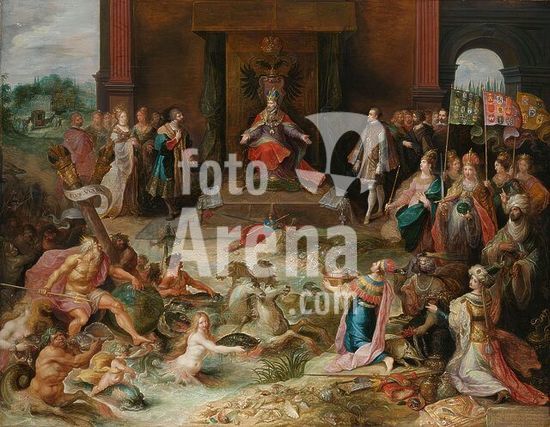
alb4101824 Allegory on the Abdication of Emperor Charles V in Brussels. Allegory on the Abdication of Emperor Charles V in Brussels, 25 October 1555. Dating: c. 1630 - c. 1640. Measurements: h 134 cm × w 172 cm. Museum: Rijksmuseum, Amsterdam. Author: Frans Francken (II).
DC
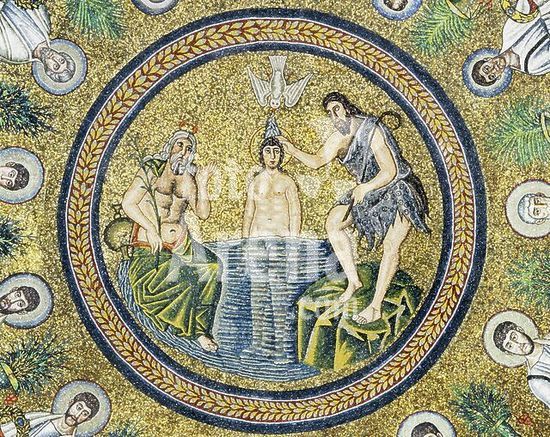
alb332250 Cupola moasic of Baptism of Christ by John Baptist with the River God of jordan in Baptistery of Arians, built Theodoric.
DC
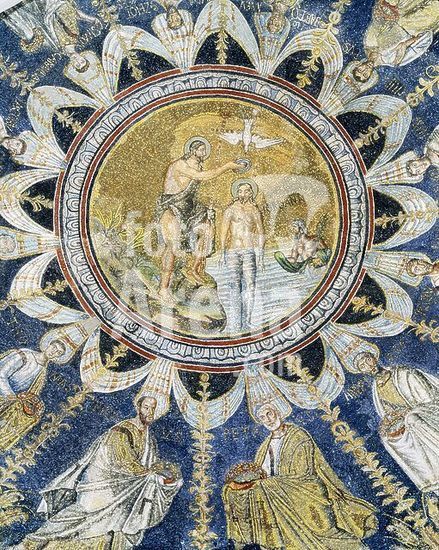
alb339608 Mosaic in cupola of baptism of Christ by John Baptist in River Jordan in Neonian or Baptistery of Orthodox. Neonian Baptistery of Orthodox, Ravenna.
DC
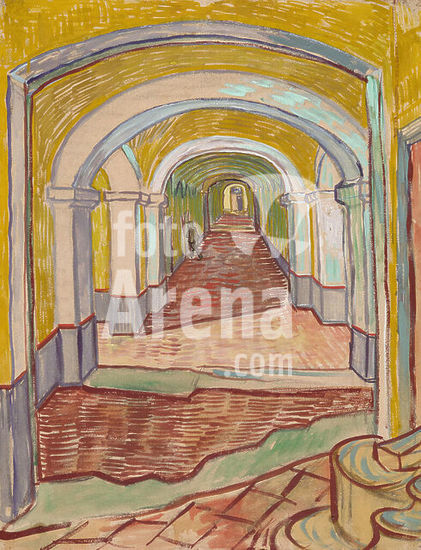
alb3666807 Corridor in the Asylum. Artist: Vincent van Gogh (Dutch, Zundert 1853-1890 Auvers-sur-Oise). Dimensions: 25 5/8 x 19 5/16in. (65.1 x 49.1cm). Date: September 1889.This haunting view of a sharply receding corridor is the artist's most powerful depiction of the asylum of Saint-Paul-de-Mausole in St. Rémy, where he spent twelve months near the end of his life and where he painted the Museum's oils of olive groves, cypresses, roses, and irises ("Women Picking Olives" (1995.535.44); "Olive Orchard" (1998.325.1); "Cypresses" (49.30); "Wheat Field with Cypresses" (1993.132); "Irises" (58.187); "Vase of Roses" (1993.400.5)). The buildings (largely remains of a twelfth-century monastery) were divided into men's and women's wards, but most of the small cells looking out on the neglected garden were empty when Van Gogh was there. One of the rooms he was able to use as a studio.The artist sent this unusually large and colorful drawing to his brother Theo, to give a picture of his surroundings. Museum: Metropolitan Museum of Art, New York, USA.
DC
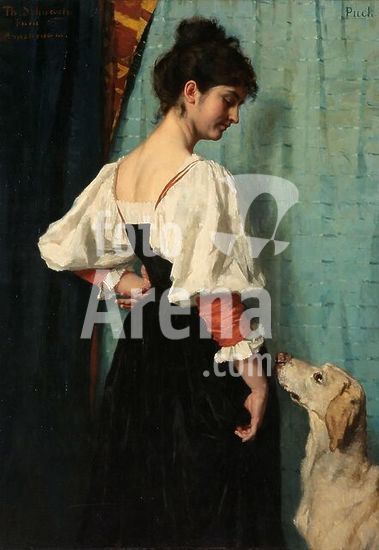
alb4102385 Portrait of a young Woman, with 'Puck' the Dog. Dating: c. 1879 - c. 1885. Measurements: h 144 cm × w 103 cm. Museum: Rijksmuseum, Amsterdam. Author: Therese Schwartze.
DC
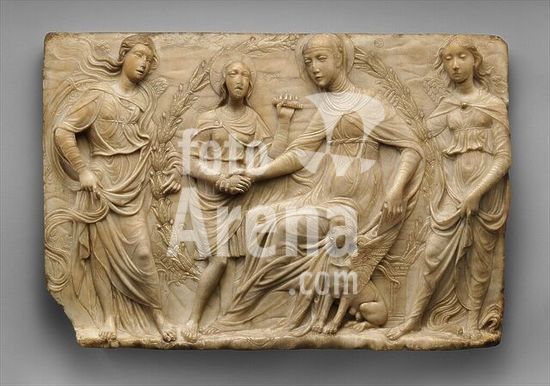
alb3683904 Saint Bridget of Sweden Receiving the Rule of Her Order. Artist: Agostino d'Antonio di Duccio (Italian, 1418-after 1481). Culture: Italian, Perugia. Dimensions: Overall (confirmed): 16 3/4 × 25 1/8 × 2 3/4 in., 57 lb. (42.5 × 63.8 × 7 cm, 25.9 kg). Date: 1459.When this relief was exhibited in Paris in 1878, the German scholar Wilhelm von Bode attributed it to Agostino di Duccio.[1] His identification was accepted by all major scholars; the subject, on the other hand, puzzled many.[2] Eugène Piot referred to it as a scene from the life of Saint Catherine, and he was followed by Émile Bertaux, who connected it with the Mystical Marriage of Saint Catherine, but with considerable hesitation.[3] Others, such as Enrico Brunelli, who doubted the relief's authenticity, recognized in it the Virgin Taking Leave of Her Son before the Passion.[4] Bode called it The Return of Christ from the Temple, and his interpretation was followed into the 1960s, when John Shearman identified the subject as Christ Returning to the Virgin from the Dispute in the Temple.[5]A document that would confirm what is now accepted as the true subject of the relief had already been published in 1875 by Adamo Rossi, but the connection between the document and the relief was not drawn for many years. Rossi transcribed an account of an altar in the church of San Domenico in Perugia that had a relief representing an episode in the life of Saint Bridget.[6] In 1961, without knowledge of the Museum's relief, Francesco Santi published a reconstruction of the altar in the church,[7] and since he described the altar as in terracotta, curators at the Metropolitan decided that the Museum's marble relief could not have been part of the ensemble.[8]Finally, in 1995, Paola Mercurelli Salari systematically reviewed known documents and published additional ones that convincingly answer long-standing questions surrounding the relief. The story that emerged is as follows. On January 10, 1459, the heirs of Lorenzo di Giovanni di Petruccio, including his sister Brigida, signed a notarized document commissioning Agostino di Duccio to execute an altar that would be dedicated to Saint Bridget.[9] With the exception of the predella, the altar was completed and accepted nine months later, and at that time Agostino di Duccio was paid an additional ten florins specifically for the predella.[10] This must mean, Mercurelli Salari points out, that Agostino was paid a bonus to create a better relief for the predella, that is to say, in marble. She further notes that the Museum's scene can be interpreted as the moment in the life of Saint Bridget, as related in her Revelations, when Christ brought her the rule of her new order: "Rule of the Holy Savior which has been given divinely from the mouth of Jesus Christ to his devoted spouse Saint Bridget of the Kingdom of Sweden."[11] In the relief, the second figure from the left must be the young Christ, to whom, as a nun, Saint Bridget was mystically married. He carries a rolled document in one hand, representing the Bridgettine rule, while the sibylline saint, garbed in the veil and mantle of her order, holds his other hand. Only twenty-three years after the relief was installed, Piergentile di Lorenzo de' Belli stated that his Aunt Brigida had bequeathed 300 florins to renovate the family chapel in San Domenico. The altar was dismantled, and the remnants were left to the friars of the church to be remounted in an altar dedicated to the Rosary.[12]The Museum has long accepted Mercurelli Salari's identification of the scene on their relief, which was rarely represented in fifteenth-century sculpture. The highborn widow Bridget Gudmarsson (ca. 1303-1373) founded the Order of the Holy Savior in Sweden in 1346 and moved to Rome, where she lived from 1349 until her death, to seek confirmation of her order, which was duly granted by Pope Urban V. Revered for her good works and visions, she was canonized in 1391. Clearly she was admired by the di Petruccio family, who named a child after her and created an altar in her honor.After carving marble reliefs for the interior of the Tempio Malatesta in Rimini, between 1449 and 1456, Agostino d'Antonio di Duccio moved to Perugia, where his first important commission was for the facade of the Oratorio of San Bernardino. The gothicizing line and highly decorative patterning evident in his Rimini sculptures still governed the style of the angels flying on either side of the San Bernardino door and the image of the saint above. His figure of Patience on the facade holds bunched pleats of drapery with one hand, just as do the figures in the Saint Bridget relief.[13] The wreath supported by angels that creates the sacred space for Saint Bridget and the young Christ, a device seen on medieval ivories, is a sign of Agostino's interest in Gothic forms. The hallmarks of his style--heavily lidded eyes, decoratively swirling hair and drapery--are unmistakable. Flattened forms, such as the saint's body splayed across the surface of the marble relief and her angular arms, are more consistent with Agostino's work in the 1450s (for example, the relief figure of Saint Bernardino in the center of the facade of the Oratorio di San Bernardino, Perugia of 1457-61) than they are with the more substantial figures of his Virgin and Child with Angels in the Musée du Louvre, Paris, of about 1463, or his Virgin and Child in the National Gallery of Art, Washington, D.C., of a decade later.[14] A recent biographer of Agostino, Pier Giorgio Pasini, dated the Museum's relief to the sculptor's last years, after he returned to Perugia in 1473, but judging from its style--and taking into account the documentary evidence described above--it must have been executed much earlier.[15] Behind the figures, cosmic forces--the sun, the moon, a wind god--as well as the towers of a townscape, perhaps Perugia, set the stage for this saint who brought her intense spirituality to communities from the Baltic to the Mediterranean.[Ian Wardropper. European Sculpture, 1400-1900, in the Metropolitan Museum of Art. New York, 2011, no. 3, pp. 16-19.]Footnotes:[1] Wilhelm von Bode. "L'Exposition Rétrospective au Trocadéro." Revue archéologique, n.s., 37 (February 1879), pp. 94-103. [Originally published in Zeitschrift für bildende Kunst, August 29 and September 5, 1878.], p. 101.[2] Wilhelm R. Valentiner. "Renaissance Sculptures." MMAB 9, no. 6 (June 1914), pp. 142-45; John Pope-Hennessy. Italian Renaissance Sculpture. Vol. 2 of An Introduction to Italian Sculpture. London, 1958, p. 325.[3] Eugène Piot. "La Sculpture à l'Exposition Rétrospective du Trocadéro." In L'art ancient à l'exposition de 1878, edited by Louis Gonse, pp. 130-88. Paris, 1879, p.142; Émile Bertaux. "Trois Chefs-d'oeuvre italiens de la collection Aynard." Revue de l'art ancient et modern 19 (February 1906), pp. 81-96, p. 93.[4] Enrico Brunelli. "Ancora del bassorilievo attribuito ad Agostino di Duccio nella collezione Aynard." L'arte 9 (1906), pp. 454-55; Carlo Gamba. "Agostino di Duccio." In Enciclopaedia italiana, vol. 1, pp. 928-30. Rome, 1929., p. 930.[5] John Shearman. Andrea del Sarto. 2 vols. Oxford, 1965, vol. 1, p. 48, n. 2. Shearman noted that the sphinx at the feet of the woman in the chair, whom he identified as the Virgin, probably characterized her as Sedes Sapientiae (Seat of Wisdom), an idea that Agostino would have borrowed from Donatello's Virgin and Child Enthroned (1446-50, high altar of the church of San Antonio, Padua).[6] Adamo Rossi. "Prospetto cronologico della vita e delle opere di Agostino d'Antonio, scultore fiorentino con la storia e i documenti di quelle da lui fatte a Perugia." Pt. 2, "Altare di S. Lorenzo in S. Domenico." Giornale di erudizione artistica 4 (1875), pp. 76-83. See also Anna Zanoli. Perugia: Oratorio di San Bernardino. Tesori d'arte Cristiana, vol. 4, no. 67. Bologna, 1967.[7] Francesco Santi. "L'altare di Agostino di Duccio in S. Domenico di Perugia." Bolletino d'arte, ser. 4, 46 (1961), pp. 162-73.[8] Notes in the curatorial files of the Department of European Sculpture and Decorative Arts, Metropolitan Museum.[9] Adamo Rossi. "Prospetto cronologico della vita e delle opere di Agostino d'Antonio, scultore fiorentino con la storia e i documenti di quelle da lui fatte a Perugia." Pt. 2, "Altare di S. Lorenzo in S. Domenico." Giornale di erudizione artistica 4 (1875), pp. 76-83, pp. 76-77, publishing records in the Archivio di Stato, Perugia, Notarile, Tobaldo di Paolo, protocollo, no. 153, c. 119v. See also Paola Mercurelli Salari. "L'altare di Agostino di Duccio in San Domenico a Perugia: Una proposta di integrazione." Commentari d'arte 1, no. 2 (September-December 1995), pp. 41-46, pp. 41-42, 44, n. 4.[10] Annibale Mariotti. Lettere pittoriche perugine; o, Sia ragguaglio di alcune memorie istoriche risguardanti le arti del disegno in Perugia al Signor Baldassare Orsini... Perugia, 1788. [Reprint ed., Bologna, 1976.], pp. 98-99, and n.4.11. "Regula Sanctis Salvatoris data divinitus ab ore Jesu Christi devotae Sponsae Sanctae Brigittae de Regno Svetiae"; quoted in Igino Cecchetti. "Brigida di Svezia. II. La vita." In Bibliotheca Sanctorum, vol. 3, cols. 439-504. Rome, 1963, col. 470. See also Saint Bridget of Sweden, Saint Bride and Her Book: Birgitta of Sweden's Revelations. Edited by Julia Bolton Holloway. New ed. Library of Medieval Women. Woodbridge, Suffolk, 2000.12. Mercurelli Salari 1995, p. 42.13. See Gustavo Cuccini. Agostino di Duccio: Itinerari di un esilio. Perugia, 1990, fig. 31.14. Louis Courajod. "La Madone d'Auvillers." Gazette des beaux-arts, 3rd ser., 8, no. 2 (August 1, 1892), pp. 129-37, p. 133, relates the two angels flanking the Madonna in the Louvre relief to those in the New York relief, but they are quite different in style.15. Pier Giorgio Pasini. "Agostino (di Antonio) di Duccio." In The Dictionary of Art, edited by Jane Turner, vol. 1, pp. 455-57. New York, 1996 , p. 456. Museum: Metropolitan Museum of Art, New York, USA.
DC
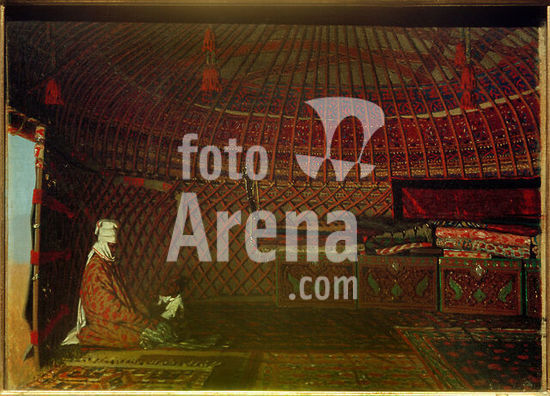
akg2427643 Ethnology / Kyrgyzstan:. "In the Tent of a Rich Kirghiz". Study. Painting, 1869-1970, by Wassily W. Werestschagin (1842-1904). Oil on canvas, 27 × 36.6 cm. Moscow, Tretjakov Gallery. Museum: Moskau, Staatliche Tretjakow-Galerie. Author: VASILY V. VERESCHAGIN. WASSILI WASSILJEWITSCH WERESCHTSCHAGIN.
DC
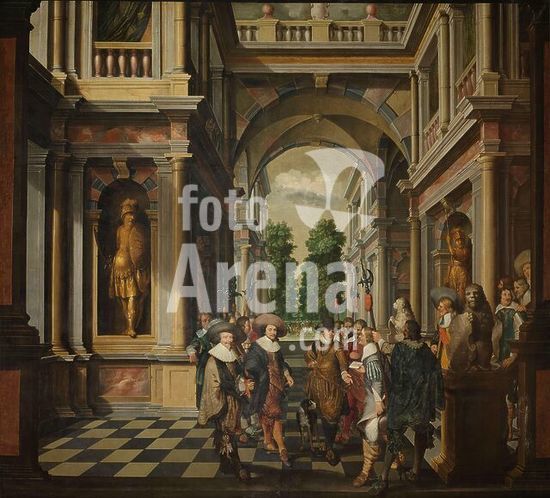
alb4104225 A Seven-Part Decorative Sequence: A Gallery. Dating: 1630 - 1632. Measurements: h 309 cm × w 350 cm × d 6 cm; h 319 cm × w 360 cm × d 15.5 cm. Museum: Rijksmuseum, Amsterdam. Author: Dirck van Delen.
DC
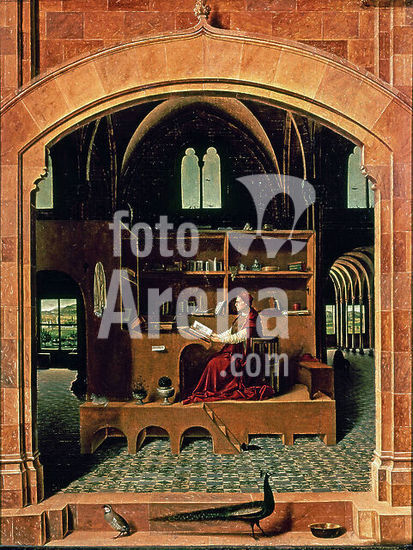
orz176517 St. Jerome in his Study. c.1475. Oil on wood (46 x 36.5 cm). London, National Gallery. Author: ANTONELLO DE MESSINA (1430-1479). Location: NATIONAL GALLERY. LONDON. ENGLAND. SAN JERONIMO (347-420).
DC
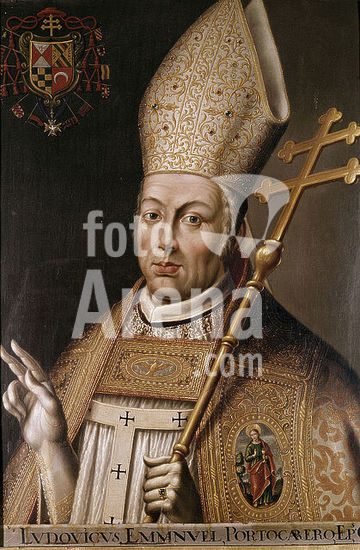
orz006998 Cardinal and regent of Philip V. Toledo Cathedral. Author: ANONYMOUS. Location: CATEDRAL-INTERIOR. Toledo. SPAIN. CARDENAL PORTOCARRERO. PORTOCARRERO LUIS MANUEL. FERNANDEZ DE PORTOCARRERO LUIS MANUEL.
DC
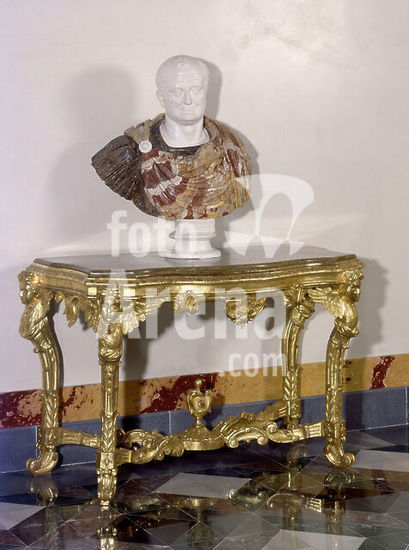
orz178014 CONSOLA DE LA EPOCA DE FELIPE V EN LA GALERIA DE ESTATUAS - DECIMA SALA - PLANTA 0 - S XVIII. Location: PALACIO REAL-INTERIOR. LA GRANJA DE SAN ILDEFONSO. SEGOVIA. SPAIN.
DC
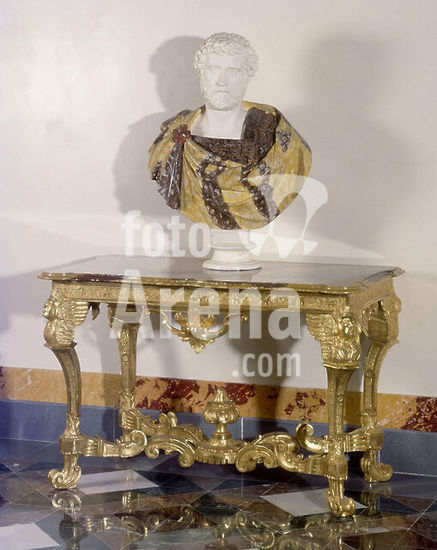
orz178015 CONSOLA DE LA EPOCA DE FELIPE V EN LA GALERIA DE ESTATUAS - DECIMA SALA - PLANTA 0 - S XVIII. Location: PALACIO REAL-INTERIOR. LA GRANJA DE SAN ILDEFONSO. SEGOVIA. SPAIN.
DC
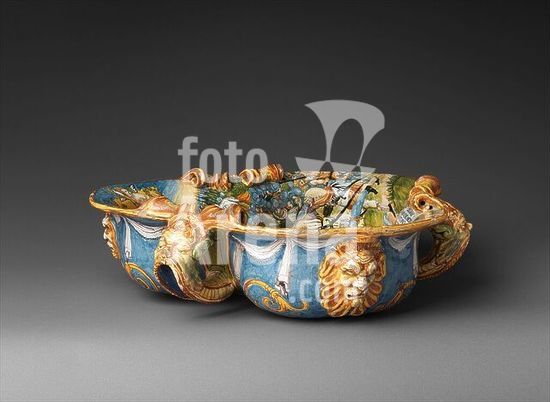
alb3643265 Wine cooler with Charles V's Victory at Mühlberg. Artist: Based on an engraving by Enea Vico (Italian, Parma 1523-1567 Ferrara); Probably after a design by Battista Franco (Italian, Venice ca. 1510-1561 Venice). Culture: Italian, Urbino. Dimensions: Overall (confirmed): 5 7/8 × 19 1/2 × 19 1/2 in. (14.9 × 49.5 × 49.5 cm). Date: ca. 1560-90.The painted scene on the interior of this cooler depicts an important sixteenth-century event--the 1547 victory of the Catholic forces of the Holy Roman Emperor Charles V over his Protestant enemies. A Latin inscription identifies the scene, which was adapted from a popular print. Coolers were not originally intended to be hung on a wall, but this work's foot was removed in later centuries when collectors preferred the vertical display of pottery. Museum: Metropolitan Museum of Art, New York, USA.
DC

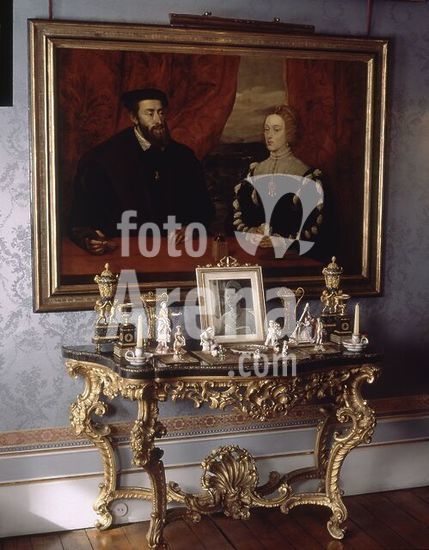
orz143258 INTERIOR - SALON EN LA PLANTA NOBLE DEL PALACIO - DET DE UNA MESA CON UNA PINTURA ENCIMA. Location: PALACIO DE LIRIA. MADRID. SPAIN. CARLOS V (CARLOS I). Charles I (V of the Holly Roman Empire). ISABELLA VON PORTUGAL (1503-1539).
DC
orz146432 JUAN JOSE LABORDA MARTIN PRESIDENTE DEL SENADO DURANTE LA IV Y LA V LEGISLATURA. Location: SENADO-INTERIOR. MADRID. SPAIN.
DC
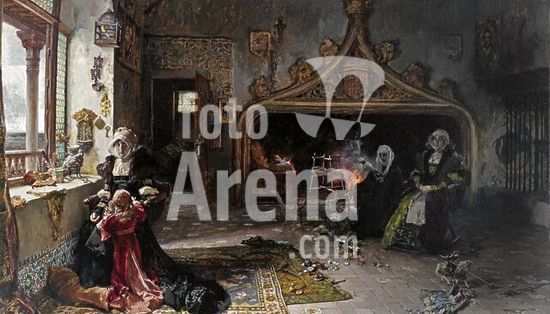
orz186606 'Queen Juana "la Loca" confined at Tordesillas with her daughter, the infanta Catalina', 1906, Oil on canvas, 85 cm x 146 cm, P07493. Author: FRANCISCO PRADILLA Y ORTIZ (1848-1921). Location: MUSEO DEL PRADO-PINTURA. MADRID. SPAIN.
DC
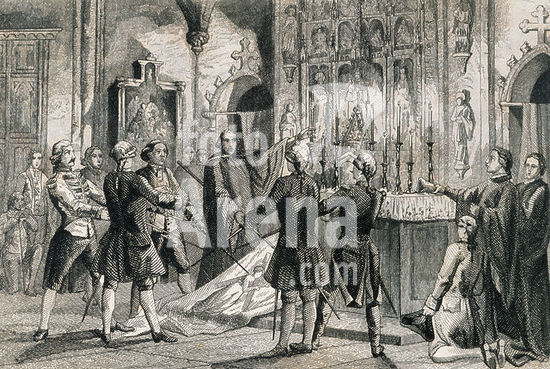
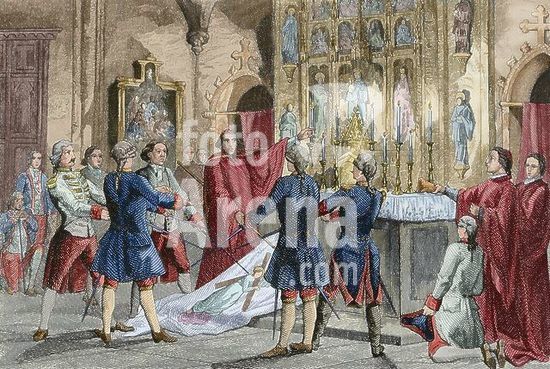
alb1473267 War of Spanish Succession (1702-1715). Oath of the captains of Barcelona who commands the troops of Antonio de Villarroel, Commander in Chief of the Army of Catalonia. Engraving by Urbadieta and J. Nicolau. 19th century.
DC
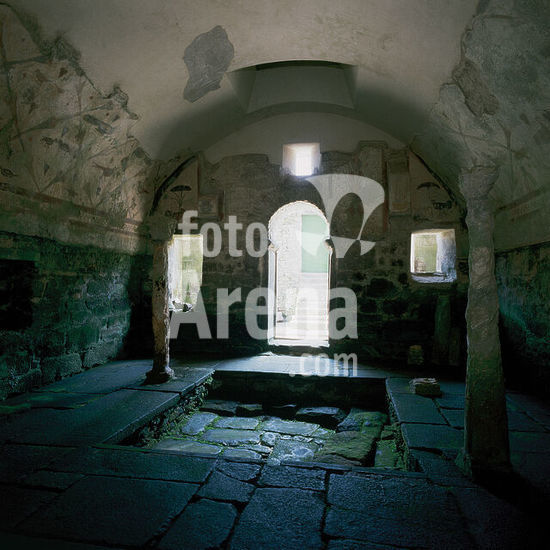
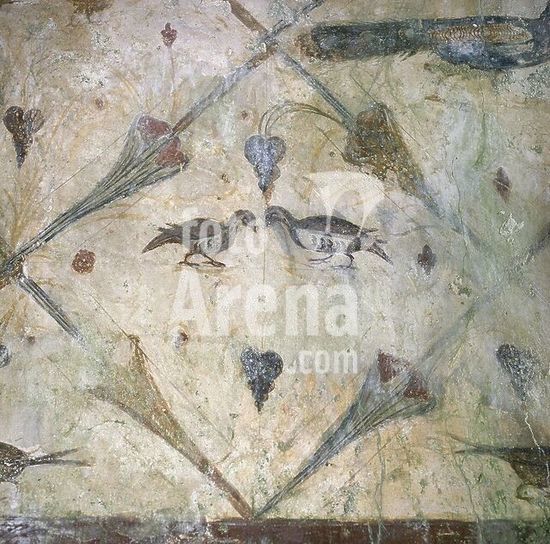
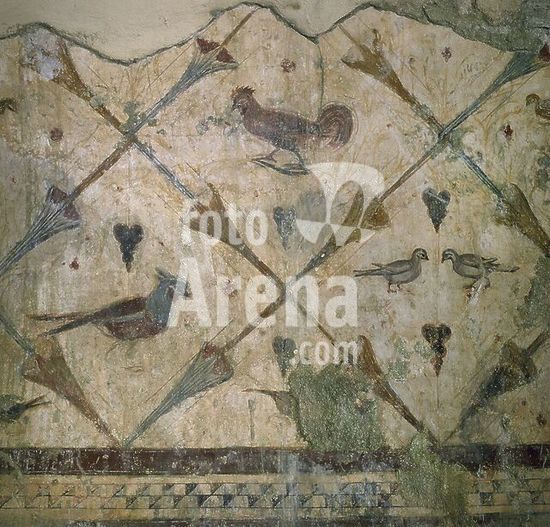
alb1469802 Early Christian art. Spain. 3rd century. Church of Santa Eulalia of Boveda. Old Roman temple or nymphaeum, later transformed into Roman-Christian basilica. Decorated with frescoes depicting animals that probably symbolize the paradise. Galicia.
DC
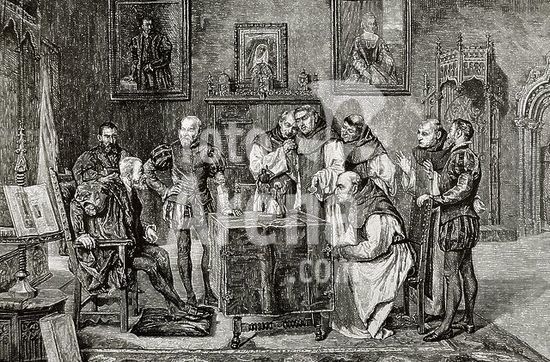
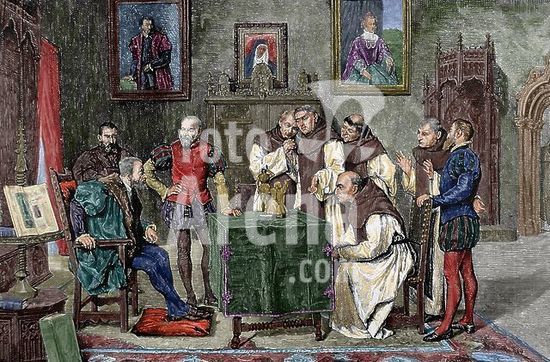
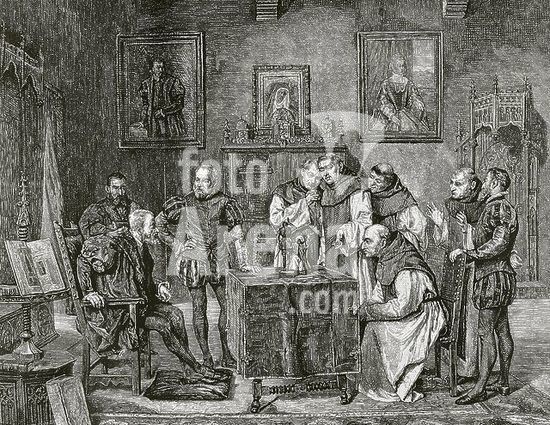
alb2037391 Charles I (1500-1558). King of Spain and Emperor of Germany. Charles V at Yuste. Engraving by C. Penoso. The Spanish and American Illustration, 1879.
DC
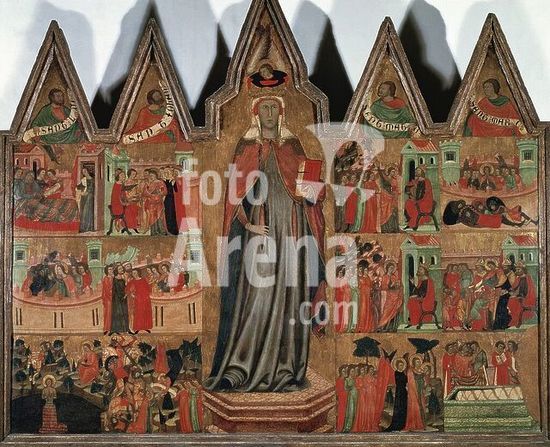
alb2127185 Joan Loert, Master of Privileges. 13th-14th centuries. Altarpiece of Saint Quiteria, 1332. From the Hospital of Saint Anthony, Palma of Majorca. Museum of Majorca. Spain.
DC
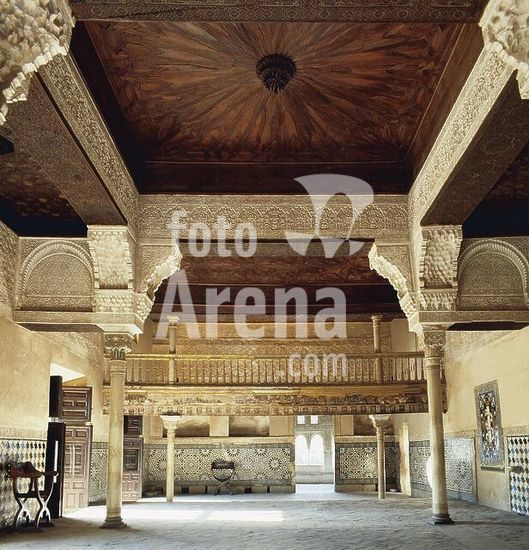
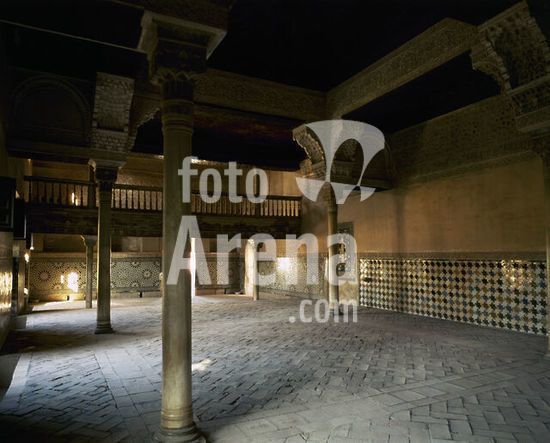
alb2126659 Spain. Granada. The Alhambra. The Mexuar-Oratory. Interior. 14th century.
DC
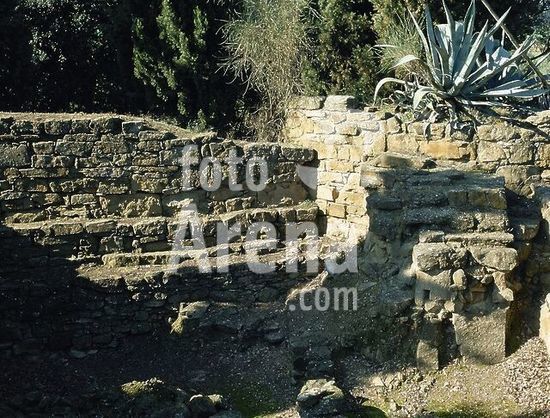
alb2405726 Iberian settlement of El Puig de Sant Andreu. 6th century-2nd century BC. Iberian-Roman wall. Detail of the west wall (5th century BC) from inside of the enclosure, where it is appreciated the superposition of three construction phases. Ullastret, Girona province, Catalonia, Spain.
DC
alb2078054 Charles I (1500-1558). King of Spain and Emperor of Germany. Charles V at Yuste. Engraving by C. Penoso. The Spanish and American Illustration, 1879. Colored.
DC
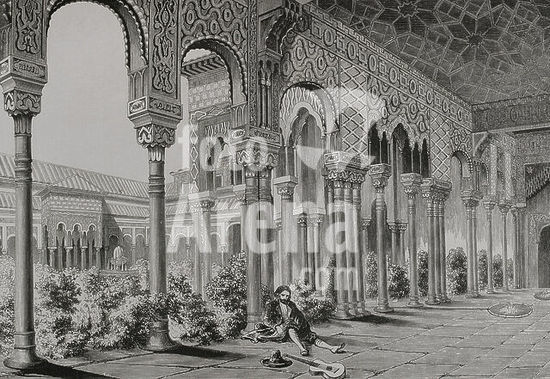
alb9656544 Granada, Andalusia, Spain. Alhambra Palace. Interior view. Engraving. "Les Arts au Moyen Age et a l'Epoque de la Renaissance", by Paul Lacroix. París, 1877.
DC
alb3391964 Charles I (1500-1558). King of Spain and Emperor of Germany. Charles V at Yuste. Engraving. "La Ilustracion Espanola y Americana", 1879.
DC
alb3388205 Santa Eulalia de Boveda. Late Roman sancturary. 3rd century. Near Ancient Lucus Augusti (Lugo). Dedicated goddess Cibeles. Oracle. Detail frescoes. Sibyls in the form of birds. Galicia. Spain,.
DC
alb3388206 Santa Eulalia de Boveda. Late Roman sancturary. 3rd century. Near Ancient Lucus Augusti (Lugo). Dedicated goddess Cibeles. Oracle. Detail frescoes. Sibyls in the form of birds. Galicia. Spain,.
DC
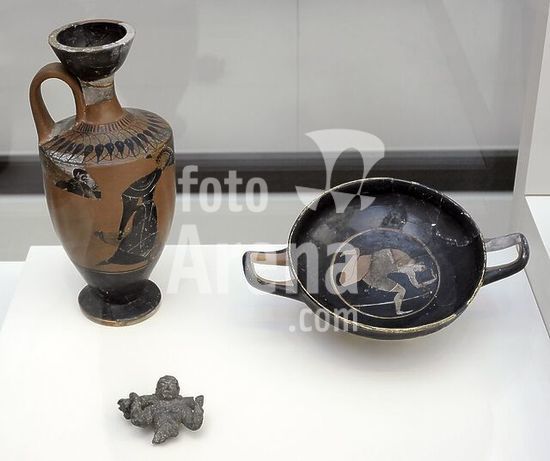
alb3932003 Iberian culture. Grave goods. Attic lekythos of black figures depicting two satyrs running after a woman, perhaps a nymph; Attic cup (kylix) of red figures, attributed to the painter of Pithos, depicting a naked young man jumping or dancing before a staff and a bronze handle with a young man holding the tail of a lion. 500-490 BC. Manufactured in Greece. Found in the Necropolis of Pozo Moro. Chinchilla de Monte-Aragon (province of Albacete, Castile-La Mancha, Spain). National Archaeological Museum. Madrid. Spain.
DC
alb3189638 War of Spanish Succession (1702-1715). Oath of the captains of Barcelona who commands the troops of Antonio de Villarroel, Commander in Chief of the Army of Catalonia. Engraving by Urbadieta and J. Nicolau. 19th century. Colored.
DC
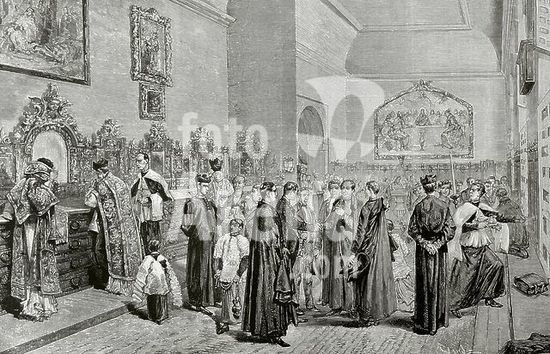
alb3923835 Spain, province of Madrid, Getafe. Interior of the sacristy of the parish church of Santa Maria Magdalena, on a day of solemn act. After the mass, the presbyter, the deacon and the subdeacon, took off the priestly cothes. The preacher receives the congratulations of the brotherhoods; the sacristans and acolytes store books and ornaments; The musicians bid farewell. Drawing by Vicente Urrabieta. La Ilustracion Espa–ola y Americana, August 30, 1876.
DC
alb1458640 The Alhambra. 14th Century. Nasrid period. Mexuar. Initiated by Abu-LWalid Isma'il and rebuilt by Yusuf I and Mohammad V, between 1333 and 1391. Granada. Andalusia. Spain.
DC
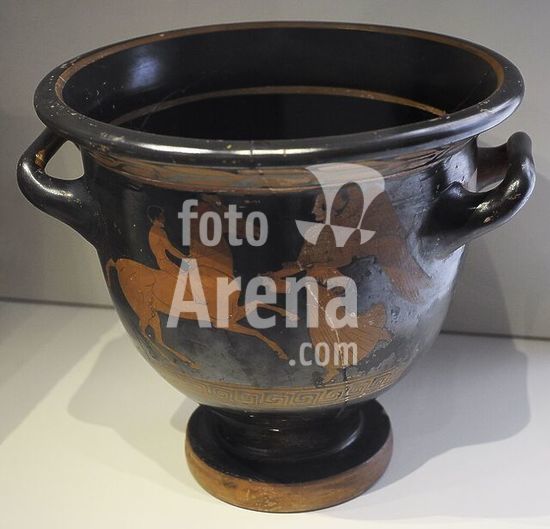
alb4044757 Bell krater depicting a winged Nike offering a libation to a young nude rider. Interpreted as a equestrian heroization of the deceased received by the winged Victory on his journey to the afterlife. 2nd half of the 5th century BC. Clay. Iberian culture. Necropolis of Tutugi, Zone I, Grave 11. Greek production. From Galera (Granada province, Andalusia, Spain). National Archaeological Museum. Madrid. Spain.
DC
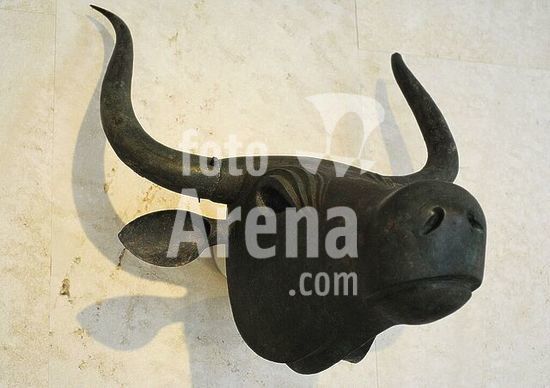
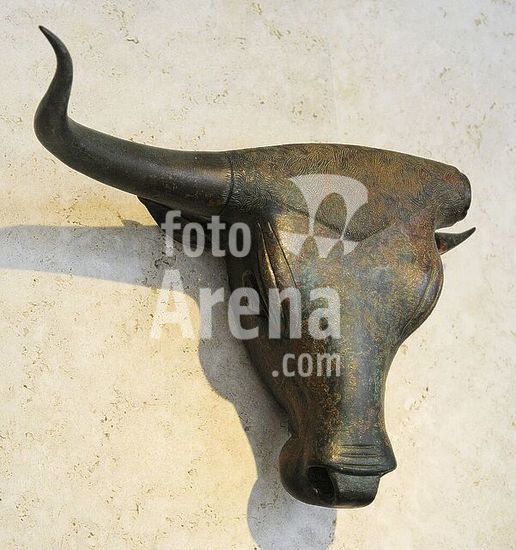
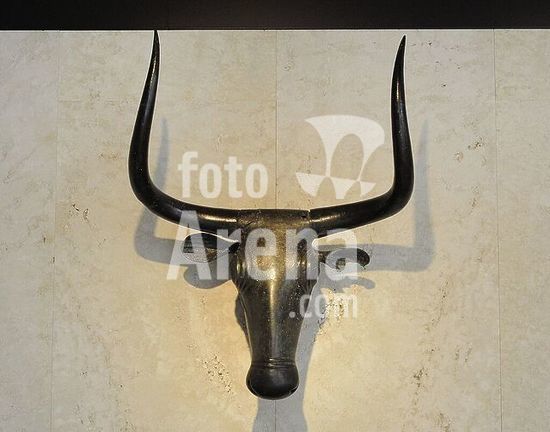
alb4044770 Post-Talaiotic culture. Bull of Costixt. It seems to be the depiction of a deity. 5th-3rd centuries BC. Bronze. From the Shrine of Predio de Son Corro (Costitx, Majorca, Balearic Islands, Spain). National Archaeological Museum. Madrid. Spain.
DC
alb4044774 Post-Talaiotic culture. Bull of Costixt. Interpreted as image of a deity. 5th-3rd centuries BC. Bronze. From the Shrine of Predio de Son Corro (Costitx, Majorca, Balearic Islands, Spain). National Archaeological Museum. Madrid. Spain.
DC
alb4044772 Post-Talaiotic culture. Bull of Costixt. Interpreted as image of a deity. 5th-3rd centuries BC. Bronze. From the Shrine of Predio de Son Corro (Costitx, Majorca, Balearic Islands, Spain). National Archaeological Museum. Madrid. Spain.
DC
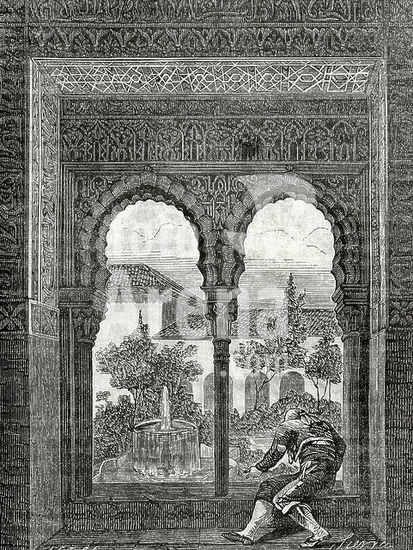
alb4079869 Granada, Andalusia, Spain. The Observation Point of Daraxa or Lindaraja Balcony. Hall of the Two Sisters (Sala de las Dos Hermanas), built by Muhammad V between 1354 and 1358. The Alhambra. Drawing by Letre. Engraving by Sierra. Crónica General de España, Historia Ilustrada y Descriptiva de sus Provincias (General Chronicle of Spain, Illustrated and Descriptive History of its Provinces), Andalucia, 1869. Author: Eusebio de Letre. Illustrator and lithographer of the mid-nineteenth century in Spain. Joaquin Sierra y Ponzano (1821-?), Spanis.
DC
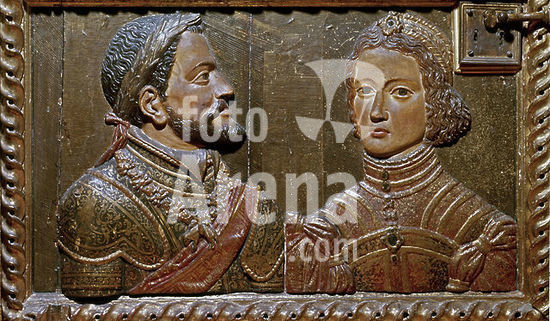
orz003780 CARLOS V Y LA EMPERATRIZ ISABEL DE PORTUGAL - RETABLO RELICARIO DEL ALTAR LATERAL DE LA CAPILLA REAL DE GRANADA - SIGLO XVII. Author: ALONSO DE MENA. Location: CATEDRAL-CAPILLA REAL-INTERIOR. GRANADA. SPAIN. CARLOS V (CARLOS I). Charles I (V of the Holly Roman Empire). ISABELLA VON PORTUGAL (1503-1539). CARLOS V ESPOSA.
DC
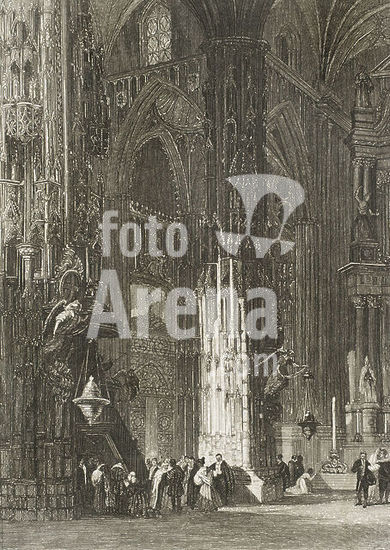
alb5343807 Spain, Andalusia, province of Cadiz, Jerez de la Frontera. Cathedral. Inside view of the temple. Engraving by Antonio Roca Sallent. Las Glorias Nacionales, 1853. Author: Antonio Roca Sallent (1813-1864). Spanish engraver.
DC
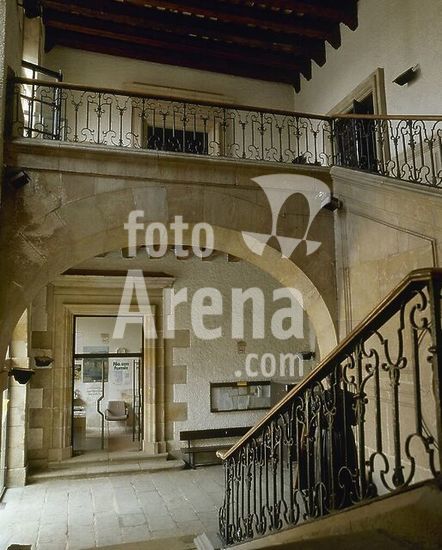
alb1750971 Spain, Catalonia, Barcelona. Citadel, 18th century. The Governor's Palace. Building that currently houses a teaching institute. Inside view. Historical photo, taken in 1993.
DC
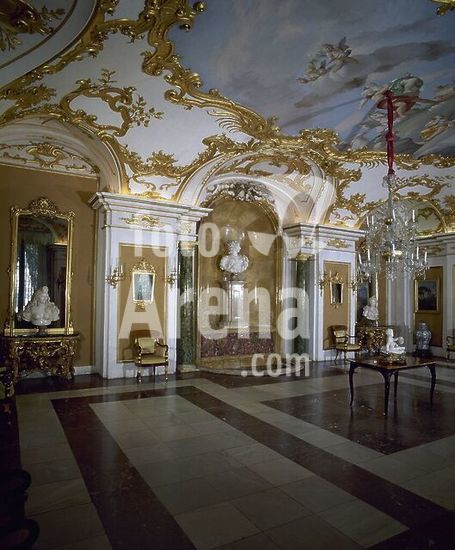
alb1753228 Spain. Castile-Leon. San Ildefonso. Royal Palace of La Granja de San Ildefonso. 18th C. Room of the fountain.
DC
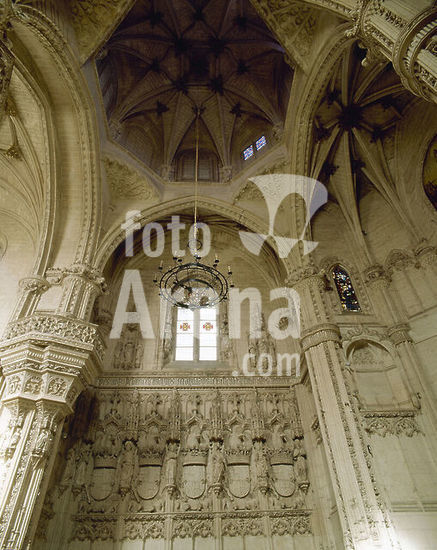
alb1466541 Monasterio de San Juan de los Reyes. Founded by King Ferdinand II of Aragon and Queen Isabella I of Castile to commemorate their victory at the Battle of Toro (1476) over the army of Afonso V of Portugal.The monastery's construction began in 1477 to plans of architect Juan Guas (d. 1496) and was completed in 1504. Inside view showing reliefs with the arms of the Catholic Monarchs. Toledo. Castile-La Mancha. Spain.
DC
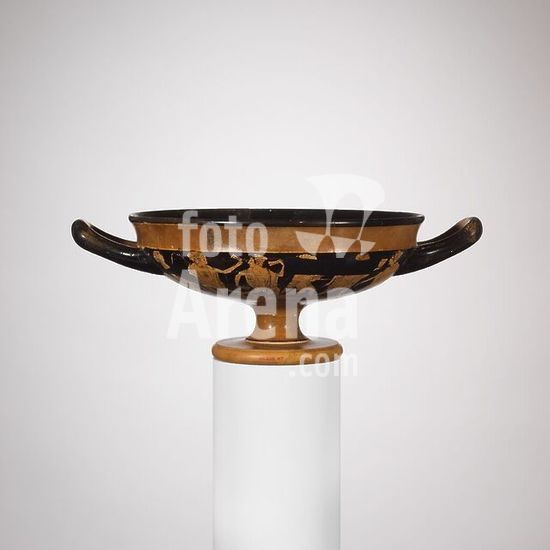
alb3649171 Terracotta kylix (drinking cup). Culture: Greek, Attic. Dimensions: H. 5 3/16 in. (13.2 cm)width with handles 15 3/8 (39.1 cm)diameter 12 1/16 in. (30.7 cm). Date: ca. 480 B.C..Interior and exterior, Theseus in Poseidon's undersea palace and his arrival in AthensThe subject of the decoration is elucidated in a poem by Bacchylides, active in the fifth century B.C. On the interior and one side of the exterior, Theseus, who is bound for Crete to kill the Minotaur, takes leave of his father and stepmother, Poseidon and Amphitrite. On the other side, the victorious Theseus is welcomed back to Athens by Athena. Museum: Metropolitan Museum of Art, New York, USA.
DC
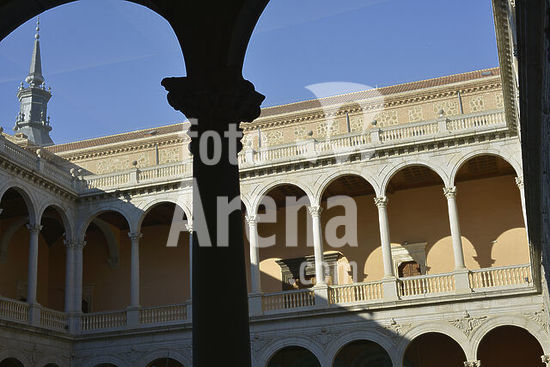
alb11689144 Alcázar of Toledo. Parade Ground, also known as Courtyard of Charles V. Architectural detail of the interior galleries with double arches supported by columns. The building was reconstructed after severe damage suffered during the Civil War (1936-1939). Castile-La Mancha. Spain.
DC

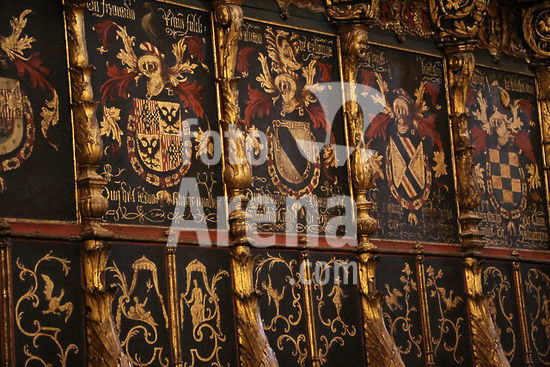
alb11626811 Spain. Barcelona. Cathedral of the Holy Cross and Saint Eulalia. The choir stalls. Detail of coats-of-arms of the knights of the Order of the Golden Fleece, painting by Juan of Borgonya (16th century). Author: Painter Juan of Borgonya.
DC

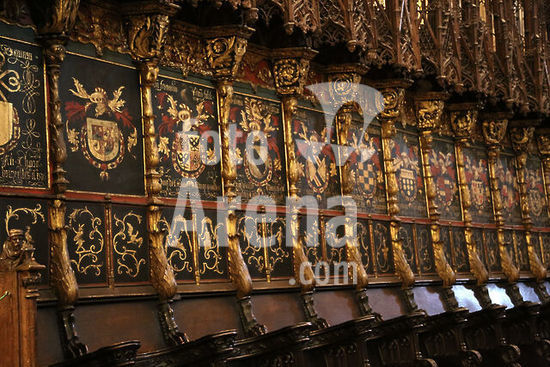
alb11628434 Spain. Barcelona. Cathedral of the Holy Cross and Saint Eulalia. The choir stalls. Detail of coats-of-arms of the knights of the Order of the Golden Fleece, painting by Juan of Borgonya (16th century). Author: Paolo Ucello.
DC

Total de Resultados: 1.077

Página 1 de 11