

















































Busque também em nossas outras coleções:

Data da imagem:
Pauta
ver mais opções...
Agência
Fotógrafo
ver mais opções...
Estado
Cidade
ver mais opções...
Local
ver mais opções...
Tipo de licença
Orientação
Coleção

Total de Resultados: 788

Página 1 de 8

902_05_12323882HighRes Diagram showing the superficial nerves of the human head and neck. From Meyers Lexicon, published 1924.
DC
1016_04_47276 The image shows a posterior view of the muscles of the head and neck.
DC
981_05_LC120411_0953_2 The Sea Serpent In The Mediterranean, A Sketch From H.M. Yacht 'Osborne' Off The North Coast Of Sicily On The Second Of June; 1. The Row Of Fins As Seen At First; 2. The Head And Flappers; The Head Was Bullet-Shaped, And Quite 6 Feet Thick, The Neck Narrow, And Its Head Was Occasionally Thrown Back Out Of The Water, Remaining There For A Few Seconds At A Time. It Was Very Broad Across The Back Or Shoulders, About 15 Or 20 Feet, And The Flappers Appeared To Have A Semi-Revolving Motion, Which Seemed To Paddle The Monster Along. They Were About 15 Feet In Length.
DC
alb4102006 Portrait of a Couple, Probably Isaac Abrahamsz Massa and Beatrix van der Laen. Portrait of a Couple in a Landscape, probably Isaac Abrahamsz Massa (1586-1643) and Beatrix van der Laen (1592-1639). Dating: c. 1622. Measurements: support: h 140 cm × w 166.5 cm. Museum: Rijksmuseum, Amsterdam. Author: FRANS HALS.
DC
alb3682369 Myologie Complette en Couleur et Grandeur Naturelle. Artist: Jacques Fabien Gautier Dagoty (French, Marseille 1716-1785 Paris). Author: Joseph Guichard Duverney (French, 1648-1730). Dimensions: 22 1/16 × 15 9/16 × 1 3/16 in. (56 × 39.5 × 3 cm). Publisher: Gautier (Paris). Date: 1746.Jacques-Fabien Gautier-Dagoty received a royal license for his technique of four-plate color printing in mezzotint, a process closely derived from the three-plate method of his teacher, Jacob Christoph Le Blon (to which Gautier-Dagoty added a plate printed in black or brown). Although he also made prints that reproduced paintings or depicted notable figures, Gautier-Dagoty's special interests lay in anatomy, botany, and zoology--fields that would be revolutionized by the publication of accurate color illustrations. He founded the first French illustrated scientific journal, and prepared large-scale publications such as Myologie complète en couleur et grandeur naturelle a treatise on the anatomy of muscles. Museum: Metropolitan Museum of Art, New York, USA.
DC
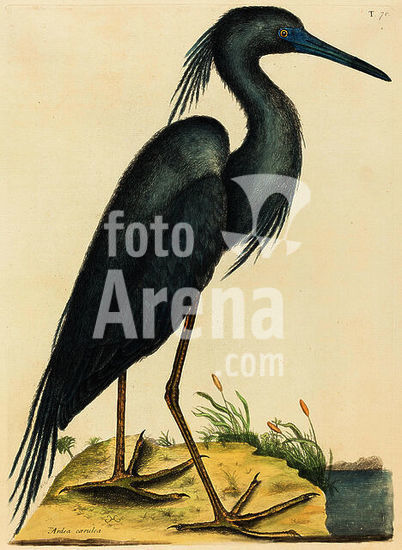
alb3740215 The Blue Heron (Ardea coerulea). Dated: published 1731-1743. Dimensions: plate: 35.6 x 25.7 cm (14 x 10 1/8 in.) sheet: 45.7 x 34.3 cm (18 x 13 1/2 in.). Medium: hand-colored engraving on laid paper. Museum: National Gallery of Art, Washington DC. Author: Mark Catesby.
DC
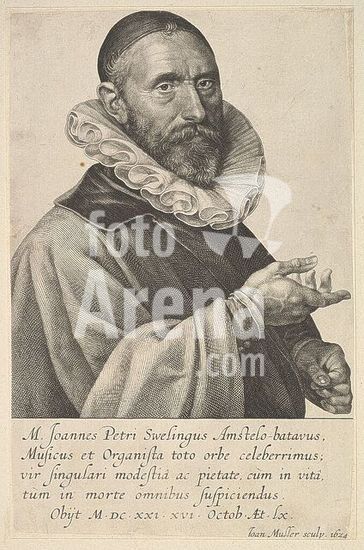
alb3643971 Portrait of Jan Pietersz Sweelinck, Organist & Musician in Amsterdam. Artist: Jan Muller (Netherlandish, Amsterdam 1571-1628 Amsterdam). Dimensions: 7 13/16 × 5 1/16 in. (19.8 × 12.9 cm). Date: 1624. Museum: Metropolitan Museum of Art, New York, USA. Author: Jan Muller.
DC
alb3617170 The Whore of Babylon, from The Apocalypse. Artist: Albrecht Dürer (German, Nuremberg 1471-1528 Nuremberg). Dimensions: sheet, 15-5/8 x 11-1/4 in. (39.5 x 28.6 cm). Date: 1498.By 1498, Dürer had published more than two dozen prints, which brought him to the attention of artists and connoisseurs not only in his native Nuremberg and other German-speaking areas but also across the Alps in Italy. It was the prodigious woodcuts of The Apocalypse, however, published in 1498, that made him enormously famous. There was a long tradition of Apocalypse illustrations in manuscripts, which continued in printed books, but nothing like Dürer's galvanizing imagination had ever been brought to bear on the text. In previous printed Bibles, illustrations had been put on pages along with the words, but Dürer gave precedence to the image, taking the entire large page of what he himself called a "superbook" for each of his fifteen subjects. This last image in the series marks the appearance of the whore of Babylon in the Book of Revelation (17:3--4): "And I saw a woman sitting on a scarlet beast, full of names of blasphemy with seven heads and ten horns. The woman was garbed in purple and scarlet, and gilded with gold, gems, and pearls, and bearing a golden goblet in her hand full of abominations and filthiness of her fornication." Babylon, the domain that embodies evil on earth, burns with huge explosions of flame and smoke in the distance, and from the upper left come the armies of heaven, led by the knight Faithful-and-True. Museum: Metropolitan Museum of Art, New York, USA.
DC
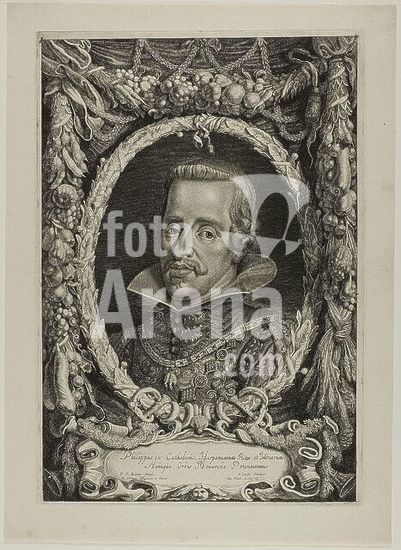
alb4137226 Philip IV, King of Spain, plate 12 from Duces Burgundiae (Dukes of Burgundy). Jacob Louys (Flemish, 1595-after 1644); after Peter Paul Rubens (Flemish, 1577-1640); border engraved, and print published, by Pieter Claesz. Soutman (Dutch, c. 1580-1657). Date: 1644. Dimensions: 407 × 280 mm (plate); 463 × 334 mm (sheet). Engraving and etching in black on ivory laid paper. Origin: Flanders. Museum: The Chicago Art Institute, USA.
DC
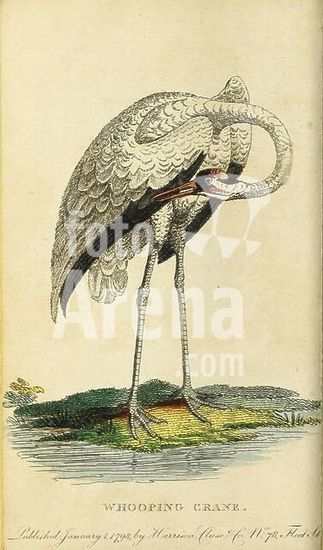
alb15337050 The Naturalist's Pocket Magazine, or Compleat Cabinet of the Curiosities and Beauties of Nature, London., A gracefully poised whooping crane stands on one leg, its long neck curved elegantly as it preens its feathers. The bird features striking plumage with a mix of white and subtle grey tones, along with distinct black markings around its head and face. Positioned by a serene water's edge, the crane's reflection is visible in the tranquil water below. This illustration is labeled "Whooping Crane" and includes a publication date of January 1797, indicating its historical significance in ornithological studies. The serene setting showcases the crane's natural habitat, highlighting the lush greenery and gentle ripples of the water.
DC
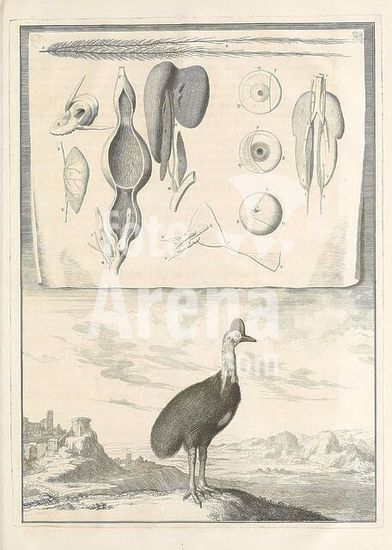
alb15331590 Memoires pour servir a l'histoire naturelle des animaux, A Paris, De l'Imprimerie royale, MDCLXXVI 1676, anatomy, comparative, animals, early works, pre-Linnean works, zoology, birds, bird anatomy, The illustration features a detailed depiction of a large bird standing on a rocky shoreline, showcasing its distinctive profile and features. The bird, with prominent wings, a long neck, and a unique head, appears to be in a natural setting with rolling hills and a distant castle-like structure in the background. Above the bird, various anatomical sketches and diagrams illustrate components of avian structure, including wings and other skeletal elements, offering insights into the bird's anatomy and function. This combination highlights both the beauty of the bird and the scientific exploration of its physical characteristics.
DC
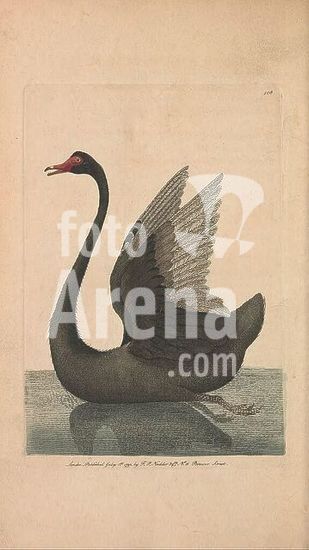
alb15336764 The Naturalist's Miscellany, or Coloured Figures of Natural Objects. London, Printed for Nodder & Co, 1789-1813. Animals, Pictorial Works, George Shaw, Black Swan, Birds, A beautifully rendered illustration of a black swan, showcasing its elegant posture and distinctive features. The bird is depicted with glossy black feathers, a long neck, and a gracefully arched head, accentuated by a striking red bill. The wings are partially extended, revealing a hint of the intricate feather details. The composition includes gentle ripples on the water's surface, enhancing the serene atmosphere of the scene. This artistic representation highlights the swan's regal nature and the delicate beauty of its form.
DC
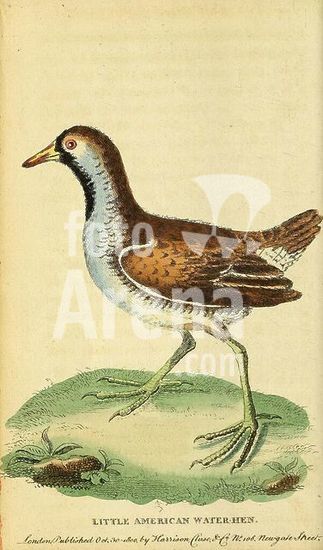
alb15332096 The Naturalist's Pocket Magazine or Complete Cabinet of the Curiosities and Beauties of Nature. London., A depiction of the little American waterhen, showcasing its distinctive features. The bird stands upright with a slender body, exhibiting a combination of rich brown and lighter patterned feathers. Its elongated neck leads to a delicate head, adorned with a contrasting yellow and black beak. The legs are thin and well-proportioned, indicating its agility in marshy environments. The background features a subtle representation of grassy terrain, emphasizing the waterhen's natural habitat. The overall illustration captures the elegance and unique characteristics of this aquatic bird.
DC
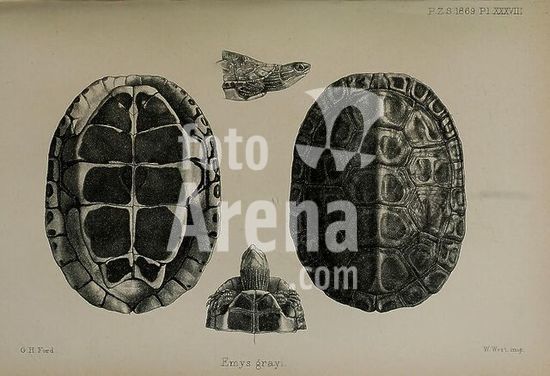
alb15332214 Proceedings of the Zoological Society of London London, Academic Press, 1833-1965 Periodicals Zoology Mauremys caspica, This illustration features a detailed study of a turtle, displaying various perspectives. The arrangement includes a top view, showcasing the distinct pattern of its shell, a side profile highlighting the shape of its head and neck, and a view of the plastron, which shows the underside of the shell. The intricate lines and textures capture the unique features of the turtle's anatomy, emphasizing the contrast between the upper carapace and the lower plastron. The overall design reflects a scientific approach to understanding this species, highlighting the importance of these features in identification and classification.
DC
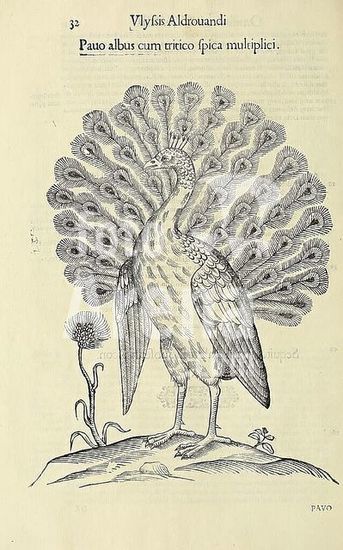
alb15338121 Vlyssis Aldrovandi, philosophi ac medici Bononiensis, historiam naturalem in gymnasio Bononiensi profitentis, Ornithologiae, hoc est, De avibus historiae libri XII, Bononiae, Apud Franciscum de Franciscis Senensem,MDXCIX-MDCXXXVII [1599-1637], An elegantly illustrated peacock stands majestically on a patch of ground adorned with a thistle, showcasing its extravagant plumage. Each feather radiates outwards in a fan-like display, embellished with intricate eye patterns that draw the viewer's attention. The peacock's slender neck holds its head high, exuding an air of pride. Above the illustration, text referencing 'Pavo albus cum tritico spica multiplicit' suggests a connection to the species and its environment. This artwork combines natural beauty with a touch of scientific study, capturing the regal essence of this magnificent bird.
DC
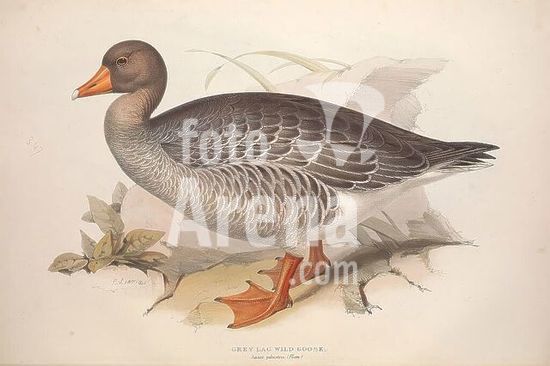
alb15338132 The Birds of Europe London Printed by R. and J.E. Taylor Published by the author 1837 Birds Europe Pictorial Works Edward Lear, A detailed illustration of a Gray Lake Wild Goose stands prominently, showcasing its elegant body and distinct features. The bird has a robust form with beautifully patterned feathers, transitioning from gray to a rich, darker tone on its back. Its head is adorned with a subtle mix of browns, featuring a bright orange bill that contrasts sharply against its plumage. The goose's eyes are keen and alert, set above a delicate sheen on its neck. Its webbed feet, vividly colored in orange, firmly grip the ground as it poses gracefully among soft, green foliage. This depiction captures both the majesty and the natural beauty of this wild goose species.
DC
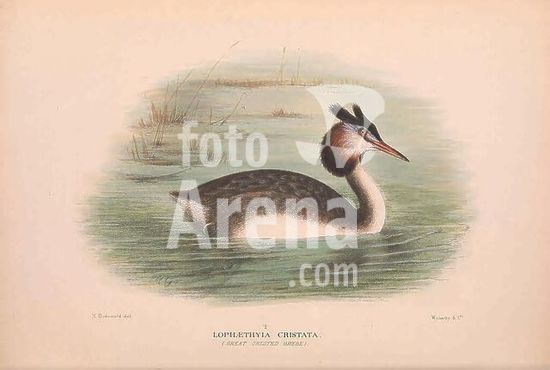
alb15337548 The Birds of Australia, London, Witherby & Co, 1910-1927, Australia, bibliography, birds, Birds Australia, pictorial works, bird, Mathews, Australia, Gregory Mathews, ornithology, Lophaethyia cristata, taxonomy: trinomial = Podiceps cristatus australis, great crested grebe, A beautifully illustrated depiction of a bird, showcasing its elegant neck and distinctive plumage. The creature stands in water, its long neck gracefully arched, with intricate details highlighting its features. Vivid colors accentuate the bird's head, contrasting with the muted tones of its body. Surrounding the bird, hints of natural vegetation create a serene environment, emphasizing the harmony between the species and its habitat. This artwork captures the majesty and beauty of the avian world.
DC
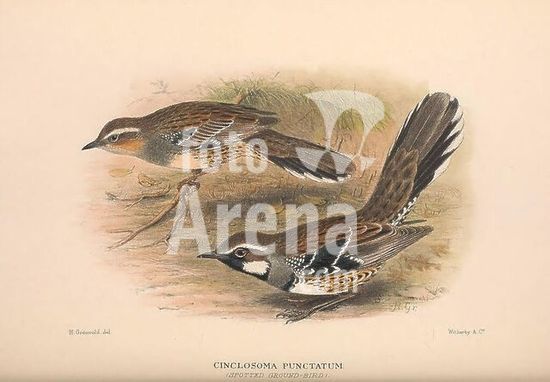
alb15336297 The Birds of Australia, London, Witherby & Co, 1910-1927, Australia, bibliography, birds, birds Australia, pictorial works, bird, Australia, Gregory Mathews, ornithology, The illustration features two birds from the genus Cinclus, showcasing their distinct details and plumage. The first bird, perched on the ground, has a notable pattern of brown and tan feathers, while the second bird, slightly leaning forward, displays contrasting markings on its head and neck. The natural setting hints at a habitat rich in greenery, likely near water, emphasizing the birds' connection to their environment. This artwork captures the essence of these species, highlighting their unique features and the intricate beauty of avian life.
DC
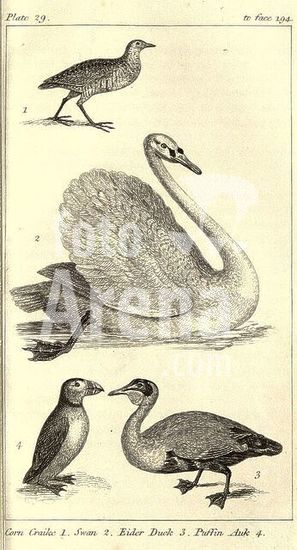
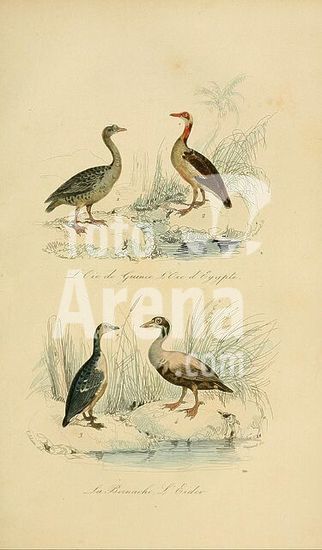
alb15338410 Natural history of animals. London, Harvey and Darton, 1842., The illustration features four different bird species, each labeled with a corresponding number for identification. 1. The first bird, positioned at the top left, resembles a small shorebird, characterized by its slender body and long legs, often found along coastlines. 2. The second bird is a graceful swan, depicted with its long neck elegantly arched and massive wings partially spread, showcasing its majestic form. 3. The third entry illustrates an eider duck, notable for its rounded body and distinctive head shape, often recognized for its soft down feathers. 4. The final bird, situated at the bottom right, depicts a puffin auk, featuring a robust body and a colorful beak.
DC
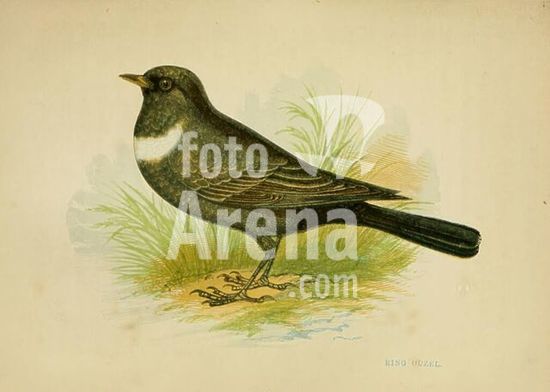
alb15337487 Our native songsters London Printed for the Society for Promoting Christian Knowledge 1853 Great Britain birds Turdus torquatus, A detailed illustration of a bird featuring a distinctive dark plumage and a prominent white patch on its throat. The bird is depicted in a poised stance, with its head slightly tilted downwards as if foraging on the ground. Surrounding the bird, gentle strokes of green suggest grassy surroundings, enhancing the natural setting. The intricate details showcase the texture of the feathers and the structure of the bird's body, emphasizing its elegance and the beauty of its environment. The overall composition captures a moment in the bird's life, inviting viewers to appreciate its grace and poise in nature.
DC
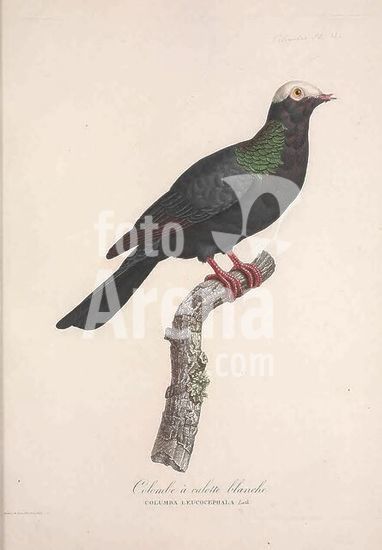
alb15332988 Les pigeons, par Madame Knip, nee Pauline de Courcelles, le texte par C.J. Temminck, Paris, Chez Mme. Knip, 1838-1843, pictorial works, pigeons, birds, A detailed illustration of a bird perched on a twisted branch, showcasing its striking features. The bird displays a predominantly dark plumage with a hint of green iridescence on its neck. Its head is adorned with a distinctive white crown, creating a contrast with the darker tones of its body. The branch it stands on is textured and gnarled, providing a rustic setting that highlights the elegance of the bird. Below the illustration, a scientific name indicates its classification, suggesting it belongs to the Columbidae family, known for its various species of pigeons and doves.
DC
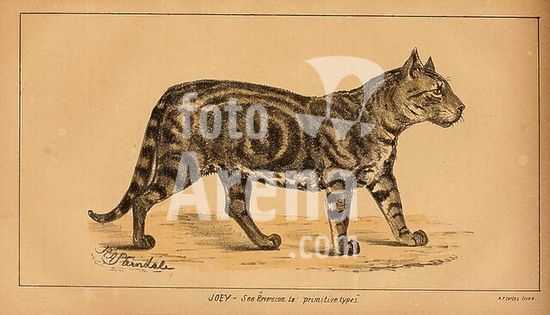
alb15334296 The, Journal, of, the, Bombay, Natural, History, Society, Bombay, The, Society, India, Natural, History, Periodicals, Woods, Hole, Cat, Robert, Armitage, Sterndale, A detailed illustration of a standing domestic cat, characterized by its distinct tabby coat featuring a series of bold stripes and spots. The cat is depicted in a proud posture, with its neck elongated and head turned slightly, showcasing its alert expression. Its ears are perked up, indicating curiosity or attentiveness. The background is minimal, focusing attention on the detailed texture of the cat's fur and the elegant curve of its body. Below the illustration, there is a signature that adds an artistic touch, lending authenticity to the portrayal of this beautiful feline.
DC
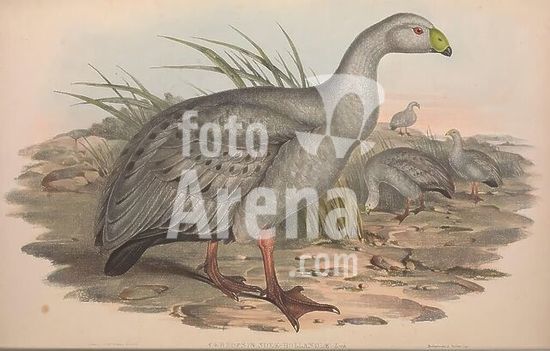
alb15334003 The birds of Australia London, Printed by R. and J. E. Taylor pub. by the author 1840-1848 Australia Birds Pictorial works Australia Gould John Gould Ornithology Gould Gould Australia Cereopsis novaehollandiae Cape Barren goose, A beautifully illustrated depiction of a large waterfowl, showcasing its distinct features such as a striking gray plumage and a prominent, rounded head. The bird stands proudly on one leg, with its elongated neck extending gracefully. Its expressive eye, bold bill, and intricate wing patterns are highlighted, along with the lush greenery in the surrounding environment. In the background, additional waterfowl are seen in a serene habitat, adding to the tranquil scene. This artwork captures the elegance and charm of these avian creatures in their natural setting.
DC
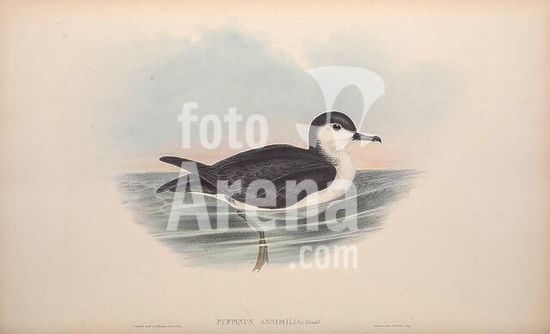
alb15334699 The birds of Australia. London, Printed by R. and J. E. Taylor pub. by the author 1840-1848. Australia, Birds, Pictorial Works, Australia, Gould, John Gould, Ornithology, Gould, Gould Australia, Puffinus assimilis, Little Shearwater, Taxonomy: Trinomial= Puffinus assimilis assimilis, A detailed illustration of a bird perched gracefully on a rocky surface, facing slightly to the side. The bird features a striking black and white plumage, with a distinctive black cap on its head and white extending down its neck and chest. Its wings are folded neatly at its sides, showcasing a sleek body and pointed beak, suggesting a predatory nature. The background features gentle waves, hinting at a coastal habitat, with soft hues that imply twilight or dawn. The overall composition reflects a serene moment in nature, emphasizing the bird's elegance and adaptability to its environment.
DC
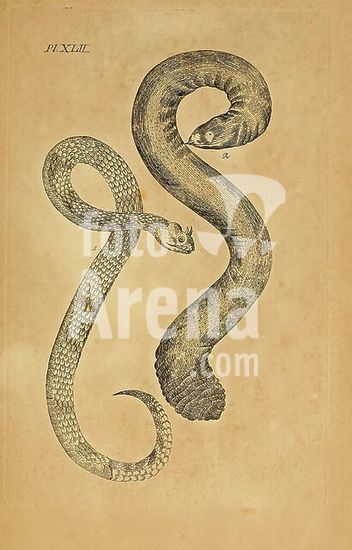
alb15334591 Icones amphibiorum, Hafniae, C. Steen, 1835, amphibians, reptiles, pictorial works, The illustration features two distinct snake specimens, each displayed in a unique pose that showcases their differing physical characteristics. The upper snake is depicted with a smooth, elongated body adorned with a patterned texture, suggesting a scale structure that emphasizes its slender, agile form. Its head is discernible with a slightly raised neck, giving it an alert pose. In contrast, the lower snake presents a thicker, more robust body, characterized by a rounded shape that suggests a greater girth. The texture appears more rugged, possibly indicating a different species or habitat adaptation. Both snakes are shown in a side view, allowing for a clear comparison of their shapes and sizes, with labeled annotations indicating specific features for identification purposes. The.
DC
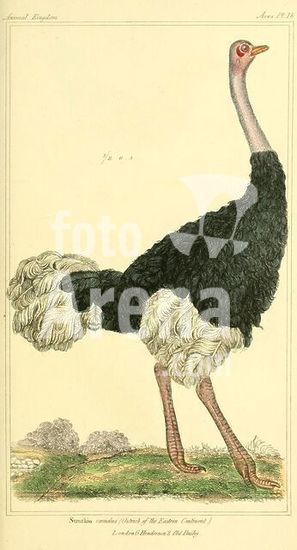
alb15331181 The animal kingdom Arranged according to its organization Serving as a foundation for the natural history of animals v.1 plates London G. Henderson 1834-1837 Animals Classification Pictorial works Zoology Georges Cuvier Struthio camelus Common ostrich, An illustration featuring a large bird known for its distinctive physical characteristics, including a long neck, elongated legs, and a full body covered in black feathers with a white plumed tail. The bird's head is highlighted by a reddish area around the eye and a lighter skin tone on the neck, enhancing its unique appearance. It stands confidently on a patch of grass, surrounded by a soft landscape, showcasing its impressive stature and elegant form.
DC
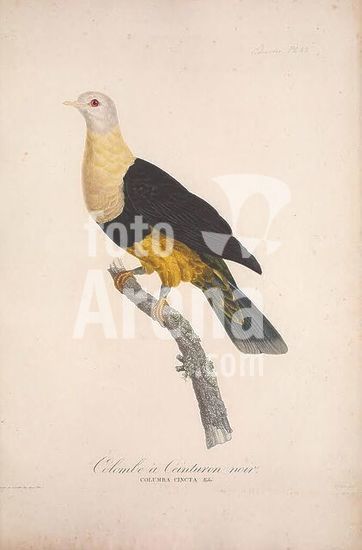
alb15337957 Les pigeons, par Madame Knip, née Pauline de Courcelles, le texte par C.J. Temminck, Paris, Chez Mme. Knip, [1838-1843?], pictorial works, pigeons, birds, A beautifully rendered illustration of a bird perched on a branch, featuring a striking combination of colors in its plumage. The bird displays a cream-colored neck and chest that transitions into a rich golden-yellow abdomen, contrasting with deep black wings. Its head is adorned with soft white feathers, accented by striking red eyes that add to its distinctive appearance. The branch on which it rests is detailed with textured bark, complementing the elegance of the avian subject. This artwork encapsulates the grace and vibrancy of wildlife in a refined manner.
DC
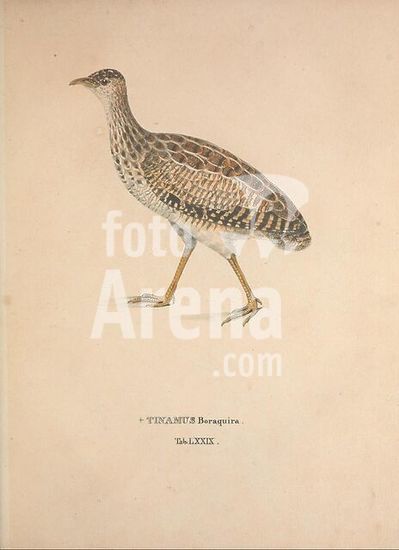
alb15330646 Avium species novae, quas in itinere per Brasiliam annis MDCCCXVII-MDCCCXX, Monachii, Typis Franc. Seraph. Hübschmanni, 1824-1825. Brazil, birds, tax, pictorial works, description and travel, Nothura boraquira, Tinamus boraquira, A detailed illustration of a bird, specifically the Pitaranotur borarquinus, presented in a side profile view. The bird exhibits a unique plumage pattern characterized by intricate designs in earthy tones, which include stripes and spots that enhance its natural camouflage. Its long, slender legs are depicted in a light golden hue, providing a striking contrast to the bird's body. This avian species showcases a rounded belly and a prominent neck, with the head held high, presenting a curious demeanor. Accompanying the illustration is a labeled title indicating the species name, adding to the scholarly feel of the representation.
DC
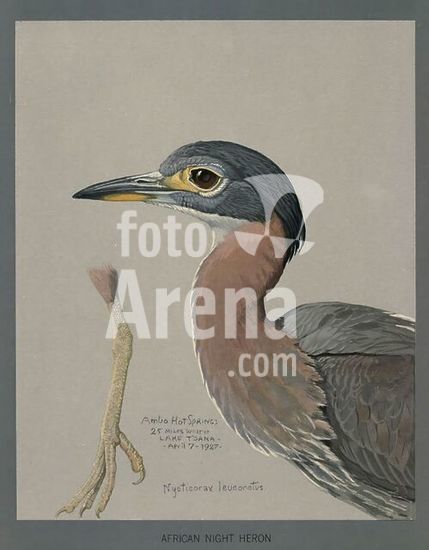
alb15385554 Album of Abyssinian birds and mammals Chicago, Field Museum of Natural History, 1930. birds, Ethiopia, mammals, pictorial works, Urbana, Champaign, Gorsachius leuconotus, Louis Agassiz Fuertes, Nycticorax leuconotus, blat10, Louis Agassiz Fuertes, White-backed Night Heron, Ethiopia, ornithology, A beautifully rendered study of the African Night Heron, showcasing its distinct features and plumage. The illustration captures the bird's striking head with piercing eyes and a delicate neck, highlighting the intricate details of its feathers. To the side, a detailed depiction of one clawed foot emphasizes the unique structure and form of its toes. Below the illustration, the date 'April 7, 1927,' and the location 'Amilo Hot Springs, 25 miles from Tarzana' are noted, providing context to this elegant portrayal of wildlife. The artist's meticulous attention to the bird's anatomy and environment reflects both scientific observation and artistic skill.
DC
alb15385208 The birds of Great Britain, 1795-1801, museum of comparative zoology,, The illustration depicts a tall bird with a slender neck and a long, pointed beak. Its body features a blend of light and dark feather patterns, with a prominent white chest that contrasts against the darker plumage on its back. The bird stands in a poised position, with its head held high, showcasing a distinctive red eye that adds a touch of vibrancy. The surrounding area is softly shaded, emphasizing the elegance and grace of the bird's form. The image captures the essence of natural beauty, illustrating the intricate details of the bird's anatomy and plumage.
DC
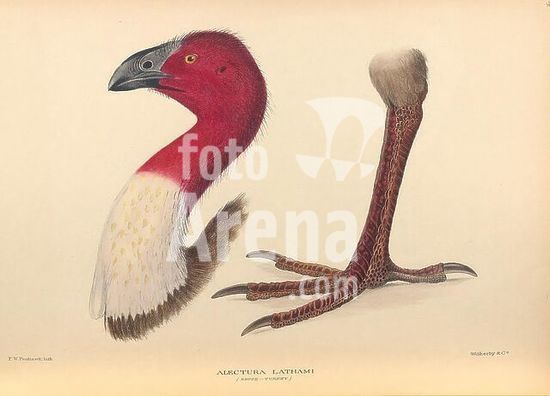
alb15385226 The birds of Norfolk & Lord Howe Islands and the Australasian South Polar quadrant, London, H.F. & G. Witherby, 1928, Antarctica, birds, Lord Howe Island NSW, Norfolk Island, Museums Victoria, Gregory M. Mathews, Gregory Mathews, ornithology, Alectura lathami, Australian Brush-turkey, The illustration features a detailed depiction of a bird's head and a foot. The head displays vibrant colors, including rich reds and whites, with a prominent beak that suggests a strong feeding adaptation. The neck transitions smoothly into fluffy plumage, emphasizing the bird's distinctive features. Below, the foot showcases intricately designed claws that suggest the bird is adapted for a particular habitat or hunting method, indicating its ecological niche. The overall composition highlights the anatomical details and showcases the beauty of avian diversity.
DC
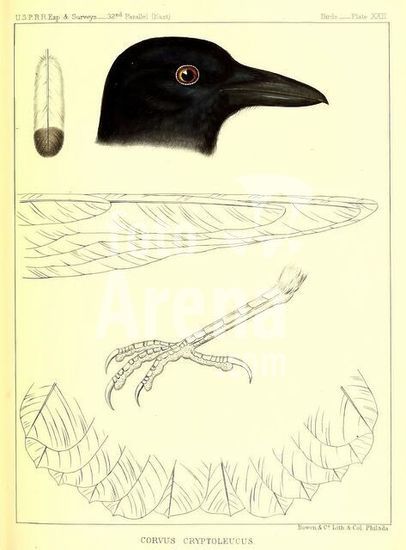
alb15388645 The birds of North America Philadelphia, J.B. Lippincott & Co, 1860, birds, North America, ornithology, bird feathers, Corvus cryptoleucus, white-necked crow, Chihuahuan raven, This illustration features an ornithological study of the Corvus cryptoleucus, commonly known as the white-necked raven. At the top, a detailed depiction of the raven's head showcases its piercing black eye and the smooth texture of its feathers. Below, an elegantly rendered wing displays the intricate patterns of its plumage, highlighting the curvature of the feathers. To the side, a close-up of a bird's claw reveals the sharp talons designed for gripping, with delicate lines capturing its texture. This intricate artwork serves as a scientific reference, emphasizing the beauty and anatomical features of this avian species.
DC
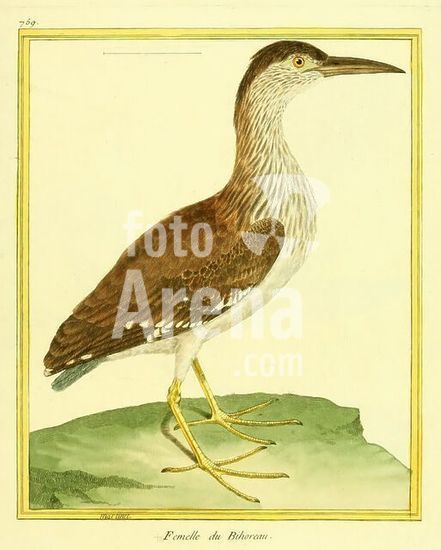
alb15383335 Planches enluminées d'histoire naturelle, Paris?, s.n, 1765-1783?, birds, pictorial works, zoology, This illustration features a striking bird characterized by its elongated neck and slender body. Its plumage displays a rich brown color on the wings and back, complemented by intricate patterns of lighter shades. The bird stands on long, slender yellow legs atop a small green rock formation, emphasizing its elegant stature. The head is adorned with fine stripes, highlighting its sharp, pointed beak which is well-suited for foraging. The overall composition showcases the bird in a side profile, allowing for a clear view of its distinctive features and posture. The caption includes the name 'Fémelle du Bihoreau,' indicating its identification in a scientific context.
DC
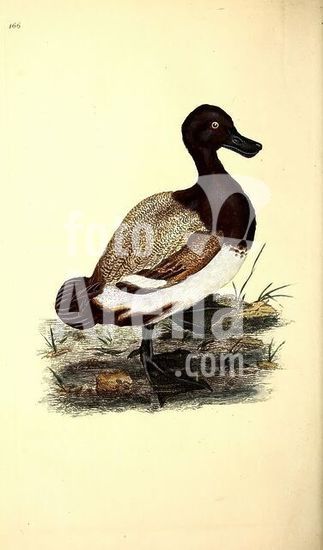
alb15389642 The Natural History of British Birds Or A Selection of the Most Rare Beautiful and Interesting Birds Which Inhabit This Country London Printed for the Author And for F. and C. Rivington 1794-1819 Birds Great Britain Identification, A beautifully illustrated depiction of a duck, showcasing its distinctive features. The bird displays a rich chestnut and brown plumage on its head and neck, contrasting with its lighter body, which has intricate feather patterns. Its eye is bright and prominent, adding to its expressive appearance. The duck stands gracefully on a patch of grass, with its feet firmly planted on the ground, suggesting a sense of alertness and poise. This representation captures the essence of the species with meticulous attention to detail, highlighting the natural beauty of its form.
DC
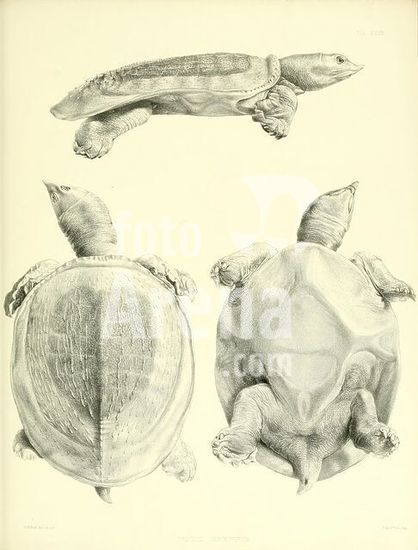
alb15388794 Catalogue of shield reptiles in the collection of the British Museum, London, 1855-1872, England, London, turtles, reptiles, crocodilians, Testudinidae, Amphisbaenia,, Chelonia genus, The illustration features a detailed study of a turtle, showcasing three distinct views: a top view highlighting its shell and limbs, a side profile that captures its elongated neck and unique head shape, and a bottom view emphasizing the texture of its shell and feet. Each perspective is meticulously rendered, allowing for a comprehensive understanding of the turtle's anatomy and structure. The emphasis on detail brings attention to the intricate patterns on its shell and the positioning of its limbs, reflecting the creature's adaptation to its environment.
DC
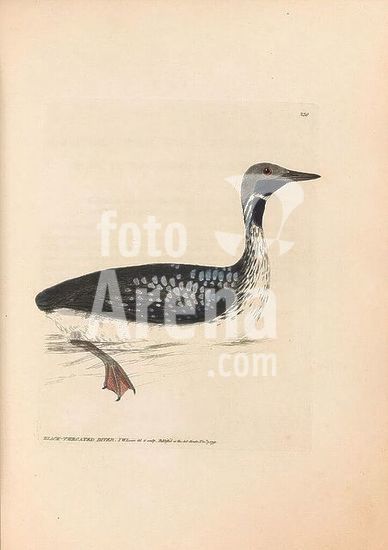
alb15381046 The birds of Great Britain, 1795-1801, Museum of Comparative Zoology., A detailed illustration of a bird, showcasing its elegant profile. The bird features a long neck, a slender body, and a striking plumage marked by a contrast of deep black and iridescent blue spots. Its head is adorned with a subtle gray hue, highlighting the sharp, piercing red eye. The bird's slender legs are partially visible, suggesting grace and agility, while the depiction captures the essence of its natural habitat. Text accompanying the illustration provides information about the species, adding context to its environment and characteristics.
DC
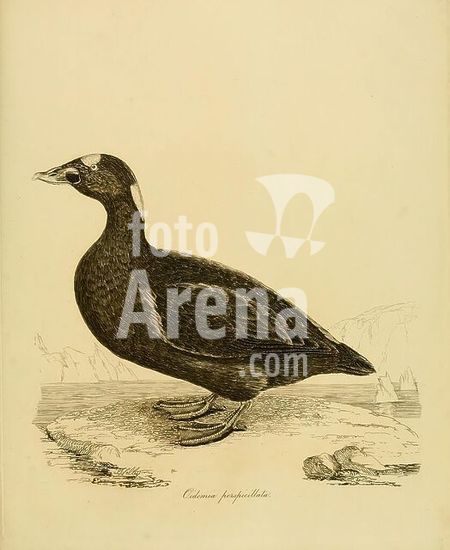
alb15380942 Sir William Jardine's illustrations of the duck tribe. Dumfries, N.B, Privately printed at the expense of the author [1840?]. Ducks, surf scoter, pictorial works, Melanitta perspicillata, A detailed illustration of a duck-like bird, showcasing its distinctive features. The creature stands with a stout body, short neck, and a rounded head, highlighting a prominent white marking on the front of its head. Its plumage is predominantly dark, displaying subtle textural details that suggest a glossy sheen. The bird's beak is short and slightly curved, perfect for its feeding habits. Below, the setting includes a rocky shoreline and hints of water, suggesting a coastal habitat where this species might thrive. The scientific name, 'Calidris pusilla,' is elegantly inscribed beneath the depiction, indicating its classification.
DC
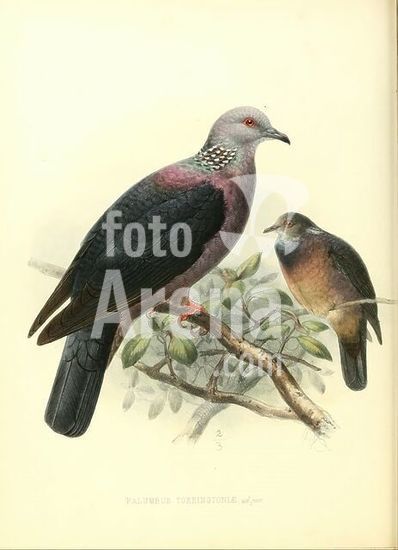
alb15386981 A history of the birds of Ceylon, London, Published by the author 1880 (i.e. 1878-1880), birds, Sri Lanka, Ceylon, Palumbus torringtoniae, A detailed illustration of two pigeons perched on a branch, showcasing their unique plumage. The larger bird on the left displays a blend of iridescent colors, with a purplish body, dark wings, and a distinctive spotted neck. Its stance is elegant, with a slight tilt of the head, suggesting alertness. Next to it, a smaller pigeon features a more subdued color palette, with muted tones that complement its counterpart. Both birds are surrounded by delicate foliage, enhancing the natural setting. The illustration is labeled 'Palumbus torringtoniae,' indicating the species name, and reflects a meticulous attention to detail in the portrayal of their features and the textures of the leaves.
DC
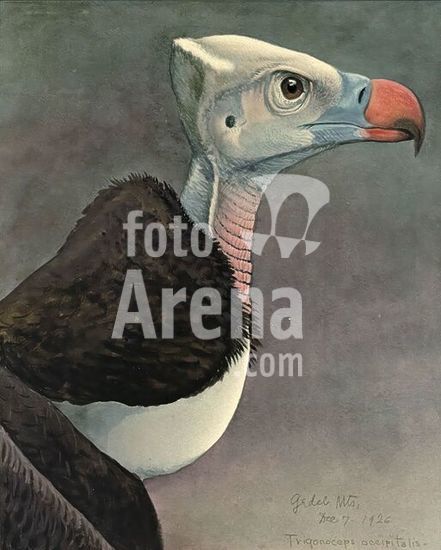
alb15384827 Album of Abyssinian birds and mammals Chicago Field Museum of Natural History 1930 birds vulture Ethiopia mammals pictorial works, A detailed illustration of a large vulture with a distinctive profile. The bird displays a robust body covered in dark feathers, while its head is notably striking with a pale, elongated beak that curves downward. The vulture's skin around the neck and head has a pinkish hue, contrasting with the deep black of its plumage. The background is softly shaded, enhancing the vulture's regal stance and unique features. Below the illustration, there's a date inscribed, "Dec. 7, 1926," along with the scientific name, "Trigonoceps coarctatus," indicating the species known for its remarkable adaptation to scavenging.
DC
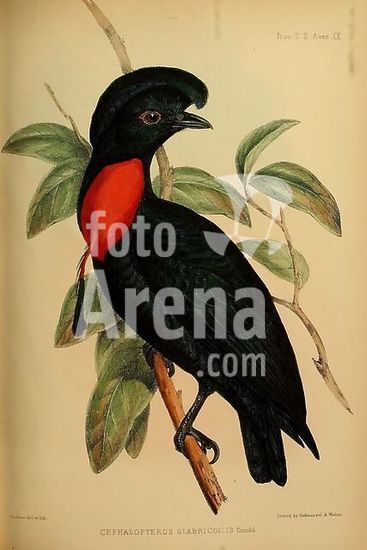
alb15381455 Proceedings of the Zoological Society of London, London, Academic Press Periodicals, Zoology, Museum of Comparative Zoology, A beautifully illustrated bird perched on a branch, showcasing striking features. The bird's plumage is predominantly black, with a vibrant red patch at the throat, adding a vivid contrast to its sleek appearance. Its head is notably adorned with a rounded crest, giving it a distinguished look. The surrounding foliage includes green leaves that complement the bold colors of the bird, creating a harmonious natural scene. This depiction captures the elegance and unique characteristics of the species, emphasizing its status in the avian world.
DC
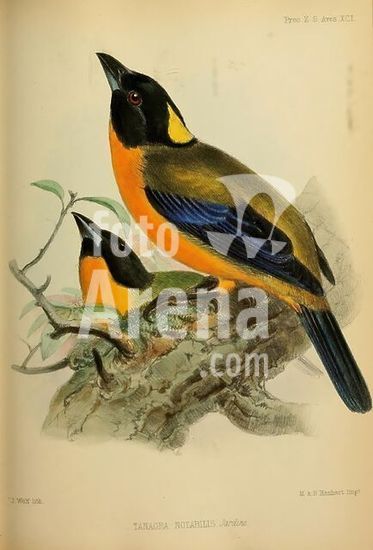
alb15388474 Proceedings of the Zoological Society of London, London, Academic Press periodicals, zoology, Museum of Comparative Zoology, birds, A vibrant depiction of two beautifully illustrated birds perched on a branch. The upper bird showcases a striking combination of bright yellow and deep blue plumage, highlighted by a contrasting black head and throat. Its companion, slightly lower, displays similar colors but with a more subdued appearance. The surrounding foliage hints at their natural habitat, enhancing the overall scene of avian elegance and tranquility. This artwork captures the intricate details of their feathers and the delicate textures of the branch they occupy, showcasing the beauty of these songbirds in nature.
DC
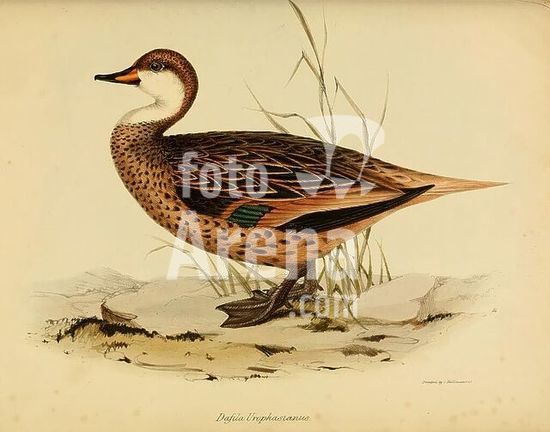
alb15380060 A monograph on the Anatidae, or duck tribe, London, Longman, Orme, Brown, Green, & Longman and Eddowes, Shrewsbury, 1838, Anatidae, Anas bahamensis,, A beautifully illustrated waterfowl depicted in a poised position, showcasing intricate feather patterns that vary in shades of brown and chestnut. The bird's long neck and distinctive head, featuring a white patch and dark crown, highlight its elegant form. Surrounding the duck, delicate grasses and natural elements enhance the overall composition, suggesting its habitat. This artwork captures the essence of the species, emphasizing both its grace and the detailed artistry of the representation.
DC
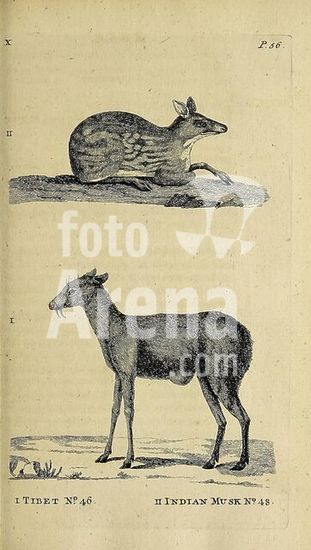
alb15383003 Synopsis of quadrupeds, Chester, Printed by J. Monk, MDCCLXXI [1771], early works, mammals, musk deer, The illustration features two distinct depictions of deer-like animals. The upper section shows a small, stocky creature resting on its front, characterized by its spotted fur and short legs. Its body posture conveys a sense of calmness. The lower section presents another species, standing upright with a more elongated body and prominent features. This second animal has a sleek appearance, with a slightly elongated neck and a smaller head compared to its body. The background is minimal, focusing attention on the anatomical details of each animal. Below the illustrations, labels indicate the respective identities of the creatures as 'Tibet N° 46' for the upper animal and 'Indian Musk N° 48' for the lower one.
DC
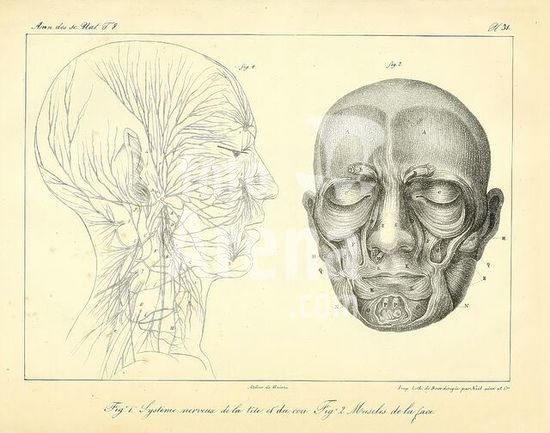
alb15385053 Annales des Sciences Naturelles Paris Crochard Anatomy Science Periodicals, This illustration features a detailed anatomical study of the human skull and facial structure. The upper section showcases a three-dimensional view of the skull, highlighting the internal components, including the brain and cranial cavities. Various labeled features indicate specific parts of the anatomy. The lower section presents a side profile of a human head, focusing on the intricate network of nerves that extends throughout the face and neck. Each part is meticulously detailed, with annotations to guide the viewer in understanding the relationship between the skeletal structure and the nervous system.
DC
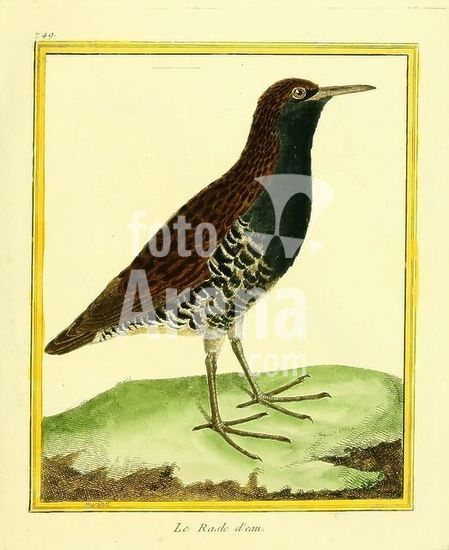
alb15380452 Planches enluminées d'histoire naturelle Paris Pictorial works Birds Zoology, A detailed illustration of a water rail, depicted with distinctive features such as a dark brown head and neck, transitioning to a vibrant chestnut plumage. The body showcases intricate patterns with streaks and spots, emphasizing its unique coloration and texture. The bird stands on slender legs, positioned on a lush green surface that accentuates its natural habitat. Its elongated beak is pointed forward, indicative of its foraging behavior. The overall composition highlights the elegant form and distinctive markings of this aquatic bird, capturing its essence in a naturalistic style.
DC
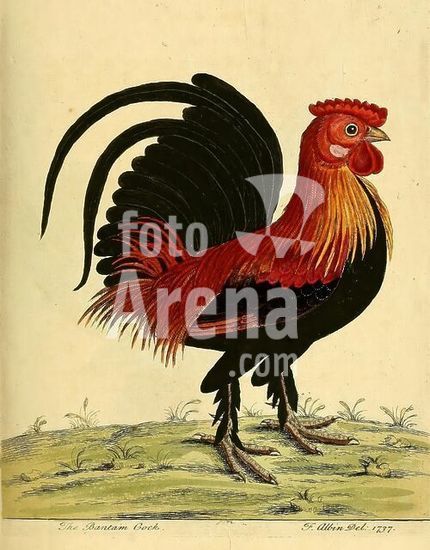
alb15384038 A Natural History Of Birds London Printed For The Author And Sold By William Innys In St Paul's Church Yard John Clarke Under The Royal Exchange Cornhill And John Brindley At The King's Arms In New Bond Street MDCCXXXI MDCCXXXVIII 1731 1738 Birds Pictorial Works Bantam Cock, A vividly illustrated rooster stands proudly, showcasing its striking plumage. The feathers exhibit a gradient of rich reds and vibrant oranges along its neck and body, while the tail feathers fan out dramatically, displaying a sleek black sheen. The comb on its head is prominent and bright red, complementing its cheerful expression. The backdrop features simple grass-like elements, enhancing the focus on this majestic bird. The detailed artistry captures the rooster's grandeur, reflecting its significance as a symbol of resilience and vitality.
DC
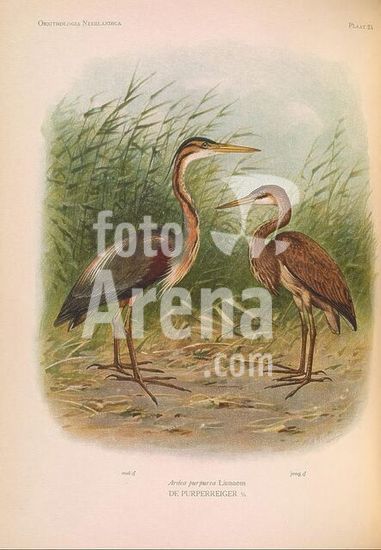
alb15384074 Ornithologia neerlandica 's-Gravenhage M. Nijhoff 1922-35 birds Netherlands Ardea purpurea Purple Heron Marinus Adrianus Koekkoek 8 Eduard Daniël van Oort Ornithology, The illustration features two herons standing side by side in a natural setting. The taller heron, on the left, showcases vibrant plumage with elongated neck and legs, exuding elegance. Its head is crowned with a distinctive crest, and its beak is sharp and pointed, suggesting readiness for hunting. The smaller heron on the right, with a more subdued color palette, presents a young or juvenile appearance, characterized by speckled feathers and a slightly curved neck. Both birds are set against a backdrop of lush reeds, conveying a serene habitat typical of wetlands. The overall composition highlights the gracefulness and beauty of these wading birds in their environment.
DC
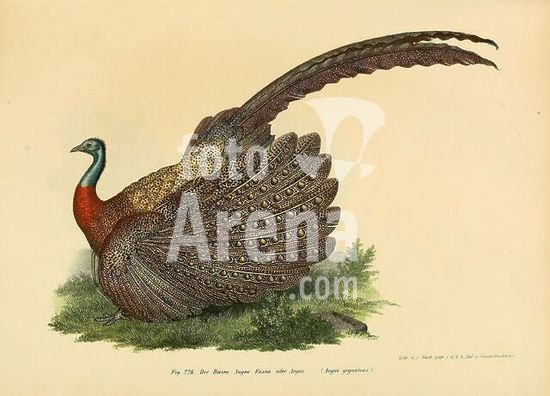
alb15387958 Bilder-atlas zur Wissenschaftlich-populären Naturgeschichte der Vögel in ihren sämmtlichen Hauptformen, Wien, K.K. Hof und Staatsdruckerei, 1864, birds, pictorial works, A beautifully detailed illustration of a peacock, showcasing its vibrant plumage and elaborate tail feathers. The peacock stands majestically with its head turned slightly, allowing a view of its iridescent neck and intricate patterns on its body. The fan of tail feathers displays an array of eye-catching designs, emphasizing the bird's elegance and beauty. Surrounding the peacock is a subtle depiction of lush greenery, enhancing the natural setting and highlighting the interplay between the bird and its environment. The illustration is labeled with an identifying figure number, adding context to this graceful creature.
DC
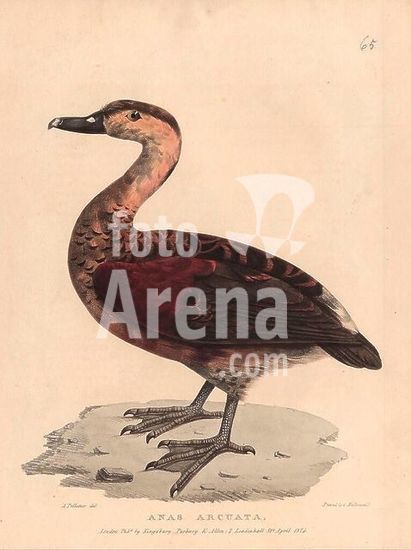
alb15329825 Zoological, researches, in, Java, and, the, neighbouring, islands, 1824, Indonesia, Java, Zoology, A detailed illustration of a duck species known as Anas arcuata, commonly referred to as the Australian Wood Duck. The bird is depicted with a striking plumage featuring a mix of rich reddish-brown and subtle gray tones. Its elongated neck and distinctively shaped head are highlighted, showcasing the bird's unique profile. The illustration emphasizes the bird's robust body, webbed feet, and the intricate details of its feathers. Below the duck, the title 'Anas Arcuata' is presented, along with the names of the illustrator and the original publication date, adding a scholarly context to the representation of this fascinating waterfowl.
DC
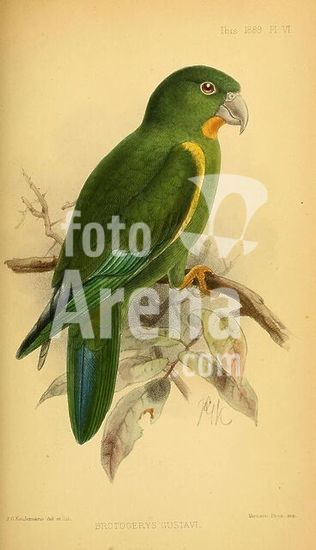
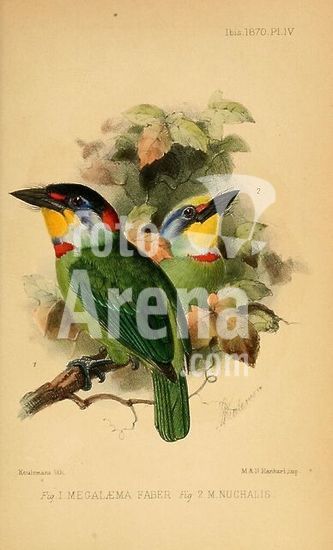
alb15322174 Ibis London Published for the British Ornithologists' Union by Academic Press, birds, ornithology, periodicals, The illustration features a vibrant green bird perched on a branch, showcasing its distinctive plumage. The bird has a sleek body with a slightly rounded head, bright yellow accents around its throat, and a bold orange patch on its cheeks. Its wings and tail display varying shades of green, adding depth to its appearance. Surrounding the bird is an arrangement of subtle leaves, enhancing the natural setting. This depiction represents the beauty and detail of avian life, capturing the essence of the species in a delightful pose.
DC
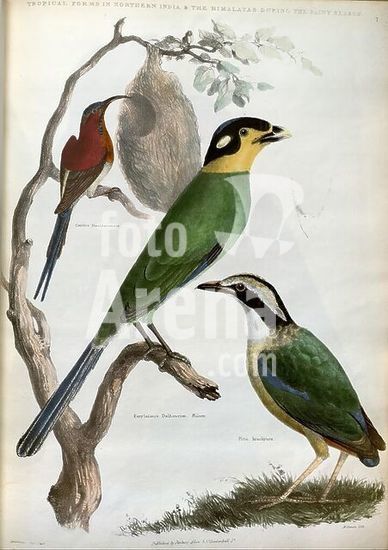
alb15325330 Illustrations of the Botany and Other Branches of the Natural History of the Himalayan Mountains, London, Wm. H. Allen, 1839, Plants, India, Natural History, Jammu and Kashmir, Himalayan Mountains, The scene features three distinct birds perched on a branch, showcasing their vibrant plumage and unique traits. On the left, a small, bright red bird with a slender profile stands out, its feathers appearing rich and glossy. The central bird is larger, boasting a striking combination of green, yellow, and black. Its prominent facial markings draw attention, highlighting a well-defined beak. Completing the trio is a smaller bird near the bottom right, adorned in shades of green and white, characterized by a distinct pattern on its head and throat. In the background, intricately woven nests hang, hinting at a tropical habitat. This enchanting display represents the diversity of avian life found in southern India and the.
DC
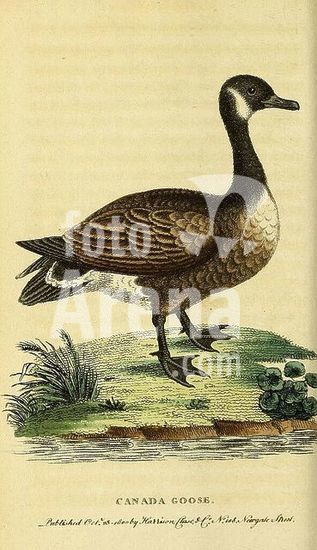
alb15321590 The Naturalist's Pocket Magazine or Complete Cabinet of the Curiosities and Beauties of Nature. London., An illustration of a Canada Goose, characterized by its distinctive features. The bird stands prominently on a grassy area, showcasing its sleek neck, dark head, and white facial markings. Its body displays a blend of brown and tan feathers, blending into a lighter shade on the underside. The background includes subtle hints of vegetation, emphasizing the goose's natural habitat. This depiction highlights the elegance and grace of the Canada Goose, a species often found near water bodies across North America.
DC
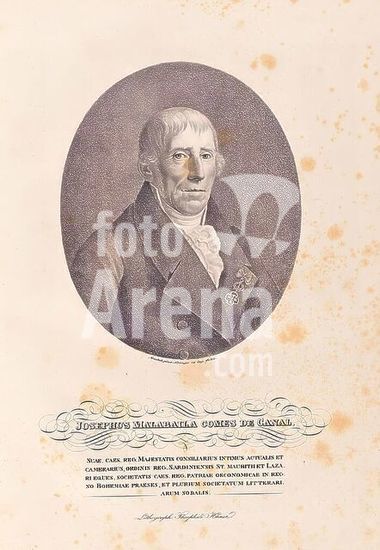
alb15328694 Hortus canalius, Prague, Ex typo et lithographia Theophili Haase, 1823., The illustration features a distinguished gentleman with a prominent, thoughtful expression. He is depicted with short, styled hair and is wearing a formal jacket, accompanied by a cravat at the neck. His posture and slight tilt of the head suggest confidence and character. Below the portrait, there is a caption that identifies him as Josephus Malabaricus. Additionally, decorative elements surrounding the portrait enhance its elegance, while the overall composition evokes a sense of historical significance and respect for the individual portrayed.
DC
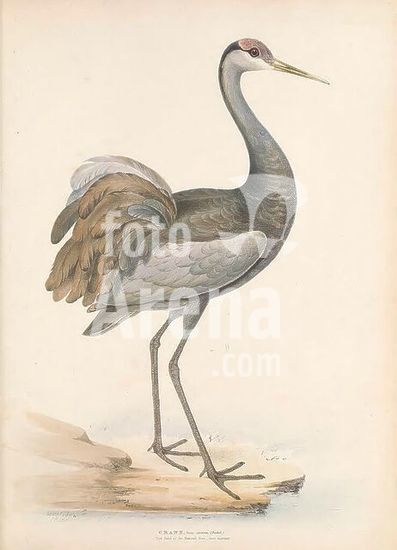
alb15325748 Illustrations of British Birds London 1837-1844 Birds Great Britain Nests Pictorial Works, This artwork features a graceful crane, characterized by its long legs and elegant neck. The bird displays a striking plumage with a blend of muted gray and brown feathers, accentuated by a subtle hint of white on the wings. Its head is adorned with a distinctive red patch, adding a touch of vibrancy to its overall appearance. The crane stands poised in a natural setting, capturing a moment of serenity and beauty in the depiction of wildlife. Fine details emphasize the texture of its feathers and the elegance of its stance, evoking a sense of tranquility and admiration for this majestic bird.
DC
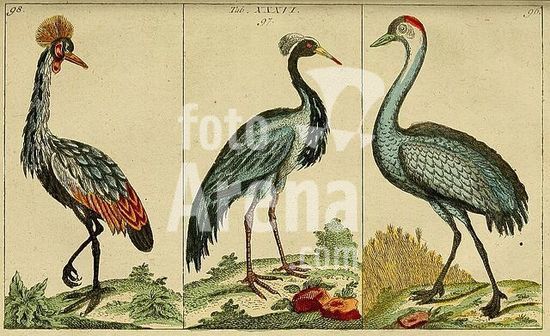
alb15321013 Unterhaltungen aus der Naturgeschichte, Augsburg, In der M. Engelbrechtischen Kunsthandlung, 1795, birds, natural history, ornithology, Anthropoides virgo, Grus grus, Balearica pavonina, Ardea pavonina, Ardea grus, Ardea virgo, This illustration features three distinct species of birds, each depicted in profile. The top bird showcases a graceful posture with elongated legs and a subtle curve in its neck, adorned with a striking red crown. The middle bird displays a more pronounced beak and a unique feather pattern that emphasizes its majesty, set against a backdrop of lush foliage. The bottom bird is characterized by vibrant plumage and a distinctive fan of feathers on its head, presenting an energetic stance. The contrasting colors and intricate details highlight the beauty of avian diversity, emphasizing unique characteristics and habitats.
DC
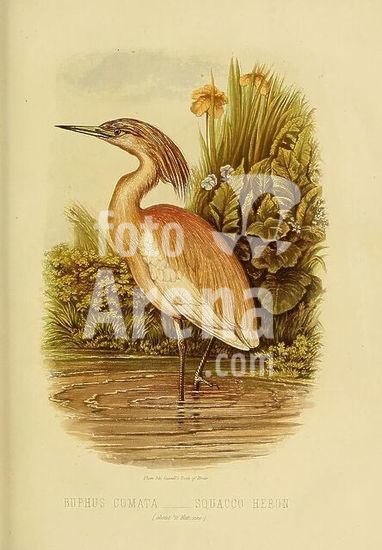
alb15324803 Cassell's book of birds, Petter and Galpin, [1875?], birds, Ardeola ralloides, Squacco Heron, This illustration showcases a Squacco Heron, scientifically known as Ardeola ralloides. The bird is depicted standing gracefully in shallow water, with its distinctive elongated neck and pointed beak. Its feathers exhibit a warm blend of browns and tans, accentuated by striking ruffled plumes on its head. Lush greenery and flowering plants surround the heron, creating a serene natural habitat. The detailed rendering highlights the bird's elegant posture and natural beauty, emphasizing its role in wetland ecosystems.
DC
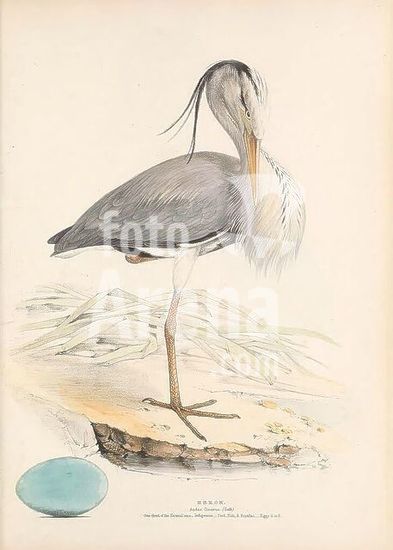
alb15321935 Illustrations of British birds London, 1837-1844, birds, eggs, Great Britain, nests, pictorial works, A detailed illustration of a heron, elegantly poised on one leg, with its head turned to the side, showcasing its distinctive long neck and sharp beak. The heron's plumage displays various shades of grey and white, emphasizing its graceful form. In the foreground, a single egg rests on a rocky surface, hinting at the bird's nesting behavior. The background features subtle hints of foliage, suggesting the heron's natural habitat near water. The caption includes the word 'HERON' and mentions a reference to an 1834 publication, adding a historical context to the artwork.
DC
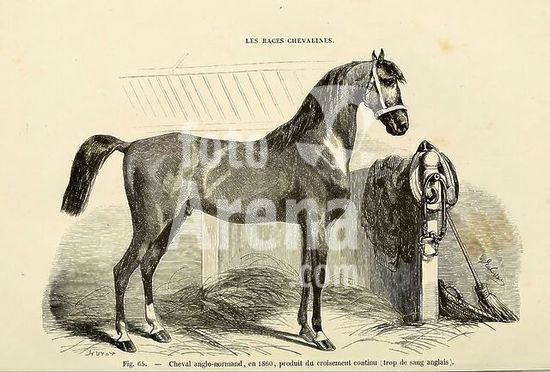
alb15328417 La connaissance générale du cheval, atlas, Paris, Didot, 1861, horses, A detailed illustration of a standing horse, showcasing its sleek coat and muscular build. The horse's head is held high, displaying an alert expression, accentuated by its prominent features and well-defined neck. Beside the horse, a bridle hangs from a wooden partition, indicating the presence of equestrian activity. Additionally, a grooming brush rests on the ground, suggesting a focus on the animal's care and maintenance. The overall composition highlights the bond between horse and handler, emphasizing the elegance and strength of the breed depicted.
DC
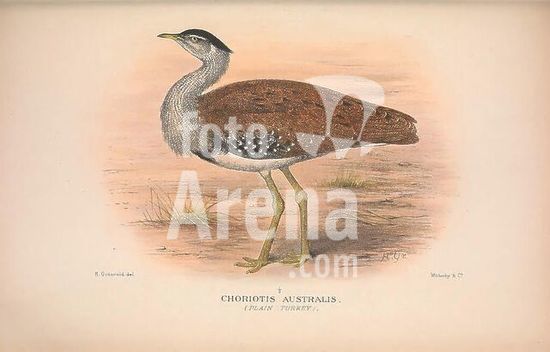
alb15329314 The Birds of Australia London, Witherby & Co, 1910-1927, Australia, Bibliography, Birds, Birds Australia, Pictorial Works, Bird, Australia, Mathews, Gregory Mathews, Ornithology, A detailed illustration of the Australian Bustard, known scientifically as *Ardeotis australis*. This large, ground-dwelling bird features a striking combination of plumage, with a predominantly brown body adorned with subtle patterns that provide camouflage in its natural habitat. The neck is elongated, displaying a lighter coloration that contrasts with the rich brown of its wings and back. Its long, slender legs reflect its adaptation to open landscapes, allowing it to move gracefully across plains and grasslands. The gentle curvature of its neck and the positioning of its head suggest a poised alertness, as it surveys its surroundings. Lush grass and earthy tones suggest a typical environment, highlighting the bird's connection to its native Australian.
DC
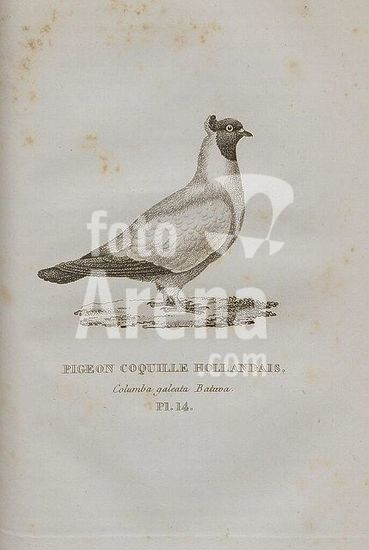
alb15323487 Les Pigeons de volière et de colombier, ou Histoire naturelle des pigeons domestiques. Paris, Audot & Corbié, 1824, Columba livia, A detailed illustration of a pigeon, specifically identified as "Pigeon Coquille Hollandaise" (Columba livia domestica), showcasing its distinct features. The bird is depicted in profile, highlighting its rounded body and subtle variations in feather texture. Its head displays a distinctive dark cap and a gentle curve of the neck. The illustration includes an engraved title beneath the pigeon, along with a plate number, indicating its place in a referenced collection or study of avian species. The overall composition emphasizes both the elegance and simplicity of this domesticated bird.
DC
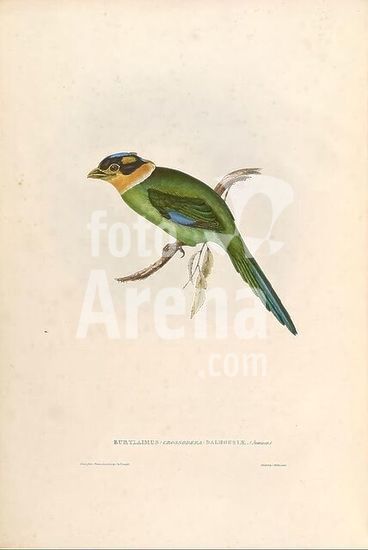
alb15329267 Icones avium, or Figures and descriptions of new and interesting species of birds from various parts of the globe, London, 1837-August, 1838. birds, pictorial works, Elizabeth Gould, Eurylaimus crossodera dalhousiae, frill-necked Eurylaimus, Elizabeth Gould, women in science, Eurylaimus dalhousiae, crossodera dalhousiae, Psarisomus dalhousiae, long-tailed broadbill, ornithology, John Gould, John Gould, A vibrantly illustrated bird perched on a branch, showcasing a striking green body adorned with a vivid blue patch on its wings and a distinctive black and yellow head. The bird's posture is alert, with its beak slightly open, possibly indicating a call or song. Delicate details highlight the texture of its feathers and the subtle variations in color. The background is plain, allowing the bird's vivid colors and intricate features to take center stage, creating a captivating portrayal of this majestic species. The illustration is accompanied by its scientific name, adding an element of formality to the artwork.
DC
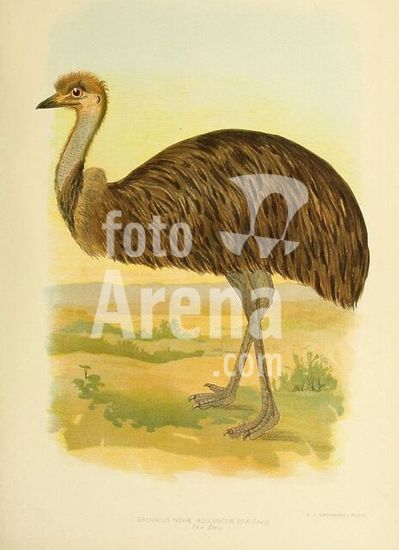
alb15325893 The birds of Australia, Melbourne C. Stuart & co, 1890-91 birds, Australia, Australia, Dromaius novaehollandiae, emu, This artwork depicts a large, flightless bird with a prominent neck and distinctive plumage. Its body is covered in soft brown feathers that blend into a lighter shade near the neck, while its long legs are positioned in a way that suggests motion. The bird's head features a curious expression, with a detailed eye and a tuft of feathers atop its head. In the background, a stylized landscape with rolling hills and trees hints at its natural habitat, adding depth to the composition. The overall illustration captures the essence of the creature in a whimsical and artistic manner.
DC
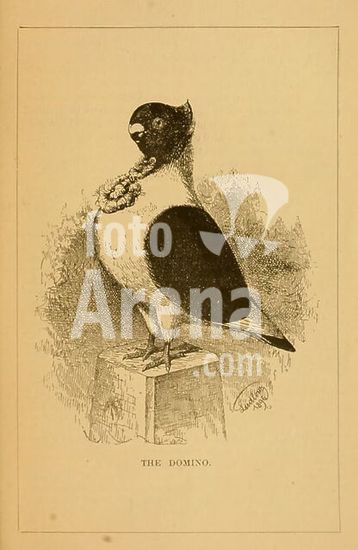
alb15326102 The, pigeon, standard, Boston, C.E. Twombly, 1900, pigeons, A detailed illustration of a bird known as 'The Domino,' characterized by its distinct black and white plumage. The bird stands elegantly on a small pedestal, displaying a prominent black head and neck, with white feathers covering its body. A floral or decorative collar, made up of a necklace of small circular elements, adorns its neck, enhancing its refined appearance. The background is softly shaded, giving the impression of depth and highlighting the bird's striking features and posture.
DC
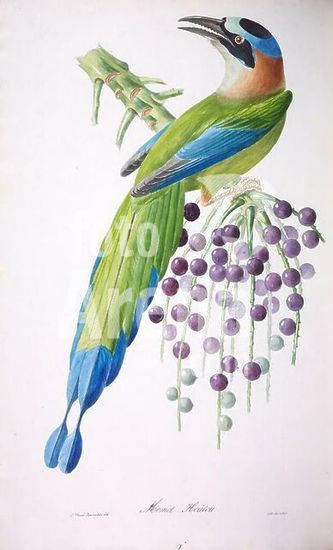
alb15328325 Oiseaux brillans du Brésil Paris, 1834 bird birds ornithology Brazil Jean Theodore Descourtilz Baryphonus cyanocephalus Momotus momota Amazonian Motmot Blue-crowned Motmot Momot houtou hist sci art, A vividly illustrated bird perched gracefully on a branch, showcasing an array of striking colors. The bird features a bright green body with a long, flowing tail that transitions into shades of blue. Its head is adorned with a subtle blue cap and orange-brown highlights on the throat, while its bill is elongated and pointed, hinting at its insectivorous diet. Surrounding the bird are clusters of round, purple berries, adding a rich contrast to the scene. This artwork captures the bird's natural elegance and the vibrant flora of its habitat, highlighting the intricate details of both the avian subject and its surroundings.
DC
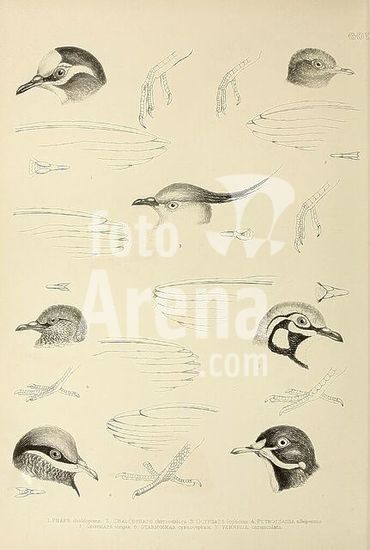
alb15323703 The genera of birds, 1849, bird, birds, behavior ornithology, classification, pictorial works, ornithological illustration, museum of comparative zoology, The composition features a series of detailed illustrations showcasing various bird heads and parts. Each section captures distinct anatomical features, including beaks, eyes, and feather patterns. The top row highlights unique profiles with varying characteristics, such as crests and colorations. The central section focuses on the intricate structures of the neck and head, emphasizing the diversity among the species. The arrangement of shapes and lines demonstrates a keen observational study, likely aimed at illustrating the differences in morphology. The overall layout presents an educational exploration of avian anatomy.
DC
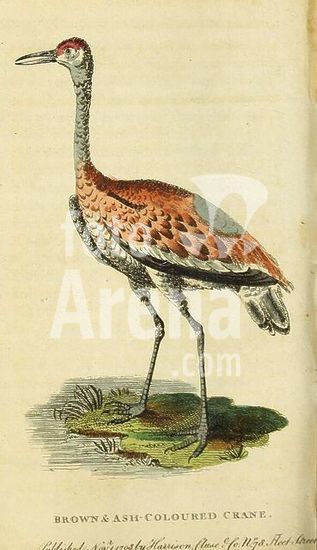
alb15325063 The Naturalist's Pocket Magazine, or Compleat Cabinet of the Curiosities and Beauties of Nature. London., This depiction showcases a Brown and Ash-Coloured Crane, elegantly poised on slender legs. The crane is characterized by its striking coloration, featuring a blend of earthy browns and ash-gray tones across its body, complemented by subtle hints of reddish plumage on the head. Its long neck and sharp, pointed beak highlight its graceful stature. The crane stands amidst a simple grassy setting, emphasizing its natural habitat. This illustration serves as a visual exploration of avian beauty and the intricate details of wildlife.
DC
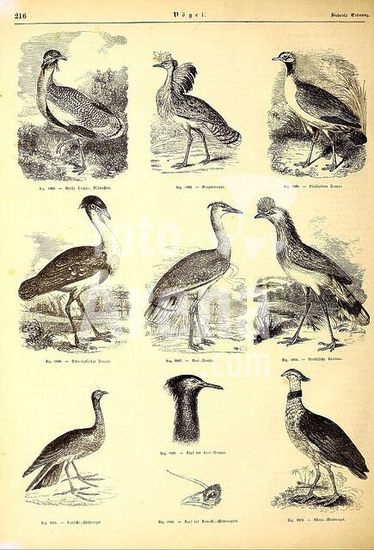
alb15324056 Illustrirte Naturgeschichte des Thierreichs Leipzig J.J. Weber 1848 Birds Amphibians Reptiles Zoology, The illustration features a collection of nine distinct bird species, each depicted in a detailed and informative manner. In the top row, from left to right, it showcases a graceful bird with a long neck, followed by a striking crane known for its elegant stature, and a slender, wading bird often found in wetlands. The middle row presents a plump bird with a rounded body, an avian species characterized by its long legs and prominent beak, and a sleek bird known for its distinctive coloration. The bottom row includes a bird with a distinctive crest, alongside a unique species recognized for its unusual head shape, leading to another bird that features an eye-catching plumage pattern. Each bird is labeled with.
DC
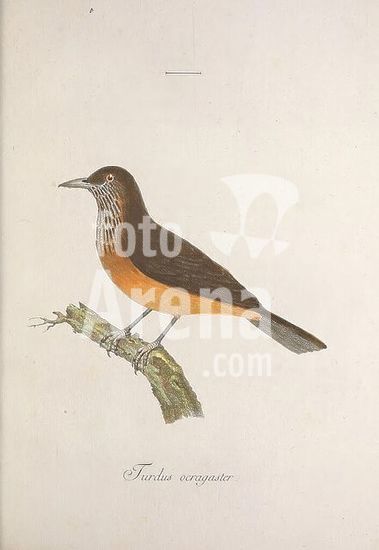
alb15322462 Museum, Carlsonianum, in quo novas et selectas aves, coloribus ad vivum brevique descriptione illustratas, suasu et sumtibus generosissimi possessoris, Holmiae, Ex Typographia Regia, 1786-1789, Africa, southern, birds, Pacific area, pictorial works, Sweden., A beautifully illustrated bird perched on a branch, showcasing intricate details in its plumage. The bird features a dark brown head and wings, with a striking orange-brown chest and underbelly. Its slender body and long tail are complemented by a delicate white streak on the throat, adding to its elegance. The background is subtle, allowing the vibrant colors of the bird to stand out. The scientific name, 'Turdus ceorgaster,' is elegantly inscribed beneath, indicating its classification.
DC
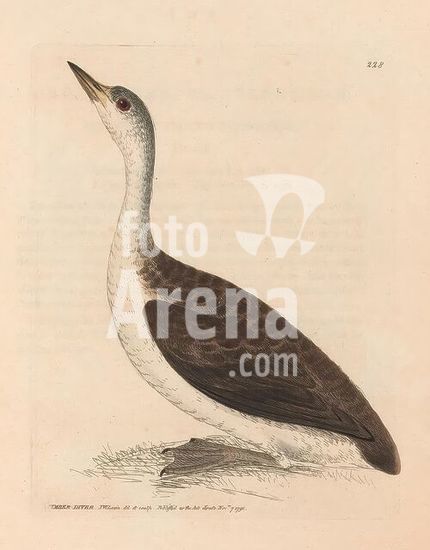
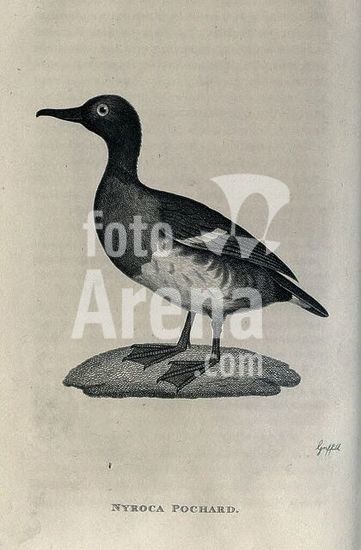
alb15329707 General zoology, or Systematic natural history, London, Printed for G. Kearsley, 1800-1826, pictorial works, zoology, This illustration features a Nyroca pochard, a diving duck known for its distinctive appearance. The bird is depicted standing upright, showcasing its streamlined body with a contrasting dark and light plumage. The head is sleek with a prominent eye, and its long neck leads to a rounded, slightly tapered beak. The wings are tucked against its sides, highlighting the unique feather patterns. The overall posture and detailed artistry emphasize the pochard's elegance and adaptation to aquatic environments. The illustration serves as a study of avian anatomy and species identification, contributing to the understanding of wildlife.
DC
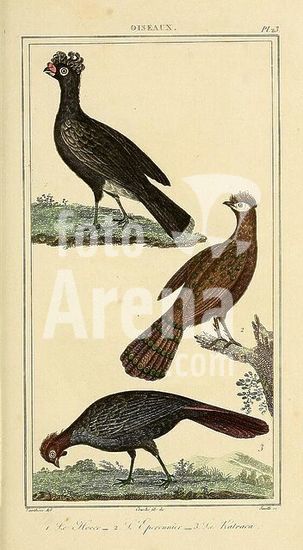
alb15277140 Oeuvres completes de Buffon, Paris, 1841, birds, atlases, This illustration features three distinct bird species displayed in a vertical arrangement. The first bird, at the top, showcases a striking crest and a dark plumage, accentuated by a vibrant red coloration on its head and throat. The middle bird displays a more subdued yet intricate pattern, with rich colors and distinctive feather markings. The bottom bird combines a rounded shape with a prominent crest, featuring a blend of earthy tones and subtle iridescence. Each bird is depicted in a natural setting, surrounded by greenery, highlighting their unique characteristics and differences in plumage. The overall presentation emphasizes the diversity and beauty of avian life.
DC
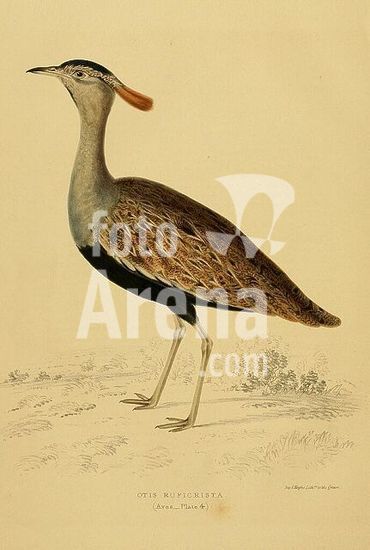
alb15275158 Illustrations, of, the, zoology, of, South Africa, London, Smith, Elder and Co, 1838-1849, animals, South Africa, zoology, bird, Otis ruficrista, A tall, elegant bird stands poised, showcasing its slender neck and distinctive features. Its plumage features a striking combination of earthy tones, with a predominantly brown body intricately patterned with darker speckles. The bird displays a prominent crest of vibrant orange on its head, adding to its unique appearance. Long, thin legs support the bird, suggesting adaptability to its environment. Surrounding the bird is a subtle depiction of a natural habitat, featuring soft grass and minimal foliage, hinting at its preferred open landscapes. The text below identifies the bird as ''Otis ruficrista, ' suggesting its classification within the avian world.
DC
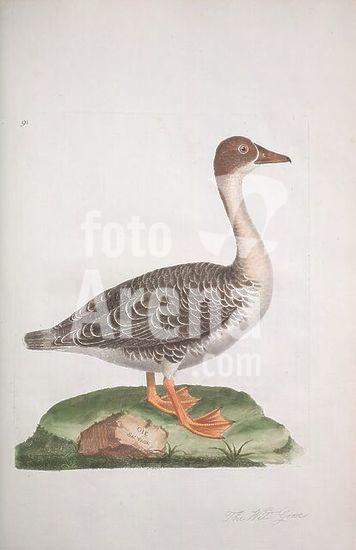
alb15276801 Ornithologie Paris The Artist 1773-1792 birds pictorial works, A detailed illustration of a goose standing on a grassy patch, with its head turned slightly to the left. The bird features a brown and gray plumage, showcasing a mix of textures, with distinct feather patterns along its back. Its neck is elongated and elegantly curved, transitioning to a smooth, light-colored throat. The goose's beak is orange, matching its vibrant webbed feet, which are positioned firmly on the ground. A small rock beneath the bird is inscribed with the word ''OIE, ' indicating its name in French. The overall composition highlights the graceful posture and natural beauty of the goose in a serene setting.
DC
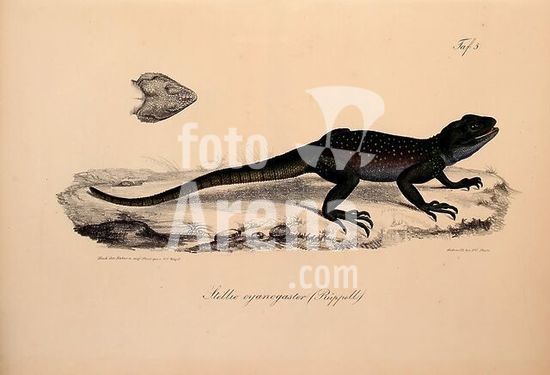
alb15271784 Neue Wirbelthiere zu der Fauna von Abyssinien gehörig, Frankfurt am Main, S. Schmerber, 1835-1840, animals, classification, Ethiopia, identification, marine fishes, Red Sea, zoology, Stellio cyanogaster, Acanthocercus cyanogaster, black-necked tree agama, herpetology, lizards, reptiles, A detailed illustration of a lizard, showcasing its distinctive features, including its elongated body, vibrant coloration, and intricate patterns on its skin. The lizard is depicted in a side view, climbing or resting against a textured surface. Beside it, a close-up view of its head emphasizes its sharp features, including the eyes and snout. The scientific name ''Eidechse mygindalei Pseudopall'' is elegantly inscribed along the bottom, hinting at its classification within the reptile family. The overall composition highlights both the delicate details and anatomical structure of this striking species.
DC
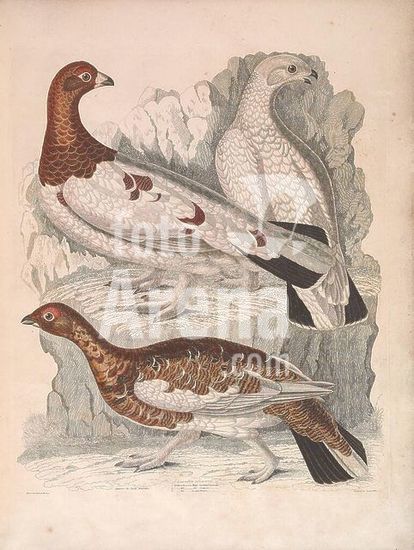
alb15273152 Illustrations of the game birds of North America, Edinburgh, Frazer & Co, 1834 [i.e. 1835], birds, game, and game birds, North America, pictorial works, Lagopus lagopus, Lagopus saliceti, The illustration features a group of three distinct bird species. The topmost bird displays a striking combination of white plumage contrasted with a rich chestnut-brown head and neck, suggesting an elegant and regal appearance. The central bird showcases a vivid pattern of reddish-brown and white feathers with a rounded body and a prominent, soft plume, indicating its robust nature. The lower bird is characterized by a more intricate pattern, featuring a mix of browns and a hint of white, highlighting its adaptability to various environments. Each bird stands proudly against a softly rendered backdrop of rocky terrain, suggesting their natural habitat in hilly or mountainous regions.
DC
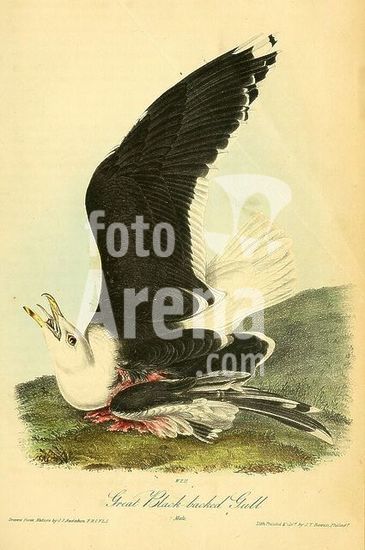
alb15273132 The birds of America, New York, J.B. Chevalier, 1840-1844, birds, North America, John James Audubon, pictorial works, Larus marinus, The illustration depicts a majestic bird in mid-flight, showcasing its impressive wingspan. This raptor features striking black feathers on its body and wings, with a white head and neck that contrast sharply against its dark plumage. Its beak is sharp and slightly open, suggesting it may be calling or in search of prey. A splash of vibrant red feathers adorns its chest, adding a touch of color to its otherwise powerful appearance. The background hints at a natural habitat, with hints of greenery that evoke a sense of wilderness. The meticulous detail in the feathers highlights the artist's skill, capturing the essence and majesty of this avian predator.
DC
alb15272003 La galerie des oiseaux, Paris, Carpentier-Méricourt, 1834, birds, pictorial works, The illustration depicts a stylized bird with elongated limbs and intricate feather details, perched gracefully on a rocky surface. Its long neck and poised head suggest alertness, while the finely rendered textures of its plumage demonstrate a keen attention to detail. The bird appears to be an aquatic species, likely associated with wetlands or coastal environments, and is presented in a naturalistic pose, highlighting its elegant form and delicate features. The accompanying text hints at its classification, potentially indicating a scientific or artistic exploration of avian life.
DC
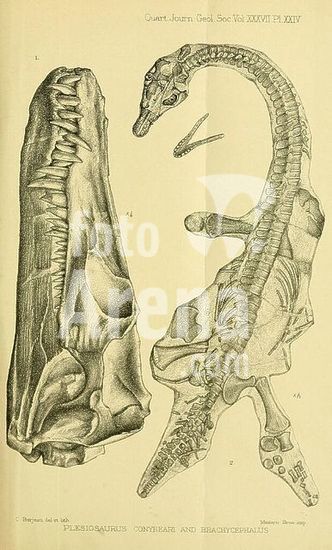
alb15279408 The, Quarterly, journal, of, the, Geological, Society, of, London, v, 37, (1881), London, geology, periodicals, The illustration depicts the skeletal remains of a Plesiosaurus, a marine reptile that lived during the Mesozoic era. The upper section showcases a detailed view of the skull, highlighting its elongated shape and distinct features. Below the skull, the complete skeleton of the Plesiosaurus is presented in a side profile, revealing its characteristic long neck and flippers, adaptations suited for life in the ocean. This scientific representation emphasizes the anatomical structure of the creature, showcasing both its head and body in an informative manner, likely intended for educational purposes in paleontology.
DC
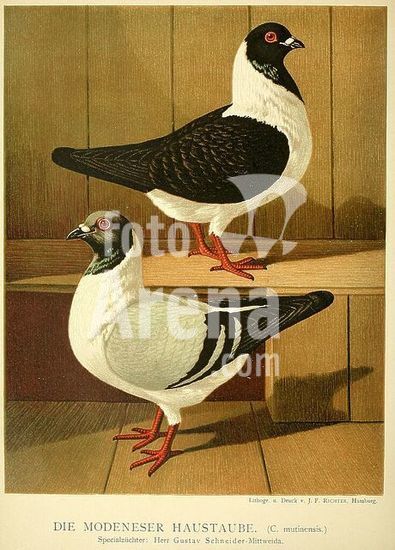
alb15279429 Illustrated, Mustertauben-Buch, Hamburg, Druck und Verlag von J.F. Richter, [1884-1886], pigeons, anatomy, variation, pictorial works, The illustration features two distinct breeds of pigeons, prominently displayed side by side. The bird on the left showcases a striking contrast of deep black feathers on its head, back, and wings, complemented by a white chest and underbelly, standing with a proud posture on an intricate wooden surface. The right bird exhibits a more varied coloration, with a combination of gray and white feathers, offering a unique pattern that adds to its charm. Both pigeons stand upright, their alert expressions highlighting their graceful necks and delicate features.
DC
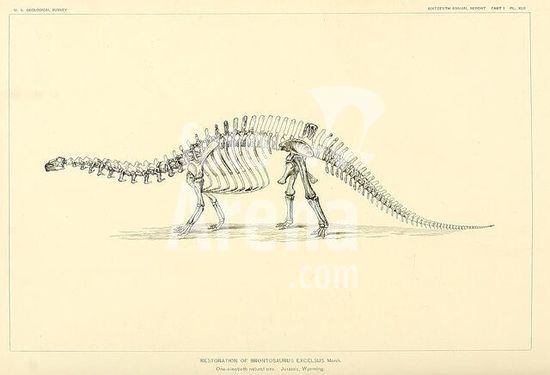
alb15271076 The dinosaurs of North America, Washington, Govt. Print, 1896. dinosaurs, Apatosaurus excelsus, A detailed illustration depicting the skeletal structure of a large dinosaur, showcasing its elongated neck, tail, and robust body. The bones are intricately labeled, highlighting various components such as the vertebrae, limbs, and skull. The posture reflects a bipedal stance, with the dinosaur's head raised and neck arched, indicating its majestic presence in the prehistoric landscape. The anatomical precision emphasizes the complexity of its skeletal design, illustrating aspects of its evolution and biological function. This representation serves as a fascinating study for paleontology and the understanding of dinosaur anatomy.
DC
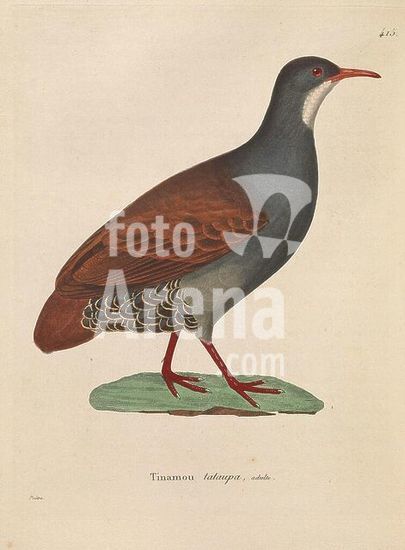
alb15279167 Nouveau recueil de planches coloriees d'oiseaux A Strasbourg Chez Legras Imbert et Comp 1838 birds pictorial works, A detailed illustration of a tinamou, specifically the species *Tinamus tatoupa*. This bird features a sleek, elongated body characterized by a striking blend of colors. The head and neck are shaded in a smooth gray hue, transitioning to a rich brown on the back and wings. The underbelly displays a warm brown with a subtle pattern, while the legs are slender and vibrant red. The bird stands atop a small patch of green, suggesting a natural habitat. Its poised stance highlights the graceful form and distinct characteristics of this fascinating avian species.
DC
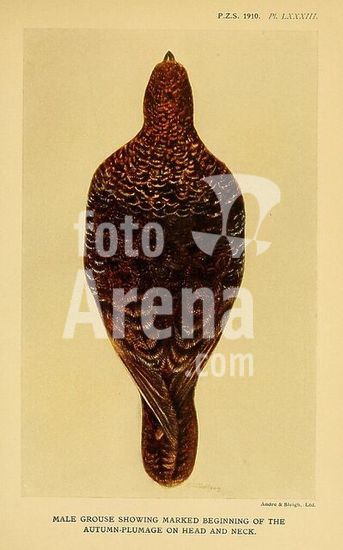
alb15274852 Proceedings of the Zoological Society of London, London, Academic Press periodicals, zoology, birds, A male grouse is depicted from a top-down perspective, showcasing its intricate plumage. The feathers display a blend of rich browns and subtle hints of other earth tones, illustrating the complexity of its autumn plumage, particularly around the head and neck. The detailed illustration highlights the texture and pattern of the feathers, reflecting the bird's natural camouflage in its environment. This representation emphasizes the beauty and elegance of the grouse, an essential aspect of its habitat in the wild.
DC
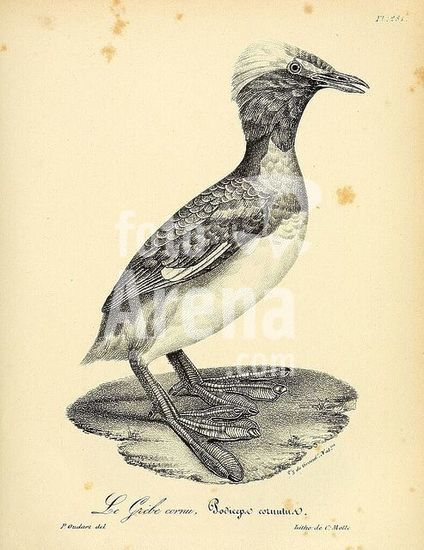
alb15273234 La galerie des oiseaux, Paris, Carpentier-Méricourt, 1834, birds, pictorial works, A detailed illustration of a unique bird, showcasing its distinctive features such as a prominent crest on its head, intricate feather patterns on its wings, and webbed feet adapted for an aquatic environment. The bird is depicted standing upright, with a slightly elongated neck and a sharp, pointed beak. The artist has captured the texture of its plumage and the anatomical details intricately, highlighting the elegance and grace of this species. Below the illustration, the title identifies the bird as ''Le Grèbe cornu'' and attributes the work to its creator.
DC
alb15276255 Ibis London Published for the British Ornithologists' Union by Academic Press. birds ornithology periodicals, The illustration features two vibrantly colored birds perched on a branch surrounded by lush green foliage. The first bird, prominent in the foreground, showcases a vivid green body with striking red and yellow markings on its head and throat. It gazes curiously to the side, highlighting its detailed plumage. The second bird, slightly smaller and positioned behind the first, displays similar coloring with hints of blue and a bold yellow collar. Together, they embody the beauty and intricacy of avian life in their natural habitat.
DC
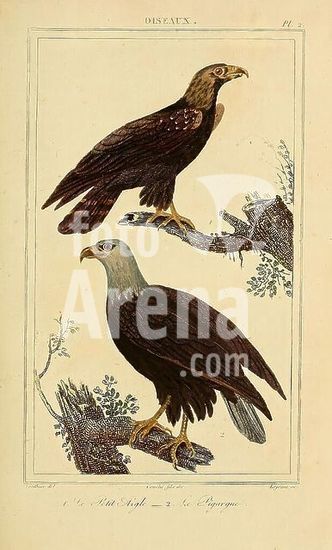
alb15274472 Oeuvres completes de Buffon, Paris, 1841, birds, atlases, The illustration features two majestic birds of prey perched on branches. The upper bird showcases a vibrant plumage with rich browns and a striking pattern, while the lower bird is characterized by a distinctive white head and neck, set against a darker body. Both birds exhibit sharp talons and keen expressions, highlighting their predatory nature. Surrounding them is a subtle hint of foliage, adding context to their natural habitat. The intricate details of wing feathers and facial features illustrate the artists' attention to the beauty and grace of these raptors.
DC
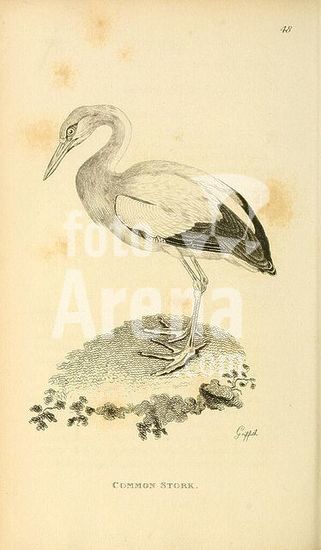
alb15275440 General zoology, or Systematic natural history London, Printed for G. Kearsley, 1800-1826. Pictorial works, zoology, bird, A detailed illustration of a common stork, showcasing its elongated neck and distinctive long legs. The posture highlights the bird's elegant stance, with its head slightly turned, emphasizing its slender beak. The body features intricate detailing, portraying the contrast between its feathers, which appear predominantly white with hints of gray on the wings. The base is adorned with a textured ground, suggesting a natural habitat. The title ''COMMON STORK'' is inscribed below, underscoring the species being depicted.
DC
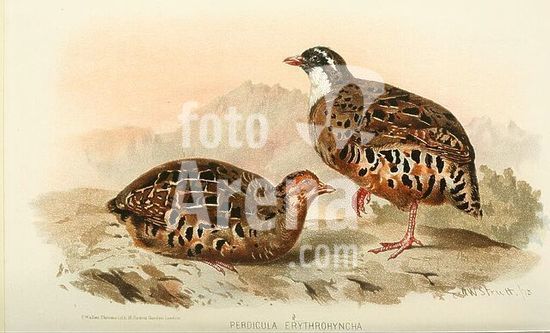
alb15275968 Indian, sporting, birds, London, Francis, Edwards, 1915, birds, game, and, game, birds, India, A beautifully illustrated depiction of two quails, showcasing their intricate plumage and distinctive features. The bird on the left is positioned with its head turned and a prominent chestnut patch on its throat, while the one on the right stands upright, revealing its rounded shape and mottled feathers. The subtle use of color enhances their natural beauty, surrounded by a soft, muted background that offers context to their habitat. The illustration captures the essence of wildlife artistry, emphasizing the intricate details of these birds' anatomy and coloration.
DC
alb15271234 Keepsake d'histoire naturelle Londres Bazouge-Pigoreau 1838 birds classification pictorial works, The depiction showcases a variety of waterfowl, each illustrated in a detailed and artistic style. At the top, two species are presented: one on the left appears with a grayish-brown plumage, while the one on the right displays a striking reddish-brown head and neck, elegantly contrasting with its darker body. Below, another pair is featured, with the left bird characterized by its unique coloration and form, while the right bird exhibits a more streamlined silhouette, possibly indicating swift movement. The scene is enriched with natural elements such as grasses and water, suggesting their habitat and behaviors.
DC
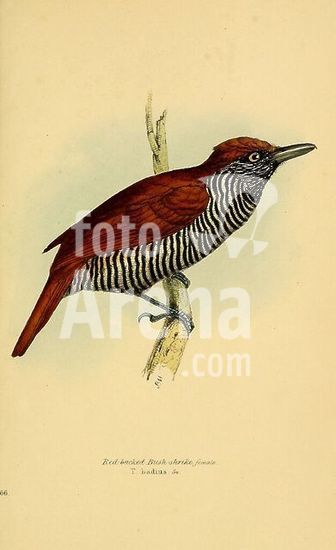
alb15270404 A selection of the birds of Brazil and Mexico, the drawings1841, birds, Brazil, Mexico, pictorial works, Thamnophilus palliatus, William Swainson, ornithology, Chestnut-backed Antshrike, A beautifully illustrated bird perched on a branch, showcasing a striking display of plumage. The bird features rich, reddish-brown feathers on its head and back, contrasting with its distinctive black and white striped throat and underparts. Its keen eyes exude a sense of alertness, while the intricate detailing of its feathers highlights the artistry of its depiction. This captivating representation emphasizes the bird's natural elegance and charm, inviting admiration for its vibrant coloration and unique patterns.
DC
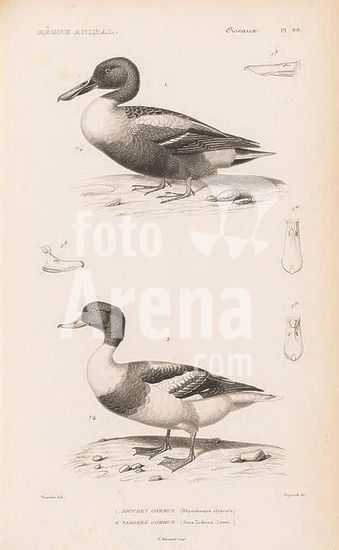
alb15270417 Le règne animal distribué d'après son organisation Paris Fortin Masson et cie 1836-1849 Anatomy Comparative Animals Classification Identification Nomenclature Zoology Museum of Comparative Zoology Birds, Two intricately illustrated waterfowl, positioned one above the other, are displayed side by side. The top bird, labeled as belonging to the genus Anas, showcases a distinctively patterned plumage with marked features that highlight its anatomical structure. Its head displays a rich coloration, complemented by elegant markings along its neck and wings. Below it, a second bird is depicted, also from the Anas genus, characterized by its rounded body and contrasting hues. Both illustrations include detailed annotations, identifying specific traits and measurements, offering insight into their respective anatomies and characteristics.
DC
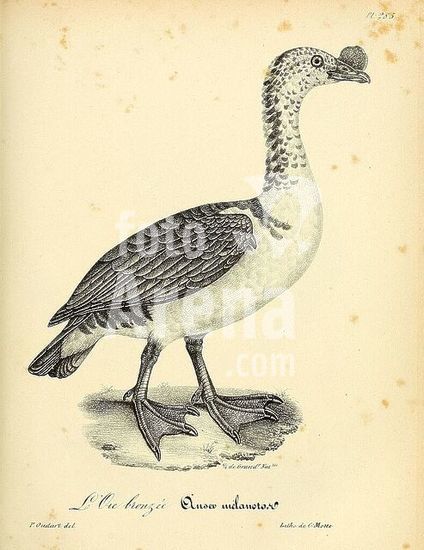
alb15274260 La galerie des oiseaux Paris Carpentier-Méricourt 1834 birds pictorial works, A detailed illustration depicts a bird characterized by an elongated neck and rounded body, showcasing a striking pattern of feathers across its wings and back. Its head is crowned with a distinctive rounded structure, possibly a crest or a unique feature. The bird stands upright on two sturdy legs, with its beak slightly open, suggesting a curious demeanor. The artwork features intricate line work, emphasizing the texture of the feathers and the anatomical details, while French text at the bottom identifies the species and the artist involved in its depiction.
DC
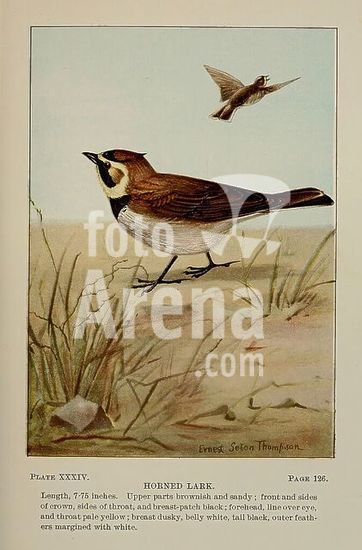
alb15274571 Bird-life, a guide to the study of our common birds, New York, Appleton, 1900, birds, pictorial works, United States, American, Museum, Natural, History, lark, Eremophila alpestris, This illustration features a Horned Lark, characterized by its distinctive horn-like feather tufts on the head. The bird stands poised on a sandy surface, showcasing its upper parts, which are a blend of brown and sandy hues. The front and sides of the throat are highlighted in rich black, contrasting with the lighter shades on its belly, which is predominantly white. Its breast is dusky, and the outer feathers are delicately margined with white. In the background, a small bird is depicted in flight, adding a sense of movement to the scene. This artwork captures the intricate details of the Horned Lark's plumage and its natural environment.
DC
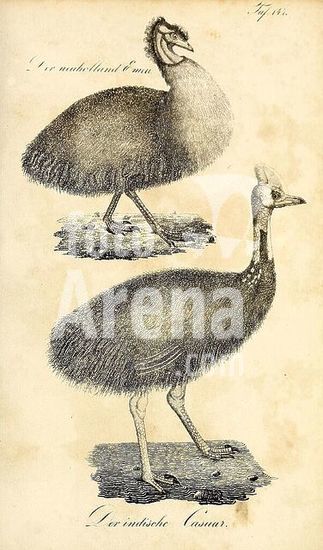
alb15274561 Die Naturgeschichte in getreuen Abbildungen und mit ausführlicher Beschreibung derselben, Leipzig, bei Eduard Eisenach, 1835, birds, pictorial works, The illustration features two distinct species of large, flightless birds. The upper bird is an emu, characterized by its long neck, slender legs, and a body covered in shaggy feathers. Below it, the casuar, often referred to as the cassowary, showcases a more robust build, featuring a prominent casque atop its head, thick legs, and striking blue and black plumage. Both birds stand on a textured ground with minimal surrounding details, emphasizing their unique silhouettes and physical features. The artistic rendering captures the distinct characteristics of each species, highlighting their size and stature within the avian family.
DC
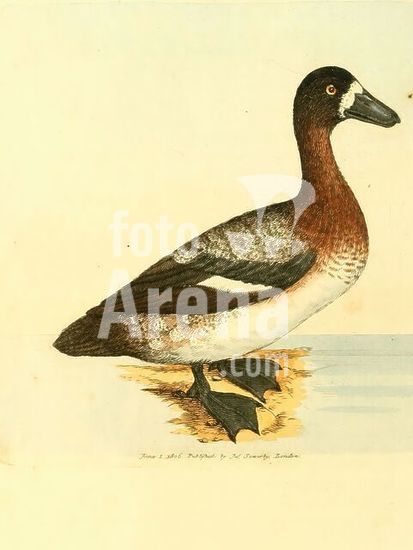
alb15271193 The British Miscellany, London, Printed by R. Taylor & Co, and sold by the author J. Sowerby by White, Johnson, Symonds, and all other booksellers, 1806, Great Britain, pictorial works, zoology, James Sowerby, Anas fraenata, white-faced duck, James Sowerby, Great Britain, A detailed illustration of a duck, showcasing its distinctive features. The bird has a rich chestnut-brown head and neck, transitioning into a more muted grayish-brown body adorned with intricate feather patterns. Its wings display a subtle mix of colors, with a hint of blue and white accents. The duck stands gracefully on a small patch of land by the water's edge, its sharp beak poised and alert, reflecting the natural environment it inhabits. The background hints at a serene aquatic setting, adding to the overall tranquil feel of the depiction.
DC
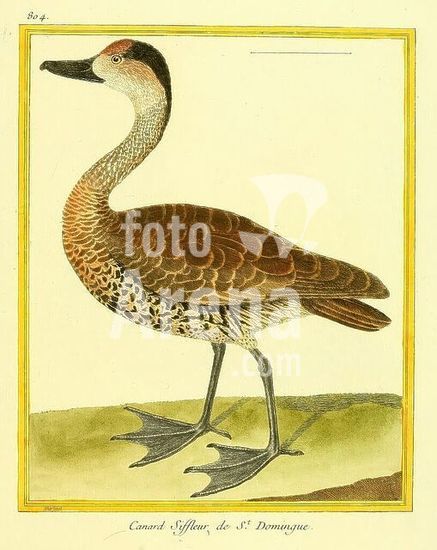
alb15362213 Planches enluminées d'histoire naturelle, Paris, s.n, 1765-1783, birds, pictorial works, zoology, This illustration features a waterfowl characterized by its elongated neck and distinctive plumage. The bird showcases a blend of brown and russet tones across its body, complemented by a distinct pattern of speckled markings. Its head is adorned with a dark crown, creating a striking contrast against its lighter body. Notable features include webbed feet, ideal for aquatic environments, and a graceful posture, highlighting its avian elegance. The background incorporates hints of greenery, suggesting a natural habitat that supports its lifestyle. This specific species is associated with the region of Saint-Domingue.
DC
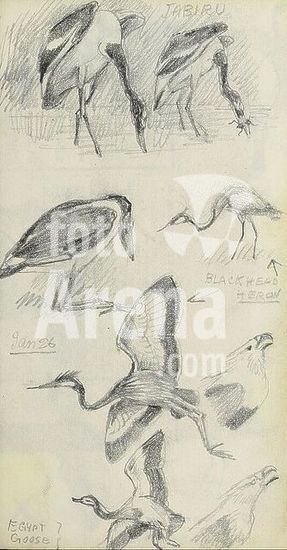
alb15369098 Abel Chapman's Sudan sketchbooks between 1913 and 1919, A collection of sketches depicting various bird species, showcasing detailed anatomical features and poses. The top section features the tabibu, characterized by its distinct long legs and beak, engaged in foraging behavior. Below, two images illustrate the black-headed heron, highlighting its graceful neck and body posture. Additionally, there is a depiction of the jamse bird, noted for its unique wings in mid-flight. The lower section presents sketches of the Egypt goose, capturing its distinctive shape and markings. Each bird is labeled, emphasizing their individuality and the artist's attention to detail.
DC
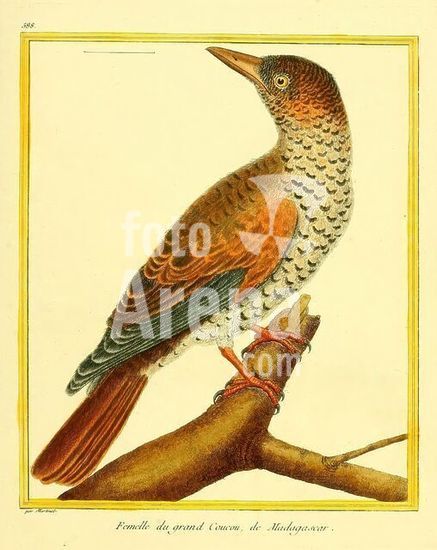
alb15366684 Planches enluminées d'histoire naturelle, Paris, s.n, 1765-1783, birds, pictorial works, zoology, A vividly illustrated bird perched on a branch, showcasing a striking mix of colors. The bird features a reddish-brown head and chest, transitioning to a detailed pattern of speckled feathers on its throat and abdomen. Its wings display a gradient of colors, and the tail is long with a vibrant reddish hue. The branch it rests upon is tied with a thin rope, adding an element of nature intertwined with human influence. The background is minimal, drawing attention to the bird's intricate details and the natural setting. This depiction highlights the unique beauty and character of this avian species.
DC
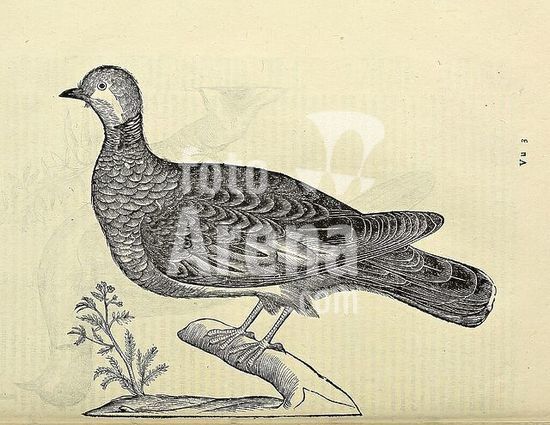
alb15307512 Vlyssis Aldrovandi philosophi ac medici Bononiensis historiam naturalem in gymnasio Bononiensi profitentis Ornithologiae hoc est De avibus historiae libri XII Bononiae Apud Franciscum de Franciscis Senensem MDXCIX-MDCXXXVII [1599-1637], The illustration depicts a detailed rendering of a bird, specifically from a historical ornithological text. The bird is shown in profile, perched with its body slightly angled. It features distinctive feather patterns and a curved neck, showcasing its head turned gracefully. The surrounding foliage hints at the bird's natural habitat, enhancing the overall composition. This image is part of a larger study on bird species, emphasizing both anatomical details and artistic representation in the field of ornithology.
DC
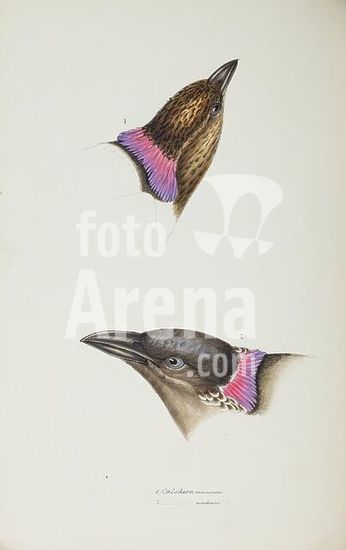
alb15309101 A synopsis of the birds of Australia, and the adjacent Islands. London: John Gould, 1837. Australia, Birds, Museum Victoria, Gould, Calodera maculata, Calodera nuchalis, Elizabeth Gould, Artist, Ptilonorhynchus maculatus, Spotted Bowerbird, Ptilonorhynchus nuchalis, Great Bowerbird, Australia, Gould, Gould Australia, Ornithology, John Gould, Elizabeth Gould, Women in Science, The illustration features two detailed depictions of birds, showcasing their distinctive neck patterns and coloration. The upper bird, labeled as 1, displays a speckled brown plumage with a vibrant, iridescent band of pink around its neck. The lower bird, marked as 2, has a more streamlined head with a grayish hue, accented by a striking pink and white feather pattern at the neck area. Both representations highlight the intricate beauty and diversity of avian species, emphasizing their unique features and the artistic attention to detail in their portrayal.
DC
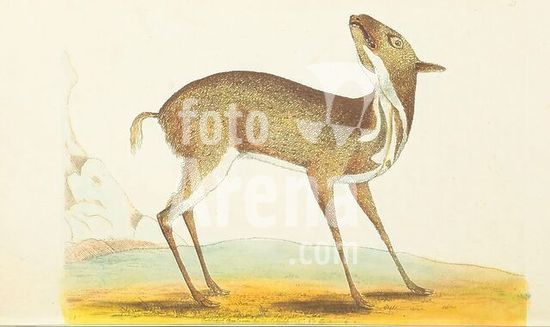
alb15309167 The naturalists' miscellany, London, Printed for Nodder & Co, 1789, pictorial works, zoology, Museum Victoria, deer, Frederick Polydore Nodder, George Shaw, natural history, mammalogy, Mammalia, royal antelope, Neotragus pygmaeus, pygmy musk, hist sci art, The illustration depicts a creature resembling a deer, characterized by its slender body and elongated legs. Its fur features a blend of browns and creams, with distinct markings running along its neck and a prominent light stripe. The animal stands in a dynamic pose, with its head turned to the side, showcasing its keen features and large, expressive eyes. The background hints at a natural landscape, incorporating soft, earthy tones that complement the figure. This artistic representation captures the grace and agility of the animal, highlighting its unique anatomical features and elegantly proportioned form.
DC
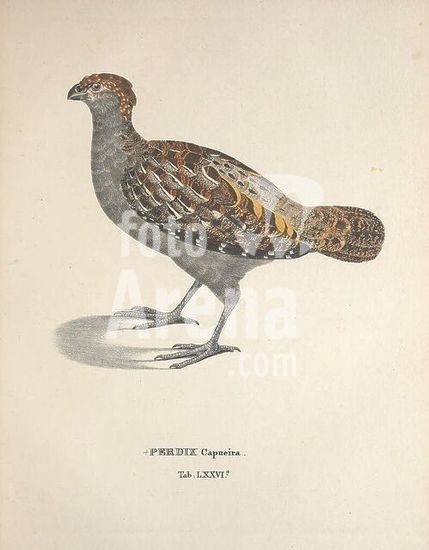
alb15307619 Avium species novae, quas in itinere per Brasiliam annis MDCCCXVII-MDCCCXX, Monachii, Typis Franc. Seraph. Hübschmanni, 1824-1825. Brazil, birds, pictorial works, description and travel, Odontophorus capueira, Perdix capueira, This depiction showcases a bird belonging to the partridge family, characterized by its stout body and distinct plumage. The bird has a rounded shape with a short neck and a small head, complemented by intricate feather patterns that display shades of brown and hints of iridescence. The legs are sturdy and well-formed, suitable for its ground-dwelling habits. Below the detailed illustration, a label identifies the species as 'Perdix Capraiva,' accompanied by a reference to a specific tab in a larger collection. The overall composition emphasizes the bird's natural elegance and charm, typical of illustrations aimed at cataloging wildlife.
DC

Total de Resultados: 788

Página 1 de 8