Busque também em nossas outras coleções:

Data da imagem:
Pauta
ver mais opções...
Agência
Fotógrafo
ver mais opções...
Estado
Cidade
ver mais opções...
Local
ver mais opções...
Tipo de licença
Orientação
Coleção
ver mais opções...

Total de Resultados: 154

Página 1 de 2

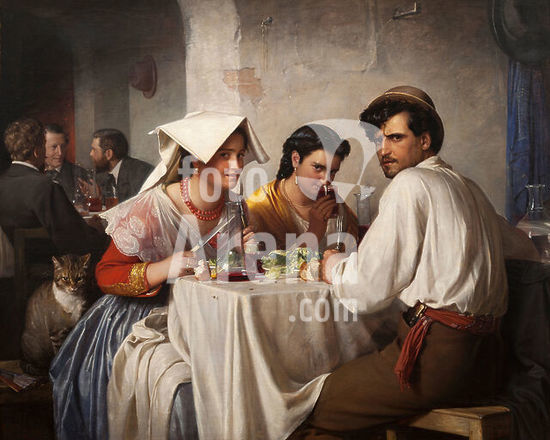
alb3893746 In a Roman Osteria. Date/Period: 1866. Painting. Oil on canvas. Height: 1,485 mm (58.46 in); Width: 1,775 mm (69.88 in). Author: CARL BLOCH.
DC
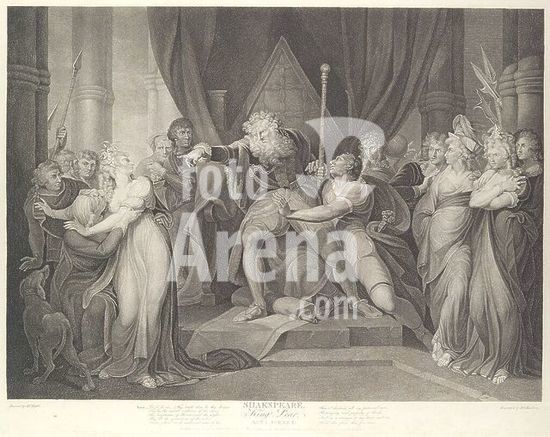
alb3683841 King Lear Casting Out His Daughter Cordelia (Shakespeare, King Lear, Act 1, Scene 1). Artist: After Henry Fuseli (Swiss, Zürich 1741-1825 London). Dimensions: image: 17 3/8 x 23 11/16 in. (44.1 x 60.1 cm)plate: 19 1/2 x 25 1/8 in. (49.5 x 63.8 cm)sheet: 21 3/4 x 27 15/16 in. (55.3 x 71 cm). Engraver: Richard Earlom (British, London 1743-1822 London). Publisher: John & Josiah Boydell (British, 1786-1804). Series/Portfolio: Boydell's Shakespeare Gallery. Subject: William Shakespeare (British, Stratford-upon-Avon 1564-1616 Stratford-upon-Avon). Date: August 1, 1792.In 1792 John and Josiah Boydell published this stipple engraving of a painting Fuseli submitted to the Shakespeare Gallery in 1790. The scene occurs near the beginning of King Lear. At the center of the composition sits the elderly king, who has divested himself of power and ordered his daughters-Goneril, Regan, and Cordelia-to declare their devotion to him in return for a portion of the kingdom. Cordelia's refusal to flatter a father she truly loves now results in her banishment. Fuseli used dramatic gestures to clarify the narrative. Earlom's choice of stipple enabled him to distinguish the varying expressions of the numerous participants, each of whom reacts individually to the central scene. Museum: Metropolitan Museum of Art, New York, USA.
DC
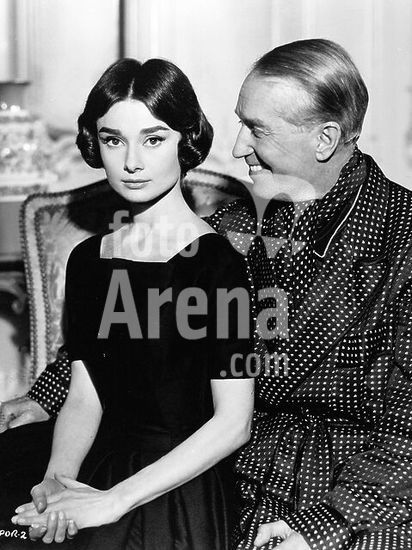
alb256295 AUDREY HEPBURN and MAURICE CHEVALIER in ARIANE (1957) -Original title: LOVE IN THE AFTERNOON-, directed by BILLY WILDER. English title: LOVE IN THE AFTERNOON. Portuguese title: AMOR NA TARDE.
DC
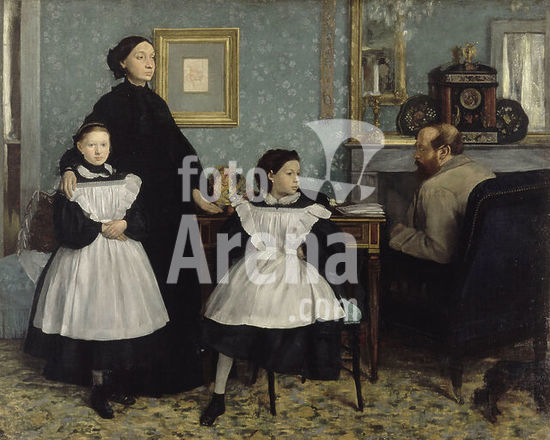
alb3895937 La Famille Bellelli The Bellelli Family. Date/Period: 1858 - 1869. Painting. Oil on canvas. Height: 2,000 mm (78.74 in); Width: 2,500 mm (98.42 in). Author: EDGAR DEGAS.
DC
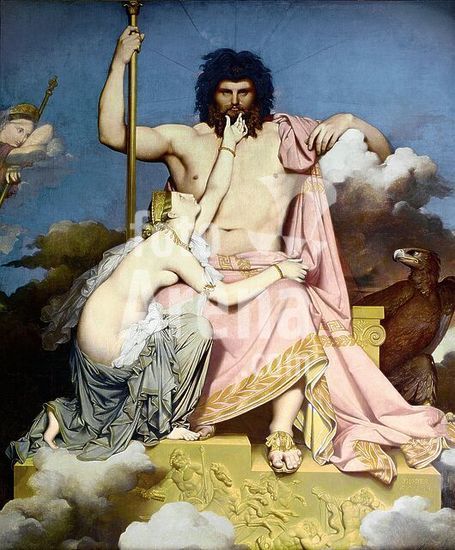
alb2019362 Jean Auguste Dominique Ingres / 'Jupiter and Thetis', 1811, Oil on canvas, 327 x 260 cm. Museum: Musée Granet, AIX-EN-PROVENCE, France.
DC
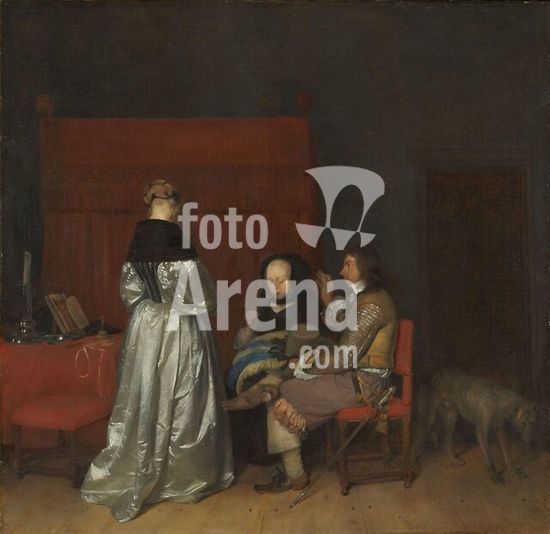
alb4104328 Gallant Conversation, Known as 'The Paternal Admonition'. Interieur met drie figuren die met elkaar in gesprek zijn; bekend als 'De vaderlijke vermaning'. Dating: c. 1654. Measurements: h 71 cm × w 73 cm; h 85 cm × w 87 cm × t 8.5 cm. Museum: Rijksmuseum, Amsterdam. Author: Gerard ter Borch (II).
DC
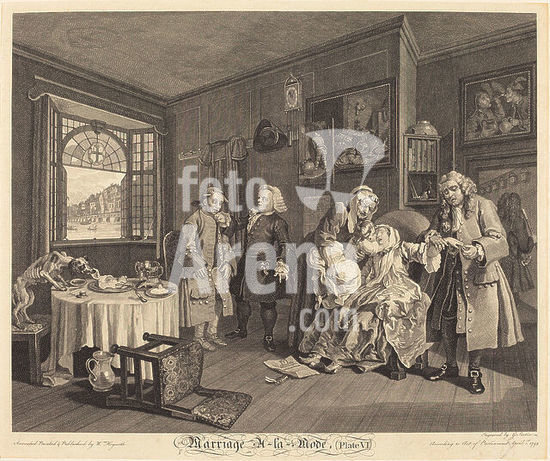
alb3698627 Marriage a la Mode: pl.6. Dated: 1745. Medium: etching and engraving. Museum: National Gallery of Art, Washington DC. Author: Louis Gerard Scotin after William Hogarth.
DC
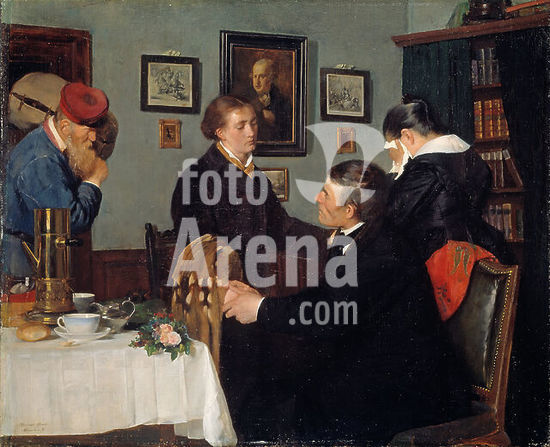
alb3900080 The Farewell. Date/Period: 1878. Painting. Oil on canvas. Width: 89 cm. Height: 81.5 cm. Author: HARRIET BACKER.
DC
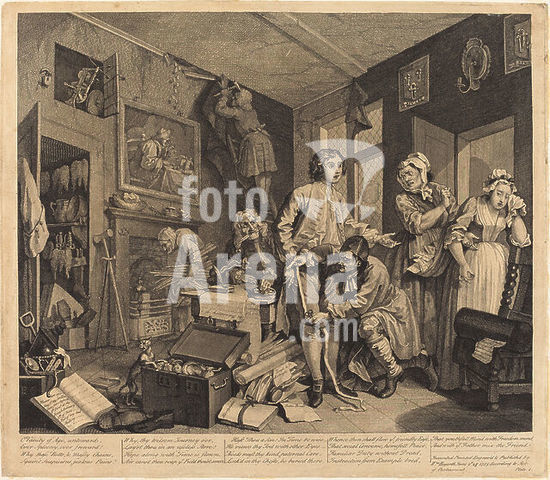
alb3727993 A Rake's Progress: pl.1. Dated: 1735. Medium: etching and engraving. Museum: National Gallery of Art, Washington DC. Author: William Hogarth.
DC
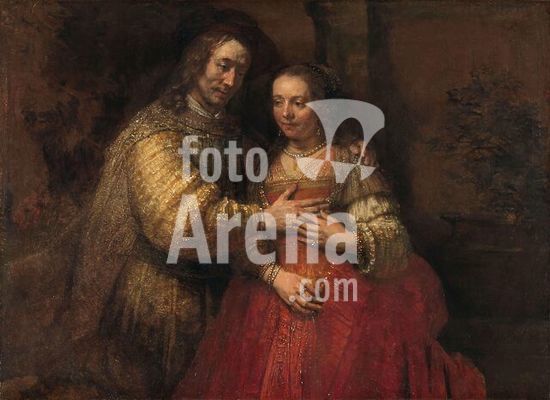
alb4105837 Isaac and Rebecca, Known as 'The Jewish Bride'. Portrait of a Couple as Isaac and Rebecca, known as 'The Jewish Bride'. Dating: c. 1665 - c. 1669. Measurements: h 121.5 cm × w 166.5 cm. Museum: Rijksmuseum, Amsterdam. Author: Rembrandt.
DC
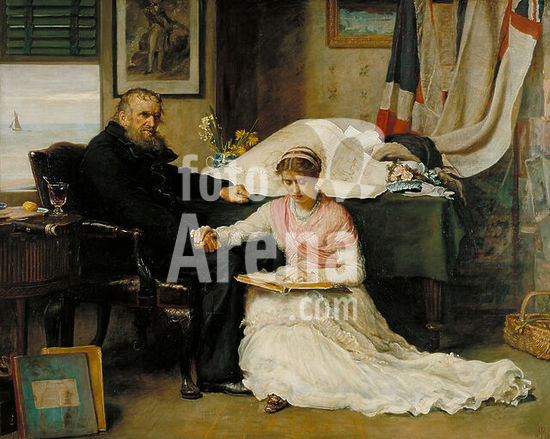
alb3904240 The North-West Passage. Date/Period: 1874. Painting. Oil on canvas. Height: 1,765 mm (69.48 in); Width: 2,222 mm (87.48 in). Author: JOHN EVERETT MILLAIS.
DC
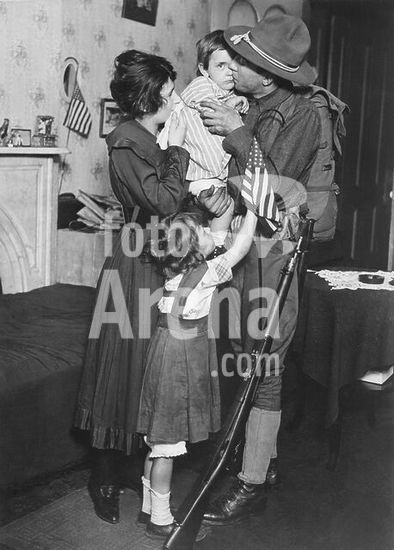
alb3887889 Private T. P. Loughlin of the 69th Regiment, New York National Guard, (165th Infantry) bidding his family farewell. circa 1917.
DC
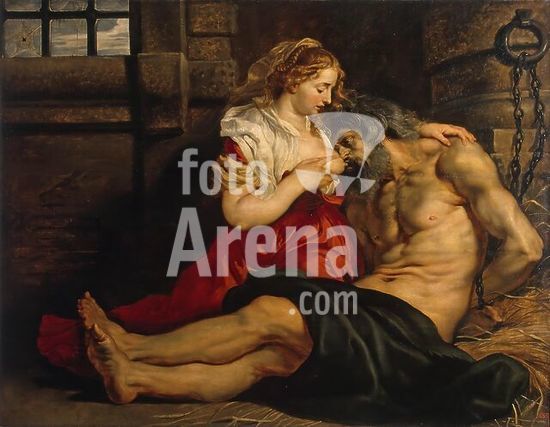
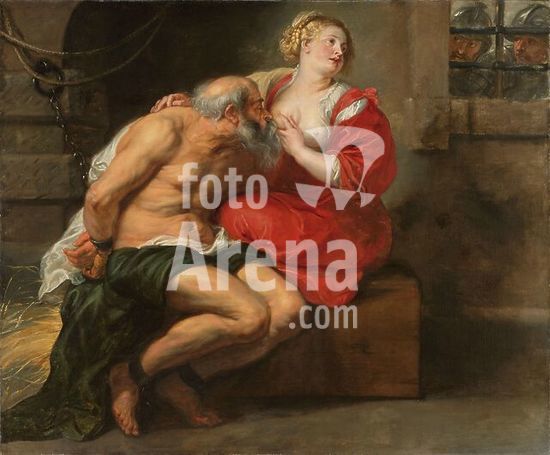
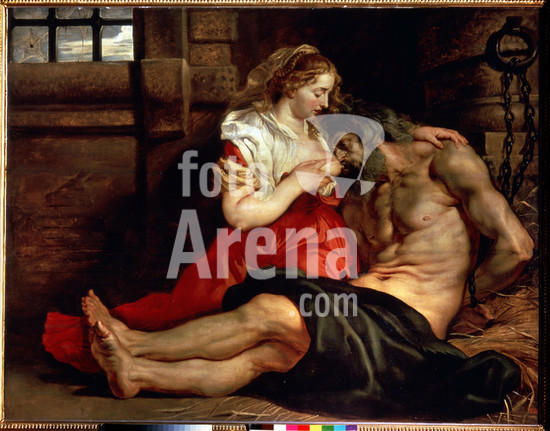
alb4219247 'Roman Charity (Cimon and Pero)'. Flanders, Circa 1612. Dimensions: 140,5x180,3 cm. Museum: State Hermitage, St. Petersburg. Author: Peter Paul Rubens (Pietro Pauolo).
DC
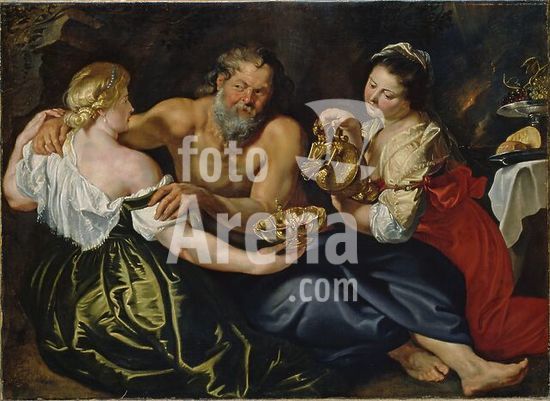
alb3905771 Lot and his daughters in a rock grotto. Date/Period: Ca. 1610. Painting. Oil on canvas. Height: 108 cm (42.5 in); Width: 146 cm (57.4 in). Author: PETER PAUL RUBENS.
DC
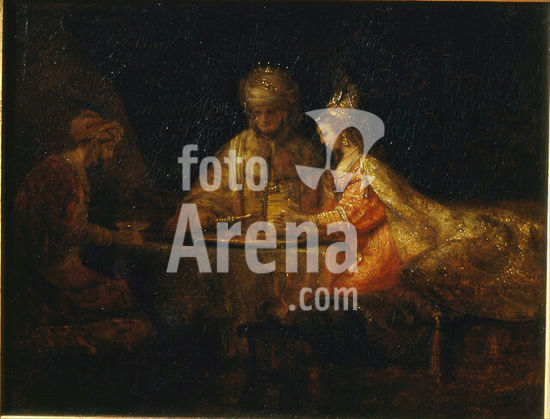
alb3905168 Ahasuerus and Haman at the Feast of Esther. Date/Period: 1660. Painting. Oil on canvas. Height: 73 cm (28.7 in); Width: 94 cm (37 in). Author: Rembrandt.
DC
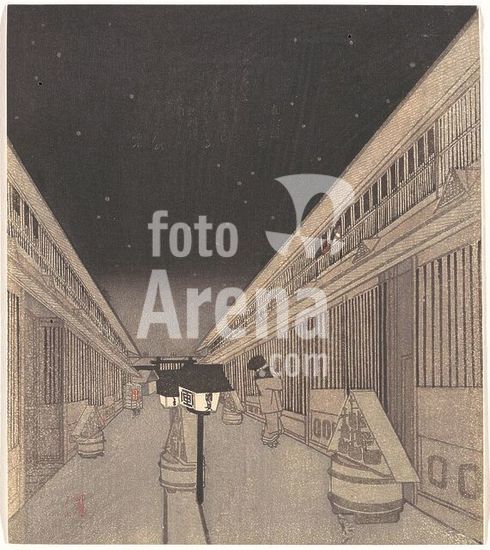
alb3601539 Main Street of the Yoshiwara on a Starlight Night. Artist: Utagawa Kunisada II (Japanese, 1823-1880). Culture: Japan. Dimensions: 8 1/8 x 7 1/8 in. (20.6 x 18.1 cm). Date: 1852-64.Kunisada II, a pupil of Utagawa Kunisada, placed his signature on the lantern in the foreground. Before his marriage to Kunisada's daughter in 1846, his prints were usually signed Baido Kunimasa; from then on he used the artist's name Kunisada II, until the death of his father-in-law in 1870, when he began to use the name Toyokuni IV.Two love poems, one by Chokujuen Junma and one by Kio Enba, are hidden in the night sky. Museum: Metropolitan Museum of Art, New York, USA.
DC
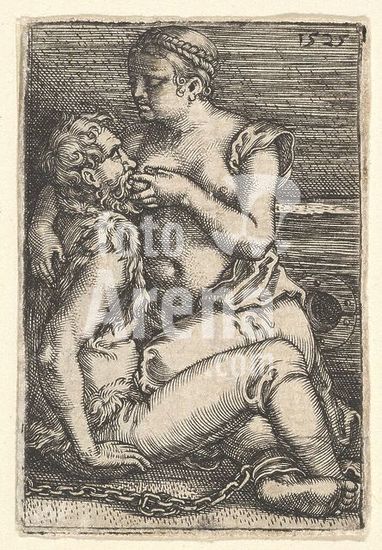
alb3609726 Cimon and Pero. Artist: Barthel Beham (German, Nuremberg ca. 1502-1540 Italy). Dimensions: Sheet: 2 3/16 × 1 1/2 in. (5.5 × 3.8 cm). Date: mid-17th century. Museum: Metropolitan Museum of Art, New York, USA.
DC
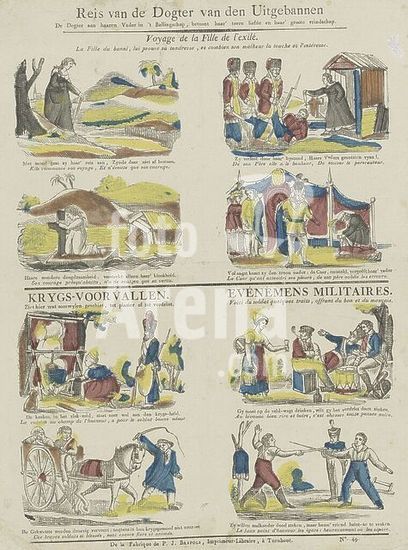
alb15550860 Turnhout, Brepols, Philippus Jacobus, Journey of the daughter of the banished, The daughter to her father in exile, shows her tender love and her great friendship, Voyage de la fille de l'exilé, The girl of the banished, who proved her affection, and combines her misfortune with touch and interest, Military events, See here what sometimes happens, to the amusement or to the sorrow, See the soldier's some traits, offering good and bad, stamped verso, Sheet with 8 scenes. Above: 4 scenes about an exiled virtuous daughter who goes on a journey to ask the Tsar for mercy for her father. Below: 4 military scenes. Under each scene a caption in Dutch and in French. Numbered lower right: No. 49., print, popular print, prints, popular prints, height 390 mm, width 338 mm, Publication (Event), Publication, Belgian, 1778 - 1845, publisher, 1800 - 1833, paper, woodcut, colours, letterpress printing, print maker, printmaker.
DC
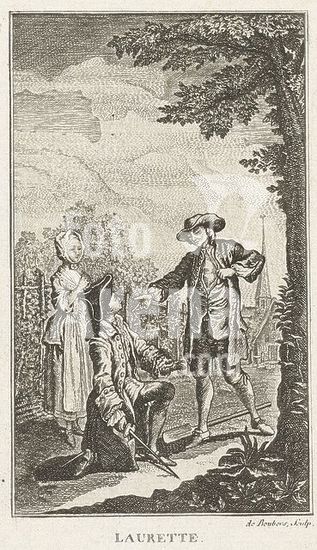
alb15504835 Paris, Gravelot, Hubert François, unknown, Boubers, N. de, Laurette, Laurette and the Count of Luzy, verso - stamped, Illustration for the story 'Laurette' from JF Marmontel's collection of stories 'Contes moreaux'. The poor but beautiful farmer's daughter Laurette dances with the Count of Luzy at a village festival. He immediately falls in love with the girl and asks her father for her hand. The Count kneels down before the farmer, Laurette stands next to them., print, book illustration, prints, height 150 mm, width 85 mm, print maker, printmaker, 1765 - 1780, paper, papier, etching, engraving, engraving (printing process), Work conception, French, 1699-03-26 - 1773-04-19.
DC
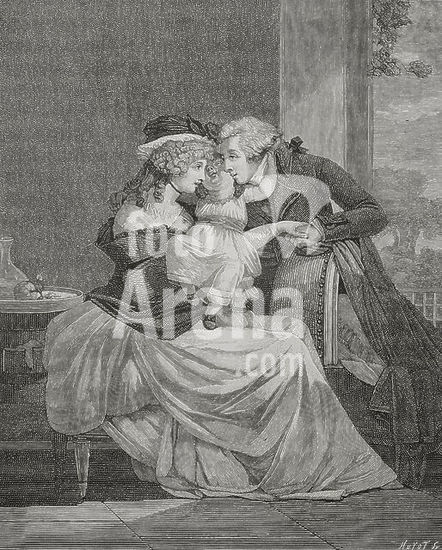
alb16039697 "They are happy". French family. Husband and wife with their toddler. Engraving by Huyot after Philibert-Louis Debucourt (1755-1832), early 19th century. "Directoire, Consulat et Empire. Moeurs et usages, lettres, sciences et arts. France, 1795-1815" (Directory, Consulate and the Empire of France. Customs and traditions, letters, sciences and arts. France, 1795-1815), by Paul Lacroix. Published in Paris, 1884.
DC
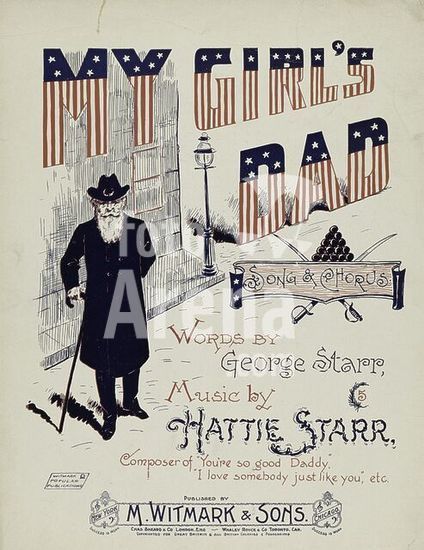
alb15423567 My girl's dad, 1898 - 1898, Additional title: He's on of Uncle Sam's old veterans. first line of chorus, first line, Date Issued: 1898, Place: New York, Publisher: M. Witmark & Sons, Songs, Love, Veterans, Fathers and daughters, Waltzes, Man-woman relationships, Extent: 1 score (6 p.), 35 cm., Veteran's gentle song, Twilight shadows on his face, Memories remain.
DC
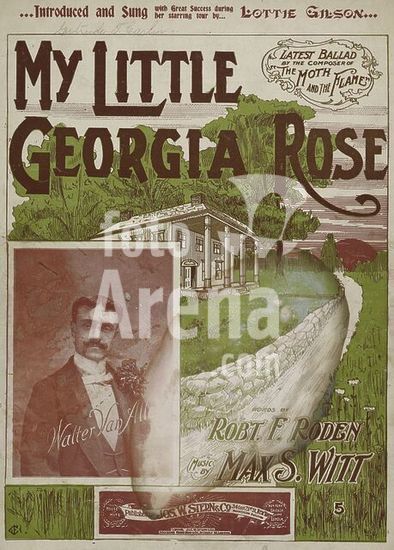
alb15436460 My little Georgia rose, 1899 - 1899, Additional title: In a Georgia town, I met, on a day I'll ne'er forget. first line of song, Additional title: Rose is Southern lassie, you're from the North,' he said. first line of chorus, Date Issued: 1899, Place: New York, Publisher: Jos. W. Stern & Co., Songs, Plantations, Fathers and daughters, Marriage proposals, Dying declarations, Desertion, Women, Southern States, Extent: 6 p., 36 cm., Rose petals gently fall, Love entwined in fleeting life, Heart's sweet, bittersweet.
DC
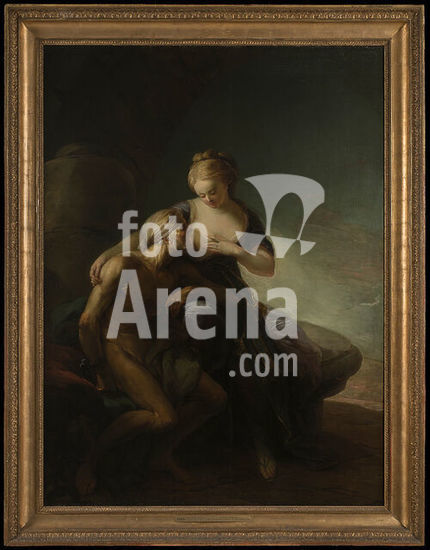
akg5212919 Carl Gustav Pilo, 1711/14-1793. "Caritas Romana. Allegory of Love", 1772. Oil on canvas, 171 x 123 cm. Inv. NM 1122. Stockholm, National Museum.
DC
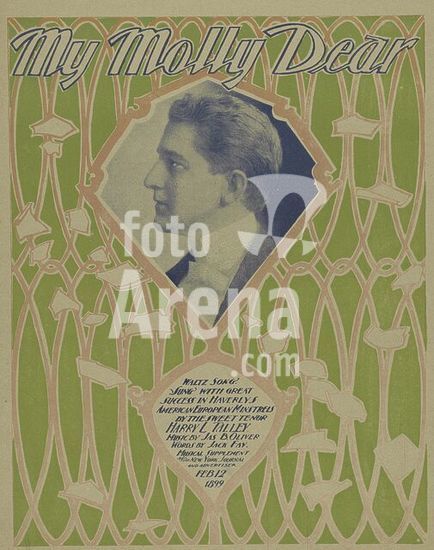
alb15416056 My Molly dear, 1898 - 1898, In the block below lives a girl I know, Mollie darling, you are the girl I love, Date Issued: 1898, Place: Chicago, Publisher: Sol. Bloom, Songs, Fathers and daughters, Betrothal, Love songs, Waltzes, Man-woman relationships, Extent: 1 score (4 p.), 35 cm., Whispers sweet remain, Molly's love in frozen time, Echoes of dreams.
DC
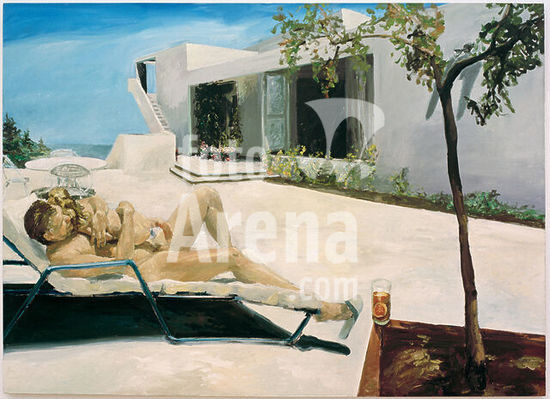
akg2310366 Fischl, Eric. geb. 1948. "Daddy's girl", 1984. Öl auf Leinwand, 198,2 × 274 cm. Inv. Nr. UAB 81. München, Museum Brandhorst. Museum: München, Museum Brandhorst. Copyright: Additional copyrights must be cleared.
DC
alb4103856 Cimon and Pero (Roman Charity). Dating: 1630 - 1640. Measurements: h 155 cm × w 190 cm; d 11.5 cm. Museum: Rijksmuseum, Amsterdam. Author: PETER PAUL RUBENS.
DC
dpa223041665 Seventies, black and white photo, people, young family, parents read from a picture-book to their child, man, aged 20 to 28 years, woman, aged 20 to 25 years, girl, aged 2 to 3 years, Wolfgang, Monika, Christina.
DC
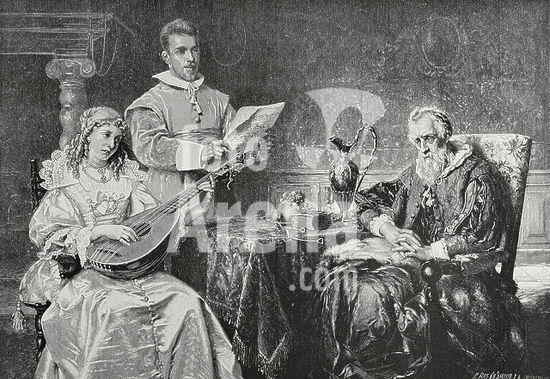
alb4305099 De muziekles (The music lesson). Engraving by Brend'amour (1831-1915) after the painting by the Belgian painter Pierre Jean Van der Ouderaa (1841-1915). La Ilustración Española y Americana (The Spanish and American Illustration), 1883. Author: Richard Brend'amour (1831-1915). German xylograph.
DC
alb500706 mother, Oil on canvas, 1895. Museum: MUSEO SOROLLA, MADRID, SPAIN. Author: Joaquin Sorolla.
DC
ibxgur10829826 Young parents. Top view of tired mom and dad relaxing in bed at home while their little newborn baby looking to camera
RF
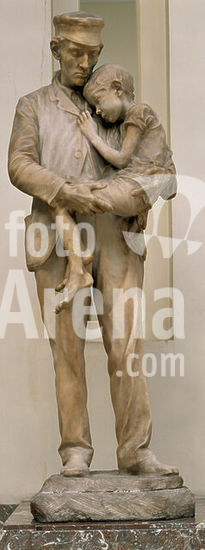
akg3793453 Charlier, Guillaume; 1854-1924. "Sollicitude paternelle" (Väterliche Fürsorge), undatiert. Marmor, Höhe 182 cm, Breite 66 cm, Tiefe 62 cm. Inv. Nr. 17. Tournai, Musée des Beaux-Arts. Museum: Tournai, Musée des Beaux-Arts.
DC
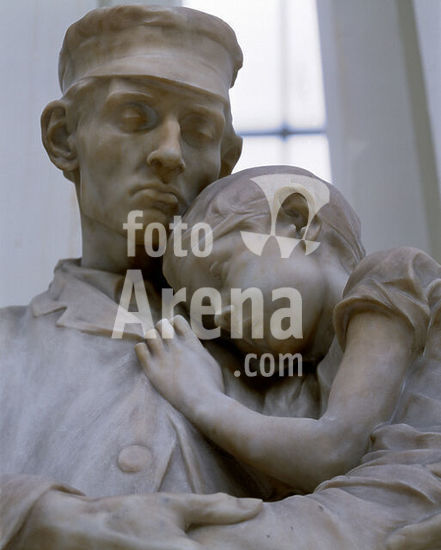
akg3793455 Charlier, Guillaume; 1854-1924. "Sollicitude paternelle" (Väterliche Fürsorge), undatiert. Ausschnitt. Marmor, Höhe 182 cm, Breite 66 cm, Tiefe 62 cm. Inv. Nr. 17. Tournai, Musée des Beaux-Arts. Museum: Tournai, Musée des Beaux-Arts.
DC
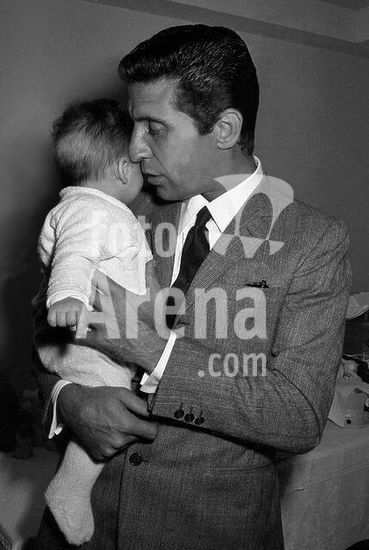
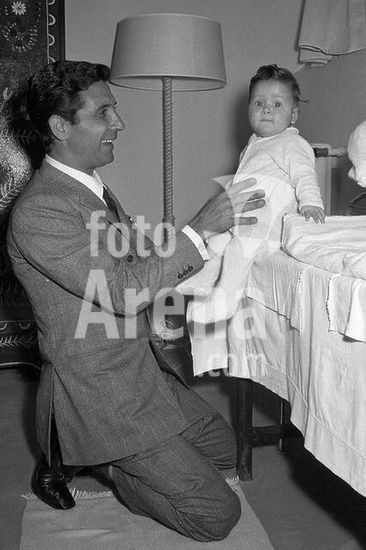
akg1999198 Bécaud, Gilbert, born François Silly; French songwriter and composer; Toulon, 24.10.1927 - Paris 18.12.2001. Gilbert Bécaud with the little Anne, the third child from his marriage to Monique Nicolas (born 1966). Photo, around 1966/67. Copyright: For editorial use only.
DC
akg2141759 Bécaud, Gilbert, born François Silly; French songwriter and composer; Toulon, 24.10.1927 - Paris 18.12.2001. Gilbert Bécaud with the little Anne, the third child from his marriage to Monique Nicolas (born 1966). Photo, around 1966/67. Copyright: For editorial use only.
DC
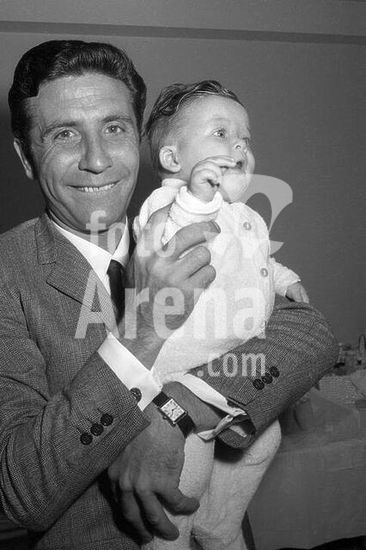
akg2141761 Bécaud, Gilbert, born François Silly; French songwriter and composer; Toulon, 24.10.1927 - Paris 18.12.2001. Gilbert Bécaud with the little Anne, the third child from his marriage to Monique Nicolas (born 1966). Photo, around 1966/67. Copyright: For editorial use only.
DC
akg2141762 Bécaud, Gilbert, born François Silly; French songwriter and composer; Toulon, 24.10.1927 - Paris 18.12.2001. Gilbert Bécaud with the little Anne, the third child from his marriage to Monique Nicolas (born 1966). Photo, around 1966/67. Copyright: For editorial use only.
DC
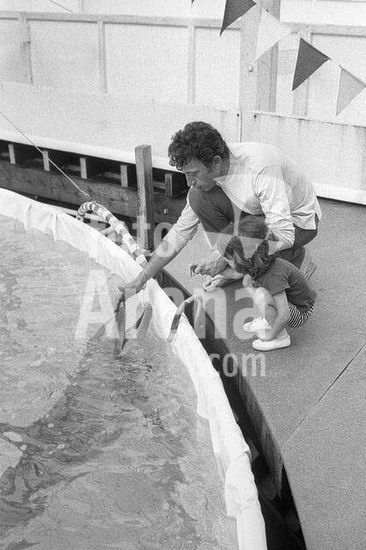
akg2502517 Animal husbandry / animal love. /. - Father visits a zoological garden together with his little daughter: they are sitting at the water basin where a dolphin is looking up to them. - Photo, 1970. Copyright: For editorial use only.
DC
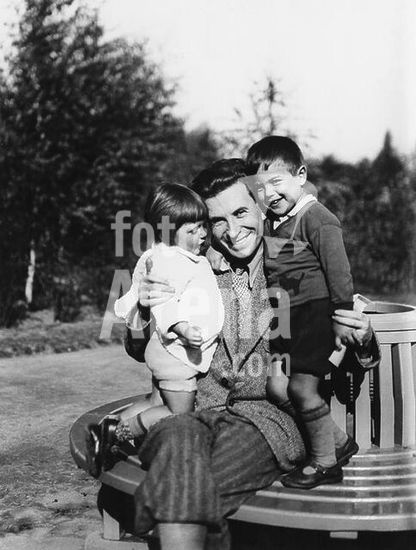
akg895978 Pisarek, Abraham Fotograf; 24.12.1901 Przedbórz (Polen)-13.4.1983 Berlin.-Abraham Pisarek mit seinen beiden Kindern Ruth und Georg. Foto, undat., um 1935.
DC
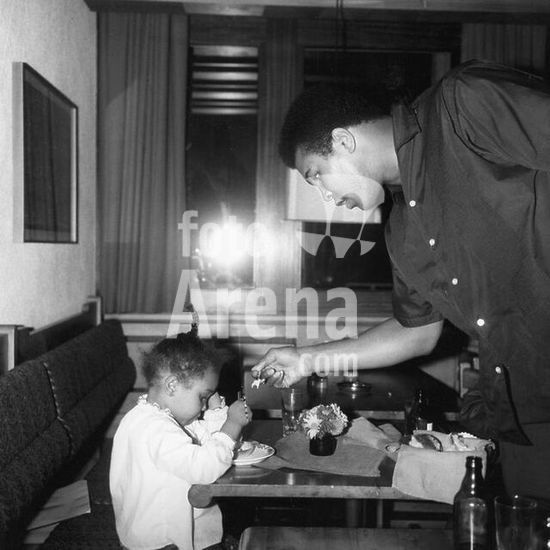
akg200356 Muhammad Ali, born Cassius Clay American boxer (three-time World Heavyweight Champion), born 1942. Muhammad Ali with his daugher at the Atlantis Hotel in Zurich (Switzerland). Photo Dec. 1971. Copyright: For editorial use only.
DC
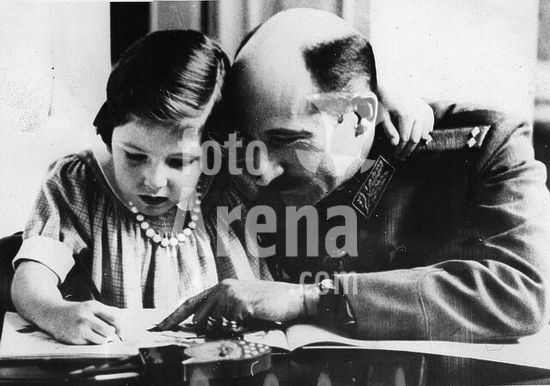
akg196589 Boris III, roi de Bulgarie (1918-43) ; Sofia 30.1.1894 - id. 28.8. 1943. Le roi Boris III et sa file la princesse Marie-Louise.
DC
dpa312892121 Image of midsection of caucasian mother and adult daughter preparing meal in kitchen. Family and spending quality time together concept. || Model released.
DC
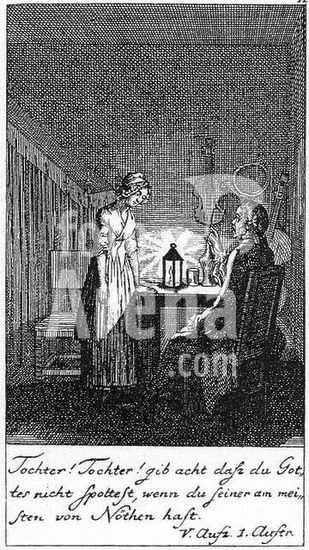
akg010941 Schiller, Friedrich of, 1759-1805. Works: Kabale und Liebe (1784). "Daughter! Daughter! Be careful not to mock God.". (Luise has told her father to want to die, illustration of the 5th act, 1st scene). Etching, 1785, by Daniel Chodowiecki (1726-1801); 8.9 × 5 cm. From: Königl. britain. genealog. Calendar (retired) Year 1786.
DC
akg1730422 ughter.
DC
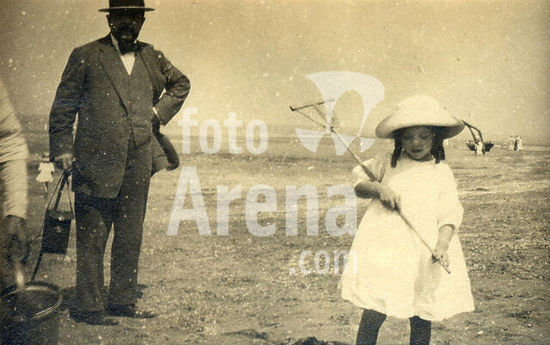
akg8692212 Anonymous. "Claude Debussy et Chouchou sur la plage d'Houlgate" (Claude Debussy and Chouchou on Houlgate Beach), 1911. Photography. Saint-Germain-en-Laye, Musée municipal.
DC
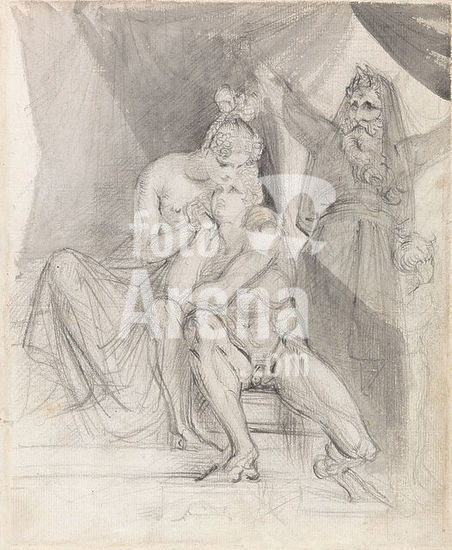
alb5101029 Prospero Watching Ferdinand and Miranda, Theodor von Holst, 18101844, British, ca. 1840, Graphite with black chalk and gray wash on medium, moderately textured, cream laid paper, Sheet: 8 5/8 × 7 1/8 inches (21.9 × 18.1 cm), cell, cloak, correctional institution, curtains, daughter, drapery, father, figure study, gesture, hood, literary theme, lovers, men, nudes, plays by William Shakespeare, prison, sash, spying, steps, The Tempest, Act III, Scene I, watching, woman.
DC
akg334235 Müller, Johann Gottwerth, gen. Müller von Itzehoe; Schriftsteller; 1743-1828. Werke: Antoinette, oder die uneigenützige Liebe (1802). "Als Vater übergebe ich dir meine adoptierte Tochter". Kupferstich (Buchillustration), 1802 (?), von Wilhelm Jury (1763-1829). Bl. 11,7 × 7,7 cm. Berlin, Sammlung Archiv für Kunst und Geschichte. Museum: Berlin, Sammlung Archiv für Kunst und Geschichte.
DC
ibxktg09190426 Happy family of a smiling mother and father looking at their daughter outdoors. Concept of happiness, love and family unity
RF
ibxktg09232248 Happy family, father and mother smiling and looking at baby girl, little girl looks at camera curiously on green meadow background. Close up of people outdoors
RF
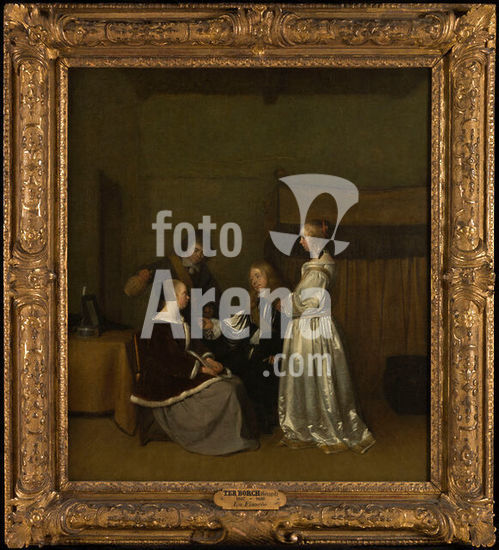
akg7906169 Anonymous, attributed to Gérard ter Borch; 1617-1681. "The Gallant Conversation", spring summer 1652 and 1654. Painting, oil painting. PDUT931, Paris, Petit Palais. Author: Gerard Terborch.
DC
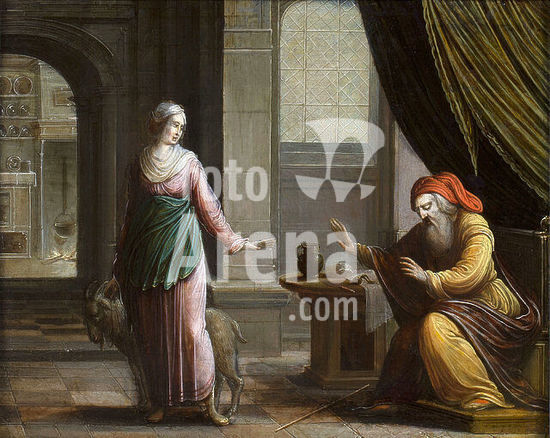
akg6147846 Anonymous. 18th Century French School. Rebecca bids farewell to her father Betouel. Oil on wood. Private collection.
DC
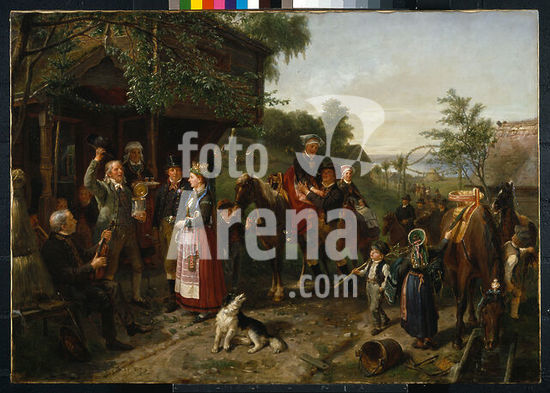
akg5212672 Nordenberg, Bengt; 1822-1902. "A Värend Wedding", 1873. Oil on canvas, 111 x 157 cm. Inv. NM 1297. Stockholm, National Museum.
DC
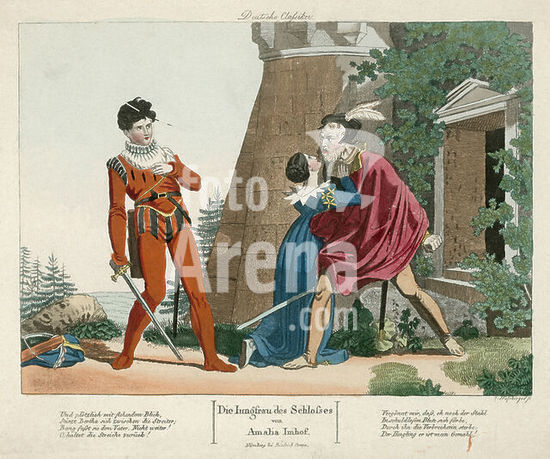
akg006135 Amalie Freiin von Imhoff, 1776-1831. Works: The Virgin of the Castle. Bertha throws herself between her father and her husband. Etching, colored, c. 1820, by J. Nussbiegel, 15.2 × 21 cm. Berlin, Sammlung Archiv für Kunst und Geschichte. Museum: Berlin, Sammlung Archiv für Kunst und Geschichte.
DC
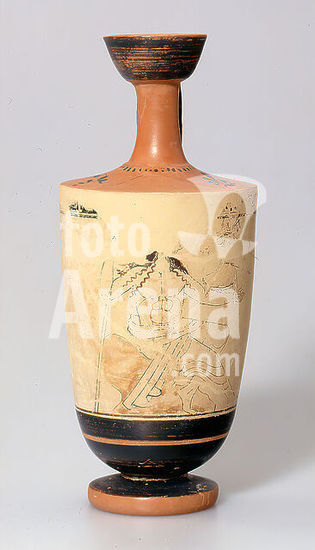
alb5151916 Lekythos (birth of Athena), clay, quickly turned, painted (ceramic), alternately fired, cold painting, clay, total: height: 17 cm; diameter: 7 cm; muzzle diameter: 3.7 cm; base diameter: 4.8 cm, Ceramics, Olympic gods, Birth of Minerva, Meander, Palmette (ornament), Strict style, In Greek antiquity, all vessels for ointment or perfume oils were called lekyths; today the term is used for this special type of vessel. Around 530/520 BC, the so-called white-ground technique was developed, which probably served to imitate more valuable materials such as marble, alabaster, ostrich eggs or ivory. The birth of the goddess Athena is depicted. The father of the gods Zeus sits on a brown-yellow background to the right. His head is damaged, but the pointed beard and curls falling down to the chest are preserved. With his raised right hand he holds a scepter, on his outstretched left arm the goddess Athena runs in the type of the Promachos (pre-fighter). Zeus has wrapped a cloak around his hips. Athena runs to the right. She wears a peplos and an Attic helmet. She holds the lance in her right hand. Hesiod tells in his theogony that the goddess Athena sprang from the head of her father Zeus. This was preceded by a love affair between Zeus and Metis, who was pregnant with two children. Uranos and Gaia had prophesied to Zeus that one of the children, his daughter, would be his equal, but that his son would cast him from the throne. Zeus then devoured Metis to escape his fate. But when he suffered from severe headaches afterwards, he ordered the god Hephaistos to split his skull. Immediately the goddess Athena emerged from the head in full armor as an adult 'in miniature'.
DC
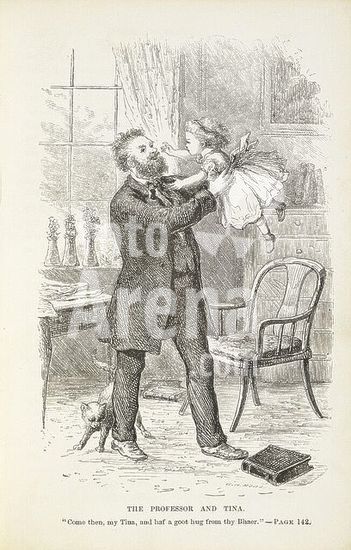
alb4059530 'The professor and Tina'. Professor Bhaer holding a young girl, Tina, the daughter of an employee of Mrs. Kirke. Tina loves Mr. Bhaer and treats him like a father. Little Women ... With illustrations. Boston : Roberts Bros., 1870. Source: 12844.m.8 volume 2, plate facing page 142. Language: English. Author: Louisa M Alcott.
DC
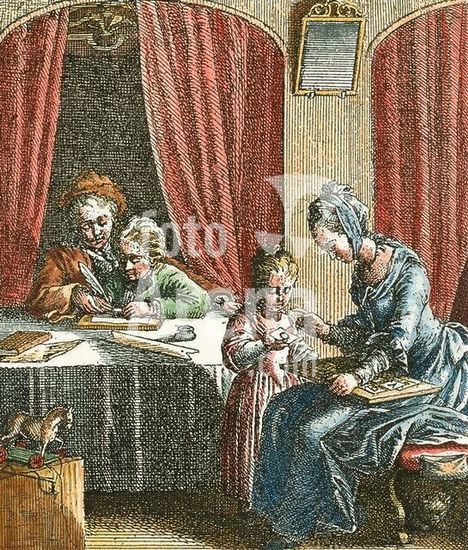
akg994649 Pädagogik: Lesenlernen.-Eltern lehren ihren Kindern Buchstabieren und Schreiben.-Kupferstich von Johann Rudolph Schellenberg, um 1780. Spätere Kolorierung.
DC
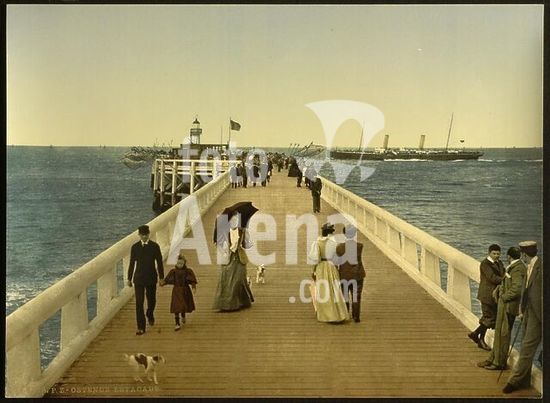
akg1153204 Ostend (West Flanders, Belgium), Pier. "OSTENDE. ESTACADE". Pier and steamboat in Ostend. Photochrom, c. 1890/1900 (Detroit Publishing Co.).
DC
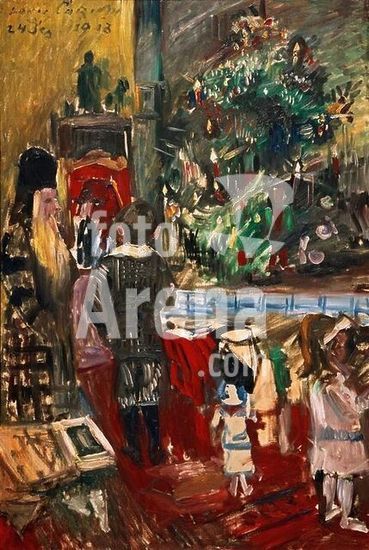
akg942570 Corinth, Lovis 1858-1925. "Christmas gift giving", 1913. (The artist's children Thomas and Wilhelmine, his wife Charlotte as Father Christmas). Oil on canvas, 120 x 80.5cm. Inv.No.71. Museum: Lentos Kunstmuseum., Linz.
DC
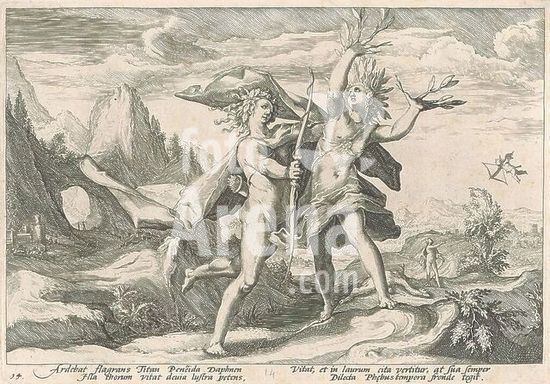
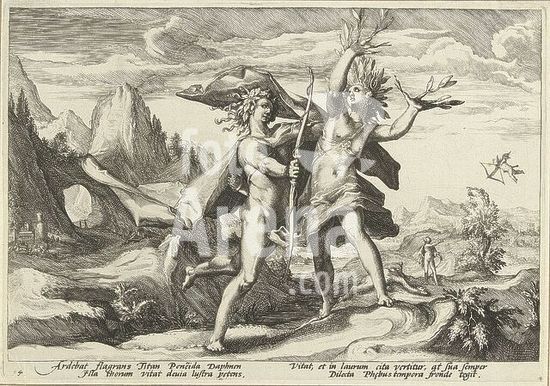
alb9502282 Apollo and Daphne, Metamorphoses by Ovid (series title), When the nymph Daphne was pursued by Apollo, who had fallen in love with her, she begged her father Peneus for help. Peneus made sure that his daughter escaped her attacker by transforming her into a laurel tree. We see the moment when Daphne's arms turn into leafy branches, while Apollo wants to grab her. In the background, Amor, near the dead body of Python, strikes Apollo with one of his arrows. In the lower margin a four-line explanation, in two columns, in Latin., print maker: Hendrick Goltzius, (workshop of), after design by: Hendrick Goltzius, Franco Estius, Haarlem, 1589, paper, engraving, height 178 mm × width 256 mm.
DC
alb9501561 When the nymph Daphne was pursued by Apollo, who had fallen in love with her, she begged her father Peneus (a river god) for help. Peneus caused his daughter to escape her attacker by transforming her into a laurel tree. We see the moment when Daphne's arms change into leafy branches, while Apollo wants to grab her. In the background, Cupid, near the dead body of Python, strikes Apollo with one of his arrows. Below the depiction are two lines of Latin text. This print is part of a series of 52 prints depicting stories from Ovid's Metamorphoses. This series is divided into three numbered series: two of 20 prints and one of 12 prints. This print belongs to the first series., Daphne turns into a laurel tree Ovid's Metamorphoses (series title), print maker: Hendrick Goltzius, (workshop of), Hendrick Goltzius, Franco Estius, Haarlem, 1589, paper, engraving, h 177 mm × w 252 mm.
DC
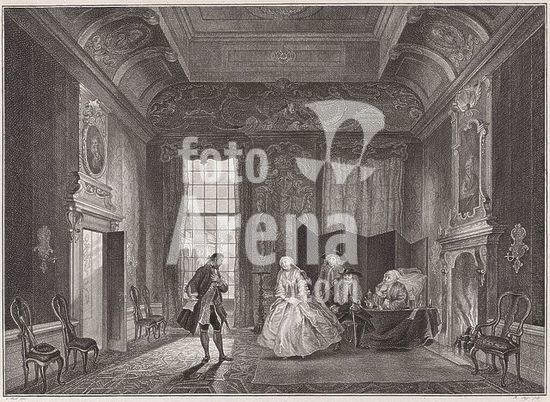
alb9453142 The Imagined Sick, Robbert Muys, after Cornelis Troost, 1752 - 1800, Helena and her secret lover Ferdinand recite a shepherd's poem to each other, in which the characters express their love to each other. At the table are Helena's father Manshart (the imagined sick person), and his physician Narticoforus. Behind the physician stands his son Bartrand, for whom Manshart has destined his daughter. Scene from the second act of the play The Imagined Sick by Molière., print maker: Robbert Muys, (mentioned on object), after: Cornelis Troost, (mentioned on object), publisher: Pierre Fouquet, (mentioned on object), Amsterdam, 1752 - 1800, paper, etching, engraving, h 411 mm × w 505 mm.
DC
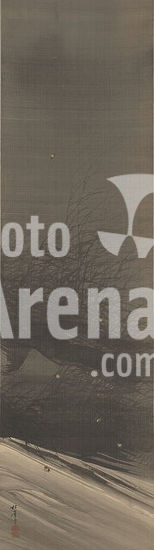
alb9405687 Fireflies at Uji River, late 19th - early 20th century, Suzuki Shnen, Japanese, 1849 - 1918, 49 11/16 × 13 13/16 in. (126.21 × 35.08 cm) (image)81 9/16 × 18 3/4 in. (207.17 × 47.63 cm) (mount, without roller), Ink, light colors, and gold on silk, Japan, 19th-20th century, This painting by Suzuki Shnen, showing only a handful of fireflies above a rushing river, is a subtle reference to chapter 45 of The Tale of Genji. In this chapter, 22-year-old Kaoruwho was raised as Genjis son despite being the product of a love affair between Genjis wife and his friend Kashiwagivisits a stepbrother of Genji in the nearby town of Uji through which the Uji River flows. One autumn night, Kaoru hears the mans two daughters playing music and sneaks off to listen to them, but the sound of the rushing Uji River prevents him from doing so. Later in the chapter Kaoru becomes acquainted with the daughters and their teacher, who, in a twist of fate, knows the reality of Kaorus paternity and reveals the true identity of his father.
DC
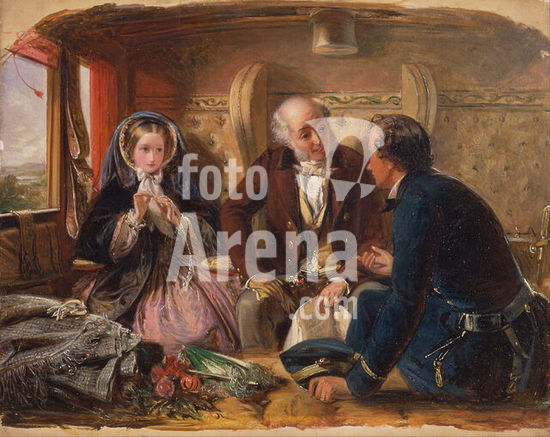
alb3906224 First Class - The Meeting. "And at first meeting loved.". Date/Period: 1855. Painting. Oil on panel. Height: 203 mm (7.99 in); Width: 254 mm (10 in). Author: Abraham Solomon.
DC
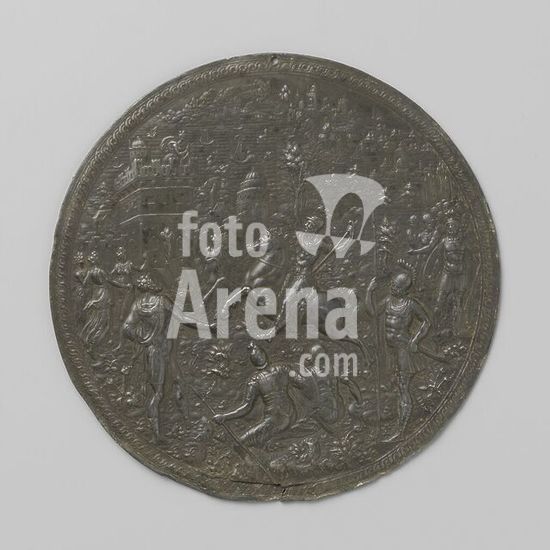
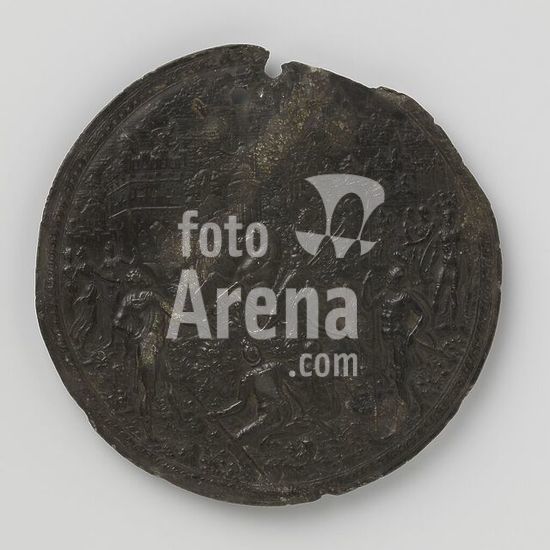
alb4493117 Scylla and Minos, Round, lead plaque. In the middle Minos, the besieger, seated on his horse that jumped to the left, in front of the gate of Niseia, the city that fell into his hands through betrayal of the king's daughter Scylla. She stands on the tower and shows the enemy for whom she was ignited in love, the golden hair of her father, Nisus, from which he derived his power and that she stole him at night. In the foreground two sitting and two standing soldiers. On the second plan: three women on the left, and a military procession on the right. In the background the city on the water with ships., Hans Jamnitzer (attributed to), Neurenberg, 1569, founding, d 18.5 cm.
DC
alb4483820 Scylla and Minos, Round, lead plaque. In the middle Minos, the besieger, seated on his horse that jumped to the left, in front of the gate of Niseia, the city that fell into his hands through betrayal of the king's daughter Scylla. She stands on the tower and shows the enemy for whom she was ignited in love, the golden hair of her father, Nisus, from which he derived his power and that she stole him at night. In the foreground two sitting and two standing soldiers. On the second plan: three women on the left, and a military procession on the right. In the background the city on the water with ships., Hans Jamnitzer, Neurenberg, 1569, founding, d 18.5 cm × w 406 gr.
DC
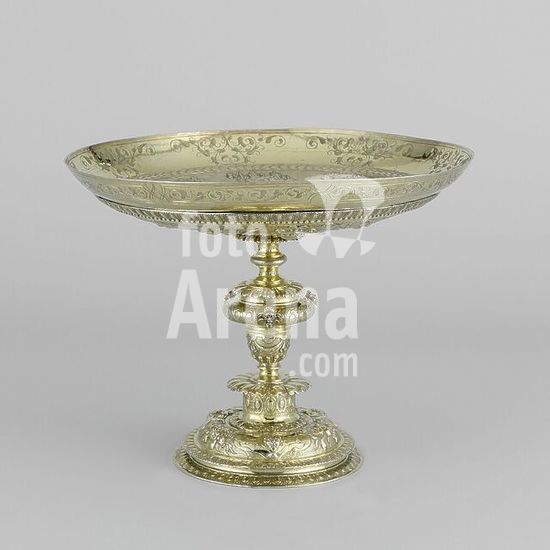
alb4437755 Drinking bowl with Scylla and Minos, Round, gold-plated silver drinking bowl surrounded by a leaf wreath (see above). In the middle Minos, the besieger, seated on his horse that jumps to the left, in front of the gate of Niseia, the city that fell into his hands because of the betrayal of the king's daughter Scylla. She stands on the tower and shows the enemy for whom she was ignited in love, the golden hair of her father, Nisus, from which he derived his power and that she stole him at night. In the foreground two sitting and two standing soldiers. On the second plan: three women on the left, and a military procession on the right. In the background the city on the water with ships, Frederik Hendrik (Prince of the Netherlands), anonymous, 1598, silver (metal), gilding, h 18.2 cm × d 22.8 cm d 19 cm w 995 gr.
DC
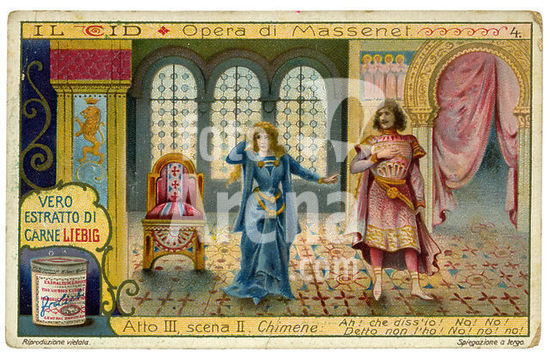
akg7279700 EL CID "Chimene: Ah! What I said! No! No! Said I didn't! No! No! No!" The daughter of the Count of Gormas, torn between love and resentment towards the man who killed her father in a duel, commends herself from the Cid who goes to war against the Moors; he wants to forgive him and he will do it if he returns victorious, saving Spain. Act III, scene 2, from the melodramatic reduction of Jules Massenet (12 May 1842 - 13 August 1912) of the tragicomedy of Pierre Corneille (1637). Real Liebig meat extract. Chromolithography, Liebig figurine of the series "The Cid by Massenet", n. 4. Italy, 1911 *** Local Caption ***.
DC
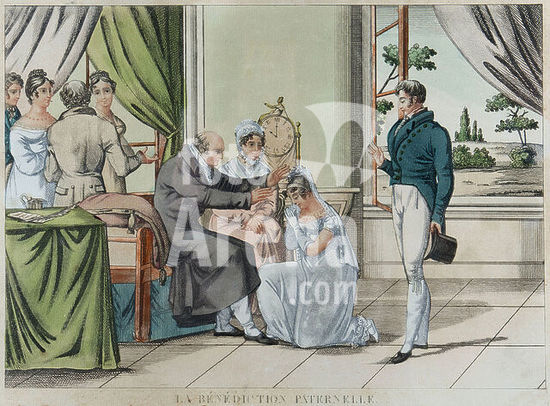
akg7410047 Anonyme / Art françaisLa bénédiction paternelle de la jeune promise.Gravure colorée XIX ème siècle.Collection particulière.
DC
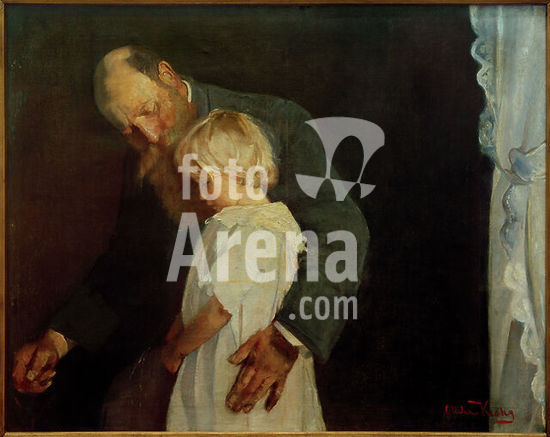
akg3674405 Christian Krohg; Norwegian painter, author and journalist. Vestre Aker (b. Oslo) 13.8.1852 - Oslo 16.10.1925. "Stakkars Liten" (poor little one). (The artist with daughter Nana, 1885-1974). Painting, c. 1891, by Oda (Ottilia) Krohg (1860-1935). Oil on canvas, 91 × 115 cm. Private collection. Museum: PRIVATE COLLECTION.
DC
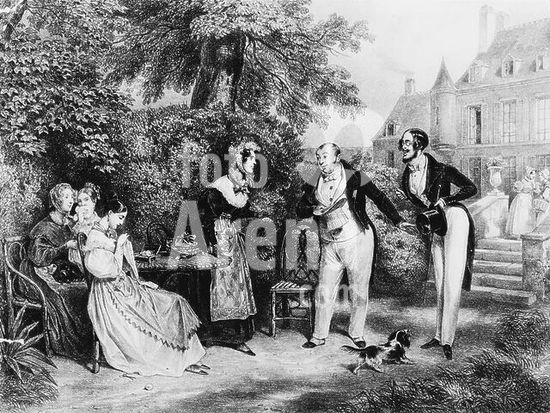
akg192315 Liebe und Ehe / Heiratsantrag:. "Der Heiratsantrag. Nach Lithographie von François Grenier. (1793-1867), um 1840.
DC
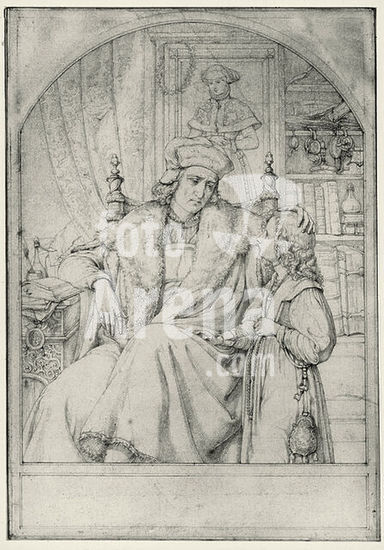
akg2162036 Medizin / Kranke:. Krankenbesuch. "Der kranke Ratsherr und seine Tochter". Zeichnung, 1833, Theodor Hildebrandt (1804-1874).
DC
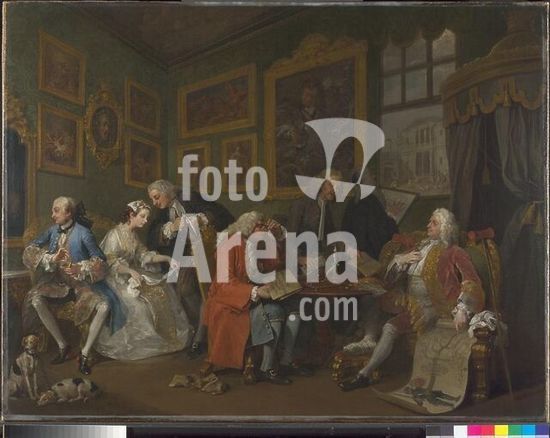
akg1557078 Hogarth, William. English painter, 1697-1764. "Marriage A-la-Mode: 1, The Marriage Settlement", c.1743. Oil on canvas, 69.9 × 90.8 cm. Inv. No. NG113. London, National Gallery. Museum: London, National Gallery. Copyright: Additional permissions needed for non-editorial use.
DC
alb1508457 Charles Dickens, from a recent daguerreotype by Mayall, 1 December, 1855. Memoir of Charles Dickens. The lives of men of genius when happy, are ordinarily uneventful. It may, perhaps, be one of the reaspms for the paucity of materials available for the life of him who was "not for an age but for all time," that our Shakespeare went through life a prosperous gentlemen, that he had shares, and rents, and messages, and tenements, and that he died at last in affluence, in his bed, in his own house, near the pleasant town he loved so well. But the most moving and most copious literary memoirs are merely records of miseries. The blindness of Milton, the weary life-struggle of Dryden, the deformity of Pope, the persecution of Defoe, and the melancholy of Swift; the stern woe of Dante, the heart-sickness of Petrarch, the despair of Butler; Tasso's fetters, Cervantes' neglect, Camoens' hospital pallet, Guilbert's starvation, and Chatterton's suicide; all these are bold and jutting headlands in the seascape of life - stern and rugged rocks, all beaten by the tempests of time, and seamed and furrowed by the salt waters of sorrow. These the painter can seize and transfer to canvas, giving force and variety to his picture. He can paint the surging billows and the angry sky; but what scope has he for display when the sea is smooth as glass, calm as a good man's bossom, when the bark glides placidly along, when the log of the mariner may be summed up in two words: Genius or Success?. These two words are really the summary of the career of the famous writer whose portrait graces our page. There are no moving accidents by flood or field in his life to tell; his life has been one of uniform industry and prosperity. Yet, as our readers must naturally be anxious to learn even the minutest particulars concerning one who possesses such remarkable talents, and has occupied for so long so conspicuous a position in society, we will proceed, to the best of our ability, to tell how Mr. Dickens won that fame he preserves so staunchly and wears so gently.. Charles Dickens was born in February, 1812, at Landport, Portsmouth. His father, Mr. John Dickensm, had been, in the earlier part of his life, a clerk in the Navy Pay department, and his duties rendered it necessary that he should make frequent changes of residence from one naval dockyard to another - moving from Portsmouth to Plymouth, and from Portsmouth again to Sheerness and Chatham. The future novelist received his education in a school in or near Rochester; and it is to his youthful peregrinations in the county of Kent, and his Kentish schoolboy experiences, that we may ascribe much of the minute knowledge he displays in his writings on the topography and scenery of the county of "hops, apples, and pretty girls," and of the fondness he evinces for recurrence to Kentish scenes and Kentish people. "On revient toujours à ses premières amours." The memorable equestrian expedition of Mr. Pickwick (as noteworthy, surely, as the expedition of "Humphrey Clinker") started from the Mitre, at Rochester; Dingley Dell was near Cobham; the catastrophe of the Tubbs family took place ar Ramsgate; it was in the Theatre Royal, Portsmouth, that Nicholas Nickleby played Romeo to poor Smike's Apothecary; it was to Dover, through Rochester, Chatham, and Maidstone, that little David Copperfield travelled, weary and footsore, to his aunt Trotwood; it was at Canterbury he went to school to Doctor Strong; and, finally, it was in the keeping room of Master Richard Watt's charity, at Rochester, that the "seven poor travellers," "not being rogues or proctors," told their Christmas stories.. We have no means of judging how far, or to what age, the scholastic curriculum of Charles Dickens extended. We learn, however, that at the peace, Mr. John Dickens retired, with a pension, from the Government service, and, removing to London, found lucrative employment for his talents, as a reporter for the public press. It is therefore probable that his son completed his education in the metropolis. The fact of his father being a newspaper reporter, would, it has been somewhat flippantly remarked, have "familiarised him with 'copy'" from an early age; yet such implied familiarity did not, on his entrance into authorship, exempt him from the delightful tremour, that anguish of delight, incidental to all tyros in printers' ink, and that moved him, as he himself graphically describes, after reading in a magazine his first effusion, "dropped stealthily one evening at twilight, with fear and trembling, into a dark letter box, up a dark court in Fleet Street," to walk down to Westminster Hall, and turn into it for half an hour, because his eyes "were so dimmed with joy and pride that they could not bear the street and were not fit to be seen there.". Like many other future celebrities thrust into lawyers' dens to engross deeds instead of penning stanzas, the youthful Charles Dickens was for some time in an attorney's office. We were turning over a biographical notice of the author of "Pickwick" the other day, where, in reference to this portion of his career, it was stated that "his father took the preliminary steps to make him an attorney;" but this we think to have been no more the case than the appointment of a youth to a Clerkship in the Stamp Office is a "preliminary step" towards making him Chairman of the Board of Inland Revenue. However, in the sojourn in the domains of Themis, Charles Dickens became intimately acquainted with the mysteries of legal penetralia, and the intricacies of legal chicane, both of which he has so admirably depicted and exposed in his novels. But the literary vocation, the cacoethes scribendi, was not to be kept down by pounce and green "ferret." To use a French idiom, it "pierced," and doubtless after the irretrievable ruin of many skins of parchment and blotting of office foolscap, it asserted and made itself recognised. Charles Dickens's literary début took place, like those of Talfourd and Campbell, in the Reporters' Gallery. He became a member of the parliamentary corps of the "True Sun," an ultra liberal paper. He was subsequently one of the reporters on the "Mirror of Parliament," a journal whose avowed object was to give in extenso, word for word, all the speeches of every member of the Legislature. It was splendidly printed, produced at an enormous expense, and after a session or two fell to the ground in the true heroic style. Mr. Dickens, about 1835-6, passed to the staff of the "Morning Chronicle," and in its succursal, the "Evening Chronicle," appeared serially those delightful daguerreotypes of life and character, the "Sketches of Boz." After a lapse of twenty years' cheap literature, these "sketches" seem at the first glance to be very slight performances indeed. There is probably not a number of Mr. Dickens's own periodical, "Household Words," that does not contain an article on London life or manners, either from his own or a coadjutor's pen, possessing more thought, and observation, and graphic truth than can be found in a dozen of the "Sketches." But they were the first of their class. Dickens was the first to unite the delicately playful thread of Charles Lambe's street musings, half experiences, half bookish phantasies, with vigorous wit, and humour, and observation of Goldsmith's "Citizen of the World," his "Indigent Philosopher," and "Man in Black," and twine them together into that golden cord of essay which combines literature with philosophy, humour with morality, amusement with instruction. The Sketches by "Boz," (the pseudonym originated with one given to a pet brother, who, rechristened "Moses," in honour of the "Vicar of Wakefield," facetiously pronounced the name through the nose, "Bozes," and at last corrupted it to "Boz"), made a great sensation at the time. They were afterwards collected into one volume, with numerous etchings by George Cruikshank, then in the zenith of his fame, and were published by Mr. Macrone, of St. James's Square, a young and enterprising bookseller. We are not aware of the exact sum paid to Mr. Dickens for the copyright of the "Sketches," but it is patent that, a few months afterwards, the publisher, falling into difficulties, sold his copyright in the work either to Mr. Bentley or to Messrs. Chapman and Hall, for eleven hundred pounds. Poor Macrone was unfortunate, fell into ill health, and died, leaving a widow and young children, for whose benefit Mr. Dickens, with the assistance of some literary friends, edited and published a work composed of "voluntary contributions," called the "Pic-Nic Papers.". The "Sketches by Boz," were, as all the world knows, succeeded by the "Pickwick Papers". Originally intended as a mere vehicle to Robert Seymour's admirable caricatures, a foil to his redundant humour, they became, after he lamented the inexplicable death of the artist, attractions in themselves. The wit and genius of the author soon elevated Mr. Pickwick from a burlesque elderly Cockney to the rank of the hero of a comic epic. It would be useless, impertinent were there indeed space, to descant on the merits of this glorious book. Many more has Dickens written since the last number of "Pickwick" has been given to the world. Thousands and thousands have since laughed and wept at the bidding of this kindly magician, but no work of his has ever created, will ever create, the excitement, excite the curiosity, compel the attention, give half the genial pleasure, felt by the whole public when they perused the "Posthumous Papers of the Pickwick Club." As when a man is blet with many children, and looks around and knows not which he loves the most, but yet remembers the first little child that died, the "baby" - there have been many "babies" since then, but this was "baby" par excellence - so we, gratefully and pleasurably calling in review the many good books, which, in the familiar green covers, have delighted us from year to year, can never forget or conceal our preference for the first-born - the book of books. We put him not first because he was the best, but we like him best because he was the first. "Pickwick" brought about the same result with Dickens as "Childe Harold" with Byron. He awoke one morning and found himself famous. From the ranks of the great army of literary martyrs, he came calmly and smilingly to take the bàton of field-marshal as of right. That is very nearly twenty years ago, and bravely has he kept his high command. Reader, remember, when Charles Dickens was an unknown newspaper reporter, William Makepeace Thackeray was a "crack" writer on "Fraser's Magazine," and lo! it is but four or five years since the author of "Vanity Fair" attained an equally elevated seat on the literary daisas the author of the "Pickwick Papers".. The history of Mr. Dickens, from the publication of "Pickwick" to the present time, is little more than a history of his successive works - "Oliver Twist," "Nicholas Nickleby," "The Olde Curiosity Shop," "Martin Chuzzlewit," "Barnaby Rudge," "Dombey and Son," "David Copperfield," and "Bleak House,"; the Christmas books - the "Christmas Carol," the "Chimes," the "Cricket on the Hearth," the "Battle of Life," and the "Haunted Man". Beyond the fact that he has produced these good works, that he has made journeys to the United States and to Italy, and embodied his travelling experience in "American Notes" and "Pictures from Italy," that he has been since 1850 the conductor and (we believe) the proprietor of "Household Words," and that he has avowed himself lately to be a thoroughgoing Administrative Reformer, and made an eloquent speech at the great meeting at Drury Lane Theatre, very little more can be said of Mr. Dickens's public career. Of him, in his private capacity, a few more words remain to be written. Our fair readers will be glad to learn that he married, in the morning of his fame, Miss Catherine Hogarth, the daughter of Mr. George Hogarth, a well-known musical critic and writer, and that he is blessed in having a quiver full of arrows - male and female. For his personal appearance, we must refer our readers to the portrait; and to those who would wish to form an idea of his more youthful semblance, we may commend the engraving from Mr. Maclise's picture, prefixed to the first edition of "Nicholas Nickleby". To yet more curious amateurs of sayings and doings, we may add that Charles Dickens is an early riser and worker, an indefatigable pedestrian, averaging, we have heard, ten miles a day; that he is a vivacious companion, a brilliant conversationalist, and an accomplished amateur actor. Were the writer of this notice in the habit of eating toads or hunting tufts, he could add a great deal more concerning Mr. Dickens's private character, and of certain things he does with his right hand, letting not his left hand know that he does them. Some women that are widows, and same children that are fatherless, and, we regret to say, too many members of the ingenious confraternity of begging-letter writers, will understand our meaning. Of course, Mr. Dickens has had his detractors: of course, Sir Benjamin Backbite has shaken his head, and said "It could not last"; of course, Mrs. Sneerwell has smiled sarcastically and whispered "overrated, my dear". What else could be expected? Some charitable people even circulated a report a few years ago, that he had gone raving mad! Some even set afloat a joke (good, but stolen from an honester wit) that Dickens had "gone up like a rocket, and would come down like the stick." Somehow, he has not come down yet. Then the army of detractors took refuge in the safe insinuation, "that he had written himself out." Somehow, "Bleak House," his last work had a larger sale than any of its predecessors.. This is not the place to criticise the writings of Charles Dickens. The best criticisms, perhaps will be spontaneously evoked from the hearts of thousands of our readers, when they glance at this portrait, and remember how many smiles they have given to young Bailey - how many tears to Little Nell. Criticism! - if such were indeed needed - the noblest, would be found in the admission of William Thackeray, that he had wept for the death of Tiny Tim, and sung a paean of triumph when he found that Bob Cratchit's little child did not really die.
DC
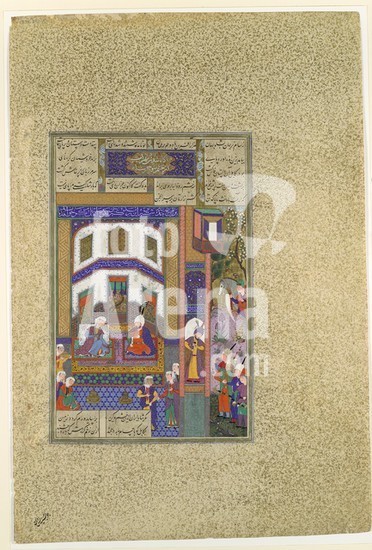
alb3657567 "Mihrab Vents His Anger Upon Sindukht", Folio 83v from the Shahnama (Book of Kings) of Shah Tahmasp. Artist: Painting attributed to Qadimi (active ca. 1525-65); Painting attributed to 'Abd al-Vahhab. Author: Abu'l Qasim Firdausi (935-1020). Dimensions: Painting: H. 10 15/16 in. (27.8 cm) W. 7 1/8 in. (18.1 cm)Page: H. 18 1/2 in. (47 cm) W. 12 7/16 in. (31.6 cm)Mat: H. 22 in. (55.9 cm) W. 16 in. (40.6 cm). Date: ca. 1525-30.When Mihrab of Kabul first heard of his daughter Rudaba's secret love affair with Zal, he wanted to kill her, but his wife Sindukht persuaded him that Sam, Zal's father, had agreed to the alliance. Now, when Mihrab learned that Shah Manuchihr had ordered Sam to destroy his house, Mihrab's anger arose anew against his wife for falsely quelling his former fears. Sindukht then suggested that she visit Sam at his camp, bringing gifts from Mihrab's treasury. Desperate to save his kingdom, Mihrab allowed his wife to undertake the mission. The decorous depiction of Sindukht and Mihrab in her chamber gives little indication of the heated emotions of their exchange. Museum: Metropolitan Museum of Art, New York, USA.
DC
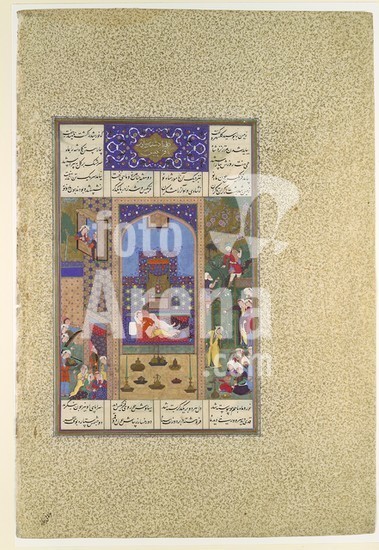
alb3612419 "The Wedding of Siyavush and Farangis", Folio 185v from the Shahnama (Book of Kings) of Shah Tahmasp. Artist: Painting attributed to Qasim ibn 'Ali (active ca. 1525-60). Author: Abu'l Qasim Firdausi (935-1020). Dimensions: Painting: H. 11 3/8 in. (28.9 cm) W. 7 1/4 in. (18.4 cm)Page: H. 18 5/8 in. (47.3 cm)W. 12 5/8 in. (32.1 cm)Mat: H. 22 in. (55.9 cm)W. 16 in. (40.6 cm). Workshop director: Mir Musavvir (active 1525-60). Date: ca. 1525-30.Circumstances of his father's making force Siyavush, son of the Iranian shah Kai Kavus, into exile in Turan, the neighboring power and chief enemy of Iran. There he marries Farangis, daughter of the king Afrasiyab, and fathers the future shah of Iran, Kai Khusrau. In this painting, the couple celebrate their wedding night inside a pavilion, while musicians serenade them from the terrace. Mir Musavvir, the artist who supervised this painting, was known for his romantic temperament, expressed by the lovers' embrace and the merry entertainers. Museum: Metropolitan Museum of Art, New York, USA.
DC
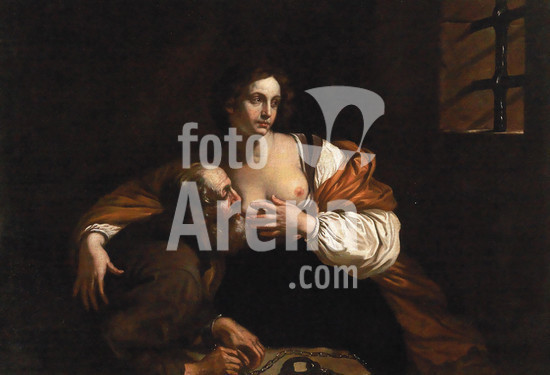
alb4841820 Roman Charity. Museum: PRIVATE COLLECTION. Author: GUERCINO.
DC
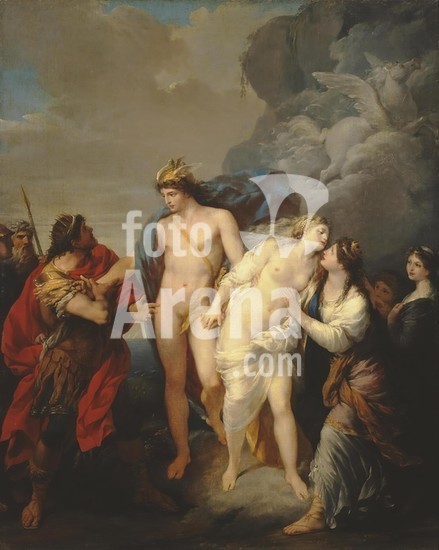
alb4221021 'Andromeda's Return'. France, 1782. Dimensions: 90x72 cm. Museum: State Hermitage, St. Petersburg. Author: Jean-Baptiste Regnault.
DC
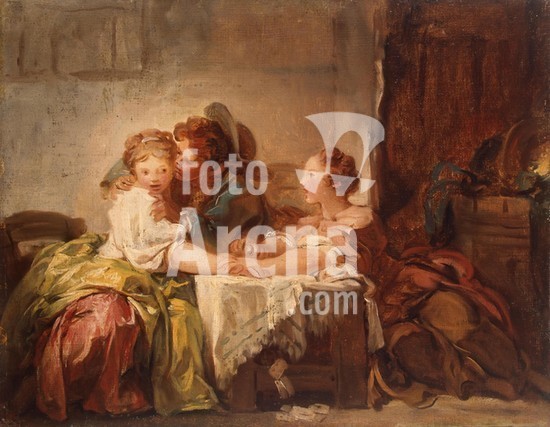
alb4220934 'Captured Kiss'. France, second half of the 18th century. Dimensions: 47x60 cm. Museum: State Hermitage, St. Petersburg. Author: JEAN-HONORE FRAGONARD.
DC
alb4224212 'Wedding of Perseus and Andromeda'. France, 1782. Dimensions: 91x73 cm. Museum: State Hermitage, St. Petersburg. Author: Jean-Baptiste Regnault.
DC
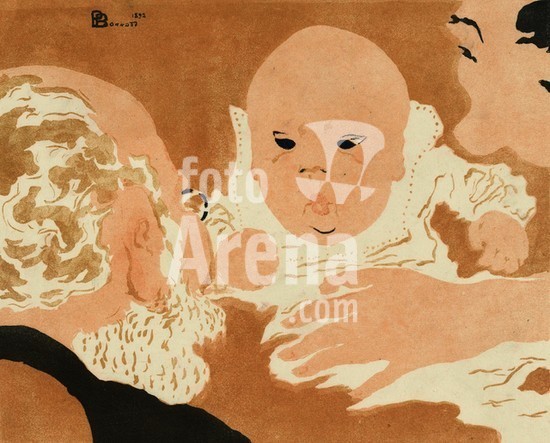
alb4100576 Family Scene (Scène de famille). Dimensions: 28.8 cm x 39.6 cm, 21.8 cm x 26.6 cm. Museum: Van Gogh Museum, Amsterdam. Author: PIERRE BONNARD.
DC
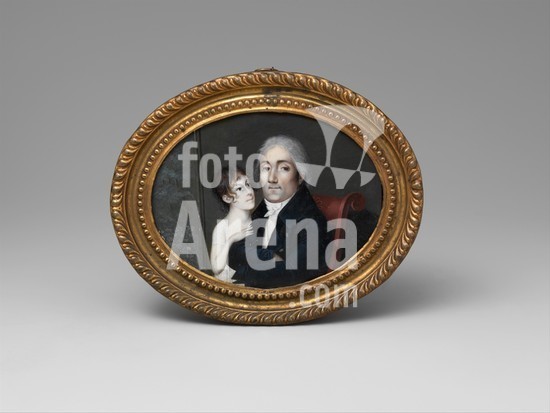
alb3622694 Portrait of a Gentleman and His Daughter. Artist: Francois M. Guyol de Guiran (1773/77-1849). Dimensions: 3 1/2 x 4 9/16 in. (8.9 x 11.6 cm). Date: ca. 1805.Guyol de Guiran is known exclusively by this signed work of striking quality and originality. The artist was one of the many French-émigré miniaturists who came to America in the early nineteenth century, when the market was especially strong for such delicate likenesses. The Museum's collection of works by these painters is extensive and greatly enhanced by this touchstone portrait. Guyol de Guiran worked in St. Louis (1812-ca. 1820) and in New Orleans (1822-28); this picture may have been made in either locale. It is presumably a portrayal of a father and daughter, given the age difference and the loving glance from the girl to her gentleman companion. An unusual feature of the tiny painting is the artist's joining of supports--the figures being painted on ivory, and the foliage on paper. Museum: Metropolitan Museum of Art, New York, USA.
DC
akg1558692 Hendrick ter BRUGGHEN:. The Old Testament Book of Genesis tells how Jacob had fallen in love with Rachel and agreed to work for her father for seven years as a shepherd to earn her hand in marriage. When the marriage took place, Laban substituted his elder daughter Leah for Rachel, for which Jacob reproached his father-in-law. Laban was unrepentant and Jacob had to work a further seven years to win Rachel, an admired example of constancy in love. The artist reinterpreted the subject of this painting in a work now in Cologne (Wallraf-Richartz Museum), which probably dates from the following year. Oil on canvas, 97.5 × 114.3 cm, 1627. London, National Gallery. Museum: London, National Gallery. Copyright: Additional permissions needed for non-editorial use.
DC

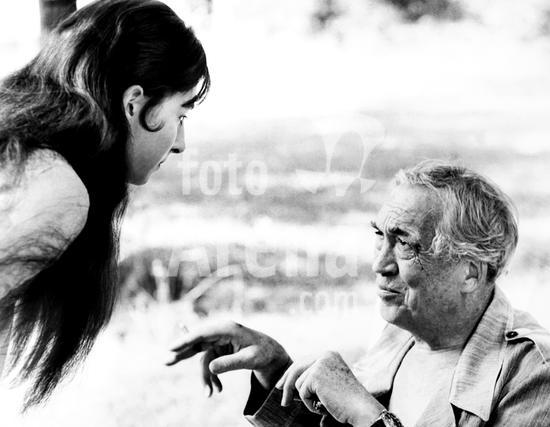
MBDWAWI_FE007 A WALK WITH LOVE AND DEATH, Anjelica Huston, being directed by her father, John Huston, on-set, 1969. ©20th Century Fox-Film Corporation, TM & Copyright/courtesy Everett Collection/Fotoarena/Fotoarena
DC
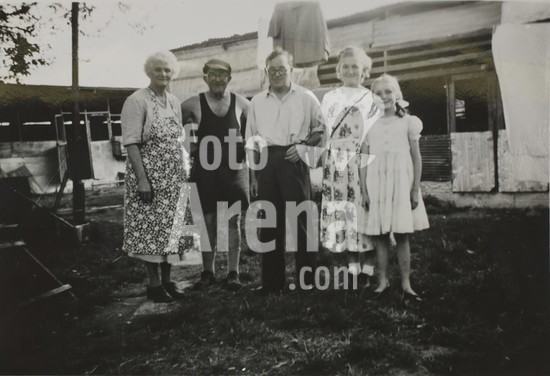
alb4392191 Photograph - Mrs & Mr Loving, Stanley (dad), Hazel & Merle Hathaway, Victoria, 1950s, Photograph of Mrs and Mr Loving with Stanley, Hazel and Merle Hathaway. Stanley and Lucy (nee Simmons) Hathaway and their daughter Hazel survived World War II in heavily bombed Coventry, England, remaining there until 1946. They relocated to Buckinghamshire (where second daughter Merle was born in 1948) and Hampshire between 1946 and 1951, finally deciding to migrate to Australia. They applied.
DC

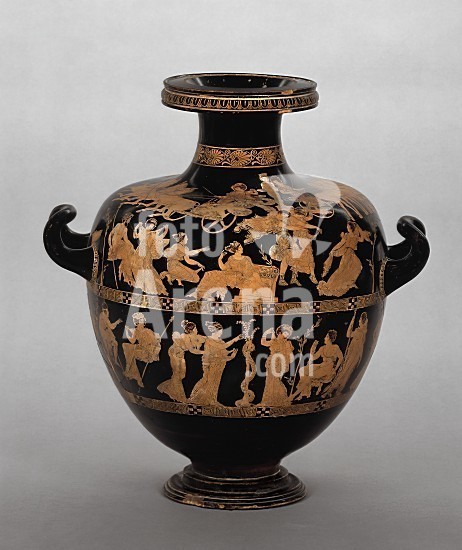
les03050357 Red-figured hydria, Greek, c420-c400 BC. The figures on this hydria are divided into two zones. The upper zone illustrates the abduction of the daughters of Leukippos by the Dioskouroi, Kastor and Polydeukes (Castor and Pollux). Aphrodite, goddess of love, sits in the lower part of the scene, clearly conniving in the abduction. Her attendant Peitho, goddess of Persuasion, flees from the scene, but Aphrodite and Zeus, father of the Dioskouroi, do not seem moved. The scene in the lower zone shows Herakles performing his final Labour, receiving the golden apples of the Hesperides from the nymphs responsible for guarding the tree in a garden at the end of the earth. Both scenes are remarkable for their peaceful treatment of violent subjects. This softened mood, along with the delicate treatment of the drapery, is very characteristic of late fifth-century Athenian vase painting. GR, 1772.3-20.30* (Vase E 224). Author: Vaspainter Meidias. Location: British Museum, London, Great Britain.
DC

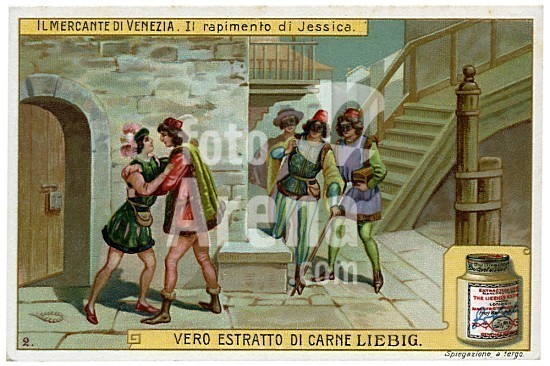
akg7279723 William SHAKESPEARE (April 23, 1564 - April 23, 1616) "Jessica's kidnapping". The young woman, daughter of Shylock, loves Lorenzo and is loved by her. Since her father, a Jew, would never have allowed marriage with a Christian, the two decide to flee together. Taking advantage of the absence of Shylock and a masked procession, the young man kidnaps her, disguised as a young man. Real Liebig meat extract. Chromolithography, Liebig figurine of the series "Il Mercante di Venezia", n. 2. Italy, 1908.
DC

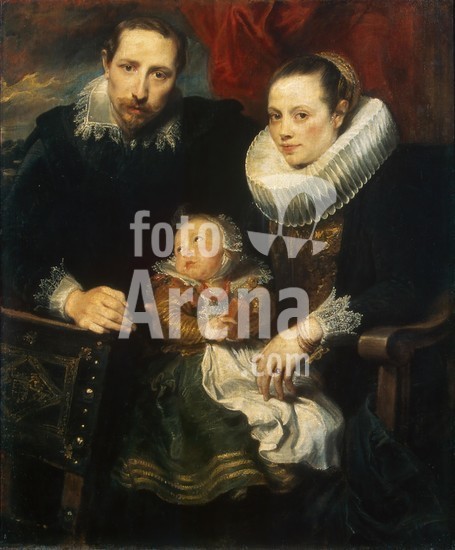
alb4221577 'Family Portrait'. Flanders, 1621. Dimensions: 113,5x93,5 cm. Museum: State Hermitage, St. Petersburg. Author: Anthony van Dyck.
DC
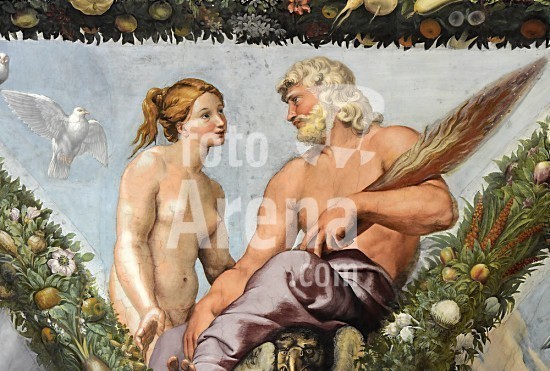
akg6522031 Venus and Jupiter. Venus begs Jupiter for help. Ceiling frescoes by Raphael (Raffaello Sanzio - 1483-1520) and his workshop (1518). In the Loggia of Cupid and Psyche (Loggia d'Amour / Cupidon et Psyché) at Villa Farnesina. The Loggia takes its name from the ceiling frescoed by Raphael , depicting scenes from the tale of Cupid and Psyche, as related by Apuleius in the Golden Ass. - Built on the Tiber banks at the beginning of 16th century for the banker and patron Agostino Chigi, Villa Farnesina is one of the Renaissance most impressive and successful combination of architecture and decoration in a private house. Rome, Italy. 2019. Photo: Eric Vandeville.
DC
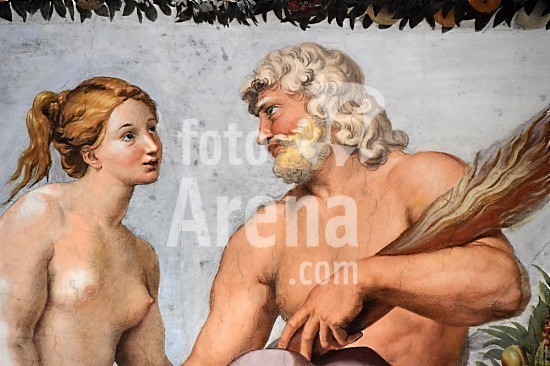
akg6522032 Venus and Jupiter. Venus begs Jupiter for help. Ceiling frescoes by Raphael (Raffaello Sanzio - 1483-1520) and his workshop (1518). In the Loggia of Cupid and Psyche (Loggia d'Amour / Cupidon et Psyché) at Villa Farnesina. The Loggia takes its name from the ceiling frescoed by Raphael , depicting scenes from the tale of Cupid and Psyche, as related by Apuleius in the Golden Ass. - Built on the Tiber banks at the beginning of 16th century for the banker and patron Agostino Chigi, Villa Farnesina is one of the Renaissance most impressive and successful combination of architecture and decoration in a private house. Rome, Italy. 2019. Photo: Eric Vandeville.
DC
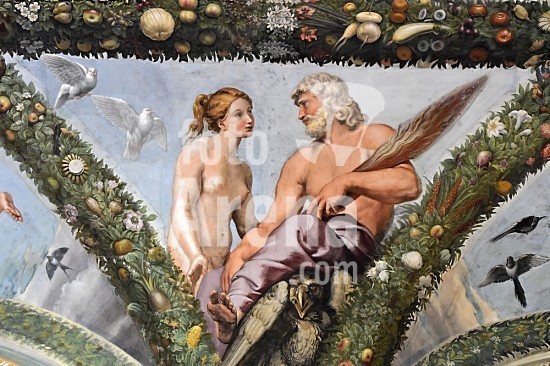
akg6522033 Venus and Jupiter. Venus begs Jupiter for help. Ceiling frescoes by Raphael (Raffaello Sanzio - 1483-1520) and his workshop (1518). In the Loggia of Cupid and Psyche (Loggia d'Amour / Cupidon et Psyché) at Villa Farnesina. The Loggia takes its name from the ceiling frescoed by Raphael , depicting scenes from the tale of Cupid and Psyche, as related by Apuleius in the Golden Ass. - Built on the Tiber banks at the beginning of 16th century for the banker and patron Agostino Chigi, Villa Farnesina is one of the Renaissance most impressive and successful combination of architecture and decoration in a private house. Rome, Italy. 2019. Photo: Eric Vandeville.
DC
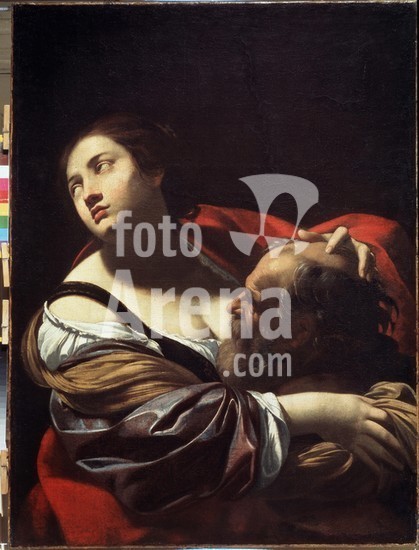
alb3331733 Roman Charity. Museum: State Regional I. Pozhalostin Art Museum, Ryasan. Author: SIMON VOUET.
DC
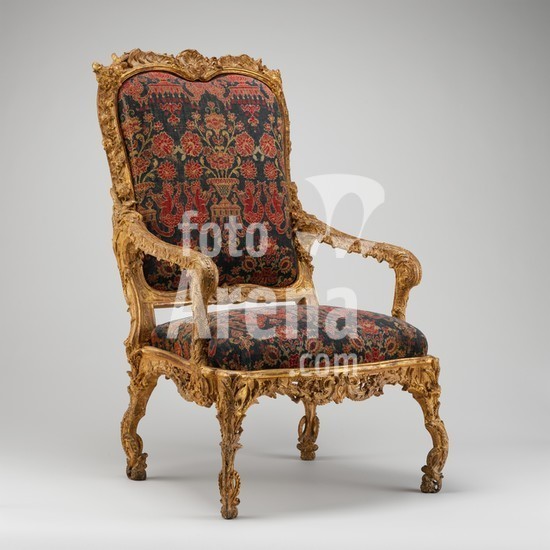
alb3606329 Armchair (fauteuil à la reine). Culture: French, Paris. Dimensions: H. 46-1/2 x W. 28 x D. 23-1/4 in. (118.1 x 71.1 x 59.1 cm). Date: ca. 1690-1710.In the most recent catalogue of the furniture at Versailles,[1] where two related armchairs à châssis (with drop-in seats) are on display in the refurbished bedroom of Louis XIV, this extraordinary chair model was described as "to be dated probably to the second quarter of the eighteenth century."[2] This proposed dating was based on "the setting back of the armrest supports" and "the absence of a stretcher" between the legs.[3] The chair's overall appearance, however, as well as the Italianate, trapezoidal form of the seat make an earlier date much more plausible. Also, the ornamentation and the minimally curved, rather straight-looking arms with their stylized-volute "hand knobs" betray the pervasive influence of Charles Le Brun (1619-1690), director of the royal manufactory at the Gobelins and of the Académie Royale de Peinture et de Sculpture (since 1663) under Louis XIV. Le Brun's playfully arranged designs are echoed in many decorative works of the late seventeenth century, for example, four embroidered wall hangings of about 1685 and an ingeniously designed side table of about 1690, both in the collection of the Museum.[4]Another argument put forward in the Versailles catalogue for a date after Louis's death in 1715 is a perceived similarity between the burly, branchlike legs of this chair model and the pieds de biche, or legs turned three-quarters forward and terminating in a doe's foot that became popular for furniture during the early Régence period (see the entry for acc. no. 1982.60.83).[5] The fanciful, imaginative leg design of this chair model, based on a series of incurving segments (chantournés en dedans), is far more sophisticated than the pieds de biche. It is firmly rooted in the zoomorphic foot forms of the seventeenth century and can be visually documented in the Grand Galerie at Versailles as early as 1684.[6] If the present chair model is datable between 1690 and 1710, it is one of the first examples made with a drop-in upholstered seat.A date of about 1690 to 1710 is especially attractive because it enables us to entertain the idea that the suite of seat furniture to which this chair belongs recreated in gilded wood the silver furniture at Versailles that was melted down in 1689 to pay for the king's military campaigns.[7] This idea is supported by the simulated drapery ornamentation on the armrests. This so-called lambrequin motif (see the entry for acc. no. 69.292.1) is rarely found in contemporary French woodwork but is fairly common in the products of the court goldsmiths. Laurence Buffet-Challié observed of another example of this model, in the Lopez-Willshaw collection in Paris, that "the woodwork of this armchair [of] c. 1700 is carved almost as if it were the work of a goldsmith. The curved frame to the back and the seat, and the absence of stretchers anticipate the style of the eighteenth century."[8]A recent discovery in a French publication of 1837 may offer a key to settling all these arguments. In his Moyen-Âge pittoresque: Monumens d'architecture, meubles et décors Philippe Moret published a lithograph of this chair model. The short caption gives no medium, dimensions, or other details about it, but the description reads, "Armchair used as King Stanislas's throne," and a provenance is given: "from the collection of M. Schwiter."[9] The king referred to must be the Polish prince Stanislas Leszczynski (1677-1766), who was elected king of Poland in 1704 and displaced in 1709 by Augustus the Strong of Saxony (1670-1733). In 1725 his fortunes rose again, when his daughter Maria was married to Louis XV (1710-1774). As the French king's father-in-law, Leszczynski was made duke of Lorraine and took up residence in Nancy, transforming that town into a major cultural center of the Rococo period.[10] The splendor-loving Leszczynski regularly received furnishings and luxury goods from the French court as gifts, and the opulent chair seen in the lithograph, the Museum's example, and other pieces of the suite may have been among them. By Leszczynski's time the style was certainly out of fashion, but their royal pedigree, flamboyant opulence, and highly unusual appearance must have been as fascinating then as they are today. At some point, the suite was broken up and scattered. We do not know if the armchair in the Schwiter collection was a wooden example (which, by the way it is characterized, seems likely) or if it was a silver version that had escaped the mint.[11] It was, however, called a throne, indicating not only a royal association but also that in 1837 only a single example was known. We remain in the dark as regards the Schwiter collection. A Louis-August Schwiter (1808-1889), later Baron Schwiter, is recorded in a portrait by Eugène Delacroix (1798-1863), today in the National Gallery, London (NG 3286). In his inventory of public-sale catalogues, Frits Lugt (1884-1970) mentions that a collector named Schwiter sold works of art at a series of auctions in Paris between 11-12 December 1863 and 16-17 December 1864 and that some of the lots included furniture.[12][Wolfram Koeppe 2006]Footnotes:[1] Pierre Arizzoli-Clémentel. Versailles: Furniture of the Royal Palace, Seventeenth and Eighteenth Centuries. Vol. 2. Dijon, 2002, pp. 178-79, no. 59.[2] Ibid., p. 178. See also Daniel Meyer. "La restitution de la chambre de Louis XIV à Versailles." La revue du Louvre et des musées de France, 1980, p. 246.[3] Pierre Arizzoli-Clémentel. Versailles: Furniture of the Royal Palace, Seventeenth and Eighteenth Centuries. Vol. 2. Dijon, 2002, pp. 178-79, no. 59.[4] On the wall hangings, see Alice M. Zrebiec in Olga Raggio, James Parker, Clare Le Corbeiller, Jessie McNab, Clare Vincent, and Alice M. Zrebiac. "French Decorative Arts during the Reign of Louis XIV, 1654-1715." The Metropolitan Museum of Art Bulletin 46, no. 4 (Spring 1989), p. 32 and color ills. pp. 10-11. On the side table, which is based on designs by Le Brun, see James Parker in Olga Raggio, op. cit., pp. 22-23 and p. 3, fig. 4.[5] Pierre Arizzoli-Clémentel. Versailles: Furniture of the Royal Palace, Seventeenth and Eighteenth Centuries. Vol. 2. Dijon, 200, p. 178 (but the proposed interpretation of the pied de biche is not sound); and Wolfram Koeppe. "Möbel und Schaustücke." In Liselotte von der Pfalz: Madame am Hofe des Sonnenkönigs, ed. Sigrun Paas, pp. 179-88. Exh. cat., Heidelberger Schloss. Heidelberg, 1996, p. 185, fig. 5.[6] The chair's branchlike legs are unusual in the same way as are the animal legs of the side tables in the Grand Galerie seen in an etching of 1684 by Sébastien Le Clerc (1637-1714) in Olga Raggio, James Parker, Clare Le Corbeiller, Jessie McNab, Clare Vincent, and Alice M. Zrebiac. "French Decorative Arts during the Reign of Louis XIV, 1654-1715." The Metropolitan Museum of Art Bulletin 46, no. 4 (Spring 1989), p. 6, fig. 7.[7] Georges S. Salmann. "A Great Art Lover: The Late Arturo Lopez-Willshaw." Connoisseur 151 (October 1962), p. 74, fig. 6; and Nietta Aprà. The Louis Styles: Louis XIV, Louis XV, Louis XVI. London, 1972, p. 26, fig. 17.[8] Laurence Buffet-Challié. "The Seventeenth Century: France." In World Fruniture: An Illustrated History, ed. Helena Hayward, pp. 76-85. New York, 1965, p. 84, figs. 278, 279.[9] "Fauteuil ayant servi de Trône au Roi Stanislas"; Philippe Moret. Moyen-Âge pittoresque: Monumens d'architecture, meubles et décors du Xe au XVIIe siècle. 5 vols. Paris, 1837-40, vol. 1, pl. 18. There is a copy of this book in the Thomas J. Watson Library, Metropolitan Museum.[10] Stanislas: Un roi de Pologne en Lorraine. Exh. cat., Musée Historique Lorrain, Nancy. Versailles, 2004.[11] I hope that this rather speculative entry will encourage scholars to investigate the archives at Nancy and in Stanislas's residences and that their research will shed light on the mystery of these important chairs.[12] I am most grateful to Florian Knothe, Annette Kade Art History Fellow, 2005-2006, Metropolitan Museum, for sharing with me the fruits of his research on Schwiter. Museum: Metropolitan Museum of Art, New York, USA.
DC
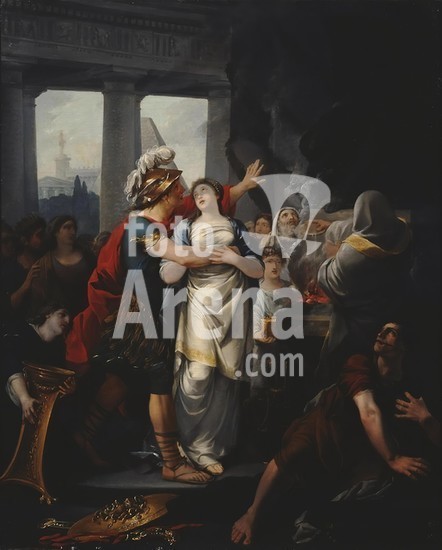
alb3377338 Roman Charity. Museum: State Hermitage, St. Petersburg. Author: Rubens, Pieter Paul.
DC
iblbom00442251 Father and baby
DC
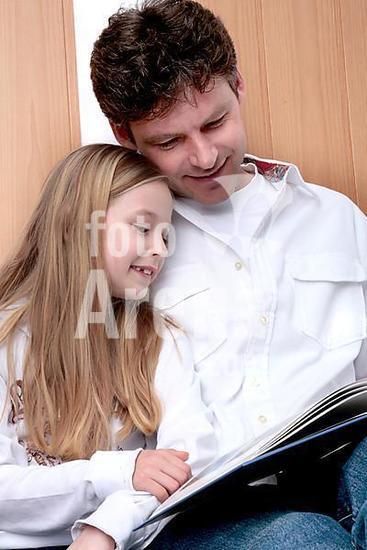
iblkre00622787 Father and daughter reading a book
DC
iblkre00622814 Father and daughter playing game on a laptop
DC
iblkre00622821 Father and daughter relaxing on the couch together
DC
iblkre00622823 Father and daughter tussling on the couch
DC
iblkre00622783 Father and daughter laying on the floor
DC
iblkre00622788 Father and daughter reading a book
DC
iblkre00622794 Father and daughter relaxing on the couch, looking at each other
DC

Total de Resultados: 154

Página 1 de 2