



















































Busque também em nossas outras coleções:

Data da imagem:
Pauta
Agência
Fotógrafo
ver mais opções...
Estado
Cidade
Local
Tipo de licença
Orientação
Coleção

Total de Resultados: 21

Página 1 de 1

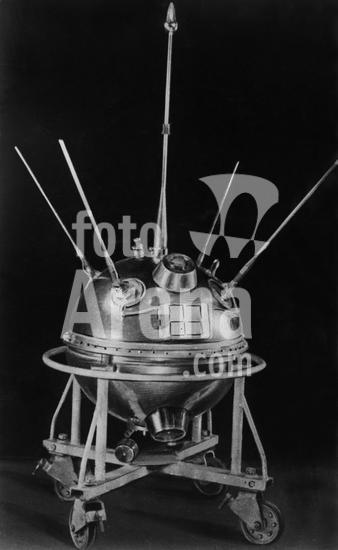
975_05_SOV-B-17413 Soviet space probe luna-1 (lunik) prior to launch in 1959, i t was the first space craft to escape earth's orbit.
DC
975_05_TASS-B-410214 A replica of the soviet space probe luna-1 (lunik) on diplay at the ussr academy of sciences in 1959, i t was the first space craft to escape earth's orbit.
DC
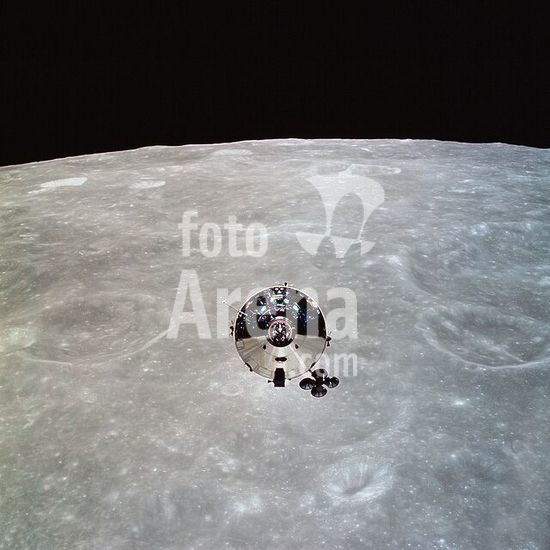
alb3883927 May 22, 1969 - The Apollo 10 Command and Service Modules (CSM) are photographed from the Lunar Module (LM) after CSM/LM separation in lunar orbit. The CSM was about 175 statute miles east of Smyth's Sea and was above the rough terrain which is typical of the lunar farside. The eastward oblique view of the lunar surface is centered near 105 degrees east longitude and 1 degree north latitude. The horizon is approximately 600 kilometers (374 statute miles) away. Numerous bright craters and the absence of shadows show that the sun was almost directly overhead when this photograph was taken.
DC
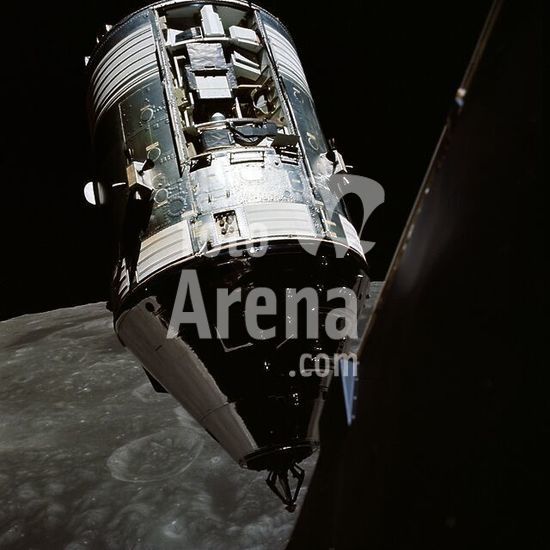
alb3883056 December 14, 1972 - View of the Apollo 17 Command and Service Modules (CSM) photographed from the Lunar Module (LM) Challenger during rendezvous and docking maneuvers in lunar orbit. Note the exposed Scientific Instrument Module (SIM) Bay in Sector 1 of the Service Module (SM). Three experiments are carried in the SIM bay: S-209 lunar sounder, S-171 infrared scanning spectrometer, and the S-169 far-ultraviolet spectrometer. Also mounted in the SIM bay are the panoramic camera, mapping camera and laser altimeter used in service module photographic tasks. A portion of the LM is on the right.
DC
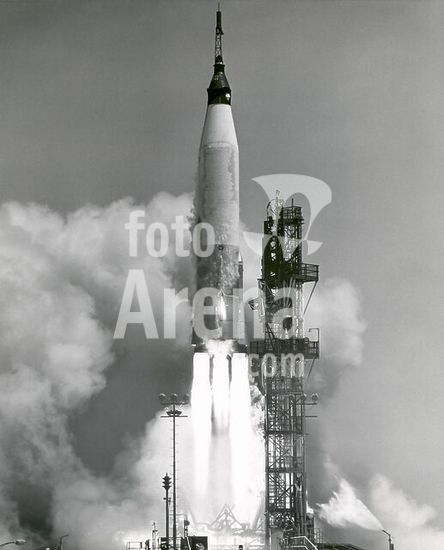
alb3886093 An Atlas vehicle is shown as it is raised into its launch gantry. This Atlas attempted to launch a Mercury spacecraft (without any astronauts aboard) into orbital flight. The launch vehicle developed 360,000 pounds of thrust and burned RP-1, a kerosene-like fuel, and liquid oxygen. It was about 60 feet in length and 10 feet in diameter at the tank section. This was the first attempt to put a Mercury spacecraft into Earth orbit. Unfortunately, this Atlas exploded at launch. Atlas was designed to launch payloads into low Earth orbit, geosynchronous transfer orbit or geosynchronous orbit.
DC
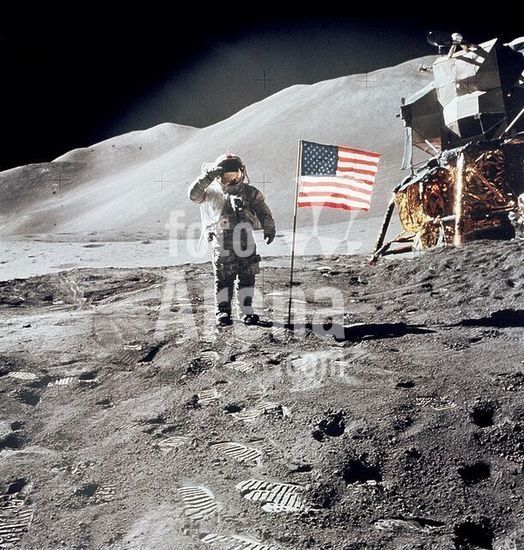
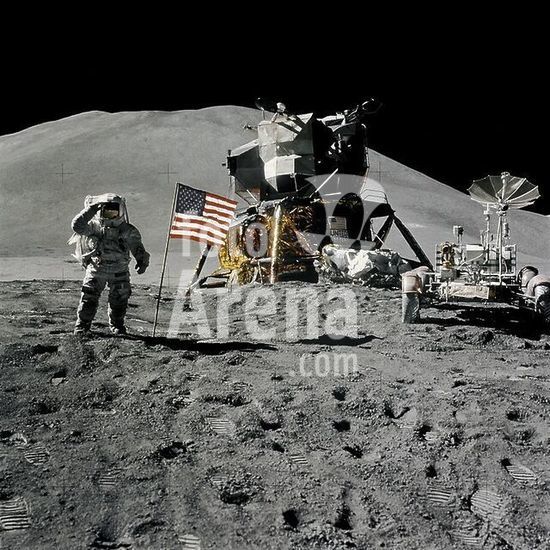
akg6107123 AS15-88-11863 (1 Aug. 1971) --- Astronaut David R. Scott, commander, gives a military salute while standing beside the deployed United States flag during the Apollo 15 lunar surface extravehicular activity (EVA) at the Hadley-Apennine landing site. The flag was deployed toward the end of EVA-2. The Lunar Module (LM), "Falcon," is partially visible on the right. Hadley Delta in the background rises approximately 4,000 meters (about 13,124 feet) above the plain. The base of the mountain is approximately 5 kilometers (about three statue miles) away. This photograph was taken by astronaut James B. Irwin, lunar module pilot. While astronauts Scott and Irwin descended in the LM to explore the moon, astronaut Alfred M. Worden, command module pilot, remained in lunar orbit in the Command and Service Modules (CSM).
DC
akg6107124 AS15-88-11866 (1 Aug. 1971) --- Astronaut James B. Irwin, lunar module pilot, gives a military salute while standing beside the deployed United States flag during the Apollo 15 lunar surface extravehicular activity (EVA) at the Hadley-Apennine landing site. The flag was deployed toward the end of EVA-2. The Lunar Module (LM) "Falcon" is in the center. On the right is the Lunar Roving Vehicle (LRV). This view is looking almost due south. Hadley Delta in the background rises approximately 4,000 meters (about 13,124 feet) above the plain. The base of the mountain is approximately 5 kilometers (about 3 statute miles) away. This photograph was taken by astronaut David R. Scott, Apollo 15 commander. While astronauts Scott and Irwin descended in the LM to explore the moon, astronaut Alfred M. Worden, command module pilot, remained with the Command and Service Modules (CSM) in lunar orbit.
DC
alb3652889 The Moon - Crater Aristarchus, Schroter's Valley. Artist: National Aeronautics and Space Administration (NASA). Dimensions: Image: 13 3/4 × 12 1/4 in. (34.9 × 31.1 cm)Mount: 18 × 16 in. (45.7 × 40.6 cm). Printer: Eastman Kodak Co. (American). Date: 1967.This photograph was made as part of the Lunar Orbiter program, a series of five unmanned spacecraft launched into orbit around the Moon in 1966 and 1967. Each spacecraft was equipped with a sophisticated imaging system provided by Eastman Kodak, which consisted of a dual-lens camera, film processing and handling units, and a readout scanner for transmitting the images back to Earth. The main purpose of the program was to select lunar landing sites for NASA's manned Apollo Missions. Over the course of one year, the Lunar Orbiters photographed 99 percent of the Moon's surface, producing more than 2,000 images of unprecedented clarity and precision. After the film was processed on board the spacecraft, it was scanned in strips and transmitted to Earth via radio. Technicians at Eastman Kodak in Rochester, New York, created the final images by transferring the strips onto sheets of large-format film, from which prints were produced. This print comes from the collection of George Keene, an optical engineer who headed the team responsible for reconstructing the Lunar Orbiter images in Rochester. Museum: Metropolitan Museum of Art, New York, USA.
DC
alb3659275 Backside of the Moon at Apolune (S-21.5). Artist: National Aeronautics and Space Administration (NASA). Dimensions: Image: 16 3/16 × 13 3/4 in. (41.1 × 34.9 cm)Mount: 18 in. × 15 1/2 in. (45.7 × 39.4 cm). Printer: Eastman Kodak Co. (American). Date: 1967.This photograph was made as part of the Lunar Orbiter program, a series of five unmanned spacecraft launched into orbit around the Moon in 1966 and 1967. Each spacecraft was equipped with a sophisticated imaging system provided by Eastman Kodak, which consisted of a dual-lens camera, film processing and handling units, and a readout scanner for transmitting the images back to Earth. The main purpose of the program was to select lunar landing sites for NASA's manned Apollo Missions. Over the course of one year, the Lunar Orbiters photographed 99 percent of the Moon's surface, producing more than 2,000 images of unprecedented clarity and precision. After the film was processed on board the spacecraft, it was scanned in strips and transmitted to Earth via radio. Technicians at Eastman Kodak in Rochester, New York, created the final images by transferring the strips onto sheets of large-format film, from which prints were produced. This print comes from the collection of George Keene, an optical engineer who headed the team responsible for reconstructing the Lunar Orbiter images in Rochester. Museum: Metropolitan Museum of Art, New York, USA.
DC
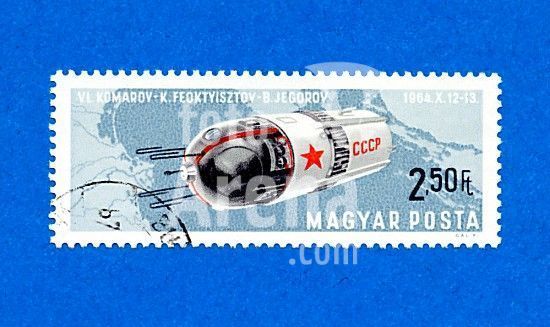
akg4469664 Hungary AUSTRONAUTICS, dedicated stamp space capsule Voskhod 1 - October 1965 - Soviet mission in the space composed from a crew of 3 cosmonauts: Vladimir Komarov, Boris Jegorov, Konstantin Feoktistov. For the first time in the history dell' human exploration of the space came capacity nell' terrestrial orbit an equipped spatial small boat from more pilots and for the first time was carried in orbit a scientist-cosmonaut.
DC
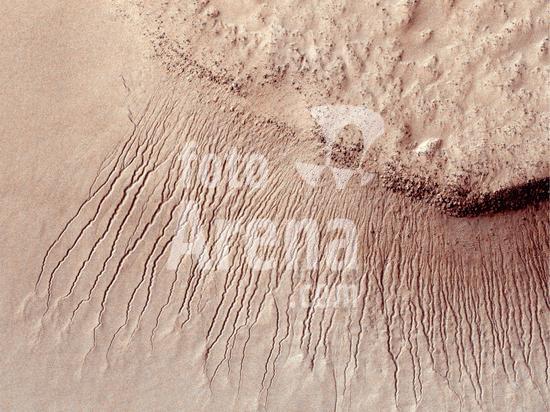
917_05_WHA_1645TH This image shows many channels from 1 meter to 10 meters wide on a scarp in the Hellas impact basin. MRO.
DC
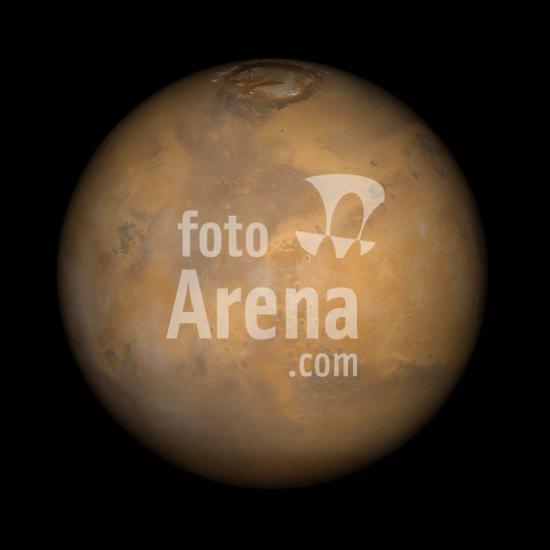
917_05_WHA_1530TH This Mars Global Surveyor Mars Orbiter Camera view of the red planet shows the region that includes Ares Vallis and the Chryse Plains upon which both Mars Pathfinder and the Viking 1 landed in 1997 and 1976, respectively.
DC
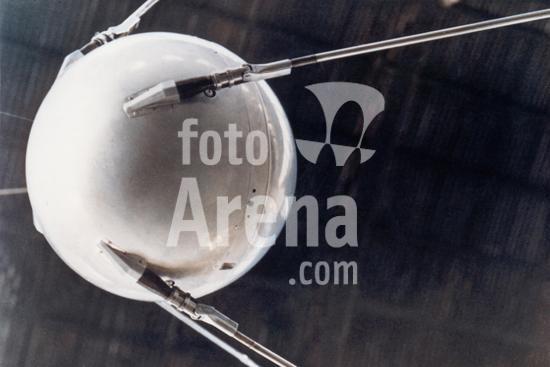
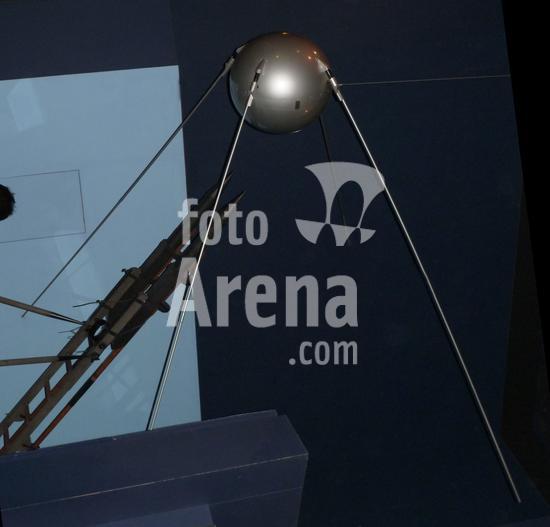
917_05_510012104 Sputnik 1, replica.
DC
HISL020_EC064 A model of Sputnik 1, the first human-made object in space. The Earth-orbiting artificial satellite was launched by the Soviet Union on October 4, 1957. As part of Russia's contribution to the International Geophysical Year, it provided information on the upper atmosphere. Its signal lasted for 22 and it burned up in the Earth's atmosphere on delivered information Jan, 4, 1957.
DC
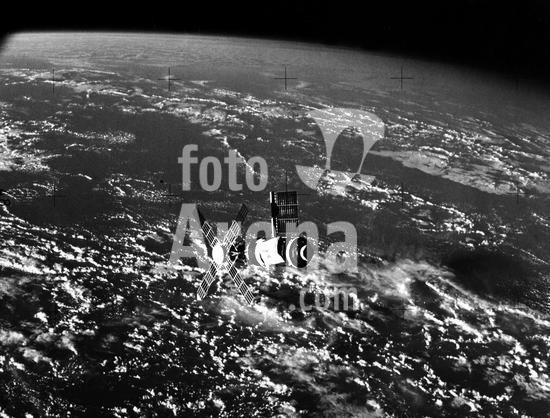
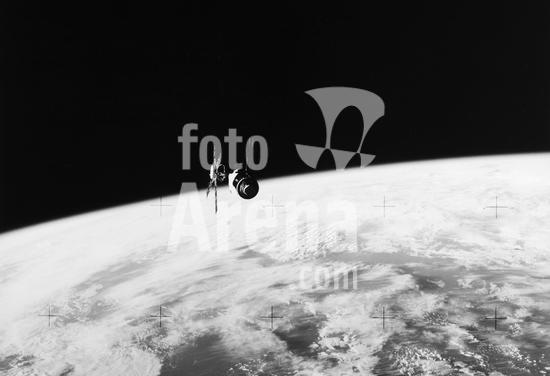
0100361 SPACE: SKYLAB 1, 1973. /nThe Skylab 1 space station cluster in orbit, photographed from the Skylab 2 Command/Service Module during a 'fly around' inspection of the space station, 1973.
DC
0100359 SPACE: SKYLAB 1, 1973. /nThe Skylab 1 space station cluster in orbit, photographed from the Skylab 2 Command/Service Module during a 'fly around' inspection of the space station, 1973.
DC
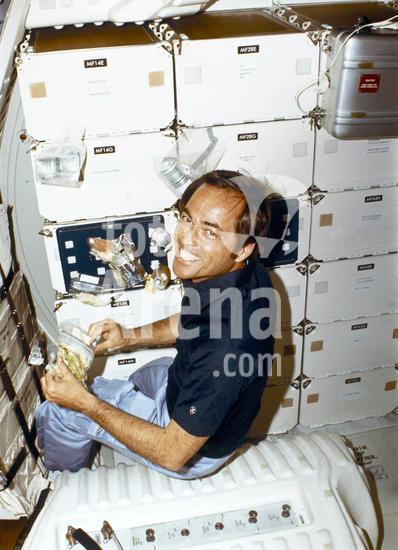
0184880 ROBERT CRIPPEN (1937- ). /nAmerican astronaut. Preparing a meal in the mid-deck area of the Space Shuttle 'Columbia' during its orbital flight around the Earth, April 1981. Photographed by astronaut John Young.
DC
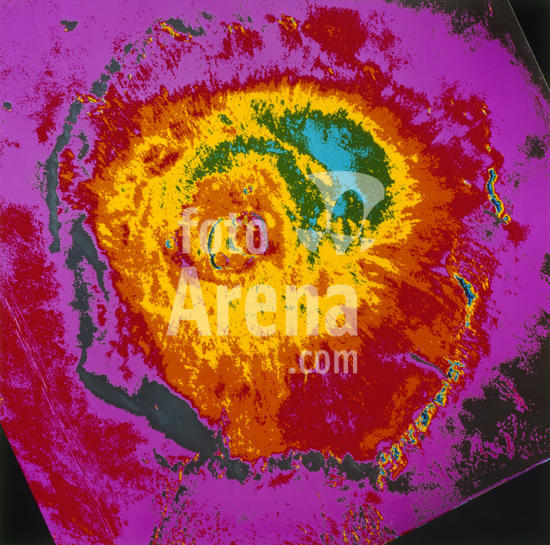
0185650 MARS: OLYMPUS MONS, c1980. /nThe volcano Olympus Mons on Mars, shown in false color. From a photograph by Viking Orbiter 1, c1980.
DC
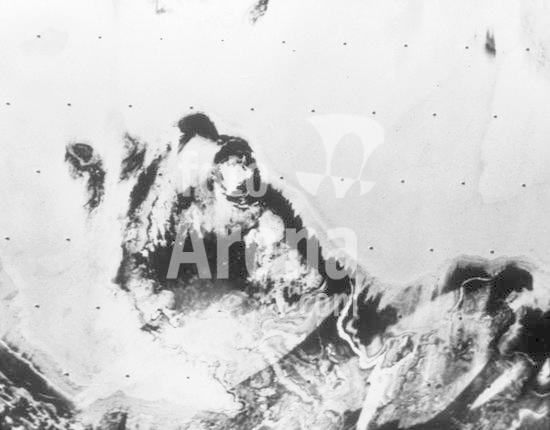
0185697 VIKING: MARS, c1976. /nIce cliffs in the North polar region of Mars. Photographed by the Viking Orbiter, c1976.
DC
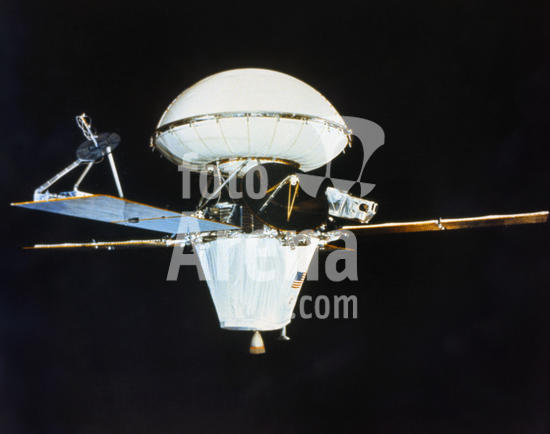
0185700 VIKING 1 SPACECRAFT, 1976. /nThe Viking 1 Orbiter and Lander, the first of two identical spacecraft sent to Mars in 1976.
DC
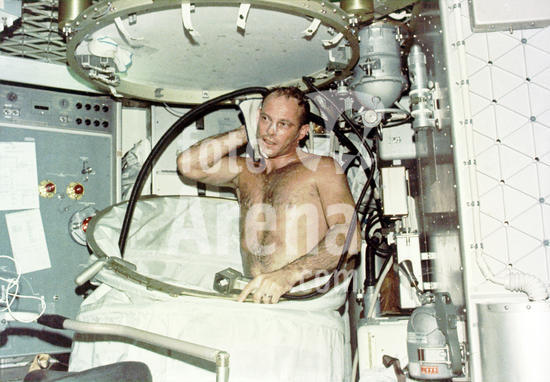
0268108 SKYLAB 3, 1973. American astronaut Jack R. Lousma bathing in the Skylab Orbital Workshop. Photograph, 1 July 1973.
DC

Total de Resultados: 21

Página 1 de 1