





















































Busque também em nossas outras coleções:

Data da imagem:
Pauta
ver mais opções...
Agência
Fotógrafo
Pais
Cidade
ver mais opções...
Tipo de licença
Orientação
Coleção

Total de Resultados: 23

Página 1 de 1

ny231023134906 -- STANDALONE PHOTO FOR USE AS DESIRED WITH YEAREND REVIEWS -- A diver with the Coral Restoration Foundation assesses coral bleaching at the groupÕs nursery on FloridaÕs Looe Key, July 28, 2023. Teams dedicated to ocean restoration are urgently moving samples to tanks on land as a marine heat wave devastates entire reefs. (Jason Gulley/The New York Times/Fotoarena)
DC
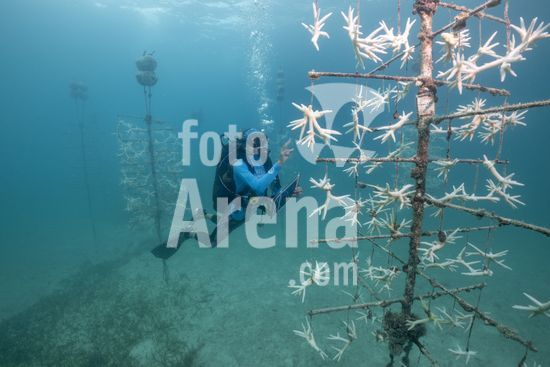
ny310723162206 A diver with the Coral Restoration Foundation assesses coral bleaching at the groupÕs nursery on FloridaÕs Looe Key, July 28, 2023. Teams dedicated to ocean restoration are urgently moving samples to tanks on land as a marine heat wave devastates entire reefs. (Jason Gulley/The New York Times/Fotoarena)
DC
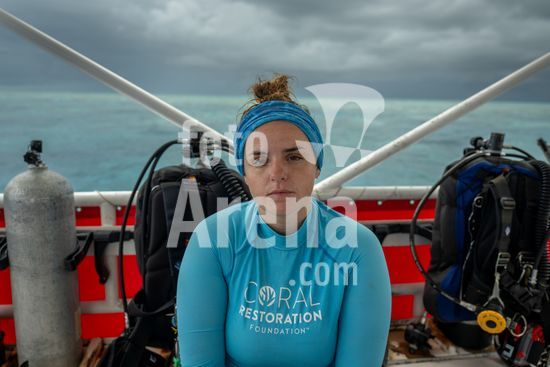
ny310723162606 Bailey Thomasson, who works for the Coral Restoration Foundation, after a dive on FloridaÕs Looe Key, July 28, 2023. Teams dedicated to ocean restoration are urgently moving samples to tanks on land as a marine heat wave devastates entire reefs. (Jason Gulley/The New York Times/Fotoarena)
DC
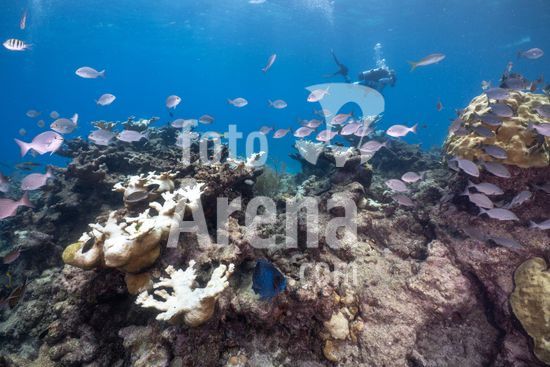
ny310723162506 Bleached corals on FloridaÕs Looe Key, July 28, 2023. Teams dedicated to ocean restoration are urgently moving samples to tanks on land as a marine heat wave devastates entire reefs. (Jason Gulley/The New York Times/Fotoarena)
DC
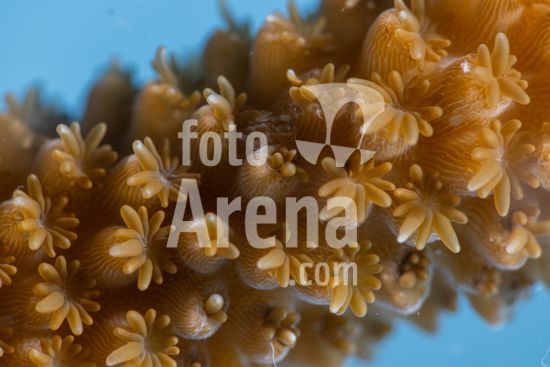
ny310723163706 Healthy staghorn coral polyps from corals rescued from a nursery, at the Florida Institute of OceanographyÕs Keys Marine Lab on FloridaÕs Long Key, July 27, 2023. Teams dedicated to ocean restoration are urgently moving samples to tanks on land as a marine heat wave devastates entire reefs. (Jason Gulley/The New York Times/Fotoarena)
DC
ny310723163106 Stony corals organized in saltwater tanks at the Reef Institute in West Palm Beach, Fla., July 26, 2023. Teams dedicated to ocean restoration are urgently moving samples to tanks on land as a marine heat wave devastates entire reefs. (Jason Gulley/The New York Times/Fotoarena)
DC
ny310723162306 Workers at the Reef Institute in West Palm Beach, Fla., organize corals in a quarantine tank on July 26, 2023. Teams dedicated to ocean restoration are urgently moving samples to tanks on land as a marine heat wave devastates entire reefs. (Jason Gulley/The New York Times/Fotoarena)
DC

ny310723163306 The Coral Restoration Foundation transportation trailer carries corals from nurseries across South Florida through Miami, July 26, 2023. Teams dedicated to ocean restoration are urgently moving samples to tanks on land as a marine heat wave devastates entire reefs. (Jason Gulley/The New York Times/Fotoarena)
DC
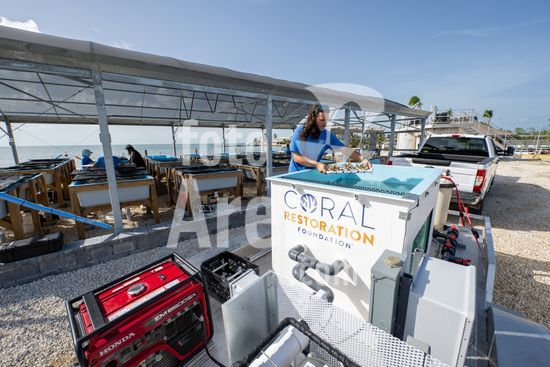
ny310723163906 A worker with the Coral Restoration Foundation loads samples into a mobile holding tank at the Florida Institute of OceanographyÕs Keys Marine Lab on FloridaÕs Long Key, July 25, 2023. Teams dedicated to ocean restoration are urgently moving samples to tanks on land as a marine heat wave devastates entire reefs. (Jason Gulley/The New York Times/Fotoarena)
DC
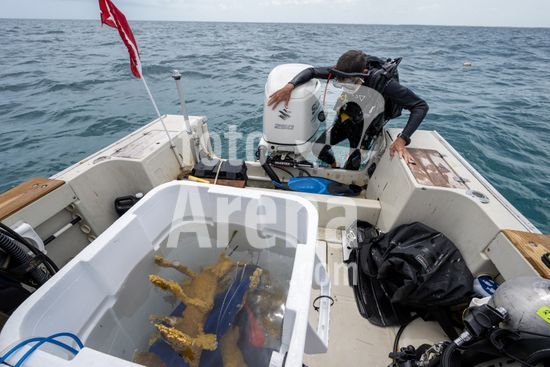
ny310723163006 A volunteer with Reef Renewal USA retrieves corals for safekeeping on land from a nursery off FloridaÕs Tavernier Key, July 25, 2023. Teams dedicated to ocean restoration are urgently moving samples to tanks on land as a marine heat wave devastates entire reefs. (Jason Gulley/The New York Times/Fotoarena)
DC
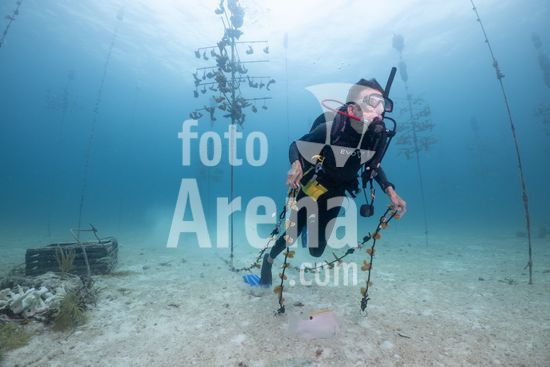
ny310723163506 A volunteer with Reef Renewal USA carries ropes with small coral cuttings from a nursery off FloridaÕs Tavernier Key, July 25, 2023. Teams dedicated to ocean restoration are urgently moving samples to tanks on land as a marine heat wave devastates entire reefs. (Jason Gulley/The New York Times/Fotoarena)
DC
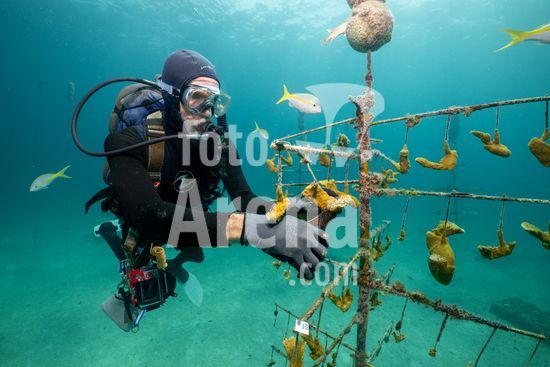
ny310723162806 Ken Nedimyer, founder of Reef Renewal USA, cuts pieces of coral from a nursery off FloridaÕs Tavernier Key, July 25, 2023. Teams dedicated to ocean restoration are urgently moving samples to tanks on land as a marine heat wave devastates entire reefs. (Jason Gulley/The New York Times/Fotoarena)
DC

ny010822152505 An image provided by NOAA shows the remotely operated vehicle Deep Discoverer during an exploration of a volcano in the Mid-Atlantic Ridge, July 23, 2022. The vehicleÕs suctioning device collected sediment samples to examine whether there was an organism inside mysterious holes on the ocean floor. (NOAA via The New York Times) Ñ EDITORIAL USE ONLYÑ
DC
ny180722185105 Ñ EMBARGO: NO ELECTRONIC DISTRIBUTION, WEB POSTING OR STREET SALES BEFORE 12:01 A.M. ET ON TUESDAY, JULY 19, 2022. NO EXCEPTIONS FOR ANY REASONS Ñ Samples of gorgonia, a category of soft coral that is often caught in fishing nets, in El Port de la Selva, Spain, on June 15, 2022. Contentious plans to erect a wind farm off the northeastern coast of Spain are part of a tense debate over where to locate new renewable energy projects across Europe. (Samuel Aranda/The New York Times/Fotoarena)
DC
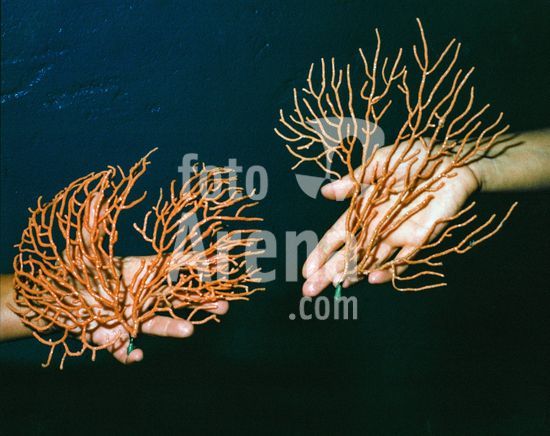
ny200917124105 Young Pocillopora acuta, bred from samples collected on the Great Barrier Reef at the Australian Institute of Marine Science center in Cape Cleveland, Australia, July 23, 2017. Amid the dead canyons of the Great Barrier Reef, samples of this species were often the only healthy chunks of coral to be found. (David Maurice Smith/The New York Times/Fotoarena)
DC
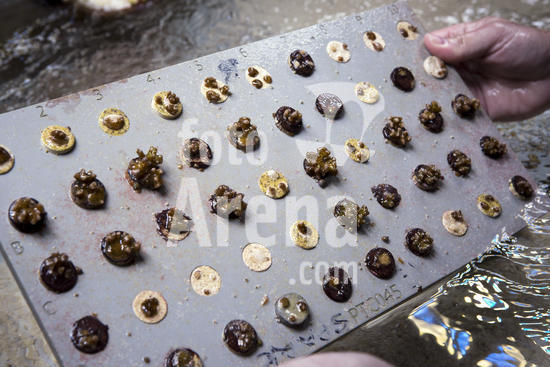
ny200917124605 Neal Cantin with coral samples at the Australian Institute of Marine Science center in Cape Cleveland, Australia, July 23, 2017. Researchers here are collecting and studying the few Great Barrier Reef corals that clung to life amid a recent die-off. ÒWeÕre trying to find the super corals, the ones that survived the worst heat stress of their lives,Ó Cantin said. (David Maurice Smith/The New York Times/Fotoarena)
DC
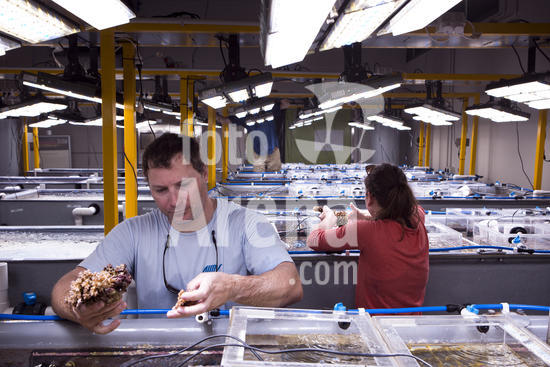
ny200917123705 Neal Cantin places a sample of Pocillopora acuta coral in a tank at the Australian Institute of Marine Science center in Cape Cleveland, Australia, July 23, 2017. Amid the dead canyons of the Great Barrier Reef, this species is often the only healthy chunks of coral to be found. ÒWeÕre trying to find the super corals, the ones that survived the worst heat stress of their lives,Ó Cantin said. (David Maurice Smith/The New York Times/Fotoarena)
DC
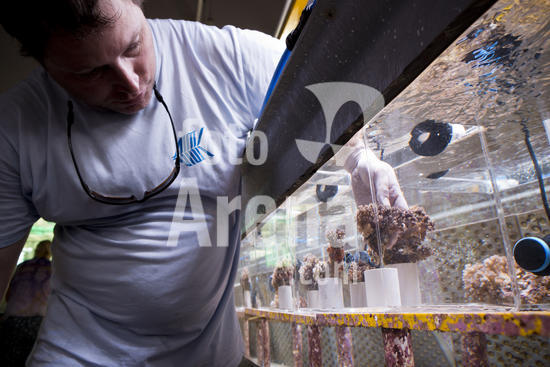
ny200917124904 Neal Cantin collects samples from Rib Reef, a section of the Great Barrier Reef off Queensland, Australia, July 22, 2017. Australian Institute of Marine Science researchers are studying what few corals that clung to life amid a recent die-off. ÒWeÕre trying to find the super corals, the ones that survived the worst heat stress of their lives,Ó Cantin said. (David Maurice Smith/The New York Times/Fotoarena)
DC
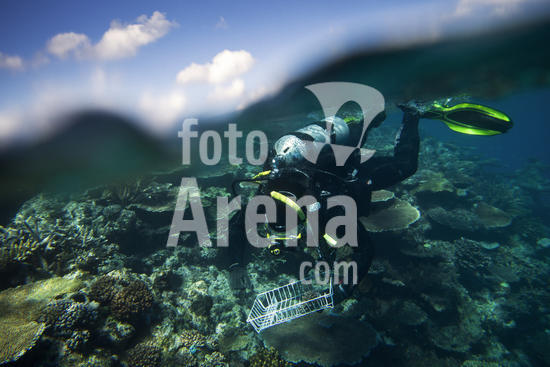
ny210818130609 FILE -- Researchers collect coral samples from Rib Reef, part of the Great Barrier Reef, in Queensland, Australia, July 5, 2017. Malcolm Turnbull may lose his job because he tried to curtail emissions, which would make him the third Australian prime minister recently forced from office in a climate dispute. (David Maurice Smith/The New York Times/Fotoarena)
DC
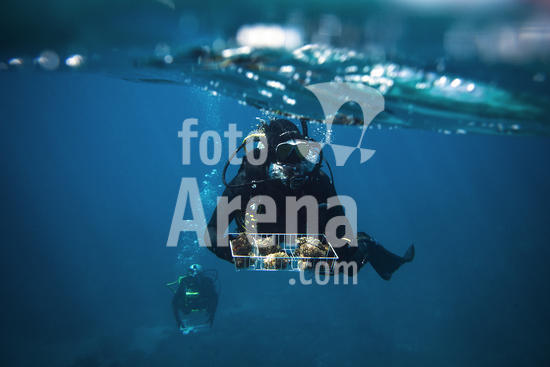
ny200917125104 Jose Montalvo-Proano carries coral samples from Rib Reef, on the Great Barrier Reef off Queensland, Australia, July 22, 2017. Australian Institute of Marine Science researchers are studying what few corals that clung to life amid a recent die-off, with the possible intent of breeding more and returning them to the ocean. (David Maurice Smith/The New York Times/Fotoarena)
DC
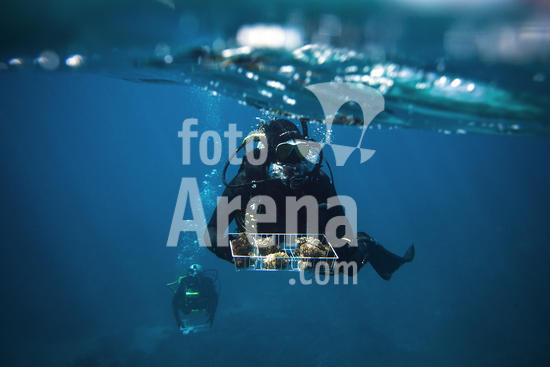
ny290418161811 FILE -- Researchers Jose Montalvo-Proano, left, and Neal Cantin collect coral samples from the Great Barrier Reef off the coast of the state of Queensland, Australia, July 22, 2017. The Australian government unveiled a plan on Sunday, April 29, 2018, to set aside 500 million Australian dollars ($379 million U.S.) to help rescue the Great Barrier Reef, an important ecosystem and a global treasure, after years of devastating damage from warming waters caused by climate change. (David Maurice Smith/The New York Times/Fotoarena)
DC
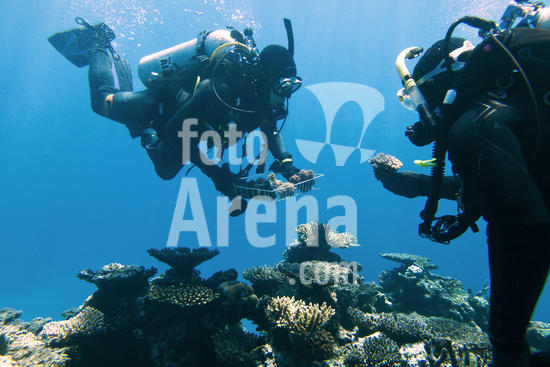
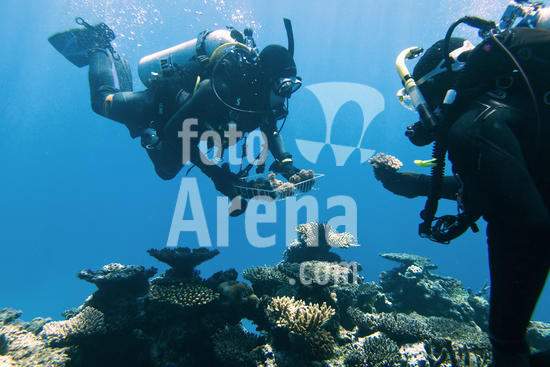
ny200917124304 Jose Montalvo-Proano, left and Neal Cantin collect coral samples from the Great Barrier Reef off Queensland, Australia, July 22, 2017. Australian Institute of Marine Science researchers are studying what few corals that clung to life amid a recent die-off. ÒWeÕre trying to find the super corals, the ones that survived the worst heat stress of their lives,Ó Cantin said. (David Maurice Smith/The New York Times/Fotoarena)
DC
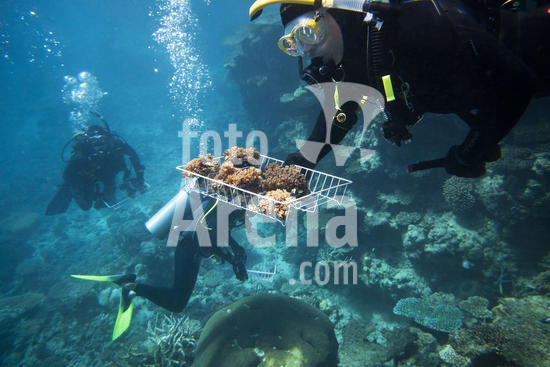
ny290418161912 FILE -- Researcher Neal Cantin carries a tray of coral samples at Rib Reef, part of the Great Barrier Reef, off the coast of the state of Queensland in Australia, July 22, 2017. The Australian government unveiled a plan on Sunday, April 29, 2018, to set aside 500 million Australian dollars ($379 million U.S.) to help rescue the Great Barrier Reef, an important ecosystem and a global treasure, after years of devastating damage from warming waters caused by climate change. (David Maurice Smith/The New York Times/Fotoarena)
DC
Total de Resultados: 23

Página 1 de 1