Busque também em nossas outras coleções:

Data da imagem:
Pauta
ver mais opções...
Agência
Fotógrafo
Estado
Cidade
Local
Tipo de licença
Orientação
Coleção

Total de Resultados: 40

Página 1 de 1

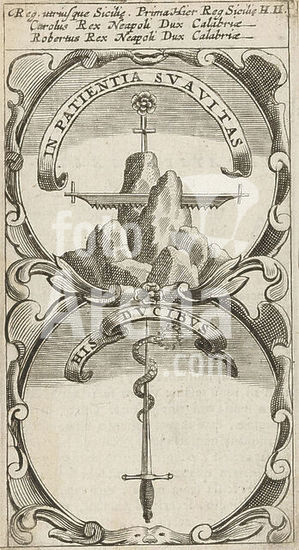
alb29104930 In Patientia Suavitas, His Ducibus, Rock sawn off from a mountain, Sword with coiling snake, Symbola Divina et Humana Pontificum Imperatorum Regum, print, book illustration, An emblem with two representations. Above, a piece of rock is being cut off from a mountain. On top stands a cross with a rose. Below, a sword with a snake coiled around it. The snake has a laurel wreath in its mouth. These are mottos of Charles II and Robert I of Naples., after print by Aegidius Sadeler (II), 1666, Aegidius Sadeler (II), printmaker, after print by, paper, engraving, letterpress printing, verso with text in letterpress, height 118 mm x width 64 mm, Page from Jacob Typotius, Symbola Divina & Humana Pontificum Imperatorum Regum. Arnhem, JF Hagen, 1666 or from the title edition of 1669 or 1679. The work of Typotius was first published in 1601 with prints by Aegidius Sadeler., Person, Charles II (King of Naples), Robert (King of Naples), hacking and thrusting weapons: sword, snakes, mountains, garland, wreath, A vertically oriented black and white engraving showing two large ornate oval frames stacked one above the other with decorative scrollwork at the edges; within the top oval is a mountainous rocky formation with a horizontal saw-toothed beam crossing in front of the peaks and a tall slender staff rising from the highest rock topped by a small flower-like motif, while the lower oval contains a vertical sword pointing downward with a serpent coiled around its shaft and decorative floral elements near the top of the sword; the surrounding border features curving acanthus-like leaves and ribbon flourishes and the paper shows aged texture and slight spotting.
DC
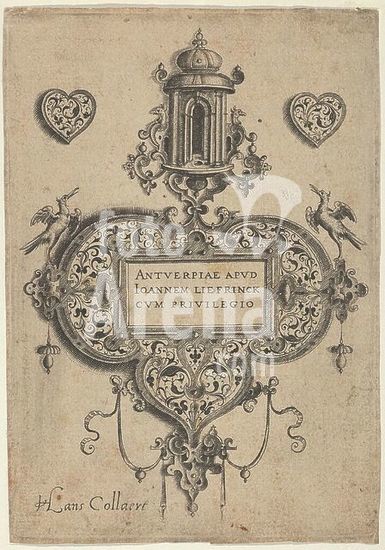
alb3626219 Title Plate, from Pendant Designs with Architectural Elements and Vegetal-Arabesques. Artist: Jan Collaert I (Netherlandish, Antwerp ca. 1530-1581 Antwerp). Dimensions: Sheet: 5 13/16 × 4 1/16 in. (14.7 × 10.3 cm). Publisher: published by Hans Liefrinck (Augsburg (?) 1518?-1573 Antwerp). Series/Portfolio: Pendant Designs with Architectural Elements and Vegetal-Arabesques. Date: before 1573.Vertical panel with pendant design at center with the text on a cartouche set in an ornament with a vegetal-arabesque pattern. Above, a circular temple flanked by two small heart motifs. From a set of ten plates with pendant designs incorporating arabesque decoration. This plate belongs to the first edition, published by Hans I Liefrinck in Antwerp before 1573. Museum: Metropolitan Museum of Art, New York, USA.
DC
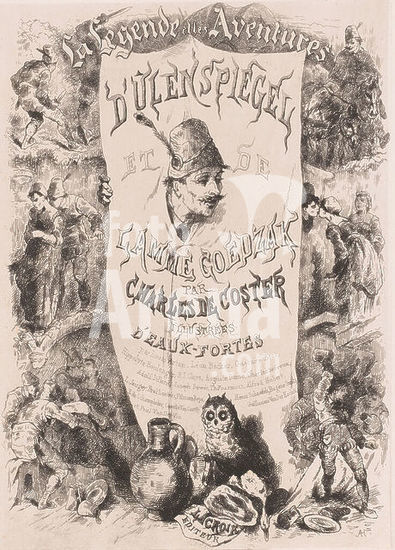
alb29081218 Title page for: Charles de Coster, La légende et des aventures héroiques, joyeuses et glorieuses d'Ulenspiegel et de Lamme Goedzak au pays de Flandres et ailleurs, 1869, Various illustrations from the life of Till Eulenspiegel, surrounding a portrait of Eulenspiegel, print, title page, printmaker: Alfred Hubert, printer (person): Alfred Cadart, Paris, publisher: Librairie Internationale, Alfred Hubert, Alfred Cadart, Librairie Internationale, printmaker, printer (person), publisher, paper, chine collé, etching, height 258 mm x width 187 mm, Title page for: Coster, Charles de. The story of the heroic adventures, joys and glories of Ulenspiegel and Lamme Goedzak and the fortunes of Flandres and ailleurs. 2nd edition. Paris: Librairie Internationale, 1869., inn, coffee-house, public house, (lovers) kissing each other, Eulenspiegel, A central vertical banner with a man's head wearing a feathered cap dominates the image, flanked by detailed crowded vignettes of figures engaged in various activities; to the left, small scenes show people in close interaction, including a pair in an embrace and others in animated poses, and to the right, groups of figures climb, converse at a doorway, and ride on horseback. Around the lower foreground are still-life objects including a large jug, a smaller container, a loaf or round object of food, and a perched owl facing forward. The composition is rendered in fine, dense pen-and-ink lines with cross-hatching creating texture and shadow across clothing, faces, and rocky or architectural backgrounds, and the overall tone is monochrome on a pale paper.
DC
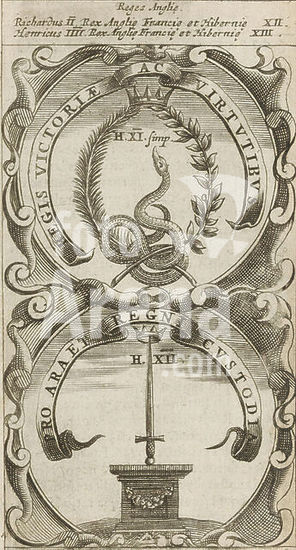
alb29097240 Crowned wreath with snake, Pedestal with crowned sword, Regis Victoriae Ac Virtutibus, Pro Araet Regni Custodia, Symbola Divina et Humana Pontificum Imperatorum Regum, print, book illustration, An emblem with two representations. Above a snake in a wreath of a palm and olive branch. On top of a crown. Under a pedestal with a crowned sword. This concerns foreign exchange of Richard II and Henry IV of England., after print by Aegidius Sadeler (II), 1666, Aegidius Sadeler (II), printmaker, after print by, paper, engraving, letterpress printing, verso with text in letterpress, height 116 mm x width 65 mm, Page from Jacob Typotius, Symbola Divina & Humana Pontificum Imperatorum Regum. Arnhem, JF Hagen, 1666 or from the title edition of 1669 or 1679. The work of Typotius was first published in 1601 with prints by Aegidius Sadeler., Person, Richard II (King of England), Henry IV (King of England), hacking and thrusting weapons: sword, snakes, garland, wreath, A vertical engraving showing two circular framed emblems stacked one above the other within an ornate scrolling border. In the upper circle a crowned wreath of laurel and palm encircles a coiled snake with its head raised, the wreath leaves and palm fronds detailed with fine lines, and a crown sits at the top of the wreath; the surrounding frame is decorated with curved acanthus-like scrolls. In the lower circle a sword stands vertically point down, its blade passing through a small crown at the top and resting on a decorated pedestal with carved floral motifs, the circular frame around it also adorned with flowing scrollwork that matches the overall ornamental border. The image is rendered in monochrome engraving with fine hatching and crosshatching for shading and texture.
DC
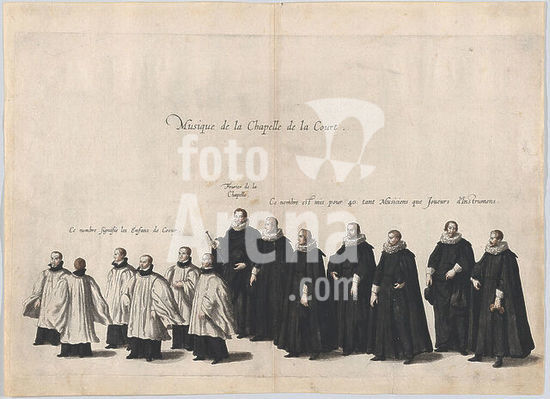
alb3660169 Plate 6: Members of the court chapel choir marching in the funeral procession of Archduke Albert of Austria; from 'Pompa Funebris ... Alberti Pii'. Artist: Cornelis Galle I (Netherlandish, Antwerp 1576-1650 Antwerp); After Jacques Francquart (French, Brussels 1577-1651 Brussels). Dimensions: Sheet: 11 1/4 × 15 3/8 in. (28.5 × 39 cm)Plate: 9 5/8 × 15 1/16 in. (24.5 × 38.2 cm). Published in: Brussels. Date: 1623.Plate from 'Pompa Funebris ... Alberti Pii', after Jacques Francquart, illustrating the funeral procession of Albert the Pious (1559-1621), Archduke of Austria, son of Emperor Maximilian II. 2 sheets pasted together at center.The first edition of this series contains 54 numbered plates and an engraved title page, published in 1623.The second and third editions contain 66 plates and were published in 1728 and 1729 respectively. Museum: Metropolitan Museum of Art, New York, USA.
DC
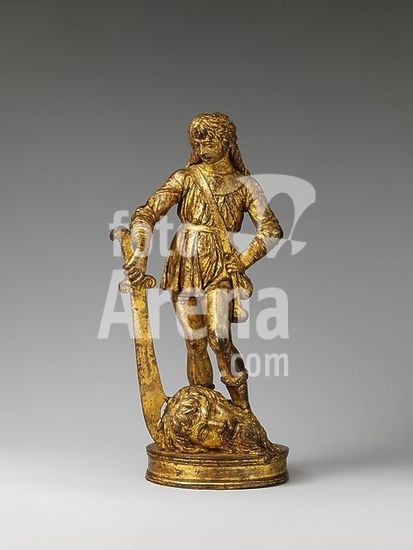
alb3610609 David with the Head of Goliath. Artist: Bartolomeo Bellano (Italian, Padua 1437/38-1496/97 Padua). Culture: Italian, Padua. Dimensions: Overall (confirmed): 11 1/4 × 5 1/4 × 4 7/8 in., 9.7 lb. (28.6 × 13.3 × 12.4 cm, 4.4 kg). Date: 1470-80.This is a key work in the early Renaissance development of bronze statuettes in northern Italy. Its creator, Bartolomeo Bellano, was a disciple of Donatello's, as is documented by a payment in connection with that master's Judith Slaying Holofernes (ca. 1459, Palazzo Vecchio, Florence).[1] His independent work began with a bronze statue of Pope Paul II in Perugia (1466 - 67, now lost) and a series of Old Testament subjects in relief for the choir screen of the basilica of San Antonio (Il Santo) in Padua (1484 - 90), which features small-scale figures standing out in high relief from their backgrounds. As we know from Giorgio Vasari's biography, he went on to execute a number of small metal figures for the pope and for others, and he has been recognized as one of the earliest Italian sculptors to make a specialty of bronze statuettes.[2]David with the Head of Goliath has long been admired as one of Bellano's masterpieces in bronze.[ 3] Its debt to Donatello's famous nude David (ca. 1455, Museo Nazionale del Bargello, Florence) is reflected in the hero's pose with hip swung out and one arm akimbo and the gigantic head of Goliath at his feet. Bellano dressed David in a short tunic with many pleats -- Wilhelm von Bode once described the sculptor's boldly chiseled drapery as like crumpled paper.[4] The youthful victor's accessories include a gorget decorated with a head, probably of Medusa, in a classical allusion; boots rolled down to the calf; and a shoulder bag, whose strap crosses the right shoulder. His weapons are a sling, still weighted by a stone, and a large sword. Having hit his foe with a projectile -- stones scattered on the base give a sense that the battle has just taken place -- David triumphs over his dead opponent. The triangular gash in the giant's forehead indicates the cause of death, while the curved blade is clearly the implement that was used to lop off the giant's head. David's graceful pose, his limbs in contrapposto, emphasizes his youth and suggests serenity in the aftermath of violent conflict.Scholars divide over the relationship of this to other small bronzes by Bellano, notably a variant David in the Philadelphia Museum of Art and a Saint Jerome and the Lion in the Musée du Louvre, Paris. Hans Weihrauch saw the Philadelphia example as more clearly derivative of Donatello and believed it therefore to be earlier than the Museum's David;[5] John Pope-Hennessy followed this line of reasoning in dating the Philadelphia example to about 1466 and the present version later.[6] Museum curator James Draper believed, to the contrary, that the taut pose and sharp faceting of the Museum's statuette align it with such early works by the artist as the Miracle of the Mule relief in Il Santo (1469 - 72) and that the bulkier body, more static composition, and chunkier faceting of the Philadelphia David reflect Bellano's advancing style, as represented by the Saint Jerome in Paris.[ 7] Some scholars wondered whether the Davids under discussion are in fact by two different hands, but Draper sees them as from different phases of one career.[8] Most recently Volker Krahn has reaffirmed the early dating of the Museum's example, calling it Bellano's masterwork in the small bronze format.[9] A number of later versions testify to the continuing esteem in which this sculpture was held well into the sixteenth century.[10][Ian Wardropper. European Sculpture, 1400-1900, in the Metropolitan Museum of Art. New York, 2011, no. 6, pp. 26-29.]Footnotes:[1] Volker Krahn. "Bellano, Bartolomeo." In The Dictionary of Art, edited by Jane Turner, vol. 3, pp. 636-67. New York, 1996, p. 636.[2] Giorgio Vasari. Le vite de' più eccellenti pittori, scultori ed archetettori. 2nd ed. 3 vols. Florence, 1568. 1906 ed., edited by Gaetano Milanesi. 9 vols. Florence, 1906, vol. 2, p. 606.[3] Volker Krahn. "Bellano (Belani; Belanus; Vellano), Bartolomeo." In Allgemeines Künstlerlexikon: Die bildenden Künstler aller Zeiten und Völker, vol. 8, pp. 438-39. Munich, 1994, p. 439.[4] Wilhelm von Bode. "Lo scultore Bartolomeo Bellano da Padova." Archivio storico dell'arte 4 (1891), pp. 397-416, p. 412.[5] Hans R. Weihrauch. Europäische Bronzestatuetten, 15.-18. Jahrhundert. Braunschweig, 1967, pp. 97 - 98.[6] John Pope-Hennessy. Luca della Robbia. Itahca, N.Y., 1980, p. 264, under no. 57.[7] Draper in Italian Renaissance Sculpture in the Time of Donatello: An Exhibition to Commemorate the 600th Anniversary of Donatello's Birth and the 100th Anniversary of the Detroit Institute of Arts. Exh. cat. Detroit Institute of Arts; Kimbell Art Museum, Fort Worth; 1985-86. Detroit, 1985, pp. 225 - 26, no. 82.[8] Charles Avery. "Donatello Celebrations: A Major Exhibition at Detroit, Fort Worth and Florence." Apollo 123 (January 1986), pp. 14-18, p. 18; Bruce Boucher. "Detroit and Fort Worth: Sculpture in the Time of Donatello." Burlington Magazine 128 (January 1986), pp. 67-68, p. 68. Draper dates the Philadelphia and Paris bronzes to the time of Bellano's Monument to Pietro Roccabonella in the church of San Francesco, Padua (finished in 1498), on the basis of "a markedly blockier approach to modeling"; James David Draper. Bertoldo di Giovanni, Sculptor of the Medici Household: Critical Reappraisal and Catalogue Raisonné. Columbia, Mo., 1992, pp. 35 - 36.[9] Volker Krahn in Von allen Seiten schön: Bronzen der Renaissance und des Barock. Wilhelm von Bode zum 150. Geburstag. Exh. cat. edited by Volker Krahn. Altes Museum, Berlin; 1995-96. Berlin, 1995, p. 136.[10] John Pope-Hennessy. The Frick Collection: An Illustrated Catalogue. Val. 3, Sculpture: Italian. New York, 1970, p. 68, lists the known versions. After that book was published, another version came up for sale at Sotheby Parke Bernet, New York, March 23 - 24, 1973, no. 94. Museum: Metropolitan Museum of Art, New York, USA.
DC
alb3641099 Plate 53: Eight figures marching in the funeral procession of Archduke Albert of Austria; from 'Pompa Funebris ... Alberti Pii'. Artist: Cornelis Galle I (Netherlandish, Antwerp 1576-1650 Antwerp); After Jacques Francquart (French, Brussels 1577-1651 Brussels). Dimensions: Sheet: 11 1/4 × 15 3/8 in. (28.5 × 39 cm)Plate: 9 13/16 × 14 15/16 in. (25 × 38 cm). Published in: Brussels. Date: 1623.Plate from 'Pompa Funebris ... Alberti Pii', after Jacques Francquart, illustrating the funeral procession of Albert the Pious (1559-1621), Archduke of Austria, son of Emperor Maximilian II. 2 sheets pasted together at center.The first edition of this series contains 54 numbered plates and an engraved title page, published in 1623.The second and third editions contain 66 plates and were published in 1728 and 1729 respectively. Museum: Metropolitan Museum of Art, New York, USA.
DC

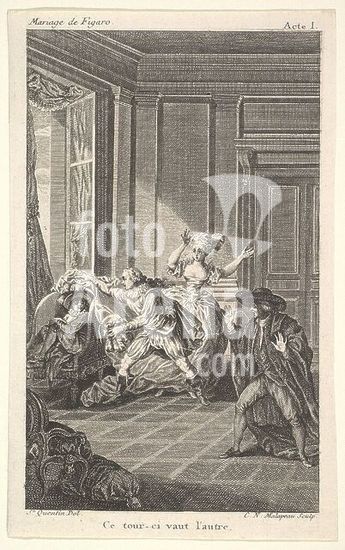
alb3678811 A man curled up in a chair looks toward another man who approaches him from the left in an interior setting, a woman and a man stand nearby with their hands raised, from a series of five illustrations after Jacques Philippe Joseph de Saint-Quentin for 'The mad day, or the marriage of Figaro' (La Folle journée, ou le mariage de Figaro) by Pierre Augustin Caron de Beaumarchais. Artist: After Jacques Philippe Joseph de Saint Quentin (French, born Paris, 1738); Claude Nicolas Malapeau (French, Paris 1755-1803 Paris). Dimensions: sheet: 6 5/16 x 3 9/16 in. (16 x 9 cm). Series/Portfolio: Five illustrations after Jacques Philippe Joseph de Saint-Quentin for 'The mad day, or the marriage of Figaro' (La Folle journée, ou le mariage de Figaro) by Pierre Augustin Caron de Beaumarchais. Date: ca. 1784. Museum: Metropolitan Museum of Art, New York, USA.
DC
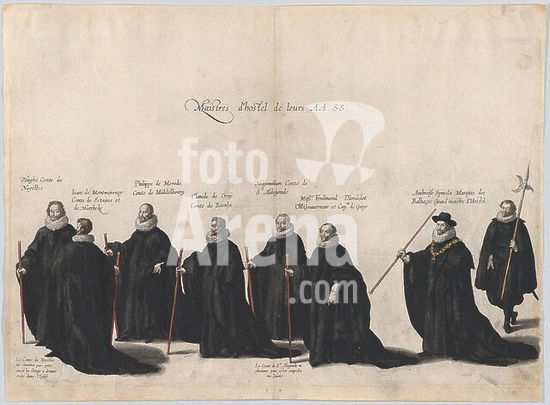
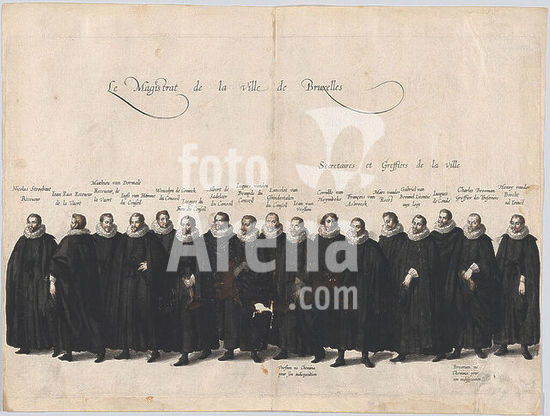
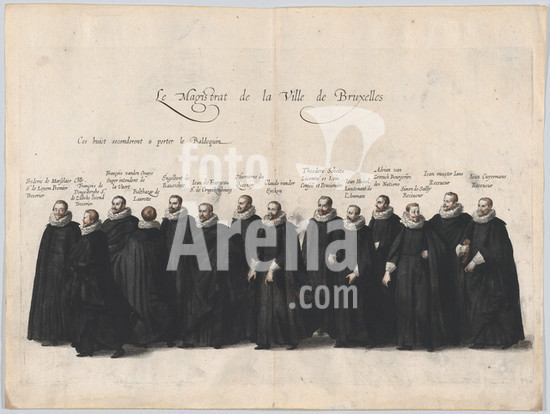
alb3665921 Plate 64: The magistrates of the city of Brussels marching in the funeral procession of Archduke Albert of Austria; from 'Pompa Funebris ... Alberti Pii'. Artist: Cornelis Galle I (Netherlandish, Antwerp 1576-1650 Antwerp); After Jacques Francquart (French, Brussels 1577-1651 Brussels). Dimensions: Sheet: 11 1/4 in. × 15 in. (28.5 × 38.1 cm)Plate: 9 13/16 × 14 11/16 in. (25 × 37.3 cm). Published in: Brussels. Date: 1623.Plate from 'Pompa Funebris ... Alberti Pii', after Jacques Francquart, illustrating the funeral procession of Albert the Pious (1559-1621), Archduke of Austria, son of Emperor Maximilian II. 2 sheets pasted together at center.The first edition of this series contains 54 numbered plates and an engraved title page, published in 1623.The second and third editions contain 66 plates and were published in 1728 and 1729 respectively. Museum: Metropolitan Museum of Art, New York, USA.
DC

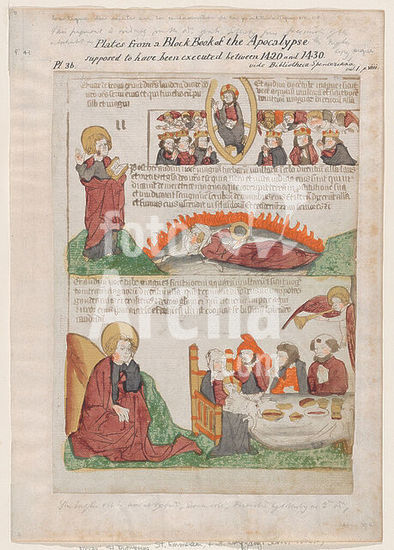
alb3632272 Song of Praise in Heaven over the Fall of the Whore of Babylon; The Wedding of the Lamb from an Apocalypse block book, 2nd edition. Artist: Anonymous, Netherlandish, 15th century. Dimensions: Sheet: 11 in. × 8 1/16 in. (28 × 20.5 cm). Date: 1440-1450. Museum: Metropolitan Museum of Art, New York, USA.
DC

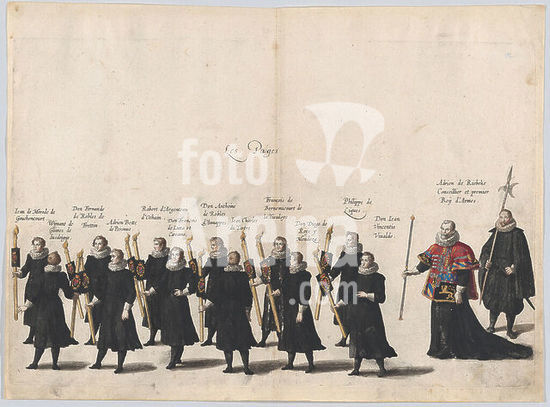
alb3634801 Plate 54: The pages marching in the funeral procession of Archduke Albert of Austria; from 'Pompa Funebris ... Alberti Pii'. Artist: Cornelis Galle I (Netherlandish, Antwerp 1576-1650 Antwerp); After Jacques Francquart (French, Brussels 1577-1651 Brussels). Dimensions: Sheet: 11 1/4 × 15 3/16 in. (28.5 × 38.6 cm)Plate: 9 3/4 × 14 11/16 in. (24.7 × 37.3 cm). Published in: Brussels. Date: 1623.Plate from 'Pompa Funebris ... Alberti Pii', after Jacques Francquart, illustrating the funeral procession of Albert the Pious (1559-1621), Archduke of Austria, son of Emperor Maximilian II. 2 sheets pasted together at center.The first edition of this series contains 54 numbered plates and an engraved title page, published in 1623.The second and third editions contain 66 plates and were published in 1728 and 1729 respectively. Museum: Metropolitan Museum of Art, New York, USA.
DC

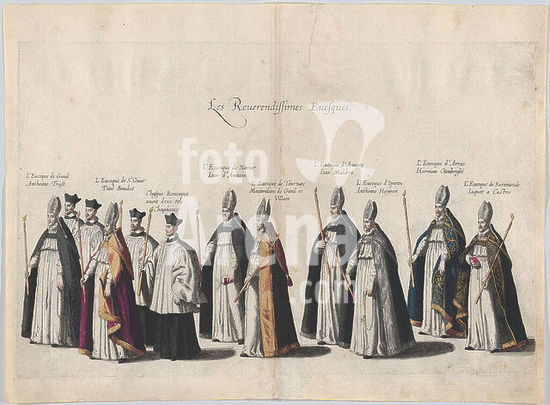
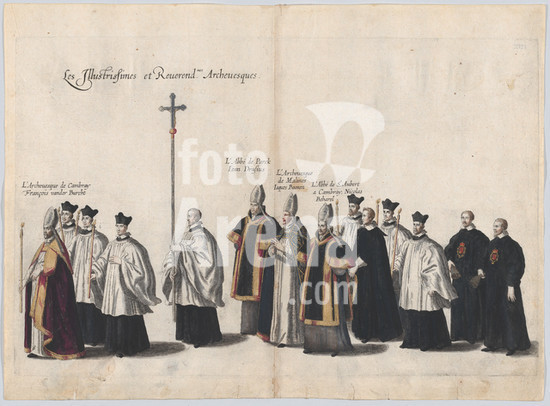
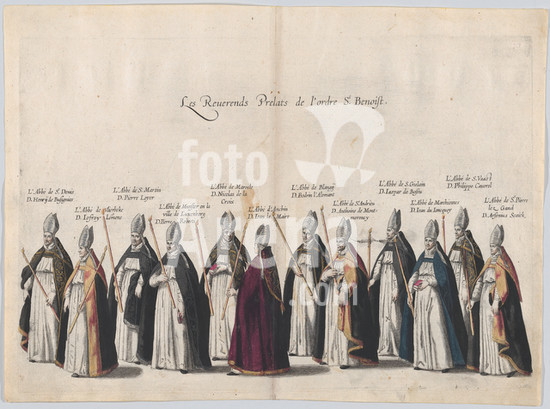
alb3640583 Plate 12: Members of the clergy marching in the funeral procession of Archduke Albert of Austria; from 'Pompa Funebris ... Alberti Pii'. Artist: Cornelis Galle I (Netherlandish, Antwerp 1576-1650 Antwerp); After Jacques Francquart (French, Brussels 1577-1651 Brussels). Dimensions: Sheet: 11 3/16 × 15 1/4 in. (28.4 × 38.8 cm)Plate: 10 3/16 × 14 9/16 in. (25.8 × 37 cm). Published in: Brussels. Date: 1623.Plate from 'Pompa Funebris ... Alberti Pii', after Jacques Francquart, illustrating the funeral procession of Albert the Pious (1559-1621), Archduke of Austria, son of Emperor Maximilian II. 2 sheets pasted together at center.The first edition of this series contains 54 numbered plates and an engraved title page, published in 1623.The second and third editions contain 66 plates and were published in 1728 and 1729 respectively. Museum: Metropolitan Museum of Art, New York, USA.
DC

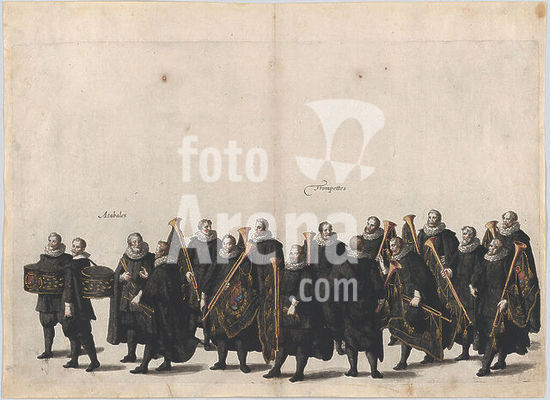
alb3657587 Plate 28: Drummers and trumpet players marching in the funeral procession of Archduke Albert of Austria; from 'Pompa Funebris ... Alberti Pii'. Artist: Cornelis Galle I (Netherlandish, Antwerp 1576-1650 Antwerp); After Jacques Francquart (French, Brussels 1577-1651 Brussels). Dimensions: Sheet: 11 1/4 × 15 5/16 in. (28.5 × 38.9 cm)Plate: 9 5/8 × 14 13/16 in. (24.5 × 37.6 cm). Published in: Brussels. Date: 1623.Plate from 'Pompa Funebris ... Alberti Pii', after Jacques Francquart, illustrating the funeral procession of Albert the Pious (1559-1621), Archduke of Austria, son of Emperor Maximilian II. 2 sheets pasted together at center.The first edition of this series contains 54 numbered plates and an engraved title page, published in 1623.The second and third editions contain 66 plates and were published in 1728 and 1729 respectively. Museum: Metropolitan Museum of Art, New York, USA.
DC

alb3676501 Tutte l'opere d'architettura. Author: Sebastiano Serlio (Italian, Bologna 1475-1554 Fontainebleau). Dimensions: Book: 9 3/4 × 7 3/16 × 2 9/16 in. (24.8 × 18.2 × 6.5 cm)Sheet: 9 9/16 x 6 7/8 in. (24.3 x 17.5 cm). Published in: Venice. Publisher: Francesco de' Franceschi (Italian, active 16th century). Date: 1584.As the first practical and fully illustrated "handbook" of architecture including plans and elevations, Serlio's work, begun in 1537 and published book by book, had a profound impact on the development of Renaissance architecture. In the seventh book, on "Miscellenea" or "Accidenti" (1584), containing a section on villas, Serlio divided his designs into buildings in the city and those in the countryside. Unlike Palladio, he offered different designs for private dwellings distinguishing between various socioeconomic levels in society, a principle worked out in further detail in his unpublished sixth book on domestic architecture (the completed manuscript of which is kept in the Avery Library at Columbia University, New York). Libro Estraordinaria, p. 17, Rustic Gate, "Questa porta rien del Dorico del Corinthio, del Rustico...":Serlio's Libro estraordinario, the sixth book in this first edition of his complete works, deals with the design of gateways. His model for a dramatic rustic gate on Page 17 of Book 6 is quite unusual in that it breaks all the rules of classical architecture, including the order of columns and principles of decoration. Inspired by the often eccentric designs of contemporary Mannerist architecture, Serlio combined rough elements with the more traditional treatment of the Doric order to stress the difference between nature and artifice. Entirely appropriate to the entry of a villa-park, his gate is designed in a heavy rustic manner with a touch of brutishness, which Serlio called bestiale, underlined by the bulls' heads set in the cornerstones of the archway.Libro VII, p. 47, "Della undecima casa fuori della città Capitolo XIX.":The print on Page 47 of Book 6 depicts Serlio's project for a "casa fuori della città" or villa for the wealthy patron on the outskirts of the city. The villa has a perfect square plan with a large courtyard at the center and in front. The villa's front elevation, shown here, consists of an open gallery flanked by pavilions. Serlio specifically stressed the importance of open loggias instead of closed facades in houses "alla campagna," since they provide easy access to the outdoors and delightful prospects of the natural surroundings. Museum: Metropolitan Museum of Art, New York, USA.
DC

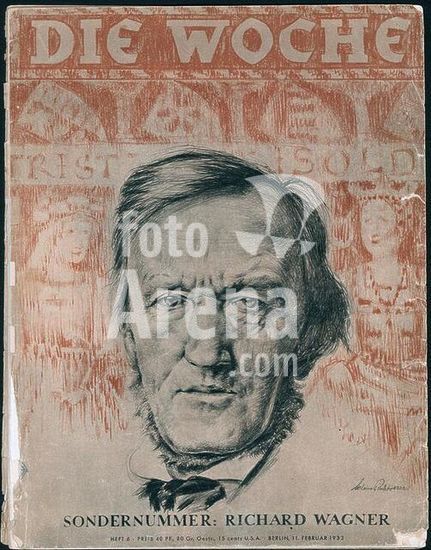
akg1990820 Wagner, Richard; German composer and conductor, Leipzig. (Germany) 22.5.1813 - Venice (Italy) 13.2.1883. Portrait of Richard Wagner in front of an illustration to his opera "Tristan and Isolde". Print after a drawing by Klaus Richter (1887-1948). Front cover of the journal "Die Woche", special edition:. Richard Wagner, no. 6, vol. 35, Berlin, 11.2.1933. Berlin, Sammlung Archiv für Kunst und Geschichte. Museum: Berlin, Sammlung Archiv für Kunst und Geschichte. Copyright: This artwork is not in the public domain. It is your responsibility to obtain all necessary third party permissions from the copyright handler in your country prior to publication. © Klaus Richter.
DC
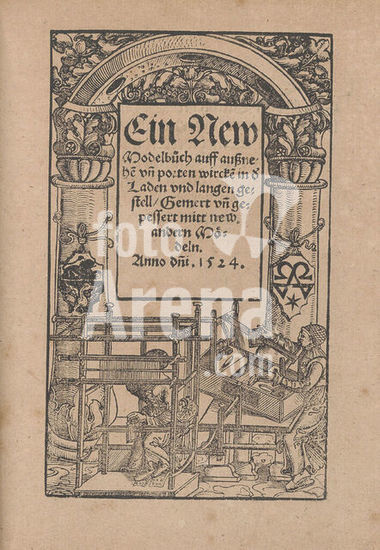
alb3669887 Ein new Modelbuch..., title page (recto). Dimensions: 7 5/16 x 5 3/8 in. (18.5 x 13.6 cm). Publisher: Johann Schönsperger the Younger (German, active 1510-30). Date: October 22, 1524.Published by Johann Sch?nsperger the Younger, Zwickau. Title is printed in black inside of a rectangle at the center of the page. Title is surrounded by an architectural frame with decorative foliage elements. At the bottom of the page are 2 women producing textiles on looms.See Lotz-Die Entstehungen der Modelbucher -in Zeitscrift fur Bucherfreunde 1926. Kumpst - Das Alteste alle Bechannten Modelbucher (Gastel 1525). Lichtwark - Das Modelbuchs der Peter Guntel- Studien zur Kunst geschicte. Leipzig, 1885. Tottinger - Zum Holzschnittwerke Geroge Lembergers (Note on title border and cut on verso) Mitt. Graph. Kunste 1906, v. XXIV, pp. 1-9. Zimmerman - Beitrage zur Bibel illustration pp. 26-27, note 60. According to Lotz (loc.cit) the borders of the 1524 book might well have been drawn by Lucas Cranach the Elder, and cut in his Wittenger shop. First of five editions of the second (and earliest dated) printed pattern book. A complete copy of the fifth edition is in the MMA (18.66.12). Rottinger in the Mitt. loc.cit. attributes the title border to Lemberger. Zimmerman, however, does not agree and says that this and several other borders are more likely to be the work of the Master of the Jacob's Ladder. Title has been restored (arm of woman on right and left column). 16 leaves, unnumbered (verso last leaf blank). The two middle signatures are from Guentels' books (Lotz 3 and 60. See 1529 and 1532, 1544 eds. in MMA. They must be later than 1544 or at least printed after the MMA 1544. Note break b 3 recto - same cut in 1544 shows break just beginning. Watermark: Not found in Briquet. Does not agree with mark cited by Lotz in Zeitschrift fur Bucherfreunde 1926, p. 49, as being in book 1a and 1b of his 1933 biliography - a Gothic Pnith quartre - foil. Marks cited by Lotz in L.zeeL.5 in MMA, (M.P.B. Thy, 1960). Museum: Metropolitan Museum of Art, New York, USA.
DC

alb3638303 "Bamboo" section, from the Mustard Seed Garden Manual of Painting (Kaishien gafu). Artist: Wang Gai (Chinese, 1645-1710). Culture: China. Dimensions: After conservation: 11 3/16 × 6 7/8 × 1/2 in. (28.4 × 17.5 × 1.3 cm). Date: 1817 (Jiaqing 2nd edition).This is a later Japanese reprint of one of the most famous drawing manuals in East Asian history. The Met is fortunate to have one volume (bird-and-flower images) of an extremely rare mid-eighteenth century edition from the Vershbow Collection, but otherwise we are lacking a good array of Japanese versions. This volume has been preserved by the insertion of archival quality paper between pages, and rebound to make it safe for displaying in the future. Museum: Metropolitan Museum of Art, New York, USA.
DC

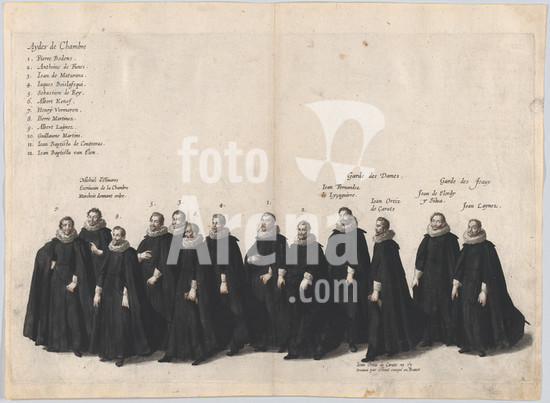
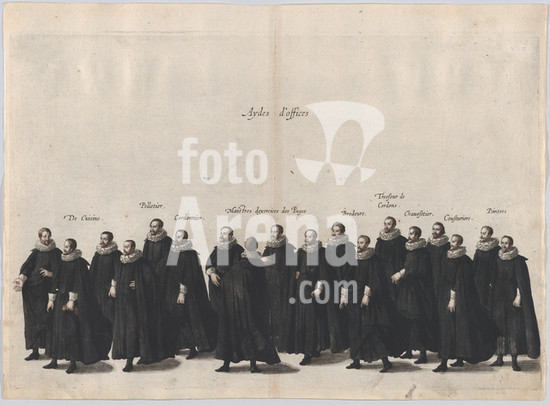
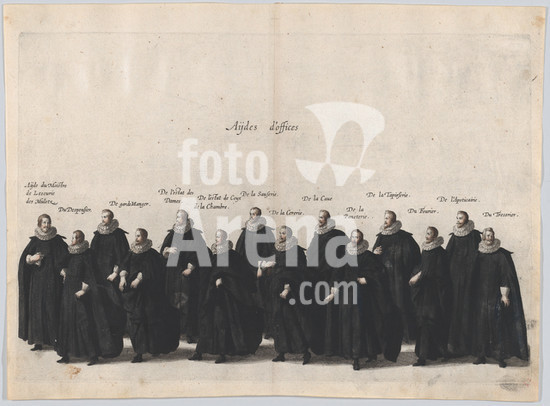
alb3679827 Plate 22: Chamber aids marching in the funeral procession of Archduke Albert of Austria; from 'Pompa Funebris ... Alberti Pii'. Artist: Cornelis Galle I (Netherlandish, Antwerp 1576-1650 Antwerp); After Jacques Francquart (French, Brussels 1577-1651 Brussels). Dimensions: Sheet: 11 3/16 × 15 5/16 in. (28.4 × 38.9 cm)Plate: 9 7/8 × 14 11/16 in. (25.1 × 37.3 cm). Published in: Brussels. Date: 1623.Plate from 'Pompa Funebris ... Alberti Pii', after Jacques Francquart, illustrating the funeral procession of Albert the Pious (1559-1621), Archduke of Austria, son of Emperor Maximilian II. 2 sheets pasted together at center.The first edition of this series contains 54 numbered plates and an engraved title page, published in 1623.The second and third editions contain 66 plates and were published in 1728 and 1729 respectively. Museum: Metropolitan Museum of Art, New York, USA.
DC

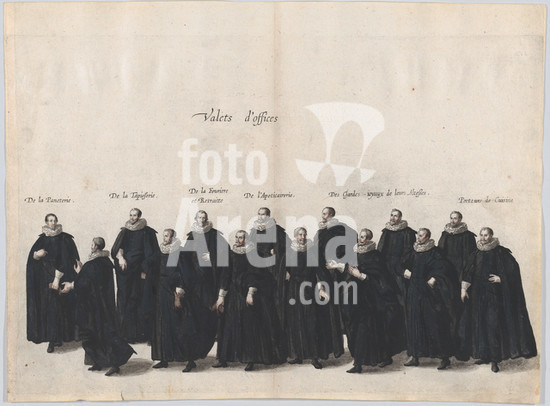
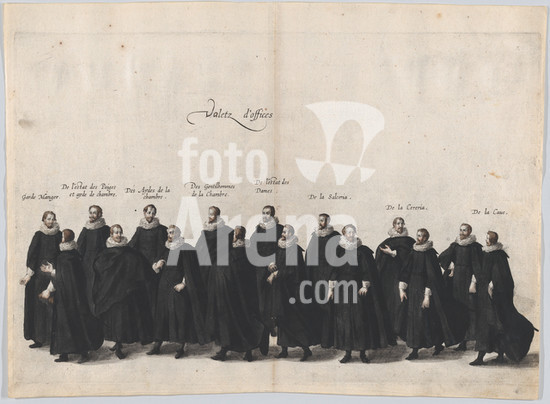
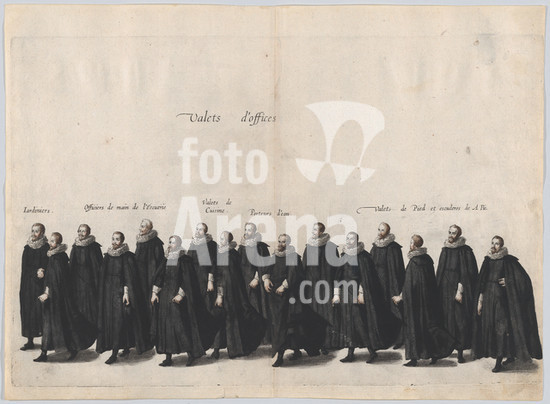
alb3677576 Plate 16: Valets marching in the funeral procession of Archduke Albert of Austria; from 'Pompa Funebris ... Alberti Pii'. Artist: Cornelis Galle I (Netherlandish, Antwerp 1576-1650 Antwerp); After Jacques Francquart (French, Brussels 1577-1651 Brussels). Dimensions: Sheet: 11 3/16 × 15 3/16 in. (28.4 × 38.5 cm)Plate: 10 × 15 1/16 in. (25.4 × 38.2 cm). Published in: Brussels. Date: 1623.Plate from 'Pompa Funebris ... Alberti Pii', after Jacques Francquart, illustrating the funeral procession of Albert the Pious (1559-1621), Archduke of Austria, son of Emperor Maximilian II. 2 sheets pasted together at center.The first edition of this series contains 54 numbered plates and an engraved title page, published in 1623.The second and third editions contain 66 plates and were published in 1728 and 1729 respectively. Museum: Metropolitan Museum of Art, New York, USA.
DC

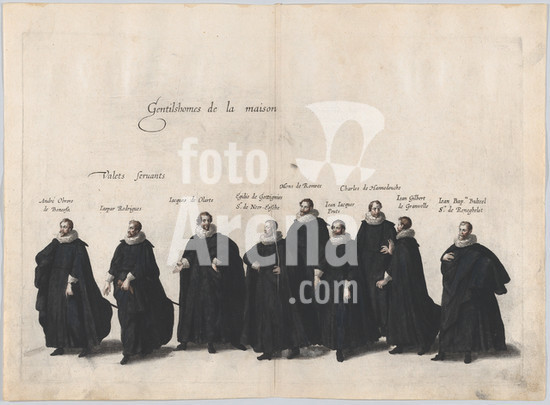
alb3654450 Plate 23: Gentlemen of the house marching in the funeral procession of Archduke Albert of Austria; from 'Pompa Funebris ... Alberti Pii'. Artist: Cornelis Galle I (Netherlandish, Antwerp 1576-1650 Antwerp); After Jacques Francquart (French, Brussels 1577-1651 Brussels). Dimensions: Sheet: 11 3/16 × 15 5/16 in. (28.4 × 38.9 cm)Plate: 9 3/4 × 14 1/16 in. (24.8 × 35.7 cm). Published in: Brussels. Date: 1623.Plate from 'Pompa Funebris ... Alberti Pii', after Jacques Francquart, illustrating the funeral procession of Albert the Pious (1559-1621), Archduke of Austria, son of Emperor Maximilian II. 2 sheets pasted together at center.The first edition of this series contains 54 numbered plates and an engraved title page, published in 1623.The second and third editions contain 66 plates and were published in 1728 and 1729 respectively. Museum: Metropolitan Museum of Art, New York, USA.
DC

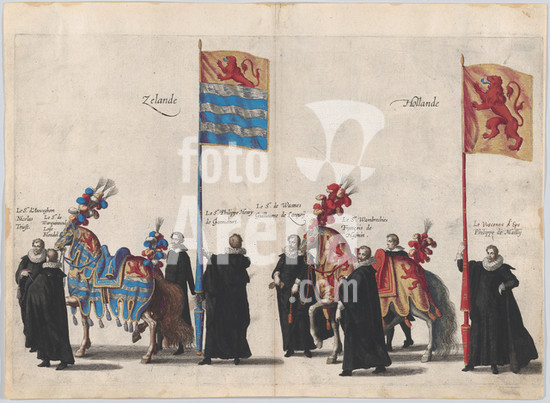
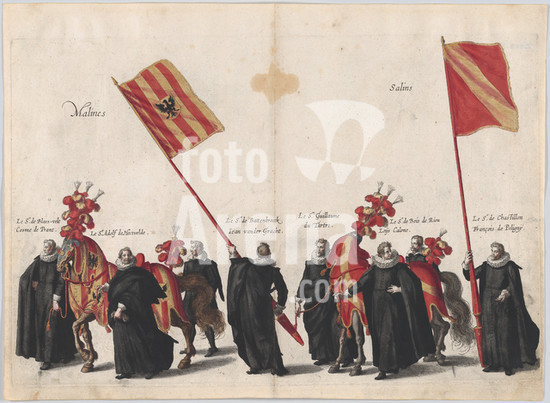
alb3672649 Plate 37: Men with heraldic flags and horses from Zeeland and Holland marching in the funeral procession of Archduke Albert of Austria; from 'Pompa Funebris ... Alberti Pii'. Artist: Cornelis Galle I (Netherlandish, Antwerp 1576-1650 Antwerp); After Jacques Francquart (French, Brussels 1577-1651 Brussels). Dimensions: Sheet: 11 3/16 × 15 5/16 in. (28.4 × 38.9 cm)Plate: 9 7/8 × 14 15/16 in. (25.1 × 37.9 cm). Published in: Brussels. Date: 1623.Plate from 'Pompa Funebris ... Alberti Pii', after Jacques Francquart, illustrating the funeral procession of Albert the Pious (1559-1621), Archduke of Austria, son of Emperor Maximilian II. 2 sheets pasted together at center.The first edition of this series contains 54 numbered plates and an engraved title page, published in 1623.The second and third editions contain 66 plates and were published in 1728 and 1729 respectively. Museum: Metropolitan Museum of Art, New York, USA.
DC

alb3676702 Plate 15: Valets marching in the funeral procession of Archduke Albert of Austria; from 'Pompa Funebris ... Alberti Pii'. Artist: Cornelis Galle I (Netherlandish, Antwerp 1576-1650 Antwerp); After Jacques Francquart (French, Brussels 1577-1651 Brussels). Dimensions: Sheet: 11 3/16 × 15 7/16 in. (28.4 × 39.2 cm)Plate: 9 15/16 × 14 15/16 in. (25.3 × 38 cm). Published in: Brussels. Date: 1623.Plate from 'Pompa Funebris ... Alberti Pii', after Jacques Francquart, illustrating the funeral procession of Albert the Pious (1559-1621), Archduke of Austria, son of Emperor Maximilian II. 2 sheets pasted together at center.The first edition of this series contains 54 numbered plates and an engraved title page, published in 1623.The second and third editions contain 66 plates and were published in 1728 and 1729 respectively. Museum: Metropolitan Museum of Art, New York, USA.
DC

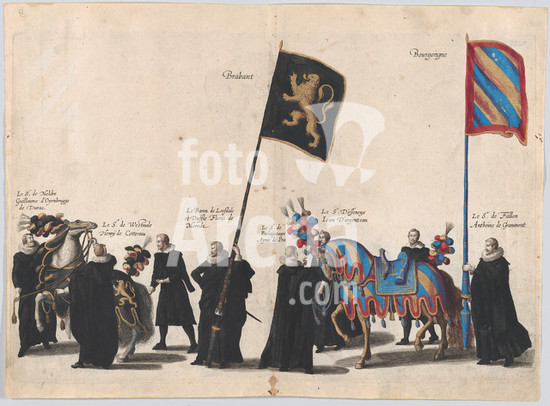
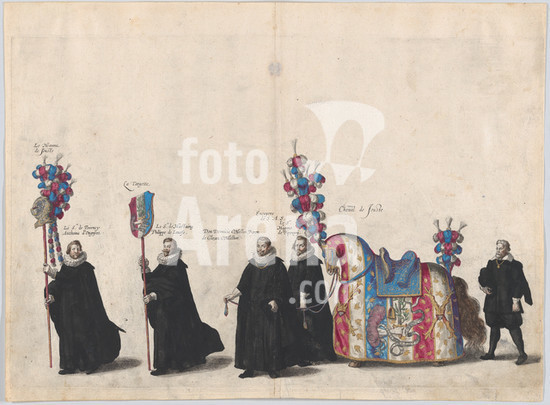
alb3676990 Plate 45: Men with heraldic flags and horses from the House of Brabant and Burgundy marching in the funeral procession of Archduke Albert of Austria; from 'Pompa Funebris ... Alberti Pii'. Artist: Cornelis Galle I (Netherlandish, Antwerp 1576-1650 Antwerp); After Jacques Francquart (French, Brussels 1577-1651 Brussels). Dimensions: Sheet: 11 1/4 × 15 3/8 in. (28.5 × 39 cm)Plate: 9 13/16 × 14 3/4 in. (25 × 37.4 cm). Published in: Brussels. Date: 1623.Plate from 'Pompa Funebris ... Alberti Pii', after Jacques Francquart, illustrating the funeral procession of Albert the Pious (1559-1621), Archduke of Austria, son of Emperor Maximilian II. 2 sheets pasted together at center.The first edition of this series contains 54 numbered plates and an engraved title page, published in 1623.The second and third editions contain 66 plates and were published in 1728 and 1729 respectively. Museum: Metropolitan Museum of Art, New York, USA.
DC

alb3671181 Plate 13: Members of the clergy marching in the funeral procession of Archduke Albert of Austria; from 'Pompa Funebris ... Alberti Pii'. Artist: Cornelis Galle I (Netherlandish, Antwerp 1576-1650 Antwerp); After Jacques Francquart (French, Brussels 1577-1651 Brussels). Dimensions: Sheet: 11 3/16 × 15 1/4 in. (28.4 × 38.8 cm)Plate: 9 1/2 × 14 11/16 in. (24.1 × 37.3 cm). Published in: Brussels. Date: 1623.Plate from 'Pompa Funebris ... Alberti Pii', after Jacques Francquart, illustrating the funeral procession of Albert the Pious (1559-1621), Archduke of Austria, son of Emperor Maximilian II. 2 sheets pasted together at center.The first edition of this series contains 54 numbered plates and an engraved title page, published in 1623.The second and third editions contain 66 plates and were published in 1728 and 1729 respectively. Museum: Metropolitan Museum of Art, New York, USA.
DC

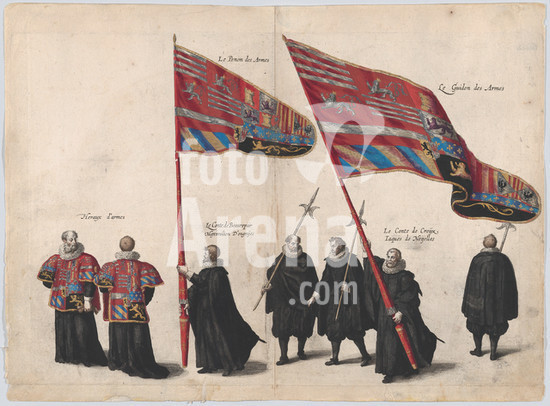
alb3628802 Plate 48: Men bearing arms and heraldic flags marching in the funeral procession of Archduke Albert of Austria; from 'Pompa Funebris ... Alberti Pii'. Artist: Cornelis Galle I (Netherlandish, Antwerp 1576-1650 Antwerp); After Jacques Francquart (French, Brussels 1577-1651 Brussels). Dimensions: Sheet: 11 1/4 × 15 3/16 in. (28.5 × 38.6 cm)Plate: 9 15/16 × 14 15/16 in. (25.2 × 38 cm). Published in: Brussels. Date: 1623.Plate from 'Pompa Funebris ... Alberti Pii', after Jacques Francquart, illustrating the funeral procession of Albert the Pious (1559-1621), Archduke of Austria, son of Emperor Maximilian II. 2 sheets pasted together at center.The first edition of this series contains 54 numbered plates and an engraved title page, published in 1623.The second and third editions contain 66 plates and were published in 1728 and 1729 respectively. Museum: Metropolitan Museum of Art, New York, USA.
DC

alb3656825 Plate 11: Members of the clergy marching in the funeral procession of Archduke Albert of Austria; from 'Pompa Funebris ... Alberti Pii'. Artist: Cornelis Galle I (Netherlandish, Antwerp 1576-1650 Antwerp); After Jacques Francquart (French, Brussels 1577-1651 Brussels). Dimensions: Sheet: 11 3/16 × 15 3/8 in. (28.4 × 39 cm)Plate: 9 15/16 × 14 7/16 in. (25.2 × 36.6 cm). Published in: Brussels. Date: 1623.Plate from 'Pompa Funebris ... Alberti Pii', after Jacques Francquart, illustrating the funeral procession of Albert the Pious (1559-1621), Archduke of Austria, son of Emperor Maximilian II. 2 sheets pasted together at center.The first edition of this series contains 54 numbered plates and an engraved title page, published in 1623.The second and third editions contain 66 plates and were published in 1728 and 1729 respectively. Museum: Metropolitan Museum of Art, New York, USA.
DC

alb3667698 Plate 63: The magistrates of the city of Brussels marching in the funeral procession of Archduke Albert of Austria; from 'Pompa Funebris ... Alberti Pii'. Artist: Cornelis Galle I (Netherlandish, Antwerp 1576-1650 Antwerp); After Jacques Francquart (French, Brussels 1577-1651 Brussels). Dimensions: Sheet: 11 1/4 in. × 15 in. (28.5 × 38.1 cm)Plate: 9 5/16 × 14 1/8 in. (23.6 × 35.9 cm). Published in: Brussels. Date: 1623.Plate from 'Pompa Funebris ... Alberti Pii', after Jacques Francquart, illustrating the funeral procession of Albert the Pious (1559-1621), Archduke of Austria, son of Emperor Maximilian II. 2 sheets pasted together at center.The first edition of this series contains 54 numbered plates and an engraved title page, published in 1623.The second and third editions contain 66 plates and were published in 1728 and 1729 respectively. Museum: Metropolitan Museum of Art, New York, USA.
DC

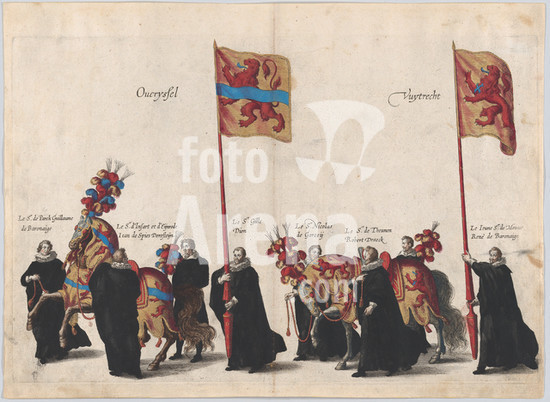
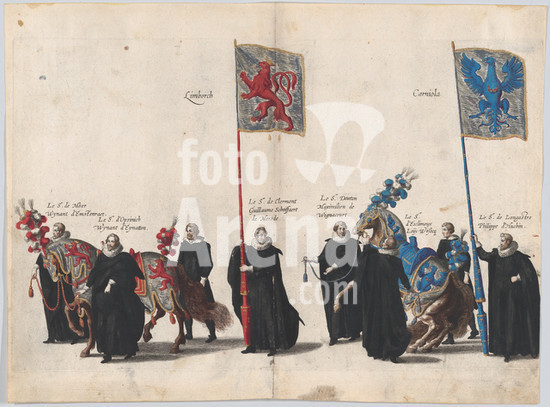
alb3681448 Plate 32: Men with heraldic flags and horses from Overijssel and Utrecht marching in the funeral procession of Archduke Albert of Austria; from 'Pompa Funebris ... Alberti Pii'. Artist: Cornelis Galle I (Netherlandish, Antwerp 1576-1650 Antwerp); After Jacques Francquart (French, Brussels 1577-1651 Brussels). Dimensions: Sheet: 11 3/16 × 15 5/16 in. (28.4 × 38.9 cm)Plate: 9 13/16 × 14 13/16 in. (25 × 37.7 cm). Published in: Brussels. Date: 1623.Plate from 'Pompa Funebris ... Alberti Pii', after Jacques Francquart, illustrating the funeral procession of Albert the Pious (1559-1621), Archduke of Austria, son of Emperor Maximilian II. 2 sheets pasted together at center.The first edition of this series contains 54 numbered plates and an engraved title page, published in 1623.The second and third editions contain 66 plates and were published in 1728 and 1729 respectively. Museum: Metropolitan Museum of Art, New York, USA.
DC

alb3633834 Plate 33: Men with heraldic flags and horses from Mechelen and Salins marching in the funeral procession of Archduke Albert of Austria; from 'Pompa Funebris ... Alberti Pii'. Artist: Cornelis Galle I (Netherlandish, Antwerp 1576-1650 Antwerp); After Jacques Francquart (French, Brussels 1577-1651 Brussels). Dimensions: Sheet: 11 3/16 × 15 3/8 in. (28.4 × 39 cm)Plate: 9 3/4 × 14 13/16 in. (24.8 × 37.7 cm). Published in: Brussels. Date: 1623.Plate from 'Pompa Funebris ... Alberti Pii', after Jacques Francquart, illustrating the funeral procession of Albert the Pious (1559-1621), Archduke of Austria, son of Emperor Maximilian II. 2 sheets pasted together at center.The first edition of this series contains 54 numbered plates and an engraved title page, published in 1623.The second and third editions contain 66 plates and were published in 1728 and 1729 respectively. Museum: Metropolitan Museum of Art, New York, USA.
DC

alb3670206 Plate 51: Members of the court of justice marching in the funeral procession of Archduke Albert of Austria; from 'Pompa Funebris ... Alberti Pii'. Artist: Cornelis Galle I (Netherlandish, Antwerp 1576-1650 Antwerp); After Jacques Francquart (French, Brussels 1577-1651 Brussels). Dimensions: Sheet: 11 3/16 × 15 1/4 in. (28.4 × 38.7 cm)Plate: 9 13/16 × 14 15/16 in. (25 × 37.9 cm). Published in: Brussels. Date: 1623.Plate from 'Pompa Funebris ... Alberti Pii', after Jacques Francquart, illustrating the funeral procession of Albert the Pious (1559-1621), Archduke of Austria, son of Emperor Maximilian II. 2 sheets pasted together at center.The first edition of this series contains 54 numbered plates and an engraved title page, published in 1623.The second and third editions contain 66 plates and were published in 1728 and 1729 respectively. Museum: Metropolitan Museum of Art, New York, USA.
DC

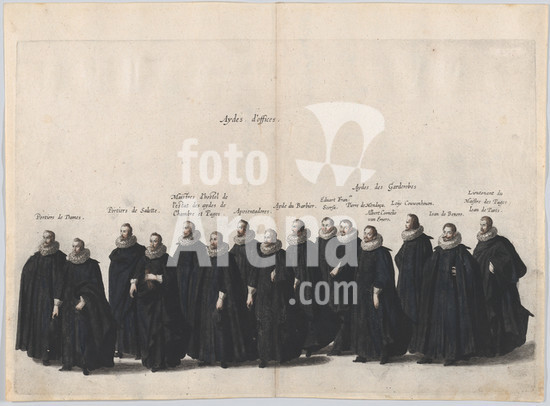
alb3675985 Plate 17: Aides marching in the funeral procession of Archduke Albert of Austria; from 'Pompa Funebris ... Alberti Pii'. Artist: Cornelis Galle I (Netherlandish, Antwerp 1576-1650 Antwerp); After Jacques Francquart (French, Brussels 1577-1651 Brussels). Dimensions: Sheet: 11 3/16 × 15 5/16 in. (28.4 × 38.9 cm)Plate: 10 × 14 15/16 in. (25.4 × 38 cm). Published in: Brussels. Date: 1623.Plate from 'Pompa Funebris ... Alberti Pii', after Jacques Francquart, illustrating the funeral procession of Albert the Pious (1559-1621), Archduke of Austria, son of Emperor Maximilian II. 2 sheets pasted together at center.The first edition of this series contains 54 numbered plates and an engraved title page, published in 1623.The second and third editions contain 66 plates and were published in 1728 and 1729 respectively. Museum: Metropolitan Museum of Art, New York, USA.
DC

alb3651955 Plate 18: Aides marching in the funeral procession of Archduke Albert of Austria; from 'Pompa Funebris ... Alberti Pii'. Artist: Cornelis Galle I (Netherlandish, Antwerp 1576-1650 Antwerp); After Jacques Francquart (French, Brussels 1577-1651 Brussels). Dimensions: Sheet: 11 3/16 × 15 5/16 in. (28.4 × 38.9 cm)Plate: 9 7/8 × 14 1/2 in. (25.1 × 36.8 cm). Published in: Brussels. Date: 1623.Plate from 'Pompa Funebris ... Alberti Pii', after Jacques Francquart, illustrating the funeral procession of Albert the Pious (1559-1621), Archduke of Austria, son of Emperor Maximilian II. 2 sheets pasted together at center.The first edition of this series contains 54 numbered plates and an engraved title page, published in 1623.The second and third editions contain 66 plates and were published in 1728 and 1729 respectively. Museum: Metropolitan Museum of Art, New York, USA.
DC

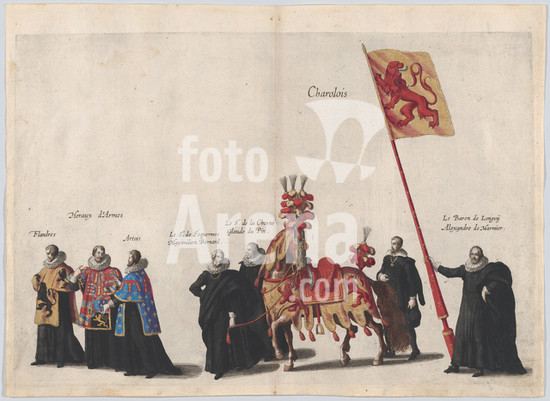
alb3651945 Plate 35: Men with heraldic flags and horses from Charolois marching in the funeral procession of Archduke Albert of Austria; from 'Pompa Funebris ... Alberti Pii'. Artist: Cornelis Galle I (Netherlandish, Antwerp 1576-1650 Antwerp); After Jacques Francquart (French, Brussels 1577-1651 Brussels). Dimensions: Sheet: 11 3/16 × 15 3/8 in. (28.4 × 39 cm)Plate: 10 1/16 × 14 15/16 in. (25.6 × 37.9 cm). Published in: Brussels. Date: 1623.Plate from 'Pompa Funebris ... Alberti Pii', after Jacques Francquart, illustrating the funeral procession of Albert the Pious (1559-1621), Archduke of Austria, son of Emperor Maximilian II. 2 sheets pasted together at center.The first edition of this series contains 54 numbered plates and an engraved title page, published in 1623.The second and third editions contain 66 plates and were published in 1728 and 1729 respectively. Museum: Metropolitan Museum of Art, New York, USA.
DC

alb3641444 Plate 19: Aides marching in the funeral procession of Archduke Albert of Austria; from 'Pompa Funebris ... Alberti Pii'. Artist: Cornelis Galle I (Netherlandish, Antwerp 1576-1650 Antwerp); After Jacques Francquart (French, Brussels 1577-1651 Brussels). Dimensions: Sheet: 11 3/16 × 15 5/16 in. (28.4 × 38.9 cm)Plate: 9 15/16 × 14 9/16 in. (25.2 × 37 cm). Published in: Brussels. Date: 1623.Plate from 'Pompa Funebris ... Alberti Pii', after Jacques Francquart, illustrating the funeral procession of Albert the Pious (1559-1621), Archduke of Austria, son of Emperor Maximilian II. 2 sheets pasted together at center.The first edition of this series contains 54 numbered plates and an engraved title page, published in 1623.The second and third editions contain 66 plates and were published in 1728 and 1729 respectively. Museum: Metropolitan Museum of Art, New York, USA.
DC

alb3646629 Plate 14: Valets marching in the funeral procession of Archduke Albert of Austria; from 'Pompa Funebris ... Alberti Pii'. Artist: Cornelis Galle I (Netherlandish, Antwerp 1576-1650 Antwerp); After Jacques Francquart (French, Brussels 1577-1651 Brussels). Dimensions: Sheet: 11 3/16 × 15 1/4 in. (28.4 × 38.7 cm)Plate: 9 13/16 × 14 15/16 in. (25 × 37.9 cm). Published in: Brussels. Date: 1623.Plate from 'Pompa Funebris ... Alberti Pii', after Jacques Francquart, illustrating the funeral procession of Albert the Pious (1559-1621), Archduke of Austria, son of Emperor Maximilian II. 2 sheets pasted together at center.The first edition of this series contains 54 numbered plates and an engraved title page, published in 1623.The second and third editions contain 66 plates and were published in 1728 and 1729 respectively. Museum: Metropolitan Museum of Art, New York, USA.
DC
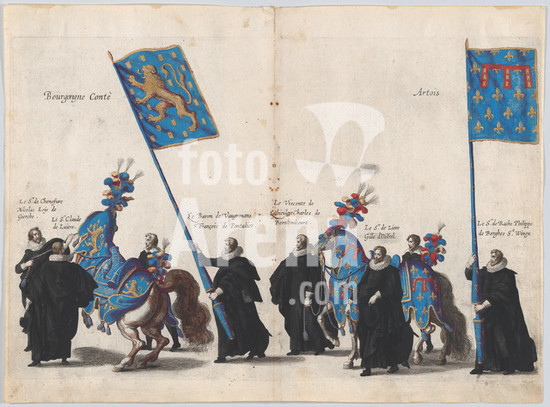
alb3665266 Plate 39: Men with heraldic flags and horses from Burgundy and Artois marching in the funeral procession of Archduke Albert of Austria; from 'Pompa Funebris ... Alberti Pii'. Artist: Cornelis Galle I (Netherlandish, Antwerp 1576-1650 Antwerp); After Jacques Francquart (French, Brussels 1577-1651 Brussels). Dimensions: Sheet: 11 1/4 × 15 1/4 in. (28.5 × 38.7 cm)Plate: 9 9/16 × 14 15/16 in. (24.3 × 37.9 cm). Published in: Brussels. Date: 1623.Plate from 'Pompa Funebris ... Alberti Pii', after Jacques Francquart, illustrating the funeral procession of Albert the Pious (1559-1621), Archduke of Austria, son of Emperor Maximilian II. 2 sheets pasted together at center.The first edition of this series contains 54 numbered plates and an engraved title page, published in 1623.The second and third editions contain 66 plates and were published in 1728 and 1729 respectively. Museum: Metropolitan Museum of Art, New York, USA.
DC

alb3664219 Plate 64: The magistrates of the city of Brussels marching in the funeral procession of Archduke Albert of Austria; from 'Pompa Funebris ... Alberti Pii'. Artist: Cornelis Galle I (Netherlandish, Antwerp 1576-1650 Antwerp); After Jacques Francquart (French, Brussels 1577-1651 Brussels). Dimensions: Sheet: 11 1/4 in. × 15 in. (28.5 × 38.1 cm)Plate: 9 13/16 × 14 11/16 in. (25 × 37.3 cm). Published in: Brussels. Date: 1623.Plate from 'Pompa Funebris ... Alberti Pii', after Jacques Francquart, illustrating the funeral procession of Albert the Pious (1559-1621), Archduke of Austria, son of Emperor Maximilian II. 2 sheets pasted together at center.The first edition of this series contains 54 numbered plates and an engraved title page, published in 1623.The second and third editions contain 66 plates and were published in 1728 and 1729 respectively. Museum: Metropolitan Museum of Art, New York, USA.
DC

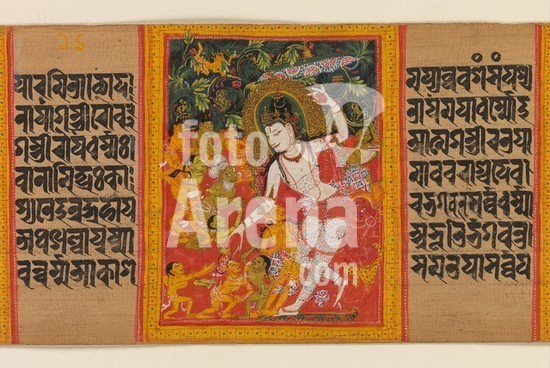
alb3676380 Bodhisattva Avalokiteshvara Dispensing Boons: Folio from an Ashtasahasrika Prajnaparamita Manuscript. Artist: Mahavihara Master. Culture: Bengal, eastern India or Bangladesh. Dimensions: Page: 2 3/4 x 16 7/16 in. (7 x 41.8 cm)Image: 2 1/2 x 1 15/16 in. (6.4 x 4.9 cm). Date: early 12th century.About the ArtistMahavihara Master Active in the early 12th century, in BengalThis master painter of the Pala-era Buddhist monastic tradition is known from one extant palm-leaf manuscript, now shared between New York and Lhasa. The illustrated manuscript is a deluxe edition of the Ashtasahasrika Prajnaparamita (Perfection of Wisdom in 8,000 Verses), a Mahayanist text of profound importance to the development of esoteric Buddhist practice. The paintings that accompany this text display not only highly sophisticated painting skills but also such a sensitivity and empathy for the subject matter that one cannot avoid assuming the artist was a monk, deeply versed in the text he was engaged to illustrate. This pious artistic venture to fulfill a royal commission was probably undertaken in the scriptorium of one of the great monasteries (mahaviharas) of eastern India at the height of Buddhist activity there. The colophon leaf is preserved in Lhasa and, although providing no clue about place or date of production, identifies the edition as "the pious gift of the queen Vihunadevi." As this queen is otherwise unknown, we have no means of constructing a provenance or reign date for her. Nevertheless, naming her as the donor fits a well-established pattern of female royal patrons of Buddhist religious art.The Mahavihara Master displays a practiced ease combined with astute skill and sensitivity, resulting in miniature paintings of dazzling dexterity. His fluid lines and schematized color palette capture the sensuous flexing of the body profiles. The body colors are iconographically prescribed, as is the theatrical use of symbolic gestures (mudras). The subjects are standard, Buddhist saviors performing acts of charity and compassion: bodhisattvas and taras granting boons and expounding the dharma, and Kurukulla protecting the faithful. The choices underscore the essentially talismanic function of these paintings, to extend protection to both the text they accompany, and those who read it.There is evidence, both in the text and beyond, that the Ashtasahasrika Prajnaparamita book became the focus of a cult of veneration and hence, worthy of extravagant embellishment. Certainly, these painted folios, among the oldest surviving masterworks of the Indian tradition, are appropriate to the task. The Mahavihara Master successfully miniaturized compositions originated for large-scale mural painting programs into a book format, averaging 2½ by 3 inches (6.4 x 7.6 cm). That they convey the essence of the Buddhist dharma with grace, gravitas, and a sense of monumentality is all the more remarkable. Museum: Metropolitan Museum of Art, New York, USA.
DC

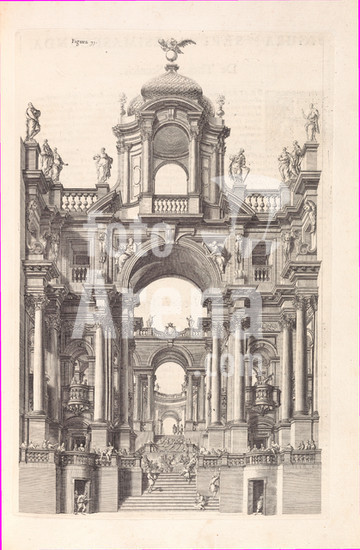
alb3661114 Perspectiva pictorum et architectorum. Author: Written by Andrea Pozzo (Italian, Trento 1642-1709 Vienna). Dedicatee: Dedicated to Leopold I, Holy Roman Emperor (Austrian, 1640-1705). Dimensions: Overall: 16 3/4 x 11 3/8 x 1 5/8 in. (42.5 x 28.9 x 4.2 cm). Engraver: Frontispiece engraved by Vincenzo Mariotti (Italian); Engraved by Benoit Thiboust (French, ?1660-1719?); Foldout figure engraved by Arnold van Westerhout (Flemish, Antwerp 1651-1725 Rome); Foldout figure engraved by Giovanni Girolamo Frezza (Italian, 1659-1741). Published in: Rome. Publisher: Published by Joannis Jacobi Komarek. Date: 1693.The pages of the treatise construct perspective views of increasing complexity and difficulty. The demonstrations display convincing architectural spaces as evidence of the author's belief that beauty in representation originates from suitably proportioned architecture.The letterpress text, arranged in columns, provides Latin and Italian didactic explanation of the numbered plates. Despite a title page dated 1693, which would suggest this is the first edition, this example of Pozzo's treatise appears to date to a later printing. It may be either an example of a "second state" of the first edition version issued ca. 1698 during the preparation of Part II or a composite example that joins a second edition text and illustration behind a title page prepared for the first edition (see Fowler, 207). Komarek issued the fully revised second edition of Part I in 1700. The text and illustrations vary between the first and second editions, and the inclusion of the engraving made after Pozzo's design of the false dome at Sant' Ignazio, Rome does not appear in the first edition. The engraving in this copy bears the date "1702" at the ... Further, the letterpress text on [109] verso provides the description of the perspectival figure on the tipped-in foldout leaf and constructs the relationship between the figure and locates the position of the image within an illustration of the plan of Sant' Ignazio (see figure 93). The other additions to the text elaborate Pozzo's extensive work at the church, which he completed from 1691-94 contemporaneously with the first edition of Part I. Museum: Metropolitan Museum of Art, New York, USA.
DC

alb3639394 The British Architect; or, the Builder's Treasury of Staircases. Author: Written and designed by Abraham Swan (British, active 1745-68). Dimensions: 16 3/4 x 10 1/16 in. (42.5 x 25.5 cm)page: 16 1/8 x 9 1/4 in. (41 x 23.5 cm). Etcher: John Norman (American, born England ca. 1748-1817 Boston). Publisher: Robert Bell (Philadelphia, Pennsylvania). Date: 1775.On December 5, 1774, John Norman, an engraver recently arrived in Philadelphia from London, advertised Proposals for Printing by Subscription, the American edition of Swan's British Architect. Published by Robert Bell, the city's leading printer and bookseller. The volume was available the following June and was the first architectural book printed in America. It faithfully copied Abraham Swan's British Architect, first published in London in 1745, and contains a title page, list of subscribers, twenty pages of text, and sixty folio plates whose images reverse those of the English edition, all but one etched by Norman. Museum: Metropolitan Museum of Art, New York, USA.
DC

Total de Resultados: 40

Página 1 de 1