





















































Busque também em nossas outras coleções:

Data da imagem:
Pauta
ver mais opções...
Agência
Fotógrafo
ver mais opções...
Estado
Cidade
Local
Tipo de licença
Orientação
Coleção

Total de Resultados: 93

Página 1 de 1

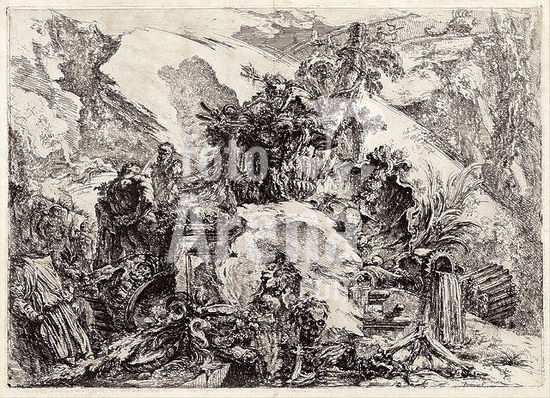
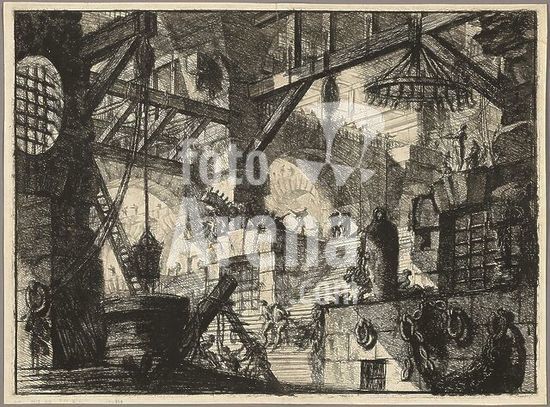
alb3899180 The skeletons. Date/Period: 1747-49, published 1750-early 1770s. Print. Etching, drypoint, burnishing on paper. Height: 39.50 mm (1.55 in); Width: 54.50 mm (2.14 in). Author: Giovanni B. PIRANESI.
DC
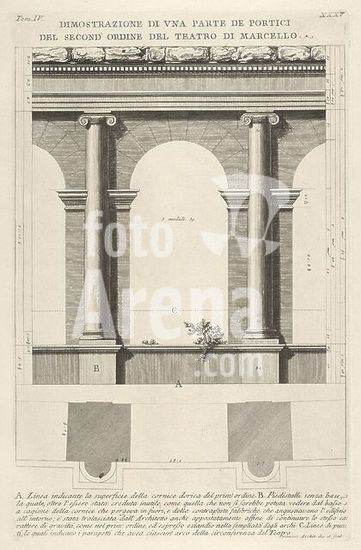
alb3683056 Elevation and plan of the second-order portico at the Theater of Marcellus (Teatro di Marcello), Rome, from the series 'Le Antichità Romane'. Artist: Giovanni Battista Piranesi (Italian, Mogliano Veneto 1720-1778 Rome). Dimensions: Sheet: 20 1/2 x 14 5/8 in. (52 x 37.2 cm)Plate: 15 13/16 x 10 1/8 in. (40.2 x 25.7 cm). Series/Portfolio: Le Antichità Romane. Date: 1756. Museum: Metropolitan Museum of Art, New York, USA.
DC
alb3671668 Portrait of G.B. Piranesi in imitation of an antique bust, from Opere varie di Architettura, prospetive, grotteschi, antichità; inventate, ed incise da Giambattista Piranesi Architetto Veneziano (Various Works of Architecture, perspectives, grotesques, and antiquities, designed and etched by Giambattista Piranesi, Venetian Architect). Artist: Francesco Polanzani (Italian, Noale near Venice 1700-after 1783 Venice (?)). Dimensions: Sheet: 12 13/16 x 18 7/8 in. (32.5 x 48 cm)Plate: 5 1/4 x 10 5/8 in. (13.3 x 27 cm). Publisher: Giovanni Bouchard (French, ca. 1716-1795). Series/Portfolio: Opere Varie di Architettura, prospettive, grotteschi, antichità; inventate, ed incise da Giambattista Piranesi Architetto Veneziani. Sitter: Giovanni Battista Piranesi (Italian, Mogliano Veneto 1720-1778 Rome). Date: 1750. Museum: Metropolitan Museum of Art, New York, USA. Author: Francesco Polanzani.
DC
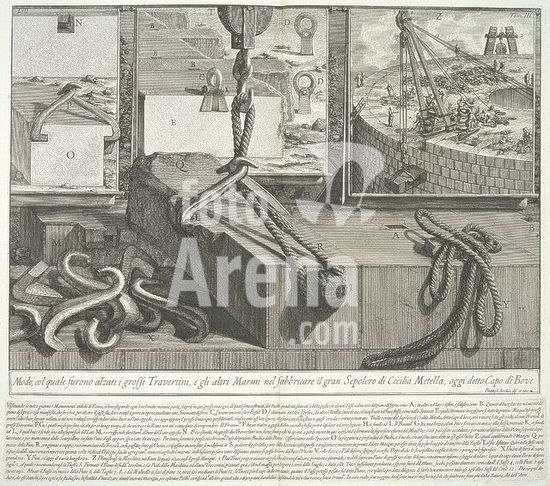
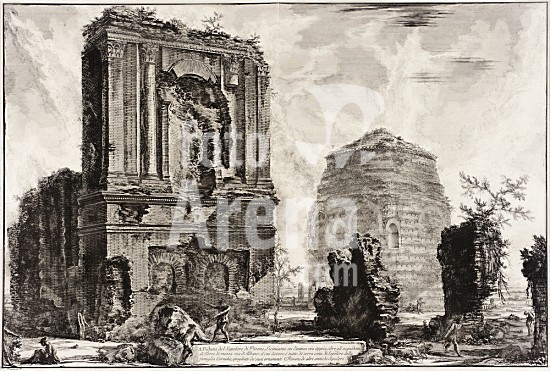
alb3678468 Means by which the large blocks of travertine and marble were lifted during the construction of the large Tomb of Caecilia Metella, from Le Antichità Romane (Roman Antiquities), tome 3, tavola 53. Artist: Giovanni Battista Piranesi (Italian, Mogliano Veneto 1720-1778 Rome); Angelo Rotili. Dimensions: Sheet: 21 1/4 x 30 5/16 in. (54 x 77 cm)Plate: 18 1/8 x 20 7/8 in. (46 x 53 cm). Series/Portfolio: Le Antichità Romane, tome 3. Date: published 1756-57.While Piranesi was at work on the Antichità Romane, the result of years of research into the highly developed engineering skills of the Romans, the first threats to Roman preeminence were heard. In the early 1750s, certain French and British scholars and architects had begun to assert that the Romans were mere imitators of the Greeks, under whom all the arts had attained perfection. A desire to defend the Romans from this charge may lie behind the exaggeration that appears in some of the plates of this publication--here Piranesi makes the mausoleum appear much larger than it actually is and exaggerates the difficulty of its construction. This page provides a good example of Piranesi's novel illustrative techniques: he represents three supplemental views on scrolls of paper hung behind the primary scene, while playfully undermining the illusion he has created by making the hook on the left scroll overlap the edge of the sheet. Museum: Metropolitan Museum of Art, New York, USA.
DC
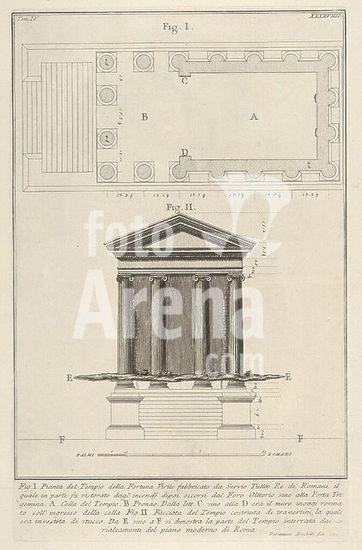
alb3673073 Plan and facade of the Temple of Fortuna Virilis (Tempio della Fortuna Virile), from the series 'Le Antichità Romane'. Artist: Giovanni Battista Piranesi (Italian, Mogliano Veneto 1720-1778 Rome). Dimensions: Sheet: 20 3/8 x 14 3/4 in. (51.8 x 37.4 cm)Plate: 9 3/4 x 10 1/8 in. (24.7 x 25.7 cm). Series/Portfolio: Le Antichità Romane. Date: 1756. Museum: Metropolitan Museum of Art, New York, USA.
DC
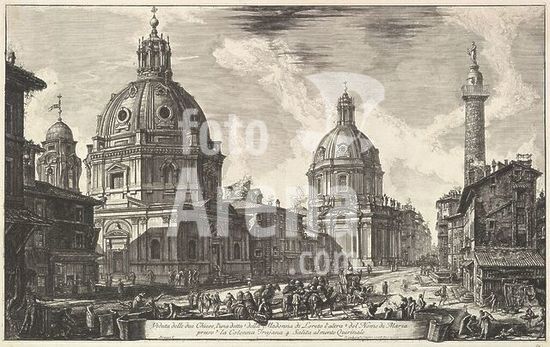
alb3679228 Two churches near Trajan's column, S. Maria di Loreto and Santissimo Nome di Maria (Veduta delle due chiesa, l'una detta della Madonna di Loreto, l'altra del nome di Maria, presso la Colonna Trajana). Artist: Giovanni Battista Piranesi (Italian, Mogliano Veneto 1720-1778 Rome). Series/Portfolio: Vedute di Roma (Views of Rome). Date: ca. 1762. Museum: Metropolitan Museum of Art, New York, USA.
DC
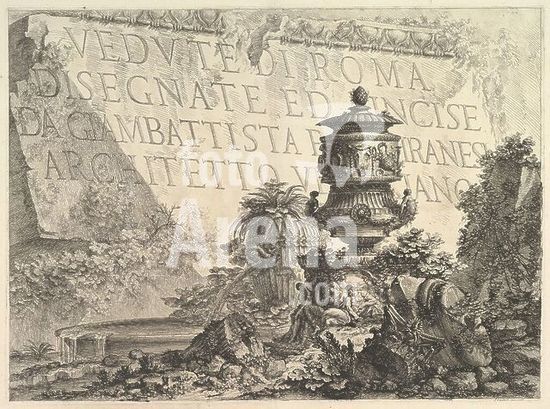
alb3672748 Frontispiece (Title page). Artist: Giovanni Battista Piranesi (Italian, Mogliano Veneto 1720-1778 Rome). Series/Portfolio: Vedute di Roma (Views of Rome). Date: 1748. Museum: Metropolitan Museum of Art, New York, USA.
DC
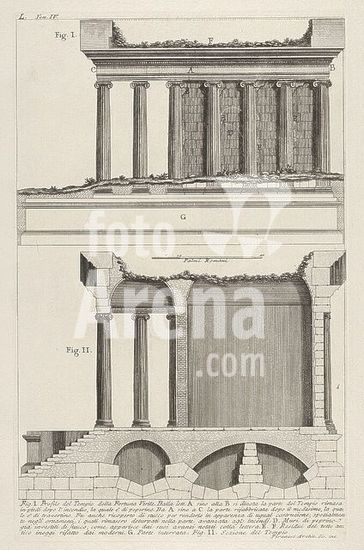
alb3677745 Profile of the Temple of Fortuna Virilis (Profilo del Tempio della Fortuna Virile), and section of the temple, from the series 'Le Antichità Romane'. Artist: Giovanni Battista Piranesi (Italian, Mogliano Veneto 1720-1778 Rome). Dimensions: Sheet: 20 3/8 x 14 13/16 in. (51.8 x 37.6 cm)Plate: 15 3/8 x 9 11/16 in. (39.1 x 24.6 cm). Series/Portfolio: Le Antichità Romane. Date: 1756. Museum: Metropolitan Museum of Art, New York, USA.
DC
alb3733614 The Grand Piazza. Dated: 1780s. Medium: etching, engraving, sulphur tint or open bite, burnishing [date should be read as "published 1780s"]. Museum: National Gallery of Art, Washington DC. Author: GIOVANNI BATTISTA PIRANESI.
DC
alb3734409 The Grand Piazza. Dated: published 1750/1758. Medium: etching, engraving, sulphur tint or open bite, burnishing. Museum: National Gallery of Art, Washington DC. Author: GIOVANNI BATTISTA PIRANESI.
DC
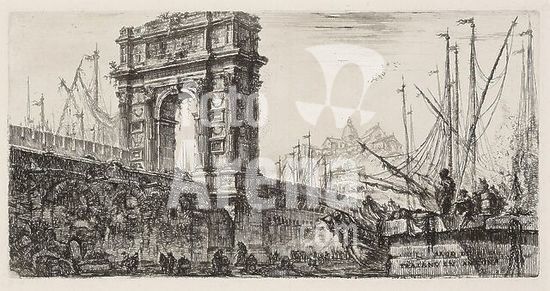
alb3739373 Prima Parte di Architetture, e Prospettive (First Edition, Third Issue). Dated: dated 1743 but printed 1747. Dimensions: page size: 49 x 35 cm (19 5/16 x 13 3/4 in.). Medium: 1 vol: title plate (Robison 1, state iii), dedication page (reset text w/ initial "S" (Robison 14), 14 plates (R.2-3, 5-12 state ii; R.14-18 state i). Museum: National Gallery of Art, Washington DC. Author: GIOVANNI BATTISTA PIRANESI.
DC
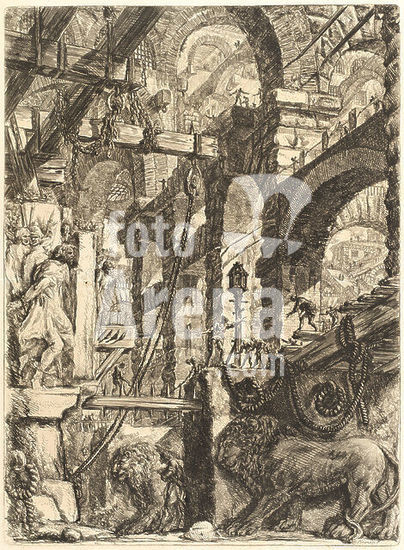
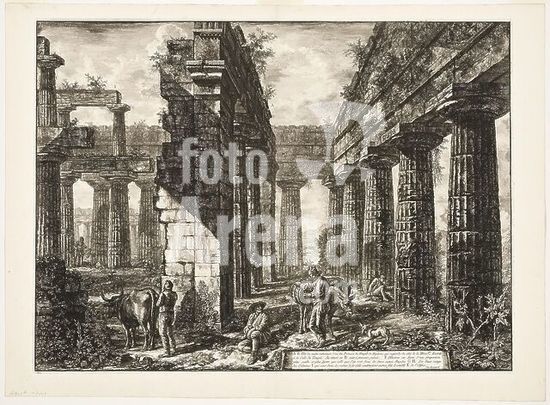
alb3739204 The Lion Bas-Reliefs. Dated: published 1761. Dimensions: sheet: 76.7 x 53.6 cm (30 3/16 x 21 1/8 in.). Medium: etching and engraving on laid paper. Museum: National Gallery of Art, Washington DC. Author: GIOVANNI BATTISTA PIRANESI.
DC
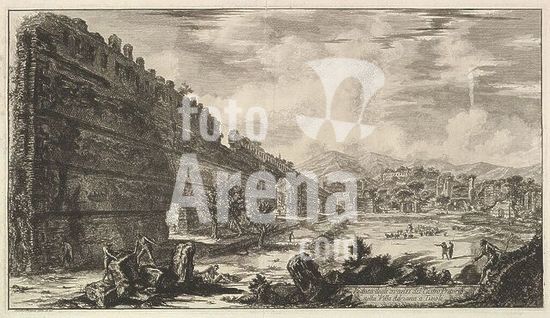
alb3651645 Veduta degli avanzi del Castro Pretorio nella Villa Adriana a Tivoli (View of the Remains of the Praetorian Fort [the Poecile], Hadrian's Villa, Tivoli). Artist: Giovanni Battista Piranesi (Italian, Mogliano Veneto 1720-1778 Rome). Series/Portfolio: Vedute di Roma (Views of Rome). Date: 1770. Museum: Metropolitan Museum of Art, New York, USA.
DC
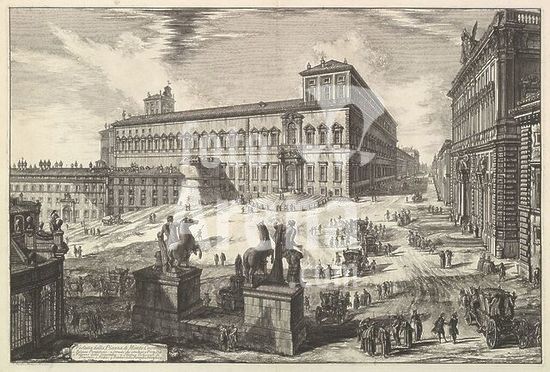
alb3656796 View of the Piazza di monte Cavallo, from Vedute di Roma (Roman Views). Artist: Giovanni Battista Piranesi (Italian, Mogliano Veneto 1720-1778 Rome). Dimensions: Sheet: 21 1/16 x 30 1/8 in. (53.6 x 76.5 cm)Plate: 18 11/16 x 27 15/16 in. (47.5 x 71 cm). Series/Portfolio: Vedute di Roma. Date: ca. 1773. Museum: Metropolitan Museum of Art, New York, USA.
DC
alb3650431 Plate 3: 'Ancient mausoleum erected for the ashes of a Roman emperor' (Mausoleo antico eretto per le ceneri d'un imperadore romano), from the series 'Part one of architecture and perspectives: drawn and etched by Gio. Batt'a Piranesi, Venetian Architect: dedicated to Nicola Giobbe' (Prima parte di Architetture, e prospettive inventate, ed incise da Gio. Batt'a Piranesi Architetto Veneziano dedicate al Sig. Nicola Giobbe). Artist: Giovanni Battista Piranesi (Italian, Mogliano Veneto 1720-1778 Rome). Dimensions: Sheet: 15 5/16 x 10 1/8 in. (38.9 x 25.7 cm). Date: 1743. Museum: Metropolitan Museum of Art, New York, USA.
DC
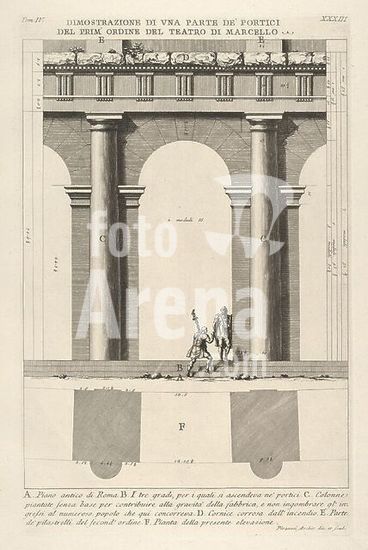
alb3654200 Partial elevation and plan of the first-order portico at the Theater of Marcellus (Dimostrazione di una parte de' portici del prim' ordine del Teatro di Marcello), from 'Le Antichità Romane'. Artist: Giovanni Battista Piranesi (Italian, Mogliano Veneto 1720-1778 Rome). Dimensions: Sheet: 20 1/2 x 14 5/8 in. (52 x 37.2 cm)Plate: 16 15/16 x 10 3/16 in. (43 x 25.8 cm). Series/Portfolio: Le Antichità Romane. Date: 1756. Museum: Metropolitan Museum of Art, New York, USA.
DC
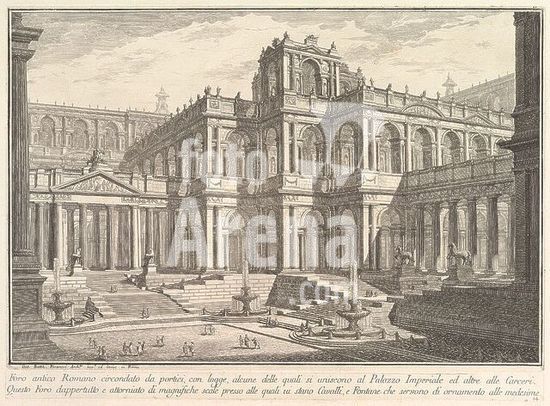
alb3648957 Ancient Roman forum surrounded by porticoes, with loggias, some of which communicate with the Imperial Palace and others with the prisons ...(Foro antico romano circondata da portici, con logge, alcune delle quali si uniscono al Palazzo Imperiale ... ). Artist: Giovanni Battista Piranesi (Italian, Mogliano Veneto 1720-1778 Rome). Dimensions: Plate (Image): 9 9/16 × 14 3/16 in. (24.3 × 36 cm)Plate (Inscription): 11/16 × 14 3/16 in. (1.7 × 36 cm)Sheet: 13 1/4 × 19 7/16 in. (33.7 × 49.4 cm). Series/Portfolio: Prima Parte di Architettura, e Prospettive (Part One of Architecture and Perspectives). Date: ca. 1750. Museum: Metropolitan Museum of Art, New York, USA.
DC
alb3648307 Group of columns which support two arches of a great courtyard . (Gruppo di Colonne, che regge due archi d'un grande Cortile . ). Artist: Giovanni Battista Piranesi (Italian, Mogliano Veneto 1720-1778 Rome). Dimensions: Plate: 15 13/16 × 9 3/4 in. (40.1 × 24.7 cm)Sheet: 19 5/8 × 13 1/4 in. (49.9 × 33.6 cm). Series/Portfolio: Prima Parte di Architettura, e Prospettive (Part One of Architecture and Perspectives). Date: ca. 1750. Museum: Metropolitan Museum of Art, New York, USA.
DC
alb3662135 The so-called Grotto of Egeria (Veduta della fonte e delle spelonche d'Egeria fuor della Porta Capena). Artist: Giovanni Battista Piranesi (Italian, Mogliano Veneto 1720-1778 Rome). Dimensions: sheet: 16 x 27 1/4 in. (40.6 x 69.2 cm). Series/Portfolio: Vedute di Roma (Views of Rome). Date: ca. 1766. Museum: Metropolitan Museum of Art, New York, USA.
DC
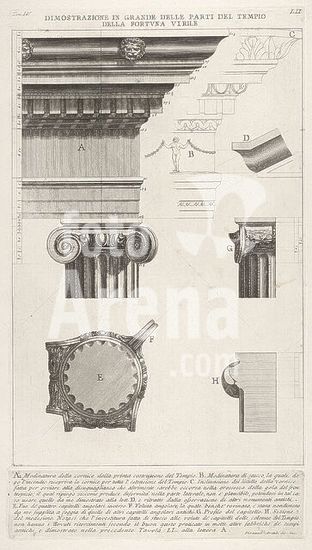
alb3668543 Cornice and column from the Temple of Fortuna Virilis (Tempio della Fortuna Virile), from 'Le Antichità Romane'. Artist: Giovanni Battista Piranesi (Italian, Mogliano Veneto 1720-1778 Rome). Dimensions: Sheet: 20 3/8 x 14 13/16 in. (51.8 x 37.7 cm). Series/Portfolio: Le Antichità Romane. Date: 1756. Museum: Metropolitan Museum of Art, New York, USA.
DC
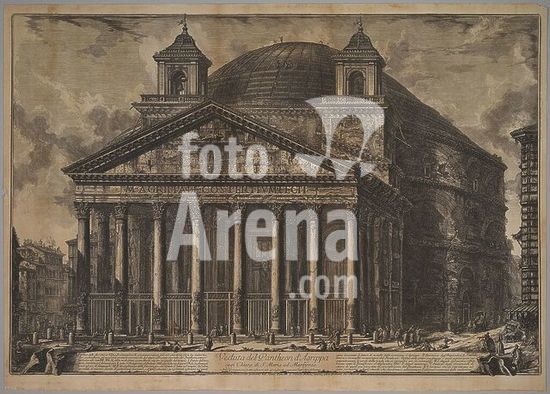
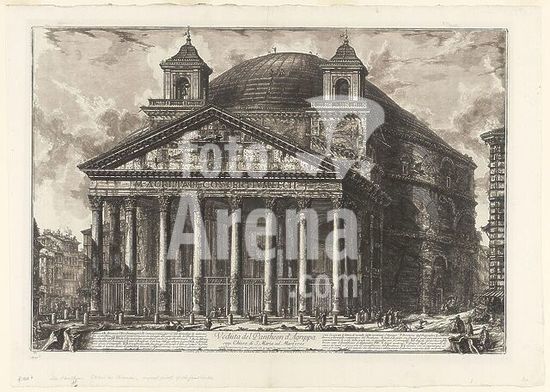
alb3669358 The Pantheon exterior (Veduta del Pantheon d'Agrippa oggi Chiesa di S. Maria ad Martyres). Artist: Giovanni Battista Piranesi (Italian, Mogliano Veneto 1720-1778 Rome). Dimensions: sheet: 18 1/2 x 27 1/2 in. (47 x 69.9 cm). Series/Portfolio: Vedute di Roma (Views of Rome). Date: 1720-78. Museum: Metropolitan Museum of Art, New York, USA.
DC
alb3663556 The Triumphal Arch, from Grotteschi (Grotesques). Artist: Giovanni Battista Piranesi (Italian, Mogliano Veneto 1720-1778 Rome). Dimensions: Sheet: 19 1/2 x 25 7/16 in. (49.5 x 64.6 cm)Plate: 15 3/8 x 21 5/16 in. (39 x 54.2 cm). Publisher: Giovanni Bouchard (French, ca. 1716-1795). Series/Portfolio: Grotteschi (Grotesques). Date: ca. 1748. Museum: Metropolitan Museum of Art, New York, USA.
DC
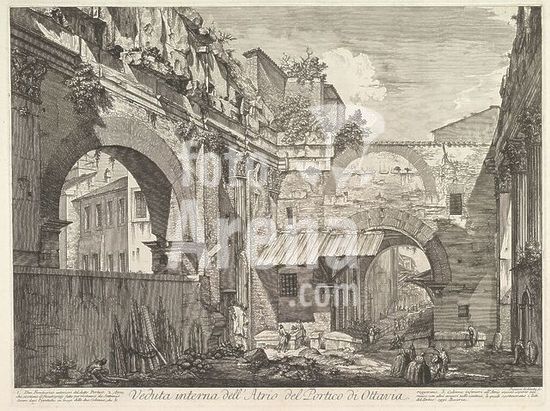
alb3667223 Veduta interna dell'Atrio del Portico di Ottavia (Internal View of the Atrium of the Portico of Octavia), in: 'Vedute di Roma' (Views of Rome). Artist: Giovanni Battista Piranesi (Italian, Mogliano Veneto 1720-1778 Rome). Dimensions: Plate: 22 x 28 in. (55.9 x 71.1 cm). Series/Portfolio: Vedute di Roma (Views of Rome). Date: 1760.This view places the spectator within the best preserved section of the complex of colonnades originally built in the Republican era and later restored by Emperor Augustus, who dedicated the portico to his sister Octavia. Although the name survives from the Augustan restoration, such visible remains as the elegant Corinthian columns and the form of the pediment, hemmed in by medieval accretions, date to a later reconstruction by Septimius Severus. Piranesi shows the space as it looked in the eighteenth century, with the stalls of the fishmarket, which had long been held within the portico, visible along one wall of the atrium and continuing down a corridor into the distance.The sensation of brilliant sunlight is masterfully achieved in this etching and may owe something to the example of Canaletto's views of Venice (1973.634), produced around the time that Piranesi returned home in 1744. Piranesi's own sensitivity to light effects--one of his early biographers records that he committed to memory the appearance of changing light on the ancient walls, from the full glare of the sun to the cool illumination of the moon--was one of the qualities that made his views of Rome so exceptional. The love for the texture and heft of blocks of stone and the fascination with their manner of cutting and assembly that is so evident here, and in many of his other prints, may have been the legacy of Piranesi's father, a stonemason and master builder. Museum: Metropolitan Museum of Art, New York, USA.
DC
alb3660621 The Capitol and the steps of S. Maria in Aracoeli (Veduta del Romano Camipidoglio con scalinata che va alla chiesa d'Araceli). Artist: Giovanni Battista Piranesi (Italian, Mogliano Veneto 1720-1778 Rome). Series/Portfolio: Vedute di Roma (Views of Rome). Date: ca. 1775. Museum: Metropolitan Museum of Art, New York, USA. Author: GIOVANNI BATTISTA PIRANESI.
DC
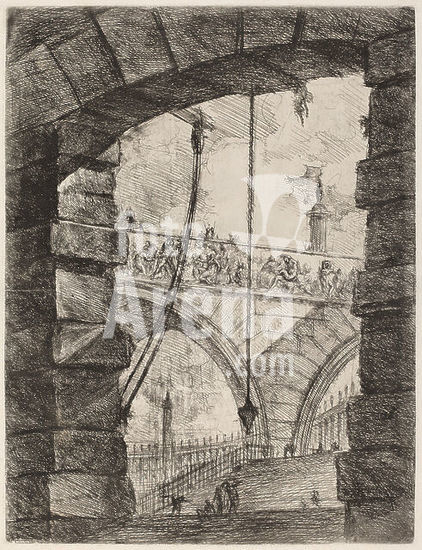
alb3711300 The Drawbridge. Dated: 1780s. Dimensions: plate: 54.7 x 41.1 cm (21 9/16 x 16 3/16 in.) sheet: 68.3 x 53 cm (26 7/8 x 20 7/8 in.). Medium: etching, engraving, scratching [date should be read as "published 1780s"]. Museum: National Gallery of Art, Washington DC. Author: GIOVANNI BATTISTA PIRANESI.
DC
alb3634906 The Gothic Arch, from Carceri d'invenzione (Imaginary Prisons). Artist: Giovanni Battista Piranesi (Italian, Mogliano Veneto 1720-1778 Rome). Dimensions: plate: 16 1/4 x 21 7/16 in. (41.2 x 54.4 cm)sheet: 19 7/16 x 25 1/8 in. (49.4 x 63.8 cm). Publisher: Giovanni Bouchard (French, ca. 1716-1795). Series/Portfolio: Carceri d'invenzione (Imaginary Prisons). Date: ca. 1749-50. Museum: Metropolitan Museum of Art, New York, USA.
DC
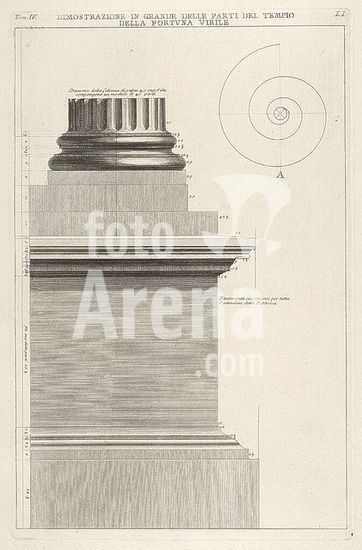
alb3634398 Section of column base from the Temple of Fortuna Virilis (Tempio della Fortuna Virile), from the series 'Le Antichità Romane'. Artist: Giovanni Battista Piranesi (Italian, Mogliano Veneto 1720-1778 Rome). Dimensions: Sheet: 20 3/8 x 14 13/16 in. (51.8 x 37.7 cm)Plate: 15 5/8 x 10 1/16 in. (39.7 x 25.6 cm). Series/Portfolio: Le Antichità Romane. Date: 1756. Museum: Metropolitan Museum of Art, New York, USA.
DC
alb3700501 The Smoking Fire. Dated: published 1800/1809. Medium: etching, engraving, sulphur tint or open bite, burnishing. Museum: National Gallery of Art, Washington DC. Author: GIOVANNI BATTISTA PIRANESI.
DC
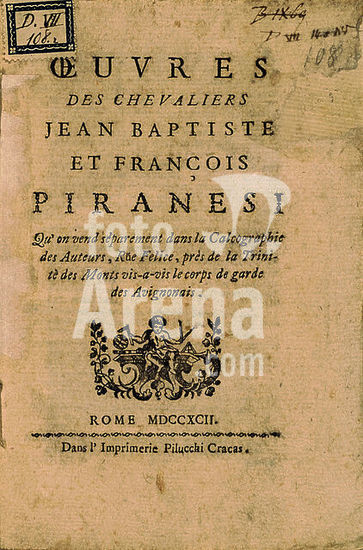
alb3707330 Oeuvres des Chevaliers Jean Baptiste et François Piranesi. Dated: 1792. Dimensions: book: 17.8 × 12.3 × 0.5 cm (7 × 4 13/16 × 3/16 in.). Medium: catalogue of works (no illustrations). Museum: National Gallery of Art, Washington DC. Author: Francesco Piranesi Giovanni Battista Piranesi.
DC
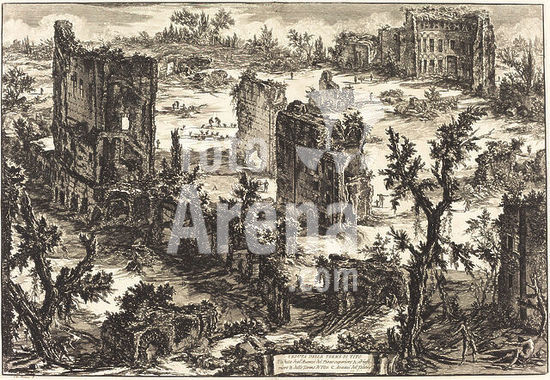
alb3709742 Veduta delle Terme di Tito. Dated: 1775. Dimensions: plate: 49.2 x 71.6 cm (19 3/8 x 28 3/16 in.) sheet: 53.9 x 77.2 cm (21 1/4 x 30 3/8 in.). Medium: etching on laid paper. Museum: National Gallery of Art, Washington DC. Author: GIOVANNI BATTISTA PIRANESI.
DC
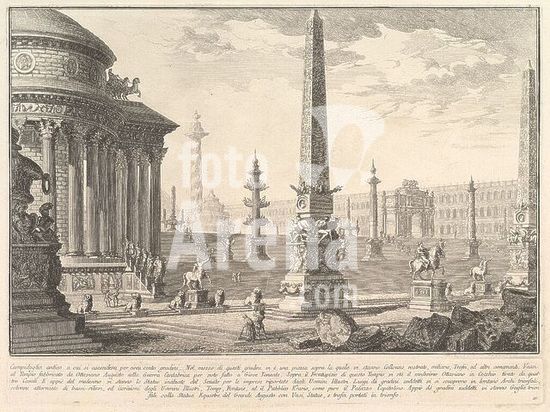
alb3628474 The ancient Capitol ascended by approximately one hundred steps . (Campidoglio antico a cui si ascendeva per circa cento gradini .). Artist: Giovanni Battista Piranesi (Italian, Mogliano Veneto 1720-1778 Rome). Dimensions: Plate (Image): 9 5/16 × 14 3/16 in. (23.7 × 36.1 cm)Plate (Inscription): 1 3/16 × 14 1/4 in. (3 × 36.2 cm)Sheet: 13 3/16 × 19 7/16 in. (33.5 × 49.4 cm). Series/Portfolio: Prima Parte di Architettura, e Prospettive (Part One of Architecture and Perspectives). Date: ca. 1750. Museum: Metropolitan Museum of Art, New York, USA.
DC
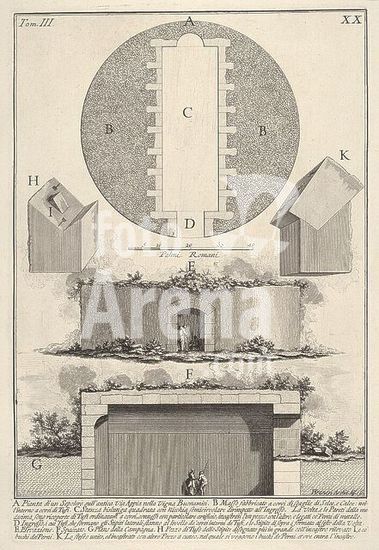
alb3640176 Plan of a tomb on the Appian Way in Vigna Buonamici (Pianta di un sepolcro sull'antica Via Appia nella Vigna Buonamici), from the series 'Le Antichità Romane'. Artist: Giovanni Battista Piranesi (Italian, Mogliano Veneto 1720-1778 Rome). Dimensions: Sheet: 20 1/2 x 14 3/4 in. (52 x 37.5 cm)Plate: 13 3/4 x 9 1/8 in. (34.9 x 23.2 cm). Series/Portfolio: Le Antichità Romane. Date: 1756. Museum: Metropolitan Museum of Art, New York, USA.
DC
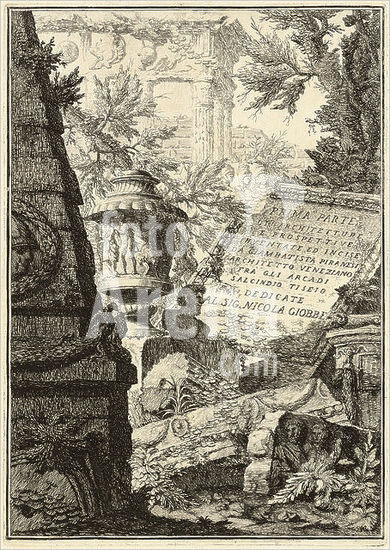
alb3635226 Frontispiece: Prima Parte di Architetture,e Prospettive. Artist: Giovanni Battista Piranesi (Italian, Mogliano Veneto 1720-1778 Rome). Dimensions: Sheet: 15 13/16 x 10 1/16 in. (40.2 x 25.5 cm)Plate: 14 3/16 x 13 5/16 in. (36 x 33.8 cm). Series/Portfolio: Prima Parte di Architettura, e Prospettive (Part One of Architecture and Perspectives). Date: Rome, ca. 1750. Museum: Metropolitan Museum of Art, New York, USA.
DC
alb3605686 The Monumental Tablet, from Grotteschi (Grotesques). Artist: Giovanni Battista Piranesi (Italian, Mogliano Veneto 1720-1778 Rome). Dimensions: Sheet: 19 1/2 x 25 3/16 in. (49.5 x 64 cm)Plate: 15 3/8 x 21 1/16 in. (39 x 53.5 cm). Publisher: Giovanni Bouchard (French, ca. 1716-1795). Series/Portfolio: Grotteschi (Grotesques). Date: ca. 1748. Museum: Metropolitan Museum of Art, New York, USA.
DC
alb3607503 Frontispiece, with Statue of Minerva. Artist: Giovanni Battista Piranesi (Italian, Mogliano Veneto 1720-1778 Rome). Series/Portfolio: Vedute di Roma (Views of Rome). Date: ca. 1748. Museum: Metropolitan Museum of Art, New York, USA.
DC
alb3600940 Frontispiece, with Statue of Minerva. Artist: Giovanni Battista Piranesi (Italian, Mogliano Veneto 1720-1778 Rome). Series/Portfolio: Vedute di Roma (Views of Rome). Date: ca. 1748. Museum: Metropolitan Museum of Art, New York, USA.
DC
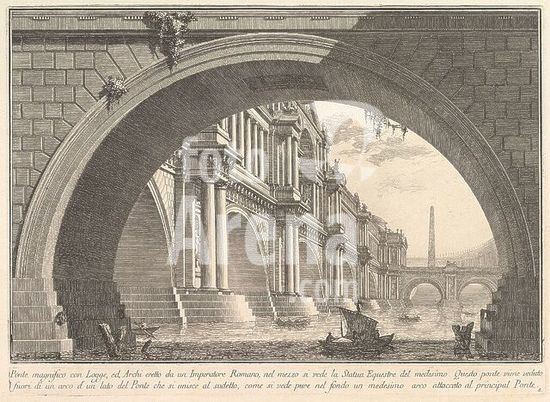
alb3606280 Magnificent bridge with loggias, and arches erected by a Roman Emperor . (Ponte magnfiico con Logge, ed Archi erretto da un Imperatore Romane .). Artist: Giovanni Battista Piranesi (Italian, Mogliano Veneto 1720-1778 Rome). Dimensions: Plate (Image): 9 3/8 × 14 1/8 in. (23.8 × 35.8 cm)Plate (Inscription): 3/4 × 14 1/8 in. (1.9 × 35.8 cm)Sheet: 13 1/4 × 19 7/16 in. (33.7 × 49.4 cm). Series/Portfolio: Prima Parte di Architettura, e Prospettive (Part One of Architecture and Perspectives). Date: ca. 1750. Museum: Metropolitan Museum of Art, New York, USA.
DC
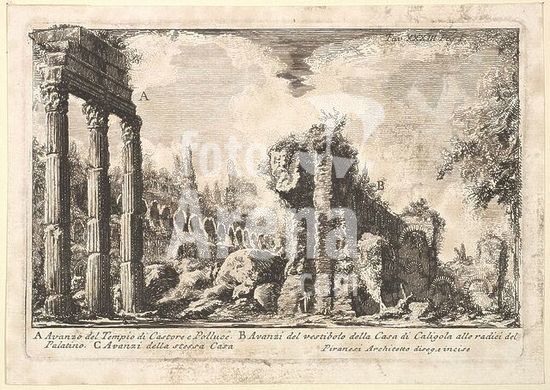
alb3601189 Remains of the Temple of Castor and Pollux . (Avanzo del Tempio di Castore e Polluce .). Artist: Giovanni Battista Piranesi (Italian, Mogliano Veneto 1720-1778 Rome). Dimensions: Plate: 5 1/4 × 7 11/16 in. (13.3 × 19.5 cm)Sheet: 5 7/8 × 8 1/4 in. (14.9 × 21 cm). Series/Portfolio: Le Antichità Romane (Roman Antiquity). Date: 18th century. Museum: Metropolitan Museum of Art, New York, USA.
DC
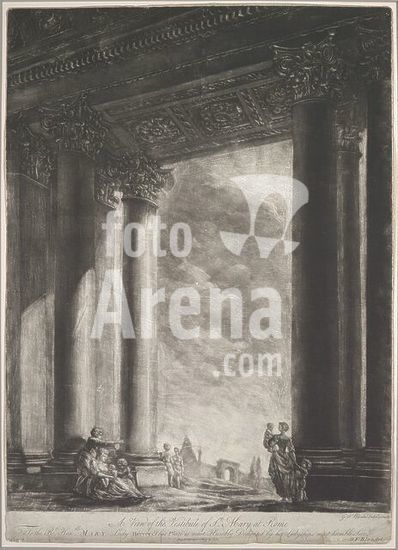
alb3615380 A View of the Vestibule of Santa Maria Maggiore at Rome. Artist and publisher: Georges François Blondel (French, 1730-after 1792). Dimensions: Sheet: 22 1/4 x 16 in. (56.5 x 40.6 cm). Published in: London. Date: 1765-67.Georges-François Blondel was the son of a leading French architectural theorist Jacques-François Blondel. After training in Paris, he worked first in Rome and then in London, where he learned the technique of mezzotint engraving. This print depicts a celebrated structure of eighteenth-century Rome, Ferdinando Fuga's dramatic facade of the Church of Santa Maria Maggiore, completed in 1743. It is one of nine architectural views the artist published between 1765 and 1767. His taste for monumental classical structures and his tendency to make even modern subjects resemble ancient ruins suggest his admiration for Giovanni Battista Piranesi (1720-1788). The fragmented view, small figures, and classical architectural forms which Blondel created similarly give the late Baroque structure the appearance of an ancient ruin. Unusually, Blondel rocked the mezzotint plate twice: first when preparing the ground for the design, and again when scraping the composition, creating haphazard, expressive strokes that animate the sky. Museum: Metropolitan Museum of Art, New York, USA.
DC
alb3615318 The Piazza del Popolo (Veduta della Piazza del Popolo). Artist: Giovanni Battista Piranesi (Italian, Mogliano Veneto 1720-1778 Rome). Dimensions: image: 14 15/16 x 21 1/4 in. (38 x 54 cm). Series/Portfolio: Vedute di Roma. Date: ca. 1750.Until the construction of railways in Rome in the nineteenth century, visitors entered the city through the Piazza del Popolo. The area acquired its monumental profile under Pope Sixtus V, who oversaw the construction of twin churches opposite the gateway into the square and the placement of an Egyptian obelisk in the center. In Piranesi's view, the obelisk extends almost from top to bottom of the composition, dwarfing the spectators gesturing beneath it and the coaches that circulate nearby. Radiating into the distance are the three great avenues that lead - as Piranesi's caption reminds us - to three popular tourist destinations, the Piazza di Spagna, the Palazzo di Venezia, and the Porto di Ripetta. Museum: Metropolitan Museum of Art, New York, USA.
DC
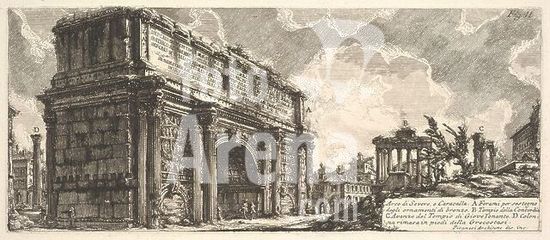
alb3617405 The Arch of Septimius Severus (Arco di Severo, e Caracalla). Artist: Giovanni Battista Piranesi (Italian, Mogliano Veneto 1720-1778 Rome). Dimensions: Plate: 4 1/2 × 10 11/16 in. (11.5 × 27.2 cm)Sheet: 7 3/8 × 12 15/16 in. (18.8 × 32.9 cm). Series/Portfolio: Antichità Romane (Roman Antiquity). Date: ca. 1756. Museum: Metropolitan Museum of Art, New York, USA.
DC
alb3618030 Frontispiece, with Statue of Minerva. Artist: Giovanni Battista Piranesi (Italian, Mogliano Veneto 1720-1778 Rome). Dimensions: Sheet: 24 15/16 × 19 7/16 in. (63.3 × 49.4 cm)Plate: 19 1/4 × 12 11/16 in. (48.9 × 32.2 cm). Series/Portfolio: Vedute di Roma (Views of Rome). Date: ca. 1748. Museum: Metropolitan Museum of Art, New York, USA.
DC
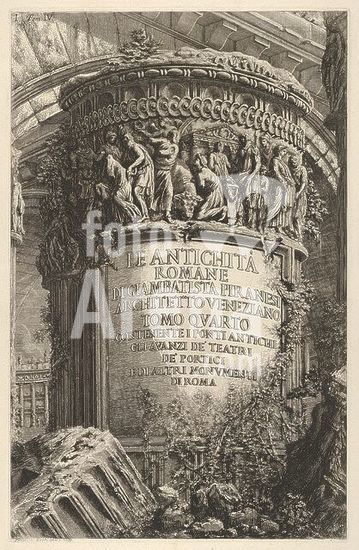
alb3668480 Title page: volume IV, 'The Antiquities of Rome by Giambatista Piranesi, Venetian Architect. Volume 4, containing the ancient bridges, the remains of theaters, of porticoes, and of other monuments of Rome' (Le antichità romane di Giambatista Piranesi architetto veneziano. Tomo quarto, contenente i ponti antichi, gli avanzi de' teatri, de' portici, e di altri monumenti di Roma), from the series 'Roman Antiquities' (Le Antichità Romane). Artist: Giovanni Battista Piranesi (Italian, Mogliano Veneto 1720-1778 Rome). Dimensions: Sheet: 20 1/2 x 13 3/4 in. (52.1 x 34.9 cm)Plate: 15 13/16 x 10 1/8 in. (40.1 x 25.7 cm). Series/Portfolio: Roman Antiquities (Le Antichità Romane). Date: 1756. Museum: Metropolitan Museum of Art, New York, USA.
DC
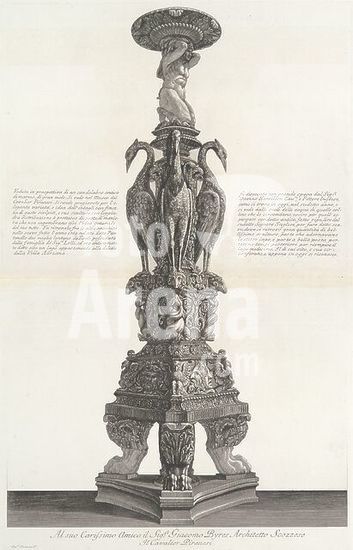
alb3654005 Perspective view of the same candelabrum, from 'Vasi, candelabri, cippi, sarcofagi, tripodi, lucerne, ed ornamenti antichi, vol. II' (Vases, candelabra, grave stones, sarcophagi, tripods, lamps, and ornaments). Artist: Giovanni Battista Piranesi (Italian, Mogliano Veneto 1720-1778 Rome). Dimensions: Sheet: 19 7/8 x 28 3/4 in. (50.5 x 73 cm)Plate: 26 x 16 5/16 in. (66 x 41.5 cm) printed horizontally. Series/Portfolio: Vasi, candelabri, cippi, sarcofagi, tripodi, lucerne, ed ornamenti antichi disegnati ed incisi dal Cav. Gio. Batt. Piranesi, Vol. II. Date: 1778-80.This elaborate candelabrum, now in the Ashmolean Museum in Oxford, represents one of Piranesi's more creative "restorations." Produced during a period when Piranesi was collaborating with the Scottish painter Gavin Hamilton in the restoration and sale of antiquities--many uncovered in the excavations at Hadrian's Villa in Tivoli--it combines a number of diverse ancient fragments to create a new work. More 'Piranesi' than ancient in its effect, this assemblage exemplifies the artist's belief in the freedom of designers to draw from a variety of sources to enrich their invention. A similarly fantastic candelabrum, now in the Louvre, formerly served as an ornament to Piranesi's own tomb. The handsome series of etchings after ancient vases, candelabra, funerary urns, and other recently excavated decorative objects--some less extensively restored--served to advertise wares available in Piranesi's workshop as well as to document rare pieces that were leaving the country, such as the Warwick Vase. Museum: Metropolitan Museum of Art, New York, USA.
DC
alb4138368 Arch of Trajan in Ancona, plate 28 from Some Views of Triumphal Arches and other monuments. Giovanni Battista Piranesi; Italian, 1720-1778. Date: 1748. Dimensions: 135 x 268 mm (plate); 340 x 455 mm (sheet). Etching on ivory laid paper. Origin: Italy. Museum: The Chicago Art Institute, USA.
DC
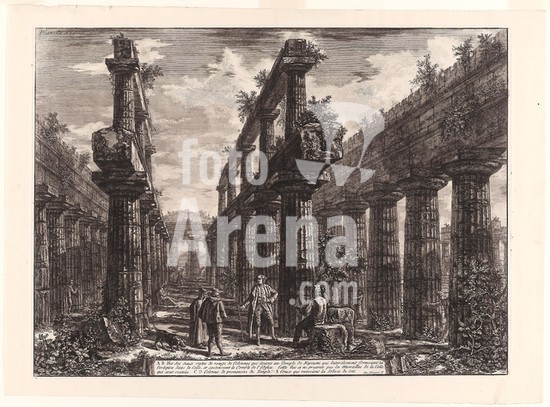
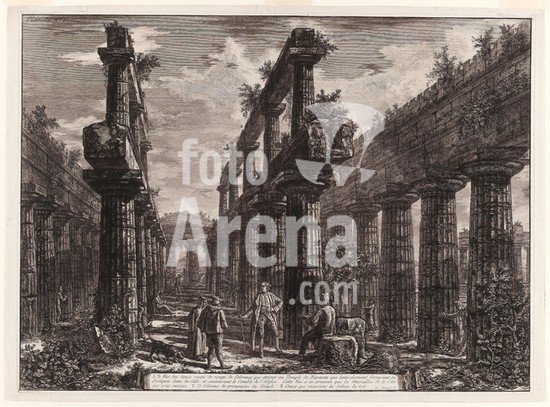
alb4152019 Interior view of the remains of one of the pronaoi of the Temple of Neptune which faces inland, from Different views of Paestum. Giovanni Battista Piranesi; Italian, 1720-1778. Date: 1778. Dimensions: 495 x 675 mm (image); 504 x 682 mm (plate); 563 x 763 mm (sheet). Etching on ivory laid paper. Origin: Italy. Museum: The Chicago Art Institute, USA.
DC
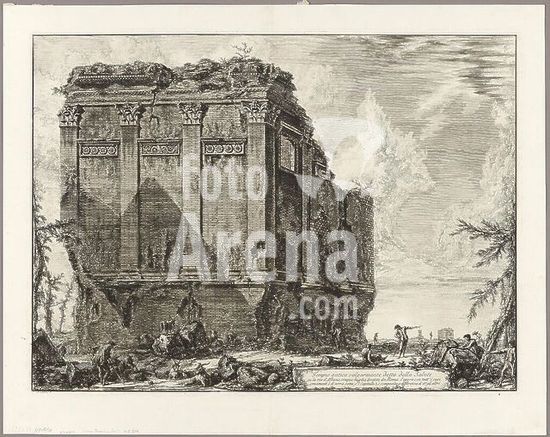
alb4151857 Ancient temple commonly called the Temple of Health on the Via d'Albano five miles outside Rome, from Views of Rome. Giovanni Battista Piranesi; Italian, 1720-1778. Date: 1763. Dimensions: 406 x 553 mm (image); 413 x 559 mm (plate); 490 x 620 mm (sheet). Etching on heavy ivory laid paper. Origin: Italy. Museum: The Chicago Art Institute, USA.
DC
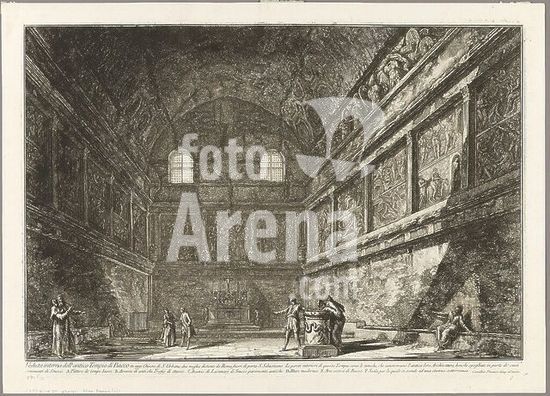
alb4151813 Interior view of the ancient Temple of Bacchus, now the church of S. Urbano, two miles from Rome, from Views of Rome. Giovanni Battista Piranesi; Italian, 1720-1778. Date: 1767. Dimensions: 403 x 600 mm (image); 424 x 604 mm (plate); 469 x 653 mm (sheet). Etching on heavy ivory laid paper. Origin: Italy. Museum: The Chicago Art Institute, USA.
DC
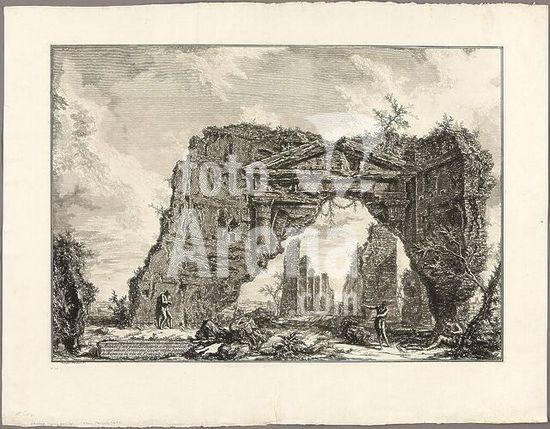
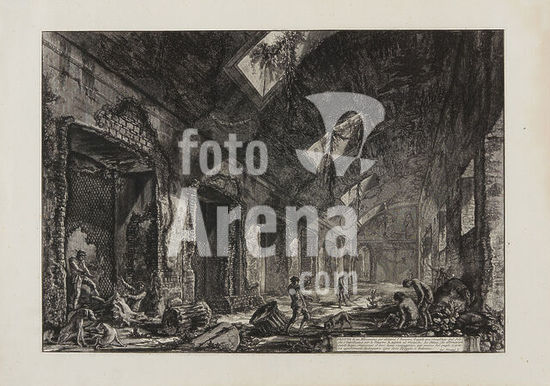
alb4151896 Remains of a covered portico, or a cryptoporticus, in a villa of Domitian, five miles outside Rome on the Frascati road, from Views of Rome. Giovanni Battista Piranesi; Italian, 1720-1778. Date: 1766. Dimensions: 418 x 598 mm (image); 424 x 603 mm (plate); 555 x 720 mm (sheet). Etching on heavy ivory laid paper. Origin: Italy. Museum: The Chicago Art Institute, USA.
DC
alb4142578 View of the So-Called Temple of Concord, from Views of Rome. Giovanni Battista Piranesi (Italian, 1720-1778); published by Francesco (Italian, 1758-1810) and Pietro Piranesi (Italian, born 1758/9). Date: 1774. Dimensions: 462 x 692 mm (image); 470 x 700 mm (plate); 555 x 726 mm (sheet). Etching on heavy ivory laid paper. Origin: Italy. Museum: The Chicago Art Institute, USA.
DC
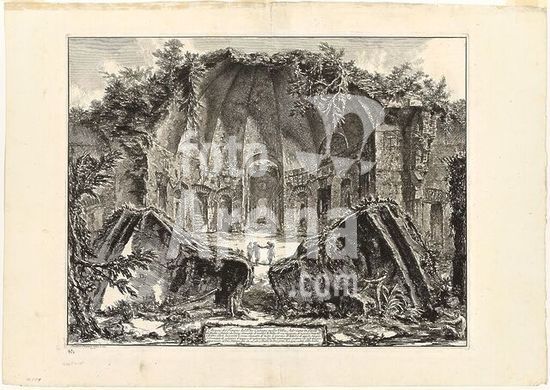
alb4142591 Remains of the temple of the god Canopus at Hadrian's Villa, Tivoli, from Views of Rome. Giovanni Battista Piranesi; Italian, 1720-1778. Date: 1768. Dimensions: 447 x 579 mm (image); 456 x 585 mm (plate); 557 x 788 mm (sheet). Etching on heavy ivory laid paper. Origin: Italy. Museum: The Chicago Art Institute, USA.
DC
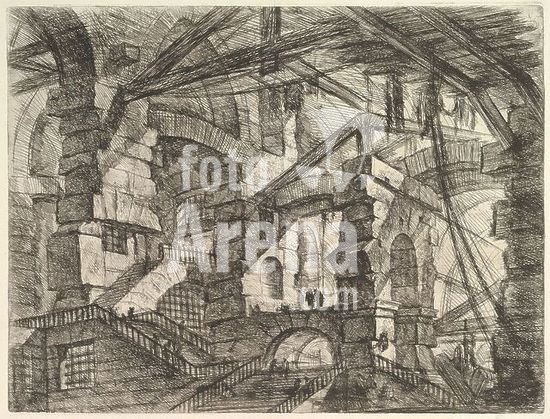
alb4142510 The Well, plate 13 from Imaginary Prisons. Giovanni Battista Piranesi; Italian, 1720-1778. Date: 1761. Dimensions: 400 x 544 mm (image); 406 x 550 mm (plate); 418 x 565 mm (sheet). Etching and engraving on heavy ivory laid paper. Origin: Italy. Museum: The Chicago Art Institute, USA.
DC
alb4142633 View of the Small Waterfall and Rapids, Tivoli, from Views of Rome. Giovanni Battista Piranesi; Italian, 1720-1778. Date: 1769. Dimensions: 469 x 704 mm (image); 475 x 711 mm (plate); 557 x 782 mm (sheet). Etching on heavy ivory laid paper. Origin: Italy. Museum: The Chicago Art Institute, USA.
DC
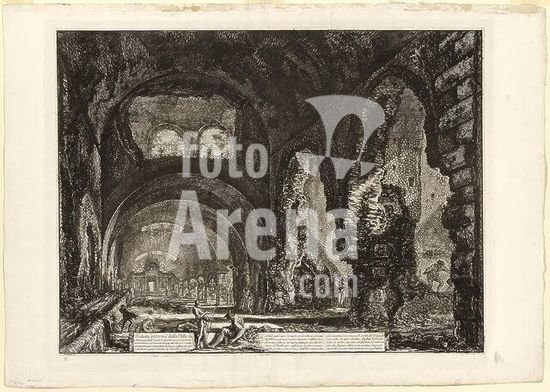
alb4143235 Interior view of the villa of Maecenas, from Views of Rome. Giovanni Battista Piranesi (Italian, 1720-1778); published by Francesco (Italian, 1758-1810) and Pietro Piranesi (Italian, born 1758/9). Date: 1764. Dimensions: 469 x 618 mm (image); 476 x 624 mm (plate); 557 x 789 mm (sheet). Etching on heavy ivory laid paper. Origin: Italy. Museum: The Chicago Art Institute, USA.
DC
alb4142721 View of the Pantheon of Agrippa, today S. Maria ad Martyres, from Views of Rome. Giovanni Battista Piranesi; Italian, 1720-1778. Date: 1761. Dimensions: 470 x 688 mm (image); 473 x 692 mm (plate); 553 x 775 mm (sheet). Etching on heavy ivory laid paper. Origin: Italy. Museum: The Chicago Art Institute, USA.
DC
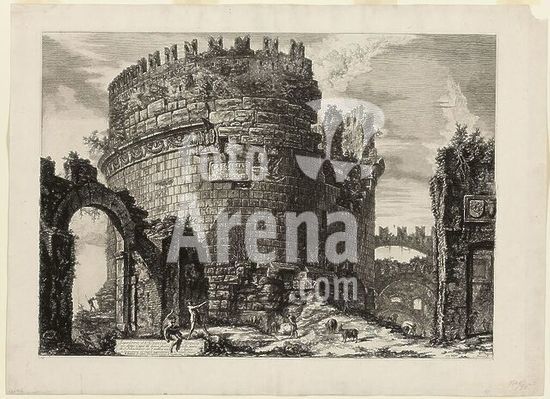
alb4142367 Tomb of Caecilia Metella, from Views of Rome. Giovanni Battista Piranesi (Italian, 1720-1778); published by Francesco (Italian, 1758-1810) and Pietro Piranesi (Italian, born 1758/9). Date: 1761-1762. Dimensions: 447 x 627 mm (image); 455 x 635 mm (plate); 540 x 743 mm (sheet). Etching on heavy ivory laid paper. Origin: Italy. Museum: The Chicago Art Institute, USA.
DC
alb4142395 Another view of the Temple of the Sibyl in Tivoli, from Views of Rome. Giovanni Battista Piranesi; Italian, 1720-1778. Date: 1761. Dimensions: 615 x 435 mm (image); 620 x 440 mm (plate); 670 x 485 mm (sheet). Etching on heavy ivory laid paper. Origin: Italy. Museum: The Chicago Art Institute, USA.
DC
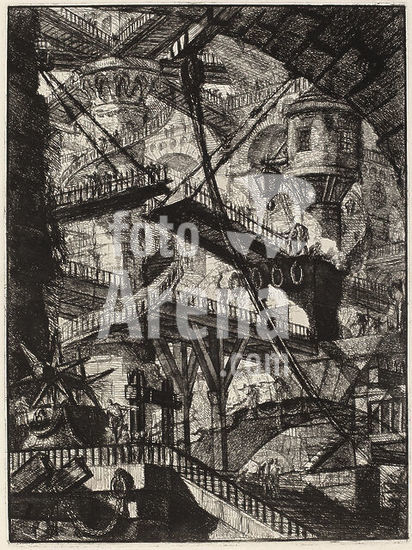
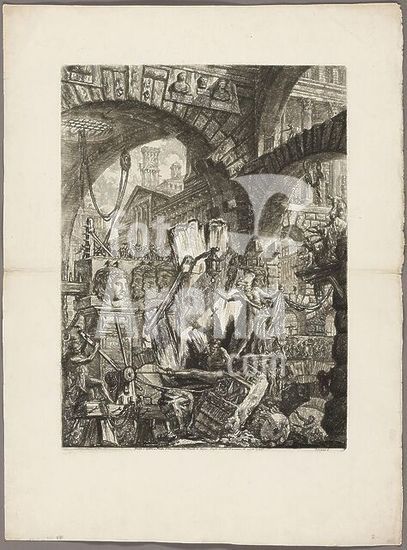
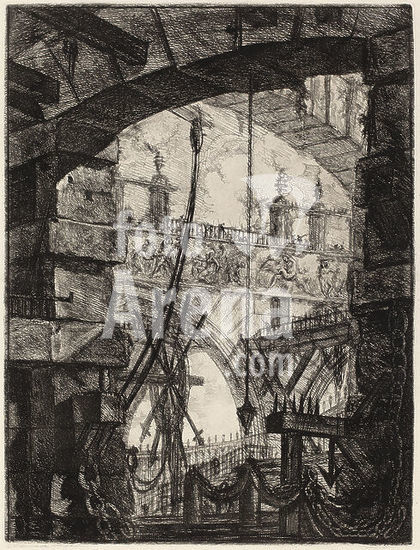
alb4142365 The Man on the Rack, plate 2 from Imaginary Prisons. Giovanni Battista Piranesi; Italian, 1720-1778. Date: 1761. Dimensions: 557 x 417 mm (image); 562 x 417 mm (plate); 788 x 583 mm (sheet). Etching and engraving on heavy ivory laid paper. Origin: Italy. Museum: The Chicago Art Institute, USA.
DC
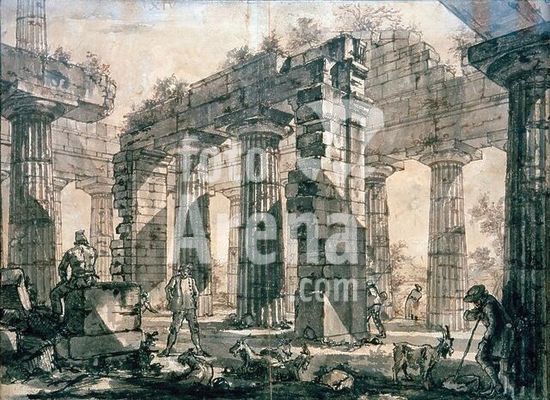
akg639545 Paestum (Italy), so-called Temple of Poseidon (Temple of Hera; Magna Græcia, ca. 460 BC. Interior view: Poseidon Temple from the south west.- / Draft to plate XIV, from a series of etchings 'Différentes vuesdequelques restes de 3 grands édifices' / Drawing, 1778, by G. B. Piranesi (1720-1778). Chalk, pencil, ink, watercolour, 46.6 × 68.6cm. SM P7. Museum: London, Sir John Soane'S Museum.
DC
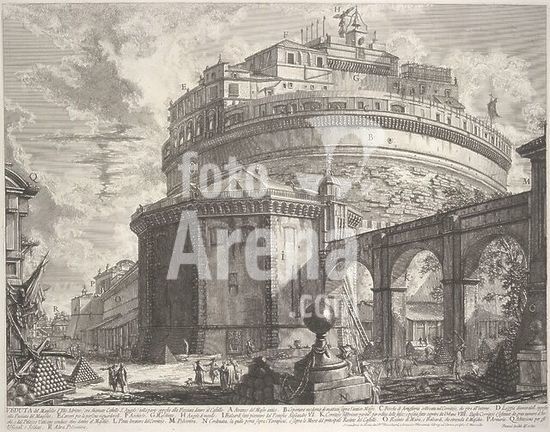
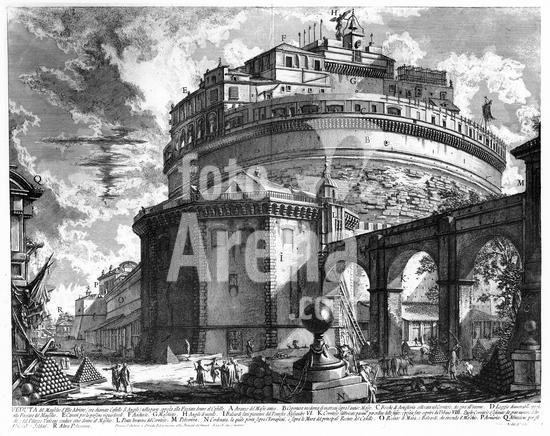
alb3661358 View of the Mausoleum of the Emperor Hadrian (now called Castel S. Angelo) from the rear, from Vedute di Roma (Roman Views). Artist: Giovanni Battista Piranesi (Italian, Mogliano Veneto 1720-1778 Rome). Dimensions: Sheet: 20 x 25 9/16 in. (50.8 x 65 cm)Plate: 17 5/16 x 21 15/16 in. (44 x 55.8 cm). Publisher: Bouchard & Gravier (Rome). Series/Portfolio: Vedute di Roma. Date: ca. 1756.Piranesi's earliest views of Rome, such as the Piazza del Popolo (37.45.3.49), had placed the principal buildings at the back of a vast, tilted space, filled with a diversity of human activity. By the mid-1750s, the monuments fill the space more commandingly, and are seen as if from below and close at hand, as in this view of the Castel Sant'Angelo. Piranesi produced this view at the same time he was working on the Antichità Romane (41.71.1.3.49; 41.71.1.3.53), his four-volume archaeological treatise, and it may have been originally intended for that work. The clear didactic character of the image and the type of lettering are characteristic of the Antichità Romane, although the dramatic view of the castle as it appeared in the eighteenth century is entirely in keeping with the other Vedute. The buildings at the top of the structure served as a gracious and well-fortified refuge for the pope in times of trouble--the corridor that stretches to the right atop huge arches leads all the way to the Vatican Palace. Museum: Metropolitan Museum of Art, New York, USA.
DC
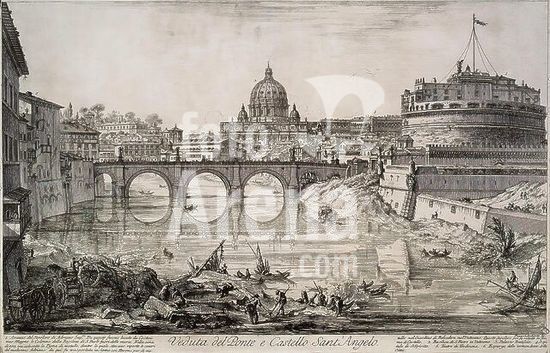
alb4228611 'Ponte Sant' Angelo and Castle Sant' Angelo'. Italy, Middle of 18th Century. Dimensions: 37,8x58,5 cm. Museum: State Hermitage, St. Petersburg. Author: GIOVANNI BATTISTA PIRANESI.
DC
alb3644531 Egyptian decoration of the Caffè degli Inglesi: Animals on the cornice, including a bull at the center, from Diverse Maniere d'adornare i cammini... (Diverse Ways of ornamenting chimneypieces...). Artist: Giovanni Battista Piranesi (Italian, Mogliano Veneto 1720-1778 Rome). Dimensions: Sheet: 21 7/16 x 15 3/16 in. (54.5 x 38.5 cm)Plate: 9 5/16 x 12 5/8 in. (23.7 x 32 cm) printed horizontally. Series/Portfolio: Diverse Maniere d'adornare i cammini ed ogni altra parte degli edifizi desunte dall'architettura Egizia, Etrusca, e Greca con un Ragionamento Apologetico in defesa dell'Architettura Egizia, e Toscana, opera del Cavaliere Giambattista Piranesi Architetto. Date: 1769. Museum: Metropolitan Museum of Art, New York, USA.
DC
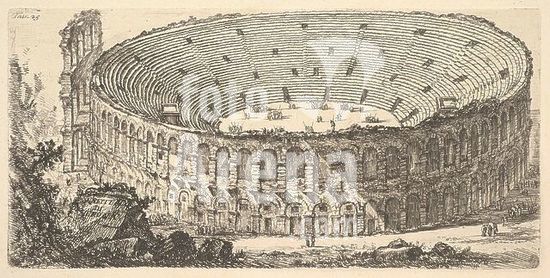
alb3632538 Plate 25: Amphitheater of Verona (Anfiteatro di Verona). Artist: Giovanni Battista Piranesi (Italian, Mogliano Veneto 1720-1778 Rome). Dimensions: Plate: 10 3/8 × 5 1/16 in. (26.3 × 12.8 cm)Sheet: 12 15/16 × 18 7/8 in. (32.8 × 47.9 cm). Series/Portfolio: Alcune Vedute di Archi Trionfali ed altri monumenti inalzati da Romani parte di quali se veggono in Roma e parte per l'Italia (Some Views of Triumphal Arches and other monuments erected by the Romans, some of which are in Rome and some elsewhere in Italy). Date: ca. 1748. Museum: Metropolitan Museum of Art, New York, USA.
DC
alb3607056 Ceremony held in the Cappella Paolina, Vatican. Artist: Francesco Piranesi (Italian, Rome 1758-1810 Paris); After Louis Jean Desprez (French, Auxerre 1743-1804 Stockholm). Dimensions: Sheet: 21 5/8 x 31 1/2 in. (55 x 80 cm)Plate: 30 5/16 x 20 1/4 in. (77 x 51.5 cm) printed horizontally. Date: 1787. Museum: Metropolitan Museum of Art, New York, USA.
DC
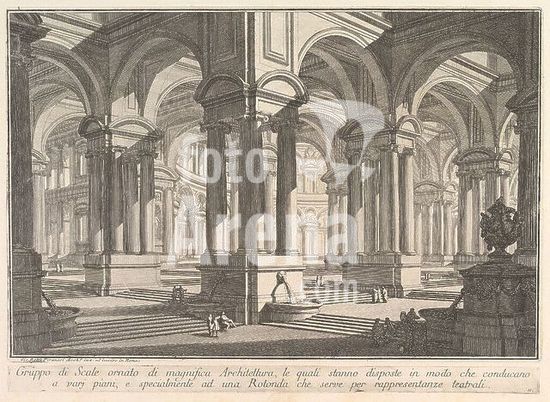
alb3660449 Stairways adorned by magnificient architecture . (Gruppo di Scale ornato di magnifica Architettura .). Artist: Giovanni Battista Piranesi (Italian, Mogliano Veneto 1720-1778 Rome). Dimensions: Plate (Image): 9 5/8 × 14 9/16 in. (24.5 × 37 cm)Plate (Inscription): 11/16 × 14 7/16 in. (1.8 × 36.6 cm)Sheet: 13 1/4 × 19 1/2 in. (33.7 × 49.5 cm). Series/Portfolio: Prima Parte di Architettura, e Prospettive (Part One of Architecture and Perspectives). Date: ca. 1750. Museum: Metropolitan Museum of Art, New York, USA.
DC
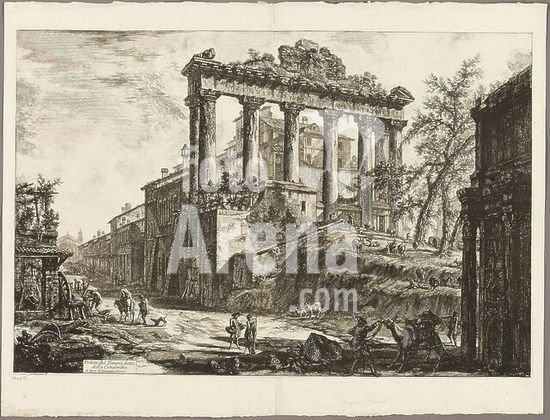
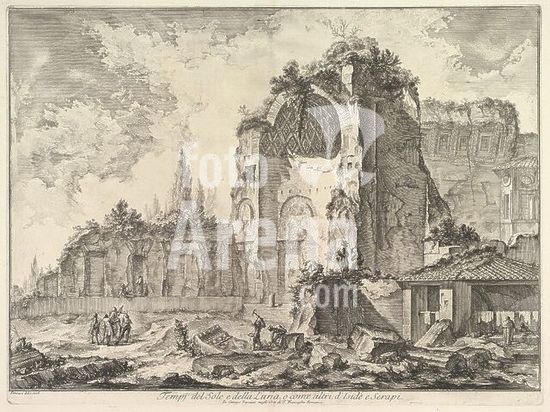
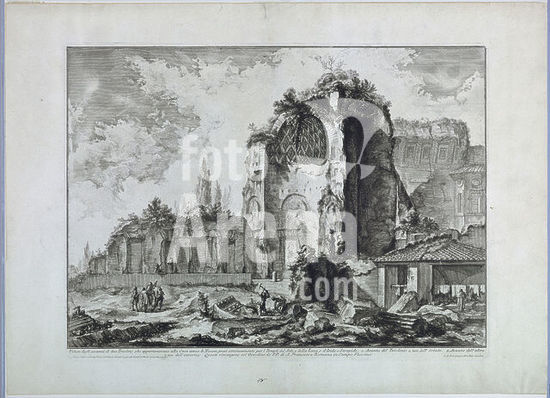
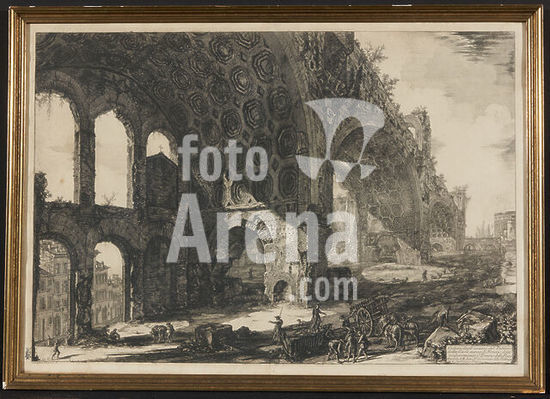
alb3684378 The Temple of Venus and Roma (erroneously called Temple of Sol and Luna) (Veduta degli avanzi di due triclini che appartenevano alla Casa aurea di Nerone). Artist: Giovanni Battista Piranesi (Italian, Mogliano Veneto 1720-1778 Rome). Series/Portfolio: Vedute di Roma (Views of Rome). Date: ca. 1759. Museum: Metropolitan Museum of Art, New York, USA.
DC
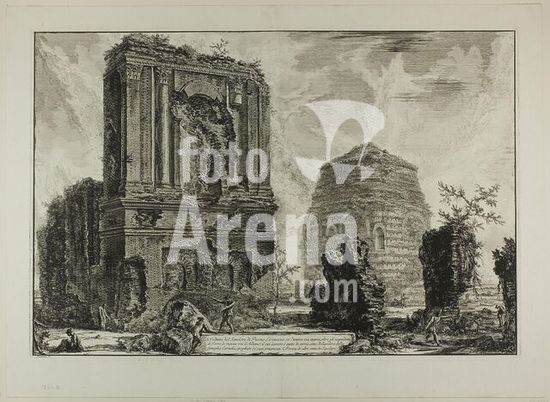
alb4151755 A. View of the Tomb of Licinianus Piso on the ancient Appian Way... B. Tomb of the Cornelii..., from Views of Rome. Giovanni Battista Piranesi (Italian, 1720-1778); published by Francesco (Italian, 1758-1810) and Pietro Piranesi (Italian, born 1758/9). Date: 1764. Dimensions: 405 x 603 mm (image); 413 x 611 mm (plate); 490 x 669 mm (sheet). Etching on heavy ivory laid paper. Origin: Italy. Museum: The Chicago Art Institute, Chicago, USA.
DC
alb5202142 Temple of Venus in Rome, Giovanni Battista Piranesi, Italian, 17201778, Etching, Horizontal rectangle. In mid-distance the ruins of the Temple of Venus; the apse at the right; marble pieces in foreground. A group of figures at left. Inscribed, lower right: 'G.B. Piranesi Archt. incise'; along lower margin: 'Veduta degli avanzi di due Tricliny ... Campo Vaccino'; lower left: 'Presso l'autore ... Mezzo', Italy, after 1759, Print, Print.
DC
alb5125945 Mint: Samos, Tetradrachm from Samos, 500490 B.C., Silver, 12.98 g, 8:00, 21.3 mm, Made in Samos, Ionia, Greek, 5th century B.C., Numismatics, Prints and Drawings, Artist: Giovanni Battista Piranesi, Italian, 17201778, Autre vue de linterieure du Pronaos, qui a déjà été décrit, et dessiné, dans la planche précédente. (Another View of the Pronaos Described and Drawn in the Preceding Plate), from Différentes vues de Pesto (Different Views of  Paestum), Etching, platemark: 48.8 × 66 cm (19 3/16 × 26 in.), Made in Italy, Italian, 18th century, Works on Paper - Prints.
DC
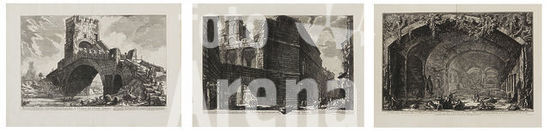
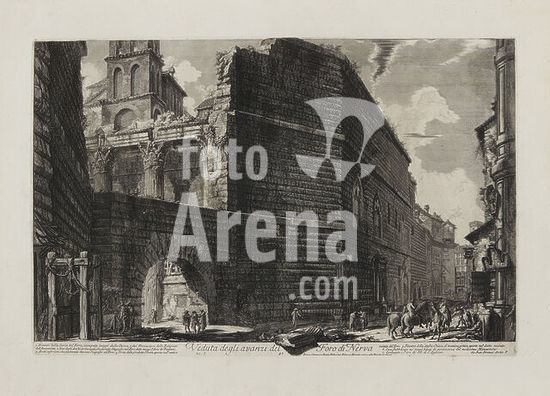
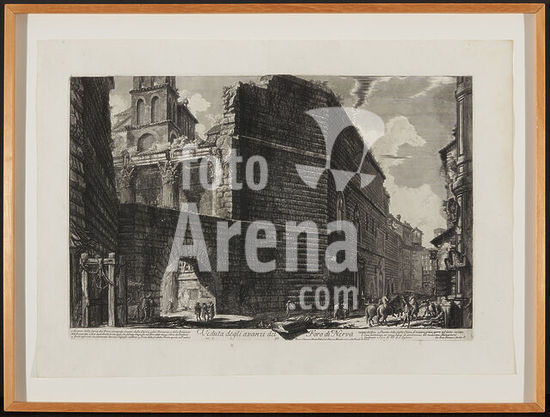
akg8552294 Piranesi, Giovanni-Battista. Rom 1720 - 1778. nach. Drei Radierungen:. a) Ponte Salario. 52,5 x 74,5cm.b) Foro di Nerva. 50,5 x 72cm.c) Spelonca il Bergantino. 52 x 71cm.. Einzeln gerahmt. Kunsthandel, Van Ham.
DC
akg8552296 Piranesi, Giovanni-Battista. Rom 1720 - 1778. nach. Drei Radierungen:. a) Ponte Salario. 52,5 x 74,5cm.b) Foro di Nerva. 50,5 x 72cm.c) Spelonca il Bergantino. 52 x 71cm.. Einzeln gerahmt. Kunsthandel, Van Ham.
DC
akg8552297 Piranesi, Giovanni-Battista. Rom 1720 - 1778. nach. Drei Radierungen:. a) Ponte Salario. 52,5 x 74,5cm.b) Foro di Nerva. 50,5 x 72cm.c) Spelonca il Bergantino. 52 x 71cm.. Einzeln gerahmt. Kunsthandel, Van Ham.
DC
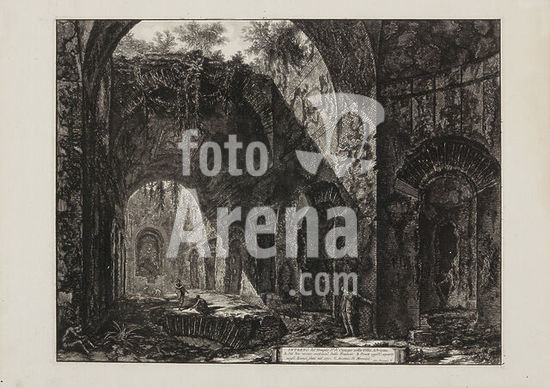
akg8552310 Piranesi, Giovanni-Battista. Rom 1720 - 1778. nach. Zwei Radierungen:. a) Interno del Tempio di Canopo. 71 x 72cm.b) Palazzo dell Accademia. 52,5 x 74cm.. Einzeln gerahmt. Kunsthandel, Van Ham.
DC
akg8552306 Piranesi, Giovanni-Battista. Rom 1720 - 1778. nach. Drei Radierungen:. a) Veduta di un Eliocamino. 51 x 71,5cm.b) Interna della Villa Mecenate. 51,5 x 72cm.c) Avanzi della Villa Mecenate. 52 x 74,5.. Einzeln gerahmt. Kunsthandel, Van Ham.
DC
akg8552304 Piranesi, Giovanni-Battista. Rom 1720 - 1778. nach. Drei Radierungen:. a) Veduta di un Eliocamino. 51 x 71,5cm.b) Interna della Villa Mecenate. 51,5 x 72cm.c) Avanzi della Villa Mecenate. 52 x 74,5.. Einzeln gerahmt. Kunsthandel, Van Ham.
DC
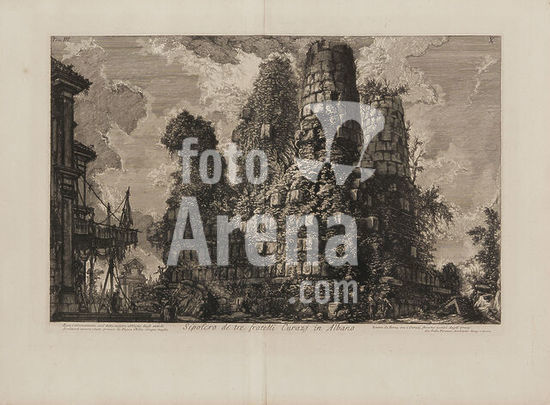
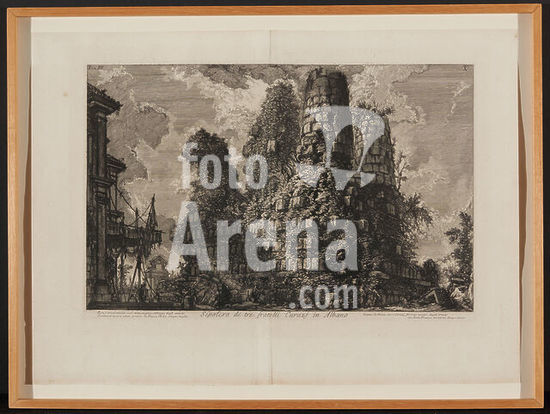
akg8552301 Piranesi, Giovanni-Battista. Rom 1720 - 1778. nach. Drei Radierungen:. a) Piazza di Monte Callo. 55,5 x 78cm.b) Tempio di Giove Tonante. 52,5 x 75cm.c) Sepulcro de tre fratelli Curazi. 54 x 75cm.. Einzeln gerahmt. Kunsthandel, Van Ham.
DC
akg8552315 Piranesi, Giovanni-Battista. Rom 1720 - 1778. nach. Zwei Rdierungen:. a) Casa Aurea. 51,5 x 73,5cm.b) Petersplatz in Rom. 51,5 x 66cm.. Einzeln gerahmt. Kunsthandel, Van Ham.
DC
akg8552311 Piranesi, Giovanni-Battista. Rom 1720 - 1778. nach. Zwei Radierungen:. a) Interno del Tempio di Canopo. 71 x 72cm.b) Palazzo dell Accademia. 52,5 x 74cm.. Einzeln gerahmt. Kunsthandel, Van Ham.
DC
akg8552307 Piranesi, Giovanni-Battista. Rom 1720 - 1778. nach. Drei Radierungen:. a) Veduta di un Eliocamino. 51 x 71,5cm.b) Interna della Villa Mecenate. 51,5 x 72cm.c) Avanzi della Villa Mecenate. 52 x 74,5.. Einzeln gerahmt. Kunsthandel, Van Ham.
DC
akg8552314 Piranesi, Giovanni-Battista. Rom 1720 - 1778. nach. Zwei Rdierungen:. a) Casa Aurea. 51,5 x 73,5cm.b) Petersplatz in Rom. 51,5 x 66cm.. Einzeln gerahmt. Kunsthandel, Van Ham.
DC
akg8552302 Piranesi, Giovanni-Battista. Rom 1720 - 1778. nach. Drei Radierungen:. a) Piazza di Monte Callo. 55,5 x 78cm.b) Tempio di Giove Tonante. 52,5 x 75cm.c) Sepulcro de tre fratelli Curazi. 54 x 75cm.. Einzeln gerahmt. Kunsthandel, Van Ham.
DC
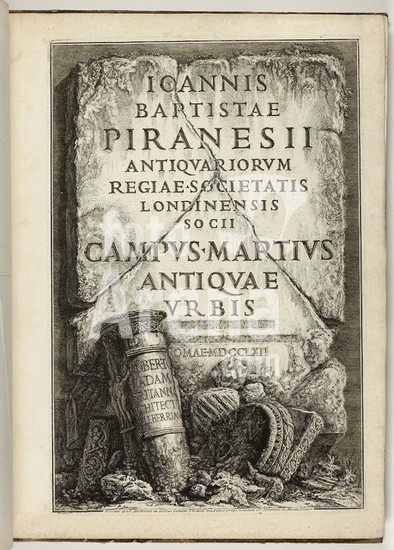
alb4152764 The Campus Martius of Ancient Rome, the Work of G.B. Piranesi, Fellow of the Royal Society of Antiquaries, London. Giovanni Battista Piranesi; Italian, 1720-1778. Date: 1762. Dimensions: 580 x 430 x 24 mm (closed); 837 x 580 mm (open). Book with forty-nine etchings in black on ivory wove paper. Origin: Italy. Museum: The Chicago Art Institute, Chicago, USA.
DC
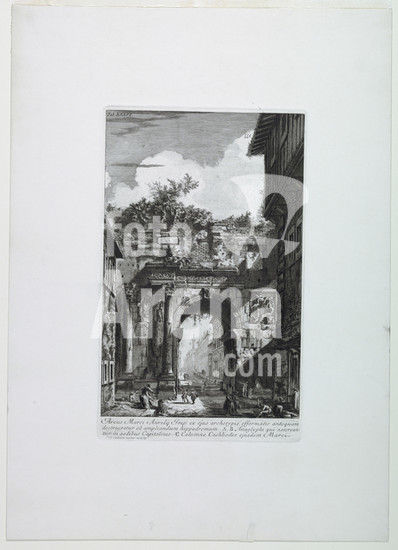
alb5176123 The Arch of Marcus Aurelius, Giovanni Battista Piranesi, Italian, 17201778, Etching, Vertical rectangle. The arch is seen, partially in ruins, spanning a city street (the Corso, Rome). Below, the inscription: 'ARCUS MARCI AURELIT IMP. EX EJUS ARCHETYPIS, EFFORMATIS ANTE QUAM / DESTRUERETUR OB AMPLIANDUM HIPPODROMUM . A, B. ANAGLYPHI QUI ASSERVAN -/ TUR IN AEDIBUS CAPITOLINIS. C. COLUMNA COCHLIODES EJUSDEM MARCI'. Published in 'Il Campo Marsio dell'antica Roma', pl. 36 (See 1956-15-1). Calcographia Nazionale reprint., Italy, 1762, Print, Print.
DC
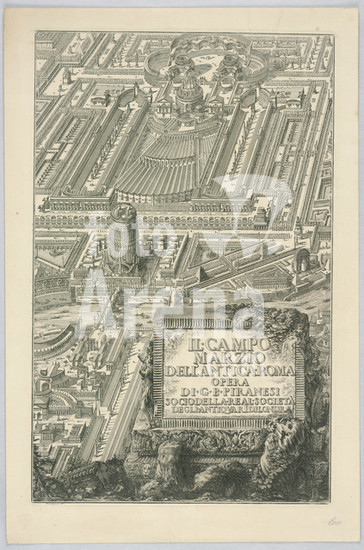
alb5167091 Title page, 'Il Campo Marzio dell'Antica Roma,' from part 20 of 'The Complete Works of Giovanni Battista Piranesi', Giovanni Battista Piranesi, Italian, 17201778, Francesco Piranesi, Italian, about 1756 - 1810, Etching on off-white laid paper, Small section of the Campus Martius in vertical rectangle. At bottom right, a tablet overgrown with vegetation is inscribed with title of the section: 'IL CAMPO / MARZIO / DELL'ANTICA ROMA / OPERA / DI G B PIRANESI / SOCIO DELLA REAL SOCIETA DEGLI ANTIQVARI DI LONDRA., 1800, architecture, Print, Print.
DC
alb4152724 View of the Remains of the Two Rows of Columns in the Temple of Neptune which [originally] formed the colonnades along the sides of the cella, and supported the uppermost part of the roof, from Different views of Paestum. Giovanni Battista Piranesi; Italian, 1720-1778. Date: 1778. Dimensions: 495 x 671 mm (image); 500 x 677 mm (plate); 558 x 762 mm (sheet). Etching on ivory laid paper. Origin: Italy. Museum: The Chicago Art Institute, Chicago, USA.
DC
alb4151767 A., B. View of the remains of the two rows of columns in the Temple of Neptune which originally formed the colonnades along the sides of the cella, and supported the uppermost part of the roof, from Different views of Paestum. Giovanni Battista Piranesi; Italian, 1720-1778. Date: 1778. Dimensions: 498 x 675 mm (image); 503 x 684 mm (plate); 525 x 715 mm (sheet). Etching on ivory laid paper. Origin: Italy. Museum: The Chicago Art Institute.
DC
akg6005291 Giovanni Battista Piranesi (1720-1778). A. View of the Tomb of Licinianus Piso on the ancient Appian Way...B. Tomb of the Cornelii..., 1760-1778. Etching. Inv. Nr. M. 65.46.3, Los Angeles, County Museum of Art.
DC
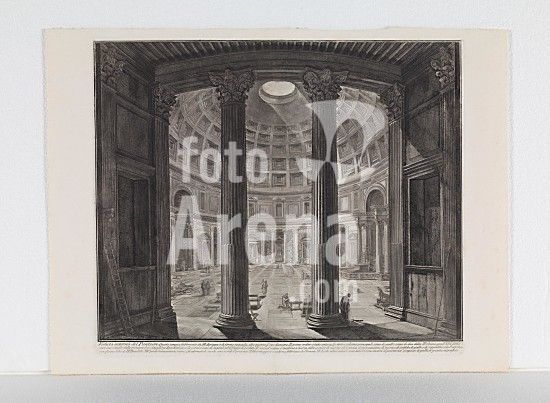
alb3790526 Giovanni Battista Piranesi / 'The interior of the Pantheon'. 1769. Etching on paper. Museum: Museo del Prado, Madrid, España.
DC
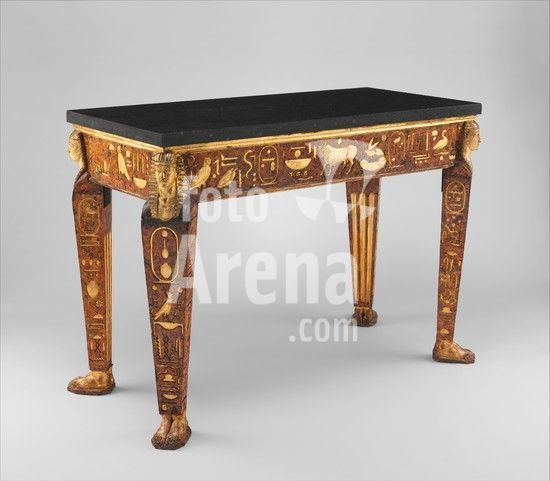
alb3621723 Table. Culture: Italian, Rome. Dimensions: 35 3/8 x 48 5/8 x 23 in. (89.9 x 123.5 x 58.4 cm.). Date: ca. 1775-80.Arriving from Dresden in Rome in 1755, the historian of classical art Johann Joachim Winckelmann (1717-1768) stepped into a different, intensely stimulating world. The sophisticated international community settled there was experiencing a rapidly growing fascination with the ancient Mediterranean civilizations. As librarian to the collector Cardinal Alessandro Albani (1692-1779), Winckelmann spent nine productive years in the intense study of Etruscan, Greek, classical Roman, and Egyptian works. He found them "in the galleries, vaults, and gardens of Roman palaces, at Naples, and at the new excavations of Herculaneum."[1] During ancient Roman times, Egyptian monuments, such as obelisks and statues, and precious materials, such as alabaster, that formerly decorated the palaces of the pharaohs and temples on the banks of the Nile (for example, two panels on the Farnese table; see acc. no. 58.57a-d) were brought as spoils to Rome and were used to embellish public places and the imperial residences. The constant presence of Egyptian art in Italy occasionally inspired artisans of later eras to incorporate its mysterious decorative motifs into their own inventions. Sometimes it was the mere citation of a detail, such as a sphinx's paw used to support a Renaissance cassone or cabinet.[2] And because there was no understanding of pharaonic traditions and no knowledge of the land of Egypt or of its ancient writing, European artisans and scholars were unable to distinguish pharaonic originals from imperial Roman copies or interpretations. On a large scale, the frescoes by Raphael and his studio for the Sala dell'Incendio in the Vatican and the Sala Egiziana in the Palazzo Massimo alle Colonne are two of a few grand Italian interior decorations with Egyptianizing details that predate the Egyptomania that seized Europe in the wake of Napoleon's military campaign along the Nile in 1798 (see the catalogue entry for acc. no. 26.168.77).[3]Winckelmann's patron Alessandro Albani was one of the first connoisseurs in early-eighteenth-century Rome to consider in a scholarly manner the nature and significance of Egyptian art. At his villa in Rome he built a salon decorated in the Egyptian style, which he filled with ancient Egyptian and Roman works, creating what was "probably the first such historical reconstruction in modern times."[4] A few years later, the antiquarian, architect, and engraver Giovanni Battista Piranesi (1720-1778) made designs (never executed) for chimneypieces in the Egyptian taste. These extraordinary etchings contained a wealth of Egyptian ornament arranged in an imaginative, purely decorative manner. They became "the ultimate anthology of Egyptian motifs for the remainder of the century."[5] Meanwhile, the archaeologists were continuing to unearth Egyptian works in Rome. Soon European "Neo-classical designers [were drawing] on Egypt in much the same way that Rococo designers had drawn on China."[6]The design of this table reflects the Neo-Egyptian fashion in Rome in the late 1770s. The painted finish simulates the beautiful greenish red of Aswan granite. It is highlighted with flecks of gilding that harmonize with the gilded hieroglyphs and the sphinx heads that crown the legs, which terminate in human feet, also gilt. The hieroglyphs and cartouches, some of which are similar to those used by Piranesi in his chimney-piece designs, are identifiable, but their arrangement on the table's aprons and legs does not convey a logical message. These bold details are pulled from their context on ancient monuments and arranged in a merely decorative manner.Who commissioned this striking piece is not known. The closest connection that can be made is with a table depicted in Laurent Pécheux's attractive 1777 portrait of Margherita Gentili Boccapaduli standing in the room devoted to her natural-history collection and other curiosities.[7] The tabletop in the portrait incorporates a mosaic of various marbles and other stones, arranged in a way that is typical of souvenirs of a grand tour. It can be assumed that the Museum's table once had a very similar top. Such highly decorative displays of stones, many of which are semiprecious, later became collector's items in their own right. This may be why the original top of the Museum's table was removed and replaced with one of black granite. There is a related table in a New York private collection, and another was recently recorded on the New York art market.[8]This intriguing object was among the first gifts that Robert Lehman made to the Metropolitan Museum, which became one of his great interests. In 1975 he bequeathed his collection to the Museum, together with the gift of a new wing to house it.[Wolfram Koeppe 2006]Footnotes:[1] Lorenz Eitner. Neoclassicism and Romanticism, 1750-1850: Sources and Documents. 2 vols. Englewood Cliffs, N.J., 1970, vol. 1, p. 13. See also Johann Joachim Winckelmann. The History of Ancient Art. 4 vols. Trans. G. Henry Lodge. Boston, 1880.[2] Der Glanz der Farnese: Kunst und Sammelleidenschaft in der Renaissance. Exh. cat., Palazzo Ducale di Colorno, Parma; Haus der Kunst, Munich; and Galleria Nazionale di Capodimonte, Naples. Munich, 1995, p. 55, fig. 5.[3] A passion for the Egyptian style before Napoleon's era was not limited to Italy. Johann M. Dinglinger's Apis Altar of 1731 in the Green Vault at Dresden is a rich compendium of ancient Egyptian motifs, surmounted by an obelisk; see Dirk Syndram. Die Ägyptenrezeption unter August dem Starken: Der "Apis-Altar" Johann Melchior Dinglingers. Sonderbände der Antiken Welt. Zaberns Bildbände zur Archäologie. Mainz am Rhein, 1999, pp. 60-61. Queen Marie Antoinette adored the style (see the catalogue entry for acc. no. 41.205.1-3a,b). And, recognizing the innate appeal of Egyptian objects, David Roentgen, marketing genius sans pareil among European cabinetmakers, placed a sphinx, symbol of royal power and feminine wisdom, on either side of the writing surface of a desk that he designed in 1783 with Catherine the Great of Russia specifically in mind; see Dietrich Fabian. Abraham und David Roentgen: Das noch aufgefundene Gesamtwerk ihrer Möbel- und Uhrenkunst in Verbindung mit der Uhrmacherfamilie Kinzing in Neuwied. Leben und Werk, Verzeichnis der Werke, Quellen. Bad Neustadt, 1996, p. 100, no. 213.[4] Michael Pantazzi. "Italy and the Grand Tour." In Jean-Marcel Humbert, Michael Pantazzi, and Christine Ziegler. Egyptomania: Egypt in Western Art, 1730-1930. Exh. cat. Musée du Louvre, Paris; National Gallery of Canada, Ottawa; and Kunsthistorisches Museum, Vienna. Ottawa and Paris, 1994, p. 39.[5] Jean-Marcel Humbert, Michael Pantazzi, and Christine Ziegler. Egyptomania: Egypt in Western Art, 1730-1930. Exh. cat. Musée du Louvre, Paris; National Gallery of Canada, Ottawa; and Kunsthistorisches Museum, Vienna. Ottawa and Paris, 1994, p. 69, no. 16 (entry by Michael Pantazzi) and for Piranesi's chimneypiece designs, see pp. 69-74, nos. 16-21 (entries by Michael Pantazzi).[6] John Fleming and Hugh Honour. The Penguin Dictionary of Decorative Arts. New ed. London and New York, 1989, p. 275. For chinoiserie, see Alain Gruber. "Chinoiserie." In The History of Decorative Arts: Classicism and the Baroque in Europe, ed. Alain Gruber. Trans. John Goodman. New York, 1996.[7] Alvar González-Palacios, ed. Fasto romano: Dipinti, sculture, arredi dai palazzi di Roma. Exh. cat., Palazzo Sacchetti. Rome, 1991, pp. 141-42, no. 60, pl. XXIV (entry by Alvar González-Palacios). See also John Morley. The History of Furniture: Twenty-five Centuries of Style and Design in the Western Tradition. Boston, 1999, pp. 292-93, and fig. 603 (the present table).[8] For the first, see Jean-Marcel Humbert, Michael Pantazzi, and Christine Ziegler. Egyptomania: Egypt in Western Art, 1730-1930. Exh. cat. Musée du Louvre, Paris; National Gallery of Canada, Ottawa; and Kunsthistorisches Museum, Vienna. Ottawa and Paris, 1994, pp. 76-77, no. 23 (entry by Michael Pantazzi). The Museum's table is number 42 in that exhibition catalogue (it was shown only at the Paris venue). For the second, see catalogue of a sale at Christie's, New York, 24 September 1998, p. 149, lot 295. Museum: Metropolitan Museum of Art, New York, USA.
DC
0165515 ROME: CASTEL SANT ANGELO. /nThe Castel Sant Angelo, or the Mausoleum of Hadrian. Etching by Giovanni Battista Piranesi from 'Vedute di Roma (Views of Rome),' c1756.
DC
0165513 ROME: PANTHEON. /nInterior of the Pantheon in Rome. Etching and engraving by Giovanni Battista Piranesi, c1756.
DC
0165539 PIRANESI: ARCHITECTURE. /n'Architectural Fantasy.' Pen and ink and wash drawing by Giovanni Battista Piranesi, mid 18th century.
DC
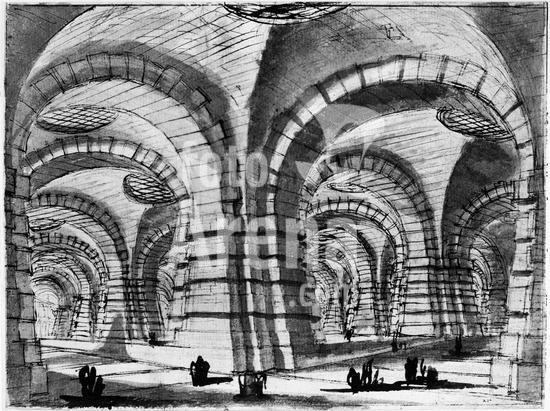
0175833 PIRANESI: PRISON INTERIOR. /nPen and ink and chalk drawing by Giovanni Battista Piranes, mid or late 18th century.
DC

Total de Resultados: 93

Página 1 de 1