




















































Busque também em nossas outras coleções:

Data da imagem:
Pauta
ver mais opções...
Agência
ver mais opções...
Fotógrafo
ver mais opções...
Pais
ver mais opções...
Estado
ver mais opções...
Cidade
ver mais opções...
Local
Tipo de licença
Orientação
Coleção
ver mais opções...

Total de Resultados: 579

Página 1 de 6

20250404_zsa_l164_012 April 4, 2025, Napoli, Italy: Claudio De Vincenti is an Italian economist and politician. He has authored numerous studies in the field of economics, with a focus on market regulation and competition. During his career, he has held various institutional and governmental positions: Undersecretary at the Ministry of Economic Development in the Monti and Letta governments. Deputy Minister of Economic Development with responsibility for energy in the Renzi government. Undersecretary to the Presidency of the Council of Ministers with responsibility for territorial cohesion and economic planning. Minister for Territorial Cohesion and the Mezzogiorno in the Gentiloni Government (Credit Image: © Antonio Balasco/LPS/Zuma Press/Fotoarena Wire)
DC
20250404_zsa_l164_004 April 4, 2025, Napoli, Italy: Claudio De Vincenti is an Italian economist and politician. He has authored numerous studies in the field of economics, with a focus on market regulation and competition. During his career, he has held various institutional and governmental positions: Undersecretary at the Ministry of Economic Development in the Monti and Letta governments. Deputy Minister of Economic Development with responsibility for energy in the Renzi government. Undersecretary to the Presidency of the Council of Ministers with responsibility for territorial cohesion and economic planning. Minister for Territorial Cohesion and the Mezzogiorno in the Gentiloni Government (Credit Image: © Antonio Balasco/LPS/Zuma Press/Fotoarena Wire)
DC
20250303_zaf_x99_030 CHENGDU, March 3, 2025 This undated combo photo shows some of the cultural creative products designed by Zeng Zhou. Zeng Zhou, a cultural creative product designer and planning operator born in the 1990s, has been fascinated with animation and movie peripheral products as well as trendy toys and figurines since his childhood, dreaming of developing cultural creative products that embody the charm of traditional Chinese culture. . In 2018, Zeng quit his job at a game designing institution to become an independent designer. Inspired by the iconic bronze artifacts including the Sacred Tree, masks and animal faces on display at the Sanxingdui Museum, he designed numerous stylish, playful, and adorable cultural creative works by blending in contemporary trendy elements. His creations brought him multiple awards in design competitions.. Moreover, Zeng initiated a contest of creative ideas on static models, and has operated it for two consecutive years. Participants from across the country flocked in to showcase their works and exchange their minds. (Credit Image: © Wang Xi/Xinhua/Zuma Press/Fotoarena)
DC
20250222_zaf_x99_417 CHONGQING, Feb. 23, 2025 A worker operates at a workshop of Chongqing Honggang Numerical Control Machine Tool Co., Ltd. in southwest China's Chongqing Municipality, Feb. 22, 2025. In recent years, the local government has launched a series of policies for the high-quality development of the city's private sector, covering areas such as technological innovation, market expansion and financial support. In 2024, the economic value added of Chongqing's private sector reached 1.98 trillion yuan (Credit Image: © Wang Quanchao/Xinhua/Zuma Press/Fotoarena)
DC
20250222_zaf_x99_412 CHONGQING, Feb. 23, 2025 Workers operate at a workshop of Chongqing Honggang Numerical Control Machine Tool Co., Ltd. in southwest China's Chongqing Municipality, Feb. 22, 2025. In recent years, the local government has launched a series of policies for the high-quality development of the city's private sector, covering areas such as technological innovation, market expansion and financial support. In 2024, the economic value added of Chongqing's private sector reached 1.98 trillion yuan (Credit Image: © Wang Quanchao/Xinhua/Zuma Press/Fotoarena)
DC
20241218_zaf_x99_162 CHONGQING, Dec. 19, 2024 An aerial drone photo shows a ship sailing in Wuxia Gorge, one of the Three Gorges on the Yangtze River, in Wushan County, southwest China's Chongqing, Dec. 18, 2024.. Red leaves have recently dyed mountains along the Wuxia Gorge, creating a picturesque scenery that attracts numerous tourists. In the meantime, authorities of Wushan County are committed to developing cultural tourism by hosting the Wushan Red Leaf Festival and other related programs. (Credit Image: © Wang Quanchao/Xinhua/Zuma Press/Fotoarena)
DC
20241218_zaf_x99_161 CHONGQING, Dec. 19, 2024 This photo shows a scenic spot near Wuxia Gorge, one of the Three Gorges on the Yangtze River, in Wushan County, southwest China's Chongqing, Dec. 18, 2024.. Red leaves have recently dyed mountains along the Wuxia Gorge, creating a picturesque scenery that attracts numerous tourists. In the meantime, authorities of Wushan County are committed to developing cultural tourism by hosting the Wushan Red Leaf Festival and other related programs. (Credit Image: © Wang Quanchao/Xinhua/Zuma Press/Fotoarena)
DC
20241218_zaf_x99_160 CHONGQING, Dec. 19, 2024 This photo shows a view of Wuxia Gorge, one of the Three Gorges on the Yangtze River, in Wushan County, southwest China's Chongqing, Dec. 18, 2024.. Red leaves have recently dyed mountains along the Wuxia Gorge, creating a picturesque scenery that attracts numerous tourists. In the meantime, authorities of Wushan County are committed to developing cultural tourism by hosting the Wushan Red Leaf Festival and other related programs. (Credit Image: © Wang Quanchao/Xinhua/Zuma Press/Fotoarena)
DC
20241218_zaf_x99_159 CHONGQING, Dec. 19, 2024 This photo shows a view of Wuxia Gorge, one of the Three Gorges on the Yangtze River, in Wushan County, southwest China's Chongqing, Dec. 18, 2024.. Red leaves have recently dyed mountains along the Wuxia Gorge, creating a picturesque scenery that attracts numerous tourists. In the meantime, authorities of Wushan County are committed to developing cultural tourism by hosting the Wushan Red Leaf Festival and other related programs. (Credit Image: © Wang Quanchao/Xinhua/Zuma Press/Fotoarena)
DC
20241218_zaf_x99_156 CHONGQING, Dec. 19, 2024 An aerial drone photo shows a cruise sailing in Wuxia Gorge, one of the Three Gorges on the Yangtze River, in Wushan County, southwest China's Chongqing, Dec. 18, 2024.. Red leaves have recently dyed mountains along the Wuxia Gorge, creating a picturesque scenery that attracts numerous tourists. In the meantime, authorities of Wushan County are committed to developing cultural tourism by hosting the Wushan Red Leaf Festival and other related programs. (Credit Image: © Wang Quanchao/Xinhua/Zuma Press/Fotoarena)
DC
20241218_zaf_x99_157 CHONGQING, Dec. 19, 2024 An aerial drone photo shows tourists enjoying themselves at a scenic spot near Wuxia Gorge, one of the Three Gorges on the Yangtze River, in Wushan County, southwest China's Chongqing, Dec. 18, 2024.. Red leaves have recently dyed mountains along the Wuxia Gorge, creating a picturesque scenery that attracts numerous tourists. In the meantime, authorities of Wushan County are committed to developing cultural tourism by hosting the Wushan Red Leaf Festival and other related programs. (Credit Image: © Wang Quanchao/Xinhua/Zuma Press/Fotoarena)
DC
20241218_zaf_x99_158 CHONGQING, Dec. 19, 2024 Tourists take photos of red leaves at a scenic spot overlooking Wuxia Gorge, one of the Three Gorges on the Yangtze River, in Wushan County, southwest China's Chongqing, Dec. 18, 2024.. Red leaves have recently dyed mountains along the Wuxia Gorge, creating a picturesque scenery that attracts numerous tourists. In the meantime, authorities of Wushan County are committed to developing cultural tourism by hosting the Wushan Red Leaf Festival and other related programs. (Credit Image: © Wang Quanchao/Xinhua/Zuma Press/Fotoarena)
DC
20241218_zaf_x99_154 CHONGQING, Dec. 19, 2024 An aerial drone photo shows a view of a scenic spot overlooking Wuxia Gorge, one of the Three Gorges on the Yangtze River, in Wushan County, southwest China's Chongqing, Dec. 18, 2024.. Red leaves have recently dyed mountains along the Wuxia Gorge, creating a picturesque scenery that attracts numerous tourists. In the meantime, authorities of Wushan County are committed to developing cultural tourism by hosting the Wushan Red Leaf Festival and other related programs. (Credit Image: © Wang Quanchao/Xinhua/Zuma Press/Fotoarena)
DC
20241218_zaf_x99_152 CHONGQING, Dec. 19, 2024 An aerial drone photo shows tourists enjoying themselves at a scenic spot near Wuxia Gorge, one of the Three Gorges on the Yangtze River, in Wushan County, southwest China's Chongqing, Dec. 18, 2024.. Red leaves have recently dyed mountains along the Wuxia Gorge, creating a picturesque scenery that attracts numerous tourists. In the meantime, authorities of Wushan County are committed to developing cultural tourism by hosting the Wushan Red Leaf Festival and other related programs. (Credit Image: © Wang Quanchao/Xinhua/Zuma Press/Fotoarena)
DC
20241218_zaf_x99_153 CHONGQING, Dec. 19, 2024 An aerial drone photo shows tourists enjoying themselves at a scenic spot near Wuxia Gorge, one of the Three Gorges on the Yangtze River, in Wushan County, southwest China's Chongqing, Dec. 18, 2024.. Red leaves have recently dyed mountains along the Wuxia Gorge, creating a picturesque scenery that attracts numerous tourists. In the meantime, authorities of Wushan County are committed to developing cultural tourism by hosting the Wushan Red Leaf Festival and other related programs. (Credit Image: © Wang Quanchao/Xinhua/Zuma Press/Fotoarena)
DC
20241218_zaf_x99_155 CHONGQING, Dec. 19, 2024 An aerial drone photo shows a view of Wuxia Gorge, one of the Three Gorges on the Yangtze River, in Wushan County, southwest China's Chongqing, Dec. 18, 2024.. Red leaves have recently dyed mountains along the Wuxia Gorge, creating a picturesque scenery that attracts numerous tourists. In the meantime, authorities of Wushan County are committed to developing cultural tourism by hosting the Wushan Red Leaf Festival and other related programs. (Credit Image: © Wang Quanchao/Xinhua/Zuma Press/Fotoarena)
DC
20241218_zaf_x99_151 CHONGQING, Dec. 19, 2024 Tourists take selfies at a scenic spot near Wuxia Gorge, one of the Three Gorges on the Yangtze River, in Wushan County, southwest China's Chongqing, Dec. 18, 2024.. Red leaves have recently dyed mountains along the Wuxia Gorge, creating a picturesque scenery that attracts numerous tourists. In the meantime, authorities of Wushan County are committed to developing cultural tourism by hosting the Wushan Red Leaf Festival and other related programs. (Credit Image: © Wang Quanchao/Xinhua/Zuma Press/Fotoarena)
DC
20241218_zaf_x99_150 CHONGQING, Dec. 19, 2024 An aerial drone photo shows tourists enjoying themselves at a scenic spot near Wuxia Gorge, one of the Three Gorges on the Yangtze River, in Wushan County, southwest China's Chongqing, Dec. 18, 2024.. Red leaves have recently dyed mountains along the Wuxia Gorge, creating a picturesque scenery that attracts numerous tourists. In the meantime, authorities of Wushan County are committed to developing cultural tourism by hosting the Wushan Red Leaf Festival and other related programs. (Credit Image: © Wang Quanchao/Xinhua/Zuma Press/Fotoarena)
DC
20241218_zaf_x99_149 CHONGQING, Dec. 19, 2024 Tourists enjoy the scenery at a scenic spot near Wuxia Gorge, one of the Three Gorges on the Yangtze River, in Wushan County, southwest China's Chongqing, Dec. 18, 2024.. Red leaves have recently dyed mountains along the Wuxia Gorge, creating a picturesque scenery that attracts numerous tourists. In the meantime, authorities of Wushan County are committed to developing cultural tourism by hosting the Wushan Red Leaf Festival and other related programs. (Credit Image: © Wang Quanchao/Xinhua/Zuma Press/Fotoarena)
DC
20241218_zaf_x99_148 CHONGQING, Dec. 19, 2024 This photo shows a view of Wuxia Gorge, one of the Three Gorges on the Yangtze River, in Wushan County, southwest China's Chongqing, Dec. 18, 2024.. Red leaves have recently dyed mountains along the Wuxia Gorge, creating a picturesque scenery that attracts numerous tourists. In the meantime, authorities of Wushan County are committed to developing cultural tourism by hosting the Wushan Red Leaf Festival and other related programs. (Credit Image: © Wang Quanchao/Xinhua/Zuma Press/Fotoarena)
DC
20241218_zaf_x99_146 CHONGQING, Dec. 19, 2024 An aerial drone photo shows tourists enjoying themselves at a scenic spot near Wuxia Gorge, one of the Three Gorges on the Yangtze River, in Wushan County, southwest China's Chongqing, Dec. 18, 2024.. Red leaves have recently dyed mountains along the Wuxia Gorge, creating a picturesque scenery that attracts numerous tourists. In the meantime, authorities of Wushan County are committed to developing cultural tourism by hosting the Wushan Red Leaf Festival and other related programs. (Credit Image: © Wang Quanchao/Xinhua/Zuma Press/Fotoarena)
DC
20241218_zaf_x99_147 CHONGQING, Dec. 19, 2024 An aerial drone photo shows ships sailing in Wuxia Gorge, one of the Three Gorges on the Yangtze River, in Wushan County, southwest China's Chongqing, Dec. 18, 2024.. Red leaves have recently dyed mountains along the Wuxia Gorge, creating a picturesque scenery that attracts numerous tourists. In the meantime, authorities of Wushan County are committed to developing cultural tourism by hosting the Wushan Red Leaf Festival and other related programs. (Credit Image: © Wang Quanchao/Xinhua/Zuma Press/Fotoarena)
DC
20241213_zaf_x99_106 SHENZHEN, Dec. 13, 2024 This undated file photo shows a CL-1 humanoid robot performing heavy-load delivery tasks at a sci-tech company in Shenzhen, south China's Guangdong Province. The Guangdong-Hong Kong-Macao Greater Bay Area, with its outstanding capabilities in research and development and solid foundation for manufacturing, serves as a fertile ground for the development of humanoid robot sector.. In recent years, various vertical areas in the humanoid robot sector, ranging from basic components to system integration, have been flourishing in the Greater Bay Area. Numerous technology companies and research institutions have mushroomed here, infusing greater intelligence and dexterity into humanoid robot products, which are gradually deployed in fields of industrial operation, medical care, education and research, and others. (Credit Image: © Mao Siqian/Xinhua/Zuma Press/Fotoarena)
DC
20241203_zaf_x99_153 FOSHAN, Dec. 4, 2024 Craft artist Huang Zhiwei introduces one of his pottery sculptures at his art studio of Meitaowan in Foshan, south China's Guangdong Province, Dec. 3, 2024. Meitaowan, literally translated as ''bay of beautiful ceramics,'' has been known for its development in ceramic arts. The municipal government established this area by transforming old factory buildings into cultural facilities and creative spaces. It is now home to studios of numerous ceramic art masters and fashion brands that aim to drive urban renewal and industrial transformation. (Credit Image: © Cai Yang/Xinhua/Zuma Press/Fotoarena)
DC
20241203_zaf_x99_151 FOSHAN, Dec. 4, 2024 Workers assemble greenware at an art studio of Meitaowan in Foshan, south China's Guangdong Province, Dec. 3, 2024. Meitaowan, literally translated as ''bay of beautiful ceramics,'' has been known for its development in ceramic arts. The municipal government established this area by transforming old factory buildings into cultural facilities and creative spaces. It is now home to studios of numerous ceramic art masters and fashion brands that aim to drive urban renewal and industrial transformation. (Credit Image: © Cai Yang/Xinhua/Zuma Press/Fotoarena)
DC
20241203_zaf_x99_154 FOSHAN, Dec. 4, 2024 Craft artist Huang Wei introduces pottery pieces with creative elements at an art studio of Meitaowan in Foshan, south China's Guangdong Province, Dec. 3, 2024. Meitaowan, literally translated as ''bay of beautiful ceramics,'' has been known for its development in ceramic arts. The municipal government established this area by transforming old factory buildings into cultural facilities and creative spaces. It is now home to studios of numerous ceramic art masters and fashion brands that aim to drive urban renewal and industrial transformation. (Credit Image: © Cai Yang/Xinhua/Zuma Press/Fotoarena)
DC
20241203_zaf_x99_148 FOSHAN, Dec. 4, 2024 Craft artist Feng Zhiwei makes a pottery sculpture at his art studio of Meitaowan in Foshan, south China's Guangdong Province, Dec. 3, 2024. Meitaowan, literally translated as ''bay of beautiful ceramics,'' has been known for its development in ceramic arts. The municipal government established this area by transforming old factory buildings into cultural facilities and creative spaces. It is now home to studios of numerous ceramic art masters and fashion brands that aim to drive urban renewal and industrial transformation. (Credit Image: © Cai Yang/Xinhua/Zuma Press/Fotoarena)
DC
20241203_zaf_x99_150 FOSHAN, Dec. 4, 2024 A visitor views a pottery art piece at an art museum of Meitaowan in Foshan, south China's Guangdong Province, Dec. 3, 2024. Meitaowan, literally translated as ''bay of beautiful ceramics,'' has been known for its development in ceramic arts. The municipal government established this area by transforming old factory buildings into cultural facilities and creative spaces. It is now home to studios of numerous ceramic art masters and fashion brands that aim to drive urban renewal and industrial transformation. (Credit Image: © Cai Yang/Xinhua/Zuma Press/Fotoarena)
DC
20241203_zaf_x99_149 FOSHAN, Dec. 4, 2024 An apprentice polishes a ceramic piece at an art studio of Meitaowan in Foshan, south China's Guangdong Province, Dec. 3, 2024. Meitaowan, literally translated as ''bay of beautiful ceramics,'' has been known for its development in ceramic arts. The municipal government established this area by transforming old factory buildings into cultural facilities and creative spaces. It is now home to studios of numerous ceramic art masters and fashion brands that aim to drive urban renewal and industrial transformation. (Credit Image: © Cai Yang/Xinhua/Zuma Press/Fotoarena)
DC
20241203_zaf_x99_147 FOSHAN, Dec. 4, 2024 A worker glazes a ceramic piece at an art studio of Meitaowan in Foshan, south China's Guangdong Province, Dec. 3, 2024. Meitaowan, literally translated as ''bay of beautiful ceramics,'' has been known for its development in ceramic arts. The municipal government established this area by transforming old factory buildings into cultural facilities and creative spaces. It is now home to studios of numerous ceramic art masters and fashion brands that aim to drive urban renewal and industrial transformation. (Credit Image: © Cai Yang/Xinhua/Zuma Press/Fotoarena)
DC
20241203_zaf_x99_146 FOSHAN, Dec. 4, 2024 Craft artist Wu Weiwei introduces pottery pieces with creative elements at an art studio of Meitaowan in Foshan, south China's Guangdong Province, Dec. 3, 2024. Meitaowan, literally translated as ''bay of beautiful ceramics,'' has been known for its development in ceramic arts. The municipal government established this area by transforming old factory buildings into cultural facilities and creative spaces. It is now home to studios of numerous ceramic art masters and fashion brands that aim to drive urban renewal and industrial transformation. (Credit Image: © Cai Yang/Xinhua/Zuma Press/Fotoarena)
DC
58997873 Copenhagen South station (Danish: København Syd Station, previously Ny Ellebjerg Station) is a main line and S-train railway station in the district of Valby in southwestern Copenhagen, Denmark. The station is located on numerous railway and branch lines passing through or diverging from the main lines at this station, and is gradually being developed into a major transport hub for public transport in Copenhagen. Photo Credit: Kristian Tuxen Ladegaard Berg / SOPA Images/ Sipa USA/ Fotoarena
DC
20241024_zia_a189_356 October 24, 2024, Chantilly, Smithsonian National Air And Spa, United States: Handout Photo - Jonathan Rogers, chief of the Robotic Systems Technology Branch at NASAâ??s Johnson Space Center and former Robonaut project manager, answers questions about Robonaut 2 from museum guests at the Smithsonian National Air and Space Museumâ??s Steve F. Udvar-Hazy Center Thursday, Oct. 24, 2024, in Chantilly, Va. Robonaut 2, the first humanoid robot to fly to space, is displayed publicly for the first time near the space shuttle Discovery. Robonaut 2, often called â??R2â?, was originally sent to the International Space Station (ISS) by NASA in 2011. Developed in a unique partnership between NASAâ??s Johnson Space Center (JSC) in Houston, General Motors, and Oceaneering, R2 represents cutting-edge advancements in humanoid robotics. The robot is designed to assist astronauts with tasks that require both dexterity and precision, improving efficiency and safety for crew members aboard the ISS. The humanoid robot showcases numerous component technologies, including advanced vision systems, sophisticated image recognition capabilities, integrated sensors, and tendon hands with dexterous, lifelike motion. R2â??s intricate control algorithms enable it to handle tools, operate in close quarters, and execute tasks that demand a human-like level of sensitivity and accuracy. Since its time in space, R2 has captured attention from various industries beyond aerospace. Washington D.C., District of Columbia, United States on October 24, 2024. (Credit Image: © Abaca/Zuma Press/Fotoarena)
DC
20241024_zia_a189_355 October 24, 2024, Chantilly, Smithsonian National Air And Spa, United States: Handout Photo - Jonathan Rogers, chief of the Robotic Systems Technology Branch at NASAâ??s Johnson Space Center and former Robonaut project manager, participates in a media opportunity at the Smithsonian National Air and Space Museumâ??s Steve F. Udvar-Hazy Center Thursday, Oct. 24, 2024, in Chantilly, Va. Robonaut 2, the first humanoid robot to fly to space, is displayed publicly for the first time near the space shuttle Discovery. Robonaut 2, often called â??R2â?, was originally sent to the International Space Station (ISS) by NASA in 2011. Developed in a unique partnership between NASAâ??s Johnson Space Center (JSC) in Houston, General Motors, and Oceaneering, R2 represents cutting-edge advancements in humanoid robotics. The robot is designed to assist astronauts with tasks that require both dexterity and precision, improving efficiency and safety for crew members aboard the ISS. The humanoid robot showcases numerous component technologies, including advanced vision systems, sophisticated image recognition capabilities, integrated sensors, and tendon hands with dexterous, lifelike motion. R2â??s intricate control algorithms enable it to handle tools, operate in close quarters, and execute tasks that demand a human-like level of sensitivity and accuracy. Since its time in space, R2 has captured attention from various industries beyond aerospace. Washington D.C., District of Columbia, United States on October 24, 2024. (Credit Image: © Abaca/Zuma Press/Fotoarena)
DC
20241024_zia_a189_354 October 24, 2024, Chantilly, Smithsonian National Air And Spa, United States: Handout Photo - Robonaut 2 is seen at the Smithsonian National Air and Space Museumâ??s Steve F. Udvar-Hazy Center Thursday, Oct. 24, 2024, in Chantilly, Va. Robonaut 2, the first humanoid robot to fly to space, is displayed publicly for the first time near the space shuttle Discovery. Robonaut 2, often called â??R2â?, was originally sent to the International Space Station (ISS) by NASA in 2011. Developed in a unique partnership between NASAâ??s Johnson Space Center (JSC) in Houston, General Motors, and Oceaneering, R2 represents cutting-edge advancements in humanoid robotics. The robot is designed to assist astronauts with tasks that require both dexterity and precision, improving efficiency and safety for crew members aboard the ISS. The humanoid robot showcases numerous component technologies, including advanced vision systems, sophisticated image recognition capabilities, integrated sensors, and tendon hands with dexterous, lifelike motion. R2â??s intricate control algorithms enable it to handle tools, operate in close quarters, and execute tasks that demand a human-like level of sensitivity and accuracy. Since its time in space, R2 has captured attention from various industries beyond aerospace. Washington D.C., District of Columbia, United States on October 24, 2024. (Credit Image: © Abaca/Zuma Press/Fotoarena)
DC
20241024_zia_a189_353 October 24, 2024, Chantilly, Smithsonian National Air And Spa, United States: Handout Photo - Robonaut 2 is seen at the Smithsonian National Air and Space Museumâ??s Steve F. Udvar-Hazy Center Thursday, Oct. 24, 2024, in Chantilly, Va. Robonaut 2, the first humanoid robot to fly to space, is displayed publicly for the first time near the space shuttle Discovery. Robonaut 2, often called â??R2â?, was originally sent to the International Space Station (ISS) by NASA in 2011. Developed in a unique partnership between NASAâ??s Johnson Space Center (JSC) in Houston, General Motors, and Oceaneering, R2 represents cutting-edge advancements in humanoid robotics. The robot is designed to assist astronauts with tasks that require both dexterity and precision, improving efficiency and safety for crew members aboard the ISS. The humanoid robot showcases numerous component technologies, including advanced vision systems, sophisticated image recognition capabilities, integrated sensors, and tendon hands with dexterous, lifelike motion. R2â??s intricate control algorithms enable it to handle tools, operate in close quarters, and execute tasks that demand a human-like level of sensitivity and accuracy. Since its time in space, R2 has captured attention from various industries beyond aerospace. Washington D.C., District of Columbia, United States on October 24, 2024. (Credit Image: © Abaca/Zuma Press/Fotoarena)
DC
20241024_zia_a189_352 October 24, 2024, Chantilly, Smithsonian National Air And Spa, United States: Handout Photo - Robonaut 2 is seen at the Smithsonian National Air and Space Museumâ??s Steve F. Udvar-Hazy Center Thursday, Oct. 24, 2024, in Chantilly, Va. Robonaut 2, the first humanoid robot to fly to space, is displayed publicly for the first time near the space shuttle Discovery. Robonaut 2, often called â??R2â?, was originally sent to the International Space Station (ISS) by NASA in 2011. Developed in a unique partnership between NASAâ??s Johnson Space Center (JSC) in Houston, General Motors, and Oceaneering, R2 represents cutting-edge advancements in humanoid robotics. The robot is designed to assist astronauts with tasks that require both dexterity and precision, improving efficiency and safety for crew members aboard the ISS. The humanoid robot showcases numerous component technologies, including advanced vision systems, sophisticated image recognition capabilities, integrated sensors, and tendon hands with dexterous, lifelike motion. R2â??s intricate control algorithms enable it to handle tools, operate in close quarters, and execute tasks that demand a human-like level of sensitivity and accuracy. Since its time in space, R2 has captured attention from various industries beyond aerospace. Washington D.C., District of Columbia, United States on October 24, 2024. (Credit Image: © Abaca/Zuma Press/Fotoarena)
DC
20241024_zia_a189_351 October 24, 2024, Chantilly, Smithsonian National Air And Spa, United States: Handout Photo - Robonaut 2 is seen at the Smithsonian National Air and Space Museumâ??s Steve F. Udvar-Hazy Center Thursday, Oct. 24, 2024, in Chantilly, Va. Robonaut 2, the first humanoid robot to fly to space, is displayed publicly for the first time near the space shuttle Discovery. Robonaut 2, often called â??R2â?, was originally sent to the International Space Station (ISS) by NASA in 2011. Developed in a unique partnership between NASAâ??s Johnson Space Center (JSC) in Houston, General Motors, and Oceaneering, R2 represents cutting-edge advancements in humanoid robotics. The robot is designed to assist astronauts with tasks that require both dexterity and precision, improving efficiency and safety for crew members aboard the ISS. The humanoid robot showcases numerous component technologies, including advanced vision systems, sophisticated image recognition capabilities, integrated sensors, and tendon hands with dexterous, lifelike motion. R2â??s intricate control algorithms enable it to handle tools, operate in close quarters, and execute tasks that demand a human-like level of sensitivity and accuracy. Since its time in space, R2 has captured attention from various industries beyond aerospace. Washington D.C., District of Columbia, United States on October 24, 2024. (Credit Image: © Abaca/Zuma Press/Fotoarena)
DC
20241024_zia_a189_350 October 24, 2024, Chantilly, Smithsonian National Air And Spa, United States: Handout Photo - Robonaut 2 is seen at the Smithsonian National Air and Space Museumâ??s Steve F. Udvar-Hazy Center Thursday, Oct. 24, 2024, in Chantilly, Va. Robonaut 2, the first humanoid robot to fly to space, is displayed publicly for the first time near the space shuttle Discovery. Robonaut 2, often called â??R2â?, was originally sent to the International Space Station (ISS) by NASA in 2011. Developed in a unique partnership between NASAâ??s Johnson Space Center (JSC) in Houston, General Motors, and Oceaneering, R2 represents cutting-edge advancements in humanoid robotics. The robot is designed to assist astronauts with tasks that require both dexterity and precision, improving efficiency and safety for crew members aboard the ISS. The humanoid robot showcases numerous component technologies, including advanced vision systems, sophisticated image recognition capabilities, integrated sensors, and tendon hands with dexterous, lifelike motion. R2â??s intricate control algorithms enable it to handle tools, operate in close quarters, and execute tasks that demand a human-like level of sensitivity and accuracy. Since its time in space, R2 has captured attention from various industries beyond aerospace. Washington D.C., District of Columbia, United States on October 24, 2024. (Credit Image: © Abaca/Zuma Press/Fotoarena)
DC
20241024_zia_a189_349 October 24, 2024, Chantilly, Smithsonian National Air And Spa, United States: Handout Photo - Robonaut 2 is seen at the Smithsonian National Air and Space Museumâ??s Steve F. Udvar-Hazy Center Thursday, Oct. 24, 2024, in Chantilly, Va. Robonaut 2, the first humanoid robot to fly to space, is displayed publicly for the first time near the space shuttle Discovery. Robonaut 2, often called â??R2â?, was originally sent to the International Space Station (ISS) by NASA in 2011. Developed in a unique partnership between NASAâ??s Johnson Space Center (JSC) in Houston, General Motors, and Oceaneering, R2 represents cutting-edge advancements in humanoid robotics. The robot is designed to assist astronauts with tasks that require both dexterity and precision, improving efficiency and safety for crew members aboard the ISS. The humanoid robot showcases numerous component technologies, including advanced vision systems, sophisticated image recognition capabilities, integrated sensors, and tendon hands with dexterous, lifelike motion. R2â??s intricate control algorithms enable it to handle tools, operate in close quarters, and execute tasks that demand a human-like level of sensitivity and accuracy. Since its time in space, R2 has captured attention from various industries beyond aerospace. Washington D.C., District of Columbia, United States on October 24, 2024. (Credit Image: © Abaca/Zuma Press/Fotoarena)
DC
20241024_zia_a189_348 October 24, 2024, Chantilly, Smithsonian National Air And Spa, United States: Handout Photo - Robonaut 2 is seen at the Smithsonian National Air and Space Museumâ??s Steve F. Udvar-Hazy Center Thursday, Oct. 24, 2024, in Chantilly, Va. Robonaut 2, the first humanoid robot to fly to space, is displayed publicly for the first time near the space shuttle Discovery. Robonaut 2, often called â??R2â?, was originally sent to the International Space Station (ISS) by NASA in 2011. Developed in a unique partnership between NASAâ??s Johnson Space Center (JSC) in Houston, General Motors, and Oceaneering, R2 represents cutting-edge advancements in humanoid robotics. The robot is designed to assist astronauts with tasks that require both dexterity and precision, improving efficiency and safety for crew members aboard the ISS. The humanoid robot showcases numerous component technologies, including advanced vision systems, sophisticated image recognition capabilities, integrated sensors, and tendon hands with dexterous, lifelike motion. R2â??s intricate control algorithms enable it to handle tools, operate in close quarters, and execute tasks that demand a human-like level of sensitivity and accuracy. Since its time in space, R2 has captured attention from various industries beyond aerospace. Washington D.C., District of Columbia, United States on October 24, 2024. (Credit Image: © Abaca/Zuma Press/Fotoarena)
DC
20241024_zia_a189_347 October 24, 2024, Chantilly, Smithsonian National Air And Spa, United States: Handout Photo - Robonaut 2 is seen at the Smithsonian National Air and Space Museumâ??s Steve F. Udvar-Hazy Center Thursday, Oct. 24, 2024, in Chantilly, Va. Robonaut 2, the first humanoid robot to fly to space, is displayed publicly for the first time near the space shuttle Discovery. Robonaut 2, often called â??R2â?, was originally sent to the International Space Station (ISS) by NASA in 2011. Developed in a unique partnership between NASAâ??s Johnson Space Center (JSC) in Houston, General Motors, and Oceaneering, R2 represents cutting-edge advancements in humanoid robotics. The robot is designed to assist astronauts with tasks that require both dexterity and precision, improving efficiency and safety for crew members aboard the ISS. The humanoid robot showcases numerous component technologies, including advanced vision systems, sophisticated image recognition capabilities, integrated sensors, and tendon hands with dexterous, lifelike motion. R2â??s intricate control algorithms enable it to handle tools, operate in close quarters, and execute tasks that demand a human-like level of sensitivity and accuracy. Since its time in space, R2 has captured attention from various industries beyond aerospace. Washington D.C., District of Columbia, United States on October 24, 2024. (Credit Image: © Abaca/Zuma Press/Fotoarena)
DC
20231219_shc_z03_180 December 19, 2023 - Italy - An astronaut aboard the International Space Station took this photograph while orbiting over Puglia, the southeastern region of Italy that includes the heel of the boot. Settlements appear as lighter-toned, irregularly shaped zones that contrast with the numerous, angular, dark-green plots associated with agricultural land. The township of Bitonto lies in the center of the image. Toward the north, intensive urban development along the coast of the Adriatic Sea serves the tourist industry centered on Giovinazzo, Santo Spirito, and Palese. Bari, which is Puglia's capital and a major port, is just east of this scene. Road and railroad networks connect the regions settlements. One of the most prominent transportation features in this image is the straight corridor connecting Bitonto to Palese and Bari. The corridor appears as a light-toned linear feature in the image that includes highway SP91 and the immediately adjacent railroad. (Credit Image: © NASA Earth/ZUMA Press Wire)
DC
20231219_shc_z03_166 December 19, 2023 - Italy - DETAIL: An astronaut aboard the International Space Station took this photograph while orbiting over Puglia, the southeastern region of Italy that includes the heel of the boot. Settlements appear as lighter-toned, irregularly shaped zones that contrast with the numerous, angular, dark-green plots associated with agricultural land. The township of Bitonto lies in the center of the image. Toward the north, intensive urban development along the coast of the Adriatic Sea serves the tourist industry centered on Giovinazzo, Santo Spirito, and Palese. Bari, which is Puglia's capital and a major port, is just east of this scene. Road and railroad networks connect the regions settlements. One of the most prominent transportation features in this image is the straight corridor connecting Bitonto to Palese and Bari. The corridor appears as a light-toned linear feature in the image that includes highway SP91 and the immediately adjacent railroad. (Credit Image: © NASA Earth/ZUMA Press Wire)
DC
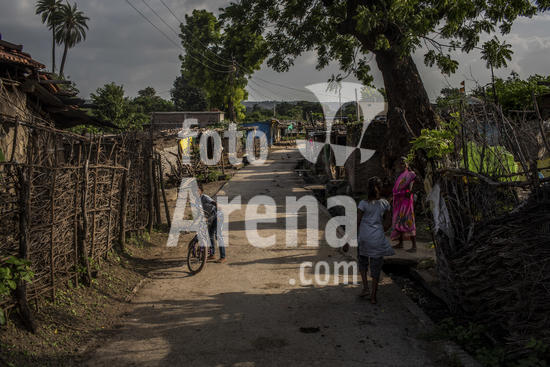
ny080918233104 Villagers in the quiet lanes of Vihirgaon, India, Sept. 5, 2018. DNA tests, camera traps, numerous spottings and pugmarks ? tiger footprints ? have pinned at least 13 human killings on a single, 5-year-old tigress that seems to have developed a taste for human flesh and has evaded capture several times. (Bryan Denton/The New York Times/Fotoarena)
DC
ny080918233803 Residents of Vihirgaon, India, after a fruitless hunt for the tiger believed to have killed 13 people, Sept. 5, 2018. DNA tests, camera traps, numerous spottings and pugmarks ? tiger footprints ? have pinned at least 13 human killings on a single, 5-year-old tigress that seems to have developed a taste for human flesh and has evaded capture several times. (Bryan Denton/The New York Times/Fotoarena)
DC
ny080918231304 Vishnu Nagorav Junghare, whose father was killed by a tiger, and his family at their home in the Pandharkawada area of India, Sept. 4, 2018. DNA tests, camera traps, numerous spottings and pugmarks ? tiger footprints ? have pinned at least 13 human killings on a single, 5-year-old tigress that seems to have developed a taste for human flesh and has evaded capture several times. (Bryan Denton/The New York Times/Fotoarena)
DC
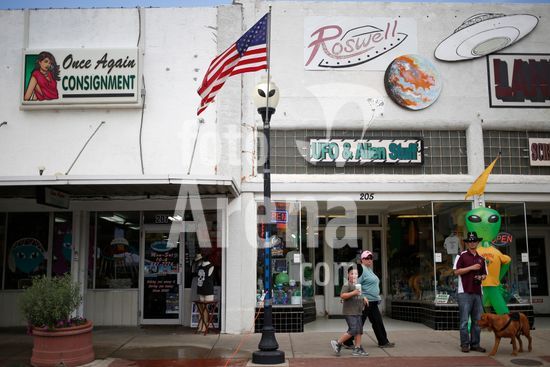
ny240621182305 FILE - People in Roswell, N.M., July 1, 2017, during the Roswell UFO Festival. A top-secret U.S. military balloon developed to spy on the Soviet nuclear program crashed in the desert near Roswell in 1947, leading to decades of conspiracy theories and numerous tourist trinkets. (Luke Sharrett/The New York Times/Fotoarena)
DC
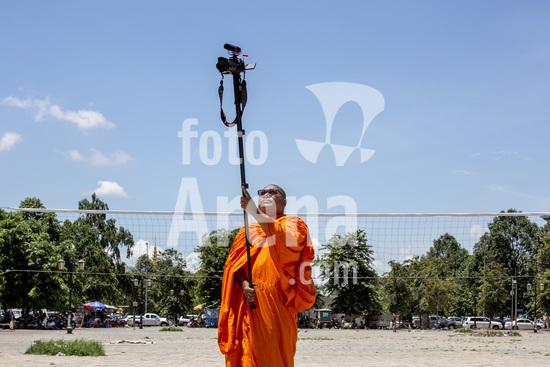
ny060717182503 -- PHOTO MOVED IN ADVANCE AND NOT FOR USE - ONLINE OR IN PRINT - BEFORE JULY 9, 2017. -- Luon Sovath records the emptiness of Freedom Park in Phnom Penh, Cambodia, after receiving news that the park had been sold to a developer, June 28, 2017. Freedom Park has become a symbol of dissent in Cambodia and has been the site of numerous large-scale protests. (Omar Havana/The New York Times/Fotoarena)
DC
ny201016161816 The Mount Zion cemetery in the Georgetown neighborhood of Washington, on the National Register of Historic Places, Sept. 21, 2016. Long overgrown and full of piles of broken gravestones, Mount Zion is the final resting place for numerous slaves and freedmen; the final burial was in 1950 and developers once had designs on the site before preservationists took action. (Lexey Swall/The New York Times)
DC
ny201016162416 Alicia deForest, who has joined her father in working to preserve the Mount Zion cemetery in Washington, Sept. 21, 2016. Long overgrown and full of piles of broken gravestones, Mount Zion is the final resting place for numerous slaves and freedmen; the final burial was in 1950 and developers once had designs on the site before preservationists took action. (Lexey Swall/The New York Times)
DC
ny201016162216 The Mount Zion cemetery in the Georgetown neighborhood of Washington, on the National Register of Historic Places, Sept. 21, 2016. Long overgrown and full of piles of broken gravestones, Mount Zion is the final resting place for numerous slaves and freedmen; the final burial was in 1950 and developers once had designs on the site before preservationists took action. (Lexey Swall/The New York Times)
DC

ny201016162017 The Mount Zion cemetery in the Georgetown neighborhood of Washington, on the National Register of Historic Places, Sept. 21, 2016. Long overgrown and full of piles of broken gravestones, Mount Zion is the final resting place for numerous slaves and freedmen; the final burial was in 1950 and developers once had designs on the site before preservationists took action. (Lexey Swall/The New York Times)
DC
ny211016105820 Toppled headstones at the Mount Zion cemetery in the Georgetown neighborhood of Washington, Sept. 21, 2016. Long overgrown and full of piles of broken gravestones, Mount Zion is the final resting place for numerous slaves and freedmen; the final burial was in 1950 and developers once had designs on the site before preservationists took action. (Lexey Swall/The New York Times/Fotoarena)
DC
975_05_SOV-B-H03020114N1 1969 leipzig spring fair, march 3, 1969, delegates of the ussr and gdr watching a demonstration of the first long-distance data transmission leipzig-moscow-leipzig (2,000km in each direction) using transmission equipment newly developed by the rafena enterprise in radeberg (gdr), a numerically controlled processing center which was directly connected via the telecommunication network with the computer center of the institute for machine tool engineering (enims) in moscow, seated in the first row (r to l) are v,a, kirillin, deputy chairman of the council of ministers and chairman of the committee of the ussr council of ministers for science and technology; walter ulbricht, first secretary of the central committee of the socialist unity party of germany (sed) and gdr state council chairman; lotte ulbricht; willi stoph, gdr prime minister; ussr ambassador to gdr, p,a, abrassimov; friedrich ebert, sed cc politbureau member; and rudi georgi, minister for verarbeitungsmaschinen und fahrzeugbau of the gdr.
DC
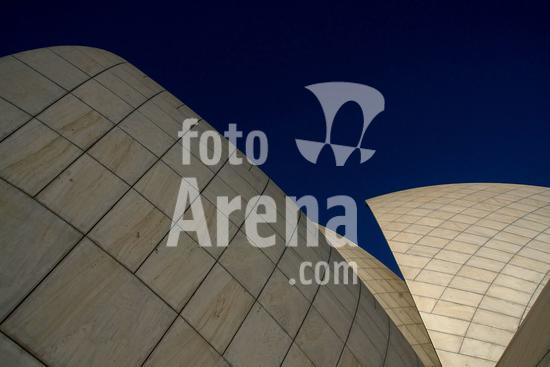
925_07_MW023380 The Lotus Temple is a very recent architectural marvel of the Bahai faith in Delhi, India
DC
925_07_MW023378 The Lotus Temple is a very recent architectural marvel of the Bahai faith in Delhi, India
DC
955_24_413923 Wooden board with holes fitting shapes of farm animals, house and tractor, numbers from one to ten underneath.
DC
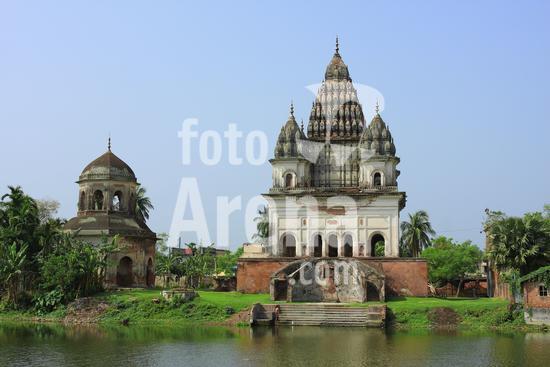
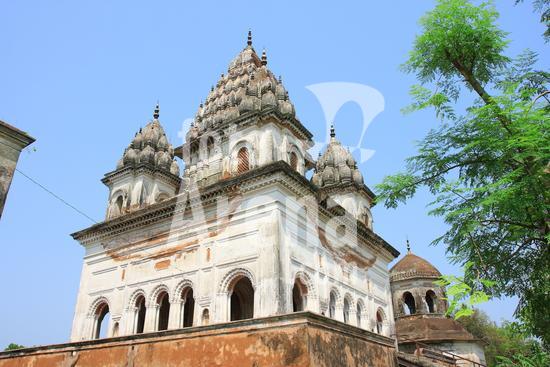
925_07_MW018248 The Shiva Temple, at the Puthia Rajbari complex, in Puthia, about 18 miles east of the Northern district town of Rajshahi, in Bangladesh
DC
925_07_MW018247 The Shiva Temple, at the Puthia Rajbari complex, in Puthia, about 18 miles east of the Northern district town of Rajshahi, in Bangladesh
DC
925_02_MW020190 A boy cleaning the windshield of a bus in Caracas, the capital city of Venezuela
DC
925_09_MW018894 Adult education program of the women's cooperative Shaptagram in Pangsha, Faridpur, Bangladesh
DC
925_09_MW018893 Adult education program of the women's cooperative Shaptagram in Pangsha, Faridpur, Bangladesh
DC
925_09_MW018892 Adult education program of the women's cooperative Shaptagram in Pangsha, Faridpur, Bangladesh
DC
925_09_MW018890 Adult education program of the women's cooperative Shaptagram in Pangsha, Faridpur, Bangladesh
DC
925_09_MW018883 Adult education program of the women's cooperative Shaptagram in Pangsha, Faridpur, Bangladesh
DC
925_09_MW018816 A girl child learning numbers at a class of a non formal school, setup by CONCERN, in a village, in Bangladesh
DC
20241203_zaf_x99_152 FOSHAN, Dec. 4, 2024 A worker hones a ceramic piece at an art studio of Meitaowan in Foshan, south China's Guangdong Province, Dec. 3, 2024. Meitaowan, literally translated as ''bay of beautiful ceramics,'' has been known for its development in ceramic arts. The municipal government established this area by transforming old factory buildings into cultural facilities and creative spaces. It is now home to studios of numerous ceramic art masters and fashion brands that aim to drive urban renewal and industrial transformation. (Credit Image: © Cai Yang/Xinhua/Zuma Press/Fotoarena)
DC
20241203_zaf_x99_155 FOSHAN, Dec. 4, 2024 Craft artist Feng Zhiwei makes a pottery sculpture at his art studio of Meitaowan in Foshan, south China's Guangdong Province, Dec. 3, 2024. Meitaowan, literally translated as ''bay of beautiful ceramics,'' has been known for its development in ceramic arts. The municipal government established this area by transforming old factory buildings into cultural facilities and creative spaces. It is now home to studios of numerous ceramic art masters and fashion brands that aim to drive urban renewal and industrial transformation. (Credit Image: © Cai Yang/Xinhua/Zuma Press/Fotoarena)
DC
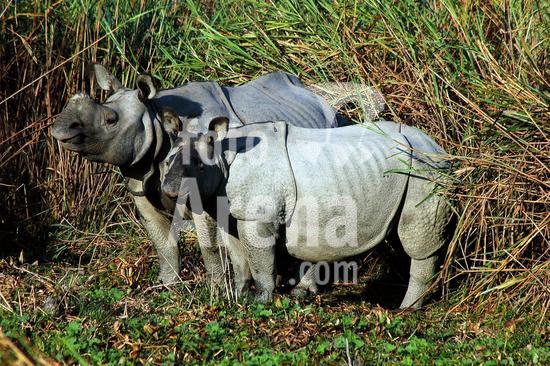
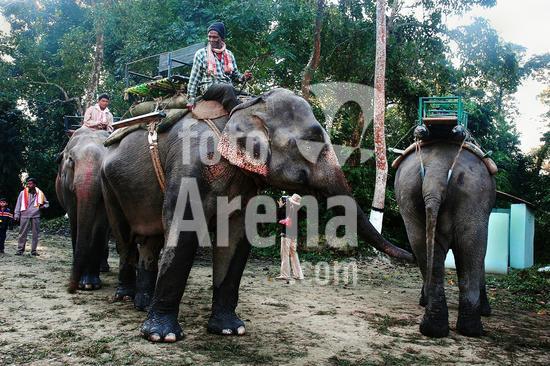
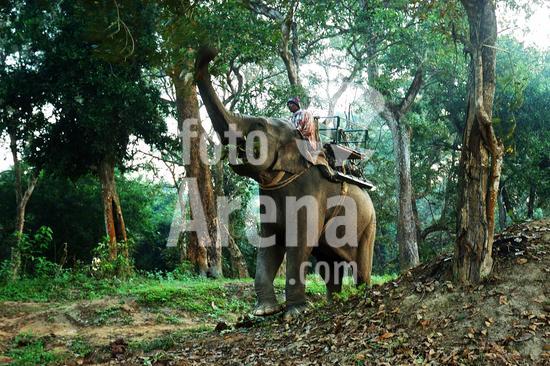
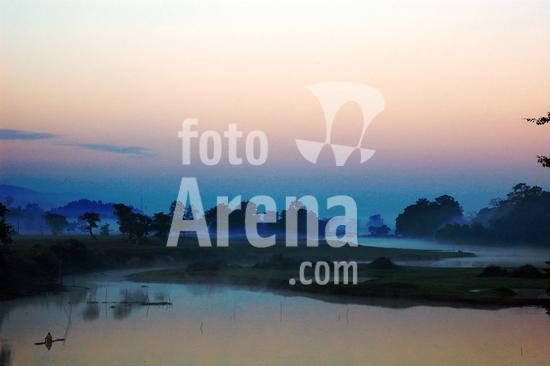
925_13_MW019868 The Kaziranga National Park is the oldest national park in the northeastern Indian state of Assam
DC
925_13_MW019866 The Kaziranga National Park is the oldest national park in the northeastern Indian state of Assam
DC
925_09_MW022707 A teacher giving a class in a BRAC Non Formal Primary School, in the village of Hai Police, in Torid
DC
925_09_MW022674 A boy learns to write numbers on a blackboard, on their first day at a BRAC Non Formal Primary School, in Manderia village, in Torid
DC
925_09_MW022673 A boy learns to write numbers on a blackboard, on their first day at a BRAC Non Formal Primary School, in Manderia village, in Torid
DC
925_09_MW022672 A boy learns to write numbers on a blackboard, on their first day at a BRAC Non Formal Primary School, in Manderia village, in Torid
DC
925_09_MW022671 A boy learns to write numbers on a blackboard, on their first day at a BRAC Non Formal Primary School, in Manderia village, in Torid
DC
925_13_MW019869 The Kaziranga National Park is the oldest national park in the northeastern Indian state of Assam
DC
925_07_MW020196 A carnival parade in Caracas, the capital city of Venezuela
DC
925_02_MW019867 The Kaziranga National Park is the oldest national park in the northeastern Indian state of Assam
DC
925_02_MW019865 The Kaziranga National Park is the oldest national park in the northeastern Indian state of Assam
DC
925_01_MW019864 The Kaziranga National Park is the oldest national park in the northeastern Indian state of Assam
DC
925_01_MW009070 A poor shantytown community near Manilas port area populated mostly by migrant workers
DC
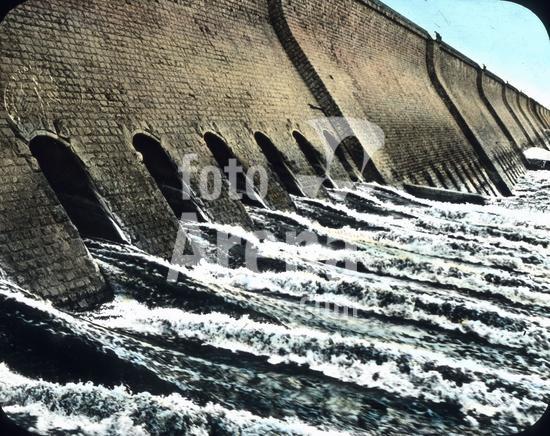
948_05_01252823 Egypt is the most fertile country in the world , when it has water. There have therefore since the earliest times, the rulers tried to control the irrigation of the country other than the annual Nile flood. Numerous channels, often of vilen hundred kilometers through the country, but first they all serve their purpose, since it is managed by the dam the system to deliver even in the dry period water. The British deserve the credit for this gigantic work, since it was built from 1898 to 1902 at a cost of 75 million francs. The length of the dam is 1960m, it is 40m high and 30m wide and tapers upwards to 7m . The lake formed by the dam summarizes 1 billion and 65 million cubic meters of water and dammed the Nile water 20 m high on. The effect on the development and utilization of the underlying country has been one enormous, more than ½ million acres of land were again arable, even larger tracts could now be sprinkled throughout the year. In our image we see the water bubbling and foaming escapes his prison, from which it is discharged through 180 Torschleusen.
DC
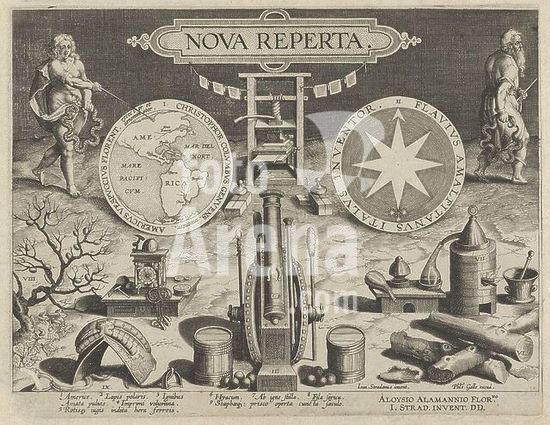
alb3617433 New Inventions of Modern Times [Nova Reperta], Title Plate. Artist: Jan Collaert I (Netherlandish, Antwerp ca. 1530-1581 Antwerp); After Jan van der Straet, called Stradanus (Netherlandish, Bruges 1523-1605 Florence). Dimensions: sheet: 10 5/8 x 7 7/8 in. (27 x 20 cm). Publisher: Published by Philips Galle (Netherlandish, Haarlem 1537-1612 Antwerp). Date: ca. 1600.Title plate from a print series entitled Nova Reperta (New Inventions of Modern Times) consisting of a title page and 19 plates, engraved by Jan Collaert I, after Jan van der Straet, called Stradanus, and published by Philips Galle. The title is printed at the top of the plate just above an image of a printing press. There are 2 medallions also at the top: the medallion at left depicts the continents of America and Africa, and the medallion at represents a compass. On the left a woman represents the future and points to the map and on the right a man represents the past and walks out of the picture plane. At the bottom of the scene nine other inventions or discoveries of the post-classical age are depicted: the silk worm, the stirrup, the clock, the canon, distillation tools and guaiacum, each corresponding with a print in the series. Each object is assigned with a roman numeral that corresponds to a description inscribed at the very bottom of the plate. Museum: Metropolitan Museum of Art, New York, USA. Author: Jan Collaert I. After Jan van der Straet, called Stradanus.
DC
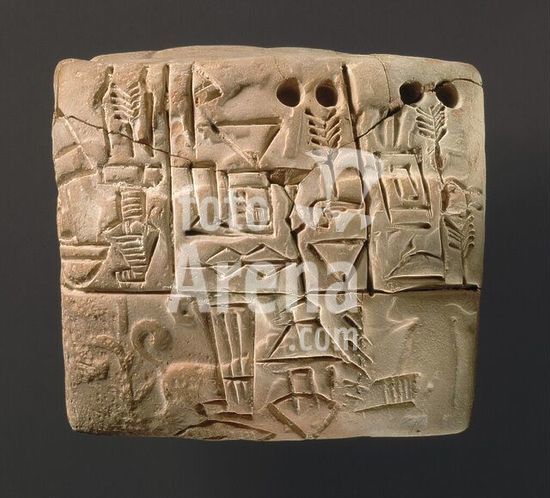
alb3681147 Cuneiform tablet: administrative account of barley distribution with cylinder seal impression of a male figure, hunting dogs, and boars. Culture: Sumerian. Dimensions: 2.17 x 2.36 x 1.63 in. (5.5 x 6 x 4.15 cm). Date: ca. 3100-2900 B.C..Of the many legacies left by the ancient civilizations of southern Mesopotamia, the invention of writing is paramount. At the end of the fourth millennium B.C., written language developed in the region, first as pictographs and then evolving into abstract forms called cuneiform. The pictographs, like the ones on this tablet, are called proto-cuneiform and were drawn in the clay with a pointed implement. Circular impressions alongside the pictographs represented numerical symbols. Cuneiform (meaning wedge-shaped) script was written by pressing a reed pen or stylus with a wedge-shaped tip into a clay tablet. Clay, when dried to a somewhat hardened state, made a fine surface for writing, and when fired the records written on it became permanent.Early writing was used primarily as a means of recording and storing economic information. This tablet most likely documents grain distributed by a large temple, although the absence of verbs in early texts makes them difficult to interpret with certainty. In addition to the writing that appears on this tablet, the imagery of the cylinder seal, which was incompletely impressed on both faces and the edges of the tablet before it was inscribed, also records information. This seal apparently has not survived. The seal impression depicts a male figure guiding two dogs on a leash and hunting or herding boars in a reed marsh. He is the so-called priest-king, a male figure who can be identified by his dress and pose. Here he appears in his role as the good shepherd who protects flocks from wild predators.Adapted from, Art of the Ancient Near East: A Resource for Educators (2010). Museum: Metropolitan Museum of Art, New York, USA.
DC
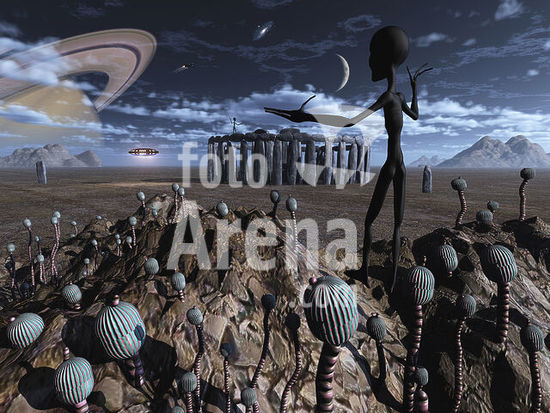
alb5577601 Artist's concept illustrating Beings we know as Greys, on an alien world. A familiar structure on the surface of this world is Stonehenge, depicting the possibility of some of our own ancient structures being alien in origin. We are not the only ones interested in exploring the universe. Alien Beings have been visiting numerous worlds, and some would say this includes the Earth.
DC
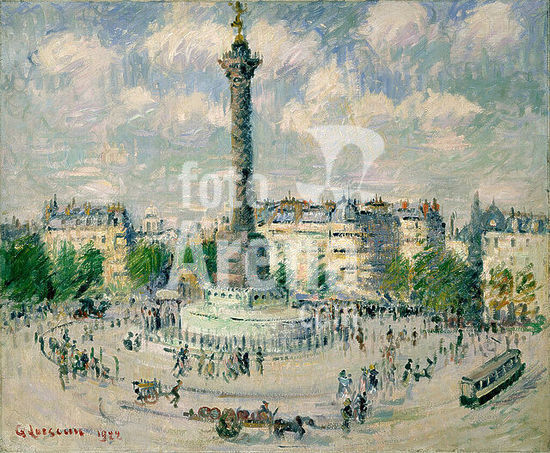
alb3677399 La Place de la Bastille. Artist: Gustave Loiseau (French, 1865-1935). Dimensions: 24 in. x 28 3/4in. (60.5 x 73cm). Date: 1922.Loiseau followed Gauguin to Pont Aven in 1890 and was attached to various of the Post-Impressionists. However he soon developed his own style, characterized by interlocking, quick brush-strokes that create an intricate, lattice-like surface. He became famous as a great voyager and painted numerous, diverse landscapes. In spite of these travels, his native Paris remained a constant subject for him. Here the Place de la Bastille is shown on a summer day with the glittering surfaces of the bronze column, the pavement, and the brilliant blue sky. Museum: Metropolitan Museum of Art, New York, USA.
DC
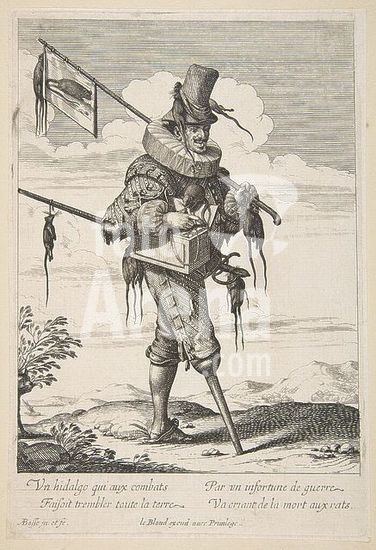
alb3670624 The Ratcatcher. Artist: Abraham Bosse (French, Tours 1602/1604-1676 Paris). Dimensions: Sheet: 8 9/16 × 5 7/8 in. (21.8 × 14.9 cm)Plate: 8 3/8 x 5 11/16 in. (21.3 x 14.4 cm). Series/Portfolio: Cries of Paris(Les Cris de Paris). Date: mid to late 17th century."A noble gentleman who in combat made the whole earth tremble,Through a misfortune of war goes crying death to rats."Bosse, who wrote a treatise on etching based on the innovations of Jacq"ues Callot-with whom he had worked-and who developed a new means of perspective construction that he taught in the French Royal Academy for over a decade, is best known for his numerous prints of everyday Parisian life. In his series of twelve itinerant tradesmen, the crisp and controlled etched line and the precisely defined spatial settings lend polish to the figures, even to the ragged, peg-legged rat catcher. Museum: Metropolitan Museum of Art, New York, USA.
DC
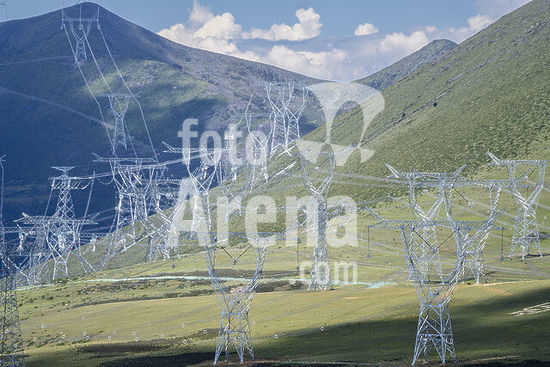
alb20222046 numerous high-voltage towers, Tagong (Lhagang), Garzê Tibetan Autonomous Prefecture, Sichuan, China.
DC
alb15337109 Getreue Abbildungen naturhistorischer Gegenstände in Hinsicht auf Bechsteins kurzgefasste gemeinnützige Naturgeschichte des In- und Auslandes Nürnberg In der Schneider und Weigelschen Kunst- und Buch- handlung [1793-1809] naturalhistory pictorial works insect, The illustration features a detailed depiction of the life cycle of butterflies, showcasing various stages of development. At the top, a beautifully detailed butterfly displays intricate wing patterns and coloration. Below it, a caterpillar is shown in a realistic green and yellow coloration, nestled among leaves that provide a natural habitat. The lower section includes another butterfly, complementing the top illustration, and a small plant with delicate yellow flowers. Each stage is labeled numerically, emphasizing the transformation from caterpillar to butterfly, highlighting the fascinating metamorphic process.
DC
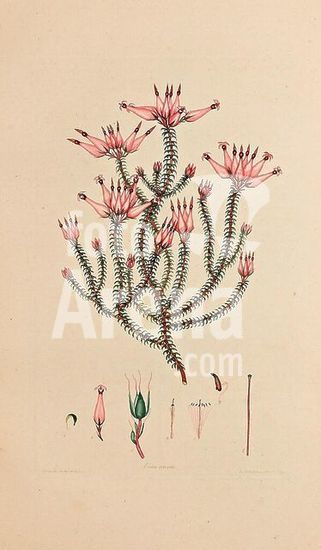
alb15335507 Coloured Engravings of Heaths London Published by the Author Printed by T. Bensley 1802-09 [1830?] 1802 19th Century Botany England Erica Ericaceae Etching Graphic Media Hand-colored History Pictorial Works, This illustration features a striking botanical composition showcasing a vibrant flowering plant with delicate pink blossoms. The plant's slender, spiky branches are adorned with numerous buds and fully opened flowers, creating a lush and textured appearance. Below the main plant, smaller detailed depictions highlight different stages of the flower's development, including unbloomed buds and leaves. The artwork captures the intricate beauty of the plant, emphasizing its unique structure and the elegance of its blooms against a subtle, soft background.
DC
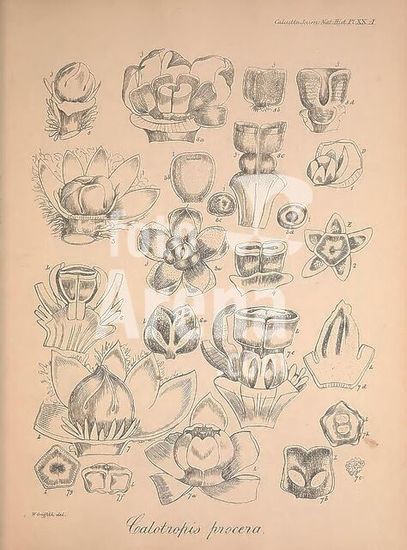
alb15332892 Icones plantarum asiaticarum, Calcutta, Bishop's College Press, 1847-54, Asia, Botany, An illustrated collection showcasing the various forms and structures of Calotropis procera. The arrangement features detailed scientific drawings of the plant's flowers, including different perspectives and stages of development. Each sketch is labeled with numerical identifiers, highlighting the intricate designs of the petals, sepals, and reproductive parts. The illustrations reflect the botanical characteristics unique to this species, offering a visually rich study for enthusiasts and researchers alike. The caption at the bottom identifies the subject as 'Calotropis procera,' emphasizing its significance in botanical studies.
DC
alb15333983 Les mollusques, Paris, 1836-1845, classification, mollusks, pictorial works, shells, sealife, This illustration features a series of intricate biological forms, showcasing various cellular structures and organisms. At the top, two oval shapes suggestive of embryos are accompanied by detailed depictions of diverse microscopic life forms below. Each figure is meticulously labeled with numerical references, presenting a study of anatomy that highlights the complexity of living organisms. The arrangements include various textures and shapes, reflecting the fascinating diversity found in the natural world. This educational piece draws attention to the study of zoology, and specifically the nuances of animal development and cellular composition.
DC
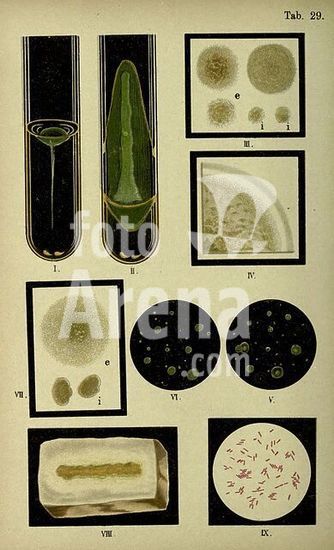
alb15330896 Atlas and essentials of bacteriology, New York, William Wood & Co, 1897, bacteria, atlases, bacteriological, technics, The illustration presents a detailed study of various microorganisms and cellular structures. Each section is meticulously labeled with Roman numerals and letters, showcasing distinctive specimens: - **I** and **II** depict elongated, filamentous organisms, highlighting their structural features. - **III** displays a comparison of cellular shapes, demonstrating diversity among microorganisms. - **IV** features a close-up view of circular and oval organisms with noticeable textural details. - **V** presents petri dish cultures showing various colonies of microorganisms, emphasizing growth patterns. - **VI** illustrates multiple circular forms, possibly highlighting different species or stages of development. - **VII** contains a layered slide with organisms, while **VIII** showcases an arrangement.
DC
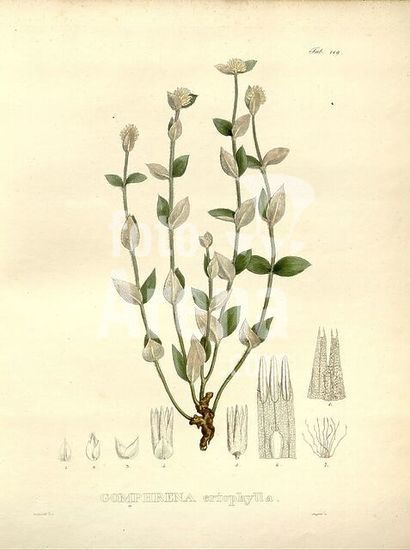
alb15335767 Nova, genera, et, species, plantarum. Monachii [Munich], Impensis, Auctoris, 1824-1829 [i.e. 1824-32]., The illustration showcases the plant Gomphrena erythophylla, featuring tall stems adorned with numerous oval-shaped leaves. The central depiction highlights multiple flowering heads that emerge from the stems, showcasing characteristic features like their unique bracts and overall structure. Below the main representation, various detailed sketches display different stages of the flower's development, including closed and partially opened blooms, alongside anatomical renderings that highlight the plant's distinctive characteristics. The meticulous attention to detail demonstrates the botanical accuracy and serves as a valuable reference for understanding this particular species.
DC
alb15338137 Ferns: British and exotic. 1856-60, ferns, Polypodium deflexum, Alexander Francis Lydon, Ctenitis deflexa, This illustration displays a botanical study of the Polypodium depressum, commonly known as a type of fern. The composition features elongated fronds with a vibrant array of serrated leaflets, showcasing their intricate patterns and textures. The upper sections of the fronds exhibit a golden-brown tint, indicative of spore development, while the lower parts remain a rich green, highlighting the lushness of the plant. The delicate detailing emphasizes each leaf's unique structure, contributing to the overall beauty and complexity of this fern species. An ornamental border and a numeric notation denote its classification within a botanical catalog.
DC
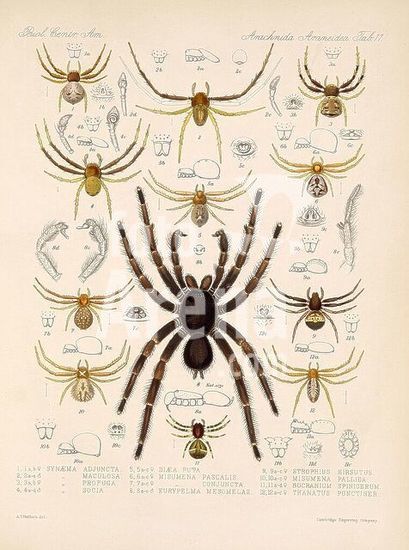
alb15339521 Biologia Centrali-Americana London, 1879-1915, archaeology, botany, Central America, description and travel, scientific expeditions, zoology, 39, arachnid, The illustration showcases a variety of spider species from the family Araneidae, prominently featuring a detailed central depiction of a large spider. Surrounding this central figure are numerous smaller illustrations highlighting distinct species, their anatomical features, and various stages of development. Each spider is meticulously rendered, showcasing unique patterns, body shapes, and markings. The labels beneath each illustration provide taxonomic information, indicating the scientific names and classifications. The composition reflects a blend of scientific illustration and aesthetic design, emphasizing the diversity and complexity of arachnids.
DC
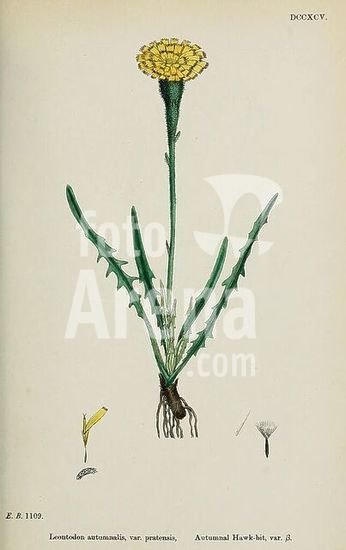
alb15337480 English, botany, Coloured figures of British plants London, R. Hardwicke, 1863-1886 Great Britain, pictorial works, plants, The illustration features a detailed botanical study of the Leontodon autumnalis, var. pratensis, commonly known as the Autumnal Hawkbit. The plant is depicted with its long green leaves characterized by jagged, serrated edges arranged in a rosette at the base. At the top, a single bright yellow flower head is shown, which is made up of numerous small disc florets radiating from the center. Accompanying the main plant are smaller drawings that highlight various stages of the flower's development, including a close-up of the flower and a depiction of its seed head. The scientific name is noted alongside the illustration, indicating its classification and variety.
DC
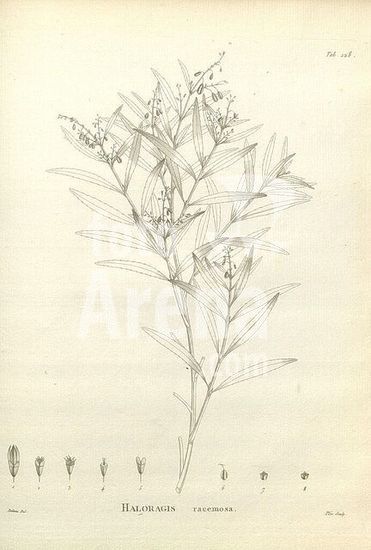
alb15336470 Novæ Hollandiæ plantarum specimen Parisiis Ex typographia Dominæ Huzard 1804-1806. Australia Botany Australia Pictorial works Haloragis racemosa Haloragis racemosa, This visual showcases a botanical illustration of Haloragis racemosa, a plant characterized by its slender, elongated leaves and small clusters of delicate flowers. The detailed depiction includes various stages of the flower's development, presented along the bottom. Each stage is numerically labeled, showcasing buds and mature seeds in a structured format. The overall composition emphasizes the plant's elegant form and intricate details, contributing to our understanding of its botanical characteristics.
DC
alb15337745 Curtis's Botanical Magazine, London, New York, botanical illustration, botany, periodicals, pictorial works, plants ornamental, Curtis, Australia, Cystanthes prengelioides, Richea sprengelioides, A detailed botanical illustration depicting a plant characterized by slender, upright stems adorned with yellow flowering heads. The illustration includes various stages of the plant's development, showcasing buds and flowers in detail, alongside distinct parts of the plant such as its elongated leaves and fruit structures. Annotations labeled with numerical references accompany the different sections, providing scientific insight into the plant's morphology. The overall composition highlights the intricacy of the plant's design, emphasizing both its aesthetic beauty and biological significance.
DC

Total de Resultados: 579

Página 1 de 6