Busque também em nossas outras coleções:

Ordem:

Categorias:

Total de Resultados: 111

Página 1 de 2

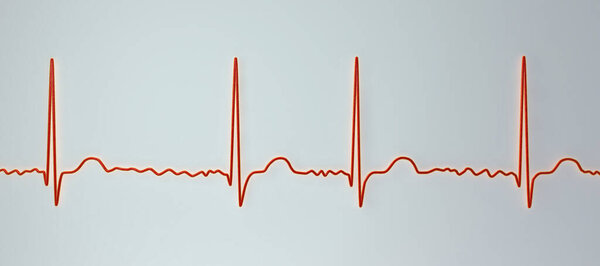
677635638 ECG in atrial fibrillation (AFib), a 3D illustration depicts irregular rhythm, absent P waves, and rapid, chaotic atrial activity, posing a risk of palpitations and stroke.
RF
677635952 ECG in atrial fibrillation (AFib), a 3D illustration depicts irregular rhythm, absent P waves, and rapid, chaotic atrial activity, posing a risk of palpitations and stroke.
RF
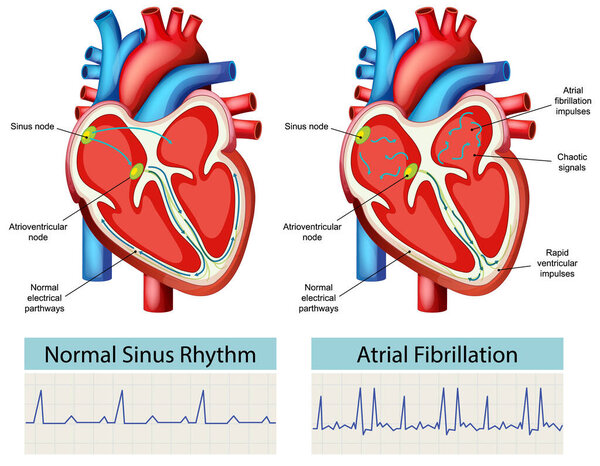
821681156 Detailed vector illustration comparing normal sinus rhythm and atrial fibrillation with labeled heart anatomy and ECG traces
RF
677635964 ECG in atrial fibrillation (AFib), a 3D illustration depicts irregular rhythm, absent P waves, and rapid, chaotic atrial activity, posing a risk of palpitations and stroke.
RF
677635678 ECG in atrial fibrillation (AFib), a 3D illustration depicts irregular rhythm, absent P waves, and rapid, chaotic atrial activity, posing a risk of palpitations and stroke.
RF
677635902 ECG in atrial fibrillation (AFib), a 3D illustration depicts irregular rhythm, absent P waves, and rapid, chaotic atrial activity, posing a risk of palpitations and stroke.
RF
677635614 ECG in atrial fibrillation (AFib), a 3D illustration depicts irregular rhythm, absent P waves, and rapid, chaotic atrial activity, posing a risk of palpitations and stroke.
RF
677635972 ECG in atrial fibrillation (AFib), a 3D illustration depicts irregular rhythm, absent P waves, and rapid, chaotic atrial activity, posing a risk of palpitations and stroke.
RF
677635756 ECG in atrial fibrillation (AFib), a 3D illustration depicts irregular rhythm, absent P waves, and rapid, chaotic atrial activity, posing a risk of palpitations and stroke.
RF
677635858 ECG in atrial fibrillation (AFib), a 3D illustration depicts irregular rhythm, absent P waves, and rapid, chaotic atrial activity, posing a risk of palpitations and stroke.
RF
677635946 ECG in atrial fibrillation (AFib), a 3D illustration depicts irregular rhythm, absent P waves, and rapid, chaotic atrial activity, posing a risk of palpitations and stroke.
RF
685222044 ECG in atrial fibrillation (AFib), a 3D illustration depicting irregular rhythm, absent P waves, and rapid, chaotic atrial activity, posing a risk of palpitations and stroke.
RF
677635580 ECG in atrial fibrillation (AFib), a 3D illustration depicts irregular rhythm, absent P waves, and rapid, chaotic atrial activity, posing a risk of palpitations and stroke.
RF
829845740 Illustration showing differences between a normal heart and one with atrial fibrillation, highlighting electrical pathways and impulses
RF
685221842 ECG in atrial fibrillation (AFib), a 3D illustration depicting irregular rhythm, absent P waves, and rapid, chaotic atrial activity, posing a risk of palpitations and stroke.
RF
685222104 ECG in atrial fibrillation (AFib), a 3D illustration depicting irregular rhythm, absent P waves, and rapid, chaotic atrial activity, posing a risk of palpitations and stroke.
RF
685221946 ECG in atrial fibrillation (AFib), a 3D illustration depicting irregular rhythm, absent P waves, and rapid, chaotic atrial activity, posing a risk of palpitations and stroke.
RF
677635868 ECG in atrial fibrillation (AFib), a 3D illustration depicts irregular rhythm, absent P waves, and rapid, chaotic atrial activity, posing a risk of palpitations and stroke.
RF
833638988 Atrial fibrillation diagram shows heart outline, electrical pathways, and rhythm differences, highlighting irregular heartbeat. Outline diagram
RF
677635560 ECG in atrial fibrillation (AFib), a 3D illustration depicts irregular rhythm, absent P waves, and rapid, chaotic atrial activity, posing a risk of palpitations and stroke.
RF
833704334 Cardiac ablation for heart atrial fibrillation, educational medical poster design healthcare scheme, internal organs. Labeled ablation catheter ablation, regular irregular heartbeat rhythm ECG.
RF
833704322 Cardiac ablation for heart atrial fibrillation, educational medical poster design healthcare scheme, internal organs. Labeled ablation catheter ablation, regular irregular heartbeat rhythm ECG.
RF
811136794 When arrhythmia leads to irregular ventricular rhythm, the average cardiac cycle can be calculated by measuring group intervals, and then the average ventricular rate can be calculated.
RF
811126642 Atrial fibrillation is an arrhythmia with an absolutely irregular ventricular rhythm, and the ventricular rate can only be estimated based on the average cardiac cycle or the number of QRS waves.
RF
786575986 Atrial Flutter heart rhythm illustration
RF
705980784 Clinically, mitral stenosis is a common heart disease affecting the left atrium, and ECG can show notch P wave and P wave widening. Patients will eventually develop atrial fibrillation.
RF
706143252 Black solid icon for monitor
RF
699518568 Color illustration icon for monitor
RF
706131938 Black solid icon for atrial fibrillation
RF
704164180 Color illustration icon for atrial fibrillation
RF
697643008 Black line icon for monitor
RF
697628544 Mix icon for atrial fibrillation
RF
696547996 Atrial fibrillation as abnormal heart beat frequency disease outline diagram. Labeled educational scheme with cardiovascular condition and heart structure vector illustration. Anatomical explanation.
RF
698598364 Mix icon for monitor
RF
694997492 Black line icon for atrial fibrillation
RF
688007976 The doctor is conducting an electrocardiogram on the patient. ECG can be used to detect abnormalities in heart rhythm, heart rate, arrhythmia, heart failure, high blood pressure, and chest pain.
RF
685222234 ECG in atrial fibrillation (AFib), a 3D illustration depicting irregular rhythm, absent P waves, and rapid, chaotic atrial activity, posing a risk of palpitations and stroke.
RF
677635992 ECG in atrial fibrillation (AFib), a 3D illustration depicts irregular rhythm, absent P waves, and rapid, chaotic atrial activity, posing a risk of palpitations and stroke.
RF
677635914 ECG in atrial fibrillation (AFib), a 3D illustration depicts irregular rhythm, absent P waves, and rapid, chaotic atrial activity, posing a risk of palpitations and stroke.
RF
677635916 ECG in atrial fibrillation (AFib), a 3D illustration depicts irregular rhythm, absent P waves, and rapid, chaotic atrial activity, posing a risk of palpitations and stroke.
RF
673341270 Male, 33 years old, clinically diagnosed with mitral stenosis. The rhythm displayed on the electrocardiogram is atrial fibrillation. Three electrocardiograms are continuous records.
RF
673940712 Atrial fibrillation disease banner design
RF
671417252 When the QRS wave in the V2-V4 chest lead is biphasic and has an amplitude exceeding 60mm, it is necessary to be vigilant about the electrocardiogram of biventricular hypertrophy.
RF
672188730 When a wide QRS wave occurs, the same initial vector of the V1 lead QRS wave indicates aberrant conduction, while differences cannot distinguish between ventricular and aberrant conduction beats.
RF
669331810 When the QRS wave in the V2-V4 chest lead is biphasic and has an amplitude exceeding 60mm, it is necessary to be vigilant about the electrocardiogram of biventricular hypertrophy.
RF
671412740 When atrial fibrillation occurs, if the initial depolarizations of a wide QRS wave and a normal QRS wave are the same, it suggests that the wide QRS wave is aberrant conduction.
RF
658228082 Female, 52 years old, diagnosed with mitral stenosis 1 years ago. When this ECG was taken, the patient still maintained sinus rhythm.Note that the P wave duration was widened.
RF
656940284 Female, 53 years old, diagnosed with mitral stenosis 2 years ago. When this ECG was taken, the patient still maintained sinus rhythm.Note that the P wave duration was widened.
RF
654064468 One patient with acute extensive anterior and inferior myocardial infarction developed two forms of QRS complex, followed by ventricular tachycardia.
RF
655386948 Female, 57 years old, diagnosed with mitral stenosis 6 years ago. When this ECG was taken, the patient still maintained sinus rhythm and developed atrial fibrillation the following year.
RF
657974428 Female, 56 years old, diagnosed with mitral stenosis 5 years ago. When this ECG was taken, the patient still maintained sinus rhythm.Note that the P wave duration was widened.
RF
657982240 Female, 53 years old, diagnosed with mitral stenosis 2 years ago. When this ECG was taken, the patient still maintained sinus rhythm.Note that the P wave duration was widened.
RF
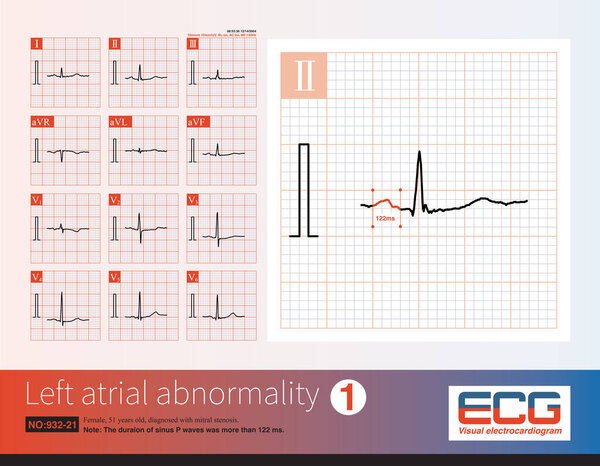
659119432 Female, 51 years old, diagnosed with mitral stenosis. When this ECG was taken, the patient still maintained sinus rhythm.Note that the P wave duration was widened.
RF
654066430 One patient with acute extensive anterior and inferior myocardial infarction developed two forms of QRS complex, followed by ventricular tachycardia.
RF
659263524 Female, 51 years old, diagnosed with mitral stenosis. When this ECG was taken, the patient still maintained sinus rhythm.Note that the P wave duration was widened.
RF
656952930 Female, 57 years old, diagnosed with mitral stenosis 6 years ago. When this ECG was taken, the patient still maintained sinus rhythm and developed atrial fibrillation the following year.
RF
656061030 When the frontal axis is +43 , the maximum QRS depolarization potential is closest to the axis of lead so the R-wave amplitude of lead is the highest.
RF
658237622 Female, 52 years old, diagnosed with mitral stenosis 1 years ago. When this ECG was taken, the patient still maintained sinus rhythm.Note that the P wave duration was widened.
RF
657164472 Female, 55 years old, diagnosed with mitral stenosis 5 years ago. When this ECG was taken, the patient still maintained sinus rhythm.Note that the P wave duration was widened.
RF
656059126 When the frontal axis is +43 , the maximum QRS depolarization potential is closest to the axis of lead so the R-wave amplitude of lead is the highest
RF
655625114 Female, 57 years old, diagnosed with mitral stenosis 6 years ago. When this ECG was taken, the patient still maintained sinus rhythm and developed atrial fibrillation the following year.
RF
653375166 In clinical practice, mitral stenosis is a common disease that causes atrial fibrillation. This is a 7-year electrocardiogram follow-up of a female patient with mitral stenosis.
RF
655644702 Female, 57 years old, diagnosed with mitral stenosis 6 years ago. When this ECG was taken, the patient still maintained sinus rhythm and developed atrial fibrillation the following year.
RF
656920714 In 2004, a 51-year-old woman was diagnosed with mitral stenosis, and after 7 years of follow-up, her left atrial lesion worsened until she developed atrial fibrillation.
RF
656672898 Female, 57 years old, diagnosed with mitral stenosis 6 years ago. This electrocardiogram had an atrial premature contraction, indicating its origin in the right superior pulmonary vein.
RF
655621808 A pre elderly woman suffered from mitral stenosis. In 2010, her electrocardiogram showed sinus rhythm and left atrial abnormality, and in 2011, she progressed to atrial fibrillation.
RF
654862728 A 57-year-old female patient with mitral stenosis had an electrocardiogram indicating sinus rhythm and occasional atrial premature contractions. The following year, she developed atrial fibrillation.
RF
654031482 A 58-year-old woman was clinically diagnosed with mitral stenosis, and her electrocardiogram showed atrial fibrillation with rapid ventricular response.
RF
656057218 Female, 57 years old, diagnosed with mitral stenosis 6 years ago. Two outpatient electrocardiograms in 2010 showed left atrial abnormality and ST segment changes.

RF
650674270 Electromechanical separation is a kind of terminal ECG. The patient's ECG has electrical signals, the ECG wave is widened with morphological abnormalities, and the ventricle has no contraction.
RF
654215320 When the frontal axis is +63 , the maximum QRS depolarization potential is closest to the axis of lead so the R-wave amplitude of lead is the highest.
RF
648434130 Cardiac surgery is one of the common causes of iatrogenic atrioventricular block. Once atrial fibrillation exhibits a slow and regular ventricular rhythm, it is important to be alert to 3 AVB.
RF
651254318 An elderly woman was admitted to the hospital due to aconitine poisoning, with significant ST-T changes on the electrocardiogram, and recovered the next day.
RF
654062332 A patient with acute extensive anterior and inferior myocardial infarction developed ventricular tachycardia and quickly experienced cardiac arrest.
RF
649327156 Cardiac surgery is one of the common causes of iatrogenic atrioventricular block. Once atrial fibrillation exhibits a slow and regular ventricular rhythm, it is important to be alert to 3 AVB.
RF
648814962 Cardiac surgery is one of the common causes of iatrogenic atrioventricular block. Once atrial fibrillation exhibits a slow and regular ventricular rhythm, it is important to be alert to 3 AVB.
RF
648219400 Cardiac surgery is one of the common causes of iatrogenic atrioventricular block. Once atrial fibrillation exhibits a slow and regular ventricular rhythm, it is important to be alert to 3 AVB.
RF
649315096 Cardiac surgery is one of the common causes of iatrogenic atrioventricular block. Once atrial fibrillation exhibits a slow and regular ventricular rhythm, it is important to be alert to 3 AVB.
RF
650680812 A patient with acute extensive anterior myocardial infarction developed ventricular tachycardia during hospitalization and quickly experienced cardiac arrest.
RF
649325280 When the frontal QRS axis is located at -8, the maximum ventricular depolarization potential is oriented towards lead I, and the R wave amplitude of lead I is the highest.
RF
650073960 When the frontal QRS axis is located at -8, the maximum ventricular depolarization potential is oriented towards lead I, and the R wave amplitude of lead I is the highest.
RF
649550866 When hypokalemia occurs, the inverted T wave merges with the enlarged upright U wave, and should not be misdiagnosed as a negative positive biphasic T wave.
RF
648435264 Cardiac surgery is one of the common causes of iatrogenic atrioventricular block. Once atrial fibrillation exhibits a slow and regular ventricular rhythm, it is important to be alert to 3 AVB.
RF
640312084 After the paroxysmal atrial fibrillation attack stopped, there was a long period of sinus arrest and sinus bradycardia. This phenomenon suggests sick sinus syndrome.
RF
638591918 In daily work, the horizontal 1 mm represents 40 ms of time in the small square of ECG. Therefore, the frequency of cardiac rhythm can be calculated by using the small square.
RF
634699030 ECG of a patient with sick sinus syndrome. After a paroxysmal atrial fibrillation attack, there was a long time of sinus arrest, and the ventricular arrest time was close to 4s.
RF
629357306 Sinus arrest, slow junctional escape with complete left bundle branch block, followed by paroxysmal atrial fibrillation, typical of tachy-brady syndrome.
RF
626023136 Atrioventricular block. Violation of the electrical signal in the heart. Medical vector illustration
RF
620438920 After termination of atrial tachycardia, there is a prolonged sinus arrest, followed by a slow ventricular escape, and finally a sinus beat.
RF
620437868 Tachy-brady syndrome is a special type of in which bradycardia and tachycardia are repeated alternating episodes.This ECG recorded episodes of paroxysmal atrial fibrillation.
RF
612315296 Electromechanical separation is an ECG of cardiac arrest. The heart has only electrical activity, but no mechanical activity. It needs to be differentiated from ventricular escape rhythm.
RF
614437470 Electromechanical separation is an ECG of cardiac arrest. The heart has only electrical activity, but no mechanical activity, so heart sounds and BP disappear.
RF
613660978 If there is basic intraventricular conduction disorder in sinus rhythm, wide QRS wave tachycardia can be seen in supraventricular tachycardia, which is easily misdiagnosed as ventricular tachycardia.
RF
582747546 An EKG (ECG) strip, line tracing, showing heart activity decorates a coffee or tea cup. The steaming hot beverage is seen in a warm inviting scene. Illustrates effect caffeine can have on the heart.
RF
567038644 Normal electrocardiogram of a 34 year old Chinese healthy woman.The rhythm was sinus rhythm without other abnormal ECG changes.
RF
566136028 Male, 58 years old, clinically diagnosed as COPD. Paroxysmal atrial flutter and atrial fibrillation were found by ambulatory electrocardiogram.
RF
564503670 Schemes set of common electrocardiogram (ECG) abnormalities, including partial blocks and flutter
RF
565160042 Male, 58 years old, clinically diagnosed as COPD. Paroxysmal atrial flutter and atrial fibrillation were found by ambulatory electrocardiogram.
RF
566494140 Male, 58 years old, clinically diagnosed as COPD. Paroxysmal atrial flutter and atrial fibrillation were found by ambulatory electrocardiogram.
RF
541705464 Multiple Green EKG Tracings - Telemetry Monitor
RF

Total de Resultados: 111

Página 1 de 2