















































Busque também em nossas outras coleções:

Tipo de arquivo:

Tipo do arquivo:

Orientação:

Total de Resultados: 21

Página 1 de 1

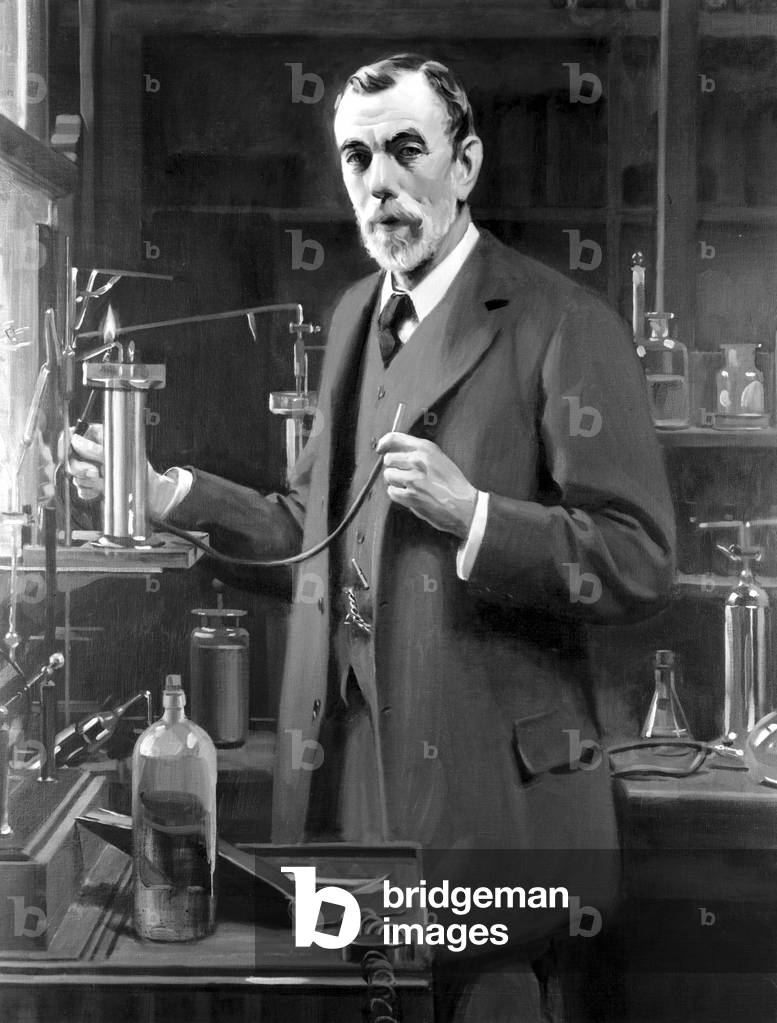
UIS5064896 Sir William Ramsay, Scottish chemist, 1913. Painting of Sir William Ramsay (1852-1916) by Mark Milibank. Ramsay was professor of Chemistry in Bristol (1880-87) and at University College London (1887-1913). He is best known for his discovery of the noble (inert) gases helium, neon, argon, krypton and xenon, for which he was awarded the Nobel Prize for Chemistry in 1904. In 1894, together with Lord Rayleigh (1842-1919), he discovered the rare gas argon, followed in 1898 by helium, neon, krypton and xenon. Ramsay also made important contributions to thermodynamics and stoichiometry, and was the only man to discover a complete Periodic Group of elements. He was knighted in 1902. ©SSPL/Science Museum
DC
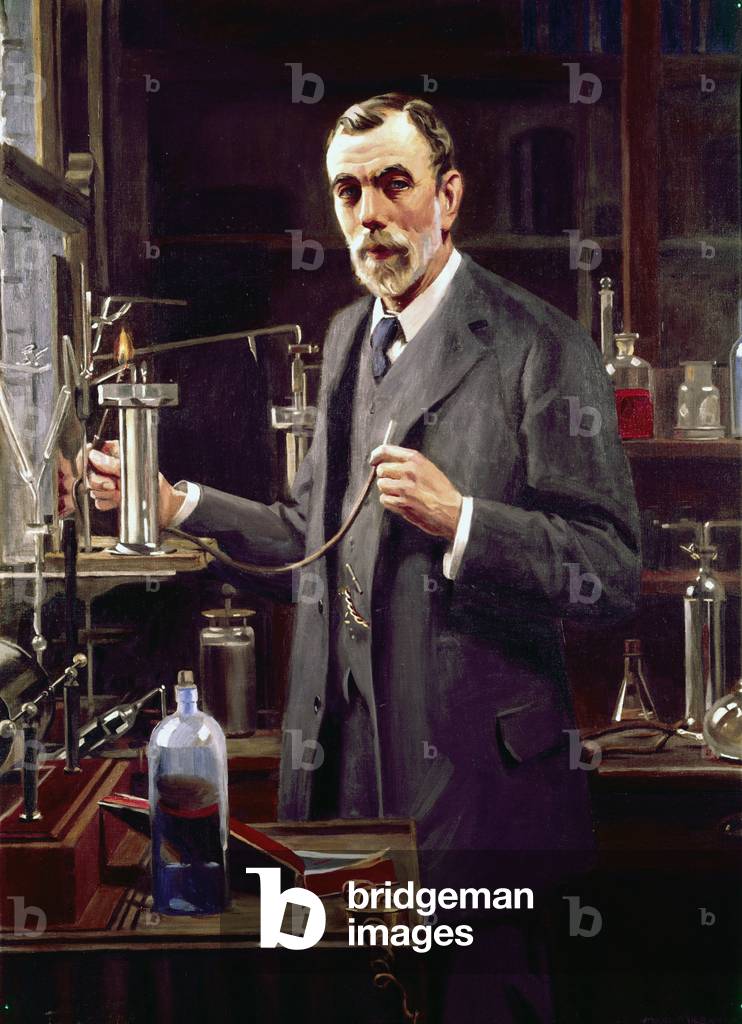
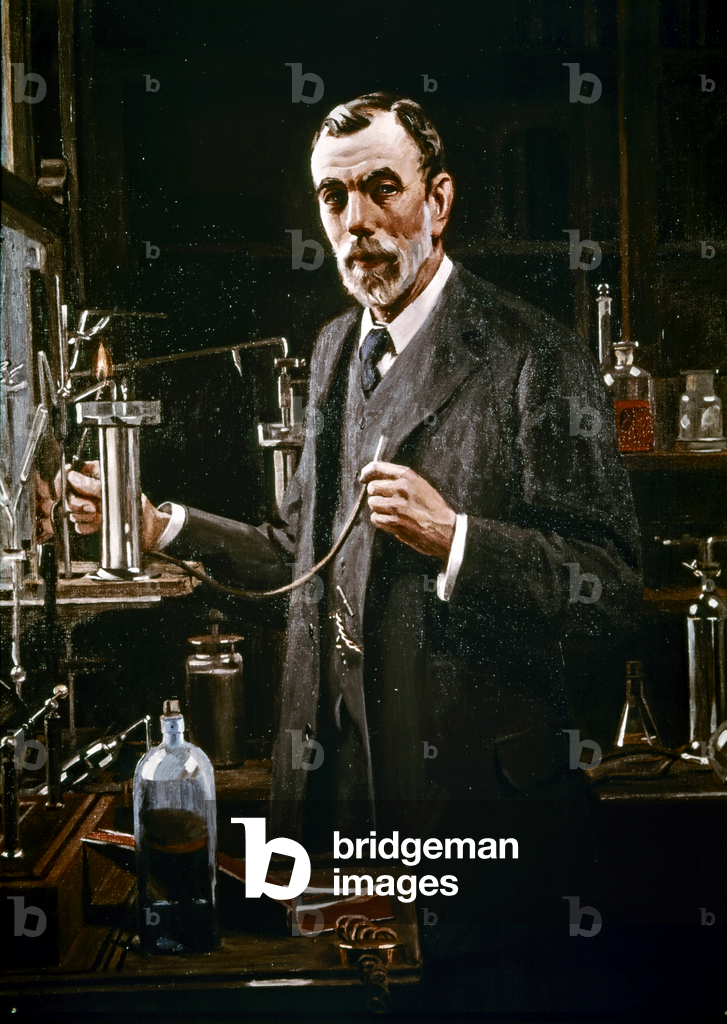
UIS5066213 Sir William Ramsay, Scottish chemist, 1913. Oil painting on canvas by Mark Milbanke showing the Scottish chemist Sir William Ramsay (1852-1916) in his laboratory. Ramsay was professor of Chemistry in Bristol (1880-87) and at University College London (1887-1913). He is best known for his discovery of the noble (inert) gases helium, neon, argon, krypton and xenon, for which he was awarded the Nobel Prize for Chemistry in 1904. In 1894, together with Lord Rayleigh (1842-1919), he discovered the rare gas argon, followed in 1898 by helium, neon, krypton and xenon. Ramsay also made important contributions to thermodynamics and stoichiometry, and was the only man to discover a complete Periodic Group of elements. He was knighted in 1902. Dimensions (unframed): 1400mm x 1050mm. ©SSPL/Science Museum
DC
XEE557258
DC
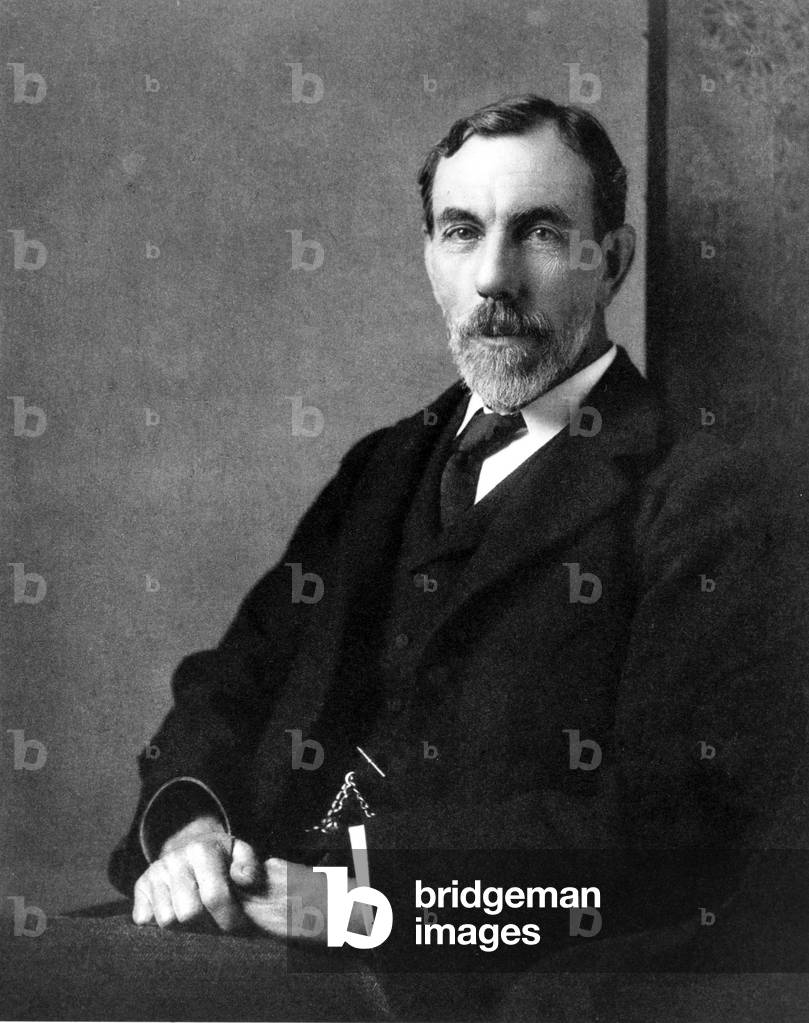
UIS5067726 Sir William Ramsay, Scottish chemist, c 1900. Sir William Ramsay was professor of Chemistry in Bristol (1880-87) and at University College London (1887-1913). He is best known for his discovery of the noble (inert) gases helium, neon, argon, krypton and xenon, for which he was awarded the Nobel Prize for Chemistry in 1904. In 1894, together with Lord Rayleigh (1842-1919), he discovered the rare gas argon, followed in 1898 by helium, neon, krypton and xenon. Ramsay also made important contributions to thermodynamics and stoichiometry, and was the only man to discover a complete Periodic Group of elements. He was knighted in 1902. ©SSPL/Science Museum
DC
UIS5076059 Sir William Ramsay, Scottish chemist, c 1905. Sir William Ramsay was professor of Chemistry in Bristol (1880-87) and at University College London (1887-1913). He is best known for his discovery of the noble (inert) gases helium, neon, argon, krypton and xenon, for which he was awarded the Nobel Prize for Chemistry in 1904. In 1894, together with Lord Rayleigh (1842-1919), he discovered the rare gas argon, followed in 1898 by helium, neon, krypton and xenon. Ramsay also made important contributions to thermodynamics and stoichiometry, and was the only man to discover a complete Periodic Group of elements. He was knighted in 1902. ©SSPL/Science Museum
DC
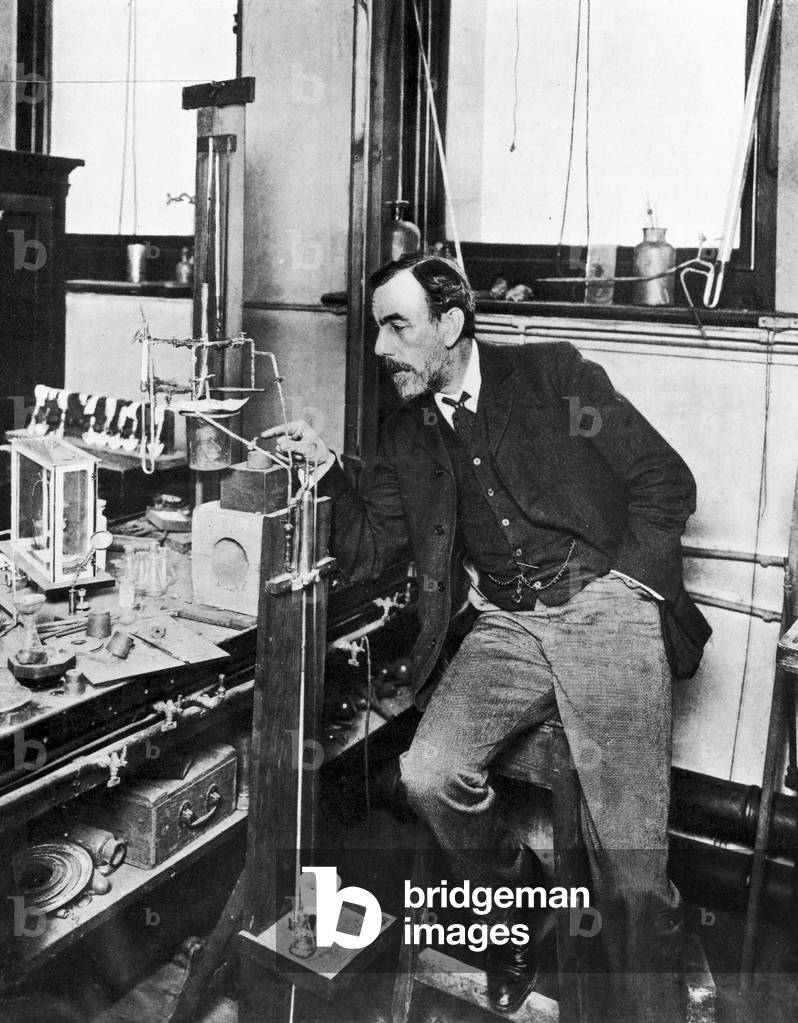
UIS5086294 Sir William Ramsay, Scottish chemist , c 1910. Ramsay was professor of Chemistry in Bristol (1880-87) and at University College London (1887-1913). He is best known for his discovery of the noble (inert) gases helium, neon, argon, krypton and xenon, for which he was awarded the Nobel Prize for Chemistry in 1904. In 1894, together with Lord Rayleigh (1842-1919), he discovered the rare gas argon, followed in 1898 by helium, neon, krypton and xenon. Ramsay also made important contributions to thermodynamics and stoichiometry, and was the only man to discover a complete Periodic Group of elements. He was knighted in 1902. ©SSPL/Science Museum
DC
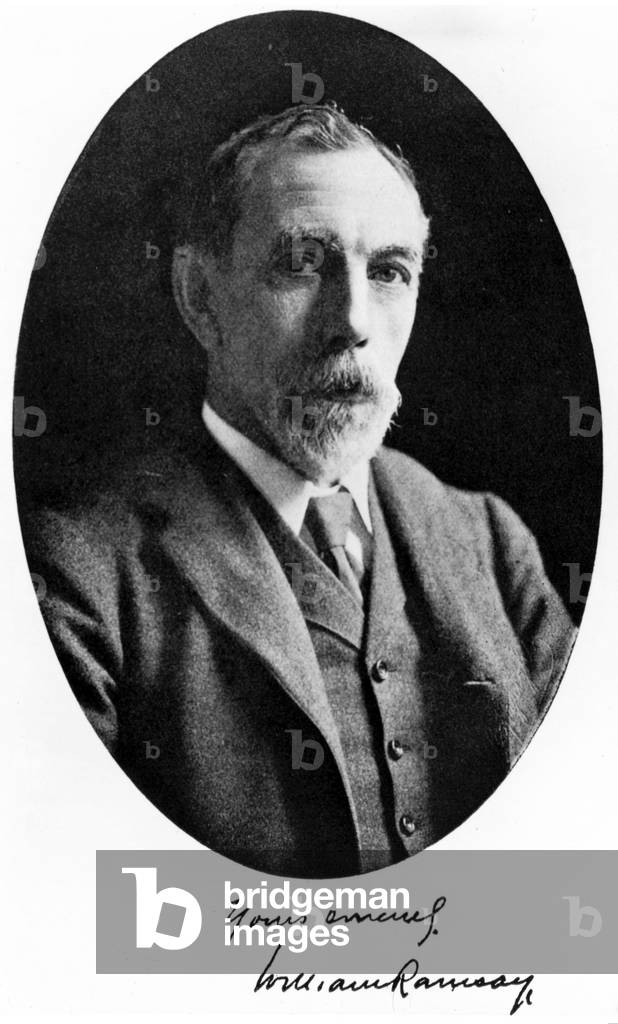
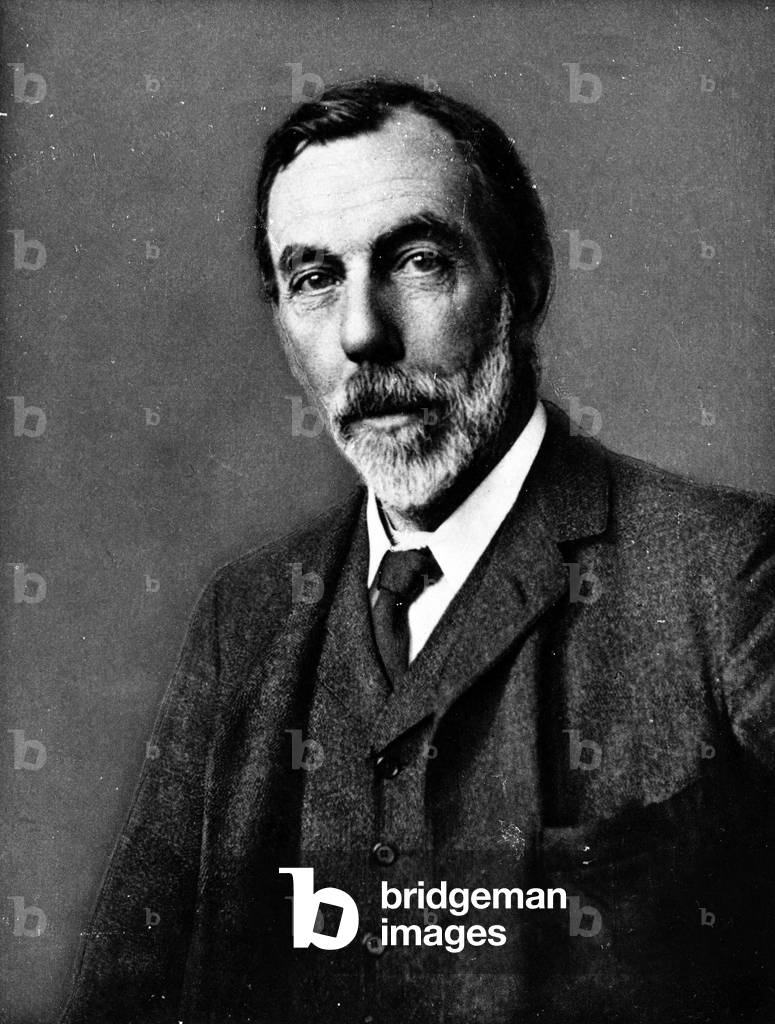
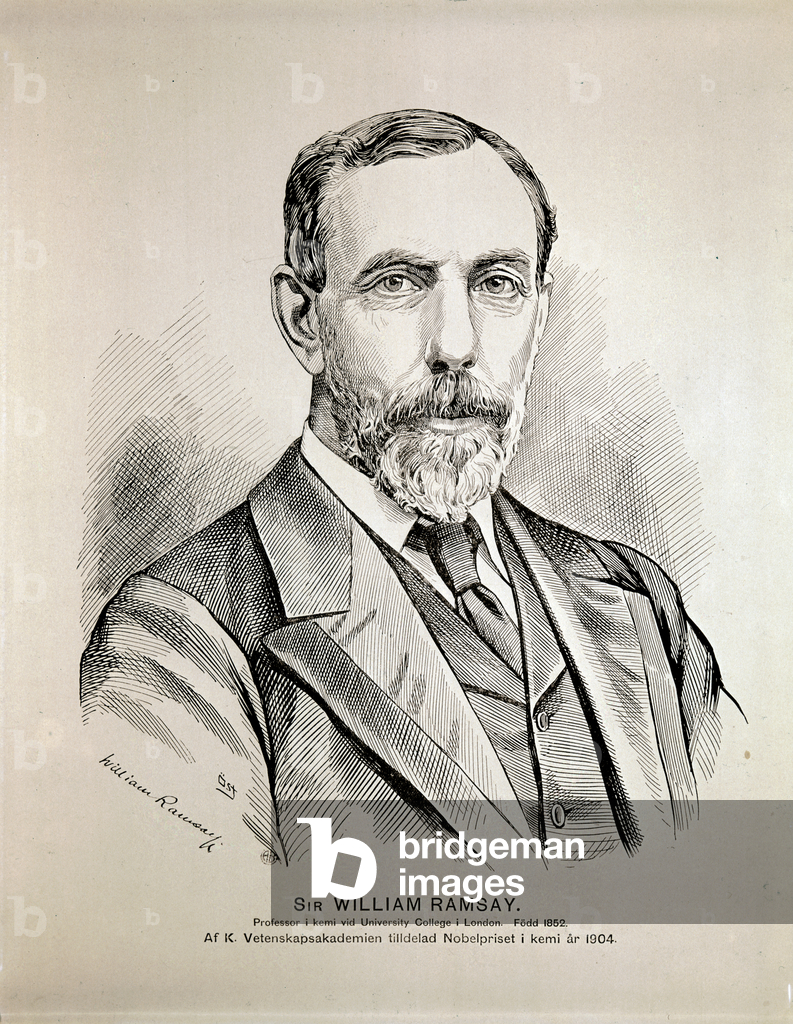
UIS5072003 Sir William Ramsay, Scottish chemist, c 1910. Photogravure after a painting or photograph of Sir William Ramsay (1852-1916). Ramsay was professor of Chemistryin Bristol (1880-87) and at University College London (1887-1913). He is best known for his discovery of the noble (inert) gases helium, neon, argon, krypton and xenon, for which he was awarded the Nobel Prize for Chemistry in 1904. In 1894, together with Lord Rayleigh (1842-1919), he discovered the rare gas argon, followed in 1898 by helium, neon, krypton and xenon. Ramsay also made important contributions to thermodynamics and stoichiometry, and was the only man to discover a complete Periodic Group of elements. He was knighted in 1902. From a collection of portraits of scientists published by Photographische Gesellschaft, Berlin, c 1910. Dimensions: 460mm x 340mm. ©SSPL/Science Museum
DC
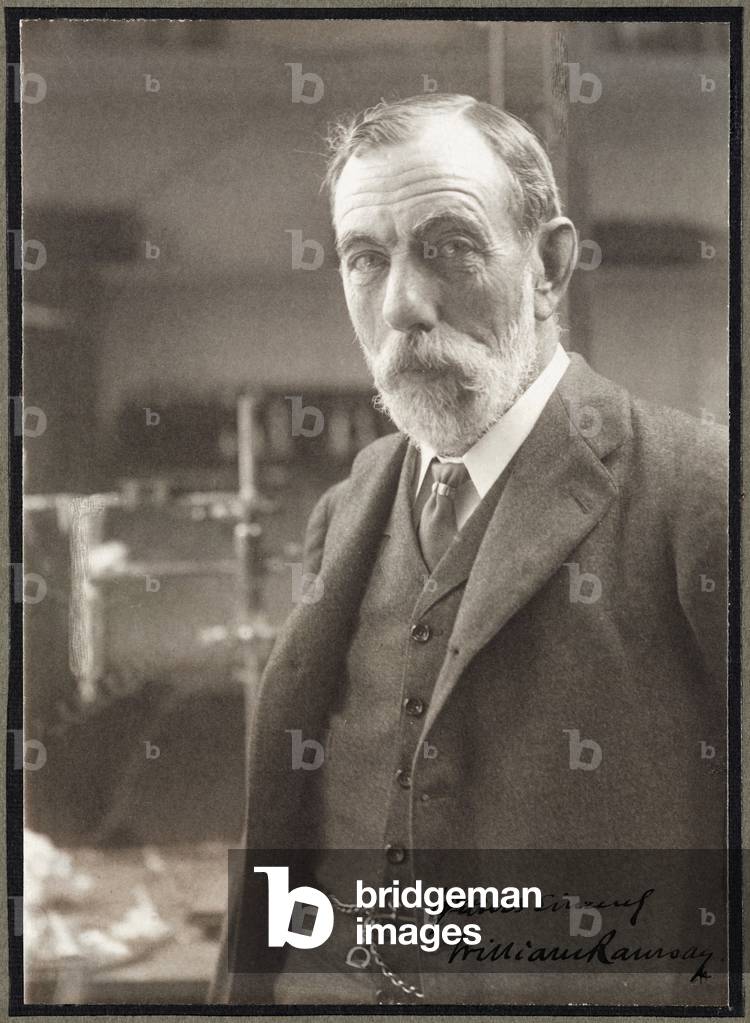
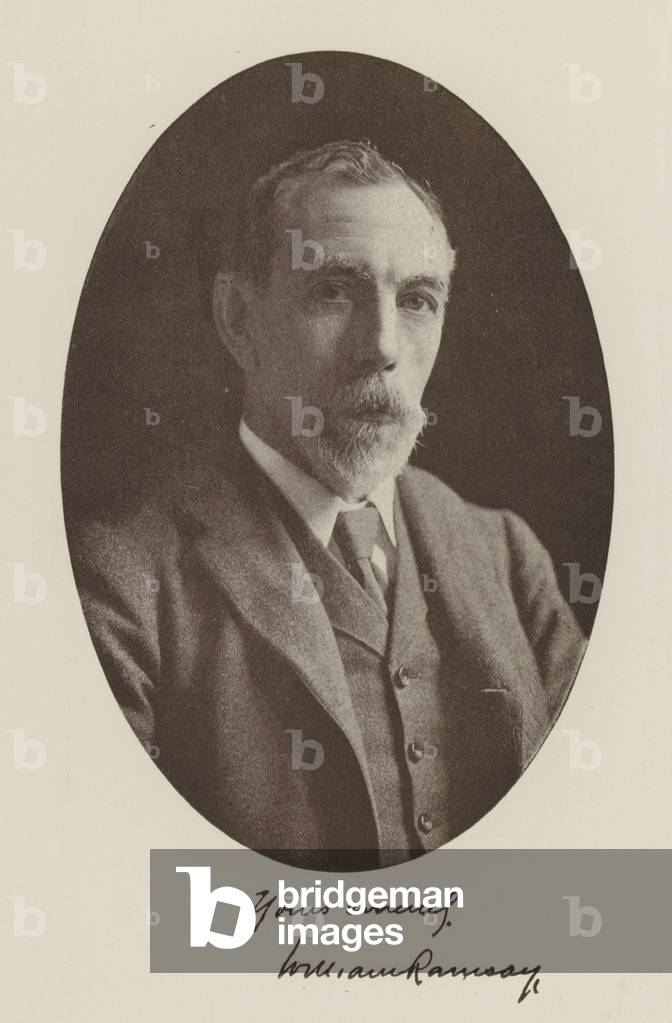
UIS5071919 Sir William Ramsay, Scottish chemist, c 1910. Signed photographic portrait. Sir William Ramsay (1852-1916) was professor of Chemistry in Bristol (1880-87) and at University College London (1887-1913). He is best known for his discovery of the noble (inert) gases helium, neon, argon, krypton and xenon, for which he was awarded the Nobel Prize for Chemistry in 1904. In 1894, together with Lord Rayleigh (1842-1919), he discovered the rare gas argon, followed in 1898 by helium, neon, krypton and xenon. Ramsay also made important contributions to thermodynamics and stoichiometry, and was the only man to discover a complete Periodic Group of elements. He was knighted in 1902. Dimensions: 330mm x 290mm. ©SSPL/Science Museum
DC
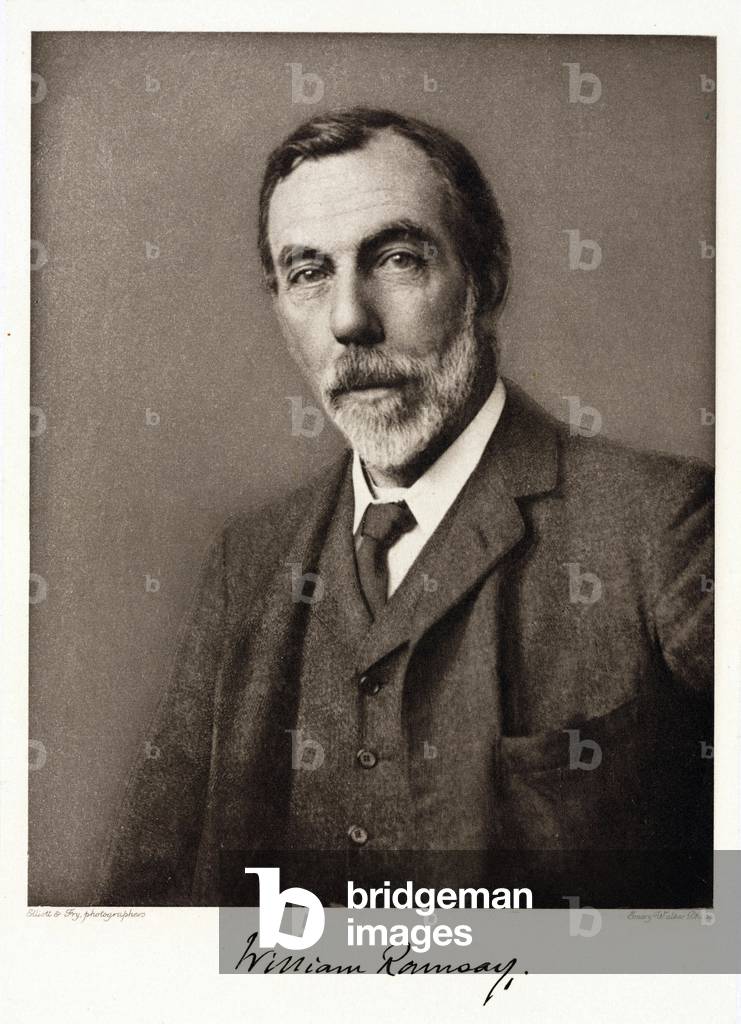
UIS5077544 Sir William Ramsay, Scottish chemist, c 1910-1920. Photogravure by Emery Walker of Sir William Ramsay (1852-1916). Ramsay was professor of Chemistryin Bristol (1880-87) and at University College London (1887-1913). He is best known for his discovery of the noble (inert) gases helium, neon, argon, krypton and xenon, for which he was awarded the Nobel Prize for Chemistry in 1904. In 1894, together with Lord Rayleigh (1842-1919), he discovered the rare gas argon, followed in 1898 by helium, neon, krypton and xenon. Ramsay also made important contributions to thermodynamics and stoichiometry, and was the only man to discover a complete Periodic Group of elements. He was knighted in 1902. ©SSPL/Science Museum
DC
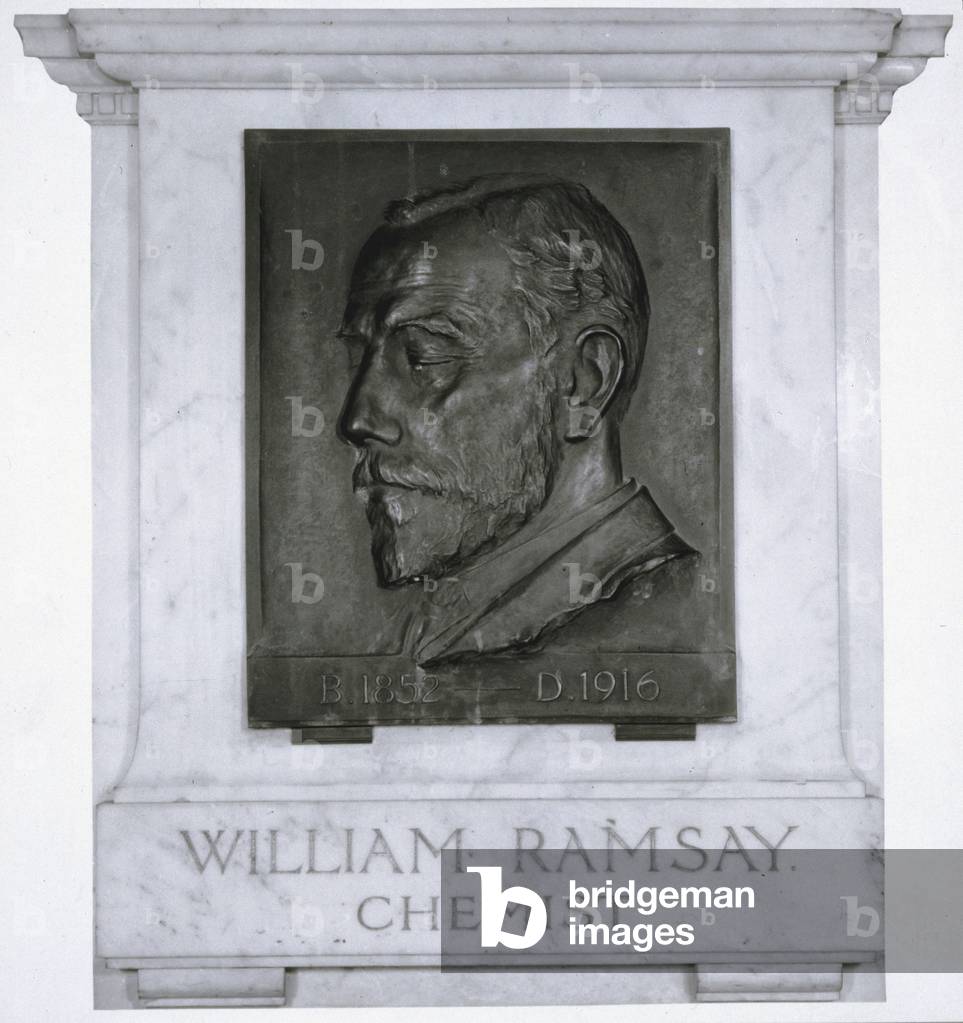
UIS5076067 Sir William Ramsay, Scottish chemist, c 1910-1920. Photogravure. Sir William Ramsay was professor of Chemistry in Bristol (1880-87) and at University College London (1887-1913). He is best known for his discovery of the noble (inert) gases helium, neon, argon, krypton and xenon, for which he was awarded the Nobel Prize for Chemistry in 1904. In 1894, together with Lord Rayleigh (1842-1919), he discovered the rare gas argon, followed in 1898 by helium, neon, krypton and xenon. Ramsay also made important contributions to thermodynamics and stoichiometry, and was the only man to discover a complete Periodic Group of elements. He was knighted in 1902. ©SSPL/Science Museum
DC
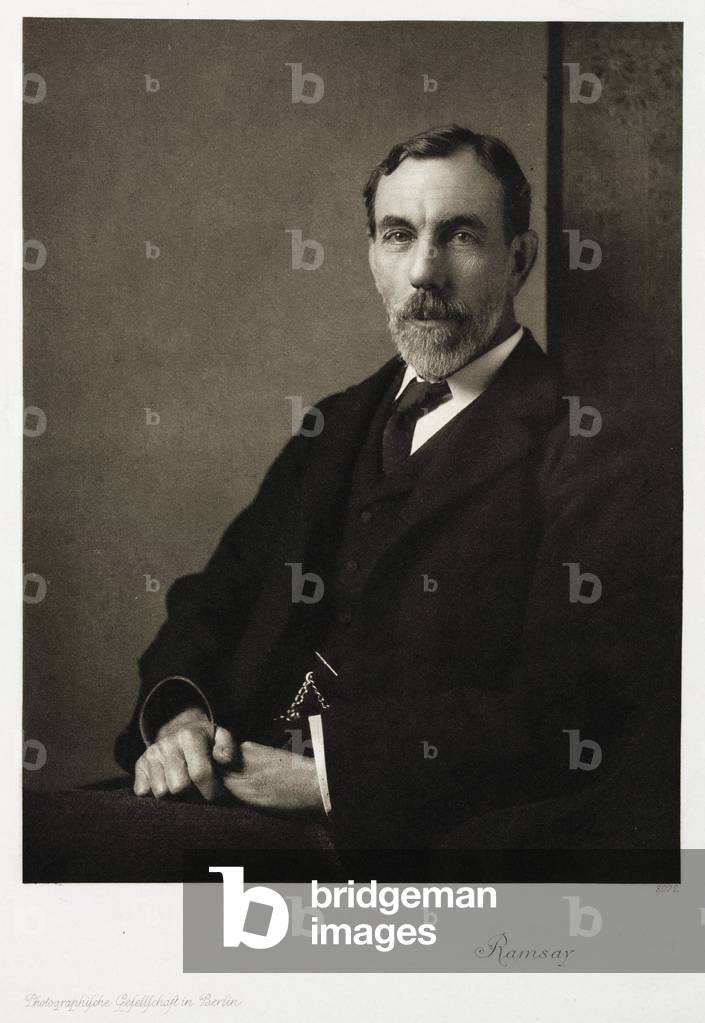
XJF486345 Sir William Ramsay (1852–1916) was a Scottish chemist who discovered the noble gases and received the Nobel Prize in Chemistry in 1904 "in recognition of his services in the discovery of the inert gaseous elements in air".
RF
LLM7182376 William Ramsay. Illustration for Famous Chemists, The Men and their Work, by Sir William A Tilden (George Routledge, 1921).
DC
LRI9202349 Scottish chemist who discovered the noble gases, Nobel Prize laureate
DC
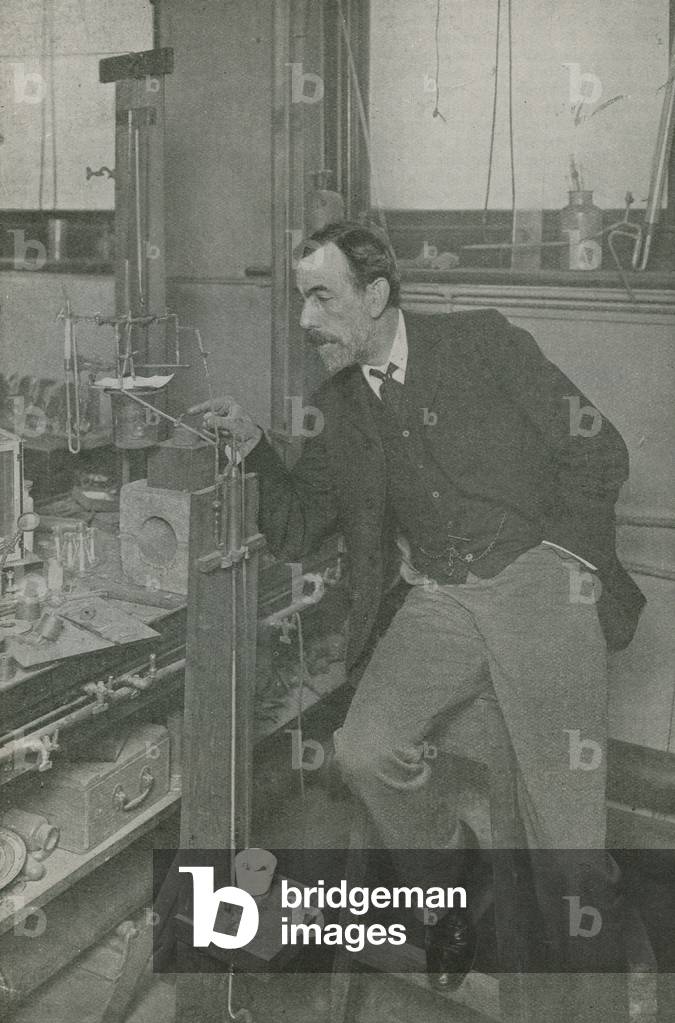
LLM979559 A birthplace of new knowledge. Sir William Ramsay experimenting with radium in his laboratory. Illustration for Popular Science edited by Arthur Mee (Amalgamated Press, 1913).
DC
LRI9202336 Scottish chemist who discovered the noble gases, Nobel Prize laureate
DC
STC335871 Pierre Curie (1859-1906), French physicist who discovered radium; Sir William Ramsay (1852-1916), Scottish chemist who discovered the noble gases;
DC
NRM264187 Scottish chemist; discovered noble (inert) gases helium, neon, argon, krypton an xenon; awarded Nobel Prize for Chemistry in 1904;
DC
UIS5064984 Chemical Laboratories, Apparatus, 1850-1949 Toepler pump used by Ramsay, late 19th century. This Toepler pump was used by Scottish chemist Sir William Ramsay (1852-1916) to remove air during his researches leading to the discovery of the rare (noble) gases of the atmosphere. In collaboration with Lord Rayleigh, Ramsay discovered argon in 1895, and this led swiftly to the discovery of helium, neon, krypton, xenon and finally radon. The discovery of these previously unknown gases added a whole new eighth column to the periodic table of the elements. For this work Ramsay and Rayleigh were awarded the Nobel prize for chemistry in 1904. ©SSPL/Science Museum
DC
UCL273800 top to bottom - Argon, Green helium, Krypton; Sir William Ramsay (1852-1916) Scottish chemist; received Nobel Prize for Chemistry in 1904;
DC
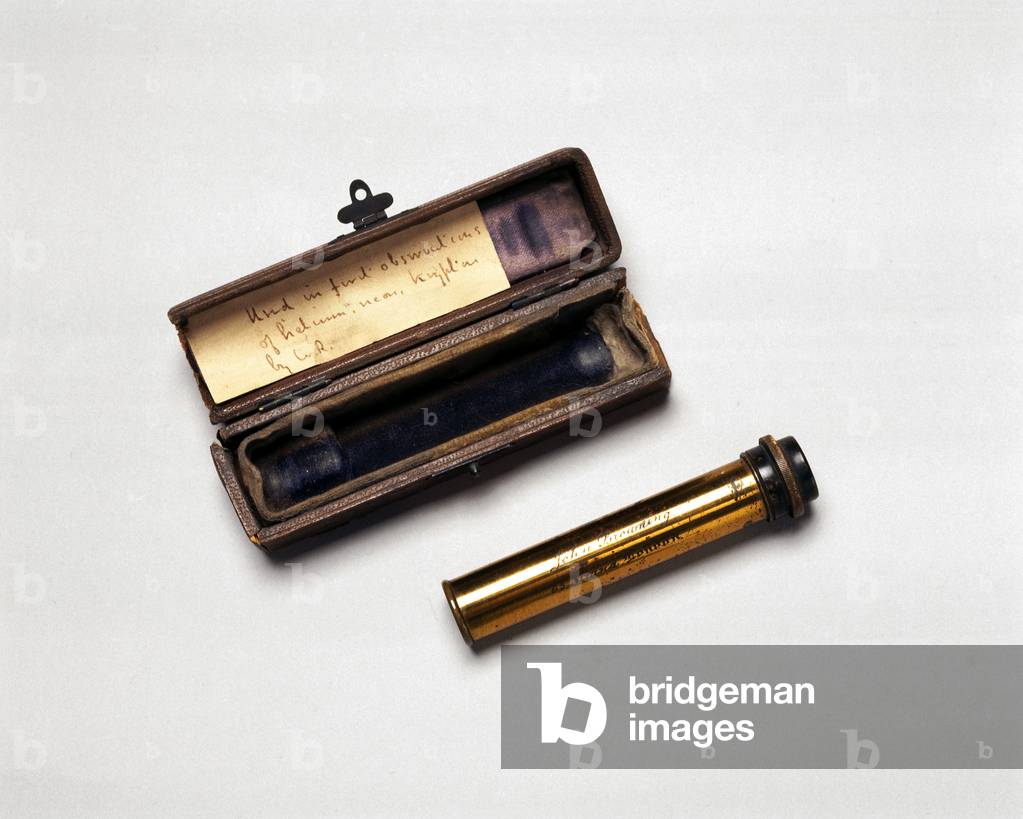
UIS5083285 Instruments, Spectroscopes Sir William Ramsay's direct-vision spectroscope, 1880-1890. Sir William Ramsay (1852-1916), the Scottish chemist, used this hand-held direct-vision spectroscope to observe the faint spectra of inert gases such as helium, neon, argon and Krypton. For this work Ramsey was awarded a knighthood in 1902 and received the Nobel Prize for chemistry in 1904. Made around 1880-1890, the compact instrument lacks the narrow slit usually found on most spectroscopes; instead light enters from the left side where it is dispersed by a series of triangular glass prisms. Cemented together apex to apex, so forming a straight bar of glass, they form a detailed spectrum that is viewed using the eyepiece on the right side of the spectroscope. ©SSPL/Science Museum
DC
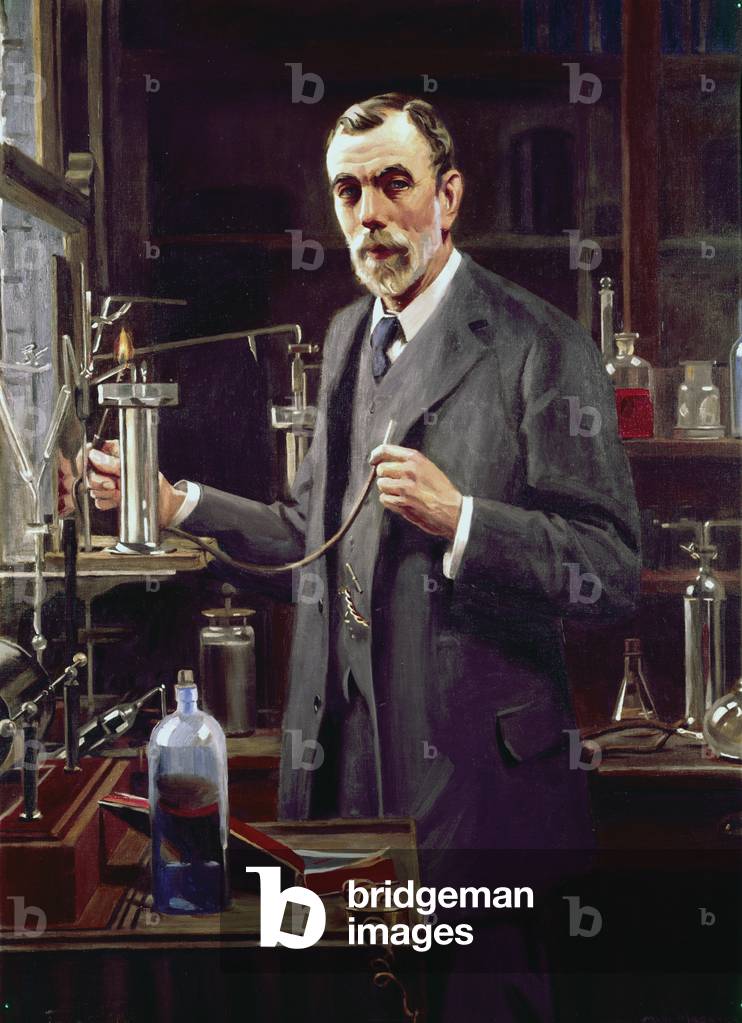
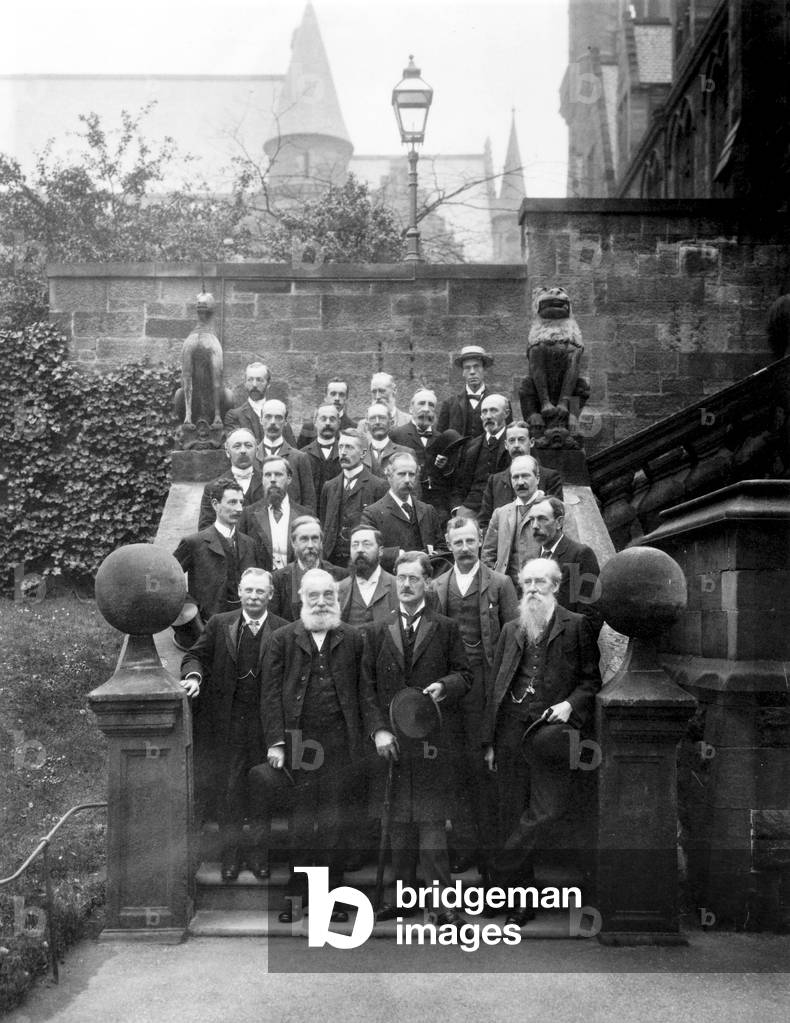
UIS5088551 Sir William Henry Perkin and group, British Association meeting, York, 1906. A group portrait from a collection of 19 photographs relating to Perkin (1838-1907), his relations, and the synthetic dyestuffs industry. Perkin is second on the left at the front and his son, also called William Henry Perkin, is behind him in the middle of the second row. William Ramsay (1852-1916), Scottish chemist, shown here at the far right of the second row, discovered the inert gases of the atmosphere. In 1856, whilst attempting to synthesise quinine for the treatment of malaria, Perkin managed to extract a brilliant purple dye, subsequently named mauveine. His manufacture of this and other aniline dyes was a great commercial success and he went on to create the modern synthetic dyestuffs industry and introduce a new range of colours into human life. ©SSPL/Science Museum
DC

Total de Resultados: 21

Página 1 de 1