












































Busque também em nossas outras coleções:

Tipo de arquivo:

Tipo do arquivo:

Orientação:

Total de Resultados: 40

Página 1 de 1

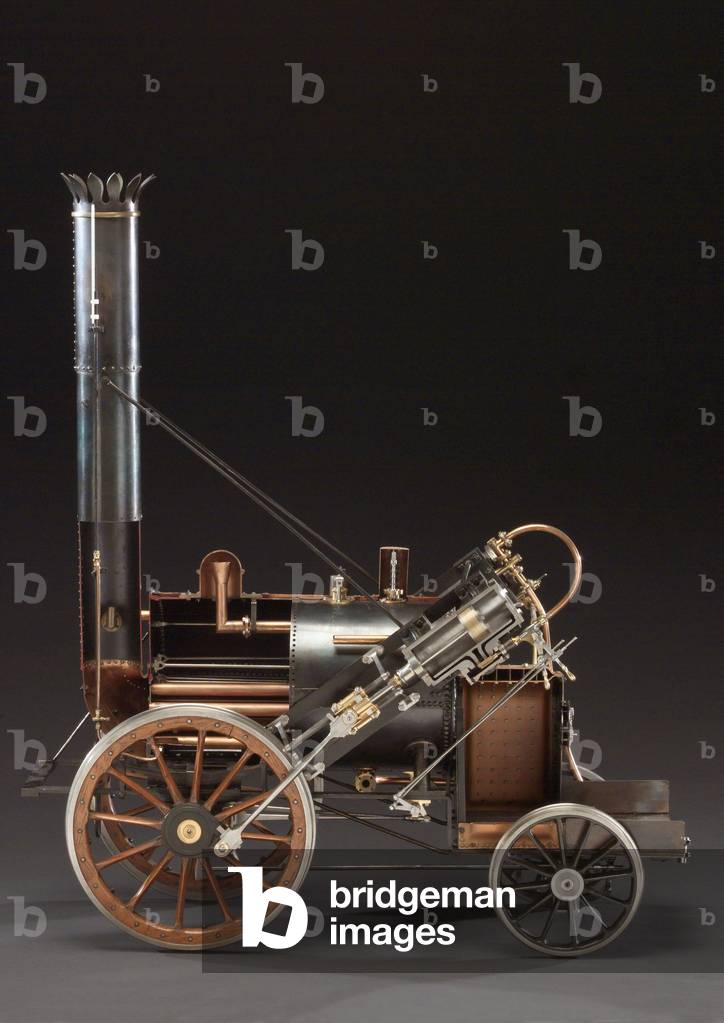
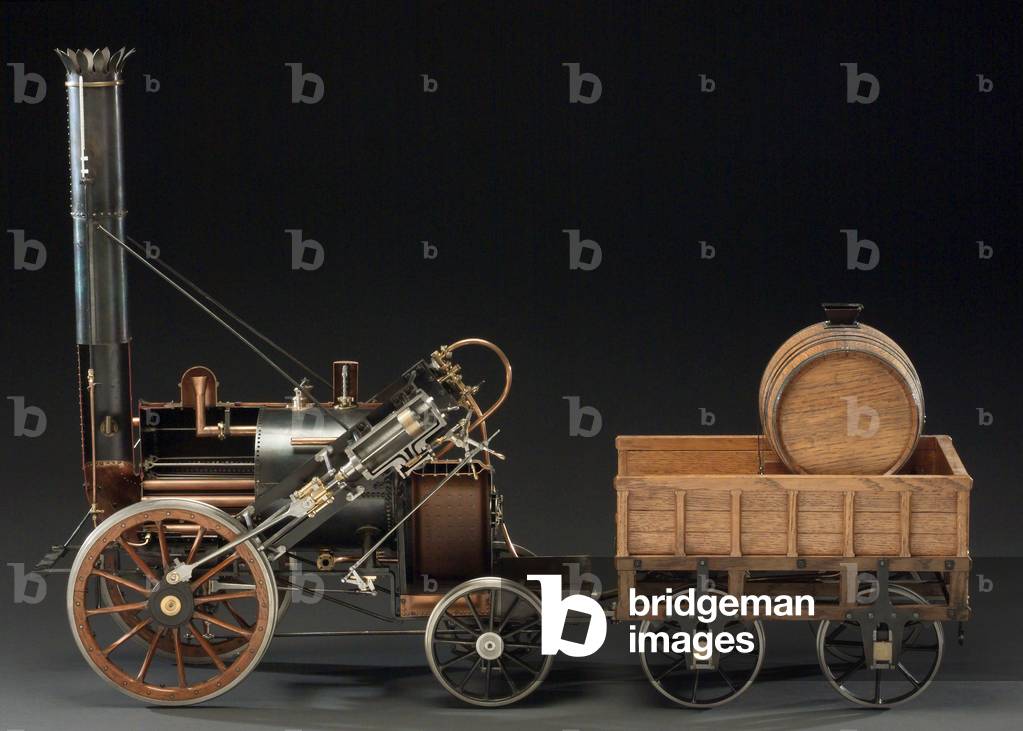
UIS5078225 Stephenson's 'Rocket' locomotive, 1829. The locomotive represented by this model (scale 1:8) was designed by Robert Stephenson (1803-1859) and George Stephenson (1781-1848). It became famous after winning Rainhill Trials, a competition designed to find the most suitable locomotive for haulage on the Liverpool and Manchester Railway. This is the first version of the scale model of the Rocket and was built by Stuart Turner in 1909 from drawing prepared by E A Forward in the Science Museum. This model has an incorrect firebox and boiler details and as such should only be used for research purposes. Photographie. ©SSPL/Science Museum
DC
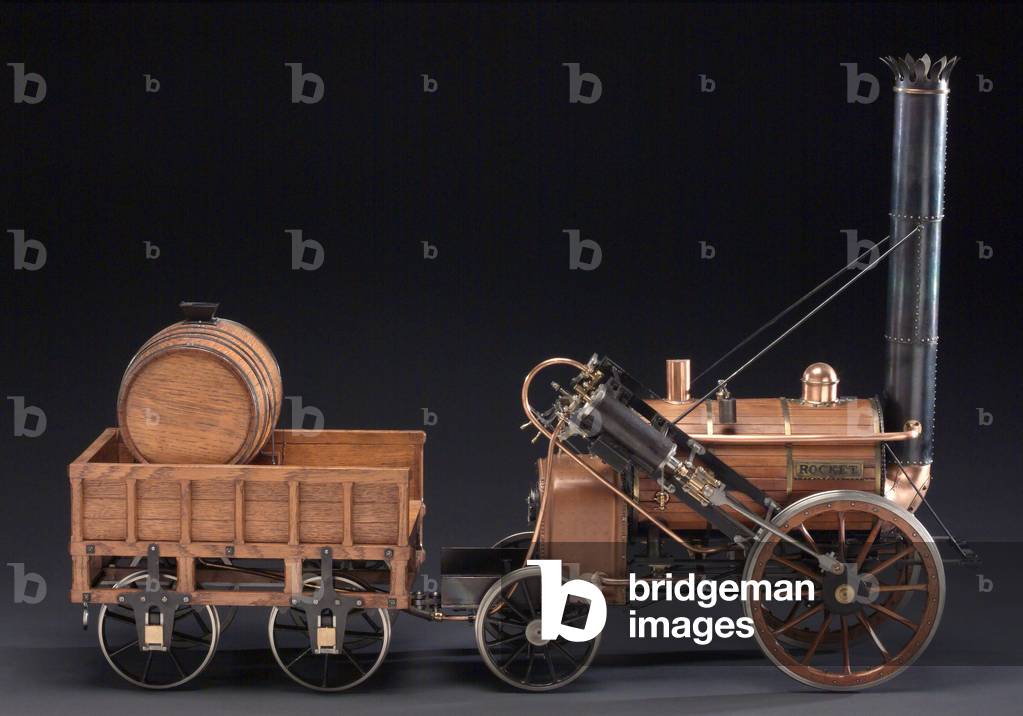
UIS5078226 Stephenson's 'Rocket' locomotive, 1829. The locomotive represented by this model (scale 1:8) was designed by Robert Stephenson (1803-1859) and George Stephenson (1781-1848). It became famous after winning Rainhill Trials, a competition designed to find the most suitable locomotive for haulage on the Liverpool and Manchester Railway. This is the first version of the scale model of the Rocket and was built by Stuart Turner in 1909 from drawing prepared by E A Forward in the Science Museum. This model has an incorrect firebox and boiler details and as such should only be used for research purposes. Photographie. ©SSPL/Science Museum
DC
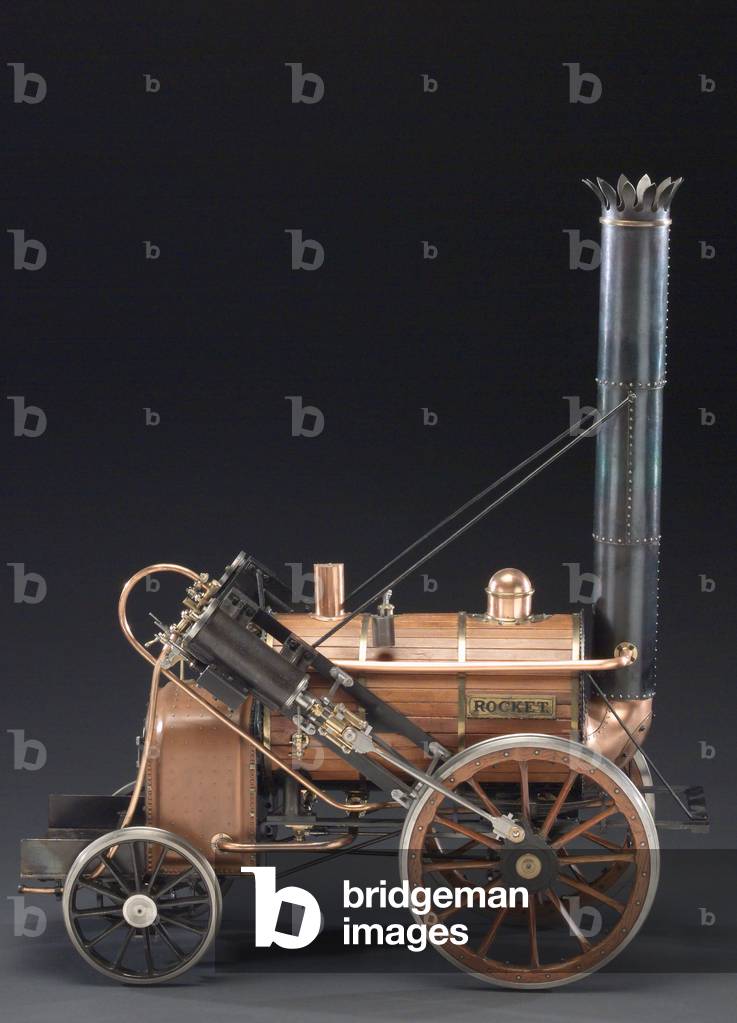
UIS5078235 Stephenson's 'Rocket' locomotive, 1829. The locomotive represented by this model (scale 1:8) was designed by Robert Stephenson (1803-1859) and George Stephenson (1781-1848). It became famous after winning Rainhill Trials, a competition designed to find the most suitable locomotive for haulage on the Liverpool and Manchester Railway. This is the first version of the scale model of the Rocket and was built by Stuart Turner in 1909 from drawing prepared by E A Forward in the Science Museum. This model has an incorrect firebox and boiler details and as such should only be used for research purposes. ©SSPL/Science Museum
DC
UIS5078240 Stephenson's 'Rocket' locomotive, 1829. The locomotive represented by this model (scale 1:8) was designed by Robert Stephenson (1803-1859) and George Stephenson (1781-1848). It became famous after winning Rainhill Trials, a competition designed to find the most suitable locomotive for haulage on the Liverpool and Manchester Railway. This is the first version of the scale model of the Rocket and was built by Stuart Turner in 1909 from drawing prepared by E A Forward in the Science Museum. This model has an incorrect firebox and boiler details and as such should only be used for research purposes. Photographie. ©SSPL/Science Museum
DC
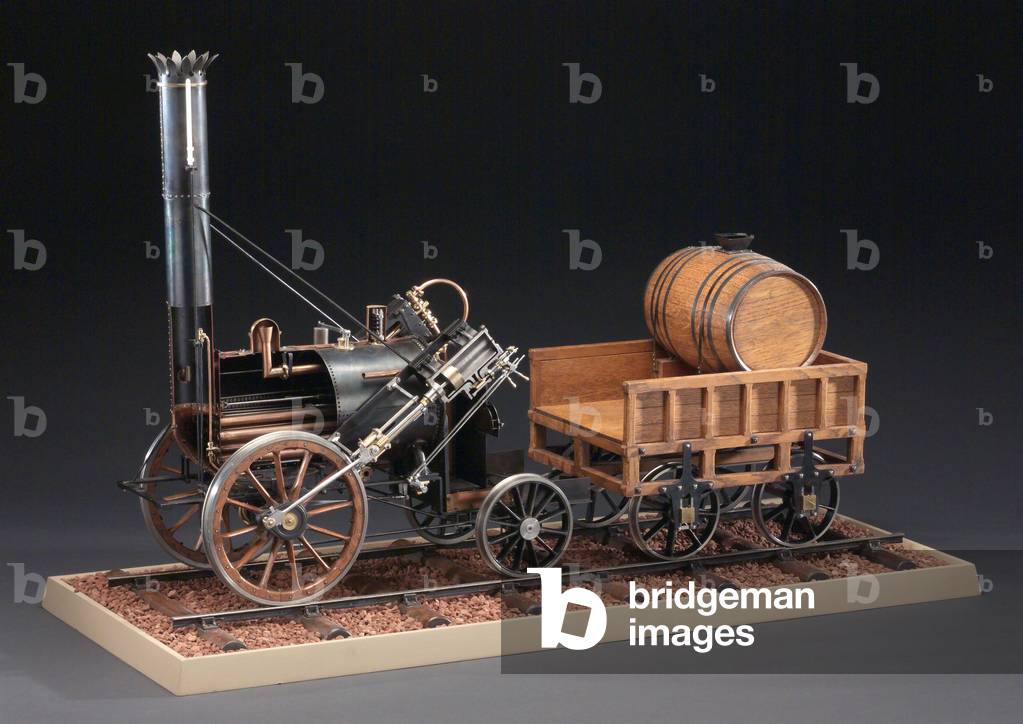
UIS5078230 Stephenson's 'Rocket' locomotive, 1829. The locomotive represented by this model (scale 1:8) was designed by Robert Stephenson (1803-1859) and George Stephenson (1781-1848). It became famous after winning Rainhill Trials, a competition designed to find the most suitable locomotive for haulage on the Liverpool and Manchester Railway. This is the first version of the scale model of the Rocket and was built by Stuart Turner in 1909 from drawing prepared by E A Forward in the Science Museum. This model has an incorrect firebox and boiler details and as such should only be used for research purposes. Photographie. ©SSPL/Science Museum
DC
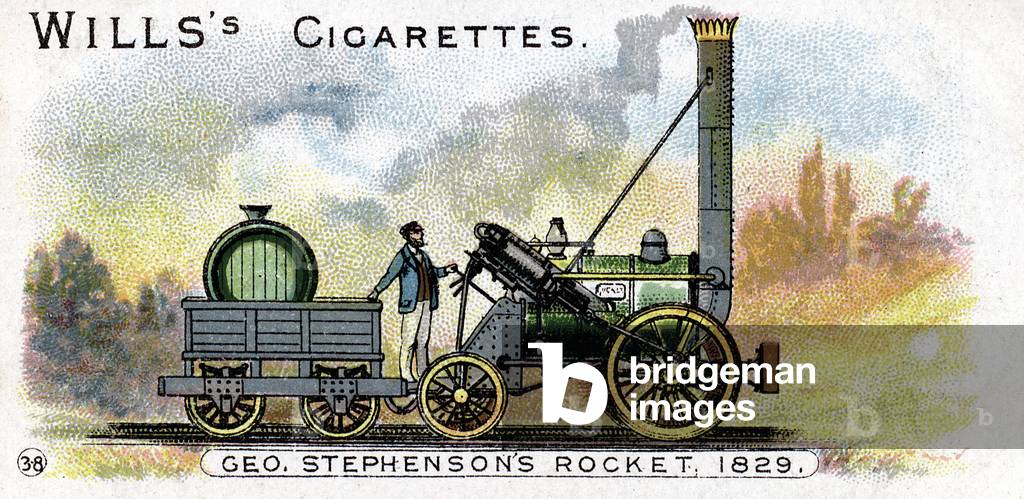
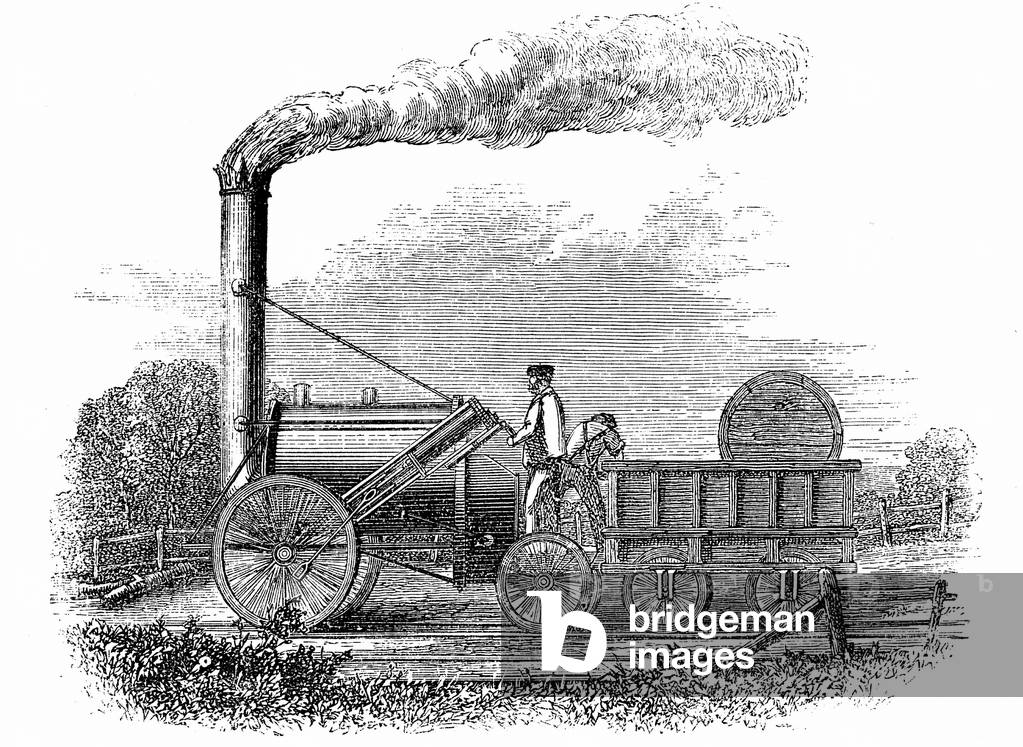
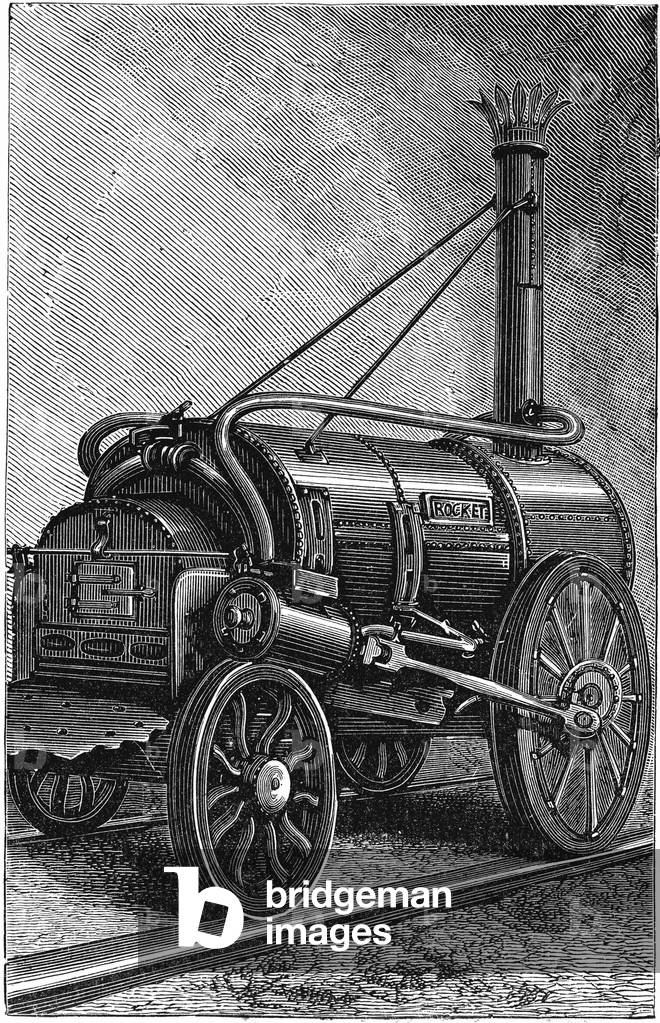
LLL3105631 George Stephenson's Rocket, 1829.
DC
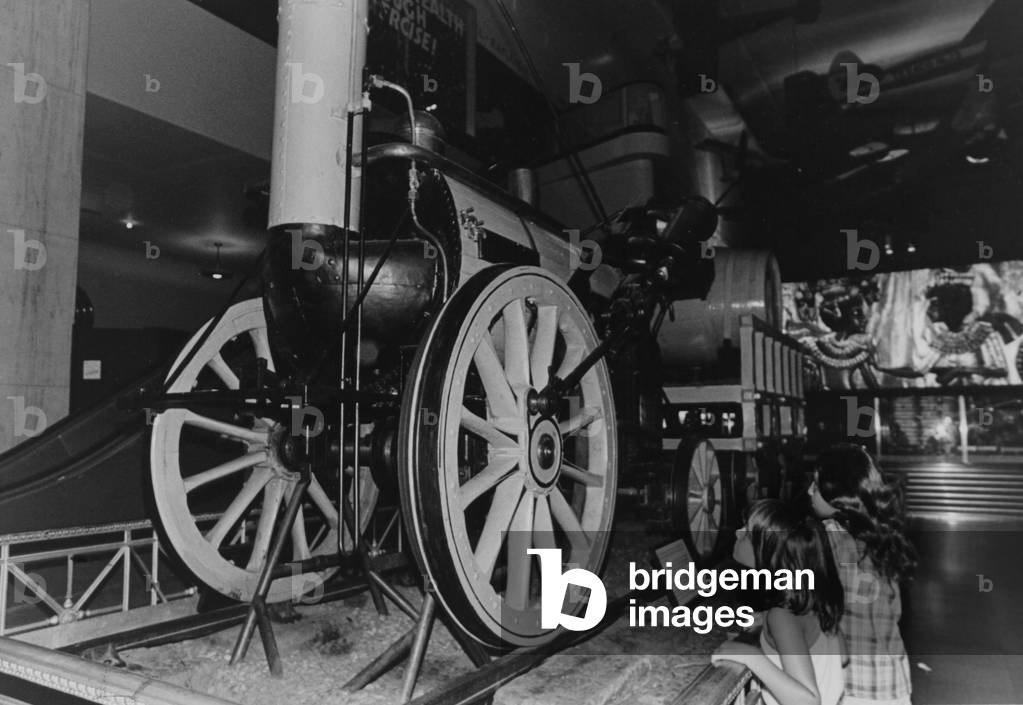
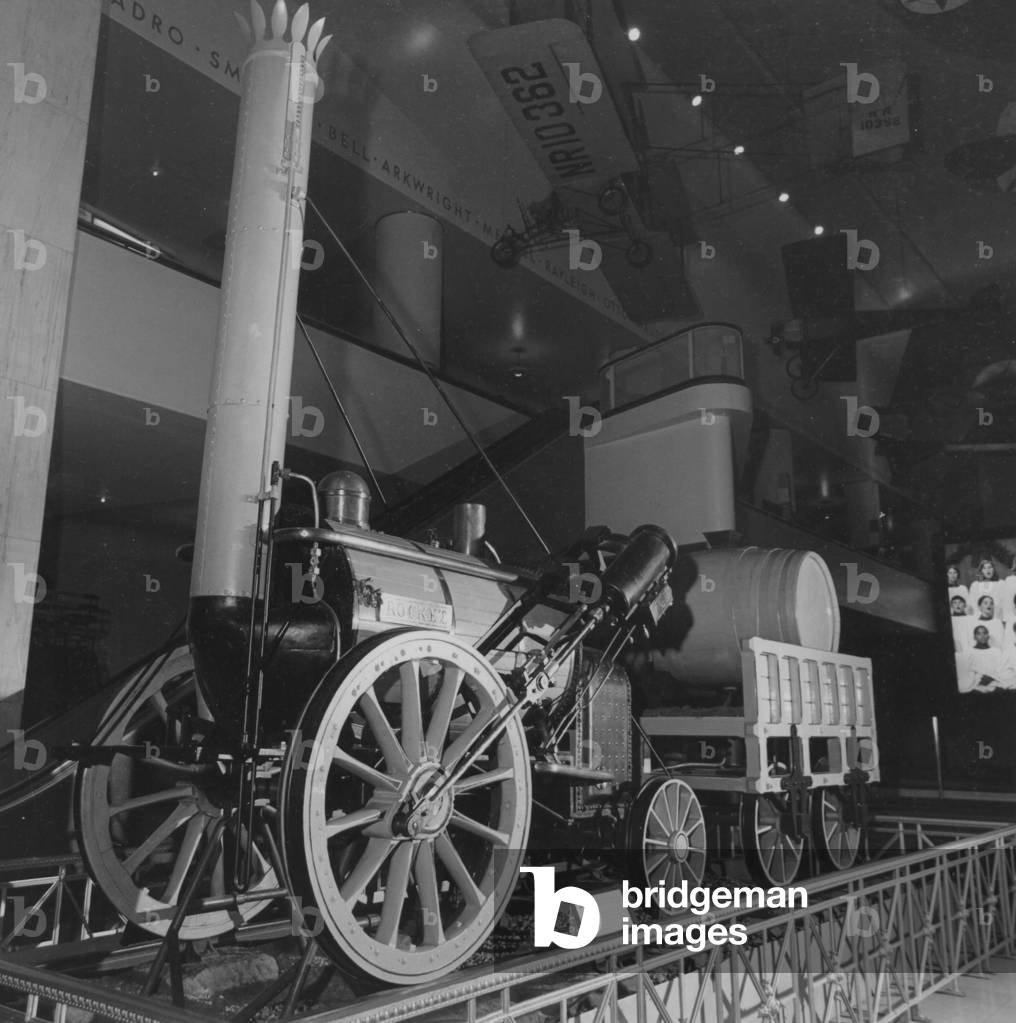
SIC830175 An image of a replica of Stephenson's 'Rocket' 1829 locomotive on display at the Museum of Science and Industry, Chicago, Illinois.
DC
NRM260965 designed by George Stephenson (1781-1848) & Robert Stephenson (1803-59); won Rainhill Trials in 1829 to establish most efficient locomotive for haulage on Liverpool & Manchester Railway; photographed in Science Museum;
DC
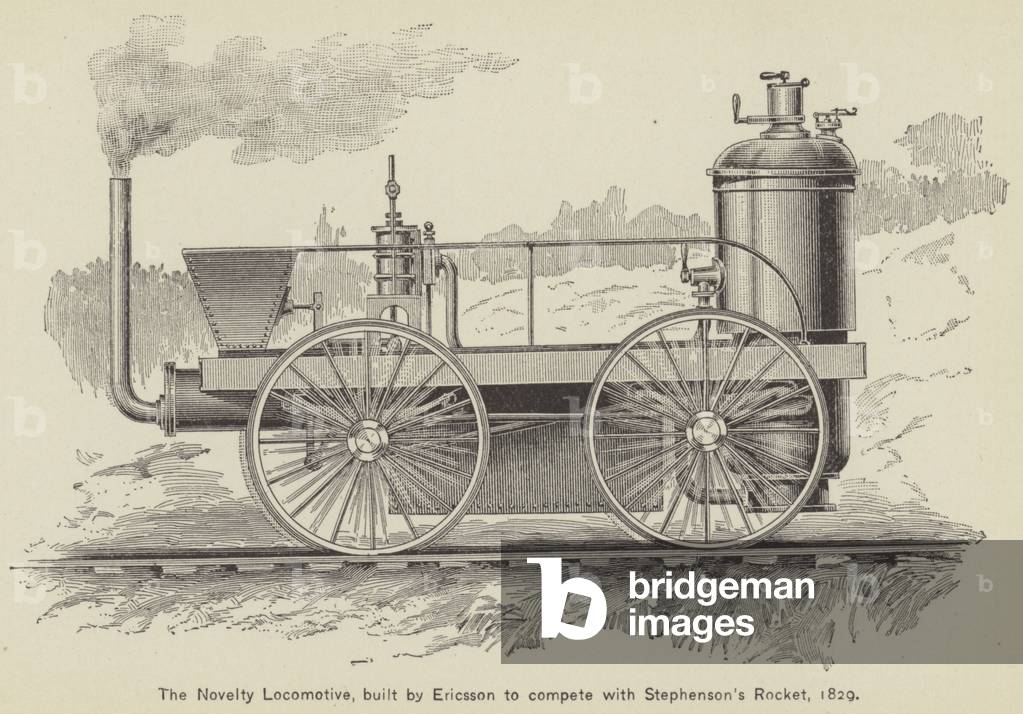
LLM2813741 The Novelty Locomotive, built by Ericsson to compete with Stephenson's Rocket, 1829. Illustration for Inventors by Philip G Hubert (Scribner's, 1894).
DC
SIC830106 An image of a replica of Stephenson's 1829 Rocket steam locomotive built in 1929 and on display at the Museum of Science and Industry, Chicago, Illinois.
DC
NRM264181 designed by George Stephenson (1781-1848) & Robert Stephenson (1803-59); won Rainhill Trials in 1829 to establish most efficient locomotive for haulage on Liverpool & Manchester Railway; photographed in Science Museum;
DC
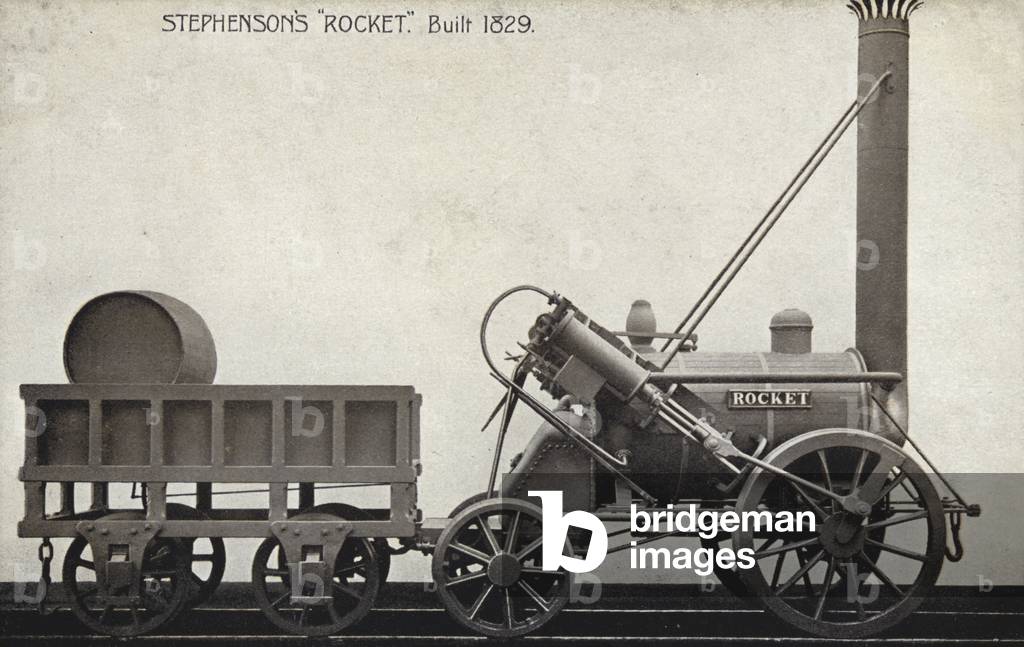
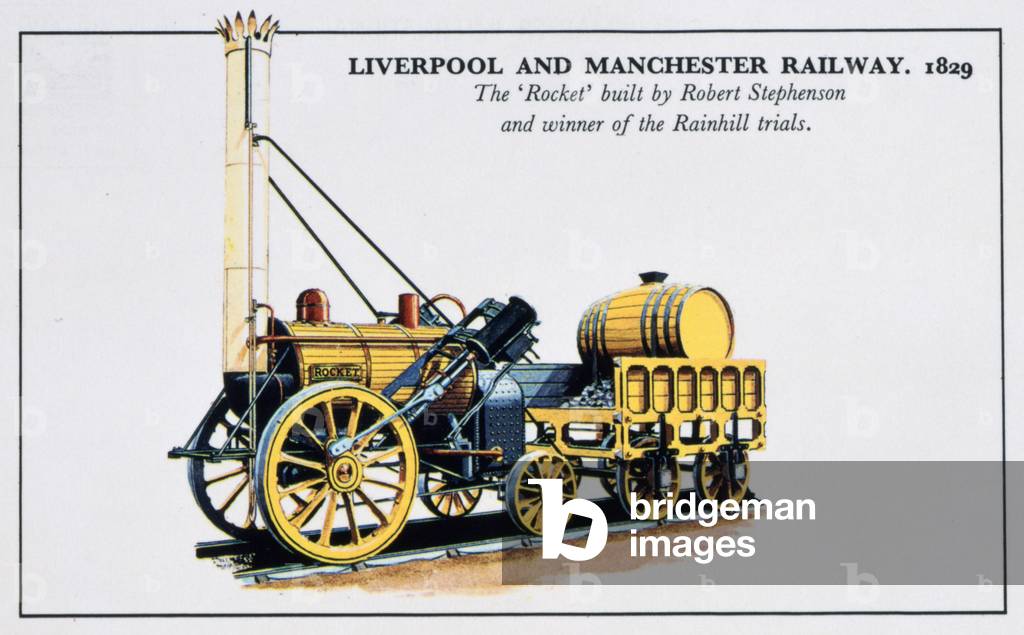
LLC983410 Stephenson's "Rocket", Built 1829.
DC
XJF105855
RF
LIP1053289 The Proposed National Museum of Patents. Illustration for The Graphic, 19 December 1874.
DC
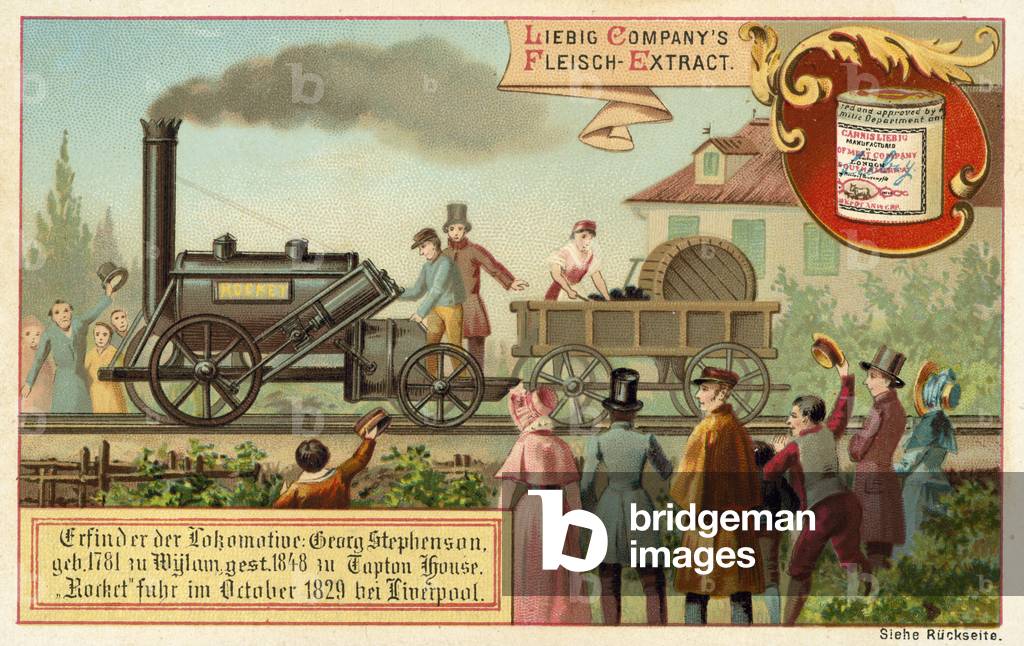
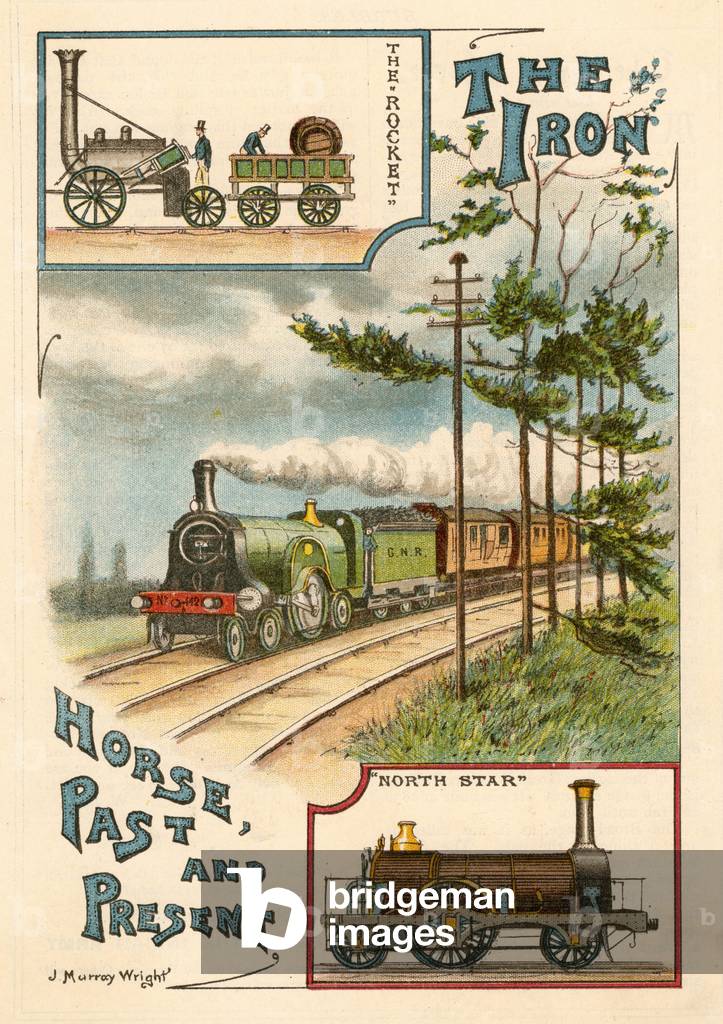
LLM1093598 George Stephenson's steam locomotive Rocket, Liverpool, 1829. Liebig educational card, late 19th or early 20th century.
DC
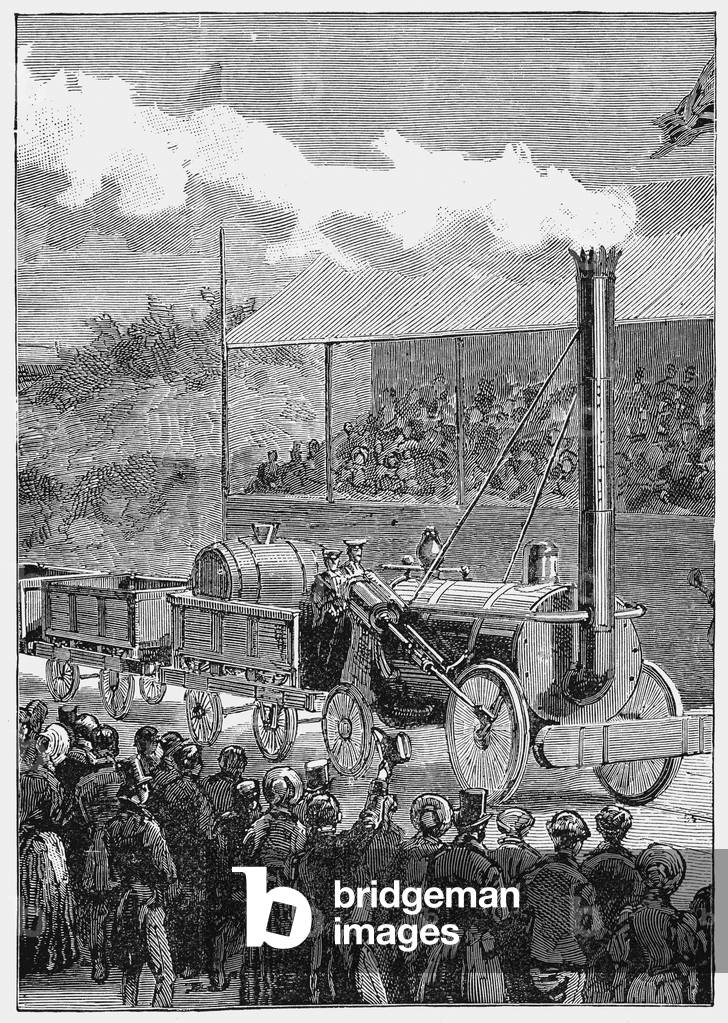
LLE812949 Stephenson's Rocket coming in first at the competition of locomotives at Rainhill in 1829. Hand-coloured in the Victorian style.
DC
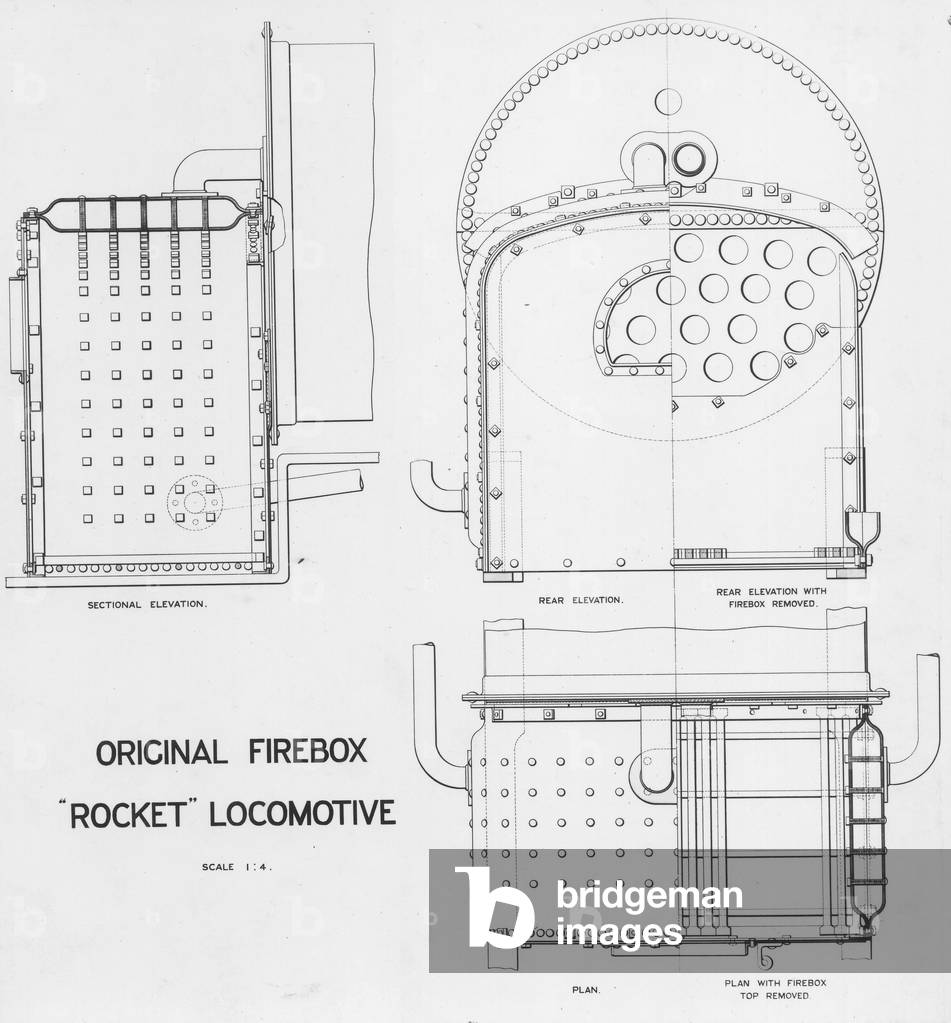
UIS3697571 Drawing of original fire box of Stephenson's 0-2- 2 locomotive 'Rocket', 1829. In 1829, Robert Stephenson (1803-1859) and George Stephenson (1781-1848) designed the 'Rocket' which took part in and subsequently won the 'Rainhill' Trials, a competition set up to find the most suitable locomotive for haulage on the Liverpool & Manchester Railway.
DC
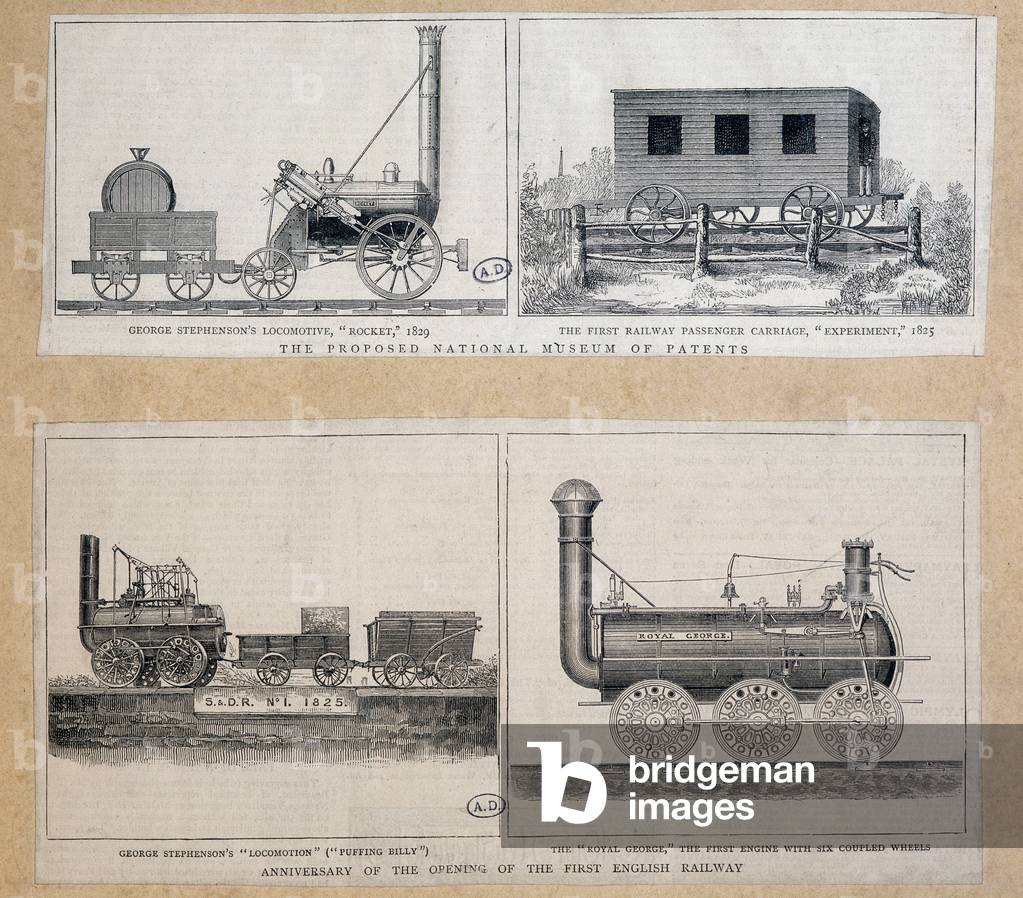
LSE4110268 Stephenson's “Rocket” Locomotive, 1829, The First Wagon, 1825, Stephenson's “Fulling Billy” Train, The Royal George Locomotive.
DC
LIP1041614 The Development of Railways in England. Illustration for The Graphic, 13 October 1888.
DC
XJF275647 Robert Stephenson & Hawthorns works built the replica for the Henry Ford Museum in 1929; original built by George Stephenson (1781-1848) in 1829;
RF
KDC384176 One of many cartoons of the early 19th century mocking the arrival of the railway; George Stephenson (1781-1848) inventor of the locomotive 'Rocket' in 1829;
DC
UIG530594
DC
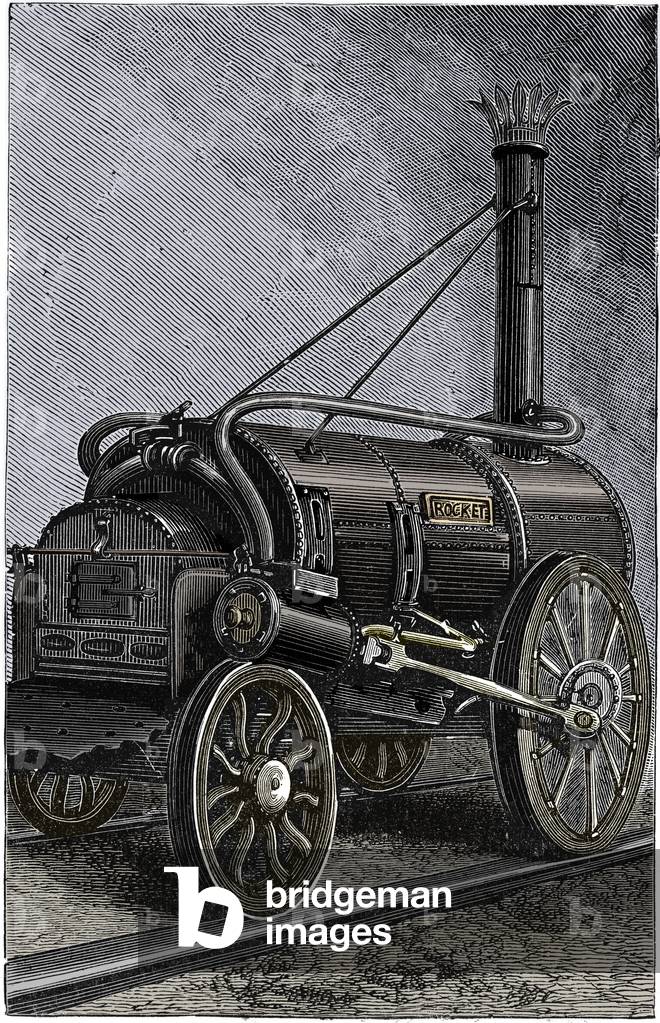
HIM5295120 George Stephenson's locomotive 'Rocket', 1829 (1892). On 11 October 1829 'Rocket' won the Rainhill Trials, a competition held to determine the engine to be used on the Liverpool to Manchester Railway. (Colorised black and white print).
DC
UIG538596
DC
UIG545073
DC
UIG538618
DC
UIG530593
DC
UIG540707
DC
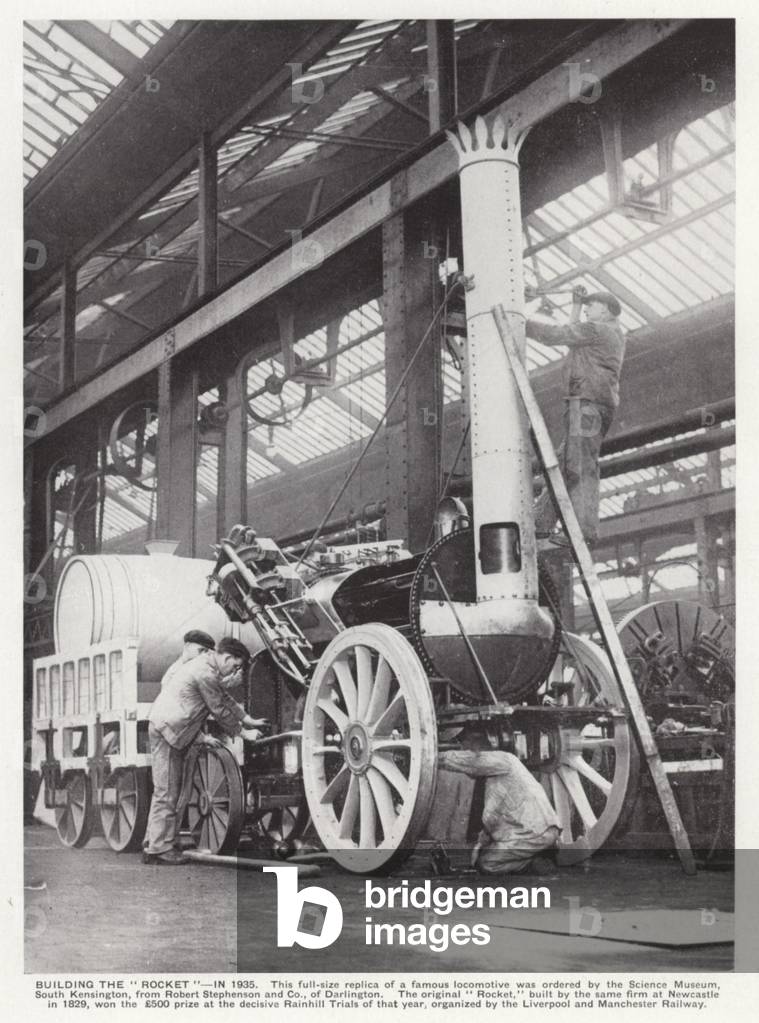
LLM6014793 Building a full-size replica of Stephenson's Rocket for the Science Museum, London, at the works of Robert Stephenson & Co, the same firm that made the original locomotive in 1829, Darlington, County Durham, 1935. Illustration from Railway Wonders of the World (The Amalgamated Press Limited, London, c1937).
DC
BAL3398
RF
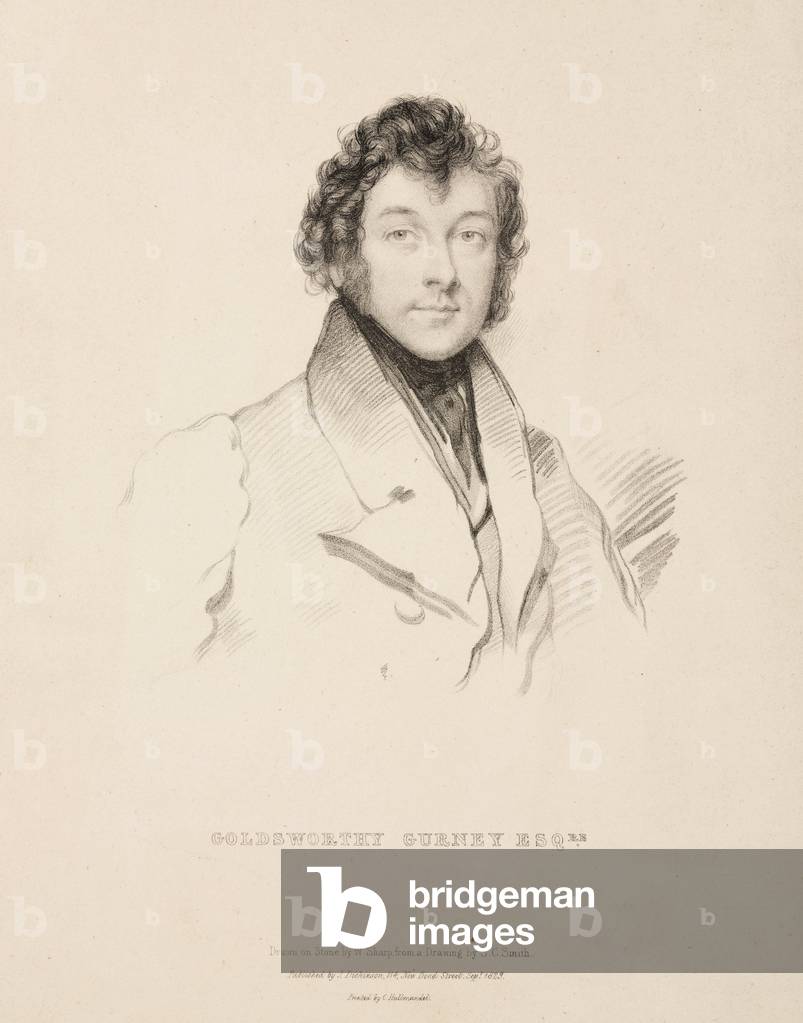
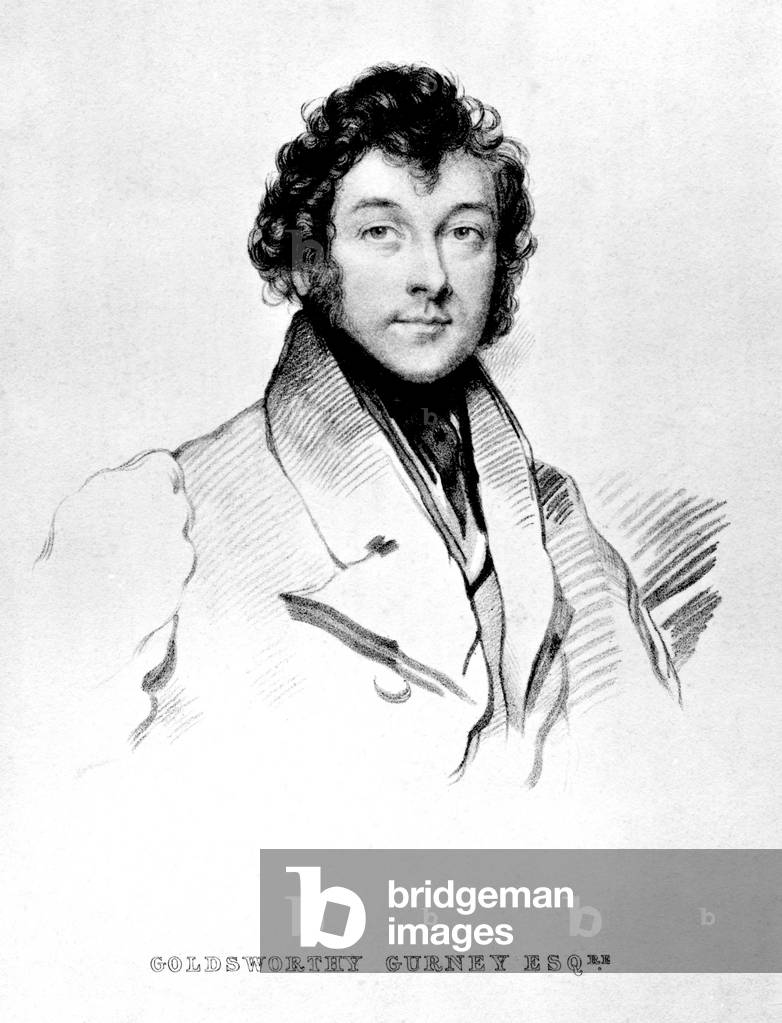
UIS5092637 Goldsworthy Gurney, English inventor, 1829. Lithograph by W Sharp after a drawing by S C Smith. Sir Goldsworthy Gurney (1793-1875) was born near Padstow in Cornwall and originally trained and practiced as a surgeon. Whilst a chemistry lecturer at the Surrey Institute, he invented the oxy-hydrogen blowpipe, which in turn led him to discover the capabilities of lime as a powerful light-emitting substance when burned. Limelight was especially useful in lighthouses and for theatre footlights. Inspired by Stephenson's Rocket, Gurney also built a series of steam carriages, one of which in 1829 ran from London to Bath and back at the rate of 15 miles an hour. Published by J Dickinson, 114, New Bond Street, September 1829. ©SSPL/Science Museum
DC
UIS5063366 Goldsworthy Gurney, English inventor, c 1829. Lithograph by W Sharp after a drawing by S C Smith. Sir Goldsworthy Gurney (1793-1875) was born near Padstow in Cornwall and originally trained and practiced as a surgeon. Whilst a chemistry lecturer at the Surrey Institute, he invented the oxy-hydrogen blowpipe, which in turn led him to discover the capabilities of lime as a powerful light-emitting substance when burned. Limelight was especially useful in lighthouses and for theatre footlights. Inspired by Stephenson's Rocket, Gurney also built a series of steam carriages, one of which in 1829 ran from London to Bath and back at the rate of 15 miles an hour. Published by J Dickinson, 114, New Bond Street, September 1829. ©SSPL/Science Museum
DC
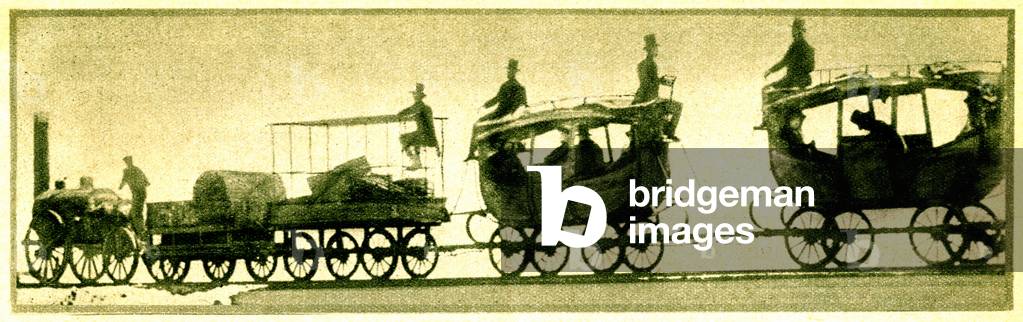
PCT4268504 The first train from New York (New York) to Kentucky in 1830, with its famous Rocket locomotive (Stephenson's “rocket”, 1829) and its cars that still looked like diligence. Image from Buster Keaton's film “The Laws of Hospitality” (Our hospitality, 1923). Photo published in Cine-Miroir n°61, November 1924.
DC
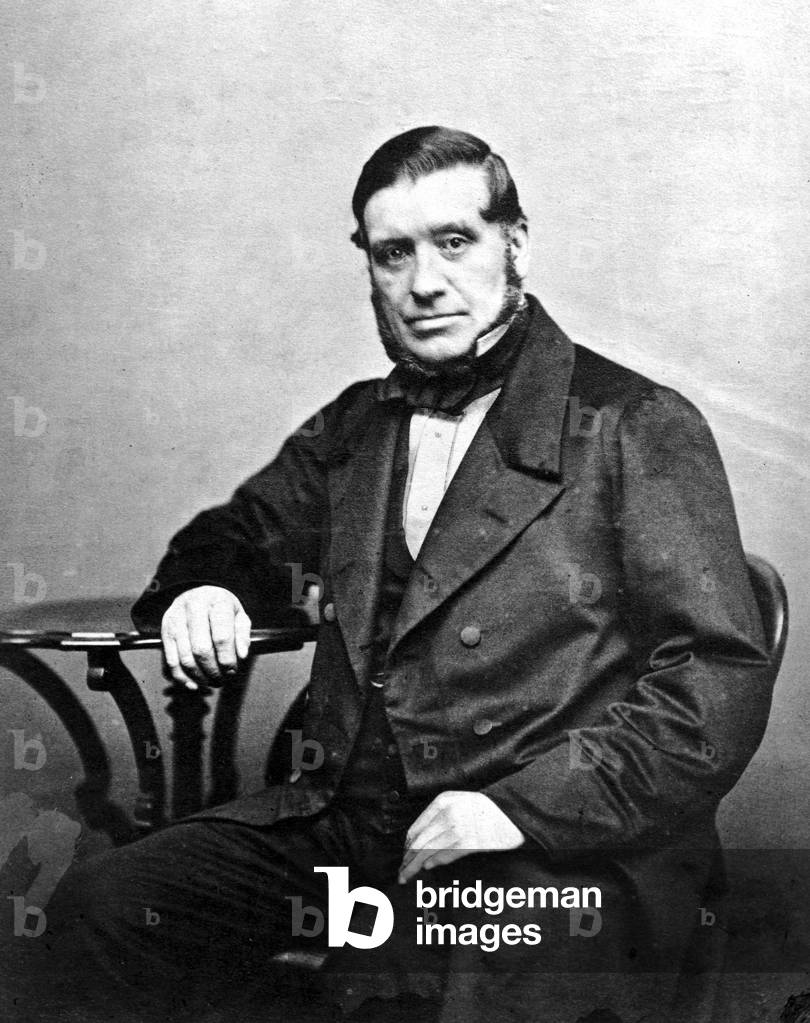
UIS5075028 William M Gowland, English engine driver, mid 19th century. Gowland (d 1875) drove the steam locomotives 'Royal George' and 'Sans Pareil', both designed by Timothy Hackworth. 'Sans Pareil' was entered in the Rainhill Trials in 1829, a competition to establish the most efficient locomotive for railway haulage the competition was won by George Stephenson's 'Rocket'. ©SSPL/Science Museum
DC
UIS5071342 William M Gowland, engine driver, mid 19th century. Gowland (d 1875) drove the steam locomotives 'Royal George' and 'Sans Pareil', both designed by Timothy Hackworth. 'Sans Pareil' was entered in the Rainhill Trials in 1829, a competition to establish the most efficient locomotive for railway haulage; the competition was won by Robert Stephenson's locomotive 'Rocket'. ©SSPL/Science Museum
DC
XJF275648 cover shows clockwise from top left, an old printing press supposed to have been used by Franklin, engine of Henry Bell's steamer 'Comet', old pumping engine from Cumberland at work until 1878, Arkwright's spinning machine and Stephenson's Rocket; Henry Bell (1767-1830) introduced the first successful passenger steamboat service in Europe; Richard Arkwright (1732-92) invented the spinning frame in 1769; George Stephenson (1781-1848) built his steam locomotive in 1829;
RF
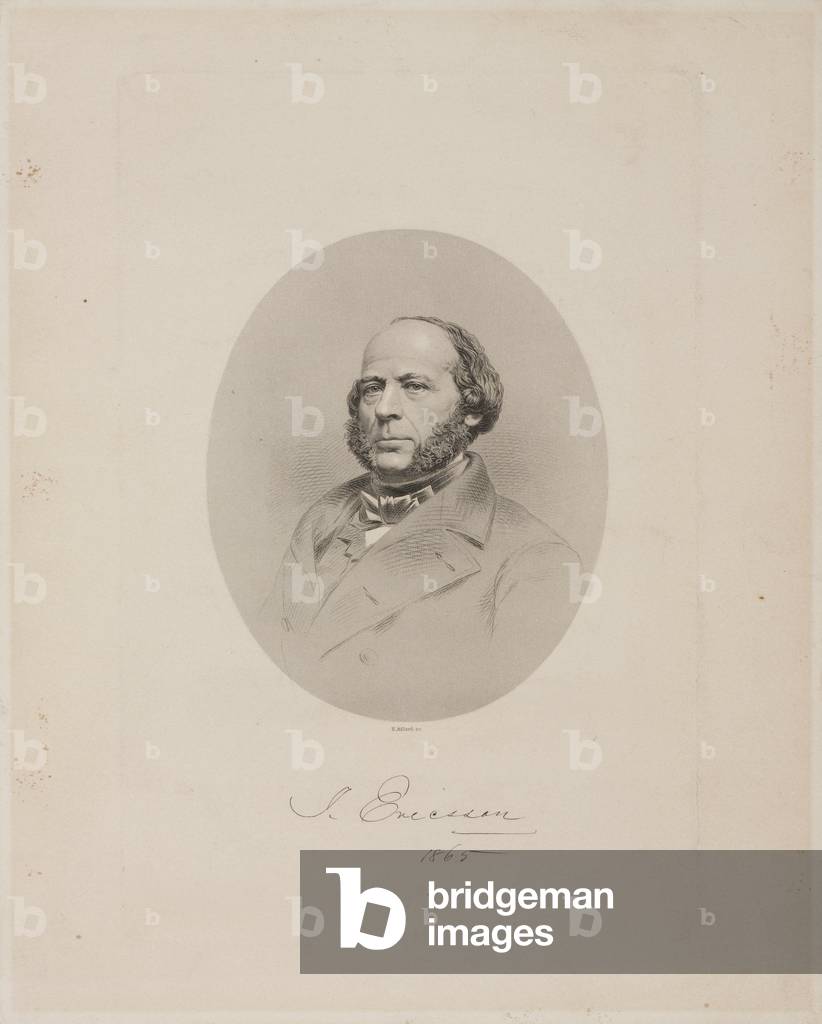
UIS5092713 John Ericsson, inventor and marine engineer, 1865. Engraving by H Adlard of Captain John Ericsson (1803-1889). Born in Sweden, Ericsson moved to England in 1826 and set up as an engineering consultant. In 1829 he built an engine to rival George Stephenson's steam engine 'Rocket' (which had triumphed in the Rainhill Trials contest that year). On moving to the USA in 1839 Ericsson designed many warships including the 'Monitor' (1861), the first warship with an armoured turret, and 'The Destroyer' (1878), which could launch submarine torpedoes. ©SSPL/Science Museum
DC
UIS5063611 John Ericsson, inventor and marine engineer, 1845. Oil painting by C L Elliot, New York, of Captain Ericsson (1803-1889). Born in Sweden, Ericsson moved to England in 1826 and set up as an engineering consultant. In 1829 he built an engine to rival George Stephenson's steam engine 'Rocket' (which had triumphed in the Rainhill Trials contest that year). On moving to the USA in 1839 Ericsson designed many warships including the 'Monitor' (1861), the first warship with an armoured turret, and 'The Destroyer' (1878), which could launch submarine torpedoes. ©SSPL/Science Museum
DC
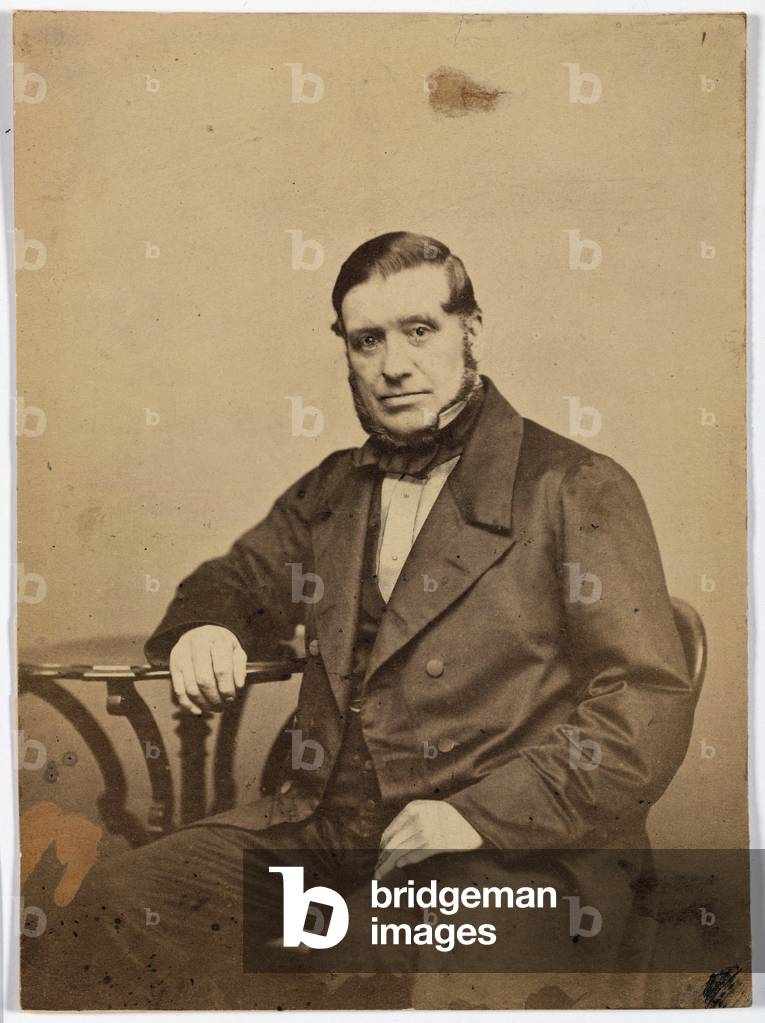
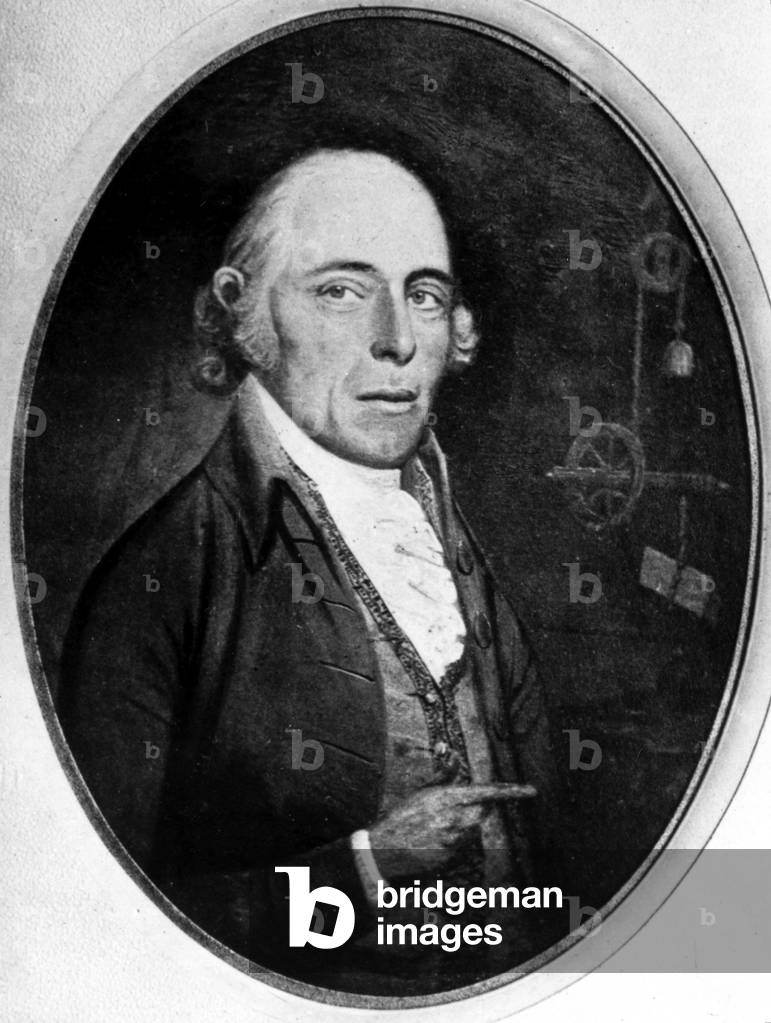
UIS5076072 John Rastrick, English engineer and inventor, c late 18th century. John Rastrick (1738-1826) was an engineer, millwright and maker of pumps and churns, but he is perhaps best known as the father of railway pioneer John Urpeth Rastrick (1780-1856), who built steam engines with John Hazledine to designs by Richard Trevithick. John Urpeth Rastrick was also one of the judges at the Rainhill Trials (1829), the competition arranged to judge the best locomotive to operate on George Stephenson's new Liverpool & Manchester Railway. 'Rocket', a locomotive designed and built by George's son Robert Stephenson was the eventual winner. ©SSPL/Science Museum
DC
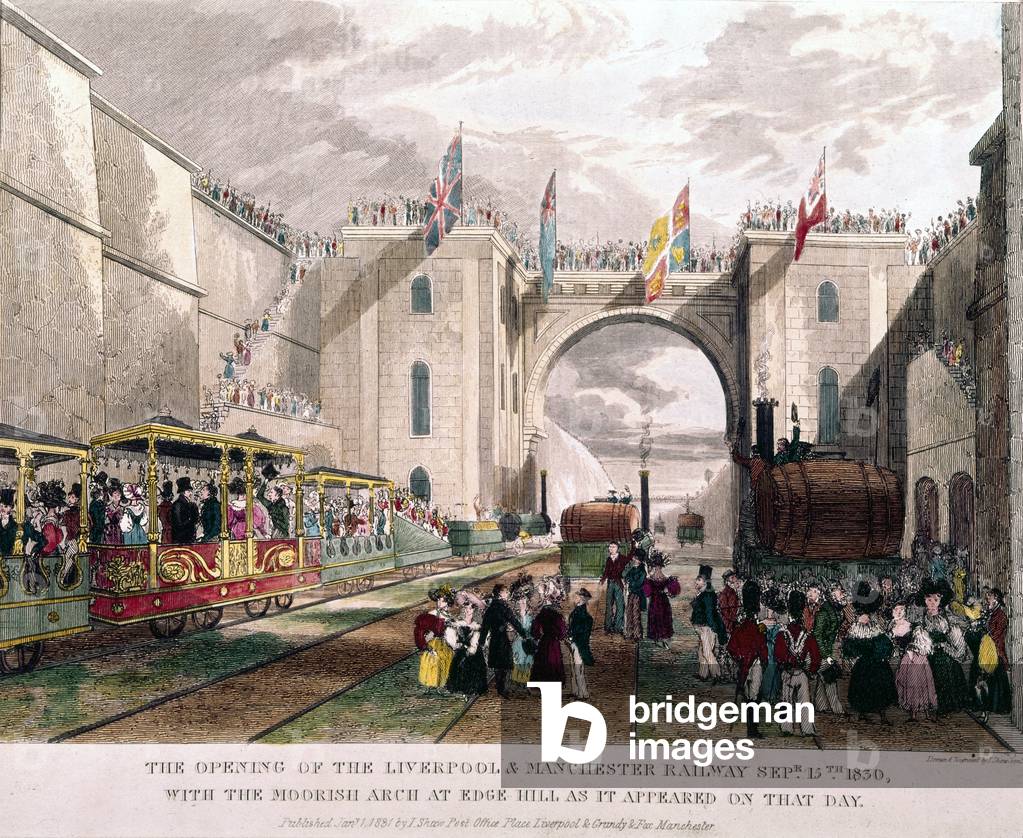
UIS5063857 Inauguration de la ligne de chemin de fer Liverpool Manchester, 1830. Opening of the Liverpool & Manchester Railway, 15 September 1830. Engraving, drawn and engraved by Isaac Shaw Junior, showing crowds of onlookers beside the Moorish Arch at Edge Hill, Liverpool, observing the newly opened railway. George Stephenson became principal engineer of the Liverpool & Manchester Railway, the world's first intercity line, in 1826, and after a competition was organised in 1829 at Rainhill to determine the most efficient locomotive engine, Robert Stephenson's 'Rocket' was declared the winner. Published on 1 January 1831 by I Shaw, Liverpool, and Grundy & Fox, Manchester. ©SSPL/NRM/Pictorial Collection
DC
Total de Resultados: 40

Página 1 de 1