

















































Busque também em nossas outras coleções:

Tipo de arquivo:

Tipo do arquivo:

Orientação:

Total de Resultados: 164

Página 1 de 2

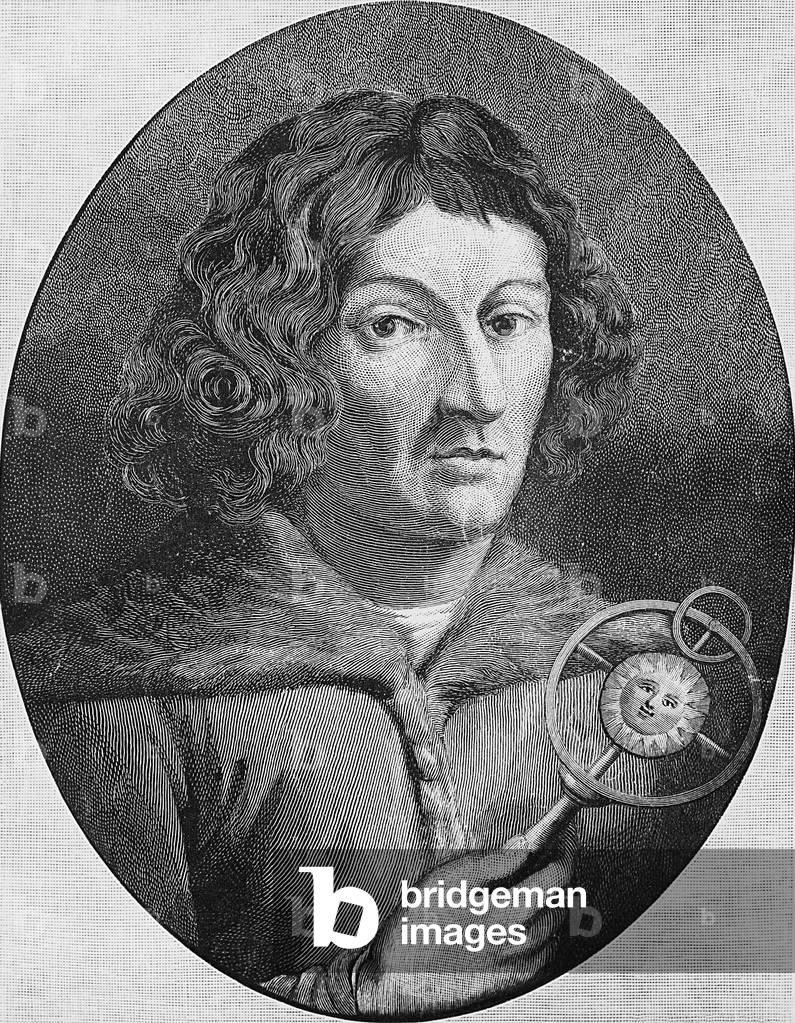
BLO1832071
DC
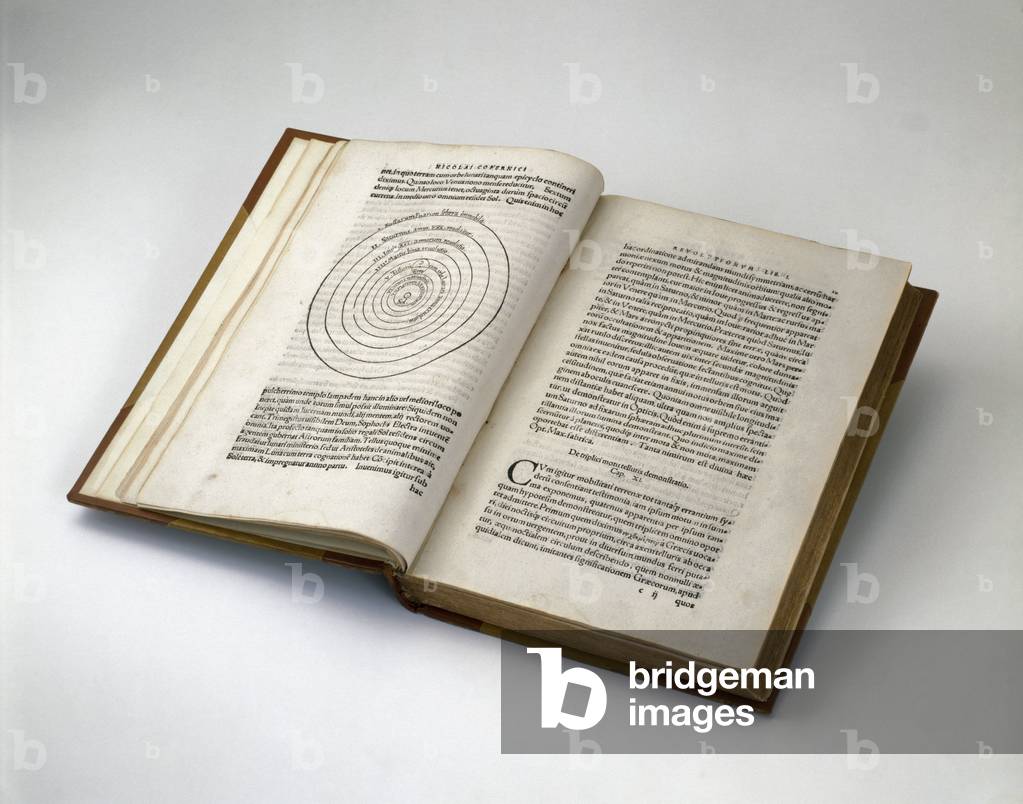
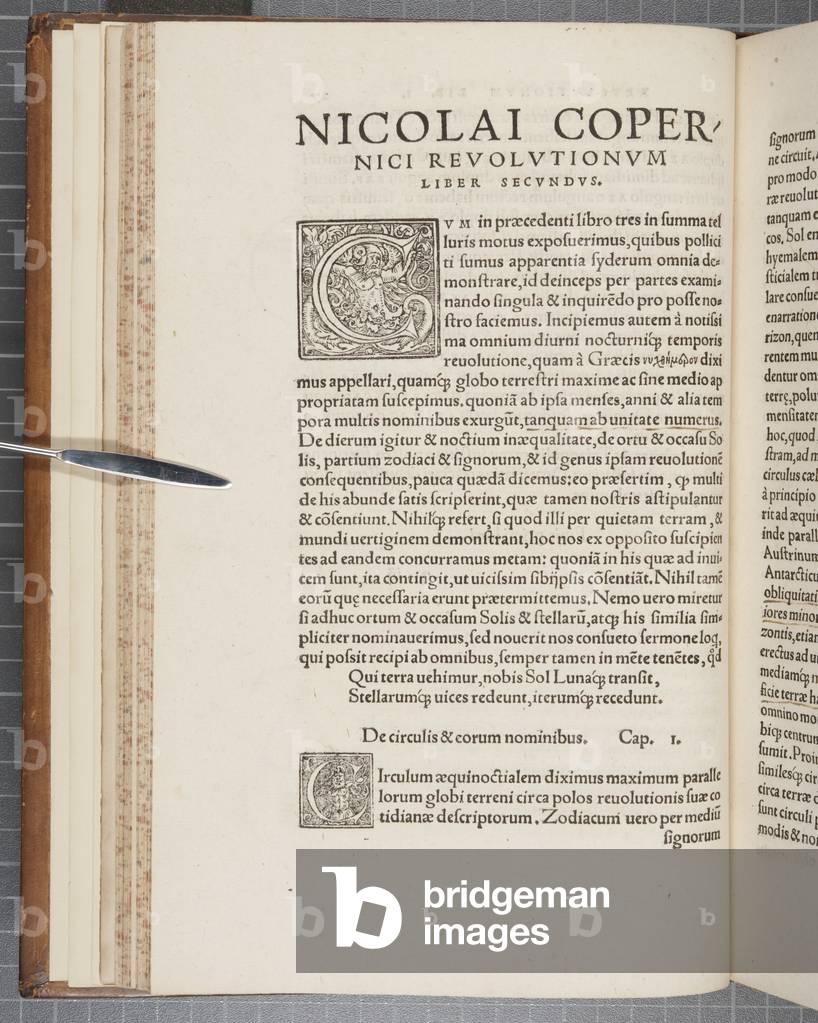
BLO2699419 579C The cover and first pages of the first edition of Revolutionibus Ordium Coelestiumby Nicolas Copernic
DC
KWE3929189 Nicolaus Copernicus, 1473 -1543. Polish Renaissance-era mathematician and astronomer. Illustration by Gordon Ross, American artist and illustrator (1873-1946), from Living Biographies of Famous Men.
DC
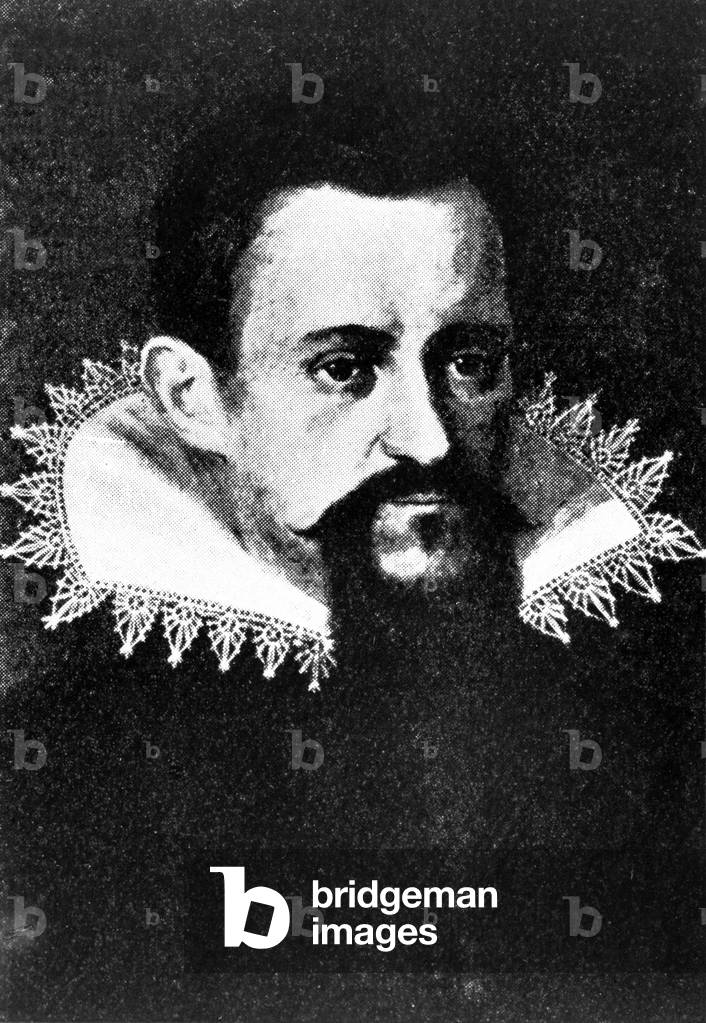
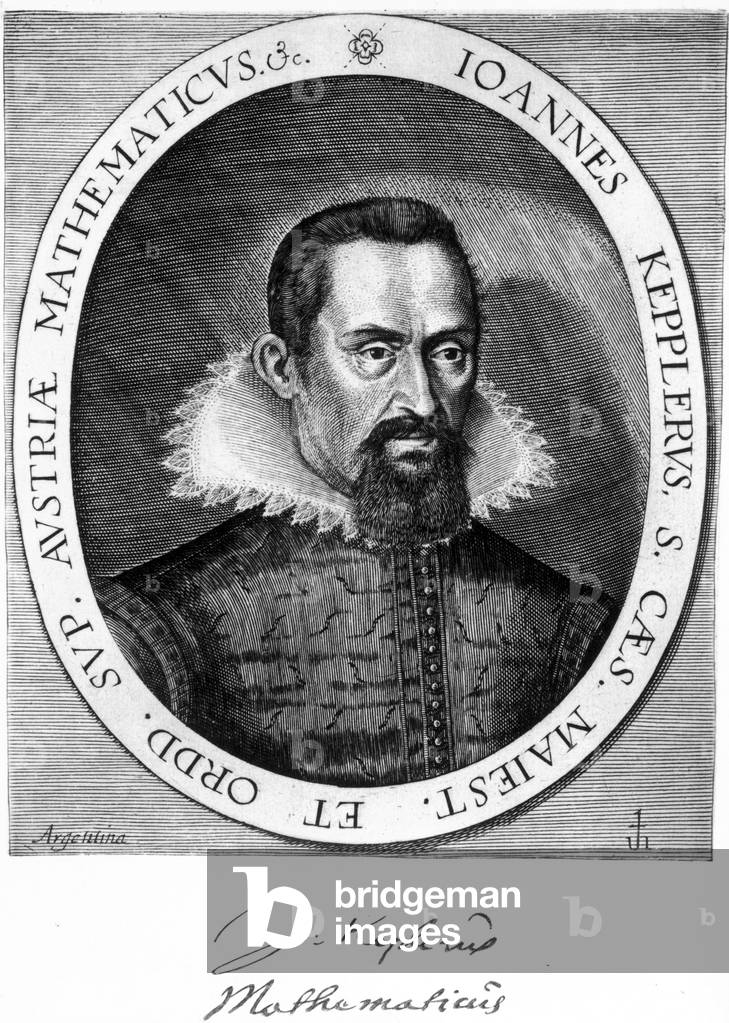
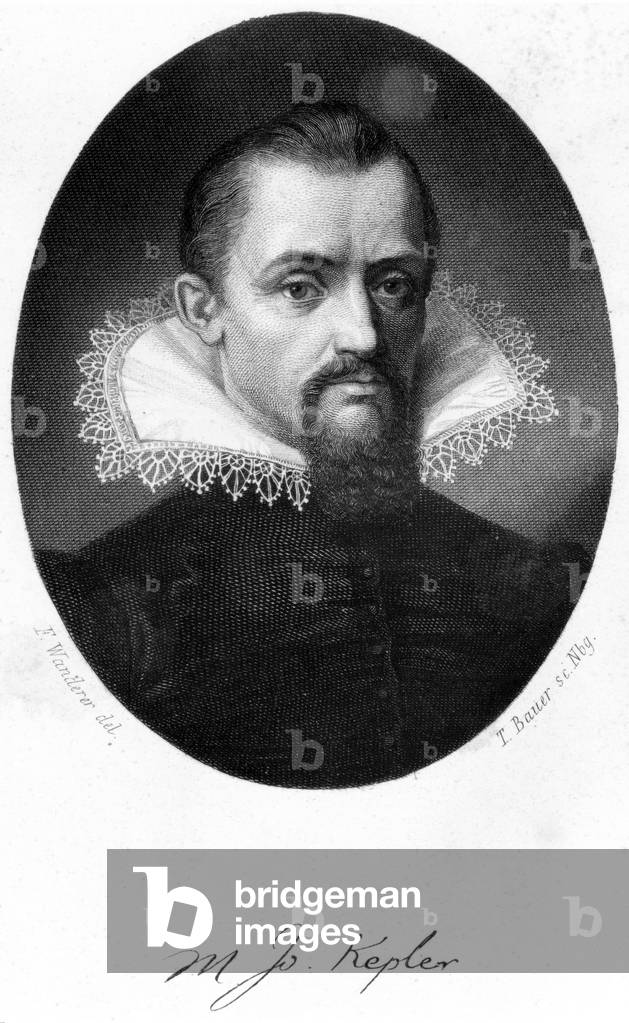
UIS5075529 Johannes Kepler, German astronomer and physicist, c 1600. Johannes Kepler (1571-1630) became a follower of Copernicus whilst studying theology. He later worked with Tycho Brahe in Prague where he worked out the orbit of Mars. This led him to discover the laws of planetary motion. Kepler was also influential in the evolution of infinitesimal calculus. ©SSPL/Science Museum
DC
UIS5075527 Johannes Kepler, German astronomer and physicist, c 1600. Engraving. Johannes Kepler (1571-1630) became a follower of Copernicus whilst studying theology. He later worked with Tycho Brahe in Prague where he worked out the orbit of Mars. This led him to discover the laws of planetary motion. Kepler was also influential in the evolution of infinitesimal calculus. ©SSPL/Science Museum
DC
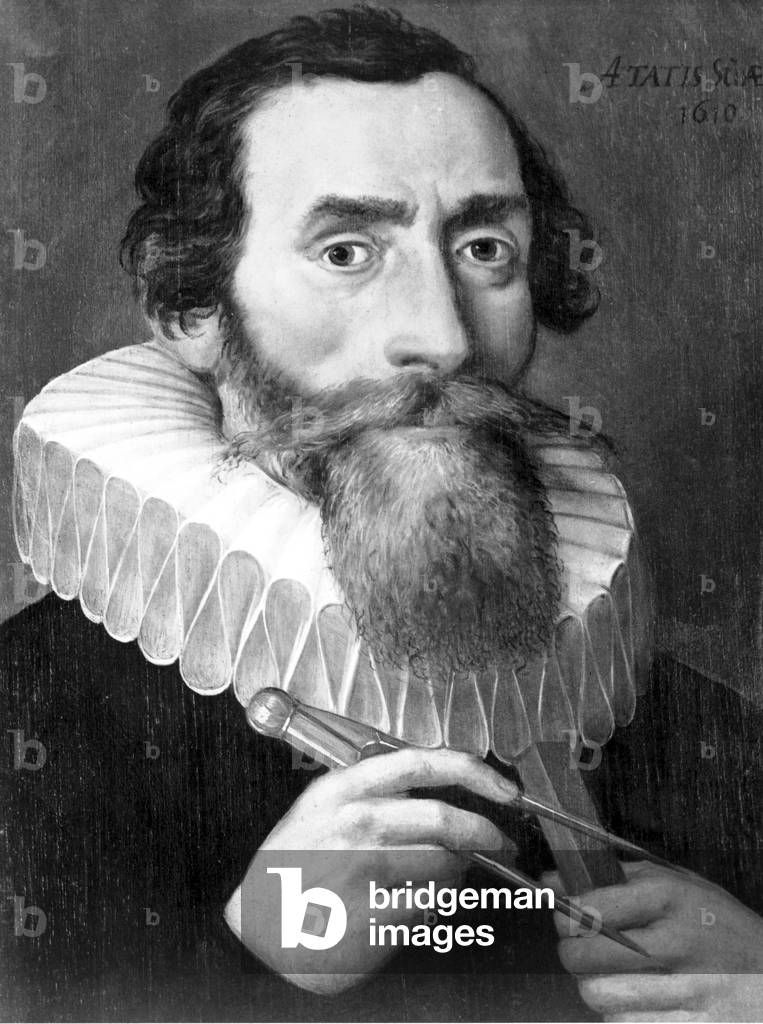
UIS5075536 Johannes Kepler, German astronomer and physicist, 1610. Johannes Kepler (1571-1630) became a follower of Copernicus whilst studying theology. He later worked with Tycho Brahe in Prague where he worked out the orbit of Mars. This led him to discover the laws of planetary motion. Kepler was also influential in the evolution of infinitesimal calculus. ©SSPL/Science Museum
DC
UIS5075535 Johannes Kepler, German astronomer and physicist, c 1600. Johannes Kepler (1571-1630) became a follower of Copernicus whilst studying theology. He later worked with Tycho Brahe in Prague where he worked out the orbit of Mars. This led him to discover the laws of planetary motion. Kepler was also influential in the evolution of infinitesimal calculus. ©SSPL/Science Museum
DC
CHT223715 idea that planets move around the sun in orbits with the sun as the centre;
DC
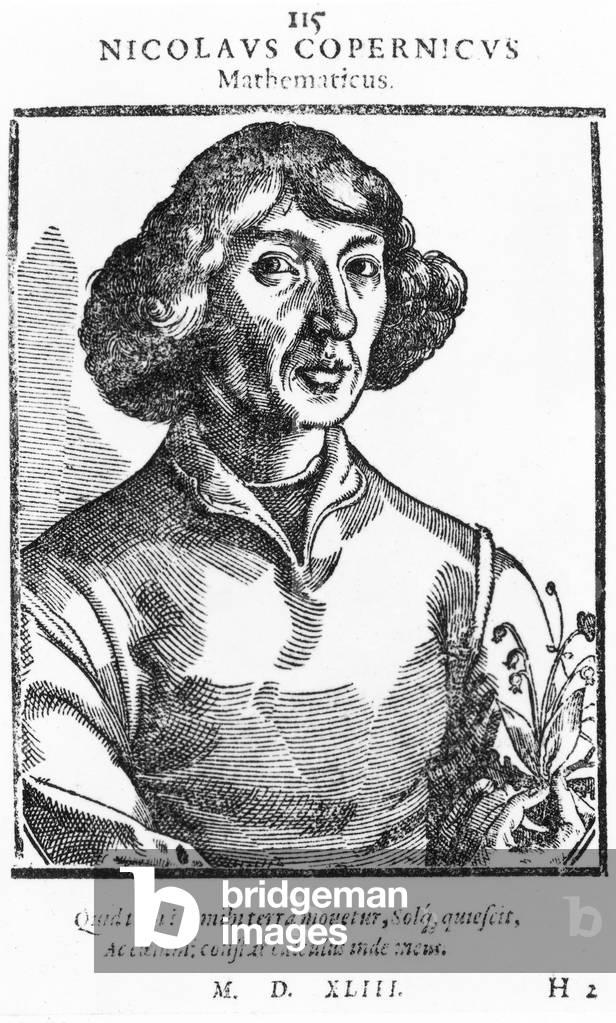
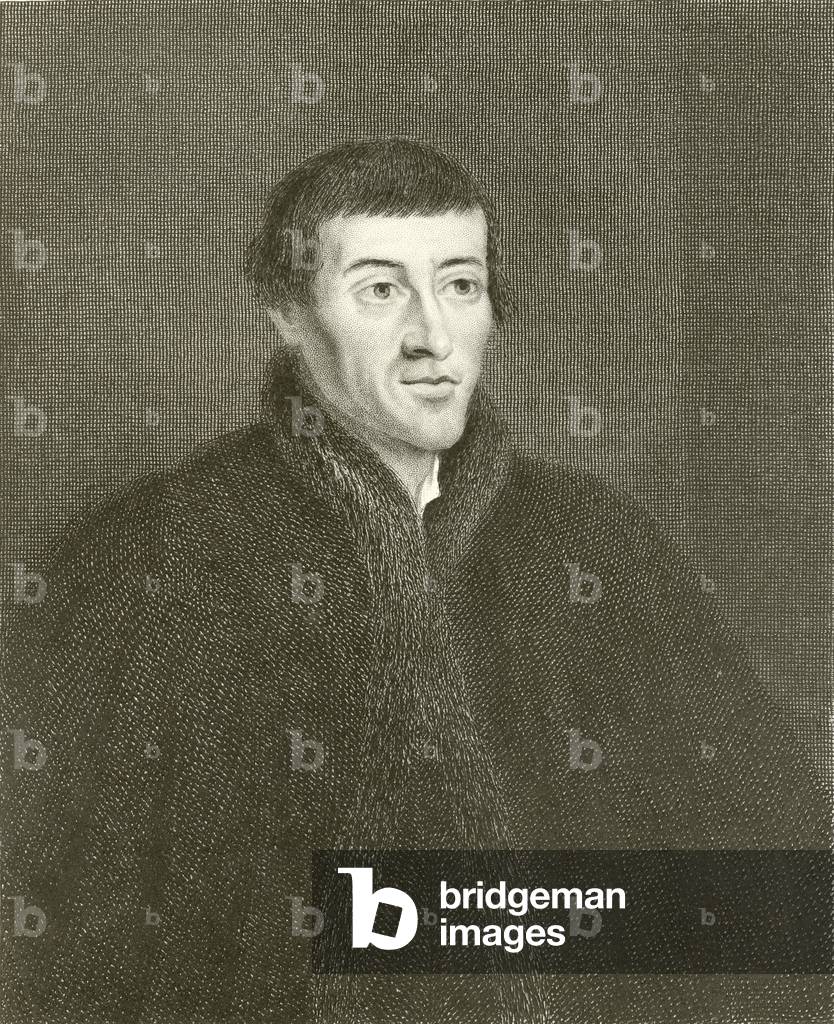
UIS5074752 Nicolaus Copernicus, Polish astronomer, 1543. Photogravure after a woodcut. Copernicus (1473-1543) is considered to be the 'father' of modern astronomy and founder of heliocentric cosmology. Prior to the work of Copernicus, the Earth was considered to be the stationary centre of the universe, a notion first advocated by the Egyptian astronomer Ptolemy (c 90-168 AD). His pioneering work 'The Revolutions of Celestial Spheres' (1543) describes his idea of a Sun-centred universe, in which the Earth is merely one of the planets revolving around the Sun and rotating on its axis. ©SSPL/Science Museum
DC
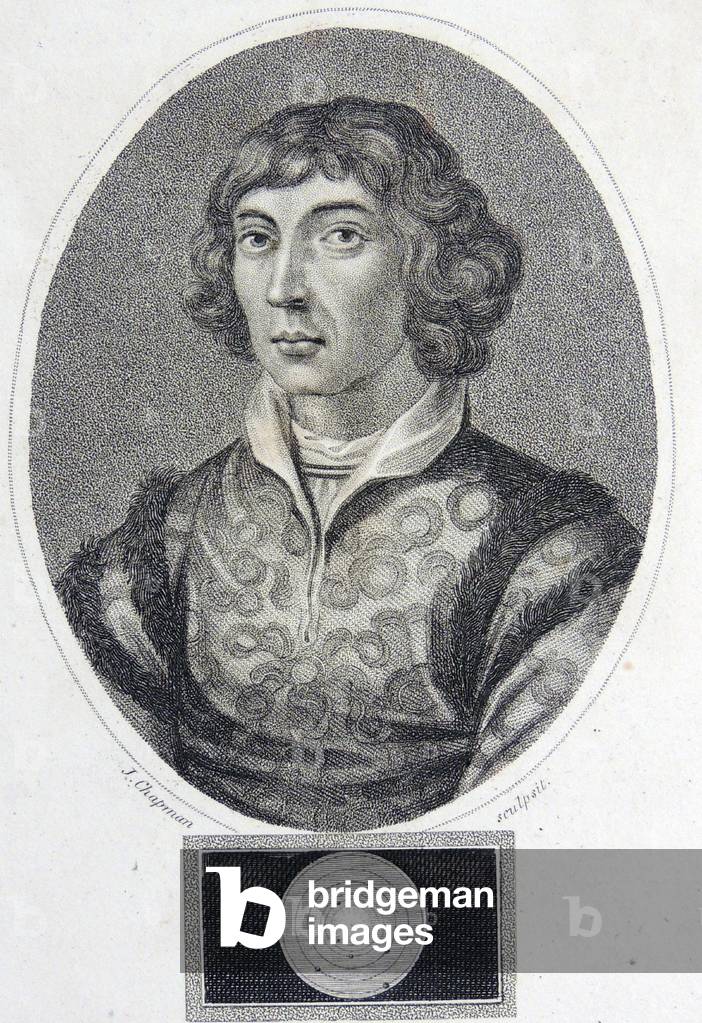
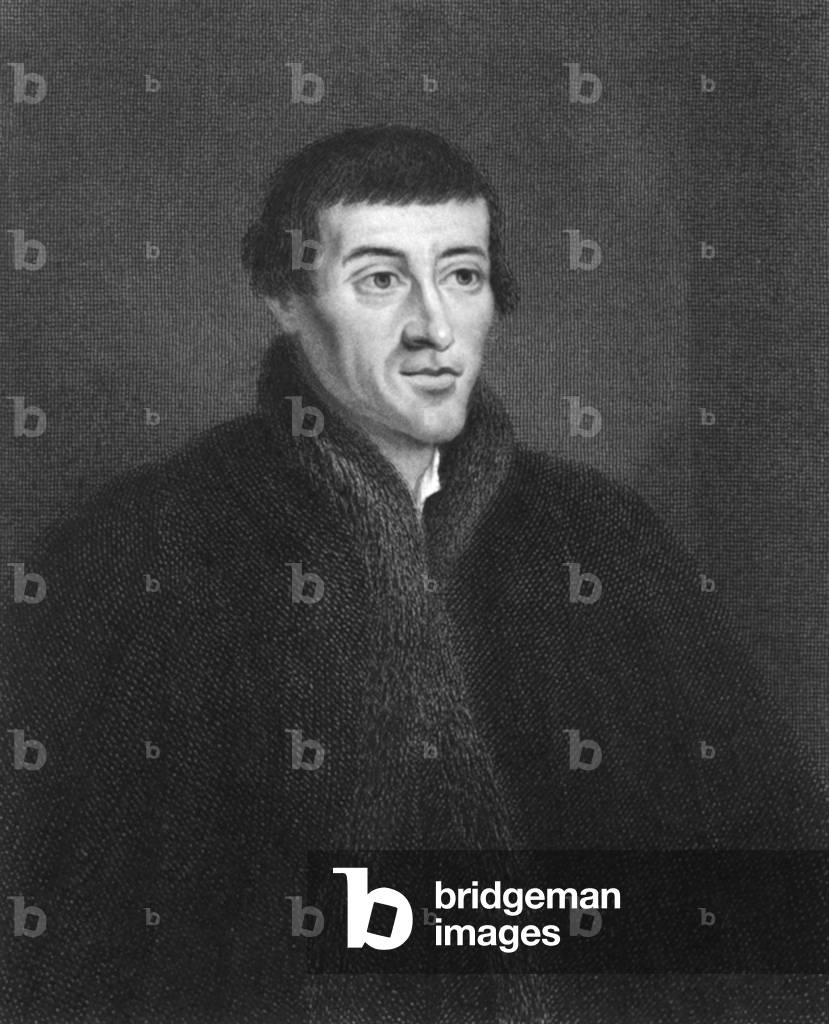
LLM666711 Nicolao Copernico. Illustration from The Gallery of Portraits (Charles Knight, 1836). Digitally cleaned image.
DC
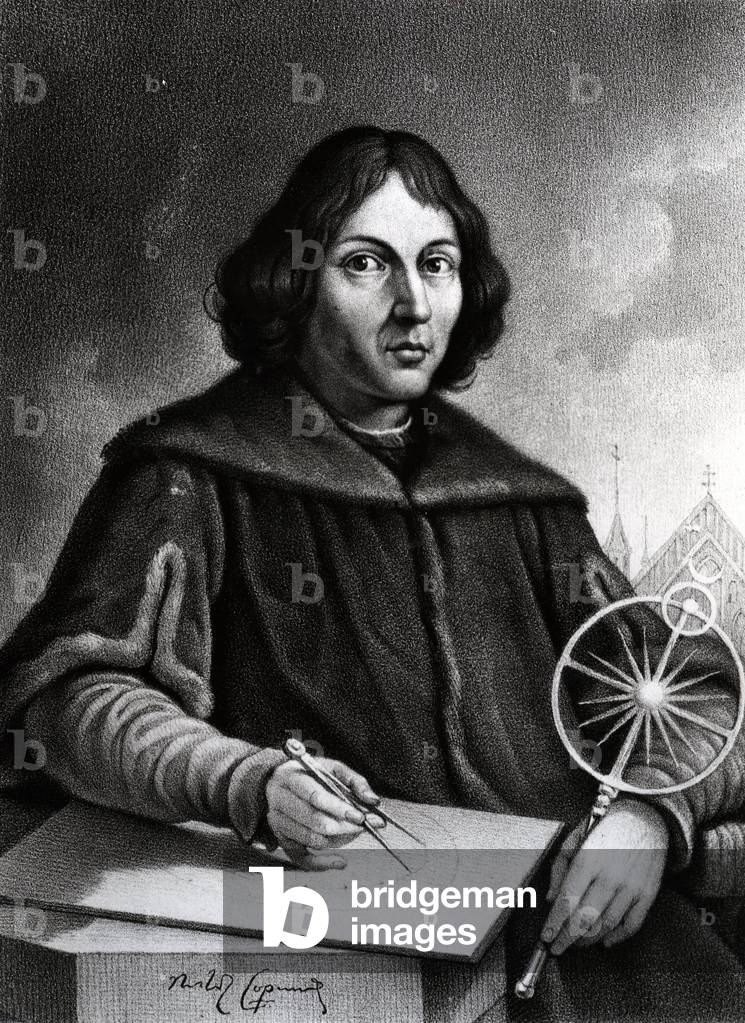
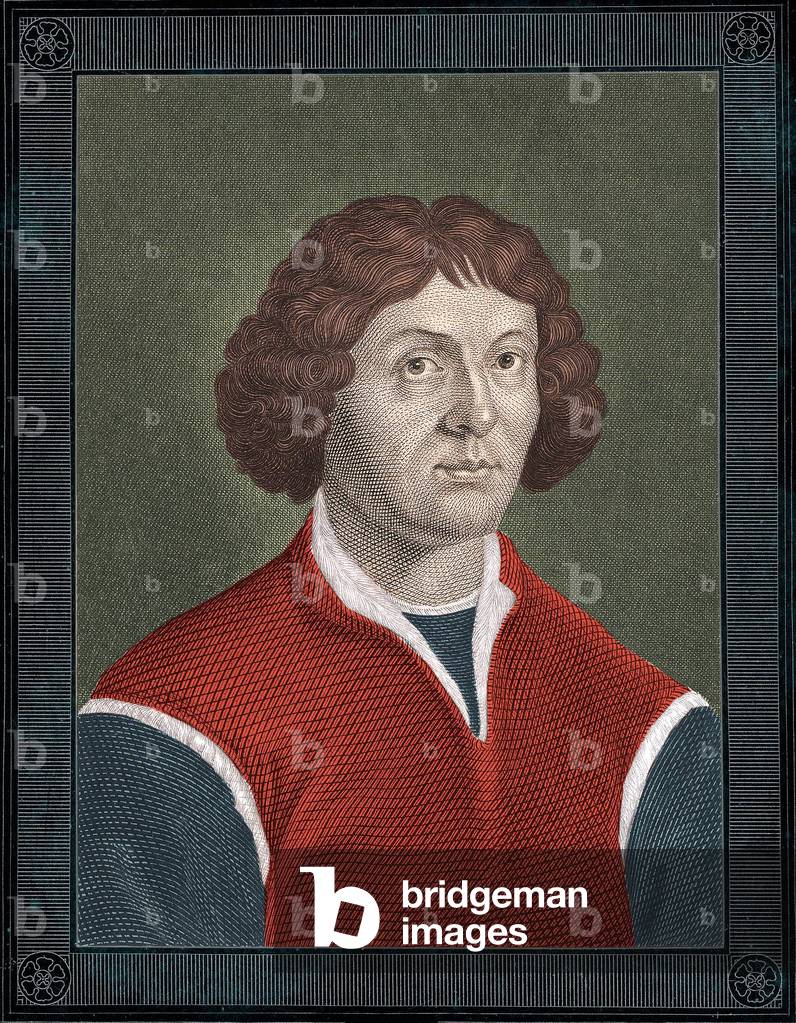
GIA4739035 Portrait of Nicolas Copernicus (Nicolaus Copernicus, 1473-1543).
DC
XIR154164
RF
JLJ4681458 Nicolas COPERNIC (Copernicus) (1473 - 1543)
DC
AND2916297 Copernicus, Nicolaus (1473-1543)
DC
XCF347823 Nicholas Copernicus (1473-1543); Copy of a 16th century Polish portrait, now lost;
RF
LLM459549 Nicolaus Copernicus. Illustration for La Ciencia Y Sus Hombres by Luis Figuier (D Jaime Seix, 1876). Large chromolithograph.
DC
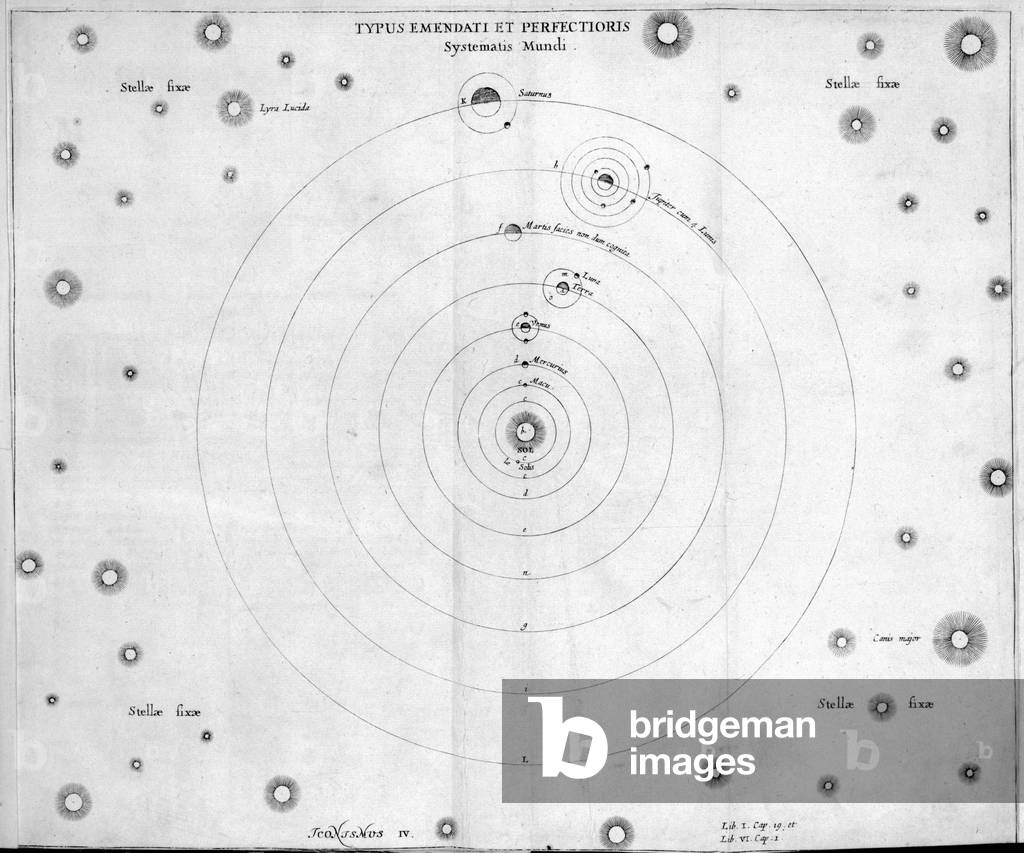
UIS5092014 Illustration of the solar system, 1672. Illustrated plate taken from 'Experimenta Nova' (1672) by German scientist Otto von Guericke (1602-1686), showing planets orbiting the Sun. As an astronomer, Guericke was a firm supporter of Copernicus' heliocentric model of the Solar System. He suggested that magnetic action across empty space was responsible for controlling the movements of the planets. ©SSPL/Science Museum
DC
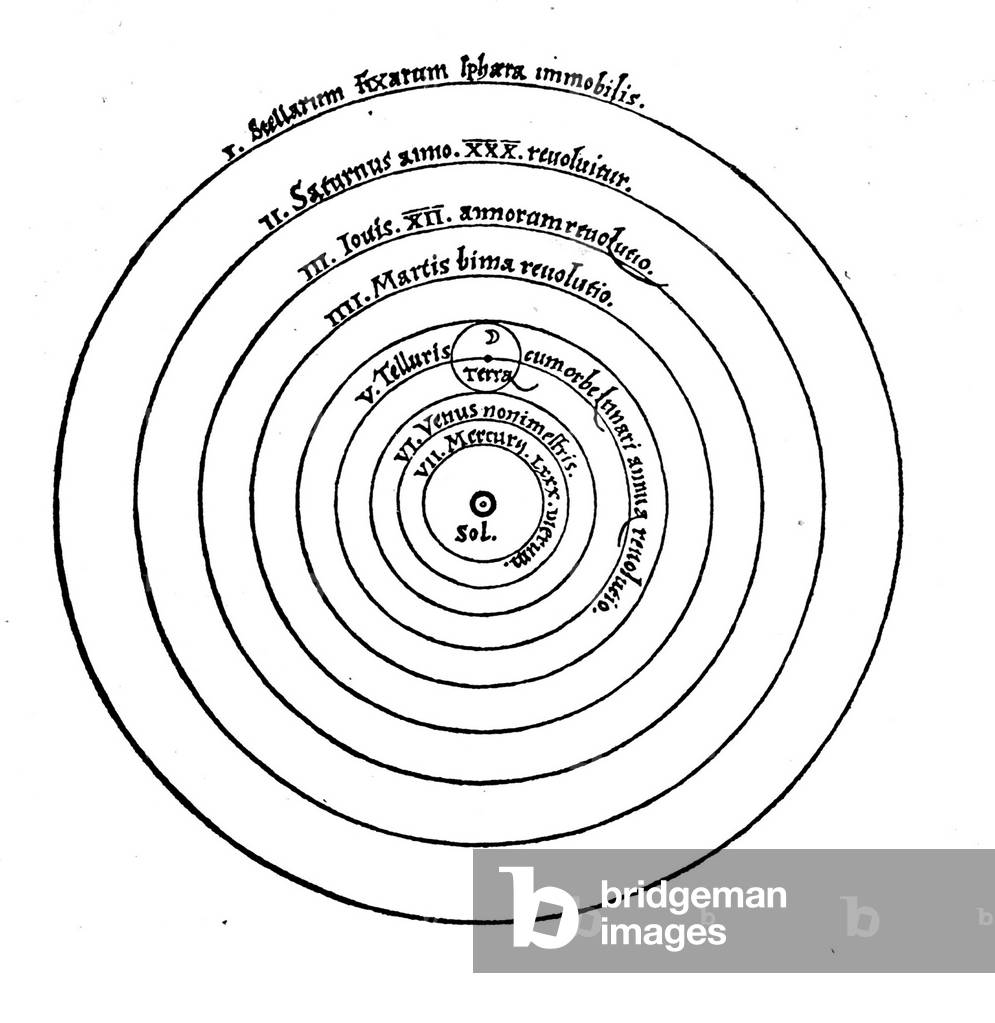
UIS5090042 Copernicus's view of the solar system, 1543. A view of the illustration drawn by Nicolas Copernicus (1473-1543), shown in his book 'On the Revolution of the Heavenly Spheres' published in 1543. This illustration shown is from an original edition of the book belonging to the Science Museum Library. It was the first time that anyone had protrayed the Earth in orbit around the sun - rather than showing the Earth as the centre of the known universe. This idea began a revolution in human thought and displaced mankind from the centre of the universe. ©SSPL/Science Museum
DC
XJF884417 Renaissance mathematician and astronomer who formulated a heliocentric model of the universe which placed the Sun, rather than the Earth, at the center
DC
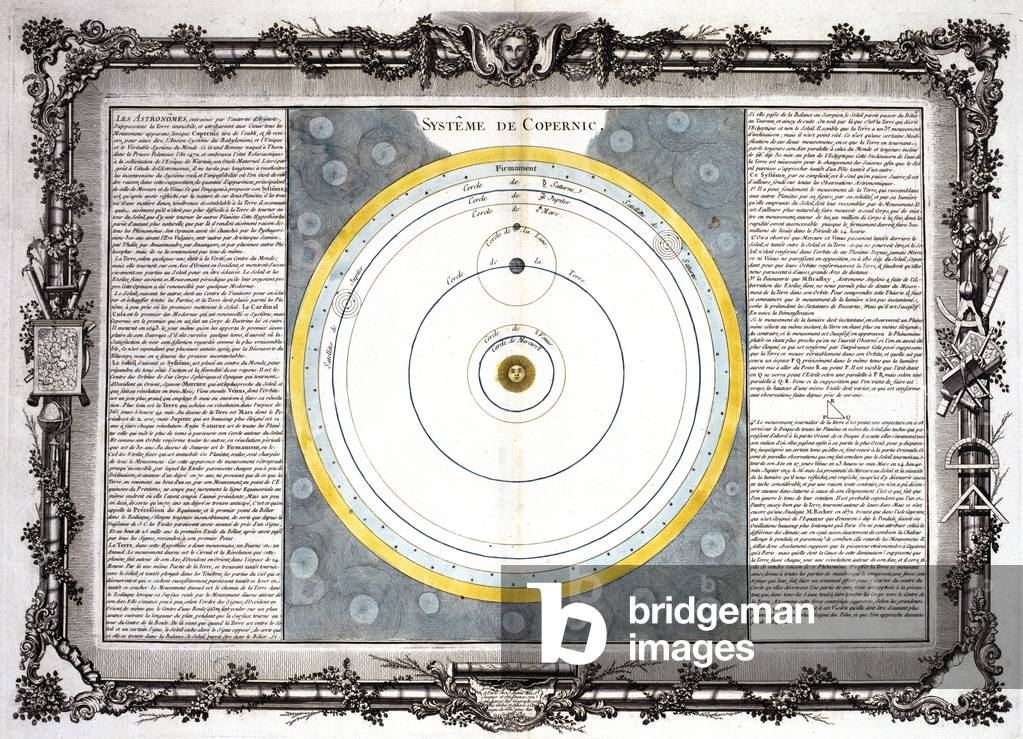
UIS5085121 Copernicus' model of the Solar System, 1761. French print showing the Copernican System for the structure of the universe with explanatory text and a decorative border of plants and scientific instruments. The hand-coloured engraving issued in 1761 through Desnos, Paris depicts the Sun-centred model of the cosmos that the Polish astronomer Nicholas Copernicus (1473-1543) proposed in 1543. These ideas that ushered-in a revolution in scientific thinking, were outlined in his book, 'De Revoluionibus Orbium Celestium' (The Revolution of the Heavenly Spheres). ©SSPL/Science Museum
DC
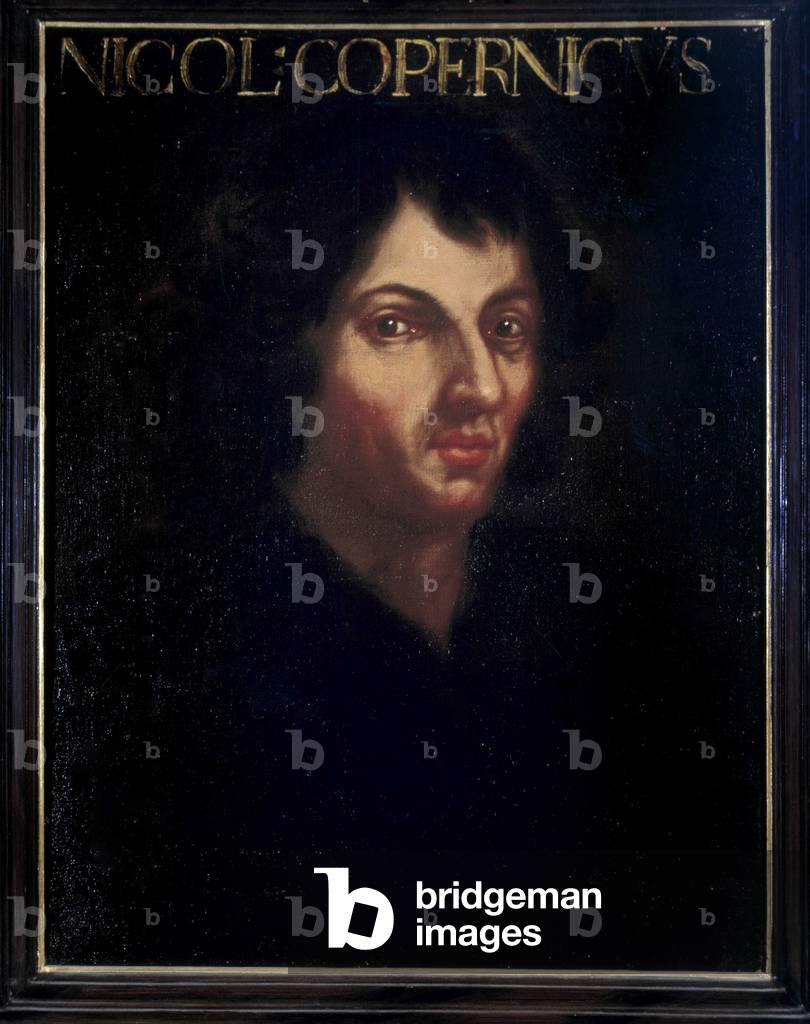
JLJ4644677 Portrait of Nicolas Copernicus ((Nicolaus Copernicus, 1473-1543) Polish astronomer. Anonymous painting of the Polish School. 16th century. Poland. Torun Regional Museum
DC
XCZ228924 also known as Nicolas Copernicus; proved that the sun was the centre of the Solar System;
RF
XPH330618 Copernicus (1473-1543) was an astronomer; One the Revolutions of the Celestial Spheres;
RF
UIG1574475 Nicolas Copernicus (1473-1543) Polish astronomer who was first since Greek times to propose a heliocentric universe. Engraving, c1810.
DC
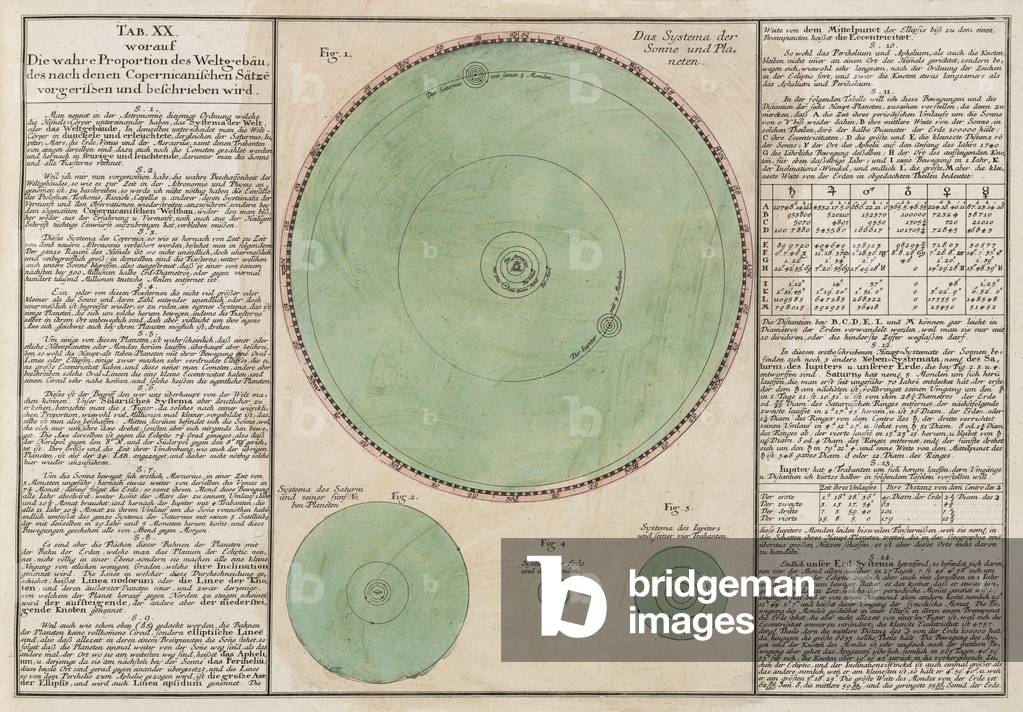
UIS5094968 The true proportions of the Copernican cosmic system, 1745. Engraving showing the orbits of the planets in the solar system, minus Neptune and Pluto which had not yet been discovered. Polish astronomer Nicolaus Copernicus (1473-1543) is considered to be the 'father' of modern astronomy and founder of heliocentric cosmology. Prior to the work of Copernicus, the Earth was considered to be the stationary centre of the universe, a notion first advocated by the Egyptian astronomer Ptolemy (c 90-168 AD). Copernicus was the first to describe a Sun-centred universe, in which the Earth is merely one of the planets revolving around the Sun and rotating on its axis. Illustration from 'Mathematischer Atlas' (Mathematical atlas) by Tobias Mayer (1723-1762) published in Augsburg in 1745. ©SSPL/Science Museum
DC
XJF129881 by Elviro Michael Andriolli
RF
XJF128019
DC
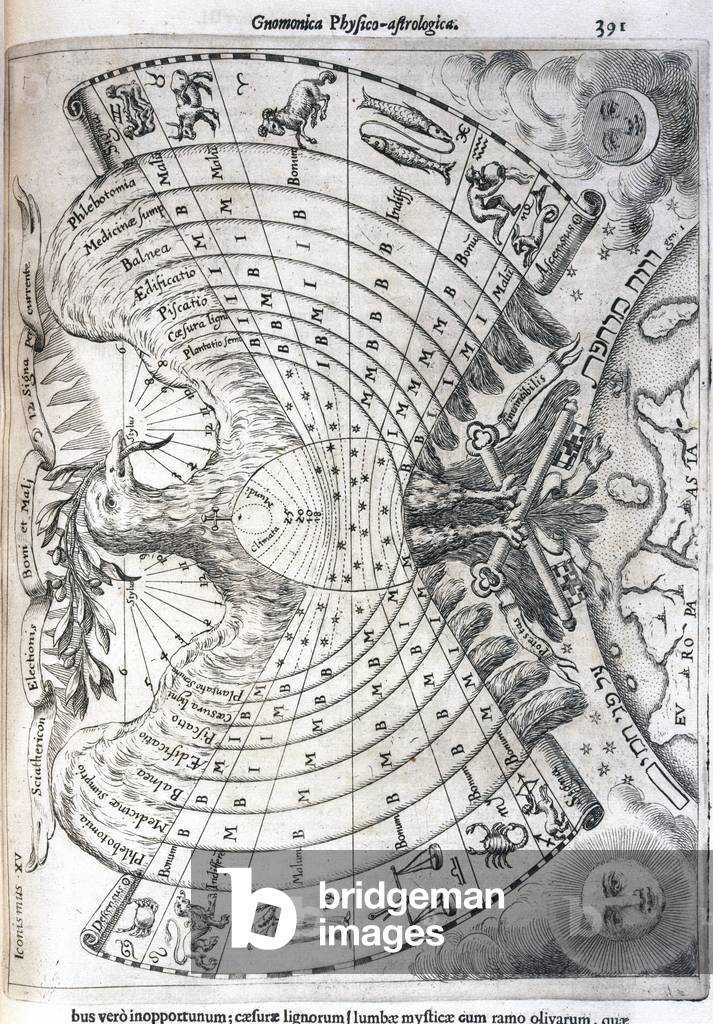
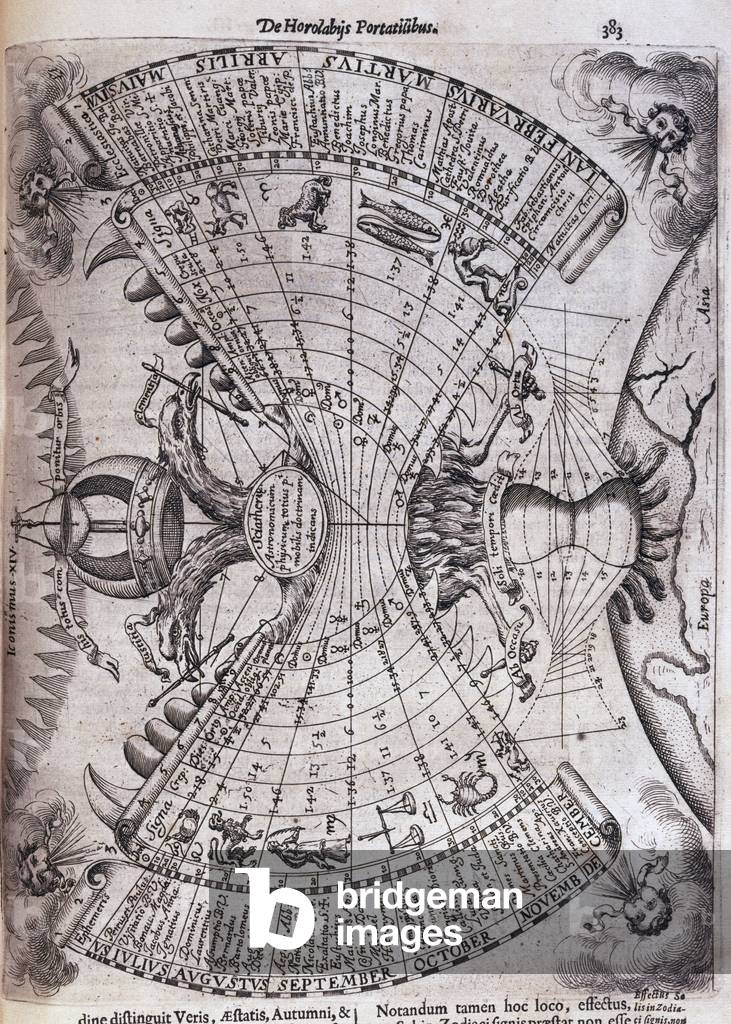
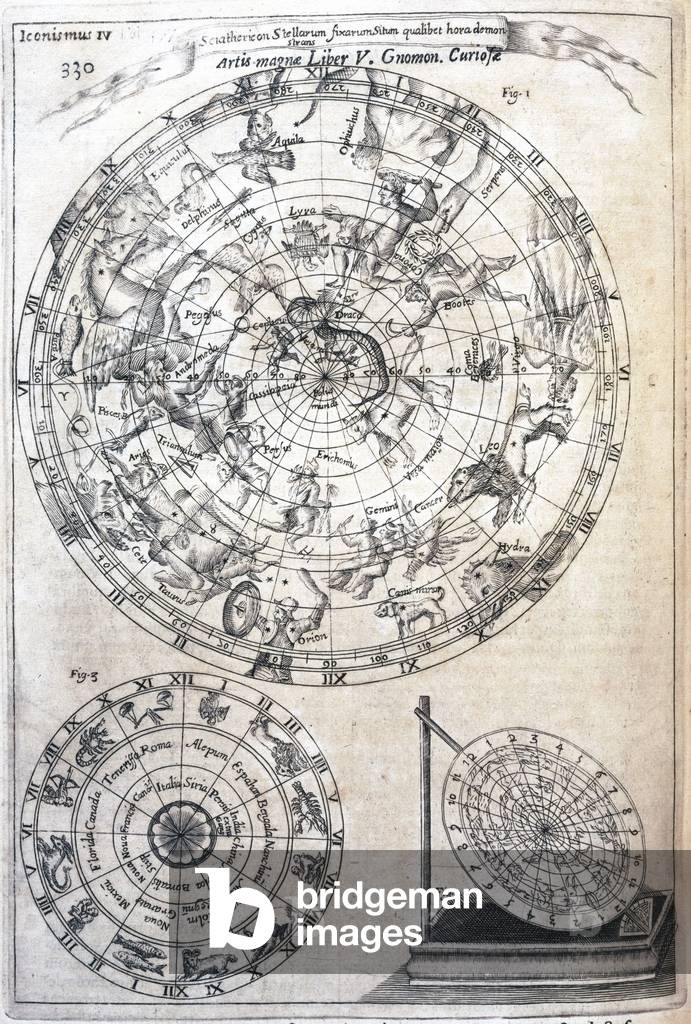
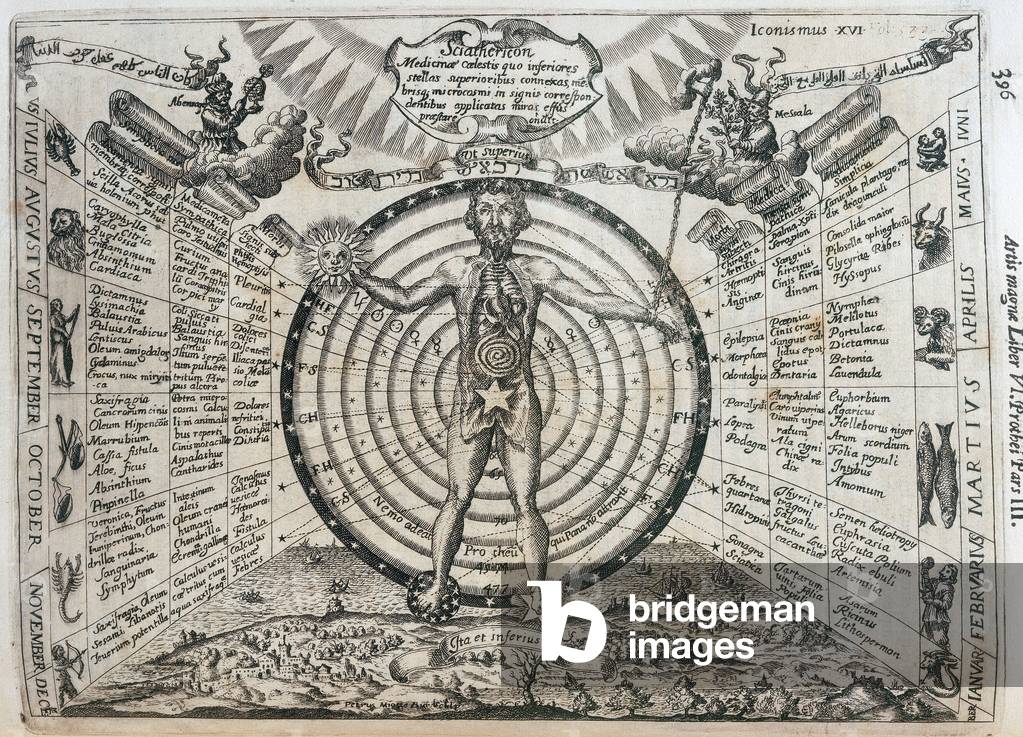
UIS5084527 Astrological chart, 1646. This chart is taken from the book 'Ars Magna Lucis Et Umbrae' which was published in 1646 by the Jesuit scientist and inventor, Athanasius Kircher (1602-1680). Kircher wrote on an astonishingly diverse range of scientific subjects including medicine, acoustics, geology, astronomy and mathematics. In his astronomical work, Kircher remained a supporter of the Ptolemaic model of the solar system with the Earth at its centre rather than Copernicus' heliocentric model published in 1543. ©SSPL/Science Museum
DC
UIG2598769 The universal church of the future - from the present religious outlook by Joseph Keppler, 1838-1894, artist. Published 1883 January 10. Illustration shows an interior view of a hall in a museum with four men sitting quietly beneath a shelf of "Books of Religious Reference"; there is a small crowd gathered before them. Further along the hall is another group of four men sitting quietly beneath a shelf of "Books of Scientific Reference"; part of the display, labelled "Geography", shows an owl perched on an open book labelled "Kosmos" and a man standing next to a globe. Further still along the hall is a man lecturing to a large gathering in a section labelled "Chemistry". Portraits of Nicolaus Copernicus, Charles Darwin, Benedictus de Spinoza, and Thomas Paine hang from the vaulted archways above.
DC
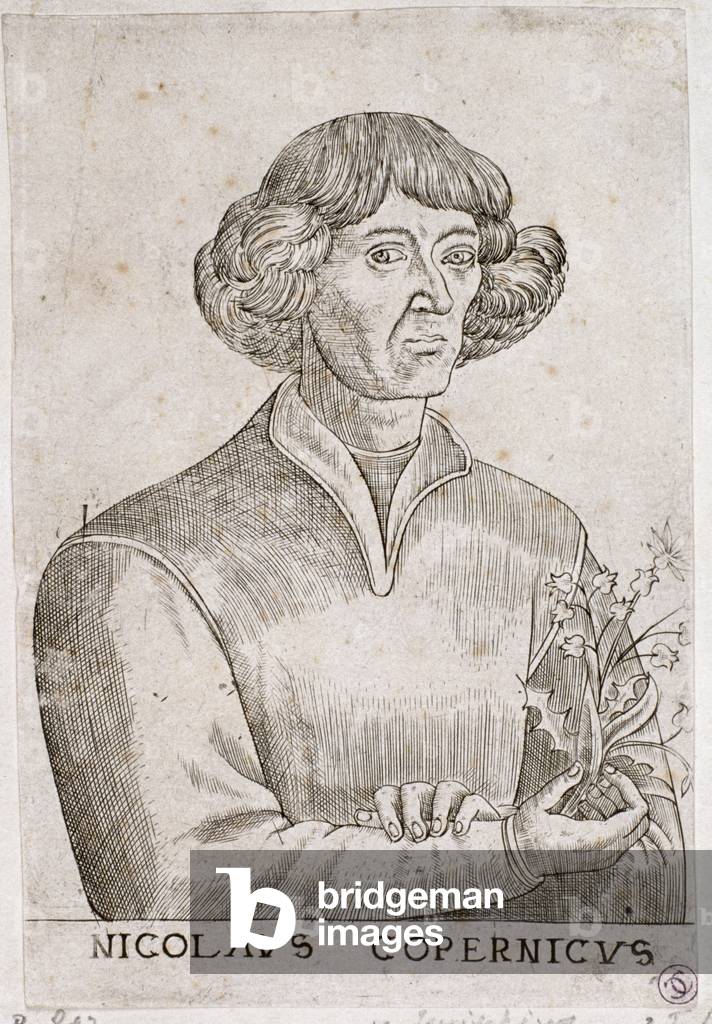
XEE5028768 Portrait of Nicolas Copernicus (Nicolaus Copernicus, 1473-1543), Polish astronomer (1473-1543)
DC
UIS5084510 Astrological chart, 1646. This chart is taken from the book 'Ars Magna Lucis Et Umbrae' which was published in 1646 by the Jesuit scientist and inventor, Athanasius Kircher (1602-1680). Kircher wrote on an astonishingly diverse range of scientific subjects including medicine, acoustics, geology, astronomy and mathematics. In his astronomical work, Kircher remained a supporter of the Ptolemaic model of the solar system with the Earth at its centre rather than Copernicus' heliocentric model published in 1543. ©SSPL/Science Museum
DC
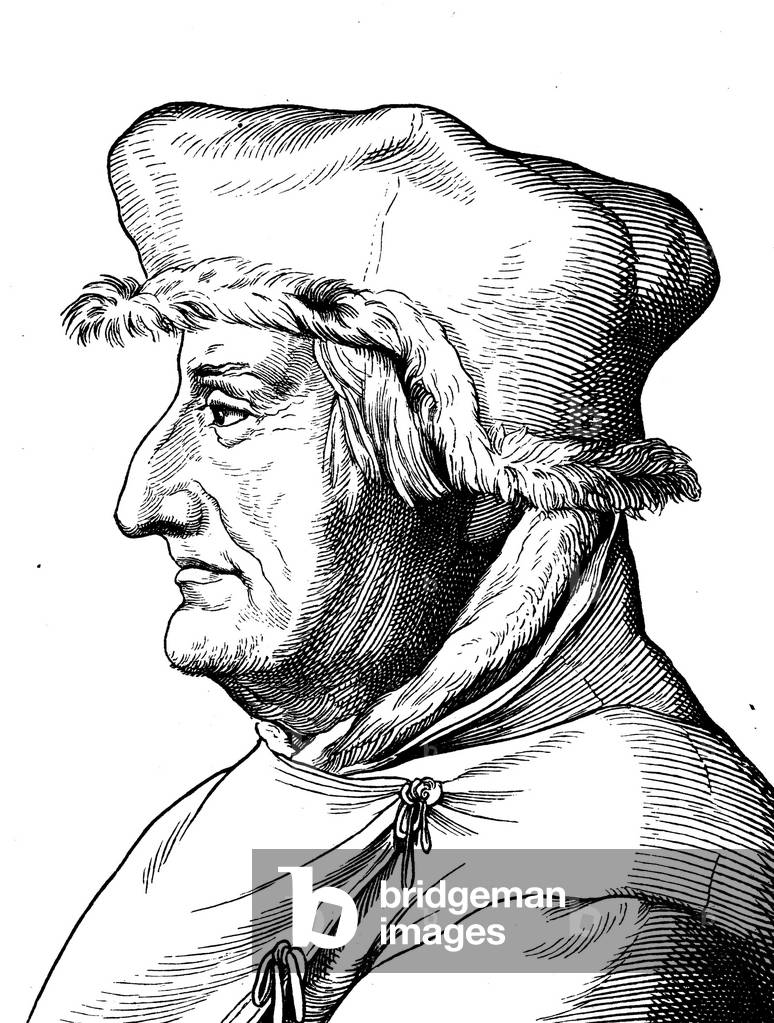
LLM5219323 Nicolaus Copernicus. Illustration for Zweihundert Bildnisse und Lebensabrisse beruhmter deutscher Manner (Wigand, 1870).
DC
UIS5084532 Astrological chart, 1646. This chart is taken from the book 'Ars Magna Lucis Et Umbrae' which was published in 1646 by the Jesuit scientist and inventor, Athanasius Kircher (1602-1680). Kircher wrote on an astonishingly diverse range of scientific subjects including medicine, acoustics, geology, astronomy and mathematics. In his astronomical work, Kircher remained a supporter of the Ptolemaic model of the solar system with the Earth at its centre rather than Copernicus' heliocentric model published in 1543. ©SSPL/Science Museum
DC
LLM455575 Nicolao Copernico. Illustration from The Gallery of Portraits (Charles Knight, 1836). Engraving with digitally coloured face.
DC
GIA4792196 Representation of the system of Nicolas Copernicus (Nicolaus Copernicus, 1473-1543), a Polish doctor and astronomer. Manuscript from the 18th century.
DC
LLE815711 Nicolaus Copernicus (1473-1543).Royal Prussian astronomer, scientist and writer, who formulated the heliocentric model of the universe.
DC
UIS5084537 Astrological chart, 1646. This chart is taken from the book 'Ars Magna Lucis Et Umbrae' which was published in 1646 by the Jesuit scientist and inventor, Athanasius Kircher (1602-1680). Kircher wrote on an astonishingly diverse range of scientific subjects including medicine, acoustics, geology, astronomy and mathematics. In his astronomical work, Kircher remained a supporter of the Ptolemaic model of the solar system with the Earth at its centre rather than Copernicus' heliocentric model published in 1543. ©SSPL/Science Museum
DC
GIA4739024 Portrait of Nicolas Copernicus (Nicolaus Copernicus, 1473-1543). Detail of a 17th century sky map.
DC
BLO1832069
DC
GRC1201950 Engraved portrait of astronomer Nicolaus Copernicus with a diagram showing the sun as the center of the universe, engraving, c. 1850.
DC
LLM459459 Copernicus. Illustration for Liebig card (early 20th century).
DC
AND2916296 Copernicus, Nicolaus (1473-1543)The wax staines may indicate that the controversial diagram showing the sun a the centre of the universe was obscured by an early owner.
DC
XEE4409885 Map of the universe: System of the world by Nicolas Copernicus (Nicolaus Copernicus, 1473-1543)
RF
SMW3923515 Krakow - Cracow, Poland town scene - statue of Copernicus.
DC
LLM459557 Copernicus observing in Rome an eclipse of the moon. Illustration for La Ciencia Y Sus Hombres by Luis Figuier (D Jaime Seix, 1876). Large chromolithograph.
DC
MAJ5034711 Left: English theodolite (surveying instrument) with the signature J. Casartelli, 1850, mechanical planetary, W & S Jones, London, 1794, English goggles level, E. Dixey, 1850; long view with extensions, Leonardo Semitecolo, Venice, 17th century, pewter sextant, brave and English silver, 1870; globe, L.C. Desnos, Paris, 1768; dial universal equinoxial, england, late 19th century, french table telescope, beginning of 19th century, armillary planetary of the system of Nicolas Copernicus (Nicolaus Copernicus, 1473-1543) in paper mache and metal, France, about 1780.
DC
UIG2656175
DC
GIA4812529 Portrait of Nicolas Copernicus (Nicolaus Copernicus, 1473-1543), a Polish doctor and astronomer.
DC
EDI42230 by Frederick Hendrick van Hove
DC
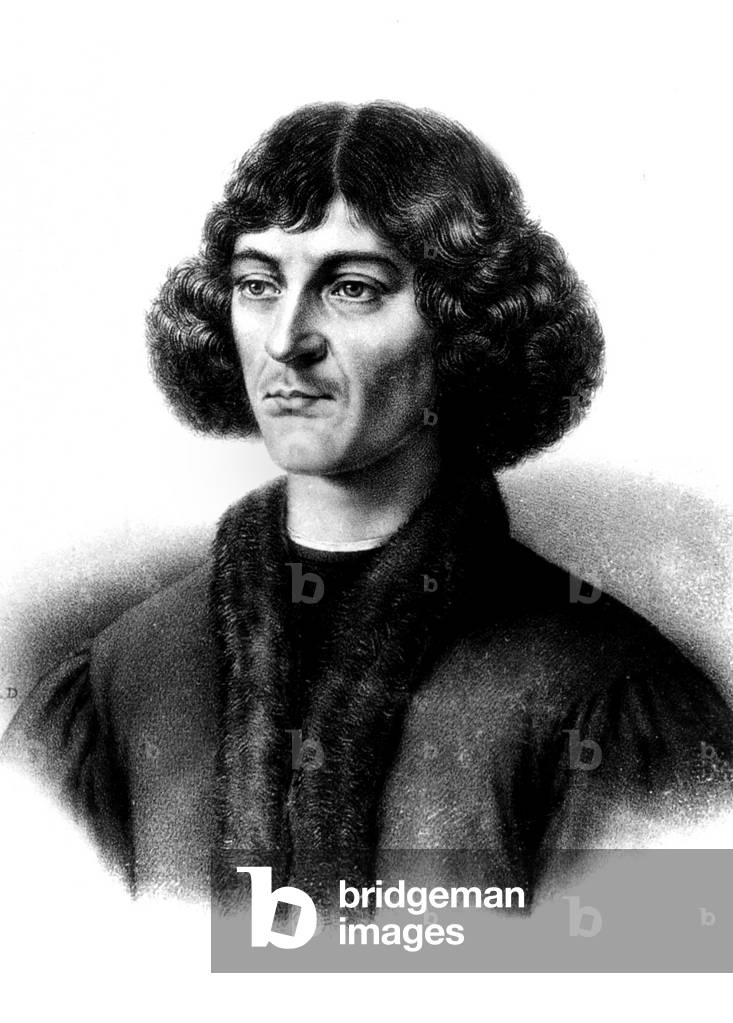
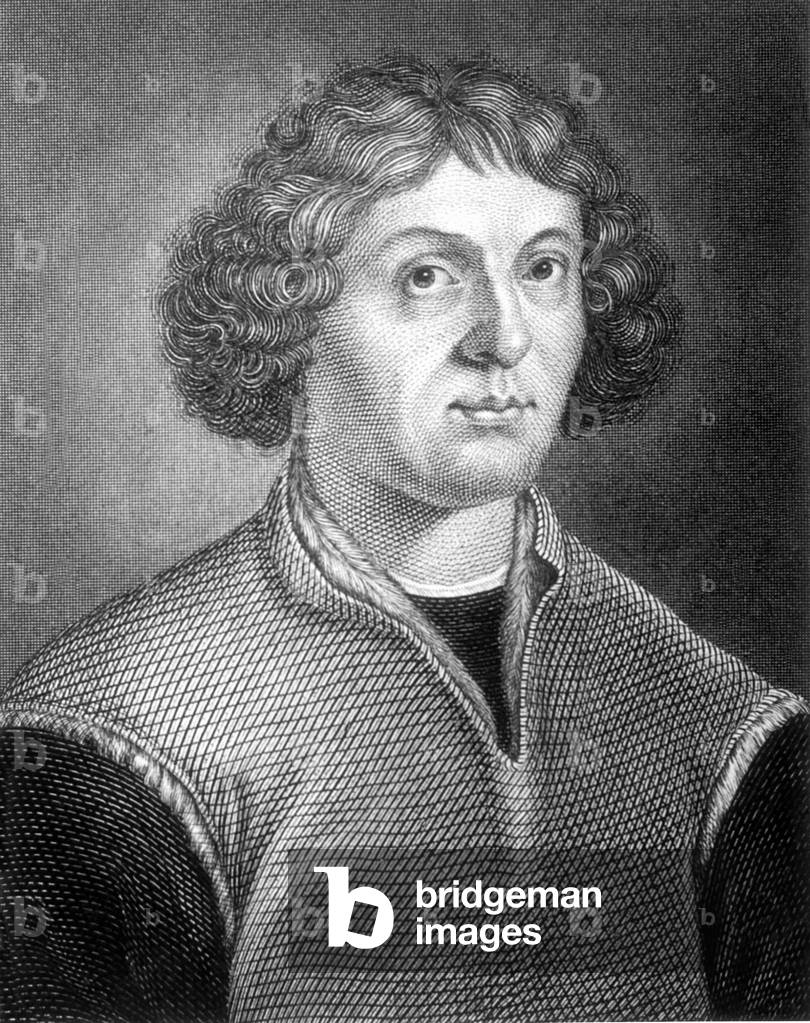
TAD1741743 Copernicus (1473-1543) polish astronomer, engraving
DC
UIG3519886 Poland: c. 1510 A portrait of astronomer and mathematician Nicolaus Copernicus.
DC
XEE4409842 Portrait of Nicolas Copernicus (Nicolaus Copernicus, 1473-1543)
RF
LAL299457 Renaissance Men. Copernicus (top left), Galileo (bottom left), Francis Bacon (top right), and Thomas More (bottom right). Original artwork for illustration on p25 of Look and Learn issue no 599 (7 July 1973). Lent for scanning by The Gallery of Illustration.
DC
XJF294060 John Wilkins (1614-72), clergyman and scientist, founder of the Royal Society; the three figures are Galileo Galilei (1564-1642), Nicolaus Copernicus (1473-1543) and Johannes Kepler (1571-1630);
RF
XCZ129602 Copernican theory of the heavens; wrote 'On the Revolutions of the Celestial Spheres';
RF
LSE4089459 Portrait of Nicolas Copernicus (Nicolaus Copernicus, 1473-1543)
DC
UIG3519885 Poland: c. 1510 A portrait engraving of astronomer and mathematician Nicolaus Copernicus.
DC
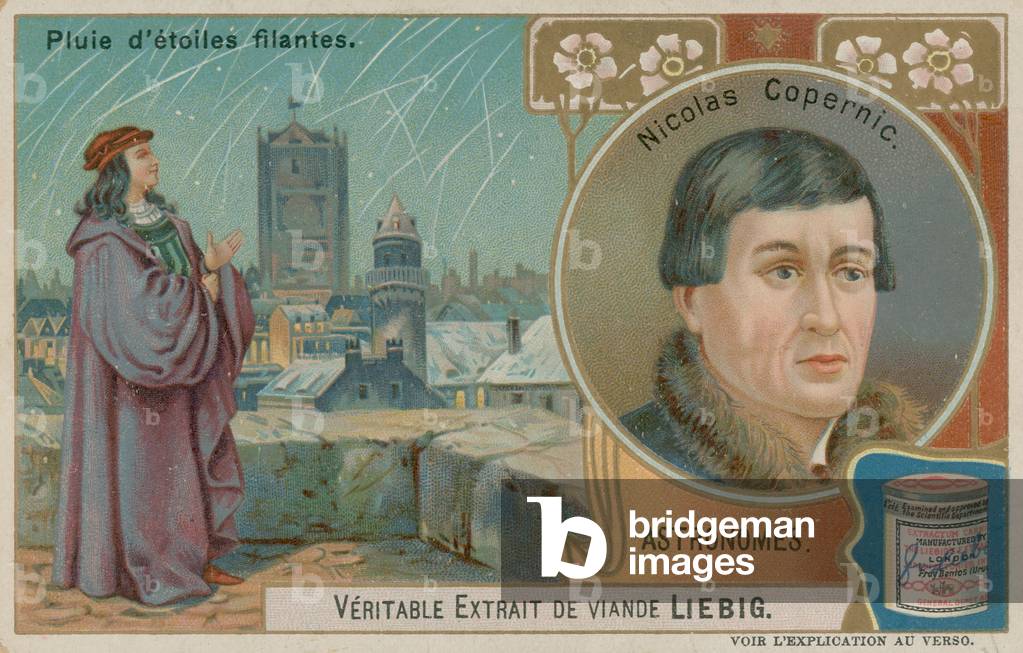
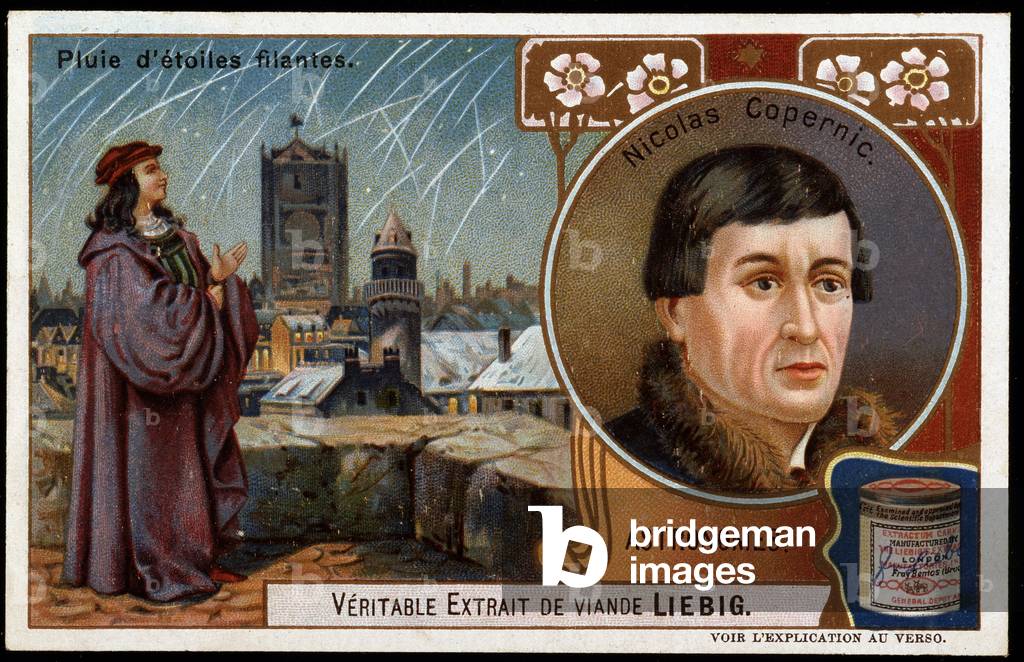
LLR735999 Nicolaus Copernicus and a fall of shooting stars. Liebig card, late 19th century/early 20th century.
DC
UIG2656173
DC
LLM459558 The sick Copernicus, receiving the first copy of his book on the revolutions of the celestial spheres. Illustration for La Ciencia Y Sus Hombres by Luis Figuier (D Jaime Seix, 1876). Large chromolithograph.
DC
CHT223724
DC
LLE817312 Nicolaus Copernicus (1473-1543), Polish astronomer.
DC
UIG2656201
DC
CHT276333 Galileo Galilei (1564-1642); theory of sun-centered universe; Galilee;
DC
XEE4414824 Nicolas Copernicus (Nicolaus Copernicus, 1473-1543), Polish astronomer.
RF
XTD141109 worked out heliocentric system in which Earth revolves around the sun;
RF
LRI4623177 Portrait of Nicolas Copernicus ((Nicolaus Copernicus, 1473-1543) Polish astronomer. Anonymous painting of the Polish School. 16th century. Poland. Musee regional de Torun - Portrait of Nicholas Copernicus (Nicolaus Copernicus, 1473-1543) Polish astronomer. Anonymous Polish painting, 16th century. Regional museum of Torun, Poland.
DC
GIA4804431 The famous astronomers. Among them, from left to right: Walterus (?) , Tycho Brahe (Tyge Ottesen Brahe), known as Le noble Danish or L'homme au nez d'or (1546-1601), Ulugh Beg (Oulough Beg, Oulugbek) (1394-1449), Timocharis of Alexandria (ca. 320-260 BC), Nicee Hipparchus (ca. 194-120 BC), Ptolemee (Claudius Ptolemaeus, Ptolemais de Thebaide) (90-168), Albatenius (Albategnius) (Muhammad ben Geber al-Battani, al Battani) (850-929), Johannes Muller da Konigsberg (Johann Muller) (known as Regiomontano, Regiomontanus) (1436-1476), Nicolas Copernicus (Nicolaus Copernicus, 1473-1543). Engraving of 1687 in “” Firmamentum Sobiescianum Ssive Uranographia””” by Johannes Hevelius (Johannes Hewel, Johann Hewelke, Johannes Hewelcke, Jan Heweliusz).
DC
XJF129880 by Andrzej Stech
RF
XEE4113829 Portrait of Nicolas Copernicus (Nicolaus Copernicus, 1473-1543), Polish doctor and astronomer
RF
LSE4088696 Portrait of Nicolas Copernicus (Nicolaus Copernicus, 1473-1543) (astronomer) and rain of shooting stars - Liébig advertising sticker
DC
UIG5413529
DC
LRI9037130 COPERNICUS Nicolaus (1473-1543): Portrait.
DC
GIA4720551 Portrait of Nicolas Copernicus ((Nicolaus Copernicus, 1473-1543) Polish astronomer - Nicolaus Copernicus 1473-1543 - engraving - 19th century
DC
PIX4629503 Copernician System - Copernician System - Heliocentric model according to Nicolas Copernic. Engraving from “Harmonia Macrocosmica” by Andreas Cellarius, 1660-1661. The Heliocentric model according to Copernicus. Plate of the Harmonia Macrocosmica of Andreas Cellarius, 1660-1661
DC
XEE4403702 Portrait of Nicolas Copernicus (Nicolaus Copernicus, 1473-1543), Polish astronomer (Toru4, Poland, 1473 in Frauenburg, Poland, 1543). Barcelona 1877.
RF
MEX139653 two eagles facing left and right; mosaic by Juan O'Gorman (1905-82);
DC
XEE4353978 Representation of Nicolas Copernicus (Nicolaus Copernicus, 1473-1543), Polish astronomer. Clerac illustration.
DC
XJF359060 Galileo (1564-1642); Latin translation of Galileo's 'Dialogo sopra i due massimi sistemi del mondo', published in Florence 1632; Aristotle , Ptolemy and Copernicus discussing their different world systems; Nicolaus Copernicus (1473-1543);
RF
PIX4629513 Copernician System - Copernician System - Heliocentric model according to Nicolas Copernic. Engraving from “Harmonia Macrocosmica” by Andreas Cellarius, 1660-1661. The Heliocentric model according to Copernicus. Plate of the Harmonia Macrocosmica of Andreas Cellarius, 1660-1661
DC
XRH1731131 Nicolaus Copernicus (19 February 1473 – 24 May 1543) was a Renaissance polymath, active as a mathematician, astronomer, and Catholic canon, who formulated a model of the universe that placed the Sun rather than Earth at its center.
DC
IBE5388675
DC
HIM5251815 Nicolas Copernic (Nicolaus Copernicus) (1473-1543), astronome polonais considere comme le pere fondateur de l'astronomie moderne et le fondateur de la cosmologie heliocentrique.
DC
XIR166573 Author of 'De Revolutionibus' which put forward the idea that the planets move in orbits around the sun at their centre; opposed to Ptolemy's geocentric theory;
RF
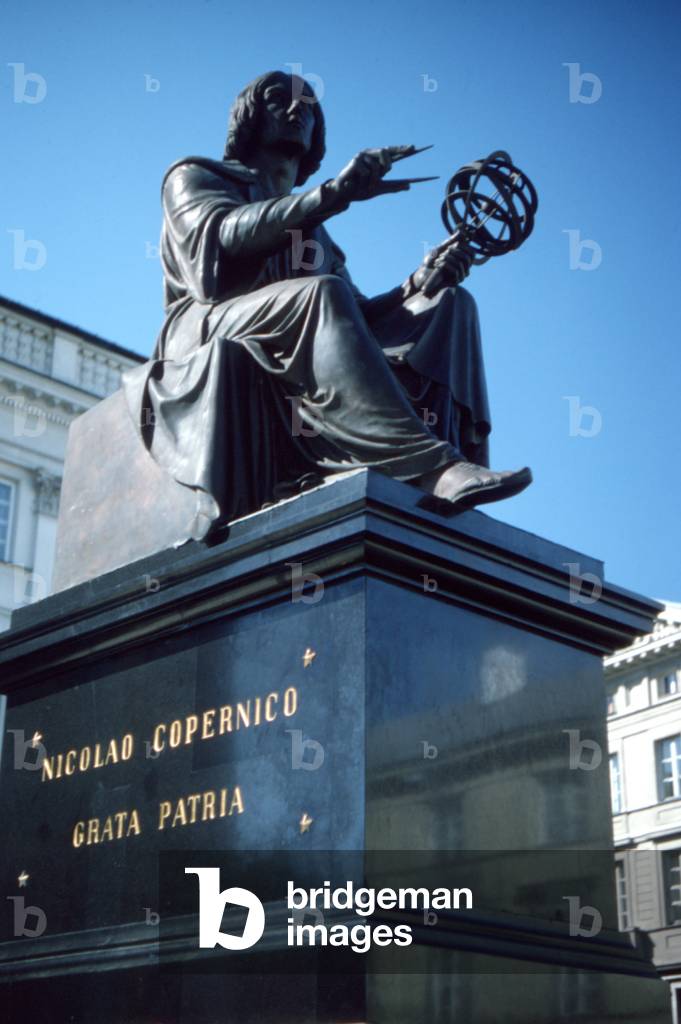
DGC473274 The Copernicus Monument in Kraków (Pomnik Mikołaja Kopernika) celebrates the Polish astronomer, Nicolas Copernicus (1473-1543), who studied at the Kraków Academy. The statue, designed by sculptor Cyprian Godebski in 1899, was completed in 1900 and portrays Copernicus as a student and holding an astrolabe. It stood in the courtyard of the the Collegium Maius until 1953 when it was moved to Kraków's Planty Park, before the Collegium Witkowski. The site of the former statue today has been restored to its original purpose, a well. Jagiellonian Library (Biblioteka Jagiellońska) is the library of the Jagiellonian University in Kraków;
DC
GIA4759554 Portrait of Nicolas Copernicus (Nicolaus Copernicus, 1473-1543), Polish astronomer.
DC
HIM5295332 Nicolas Copernicus, Polish astronomer and mathematician. Copernicus (1473-1543) is considered to be the father of modern astronomy and founder of heliocentric cosmology. Prior to the work of Copernicus, the Earth was considered to be the stationary centre of the universe, a notion first advocated by the Egyptian astronomer Ptolemy. Copernicus' pioneering work De revolutionibus orbium coelestium (The Revolutions of Celestial Spheres) (1543) describes his idea of a Sun-centred universe, in which the Earth is merely one of the planets revolving around the Sun and rotating on its axis. (Colorised black and white print).
DC
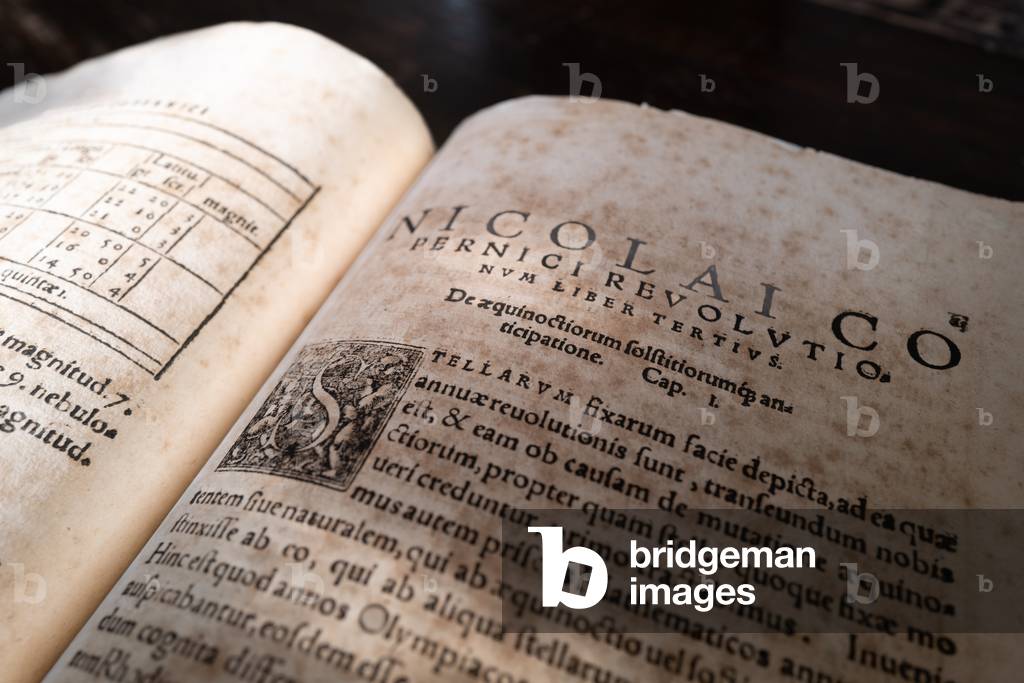
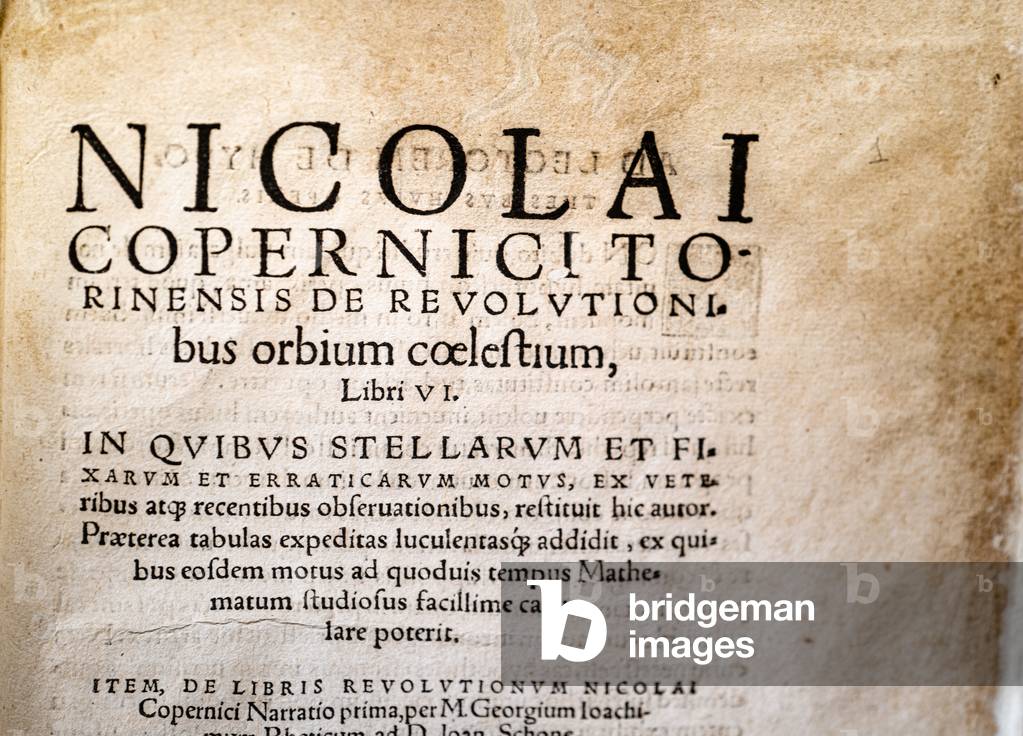
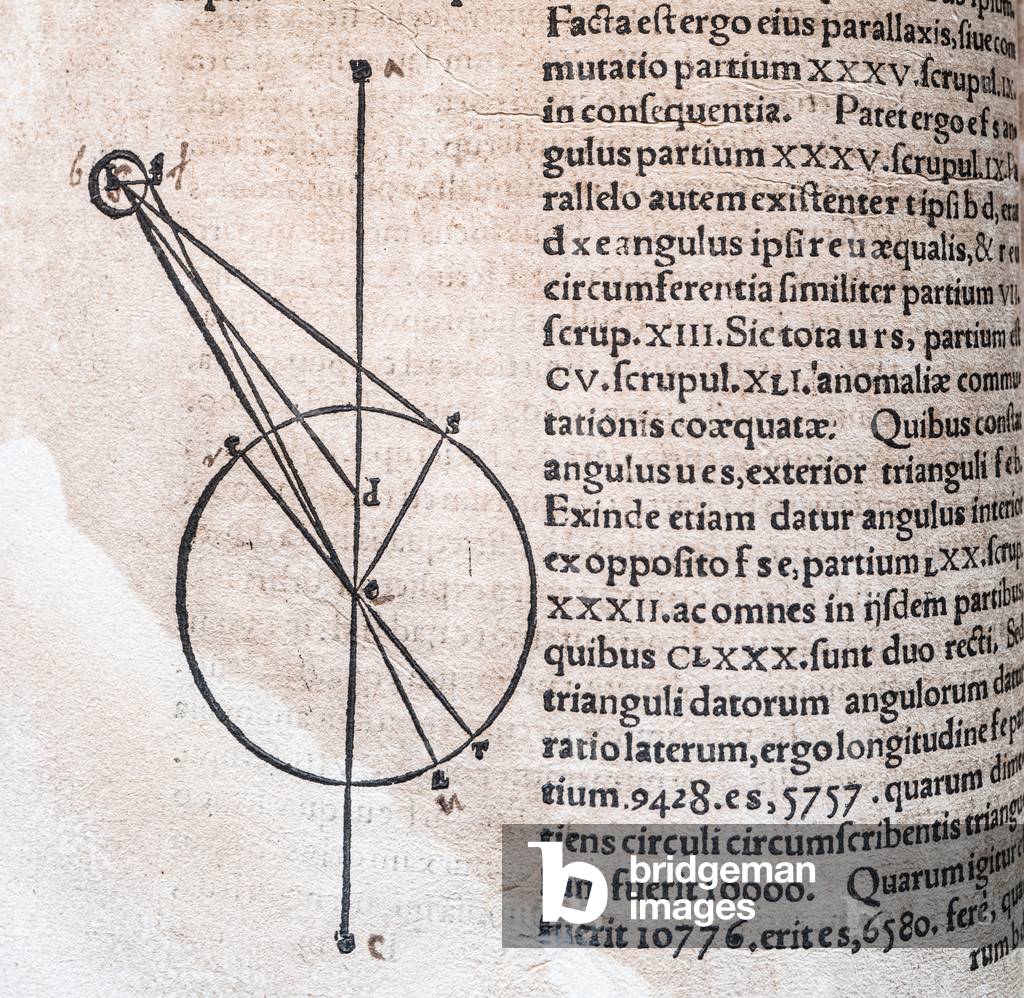
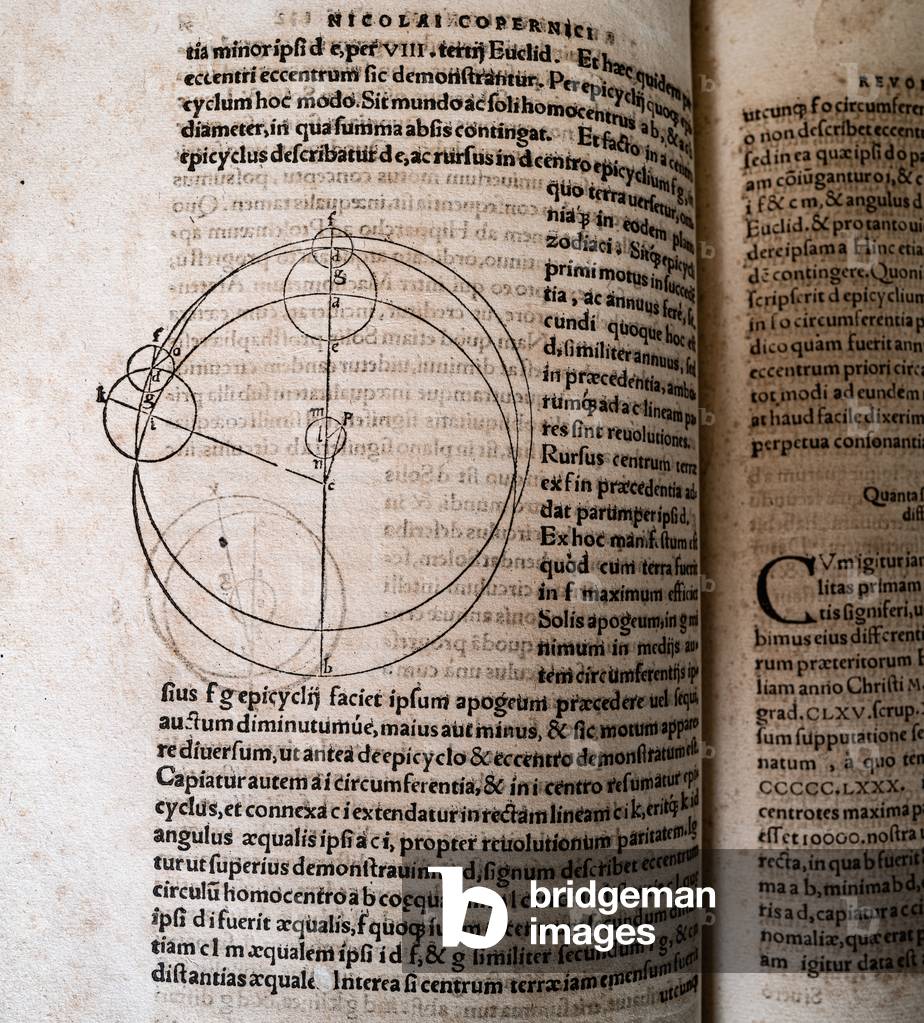
MHO7177372 Copy of the second edition of the De revolutionibus orbium coelestium (On the revolutions of celestial orbs) by Nicolas Copernicus, dating from 1575. Preserved in Palermo. Listed as a UNESCO World Heritage Site.
DC
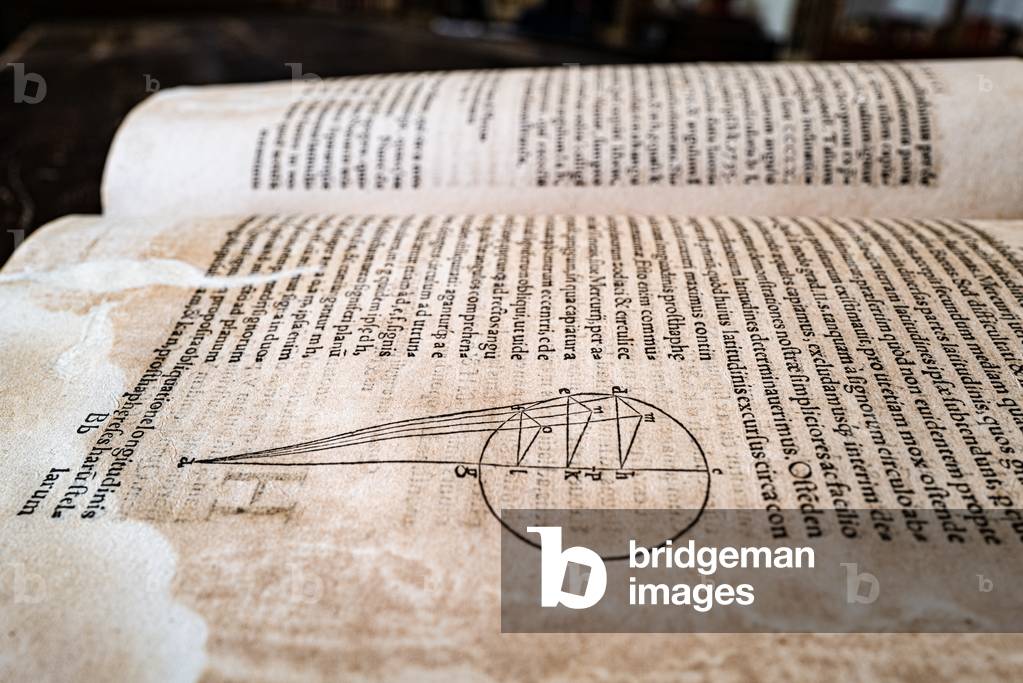
MHO7177359 Copy of the second edition of the De revolutionibus orbium coelestium (On the revolutions of celestial orbs) by Nicolas Copernicus, dating from 1575. Preserved in Palermo. Listed as a UNESCO World Heritage Site.
DC
XEE5028771 Book of Nicholas Copernicus (Nicolaus Copernicus, 1473-1543), Polish astronomer
RF
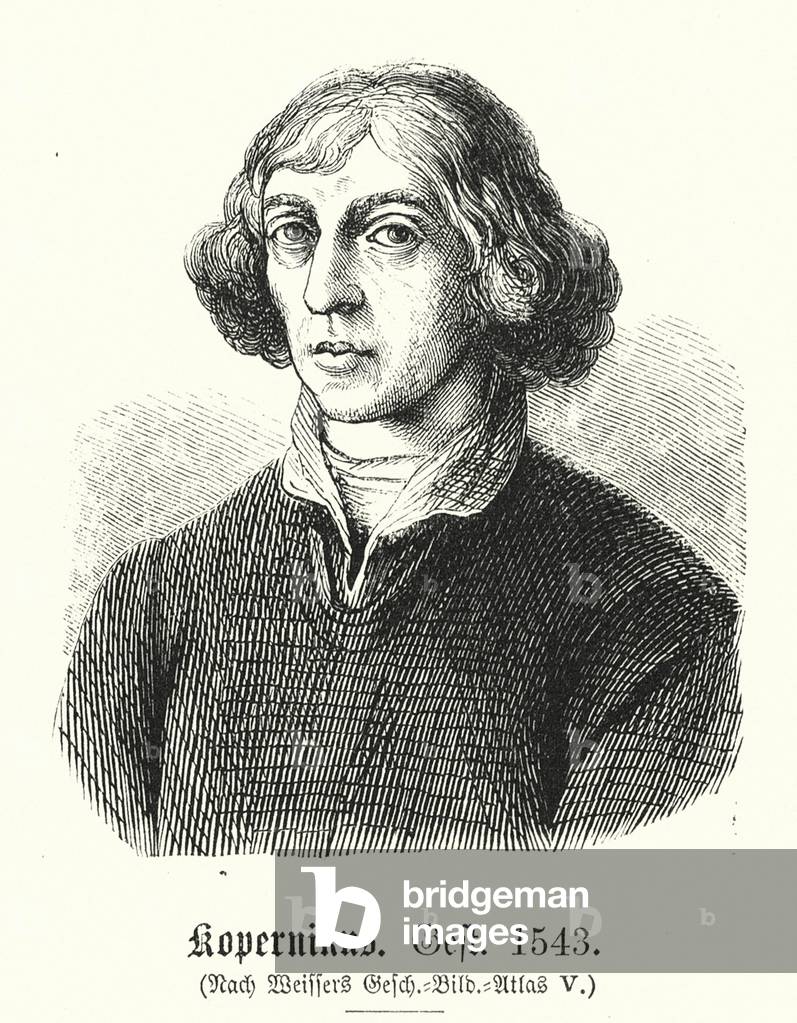
LLM8632105 Kopernikus, Nicolaus Copernicus, 1473-1543. Illustration for Deutsche Manner by Manuel Raschke (Prochaska, c 1868).
DC
XLF3787673 Nicolaus Copernicus - against a backdrop of shooting stars. Portrait illustration on Liebig collectible card (French series title: 'Astronomes'/'Astronomers'). 1906. NC: Polish (Prussian) astronomer, first to come up with heliocentric theory of the solar system, 19 February 1473 – 24 May 1543.Astronomers I S846 (F845)
DC
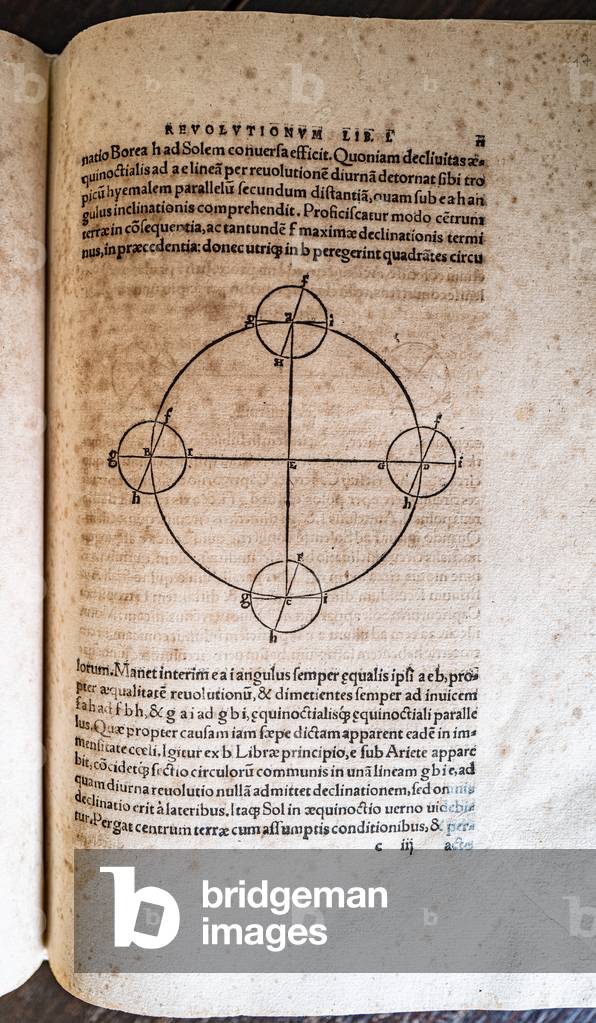
MHO7177367 Copy of the second edition of the De revolutionibus orbium coelestium (On the revolutions of celestial orbs) by Nicolas Copernicus, dating from 1575. Preserved in Palermo. Listed as a UNESCO World Heritage Site.
DC
MHO7177371 Copy of the second edition of the De revolutionibus orbium coelestium (On the revolutions of celestial orbs) by Nicolas Copernicus, dating from 1575. Preserved in Palermo. Listed as a UNESCO World Heritage Site.
DC
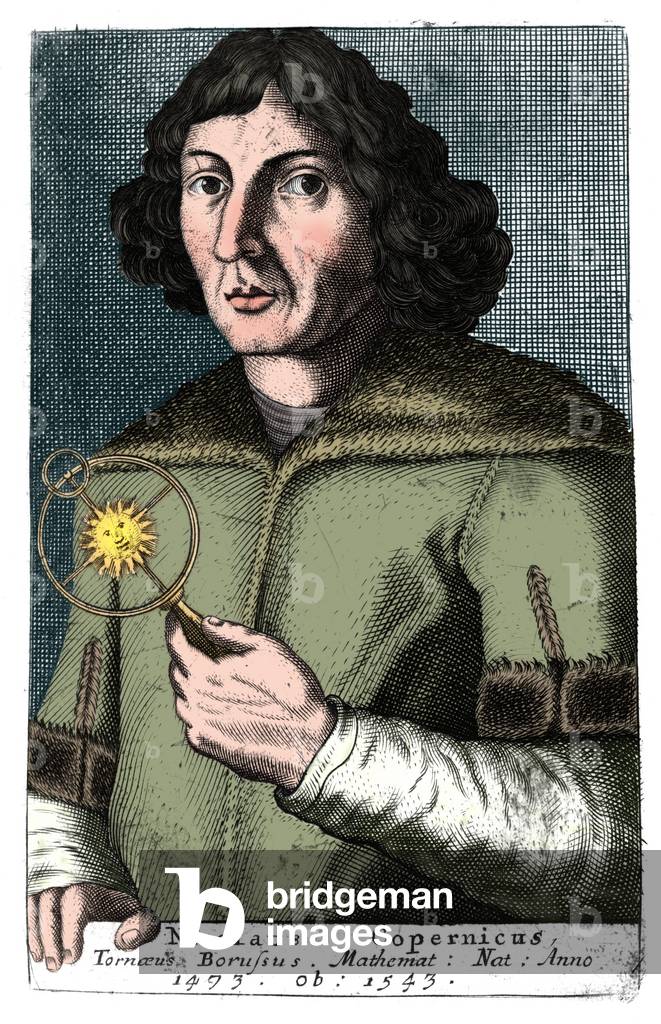
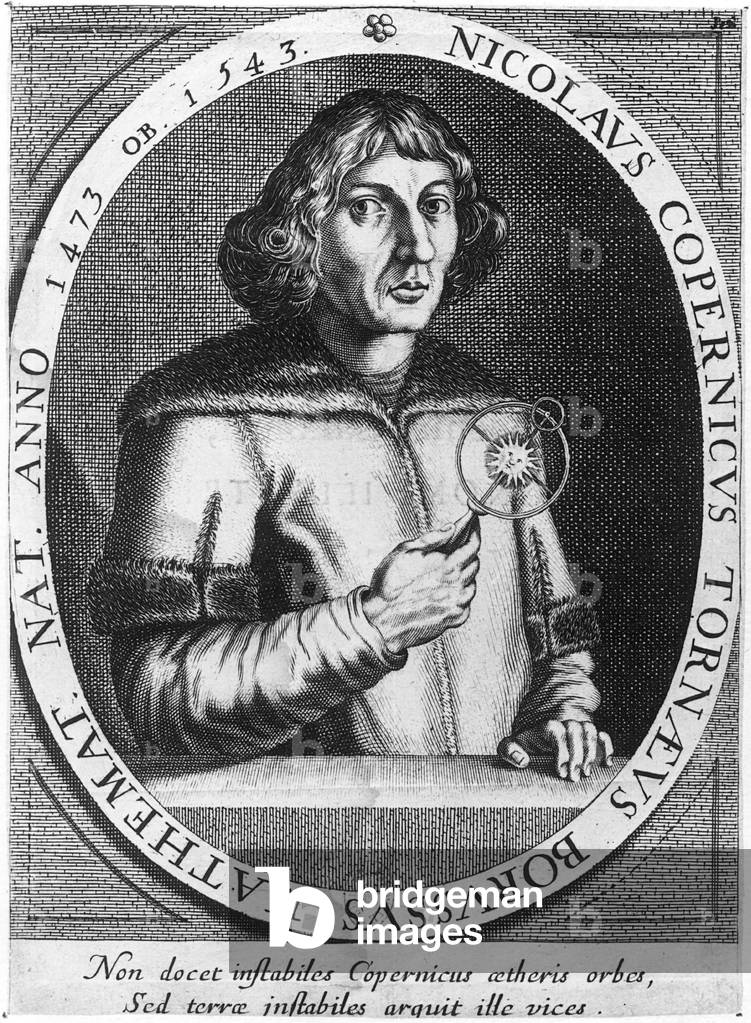
FLO6039962 Nicolaus Copernicus, Renaissance-era polymath who formulated a model of the universe that placed the Sun rather than Earth at the center of the universe, 1473-1547. Nicolaus Copernicus Torunaeus Borusus Mathemat. Copperplate engraving by Johann Theodore de Bry from Jean-Jacques Boissard’s Bibliotheca Chalcographica, Johann Ammonius, Frankfurt, 1650.
DC
MHO7177364 Copy of the second edition of the De revolutionibus orbium coelestium (On the revolutions of celestial orbs) by Nicolas Copernicus, dating from 1575. Preserved in Palermo. Listed as a UNESCO World Heritage Site.
DC
MHO7177361 Copy of the second edition of the De revolutionibus orbium coelestium (On the revolutions of celestial orbs) by Nicolas Copernicus, dating from 1575. Preserved in Palermo. Listed as a UNESCO World Heritage Site.
DC
MHO7177370 Copy of the second edition of the De revolutionibus orbium coelestium (On the revolutions of celestial orbs) by Nicolas Copernicus, dating from 1575. Preserved in Palermo. Listed as a UNESCO World Heritage Site.
DC
MHO7177363 Copy of the second edition of the De revolutionibus orbium coelestium (On the revolutions of celestial orbs) by Nicolas Copernicus, dating from 1575. Preserved in Palermo. Listed as a UNESCO World Heritage Site.
DC
MHO7177360 Copy of the second edition of the De revolutionibus orbium coelestium (On the revolutions of celestial orbs) by Nicolas Copernicus, dating from 1575. Preserved in Palermo. Listed as a UNESCO World Heritage Site.
DC

Total de Resultados: 164

Página 1 de 2