






































Busque também em nossas outras coleções:

Tipo de arquivo:

Tipo do arquivo:

Tipo da licença:

Orientação:

Total de Resultados: 313

Página 1 de 4

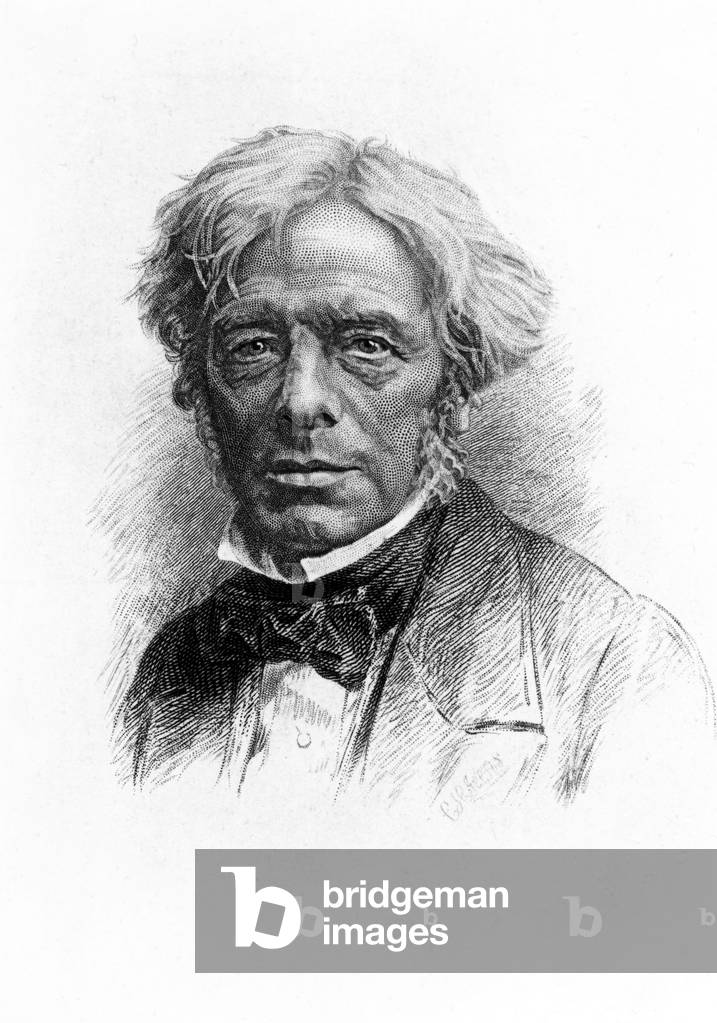
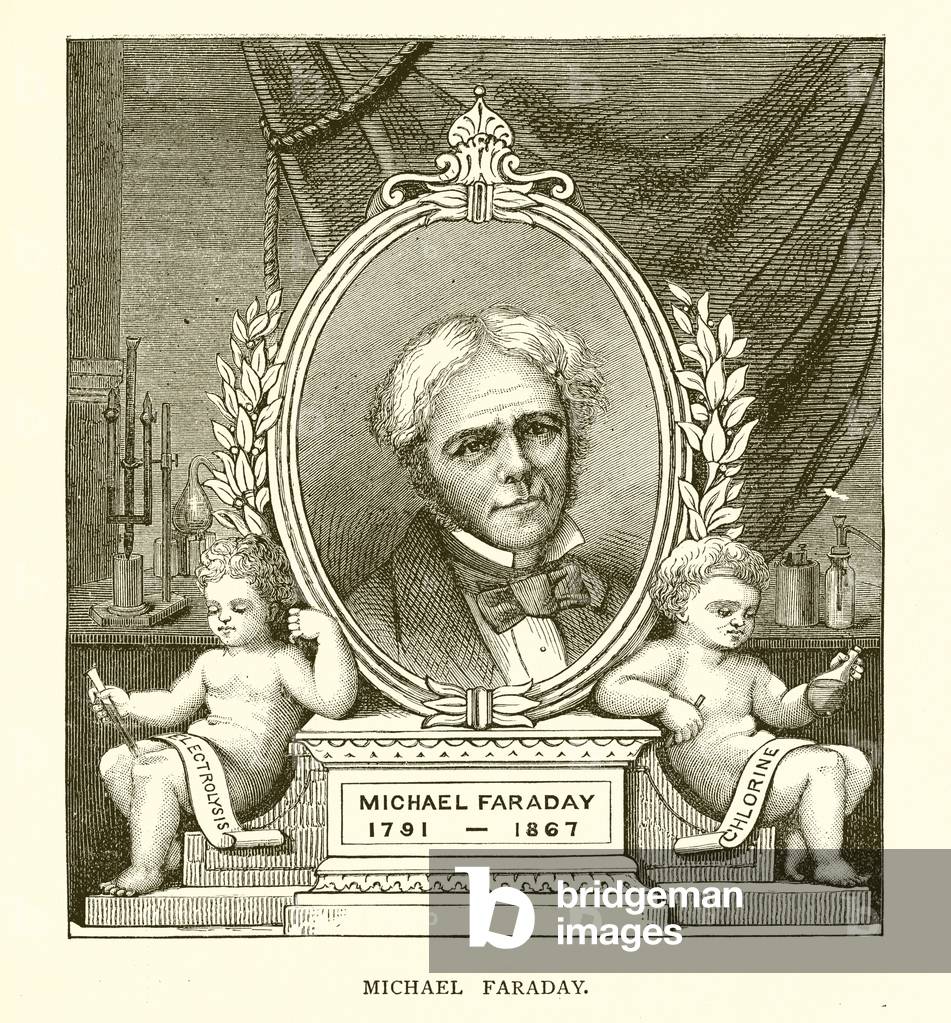
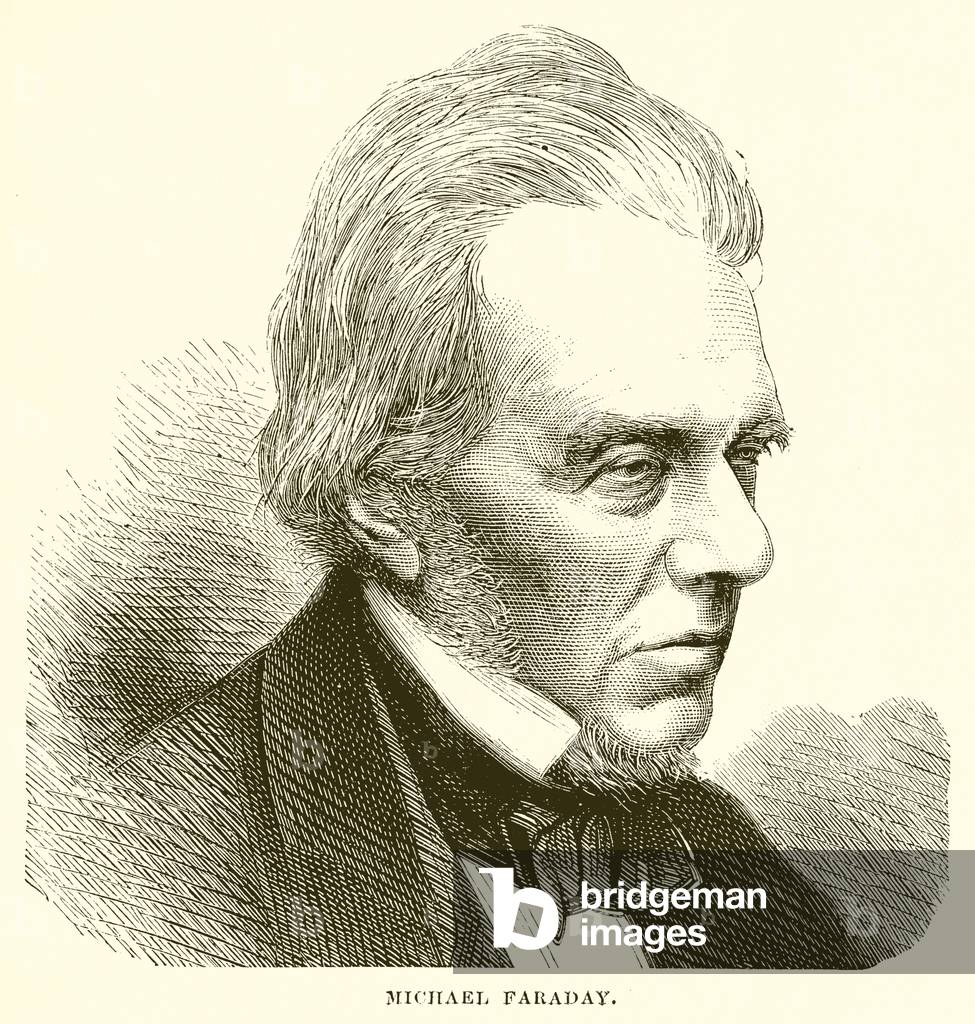
LLM457118 Michael Faraday. Illustration for The Maclise Portrait Gallery of Illustrious Literary Characters by William Bates (Chatto and Windus, 1896).
DC
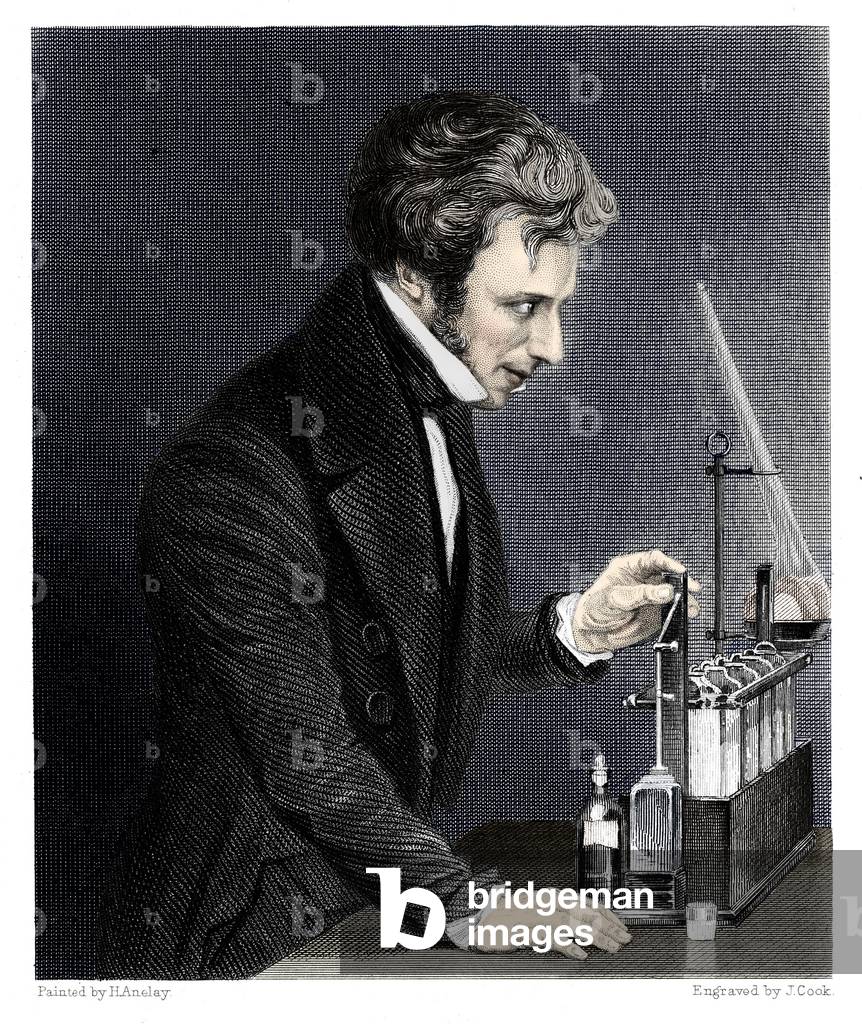
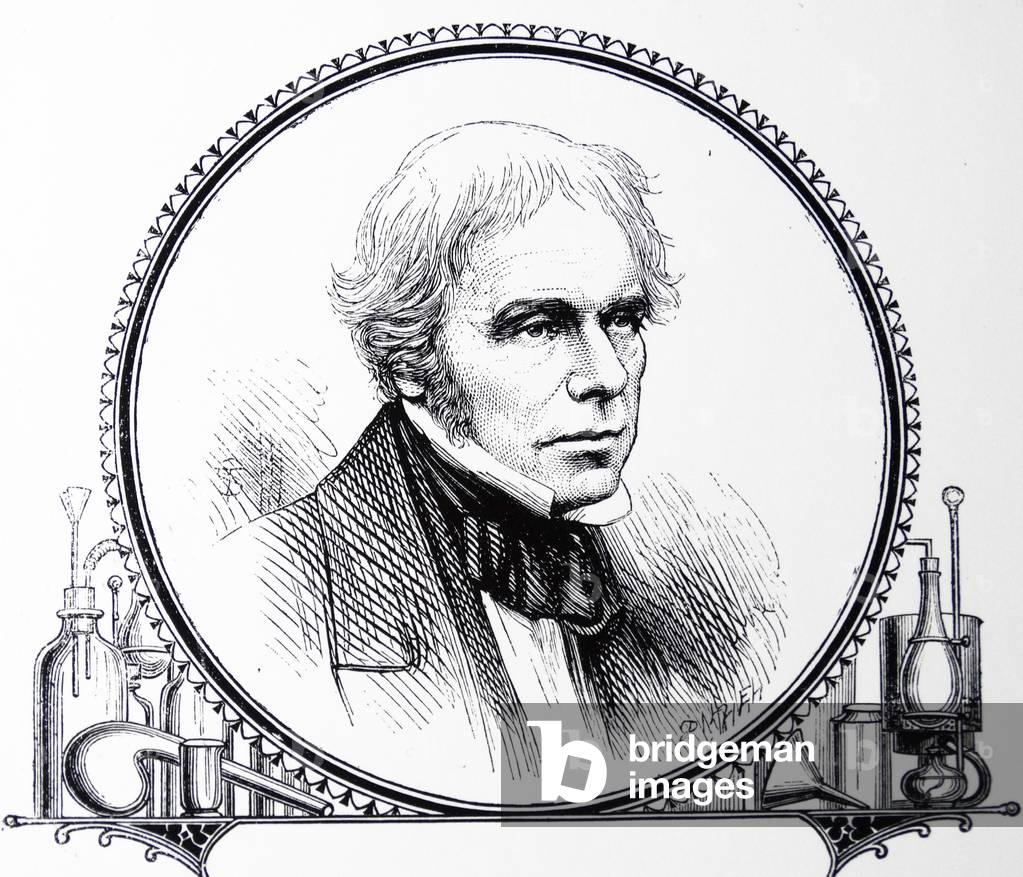
UIG5312034 Engraving depicting Michael Faraday in his laboratory at the Royal Institute. Michael Faraday (1791-1867) an English scientist. Dated 19th century.
DC
LLM459534 Michael Faraday. Illustration for La Ciencia Y Sus Hombres by Luis Figuier (D Jaime Seix, 1876). Large chromolithograph.
DC
UIG5311893 Engraving depicting Michael Faraday in his laboratory at the Royal Institute. Michael Faraday (1791-1867) an English scientist. Dated 19th century.
DC
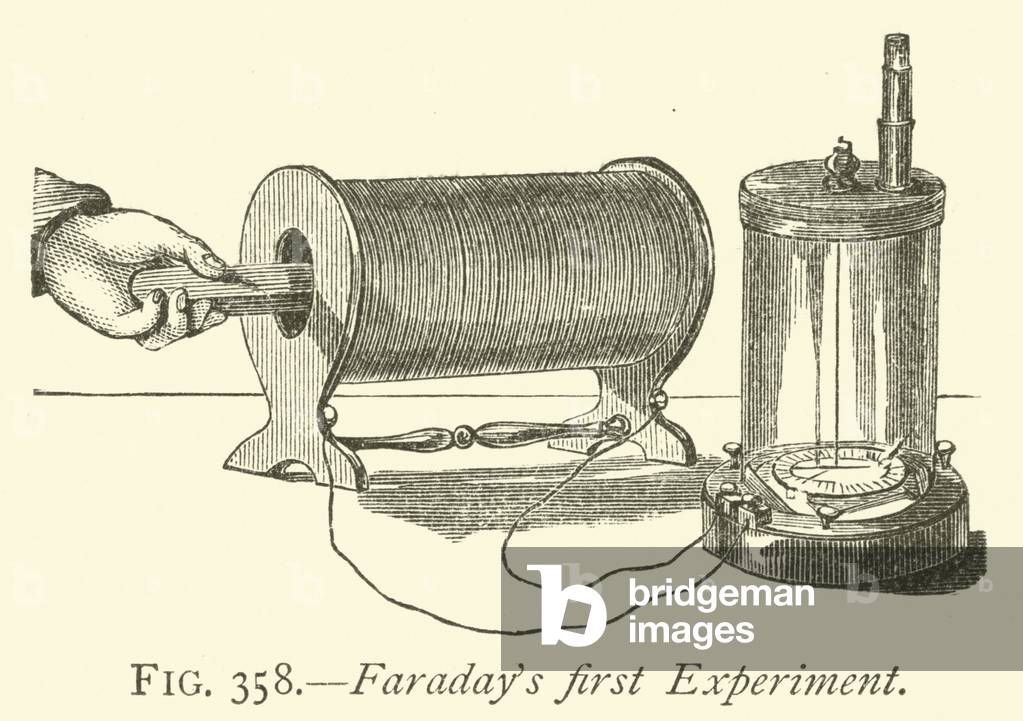
LLM2781319 Faraday's first Experiment. Illustration for Cyclopaedic Science Simplified by J H Pepper (Frederick Warne, 1869).
DC
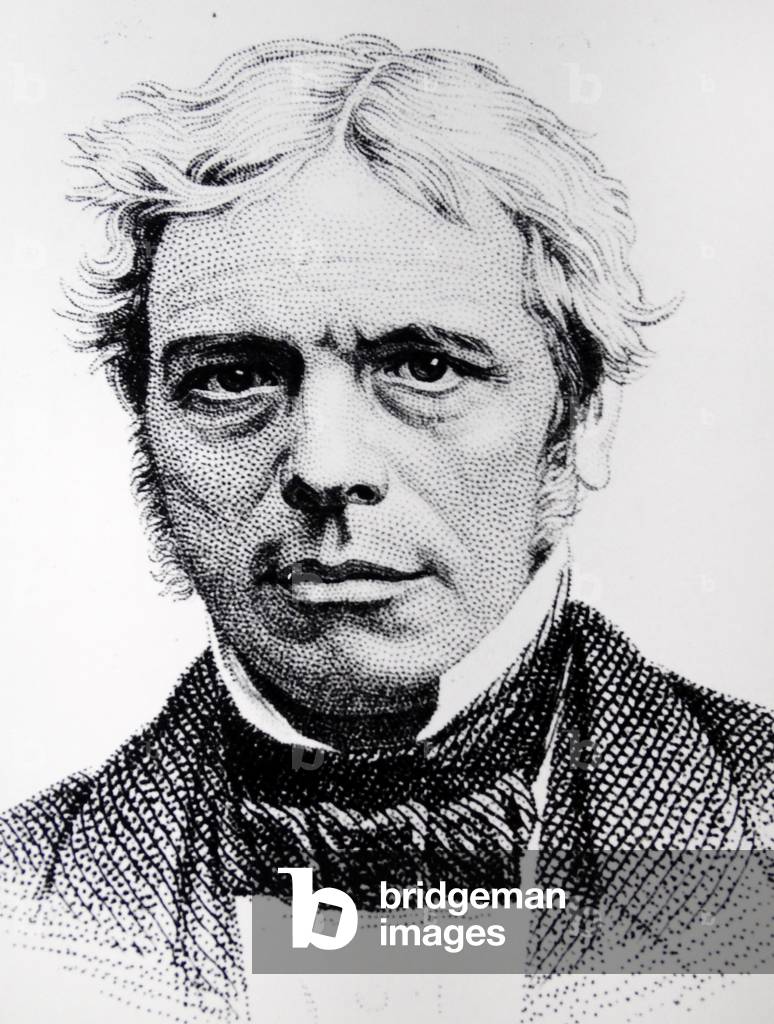
LLE815729 Michael Faraday (1791-1867). English scientist known for his work in the fields of electromagnetism and electrochemistry.
DC
LLM671601 Michael Faraday. Illustration for Our World's Greatest Benefactors by Samuel Adams Drake (H J Smith & Co, 1888). Digitally cleaned image.
DC
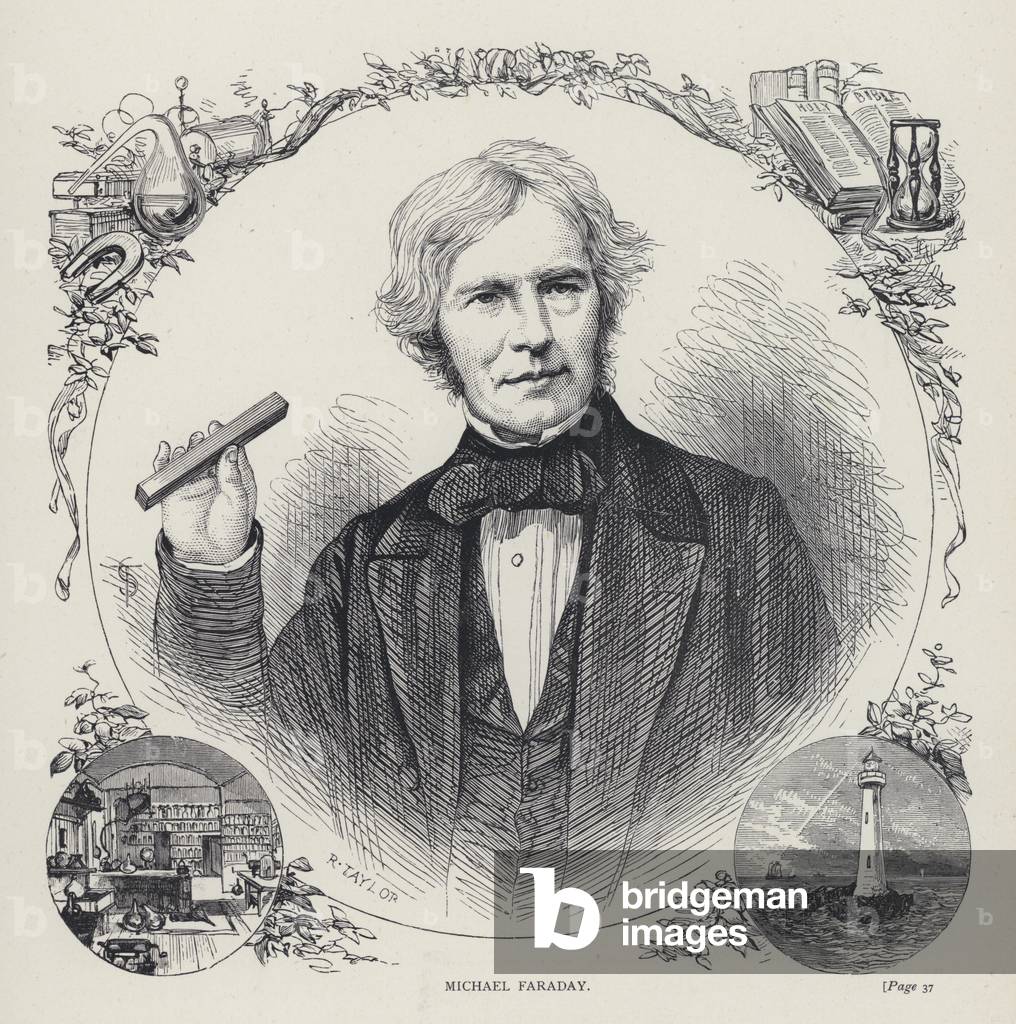
LLM6009435 Michael Faraday. Illustration for National Worthies being a selection from the National Portrait Gallery (Archibald Constable, 1899).
DC
LLJ611485 Michael Faraday
DC
XLA3757632 Michael Faraday with his wife from a daguerreotype English scientist Electricity.
DC
LLM2788393 Faraday and the newspaper boys. Illustration for The Leisure Hour (1872). Digitally cleaned image.
DC
UIG1574403 Photographic print of Michael Faraday (1791-1867) an English scientist who contributed to the fields of electromagnetism and electrochemistry. Dated 1850 Photo by: .
DC
XLA3766169 Michael Faraday with his wife from a daguerreotype English scientist Electricity.
DC
LLJ586173 Michael Faraday
DC
LLM672035 Michael Faraday. Illustration for The National and Domestic History of England by William Aubrey (James Hagger, c 1880). Digitally cleaned image.
DC
LLM5223789 Michael Faraday. Illustration for The Sunday Book of Biography (Hodder and Stoughton, 1887).
DC
LLE815717 Michael Faraday (1791-1867). English chemist and scientist, who discovered electromagnetic induction diamagnetism and electrolysis.
DC
LLE815946 Michael Faraday (1791–1867). English scientist contributed to the fields of electromagnetism and electrochemistry.
DC
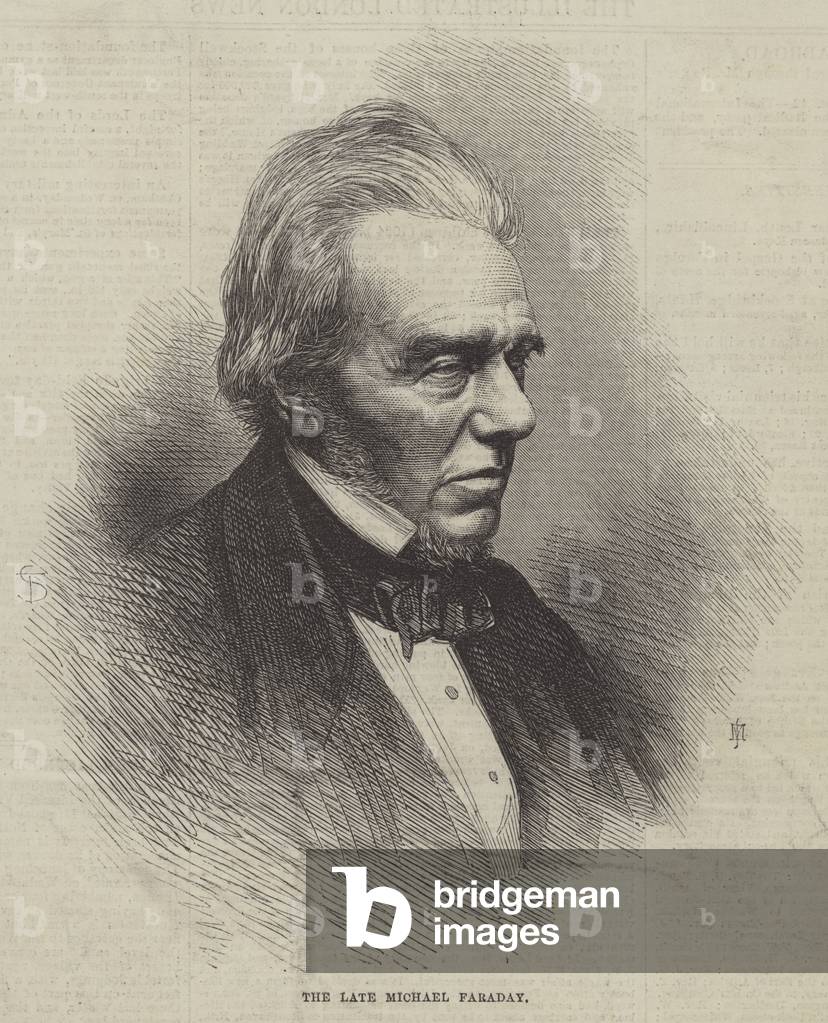
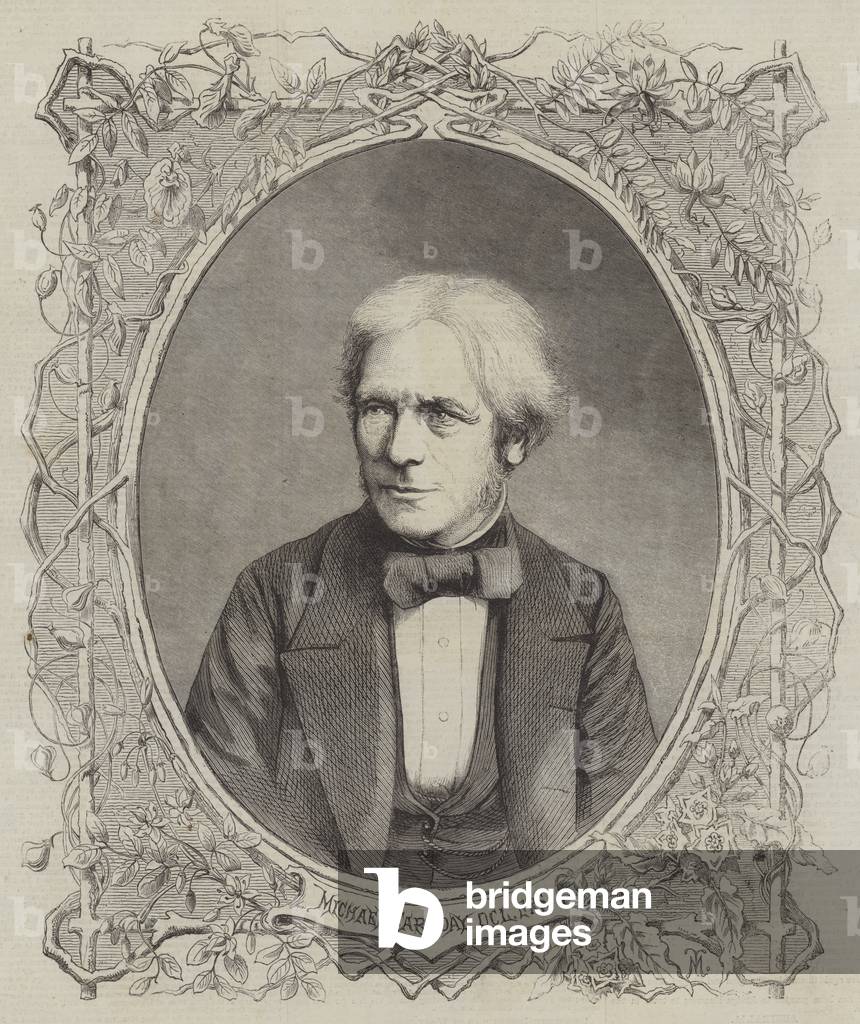
LLE815927 Michael Faraday (1791-1867). English scientist known for his work in the fields of electromagnetism and electrochemistry. From The Illustrated London News, 14 September 1867.
DC
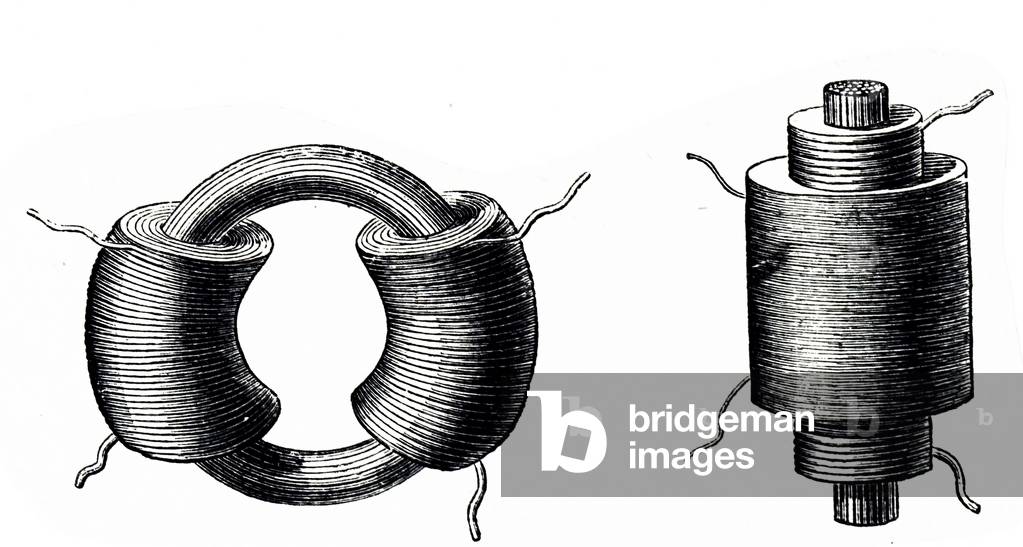
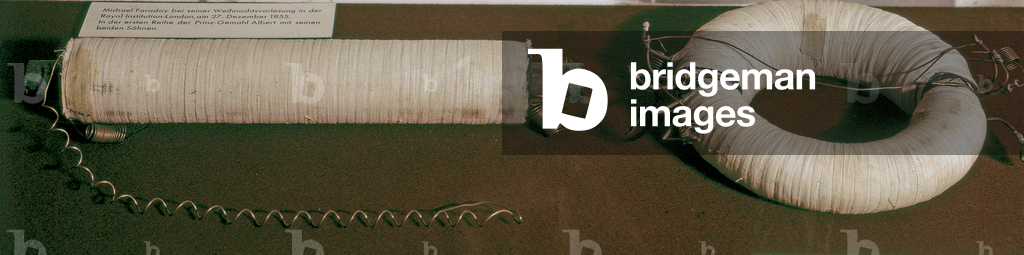
UIG5310265 Engraving depicting early transformers: Left, Faraday's first (1831) model, based on a drawing in his notebooks: this was an iron ring wound with two separate coils of wire. Right Masson and Ritchie's (1842) forerunner to the Ruhmkorff coil: this had a core of iron rods forming an 'open magnetic circuit'. Dated 19th century.
DC
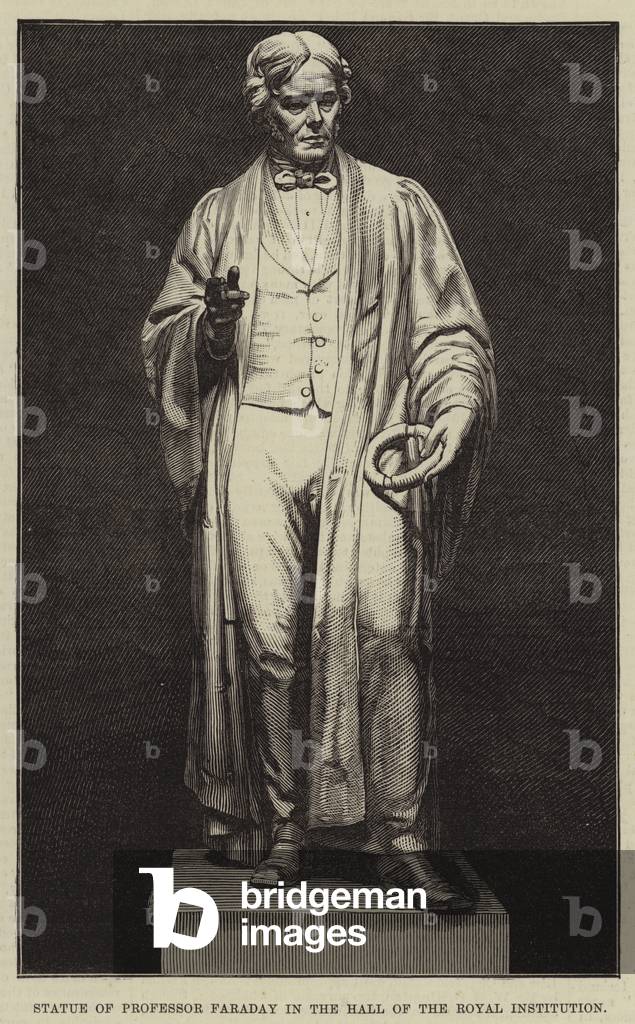
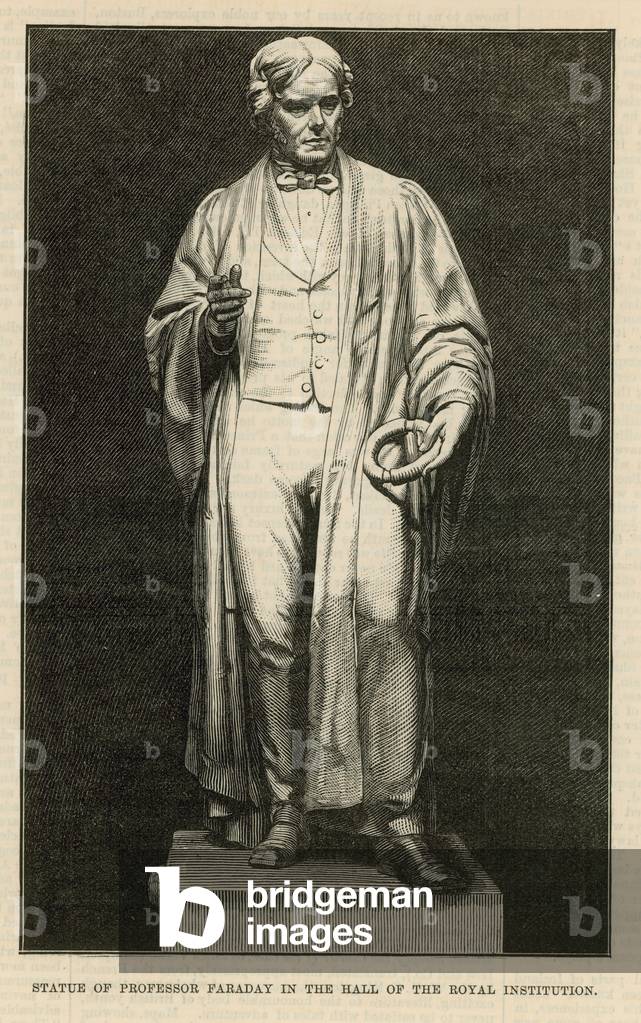
LIP1106220 Statue of Professor Faraday in the Hall of the Royal Institution. Illustration for The Illustrated London News, 10 March 1877.
DC
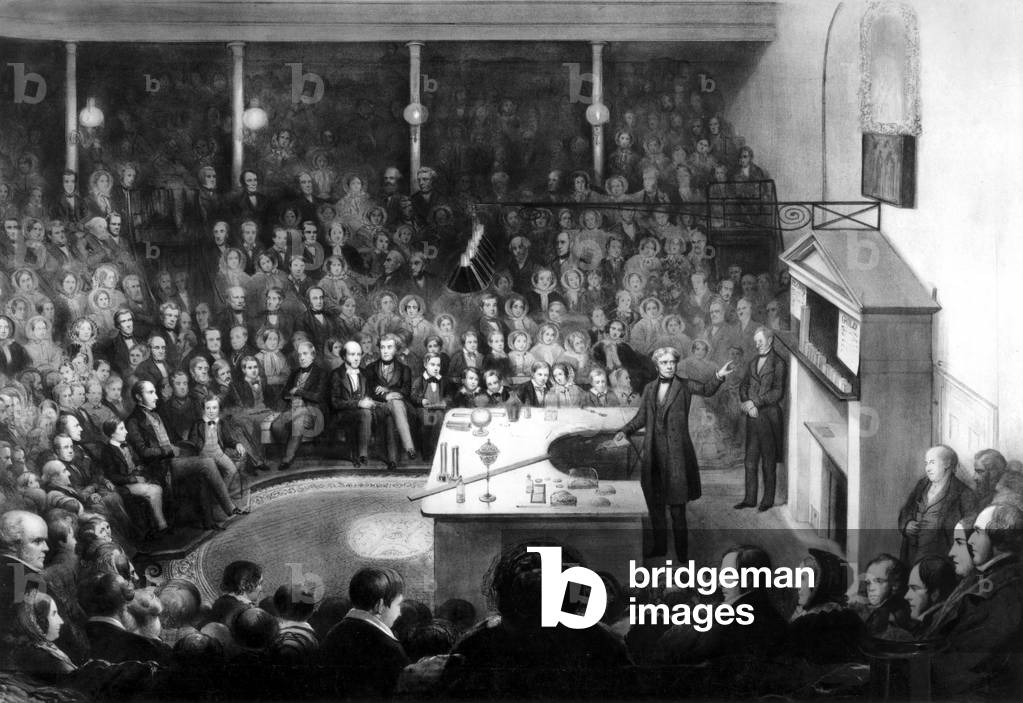
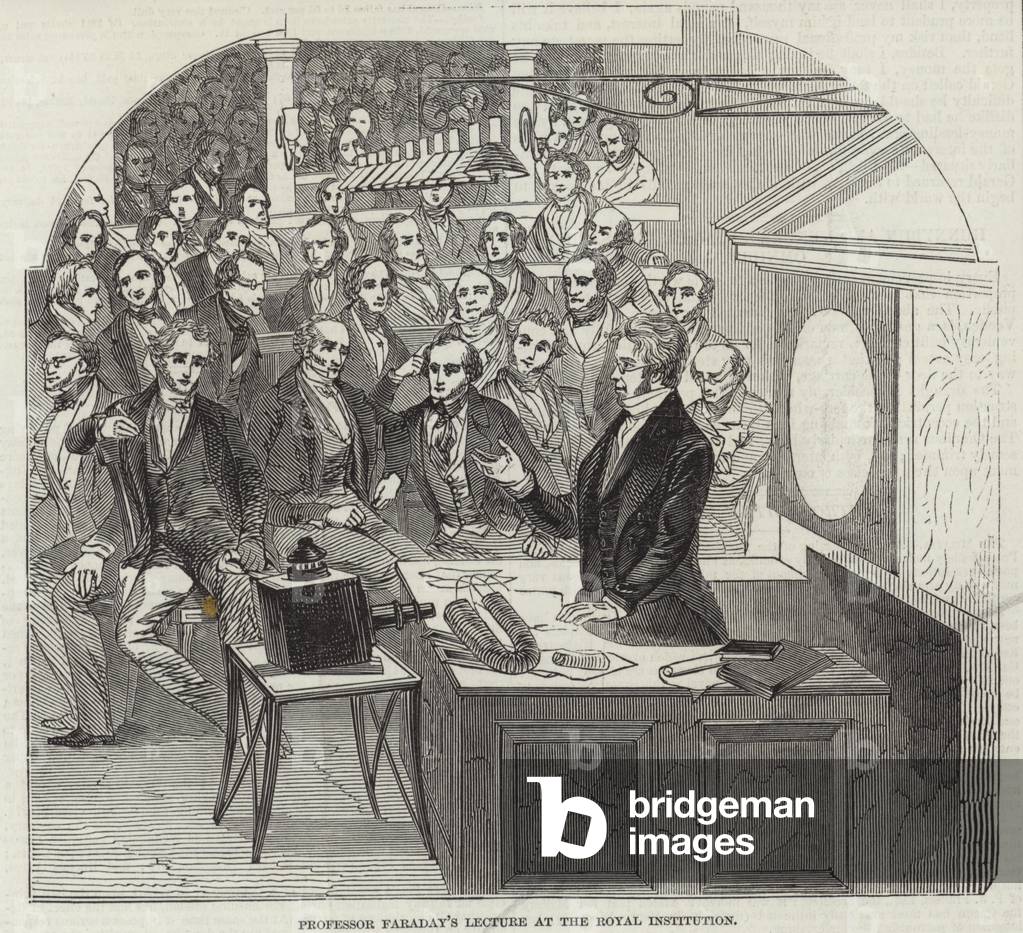
LIP1101685 Professor Faraday's Lecture at the Royal Institution. Illustration for The Illustrated London News, 31 January 1846.
DC
LLJ585515 Statue of Professor Michael Faraday, scientist, in the hall of the Royal Institution, London. Published in a supplement to the Illustrated London News on 10 March 1877.
DC
UIG863342 Michael Faraday (1791-1867) English chemist and physicist. In 1813 became laboratory assistant to Humphry Davy at the Royal Institution, London. In 1833 he succeeded Davy as professor of chemistry at the RI. From James Sheridan Muspratt "Chemistry" (Londo
DC
UIS5094932 United Kingdom : Michael Faraday. 1791-1867.
DC
UIS5074677 Michael Faraday, English physicist., c 1850. Michael Faraday (1791-1867) discovered the principles of the electric motor and dynamo. Faraday's great life work was the series 'Experimental Researches on Electricity' published over 40 years in 'Philosophical Transactions', in which he described his many discoveries including electromagnetic induction (1831), the laws of electrolysis (1833) and the rotation of polarised light by magnetism (1845). ©SSPL/Science Museum
DC
UIS5062348 Michael Faraday, English physicist. c 1855. Michael Faraday (1791-1867) discovered the principles of the electric motor and dynamo. Faraday's great life work was the series 'Experimental Researches on Electricity' published over 40 years in 'Philosophical Transactions', in which he described his many discoveries including electromagnetic induction (1831), the laws of electrolysis (1833) and the rotation of polarised light by magnetism (1845). Photograph initialled by Faraday. ©SSPL/Science Museum
DC
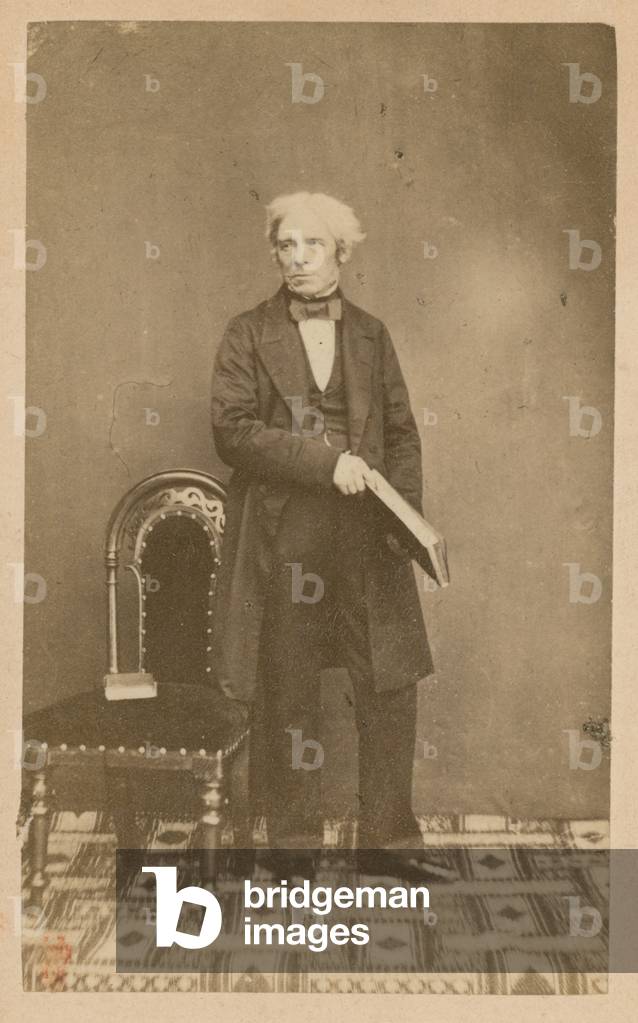
UIS5074683 Michael Faraday, English physicist., c 1840. Carte-de-visite photograph from a daguerreotype. Michael Faraday (1791-1867) discovered the principles of the electric motor and dynamo. Faraday's great life work was the series 'Experimental Researches on Electricity' published over 40 years in 'Philosophical Transactions', in which he described his many discoveries including electromagnetic induction (1831), the laws of electrolysis (1833) and the rotation of polarised light by magnetism (1845). ©SSPL/Science Museum
DC
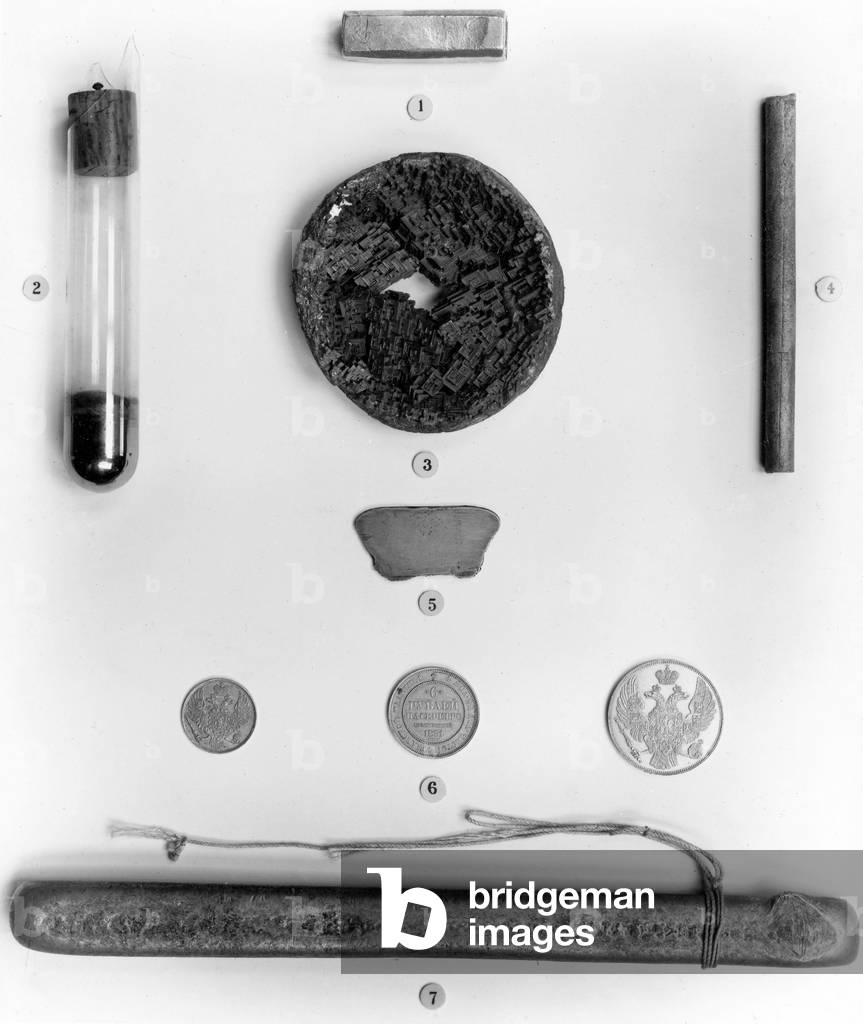
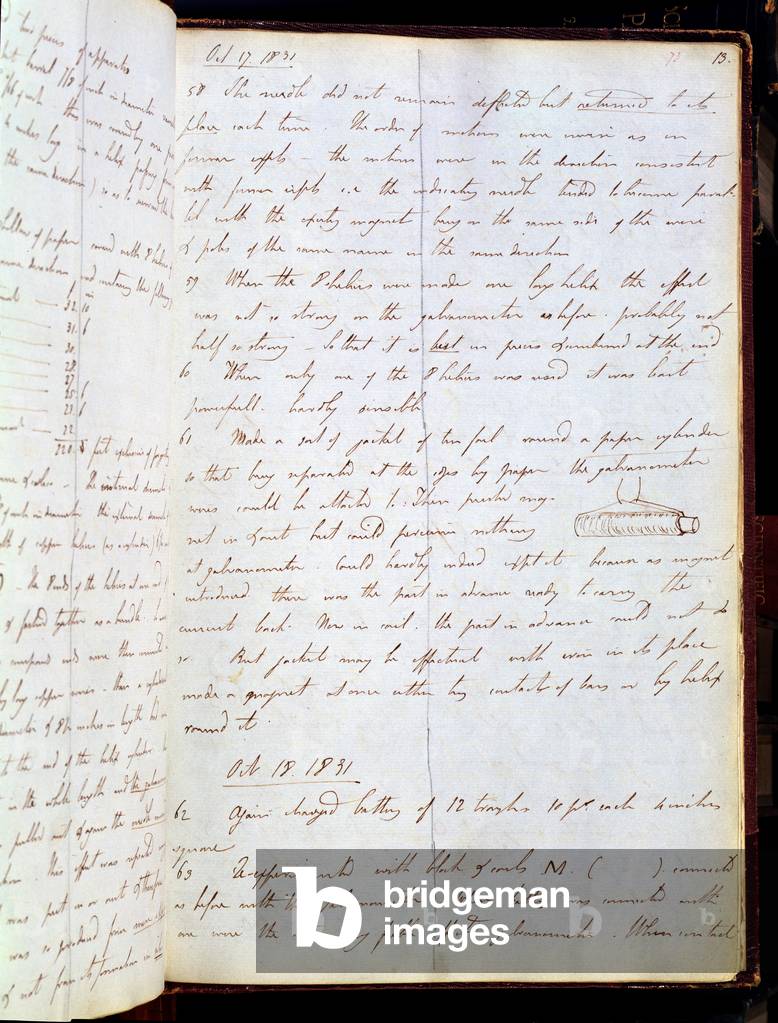
LRI9037072 FARADAY Michael, English physicist and chemist (1791-1867): Material associated with Faraday (Elecromagnetic Induction).
DC
LLM2780530 Michael Faraday. Illustration for The Boys' Book of Heroes (Birn, c 1930).
DC
UIG3525091 Michael Faraday (1791-1867).
DC
UIG3525092 Michael Faraday (1791-1867).
DC
LLM11731163 Michael Faraday. Illustration for Autographs and Birthdays of Eminent Persons compiled by Alice M Rushton (Sampson Low, 1895). Images have been scanned at high resolution and then digitally enhanced to permit repro at large size if required.By English School (19th Century)
DC
LIP1620550 The late Michael Faraday. Illustration for The Illustrated London News, 14 September 1867.English School (19th Century)
DC
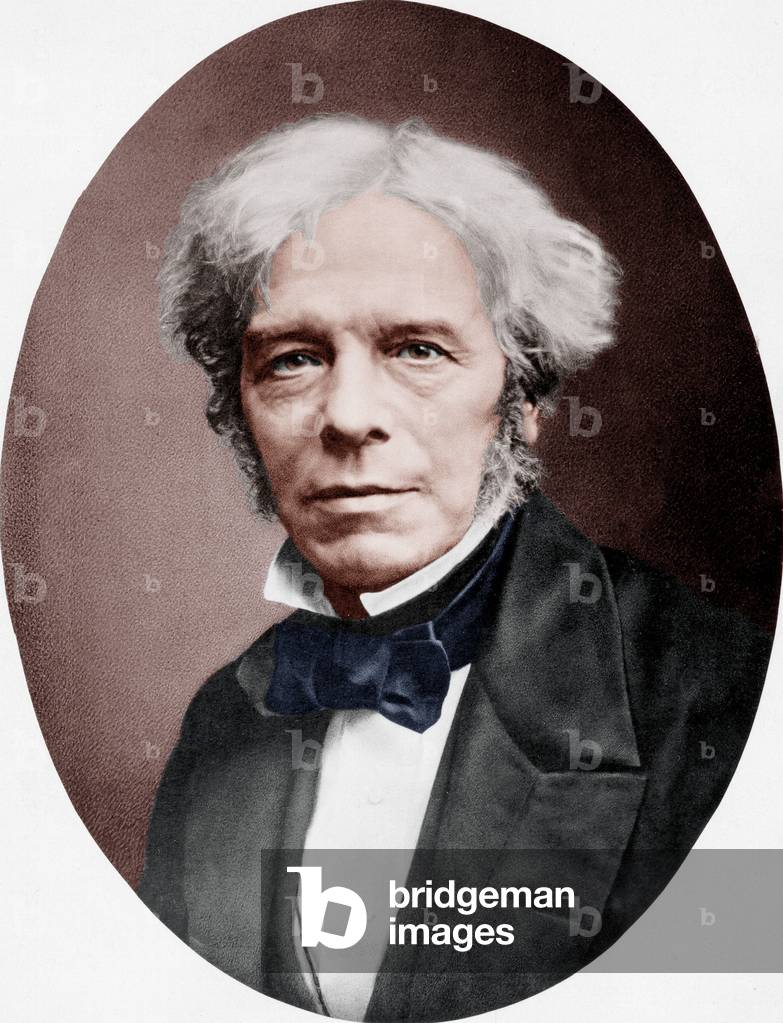
PVD1698602 Michael Faraday (1791-1867) english chemist and physicist (electromagnetism and electrochemistry), 1859 colourized document
DC
UIS5074700 Michael Faraday, English physicist., c 1850s. Michael Faraday (1791-1867) discovered the principles of the electric motor and dynamo. Faraday's great life work was the series 'Experimental Researches on Electricity' published over 40 years in 'Philosophical Transactions', in which he described his many discoveries including electromagnetic induction (1831), the laws of electrolysis (1833) and the rotation of polarised light by magnetism (1845). ©SSPL/Science Museum
DC
UIG864450 Michael Faraday (1791-1867) English chemist and physicist, left, and John Frederic Daniell (1790-1845) English chemist, physicist and meteorologist. Among his inventions were the Daniell cell, a wet storage battery, and a hygrometer. Engraving.
DC
UIG863343 Michael Faraday (1791-1867) English chemist and physicist. In 1813 became laboratory assistant to Humphry Davy at the Royal Institution, London. In 1833 he succeeded Davy as professor of chemistry at the RI. Engraving.
DC
UIG3525090 Michael Faraday (1791-1867).
DC
LIP1608583 Professor Faraday lecturing at the Royal Institution, before HRH the Prince of Wales and Prince Albert. Illustration for The Illustrated London News, 16 February 1856.Alexander Blaikley
DC
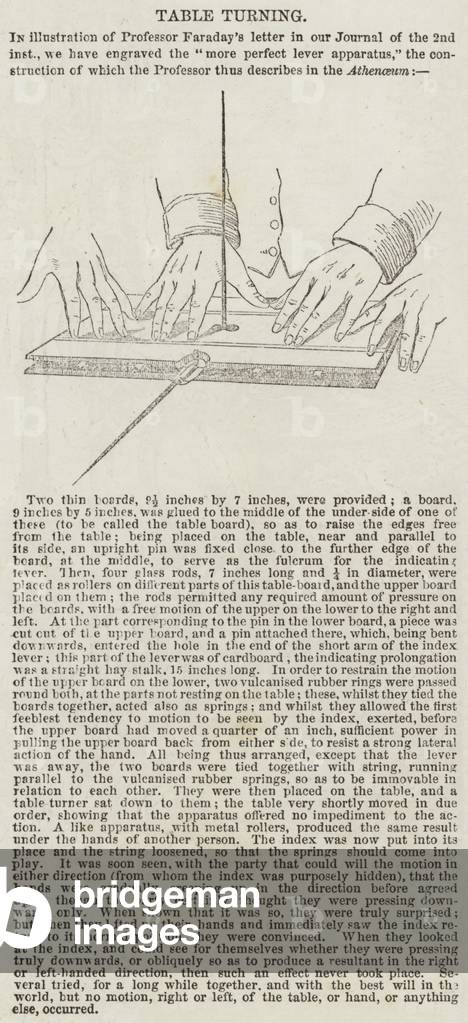
LIP1097140 Table Turning. Illustration for The Illustrated London News, 16 July 1853.
DC
KWE245925 British chemist and physicist; invented the earliest form of Bunsen Burner; experimented with electromagnetism and electrochemistry; Fellow of the Royal Society;
DC
LAL338056 The Errand-Boy Genius: Michael Faraday
DC
PVD1680803 Michael Faraday (1791-1867) english chemist and physicist (electromagnetism and electrochemistry), engraving, c. 1859
DC
LRI9037071 FARADAY Michael, English physicist and chemist (1791-1867).Engraving by John Cochran, fl. 1821-1865, published by Fisher, Son & Co., 1846. After Henry William Pickersgill, 1782-1875, 1830.
DC
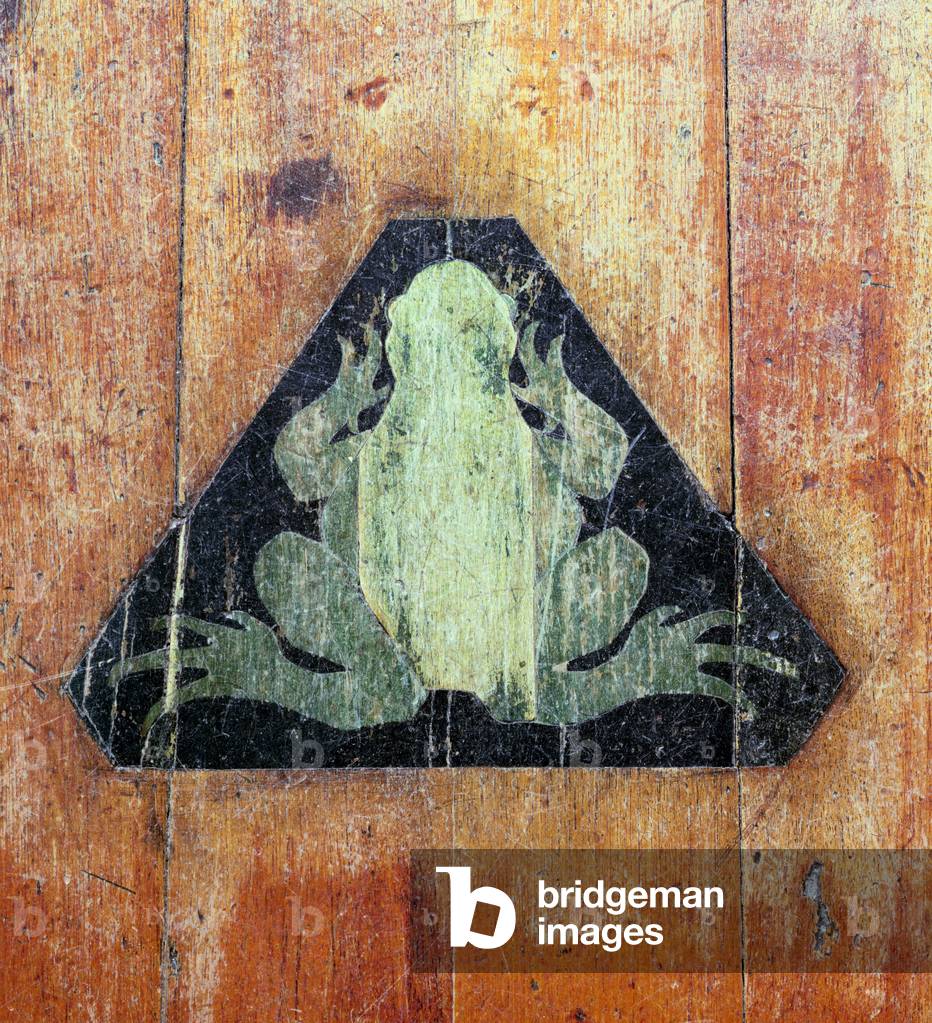
TRI249103 Froggery at the Royal Institution;
DC
PVD1685221 english physician and chemist Michael Faraday (1791-1867) working on electromagnetism
DC
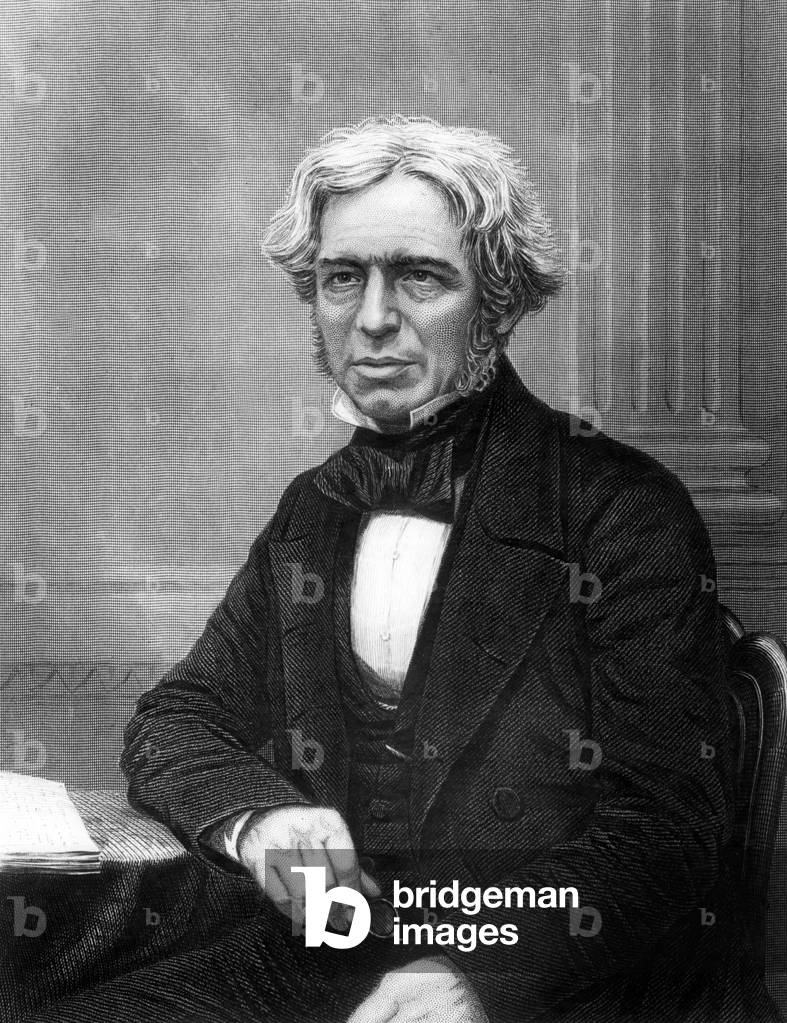
LIP1612669 Michael Faraday, DCL, FRS. Illustration for The Illustrated London News, 12 January 1861.English School (19th Century)
DC
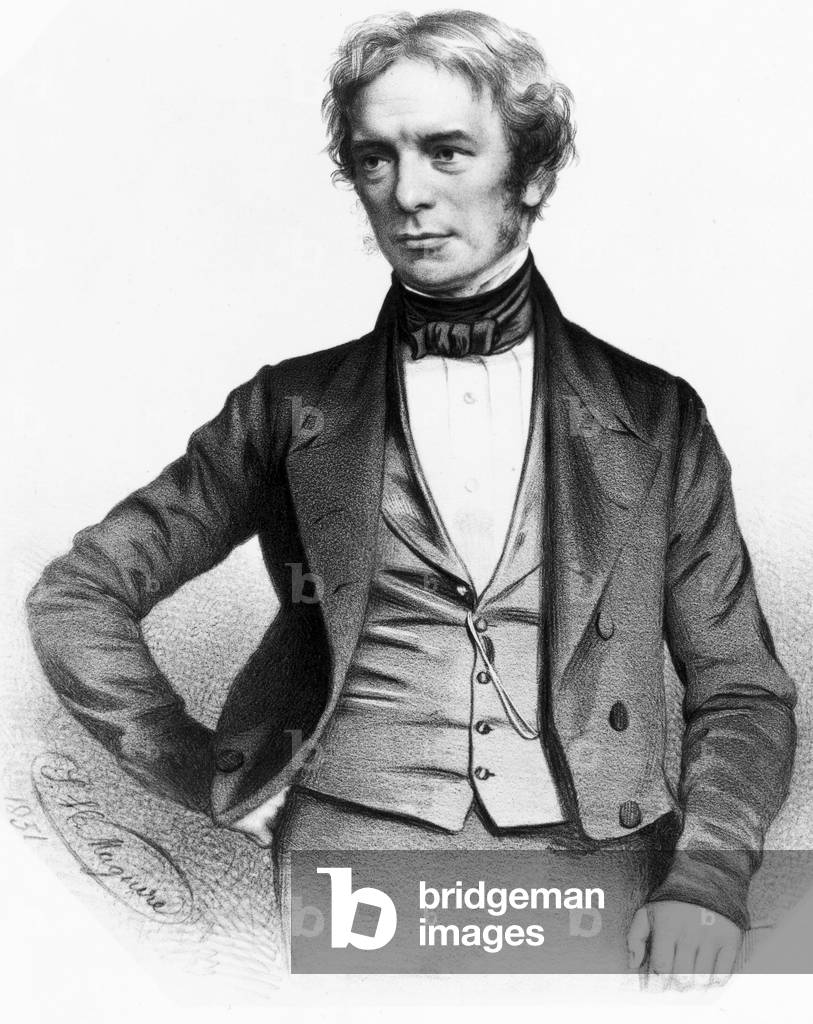
UIS5074696 Michael Faraday, English physicist, 1851. Lithograph by Maguire. Michael Faraday (1791-1867) discovered the principles of the electric motor and dynamo. Faraday's great life work was the series 'Experimental Researches on Electricity' published over 40 years in 'Philosophical Transactions', in which he described his many discoveries including electromagnetic induction (1831), the laws of electrolysis (1833) and the rotation of polarised light by magnetism (1845). ©SSPL/Science Museum
DC
UIS5074717 Michael Faraday, English physicist, 1856. Tinted lithograph by Leighton Bros after A Blaikley showing Faraday lecturing at the Royal Institution. The original was painted to commemorate the attendance of HRH Prince of Wales and HRH Prince Alfred at the Juvenile Course of Lectures, 1855-1856. Michael Faraday (1791-1867) discovered the principles of the electric motor and dynamo. Faraday's great life work was the series 'Experimental Researches on Electricity' published over 40 years in 'Philosophical Transactions', in which he described his many discoveries including electromagnetic induction (1831), the laws of electrolysis (1833) and the rotation of polarised light by magnetism (1845). ©SSPL/Science Museum
DC
TRI134925 statue in the Grand Entrance of the Royal Institution;
DC
LIP8676377 Michael Faraday (1791-1867), English scientist. Illustration from The Illustrated News of the World, 1858.
DC
UIS5074686 Michael Faraday, English physicist, 1850. Michael Faraday (1791-1867) discovered the principles of the electric motor and dynamo. Faraday's great life work was the series 'Experimental Researches on Electricity' published over 40 years in 'Philosophical Transactions', in which he described his many discoveries including electromagnetic induction (1831), the laws of electrolysis (1833) and the rotation of polarised light by magnetism (1845). ©SSPL/Science Museum
DC
TRI107634 by Photographer English
DC
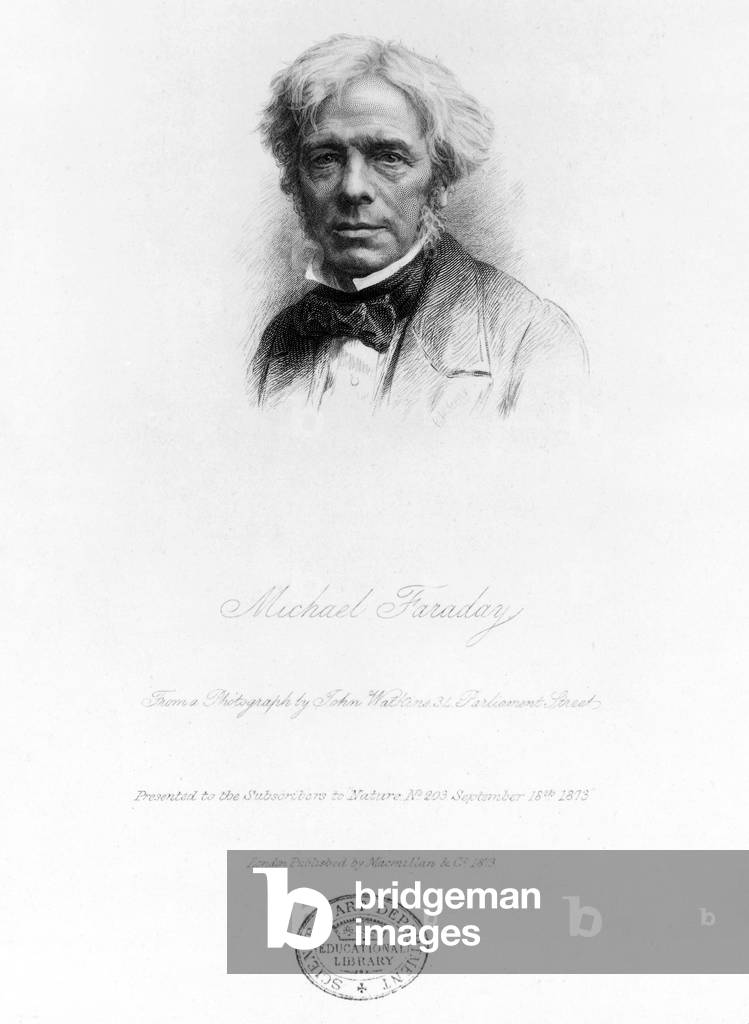
BL3261785 Michael Faraday, second edition.Author: Gladstone, John Hall / Macmillan & Co.: London, 1873Source/Shelfmark: 010821.e.65, frontispiece
DC
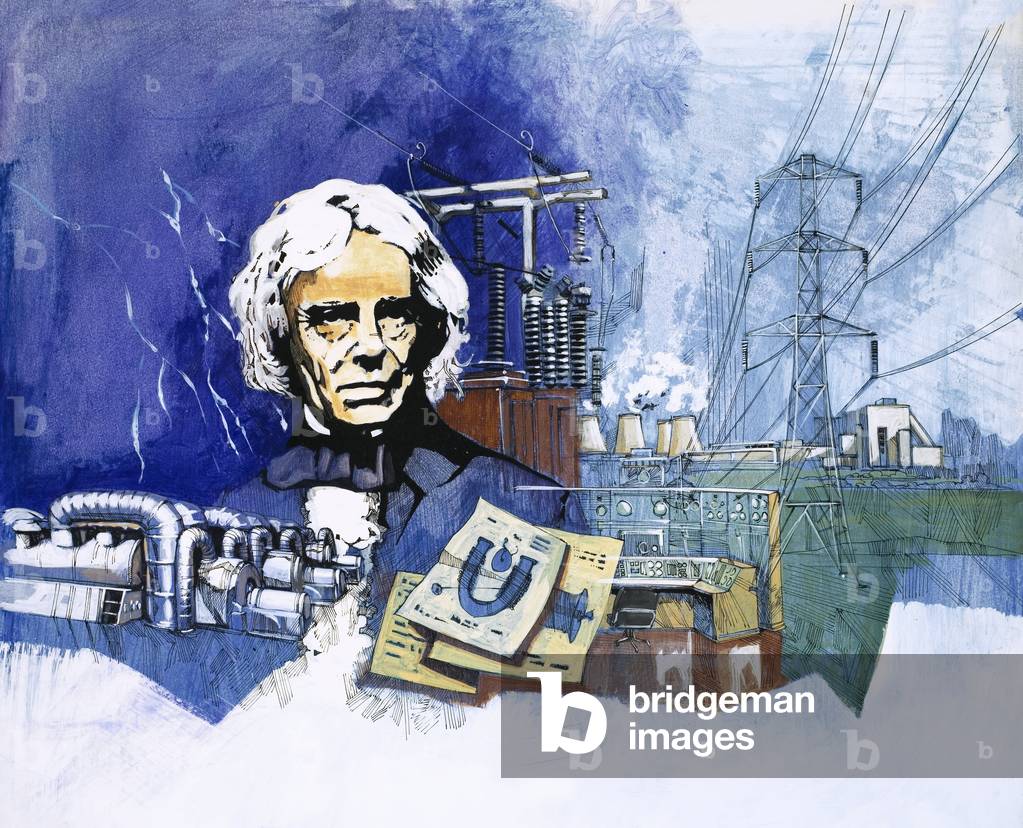
LAL305039 Michael Faraday with electrical power station in background. Original artwork for World of Knowledge annual 1982.
DC
TRI137594
DC
TRI137597
DC
LLM2817630 Michel Faraday. Illustration for Les Nouvelles Conquetes De La Science, L'Electricite, by Louis Figuier (Librarie Illustree, Marpon & Flammarion, c 1880).
DC
LLE981290 Michael Faraday (1791-1867), English physicist and chemist.
DC
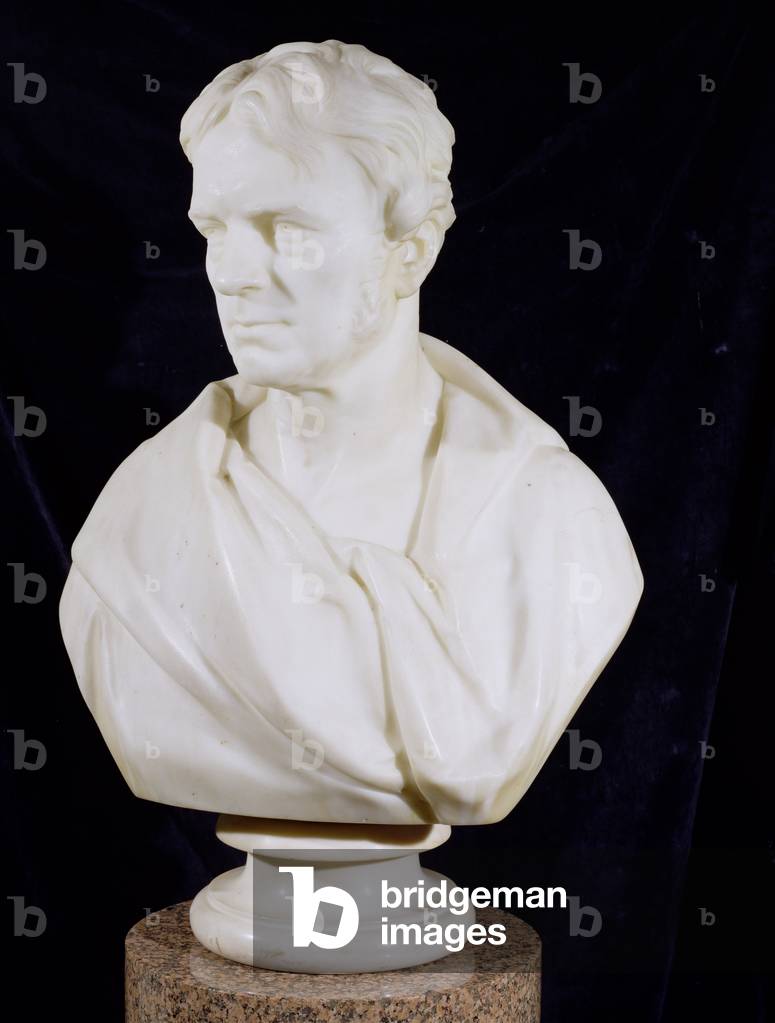
TRI114893 by Matthew Noble
DC
PVD1680678 Michael Faraday (1791-1867) english chemist and physicist (electromagnetism and electrochemistry), 1859
DC
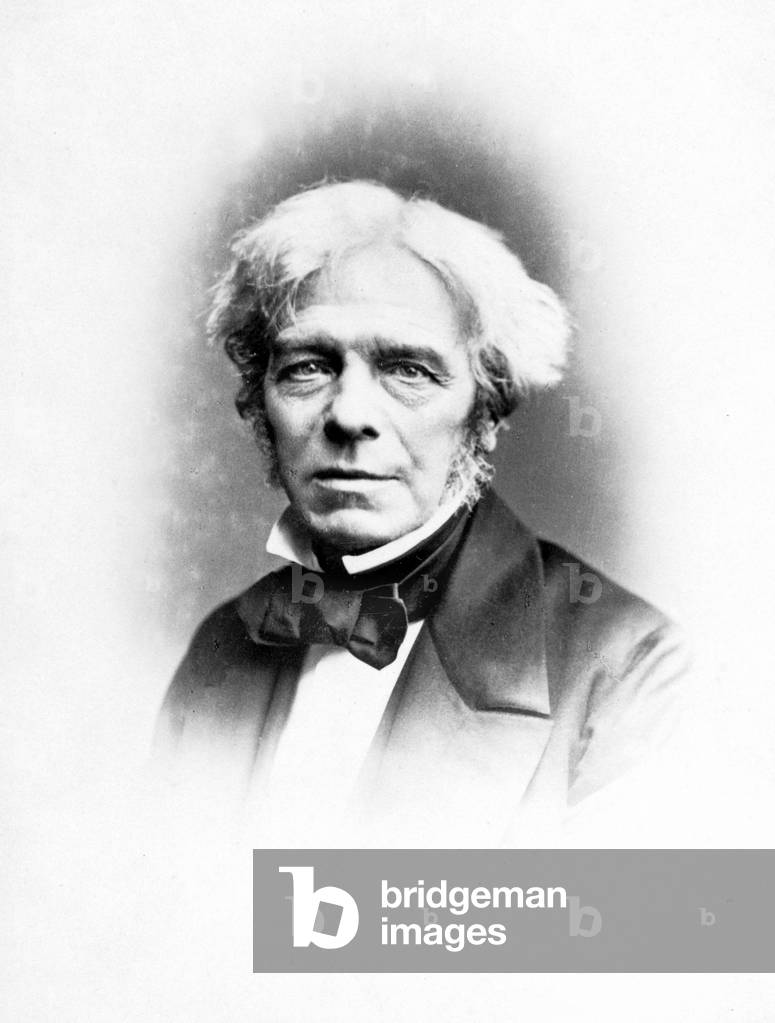
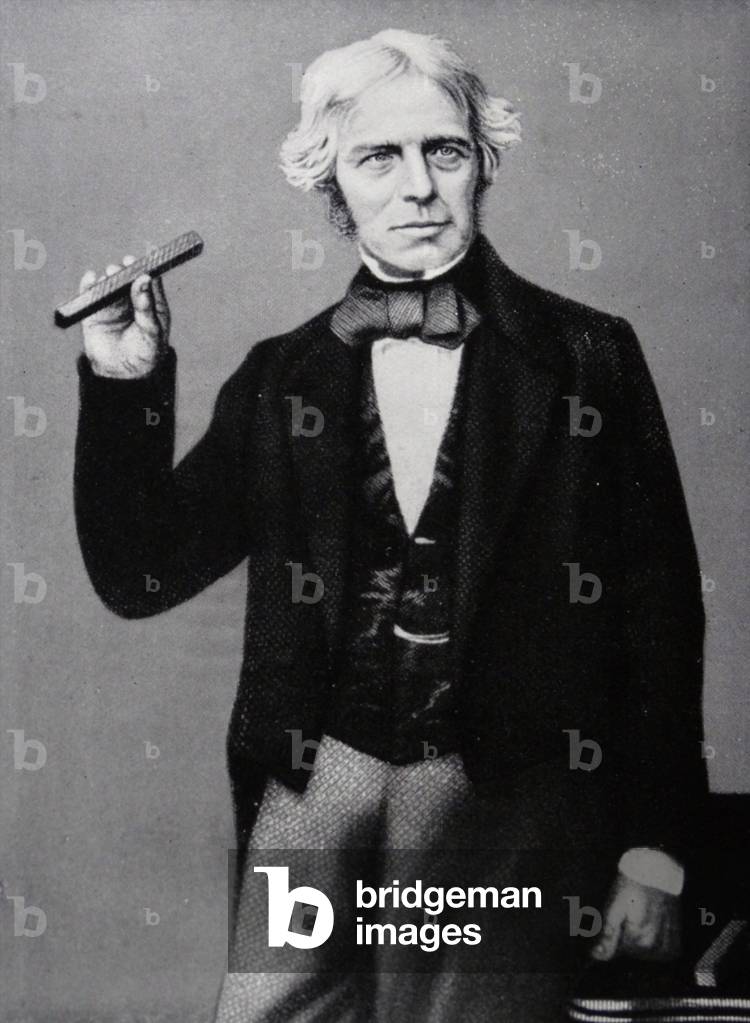
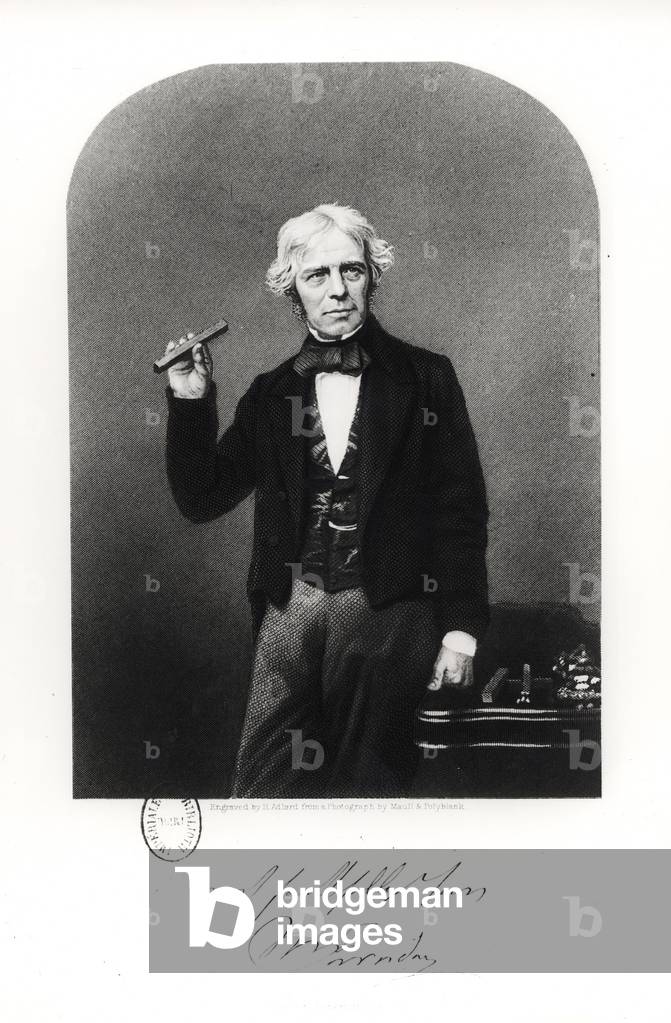
BL3265755 Photographic Portraits of Living Celebrities execuAuthor: Walford, E / Illustrator: Maull and PolyblankLondon, 1856-1859Language: EnglishSource/Shelfmark: 10804.f.6, plate XVIIIMichael Faraday (1791-1867). Portrait. English chemist and physicist, creator of classical field theory. The object in his hand is a scientific instrument.Image taken from Photographic Portraits of Living Celebrities executed by Maull and Polyblank; with biographical notices by E. W. [and others]. Vol. 1.Originally published/produced in London, 1856-1859.
DC
TRI168529 one of the greatest scientists of the 19th century; discovered a number of new organic compounds; major contributions in the field of electricity and magnetism;
DC
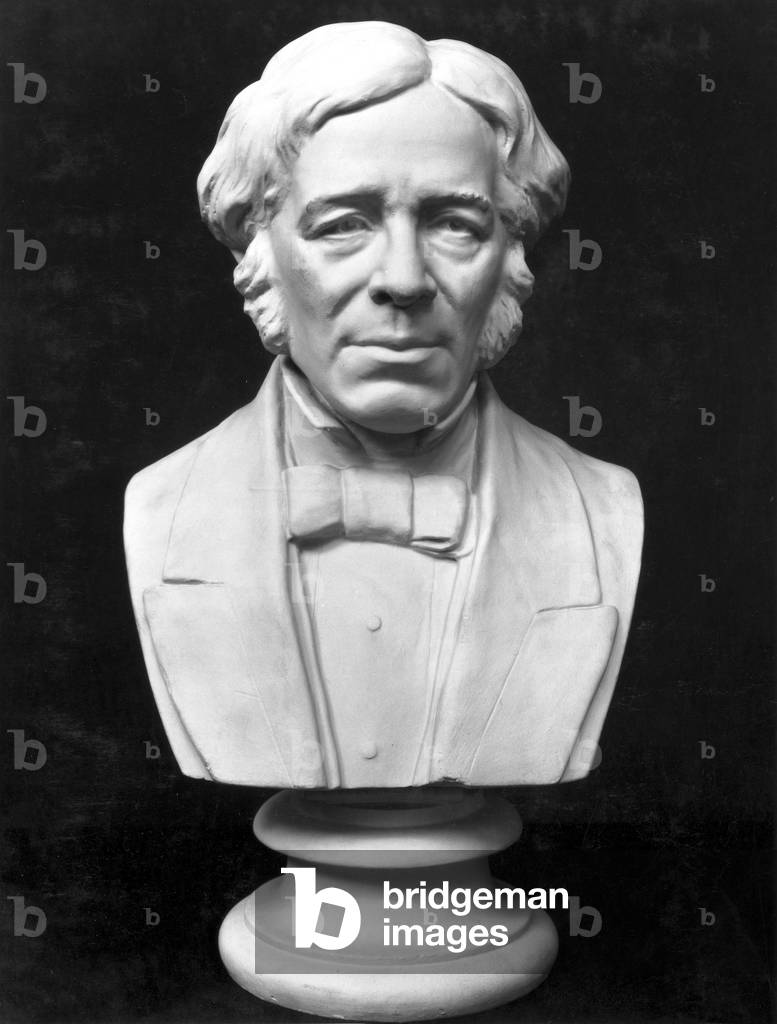
UIS5062443 Michael Faraday, English physicist, c 1850s. Plaster bust of Michael Faraday (1791-1867) by A L Vago. Faraday discovered the principles of the electric motor and dynamo. Faraday's great life work was the series 'Experimental Researches on Electricity' published over 40 years in 'Philosophical Transactions', in which he described his many discoveries including electromagnetic induction (1831), the laws of electrolysis (1833) and the rotation of polarised light by magnetism (1845). ©SSPL/Science Museum
DC
UIS5074987 Michael Faraday, English physicist, c 1830. Michael Faraday (1791-1867) discovered the principles of the electric motor and dynamo. Faraday's great life work was the series 'Experimental Researches on Electricity' published over 40 years in 'Philosophical Transactions', in which he described his many discoveries including electromagnetic induction (1831), the laws of electrolysis (1833) and the rotation of polarised light by magnetism (1845). ©SSPL/Science Museum
DC
TRI98483 by Thomas Herbert Maguire
DC
XEE5029529 Portrait of Michael Faraday (1791-1867) British Physicist and Chemist
DC
XEE5029531 Portrait of Michael Faraday (1791-1867) British Physicist and Chemist
DC
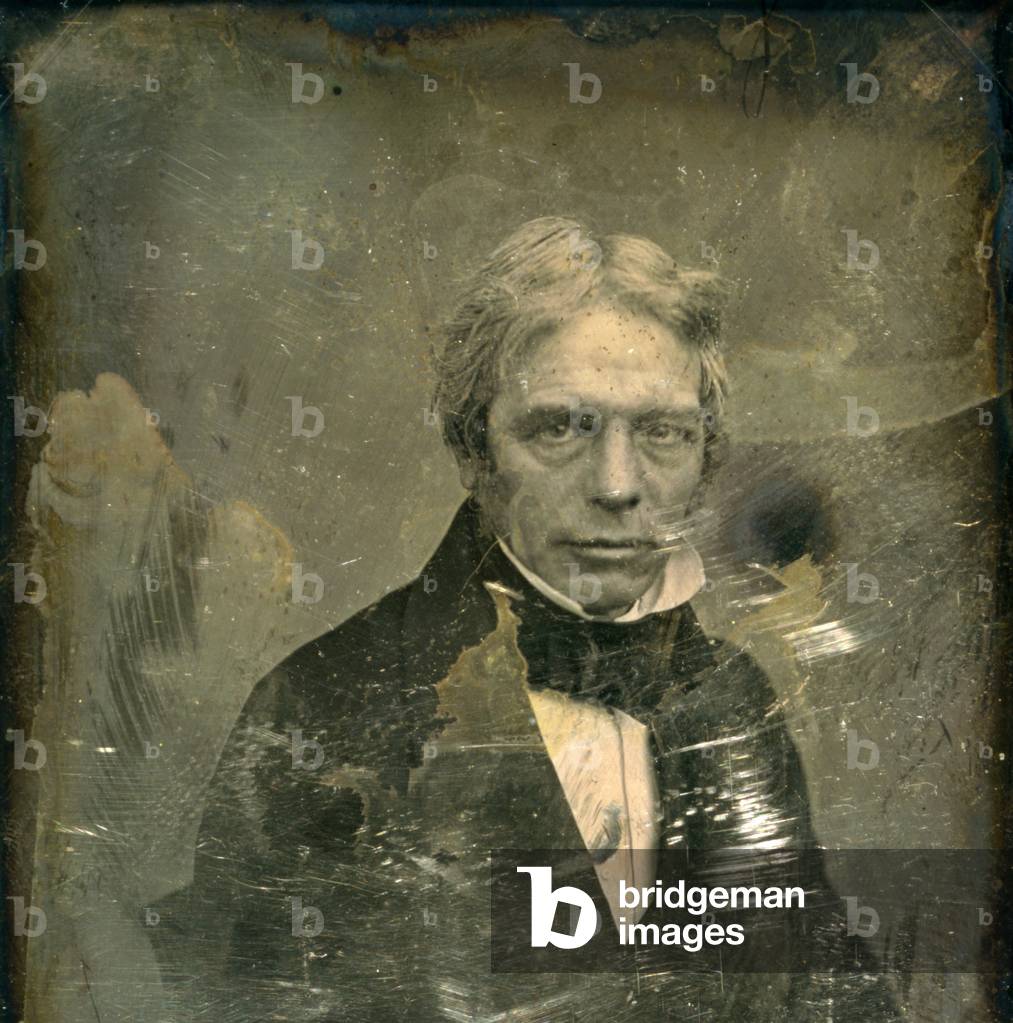
UIS5074682 Michael Faraday, English physicist, c 1840. Stereosocpic daguerreotype. Michael Faraday (1791-1867) discovered the principles of the electric motor and dynamo. Faraday's great life work was the series 'Experimental Researches on Electricity' published over 40 years in 'Philosophical Transactions', in which he described his many discoveries including electromagnetic induction (1831), the laws of electrolysis (1833) and the rotation of polarised light by magnetism (1845). ©SSPL/Science Museum
DC
UIS5074695 Michael Faraday, English physicist, c 1855. Michael Faraday (1791-1867) discovered the principles of the electric motor and dynamo. Faraday's great life work was the series 'Experimental Researches on Electricity' published over 40 years in 'Philosophical Transactions', in which he described his many discoveries including electromagnetic induction (1831), the laws of electrolysis (1833) and the rotation of polarised light by magnetism (1845). ©SSPL/Science Museum
DC
TRI168509
DC
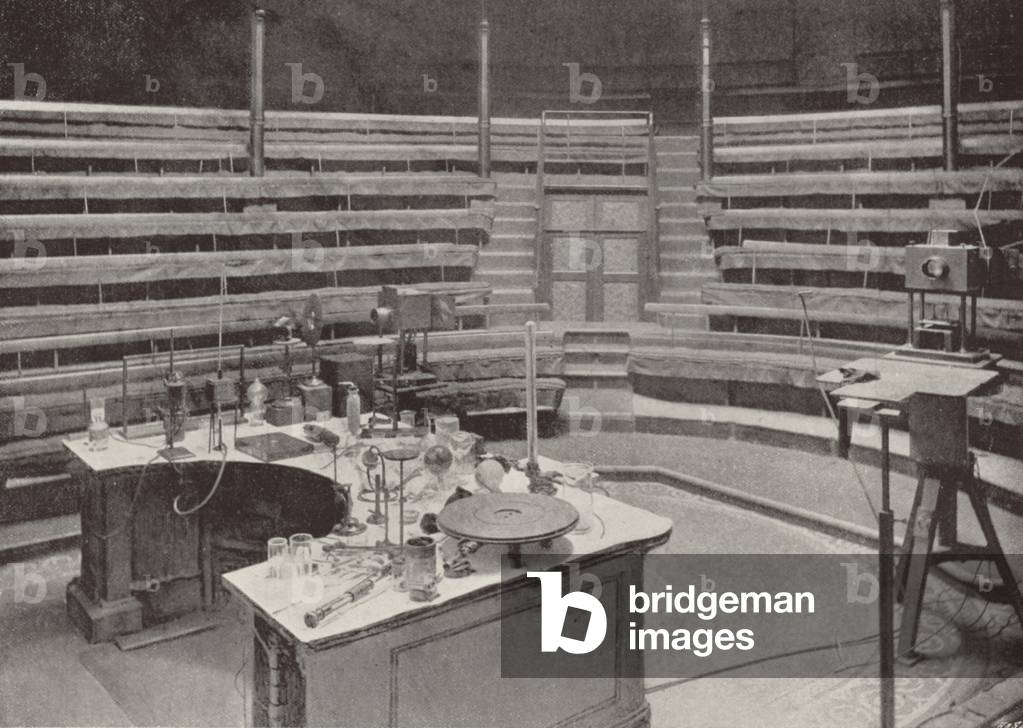
LLM3092237 Faraday's Table in the Theatre of the Royal Institution. Illustration for The Queen's London (Cassell, 1896).
DC
UIS5064938 Relics associated with Michael Faraday, 1810-1867. Michael Faraday (1791-1867) discovered the principles of the electric motor and dynamo. Faraday's great life work was the series 'Experimental Researches on Electricity' published over 40 years in 'Philosophical Transactions', in which he described his many discoveries including electromagnetic induction (1831), the laws of electrolysis (1833) and the rotation of polarised light by magnetism (1845). ©SSPL/Science Museum
DC
UIS5074705 Michael Faraday, English physicist, c 1860. Michael Faraday (1791-1867) discovered the principles of the electric motor and dynamo. Faraday's great life work was the series 'Experimental Researches on Electricity' published over 40 years in 'Philosophical Transactions', in which he described his many discoveries including electromagnetic induction (1831), the laws of electrolysis (1833) and the rotation of polarised light by magnetism (1845). ©SSPL/Science Museum
DC
TRI107635 by Photographer English
DC
XIR224903 Print by Henry Adlard
RF
LRI9202470 English physicist and chemist
DC
HIM5294234 HIP2651030Michael Faraday, British chemist and physicist, c1845. Faraday (1791-1867) was one of the greatest scientists of the 19th century. His most significant contribution was the ""Experimental Researches on Electricity"" which was published over 40 years, where he described his discoveries, including the laws of electromagnetic induction (1831) and the laws of electrolysis (1833). He also discovered the principles of the electric motor and dynamo.
DC
TRI168532
DC
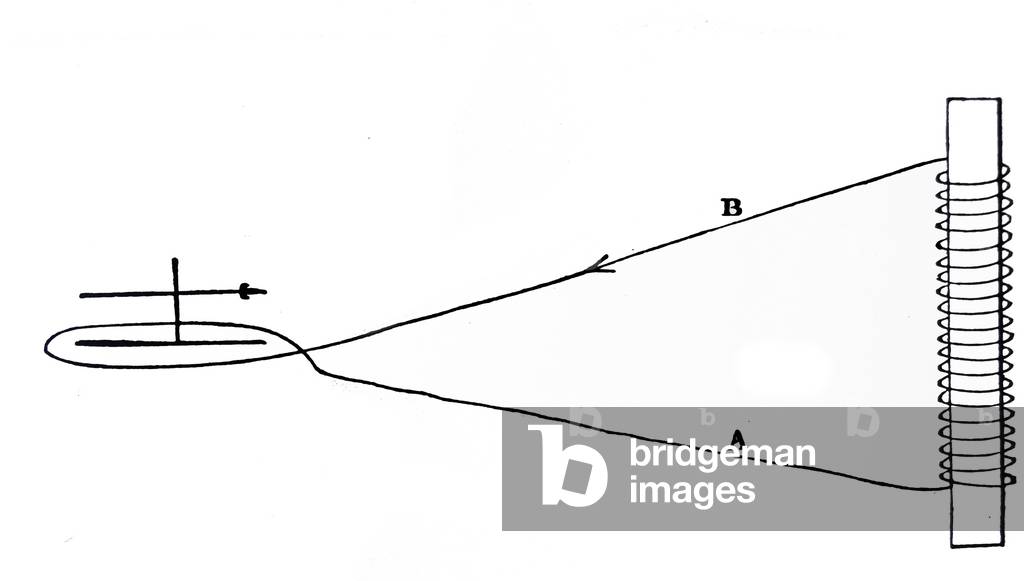
UIG3525094 FARADAY'S experiment with a solenoid. The movement of the bar magnet (right) in and out of the coil of wire causes an electric current to flow in the wires A and B: this is detected by the magnetic needle (left).
DC
LLM665427 Michael Faraday when apprenticed to a bookseller. Illustration for Cassell's Romance of Famous Lives edited by Harold Wheeler (c 1930).
DC
PVD1680119 Michael Faraday (1791-1867) english chemist and physicist (electromagnetism and electrochemistry), 1859
DC
UIS5062573 Michael Faraday, English physicist, c 1860. Michael Faraday (1791-1867) discovered the principles of the electric motor and dynamo. Faraday's great life work was the series 'Experimental Researches on Electricity' published over 40 years in 'Philosophical Transactions', in which he described his many discoveries including electromagnetic induction (1831), the laws of electrolysis (1833) and the rotation of polarised light by magnetism (1845). ©SSPL/Science Museum
DC
UIS5074684 Michael Faraday , English physicist, c 1845. Michael Faraday (1791-1867) discovered the principles of the electric motor and dynamo. Faraday's great life work was the series 'Experimental Researches on Electricity' published over 40 years in 'Philosophical Transactions', in which he described his many discoveries including electromagnetic induction (1831), the laws of electrolysis (1833) and the rotation of polarised light by magnetism (1845). ©SSPL/Science Museum
DC
TRI168520
DC
TRI137595
DC
STC5055739 Michael Faraday (1791-1867), English chemist and physicist; Inside his laboratory at the Royal Institution building, Albemarle Street; London;
DC
TRI142392
DC
SED876855 Michael Faraday (1791-1867) English scientist.
DC
STC343836 Michael Faraday (1791-1867), English chemist and physicist; Apprenticed to a local bookbinder and bookseller George Riebau, during which time he read widely and developed an interest in electricity;
DC
TRI99380 by George Harcourt
DC
TRI107633 by Photographer English
DC
TRI159197
DC
TRI168518
DC
TRI145185
DC
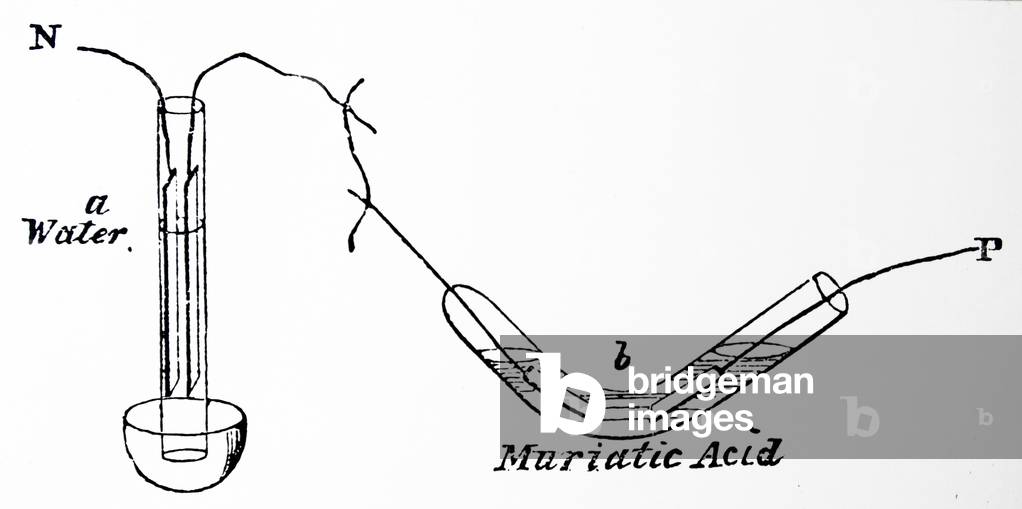
UIG3525095 Two of Faraday's experiments in eletrolysis. Left, the electrolysis of water and, right, of muriatic acid* The-! se experiments laid the foundations of modern electrolytic analysis.
DC
XRH1732440 Michael Faraday (1791-1867) english chemist and physicist, engraving
DC
TRI875453 Michael Faraday, FRS (22 September 1791 – 25 August 1867) was an English scientist who contributed to the fields of electromagnetism and electrochemistry. His main discoveries include those of electromagnetic induction, diamagnetism and electrolysis.A colloid is a substance microscopically dispersed throughout another substance.
DC
LLE981362 Michael Faraday (1791-1867), English physicist and chemist. Illustration for The Outline of Science by J Arthur Thomson (Waverley, c 1922).
DC

Total de Resultados: 313

Página 1 de 4