













































Busque também em nossas outras coleções:

Tipo de arquivo:

Tipo do arquivo:

Orientação:

Total de Resultados: 1.366

Página 1 de 14

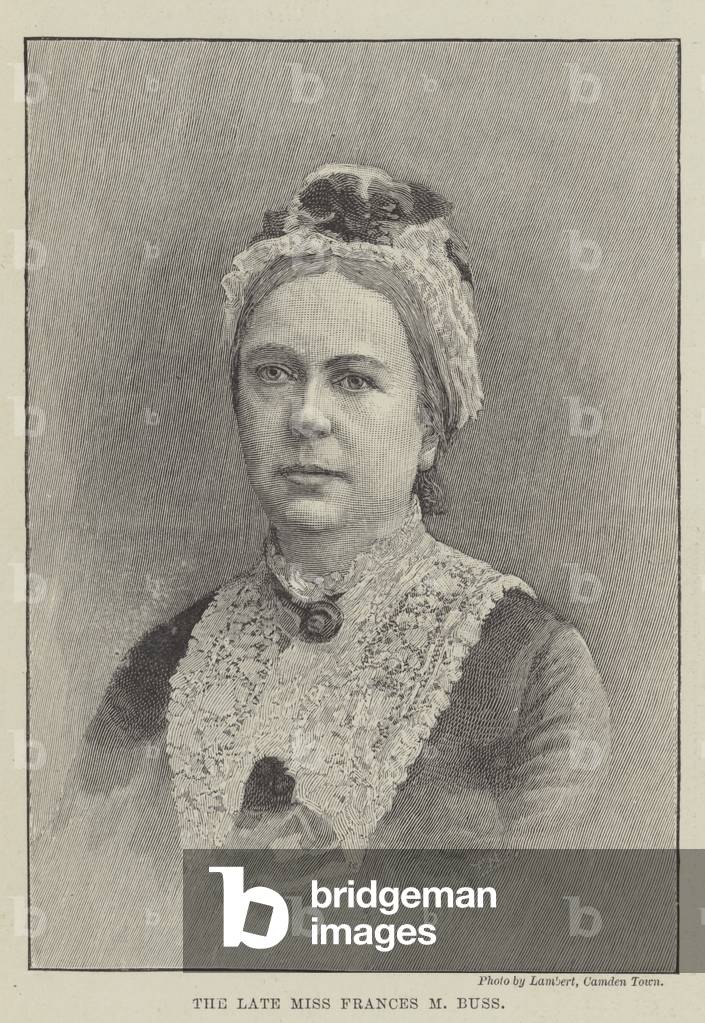
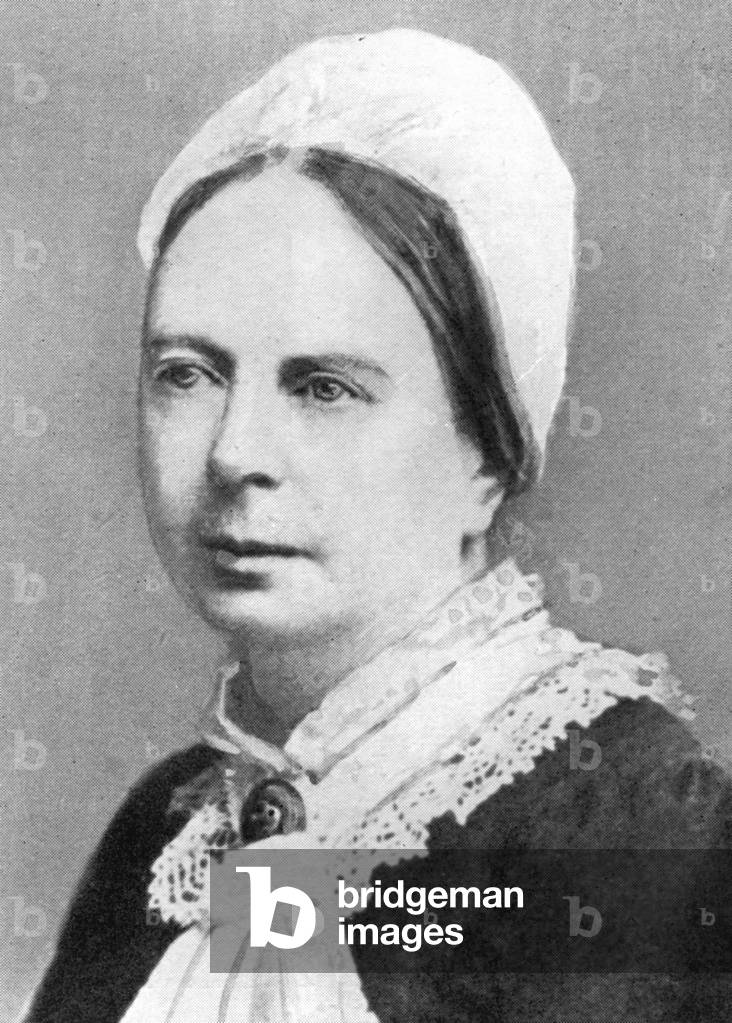
LIP1627770 The late Miss Frances M Buss. Illustration for The Illustrated London News, 5 January 1895.English School (19th Century)
DC
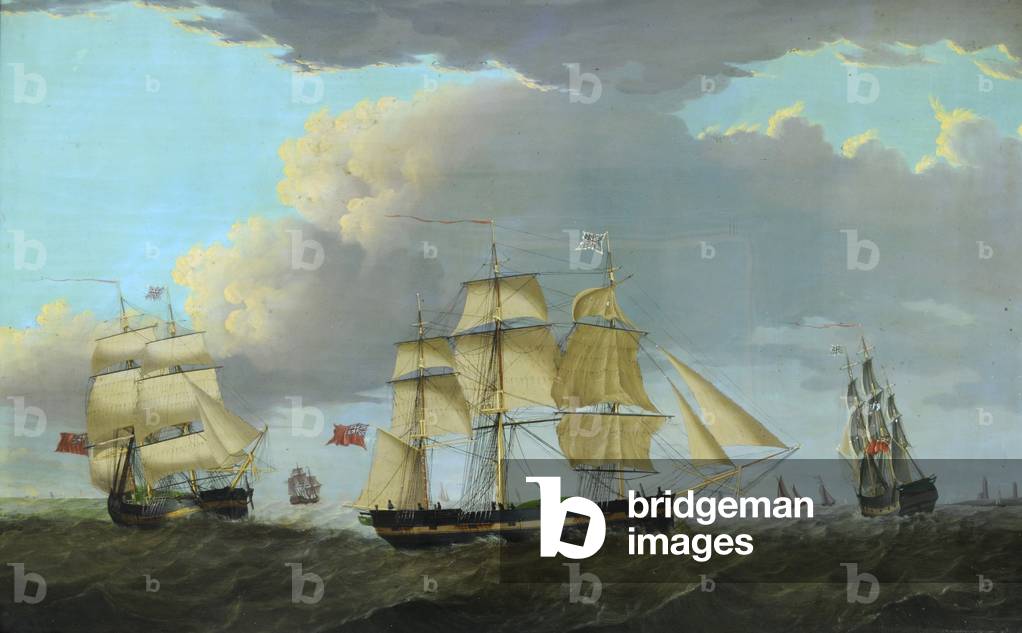
ERM3033898 painting of the ship 'MARY FRANCES' of Hull in three positions. Label on back 'Capt. Couldrey, master. Arrived from Davis Straits 1832 with 29 fish'
DC
LIP1057319 Mrs Scott Siddons. Illustration for The Graphic, 1871.
DC
LIP1050852 The Late Earl of Macclesfield. Illustration for The Graphic, 1 August 1896.
DC
WLL223101 later wife of Colonel Lionel Hervey;
DC
HIM5463505
DC
JLJ4572112 Portrait of Madame Walter Crane (? -1915) nee Mary Frances Painting by Walter Crane (1845-1915) 1882 Sun. 0,78x0,56 m Paris, musee d'Orsay
DC
SLS249147 resembles a Ford Model T; Dreier was the head of the legislative league of a New York women's reform movement; Kellor (1873-1952) worked with employment agencies; both worked for worker's rights and immigration issues; Dreier (1875-1963);
DC
HRP2966524 Prince Frances, Duke of Teck (1837-1900) and Princess Mary Adelaide, Duchess of Teck (1833-97). Albumen carte-de-visite. The Duke and Duchess of Teck were the parents of Queen Mary (consort of King George V). Hills & Saunders.
DC
HRP2966523 Prince Frances, Duke of Teck (1837-1900) and Princess Mary Adelaide, Duchess of Teck (1833-97). Albumen carte-de-visite. The Duke and Duchess of Teck were the parents of Queen Mary (consort of King George V). Hills & Saunders.
DC
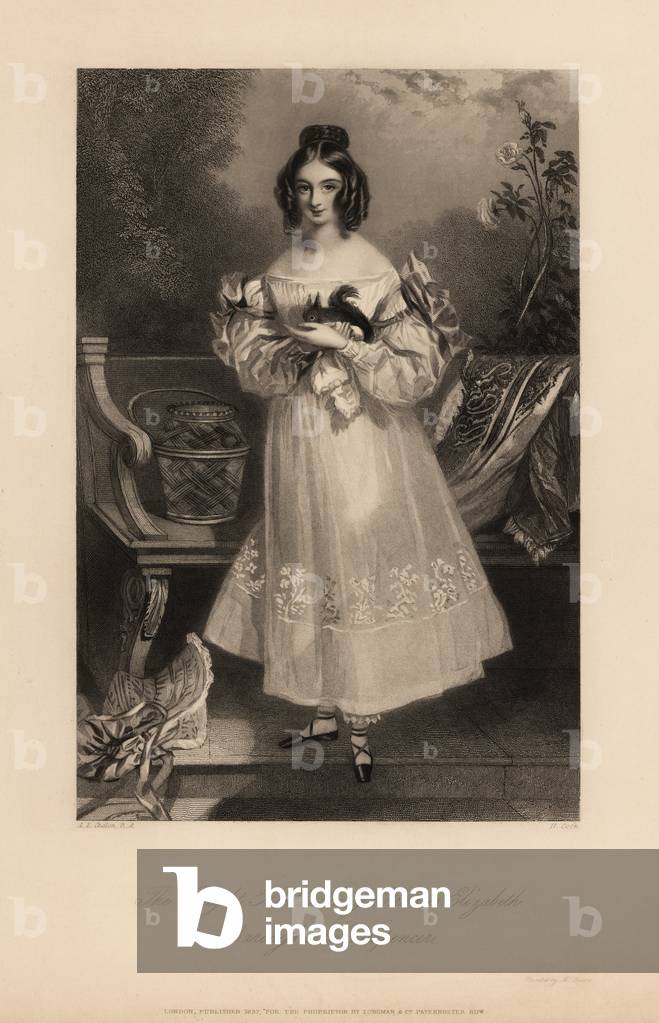
FLO5912909 Mary Frances Elizabeth Stapleton, 17th Baroness le Despencer.
DC
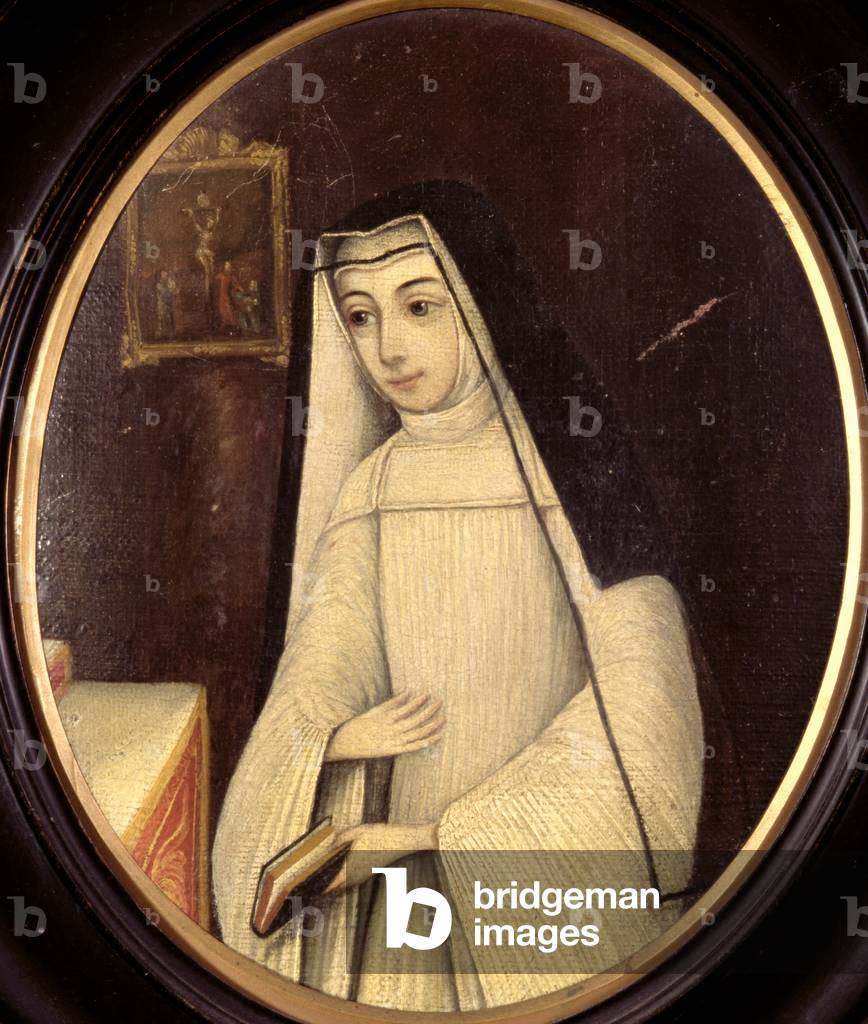
KDC231043 portrait painted in Brugge at the time of her profession of vows in 1727; English Catholics sent their daughters and sons to be educated in the Low Countries or France during the penal period and unmarried daughters frequently entered convents; holding a divine office book; daughter of Richard Huddleston of Sawston (1683-1717) and Mary Ayloffe; convent still exists today; Couvent des Anglais; portrait painted in Brugge at the time of her profession of vows in 1725; English Catholics sent their daughters and sons to be educated in the Low Countries or France during the penal period and unmarried daughters frequently entered convents; daughter of Richard Huddleston (1683-1717) of Sawston and Mary Ayloffe; convent still exists today; Couvent des Anglais;
DC
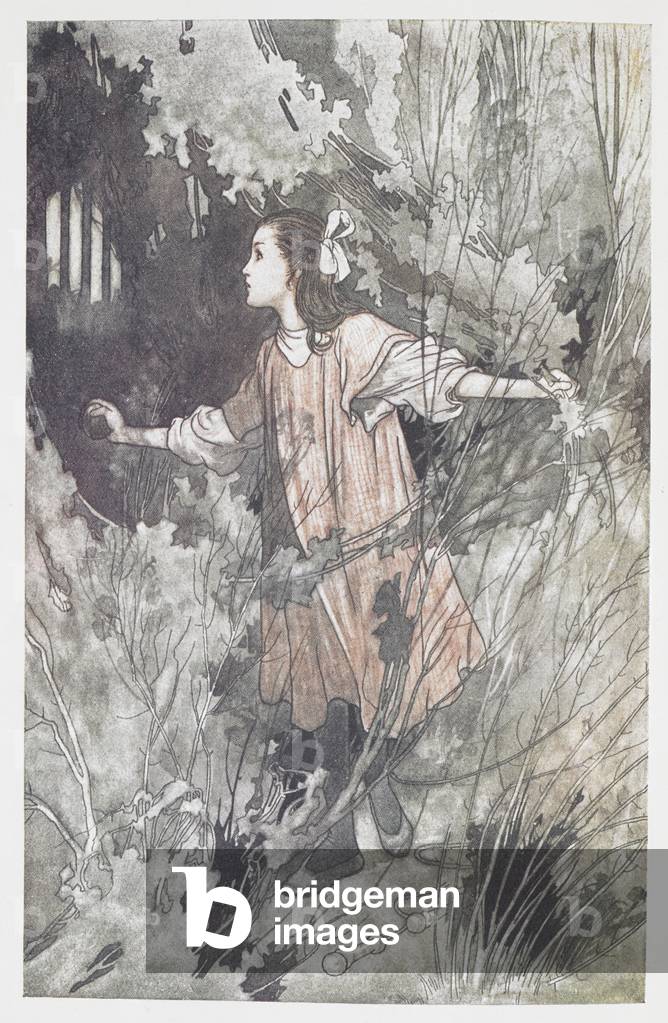
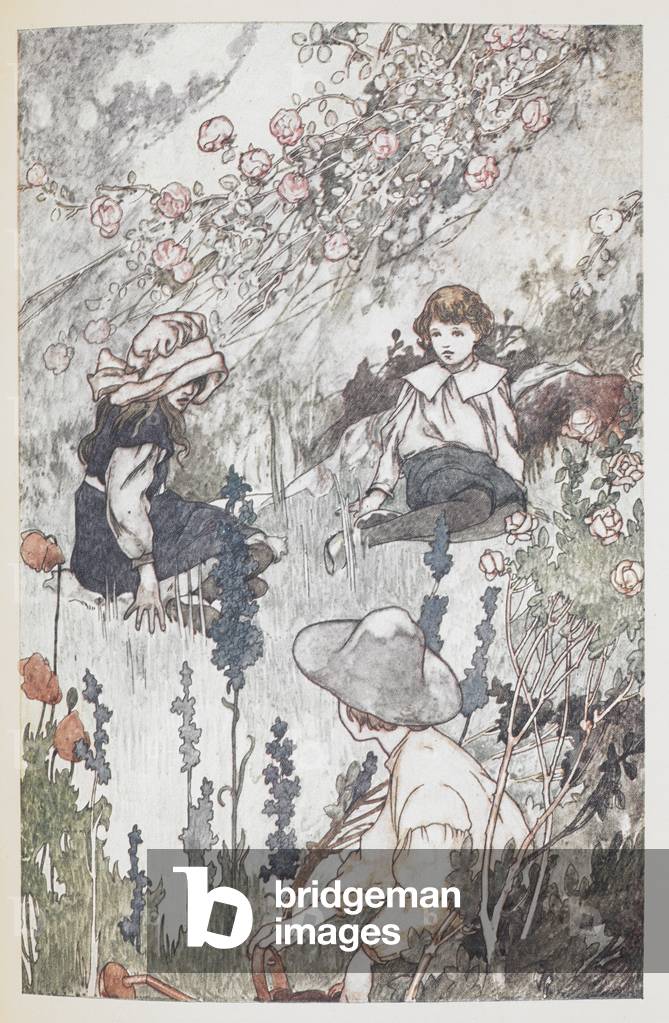
BL3305247 The secret garden / by Frances Hodgson Burnett; illustrated by Charles Robinson.Author: Burnett, Frances Hodgson / Illustrator: Robinson, CharlesLondon: William Heinemann, 1911Source/Shelfmark: RB.23.a.35505 frontispiece
DC
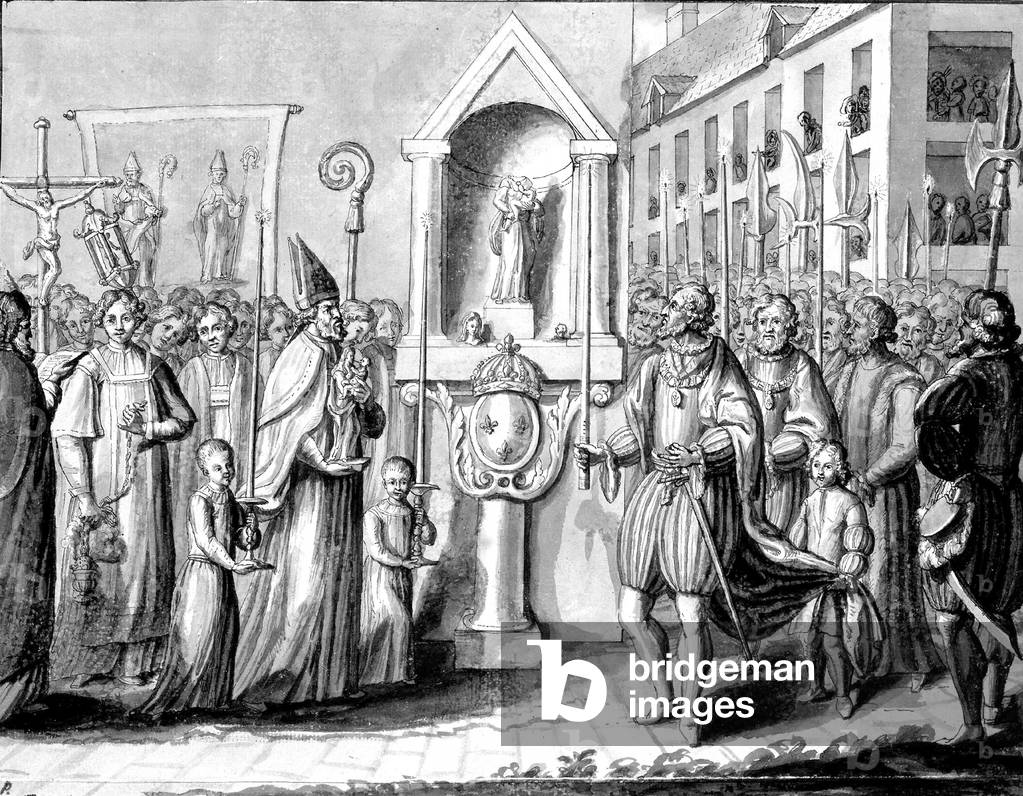
TAD1758631 French king Francois 1er in front of the statue of the Virgin Mary which had been beheaded in Paris by protestants, drawing, 19thcentury
DC
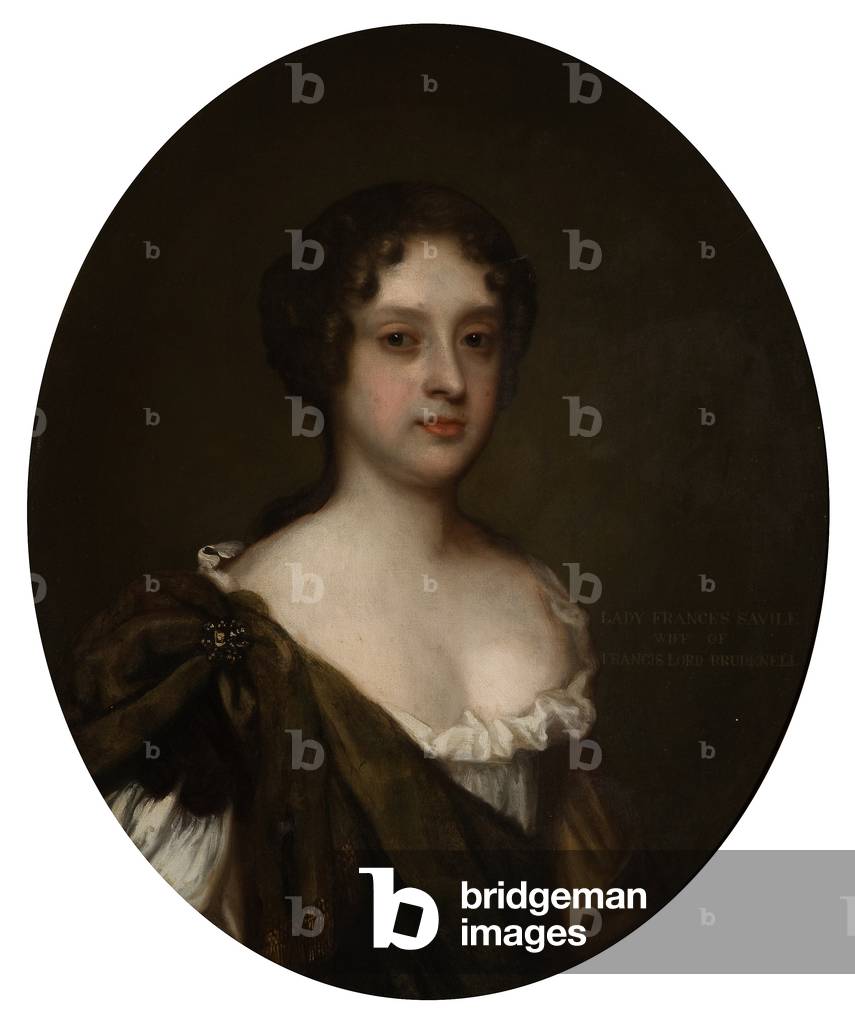
BLH7207606 Portrait of Frances Savile, Lady Brudenell (d.1695), half-length, in a green and white décolleté dress. In a carved and gilded frame, type H.
DC
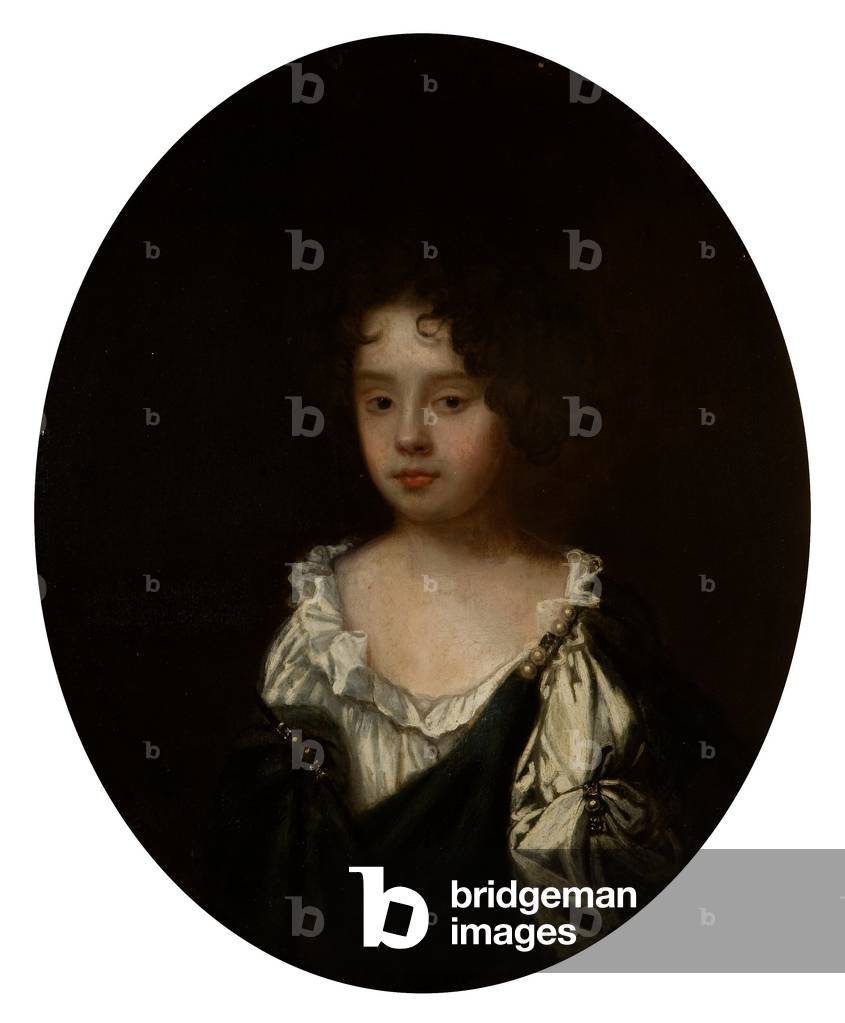
BLH7207487 Portrait of Frances Brudenell, Countess of Newburgh, (d.1735), as a girl, half-length, in a blue and white dress. In a carved and gilded frame, type A.
DC
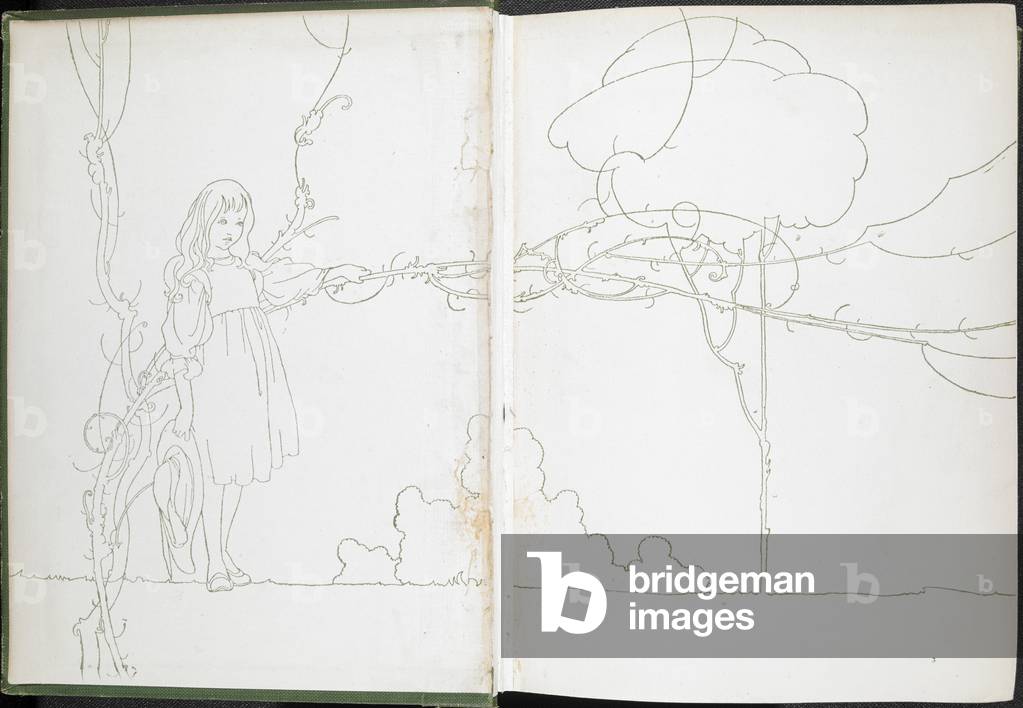
BL3305249 The secret garden / by Frances Hodgson Burnett; illustrated by Charles Robinson.Author: Burnett, Frances Hodgson / Illustrator: Robinson, CharlesLondon: William Heinemann, 1911Source/Shelfmark: RB.23.a.35505 front end paper
DC
GNG6948986 Stained glass window. Saint Jane Frances de Chantal is a Roman Catholic saint, who was beatified in 1751. She founded the religious Order of the Visitation of Holy Mary. Thorens. France.
DC
BL3305248 The secret garden / by Frances Hodgson Burnett; illustrated by Charles Robinson.Author: Burnett, Frances Hodgson / Illustrator: Robinson, CharlesLondon: William Heinemann, 1911Source/Shelfmark: RB.23.a.35505 plate after page 240
DC
XLF3784302 Autograph: Letter from t Queen Mary II to one of the ladies of her bedchamber - Frances Lumley - announcing the news of the battle of Steenkerque and safety of the King. 29 July 1692. Source: British Museum. Queen of England 30 April 1662 – 28 December 1694.Facsimiles of royal, historical, literary and other autographs in the department of manuscripts, British Museum. Edited by George F Warner 1899, Longmans & Co
DC
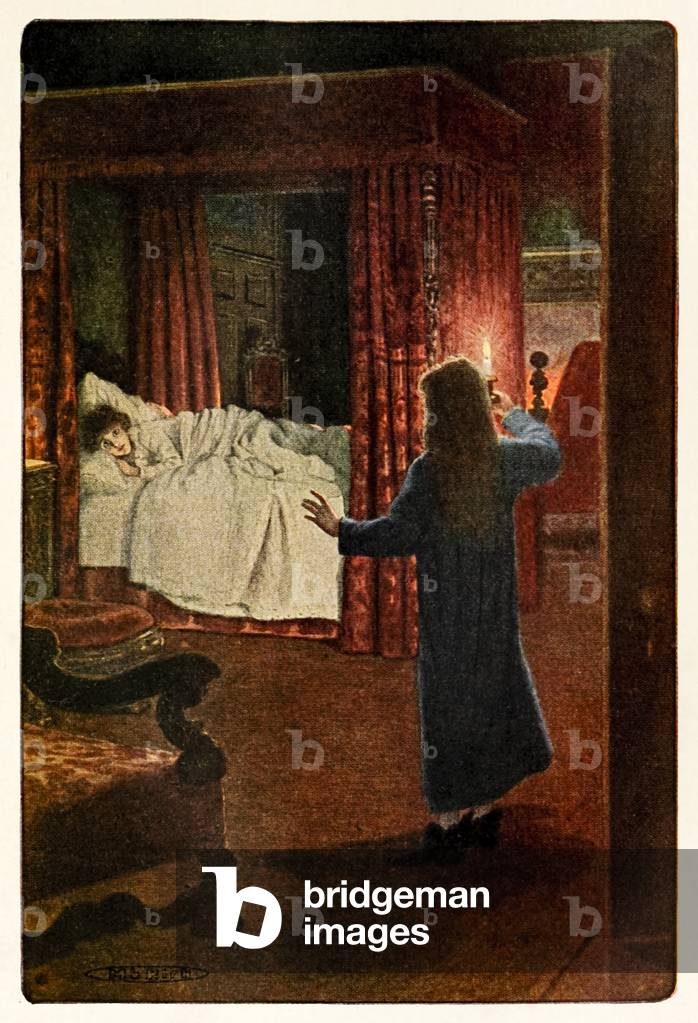
AFF7214628 Illustration shows Mary Lennox discovering the sick Colin Craven. Photograph of first American edition published in 1911 with illustrations by Maria Louise Kirk (1860-1938). Photograph of original illustration from a 1911 first edition published by Fredrick A. Stokes Company, New York, USA.
DC
UIG807976
DC
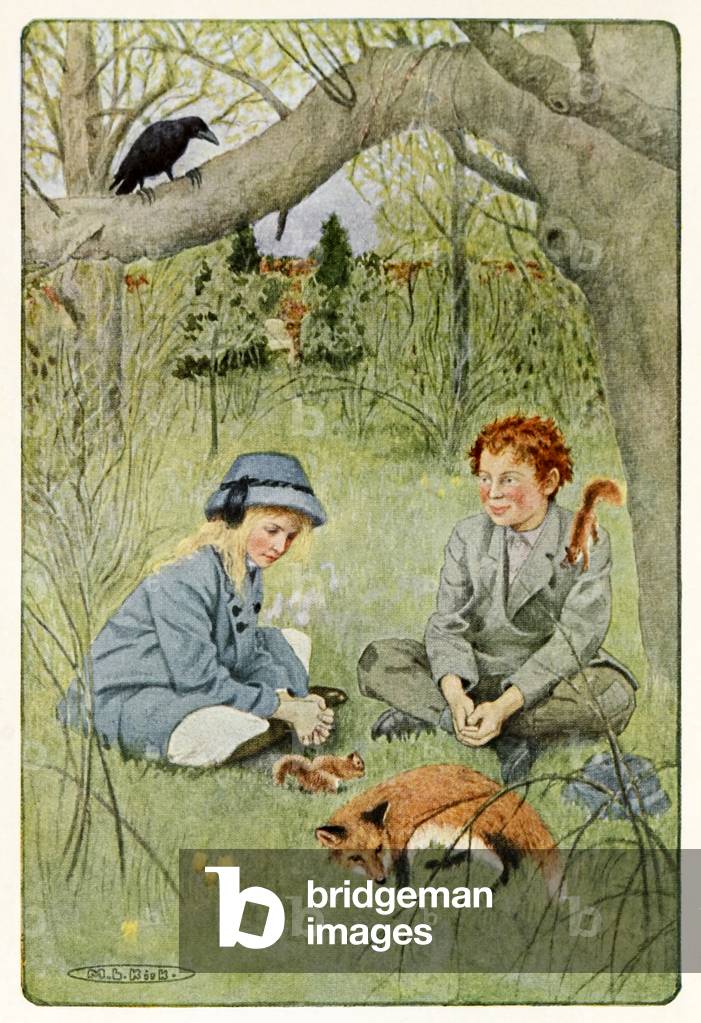
AFF7214627 Illustration shows Mary and Dickon in the locked garden with Captain the fox, Soot the crow, and Nut and Shell, two squirrels. Photograph of first American edition published in 1911 with illustrations by Maria Louise Kirk (1860-1938). Photograph of original illustration from a 1911 first edition published by Fredrick A. Stokes Company, New York, USA.
DC
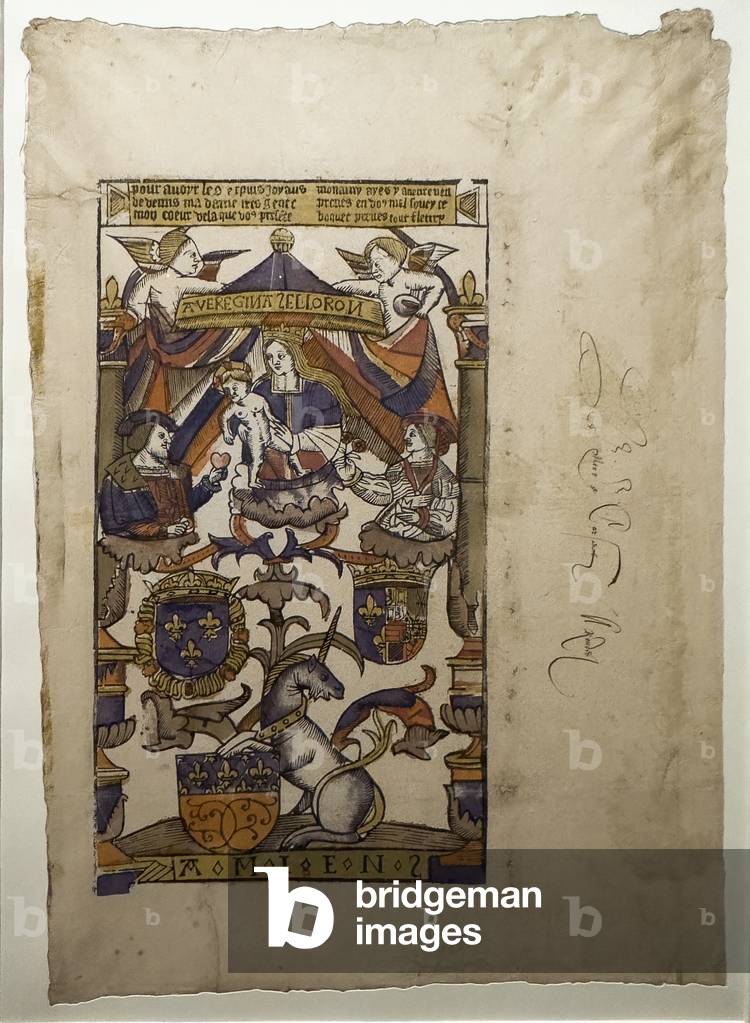
JPP7415638 Wedding closet of Francis I offering his heart to Eleanor of HabsburgPrinted in Amiens around 1527.Colored wood engravingBnf, Prints and Photography Department.
DC
XEE4407221 King Francois I (1494-1547) and Charles Brandon, Duke of Suffolk commissioned to marry Mary Tudor (Mary of England) raised with the debauches at the Court. engraving in “History of prostitution and debauchery among all the peoples of the world from antiquity to the present day” by Dr. Th. -F. Debray. 1879.
RF
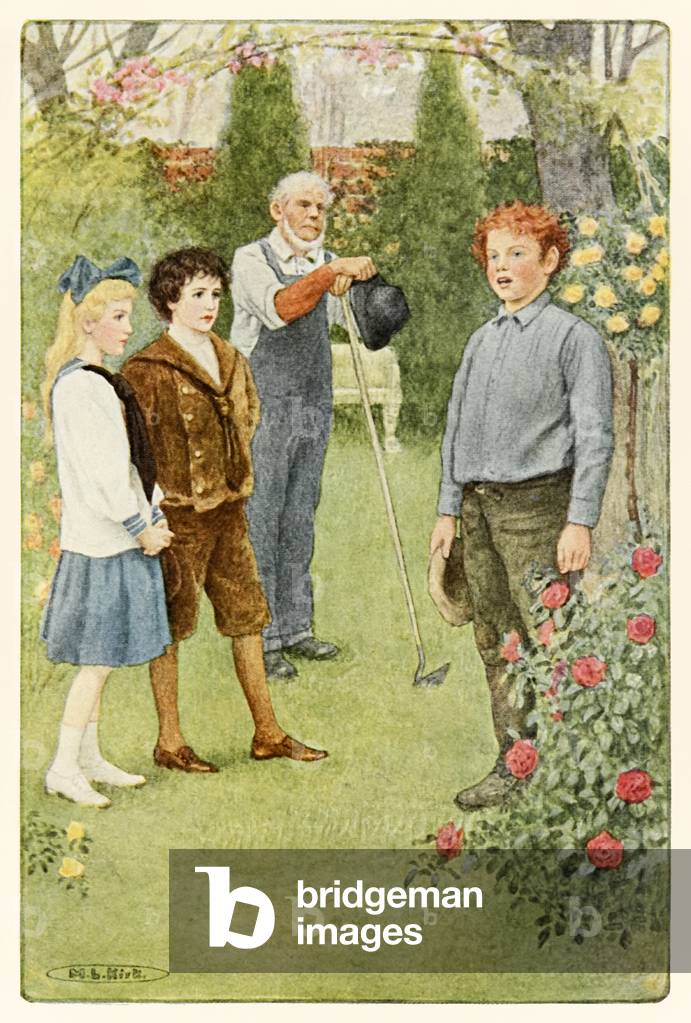
AFF7214630 Illustration shows singing to Ben Weatherstaff, Colin and Mary in the Rose garden. Photograph of first American edition published in 1911 with illustrations by Maria Louise Kirk (1860-1938). Photograph of original illustration from a 1911 first edition published by Fredrick A. Stokes Company, New York, USA.
DC
UIG807977
DC
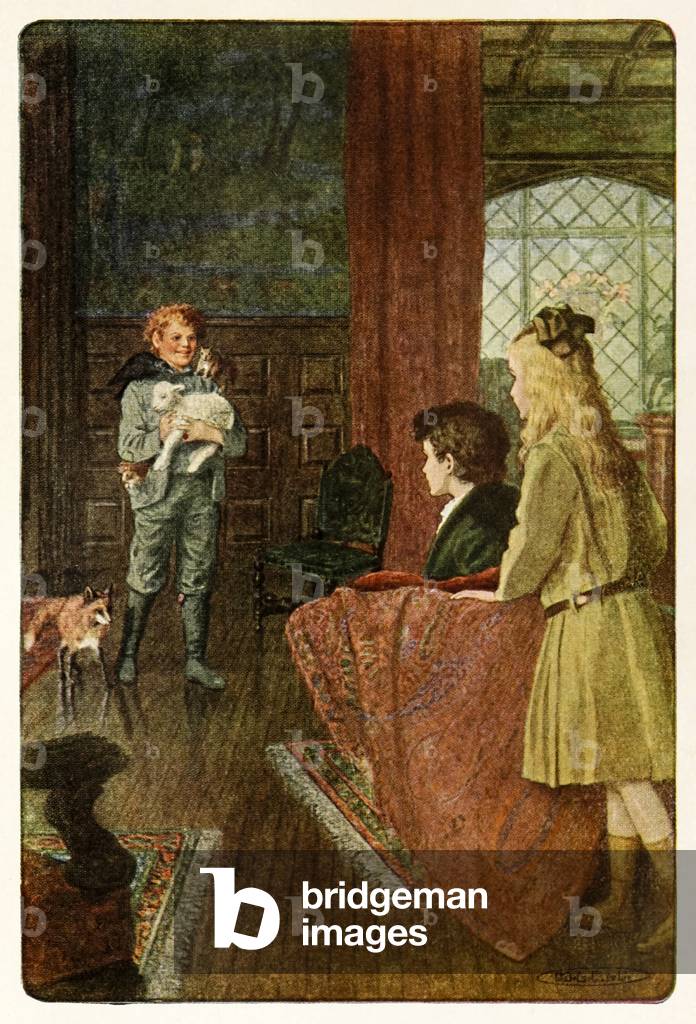
AFF7214629 Illustration shows Dickon holding a new born lamb with Captain the fox and the squirrels Nut and Shell meeting Colin in his wheelchair with Mary. Photograph of first American edition published in 1911 with illustrations by Maria Louise Kirk (1860-1938). Photograph of original illustration from a 1911 first edition published by Fredrick A. Stokes Company, New York, USA.
DC
GNM293962 Rosenkranzbild;
DC
HIM5257297 Portraits de neuf demoiselles d'honneur de la reine Victoria d'Angleterre lors de son mariage le 10/02/1840 : Wilhelmina Stanhope, Caroline Lennox, Elizabeth Howard, Lady Mary Fitzalan Howard, Lady Sarah Villiers, Lady Jane Bouverie, Lady Mary Grimston, Lady Frances Cowper, Lady Elizabeth Sackville West. Planche du 19eme siecle. Nine of Queen Victoria's bridesmaids, 10 February 1840. Lady Wilhelmina Stanhope, mother of Lord Rosebery; Lady Caroline Lennox (died 1849); Lady Elizabeth Howard (died 1891); Lady Mary Fitzalan Howard (died 1897); Lady Sarah Villiers (died 1853); Lady Jane Bouverie; Lady Mary Grimston (died 1879); Lady Frances Cowper (died 1880); Lady Elizabeth Sackville West (died 1897).
DC
LAL313497 Women's Education. The schools for girls that did exist in the mid-19th century were a disgrace in themselves, but when women dared to establish a proper system, and even tried to enter universities, most people were outraged. Undeterred, the pioneers continued their work. Left inset: Charlot Bronte, in Jane Eyre, vividly describes conditions that existed at girls' schools in the early 19th century. Top right inset: Frances Mary Buss (1827-1894), a pioneer in the education of girls who founded the famous North London Collegiate School. Original artwork for illustrations on pp16-17 of Look and Learn issue no 1015 (22 August 1981). Lent for scanning by The Gallery of Illustration.
DC
MPX5110239 The Northern Opera present "Prince Igor" at the Theatre Royal, Newcastle in Mary 1974 The principal singers are right to left: Joan Trainor, Lettice Hall, John Sykes (Prince Igor), Eunice Spencer and Frances McGrail.
DC
HRP7389030 Engraver: W SmallIllustration depicting the Duke and Duchess of Teck and their children in the grounds of White Lodge, Richmond in 1870Princess Mary (May), later Queen Mary is in a goat cart with her brother Prince Adolphus. Their parents Prince Frances, Duke of Teck (1837-1900) and Princess Mary Adelaide, Duchess of Teck (1833-97) stand close by. The baby Prince Francis is held in his mother's armsFrom 'The Graphic' Royal Wedding Number, 10 July 1893
DC
CH658302 Sisters. John Hanson Walker (1844-1933). Oil on canvas. 51 x 47cm. It has been suggested that this may be a portrait of Frances and Mary, daughters of William H. Langton, Esq.
DC
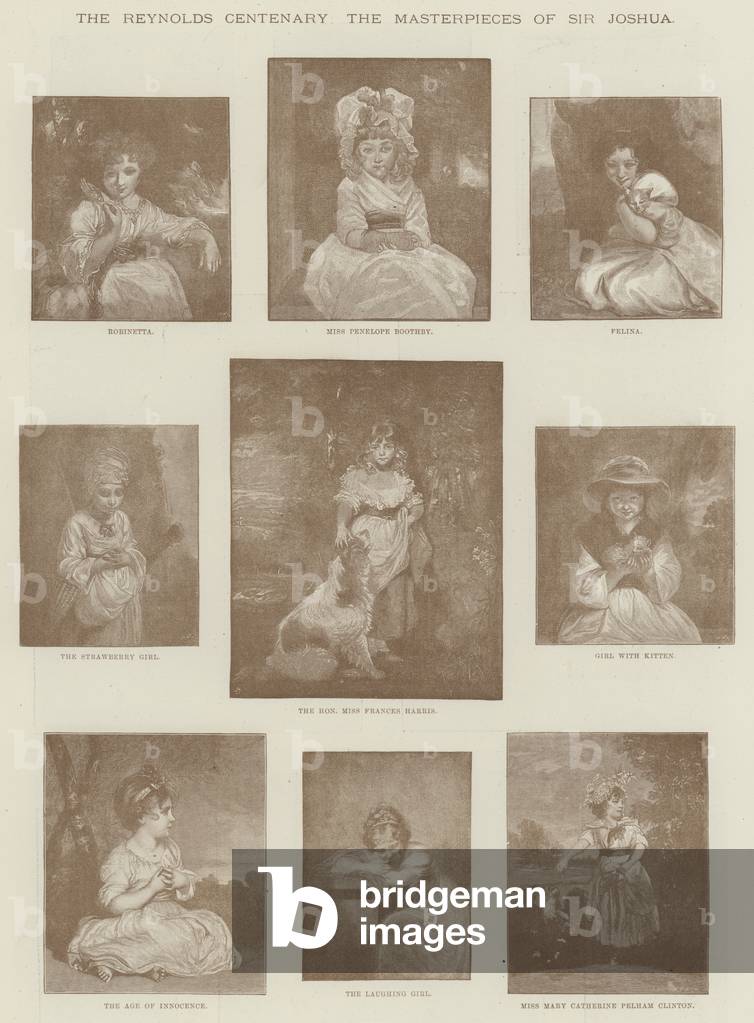
LIP1614724 The Reynolds Centenary, the Masterpieces of Sir Joshua. Illustration for The Illustrated London News, 27 February 1892.English School (19th Century)
DC
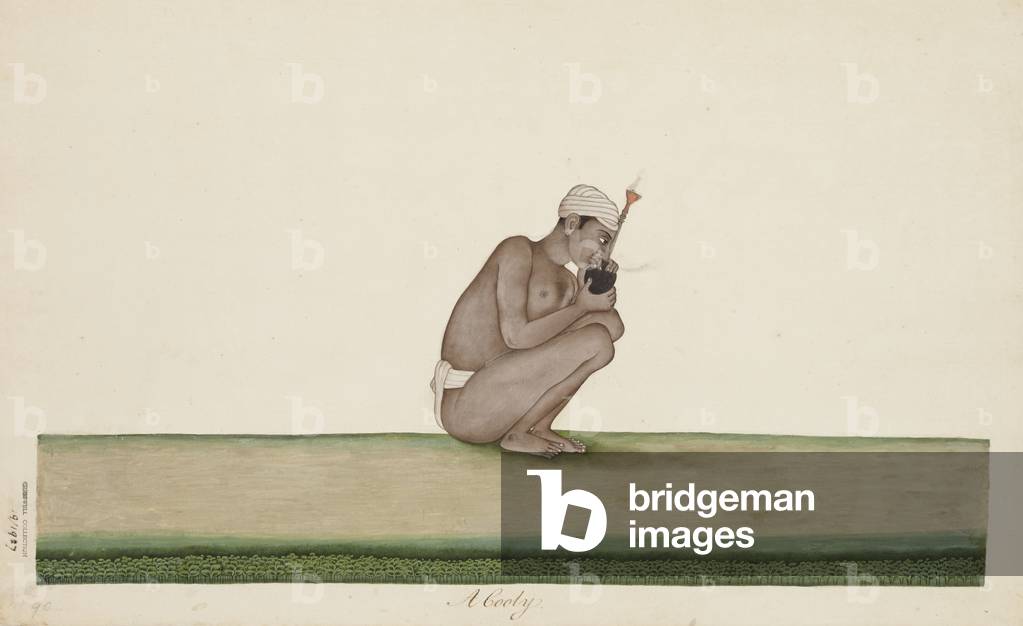
EX5910703 An unskilled Indian labourer was once referred to as cooly or coolie. This painting is part of a collection of Indian drawings depicting Indian plants, people, animals and objects.Company School style paintings became popular with wealthy Europeans. It was not uncommon for East India Company officials (who were not employed as medics or botanists) to build their own personal collections of paintings depicting Indian life and flora and fauna. We cannot be sure how local amateur botanist Richard Cresswell came by this collection of 86 Company School works. It is possible Henry Creighton commissioned them during his time as a judge in Calcutta and that on his death the works came back to the UK with his daughter Frances who later married Richard Cresswell.
DC
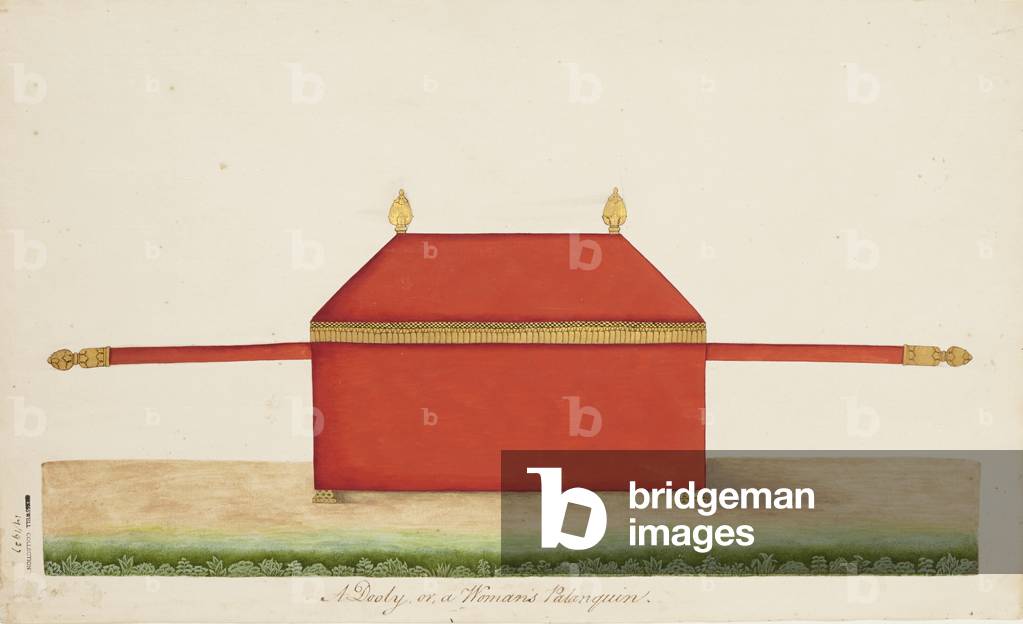
EX5910702 A palanquin is similar to a sedan chair. It was carried by four men in relays, with changes every 10 miles, and usually at night to avoid the heat. If a lady was being carried the curtains would usually be drawn shut for privacy; a man would have the curtains open in daytime, but closed if travelling at night.Company School style paintings became popular with wealthy Europeans. It was not uncommon for East India Company officials (who were not employed as medics or botanists) to build their own personal collections of paintings depicting Indian life and flora and fauna. We cannot be sure how local amateur botanist Richard Cresswell came by this collection of 86 Company School works. It is possible Henry Creighton commissioned them during his time as a judge in Calcutta and that on his death the works came back to the UK with his daughter Frances who later married Richard Cresswell.
DC
EX5910704 This painting of a lynx, or sheah gosh, is part of the Cresswell collection. It is one of many Indian paintings (mostly botanical) and dates to the early 1800s. Lynx, though shy, were once tamed and used to assist their human masters on hunting trips.In the late 18th and early 19th centuries the East India Company controlled much of the Indian subcontinent. Keen to exploit and export valuable natural commodities, the Company set out to record the flora and fauna of India and commissioned Indian artists to create detailed illustrations.Company School style paintings became popular with wealthy Europeans. It was not uncommon for East India Company officials (who were not employed as medics or botanists) to build their own personal collections of paintings depicting Indian flora and fauna. We cannot be sure how local amateur botanist Richard Cresswell came by this collection of 86 Company School works. It is possible Henry Creighton commissioned them during his time as a judge in Calcutta and that on his death the works came back to the UK with his daughter Frances who later married Richard Cresswell.
DC
EX5910724 In the late 18th and early 19th centuries the East India Company controlled much of the Indian subcontinent. Keen to exploit and export valuable natural commodities, the Company set out to record the flora of India and commissioned Indian artists to create detailed botanical illustrations. Many of the plants were known through their use in Ayurvedic medicine. One of the world’s oldest medicinal systems, it has been practised in India for 3,000 years. Company School style paintings became popular with wealthy Europeans. It was not uncommon for East India Company officials (who were not employed as medics or botanists) to build their own personal collections of paintings depicting Indian flora and fauna. We cannot be sure how local amateur botanist Richard Cresswell came by this collection of 86 Company School works. It is possible Henry Creighton commissioned them during his time as a judge in Calcutta and that on his death the works came back to the UK with his daughter Frances who later married Richard Cresswell.
DC
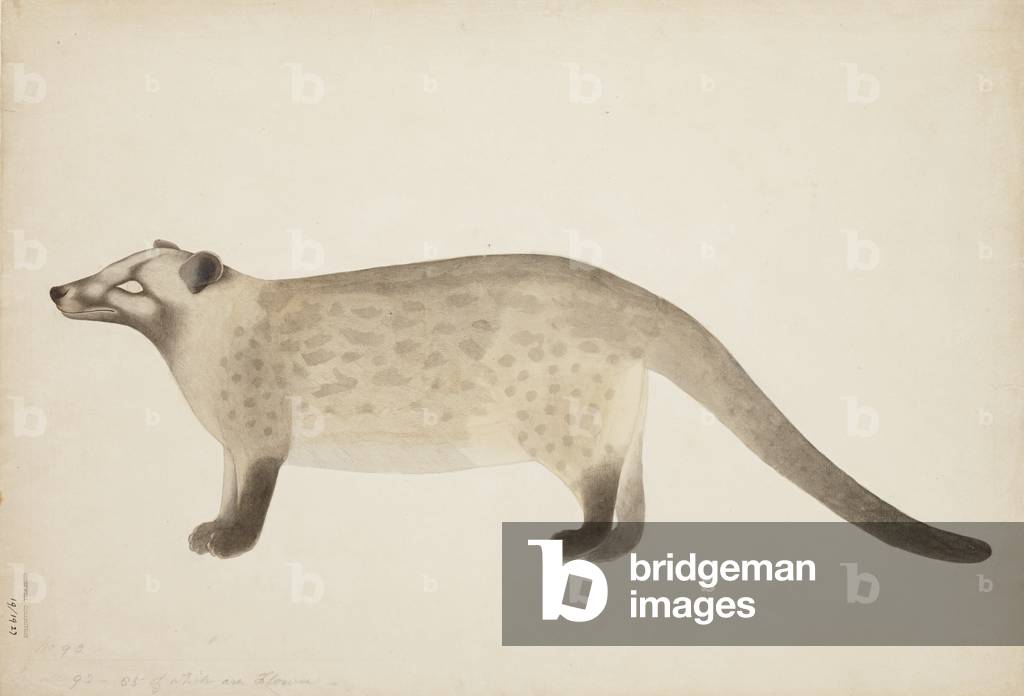
EX5910705 This drawing is part of a collection of Indian paintings (mostly botanical) from the early 1800s. The animal is not identified on the work but could be a palm civet (Paradoxurus hermaphroditus).In the late 18th and early 19th centuries the East India Company controlled much of the Indian subcontinent. Keen to exploit and export valuable natural commodities, the Company set out to record the flora and fauna of India and commissioned Indian artists to create detailed illustrations.Company School style paintings became popular with wealthy Europeans. It was not uncommon for East India Company officials (who were not employed as medics or botanists) to build their own personal collections of paintings depicting Indian flora and fauna. We cannot be sure how local amateur botanist Richard Cresswell came by this collection of 86 Company School works. It is possible Henry Creighton commissioned them during his time as a judge in Calcutta and that on his death the works came back to the UK with his daughter Frances who later married Richard Cresswell.
DC
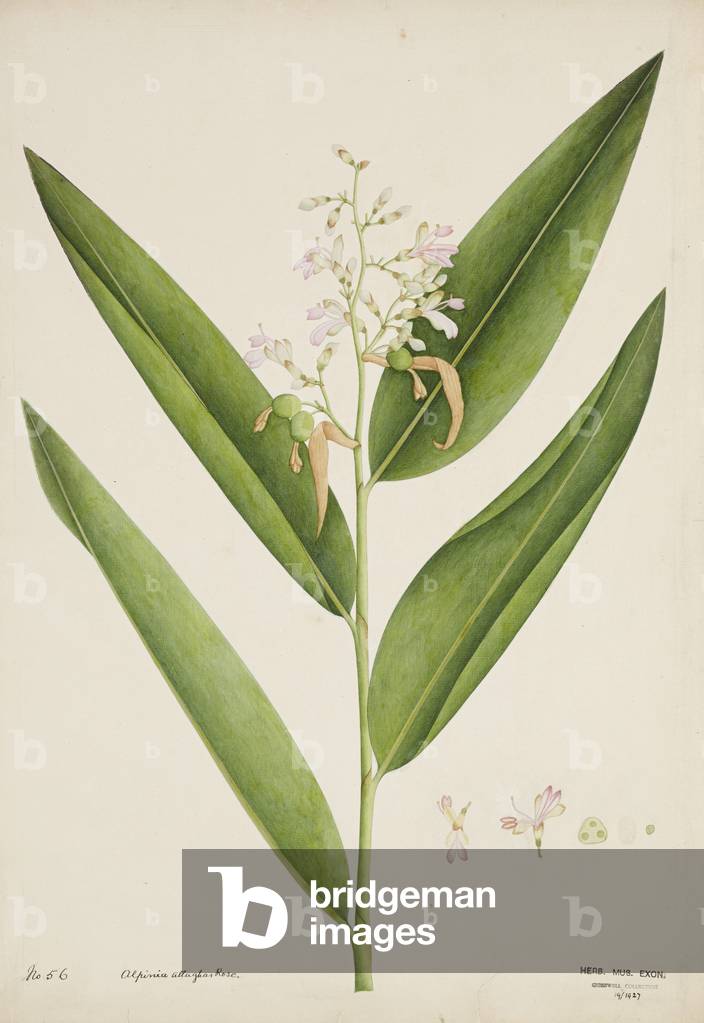
EX5910712 Alpinia nigra is a member of the ginger family and is found across south-east Asia. Parts of the plant are cooked as a vegetable and uses in curries and as seasoning. It has numerous uses in traditional medicine including treatment of treat fungal infections, parasites and digestive and respiratory problems.In the late 18th and early 19th centuries the East India Company controlled much of the Indian subcontinent. Keen to exploit and export valuable natural commodities, the Company set out to record the flora of India and commissioned Indian artists to create detailed botanical illustrations. Many of the plants were known through their use in Ayurvedic medicine. One of the world’s oldest medicinal systems, it has been practised in India for 3,000 years. Company School style paintings became popular with wealthy Europeans. It was not uncommon for East India Company officials (who were not employed as medics or botanists) to build their own personal collections of paintings depicting Indian flora and fauna. We cannot be sure how local amateur botanist Richard Cresswell came by this collection of 86 Company School works. It is possible Henry Creighton commissioned them during his time as a judge in Calcutta and that on his death the works came back to the UK with his daughter Frances who later married Richard Cresswell.
DC
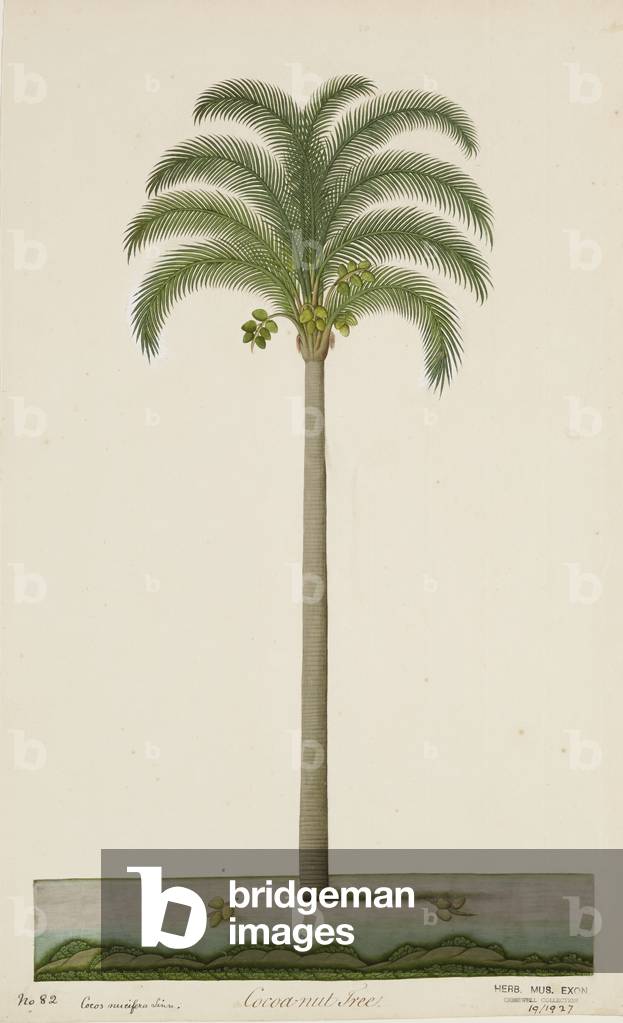
EX5910725 In the late 18th and early 19th centuries the East India Company controlled much of the Indian subcontinent. Keen to exploit and export valuable natural commodities, the Company set out to record the flora of India and commissioned Indian artists to create detailed botanical illustrations. Many of the plants were known through their use in Ayurvedic medicine. One of the world’s oldest medicinal systems, it has been practised in India for 3,000 years. Company School style paintings became popular with wealthy Europeans. It was not uncommon for East India Company officials (who were not employed as medics or botanists) to build their own personal collections of paintings depicting Indian flora and fauna. We cannot be sure how local amateur botanist Richard Cresswell came by this collection of 86 Company School works. It is possible Henry Creighton commissioned them during his time as a judge in Calcutta and that on his death the works came back to the UK with his daughter Frances who later married Richard Cresswell.
DC
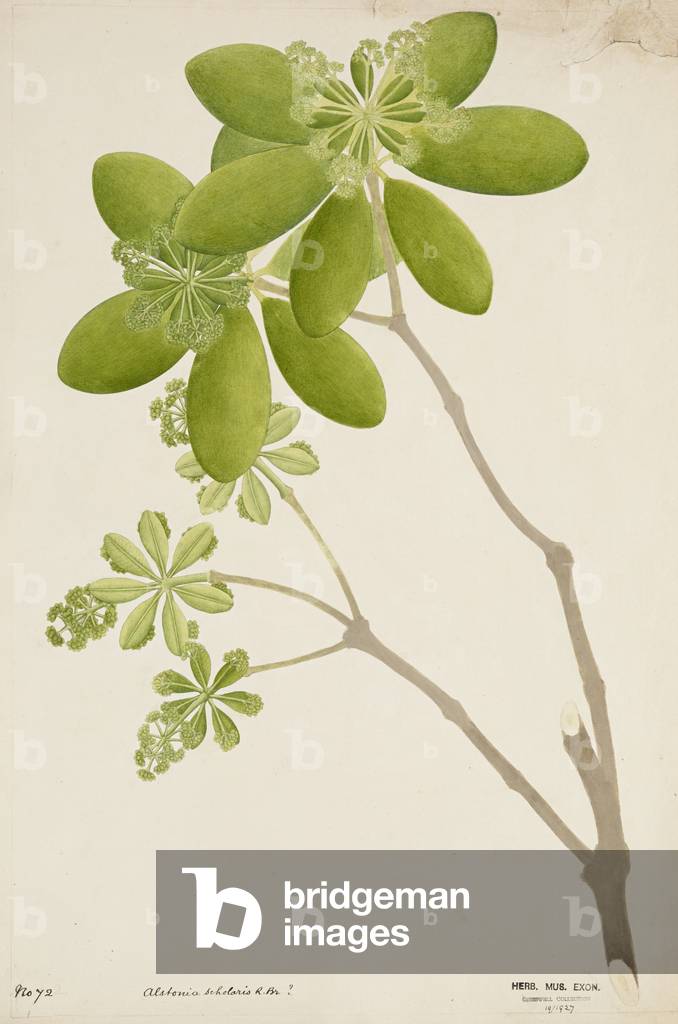
EX5910720 The wood of the blackboard tree is light and has many uses. In the late 18th and early 19th centuries the East India Company controlled much of the Indian subcontinent. Keen to exploit and export valuable natural commodities, the Company set out to record the flora of India and commissioned Indian artists to create detailed botanical illustrations. Many of the plants were known through their use in Ayurvedic medicine. One of the world’s oldest medicinal systems, it has been practised in India for 3,000 years. Company School style paintings became popular with wealthy Europeans. It was not uncommon for East India Company officials (who were not employed as medics or botanists) to build their own personal collections of paintings depicting Indian flora and fauna. We cannot be sure how local amateur botanist Richard Cresswell came by this collection of 86 Company School works. It is possible Henry Creighton commissioned them during his time as a judge in Calcutta and that on his death the works came back to the UK with his daughter Frances who later married Richard Cresswell.
DC
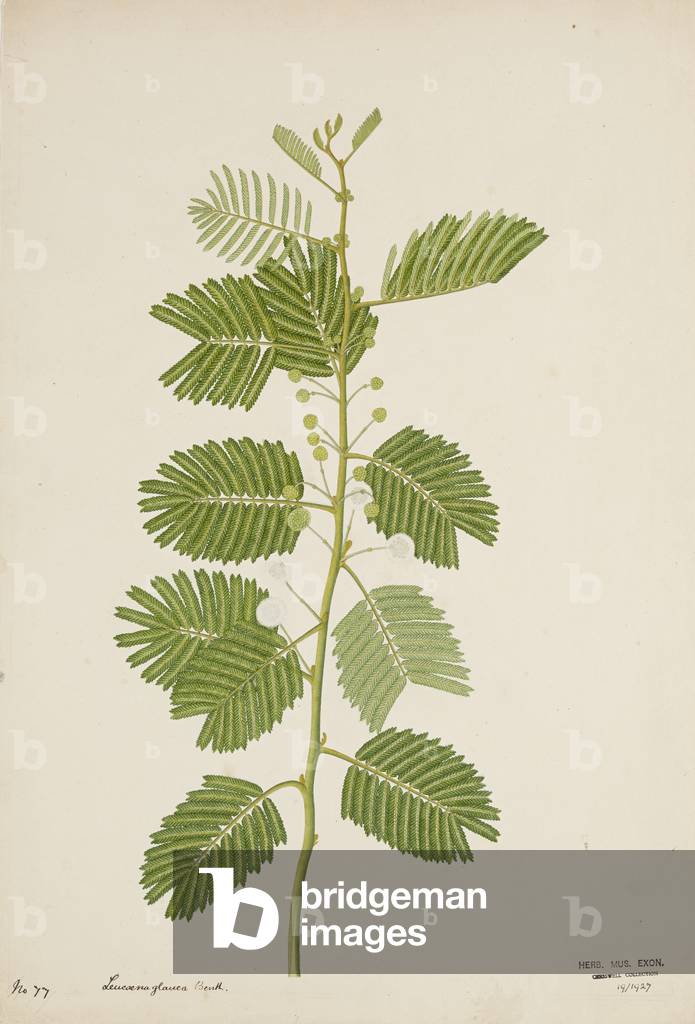
EX5910722 The white leadtree (Leucaena leucocephala) is used as a green manure and high-protein cattle fodder.In the late 18th and early 19th centuries the East India Company controlled much of the Indian subcontinent. Keen to exploit and export valuable natural commodities, the Company set out to record the flora of India and commissioned Indian artists to create detailed botanical illustrations. Many of the plants were known through their use in Ayurvedic medicine. One of the world’s oldest medicinal systems, it has been practised in India for 3,000 years. Company School style paintings became popular with wealthy Europeans. It was not uncommon for East India Company officials (who were not employed as medics or botanists) to build their own personal collections of paintings depicting Indian flora and fauna. We cannot be sure how local amateur botanist Richard Cresswell came by this collection of 86 Company School works. It is possible Henry Creighton commissioned them during his time as a judge in Calcutta and that on his death the works came back to the UK with his daughter Frances who later married Richard Cresswell.
DC
UIG1574023 Little Lord Fauntleroy. 1921 American film directed by Alfred E. Green and Jack Pickford and starring Mary Pickford as both Cedric Errol and Widow Errol. The film is based on the novel Little Lord Fauntleroy (1886) by Frances Hodgson Burnett.
DC
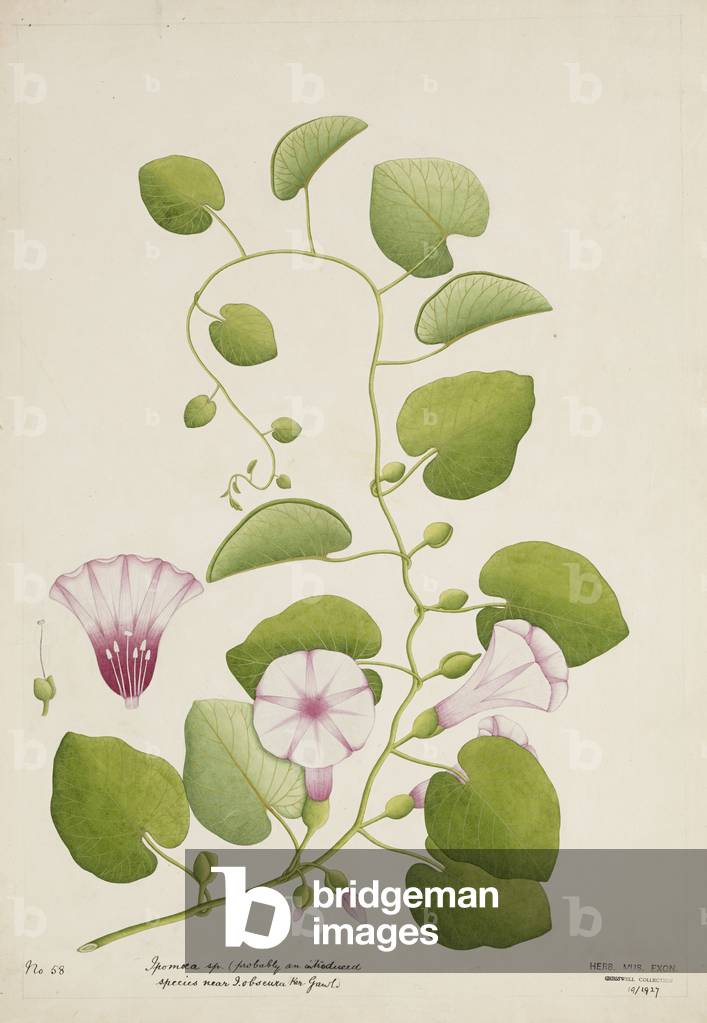
EX5910714 Many species of morning glory are noted for their use in traditional Indian medicine. In the late 18th and early 19th centuries the East India Company controlled much of the Indian subcontinent. Keen to exploit and export valuable natural commodities, the Company set out to record the flora of India and commissioned Indian artists to create detailed botanical illustrations. Many of the plants were known through their use in Ayurvedic medicine. One of the world’s oldest medicinal systems, it has been practised in India for 3,000 years. Company School style paintings became popular with wealthy Europeans. It was not uncommon for East India Company officials (who were not employed as medics or botanists) to build their own personal collections of paintings depicting Indian flora and fauna. We cannot be sure how local amateur botanist Richard Cresswell came by this collection of 86 Company School works. It is possible Henry Creighton commissioned them during his time as a judge in Calcutta and that on his death the works came back to the UK with his daughter Frances who later married Richard Cresswell.
DC
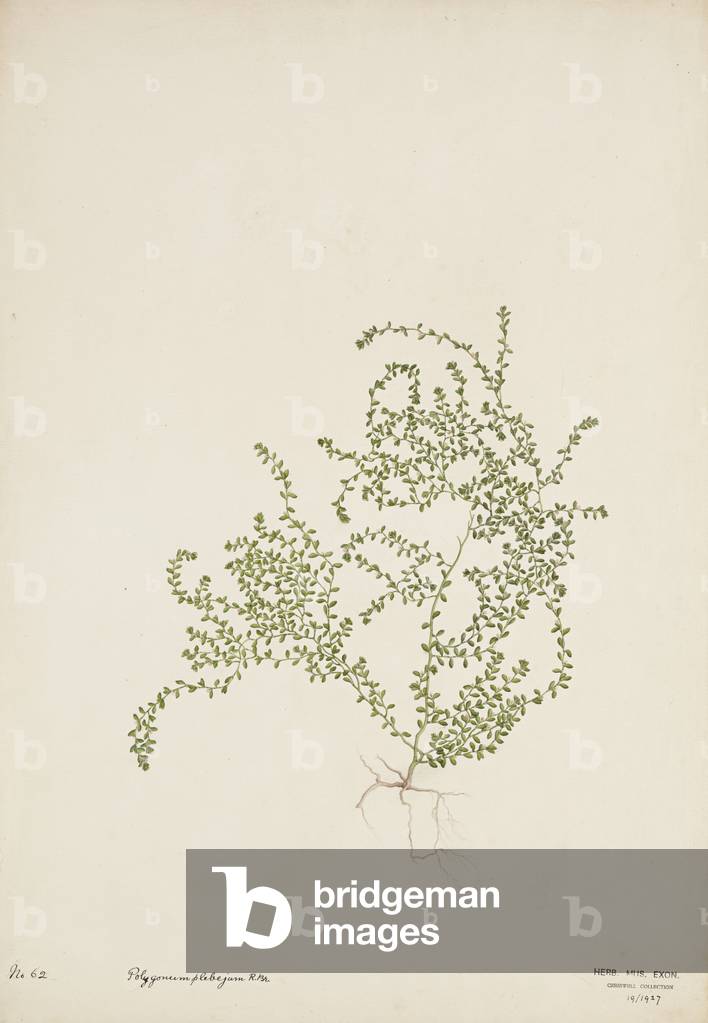
EX5910717 The leaves of knotweed (Polygonum plebeium) can be cooked and eaten as a vegetable. Cooked seeds are used medicinally to treat bowl complaints. Some drawings in this collection, including this one, are signed on the reverse in Bengali and English.In the late 18th and early 19th centuries the East India Company controlled much of the Indian subcontinent. Keen to exploit and export valuable natural commodities, the Company set out to record the flora of India and commissioned Indian artists to create detailed botanical illustrations. Many of the plants were known through their use in Ayurvedic medicine. One of the world’s oldest medicinal systems, it has been practised in India for 3,000 years. Company School style paintings became popular with wealthy Europeans. It was not uncommon for East India Company officials (who were not employed as medics or botanists) to build their own personal collections of paintings depicting Indian flora and fauna. We cannot be sure how local amateur botanist Richard Cresswell came by this collection of 86 Company School works. It is possible Henry Creighton commissioned them during his time as a judge in Calcutta and that on his death the works came back to the UK with his daughter Frances who later married Richard Cresswell. Some drawings in this collection, including this one are signed on the reverse. The artist’s name, Ram Das, is written in English and Bengali. He is known to have worked for Lady Mary Impey, wife of Sir Elijah Impey the Chief Justice of the Supreme Court of Calcutta. It is probable that Creighton and Impey knew each other.
DC
EX5910710 The mast tree is commonly used in traditional systems of medicine for the treatment of fever, skin diseases, diabetes, hypertension and parasites. The wood is also very useful.In the late 18th and early 19th centuries the East India Company controlled much of the Indian subcontinent. Keen to exploit and export valuable natural commodities, the Company set out to record the flora of India and commissioned Indian artists to create detailed botanical illustrations. Many of the plants were known through their use in Ayurvedic medicine. One of the world’s oldest medicinal systems, it has been practised in India for 3,000 years. Company School style paintings became popular with wealthy Europeans. It was not uncommon for East India Company officials (who were not employed as medics or botanists) to build their own personal collections of paintings depicting Indian flora and fauna. We cannot be sure how local amateur botanist Richard Cresswell came by this collection of 86 Company School works. It is possible Henry Creighton commissioned them during his time as a judge in Calcutta and that on his death the works came back to the UK with his daughter Frances who later married Richard Cresswell.
DC
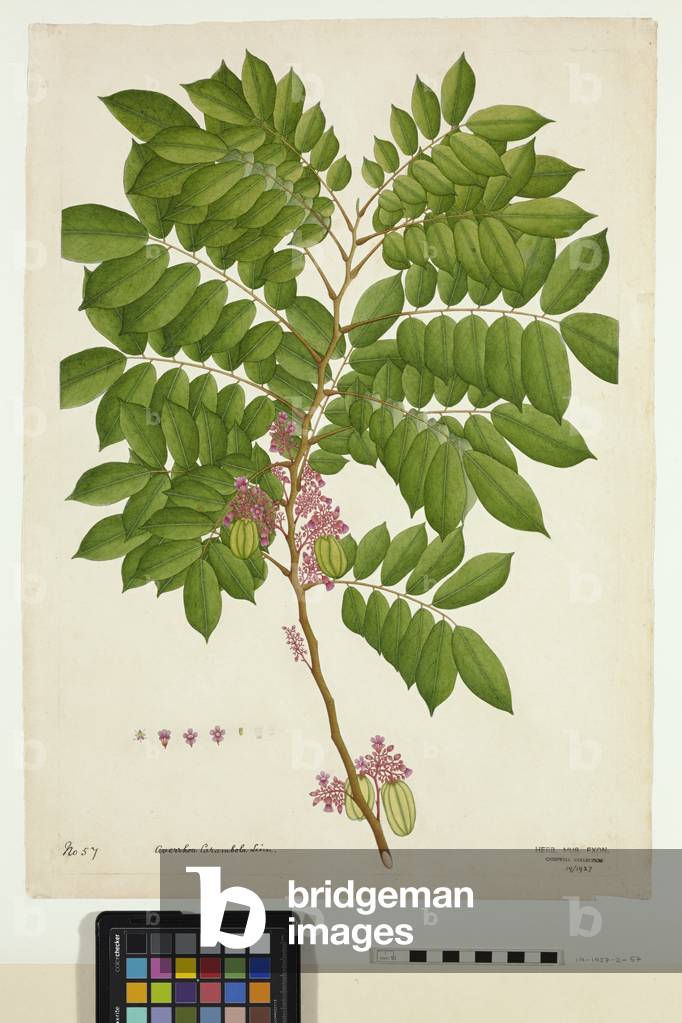
EX5910713 The leaves, flowers and developing fruit are shown here. The mature fruit are translucent, deeply ridged, pale orange when ripe and often served sliced across to form a star. The taste is sour or sweet depending on the ripeness and the variety. Starfruit are rich in vitamin C, antioxidants and potassium, as well as having anti-bacterial properties. However, the fruits also contain oxalic acid which can cause or worsen kidney stones, as well as caramboxin, a neurotoxin which can affect the brain. Fresh starfruit should be avoided by those taking statins. In the late 18th and early 19th centuries the East India Company controlled much of the Indian subcontinent. Keen to exploit and export valuable natural commodities, the Company set out to record the flora of India and commissioned Indian artists to create detailed botanical illustrations. Many of the plants were known through their use in Ayurvedic medicine. One of the world’s oldest medicinal systems, it has been practised in India for 3,000 years. Company School style paintings became popular with wealthy Europeans. It was not uncommon for East India Company officials (who were not employed as medics or botanists) to build their own personal collections of paintings depicting Indian flora and fauna. We cannot be sure how local amateur botanist Richard Cresswell came by this collection of 86 Company School works. It is possible Henry Creighton commissioned them during his time as a judge in Calcutta and that on his death the works came back to the UK with his daughter Frances who later married Richard Cresswell.
DC
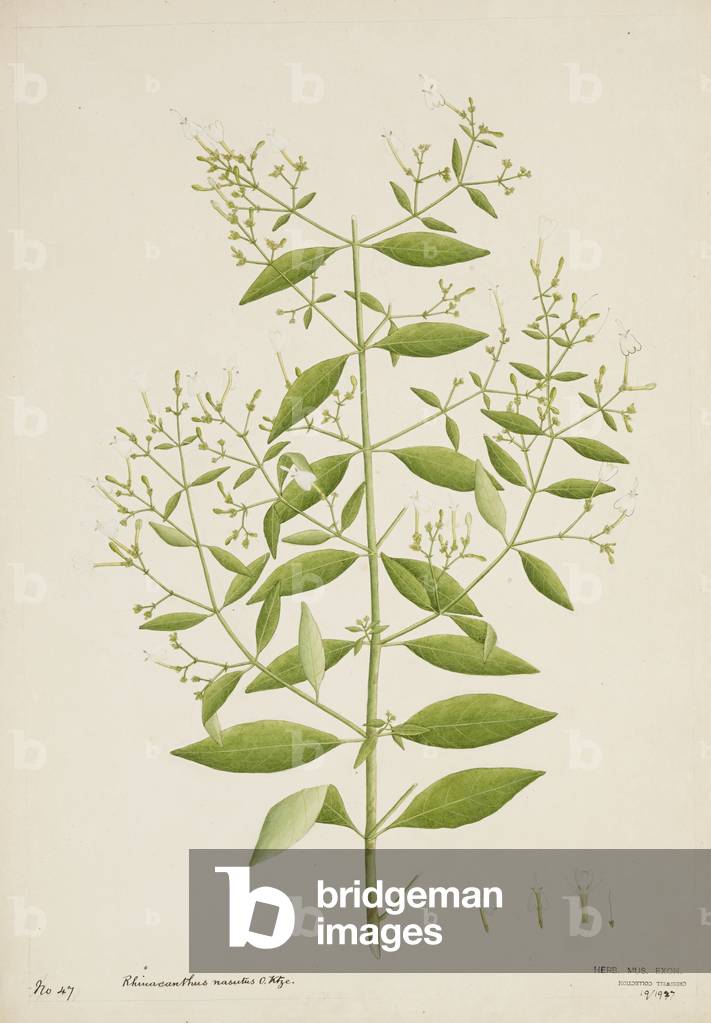
EX5910708 Snake jasmine is used in Indian traditional medicine to treat ringworm, as an aphrodisiac, to stop external bleeding and is considered by some to be an antidote to snake bites.In the late 18th and early 19th centuries the East India Company controlled much of the Indian subcontinent. Keen to exploit and export valuable natural commodities, the Company set out to record the flora of India and commissioned Indian artists to create detailed botanical illustrations. Many of the plants were known through their use in Ayurvedic medicine. One of the world’s oldest medicinal systems, it has been practised in India for 3,000 years. Company School style paintings became popular with wealthy Europeans. It was not uncommon for East India Company officials (who were not employed as medics or botanists) to build their own personal collections of paintings depicting Indian flora and fauna. We cannot be sure how local amateur botanist Richard Cresswell came by this collection of 86 Company School works. It is possible Henry Creighton commissioned them during his time as a judge in Calcutta and that on his death the works came back to the UK with his daughter Frances who later married Richard Cresswell.
DC
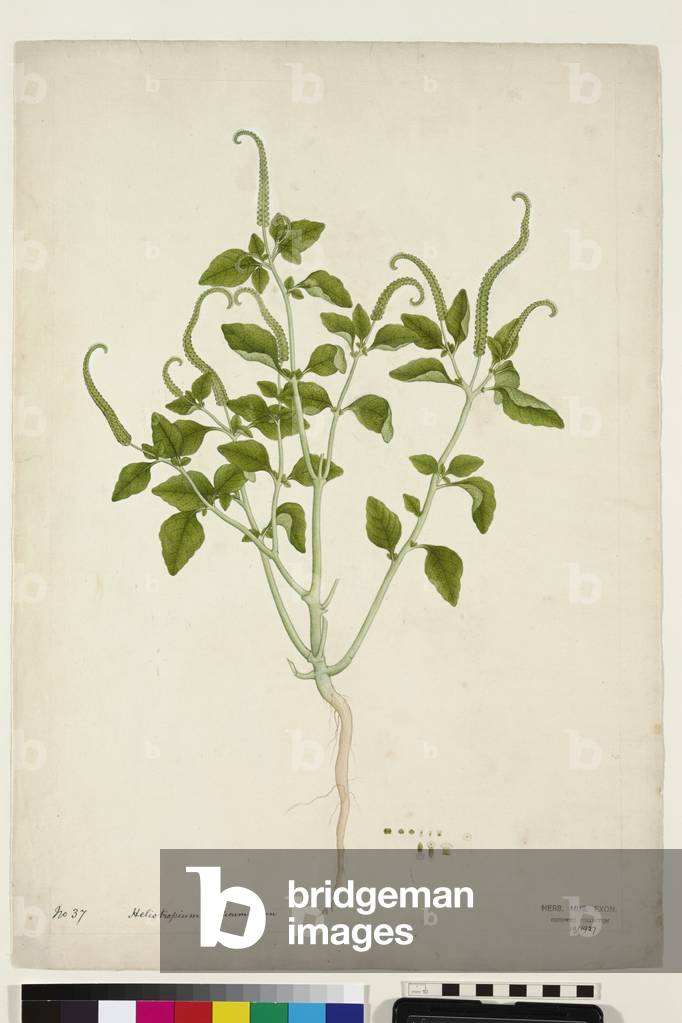
EX5910707 All parts of the Indian heliotrope plant are used in Indian traditional medicine. It is believed to be a remedy for ulcers, sores and wounds, skin diseases, insect stings, rheumatism, fever, cough, ringworm and eye pain. In the late 18th and early 19th centuries the East India Company controlled much of the Indian subcontinent. Keen to exploit and export valuable natural commodities, the Company set out to record the flora of India and commissioned Indian artists to create detailed botanical illustrations. Many of the plants were known through their use in Ayurvedic medicine. One of the world’s oldest medicinal systems, it has been practised in India for 3,000 years. Company School style paintings became popular with wealthy Europeans. It was not uncommon for East India Company officials (who were not employed as medics or botanists) to build their own personal collections of paintings depicting Indian flora and fauna. We cannot be sure how local amateur botanist Richard Cresswell came by this collection of 86 Company School works. It is possible Henry Creighton commissioned them during his time as a judge in Calcutta and that on his death the works came back to the UK with his daughter Frances who later married Richard Cresswell.
DC
EX5910716 Egyptian riverhemp (Sesbania sesban) has been used in India as a green manure (harvested leaves make excellent compost) and to feed cattle and sheep for a very long time. Its wood is light and useful for cooking.In the late 18th and early 19th centuries the East India Company controlled much of the Indian subcontinent. Keen to exploit and export valuable natural commodities, the Company set out to record the flora of India and commissioned Indian artists to create detailed botanical illustrations. Many of the plants were known through their use in Ayurvedic medicine. One of the world’s oldest medicinal systems, it has been practised in India for 3,000 years. Company School style paintings became popular with wealthy Europeans. It was not uncommon for East India Company officials (who were not employed as medics or botanists) to build their own personal collections of paintings depicting Indian flora and fauna. We cannot be sure how local amateur botanist Richard Cresswell came by this collection of 86 Company School works. It is possible Henry Creighton commissioned them during his time as a judge in Calcutta and that on his death the works came back to the UK with his daughter Frances who later married Richard Cresswell.
DC
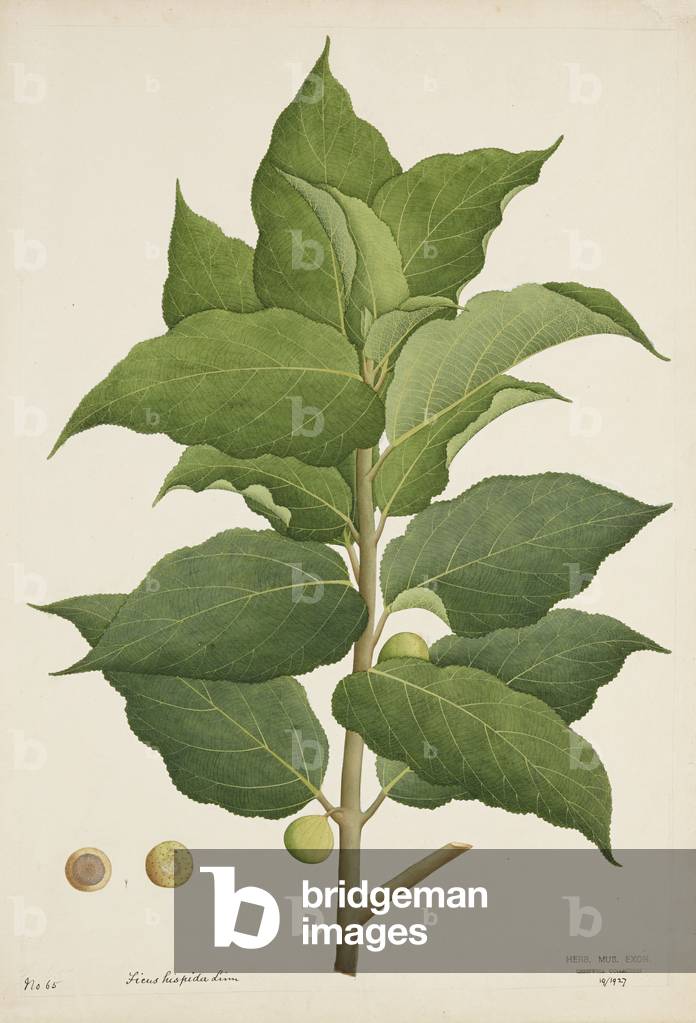
EX5910718 This plant is grown for its edible figs. Traditionally, different parts of the plant have been used in the treatment of ulcers, anemia, jaundice, hemorrhage, diabetes, hepatitis, and others. It has also been used as a purgative.In the late 18th and early 19th centuries the East India Company controlled much of the Indian subcontinent. Keen to exploit and export valuable natural commodities, the Company set out to record the flora of India and commissioned Indian artists to create detailed botanical illustrations. Many of the plants were known through their use in Ayurvedic medicine. One of the world’s oldest medicinal systems, it has been practised in India for 3,000 years. Company School style paintings became popular with wealthy Europeans. It was not uncommon for East India Company officials (who were not employed as medics or botanists) to build their own personal collections of paintings depicting Indian flora and fauna. We cannot be sure how local amateur botanist Richard Cresswell came by this collection of 86 Company School works. It is possible Henry Creighton commissioned them during his time as a judge in Calcutta and that on his death the works came back to the UK with his daughter Frances who later married Richard Cresswell.
DC
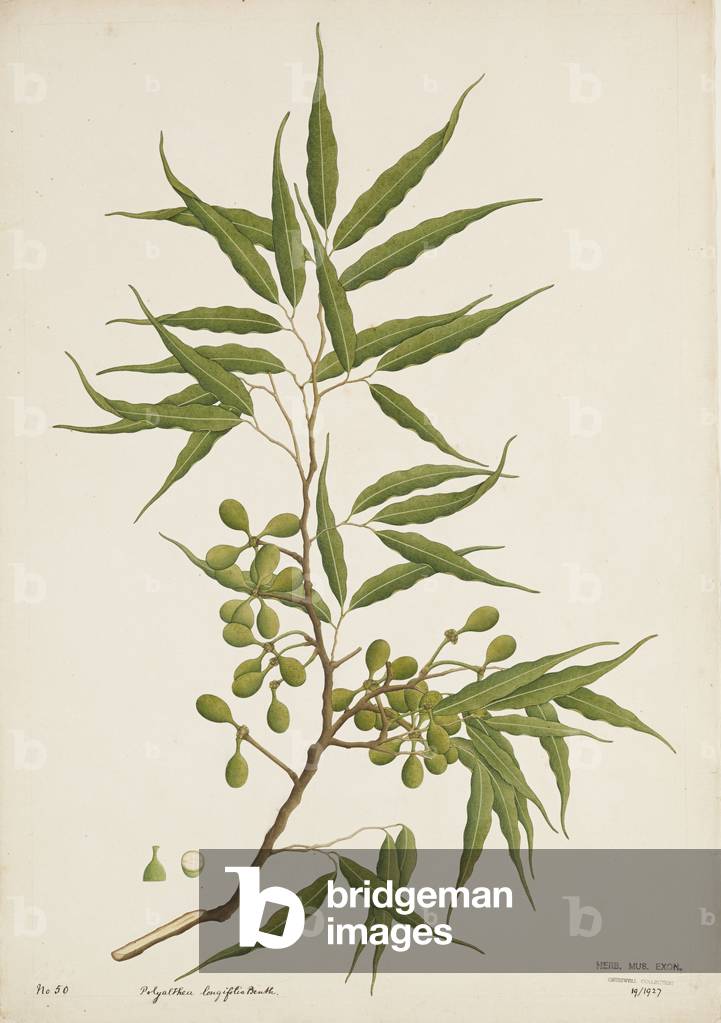
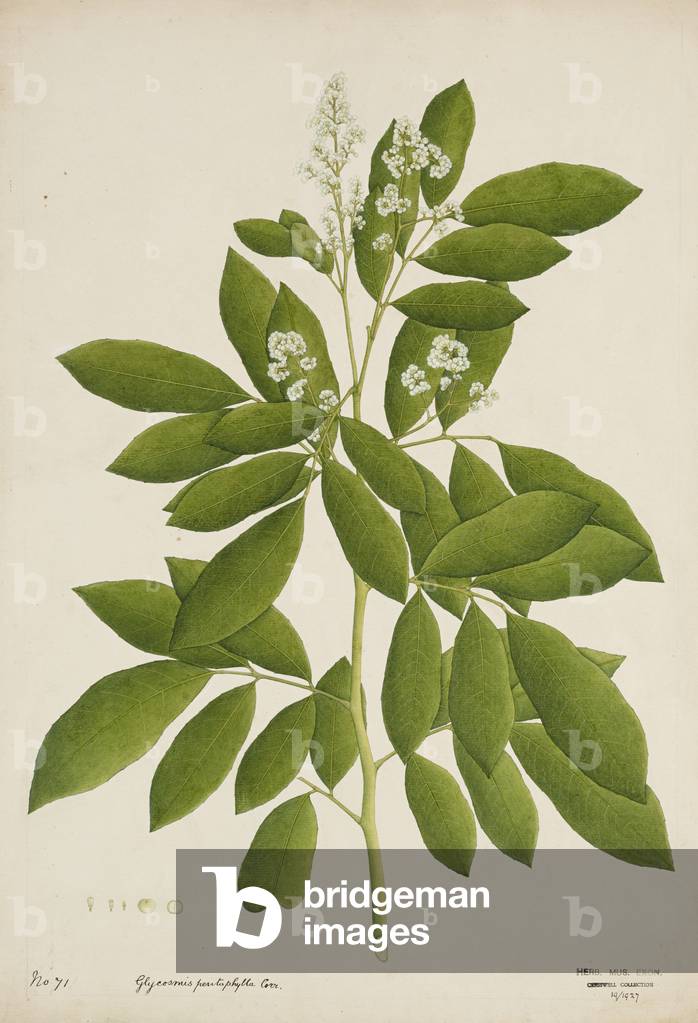
EX5910719 All parts of this plant have been used in traditional Indian medicine. The leaves are used to treat jaundice, skin complaints and liver disorders, a paste of the wood is applied externally to pimples and the root has anti-inflammatory properties.In the late 18th and early 19th centuries the East India Company controlled much of the Indian subcontinent. Keen to exploit and export valuable natural commodities, the Company set out to record the flora of India and commissioned Indian artists to create detailed botanical illustrations. Many of the plants were known through their use in Ayurvedic medicine. One of the world’s oldest medicinal systems, it has been practised in India for 3,000 years. Company School style paintings became popular with wealthy Europeans. It was not uncommon for East India Company officials (who were not employed as medics or botanists) to build their own personal collections of paintings depicting Indian flora and fauna. We cannot be sure how local amateur botanist Richard Cresswell came by this collection of 86 Company School works. It is possible Henry Creighton commissioned them during his time as a judge in Calcutta and that on his death the works came back to the UK with his daughter Frances who later married Richard Cresswell.
DC
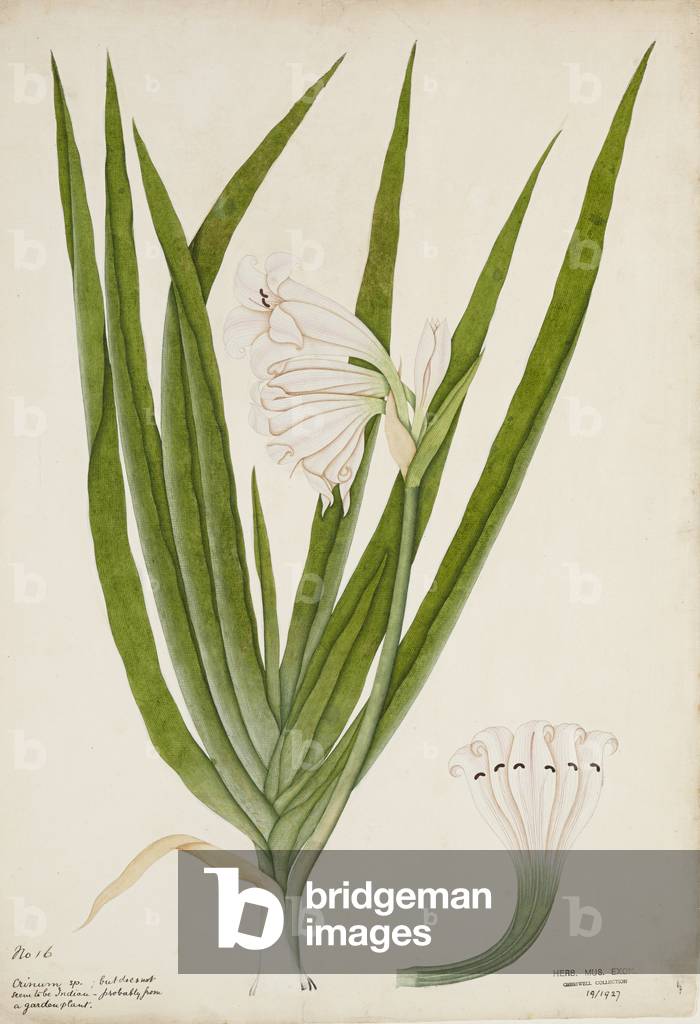
EX5910706 Several species of Crinum are used in ayurvedic medicine. Different parts of the plant may be used as a laxative, an anti-inflammatory or to treat burns. However, the hand written note at the bottom of this work suggests this is a cultivated plant and not a native Indian species.In the late 18th and early 19th centuries the East India Company controlled much of the Indian subcontinent. Keen to exploit and export valuable natural commodities, the Company set out to record the flora of India and commissioned Indian artists to create detailed botanical illustrations. Many of the plants were known through their use in Ayurvedic medicine. One of the world’s oldest medicinal systems, it has been practised in India for 3,000 years. Company School style paintings became popular with wealthy Europeans. It was not uncommon for East India Company officials (who were not employed as medics or botanists) to build their own personal collections of paintings depicting Indian flora and fauna. We cannot be sure how local amateur botanist Richard Cresswell came by this collection of 86 Company School works. It is possible Henry Creighton commissioned them during his time as a judge in Calcutta and that on his death the works came back to the UK with his daughter Frances who later married Richard Cresswell.
DC
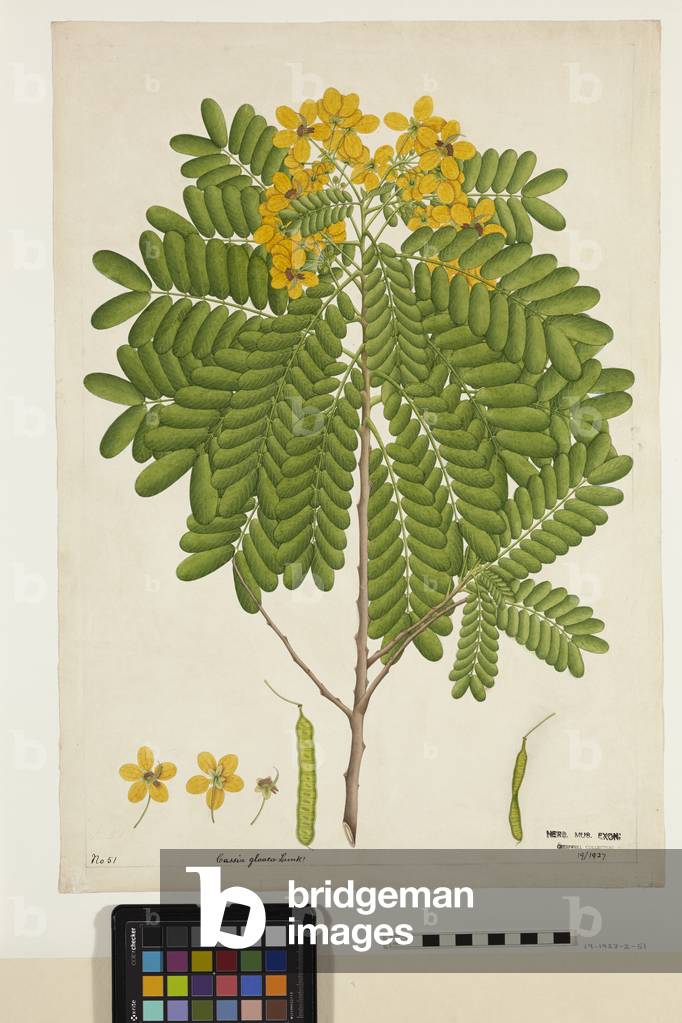
EX5910711 All plants in this genus have laxative effects. Senna extract is used in modern pharmaceuticals such as Senakot. It has also been tested in rats as a possible treatment for diabetes.In India young shoots and leaves of the golden senna (Senna surattensis) are eaten as a vegetable. Medicinally the flowers are used as a purgative, the bark and leaves are used to treat fungal diseases and the roots are used to alleviate gonorrhoea and treat snakebite. In the late 18th and early 19th centuries the East India Company controlled much of the Indian subcontinent. Keen to exploit and export valuable natural commodities, the Company set out to record the flora of India and commissioned Indian artists to create detailed botanical illustrations. Many of the plants were known through their use in Ayurvedic medicine. One of the world’s oldest medicinal systems, it has been practised in India for 3,000 years. Company School style paintings became popular with wealthy Europeans. It was not uncommon for East India Company officials (who were not employed as medics or botanists) to build their own personal collections of paintings depicting Indian flora and fauna. We cannot be sure how local amateur botanist Richard Cresswell came by this collection of 86 Company School works. It is possible Henry Creighton commissioned them during his time as a judge in Calcutta and that on his death the works came back to the UK with his daughter Frances who later married Richard Cresswell.
DC
EX5910709 Annatto is obtained from the lipstick tree’s seeds. It is used as an orange-red food colouring and seasoning. It is said to have a peppery nutmeg taste. In traditional Indian medicine the root bark is used in the treatment of fevers, the leaves as a gargle for sore throat and the seed pulp as a diuretic and laxative. It is also recommended in the treatment of epilepsy and skin diseases.In the late 18th and early 19th centuries the East India Company controlled much of the Indian subcontinent. Keen to exploit and export valuable natural commodities, the Company set out to record the flora of India and commissioned Indian artists to create detailed botanical illustrations. Many of the plants were known through their use in Ayurvedic medicine. One of the world’s oldest medicinal systems, it has been practised in India for 3,000 years. Company School style paintings became popular with wealthy Europeans. It was not uncommon for East India Company officials (who were not employed as medics or botanists) to build their own personal collections of paintings depicting Indian flora and fauna. We cannot be sure how local amateur botanist Richard Cresswell came by this collection of 86 Company School works. It is possible Henry Creighton commissioned them during his time as a judge in Calcutta and that on his death the works came back to the UK with his daughter Frances who later married Richard Cresswell.
DC
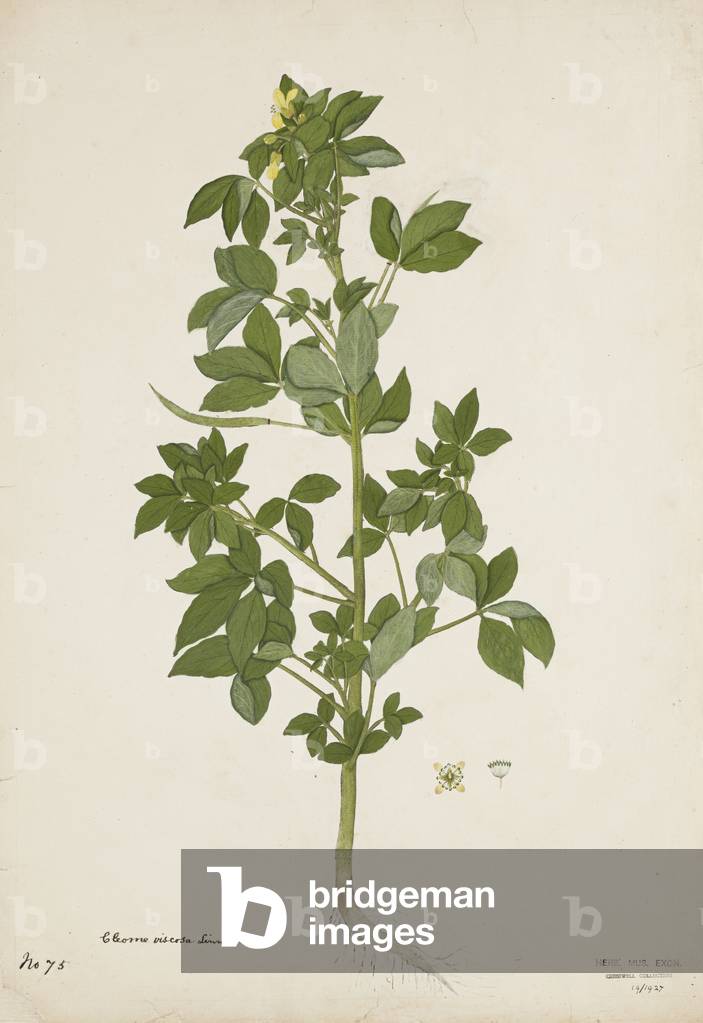
EX5910721 The leaves and seeds of the Asian spider flower are used in traditional medicine as a treatment for gout, stomach complaints, malaria and to promote wound healing.In the late 18th and early 19th centuries the East India Company controlled much of the Indian subcontinent. Keen to exploit and export valuable natural commodities, the Company set out to record the flora of India and commissioned Indian artists to create detailed botanical illustrations. Many of the plants were known through their use in Ayurvedic medicine. One of the world’s oldest medicinal systems, it has been practised in India for 3,000 years. Company School style paintings became popular with wealthy Europeans. It was not uncommon for East India Company officials (who were not employed as medics or botanists) to build their own personal collections of paintings depicting Indian flora and fauna. We cannot be sure how local amateur botanist Richard Cresswell came by this collection of 86 Company School works. It is possible Henry Creighton commissioned them during his time as a judge in Calcutta and that on his death the works came back to the UK with his daughter Frances who later married Richard Cresswell. Some drawings in this collection, including this one are signed on the reverse. The artist’s name, 48138, is written in English and Bengali. He is known to have worked for Lady Mary Impey, wife of Sir Elijah Impey the Chief Justice of the Supreme Court of Calcutta. It is probable that Creighton and Impey knew each other.
DC
EX5910715 All plants in this genus have laxative effects. Senna extract is used in modern pharmaceuticals such as Senakot. It has also been tested in rats as a possible treatment for diabetes.The seeds of coffee senna (Senna occidentalis) are sometimes used as a coffee substitute. Medicinally the flowers are used as a purgative, the bark and leaves are used to treat fungal diseases and parasites and the roots are used to alleviate gonorrhoea. In the late 18th and early 19th centuries the East India Company controlled much of the Indian subcontinent. Keen to exploit and export valuable natural commodities, the Company set out to record the flora of India and commissioned Indian artists to create detailed botanical illustrations. Many of the plants were known through their use in Ayurvedic medicine. One of the world’s oldest medicinal systems, it has been practised in India for 3,000 years. Company School style paintings became popular with wealthy Europeans. It was not uncommon for East India Company officials (who were not employed as medics or botanists) to build their own personal collections of paintings depicting Indian flora and fauna. We cannot be sure how local amateur botanist Richard Cresswell came by this collection of 86 Company School works. It is possible Henry Creighton commissioned them during his time as a judge in Calcutta and that on his death the works came back to the UK with his daughter Frances who later married Richard Cresswell. Some drawings in this collection, including this one are signed on the reverse. The artist’s name, Sheikh Zain al-din, is written in English and Bengali. He is known to have worked for Lady Mary Impey, wife of Sir Elijah Impey the Chief Justice of the Supreme Court of Calcutta. It is probable that Creighton and Impey knew each other.
DC
EX5910723 Jambolan (Syzygium cumini) has long been valued medicinally; the fruits contain vitamin C, anthocyanins and flavonoids; the leaves contain many different aromatic oils and the stems and bark are also rich in active compounds. The various parts of the plant have different uses (mainly anti-fungal and antibacterial) in traditional and Ayurvedic medicine. Recent studies have shown the seeds to be of potential use as a treatment for diabetes. The jambolan is a large evergreen tree, found throughout the warmer parts of India, Nepal and Burma. The greenish-white flowers have masses of thin stamens, the fruit are purple, about the size of an olive edible and sweet to slightly sour, with a single seed. In the late 18th and early 19th centuries the East India Company controlled much of the Indian subcontinent. Keen to exploit and export valuable natural commodities, the Company set out to record the flora of India and commissioned Indian artists to create detailed botanical illustrations. Many of the plants were known through their use in Ayurvedic medicine. One of the world’s oldest medicinal systems, it has been practised in India for 3,000 years. Company School style paintings became popular with wealthy Europeans. It was not uncommon for East India Company officials (who were not employed as medics or botanists) to build their own personal collections of paintings depicting Indian flora and fauna. We cannot be sure how local amateur botanist Richard Cresswell came by this collection of 86 Company School works. It is possible Henry Creighton commissioned them during his time as a judge in Calcutta and that on his death the works came back to the UK with his daughter Frances who later married Richard Cresswell. Some drawings in this collection, including this one are signed on the reverse. The artist’s name, 48138, is written in English and Bengali. He is known to have worked for Lady Mary Impey, wife of Sir Elijah Impey the Chief Justice of the Supreme Court of Calcutta. It is probable that Creighton and Impey knew each other.
DC
XOS3038265 Mary Scott Harrison McKee (1858-1930) served as First Lady 1892-3 to her father President Benjamin Harrison after the death of her mother. He insisted that his children, in-laws, and grandchildren live with him at the White HousePhoto shows Mrs. McKee with her children Mary Lodge and Baby Benjamin and Mary, wife of her brother Russell with her daughter Marthena.
DC
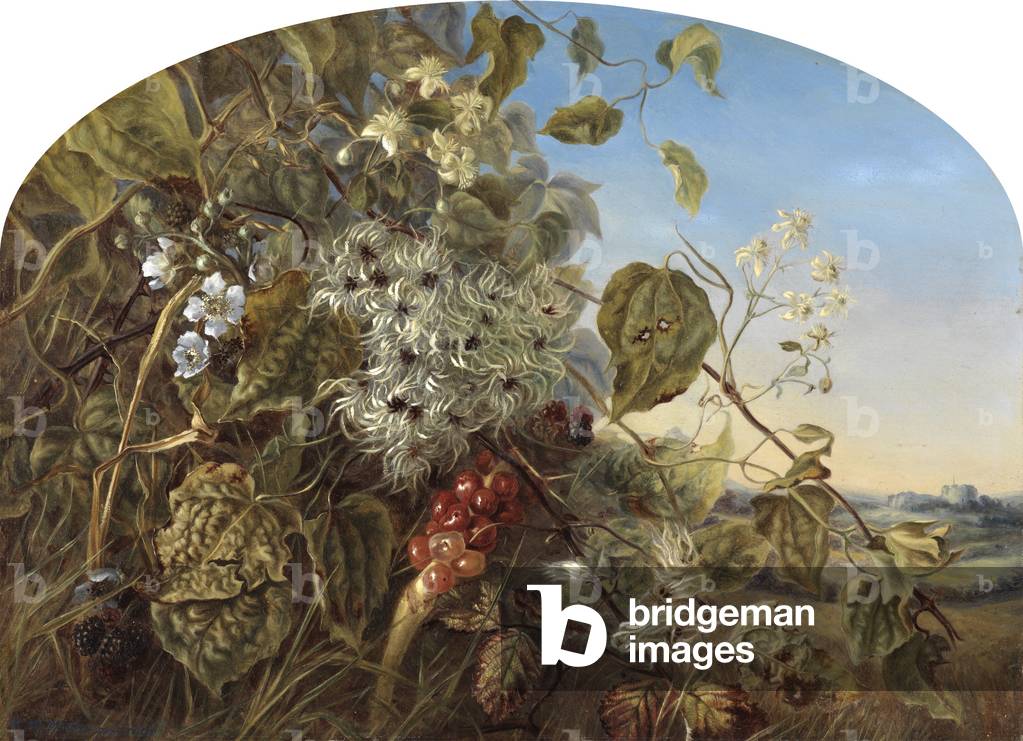
MAA2956873 Fanny Minns was a flower painter of independent means who studied art in Dresden, illustrated books and painted pottery. She lived in Carisbrooke on the Isle of Wight (across the fields in the painting the Castle can be seen). Old man's beard, berries, and dog rose
DC
MPX5127832 Every girl dreams of being a princess. That dream had a touch of reality today for these 16 Coventry girls, for they were treated like princesses. The girls, past and present pupils at Cardinal Wiseman School, went to Buckingham Palace and met the Duke of Edinburgh who presented them with the gold awards they gained under his scheme. Their mothers went too, and Sister Mary Colman, headmistress when the school first embarked on the Duke's award scheme 10 years ago, and Sister Agnes, whose responsibility it was at that time. At Cardinal Wiseman, there are now 100 girls taking the bronze award, 30 the silver and 25 the gold ' more than in any previous year. The girls receiving their "golds" today have covered a wide range of interests, including music, swimming, reading, dancing, cookery, needlework, typewriting, and badminton. The 16 are Josephine Fensom, Johanna Filipuik, Linda Hamilton, Monica Henry, Geraldine Igoe, Irene Krupa, Colleen Lissamer, Carmel Maguire, Mary Malone, Mary Maughan, Rose Meehan, Mary Naughton, Dawn O'Toole, Bernadette Thiedeman, Christine Union and Nora Wright. The present headmistress, Sister Frances Clare, is an enthusiastic supporter of the scheme, for which Sister Margaret has special responsibility. Sister Margaret said today: "The school has always considered the 'scheme to be of great value in the development of character, calling as it does for perseverance and determination." 13th July 1971
DC
MPX5127827 Every girl dreams of being a princess. That dream had a touch of reality today for these 16 Coventry girls, for they were treated like princesses. The girls, past and present pupils at Cardinal Wiseman School, went to Buckingham Palace and met the Duke of Edinburgh who presented them with the gold awards they gained under his scheme. Their mothers went too, and Sister Mary Colman, headmistress when the school first embarked on the Duke's award scheme 10 years ago, and Sister Agnes, whose responsibility it was at that time. At Cardinal Wiseman, there are now 100 girls taking the bronze award, 30 the silver and 25 the gold ' more than in any previous year. The girls receiving their "golds" today have covered a wide range of interests, including music, swimming, reading, dancing, cookery, needlework, typewriting, and badminton. The 16 are Josephine Fensom, Johanna Filipuik, Linda Hamilton, Monica Henry, Geraldine Igoe, Irene Krupa, Colleen Lissamer, Carmel Maguire, Mary Malone, Mary Maughan, Rose Meehan, Mary Naughton, Dawn O'Toole, Bernadette Thiedeman, Christine Union and Nora Wright. The present headmistress, Sister Frances Clare, is an enthusiastic supporter of the scheme, for which Sister Margaret has special responsibility. Sister Margaret said today: "The school has always considered the 'scheme to be of great value in the development of character, calling as it does for perseverance and determination." 13th July 1971
DC
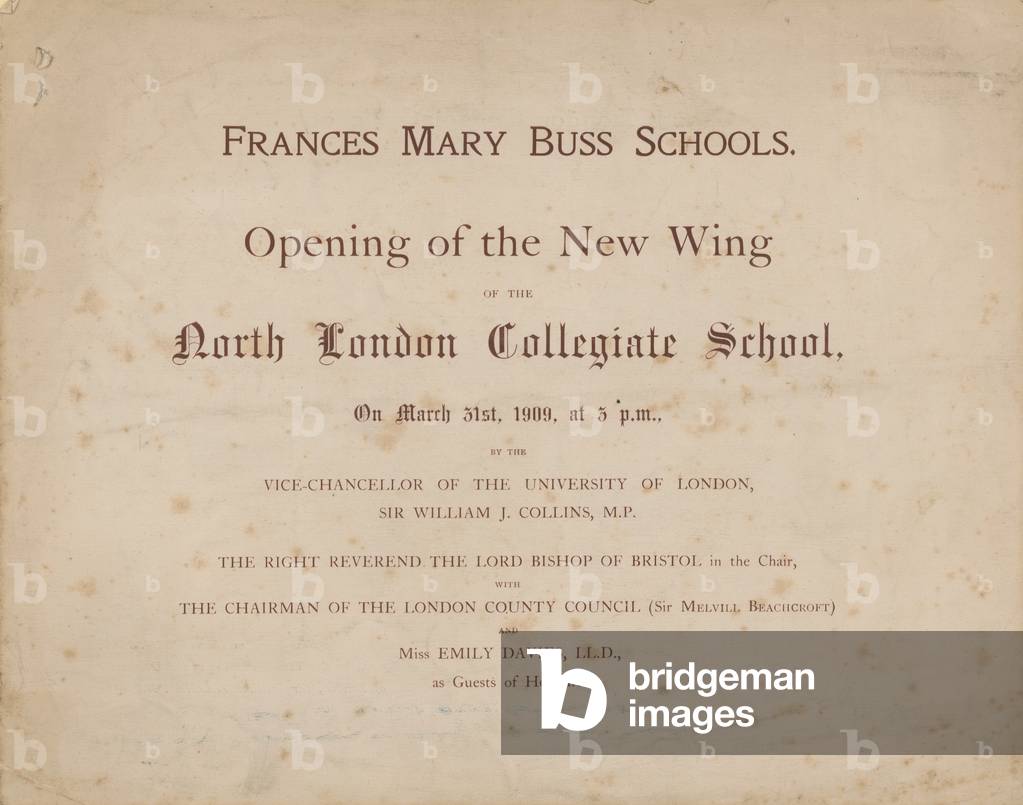
LLJ587077 Invitation by Frances Mary Buss Schools for the opening of the new wing of the North London Collegiate School, on March 31st, 1909.
DC
LLM3621858 The Zoological Gardens, 1826. Illustration for Really and Truly by Mrs Ernest Ames [Mary Frances Ames] (Edward Arnold, 1899).
DC
LLM3621857 Battle of Waterloo, 1815. This proud-looking man driving off in a cart, it is easy to see is the great Bonaparte. Illustration for Really and Truly by Mrs Ernest Ames [Mary Frances Ames] (Edward Arnold, 1899).
DC
LLM3621865 The Crimean War, 1855. Of the Crimean War it is usually said, a thin red line appeared and the enemy fled. Illustration for Really and Truly by Mrs Ernest Ames [Mary Frances Ames] (Edward Arnold, 1899).
DC
LLM3621874 Khartoum College, 1900. The Century closes and just leaves us room for the big Gordon College of Nova Khartoum. Illustration for Really and Truly by Mrs Ernest Ames [Mary Frances Ames] (Edward Arnold, 1899).
DC
XJF280523 Christina Georgina Rossetti (1830-94) poet; Dante Gabriel Rossetti (1828-82) painter and poet; Frances Mary Lavinia Rossetti (1800-86); William Michael Rossetti (1829-1919) critic and writer;
RF
LLM3621873 1898. This tells its own tale, and our hearts are all full, for Jonathan's wedded at last - to John Bull. Illustration for Really and Truly by Mrs Ernest Ames [Mary Frances Ames] (Edward Arnold, 1899).
DC
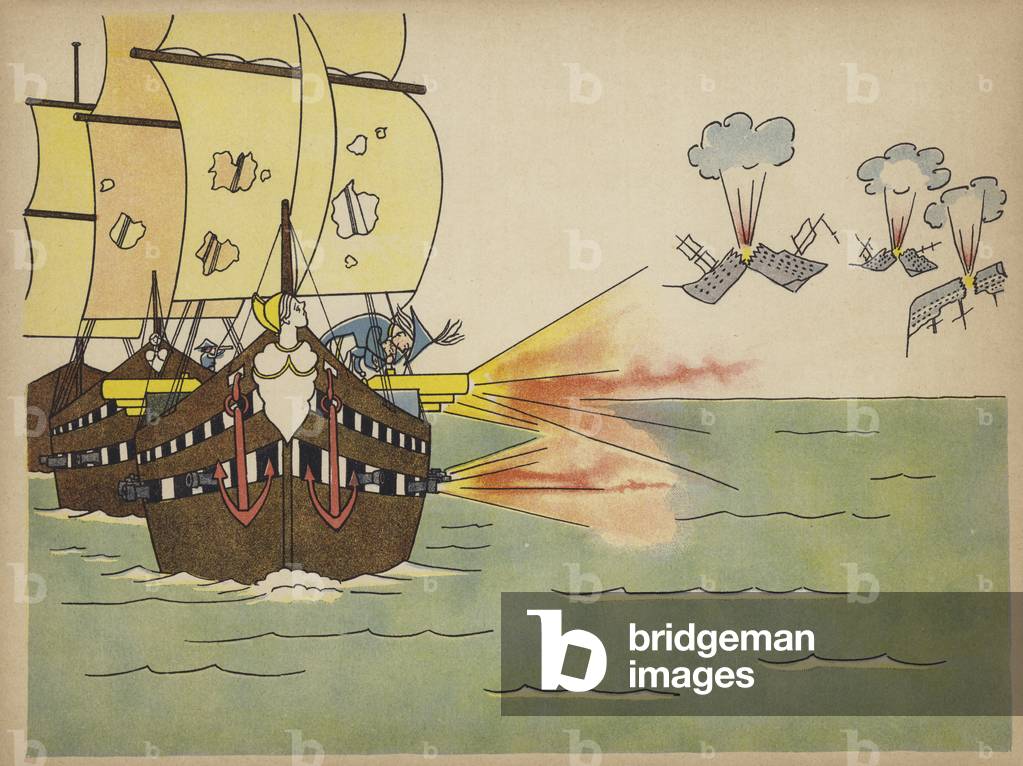
LLM3621855 Battle of Trafalgar, 1805. This is Lord Nelson's victorious fleet! When the French were blown up there was nothing to beat. Illustration for Really and Truly by Mrs Ernest Ames [Mary Frances Ames] (Edward Arnold, 1899).
DC
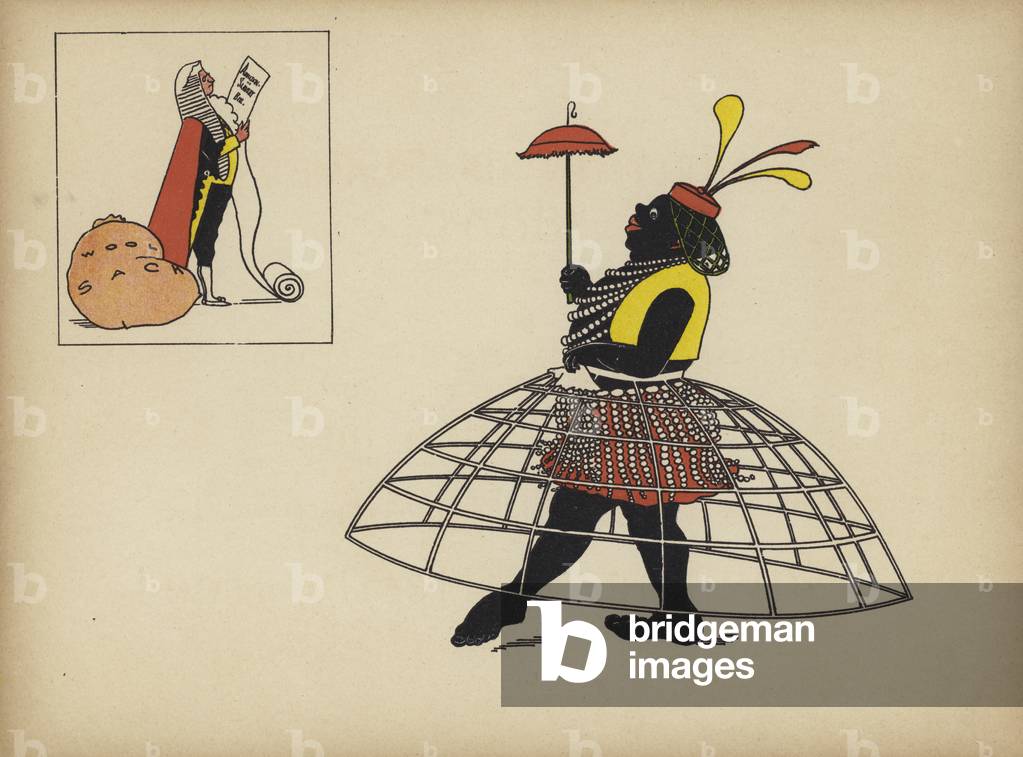
LLM3621860 Abolition of slavery, 1833. Here is a lady, as black as can be! She was lately a slave, now she's perfectly free! Illustration for Really and Truly by Mrs Ernest Ames [Mary Frances Ames] (Edward Arnold, 1899).
DC
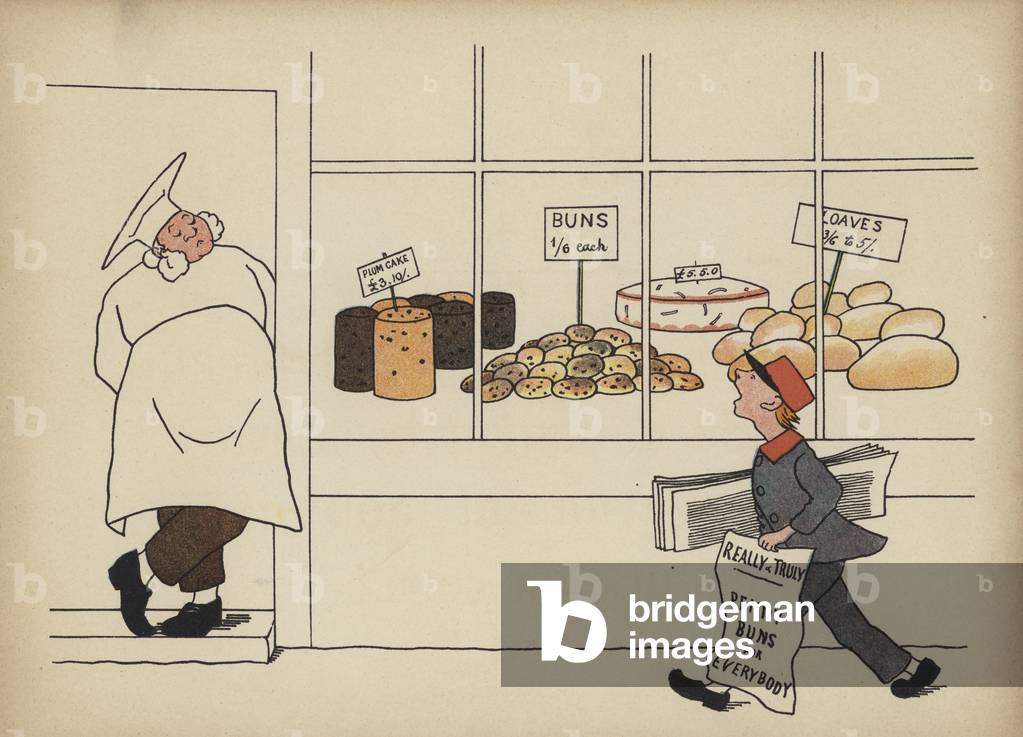
LLM3621854 Australia, 1802. Australia you know had been recently found. It was Flinders who first sailed the continent round. Illustration for Really and Truly by Mrs Ernest Ames [Mary Frances Ames] (Edward Arnold, 1899).
DC
LLM3621864 Repeal of the Corn Tax, 1846. When the high price of bread could no longer be borne, the government took off the duty on corn! Illustration for Really and Truly by Mrs Ernest Ames [Mary Frances Ames] (Edward Arnold, 1899).
DC
LLM3621853 The first united Parliament, 1801. The Century opens! T'was nobly begun; Great Britain and Ireland at last became one. Illustration for Really and Truly by Mrs Ernest Ames [Mary Frances Ames] (Edward Arnold, 1899).
DC
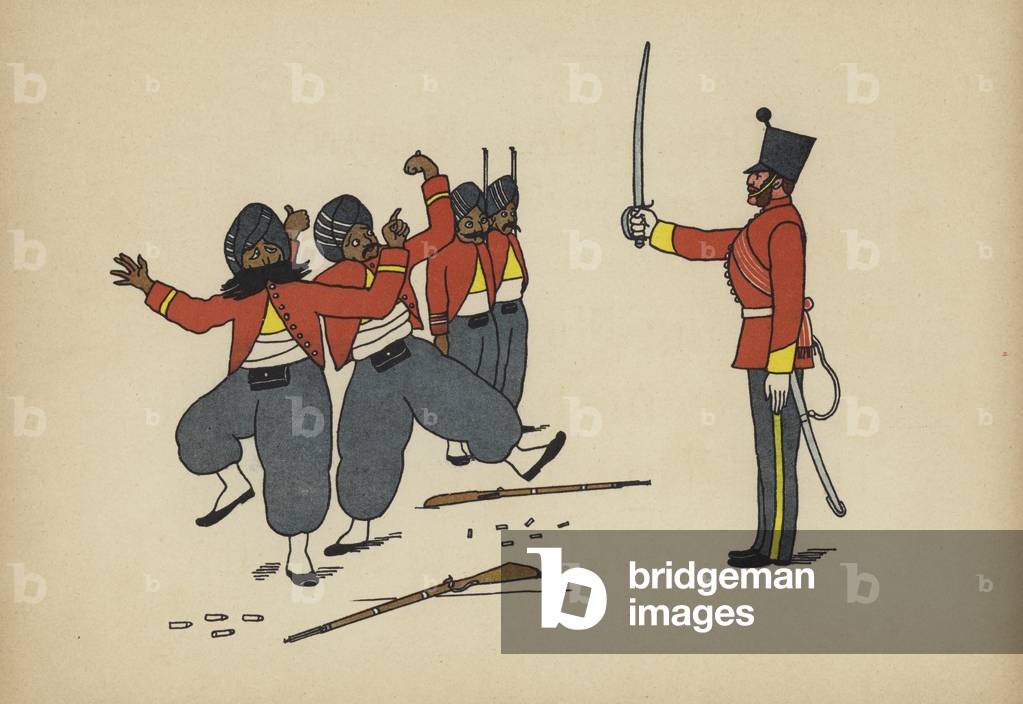
LLM3621866 The Indian Mutiny, 1857. When the mutiny came it was first shown at drill! The sepys were naughty and wouldn't stand still. Illustration for Really and Truly by Mrs Ernest Ames [Mary Frances Ames] (Edward Arnold, 1899).
DC
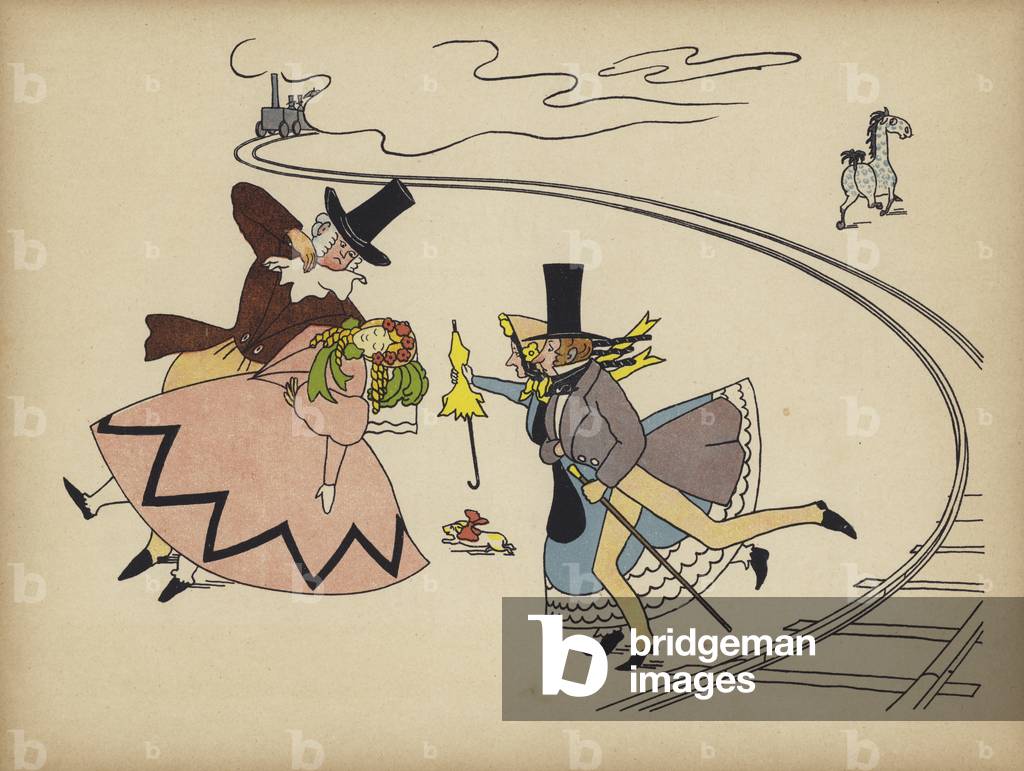
LLM3626537 The first railways, 1830. Her's the first railway! (the sketch is quite rough.) How it terrified all with its puffy-puff-puff! Illustration for Really and Truly by Mrs Ernest Ames [Mary Frances Ames] (Edward Arnold, 1899).
DC
LLM3621870 The Diamond Jubilee, 1897. When the Jubilee cheers were borne forth on the breeze, all the beasts of the forest went down on their knees. Illustration for Really and Truly by Mrs Ernest Ames [Mary Frances Ames] (Edward Arnold, 1899).
DC
LLM3621867 The first Atlantic cable, 1858. The first cable was laid in the year '58! They say the fish add very much to its weight. Illustration for Really and Truly by Mrs Ernest Ames [Mary Frances Ames] (Edward Arnold, 1899).
DC
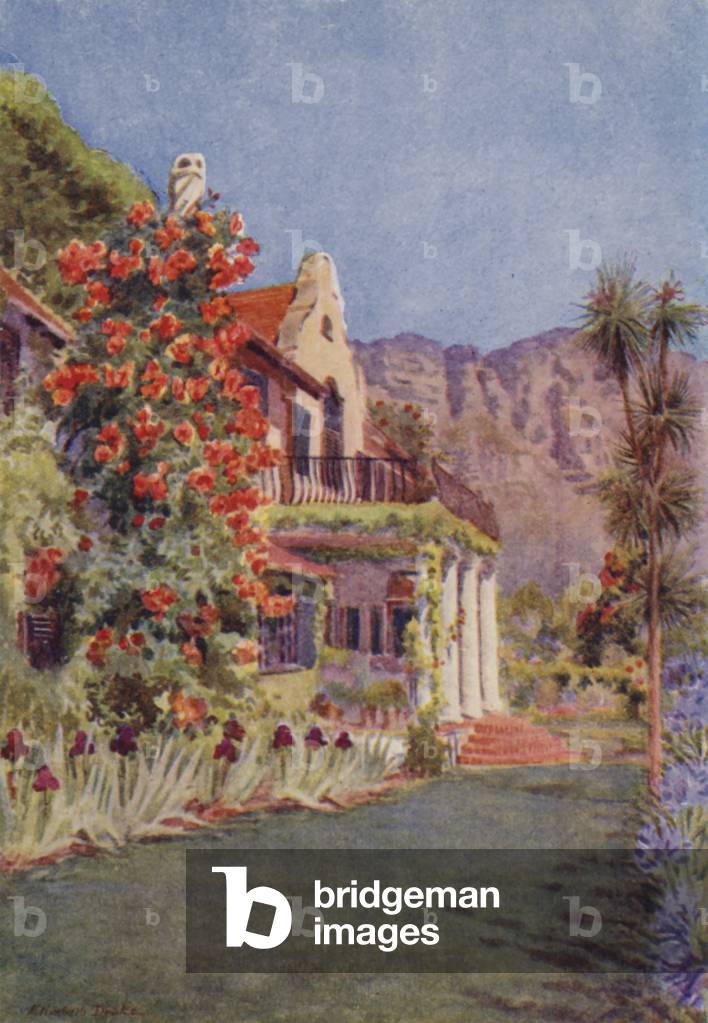
LLM7182479 Bougainvillea and Roses, Welgelegen, Rosebank. Illustration for Gardens of South Africa by Dorothea Fairbridge, with illustrations in colour by Elizabeth Drake (1866-1954), Edith Frances Mary Struben (1868-1936) and E Barter (no info found) (A&C Black, 1924).
DC
LLM3621859 New London Bridge, 1831. Here is William the Fourth. And he carries a large key, the New Bridge of London to open, you see. Illustration for Really and Truly by Mrs Ernest Ames [Mary Frances Ames] (Edward Arnold, 1899).
DC
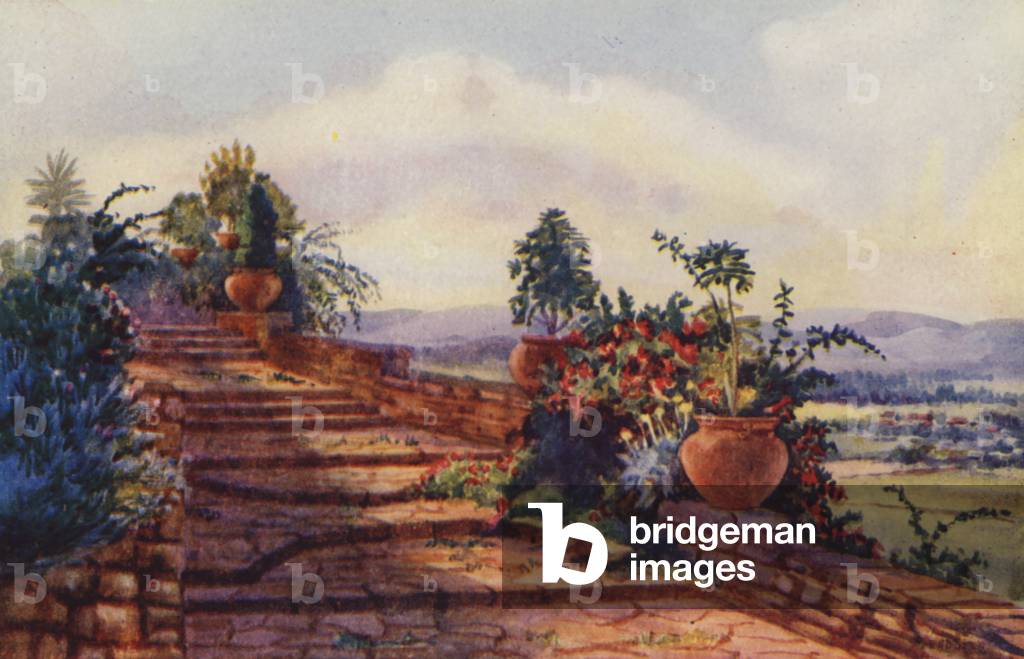
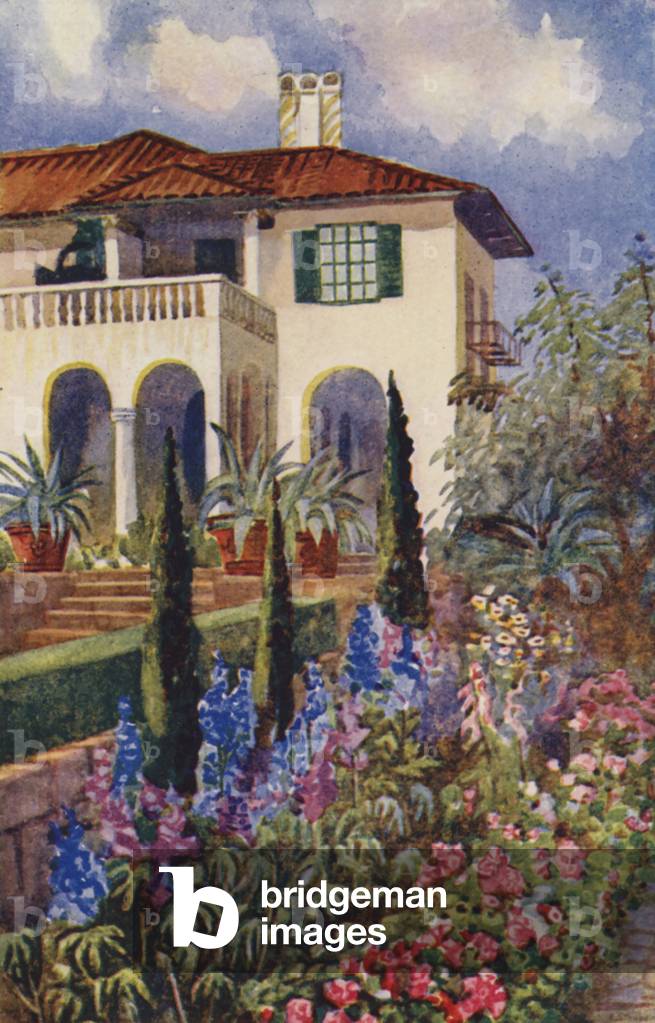
LLM7182477 The Steps at Government House, Pretoria. Illustration for Gardens of South Africa by Dorothea Fairbridge, with illustrations in colour by Elizabeth Drake (1866-1954), Edith Frances Mary Struben (1868-1936) and E Barter (no info found) (A&C Black, 1924).
DC
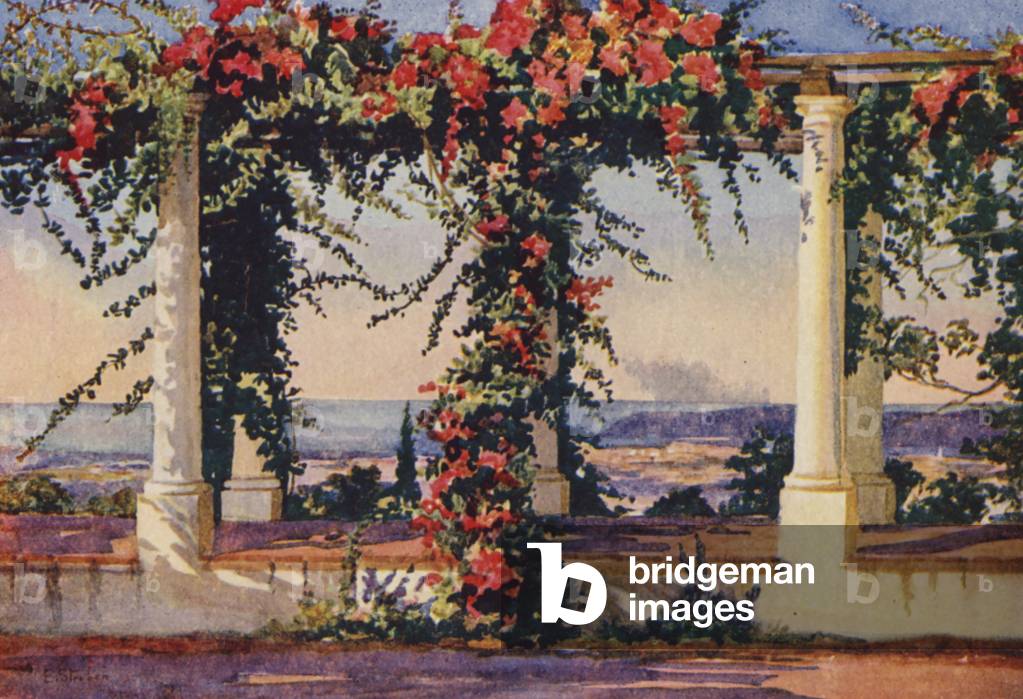
LLM7182475 Red Bougainvillea on a Durban Pergola. Illustration for Gardens of South Africa by Dorothea Fairbridge, with illustrations in colour by Elizabeth Drake (1866-1954), Edith Frances Mary Struben (1868-1936) and E Barter (no info found) (A&C Black, 1924).
DC
LLM7182485 Bignonia grandiflora at Paradise, Claremont. Illustration for Gardens of South Africa by Dorothea Fairbridge, with illustrations in colour by Elizabeth Drake (1866-1954), Edith Frances Mary Struben (1868-1936) and E Barter (no info found) (A&C Black, 1924).
DC
LLM3621869 Occupation of Egypt, 1882. This is John Bull walking out with the Sphinx! He doesn't say much, but he knows what he thinks! Illustration for Really and Truly by Mrs Ernest Ames [Mary Frances Ames] (Edward Arnold, 1899).
DC
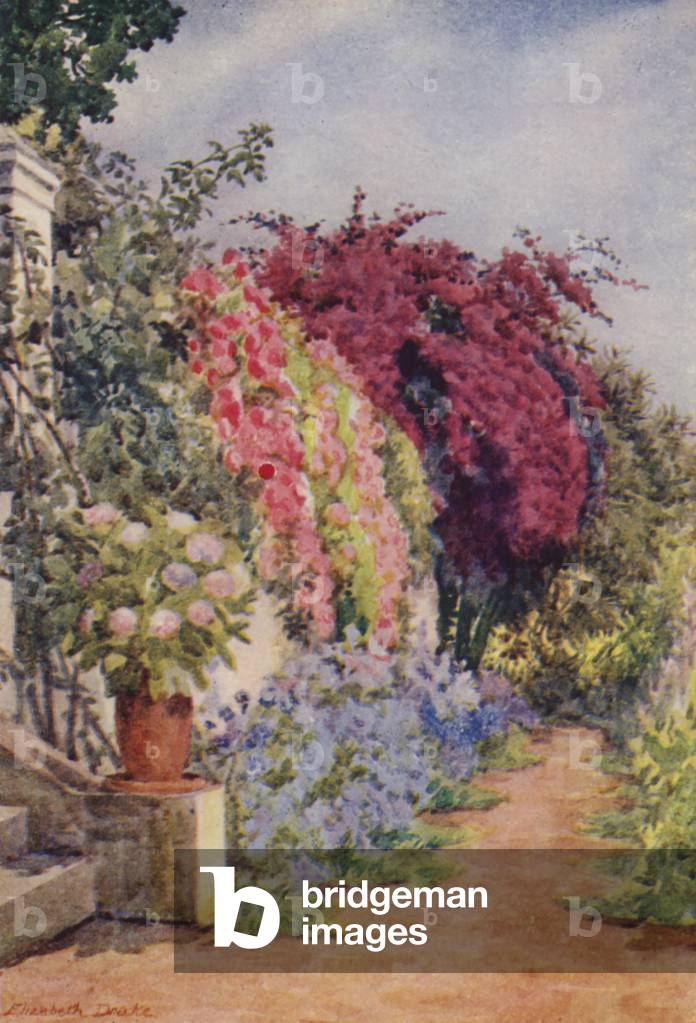
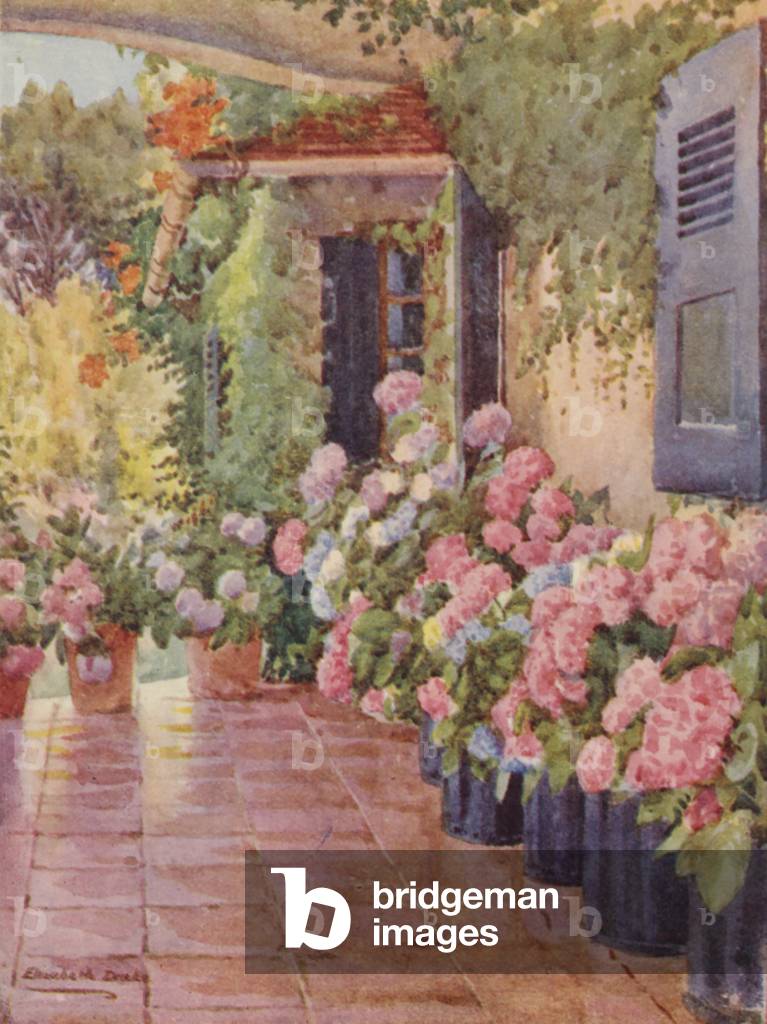
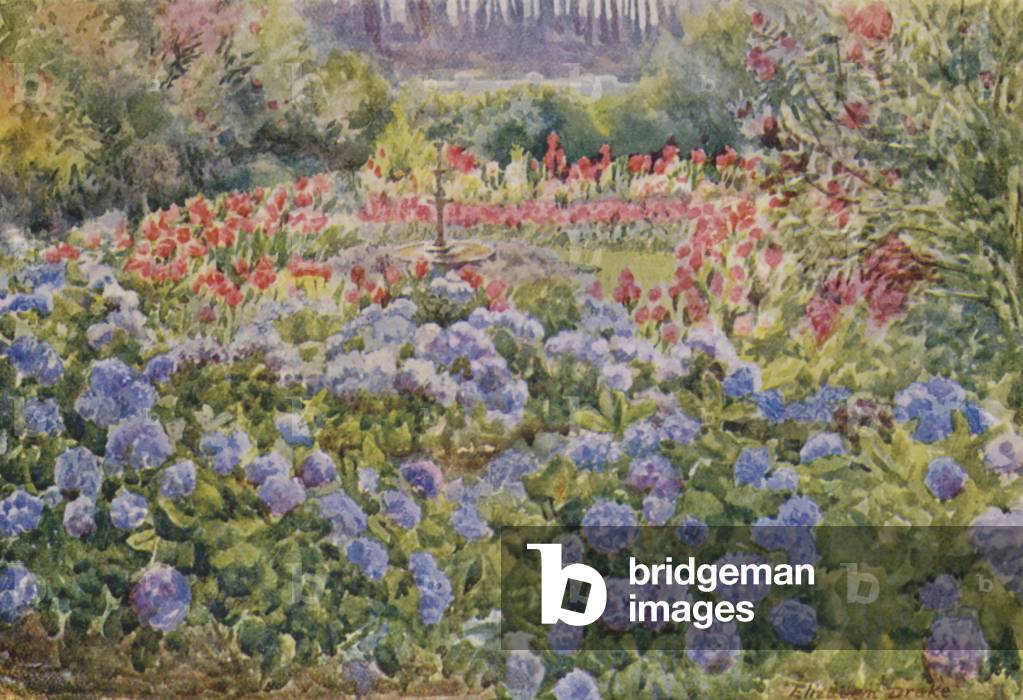
LLM7182488 Hydrangeas on the Stoep, Paradise, Claremont. Illustration for Gardens of South Africa by Dorothea Fairbridge, with illustrations in colour by Elizabeth Drake (1866-1954), Edith Frances Mary Struben (1868-1936) and E Barter (no info found) (A&C Black, 1924).
DC
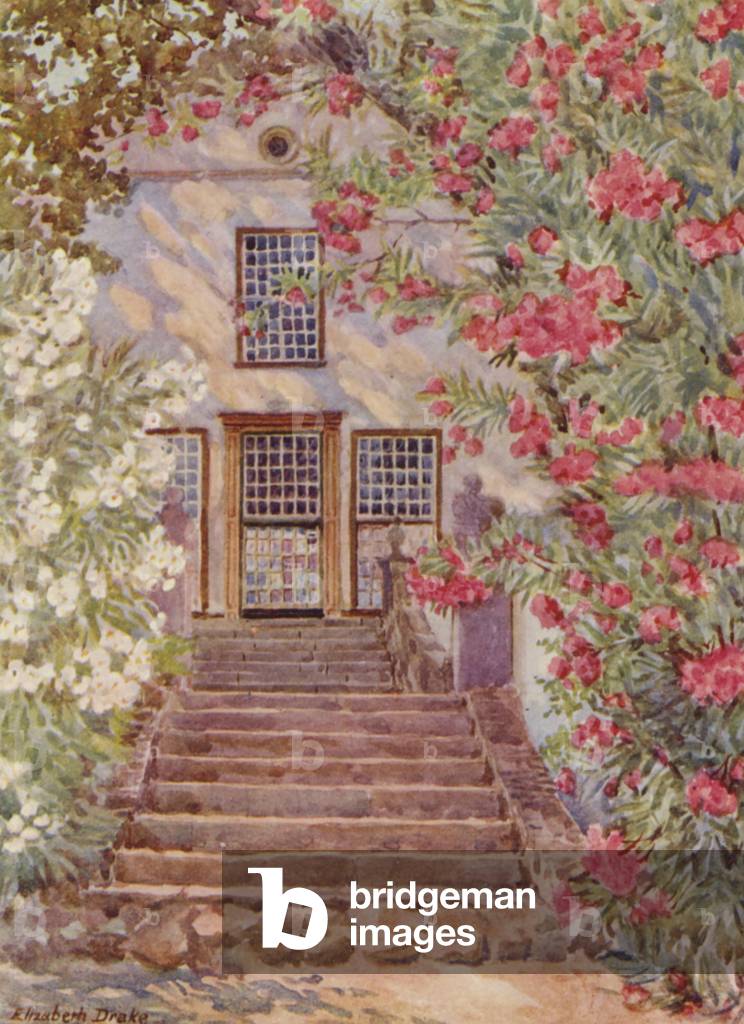
LLM7182482 Pink and White Oleanders, Alphen, Wynberg. Illustration for Gardens of South Africa by Dorothea Fairbridge, with illustrations in colour by Elizabeth Drake (1866-1954), Edith Frances Mary Struben (1868-1936) and E Barter (no info found) (A&C Black, 1924).
DC
LLM3621863 Penny Post, established 1840. You have heard of the post? Well before there was any it cost you a shilling what now costs a penny. Illustration for Really and Truly by Mrs Ernest Ames [Mary Frances Ames] (Edward Arnold, 1899).
DC
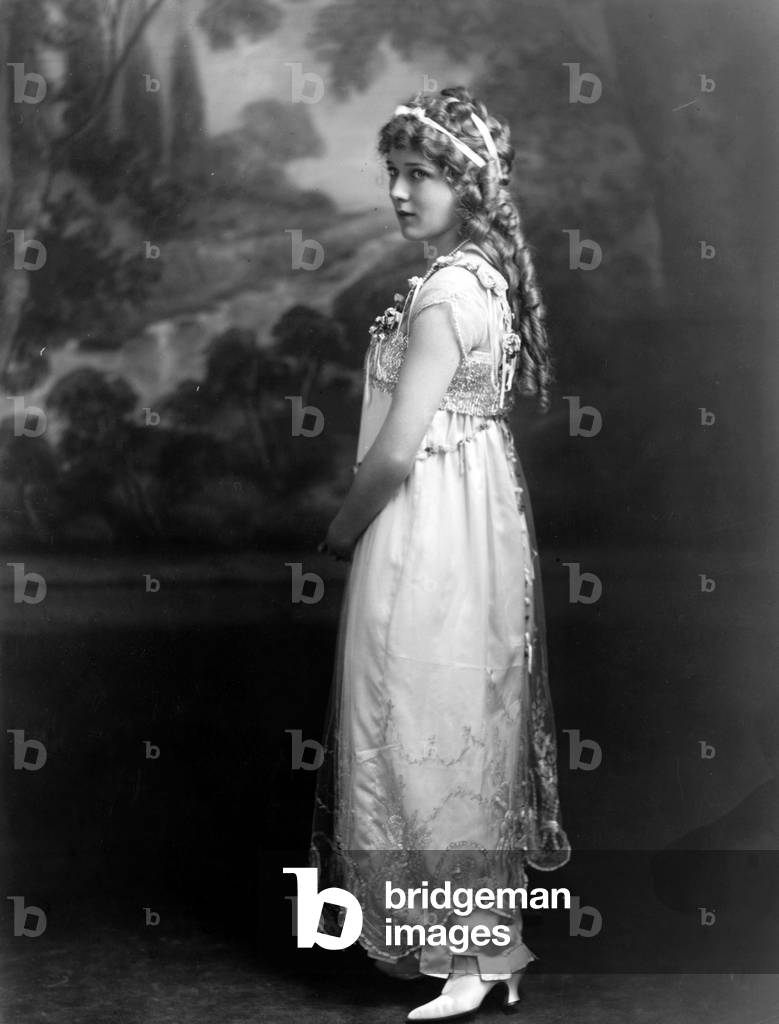
TVC3587498 Model wearing black and white striped jumpsuit in the middle of a star jump.Mary Frances "Debbie" Reynolds (1932-2016) was an American actress, singer, businesswoman, film historian, humanitarian, and mother of the actress and writer Carrie Fisher. By Tony Vaccaro
DC
LLM7182484 Orange Bignonia venusta, Woodley, Durban. Illustration for Gardens of South Africa by Dorothea Fairbridge, with illustrations in colour by Elizabeth Drake (1866-1954), Edith Frances Mary Struben (1868-1936) and E Barter (no info found) (A&C Black, 1924).
DC
LLM7182478 A Corner of the Garden at Villa Arcadia, Johannesburg. Illustration for Gardens of South Africa by Dorothea Fairbridge, with illustrations in colour by Elizabeth Drake (1866-1954), Edith Frances Mary Struben (1868-1936) and E Barter (no info found) (A&C Black, 1924).
DC
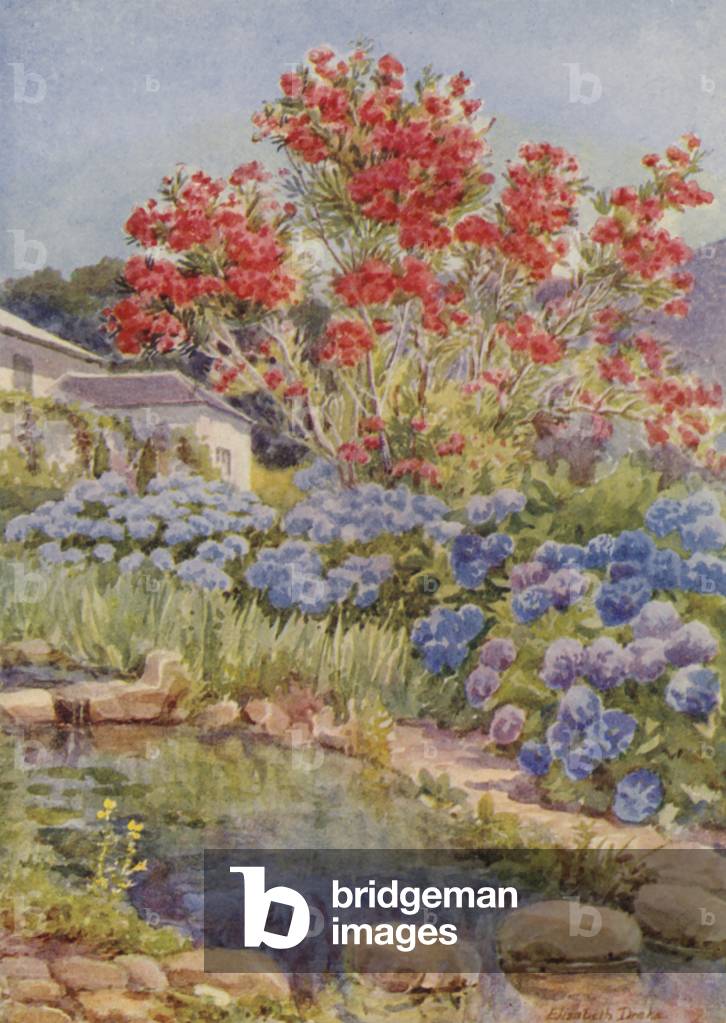
LLM7182483 Hydrangeas by the Water, Bishopscourt, near Cape Town. Illustration for Gardens of South Africa by Dorothea Fairbridge, with illustrations in colour by Elizabeth Drake (1866-1954), Edith Frances Mary Struben (1868-1936) and E Barter (no info found) (A&C Black, 1924).
DC
LLM7182489 Blue Hydrangeas and Pink Cannas, Alphen, Wynberg. Illustration for Gardens of South Africa by Dorothea Fairbridge, with illustrations in colour by Elizabeth Drake (1866-1954), Edith Frances Mary Struben (1868-1936) and E Barter (no info found) (A&C Black, 1924).
DC
JLJ4567818 Full-length portrait of Robert Andrews (1726-1806) and his wife Frances Mary Carter. The husband poses in hunting clothes with his dog. Painting by Thomas Gainsborough (1727-1788). 1750. 0,69 x1,19 m. National gallery, London
DC
LLM3621868 Board Schools established, 1870. Reading, writing and sums were once all that was taught! Now folks say that children learn more than they ought! Illustration for Really and Truly by Mrs Ernest Ames [Mary Frances Ames] (Edward Arnold, 1899).
DC
LLM3621861 Accession of Queen Victoria, 1837. When they brought our young Queen her beautiful crown, she was still fast asleep, so hadn't come down. Illustration for Really and Truly by Mrs Ernest Ames [Mary Frances Ames] (Edward Arnold, 1899).
DC
LLM7182474 Scarlet-flowering Eucalyptus, near Cape Town. Illustration for Gardens of South Africa by Dorothea Fairbridge, with illustrations in colour by Elizabeth Drake (1866-1954), Edith Frances Mary Struben (1868-1936) and E Barter (no info found) (A&C Black, 1924).
DC
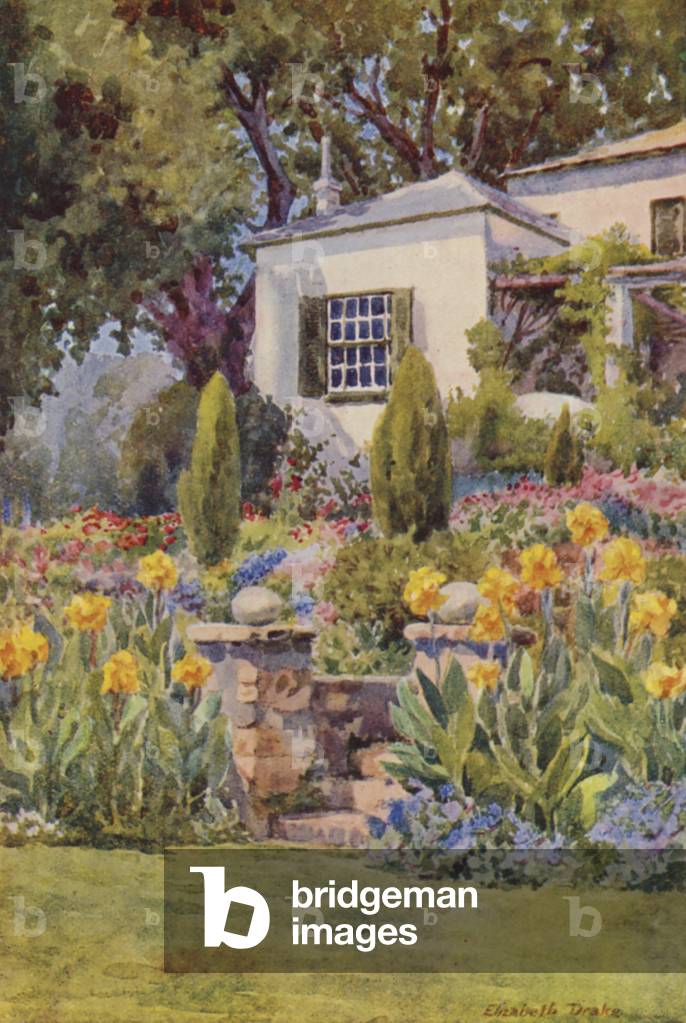
LLM7182476 Yellow Cannas at the Steps, Bishopscourt, near Cape Town. Illustration for Gardens of South Africa by Dorothea Fairbridge, with illustrations in colour by Elizabeth Drake (1866-1954), Edith Frances Mary Struben (1868-1936) and E Barter (no info found) (A&C Black, 1924).
DC
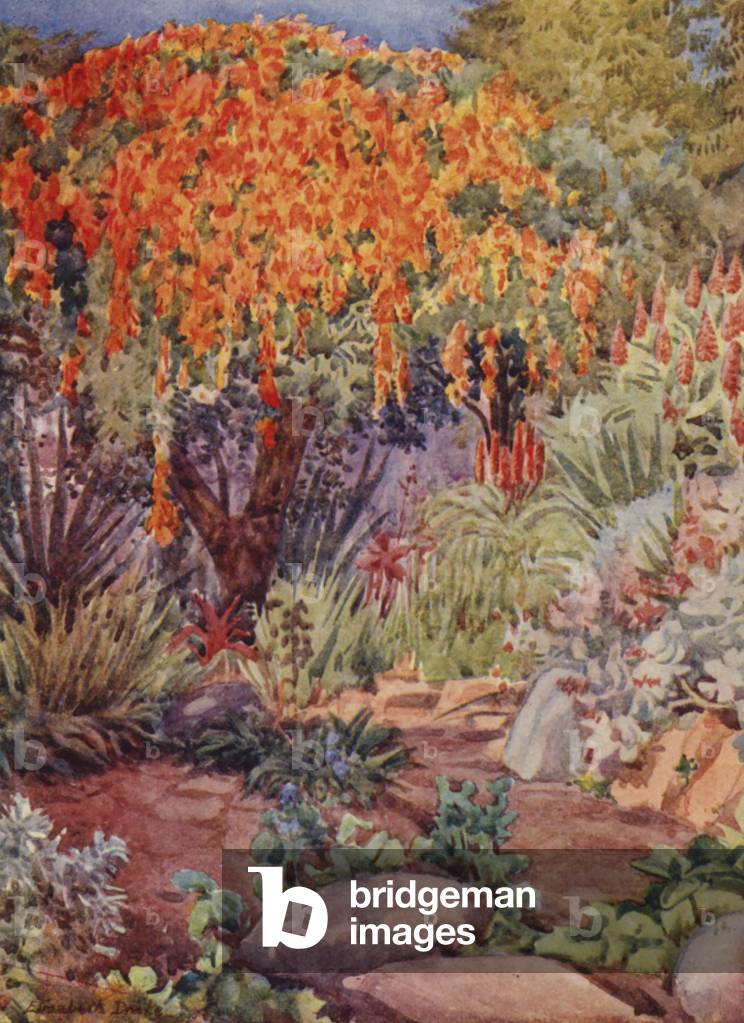
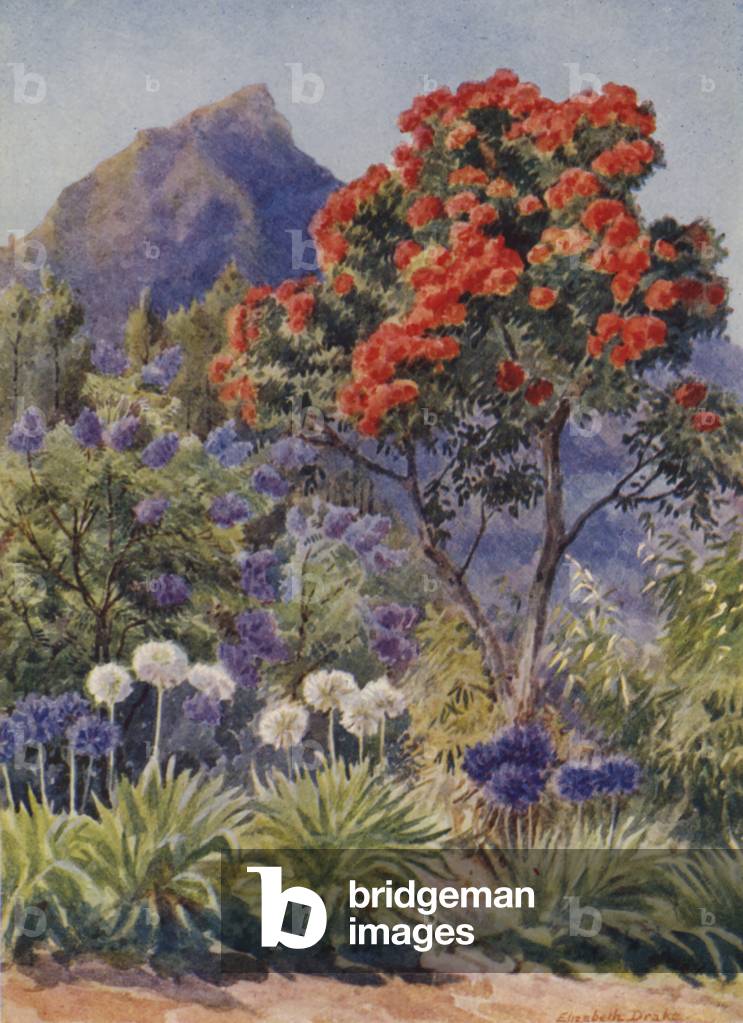
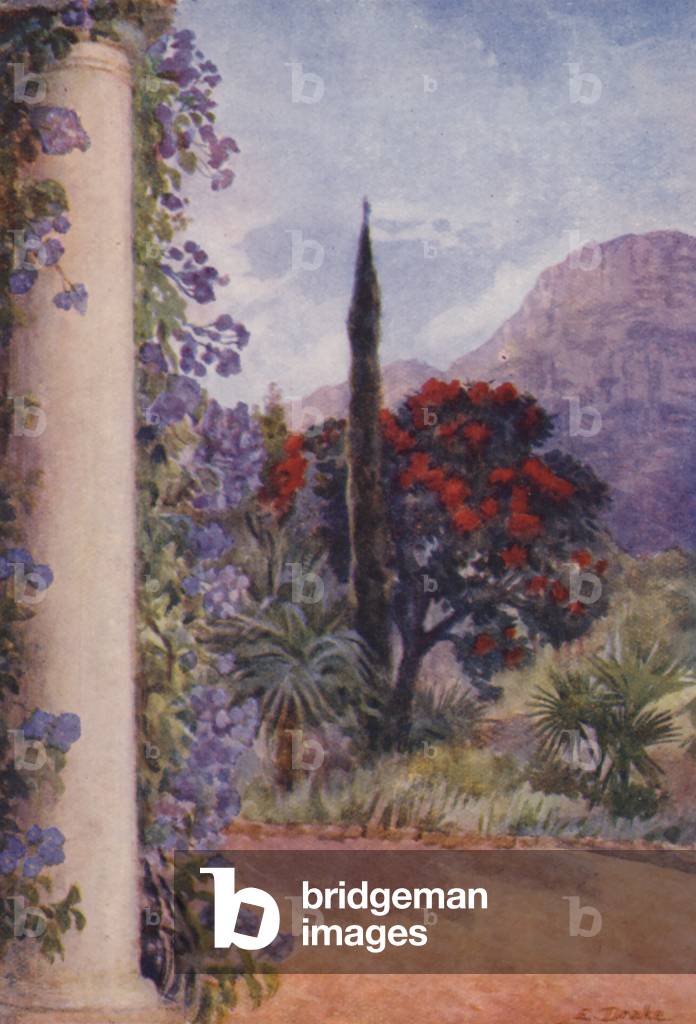
LLM7182480 Dark-red Eucalyptus and Solanum Wendlandii at Paradise, Claremont. Illustration for Gardens of South Africa by Dorothea Fairbridge, with illustrations in colour by Elizabeth Drake (1866-1954), Edith Frances Mary Struben (1868-1936) and E Barter (no info found) (A&C Black, 1924).
DC

Total de Resultados: 1.366

Página 1 de 14