





















































Busque também em nossas outras coleções:

Tipo de arquivo:

Tipo do arquivo:

Orientação:

Total de Resultados: 2

Página 1 de 1

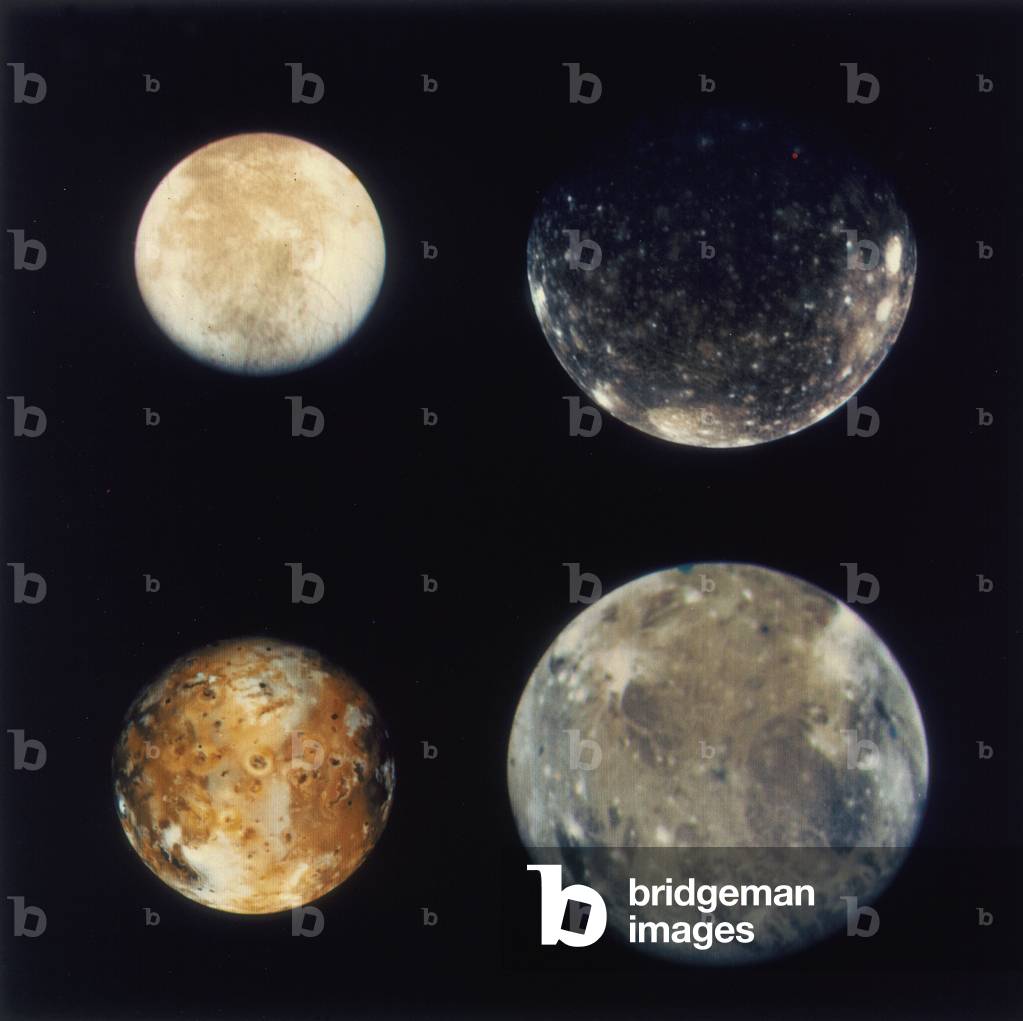
UIS5072263 Jupiter's four 'Galilean' moons, 1979. Clockwise from top left: Europa, Callisto, Ganymede and Io, all photographed by NASA's Voyager 1 spacecraft. Jupiter has four main moons, which were discovered by Galileo, as well as many smaller ones (47 Jovian moons are currently known). Io, the closest of the four large moons to Jupiter is highly volcanic. Europa, the second closest is a smooth, icy moon believed to have an ocean of liquid water beneath its surface which could possibly harbour life. The two outer large moons are extensively scarred by impact craters, one on Callisto being the largest yet found in the Solar System. Ganymede is the largest planetary satellite in the Solar System, and is larger than the planets Mercury and Pluto. ©SSPL/NASA
DC
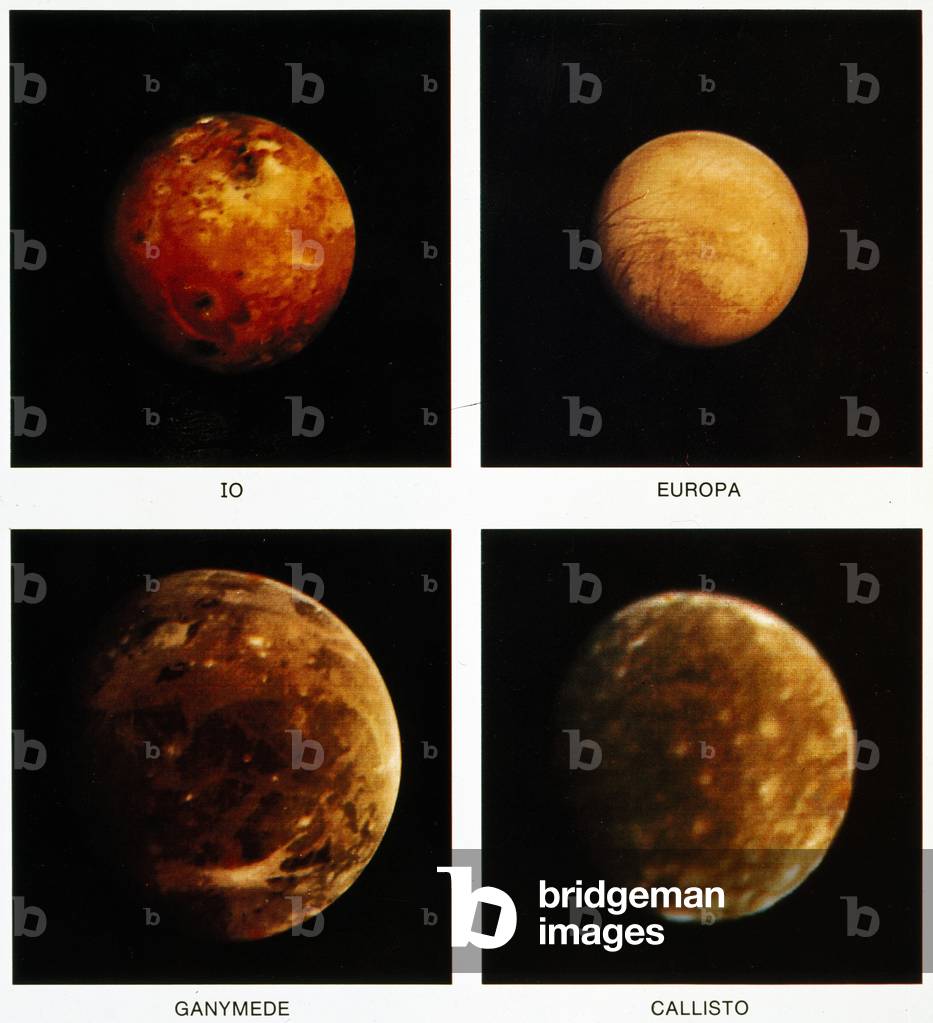
UIS5071071 Jupiter's four 'Galilean' moons, 1979. Io, Europa, Ganymede and Callisto, photographed by Voyager 1. Jupiter has four main moons, which were discovered by Galileo, as well as many smaller ones (47 Jovian moons are currently known). Io, the closest of the four large moons to Jupiter is highly volcanic. Europa, the second closest is a smooth, icy moon believed to have an ocean of liquid water beneath its surface which could possibly harbour life. The two outer large moons are extensively scarred by impact craters, one on Callisto being the largest yet found in the Solar System. Ganymede is the largest planetary satellite in the Solar System, and is larger than the planets Mercury and Pluto. NASA's two Voyager spacecraft were launched in 1977 to explore the planets in the outer solar system. ©SSPL/NASA
DC

Total de Resultados: 2

Página 1 de 1