















































Busque também em nossas outras coleções:

Tipo de arquivo:

Tipo do arquivo:

Orientação:

Total de Resultados: 15

Página 1 de 1

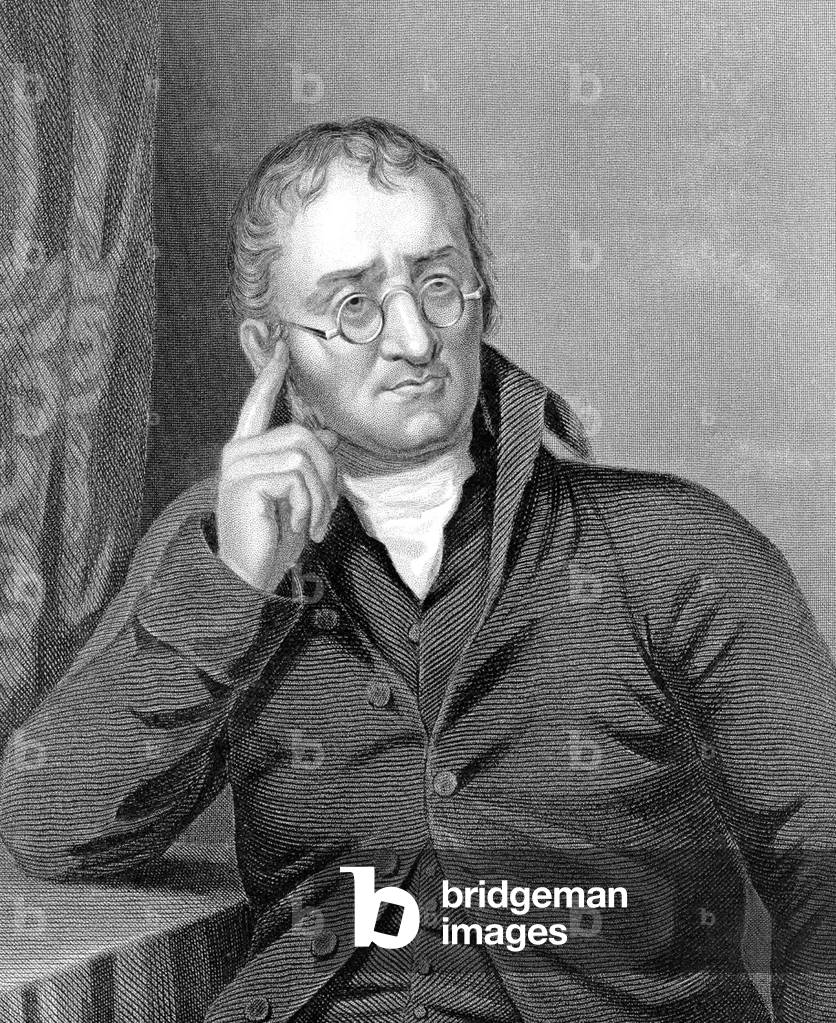
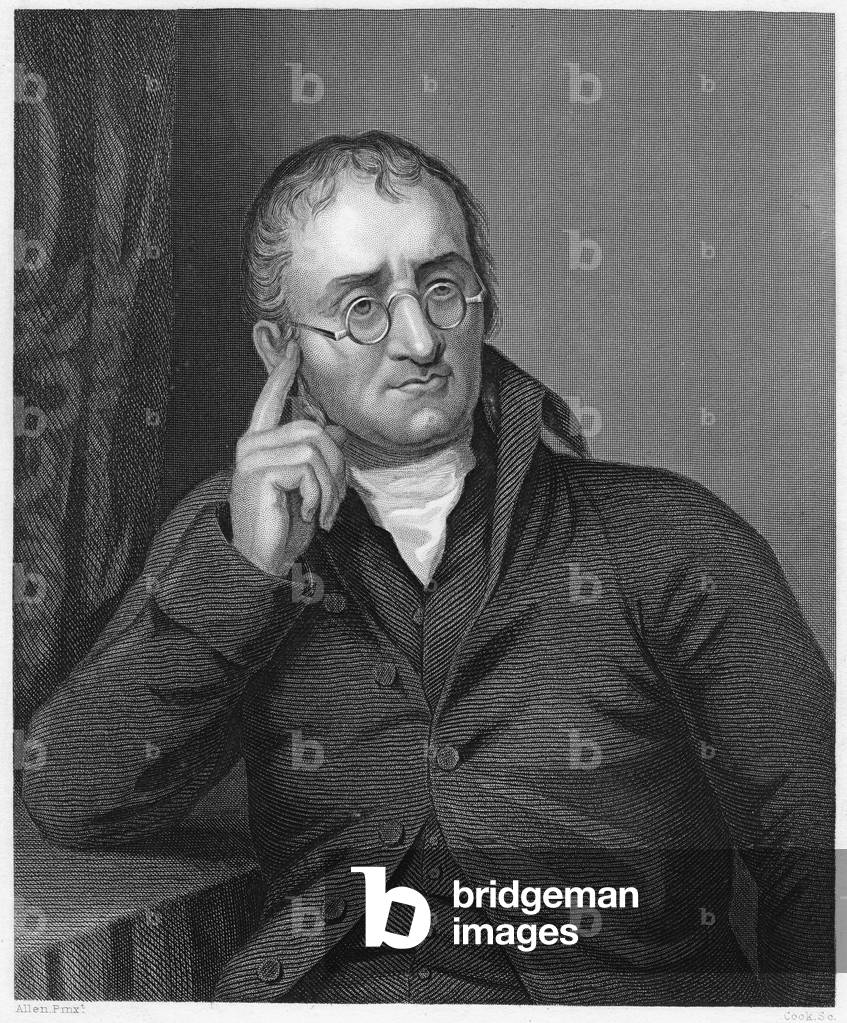
EUL307747 John Dalton (1766-1844) engraved by Charles Turner (1773-1857); teacher of maths and physics;
DC
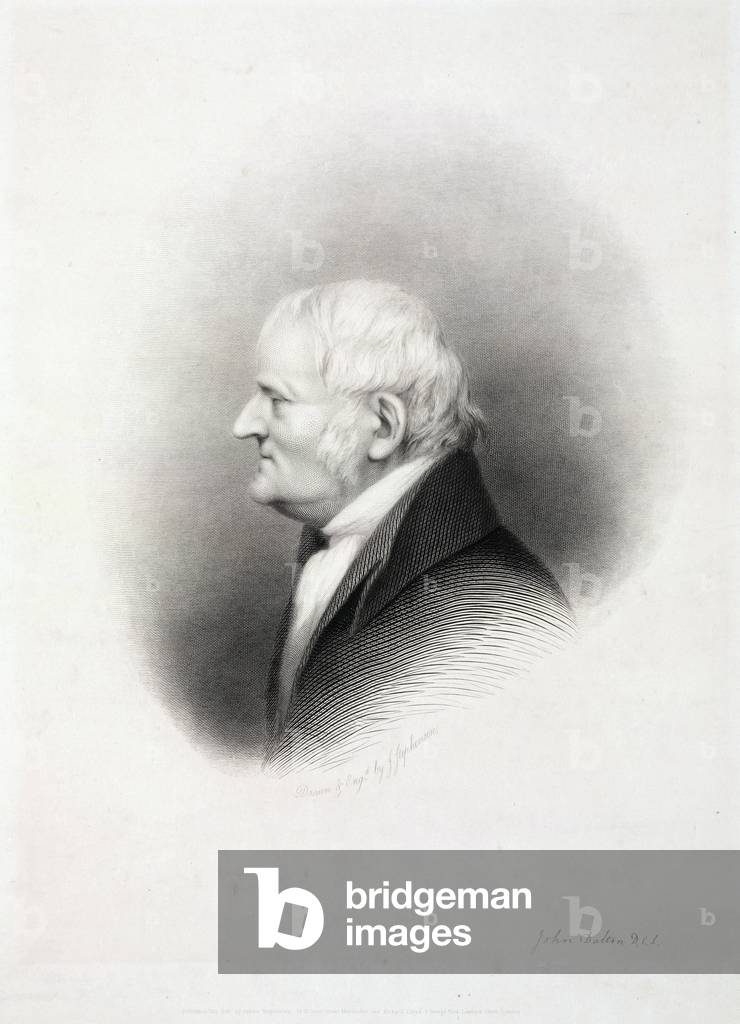
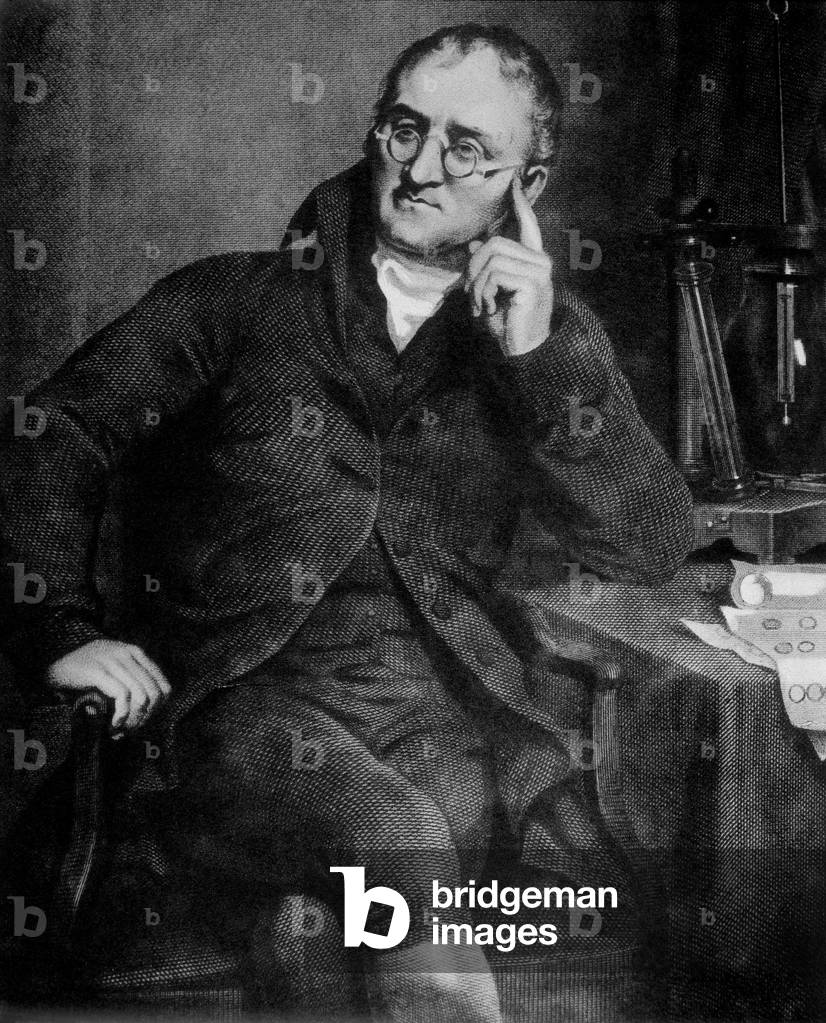
XEE5028886 Portrait of John Dalton (1766-1844), English physicist and chemist
DC
LSE4101863 John Dalton (1766-1844), English physicist and chemist.
DC
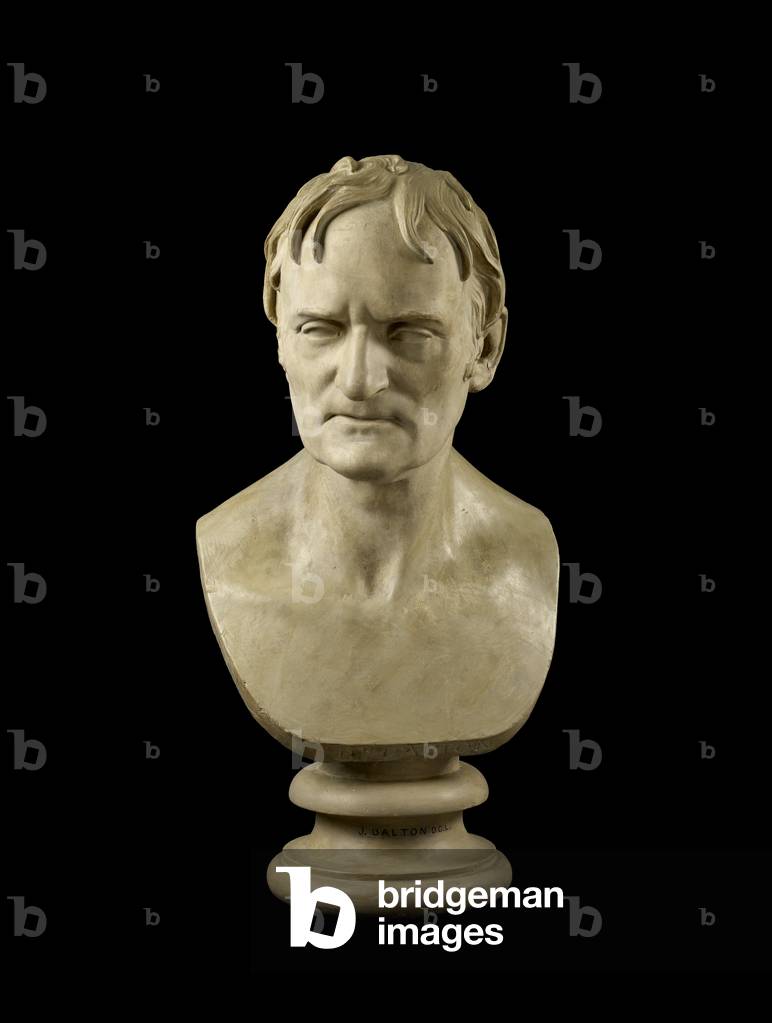
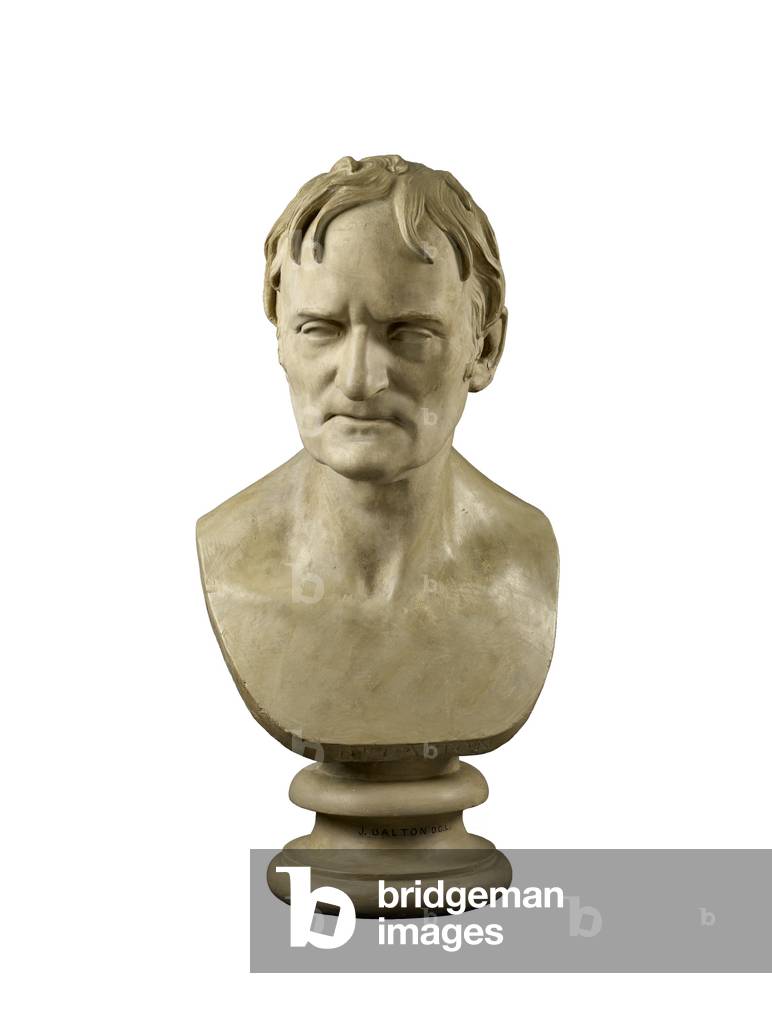
AMO1216659 John Dalton DCL (1766-1844) British scientist, president of Philosophical SocietyPresumably a model for a marble though no marble has been traced. A different composition from the statue of Dalton (cf), but possibly produced in connection with this commission.
DC
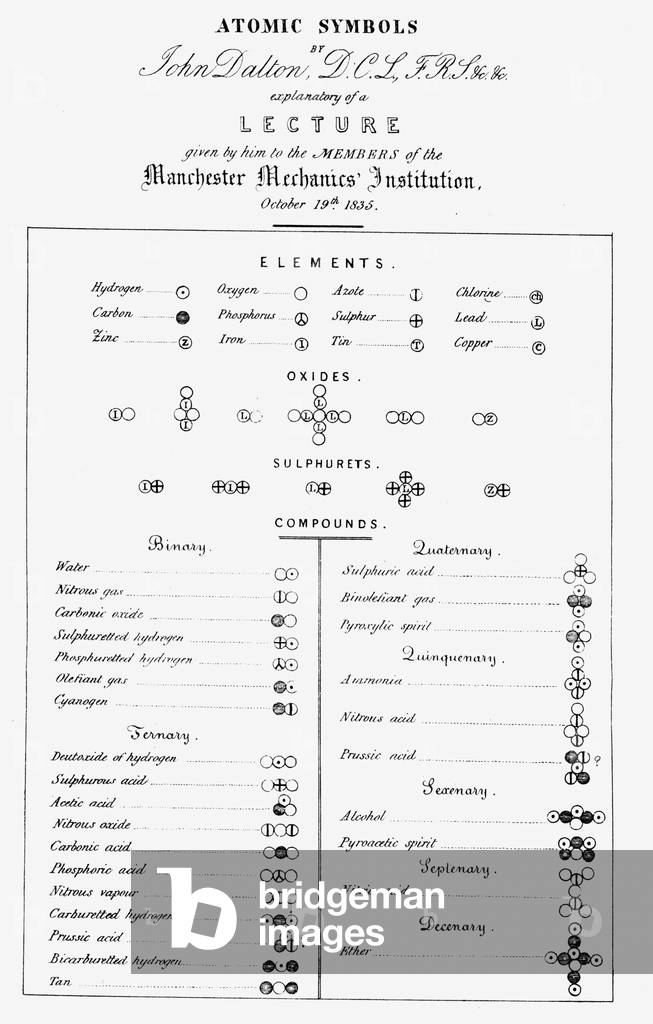
UIS5071362 John Dalton, English chemist, early 19th century. John Dalton (1766-1844) formulated the atomic theory to explain chemical reactions, based on the concept that the atoms of different elements are distinguished by differences in their weights. This theory has influenced scientific thought for more than a century and a half. In 1794 he first described colour blindness (Daltonism), an affliction from which both he and his brother suffered. He also kept a meteorological journal for most of his life, recording over 200,000 observations. ©SSPL/Science Museum
DC
XEE5028882 - drawing by J. Derome
DC
XEE4144929 John Dalton (engraving), Lonsdale, James (1777-1839) (after)
RF
TRI224387 teacher of maths and physics;
DC
PVD1680752 John Dalton (1766-1844) english chemist, engraving
DC
XEE5028891 Portrait of John Dalton (1766-1844), English physicist and chemist - drawing by William Brockedon of 1834
DC
IBE5368593 British chemist and physicist. Madrid, National Library.
DC
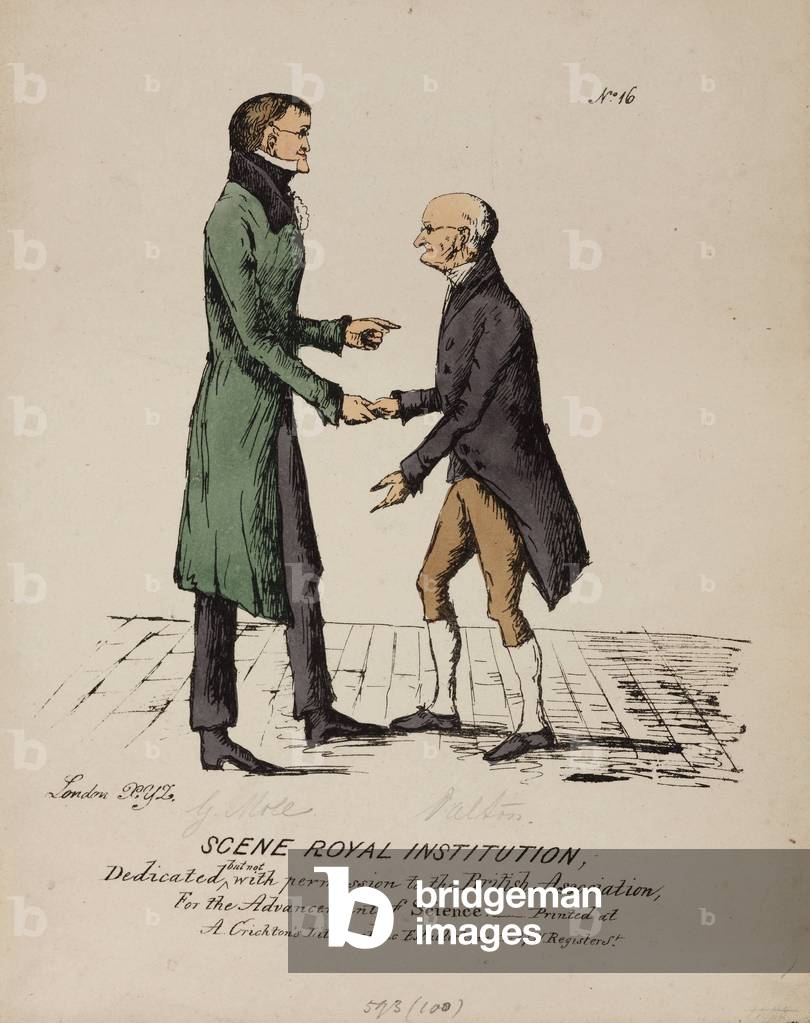
UIS5070865 Scene Royal Institution: Gerrit Moll and John Dalton, c 1831-1840. Coloured lithograph caricature of Gerrit Moll (left), and John Dalton (right). Gerard (or Gerrit) Moll (1785-1838), was a Dutch physicist and professor at the University of Utrecht. Dalton (1766-1844) formulated the atomic theory to explain chemical reactions, based on the concept that atoms of different elements are distinguished by differences in their weights, a theory which has influenced scientific thought for over 150 years. Here Moll is being thanked by Dalton for an anonymous pamplet in defence of English science published in 1831, soon after which Dalton was awarded a pension, announced at the annual meeting of the British Association for the Advancement of Science the artist suggests these events are related. ©SSPL/Science Museum
DC
HIM5300022 Portrait de John Dalton, chimiste et physicien britannique - Bust of John Dalton DCL (1766-1844), 1834. Presumably a model for a marble though no marble has been traced. A different composition from the statue of Dalton (cf), but possibly produced in connection with this commission. Dimensions: height x width x depth: 61.2 x 33 x 32 cm
DC
UIG530599
DC
UIG539615
DC

Total de Resultados: 15

Página 1 de 1