













































Busque também em nossas outras coleções:

Tipo de arquivo:

Tipo do arquivo:

Orientação:

Total de Resultados: 35

Página 1 de 1

UIG541272
DC
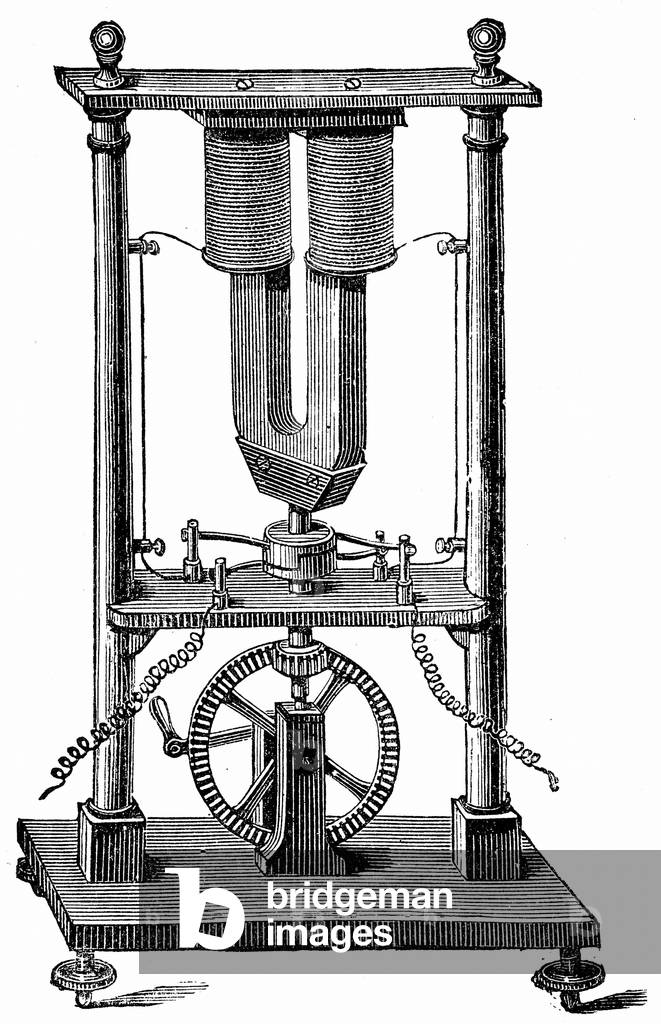
UIS5083194 Electromagnetism Faraday's electro-magnetic rotation apparatus. This was the first electric motor. Michael Faraday (1791-1867) was the English physicist and discoverer of the principles of the electric motor and dynamo. ©SSPL/Science Museum
DC
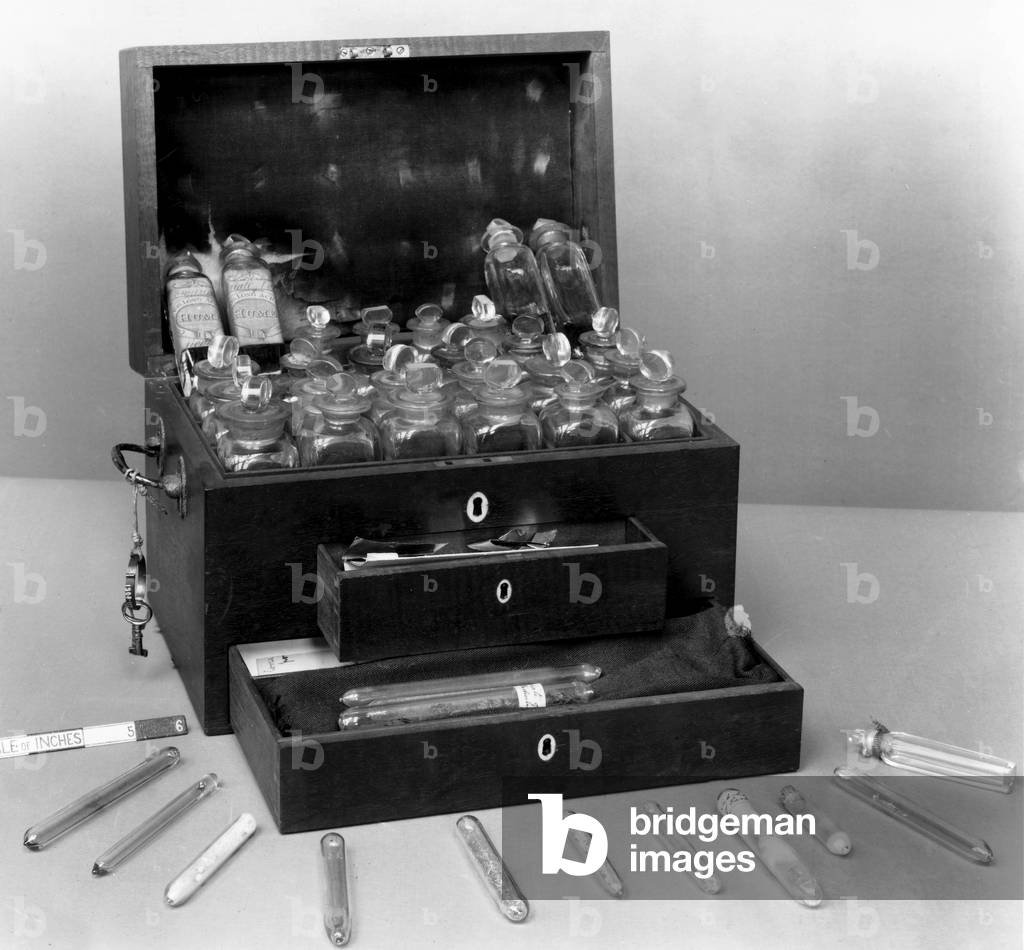
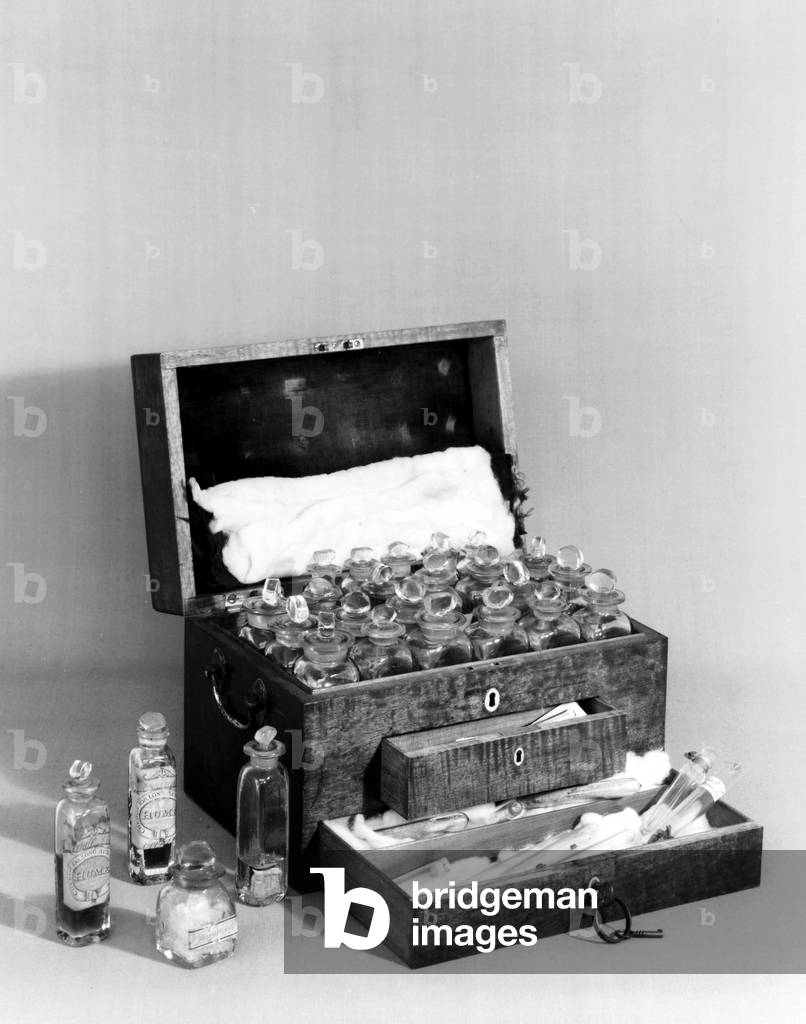
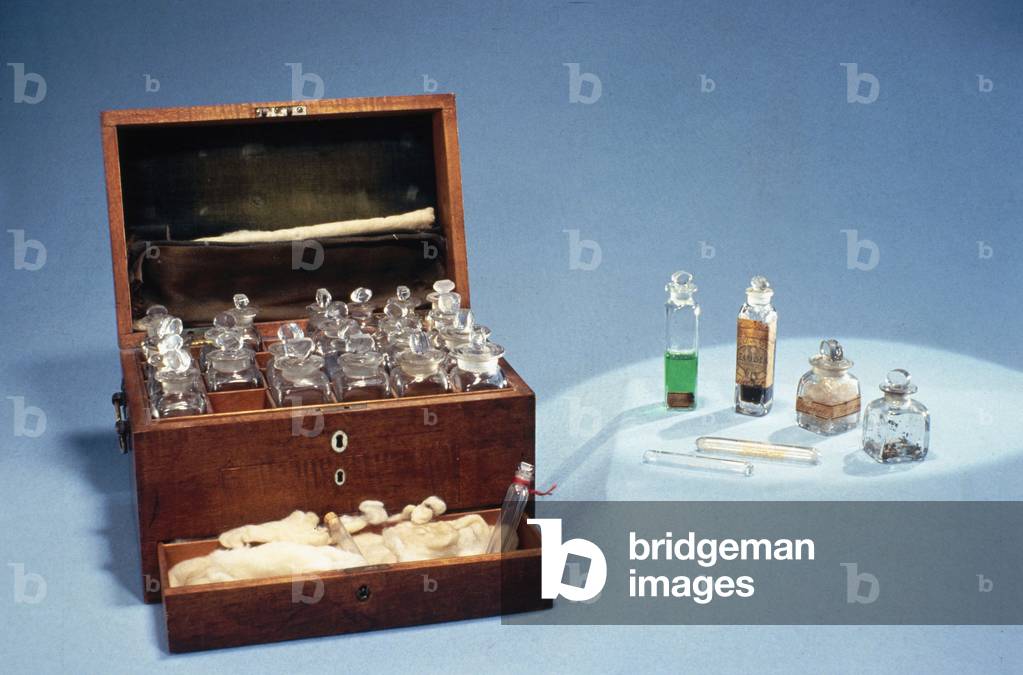
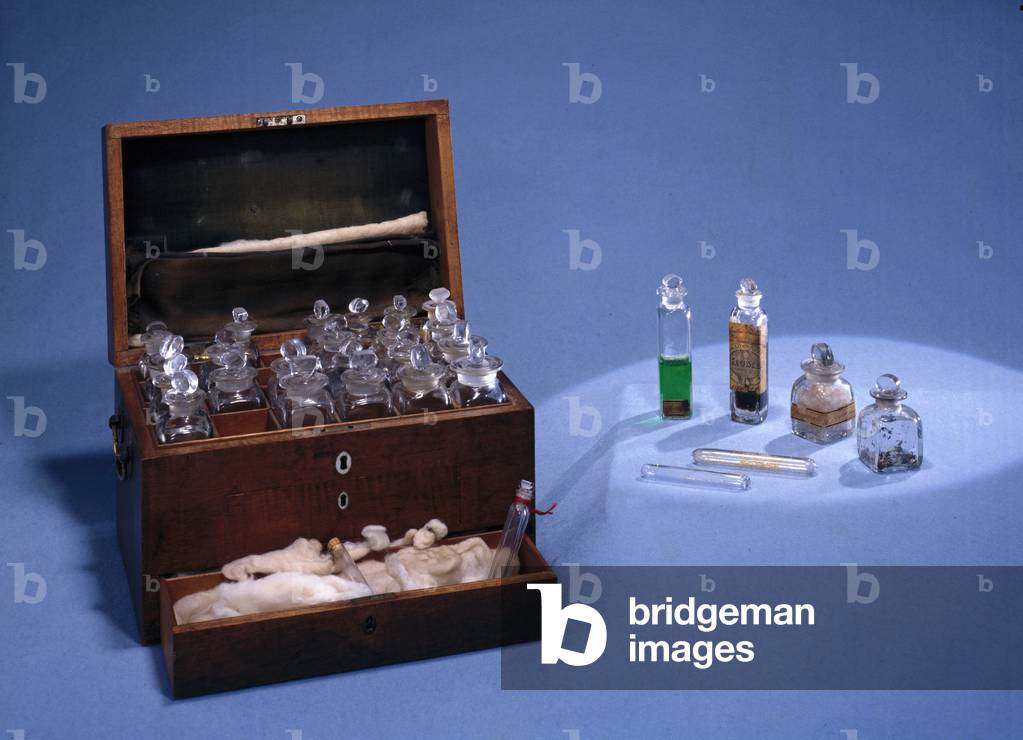
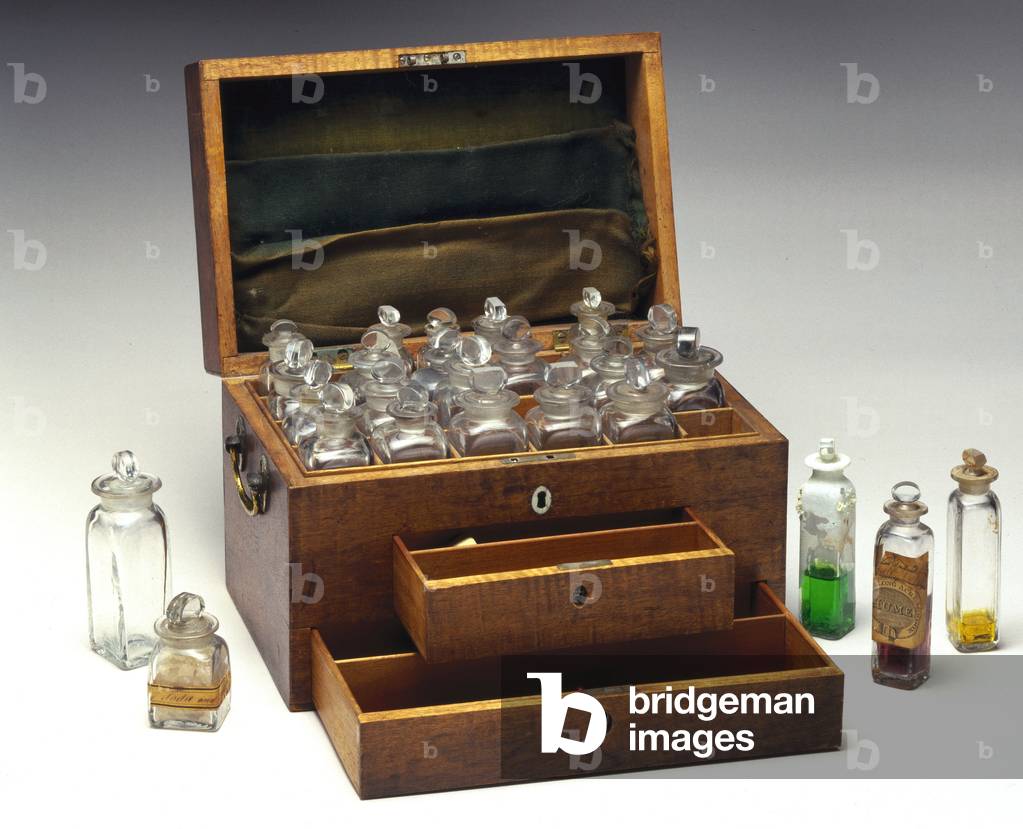
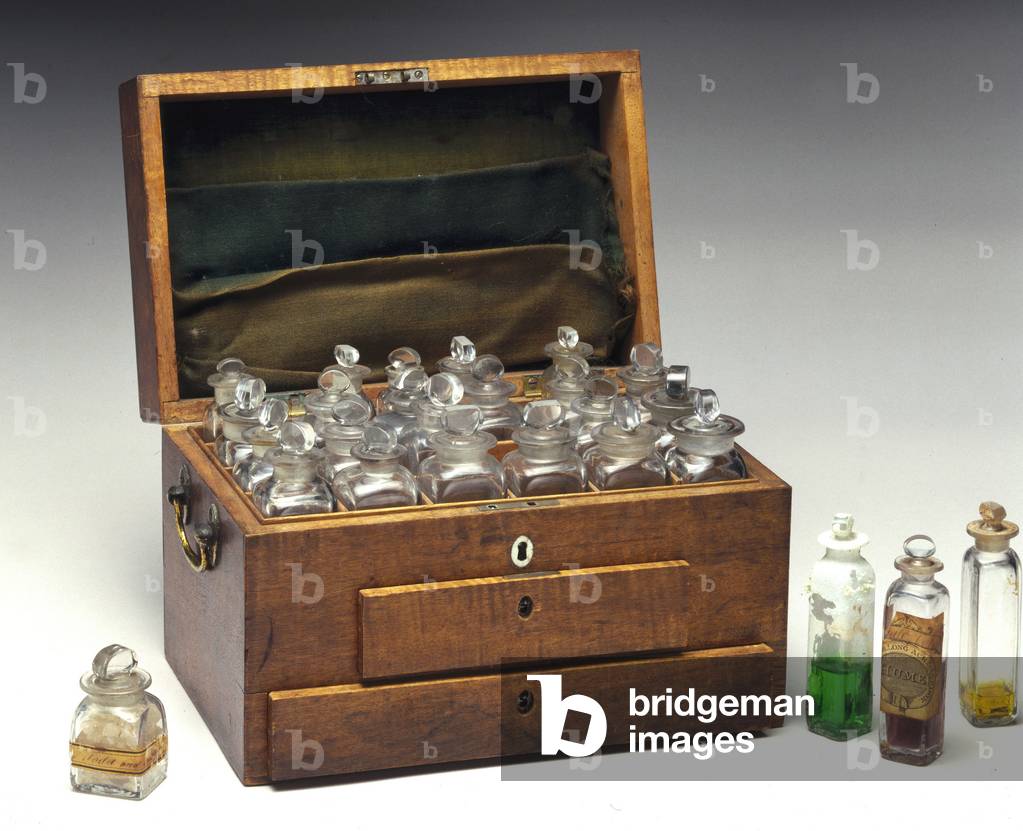
UIS5064870 Faraday's chemical chest, c 1800s. The chest contains letters and specimens of chemicals. Michael Faraday (1791-1867) discovered the principles of the electric motor and dynamo. Faraday's great life work was the series 'Experimental Researches on Electricity' published over 40 years in 'Philosophical Transactions', in which he described his many discoveries including electromagnetic induction (1831), the laws of electrolysis (1833) and the rotation of polarised light by magnetism (1845). ©SSPL/Science Museum
DC
UIS5064871 Faraday's chemical chest, c 1800s. Faraday's chemical chest, c 1800s. The chest contains specimens of chemicals and letters and is slightly damaged. Michael Faraday (1791-1867) discovered the principles of the electric motor and dynamo. Faraday's great life work was the series 'Experimental Researches on Electricity' published over 40 years in 'Philosophical Transactions', in which he described his many discoveries including electromagnetic induction (1831), the laws of electrolysis (1833) and the rotation of polarised light by magnetism (1845). ©SSPL/Science Museum
DC
UIS5068773 Michael Faraday's chemical chest, 19th century. The chest has two keys and contains Faraday's letters and chemical specimen bottles. Michael Faraday (1791-1867) discovered the principles of the electric motor and dynamo. Faraday's great life work was the series 'Experimental Researches on Electricity' published over 40 years in 'Philosophical Transactions', in which he described his many discoveries including electromagnetic induction (1831), the laws of electrolysis (1833) and the rotation of polarised light by magnetism (1845). ©SSPL/Science Museum
DC
UIS5083111 Michael Faraday's chemical chest, 19th century. The chest has two keys and contains Faraday's letters and chemical specimen bottles. Michael Faraday (1791-1867) discovered the principles of the electric motor and dynamo. Faraday's great life work was the series 'Experimental Researches on Electricity' published over 40 years in 'Philosophical Transactions', in which he described his many discoveries including electromagnetic induction (1831), the laws of electrolysis (1833) and the rotation of polarised light by magnetism (1845). ©SSPL/Science Museum
DC
UIS5068823 Michael Faraday's chemical chest, 19th century. The chest has two keys and contains Faraday's letters and chemical specimen bottles. Michael Faraday (1791-1867) discovered the principles of the electric motor and dynamo. Faraday's great life work was the series 'Experimental Researches on Electricity' published over 40 years in 'Philosophical Transactions', in which he described his many discoveries including electromagnetic induction (1831), the laws of electrolysis (1833) and the rotation of polarised light by magnetism (1845). Photographie ©SSPL/Science Museum
DC
UIS5068821 Michael Faraday's chemical chest, 19th century. The chest has two keys and contains Faraday's letters and chemical specimen bottles. Michael Faraday (1791-1867) discovered the principles of the electric motor and dynamo. Faraday's great life work was the series 'Experimental Researches on Electricity' published over 40 years in 'Philosophical Transactions', in which he described his many discoveries including electromagnetic induction (1831), the laws of electrolysis (1833) and the rotation of polarised light by magnetism (1845). ©SSPL/Science Museum
DC
XJF134161
RF
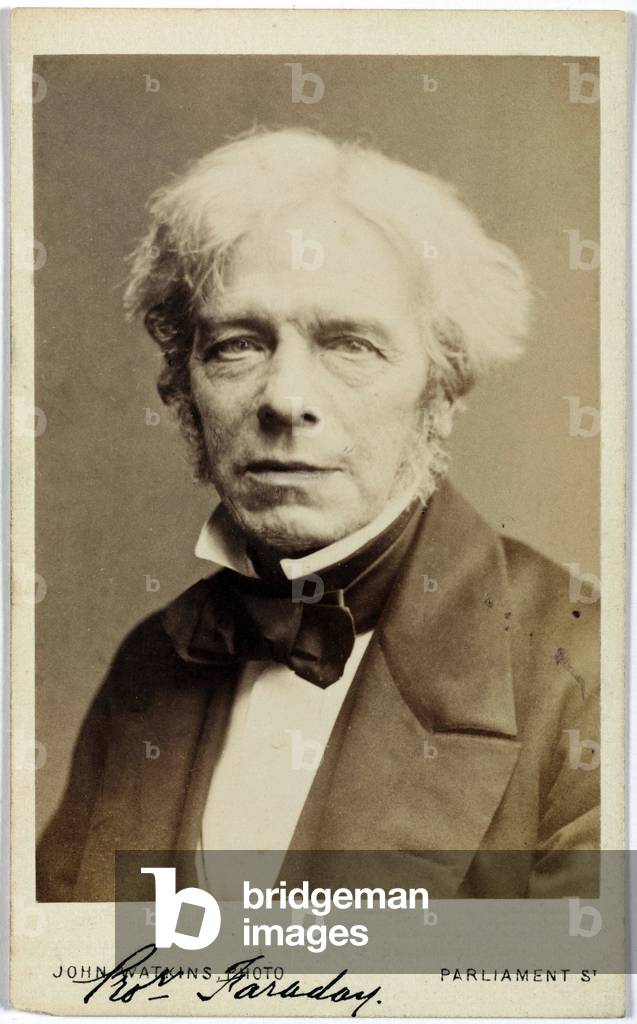
UIS5069321 Michael Faraday, English chemist and physicist, c 1860. Carte de visite photograph by John Watkins. Michael Faraday (1791-1867) discovered the principles of the electric motor and dynamo. Faraday's great life work was the series 'Experimental Researches on Electricity' published over 40 years in 'Philosophical Transactions', in which he described his many discoveries including electromagnetic induction (1831), the laws of electrolysis (1833) and the rotation of polarised light by magnetism (1845). Photographie ©SSPL/Science Museum
DC
UIS5064867 Michael Faraday, English chemist and physicist, c 1850s. Michael Faraday (1791-1867) discovered the principles of the electric motor and dynamo. Faraday's great life work was the series 'Experimental Researches on Electricity' published over 40 years in 'Philosophical Transactions', in which he described his many discoveries including electromagnetic induction (1831), the laws of electrolysis (1833) and the rotation of polarised light by magnetism (1845). One of a series of tiles painted by John Eyre in 1886 celebrating famous scientists from the Cafe Royal in Edinburgh©SSPL
DC
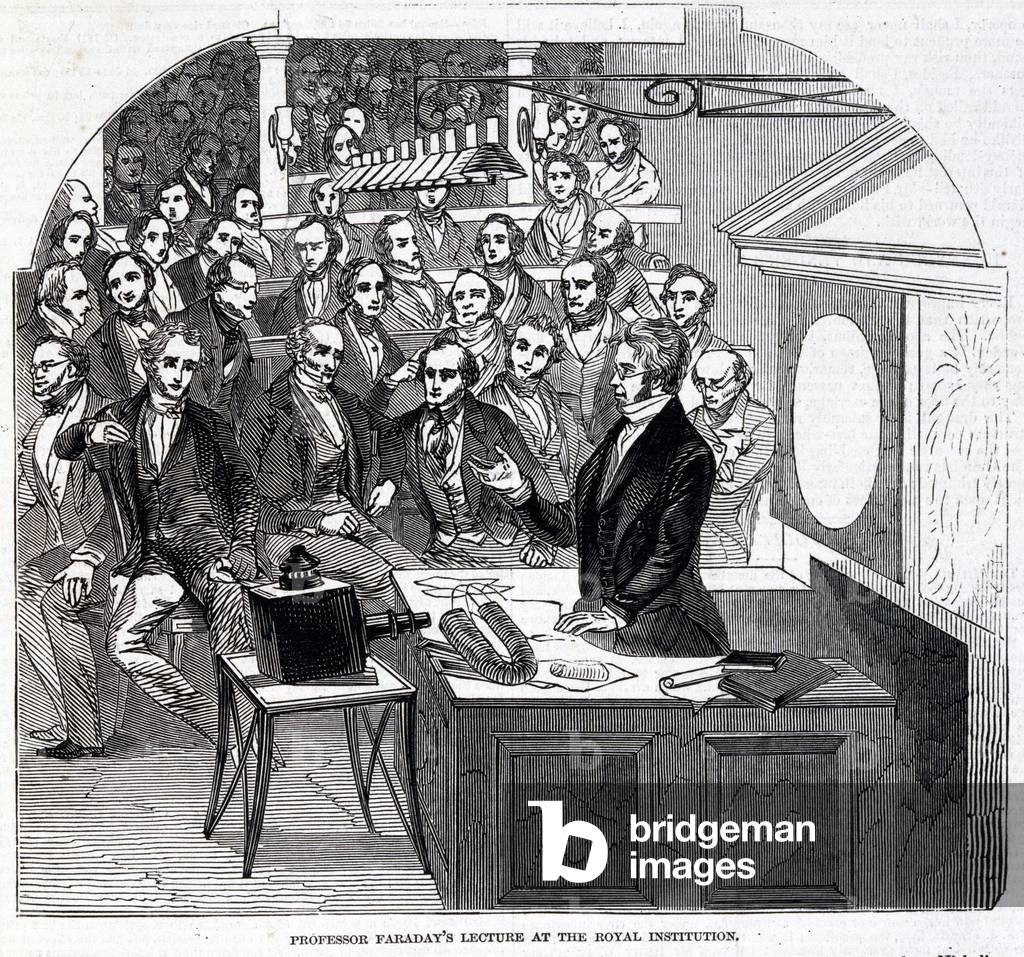
UIS5086618 Faraday lecturing at the Royal Institution, London, 23 January 1846. This lecture outlines one of Faraday's most important discoveries. Michael Faraday (1791-1867) discovered the principles of the electric motor and dynamo. Faraday's great life work was the series 'Experimental Researches on Electricity' published over 40 years in 'Philosophical Transactions', in which he described his many discoveries including electromagnetic induction (1831), the laws of electrolysis (1833) and the rotation of polarised light by magnetism (1845). ©SSPL/Science Museum
DC
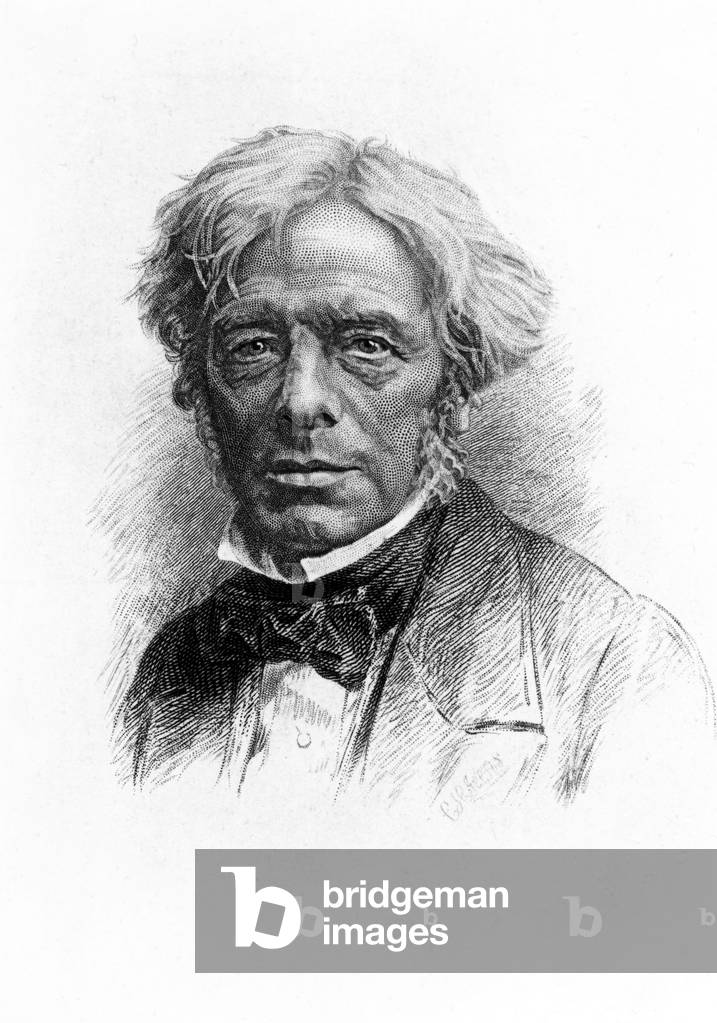
UIS5074677 Michael Faraday, English physicist., c 1850. Michael Faraday (1791-1867) discovered the principles of the electric motor and dynamo. Faraday's great life work was the series 'Experimental Researches on Electricity' published over 40 years in 'Philosophical Transactions', in which he described his many discoveries including electromagnetic induction (1831), the laws of electrolysis (1833) and the rotation of polarised light by magnetism (1845). ©SSPL/Science Museum
DC
UIS5062573 Michael Faraday, English physicist, c 1860. Michael Faraday (1791-1867) discovered the principles of the electric motor and dynamo. Faraday's great life work was the series 'Experimental Researches on Electricity' published over 40 years in 'Philosophical Transactions', in which he described his many discoveries including electromagnetic induction (1831), the laws of electrolysis (1833) and the rotation of polarised light by magnetism (1845). ©SSPL/Science Museum
DC
UIS5074684 Michael Faraday , English physicist, c 1845. Michael Faraday (1791-1867) discovered the principles of the electric motor and dynamo. Faraday's great life work was the series 'Experimental Researches on Electricity' published over 40 years in 'Philosophical Transactions', in which he described his many discoveries including electromagnetic induction (1831), the laws of electrolysis (1833) and the rotation of polarised light by magnetism (1845). ©SSPL/Science Museum
DC
UIS5074686 Michael Faraday, English physicist, 1850. Michael Faraday (1791-1867) discovered the principles of the electric motor and dynamo. Faraday's great life work was the series 'Experimental Researches on Electricity' published over 40 years in 'Philosophical Transactions', in which he described his many discoveries including electromagnetic induction (1831), the laws of electrolysis (1833) and the rotation of polarised light by magnetism (1845). ©SSPL/Science Museum
DC
UIS5074700 Michael Faraday, English physicist., c 1850s. Michael Faraday (1791-1867) discovered the principles of the electric motor and dynamo. Faraday's great life work was the series 'Experimental Researches on Electricity' published over 40 years in 'Philosophical Transactions', in which he described his many discoveries including electromagnetic induction (1831), the laws of electrolysis (1833) and the rotation of polarised light by magnetism (1845). ©SSPL/Science Museum
DC
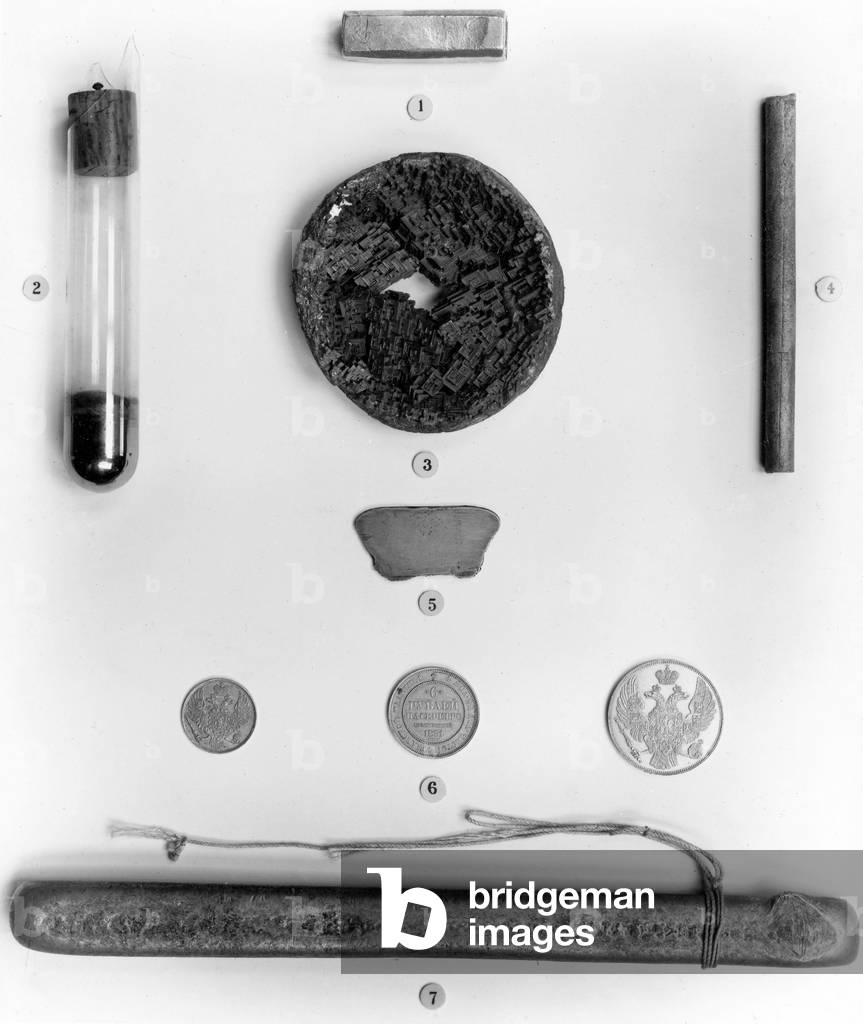
UIS5064938 Relics associated with Michael Faraday, 1810-1867. Michael Faraday (1791-1867) discovered the principles of the electric motor and dynamo. Faraday's great life work was the series 'Experimental Researches on Electricity' published over 40 years in 'Philosophical Transactions', in which he described his many discoveries including electromagnetic induction (1831), the laws of electrolysis (1833) and the rotation of polarised light by magnetism (1845). ©SSPL/Science Museum
DC
UIS5074705 Michael Faraday, English physicist, c 1860. Michael Faraday (1791-1867) discovered the principles of the electric motor and dynamo. Faraday's great life work was the series 'Experimental Researches on Electricity' published over 40 years in 'Philosophical Transactions', in which he described his many discoveries including electromagnetic induction (1831), the laws of electrolysis (1833) and the rotation of polarised light by magnetism (1845). ©SSPL/Science Museum
DC
UIS5074695 Michael Faraday, English physicist, c 1855. Michael Faraday (1791-1867) discovered the principles of the electric motor and dynamo. Faraday's great life work was the series 'Experimental Researches on Electricity' published over 40 years in 'Philosophical Transactions', in which he described his many discoveries including electromagnetic induction (1831), the laws of electrolysis (1833) and the rotation of polarised light by magnetism (1845). ©SSPL/Science Museum
DC
UIS5074987 Michael Faraday, English physicist, c 1830. Michael Faraday (1791-1867) discovered the principles of the electric motor and dynamo. Faraday's great life work was the series 'Experimental Researches on Electricity' published over 40 years in 'Philosophical Transactions', in which he described his many discoveries including electromagnetic induction (1831), the laws of electrolysis (1833) and the rotation of polarised light by magnetism (1845). ©SSPL/Science Museum
DC
UIS5062348 Michael Faraday, English physicist. c 1855. Michael Faraday (1791-1867) discovered the principles of the electric motor and dynamo. Faraday's great life work was the series 'Experimental Researches on Electricity' published over 40 years in 'Philosophical Transactions', in which he described his many discoveries including electromagnetic induction (1831), the laws of electrolysis (1833) and the rotation of polarised light by magnetism (1845). Photograph initialled by Faraday. ©SSPL/Science Museum
DC
UIS5090017 Michael Faraday, English chemist and physicist, c 1840. Michael Faraday (1791-1867) discovered the principles of the electric motor and dynamo. Faraday's great life work was the series 'Experimental Researches on Electricity' published over 40 years in 'Philosophical Transactions', in which he described his many discoveries including electromagnetic induction (1831), the laws of electrolysis (1833) and the rotation of polarised light by magnetism (1845). ©SSPL/Science Museum
DC
UIS5074682 Michael Faraday, English physicist, c 1840. Stereosocpic daguerreotype. Michael Faraday (1791-1867) discovered the principles of the electric motor and dynamo. Faraday's great life work was the series 'Experimental Researches on Electricity' published over 40 years in 'Philosophical Transactions', in which he described his many discoveries including electromagnetic induction (1831), the laws of electrolysis (1833) and the rotation of polarised light by magnetism (1845). ©SSPL/Science Museum
DC
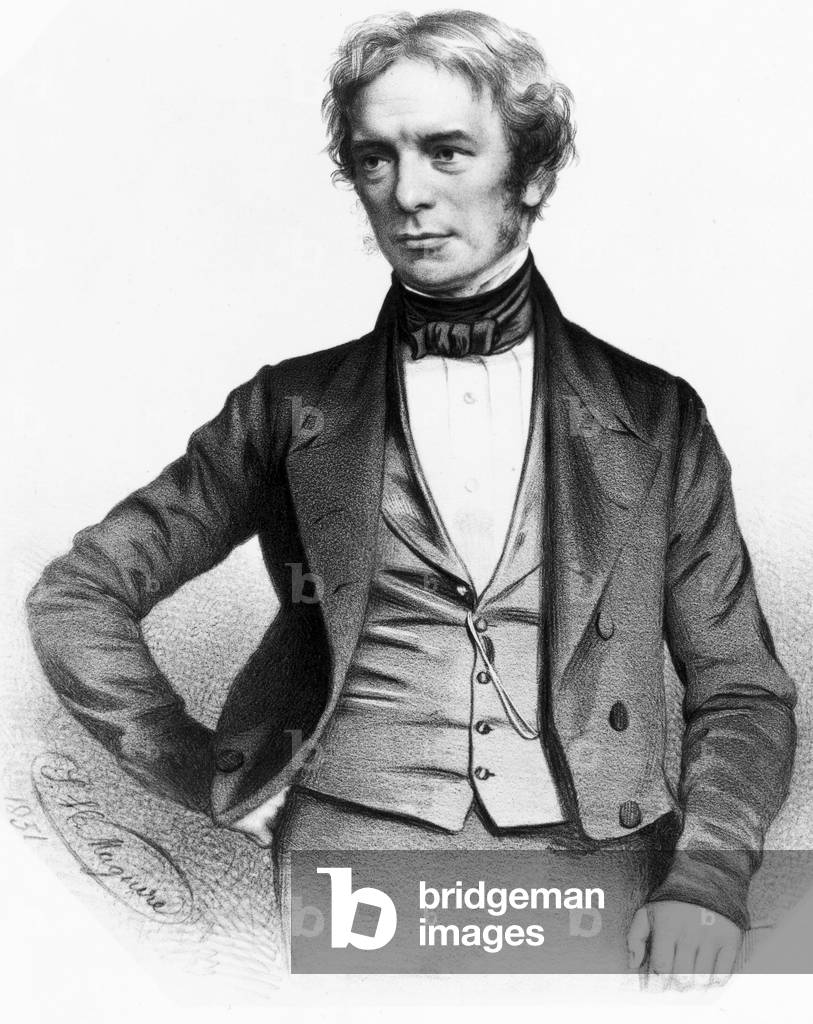
UIS5074696 Michael Faraday, English physicist, 1851. Lithograph by Maguire. Michael Faraday (1791-1867) discovered the principles of the electric motor and dynamo. Faraday's great life work was the series 'Experimental Researches on Electricity' published over 40 years in 'Philosophical Transactions', in which he described his many discoveries including electromagnetic induction (1831), the laws of electrolysis (1833) and the rotation of polarised light by magnetism (1845). ©SSPL/Science Museum
DC
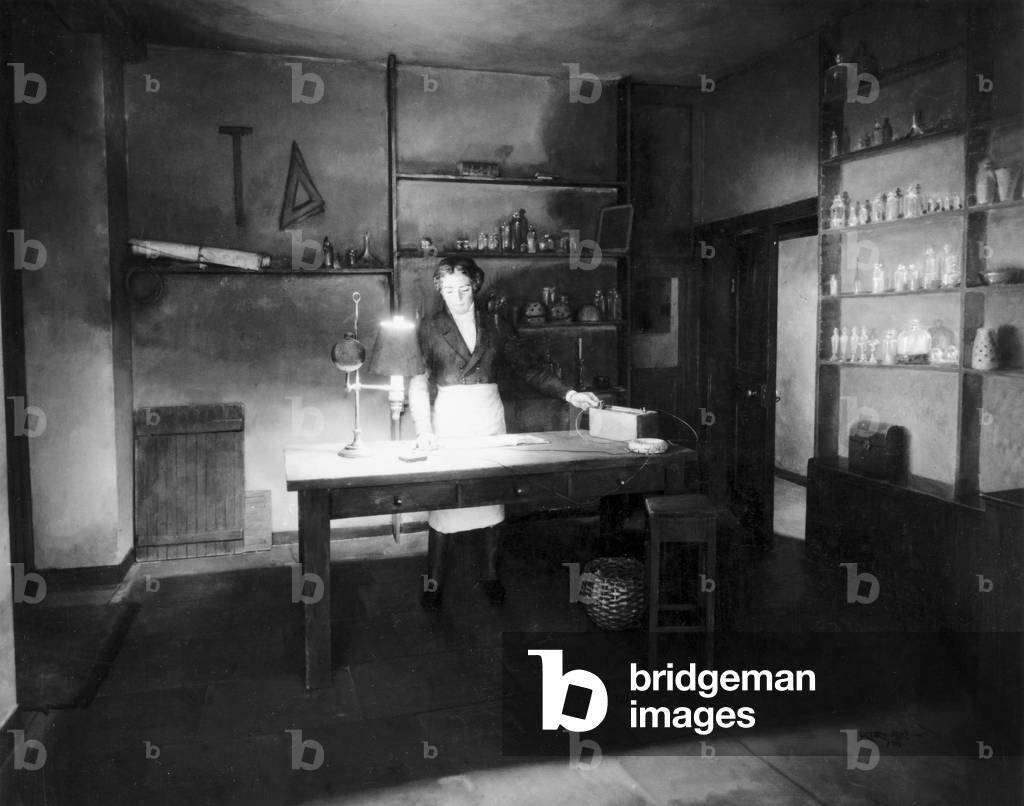
UIS5061510 Faraday in his laboratory, experimenting with the induction ring, 1831. Michael Faraday (1791-1867) discovered the principles of the electric motor and dynamo. Faraday's great life work was the series 'Experimental Researches on Electricity' published over 40 years in 'Philosophical Transactions', in which he described his many discoveries including electromagnetic induction (1831), the laws of electrolysis (1833) and the rotation of polarised light by magnetism (1845). ©SSPL/Science Museum
DC
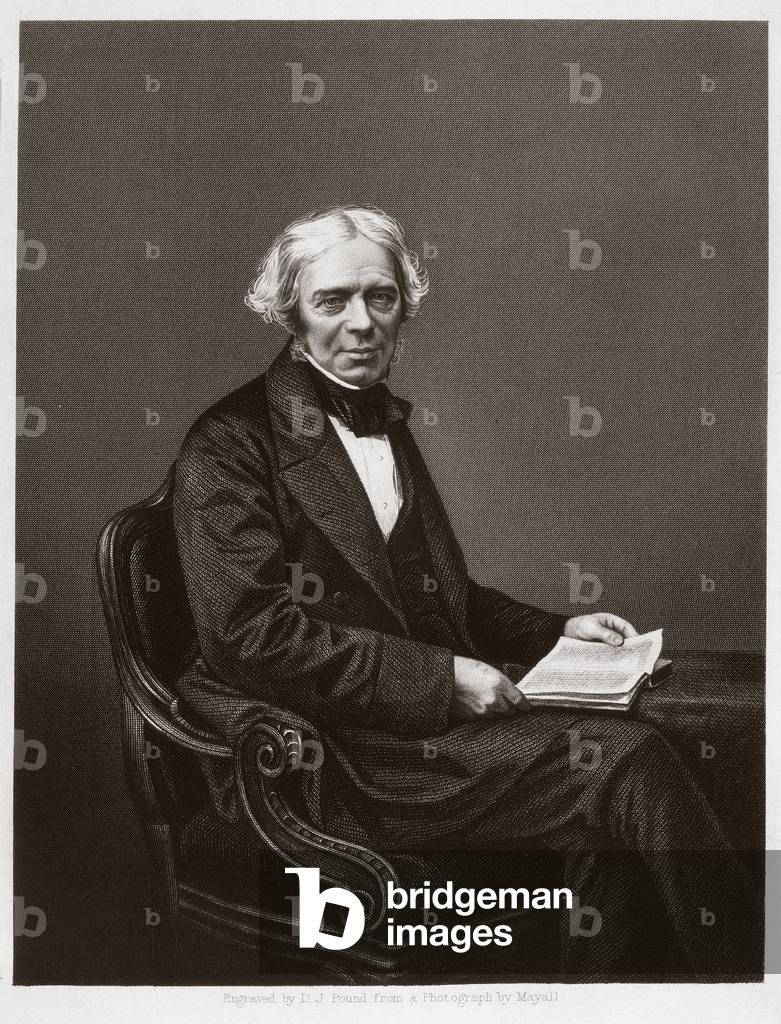
UIS5088076 Michael Faraday , English chemist and physicist, c 1860s. Engraving by D J Pound after a photograph by Mayall. Michael Faraday (1791-1867) discovered the principles of the electric motor and dynamo. Faraday's great life work was the series 'Experimental Researches on Electricity' published over 40 years in 'Philosophical Transactions', in which he described his many discoveries including electromagnetic induction (1831), the laws of electrolysis (1833) and the rotation of polarised light by magnetism (1845). ©SSPL/Science Museum
DC
UIS5071306 Michael Faraday, English chemist and physicist, c 1850s. Carte de visite photograph by John Watkins. Michael Faraday (1791-1867) discovered the principles of the electric motor and dynamo. Faraday's great life work was the series 'Experimental Researches on Electricity' published over 40 years in 'Philosophical Transactions', in which he described his many discoveries including electromagnetic induction (1831), the laws of electrolysis (1833) and the rotation of polarised light by magnetism (1845). ©SSPL/Science Museum
DC
UIS5071376 Michael Faraday, English chemist and physicist, c 1850s. Carte de visite photograph initialled by himself. Michael Faraday (1791-1867) discovered the principles of the electric motor and dynamo. Faraday's great life work was the series 'Experimental Researches on Electricity' published over 40 years in 'Philosophical Transactions', in which he described his many discoveries including electromagnetic induction (1831), the laws of electrolysis (1833) and the rotation of polarised light by magnetism (1845). ©SSPL/Science Museum
DC
UIS5071290 Michael Faraday, English chemist and physicist, c 1850s. Carte de visite photograph by John Watkins. Michael Faraday (1791-1867) discovered the principles of the electric motor and dynamo. Faraday's great life work was the series 'Experimental Researches on Electricity' published over 40 years in 'Philosophical Transactions', in which he described his many discoveries including electromagnetic induction (1831), the laws of electrolysis (1833) and the rotation of polarised light by magnetism (1845). ©SSPL/Science Museum
DC
UIS5074683 Michael Faraday, English physicist., c 1840. Carte-de-visite photograph from a daguerreotype. Michael Faraday (1791-1867) discovered the principles of the electric motor and dynamo. Faraday's great life work was the series 'Experimental Researches on Electricity' published over 40 years in 'Philosophical Transactions', in which he described his many discoveries including electromagnetic induction (1831), the laws of electrolysis (1833) and the rotation of polarised light by magnetism (1845). ©SSPL/Science Museum
DC
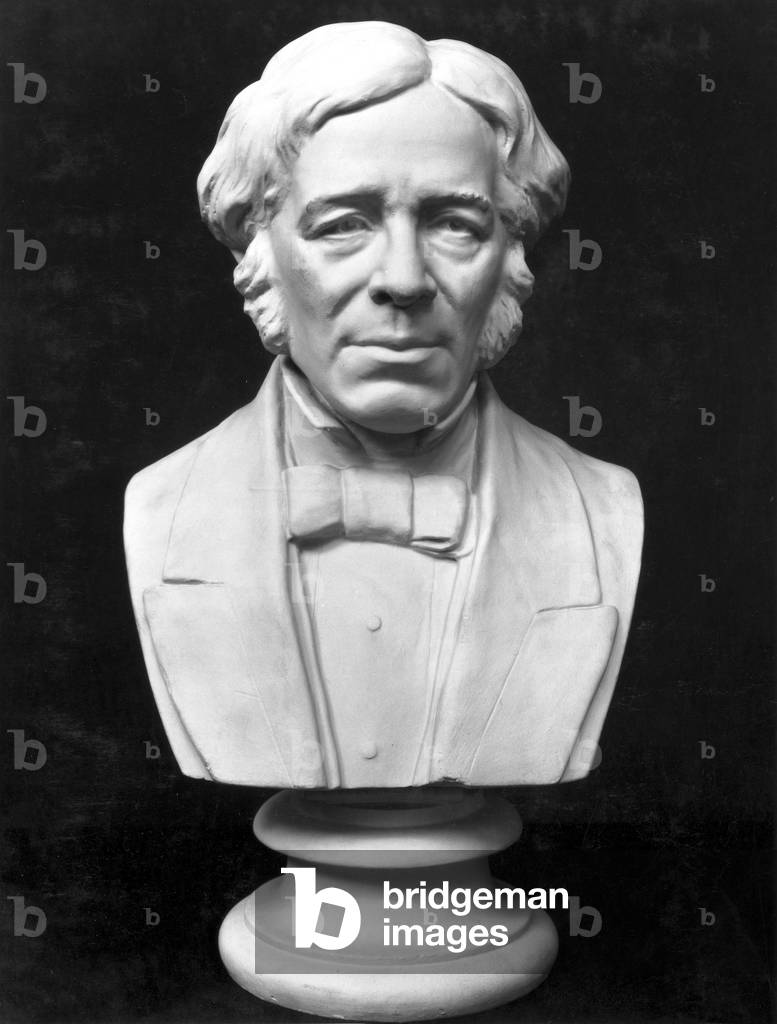
UIS5062443 Michael Faraday, English physicist, c 1850s. Plaster bust of Michael Faraday (1791-1867) by A L Vago. Faraday discovered the principles of the electric motor and dynamo. Faraday's great life work was the series 'Experimental Researches on Electricity' published over 40 years in 'Philosophical Transactions', in which he described his many discoveries including electromagnetic induction (1831), the laws of electrolysis (1833) and the rotation of polarised light by magnetism (1845). ©SSPL/Science Museum
DC
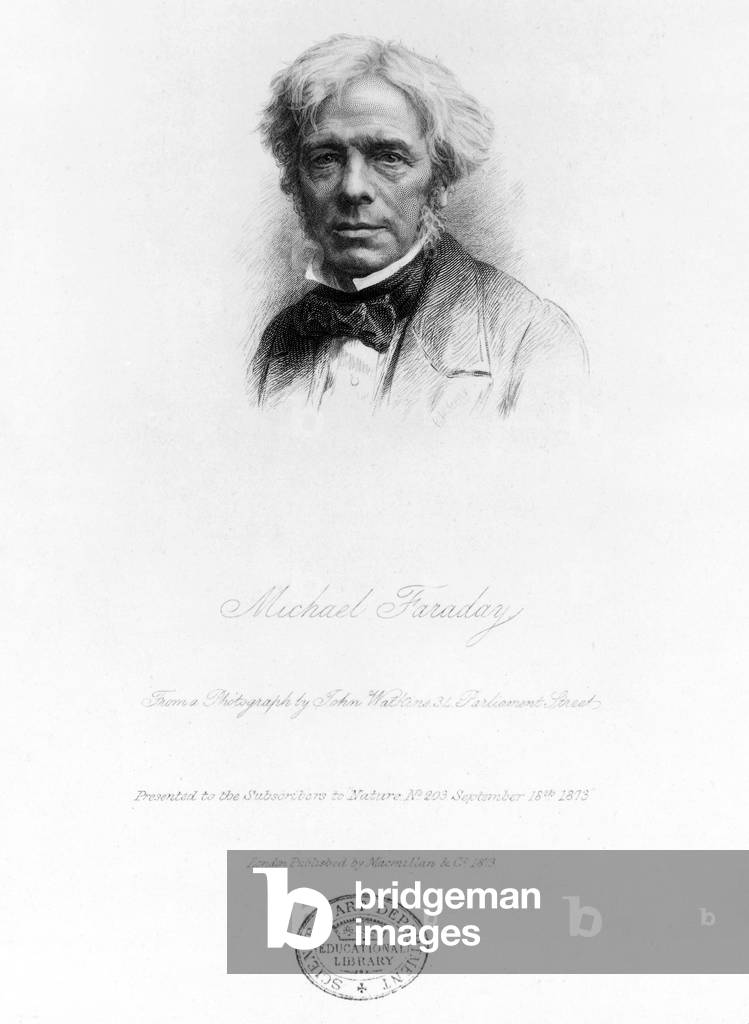
UIS5093288 Michael Faraday, English chemist and physicist, c 1850-1860. Etching after a carte de visite by John Watkins. Michael Faraday (1791-1867) discovered the principles of the electric motor and dynamo. Faraday's great life work was the series 'Experimental Researches on Electricity' published over 40 years in 'Philosophical Transactions', in which he described his many discoveries including electromagnetic induction (1831), the laws of electrolysis (1833) and the rotation of polarised light by magnetism (1845). Published by the International Telecommunication Union. ©SSPL/Science Museum
DC
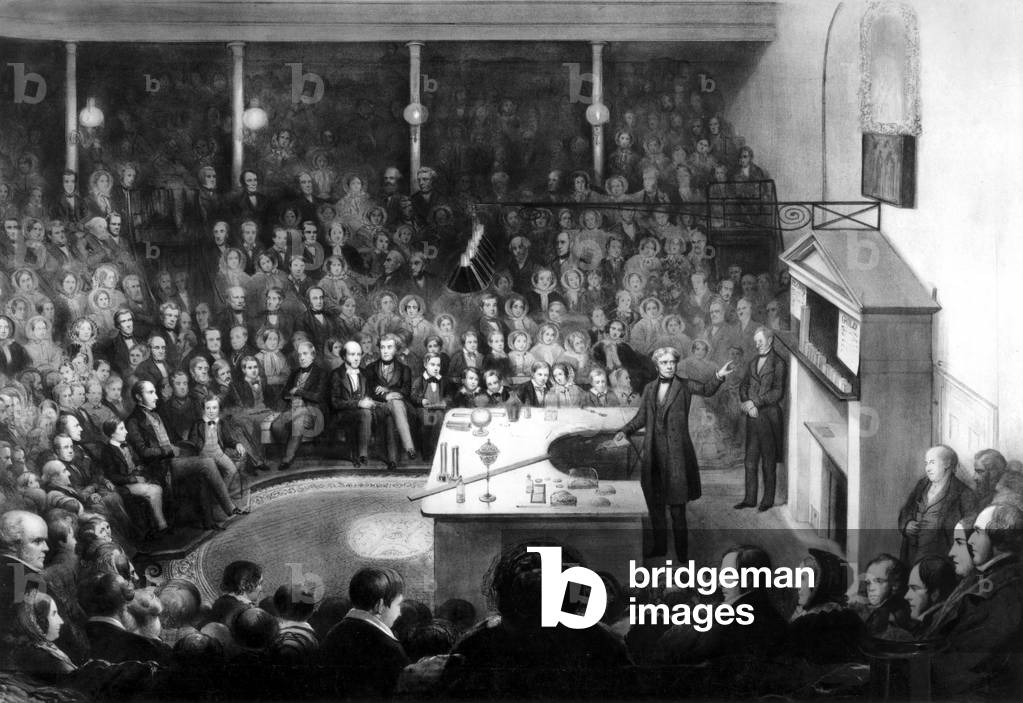
UIS5074717 Michael Faraday, English physicist, 1856. Tinted lithograph by Leighton Bros after A Blaikley showing Faraday lecturing at the Royal Institution. The original was painted to commemorate the attendance of HRH Prince of Wales and HRH Prince Alfred at the Juvenile Course of Lectures, 1855-1856. Michael Faraday (1791-1867) discovered the principles of the electric motor and dynamo. Faraday's great life work was the series 'Experimental Researches on Electricity' published over 40 years in 'Philosophical Transactions', in which he described his many discoveries including electromagnetic induction (1831), the laws of electrolysis (1833) and the rotation of polarised light by magnetism (1845). ©SSPL/Science Museum
DC
UIS5063626 Conference du physicien Michael Faraday (1791-1867) devant la Royal Institution de Londres le 27 decembre 1855 en presence du Prince Albert de Saxe Cobourg Gotha (Saxe-Cobourg-Gotha, 1819-1861) et de son fils. Lithographie de Leighton Bros d'apres A. Blaikley.Michael Faraday lecturing at the Royal Institution, 27 December 1855. Tinted lithograph by Leighton Bros after A Blaikley. Faraday is lecturing to an audience of distinguished guests including Prince Albert and his son. Michael Faraday (1791-1867) discovered the principles of the electric motor and dynamo. Faraday's great life work was the series 'Experimental Researches on Electricity' published over 40 years in 'Philosophical Transactions', in which he described his many discoveries including electromagnetic induction (1831), the laws of electrolysis (1833) and the rotation of polarised light by magnetism (1845). ©SSPL/Science Museum
DC

Total de Resultados: 35

Página 1 de 1