


















































Busque também em nossas outras coleções:

Tipo de arquivo:

Tipo do arquivo:

Tipo da licença:

Orientação:

Total de Resultados: 21

Página 1 de 1

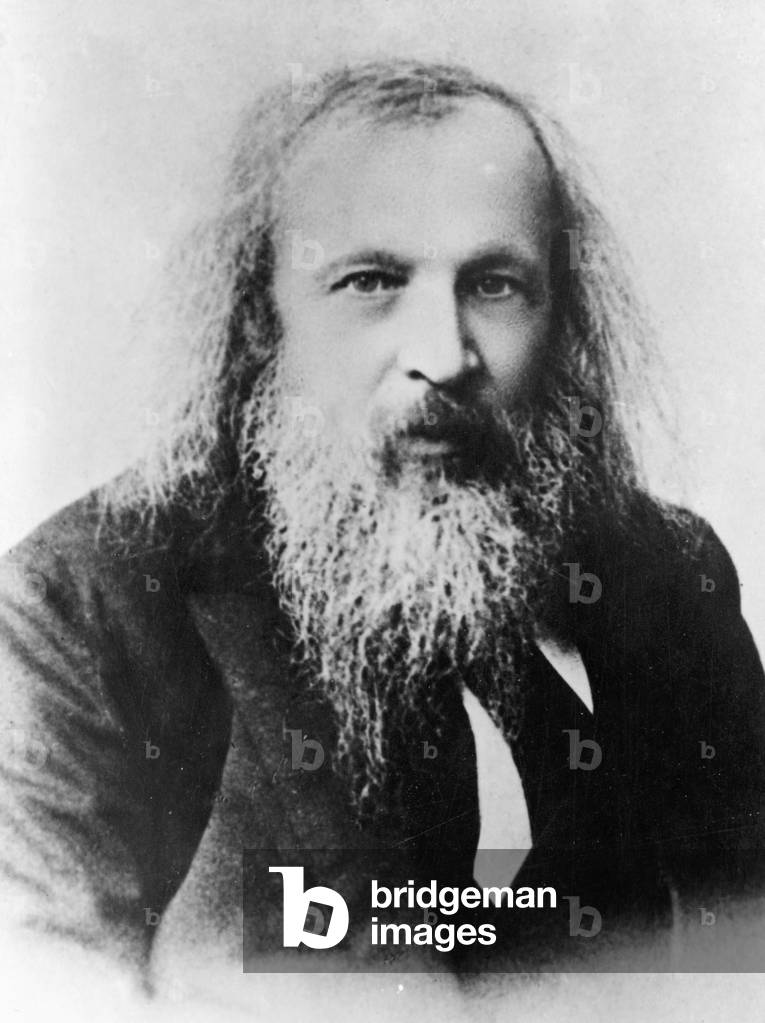
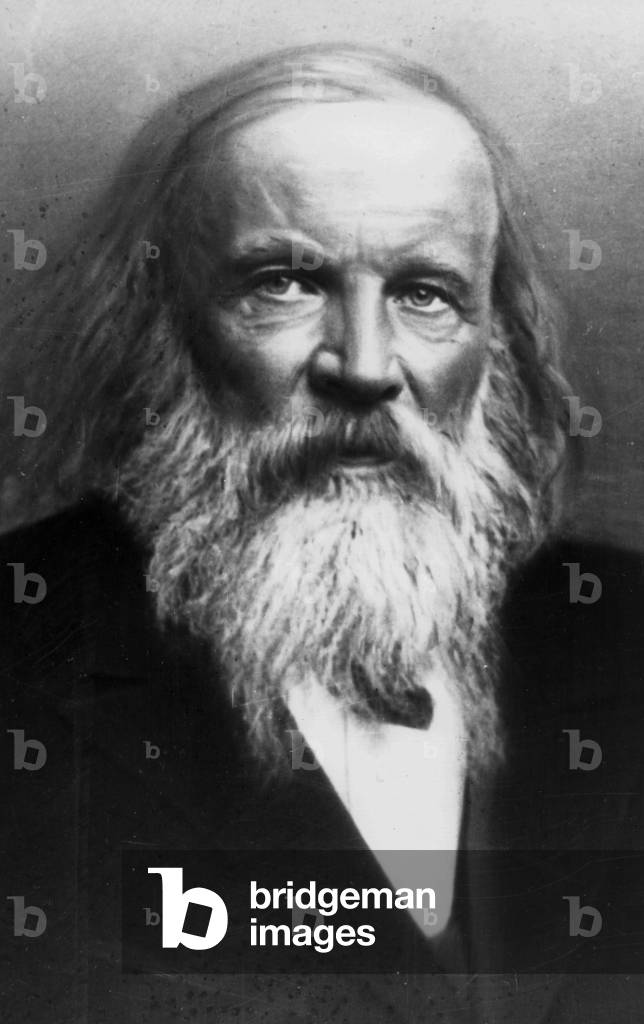
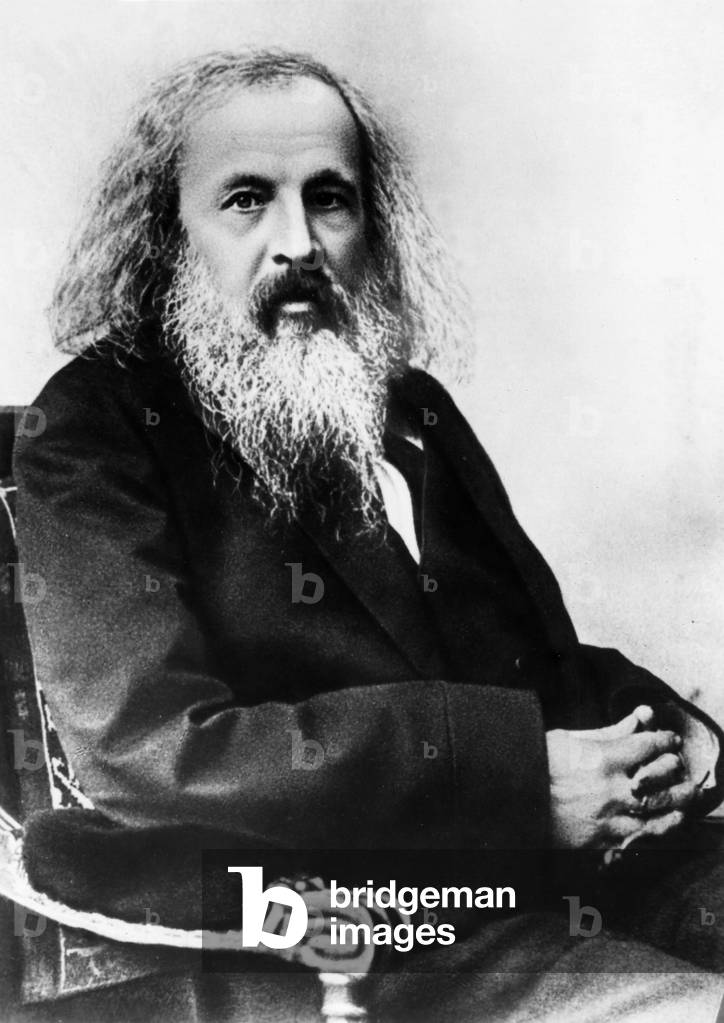
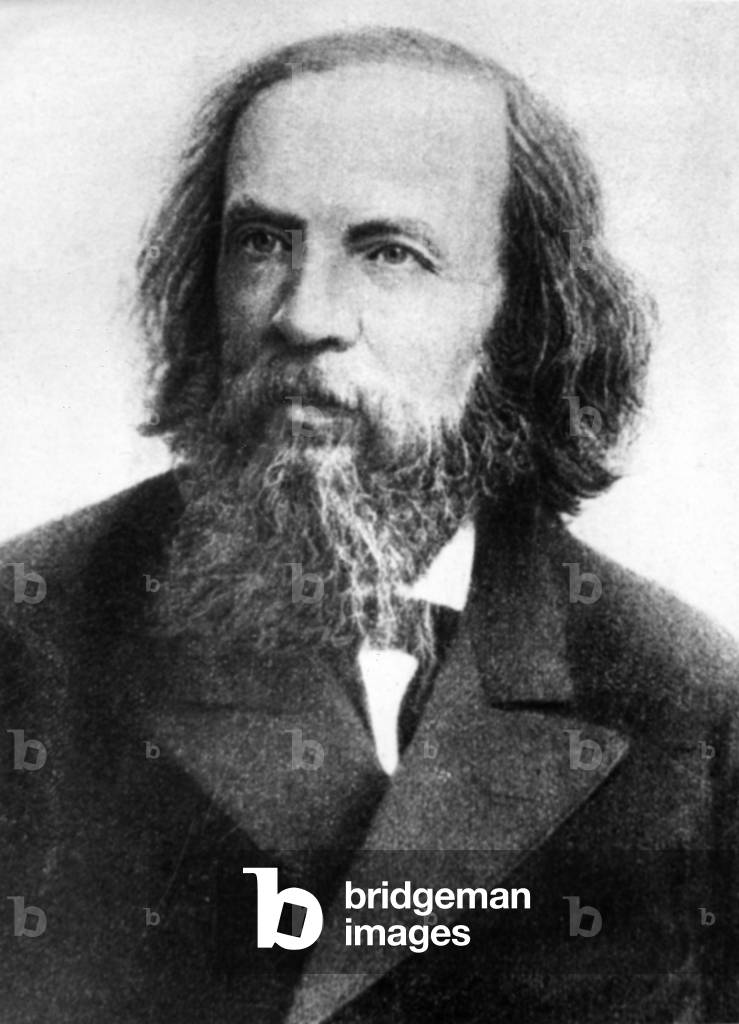
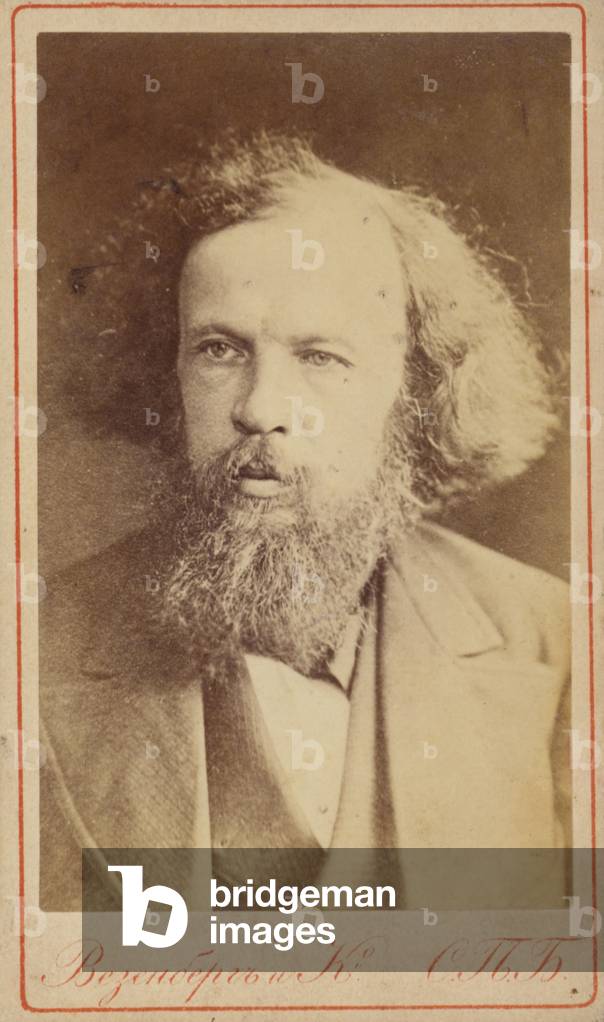
STC394160 Dmitry Ivanovich Mendeleyev (1834-1907), known for devising table classification of chemical elements by atomic weight;
DC
CHT236024 known for devising table classification of chemical elements by atomic weight;
DC
LRS164535 known for devising table classification of chemical element by atomic weight;
DC
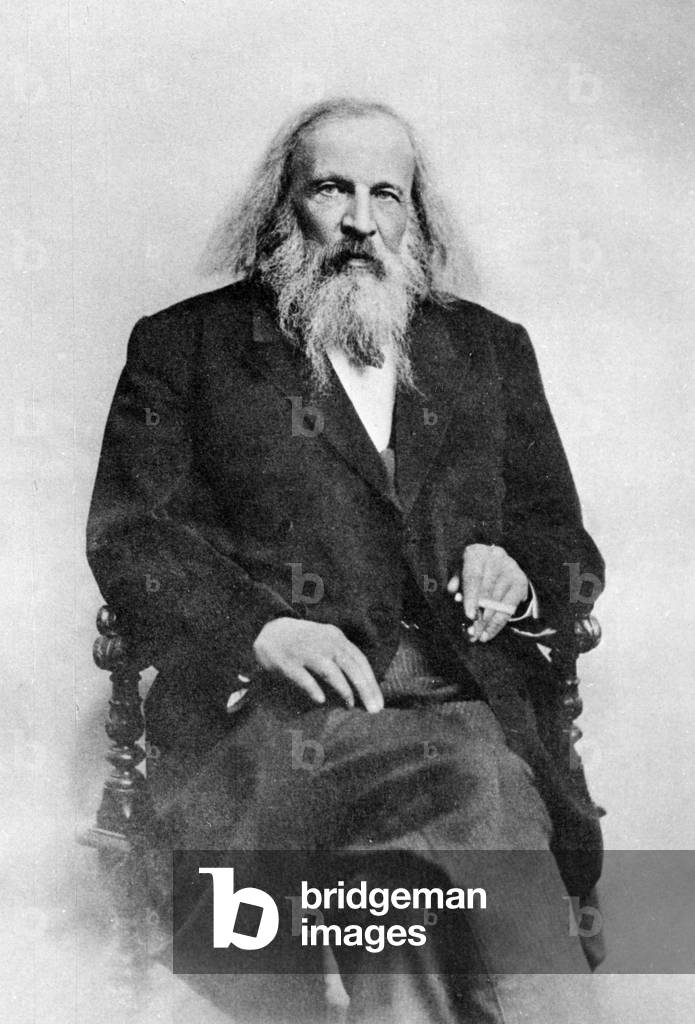
UIG3905029 Dimitri Ivanovich Mendeleev, 1834 - 1907, Famous Russian Chemist.
DC
UIG3904036 Dimitri Ivanovich Mendeleev, 1834 - 1907, Famous Russian Chemist.
DC
UIG3904398 Dimitri Ivanovich Mendeleev, 1834 - 1907, Famous Russian Chemist.
DC
UIG3905102 Dimitri Ivanovich Mendeleev, 1834 - 1907, Famous Russian Chemist.
DC
UIG3903941 Dimitri Ivanovich Mendeleev, 1834 - 1907, Famous Russian Chemist.
DC
BCC781338 Dmitri Ivanovich Mendeleev (1834-1907) was a Russian chemist and inventor. He formulated the Periodic Law, created his own version of the periodic table of elements, and used it to correct the properties of some already discovered elements and also to predict the properties of elements yet to be discovered.
DC
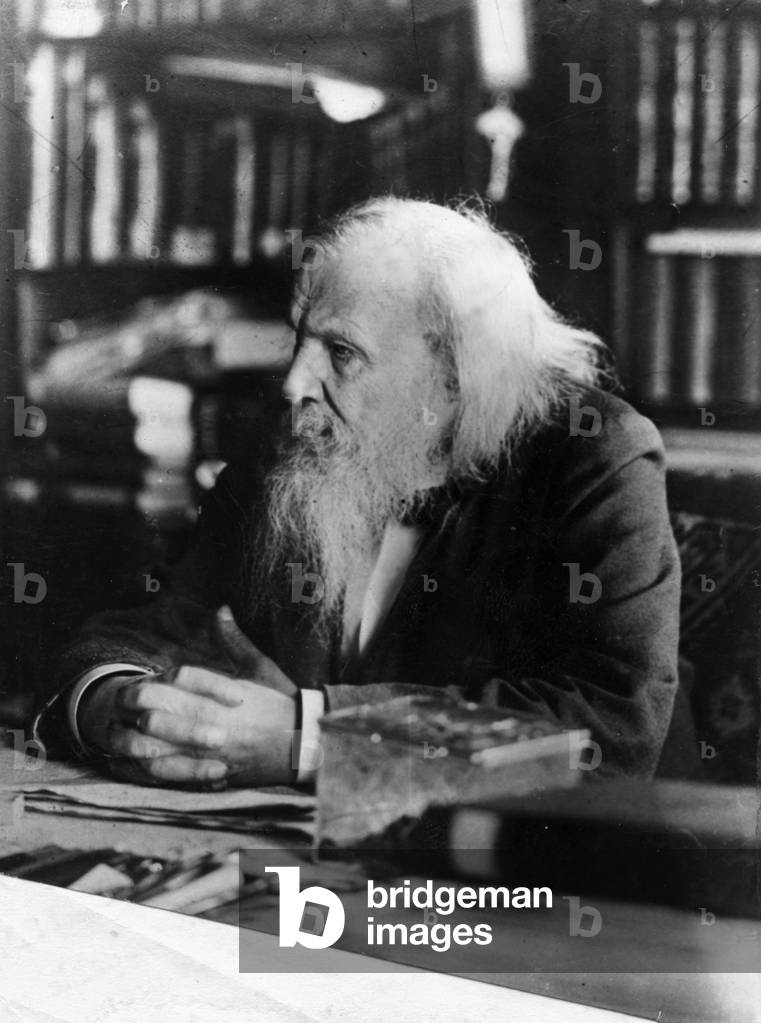
UIG3904153 Dimitri Ivanovich Mendeleev, 1834 - 1907, the Famous Russian Chemist in his Study.
DC
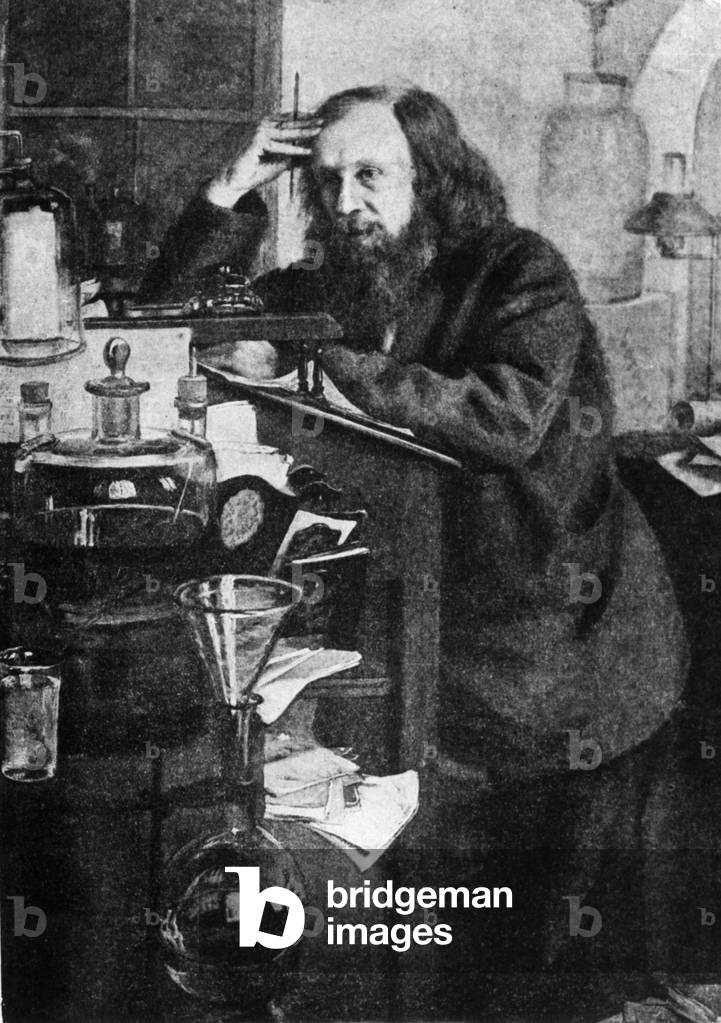
UIG3904400 Dimitri Ivanovich Mendeleev, 1834 - 1907, the Famous Russian Chemist in the Laboratory of Petersburg Univesity.
DC
UDK844337
DC
CHT164564 Loi periodique des elements chimiques; devising periodic table classification of chemical elements by atomic weight;
DC
LLE821584 Dmitri Mendeleev (1834-1907), Russian chemist.
DC
LLE821576 Dmitri Mendeleev (1834-1907), Russian chemist.
DC
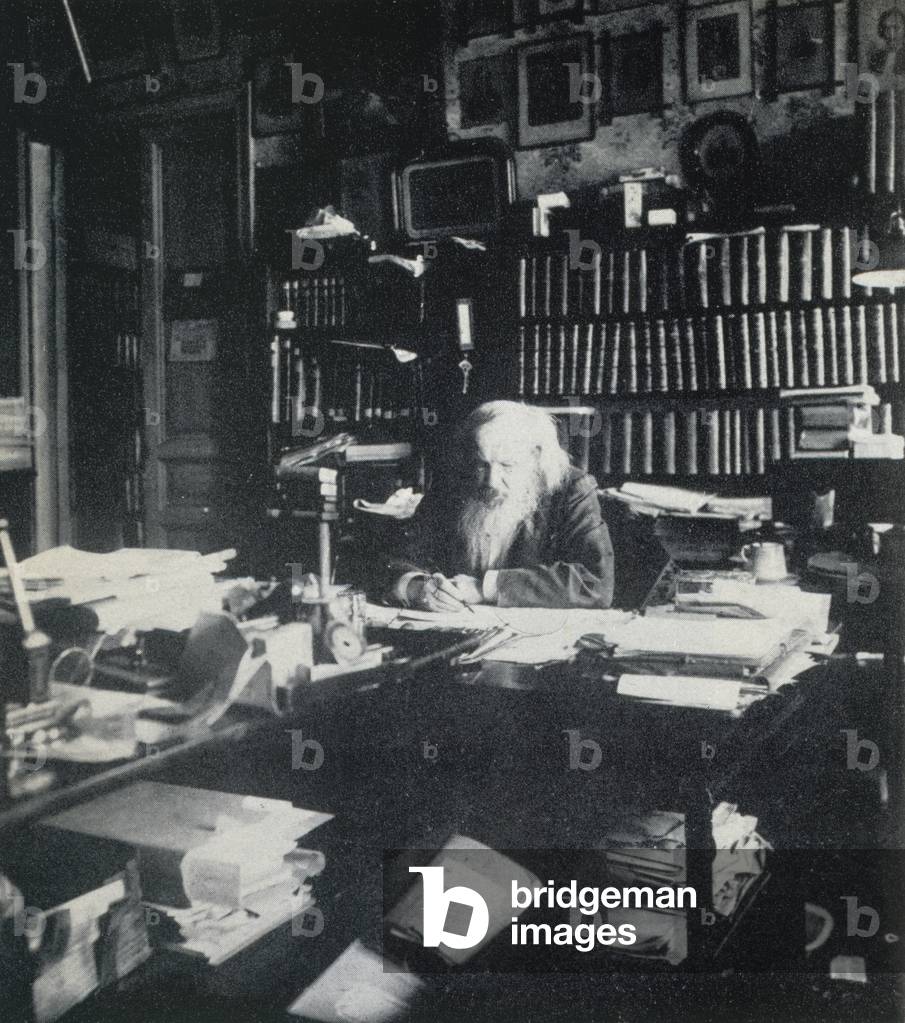
UIS5089429 Dmitry Ivanovich Mendeleyev, Russian chemist, in his office, 1903. Dmitry Ivanovich Mendeleyev (1834-1907) was born in Tobolsk, Russia. He trained as a teacher, and then went on to study at Odessa, St Petersburg and Heidelberg universities, before becoming professor of chemistry at St Petersburg in 1866. He formulated the first periodic table of elements, grouping the elements according to their atomic structure and chemical properties. His work enabled chemists to identify 'families' of elements with similar chemical and physical properties and has influenced ideas in organic chemistry ever since. In 1955 a new element, atomic number 101, was named mendelevium (Md) in his honour. ©SSPL/Science Museum
DC
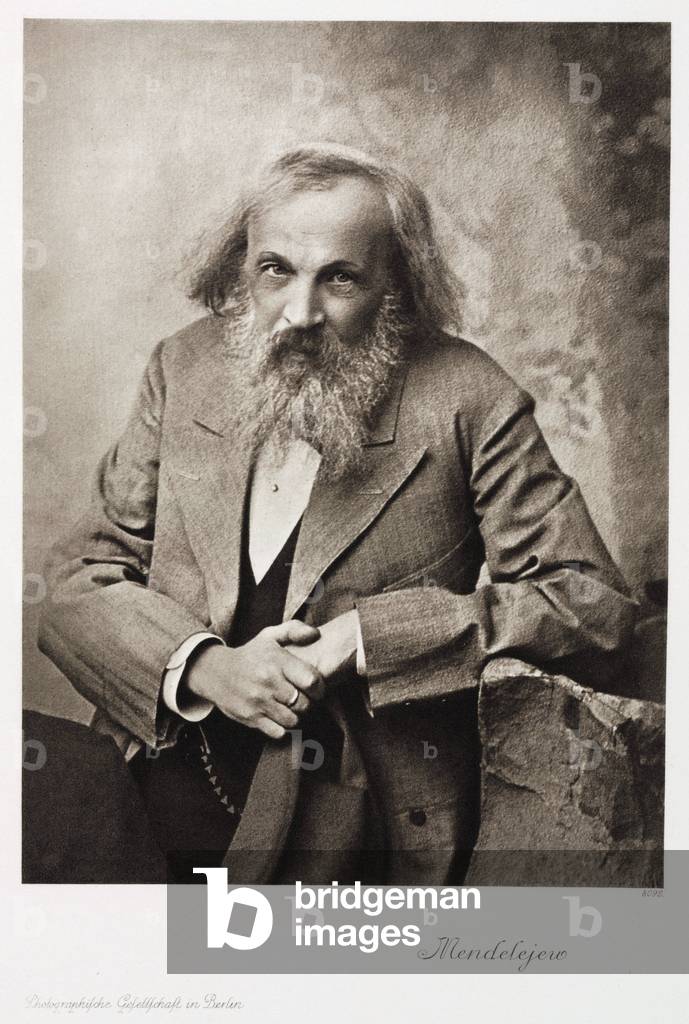
UIS5071956 Dmitry Ivanovich Mendeleyev, Russian chemist, c 1905. Photogravure after a photograph of Dmitry Ivanovich Mendeleyev (1834-1907). Born in Tobolsk, Russia, Mendeleyev trained as a teacher, and went on to study at Odessa, St Petersburg and Heidelberg universities, before becoming professor of chemistry at St Petersburg in 1866. He formulated the first periodic table of elements, grouping the elements according to their atomic structure and chemical properties. His work enabled chemists to identify 'families' of elements with similar chemical and physical properties and has influenced ideas in organic chemistry ever since. In 1955 a new element (no 101) was named mendelevium (Md) in his honour. From a collection of portraits of scientists published by Photographische Gesellschaft, Berlin, c 1910. Dimensions: 460mm x 340mm. ©SSPL/Science Museum
DC
IBE5393984
DC
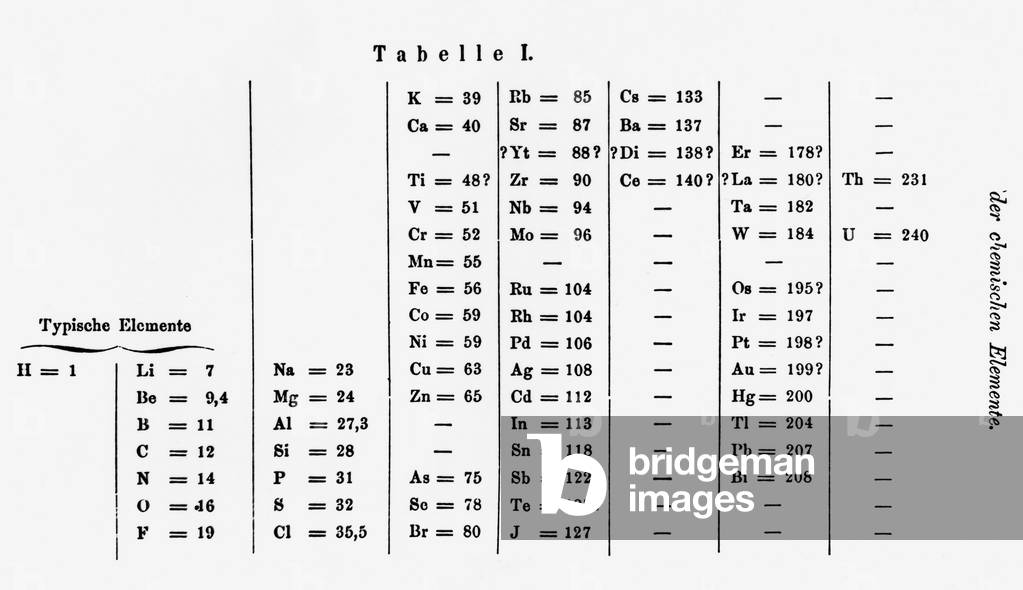
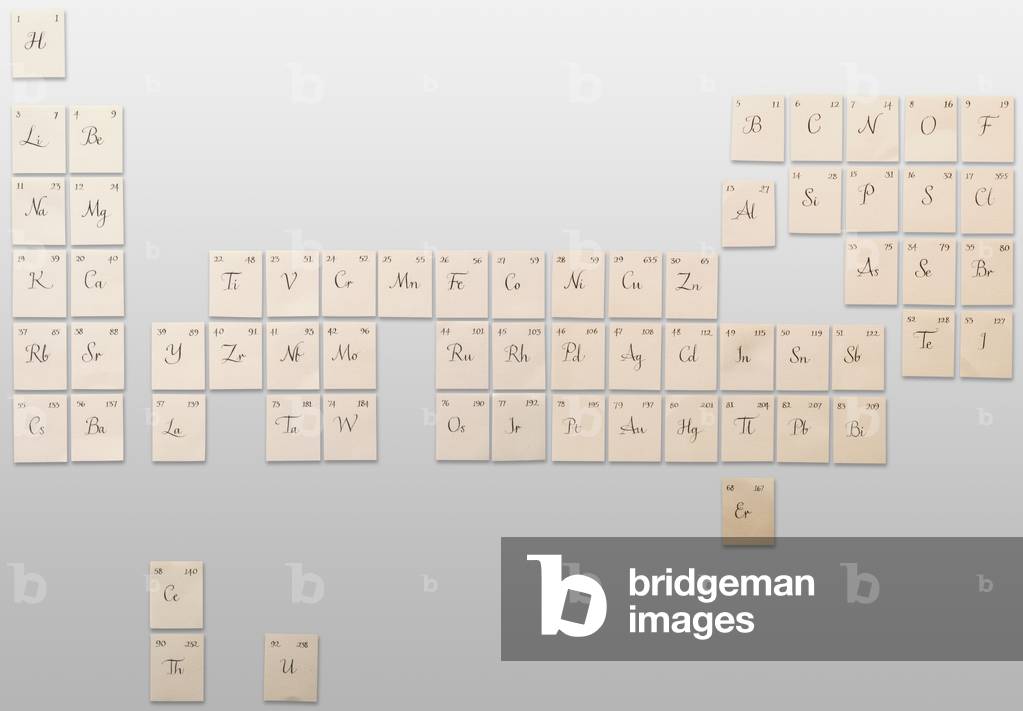
UIS5082922 ATOMS, ELEMENTS AND MOLECULES Mendeleyev's periodic table, 1869. Dmitry Mendeleyev (1834-1907) was the Russian chemist who formulated the Periodic Table of the elements, which grouped the elements according to their atomic structure and chemical properties. His work enabled chemists to identify 'families' of elements with similar chemical and physical properties and has influenced ideas in organic chemistry ever since. In 1955 a new element, atomic number 101, was named mendelevium (Md) in his honour. ©SSPL/Science Museum
DC
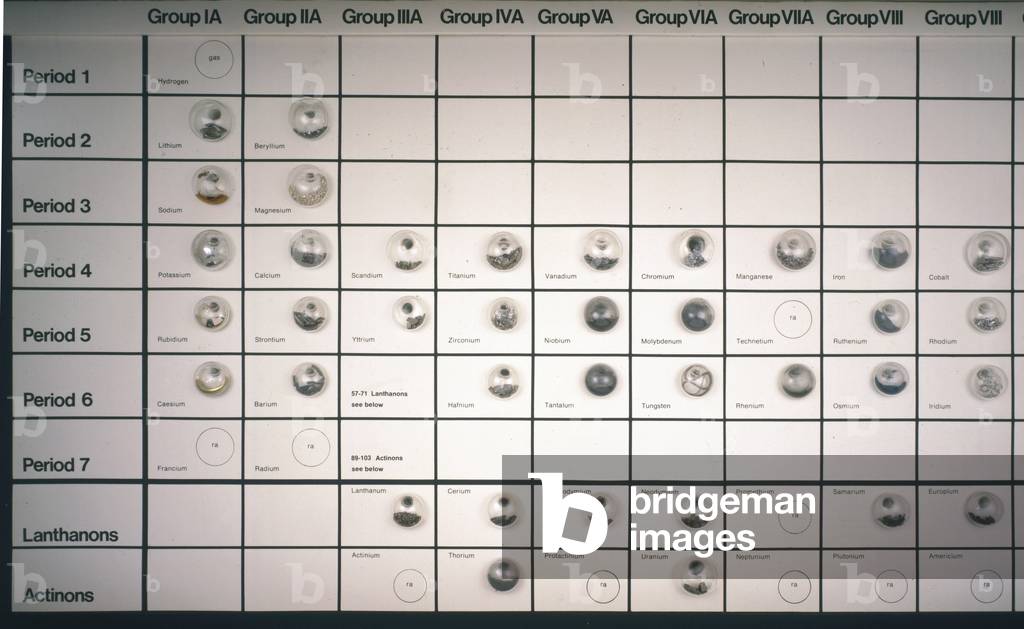
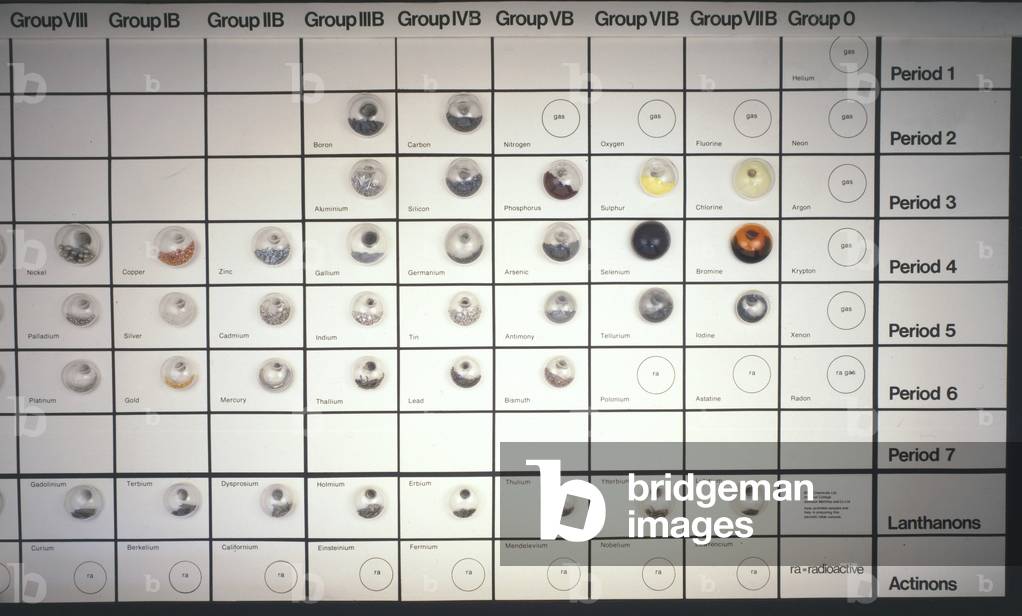
UIS5622052 Periodic Tables etc Sample elements arranged in periodic table formation, late 20th century. The periodic table displays all the elements, arranged in order of their atomic number, summarising their major properties. The vertical columns (groups) are numbered I-VII and 0 to reflect the number of electrons in the outermost unfilled shell. A gradation of properties may be traced along the horizontal rows (periods). The first periodic table was devised by Russian chemist Dmitry Mendeleyev (1834-1907) in 1869. ©SSPL/Science Museum
DC
UIS5622055 Periodic Tables etc Sample elements arranged in periodic table formation, late 20th century. The periodic table displays all the elements, arranged in order of their atomic number, summarising their major properties. The vertical columns (groups) are numbered I-VII and 0 to reflect the number of electrons in the outermost unfilled shell. A gradation of properties may be traced along the horizontal rows (periods). The first periodic table was devised by Russian chemist Dmitry Mendeleyev (1834-1907) in 1869. ©SSPL/Science Museum
DC

Total de Resultados: 21

Página 1 de 1