


















































Busque também em nossas outras coleções:

Tipo de arquivo:

Tipo do arquivo:

Orientação:

Total de Resultados: 2

Página 1 de 1

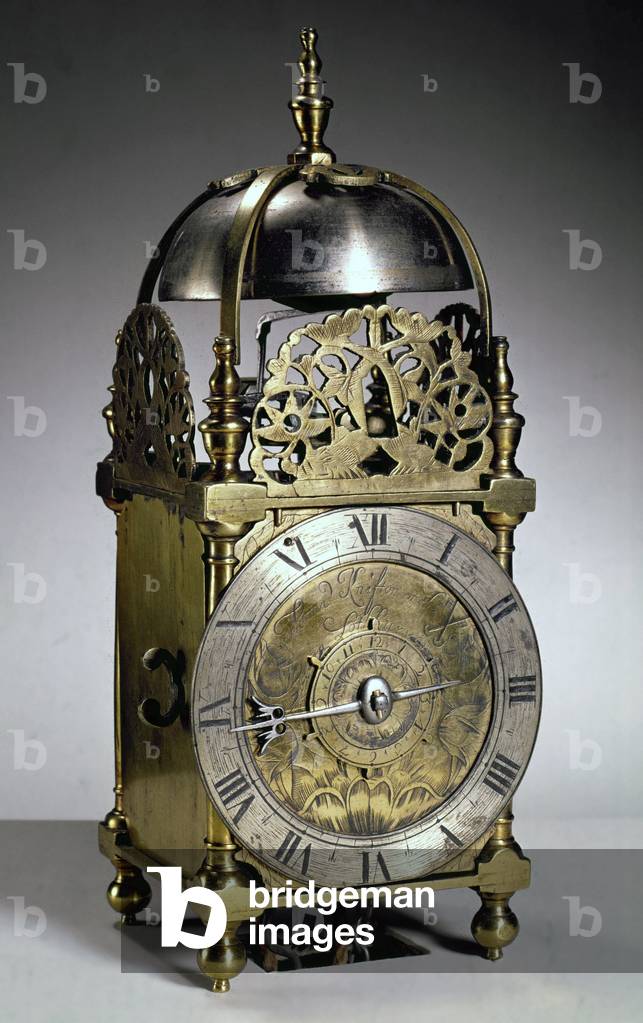
UIS5061485 Clocks, Domestic, General Lantern clock, c 1650. Lantern timepiece by Thomas Knifton at the Cross Keys, Lothbury, London. The English lantern clock of the 17th century was the immediate successor of the German type of Gothic iron clock; of the same general layout but made mainly of brass rather than iron. The lantern clocks of the first half of the century had their timekeeping controlled by a balance wheel, but this was replaced by a pendulum in the latter half of the century. This clock is an example of the earlier type, controlled by a verge escapement with a wheel balance. With a balance of this type the only way to regulate the clock is by altering the amount of driving weight: a heavier weight makes the clock go faster. Knifton was a freeman of the Clockmakers' Company of London from 1640 to 1662. View of face. ©SSPL/Science Museum
DC
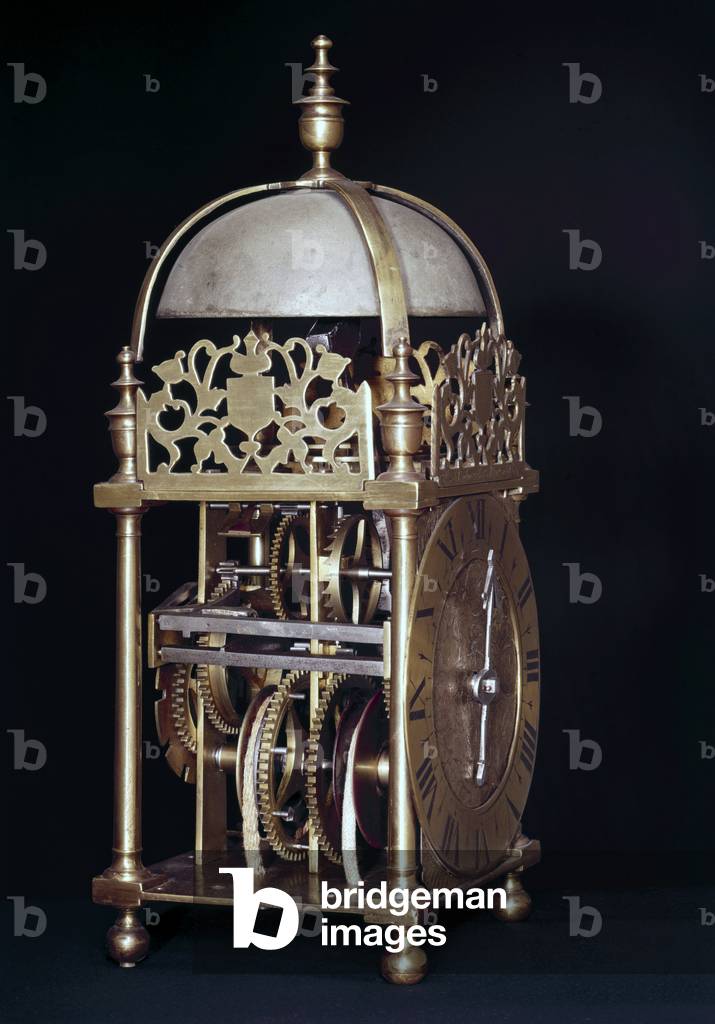
UIS5063581 Clocks, Domestic, General Lantern clock, c 1650. Lantern timepiece made by Thomas Knifton at the Cross Keys, Lothbury, London. The English lantern clock of the 17th century was the immediate successor of the German type of Gothic iron clock; of the same general layout but made mainly of brass rather than iron. The lantern clocks of the first half of the century had their timekeeping controlled by a balance wheel, but this was replaced by a pendulum in the latter half of the century. This clock is an example of the earlier type, controlled by a verge escapement with a wheel balance. With a balance of this type the only way to regulate the clock is by altering the amount of driving weight: a heavier weight makes the clock go faster. Knifton was a freeman of the Clockmakers' Company of London from 1640 to 1662. Side view. ©SSPL/Science Museum
DC

Total de Resultados: 2

Página 1 de 1