












































Busque também em nossas outras coleções:

Tipo de arquivo:

Tipo do arquivo:

Orientação:

Total de Resultados: 91

Página 1 de 1

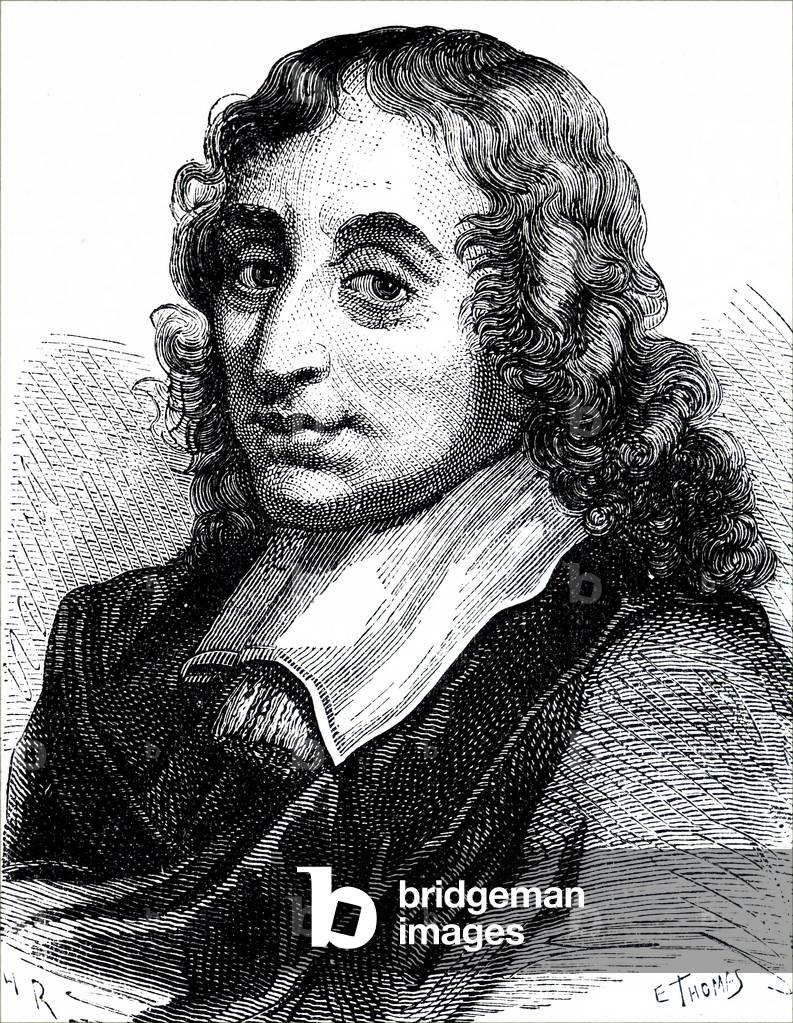
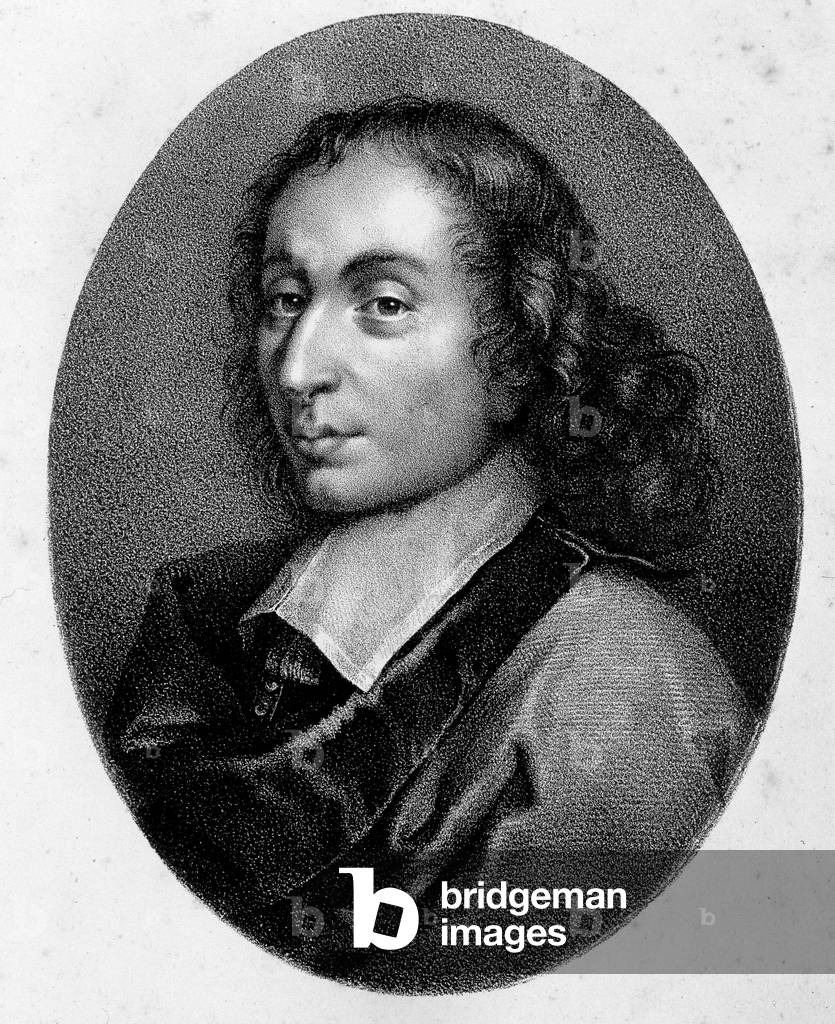
LLE6029808 Blaise Pascal (1623-1662), French mathematician and physicist.
DC
XJF362917
RF
LLM972196 Blaise Pascal (1623-1662), French mathematician and physicist. Educational card.
DC
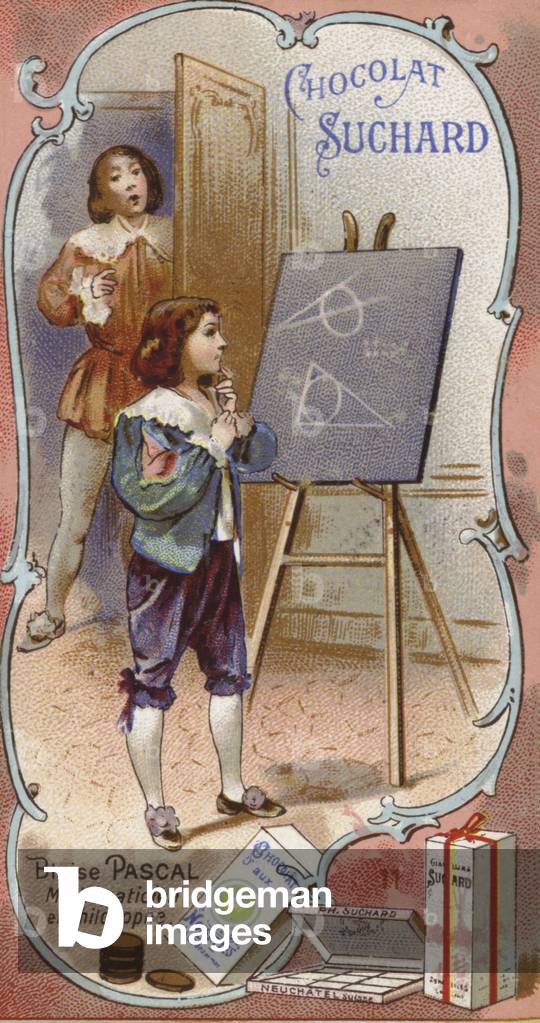
LLM1093739 Blaise Pascal (1623-1662), French physicist and mathematician, as a child. French educational card, late 19th or early 20th century.
DC
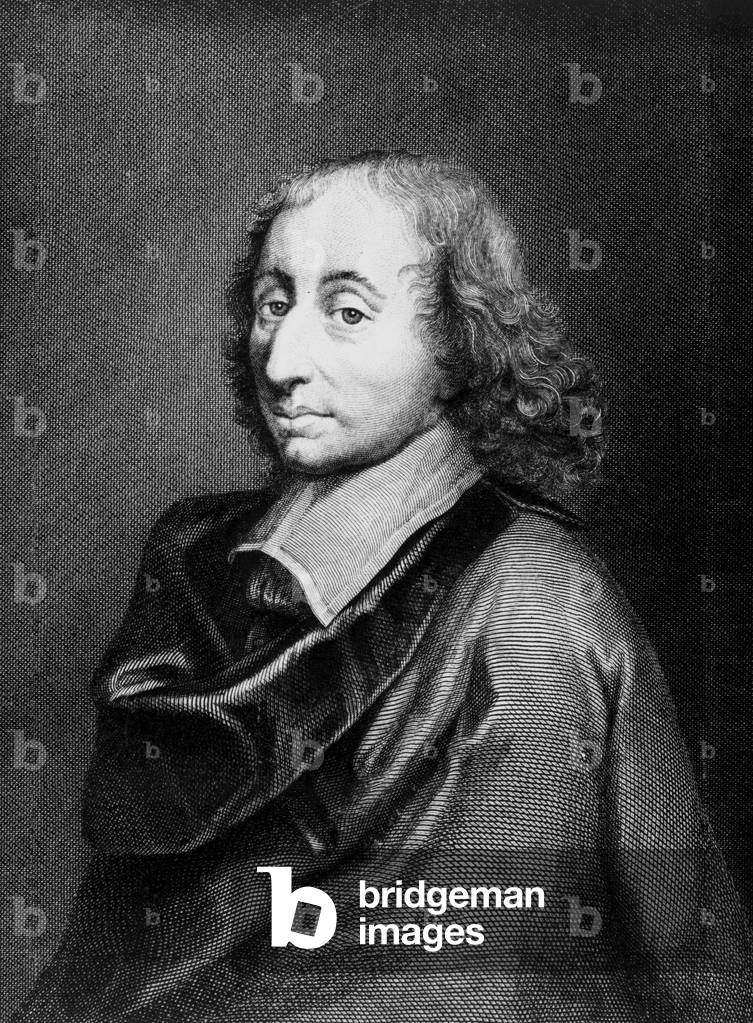
UIS5075989 Blaise Pascal, French mathematician, physicist and philosopher, c 1650. Blaise Pascal (1623-1662) is credited with founding the modern theory of probability. He also discovered the properties of the cycloid (or roulette), contributed to the advance of differential calculus and in 1647 invented the first calculating machine. As a physicist, his attempts to discredit the notion that 'nature abhors a vacuum' led to the invention of the barometer, hydraulic press and syringe. The SI unit (International System of units) of pressure, the Pascal, and a computer programming language are named after him. ©SSPL/Science Museum
DC
UIS5076521 Blaise Pascal, French mathematician, physicist and philosopher, c 1660. Engraving.Blaise Pascal (1623-1662) is credited with founding the modern theory of probability. He also discovered the properties of the cycloid (or roulette), contributed to the advance of differential calculus and in 1647 invented the first calculating machine. As a physicist, his attempts to discredit the notion that 'nature abhors a vacuum' led to the invention of the barometer, hydraulic press and syringe. The SI unit (International System of units) of pressure, the Pascal, and a computer programming language are named after him. ©SSPL/Science Museum
DC
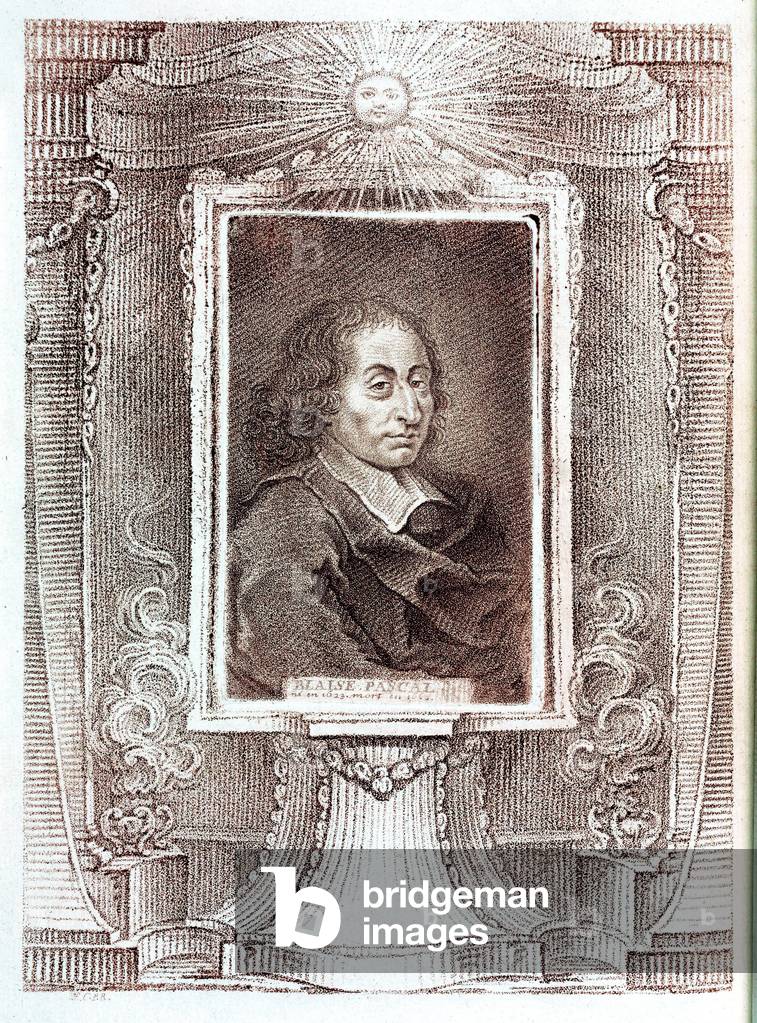
UIS5093232 Blaise Pascal, French mathematician, physicist and theologian, c 1660. Drawn and engraved by Augustin de Saint-Aubin after the marble statue of 1784 by Augustin Pajou. Blaise Pascal (1623-1662) is credited with founding the modern theory of probability. He also discovered the properties of the cycloid (or roulette), contributed to the advance of differential calculus and in 1647 invented the first calculating machine. As a physicist, his attempts to discredit the notion that 'nature abhors a vacuum' led to the invention of the barometer, hydraulic press and syringe. The SI unit (International System of units) of pressure, the Pascal, and a computer programming language are named after him. ©SSPL/Science Museum
DC
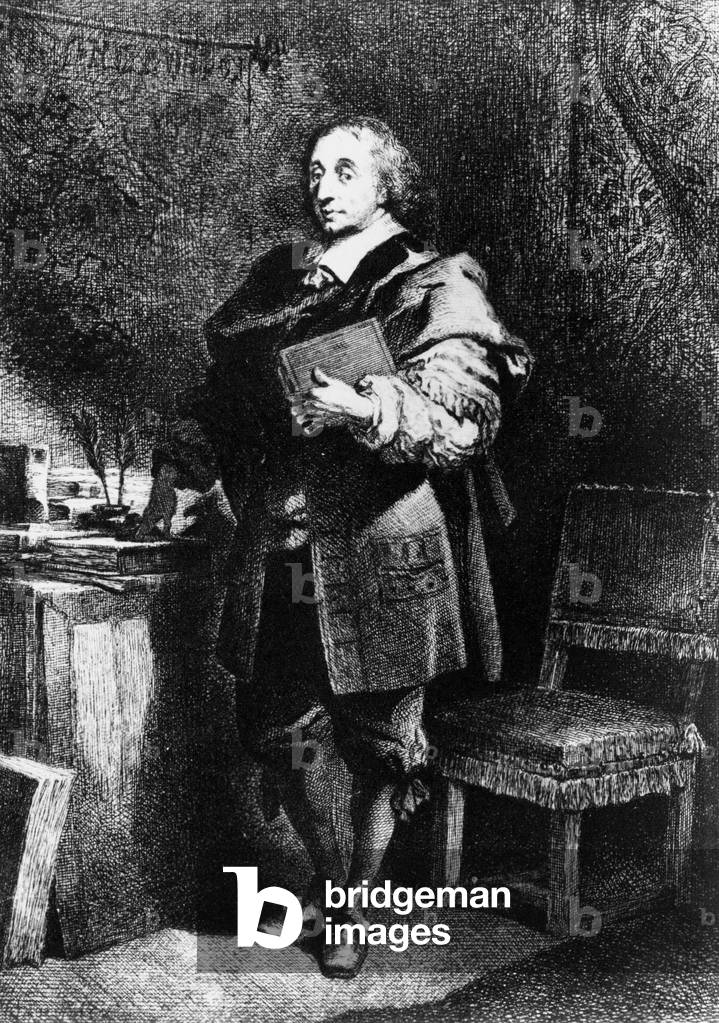
UIS5063010 Blaise Pascal, French mathematician, physicist and philosopher, c 1650. Engraving. Blaise Pascal (1623-1662) is credited with founding the modern theory of probability. He also discovered the properties of the cycloid (or roulette), contributed to the advance of differential calculus and in 1647 invented the first calculating machine. As a physicist, his attempts to discredit the notion that 'nature abhors a vacuum' led to the invention of the barometer, hydraulic press and syringe. The SI unit (International System of units) of pressure, the Pascal, and a computer programming language are named after him. ©SSPL/Science Museum
DC
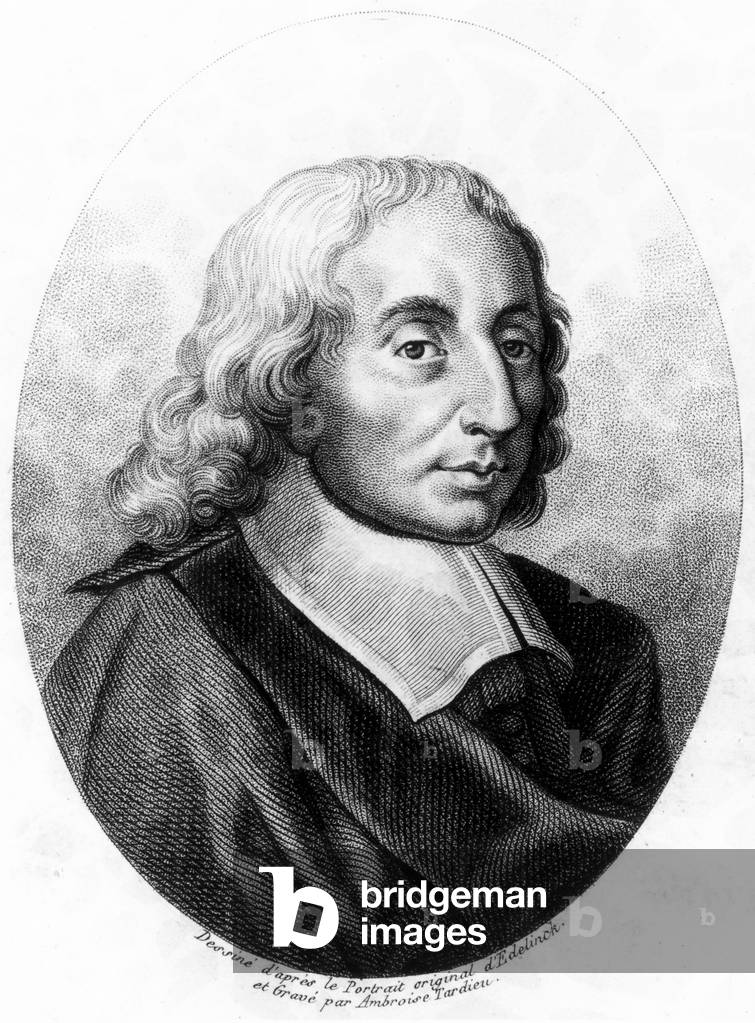
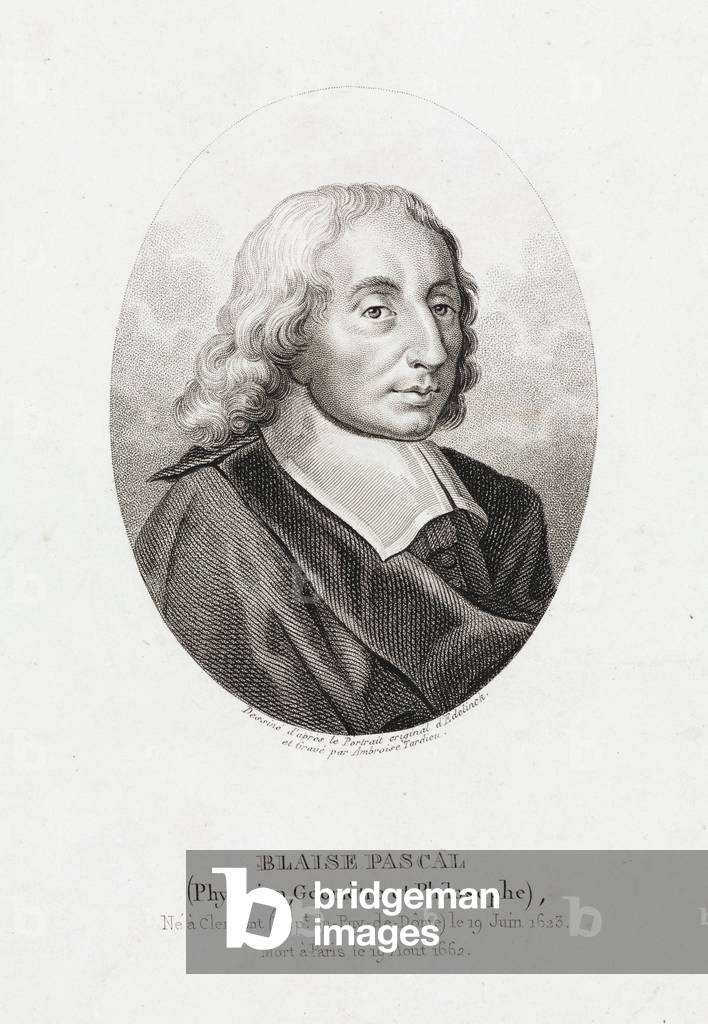
UIS5071142 Blaise Pascal, French mathematician, physicist and theologian, c 1660. Engraving by Ambroise Tardieu after an original work by Edelinck. Blaise Pascal (1623-1662) is credited with founding the modern theory of probability. He also discovered the properties of the cycloid (or roulette), contributed to the advance of differential calculus and in 1647 invented the first calculating machine. As a physicist, his attempts to discredit the notion that 'nature abhors a vacuum' led to the invention of the barometer, hydraulic press and syringe. The SI unit (International System of units) of pressure, the Pascal, and a computer programming language are named after him. ©SSPL/Science Museum
DC
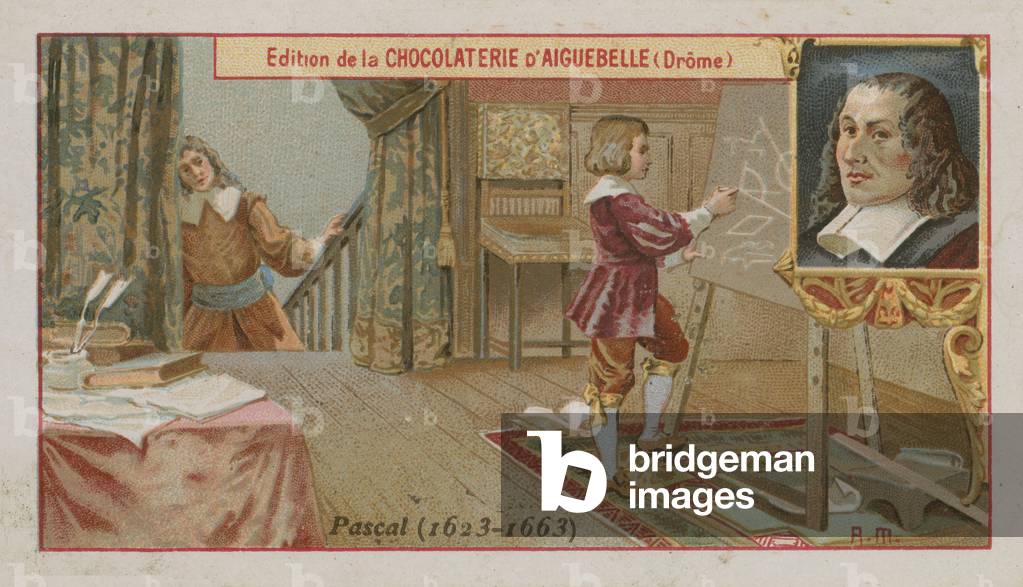
LLM972086 Blaise Pascal (1623-1663), French mathematician and physicist. Chocolaterie d'Aiguebelle educational card.
DC
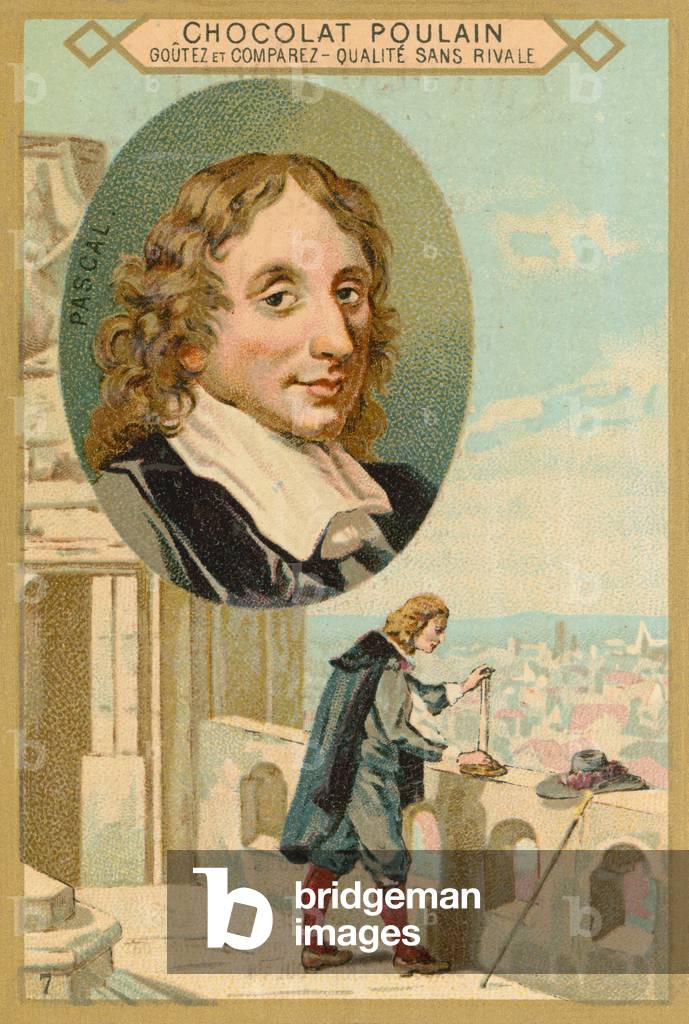
LLM972200 Blaise Pascal (1623-1662), French mathematician and physicist. Chocolat Poulain educational card.
DC
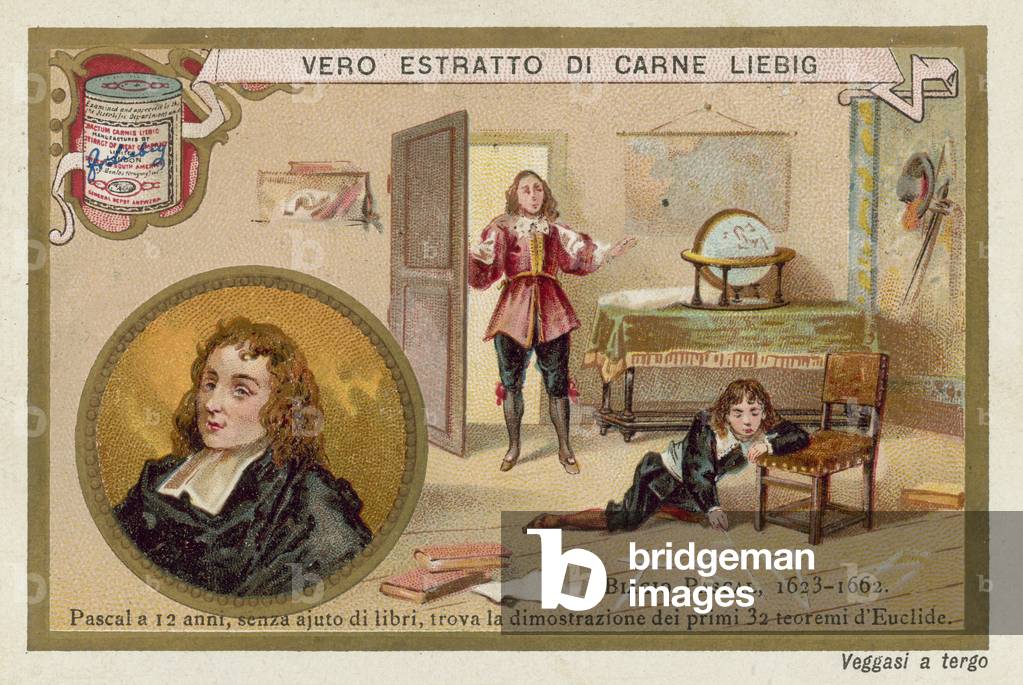
LLM974609 Blaise Pascal (1623-1662), French mathematician and physicist. Pascal, aged 12, finding the proof of the first 32 theorems of Euclid without the aid of books. Educational card, late 19th or early 20th century.
DC
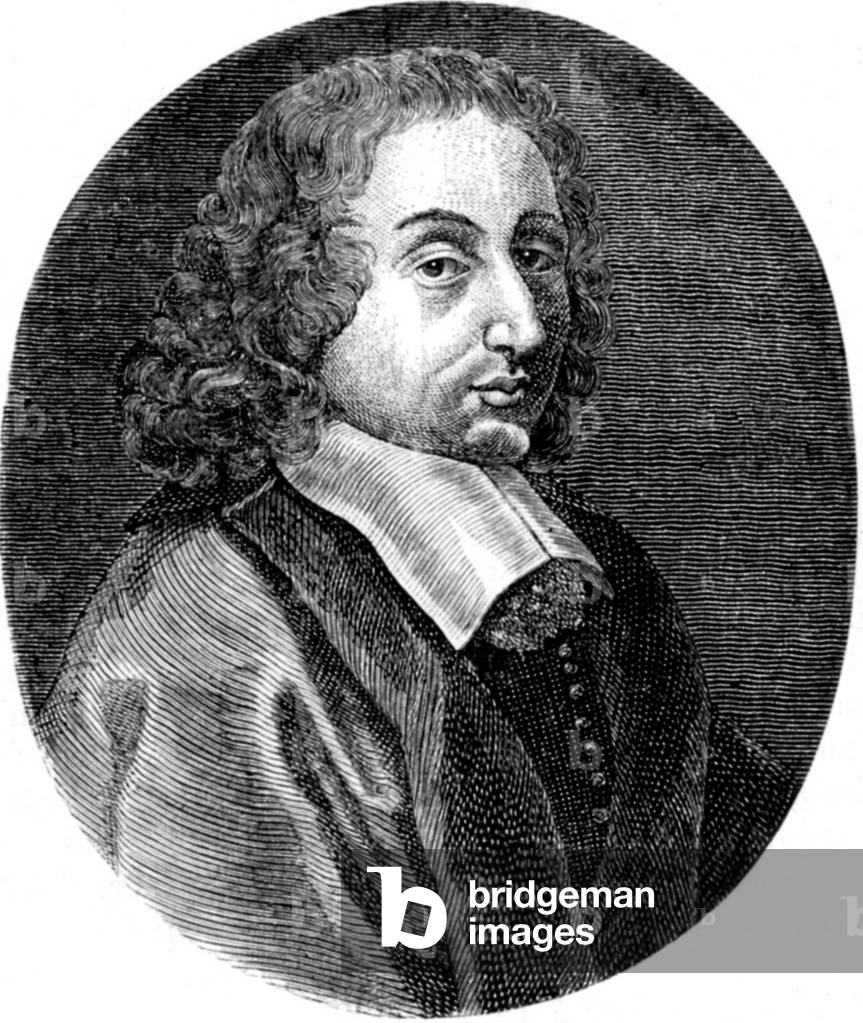
XEE4404210 portrait of Blaise Pascal (1623-1662), French physicist, mathematician and writer.
RF
XLA3750664 Blaise Pascal was a French mathematician, physicist, and religious philosopher. Blaise Pascal 1623-1662From a History of France (Volume IV) by Guizot page 489.
DC
XEE4414932 Portrait of Blaise Pascal, French mathematician, physicist and philosopher (1623-1662).
RF
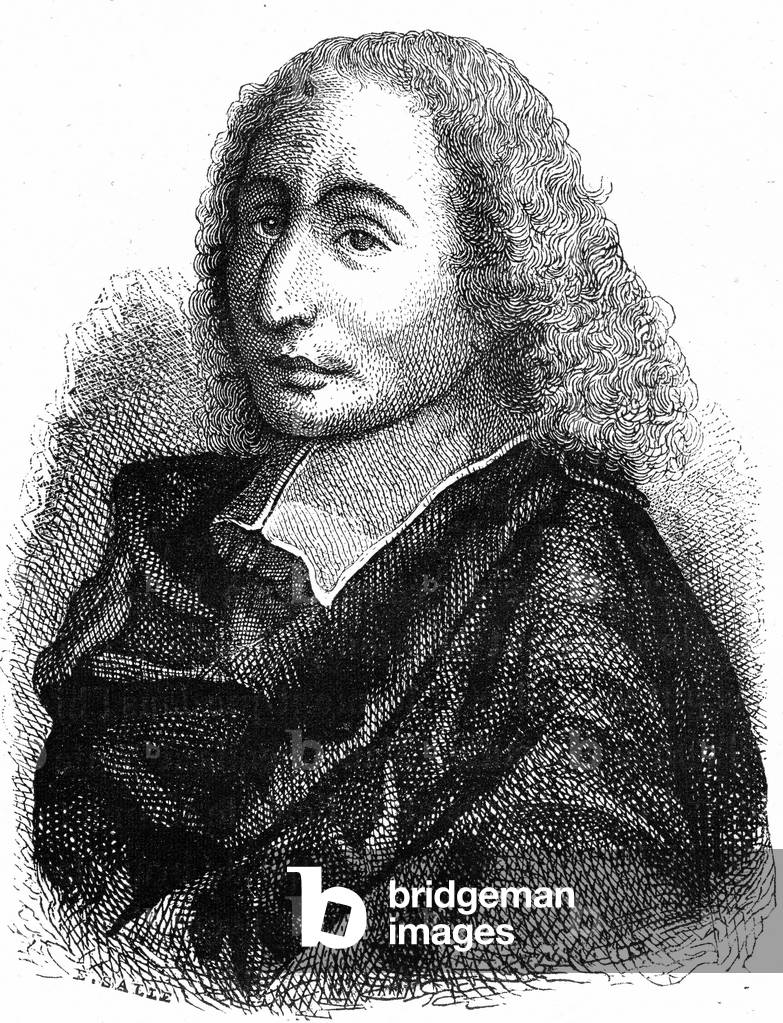
XEE4153302 Portrait of Blaise Pascal (1623-1662), French physicist, mathematician and writer engraving from 1879 - Portrait of Blaise Pascal (1623-1662), French mathematician and writer
RF
GIA4764552 Blaise Pascal (1623-1662), French mathematician, physicist and writer.
DC
XLA3773583 Blaise Pascal-portrait of the French mathematician, physicist and philosopher. After a miniature by Paul Prieur. 19 June 1623-19 August 1662. Gestalten Der Weltgeschichte-Orange Book with cigarette cards, 1933
DC
XEE4165135 Portrait of Blaise Pascal (1623-1662), French physicist, mathematician and writer.
DC
LLE815776 Blaise Pascal (1623-1662). French mathematician, physicist, inventor and philosopher.
DC
XLA3769151 Blaise Pascal-French mathematician, physicist and philosopher 1623-1662. Engraved portrait.
DC
LLM974399 Blaise Pascal (1623-1663), French physicist and mathematician, as a child. Educational card, late 19th or early 20th century.
DC
UIG3733754 Portrait of Blaise Pascal (1623-1662) a French mathematician, physicist, inventor, writer and Catholic theologian. Dated 19th century.
DC
XLA3773128 Blaise Pascal-portrait of the French mathematician, physicist and philosopher. 19 June 1623-19 August 1662. Illustration on advertisement card for Chocolat Poulin.
DC
UIS5084728 Blaise Pascal, French mathematician, physicist and philosopher, c 1650. Portrait made in 1763, of Pascal (1623-1662) who is credited withfounding the modern theory of probability. He also discovered the properties of the cycloid (or roulette), contributed to the advance of differential calculus and in 1647 invented the first calculating machine. As a physicist, his attempts to discredit the notion that 'nature abhors a vacuum' led to the invention of the barometer, hydraulic press and syringe. The SI unit (International System of units) of pressure, the Pascal, and a computerprogramming language are named after him. Illustration from 'Histoire des philosophes modernes' (History of modern philosophers), by Alexandre Saverien (1720-1805), published in Paris in 1763. ©SSPL/Science Museum
DC
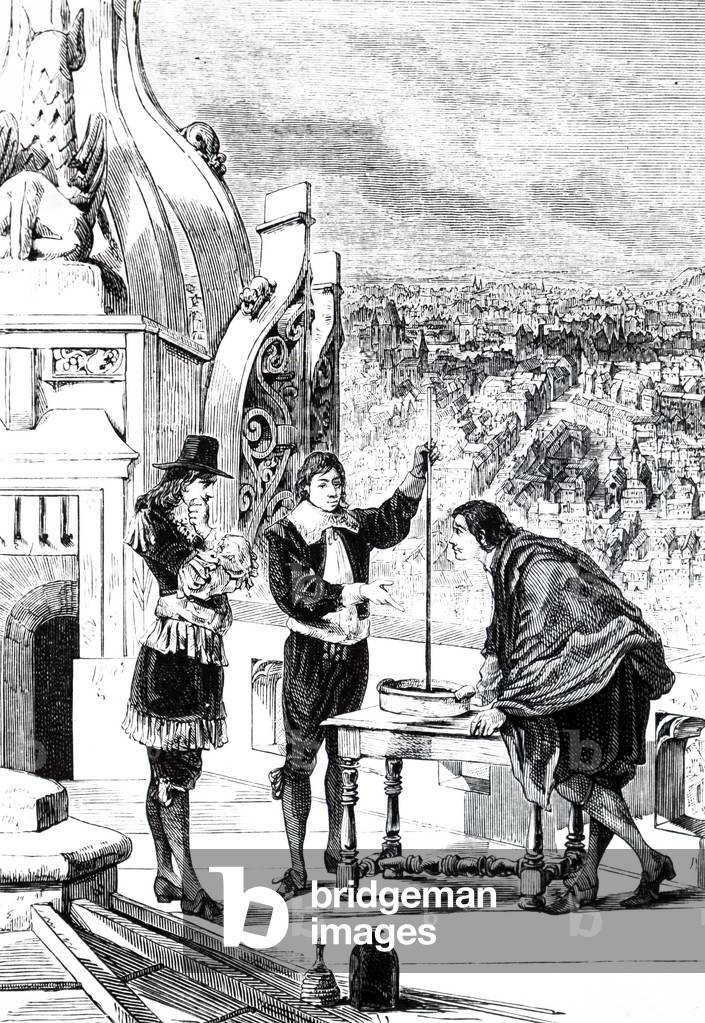
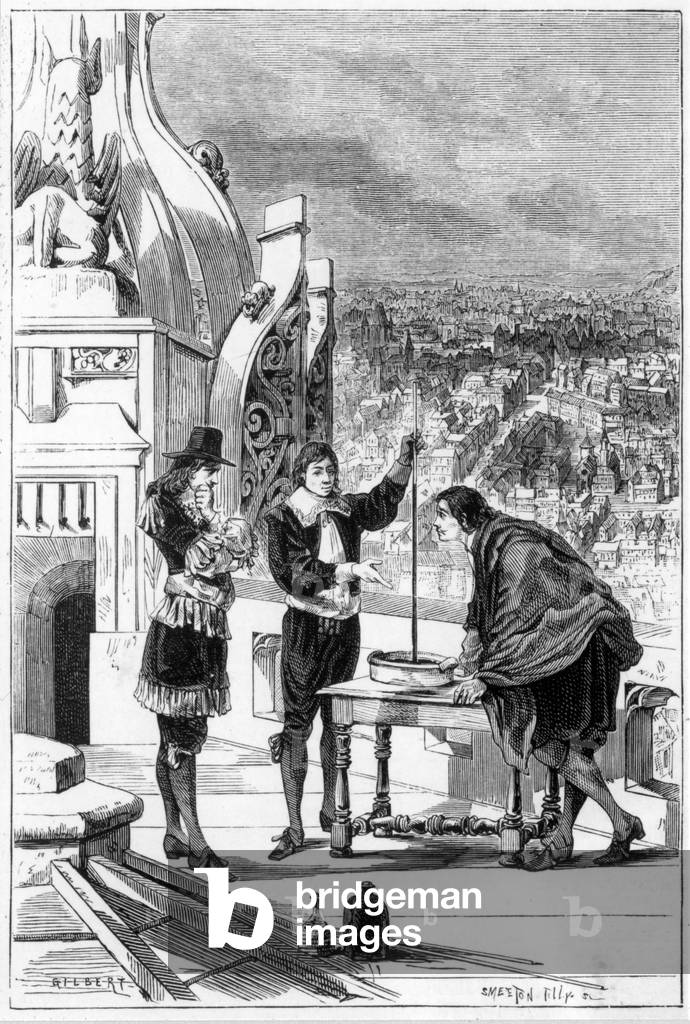
UIG3733752 Engraving depicting Blaise Pascal carrying out experiments with the mercury barometer on the tower of St Jacques-la-Boucherie, Paris. Blaise Pascal (1623-1662) a French mathematician, physicist, inventor, writer and Catholic theologian. Dated 19th century.
DC
HIM5295337 Blaise Pascal, French philosopher, mathematician, physicist and theologian, (1833). Pascal (1623-1662) is credited with founding the modern theory of probability. He also discovered the properties of the cycloid, and made important contributions to the advance of differential calculus. .
DC
XEE4413471 portrait of Blaise Pascal (1623-1662), French mathematician, physicist and writer.
RF
NUM167119
DC
UIG3078431 Signature of Blaise Pascal (1623-1662) a French mathematician, physicist, inventor, writer and Christian philosopher. Dated 17th Century.
DC
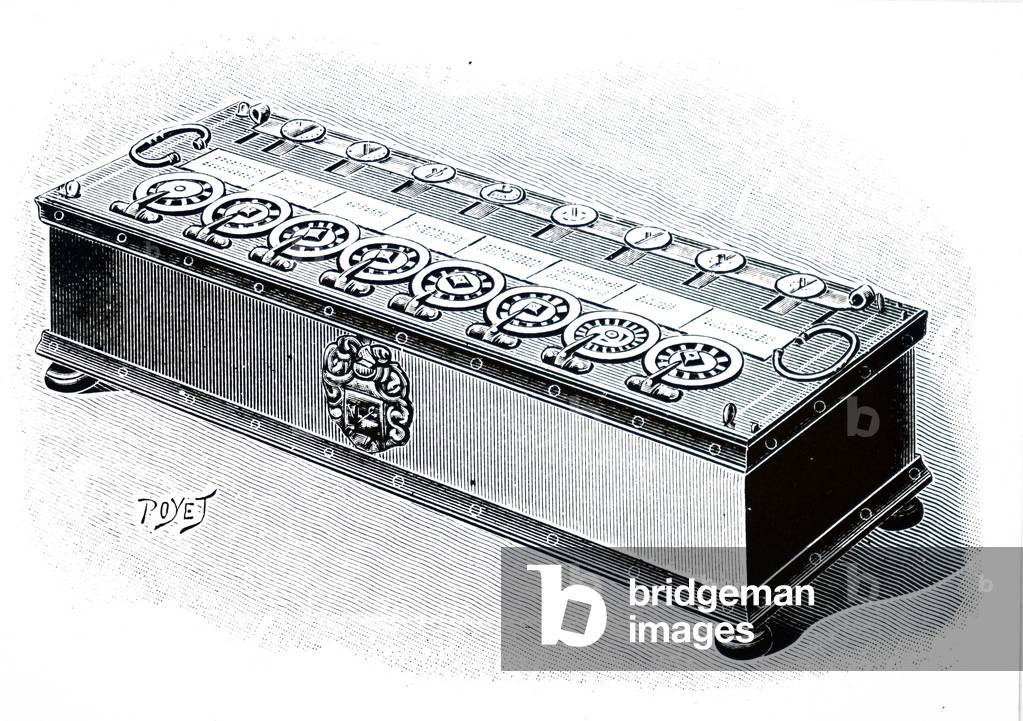
UIG3733753 Engraving depicting an adding machine designed by Blaise Pascal. Blaise Pascal (1623-1662) a French mathematician, physicist, inventor, writer and Catholic theologian. Dated 20th century.
DC
XEE4116390 Portrait of Blaise Pascal (1623 - 1662)
RF
AMO1217860 Blaise Pascal (1623-1662)
DC
XEE556685 Illustration from "Le Plutarque Francais" by Edmond Mennechet
RF
TAD1750805 Blaise Pascal (1623-1662) French mathematician, philosopher, engraving
DC
XIR414691 Pascal (1623-62) inventor of the mechanical calculator; author of the 'Pensees', first published in 1670; 'Pari de Pascal'; wager; gambit; b/w photo; black and white photograph; Studio Giraudon 1931;
RF
XEE556637 Illustration from "Le Plutarque Francais" by Edmond Mennechet
RF
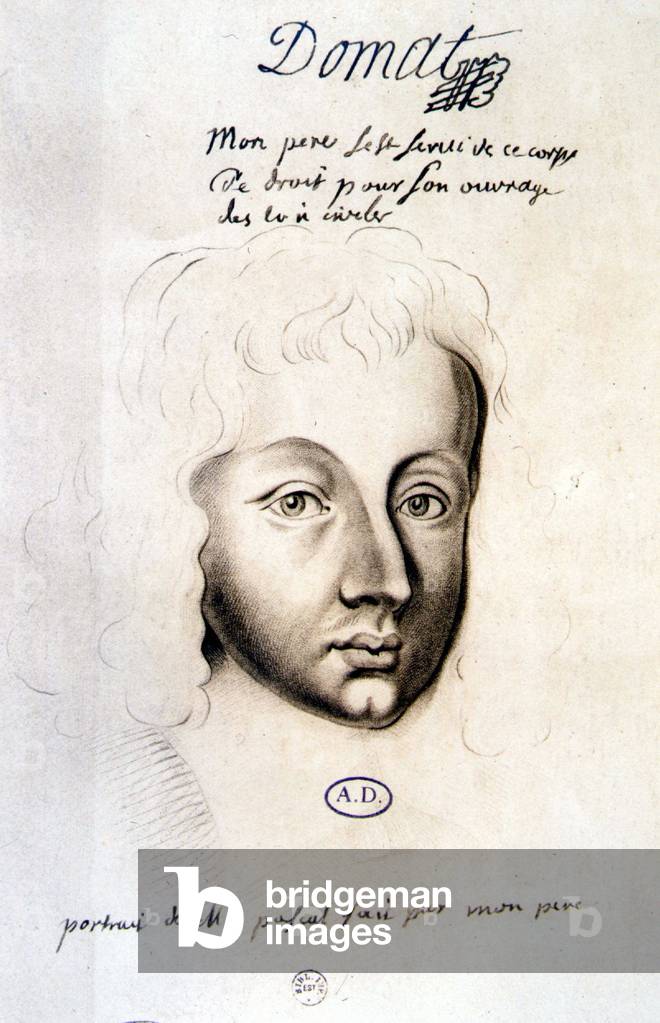
LSE4737138 Portrait of Blaise Pascal (1623 - 1662) by DomatJean Domat, gold Daumat (1625-1696)
DC
JAB6947900 Blaise Pascal (1623-1662), french mathematician, philosopher, physicist and theologist. From Histoire de France by Victor Duruy, Paris 1865
DC
JLJ4676698 Portrait of Blaise Pascal (1623-1662) (h s/t 0.70 x 0.56) by Francois Quesnel (1637-99) .
DC
GIA4811361 Portrait of Blaise Pascal - painting by Francois Quesnel, (1595-1661), circa 1691. museum of Versailles.
DC
GIA4783457 Experience of the water barometer, executed in Rouen by Pete et Blaise Pascal.
DC
XEE4409851 Portrait of Blaise Pascal - engraving of the 19th century.
RF
XLA3752638 Blaise Pascal was a French mathematician, physicist, and religious philosopher. Blaise Pascal 1623-1662. Colourised version.
DC
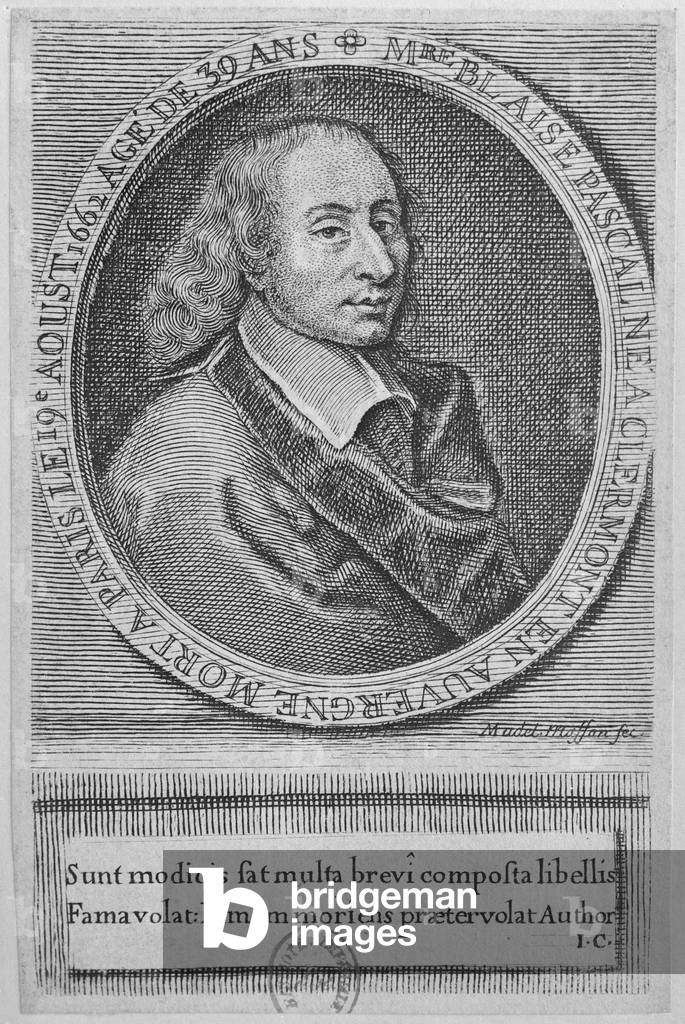
JLJ4614969 Portrait of Blaise Pascal (1623 - 1662), French physicist, mathematician and writer. Engraving of the 17th century. Private collection.
DC
PVD1688070 Blaise Pascal (1623-1662) french philosopher, mathematician, theologian, engraving
DC
JLJ4679537 Portrait of Blaise Pascal (1623-1662), French physicist, mathematician and writer. Anonymous painting. Port Royal, Musee Des Granges
DC
LSE4095864 Blaise Pascal (1623 - 1662) before a barometer
DC
LLE817371 Blaise Pascal (1623-1662), French mathematician, physicist and philosopher.
DC
LSE4095844 Blaise Pascal, child, finding the 32nd proposal of Euclid - Liebig advertising sticker
DC
JLJ4679541 portrait of Blaise Pascal (1623-1662), French physicist, mathematician and writer. Anonymous painting. Musee de Port Royal des Champs, Magny les Hameaux - Portrait of Blaise Pascal (1623-1662), French physicist, mathematician and writer. Anonymous painting. Magny-les-Hameaux, Museum of Port-Royal des Champs, France
DC
XLA3761568 Title page: 'Traite du Triangle arithmetique' (Treatise on Arithmetical Triangle) by Blaise Pascal (1623-1662), printed in Paris by Guillaume Desprez, 1665. This edition was the first to propose Pascal's Theory of ProbabilityRare Books and Manuscripts, William H. Robinson LTD: London, 1953.
DC
XIR1200018 Blaise Pascal (1623-62) was a French mathematician, physicist, inventor, writer and Christian philosopher.
DC
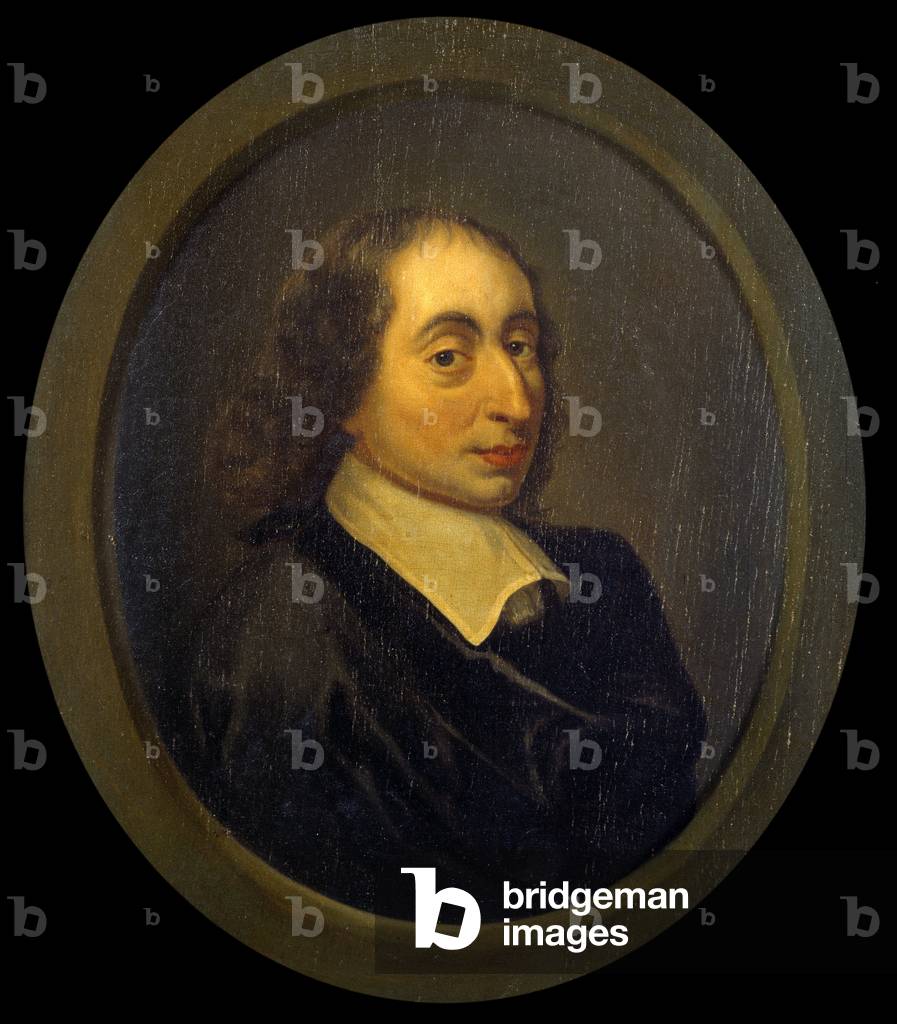
FIA5403589 Portrait of the philosopher Blaise Pascal (1623-1662) par Anonymous, 18th century - Oil on paper, 16x12,5 - Private Collection
DC
XRH1730429 Engraving by Allais 1820
DC
XRH1722715 Blaise Pascal (1623-62) French philosopher, mathematician, physicist and theologian.
DC
GIA4783463 Experience of Blaise Pascal with a mercury barometer at the top of the Tour Saint Jacques la Boucherie in Paris.
DC
LLE1108099 Blaise Pascal (1623-1662), French mathematician, inventor. Scan of small illustration which has been digitally enhanced to assist repro.
DC
XLA3770844 Pensées', title page for a defence of the Christian faith by Blaise Pascal. 'Pensées de M. Pascal sur la réligon et sur quelques autres sujets, qui ont esté trouvées aprés sa mort parmy ses papiers' Pascal-French mathematician, philosopher and theologian-19 June 1623-19 August 1662. Bibliothèque Nationale. Gustave Lanson, Illustrated History of French Literature: Vol. 1, Hachette, Paris and London, 1923.
DC
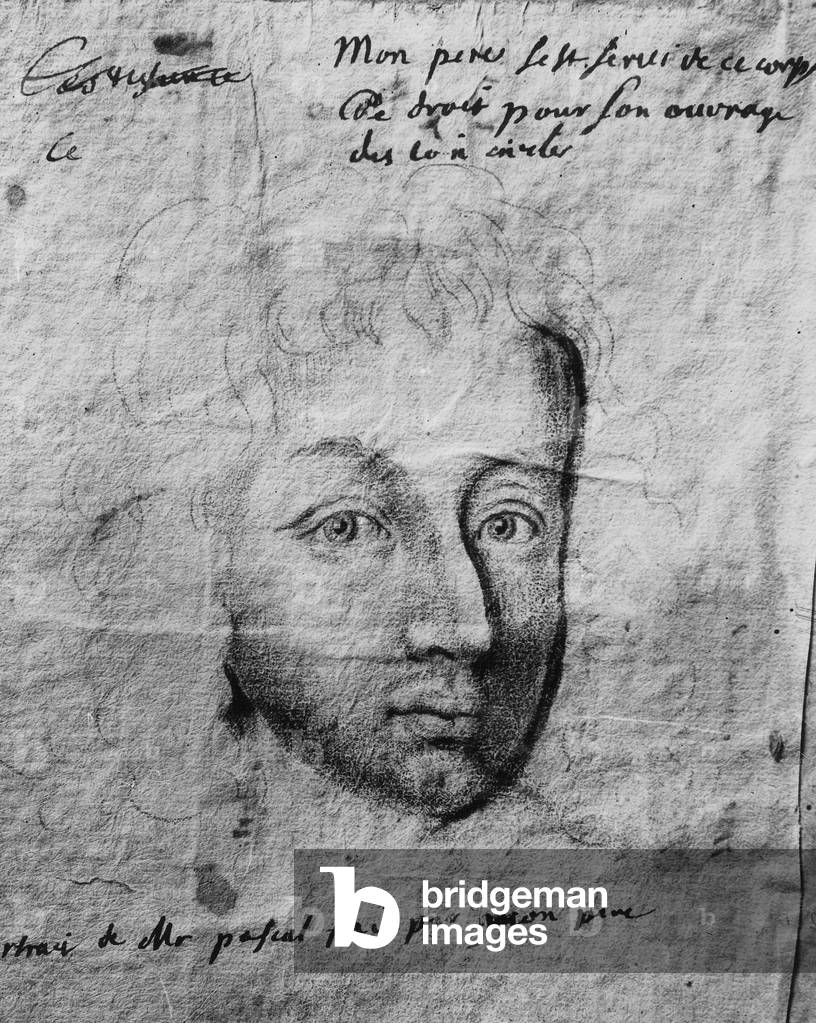
TAD1743258 Blaise Pascal (1623-1662) French mathematician, philosopher, drawing by his friend Jean Domat
DC
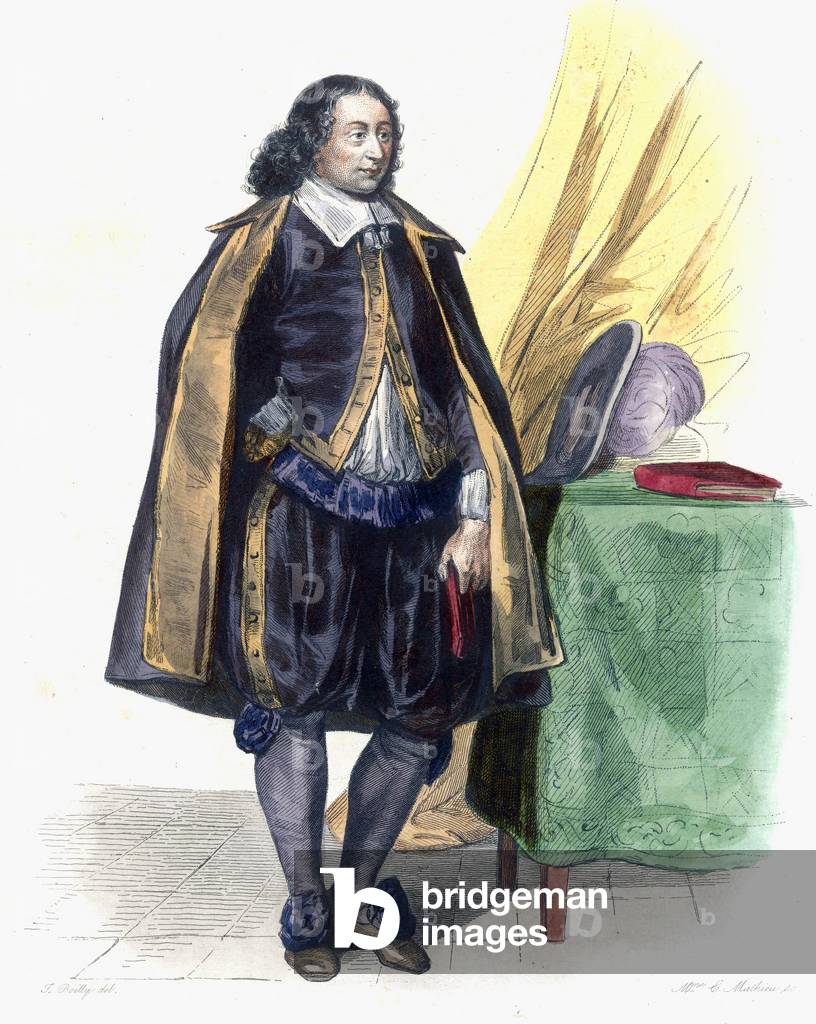
LSE4084250 Portrait of Blaise Pascal, French philosopher, mathematician and physicist (1623-1662). - in Ed. Mennechet, “” Le Plutarque francais””, 1844-1847
DC
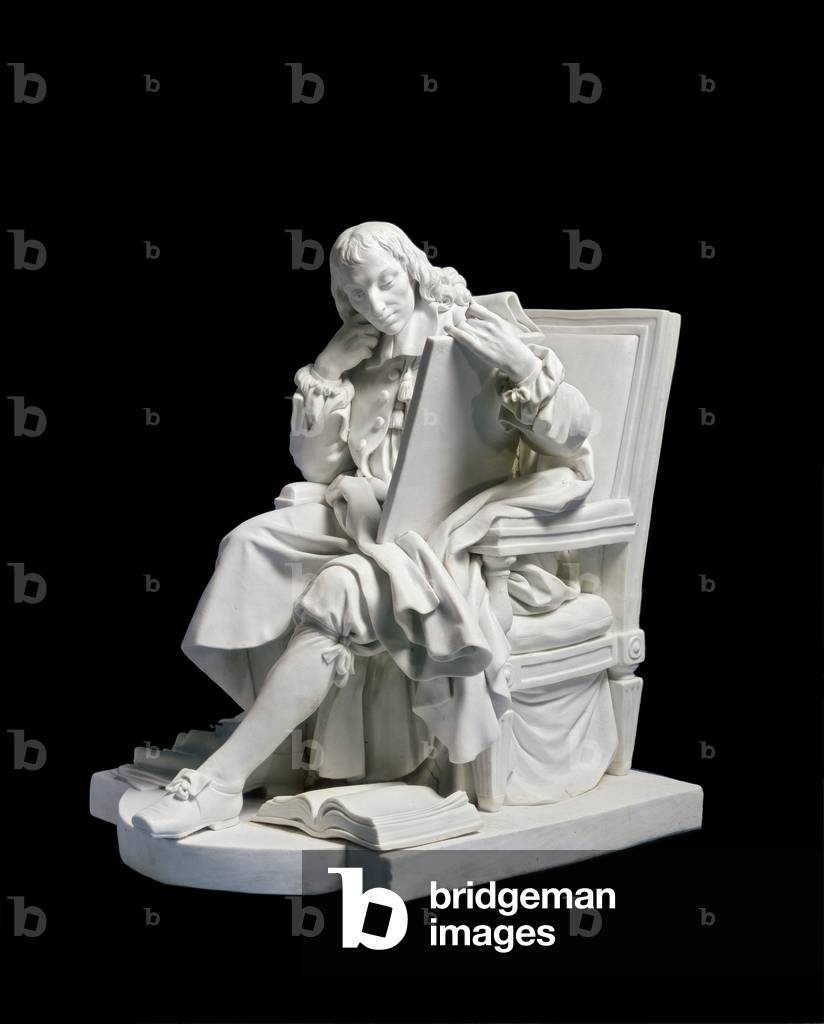
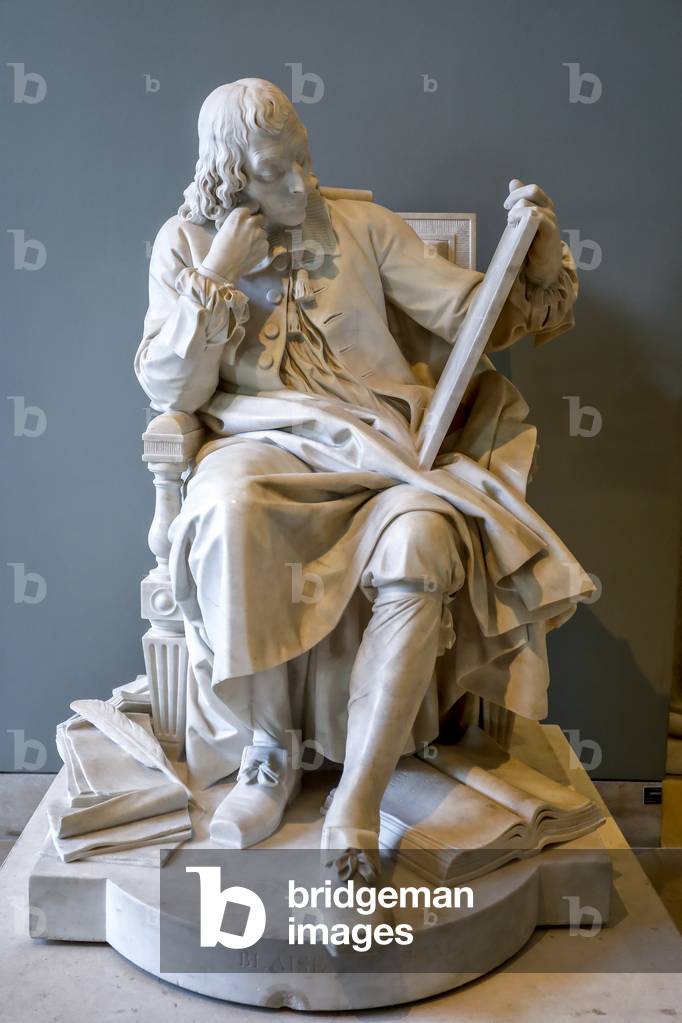
FBU7308569 Blaise Pascal, 1623 - 1662, MarbleSculptor: Augustin Pajou 1730 - 1809Louvre Museum, Paris
DC
XIR157954 by Francois Quesnel, the Younger
RF
CHT322568 master of French prose and inventor of the mechanical calculator; celebrated author of the 'Pensees', first published in 1670;
DC
LRI9202363 French mathematician, physicist and philosopher
DC
XIR165592
RF
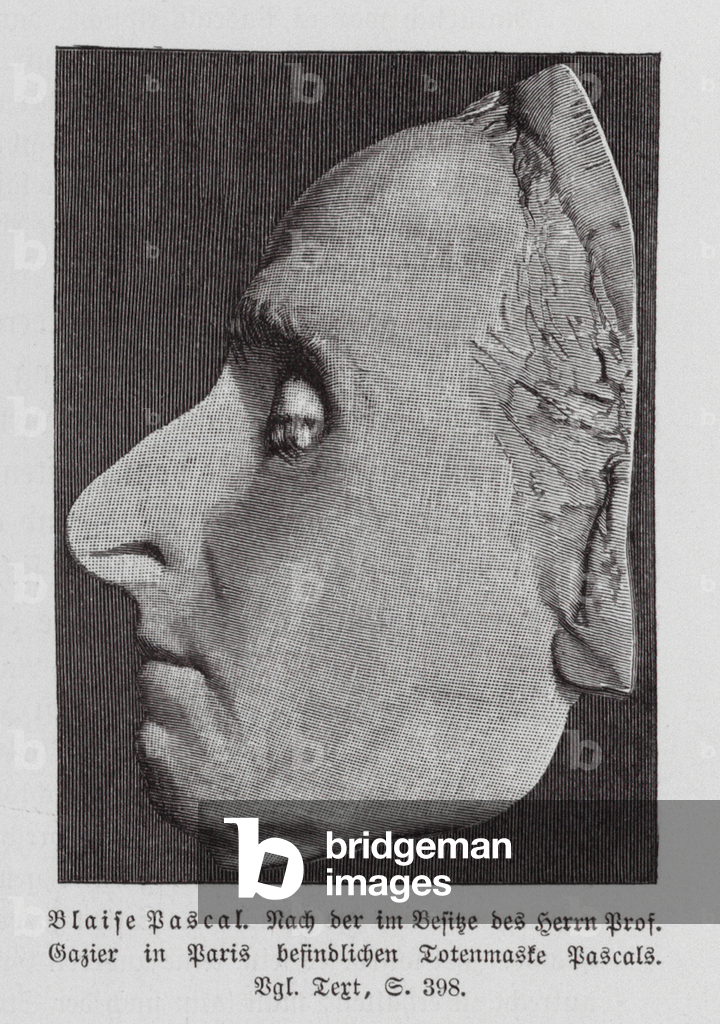
LLM11730692 Death mask of Blaise Pascal (1623-1662), French scientist and author. Illustration from Geschichte der Franzosischen Litteratur von den Altesten Zeiten bis zur Gegenwart, by Hermann Suchier and Adolf Birch-Hirschfeld (Bibliographisches Institut, Leipzig and Vienna, 1900).By German School (20th Century)
DC
LSE4101162 Portrait of Blaise Pascal - in “” Le Plutarque Français””, by Mennechet, 1844-87
DC
PCT4295797 Bronze statue of Blaise Pascal (1623-1662), physicist, mathematician, philosopher and writer (French scientist and philosopher) sculpture by Eugene Guillaume (1879) - Square Pascal, Clermont-Ferrand - Photo Patrice Cartier -
DC
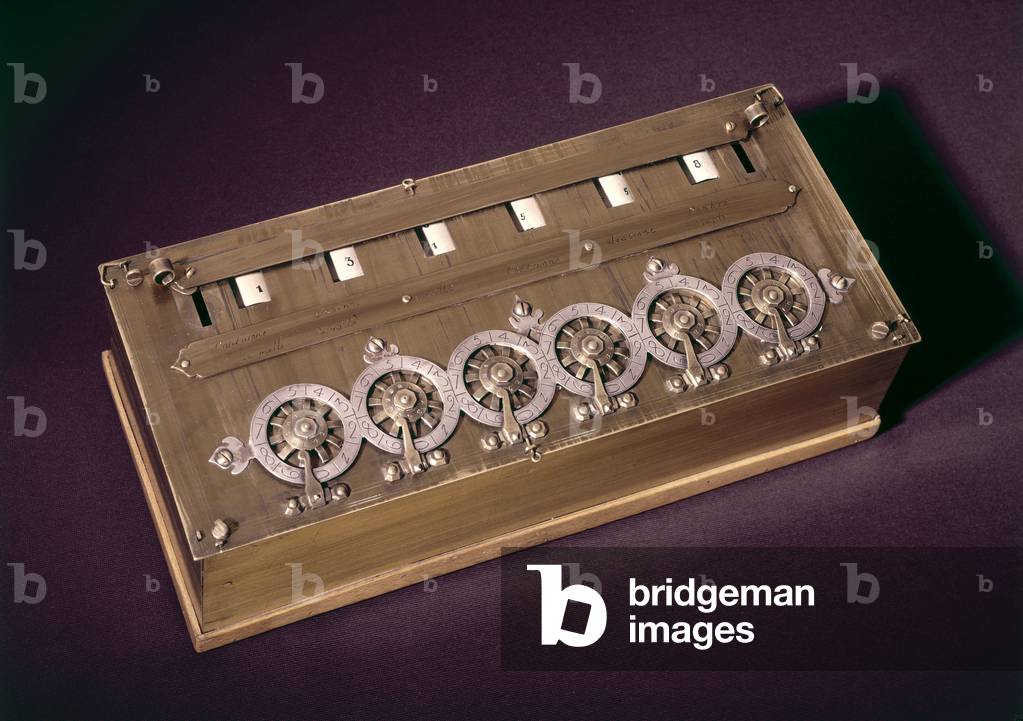
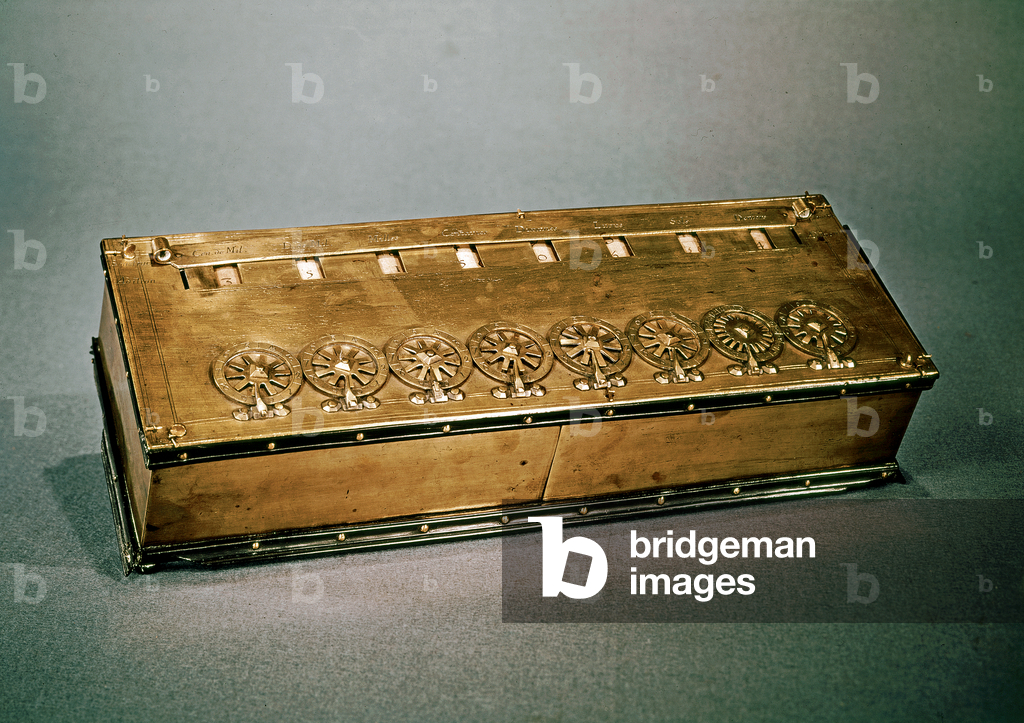
UIS5064013 CALCULATING MACHINES, 1600-1700 Pascal's calculating machine, 1642 (replica Pascal's calculating machine, 1642 (replica). Blaise Pascal (1623-1662), was France's most celebrated mathematician and physicist. Thisæ calculator is an exact replica of an original calculating machine preserved in the Conservatoire des Arts et Metiers at Paris. It was completed by him in 1642, when he was only 19, to aid his father in his business; it was designed for addition and subtraction, using a stylus to move the number wheels. ©SSPL/Science Museum
DC
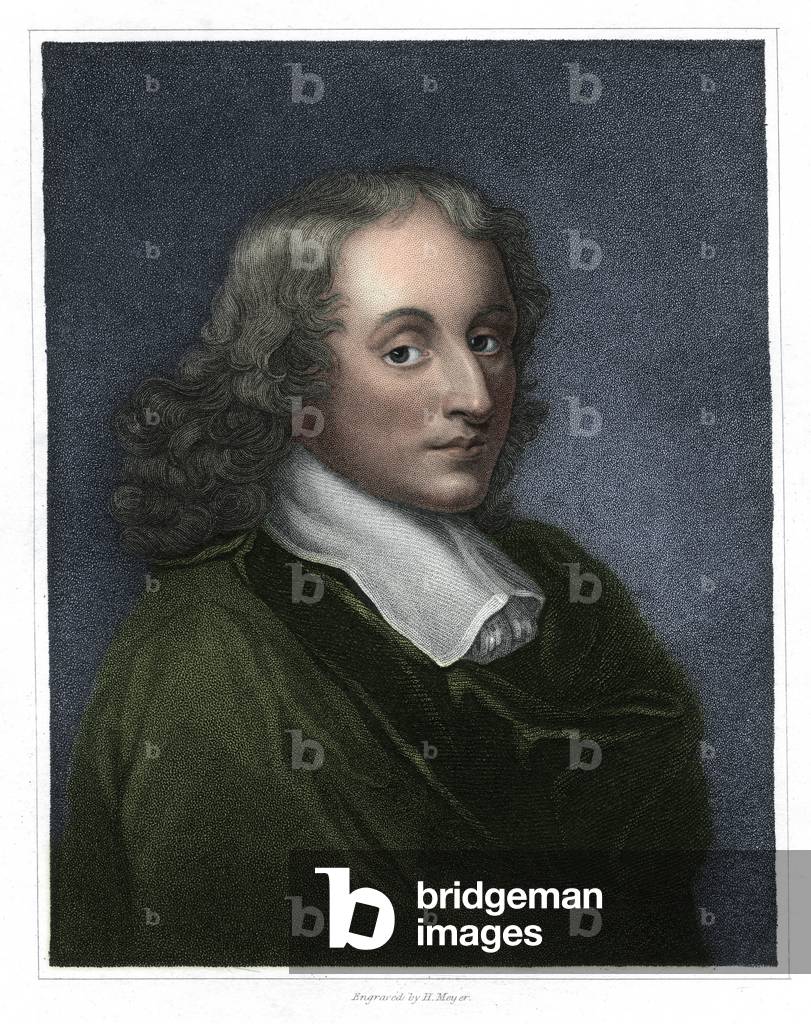
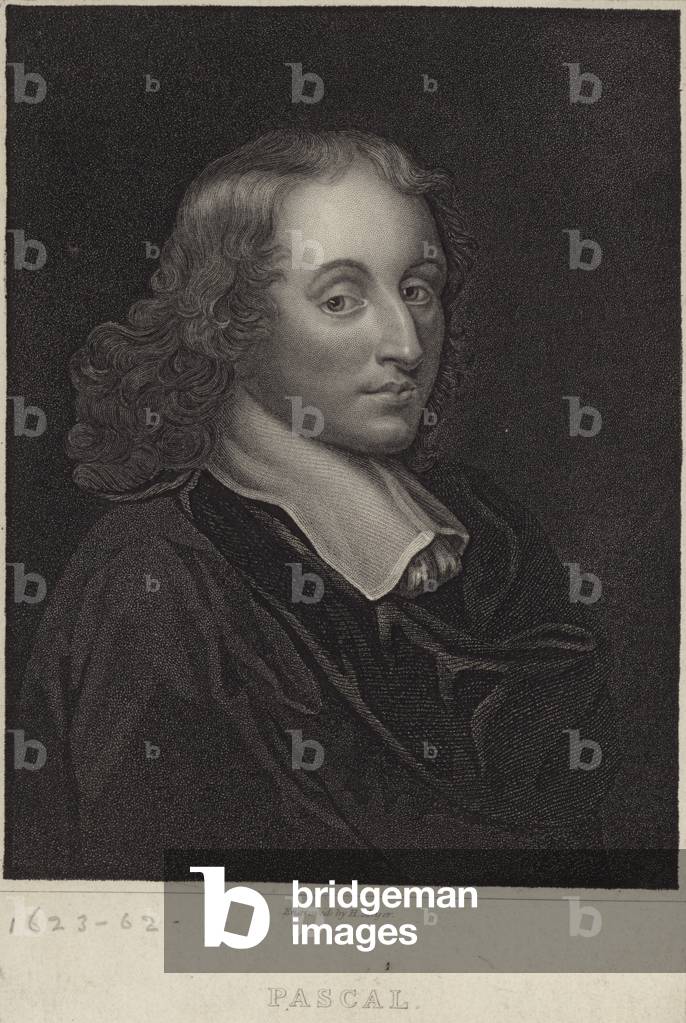
LLE819661 Blaise Pascal, French mathematician, physicist, inventor, writer and Christian philosopher. Engraved by H Meyer.
DC
LRI9036983 PASCAL Blaise French mathematician, physicist, and philosopher (1623-1662): Arithmetical machine of Pascal, 1645
DC
CHT224438 proving the 32nd proposition of Euclid; sum of the angles of a triangle equal to two right angles;
DC
PCT4295790 Bronze statue of Blaise Pascal (1623-1662), physicist, mathematician, philosopher and writer (French scientist and philosopher) sculpture by Eugene Guillaume (1879) - Square Pascal, Clermont-Ferrand - July 2017 - Photo Patrice Cartier -
DC
KWE189096 master of French prose and inventor of the mechanical calculator; celebrated author of the 'Pensees', first published in 1670;
DC
XLA3758175 Blaise Pascal. French mathematician, physicist, inventor, writer and Catholic philosopher. 1623-1662. Engraving by Geille. c. 1845Plutarque Francais Siecle de Louis XIV, vol. 4, Paris Langlois and Leclerq, 1845
DC
UIG541049
DC
LRI11801438 Blaise Pascal,French Mathematician,Physicist And Philosopher
DC
EDI91851
DC
CHT224437 proving the 32nd proposition of Euclid; sum of the angles of a triangle equal to two right angles;
DC
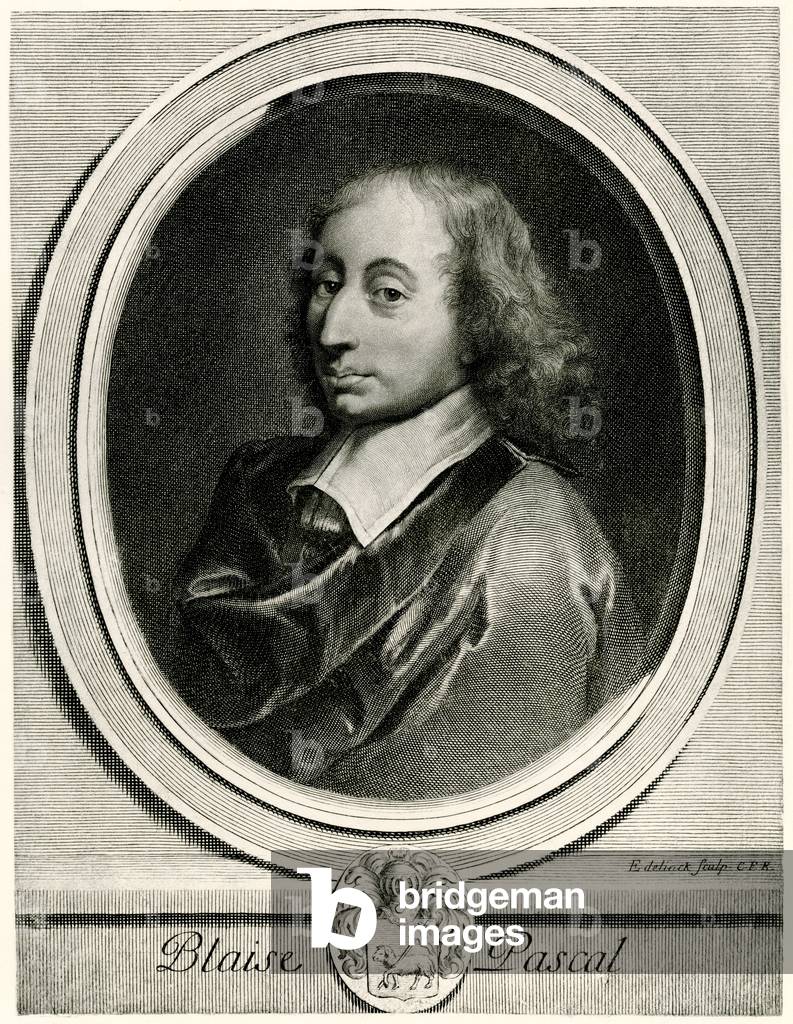
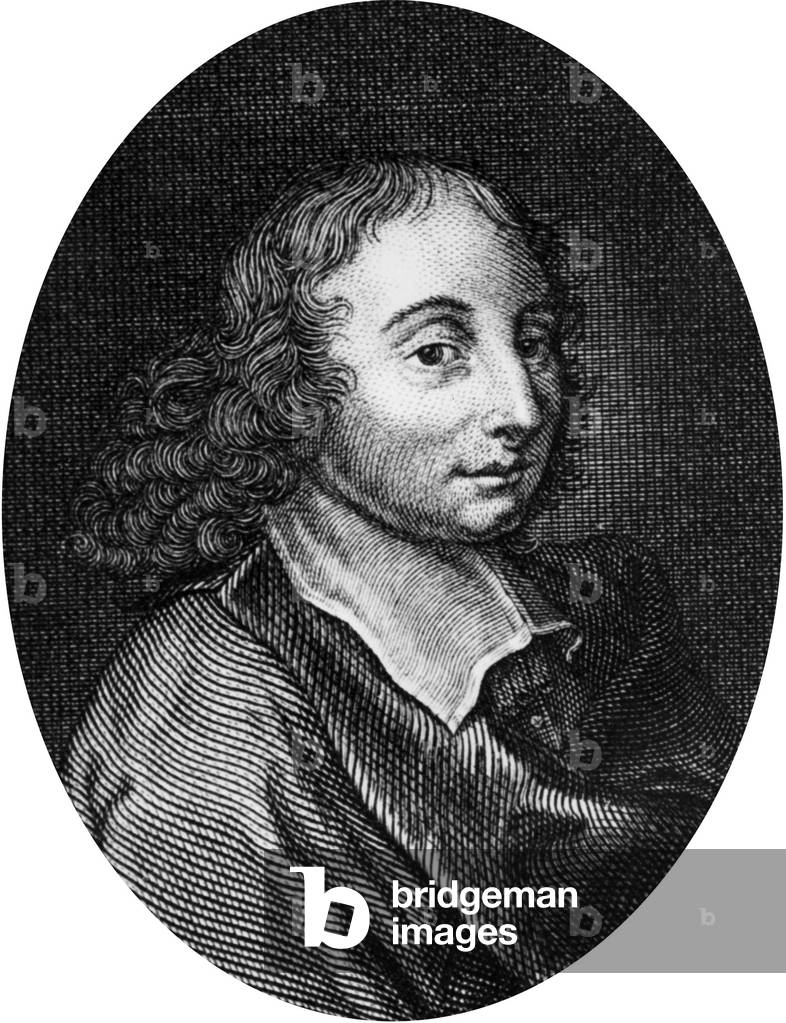
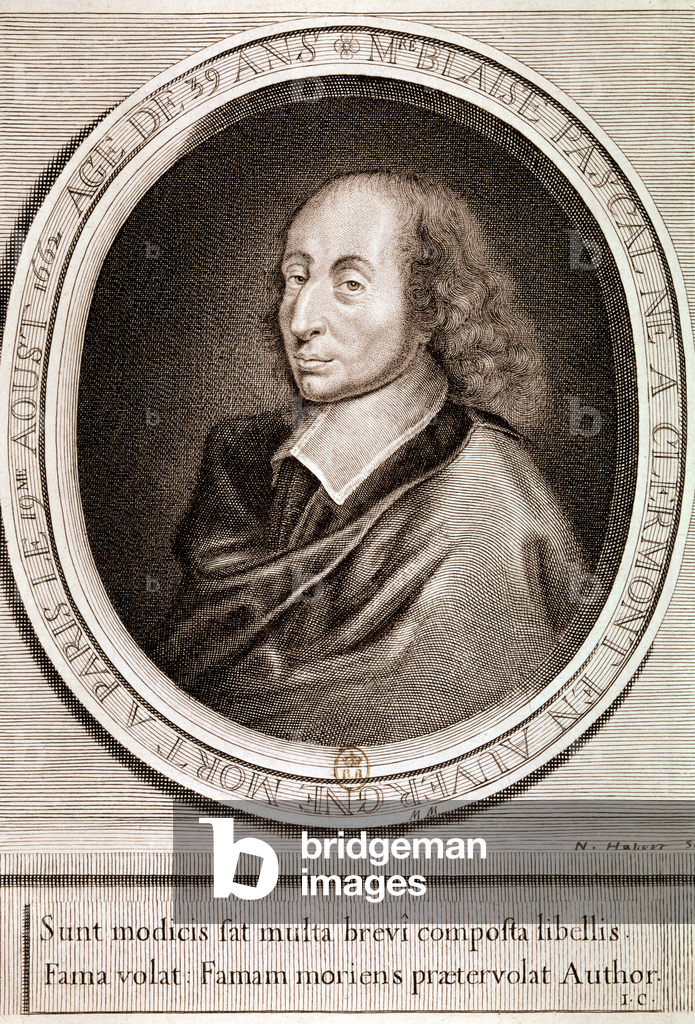
PRX1002095 Blaise Pascal, 1884-90 (phototype) (1623-1662) French mathematician, physicist, writer and Christian philosopher. Engraving by G. Edelinck (1640 - 1707)‘Allgemeines Historisches Porträtwerk’, 1884-90, published by Dr. Woldemar von Seidlitz (1850-1922)Französischer Mathematiker, Physiker, Literat und christlicher Philosoph. Stich von G. Edelinck (1640 - 1707)
DC
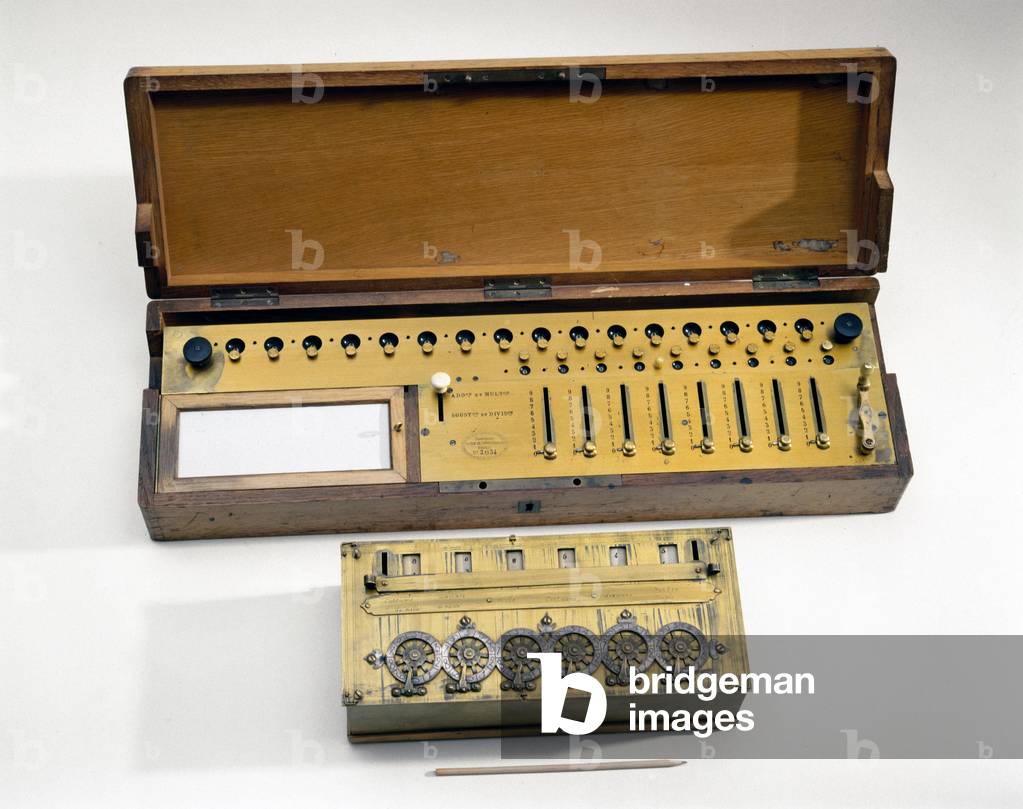
UIS5064021 Calculating Machines, 17th Century Pascal's calculating machine, 1642, and Colmar's Arithmometer, c 1850. Blaise Pascal (1623-1662), was France's most celebrated mathematician and physicist. This calculator is an exact replica of an original calculating machine preserved in the Conservatoire des Arts et Metiers at Paris. It was completed by him in 1642, and was designed for addition and subtraction, using a stylus to move the number wheels. Charles X Thomas de Colmar invented his Arithmometer in 1820. It was the first commercially successful calculating machine and could be used for addition, subtraction, division and mulitiplication. The mechanism was based on the stepped reckoner invented by Liebniz (1646-1716). Machines of this type were made well into the 20th century, and usually referred to as being of the Thomas de Colmar's type. ©SSPL/Science Museum
DC
XIR221307 Roger Bacon (c. 1220-92) English philosopher and scientist; Galileo Galilei (1564-1642) Italian astronomer and mathematician; Leonardo da Vinci (1452-1519) Italian painter;
DC
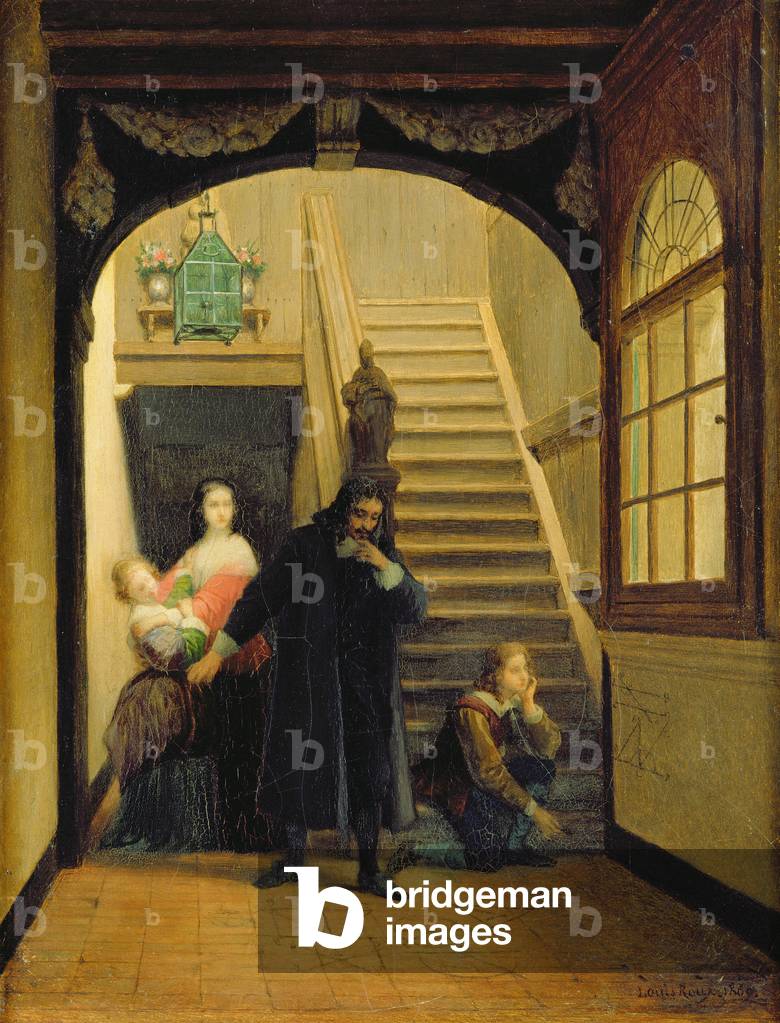
XIR180669 Painting by Louis Hector Leroux
RF
JLJ4563548 Pascal with Desargues presents to Descartes his experiences on the gravity of the air: the young mathematician Blaise Pascal (1623-1662) and Girard Desargues (1591-1661) discussing his theory on atmospheric pressure with Rene Descartes (1596-1650) on the Place des Vosges (Place Royale) during its construction between 1605 and 1612 in Paris. Canvas marouflee by Francois Flameng (1856-1923), 19th century. Paris, La Sorbonne - Pascal and Desargues share to Descartes their experiments on the weight of the air: the young mathematician Blaise Pascal (1623-1662) and Girard Desargues (1591-1661) discussing his theory of atmospheric pressure with Rene Descartes (1596-1650) in the Place des Vosges (Place Royale) during its construction between 1605 and 1612 in Paris. Marouflaged canvas by Francois Flameng (1856-1923), 19th century. La Sorbonne, Paris
DC
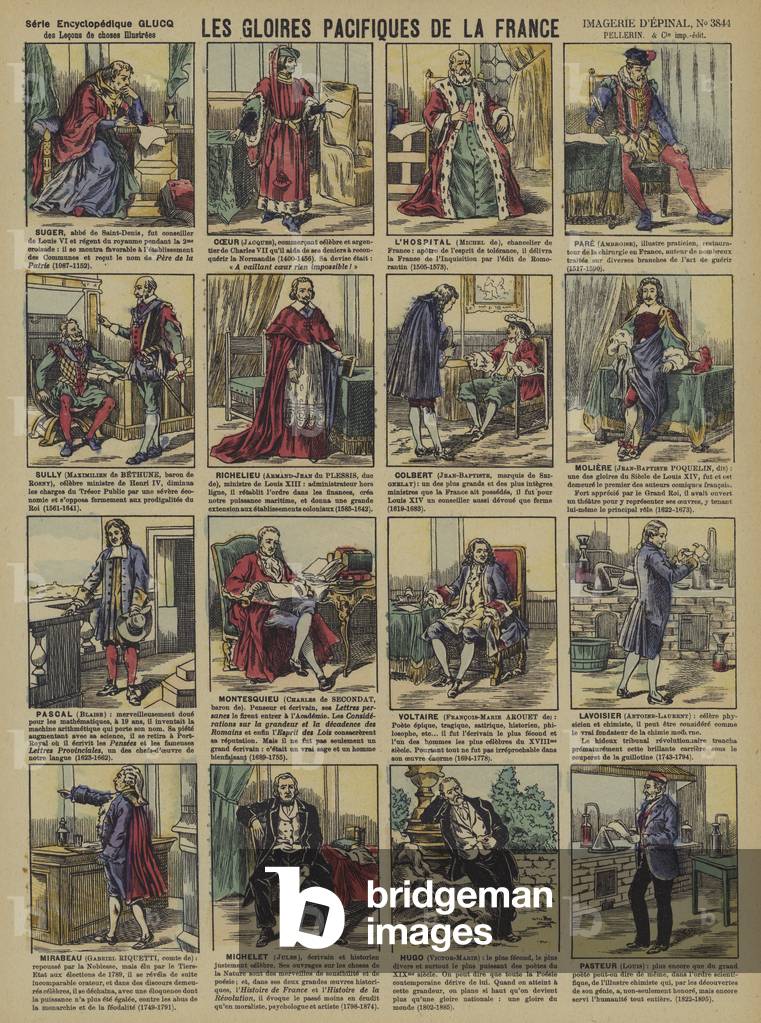
LLM3099324 Peaceful glories of France. Illustration for Lecons De Choses Illustrees (Epinal print, Pellerin, c 1895).
DC
LLM5207745 The French army, religious unity and society during the reign of Louis XIV, 1661-1715. Illustration from Histoire de France (Maison de la Bonne Presse, Paris, c1935).
DC
STC397172 Blaise Pascal (1623-62), French mathematician;
DC
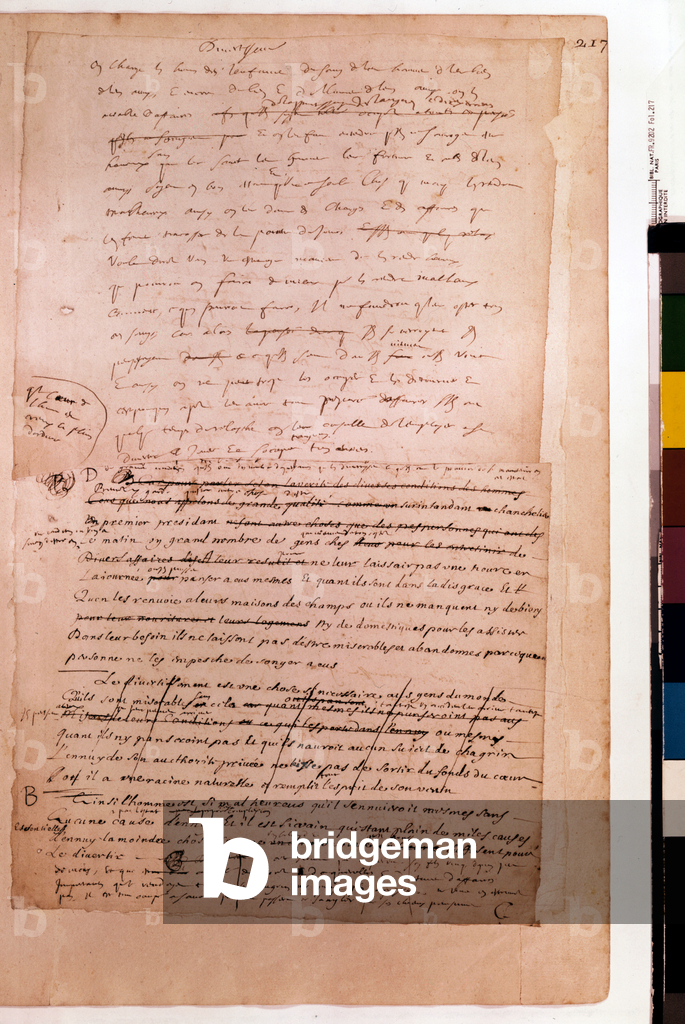
MNS488186 The Pensées (literally, "thoughts") represented a defense of the Christian religion by Blaise Pascal (1623-62), the renowned 17th century philosopher and mathematician.
DC
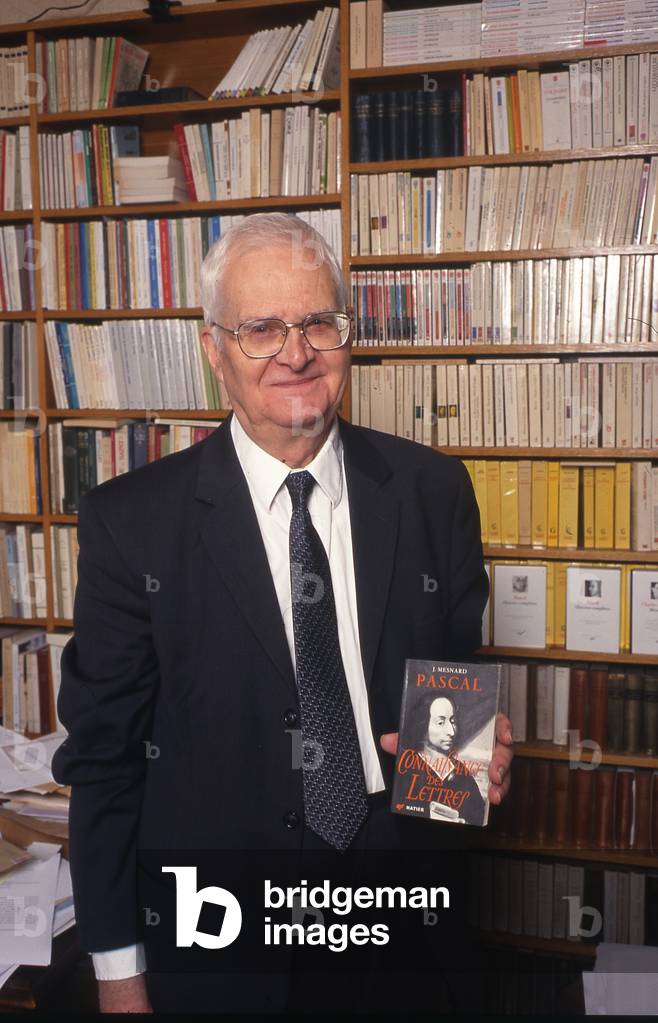
MLO2176791 Jean Mesnard né en 1921 ecrivain et professeur emerite specialiste de la litterature francaise du 17e siecle ici presentant un livre sur Blaise Pascal en 1990 - writer and emeritus professor of 17th century French literature at the University of Paris IV (1990) here showing book about Mathematician and Philosopher Blaise Pascal in 1990.
DC
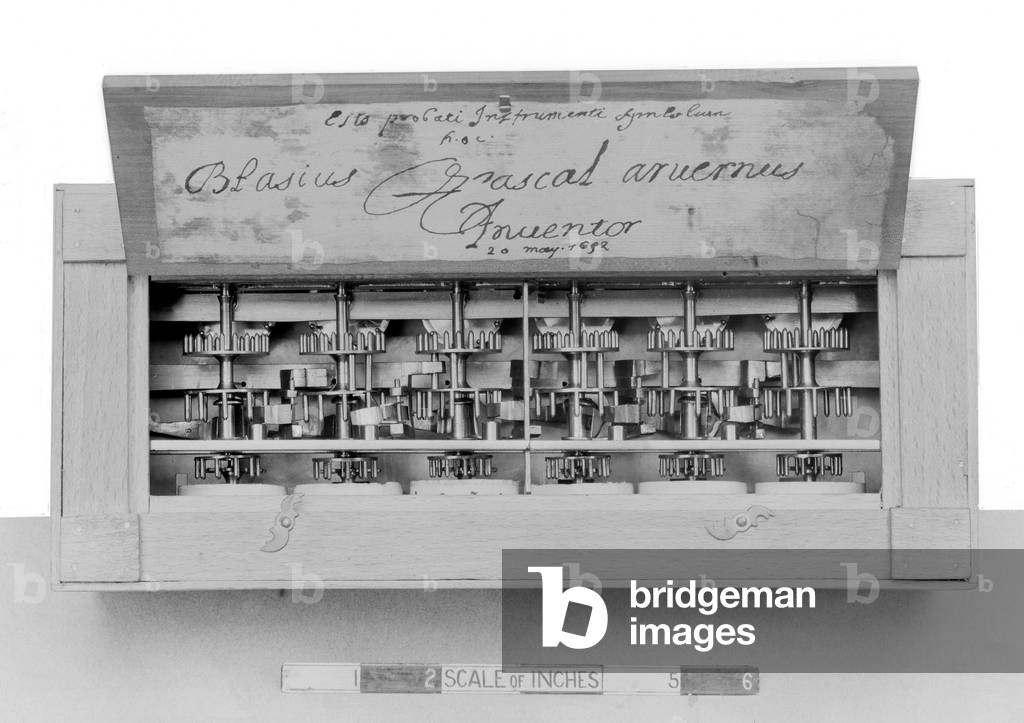
UIS5063022 CALCULATING MACHINES, 1600-1699 Pascal's first calculating machine, 1632. Pascal's first calculating machine, 1632. Replica made by E Rogron in 1926. Blaise Pascal (1623- 1662) was a French mathematician, physicist and philosopher who pioneered the theory of probability. The SI (the international system of standard scientific units) unit of pressure, or stress, the pascal (Pa) and a computer programming language were named after him. ©SSPL/Science Museum
DC

Total de Resultados: 91

Página 1 de 1