














































Busque também em nossas outras coleções:

Data da imagem:
Pauta
ver mais opções...
Agência
ver mais opções...
Fotógrafo
ver mais opções...
Pais
Estado
Cidade
ver mais opções...
Local
ver mais opções...
Tipo de licença
Orientação
Coleção
ver mais opções...

Total de Resultados: 155

Página 1 de 2

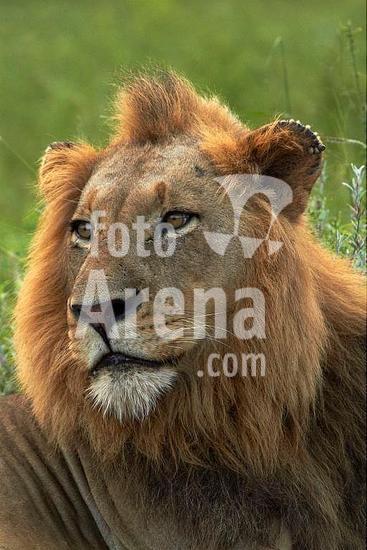
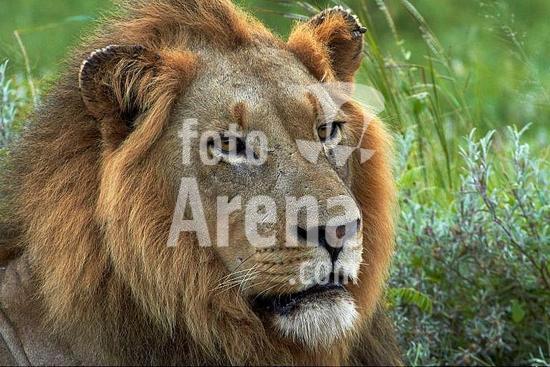
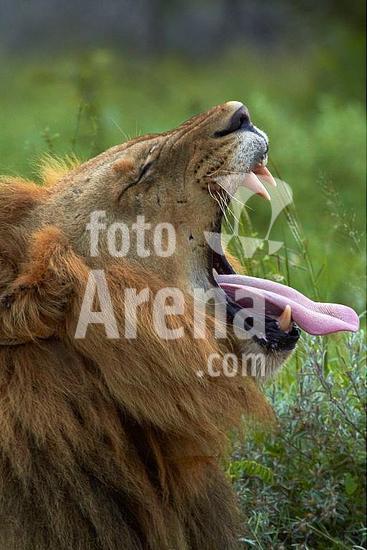
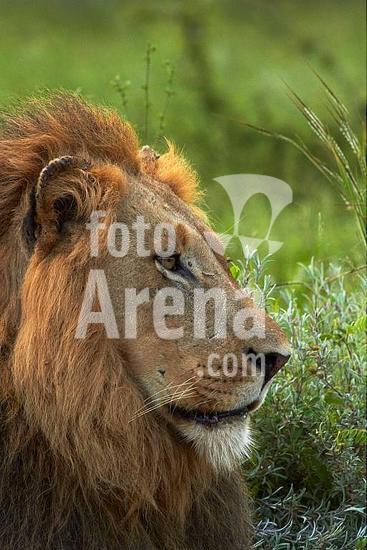
00914193 Zoology / animals , mammal / mammalian (mammalia), Kruger National Park, male Lion (Panthera leo), animal, wildlife, reserve, park, cat, closeup, South Africa,
DC
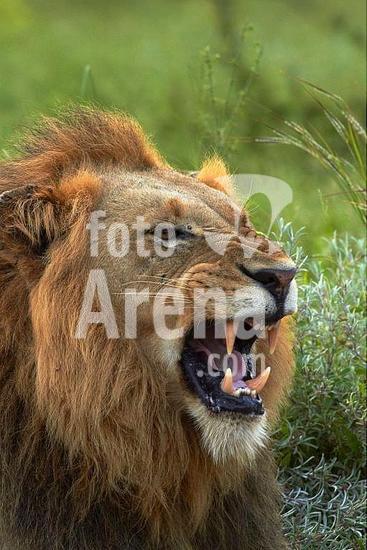
00914189 Zoology / animals , mammal / mammalian (mammalia), Kruger National Park, male Lion (Panthera leo), animal, wildlife, reserve, park, cat, closeup, South Africa,
DC
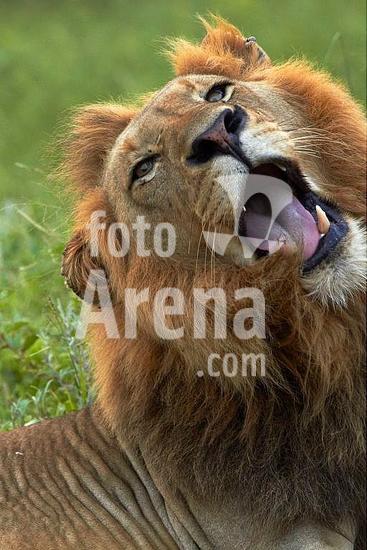
00914190 Zoology / animals , mammal / mammalian (mammalia), Kruger National Park, male Lion (Panthera leo), animal, wildlife, reserve, park, cat, closeup, South Africa,
DC
00914241 Zoology / animals , mammal / mammalian (mammalia), Kruger National Park, male Lion (Panthera leo), animal, wildlife, reserve, park, cat, closeup, South Africa,
DC
00914240 Zoology / animals , mammal / mammalian (mammalia), Kruger National Park, male Lion (Panthera leo), animal, wildlife, reserve, park, cat, closeup, South Africa,
DC
00914335 Zoology / animals , mammal / mammalian (mammalia), Kruger National Park, male Lion (Panthera leo), animal, wildlife, reserve, park, cat, closeup, South Africa,
DC
00914151 Zoology / animals , mammal / mammalian (mammalia), Kruger National Park, male Lion (Panthera leo), animal, wildlife, reserve, park, cat, closeup, South Africa,
DC
00914192 Zoology / animals , mammal / mammalian (mammalia), Kruger National Park, male Lion (Panthera leo), animal, wildlife, reserve, park, cat, closeup, South Africa,
DC
00914191 Zoology / animals , mammal / mammalian (mammalia), Kruger National Park, male Lion (Panthera leo), animal, wildlife, reserve, park, cat, closeup, South Africa,
DC
00914239 Zoology / animals , mammal / mammalian (mammalia), Kruger National Park, male Lion (Panthera leo), animal, wildlife, reserve, park, cat, closeup, South Africa,
DC
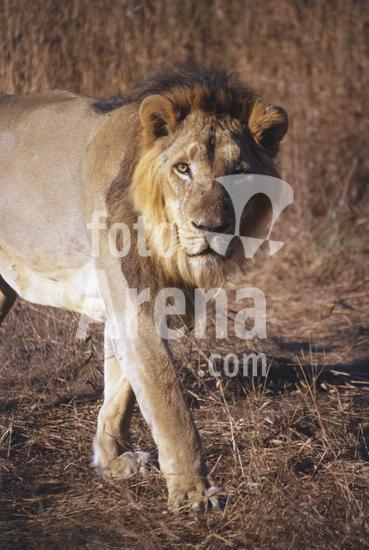
955_24_12087075 Asiatic Lion (Panthera leo persica) in dry grassland, facing forward, front section
DC
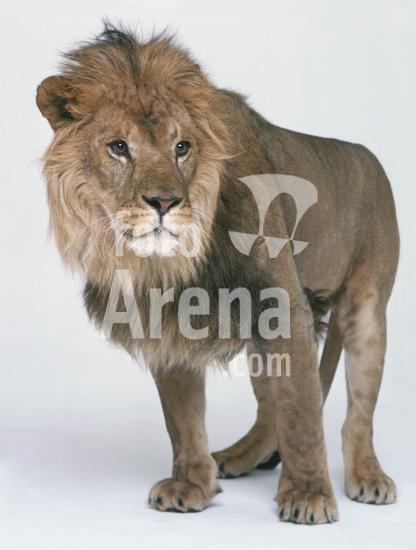
955_24_45042508 Male Lion (Panthera leo), standing, looking away from camera, front view.
DC
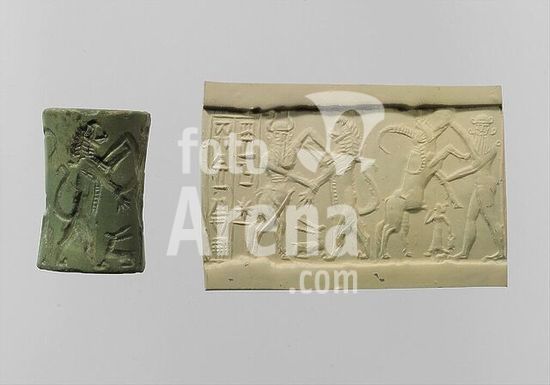
alb3633104 Cylinder seal and modern impression: bull-man combatting lion; nude hero combatting water buffalo; inscription. Culture: Akkadian. Dimensions: H. 15/16 in. ( 3.4 cm ); Diam. 7/8 in. ( 2.3 cm). Date: ca. 2250-2150 B.C..Contests between heroes and animals first appeared in cylinder seals in the late fourth millennium B.C., and by the middle of the third millennium B.C., the combatants, which might include mythological opponents, had assumed heroic status. The contest was a favorite subject during the Akkadian period, where it possibly represents the contrast and ever-present struggle between the forces of nature.A standing nude bearded hero with five visible sidelocks of hair (the traditional sixth curl is hidden by his raised right arm) grasps a water buffalo that is rearing on its hind legs. The head of the water buffalo is pushed back by the hero's right hand. The animal's wide horns are displayed frontally, as found on contemporary stamp seals from the Indus Valley where the water buffalo was native. Such imagery demonstrates cultural interaction resulting from trade and possibly diplomatic connections between the Akkadian empire and the Indus Valley (Harappan) civilization. Between the hero and the water buffalo is a small female in a long robe, perhaps holding a vessel. The hero's ally in the contest scene is a bull-man, shown full-face with the horns, ears, and lower body of a bull. In Akkadian-period contest scenes, the bull-man is almost invariably, as here, in conflict with a lion. A horned animal lies between the two combatants. A two-column cuneiform inscription names the seal owner as Ishri-ilum. Museum: Metropolitan Museum of Art, New York, USA.
DC
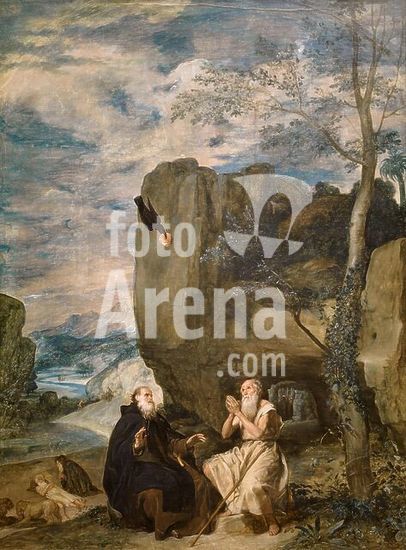
alb2069180 Diego Rodríguez de Silva y Velázquez / 'Saint Anthony the Abbot and Saint Paul, the First Hermit', ca. 1634, Spanish School, Oil on canvas, 257 cm x 188 cm, P01169. Museum: MUSEO DEL PRADO, MADRID, SPAIN. Anthony the Great. SAN PABLO.
DC
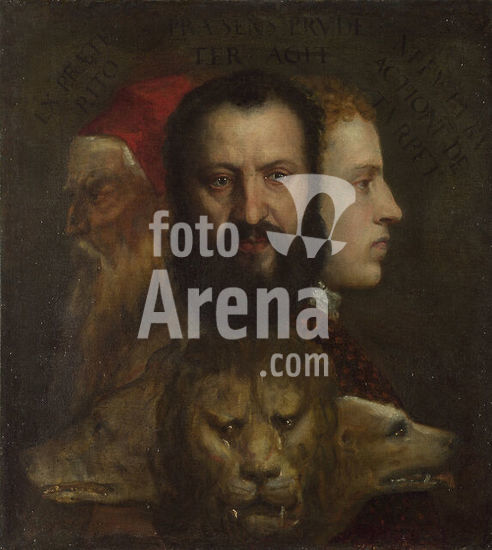
alb3907655 An Allegory of Prudence. Date/Period: 1565. Painting. Oil on canvas. Height: 75.5 cm (29.7 in); Width: 68.4 cm (26.9 in). Author: TITIAN.
DC
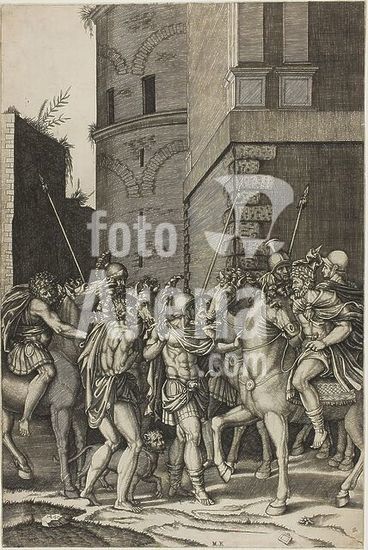
alb4132540 Emperor Freeing the Slave Androcles. Agostino dei Musi; Italian, c. 1490-after 1536. Date: 1511-1521. Dimensions: 402 x 270 mm (image/plate); 404 x 268 mm (sheet). Engraving in black on ivory laid paper. Origin: Italy. Museum: The Chicago Art Institute, USA. Author: AGOSTINO DEI MUSI.
DC
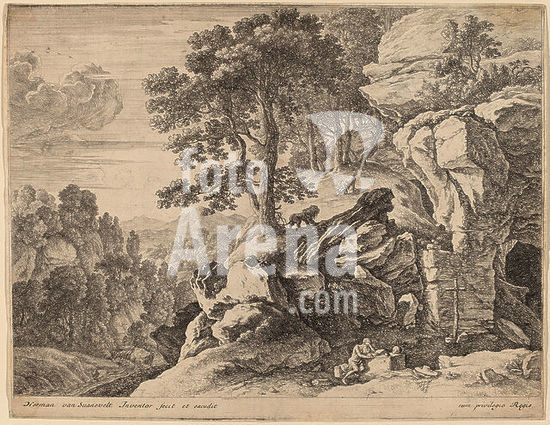
alb3721546 Saint Jerome in the Wilderness. Medium: etching. Museum: National Gallery of Art, Washington DC. Author: HERMAN VAN SWANEVELT.
DC
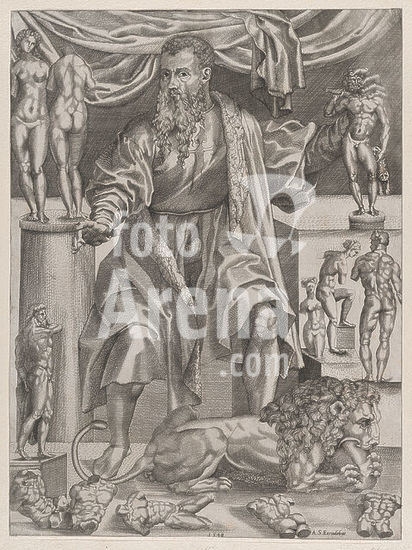
alb3670856 Portrait of Baccio Bandinelli with Lion. Artist: Anonymous, 16th century; After Baccio Bandinelli (Italian, Gaiole in Chianti 1493-1560 Florence). Dimensions: Sheet: 16 5/16 × 12 1/8 in. (41.5 × 30.8 cm). Former Attribution: Niccolò della Casa (French, active Italy, ca. 1543-48). Publisher: Antonio Salamanca (Salamanca 1478-1562 Rome). Date: 1548. Museum: Metropolitan Museum of Art, New York, USA.
DC
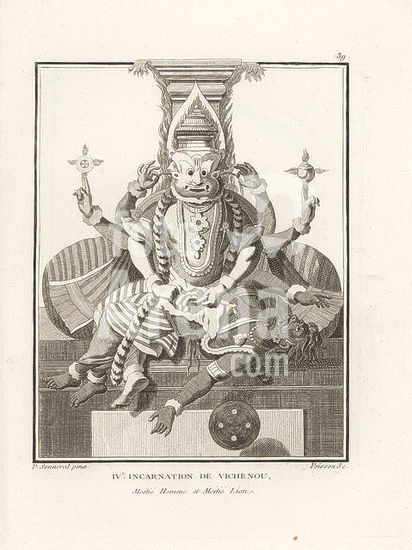
alb18723909 Hindu god Vishnu as half-man, half-lion avatar, Narasimha, fourth incarnation. Lord Vishnu with flowers and jewelry, face of a lion, disemboweling the body of Hiranyakashipu on his lap. Quatrieme incarnation de Vichenou, moitie Homme et moitie Lion. Copperplate engraving by Jean-Baptiste Marie Poisson after an illustration by Pierre Sonnerat from his Voyage aux Indes Orientales et à la Chine (Voyage to the East Indies and China, Dentu, Paris, 1806.
DC
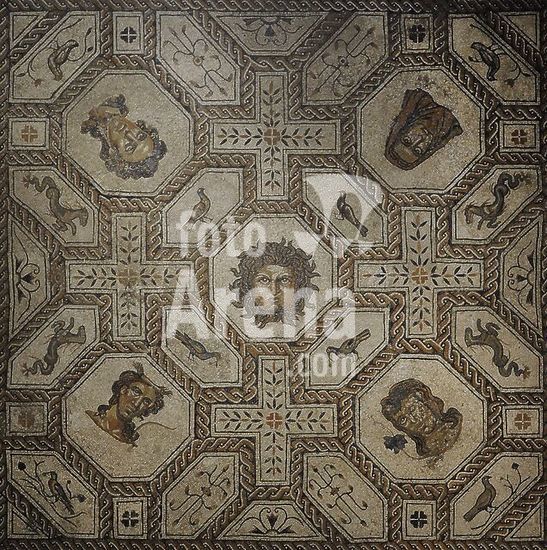
alb4101436 Mosaic of Medusa and the seasons. Roman period. 4th century AD. Limestone. From Palencia, Castile and Leon, Spain. National Archaeological Museum. Madrid. Spain.
DC
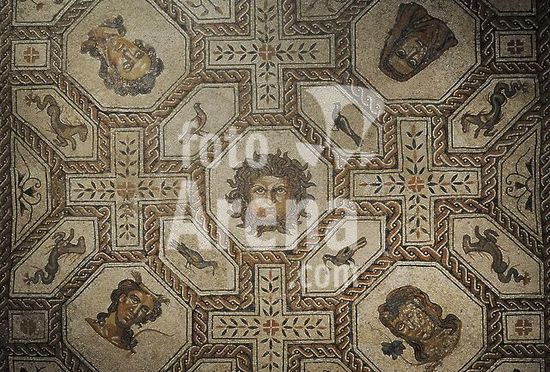
alb4101437 Mosaic of Medusa and the seasons. Detail. Roman period. 4th century AD. Limestone. From Palencia, Castile and Leon, Spain. National Archaeological Museum. Madrid. Spain.
DC
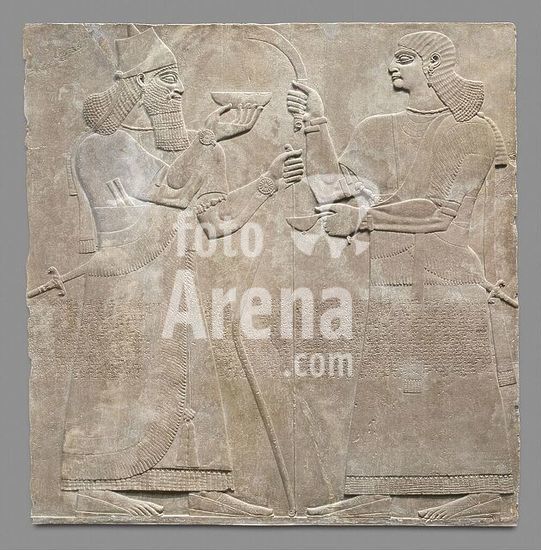
alb3658980 Relief panel. Culture: Assyrian. Dimensions: 92 1/4 x 92 x 4 1/2 in. (234.3 x 233.7 x 11.4 cm). Date: ca. 883-859 B.C..This relief, from the palace of the Assyrian king Ashurnasirpal II (r. ca. 883-859 B.C.), depicts a king, probably Ashurnasirpal himself, and an attendant. The two larger-than-life-sized figures are carved in low relief, and as with other reliefs in the palace featuring the image of the king, the carving is particularly fine and shows special attention to detail. The panel joins a second relief that shows a further attendant, also facing the king, and a winged supernatural protective figure. Together, the two panels show the king flanked by his human courtiers, just as in other scenes he or the Assyrian Sacred Tree are flanked by human and eagle-headed winged guardian figures.The king is immediately identifiable by his crown, a distinctive truncated cone with a smaller cone emerging from the center, with a long 'streamer' hanging from its back. He is also recognizable by his luxuriant beard, and in the relief's original state would have been further distinguished by his clothing, more elaborately embroidered than that of any other figure. The pigment that originally colored these reliefs is now lost, but the embroidery is still faintly visible in the form of fine inscised lines made by the sculptors over most areas of the king's clothing. The king wears elaborate jewelry, including rosette bracelets, thick armlets worn above the elbow, large pendant earrings, and a necklace whose beads and spacers would probably have consisted of semiprecious stones and gold. The king carries a sword on his left hip, as well as two daggers tucked into his clothing, and in his left hand holds the tip of a bow. In his right hand, balanced on his fingertips, is a shallow bowl. In other reliefs the bowl contains wine and is used for pouring libations, for example on the bodies of slain animals following a royal hunt. Here, however, there is no apparent object for the libation. The relief comes from an area of the palace that seems to have held sarcophagi and might have been devoted to the cult of royal ancestors, and one possibility is that the libation is here being poured for the dead. For similar reasons, while it is normally thought that all such images of the king represent Ashurnasirpal, it has also been suggested that some may represent ancestral kings. The second figure on the relief is beardless, and probably represents a eunuch. He is richly dressed, with jewelry including rosette bracelets, armbands, a collar of beads, probably of semiprecious stone with gold spacers, pendant earrings, and a crescent-shaped pectoral. At the ends of his short sleeves are bands of incised plant motifs representing embroidery; another incised band below the waist shows further plants but also birds, possibly ostriches. He carries a sword whose scabbard, like the king's, ends in the image of two roaring lions. At the sword's hilt another lion head can be seen; an object in the Metropolitan Museum's collection may be just such a hilt . In his right hand the eunuch holds a fly-whisk whose handle is carved in the shape of a ram's head. The object in his left hand may be an oil lamp, though it has also been suggested that it might be a ladle to replenish the wine in the bowl held by the king. Its handle terminates in the head of a snake, or more likely a fantastic composite creature, called Mushhushshu, associated with the god Ashur. A distinctive feature of the Northwest Palace is the so-called Standard Inscription that ran across the middle of every relief, often cutting across the imagery. The inscription, carved in cuneiform script and written in the Assyrian dialect of the Akkadian language, lists the achievements of Ashurnasirpal II (r. 883-859 B.C.), the builder of the palace. After giving his ancestry and royal titles, the Standard Inscription describes Ashurnasirpal's successful military campaigns to east and west and his building works at Nimrud, most importantly the construction of the palace itself. The inscription is thought to have had a magical function, contributing to the divine protection of the king and the palace. Museum: Metropolitan Museum of Art, New York, USA.
DC
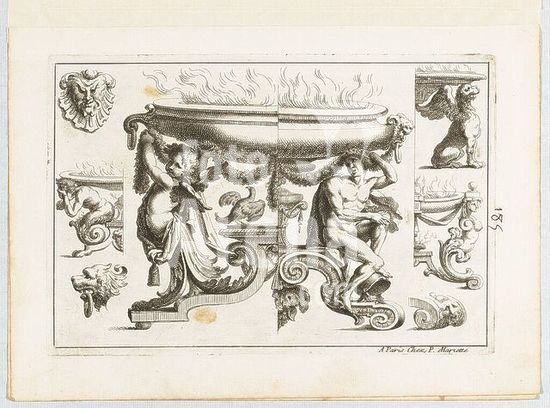
alb3649048 Desseins de Brasiers dont les Ornements peuuent Seruir aux Cuuettes, Tables, et autres Ouurages d'Orfeurerie, Plate 5. Artist: Alexis Loir (French, 1640-1713). Dimensions: Plate: 6 1/4 × 9 5/16 in. (15.9 × 23.7 cm)Sheet: 7 11/16 × 10 15/16 in. (19.6 × 27.8 cm). Publisher: Pierre Mariette le fils (French, Paris 1634-1716 Paris). Date: 1660-1713.Plate 5 of a series of designs for braziers, tables and other silverware works. The main design on the left side is supported by a winged child half figure holding up a garland. The other brazier design on the same side features a half figure hiding its face. On the right side, the main design features a male figure with his foot resting on a helmet. The other designs on that side feature a winged lion, upper design, and a female half figure seen in profile, lower design. Finally, there are grotesque masks on the left side. Museum: Metropolitan Museum of Art, New York, USA.
DC
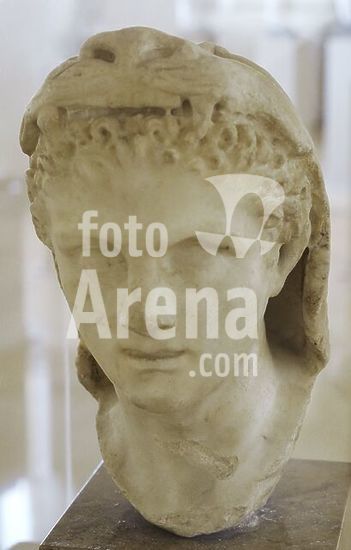
alb3373707 Roman Period. Antonine era. Twelve Labors of Hercules. First labor: kill the Nemean lion and take their skin. Head of Heracles with the Nemean lion's skin. Spain. National Archaeological Museum. Tarragona. Spain.
DC
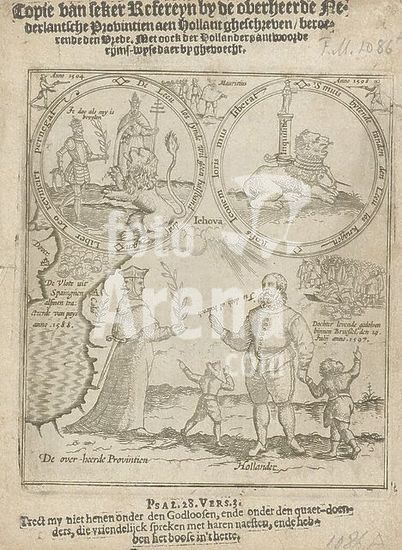
alb15593082 Title page of the pamphlet: Copy of certain Refereyn by the dominated Dutch Provinces aen Hollant ghewritten, stirring den Vrede. With the Dutch also answered rhyme-wise there by ghevoecht, 1598, Allegory on the deceitful peace proposals by Spain, 1598. Title print on a pamphlet entitled: Copie van seker Refereyn by de heoverheid Nederlandsche Provintien aen Hollant ghewritten, touching den Vrede. The Dutch also answered rhyme-wise by ghevoecht. A Spanish Dutchman with two faces offers the Dutchman an olive branch. On the right a small scene in which Anneken van den Hove is buried alive in Brussels (1597). On the left the 'map' of the Channel. This shows the Spanish Armada attempting to invade England in 1588. At the top two medallions with edge writings in Latin and Dutch. Left: A Spaniard, most likely King Philip II, tries to catch the Dutch lion (as seen by the rope he is holding in his other hand). Right: the lion is tied with that rope around its neck. Philip II does this on behalf of the Pope (I do as I am ordered). This probably represents the then Pope Gregory XIII or his predecessor Pius V, who was known for suppressing the Reformation. Title print of an 8-page pamphlet in Dutch., print, print maker: anonymous, Northern Netherlands, 1598, paper, etching, engraving, letterpress printing, height, 180 mm × width, 140 mm.
DC
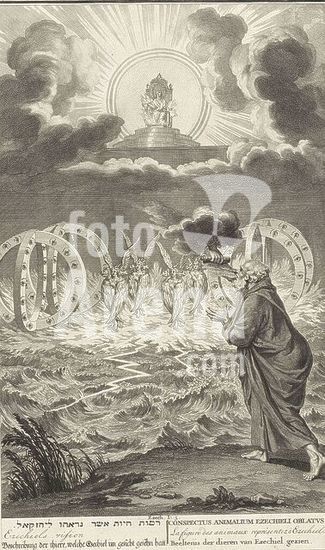
alb15751502 Vision of Ezekiel, Image of the animals seen by Ezekiel (title on object), Vision of the prophet Ezekiel. God sits on his throne. He is surrounded by flames and rays of light. On the water four tetramorphic creatures, each with four faces - an eagle, an ox, a human and a lion - and four wings. Next to each creature is a double wheel with eyes. Ezekiel stands on the right and receives a scroll with a Hebrew text from the hand of God. At the bottom a one-line title in Hebrew, English, German, Latin, French and Dutch from Ez. 1:5., print, print maker: anonymous, after drawing by: Bernard Picart, (mentioned on object), Low Countries, 1693 - 1783, paper, etching, height, 355 mm × width, 216 mm.
DC
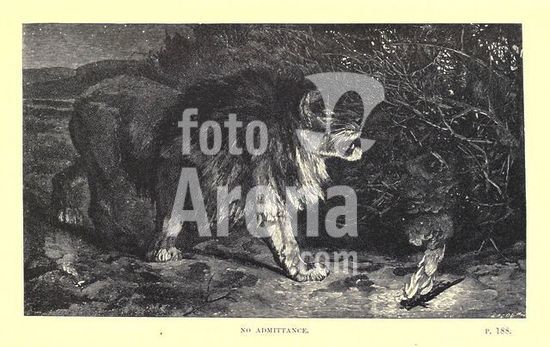
alb15330582 Wild, Beasts, and, Their, Ways, 1890, Hunting, Lion, Animal, Behavior Panthera, Leo, Lion, A powerful lion stands in a dense, shadowy environment, its muscular body poised and ready, exuding a sense of strength and authority. The creature's mane, wild and impressive, frames its fierce face as it gazes intently towards a hidden threat or prey among the nearby underbrush. The contrasting textures of the lion's fur and the intricate details of the surrounding foliage create a dramatic scene, emphasizing the rawness of nature and the instinctual behaviors of one of the animal kingdom's most formidable predators.
DC
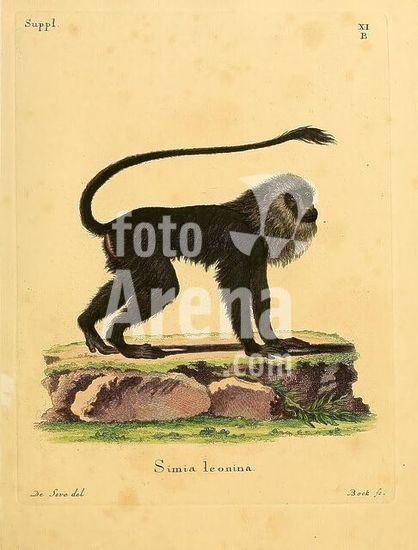
alb15382249 Die Säugthiere in Abbildungen nach der Natur, Erlangen, Expedition des Schreber'schen säugthier, und des Esper'schen Schmetterlingswerkes, 1774-1846, mammals, pictorial works., A detailed illustration of a Simia leonina, or lion-tailed macaque, stands atop a rocky platform. The animal is depicted in profile, showcasing its distinct physical features, including a long, elegant tail and a bushy mane that encircles its face, giving it a striking appearance. The fur is rendered with various shades to reflect texture, while the background provides a simple, muted tone that emphasizes the macaque's form. An elegant scientific label, 'Simia leonina,' is positioned at the bottom, indicating its classification in the animal kingdom. The overall composition conveys a sense of natural history and the artistic style of the time.
DC
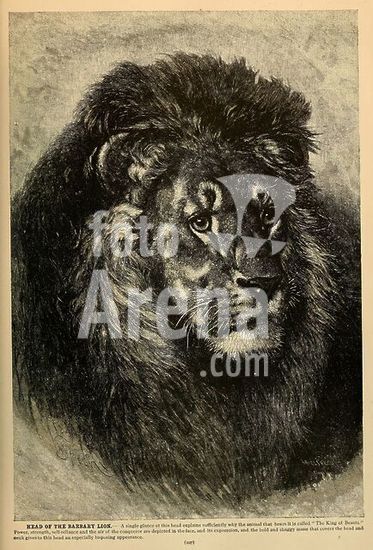
alb15271080 Brehm's Life of Animals, Volume 1, Mammalia Chicago, Marquis, 1895. Animal Behavior Mammals, Lion, Panthera Leo, Hsa, Lion, Big Cats, The illustration features a powerful depiction of a lion's head, prominently showcasing its majestic mane. The intricate details highlight the animal's fierce expression, emphasizing its piercing eyes and strong facial structure. This representation captures the lion's regal stature and commanding presence, often referred to as the ''King of Beasts.'' The texture of the mane contrasts with the smooth contours of its face, creating a striking visual that reflects the strength and nobility associated with this magnificent creature.
DC
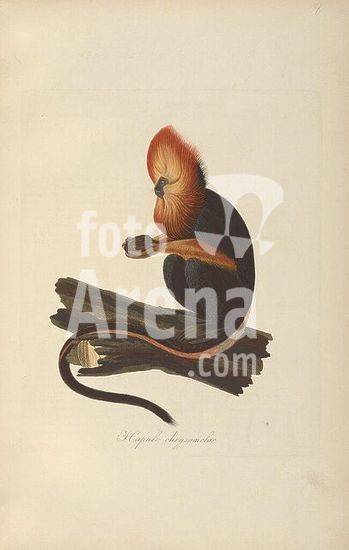
alb15293955 Abbildungen zur Naturgeschichte Brasiliens Weimar, im Verlage des Grossherzogl. SaÌ,6chs. priv. Landes-Industrie-Comptoirs, 1822-1831, Brazil, natural history, pictorial works, Hapale chrysomelas, Leontopithecus chrysomelas, golden lion tamarin, The depiction showcases a vibrant and intricately detailed monkey, characterized by its striking orange and black fur, particularly around the face and mane. It is sitting gracefully on a wooden log, appearing to hold a small object in its hands, possibly food. The monkey's long tail elegantly curls behind it, and its posture hints at curiosity and calmness. Below the illustration, a label in elegant script identifies the species as ''Hapalé dehyomiana, ' adding a scholarly touch to the artwork. The overall composition highlights the beauty of this primate in its natural pose, emphasizing its unique features and the textures of its fur.
DC
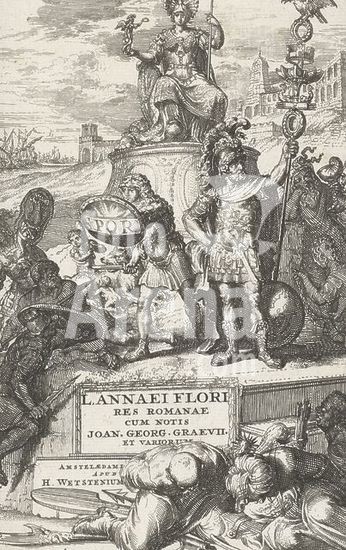
alb15460016 Amsterdam, Wetstein, Henricus, Hooghe, Romeyn de, L. Annaei Flori Res Romanae cum notis Joan. Georg. Graevii. et variorum, Title print for 'L. Annaeus Florus recensitus & illustratus a Joanne Georgio Grævio' by L. Annaeus Florus, verso center right - stamped, A Roman figure (probably Juno) sits on a pedestal with a statue in his hand. This figure is surrounded by other classical figures, among whom Romulus and Remus with the wolf, Hercules with his lion skin and Janus with his two faces are recognizable., print, book illustration, frontispiece, prints, height 162 mm, width 106 mm, Northern Netherlands, 1645-09-10 - 1708-06-15, print maker, printmaker, 1680 - 1680, fourth quarter 17th century, paper, etching, engraving, engraving (printing process), Work conception, after own design by, Publication (Event), Publication, publisher.
DC
alb15410963 General, particular, descriptions, vertebrated, animals, London, Printed, Baldwin, Cradock, Joy, MDCCCXXI, 1821, Carnivora, pictorial, works, A majestic lion stands proudly, showcasing its impressive mane that frames its face dramatically. The lion's posture is confident, with its body turned slightly to the side, emphasizing its muscular build. The fur is depicted in contrasting shades, highlighting the texture of the mane and the smoothness of its body. The eyes are captivating, exuding a fierce yet noble expression. Below, the caption reads 'THE ANIMAL KINGDOM,' hinting at the lion's regal status in the wild. This depiction captures the essence of strength and sovereignty associated with this magnificent creature.
DC
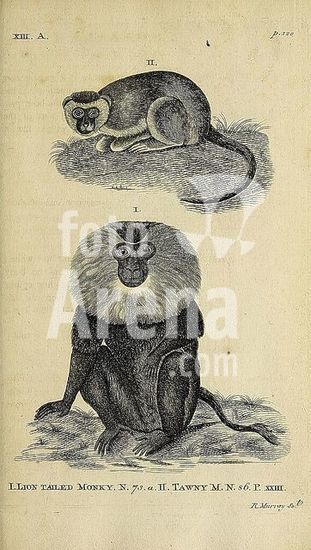
alb15379848 Synopsis of quadrupeds Chester Printed by J. Monk MDCCLXXI [1771] Early works Mammals Monkey, The illustration features two distinct primates. The upper section depicts a lion-tailed monkey, identifiable by its distinctive tufted fur and a slightly curled tail, perched in a relaxed pose. Its facial expression suggests curiosity and alertness. Below it, a tawny monkey is shown sitting upright, showcasing its impressive mane that resembles a lion's, further accentuating its robust features. Both have expressive faces that highlight their unique adaptations and characteristics within the primate family. The caption includes their scientific classifications, emphasizing their importance in zoological studies.
DC
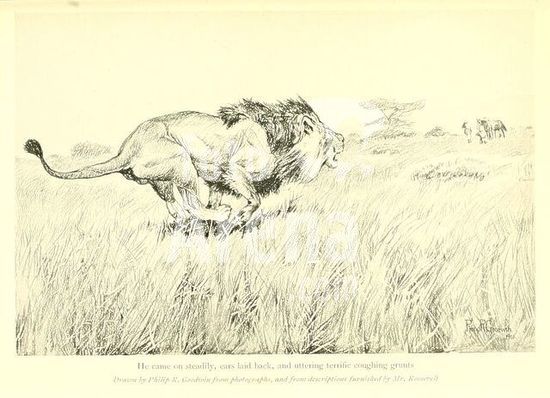
alb15268684 African game trails, 1910, Africa East, Description and travel, Hunting, Uganda, Panthera leo, Lion, Philip R. Goodwin artist, A majestic lion lies in a serene setting, surrounded by tall grasses that sway gently in the breeze. The lion's powerful body is poised and alert, its mane gracefully framing its face. In the background, the landscape hints at a vast savanna, dotted with faint outlines of trees and wildlife, evoking a sense of the wild and untamed beauty of nature. The scene captures both the strength and tranquility of this iconic creature, emphasizing its role as a regal inhabitant of the African plains. The intricate detailing highlights the texture of the lion's fur and the delicate blades of grass, bringing the essence of the wilderness to life.
DC
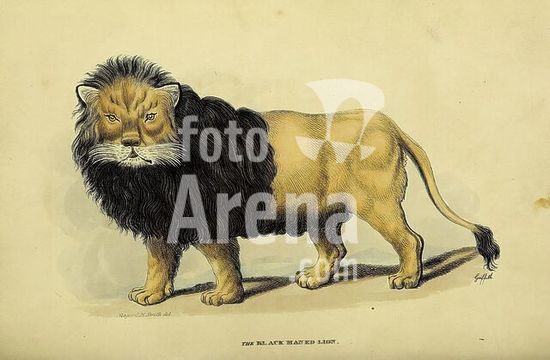
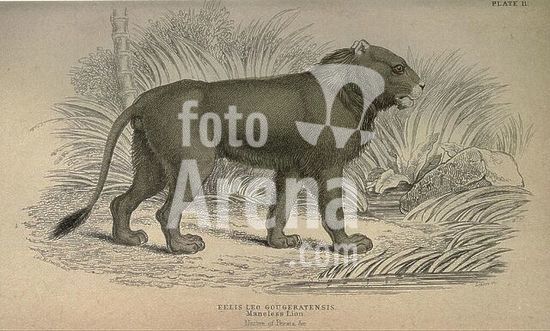
alb15253608 The naturalist's library. Edinburgh, W. H. Lizars, 1833-, lion, mammals, Mammalia., The illustration features a side profile of a lion, depicted with a robust body and a distinctive mane. It showcases the animal in a natural setting, surrounded by lush vegetation, including tall grasses and shrubs. The lion's strong legs and powerful stance suggest a moment of alertness, while its expressive face captures an air of majesty and domination in its habitat. To the side, there is a rocky formation, adding to the wild and untamed environment of this regal creature. The detailed rendering emphasizes the anatomical features characteristic of the species, highlighting its significance in the animal kingdom.
DC
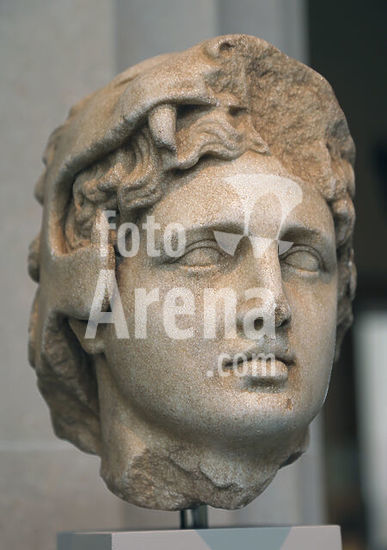
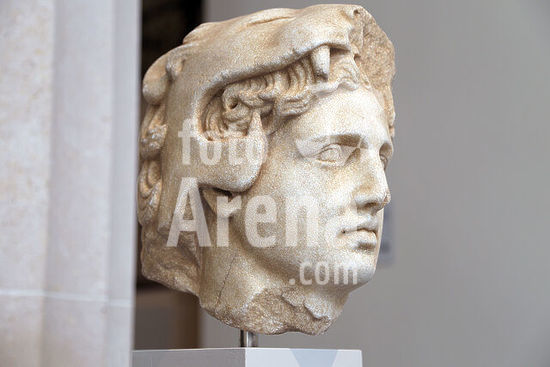
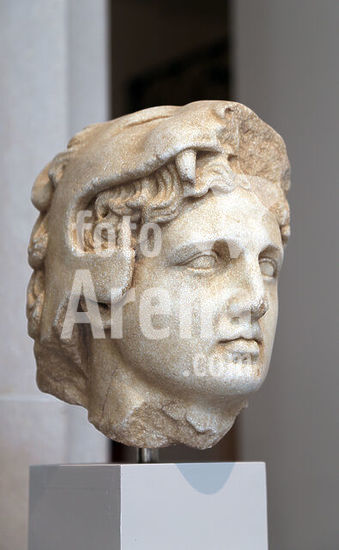
alb11643610 Alexander the Great as young Herakles. Wearing the scalp of lion as helmet. Greek, Hellenistic, 4th-3rd BCE. Met. NY, USA.
DC
alb11642655 Alexander the Great as young Herakles. Wearing the scalp of lion as helmet. Greek, Hellenistic, 4th-3rd BCE. Met. NY, USA.
DC
alb11642713 Alexander the Great as young Herakles. Wearing the scalp of lion as helmet. Greek, Hellenistic, 4th-3rd BCE. Met. NY, USA.
DC
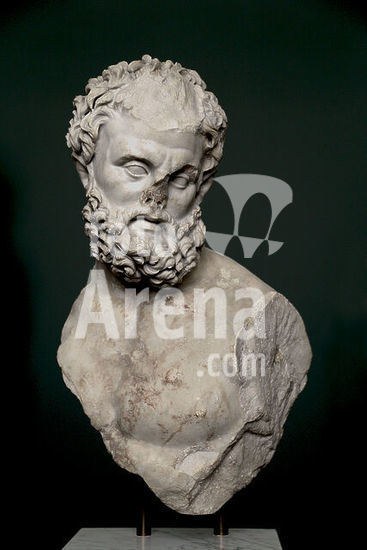
alb11644602 Herakles bust, from Esquiline, Rome. 4th century AD. Carrara marble. Depicting combat with a Nemean lion. Carlsberg Glyptotek.
DC
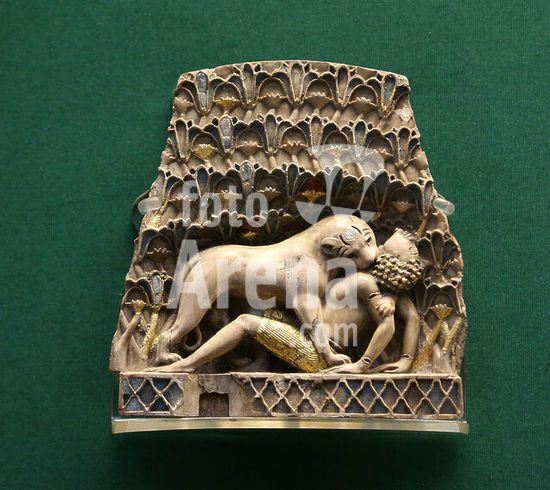
alb11644595 Ivory plaque which depicts a lion devouring a human. Nimrud. 9th to 7th centuries BC. Nimrud, Iraq. Neo-Assyrians. British Museum. London.
DC
ibxwga10494542 Harbour with man tower, lighthouse and Bavarian lion, Lindau, Lake Constance, Bavaria, Germany, Europe
RF
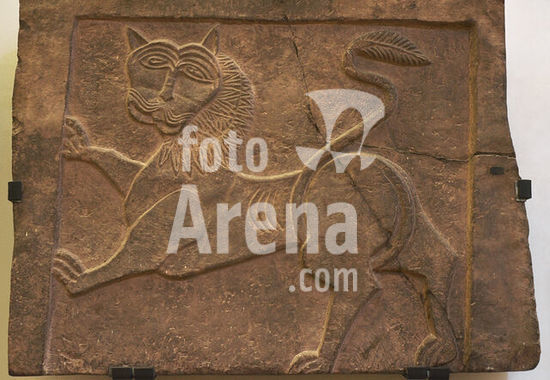
alb10596254 Relief with depiction of a lion on a facing slab. Red schist. 11th-12th centuries AD. From Stara Zagora (Vereia), Bulgaria. National Archaeological Museum. Sofia. Bulgaria.
DC
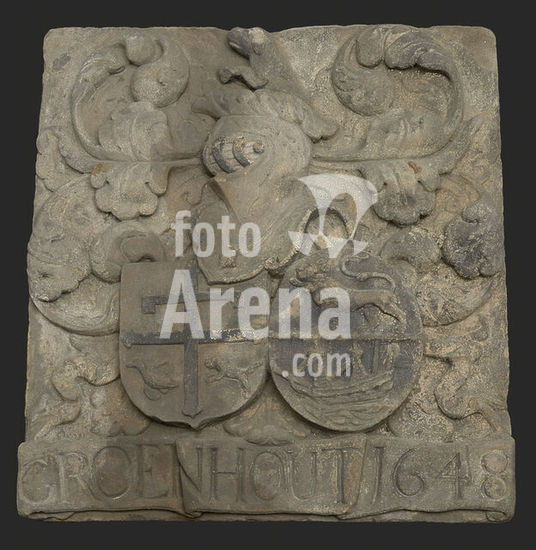
akg7078702 Facing brick with arms of the cheese buyer Adriaen Groenhout and Ermgaard Beaumont and caption Groenhout 1648, gable sculpture sculpture material component sandstone stone, sculpted Rectangular in the top helmet with two family weapons below The helmet with visor the weapon of Adriaen Groenhout with bird and dog and the arm of Irmgaard van Beaumont with at the top lion and below sailing ship At the bottom ribbon with inscription On ribbon: Groenhout 1648 Rotterdam Kralingen-Crooswijk New Crooswijk Rotte Zwaanshals cement factory Kurpershoek Groenhout Beaumont Originating from complex of old houses old mansion located on the Rotte near the Swan neck (east side) opposite the cemetery in Crooswijk.
DC
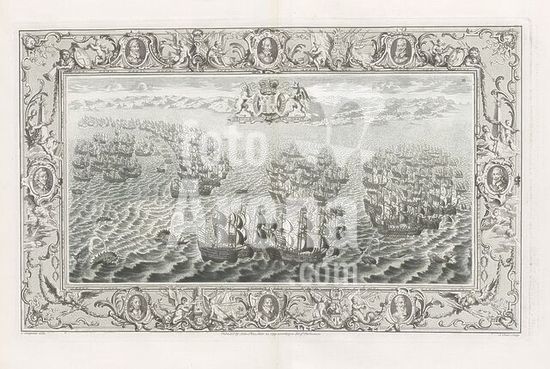
alb4451834 Reproduction of a tapestry over the Spanish Armada (July 21), English and Spanish fleet in the Channel below the coast of Cornwall and Devon with the coat of arms of the English Queen Elizabeth I. The show (numbered III) is set in an ornament border with eight portraits of commanders of the English fleet. Middle above the portrait of Charles Howard, Lord High Admiral and commander-in-chief of the English fleet against the Spanish Armada. Above and below between portraits ship's bows with spears and banners and flanked by putti. They blow on a trumpet or shell, drum, write etc. Left and right there are four putti near a triumph or memorial column. Two putti decorate the column with garlands. A third putti writes the events in a book, the fourth has a sword and ouroboros in his hand. The ouroboros is a snake that bites its own tail and is therefore a symbol of eternity. Furthermore, two eagles with lightning bolts, the four winds and two lions with column or trident and a coat of arms. The judge shows the Anchor of Hope, the weapon of the English Admiralty. The show is part of a book about the Spanish Armada and the carpets that were made about it on behalf of Charles Howard, battle (naval force), tapestry, coat of arms (as symbol of the state, etc.), parts of ship's exterior: bow, cupids: 'amores', 'amoretti', 'putti', obelisk, needle, armorial bearing, heraldry, wind as a human face, blowing with rounded cheeks, Elizabeth I Tudor (Queen of England), Charles Howard, Sir John Hawkins, Sir Martin Frobisher, Sir Thomas Garrat, Sir Roger Toundsand, Sir Will. Winter, Sir Robert Carey, Henry Percy 9th earl or Northumberland, John Pine (mentioned on object), London, 24-Jun-1739, paper, etching, h 250 mm × w 478 mm × h 383 mm × w 610 mm.
DC
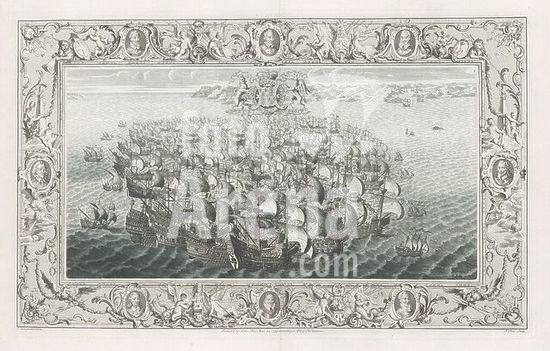
alb4439397 Reproduction of a tapestry over the Spanish Armada (16-20 July), Spanish fleet in the Channel below the coast of Cornwall and Devon with the coat of arms of the English Queen Elizabeth I. The show (numbered top right I) is set in an ornament border with eight portraits of commanders of the English fleet. Middle above the portrait of Charles Howard, Lord High Admiral and commander-in-chief of the English fleet against the Spanish Armada. Above and below between portraits ship's bows with spears and banners and flanked by putti. They blow on a trumpet or shell, drum, write etc. Left and right there are four putti near a triumph or memorial column. Two putti decorate the column with garlands. A third putti writes the events in a book, the fourth has a sword and ouroboros in his hand. The ouroboros is a snake that bites its own tail and is therefore a symbol of eternity. Furthermore, two eagles with lightning bolts, the four winds and two lions with column or trident and a coat of arms. The judge shows the Anchor of Hope, the weapon of the English Admiralty. The print is part of an album. The show is part of a book about the Spanish Armada and the carpets that were made about it on behalf of Charles Howard, battle (naval force), tapestry, coat of arms (as symbol of the state, etc.), parts of ship's exterior: bow, cupids: 'amores', 'amoretti', 'putti', obelisk, needle, armorial bearing, heraldry, wind as a human face, blowing with rounded cheeks, Elizabeth I Tudor (Queen of England), Charles Howard, Sir John Hawkins, Sir Martin Frobisher, Sir Thomas Garrat, Sir Roger Toundsand, Sir Will. Winter, Sir Robert Carey, Henry Percy 9th earl or Northumberland, John Pine (mentioned on object), London, 24-Jun-1739, paper, etching, h 246 mm × w 479 mm × h 384 mm × w 611 mm.
DC
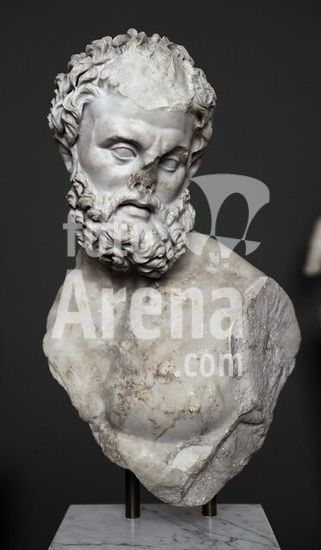
alb1930709 Roman Art. Heracles. 4th century. Marble. From The Esquiline, Rome. Carrara marble. The statue of the strong bearded man probably depicted Heracles in combat with the Nemean lion. Carlsberg Glyptotek Museum. Copenhagen. Denmark.
DC
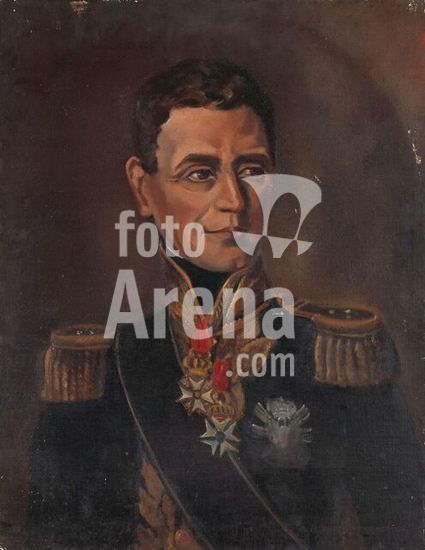
alb4104089 Jonkheer Jan Willem Janssens (1762-1838). Governor General (1811-12). Dating: 1815 - 1900. Measurements: h 79.5 cm × w 61.5 cm × t 1 cm. Museum: Rijksmuseum, Amsterdam. Author: Jan Willem Pieneman (copy after).
DC
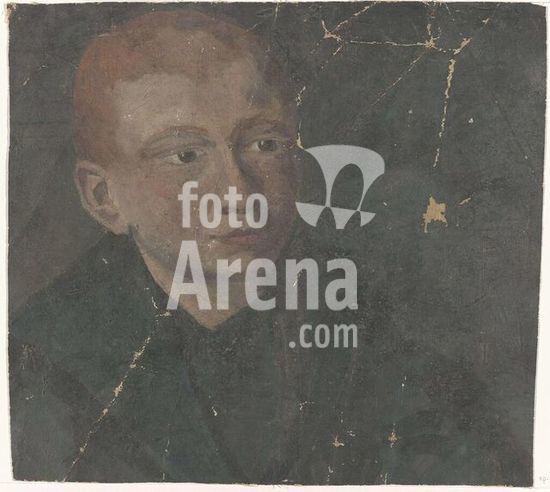
alb4101713 Boy's head with red hair. Draughtsman: Carel Adolph Lion Cachet. Dating: 1874 - 1945. Measurements: h 300 mm × w 330 mm. Museum: Rijksmuseum, Amsterdam.
DC
alb9387870 Sheet 4 verso from a sketchbook with 19 sheets, Men's head, face of a woman and a hand, Carel Adolph Lion Cachet, c. 1895 - 1900.
DC
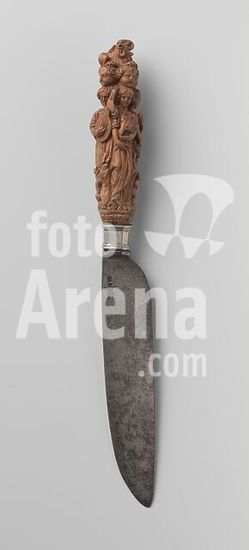
alb4536219 Knife handle with the five senses, The handle consists of five female figures placed in a circle. There are four cobblestones on their heads, with a lion on them. The women represent the five senses: woman holding some fruit against her with her right hand, in her left hand a fruit, at her feet is a monkey (the taste). Woman holding a bird on her arm, pecking at her finger, at her feet a turtle (the feeling). Woman playing lute, at her feet lies a deer (the audience). Woman with a hand mirror, an eagle is standing at her feet (the face). Woman carrying a censer: she is holding a flower in her right hand, a dog jumps up against her (the smell), the (five) senses, anonymous, Netherlands, c. 1690 - c. 1710, boxwood, steel (alloy), silver (metal), w 24.5 cm × h 3 cm × d 2.8 cm.
DC
alb5199088 Band, Medium: silk, metal-wrapped silk, coiled metal strips on linen Technique: split, satin and double running stitches using silk, couched and padded couching for metal-wrapped silk and metal coils on plain weave (metallic yarns are couched in pairs for large dense areas, two plied Z-twist for outline, two plied Z-twist and re-plied S-twist for outer border), A pair of narrow borders of cream-colored linen elaborately embroidered in gold thread and colored silk. Design shows a winged head of cherubim with a symmetrical border pattern of dolphins, lions, and a vase of flowers with delicate symmetrical vines framing and connecting the elements. Faces of cherubs in white silk, long and short stitch, with dark brown for curly hair. Balance of the design in couched gold thread, partly with color. Manes of lions in heavy, looped gold. Flower heads in colored silks in pale tints., Italy, 16th17th century, embroidery & stitching, Band.
DC
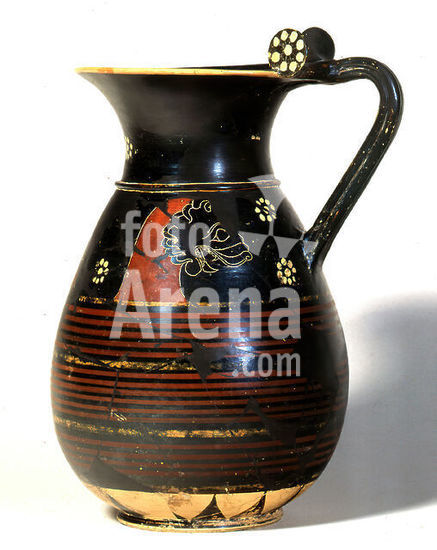
alb5151350 Aegina-Bellerophon painter, Olpe (head of a man flanked by two lion heads), clay, quickly turned, painted (ceramic), alternately fired, clay, total: height: 25.9 cm; diameter: 16.6 cm; muzzle diameter: 13.5 cm; base diameter 9 cm, ceramic, lion (predators), man, head, face, head image, beard, rosette (ornament), early archaic, Greek antiquity, This vessel is a Corinthian olpe with a ring between the neck and the body of the vessel and a triple ribbed handle with lateral rotellae. With the exception of the aureole above the base ring, the vessel is completely covered with shiny clay. The body of the vase is divided into three zones by yellowish slurry stripes, which are divided by several red stripes. Three large protomes are depicted on the vase shoulder: a horned, lion-like mythical creature on the left, a demon with a red four-pointed beard and outstretched tongue in the middle, and a lion on the right. On the preserved rotelle and on the inside of the neck there is a dot rosette each; similar rosettes are also placed around the neck, between the protomes and on both sides of the handle.
DC
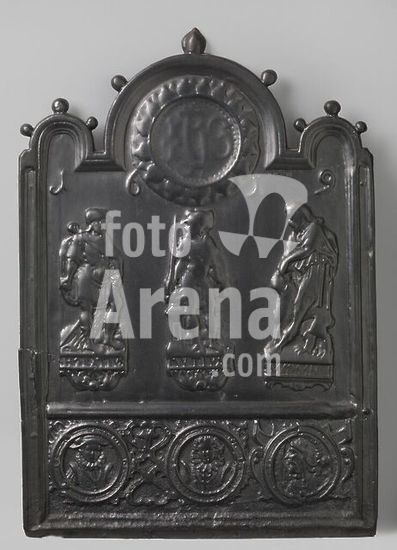
alb4443536 Hearth plate with Horacius, Mutius and Samson, Hearth plate made of cast iron, consisting of two zones. In the upper zone there is a medallion at the top with the letters IHS and immediately below it the year 1619. Below it three male figures standing on a console with their name, Horatius Cocles, Gaius Mucius Scaevola and Samson respectively. In the lower zone three medallions with busts separated from each other by rank work. The two left medallions show a bust and face, with a man on the left and a woman on the right. The right medallion shows the bust of a man and profile. All figures and medallions come from separate models. The top of the hob is three-lobed and is decorated with round buttons, (story of) Horace Cocles, (story of) Gaius Mucius Scaevola, Samson kills the lion with his bare hands, anonymous, Germany, in or after c. 1619, iron (metal), founding, h 88.0 cm × w 61.0 cm × w 43 kg.
DC
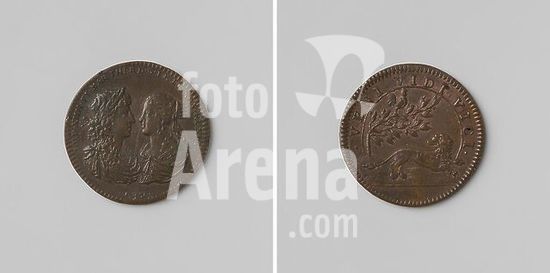
alb4438538 Franche Comte conquered in ten days, beaten count token in honor of Louis XIV and Maria Theresia, king and queen of France, Copper Medal. Front: facing chest pieces of man with laurel wreath and woman with crown inside inscription. Reverse: lion, fleeing from a crowing rooster, sitting in a laurel tree within a circle, Franche-Comté, Louis XIV (king of France), Maria Theresia (queen of France), anonymous, France, 1668, copper (metal), striking (metalworking), d 2.5 cm × w 4.81 gr.
DC
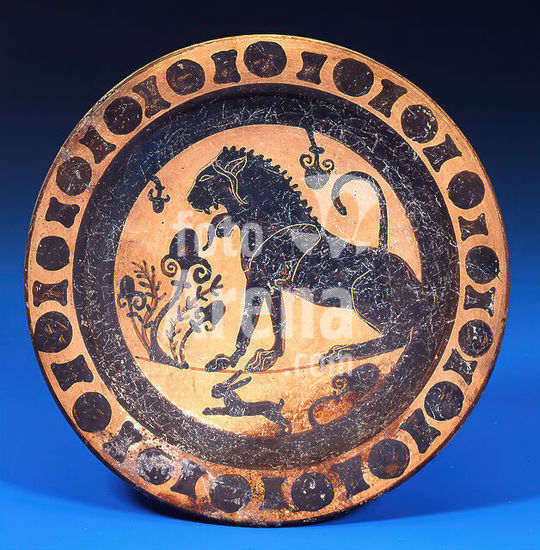
alb5147927 Micali Group, Plate, Clay, quickly turned, painted (ceramic), alternately fired, clay, Total: Height: 3.5 cm; Diameter: 19.1 cm, Ceramic, Lion (predators), hare, plant, animal, palmette (ornament), antique, The stepped rim of the plate is decorated with alternating round and cylindrical motifs. Inside, a seated lion is depicted in profile view to the left in front of a tuft of plants with palmette shapes. He has his mouth wide open, his tongue hanging out. The eye, the separation between mane and face, the ear and the thighs are carved as internal contours. In the segment a small hare jumps to the left; on the right a long-stemmed palmette.
DC
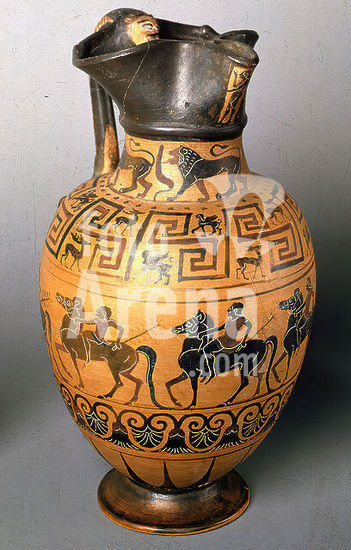
alb5151854 Pontische Oinochoe' Form I (rider train), clay, quickly turned, painted (ceramic), alternately fired, clay, painted and fired, total: height: 27 cm; diameter: 19.4 cm, ceramic, animals, cavalry, cavalry troops, lion (predators), young man, youth, ornaments, meanders, sphinx, deer, antiquity, Characteristic of the so-called Pontic ceramics is the extensive use of additional colors, which make the vessel appear downright colorful. This oinochoe of form I has a protruding foot, an egg-shaped vessel body and a narrow neck with a plastically protruding collar and a wide cloverleaf mouth. The handle with a central lion's head (incised mane), side arms with stylized monkey heads and a cross-ribbed handle resembling a snake's body ends at the bottom in an anchor palmette. The muzzle collar is black varnished, with the exception of a narrow, recessed picture field below the spout. Here a young man turned to the left, dressed in an apron-like red robe, is depicted. His hand is raised as if in a greeting. On the clay-ground neck of the vessel there is a frieze of four striding lions with their throats torn open and their red tongues stretched out. Each animal has two red and two black legs. The faces of two lions are painted red, the others black. The shoulder of the vessel is decorated with a large double-row, black and red meandering pattern. The empty spaces of the pattern alternately contain sphinxes and deer. Two of the eight sphinxes have two red legs. The seven deer are marked by white dots as fallow deer. A cavalcade of six mounted youths is depicted on the body. They wear chiton-like red coats with short sleeves. With one hand they hold the rein; the other, a branch holding hand, rests on the croup of their animals. All horses have two red and two black legs; three animals have red manes. Under the handle-palmette, two squatting sphinxes support its front-paws on a small life-tree. Under the main frieze a lotus palmette chain with lotus blossoms with red rising cuffs.
DC
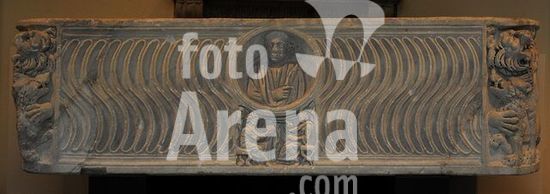
alb3104220 Roman strigilated sarcophagus with the relief depicting the deceased, in the centre. At the bottom, two seated figures, a poet or a philosopher holding a parchment, and a muse. In the end, lions attacking boars. Marble. 3rd century AD. Museum of Mediterranean and Near Eastern Antiquities. Stockholm. Sweden.
DC
alb9361084 Also a study of a face with a protruding tongue. Sheet 25 recto from a sketchbook with 41 sheets, Head of a man with an open mouth., Carel Adolph Lion Cachet, 1874 - 1945.
DC
alb9388210 Sheet 7 recto from a sketchbook with 29 sheets, Hands and a face, Carel Adolph Lion Cachet, c. 1897 - c. 1898.
DC
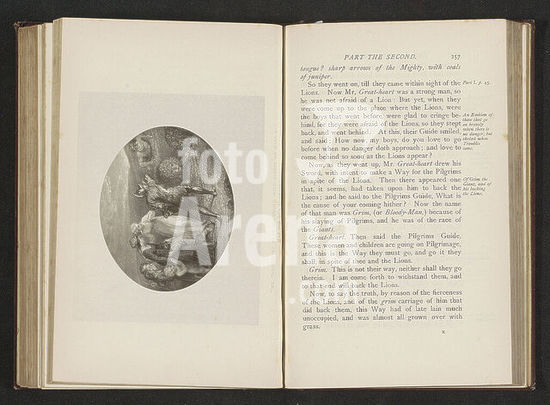
alb9359120 Photoreproduction of an illustration by Thomas Stothard for Once Christian's reize to Eternity by John Bunyan, 'Mr. Greatheart drew his sword, with intent to make a way for the Pilgrims.', Illustration concerns a man drawing his sword facing two lions., maker: anonymous, Thomas Stothard, (mentioned on object), c. 1871 - in or before 1881, paper, height 78 mm × width 96 mm.
DC
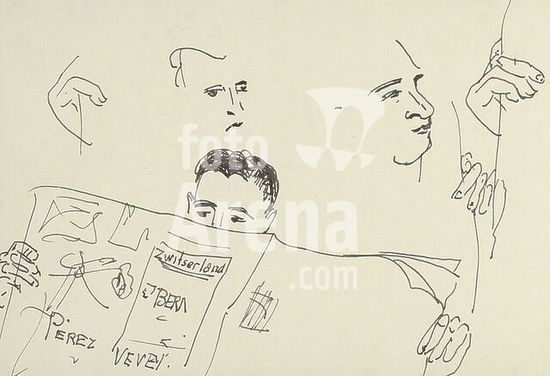
alb9352959 Also studies of hands holding paper and faces. Sheet 6 verso from a sketchbook with 9 sheets, Man reading a newspaper, Carel Adolph Lion Cachet, c. 1930 - c. 1938.
DC
alb9360692 Sheet 7 verso from a sketchbook with 25 sheets, Face, an arm and a hand, Carel Adolph Lion Cachet, 1908.
DC
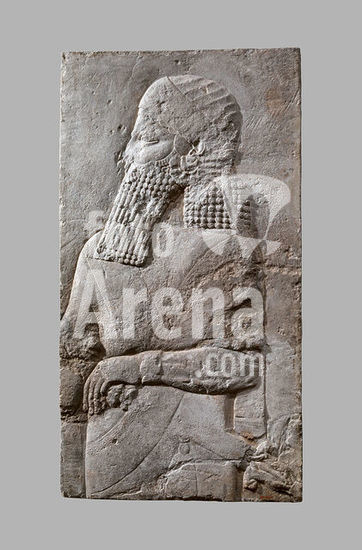
alb3659363 Assyrian Crown-Prince. Culture: Assyrian. Dimensions: 26 1/8 x 14 x 1 1/8 in. (66.5 x 35.5 x 2.8 cm). Date: ca. 704-681 B.C..This relief fragment dates to the time of Sennacherib (r. 704-681 B.C.), and comes from the great Southwest Palace, called by Sennacherib the "Palace Without Rival," at Nineveh. It originally formed part of a procession scene, and depicts in low relief the upper part of a male figure whose beard, clothing, and jewelry indicate particularly high status. His diadem, with incised decoration representing embroidered rosettes and a thin length of fabric running from its back, is an attribute often associated in this period with the Assyrian crown-prince. Visible jewelry includes a large earring, crescent-shaped with multiple projecting pendants or studs, thick armlets, and a bracelet whose faces originally would have depicted rosettes; related forms have been found among the gold jewelry discovered in the tombs of royal women at Nimrud. The figure rests his hand on the pommel of a short sword, the scabbard of which terminates in two lions. Much of the clothing was incised with fine detailed decoration representing embroidery, now difficult to see as the surface of the stone itself has suffered considerable wear. It seems likely that the panel was discovered out of position, possibly having been reused in antiquity, which might help explain its relatively poor condition. Other damage seems deliberate: part of the figure's face appears to have been chiseled away in antiquity. Following the sack of Nineveh in 612 B.C., images of kings and some other royal figures were targeted, probably for magical as well as propagandistic reasons. Museum: Metropolitan Museum of Art, New York, USA.
DC
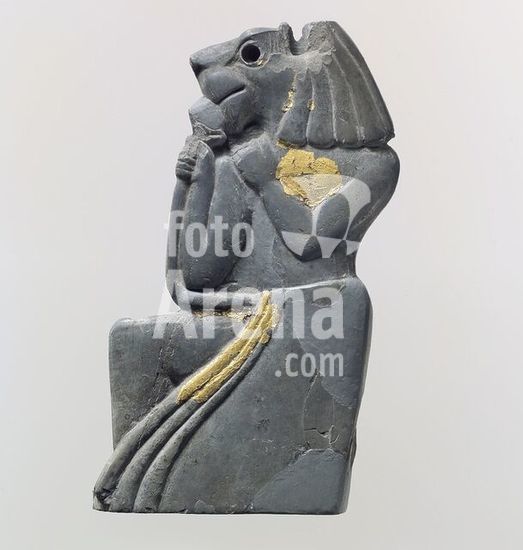
alb3675108 Plaque fragment: kneeling lion-headed figure. Culture: Old Assyrian Trading Colony. Dimensions: 3 7/8 x 1 7/8 in. (9.8 x 4.8 cm). Date: ca. 18th century B.C..This figure belongs to a group of carved ivories, mostly furniture elements, probably found at the site of a palace at Acemhöyük in central Anatolia. Most of the ivories depict imagery borrowed and transformed from Egyptian sources, such as the hybrid creature shown here who combines human and lion features. In Egypt, representations of lioness goddesses appeared as early as the Old Kingdom. This creature, with its kneeling posture and closed mouth, indicated by a diagonal groove, does not appear menacing. Its identity is mysterious, but it appears to have symbolized a benevolent force.The plaque has attachment holes at top and bottom, and probably was used to decorate a piece of furniture. Its overall gray color indicates that the object was exposed to considerable heat, perhaps during the destruction of the palace. Gilding is preserved not only on areas such as the border of the long open kilt, the mane, and the eyes, but along the edges of the mane and the inner line of the bent left arm, which may indicate that much of the surface was originally covered in gold leaf. The pupil of the eye was hollowed to receive an inlay, now missing. The mane is stylized to resemble a wig rather than tufts of animal fur. The left arm is bent at the elbow, with the fist held to the chest, while the right grasps a flowering plant stem. The clearly human torso shows no indication of gender. The lower body is depicted kneeling, with one leg exposed and the other covered by the long kilt. A nearly identical plaque, in which the figure faces right, is also in the Metropolitan Museum's collection (36.70.15, 37.413.3). Both plaques have been reconstructed from two halves, broken at the waist; in this example, the upper half is numbered 36.70.14 and the lower half 37.143.4. Museum: Metropolitan Museum of Art, New York, USA.
DC
alb2264754 Lycian Sarcophagus. 5th century BC. Lion hunt. Detail. Paros marble. Royal Necropolis of Sidon. Chamber IV. Archaeological Museum. Istanbul. Turkey.
DC
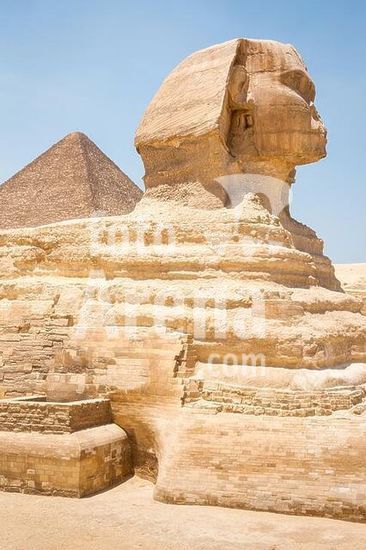
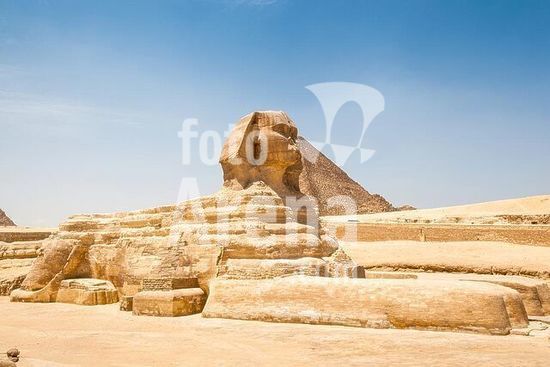
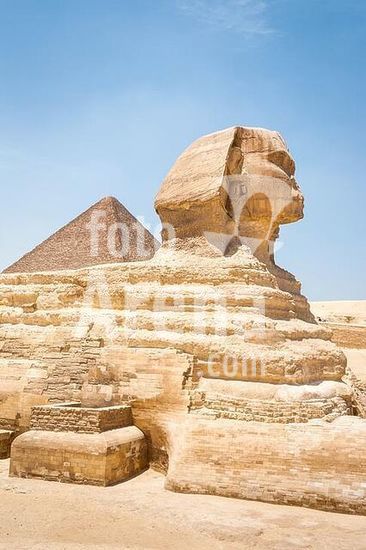
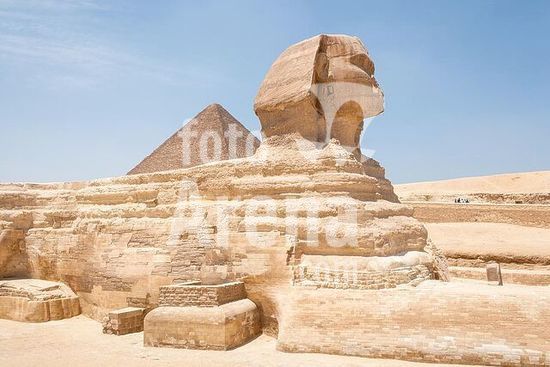
akg2323003 Great Sphinx and Great Pyramid of Giza, also known as Pyramid of Khufu and Pyramid of Cheops, Giza, Cairo, Egypt.
DC
akg2323001 Great Sphinx and Great Pyramid of Giza, also known as Pyramid of Khufu and Pyramid of Cheops, Giza, Cairo, Egypt.
DC
akg2323004 Great Sphinx and Great Pyramid of Giza, also known as Pyramid of Khufu and Pyramid of Cheops, Giza, Cairo, Egypt.
DC
akg2323002 Great Sphinx and Great Pyramid of Giza, also known as Pyramid of Khufu and Pyramid of Cheops, Giza, Cairo, Egypt.
DC
akg2322996 The Great Sphinx, Giza, Cairo, Egypt.
DC
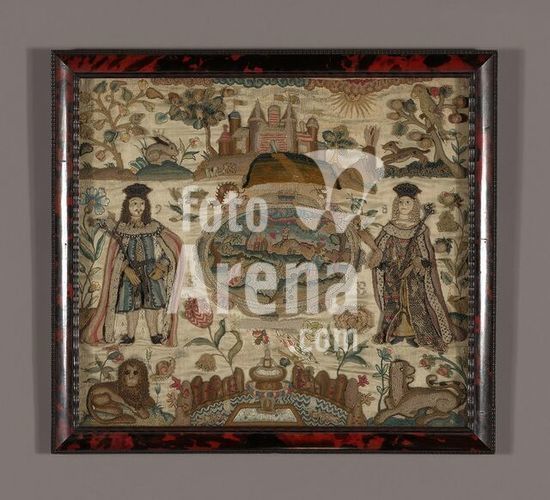
alb4139131 Needlework. England. Date: 1698. Dimensions: 34.6 × 43.5 cm (15 5/8 × 17 1/8 in.). Silk, warp-float faced 4:1 satin weave; appliquéd with linen, plain weave; embroidered with silk in tent stitches and embroidered with silk, linen, gilt-metal strips, wires, purl, and gilt-metal-strip-wrapped silk in bullion, cross, satin, and stem stitches; raised work in a variety of buttonhole, raised stem, and trellis stitches with buttonhole and bullion picots; couching and embroidered cut pile; embellished with seed pearls and glass beads. Origin: England. Museum: The Chicago Art Institute, Chicago, USA.
DC
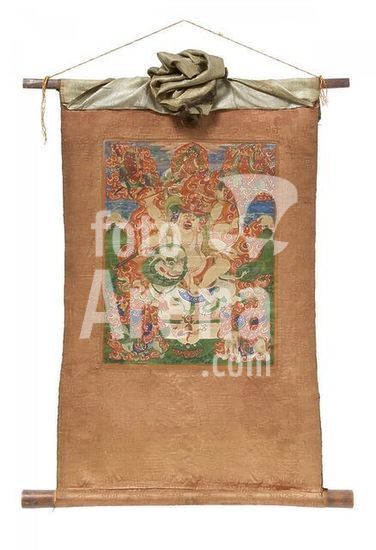
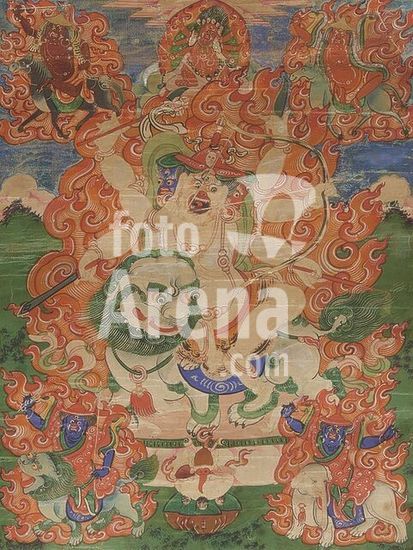
akg8296021 RARE THANGKA OF PEHAR GYALPO. Origin: Mongolia. Date: 18th-19th c. Technique: Pigments and metal on fabric. Description: In the center the six-armed Pehar Gyalpo with three faces on a white snow lion with green mane. He is surrounded by four other gyalpo spirits each on their mount and buffeted by flames. Above him the red Hayagriva. Pehar was an original deity of the non-Buddhist Bhata Hor Meditation school of Mongolia and was subdued in the 9th c. by Padmasambhava. In the 17th c. he was chosen as divine guardian of the Nechung temple, in which the official state oracle of Tibet is conducted. Measurement: 32 x 24cm, with mounting 59 x 37cm. Frame/Pedestal: Mounted as hanging scroll with Chinese silk. Condition B. Provenance:-Rhenish private collection, acquired locally in the 1980s. .
DC
akg8295805 RARE THANGKA OF PEHAR GYALPO. Origin: Mongolia. Date: 18th-19th c. Technique: Pigments and metal on fabric. Description: In the center the six-armed Pehar Gyalpo with three faces on a white snow lion with green mane. He is surrounded by four other gyalpo spirits each on their mount and buffeted by flames. Above him the red Hayagriva. Pehar was an original deity of the non-Buddhist Bhata Hor Meditation school of Mongolia and was subdued in the 9th c. by Padmasambhava. In the 17th c. he was chosen as divine guardian of the Nechung temple, in which the official state oracle of Tibet is conducted. Measurement: 32 x 24cm, with mounting 59 x 37cm. Frame/Pedestal: Mounted as hanging scroll with Chinese silk. Condition B. Provenance:-Rhenish private collection, acquired locally in the 1980s. .
DC
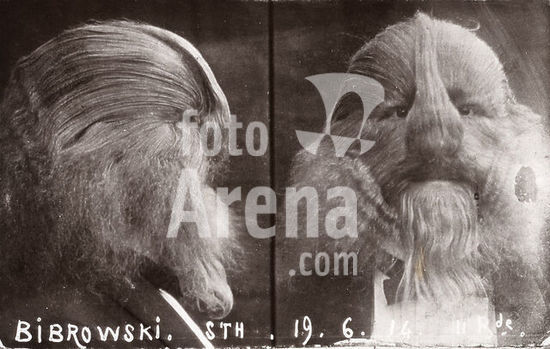
ado00066477 Stephan Bibrowski (18911932), better known as Lionel the Lion-faced Man. On June 19, 1914. Author: Unknown photographer.
DC
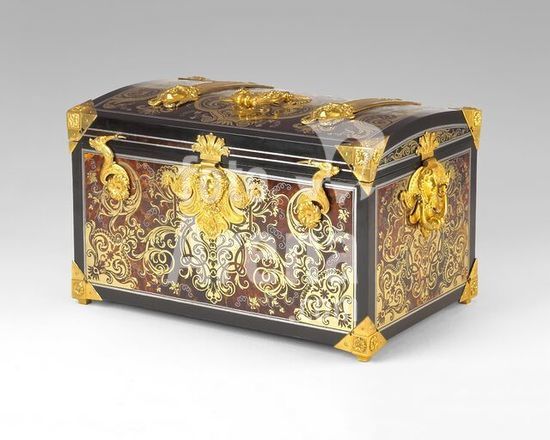
alb4137051 Coffer. Attributed to André-Charles Boulle (French, 1642-1732); France, Paris. Date: 1700-1720. Dimensions: 44.5 × 73 × 48.3 cm (17 1/2 × 28 3/4 × 19 in.). Oak, tortoiseshell, brass, pewter, ebony, and gilt-bronze mounts. Origin: France. Museum: The Chicago Art Institute, Chicago, USA. Author: ANDRE CHARLES BOULLE.
DC
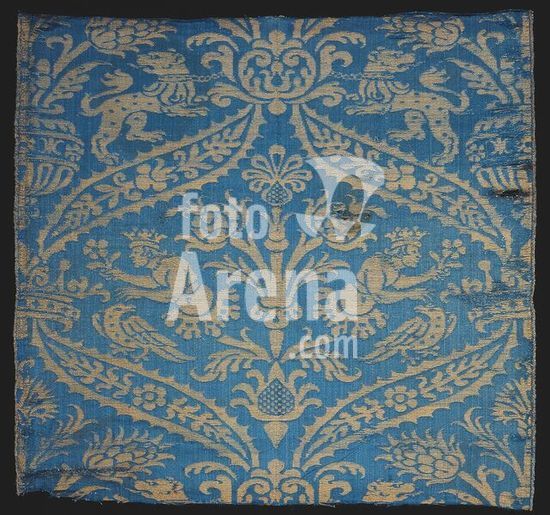
alb4136563 Panel. Italy. Date: 1575-1600. Dimensions: 52.2 x 55.5 cm (20 1/2 x 21 7/8 in.)Warp repeat: 45.8 cm (18 in.). Silk, satin damask weave with warp-float faced 2:1 'Z' twill interlacings of secondary binding warps and supplementary patterning wefts. Origin: Italy. Museum: The Chicago Art Institute, Chicago, USA.
DC
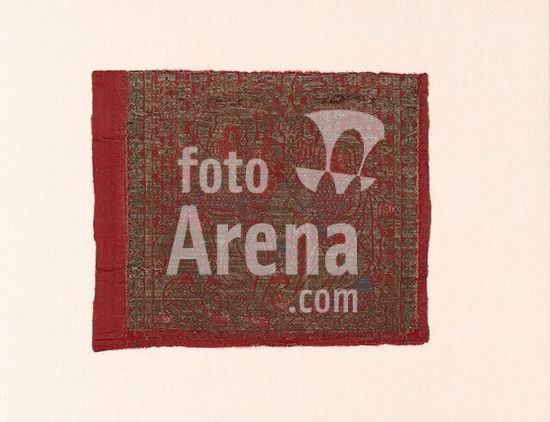
alb4136448 Orphrey Fragment. Italy, Florence. Date: 1450-1500. Dimensions: 22.5 × 27.4 cm (8 7/8 × 10 3/4 in.). Silk and gilt-animal-substrate-wrapped linen, warp-float faced satin weave with twill interlacings of secondary binding warps and supplementary patterning and brocading wefts. Origin: Florence. Museum: The Chicago Art Institute, Chicago, USA.
DC
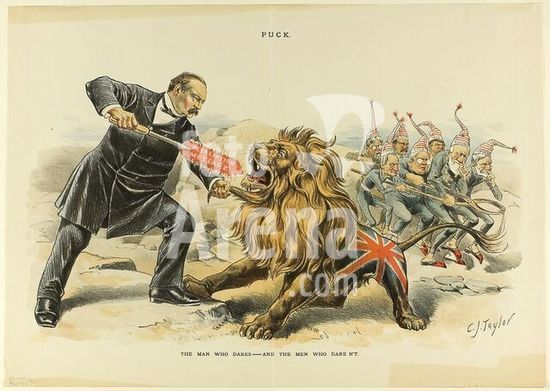
alb4166104 The Man Who Dares - and the Men who Dare N't, from Puck. C. Jay Taylor; American, 1855-1929. Date: 1888. Dimensions: 355 x 505 mm. Color lithograph on newsprint. Origin: United States. Museum: The Chicago Art Institute, Chicago, USA. Author: C. Jay Taylor.
DC
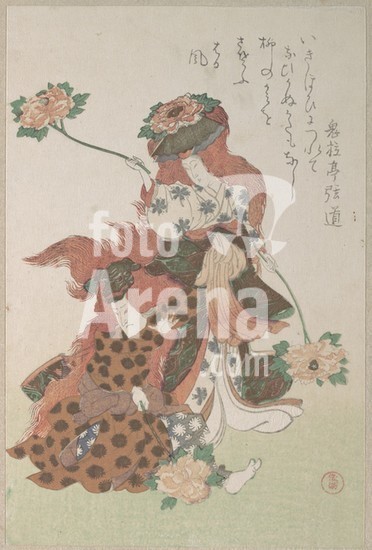
alb3601191 Two Dancers Performing a "Shakkyomono" Kabuki Dance, from Spring Rain Surimono Album (Harusame surimono-jo), vol. 3. Artist: Kubo Shunman (Japanese, 1757-1820). Culture: Japan. Dimensions: 8 5/16 x 5 1/2 in. (21.1 x 14 cm). Date: ca. 1805-10.Surimono are privately published woodblock prints, usually commissioned by poets or poetry groups as a form of New Year's greeting card. The poems, most commonly kyoka (witty thirty-one syllable verse), inscribed on the prints usually include felicitous imagery connected with spring, which in the lunar calendar begins on the first day of the first month. Themes of surimono are often erudite, frequently alluding to Japanese literary classics in both texts and images.This album belongs to a set of three compiled by Hayashi Tadamasa, the great Parisian dealer of Japanese art. Hayashi arranged the more than four hundred prints in the set on facing leaves according to themes, or in a way that created an attractive arrangement of designs, complementary in both color and shape. The pigments, printing techniques, and paper used for surimono often were of the highest quality, and represent the epitome of late Edo-period woodblock printing.This image derives from the Noh play Shakkyo in which the bodhisattva Monju's lion mount dances with peonies to celebrate an aged monk's arrival in the bodhisattva's Pure Land via a treacherously narrow stone bridge. Museum: Metropolitan Museum of Art, New York, USA.
DC
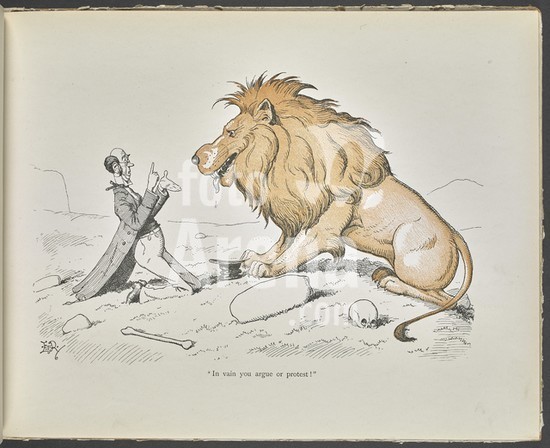
alb4059883 "In vain you argue or protest!" A lion facing a man. Tails with a Twist. The verses by “Belgian Hare.” The pictures by E. T. Reed. London : Edwin Arnold, [1898]. See image 1876_a_30_p22 for accompanying poem. Source: 1876.a.30 page 23. Author: EDWARD TENNYSON REED. Douglas, Alfred Bruce, Lord.
DC
alb3738892 Antonio Sarzanella de' Manfredi, Este Diplomat [obverse]. Dated: c. 1463. Dimensions: overall (diameter): 7.3 cm (2 7/8 in.). Medium: bronze. Museum: National Gallery of Art, Washington DC. Author: Sperandio.
DC
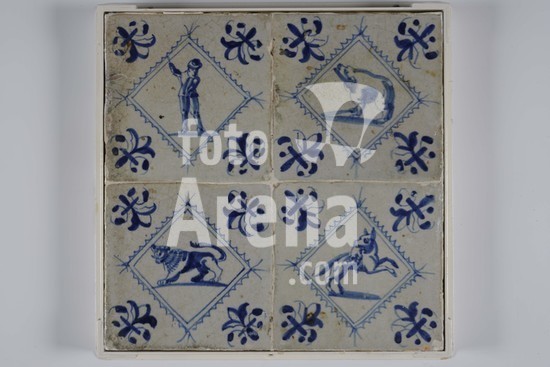
alb5203739 tile field, Anonymous, first half 17th century, tin glaze, earthenware, With frame: 29.2 x 29.2 x 3.3cm (292 x 292 x 33mm), Tile: 13 x 13 x 1.3cm (130 x 130 x 13mm ), bear, man, lion, fox, northern Netherlands, Tile field of four tiles (two by two) of earthenware covered with tin glaze and painted in blue. On the tiles, figures are depicted in a serrated square. The top left tile shows a standing figure with a headgear and right arm facing up. Top right a bear, pointing to the left. Bottom left a lion, facing left. Below right a fox, pointing to the right, with prey in its mouth, 1985.
DC
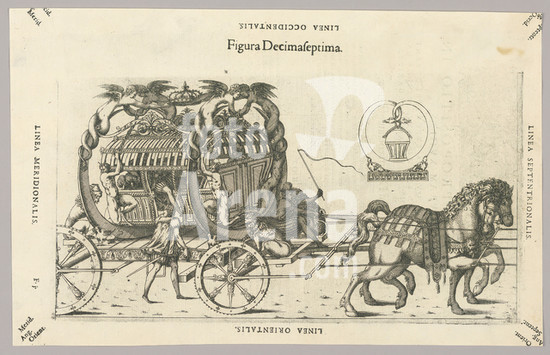
alb5190858 Plate XVII from Theatrum instrumentorum et machinarum, Julio Paschale, Woodcut on paper, A carriage drawn by more than two horses, driven, center, by a man sitting between two carved lions that face backwards. A platform on the wheels, with a box supported by two crescents supporting a roof. Sphinxes, scrolls, fauns, nymphs, and crown above. Description in Latin on verso of 1949-152-214., Europe, 1582, Print, Print.
DC
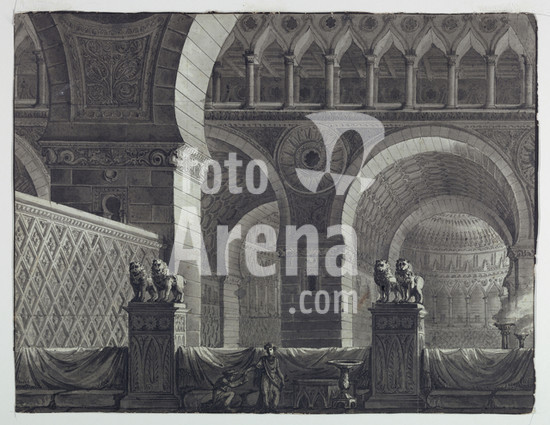
alb5190930 Stage Design, Interior of Oriental Building, Antonio Giuseppe Basoli, Italian, 17741843, Pen and black ink, brush and gray and black wash on paper, Horizontal rectangle. Interior of building in Islamic style with enormous vaults and rich decoration. In foreground, two pedestals each with two sculptures of lions, benches and tables. Two male figures in center foreground, one kneeling and holding the hand of the other figure, who stands facing forward., Italy, early 19th century, theater, Drawing, Drawing.
DC
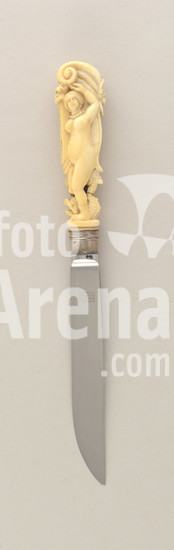
alb5188210 Knife, ivory, silver, stainless steel, New stainless steel blade, straight-sided, upper edge curving towards the point; plain bolster. Plain silver ferrule, tapering. Carved ivory handle, a nude woman on one side of the handle, a nude man on the other side. In between them a dolphin and a decorative pattern with flowers, fruit, a human face, curls and a stylized lion opening his mouth., possibly Germany, ca. 17001800, cutlery, Decorative Arts, Knife.
DC
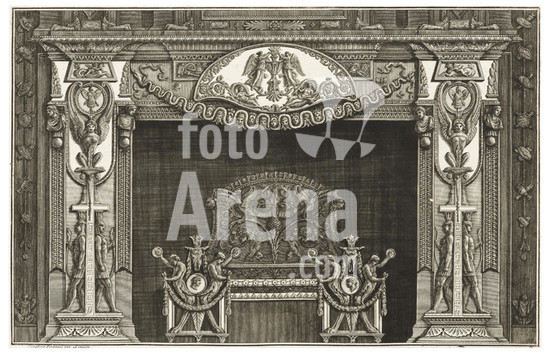
alb5176137 Chimneypiece, from Diverse Maniere d'adornare i cammini, Giovanni Battista Piranesi, Italian, 17201778, Etching on paper, The image depicts a chimneypiece with four young men decorating the andirons. These men have lion paws for legs, holding garlands in one hand and a coin in the other. Behind them, a symmetrical image of a plant formation with satyrs, birds, and laurel, among other symbols. The jambs are identical and are composed of Egyptian figures in profile flanking a cross with hieroglyphs topped with a seated sphinx with its wings around a medallion depicting military symbols. The mantel depicts a cartouche with winged deities holding a vase, all bordered by vines, above a garland made up of faces., Italy, 1769, architecture, Bound print, Bound print.
DC
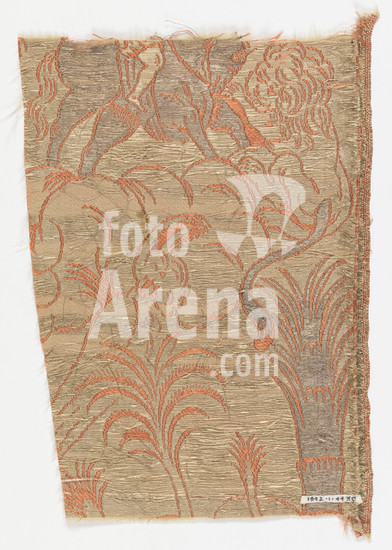
alb5169994 Fragment, Medium: silk, metallic Technique: 7&1 satin patterned by weft floats, Man on horseback carrying a quiver, about to hurl a spear at a crouching lion. Large-scale parrot, stripes, fantastic foliage and architectural forms. Fabric was originally entirely faced with metallic threads, gold and silver., late 17th century, woven textiles, Fragment.
DC
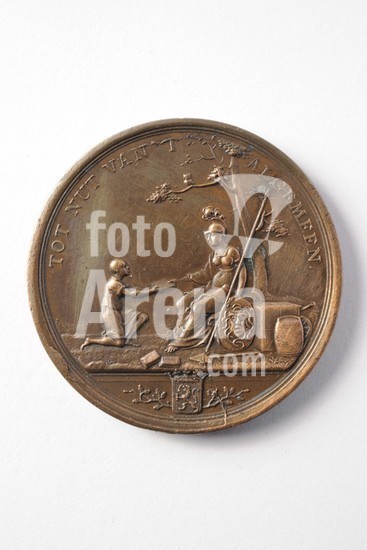
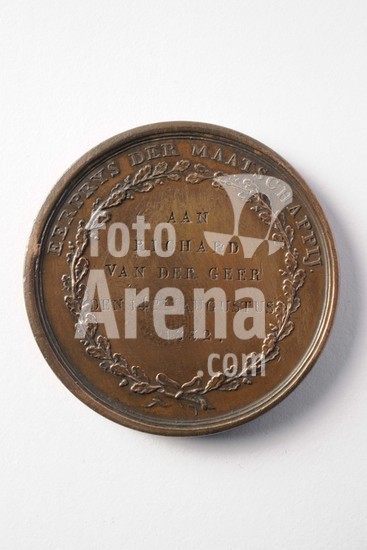
alb5068971 prize medal, Anonymous, 1832, General: 4 x 0.3cm (40 x 3mm), Weight: 28.2g, minerva, owl, weapon (mark), weapons and ammunition, plant, man, figure, tree, Bronze prize medal, minted for the Society for the Benefit of the General, 1832. On the obverse is a seated leftward facing Minerva (or Athena), with next to her a shield depicting the head of Medusa (head with snake hair) and her spear. A tree is depicted behind the female figure; in the tree is the owl of Minerva. Minerva hands over a certificate to a kneeling figure of a man kneeling in front of her. Below is the coat of arms of Holland (crowned shield with climbing lion) with branches of plants on either side. Above the scene is the circular TOT NUT VAN 'T GENERAL. On the reverse is a wreath with a bow in the center and above it the inscription: EEREPRIJS DER MAATSCHAPPIJ. The inscription is engraved in the center AAN RICHARD VAN DER GEER DEN 14DEN AUGUST 1832 .. On the edge of the medal is the edge inscription FOR EDMEDGED DADEN., 1893.
DC
alb5069404 prize medal, Anonymous, 1832, General: 4 x 0.3cm (40 x 3mm), Weight: 28.2g, minerva, owl, weapon (mark), weapons and ammunition, plant, man, figure, tree, Bronze prize medal, minted for the Society for the Benefit of the General, 1832. On the obverse is a seated leftward facing Minerva (or Athena), with next to her a shield depicting the head of Medusa (head with snake hair) and her spear. A tree is depicted behind the female figure; in the tree is the owl of Minerva. Minerva hands over a certificate to a kneeling figure of a man kneeling in front of her. Below is the coat of arms of Holland (crowned shield with climbing lion) with branches of plants on either side. Above the scene is the circular TOT NUT VAN 'T GENERAL. On the reverse is a wreath with a bow in the center and above it the inscription: EEREPRIJS DER MAATSCHAPPIJ. The inscription is engraved in the center AAN RICHARD VAN DER GEER DEN 14DEN AUGUST 1832 .. On the edge of the medal is the edge inscription FOR EDMEDGED DADEN., 1893.
DC
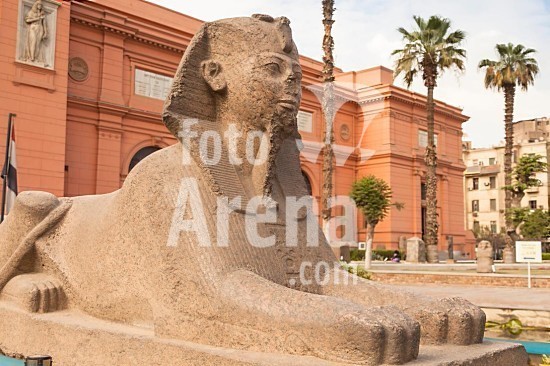
akg2323014 Sphinx statue outside the Egyptian Museum, also known as Museum of Egyptian Antiquities and Museum of Cairo, Cairo, Egypt.
DC
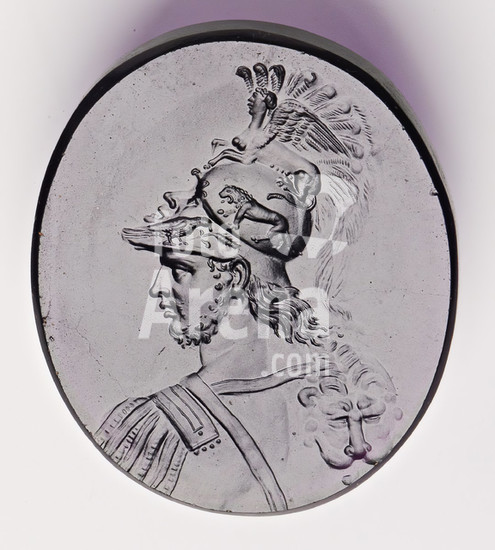
alb4990658 Vz: the man, in three-quarter rear view, wears a cuirass with a lion's skin draped over his right shoulder, he has a beard and long hair coming from under his helmet. The helmet is decorated with a lying, winged sphinx with a large feather comb, on the side of the helmet a running lion and an eagle with an ear of corn in the mouth, the front of the helmet consists of a face., Gem, intaglio, glass (?), Color: purple with white speckles, Shape: oval, Processing: edge is straight cut, 42 x 50 x 6 mm,?.
DC
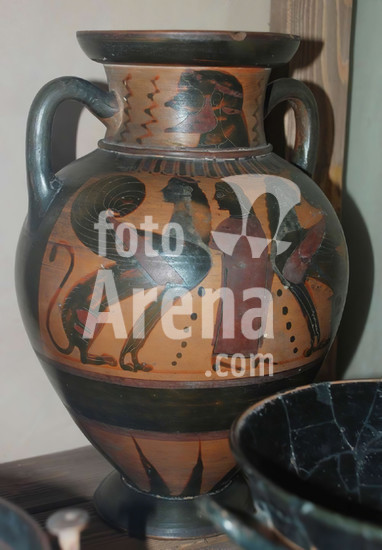
alb4979829 Attic black-figure neck-amphora. Painter of Louvre F6. Attic black figurine neck. On the neck of A and B the same representation: face of man with beard to the left, between vertical zig-zag lines. On the body: A: standing draped man between antithetic sphinxes. B: two antithetical lions, vase, amphora, neck-amphora, earthenware, black-figured, Attic, 35.8 cm, archaic, black-figured, Attic, Painter or -560.
DC
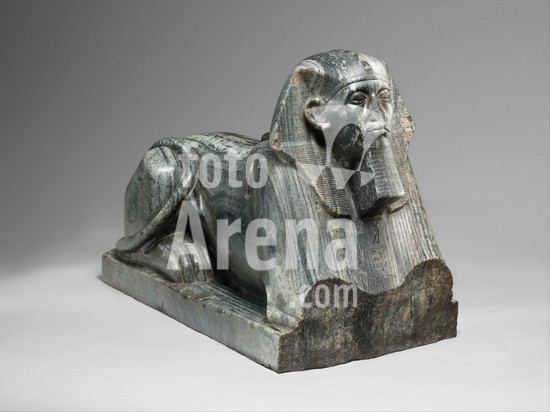
alb3630788 Senwosret III as a Sphinx. Dimensions: L. 73 × W. 29.5 × H. 42.5 cm, 114.3 kg (28 3/4 × 11 5/8 × 16 3/4 in., 252 lb.). Dynasty: Dynasty 12. Reign: reign of Senwosret III. Date: ca. 1878-1840 B.C..Because of their strength, ferocity, imposing mane, and awesome roar, lions were associated with kingship since prehistoric times. As divine guardians against evil, they also symbolized in cosmic myths the place on the horizon where the sun was reborn every day. With the body of a lion and the head of a human, the sphinx symbolically combined the power of the lion with the image of the reigning king. In this magnificent example, the face belongs to Senwosret III of Dynasty 12 whose features are very distinctive (see 26.7.1394). He wears a pleated linen headcloth, called a nemes headdress, which is symbolic of kingship. The nemes is surmounted by a cobra, which represents the goddess Udjo, one of the protectors of the king. The cobra's hood and head were either carved separately or they were repaired in antiquity, for there is an ancient dowel hole drilled into the place where the cobra's upright body would be. While the Egyptians viewed the standing sphinx as a conqueror, the crouching sphinx was a guardian of sacred places. Thus pairs of sphinxes flanked avenues or entrances to important buildings. This sphinx was carved from a single block of beautifully grained anorthosite gneiss from quarries in Nubia. The sculptor has used the pattern in the stone to great effect on the body of the lion and has masked the potentially awkward transition from animal body to human head with the headdress and the stylized pattern representing the lion's mane. Note the difference between the ordered long strands of the mane in front and the short, overlapping tufts on the back of the shoulders. Below the beard, a palace facade (serekh) is incised topped by a falcon and the symbol for the sky. Both the king's Horus name (divine of thrones) and his throne name (shining are the life forces [kas] of Re) are written in the serekh. Museum: Metropolitan Museum of Art, New York, USA.
DC
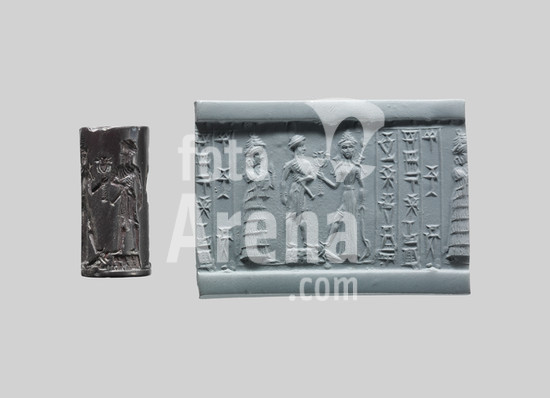
alb3666618 Cylinder seal. Culture: Babylonian. Dimensions: 0.94 in. (2.39 cm). Date: ca. 18th-17th century B.C..Although engraved stones had been used as early as the seventh millennium B.C. to stamp impressions in clay, the invention in the fourth millennium B.C. of carved cylinders that could be rolled over clay allowed the development of more complex seal designs. These cylinder seals, first used in Mesopotamia, served as a mark of ownership or identification. Seals were either impressed on lumps of clay that were used to close jars, doors, and baskets, or they were rolled onto clay tablets that recorded information about commercial or legal transactions. The seals were often made of precious stones. Protective properties may have been ascribed to both the material itself and the carved designs. Seals are important to the study of ancient Near Eastern art because many examples survive from every period and can, therefore, help to define chronological phases. Often preserving imagery no longer extant in any other medium, they serve as a visual chronicle of style and iconography.The modern impression of the seal is shown so that the entire design can be seen. This seal features a three line inscription and a scene with the goddess Ishtar, who is shown wearing an open robe and holding a mace in her raised right hand and a scimitar in her left. Weapons emerge from her shoulders and she stands on a lion-headed eagle. Facing her is a man with a mace standing on a platform and behind him stands a suppliant goddess. Presentation scenes - featuring a worshipper before a deity or ruler - were common motifs on seals of the Old Babylonian period. The use of hematite, a dark colored hard stone, is another characteristic of seal production in this period. Museum: Metropolitan Museum of Art, New York, USA.
DC
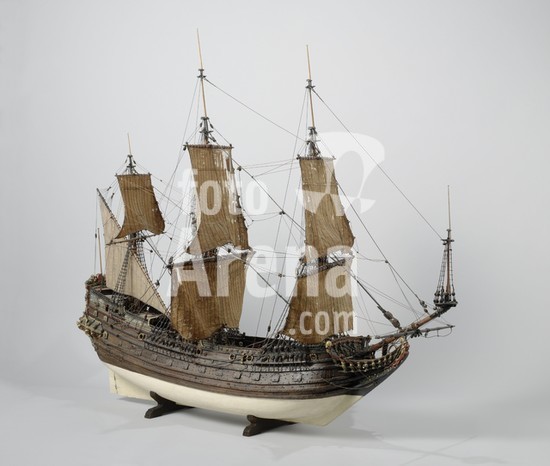
alb4443511 Ship's model of the Prince Willem Ship model of the Prince Willem Model of an East Indiaman, Testified model of an East Indiesman equipped with 58 guns. In the mirror between two mermaids the coat of arms of Middelburg, in the year 1651, below it a full-cut statue in armor and two lions, one with the Orange tree the other with the freedom hat and above the witches a cartouche with the initials VOCZM (Zeeland room) of the VOC in Middelburg) and on the plate: Prince Willem 1651. A wul face of Middelburg is painted on the wulf, the galleon has carved struts and on the steg a red lion with a golden mane., sailing-ship, sailing- boat, Middelburg, Strait of Taiwan, Europe, Prince Willem (ship), Dutch East India Company, VOC Chamber Zeeland, Willem II (Prince of Orange), anonymous, Netherlands, 1651, wood (plant material), h 115 cm × l 142 cm × w 60 cm.
DC
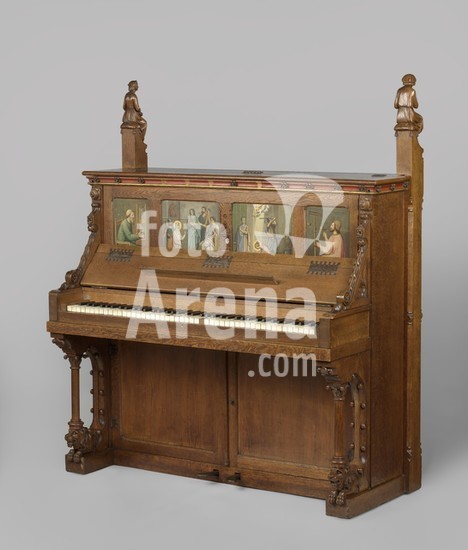
alb4436699 Music cabinet and piano with a relic or St Cecilia Music cabinet and piano with a relic or St Cecilia Piano whose cabinet is partly painted in oak and pine with colors and gold on the front a rear glass placed relic, Piano, of which the oak and pine cabinet is partially painted in colors and gold. The pillars bearing the keyboard rest on lying lions coming out of the cupboard, and the two high corner posts are crowned by the figures of a flute player and a citizen player, with the faces of Cuypers and his wife Antoinette. On both sides of the relic of St Cecilia placed behind glass, painted scenes from her life are: her defense against the prefect of Almachius, she bows her head to the executioner. On the far left the monk Hucbald, inventor of the counterpoint, far right Pythagoras, founder of harmony. On the reverse we see Mary in the center with his hands raised on the throne, with music-making angels and female and male saints. To the left and right of this are female and male representatives of sacred music from all centuries. Signed in right-most front view: monogram PJHC, label with inscription in gold: Piano and Organ warehouse / from TH.BRUGMAN / 93 Lauriergracht etc, the virgin martyr Cecilia of Rome, possible attributes: falcon, musical instruments, organ, wreath of roses and lilies, Pierre Joseph Hubert Cuypers, Antoinette Catharine Thérèse Alberdingk Thijm, Antoine Bord, 1858 - 1859, pine (wood), oak (wood), glass, cloth, h 165.2 cm × w 139.8 cm × d 65 cm.
DC
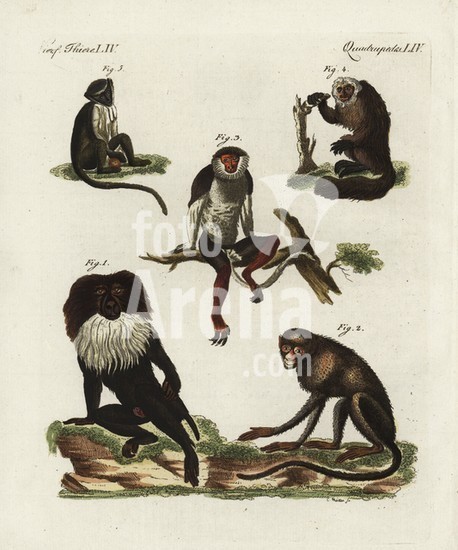
alb2122251 Lion-tailed macaque, Macaca silenus endangered 1, greater spot-nosed monkey, Cercopithecus nictitans 2, red-shanked douc, Pygathrix nemaeus endangered 3, white-faced saki, Pithecia pithecia 4, and roloway monkey, Cercopithecus roloway endangered 5. Handcoloured copperplate engraving from Bertuch's "Bilderbuch fur Kinder" (Picture Book for Children), Weimar, 1798. Friedrich Johann Bertuch (1747-1822) was a German publisher and man of arts most famous for his 12-volume encyclopedia for children illustrated with 1,200 engraved plates on natural history, science, costume, mythology, etc., published from 1790-1830.
DC
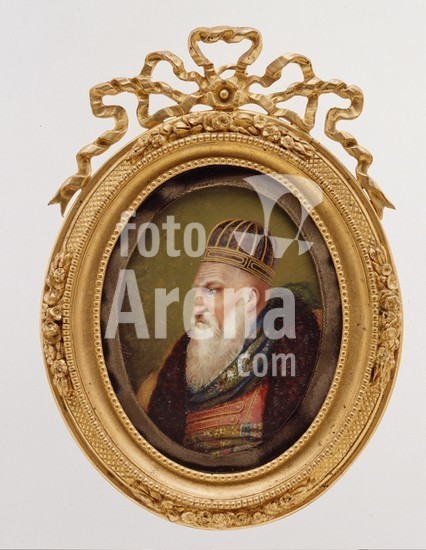
alb3653475 Ali Pasha (born about 1741, died 1822). Artist: Jacob Ritter von Hartmann (German, 1795-1873). Dimensions: Oval, 4 1/8 x 3 1/4 in. (105 x 84 mm). Date: 1822. Museum: Metropolitan Museum of Art, New York, USA.
DC
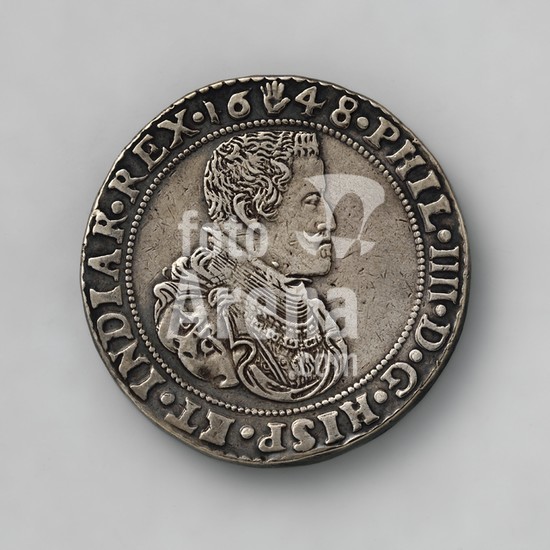
alb4489942 Piedfort of a dukaton from Brabant of Philips IV, 1648, Brabant, Philips IV, dukaton, piedfort, silver coin. Front: portrait of Philips IV to the right. Year, hand in hand, in circumscription. Reverse: crowned composite coat of arms held by two lions. Underneath a coat of arms two facing fire irons with sparks, including golden fleece. Piedfort., anonymous, Antwerp, silver (metal), striking (metalworking), d 4.4, × w 64.
DC
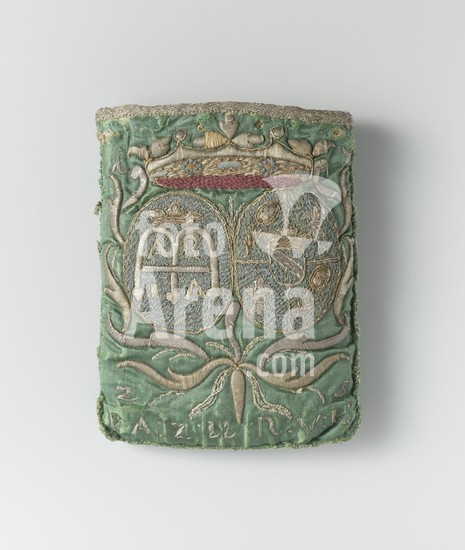
alb4482926 Purse in a flat, rectangular model of green silk, on which on the one hand a crowned double medallion in gold and silver thread and on the other hand a duke's hat including lion embroidered. and embroidered silver thread and blue and red floss. On the one hand a crowned double medallion with a blue embroidered background. In the left a crowned 'M' of which the middle leg is crossed with a horizontal line, creating four surfaces with the letters: 'A', 'R', 'I' and 'A', in silver thread. In the other medallion two French lilies and two thistles (?), With a crowned shield in the middle with a diagonal line. In the four corners from left to right the year 1725. Against the bottom of the stock exchange: 'PA: Z: LL: R: V: I: S'. On the other side a dark red duke's hat, including a standing lion facing left. The opening at the top is bordered with a double galon of silver thread. Originally a cord was threaded through holes along the top edge. The purse is lined with roughly woven gold-colored linen., anonymous, Spain (possibly), 1725, geheel, versiering, galon, voering, embroidering, l 15 cm × w 11.5 cm × h 3.5 cm.
DC

Total de Resultados: 155

Página 1 de 2