Busque também em nossas outras coleções:

Data da imagem:
Pauta
ver mais opções...
Agência
Fotógrafo
ver mais opções...
Estado
Cidade
ver mais opções...
Local
ver mais opções...
Tipo de licença
Orientação
Coleção
ver mais opções...

Total de Resultados: 247

Página 1 de 3

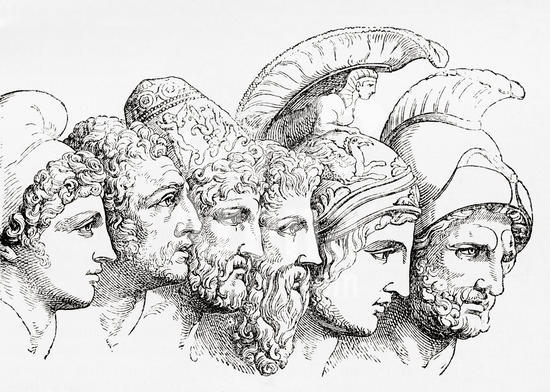
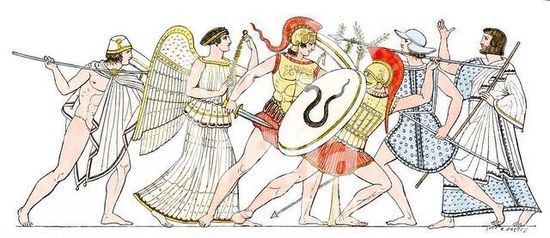
902_05_12512766highres The heroes of the Trojan War. From left to right, Paris, Diomedes, Odysseus, Nestor, Achilles and Agamemnon. From Ward and Lock's Illustrated History of the World, published c.1882.
DC
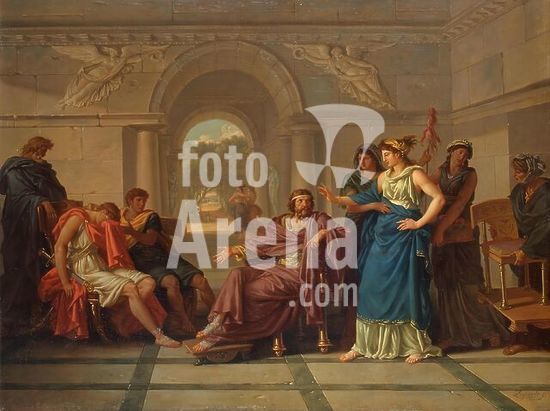
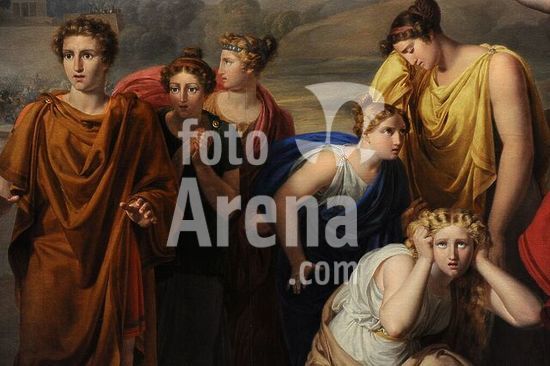
alb4224182 'Helen Recognizing Telemachus, Son of Odysseus'. France, 1795. Dimensions: 48x64 cm. Museum: State Hermitage, St. Petersburg. Author: Lagrenée, Jean-Jacques, the younger.
DC
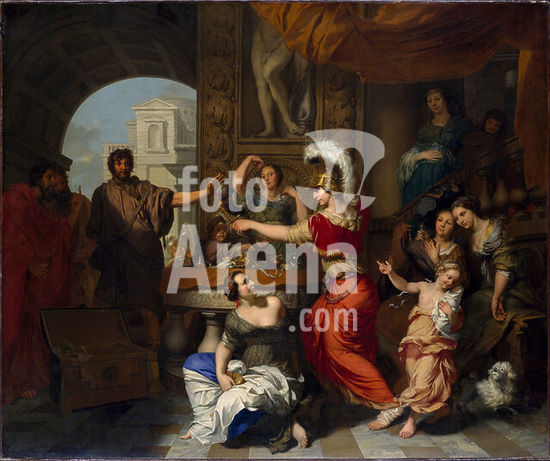
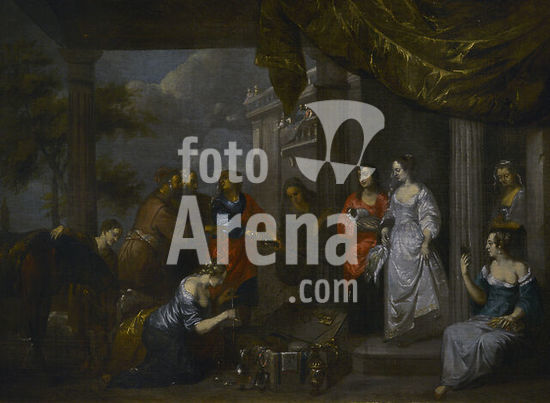
akg5212705 Lairesse, Gerard de; 1641-1711. "Achilles Discovered Amongst the Daughters of Lycomedes". Oil on canvas, 150,5 x 181,4 cm. Inv. NM 494. Stockholm, National Museum. Museum: Stockholm, National Museum.
DC
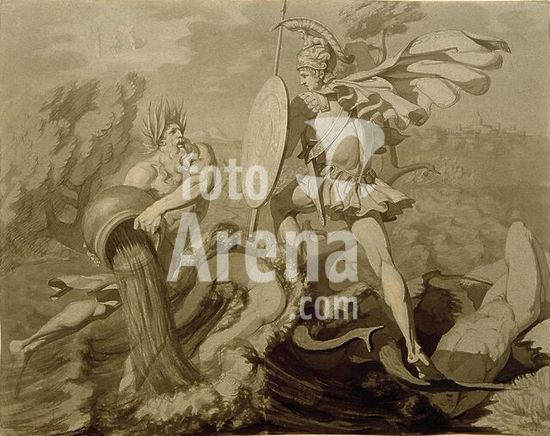
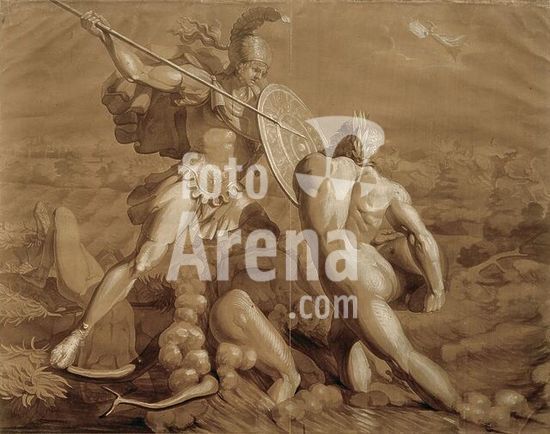
akg2315160 Runge, Philipp Otto. 1777-1810. "Achill und Skamandros", 1801. Pinsel in Schwarz, Grau und Weiß über Bleistift auf blaugrauem Papier, 456 × 576 mm. Inv. Nr. 34227; Kupferstichkabinett, Hamburg, Kunsthalle. Museum: Hamburg, Kunsthalle.
DC
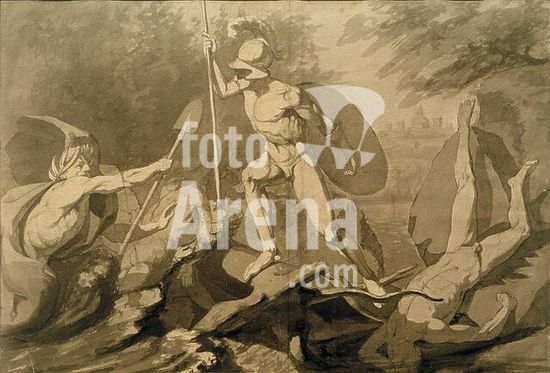
akg2315154 Runge, Philipp Otto. 1777-1810. "Achill und Skamandros", 1801. Feder und Pinsel in Grau und Schwarz über Bleistift, 412 × 593 mm. Inv. Nr. 34223; Kupferstichkabinett, Hamburg, Kunsthalle. Museum: Hamburg, Kunsthalle.
DC
akg2315169 Runge, Philipp Otto. 1777-1810. "Achill und Skamandros", 1801. Pinsel in Braun und Weiß über Bleistift auf braun grundiertem Papier, 527 × 673 mm (Papier aus zwei Teilen zusammengesetzt). Inv. Nr. 34231; Kupferstichkabinett, Hamburg, Kunsthalle. Museum: Hamburg, Kunsthalle.
DC
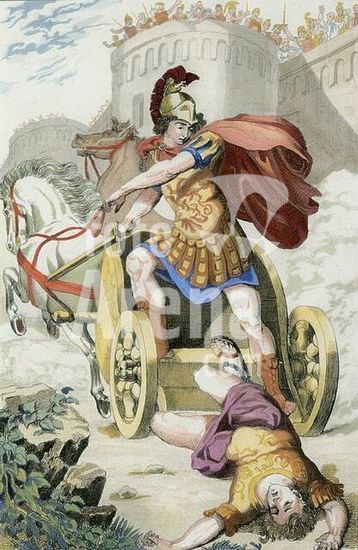
akg825132 Re: Homer; Greek poet, 8th century BC. Works: The Iliad.-"Achilles". (Achilles dragging Hector's corpse).-Steel engraving, unsigned, coloured at a later date. From: "Bilder-Gallerie zur allgemeinen Weltgeschichte" by Carl von Rotteck, Karlsruhe and Freiburg (Herder) 1842.
DC
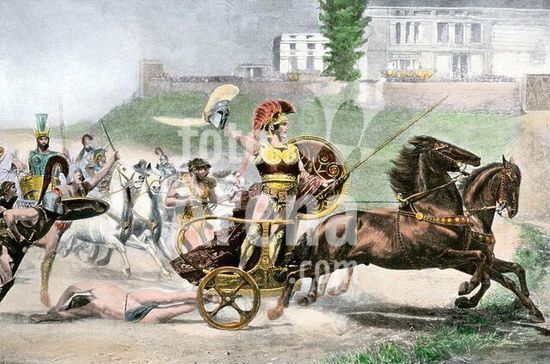
akg971004 Greek hero Achilles dragging Hector's body behind his chariot in the Trojan wars. Hand-colored halftone reproduction of a 19th-century illustration.
DC
akg971005 Achilles in battle in the Trojan Wars. Hand-colored woodcut reproduction of a Greek vase illustration.
DC
akg118008 re: Homer; Greek poet, 8th Century BC. Work: Iliad. "Achilles". (Achilles drags the body of Hector). Steel engraving, undated. From: Bilder-Gallerie zur allgemeinen Weltgeschichte by Carl von Rotteck, Karlsruhe and Freiburg (Herder) 1842. Berlin, Sammlung Archiv für Kunst und Geschichte. Museum: Berlin, Sammlung Archiv für Kunst und Geschichte. Author: ANONYMOUS.
DC
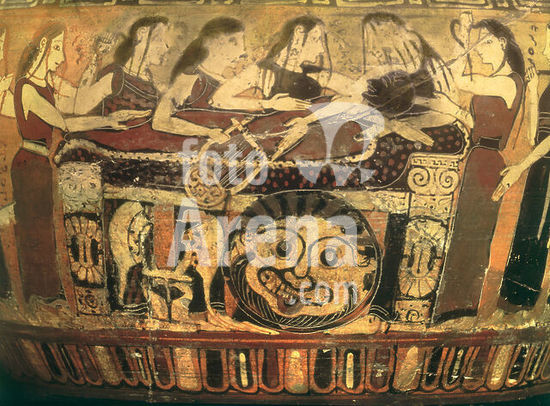
akg3003128 Ancient Greece, Corinth, 575/550, black figure vase, attributed to the Damon painter. Achilles' mother and the nereids lament the death of Achilles. Painted terracotta, height: 45.6 cm. Inv. no. E 643. Département des Antiquités grecques, étrusques et romaines. Musée du Louvre, Paris, France. Museum: Paris, Musée Du Louvre. Author: DAMON-MALER.
DC
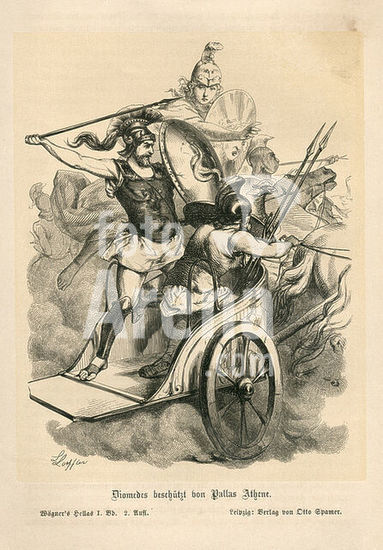
akg7414102 Greek mythology / Diomedes. - "Diomedes beschützt von Pallas Athene" (Diomedes protected by Pallas Athena). - (Diomedes, one of the Greek heroes in the Trojan War. The goddess Pallas Athene repeatedly protects her favorite in battle - Homer, Iliad V). Wood engraving, 1867, after drawing by Ludwig Löffler (1819-1876). From: Wilhelm Wägner, Hellas. Das Land und Volk der alten Griechen, vol. I, Leipzig (Otto Spamer) 1867, after p. 88. Berlin, Sammlung Archiv für Kunst und Geschichte. Museum: Berlin, Sammlung Archiv für Kunst und Geschichte.
DC
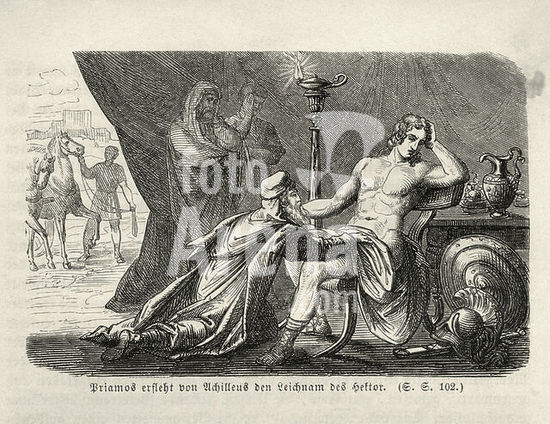
akg7414105 Greek mythology / Achilles (son of Peleus and Thetis, greatest hero of the Greeks in the battle for Troy). - "Priamos erfleht von Achilleus den Leichnam des Hektor" (Priam begs the corpse of Hector from Achilles). - (Priam, king of Troy, visits the tent of Achilles and begs him to hand over the corpse of his son Hector, whom Achilles killed in a duel; - Homer, Iliad XXIV). Wood engraving, anonymous, 1867. From: Wilhelm Wägner, Hellas. Das Land und Volk der alten Griechen, vol. I, Leipzig (Otto Spamer) 1867, p. 83. Berlin, Sammlung Archiv für Kunst und Geschichte. Museum: Berlin, Sammlung Archiv für Kunst und Geschichte.
DC
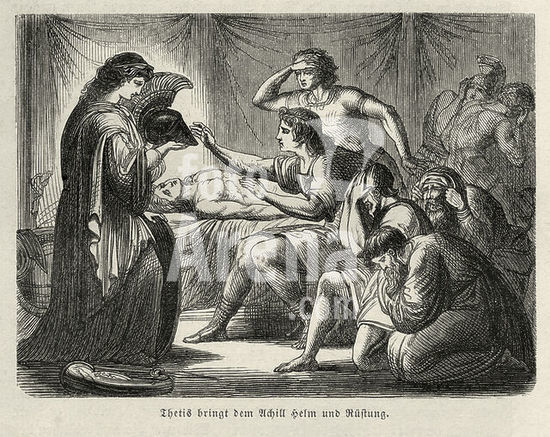
akg7414104 Greek mythology / Achilles (son of Peleus and Thetis, greatest hero of the Greeks in the battle for Troy). - "Thetis bringt dem Achill Helm und Rüstung" (Thetis brings Achilles helmet and armor). - (After the death of Patroclus, to whom Achilles had lent his armor, Thetis brings to her son a new armor forged by Hephaestus - Homer, Iliad XVI and XVII). Wood engraving, anonymous, 1867. From: Wilhelm Wägner, Hellas. Das Land und Volk der alten Griechen, vol. I, Leipzig (Otto Spamer) 1867, p. 99. Berlin, Sammlung Archiv für Kunst und Geschichte. Museum: Berlin, Sammlung Archiv für Kunst und Geschichte.
DC
alb2070132 Sebastiano Conca / 'The education of Achilles', 1727, Italian School, Oil on canvas, 59 cm x 74 cm, P02869. Museum: MUSEO DEL PRADO, MADRID, SPAIN.
DC
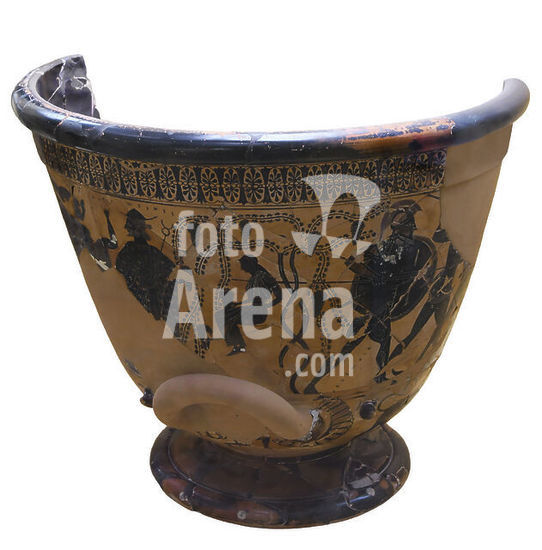
alb23131257 Black-figure calyx-krater by Exequias in 530 BC, an ancient Greek vase painter and potter active in Athens between roughly 550 BC and 525 BC. The piece depicts two scenes: on one side, the deification and introduction of Heracles into Olympus; on the other, combat of Greek and Trojan heroes over the body of Patroclus. Museum of the Ancient Agora. Athens, Greece.
DC
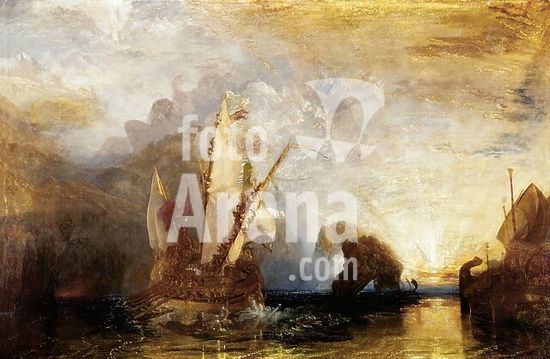
alb3907780 Ulysses deriding Polyphemus. Date/Period: 1829. Painting. Oil on canvas. Height: 132.5 cm (52.1 in); Width: 203 cm (79.9 in). Author: J. M. W. Turner.
DC
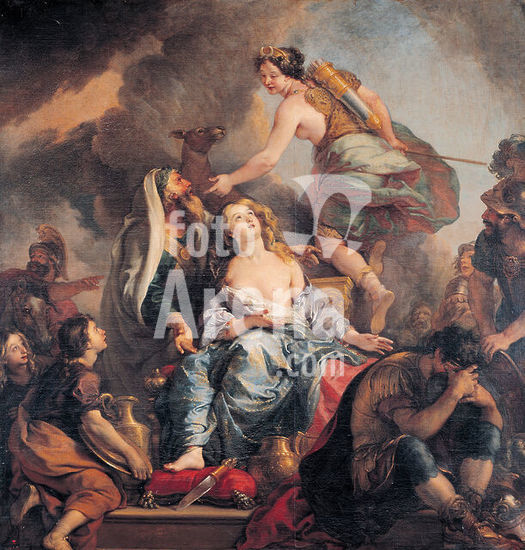
alb3894136 Le sacrifice d'Iphigénie / The Sacrifice of Iphigeneia. Date/Period: 1680. Painting. Oil on canvas. Height: 224 cm (88.1 in); Width: 212 cm (83.4 in). Author: Charles de La Fosse.
DC
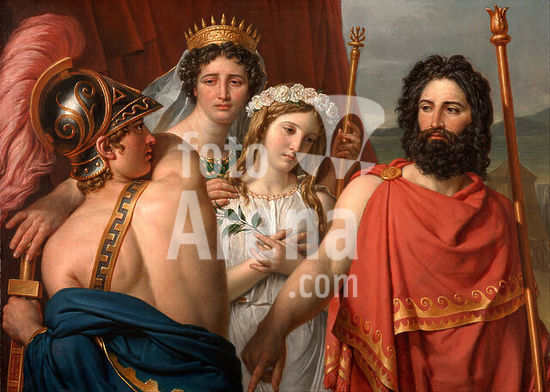
alb3901136 The Anger of Achilles. Date/Period: 1819. Painting. Oil on canvas. Height: 105.30 mm (4.14 in); Width: 145 mm (5.70 in). Author: JACQUES LOUIS DAVID.
DC
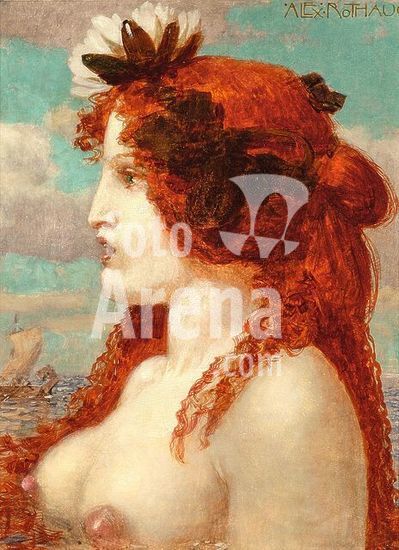
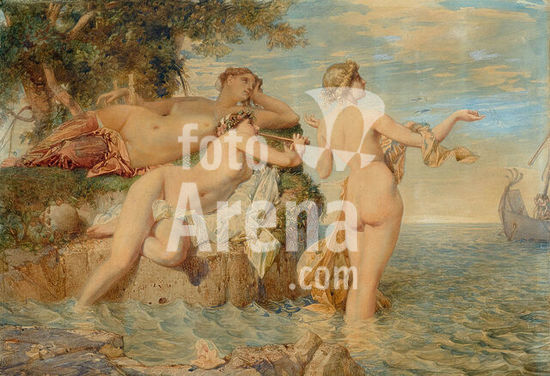
alb22068111 The Siren Singing to the Passing Ship of Ulysses. Museum: PRIVATE COLLECTION. Author: ALEXANDER ROTHAUG.
DC
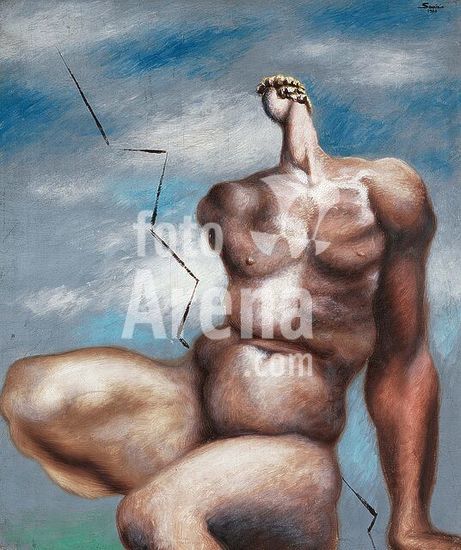
alb22071314 The Wrath of Achilles. Museum: Collezione Barilla di Arte moderna, Parma. Author: ALBERTO SAVINIO.
DC
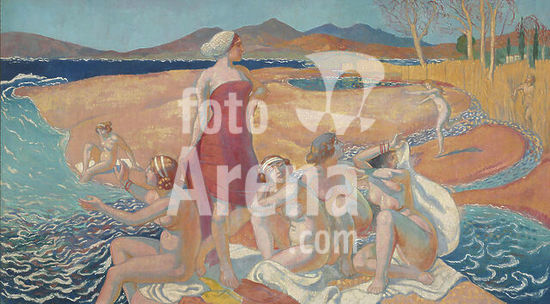
alb22075853 Le réveil d'Ulysse (The Awakening of Ulysses). Museum: PRIVATE COLLECTION. Author: MAURICE DENIS.
DC
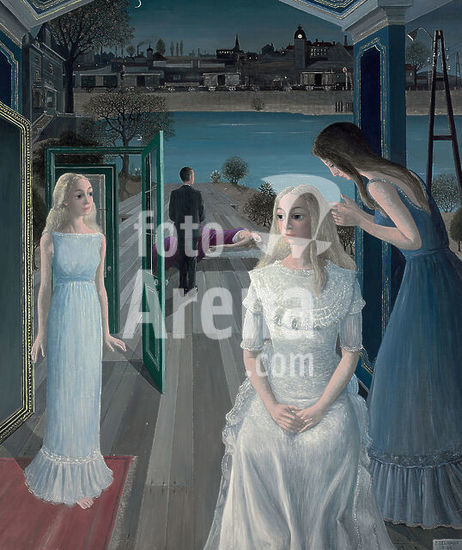
alb22075404 The Sacrifice of Iphigenia. Museum: PRIVATE COLLECTION. Author: PAUL DELVAUX.
DC
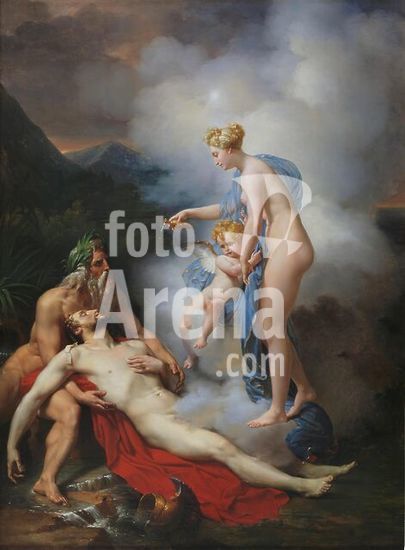
alb2069088 Merry-Joseph Blondel / 'Venus Healing Eneas', 19th century, French School, Canvas, 127 cm x 96 cm, P06075. Museum: MUSEO DEL PRADO, MADRID, SPAIN.
DC
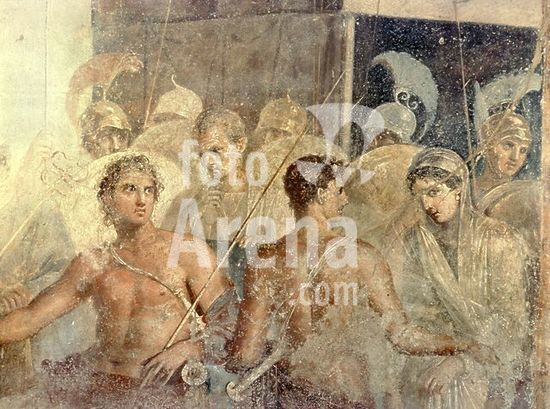
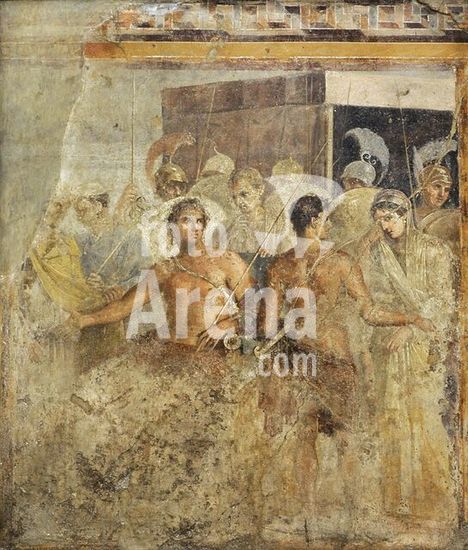
alb412809 Fresco showing Achilles returning Briseis to Agamemnos from the house of the Tragic Poet, detail, 1st BCE. Museum: Naples Museum, BERLIN, ITALIA.
DC
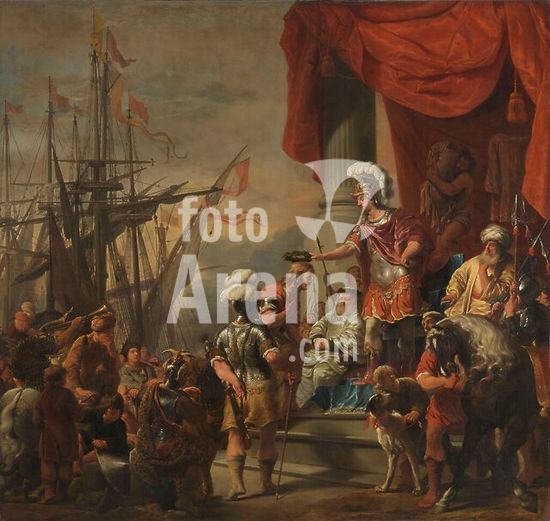
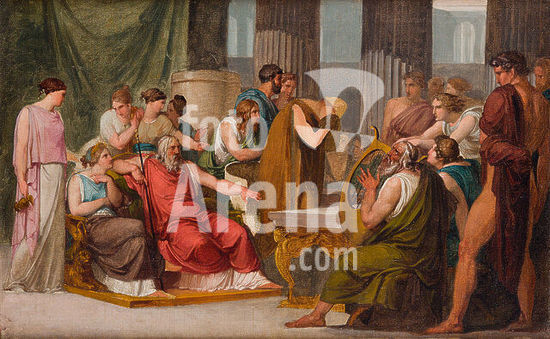
alb4105202 Aeneas at the Court of Latinus. Dating: c. 1661 - c. 1664. Measurements: h 218 cm × w 232 cm. Museum: Rijksmuseum, Amsterdam. Author: Ferdinand Bol.
DC
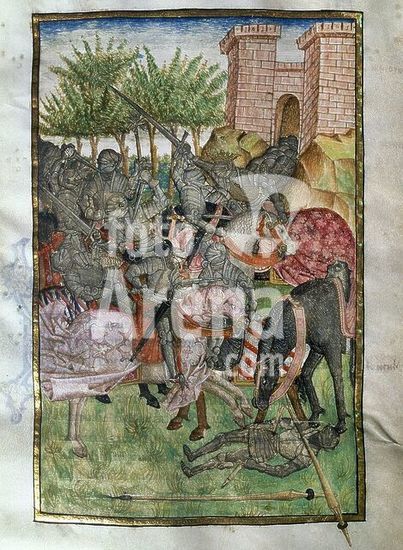
alb2922789 Virgil (70-19 B.C.). Ancient Roman poet. The Aeneid. Miniature. 15th century. X book. Lausus and Mezentius are Killed by Aeneas. History Library of the University of Valencia. Spain.
DC
alb4300744 Rafael Tegeo (1798-1856). Spanish painter. Antilochus takes to Achilles the news of the fight on the body of Patroclus. Oil on canvas, 1831. Detail. Private collection.
DC
alb4300740 Rafael Tegeo (1798-1856). Spanish painter. Antilochus takes to Achilles the news of the fight on the body of Patroclus. Oil on canvas, 1831. Detail. Private collection.
DC
alb4300746 Rafael Tegeo (1798-1856). Spanish painter. Antilochus takes to Achilles the news of the fight on the body of Patroclus. Oil on canvas, 1831. Detail. Private collection.
DC
alb4300742 Rafael Tegeo (1798-1856). Spanish painter. Antilochus takes to Achilles the news of the fight on the body of Patroclus. Oil on canvas, 1831. Detail. Private collection.
DC
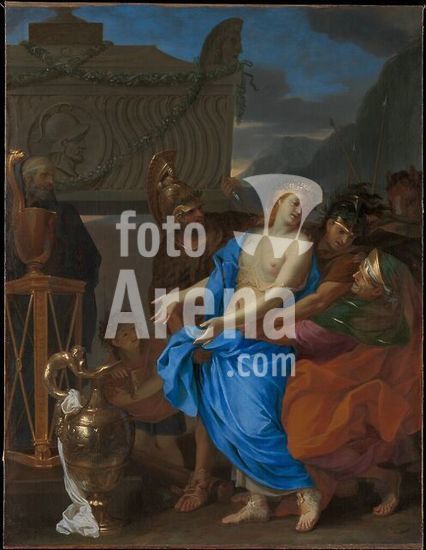
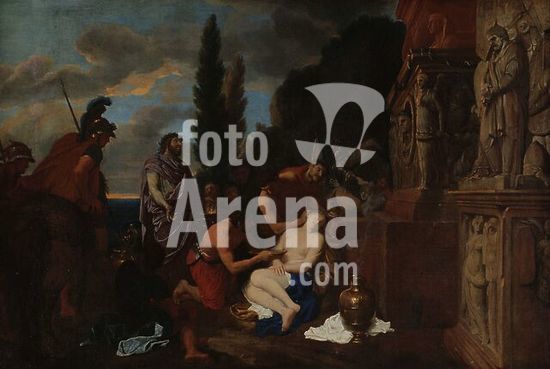
alb3606292 The Sacrifice of Polyxena. Artist: Charles Le Brun (French, Paris 1619-1690 Paris). Dimensions: 67 5/16 × 51 9/16 in. (171 × 131 cm). Date: 1647.As recounted by the Roman poet Ovid (43 B.C.-A.D. 17/18), the compliant Polyxena is led to her death at the sacrificial altar to appease the ghost of the hero Achilles. Her mother tries to restrain her while the soldier Neoptolemus raises his sword. The infant holding a chest of incense and the austere priest complete this beautifully choreographed composition, which was painted the year following Le Brun's return from Rome, where he had studied with Poussin. Le Brun was to become the official painter to Louis XIV and a leading figure in the academy. He later wrote a treatise on expressions and this enormously influential aspect of his art is well in evidence in this early masterpiece. Museum: Metropolitan Museum of Art, New York, USA.
DC
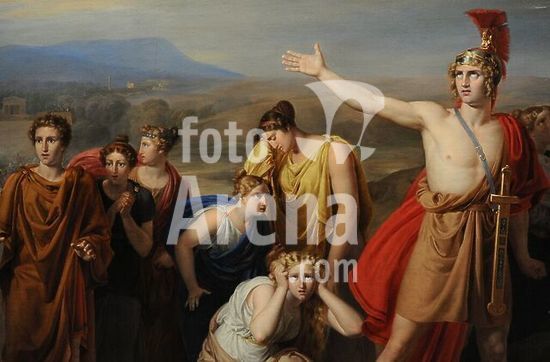
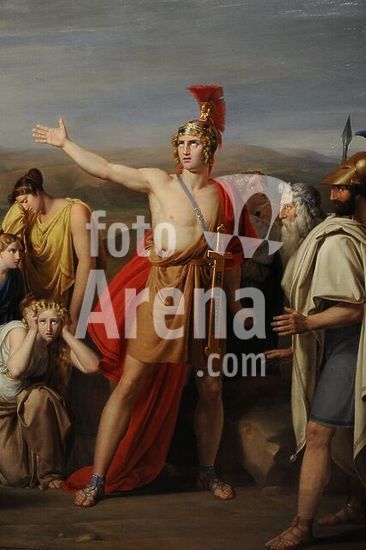
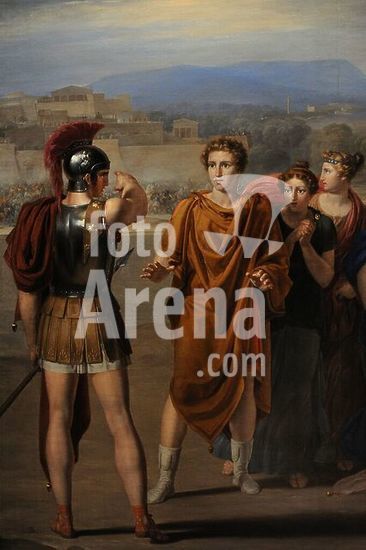
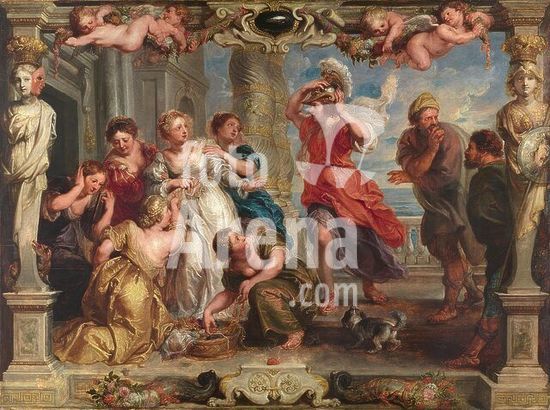
alb2069822 Pedro Pablo Rubens (and workshop) / 'Achilles discovered by Ulysses among the daughters of Lycomedes', 1630-1635, Flemish School, Oil on panel, 107,5 cm x 145,5 cm, P02455. Museum: MUSEO DEL PRADO, MADRID, SPAIN. Author: PEDRO PABLO RUBENS (Y TALLER).
DC
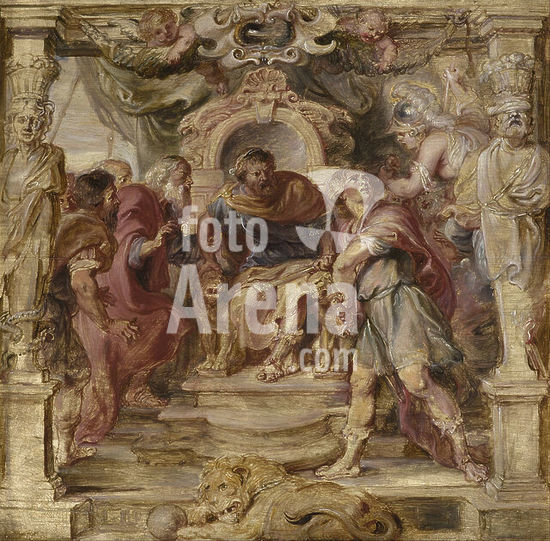
alb3905745 Achilles vertoornd op Agamemnon The Wrath of Achilles. Date/Period: 1630 - 1635. Painting. Oil on panel. Height: 448 mm (17.63 in); Width: 460 mm (18.11 in). Author: PETER PAUL RUBENS.
DC
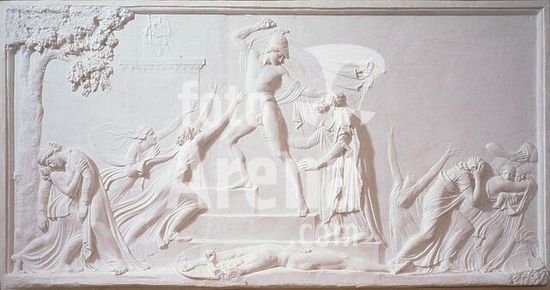
akg289671 Canova, Antonio; 1757-1822. "La morte di Priamo" (death of Priam), c. 1787/90. (Neoptolemus (Pyrrhus), son of Achilles, kills Priam on the altar of Zeus; - Vergil, Aeneid 2). Plaster, 138 × 264cm. From a series of reliefs with scenes from Homer, Vergil and Platon. Inv. no. 26.
DC
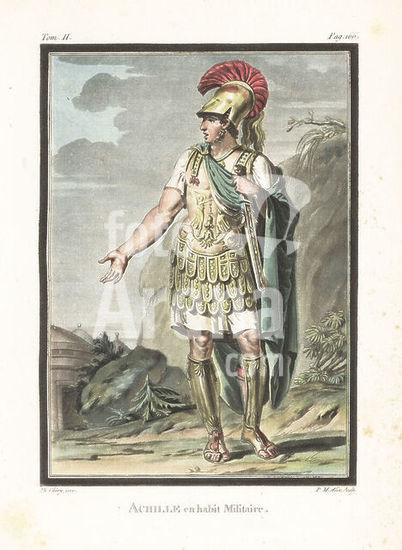
alb18738622 Achilles, Greek warrior hero in the Trojan War in military costume, character in Jean Racine's tragedy Iphigénie, Iphigenia, 1674. In plumed helmet, green mantle, breastplate, tunic, greaves, sandals, armed with short sword. Military encampment in the background. Achille en habit Militaire. Hand-coloured copperplate engraving by Pierre-Michel Alix after an illustration by Philippe Chéry from Jean-Charles Le Vacher de Charnois's Recherches sur les Costumes et sur les Theatres de Toutes les Nations, M. Drouhin, Paris, 1790.
DC
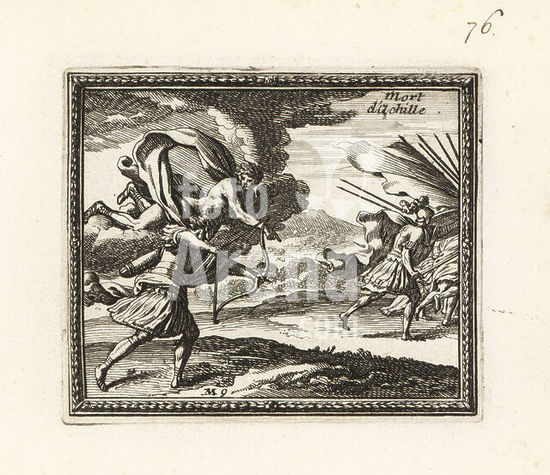
alb18732688 Apollo instructing Paris to aim for Greek hero Achilles' heel as he runs with a legion of soldiers. To avenge the death of Hector, the Trojan prince Paris kills Achilles during the Trojan War. Music god Apollo floats on a cloud and points to Achilles' only weakness. Mort d'Achille. Copperplate engraving from Metamorphoses d'Ovide en Rondeaux, Ovid's Metamorphoses, chez Audran, Paris, 1676.
DC
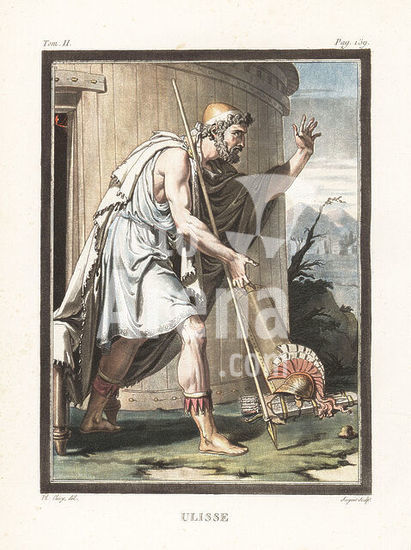
alb18719397 Ulisse, Greek king of Ithaca in the Trojan War, character in Racine's tragedy Iphigénie, Iphigenia, 1674. In helmet, pallium mantle, short tunic, boots, holding a spear. In front of a wooden military encampment, with shield, helmet and quiver of arrows. Odysseus or Ulysses. Hand-coloured copperplate engraving by Sergent after an illustration by Philippe Chéry from Jean-Charles Le Vacher de Charnois's Recherches sur les Costumes et sur les Theatres de Toutes les Nations, M. Drouhin, Paris, 1790.
DC
alb3634755 Naval Battle Between Greeks and Trojans. Artist: Giovanni Battista Scultori (Italian, 1503-1575). Dimensions: Sheet: 16 x 23 1/16 in. (40.6 x 58.5 cm). Date: 1538.The presence of the chariot of Poseidon (known to the Romans as Neptune) abandoned in the waves at left, suggests that the episode represented here is from Book 14 of Homer's epic poem 'Iliad'. The heroic nude in the foreground may be the lord of the sea, described as leading the Greeks with a long sword in hand. The warrior lying on the ground beneath him, protected by a comrade, could be the Trojan prince Hector, struck down by a stone soon after Poseidon entered the battle.Inspired by the ships in a fragmentary Greek relief of the second century A.D. (Museo Archeologico, Venice), Scultori, who was also a sculptor and a master of stuccowork, obviously took pleasure in elaborating their decoration. Museum: Metropolitan Museum of Art, New York, USA. Author: Giovanni Battista Scultori.
DC
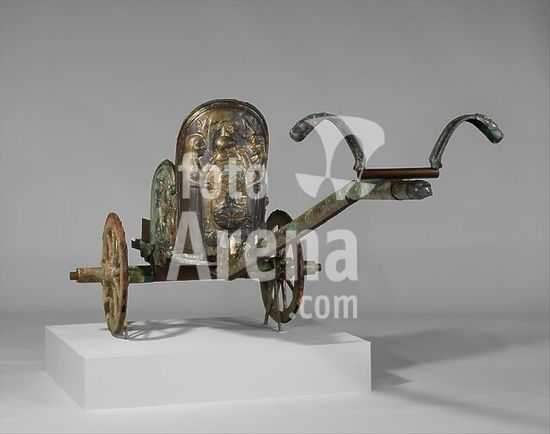
alb3607276 Bronze chariot inlaid with ivory. Culture: Etruscan. Dimensions: total H. 51 9/16 in. (130.9 cm)length of pole 82 1/4 in. (209 cm). Date: 2nd quarter of the 6th century B.C..Scenes from the life of the Greek hero AchillesThe AcquisitionIn 1902, a landowner working on his property accidentally discovered a subterranean built tomb covered by a tumulus (mound). His investigations revealed the remains of a parade chariot as well as bronze, ceramic, and iron utensils together with other grave goods. Following the discovery, the finds passed through the hands of several Italian owners and dealers who were responsible for the appearance of the chariot and related material on the Paris art market. There they were purchased in 1903 by General Luigi Palma di Cesnola, the first director of The Metropolitan Museum of Art. The Monteleone chariot is the best preserved example of its kind from ancient Italy before the Roman period. The relatively good condition of its major parts--the panels of the car, the pole, and the wheels--has made it possible to undertake a new reconstruction based on the most recent scholarship. Moreover, some of the surviving ivory fragments can now be placed with reasonable certitude. The other tomb furnishings acquired with the chariot are exhibited in two cases on the south wall of this gallery.The Form and Function of the ChariotChariots originated in the Ancient Near East during the early second millennium B.C. and spread westward through Egypt, Cyprus, and the Greek world. In the predominant early type, the car consisted essentially of a platform with a light barrier at the front.On the Italian peninsula, the largest number of chariots come from Etruria and the surrounding regions. They are datable between the second half of the eighth and the fifth centuries B.C. and represent several varieties. None seems to have been used for fighting in battle. Most came to light in tombs; after serving in life, they were buried with their owners, male and also female. The Monteleone chariot belongs to a group of parade chariots, so called because they were used by significant individuals on special occasions. They have two wheels and were drawn by two horses standing about forty-nine inches (122 centimeters) apart at the point where the yoke rests on their necks. The car would have accommodated the driver and the distinguished passenger. The shape of the car, with a tall panel in front and a lower one at each side, provided expansive surfaces for decoration, executed in repoussé. The frieze at the axle, the attachment of the pole to the car, and the ends of the pole and yoke all have additional figural embellishment.The Materials of the ChariotAlthough none of the substructure of the original chariot survives, except in one wheel, much information can be gleaned from details on the bronze pieces, other preserved chariots, and ancient depictions of chariots. Note that a chariot is represented on the proper left panel of the car. The preserved bronze elements of the car were originally mounted on a wooden substructure. The rails supporting the three main figural panels were made from a tree such as a yew or wild fig. The floor consisted of wooden slats. The wooden wheels were revetted with bronze, an exceptional practice probably reserved only for the most elaborate chariots. A bit of the preserved core has been identified as oak. The tires are of iron. The sections of the pole were mounted on straight branches. A major component of the original vehicle was leather applied to the wooden substructure. The connection of the pole to the car would have been reinforced by rawhide straps gathered beneath the boar's head, and the yoke would have been lashed to the pole. The upper end of the pole shows traces of the leather bands. In addition, all of the horses' harness was of leather. Moreover, rings of pigskin with the fat attached helped reduce friction between the moving parts of the wheels. The Monteleone chariot is distinguished not only by the extraordinary execution of the bronze panels but also by the inclusion of ivory inlays. The ivories, from both elephant and hippopotamus, are so fragmentary that only the tusks of the boar and the finials at the back of the car have been placed in their original positions. The remaining pieces are exhibited in a case on the south wall. A series of long narrow strips served as edging, perhaps around the panels of the car or on the underside of the pole. It is possible that other fragments filled the spaces between the figures in the central panel of the car. A major question concerning these adjuncts is the method of their attachment, requiring the use of an adhesive. Another question is whether the ivories were painted.The Figures on the ChariotThe iconography represents a carefully thought-out program. The three major panels of the car depict episodes from the life of Achilles, the Greek hero of the Trojan War. In the magnificent central scene, Achilles, on the right, receives from his mother, Thetis, on the left, a shield and helmet to replace the armor that Achilles had given his friend Patroklos, for combat against the Trojan Hektor. Patroklos was killed, allowing Hektor to take Achilles' armor. The subject was widely known thanks to the account in Homer's Iliad and many representations in Greek art. The panel on the left shows a combat between two warriors, usually identified as the Greek Achilles and the Trojan Memnon. In the panel on the right, the apotheosis of Achilles shows him ascending in a chariot drawn by winged horses. The subsidiary reliefs partly covered by the wheels are interpreted as showing Achilles as a youth in the care of the centaur Chiron and Achilles as a lion felling his foes, in this case a stag and a bull. The central axis of the chariot is reinforced by the head and forelegs of the boar at the join of the pole to the car. The deer below Achilles' shield appears slung over the boar's back. The eagle's head at the front of the pole repeats the two attacking eagles at the top of the central panel, and the lion heads on the yoke relate to the numerous savage felines on the car. While the meaning of the human and animal figures allows for various interpretations, there is a thematic unity and a Homeric quality emphasizing the glory of the hero.The Artistic Origin of the ChariotThe three panels of the car represent the main artistic achievement. Scholarly opinion agrees that the style of the decoration is strongly influenced by Greek art, particularly that of Ionia and adjacent islands such as Rhodes. The choice of subjects, moreover, reflects close knowledge of the epics recounting the Trojan War. In the extent of Greek influence, the chariot resembles works of virtually all media from Archaic Etruria. Contemporary carved ambers reflect a similar situation. The typically Etruscan features of the object begin with its function, for chariots were not significant in Greek life of the sixth century B.C. except in athletic contests. Furthermore, iconographical motifs such as the winged horses in Achilles' apotheosis and the plethora of birds of prey reflect Etruscan predilections. The repoussé panels may have been produced in one of the important metal-working centers such as Vulci by a local craftsman well familiar with Greek art or possibly by an immigrant bronze-worker. The chariot could well have been made for an important individual living in southern Etruria or Latium. Its burial in Monteleone may have to do with the fact that this town controlled a major route through the Appenine Mountains. The vehicle could have been a gift to win favor with a powerful local authority or to reward his services. Beyond discussion is the superlative skill of the artist. His control of the height of the relief, from very high to subtly shallow, is extraordinary. Equally remarkable are the richness and variety of the decoration lavished on all of the figures, especially those of the central panel. In its original state, with the gleaming bronze and painted ivory as well as all of the accessory paraphernalia, the chariot must have been dazzling.The ReconstructionAfter the parts of the chariot arrived in the Museum in 1903, they were assembled in a presentation that remained on view for almost a century. During the new reconstruction, which took three years' work, the chariot was entirely dismantled. A new support was made according to the same structural principles as the ancient one would have been. The reexamination of many pieces has allowed them to be placed in their correct positions. Moreover, the bronze sheathing of the pole, which had been considered only partially preserved, has been recognized as substantially complete. The main element that has not been reconstructed is the yoke. Although the length is correct, the wooden bar simply connects the two bronze pieces. Museum: Metropolitan Museum of Art, New York, USA.
DC
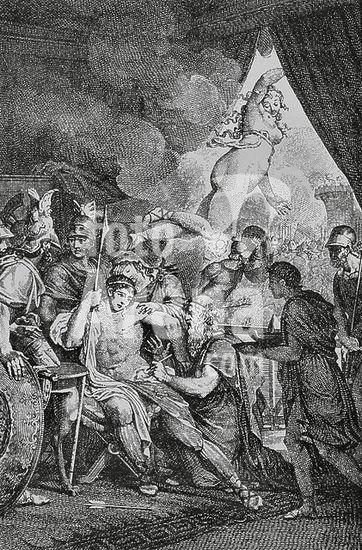
alb16696654 "Aeneid". Unfinished Latin epic poem written by the Roman poet Virgil between 30 BC and 19 BC. The work tells the legendary story of Aeneas, a Trojan hero who escapes the destruction of Troy. After a long journey, he arrives in Italy, where he becomes the the ancestor of the Romans. Illustration by Jean-Michel Moreau, known as Moreau le Jeune (1741-1814), published in the French version of the Aeneid, translated by the French poet Jacques Delille (1738-1813) and published in 1804. Engraving by Jean-Louis Delignon (1755-1820). "Directoire, Consulat et Empire. Moeurs et usages, lettres, sciences et arts. France, 1795-1815" (Directory, Consulate and the Empire of France. Customs and traditions, letters, sciences and arts. France, 1795-1815), by Paul Lacroix. Published in Paris, 1884. Author: Jean-Louis Delignon (1755-1820). French engraver. Jean-Michel Moreau (1741-1814). French artist.
DC
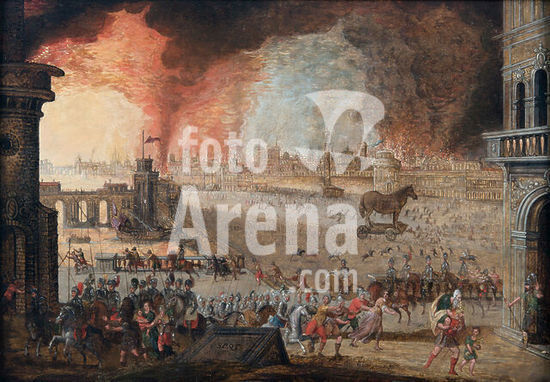
alb17168428 The Sack Of Troy. Museum: Museo Soumaya. Author: LOUIS DE CAULLERY.
DC
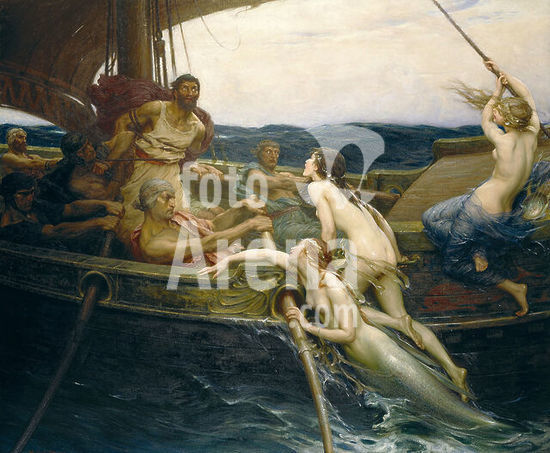
alb17167929 Ulysses and the Sirens. Museum: Ferens Art Gallery. Author: HERBERT JAMES DRAPER.
DC
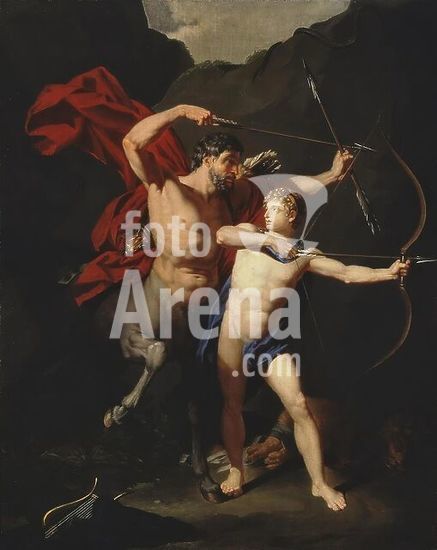
alb4224150 'Education of Achilles by the Centaur Chiron'. France, Circa 1782. Dimensions: 66x53 cm. Museum: State Hermitage, St. Petersburg. Author: Jean-Baptiste Regnault.
DC
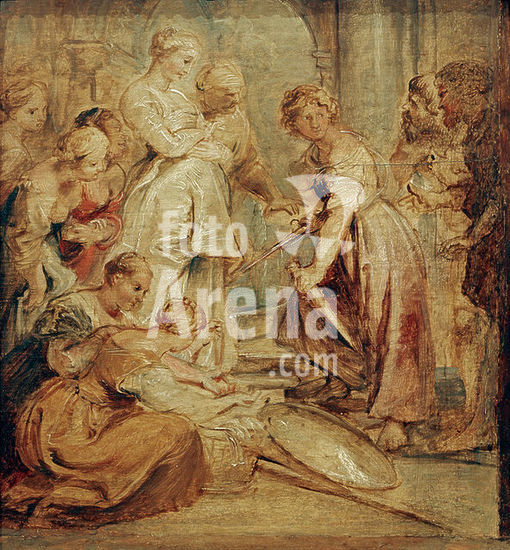
akg416672 Rubens, Peter Paul; Flemish painter, 1577-1640. "Achilles amongst the daughters of Lycomedes", ca. 1617/18. (Odysseus and Diomedes hand presents to the girls; Achilles, dressed as a girl betrays himself by reaching for his weapons); Ovid - The Metamorphoses, Book 13. Oil on wood, 28.5 × 26.3cm. Inv. No. P.D. 22-1964. Cambridge, Fitzwilliam Museum. Museum: Cambridge, Fitzwilliam Museum.
DC
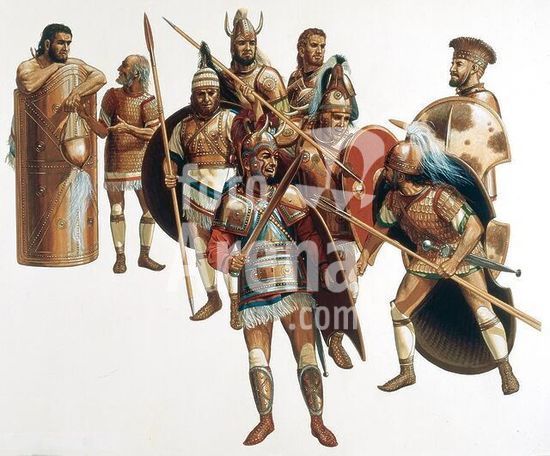
akg299463 Mythology / Greek-Roman:. Trojan War. The heroes of the Trojan War (Homer, Ilian): Fr. Left., Ajax, Nestor, Odysseus, Diomedes, Menelaus, Aeneas; foreground (triad), from left, Agamemnon, Achilles and Hector. Watercolour, undated, by Peter Connolly. (1935-2012). Copyright: Peter Connolly's artistic copyright cleared via akg-images. This artwork is not in the public domain. akg-images represents the artistic copyright of this artist, please contact us for more information and to clear the necessary permissions.
DC
alb14818557 Discovery of Achilles on Skyros, ca. 1660-1670. Painting by an unknown artist from the circle of Erasmus Quellinus II (1607-1678). Oil on canvas. Kadriorg Art Museum. Tallinn, Estonia. Author: Circle of Erasmus Quellinus II (1607-1678). Flemish artist.
DC
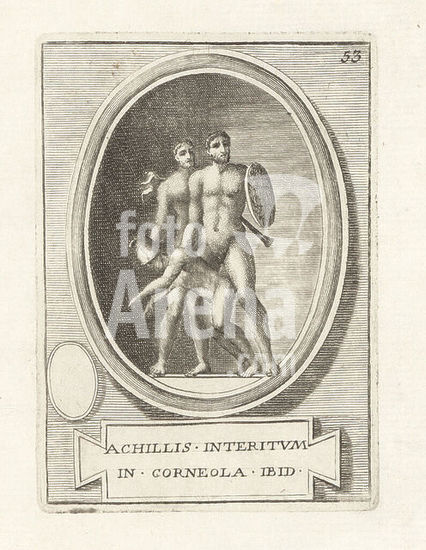
alb9875454 The death of Achilles wearing only a Corinthian helmet. Greek hero in the Trojan War, Achle in Etruscan. Behind him, naked Ulysses and Ajax (Aivas Tlamunus) armed with shield and parazonium sword try to protect him. From an engraved cornelian gem. Achillis Interitum in Corneola Ibid. Copperplate engraving from Francesco Valesio, Antonio Gori and Ridolfino Venutis Academia Etrusca, Museum Cortonense in quo Vetera Monumenta, (Etruscan Academy or Museum of Cortona), Faustus Amideus, Rome, 1750.
DC
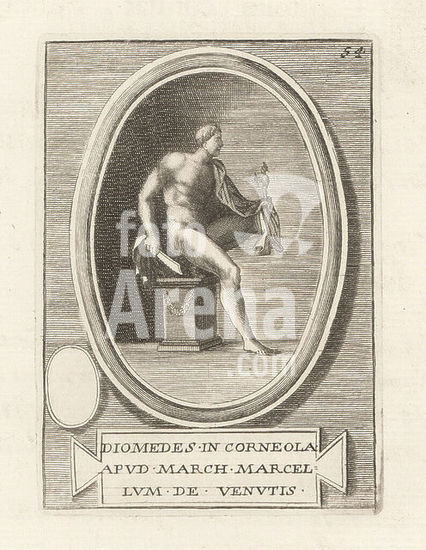
alb9877636 Greek hero Diomedes with the Palladium statue of Athena stolen from Troy. From an engraved cornelian gem in the collection of Marcello Venuti. Diomedes in Corneola apud March Marcellum de Venutis. Copperplate engraving from Francesco Valesio, Antonio Gori and Ridolfino Venutis Academia Etrusca, Museum Cortonense in quo Vetera Monumenta, (Etruscan Academy or Museum of Cortona), Faustus Amideus, Rome, 1750.
DC
alb14222153 The Sacrifice of Iphigenia. Museum: Museo de Arte de Ponce. Author: Lairesse, Gérard, de.
DC
alb14221739 Odysseus at the Court of Alcinous. Museum: Accademia di San Luca. Author: FRANCESCO HAYEZ.
DC
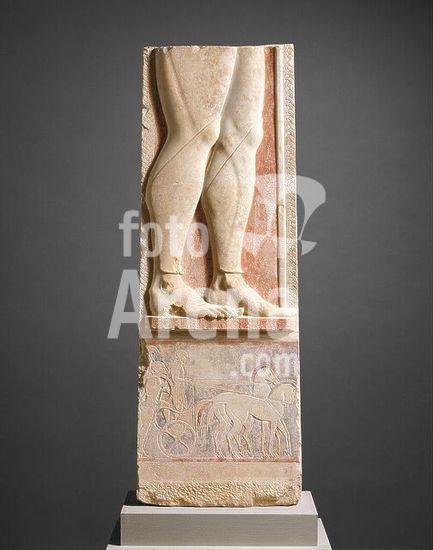
alb3667957 Fragment of the marble stele (grave marker) of a hoplite (foot soldier). Culture: Greek, Attic. Dimensions: Overall: 55 15/16 x 20 1/8 in. (142.1 x 51.1 cm). Date: ca. 525-515 B.C..This grave marker commemorated a soldier, who was shown facing right, holding a spear. His lower legs, protected by greaves (shin guards), are preserved. The scene in the panel below shows a warrior mounting a quadriga (four-horse chariot), while his charioteer holds the reins. Such vehicles were used by the Mycenaean Greeks of the second millennium B.C. and are described by Homer in the Iliad and the Odyssey. By the Archaic period, quadrigas were no longer used in daily life. They were driven in competition, however, for the most prestigious events at Greek games were chariot races. This scene may have been intended to recall a victory of the deceased in the apobates race in which an armed runner jumped on and off a chariot, or it may evoke the family's aristocratic lineage by depicting a legendary hero departing for the Trojan War. The panel is carved in extremely low relief; the many planes were originally differentiated with red and black paint. The greaves and spear of the large-scale figure were painted blue; the background was red. Traces of red, blue, black, and green remain on the interlaced curved lines that decorate the border of the shaft. Museum: Metropolitan Museum of Art, New York, USA.
DC

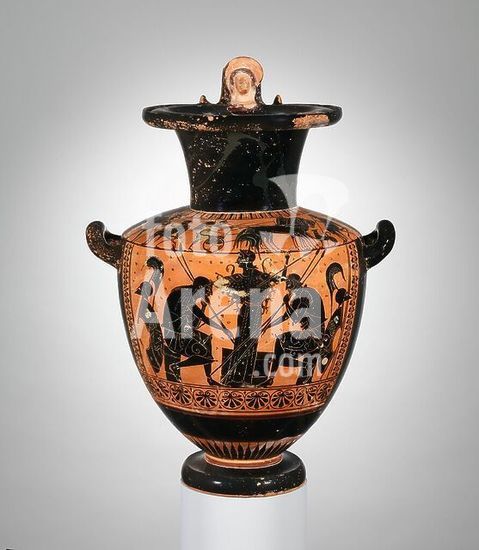
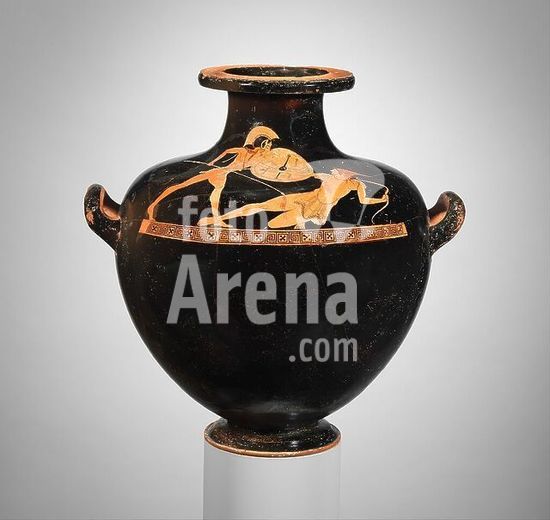
alb3608697 Terracotta hydria (water jar). Culture: Greek, Attic. Dimensions: H. 21 5/16 in. (54.1 cm)diameter of mouth 9 3/4 in. (24.8 cm)diameter of foot 6 7/16 in. (16.3 cm). Date: ca. 510 B.C..On the body, Achilles and Ajax playing board game at TroyOn the shoulder, chariot departingThe scene on the body depicts one of the most popular subjects in Greek art, mainly vase-painting, between about 540 and 480 B.C. Over 150 occurrences are known. Remarkably, the original composition survives on an amphora in the Vatican Museums. The artist was Exekias, the potter and painter whose work represents the height of black-figure painting. In this variant, the painter has placed Athena stage center as the two primary Greek heroes of the Trojan War while away their time playing a game in which pieces are moved according to the roll of dice. Museum: Metropolitan Museum of Art, New York, USA.
DC
alb2069315 Jacob Jordaens / 'The Wedding of Thetis and Peleus', Flemish School, Oil on canvas, 181 cm x 288 cm, P01634. Museum: MUSEO DEL PRADO, MADRID, SPAIN.
DC
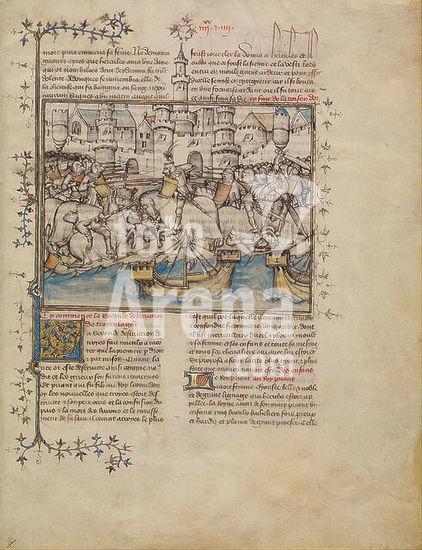
alb3892597 A Battle from the Trojan War. Date/Period: Ca. 1390 - 1400. Detached leaf. Tempera colors, colored washes, gold leaf, and ink on parchment. Height: 383 mm (15.07 in); Width: 298 mm (11.73 in). Author: First Master of the Bible historiale of Jean de Berry.
DC
alb3663147 Terracotta hydria: kalpis (water jar). Culture: Greek, Attic. Dimensions: H. 14 7/16 in. (36.6 cm)diameter 12 1/4 in. (31.1 cm). Date: ca. 500 B.C..Achilles and PenthesileaPenthesilea, the queen of the Amazons who assisted the Trojans in the Trojan War, was killed by the Greek hero Achilles. He fell in love with her even as he dealt the mortal blow. The Berlin Painter wraps the figures diagonally around the shoulder of the kalpis. For artistic effect, Penthesilea is disproportionately tall and assumes an unnaturally balletic pose. The composition, however, is admirably appropriate for its placement. Museum: Metropolitan Museum of Art, New York, USA.
DC

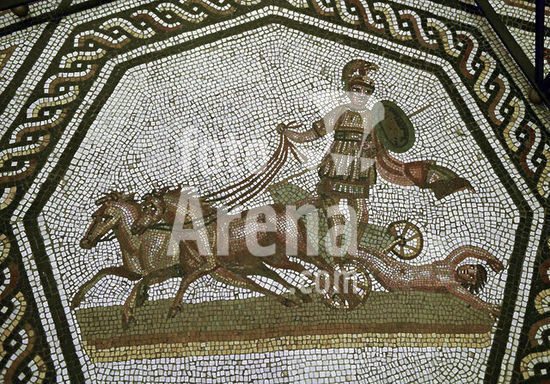
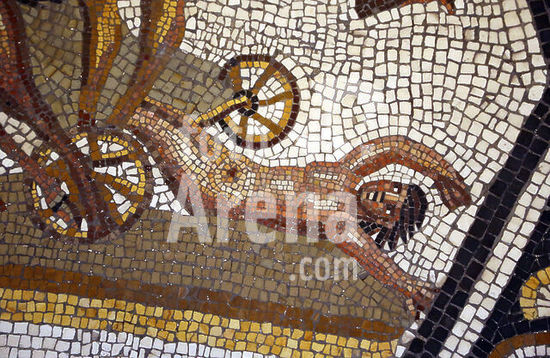
akg6026579 The floor of the Room of the Aldobrandini Wedding, dating from the mid-nineteenth century, is composed of Roman age mosaic fragments: the median pastiche, geometric, has as its central emblem Achilles on a wagon dragging the body of Hector, and is from Vigna Brancadoro (Rome, Via Tiburtina).Vatican Museums (Room of the Aldobrandini Wedding )2018.
DC
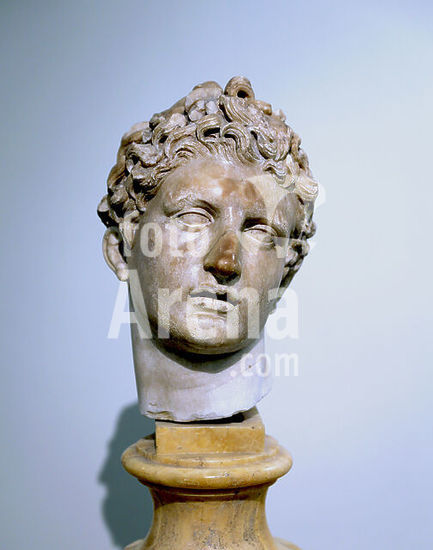
alb11644945 Meleager, marble head, early 2nd century AD. Roman copy of a Greek original by Skopas of Paros. Naples Archaeological Museum. Italy.
DC
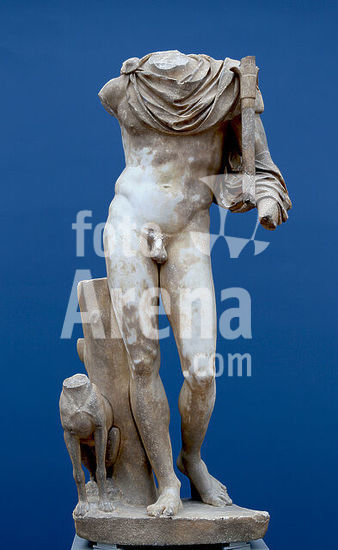
alb11642072 Statue of Meleager, hero in Greek mythology. 1st century AD. marble. Monte Cassino, Italy. Copy of a greek work from around 340 BC.
DC
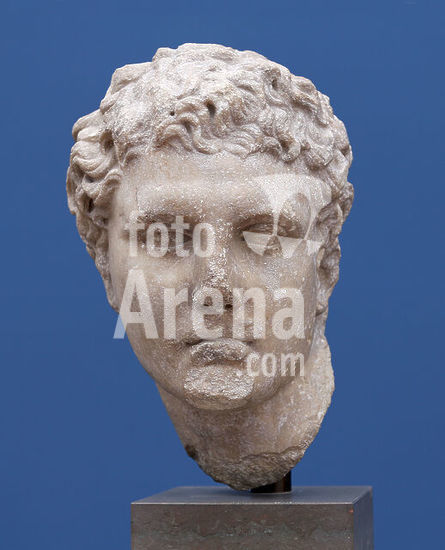
alb11643804 Meleager, head from a statue of the same type. Rome. 1st-2nd century AD. Marble. Mythology.
DC
alb11628835 Roman Art. Trojan War. Mosaic. Achilles in his chariot dragging the corpse of Hector. Detail Hector. From Vigna Brancadoro, Rome, Via Tiburtina. Vatican Museums. City of the Vatican.
DC
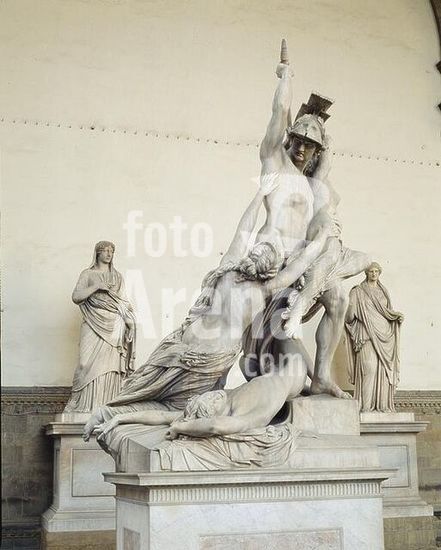
akg991372 Fedi, Pio; 1816-1892. "Raub der Polyxena", 1865. (Phyrrus raubt Polyxena, die Tochter, des Priamus, um sie am Grabe seines Vaters Achilles zu opfern). Marmor. Florenz / Firenze (Toskan, Italien), Loggia dei Lanzi.
DC
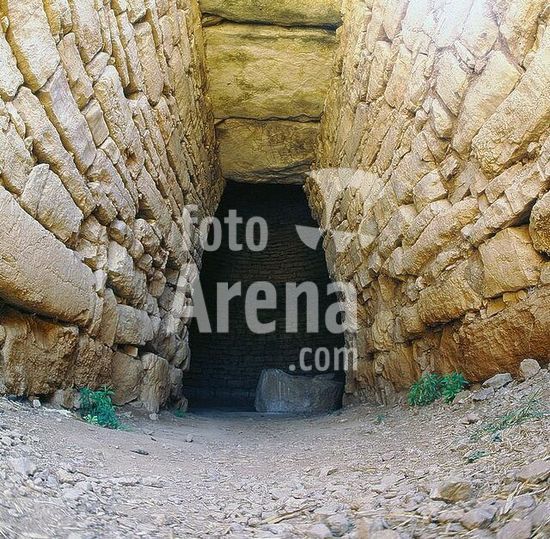
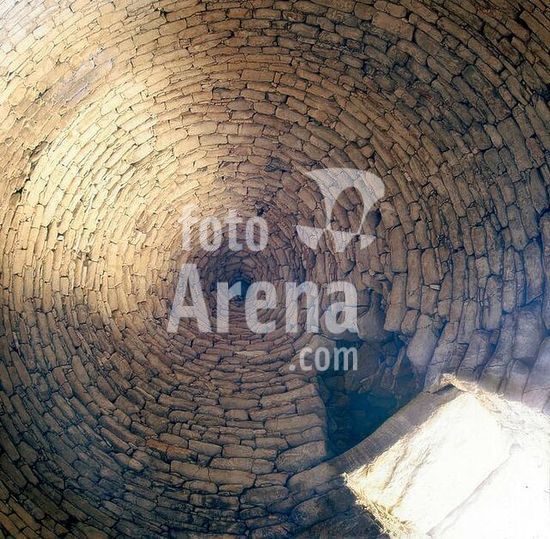
akg1848904 millennium BC Mycenae was one of the major centres of Greek civilization, a military stronghold which dominated much of southern Greece. The period of Greek hi.
DC
akg1848906 millennium BC Mycenae was one of the major centres of Greek civilization, a military stronghold which dominated much of southern Greece. The period of Greek hi.
DC
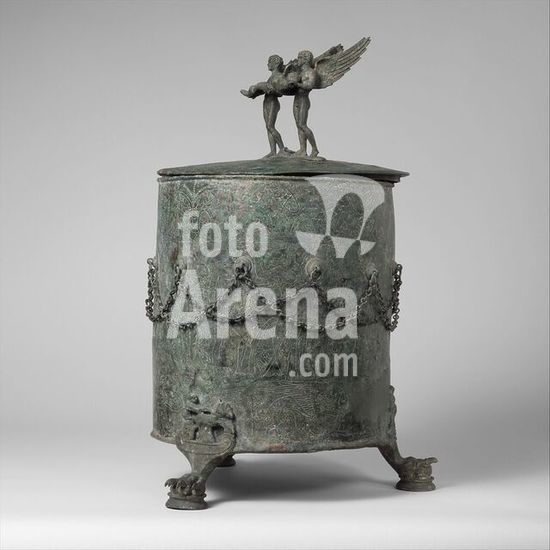
alb3657130 Bronze cista (toiletries box). Culture: Praenestine. Dimensions: H. 23 in. (58.4 cm). Date: ca. 350-325 B.C..This is the largest and finest of the Museum's engraved cistae. The cylindrical body is decorated with three friezes, an unusual treatment. On the major frieze is a series of episodes from the Trojan War told in Homer's Iliad, including what seems to be the sacrifice of the Trojan prisoners. The minor friezes, above and below, depict battle scenes and chariot races but also include unrelated subjects, for example griffins attacking a horse. The chariot race continues on the solid-cast lion-paw feet. The poorly preserved engravings on the lid probably depict winged nereids riding on dolphins and sea monsters while carrying the armor of Achilles, the major Greek hero of the Trojan War. The handle, one of the finest of this type, shows two nude winged genii carrying the body of a dead soldier. The treatment of wing feathers and hair is especially delicate. Museum: Metropolitan Museum of Art, New York, USA.
DC

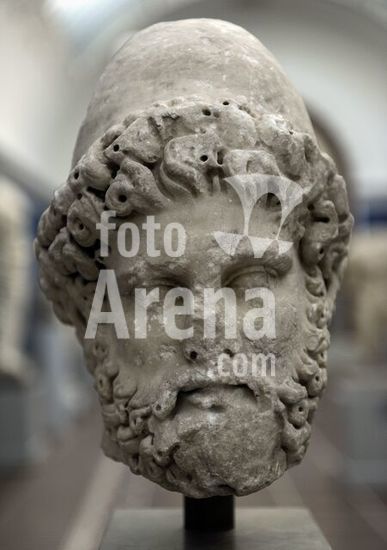
alb1930770 Odysseus. From Rome. Late 1st century AD. Marble. Close-fitting felt hat is characteristic of the hero. Ny Carlsberg Glyptotek. Copenhagen, Denmark.
DC
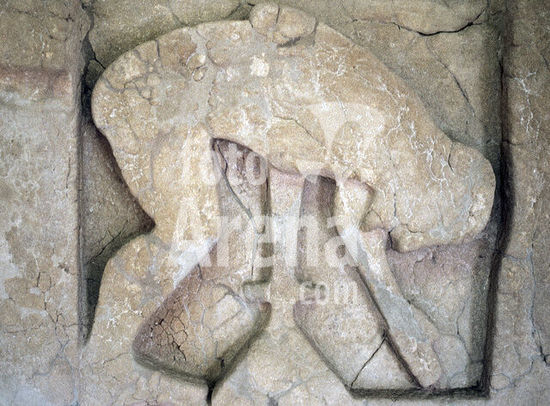
alb1461498 Relief depicting the Suicide of Ajax, Metope. 570-560 BC. From the Sanctuary of Hera Argiva. National Archaeological Museum of Paestum. Italy.
DC
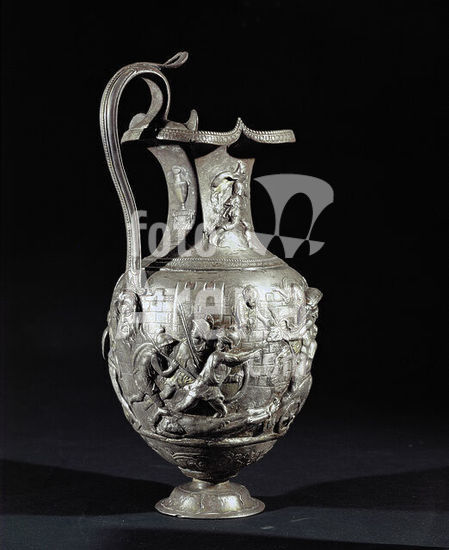
les10050238 The death of Achilles. Oenochoe, dedicated by Q. Domitius Tutus, with embossed scenes from the Ilias. Silver. Location: Bibliotheque Nat., Cabinet des Medailles, Paris, France.
DC
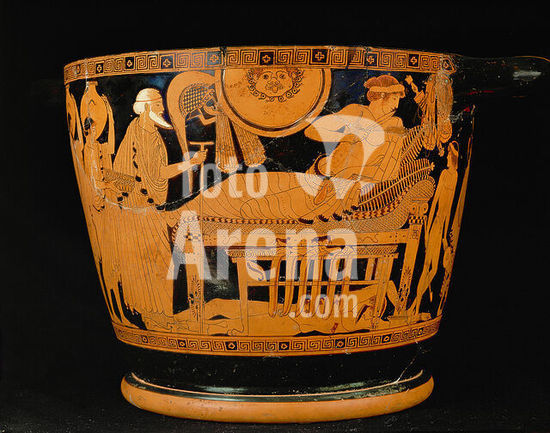
les10030228 Trojan King Priamus begs Achilles to let him have the body of Hector, his slain son. Hector's body lies under Achilles' bed. Red-figured Attic skyphos from Caere, around 490 BCE Height: 25 cm Inv. IV 3710. Author: Brygos Vasepainter. Location: Kunsthistorisches Museum, Antikensammlung, Vienna, Austria.
DC
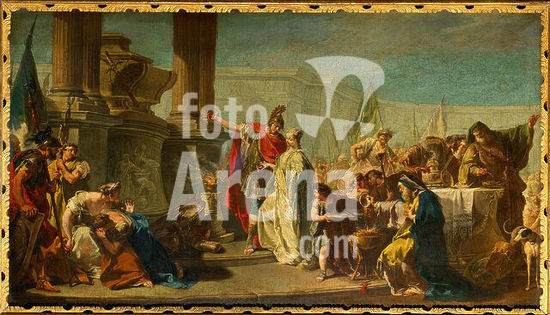
les40081538 Polyxene sacrifie aux manes d'Achille-Polyxena sacrificed to the shades of Achilles. Companion piece to 40-08-15 / 39. Canvas, 55,5 x 96,5 cm INV.564. Author: Giambattista Pittoni. Location: Louvre, Dpt. des Peintures, Paris, France.
DC
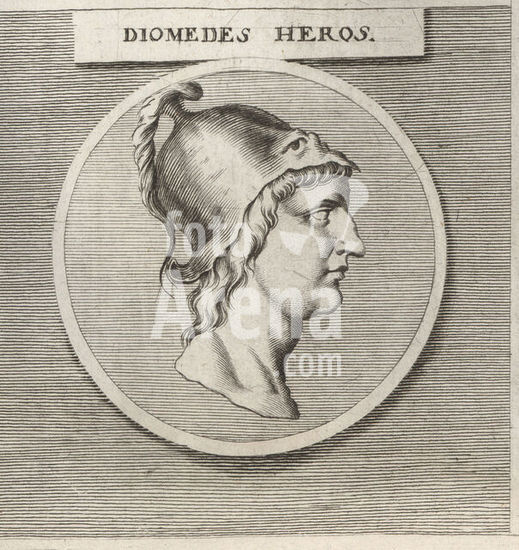
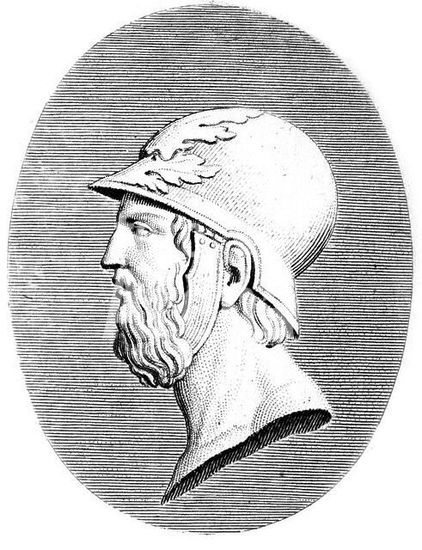
alb9877372 Diomedes, son of Tydeus, King of Argos in Greek mythology. One of the main Greek combatants in the Trojan War. Profile of young man in Corinthian helmet with crest. Diomedes Heros. Copperplate engraving after an illustration by Joachim von Sandrart from his LAcademia Todesca, della Architectura, Scultura & Pittura, oder Teutsche Academie, der Edlen Bau- Bild- und Mahlerey-Kunste, German Academy of Architecture, Sculpture and Painting, Jacob von Sandrart, Nuremberg, 1675.
DC
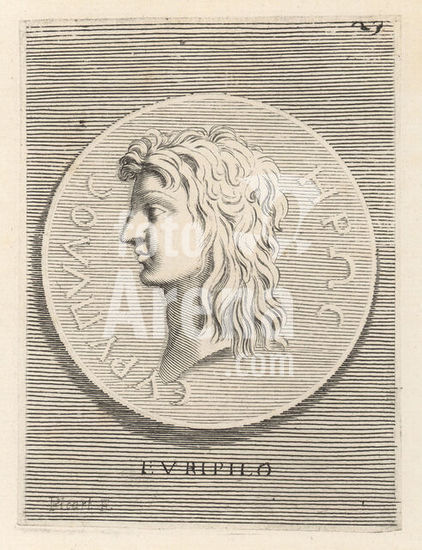
alb9879116 Eurypylus of Thessaly, son of Euaemon and Ops, leader of the Thessalian navy of 40 ships during the Trojan War. Head of a young man with long loose hair from a bronze medal. Euripilo. Copperplate engraving by Etienne Picart after Giovanni Angelo Canini from Iconografia, cioe disegni d'imagini de famosissimi monarchi, regi, filososi, poeti ed oratori dell' Antichita, Drawings of images of famous monarchs, kings, philosophers, poets and orators of Antiquity, Ignatio deLazari, Rome, 1699.
DC
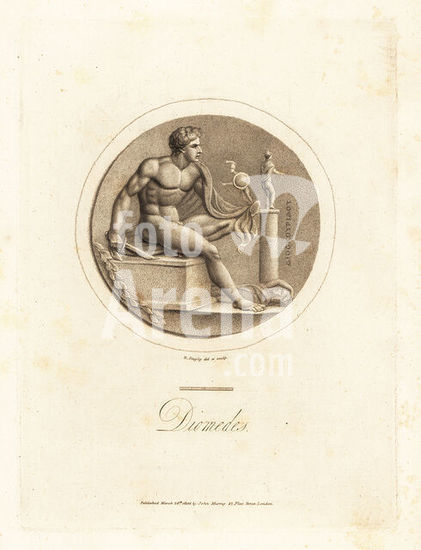
alb9876070 Figure of Diomedes with short sword holding the Palladium, a wooden image of Pallas. King of Argos, hero in the Trojan War. On cornelian in the Duke of Devonshire's collection. Copperplate engraving drawn and engraved by Richard Dagley from Gems, Selected from the Antique, with Illustrations, John Murray, London, 1804.
DC
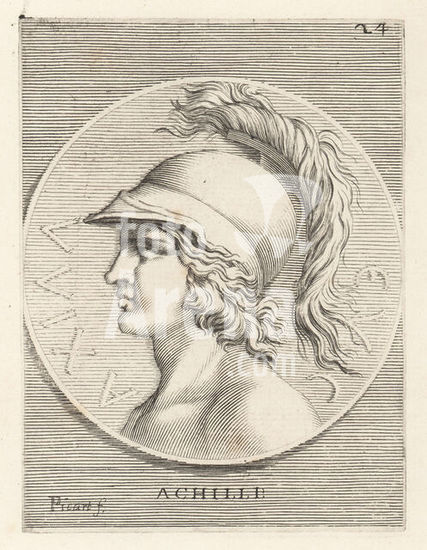
alb9875435 Achilles, son of the Nereid Thetis and Peleus, king of Phthia, hero of the Trojan War, greatest of all the Greek warriors and the central character of Homer's Iliad. Image of a young man in a helmet with crest from a bronze coin with a horse on the reverse. Achille. Copperplate engraving by Etienne Picart after Giovanni Angelo Canini from Iconografia, cioe disegni d'imagini de famosissimi monarchi, regi, filososi, poeti ed oratori dell' Antichita, Drawings of images of famous monarchs, kings, philosophers, poets and orators of Antiquity, Ignatio deLazari, Rome, 1699.
DC
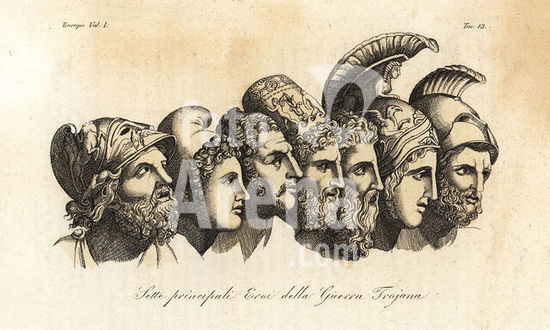
alb9879765 Busts of seven principal heroes of the Trojan War. From left to right: Menelaus, Paris, Diomedes, Ulysses, Nestor, Achilles and Agamemnon. Sette principali Eroi della Guerra Trojana. Handcoloured copperplate engraving from an illustration by Johann Heinrich Wilhelm Tischbein from Giulio Ferrarios Costumes Ancient and Modern of the Peoples of the World, Il Costume Antico e Moderno, Florence, 1842.
DC
ado00070032 Representation of Aeneas, hero of the Trojan War. Author: UNKNOWN ARTIST.
DC
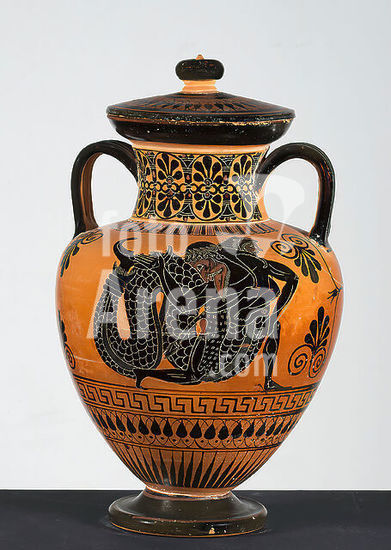
alb5145573 Antimenes painter, neck amphora with lid (Heracles fights with Nereus, Menelaos and Helena), clay, quickly turned, painted (ceramic), alternately fired, clay, turned and painted, total: height: 36.4 cm; mouth diameter: 14.2 cm; base diameter: 12.2 cm, incised mark: under the foot, pottery, Nereus, Hercules forces Nereus to tell him the way to the Hesperides, Menelaus and Helena, ornaments, late archaic, The neck amphora with triple ribbed handles and the presumably originally belonging lid shows only few splinters. From the foot upwards, the following ornamental sequence results: corona, bud arch frieze with dots and a hook meander. On the shoulder there is a colored alternating tongue leaf pattern, which is interrupted under the handles. The neck is decorated with a double lotus-palmette ribbon directed against each other. The lid is again decorated with a bud arch frieze. The handle is formed in the shape of a pomegranate. On side A, Heracles sits astride the winding, scaly body of Nereus in a kneeling pattern and has embraced him with both arms from behind. The latter has a huge head, a long beard and wears a myrtle wreath in his hair. The lowered head and the helplessly stretched out right arm seem to indicate that Heracles will defeat him immediately. The Hero can be recognized by his lion skin. Long before the first literary testimony, Heracles' battle with Nereus appears on Attic vases, almost without exception black-figured. The theme was particularly popular in the second half of the 6th and at the beginning of the 5th century B.C. The mythographer Pherekydes of Leros, who was active around the middle of the 5th century B.C, was the first to report a connection between the sea god Nereus and the deeds of Heracles and the search for the apples of the Hesperides. Already in the Iliad, Nereus is mentioned, but not by name, but as the 'Old Man of the Sea'; in the Odyssey this is his epithet. He is described as a shape-shifter, who possesses the gift of prophecy.
DC
alb9826995 Ulysses and the Sirens. Museum: PRIVATE COLLECTION. Author: Barthélemy Menn.
DC
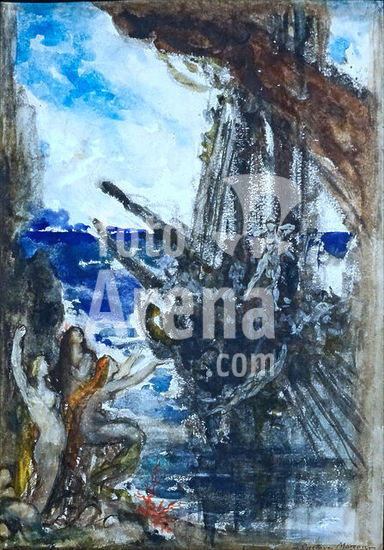
alb9827653 Ulysse et les Sirènes (Ulysses and the Sirens). Museum: Musée Gustave Moreau.
DC
alb9827299 Achilles Discovered by Ulysses Among the Daughters of Lycomedes. Museum: PRIVATE COLLECTION. Author: Baellieur, Cornelis de, the Elder.
DC
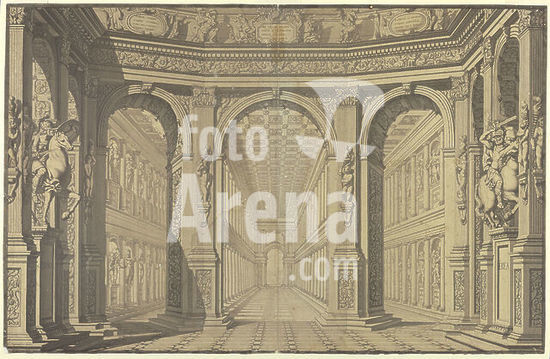
alb5193407 Stage Design: Columned Hall with Sculpture and Inscriptions Relating to the Aenead, Ludovico Ottavio Burnacini, Italian, 16361707, Pen and black ink, brush and wash on wove paper, Horizontal rectangle showing large room elaborately decorated with sculptures and ornaments in Roman style opening into a vast hall with aisles at either side separated by walls made of columns. Walls ecorated with niches between columns containing sculptures of ancient heroes. Devices in Italian on cartouches on cornice. (Battle of Aneas and Turnus, King of the Rutilians - foreground; participants in Trojan War--background)., Europe, late 17th century, theater, Drawing, Drawing.
DC
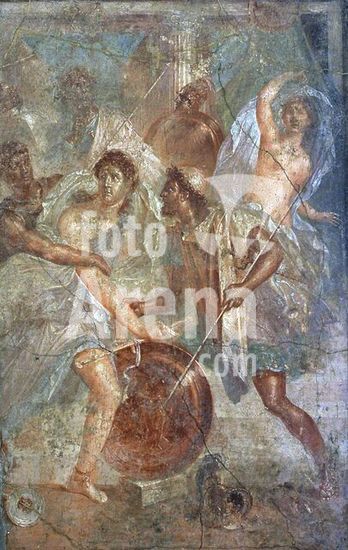
alb3285932 Roman fresco depicting Ulysses unmasks Achilles, dressed as a woman, in Sciro. Tablinium. House of the Dioscuri, Pompeii. National Archaeological Museum. Naples. Italy.
DC
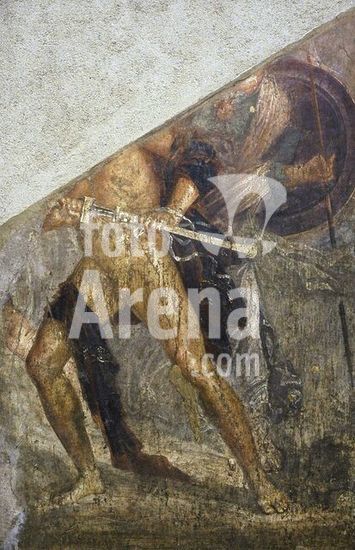
alb3285990 Roman fresco depicting Achilles attacking Agamemnon. Only part of the body of the hero is preserved with his sword, assisted by Athena. Tablinium. House of the Dioscuri. Pompeii. National Archaeological Museum. Naples. Italy.
DC
alb3284098 Achilles is forced to give up Briseis, the prisoner with whom he had fallen in love, to Agamemnon, after Agamemnon had to return Chryseis to her father, Chryses, the priest of Apollo. House of the Tragic poet. National Archaeological Museum, Naples. Italy.
DC
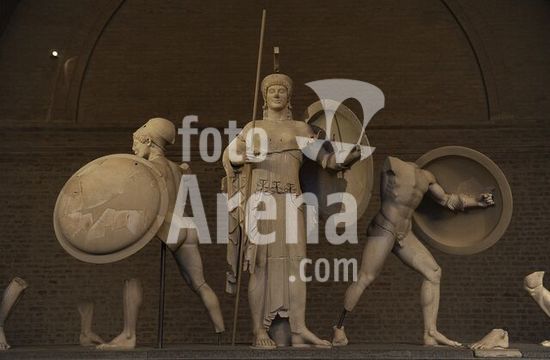
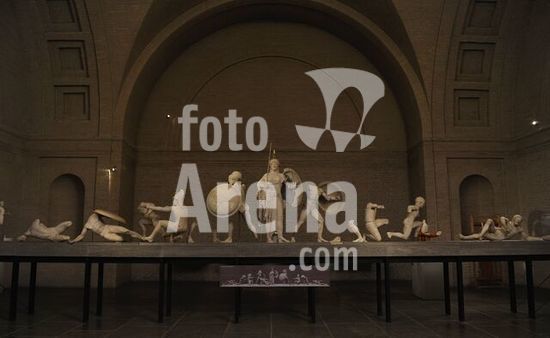
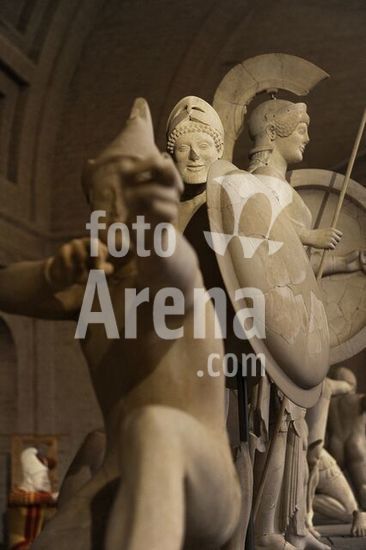
alb2067252 Aegina West Pediment. 500-490 BC. Gods in battle before Troy, in the presence of the goddess Athena. Detail of Athena, Ajax (right) and a trojan warrior. Late Archaic. Marble. From Sanctuary of Aphaia, Aegina Island, Greece.
DC
alb2067251 Aegina West Pediment. 500-490 BC. Gods in battle before Troy, in the presence of the goddess Athena. Fighting during the siege of Agamemnon. Late Archaic. Marble. From Sanctuary of Aphaia, Aegina Island, Greece.
DC
alb2067249 Aegina West Pediment. 500-490 BC. Gods in battle before Troy, in the presence of the goddess Athena. Fighting during the siege of Agamemnon. Detail of Paris as a archer. Late Archaic. Marble. From Sanctuary of Aphaia, Aegina Island, Greece.
DC
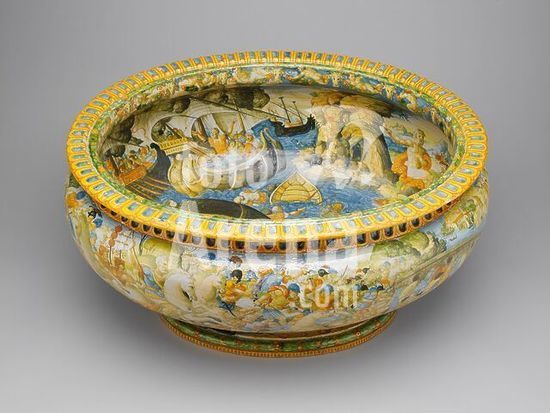
alb4131076 Wine Cistern. Francesco Durantino; Italian, active 1543-after 1553. Date: 1553. Dimensions: 53.3 × 26.7 cm (21 × 10 1/2 in.). Tin-glazed earthenware (maiolica). Origin: Italy. Museum: The Chicago Art Institute, Chicago, USA.
DC

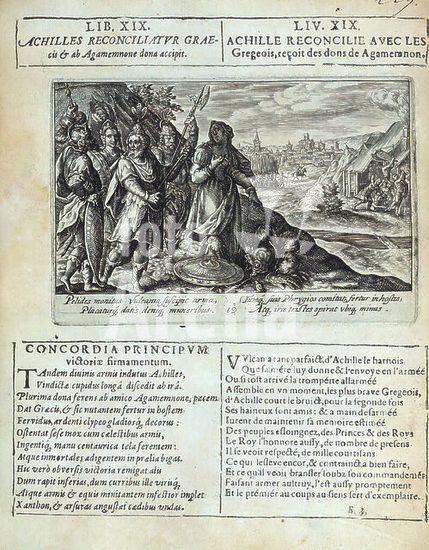
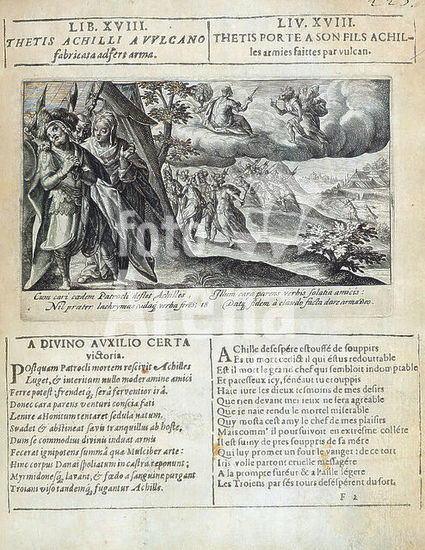
alb9513685 Liber amicorum of Joannes Carolus Erlenwein, Thetis presents Achilles with armor made by Vulcan, p. 229, Hans Carl Erlenwein and his classmates in seminary school, all teenage sons of German aristocrats, composed this Liber Amicorum, or friendship book, for his Latin alter ego 'Joannes Carolus Erlenwein.' The books creation was itself a game: friends one-upped each other through impressive family crests, heartfelt Latin inscriptions, and charming images. Through images, Joannes became the hero of his own story as he and his friends jousted, played tennis, hunted, and rescued damsels in distress. Their choice to convey their strong emotional bond through these images is extraordinary. Yet as boys on the cusp of manhood, they juxtaposed light-hearted joys of youth with images of war and quests for honor, which resonate with prints of the Trojan War interleaved throughout.
DC

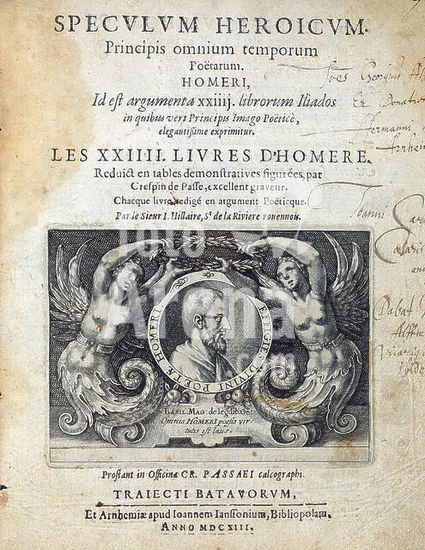
alb9520544 Liber amicorum of Joannes Carolus Erlenwein, Title page with bust of Homer, p. 7, Hans Carl Erlenwein and his classmates in seminary school, all teenage sons of German aristocrats, composed this Liber Amicorum, or friendship book, for his Latin alter ego 'Joannes Carolus Erlenwein.' The books creation was itself a game: friends one-upped each other through impressive family crests, heartfelt Latin inscriptions, and charming images. Through images, Joannes became the hero of his own story as he and his friends jousted, played tennis, hunted, and rescued damsels in distress. Their choice to convey their strong emotional bond through these images is extraordinary. Yet as boys on the cusp of manhood, they juxtaposed light-hearted joys of youth with images of war and quests for honor, which resonate with prints of the Trojan War interleaved throughout.
DC

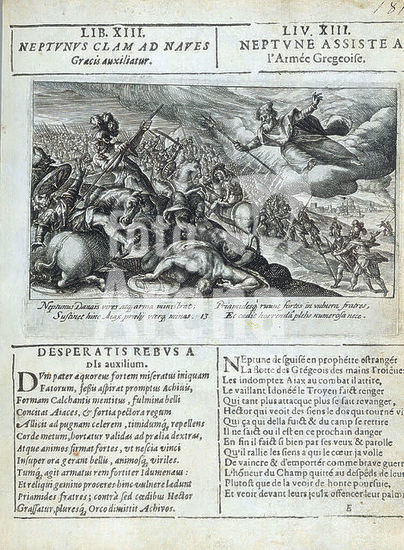
alb9497273 Liber amicorum of Joannes Carolus Erlenwein, Neptune secretly helps the Greek army, p. 181, Hans Carl Erlenwein and his classmates in seminary school, all teenage sons of German aristocrats, composed this Liber Amicorum, or friendship book, for his Latin alter ego 'Joannes Carolus Erlenwein.' The books creation was itself a game: friends one-upped each other through impressive family crests, heartfelt Latin inscriptions, and charming images. Through images, Joannes became the hero of his own story as he and his friends jousted, played tennis, hunted, and rescued damsels in distress. Their choice to convey their strong emotional bond through these images is extraordinary. Yet as boys on the cusp of manhood, they juxtaposed light-hearted joys of youth with images of war and quests for honor, which resonate with prints of the Trojan War interleaved throughout.
DC

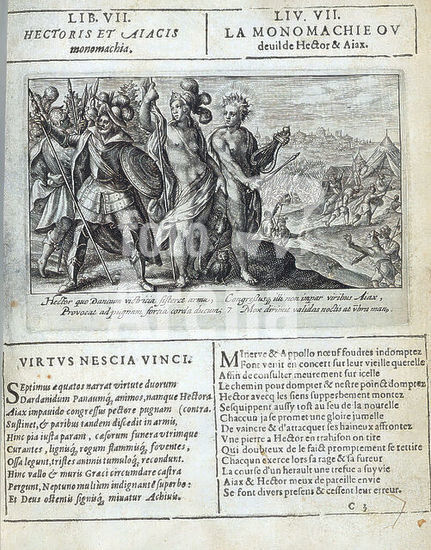
alb9487406 Liber amicorum of Joannes Carolus Erlenwein, Minerva and Apollo inspire Hector to challenge Ajax in single combat, p. 125, Hans Carl Erlenwein and his classmates in seminary school, all teenage sons of German aristocrats, composed this Liber Amicorum, or friendship book, for his Latin alter ego 'Joannes Carolus Erlenwein.' The books creation was itself a game: friends one-upped each other through impressive family crests, heartfelt Latin inscriptions, and charming images. Through images, Joannes became the hero of his own story as he and his friends jousted, played tennis, hunted, and rescued damsels in distress. Their choice to convey their strong emotional bond through these images is extraordinary. Yet as boys on the cusp of manhood, they juxtaposed light-hearted joys of youth with images of war and quests for honor, which resonate with prints of the Trojan War interleaved throughout.
DC

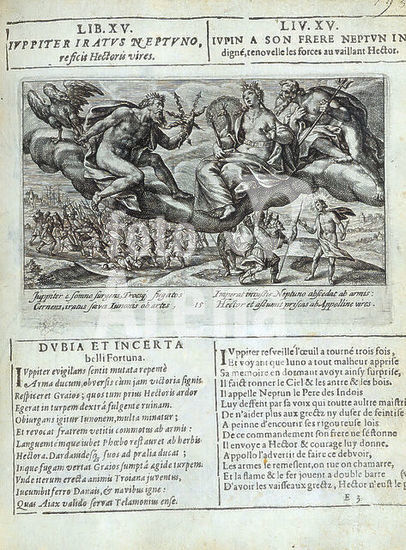
alb9484248 Liber amicorum of Joannes Carolus Erlenwein, Jupiter awakes from enchanted sleep, angered by Juno, and orders Neptune to withdraw from battle; Apollo is sent to renew the strength of the Trojans, p. 195, Hans Carl Erlenwein and his classmates in seminary school, all teenage sons of German aristocrats, composed this Liber Amicorum, or friendship book, for his Latin alter ego 'Joannes Carolus Erlenwein.' The books creation was itself a game: friends one-upped each other through impressive family crests, heartfelt Latin inscriptions, and charming images. Through images, Joannes became the hero of his own story as he and his friends jousted, played tennis, hunted, and rescued damsels in distress. Their choice to convey their strong emotional bond through these images is extraordinary. Yet as boys on the cusp of manhood, they juxtaposed light-hearted joys of youth with images of war and quests for honor, which resonate with prints of the Trojan War interleaved throughout.
DC
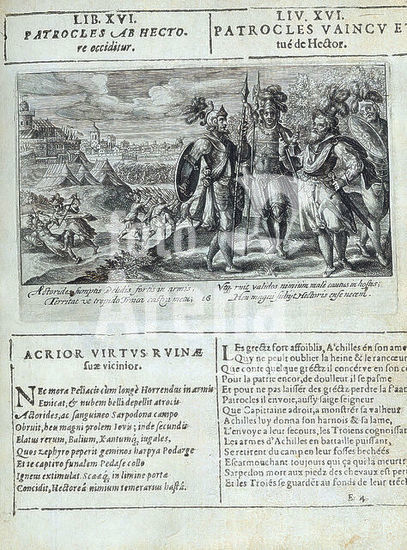
alb9468242 Liber amicorum of Joannes Carolus Erlenwein, Hector kills Patroclus, p. 201, Hans Carl Erlenwein and his classmates in seminary school, all teenage sons of German aristocrats, composed this Liber Amicorum, or friendship book, for his Latin alter ego 'Joannes Carolus Erlenwein.' The books creation was itself a game: friends one-upped each other through impressive family crests, heartfelt Latin inscriptions, and charming images. Through images, Joannes became the hero of his own story as he and his friends jousted, played tennis, hunted, and rescued damsels in distress. Their choice to convey their strong emotional bond through these images is extraordinary. Yet as boys on the cusp of manhood, they juxtaposed light-hearted joys of youth with images of war and quests for honor, which resonate with prints of the Trojan War interleaved throughout.
DC
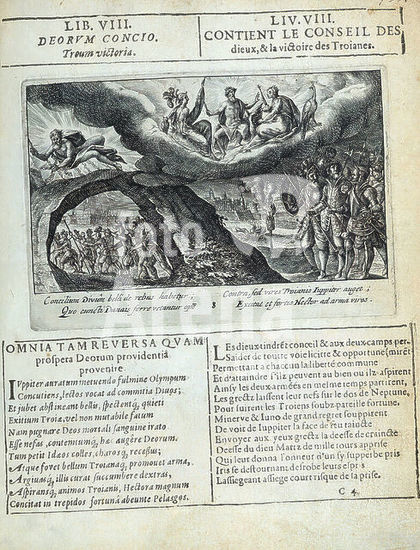
alb9466300 Liber amicorum of Joannes Carolus Erlenwein, Jupiter tells Minerva and Juno of the augured Trojan victory and drives the Greek army back with lightning, p. 133, Hans Carl Erlenwein and his classmates in seminary school, all teenage sons of German aristocrats, composed this Liber Amicorum, or friendship book, for his Latin alter ego 'Joannes Carolus Erlenwein.' The books creation was itself a game: friends one-upped each other through impressive family crests, heartfelt Latin inscriptions, and charming images. Through images, Joannes became the hero of his own story as he and his friends jousted, played tennis, hunted, and rescued damsels in distress. Their choice to convey their strong emotional bond through these images is extraordinary. Yet as boys on the cusp of manhood, they juxtaposed light-hearted joys of youth with images of war and quests for honor, which resonate with prints of the Trojan War interleaved throughout.
DC
alb9462605 Liber amicorum of Joannes Carolus Erlenwein, Sent by Juno, Iris tells Achilles to appear on the battlefield to frighten the Trojans away from Patroclus, p. 223, Hans Carl Erlenwein and his classmates in seminary school, all teenage sons of German aristocrats, composed this Liber Amicorum, or friendship book, for his Latin alter ego 'Joannes Carolus Erlenwein.' The books creation was itself a game: friends one-upped each other through impressive family crests, heartfelt Latin inscriptions, and charming images. Through images, Joannes became the hero of his own story as he and his friends jousted, played tennis, hunted, and rescued damsels in distress. Their choice to convey their strong emotional bond through these images is extraordinary. Yet as boys on the cusp of manhood, they juxtaposed light-hearted joys of youth with images of war and quests for honor, which resonate with prints of the Trojan War interleaved throughout.
DC
alb9458465 Liber amicorum of Joannes Carolus Erlenwein, Mercury, Minerva, Neptune, Juno, Diana, Apollo, Mars, and Thetis watch the battlefield from above, p. 237, Hans Carl Erlenwein and his classmates in seminary school, all teenage sons of German aristocrats, composed this Liber Amicorum, or friendship book, for his Latin alter ego 'Joannes Carolus Erlenwein.' The books creation was itself a game: friends one-upped each other through impressive family crests, heartfelt Latin inscriptions, and charming images. Through images, Joannes became the hero of his own story as he and his friends jousted, played tennis, hunted, and rescued damsels in distress. Their choice to convey their strong emotional bond through these images is extraordinary. Yet as boys on the cusp of manhood, they juxtaposed light-hearted joys of youth with images of war and quests for honor, which resonate with prints of the Trojan War interleaved throughout.
DC
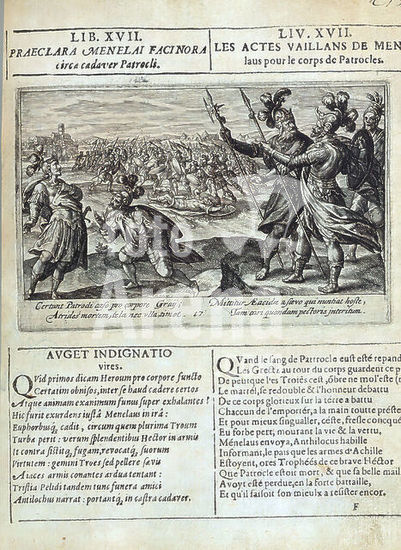
alb9451677 Liber amicorum of Joannes Carolus Erlenwein, Menelaus protects the body of Patroclus, p. 215, Hans Carl Erlenwein and his classmates in seminary school, all teenage sons of German aristocrats, composed this Liber Amicorum, or friendship book, for his Latin alter ego 'Joannes Carolus Erlenwein.' The books creation was itself a game: friends one-upped each other through impressive family crests, heartfelt Latin inscriptions, and charming images. Through images, Joannes became the hero of his own story as he and his friends jousted, played tennis, hunted, and rescued damsels in distress. Their choice to convey their strong emotional bond through these images is extraordinary. Yet as boys on the cusp of manhood, they juxtaposed light-hearted joys of youth with images of war and quests for honor, which resonate with prints of the Trojan War interleaved throughout.
DC
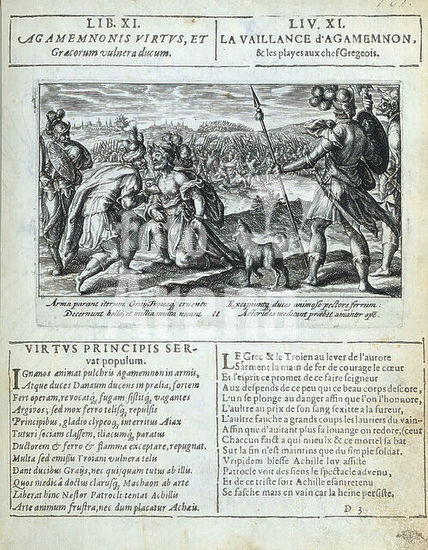
alb9453535 Liber amicorum of Joannes Carolus Erlenwein, Coon wounds Agamemnon, p. 161, Hans Carl Erlenwein and his classmates in seminary school, all teenage sons of German aristocrats, composed this Liber Amicorum, or friendship book, for his Latin alter ego 'Joannes Carolus Erlenwein.' The books creation was itself a game: friends one-upped each other through impressive family crests, heartfelt Latin inscriptions, and charming images. Through images, Joannes became the hero of his own story as he and his friends jousted, played tennis, hunted, and rescued damsels in distress. Their choice to convey their strong emotional bond through these images is extraordinary. Yet as boys on the cusp of manhood, they juxtaposed light-hearted joys of youth with images of war and quests for honor, which resonate with prints of the Trojan War interleaved throughout.
DC
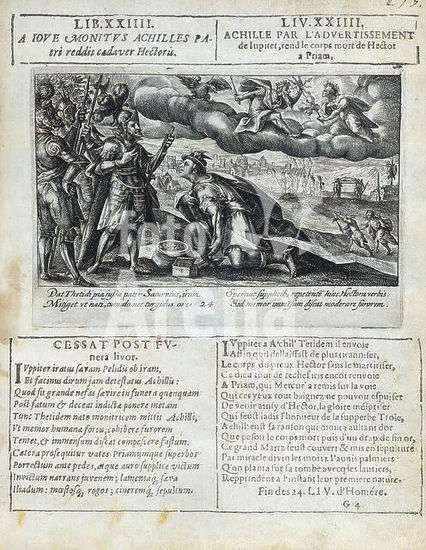
alb9402502 Liber amicorum of Joannes Carolus Erlenwein, Mercury reveals himself to Priam, p. 273, Hans Carl Erlenwein and his classmates in seminary school, all teenage sons of German aristocrats, composed this Liber Amicorum, or friendship book, for his Latin alter ego 'Joannes Carolus Erlenwein.' The books creation was itself a game: friends one-upped each other through impressive family crests, heartfelt Latin inscriptions, and charming images. Through images, Joannes became the hero of his own story as he and his friends jousted, played tennis, hunted, and rescued damsels in distress. Their choice to convey their strong emotional bond through these images is extraordinary. Yet as boys on the cusp of manhood, they juxtaposed light-hearted joys of youth with images of war and quests for honor, which resonate with prints of the Trojan War interleaved throughout.
DC

Total de Resultados: 247

Página 1 de 3