













































Busque também em nossas outras coleções:

Data da imagem:
Pauta
ver mais opções...
Agência
Fotógrafo
ver mais opções...
Estado
Cidade
ver mais opções...
Local
ver mais opções...
Tipo de licença
Orientação
Coleção

Total de Resultados: 25

Página 1 de 1

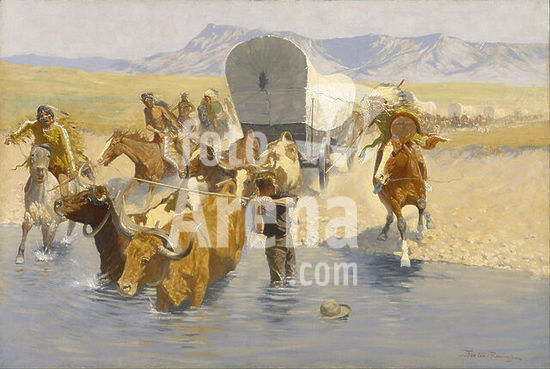
alb3897906 The Emigrants. Date/Period: 1902/1906. Painting. Oil on canvas. Width: 115.3 cm. Height: 77.2 cm (without frame). Author: Frederic Remington.
DC
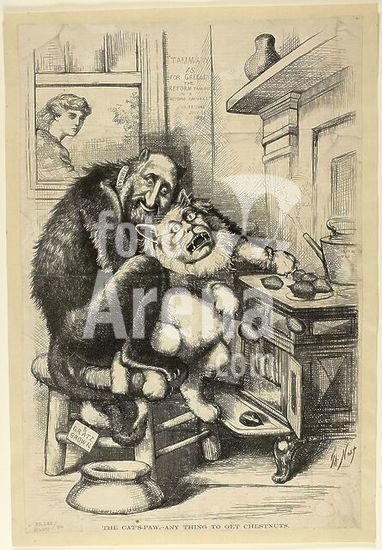
alb4162225 The Cat's-Paw, Any Thing to Get Chestnuts. Thomas Nast; American, 1840-1902. Date: 1892. Dimensions: 358 x 247 mm (primary support); 378 x 258 mm (secondary support). Lithograph on newsprint. Origin: United States. Museum: The Chicago Art Institute, USA. Author: Thomas Nast.
DC
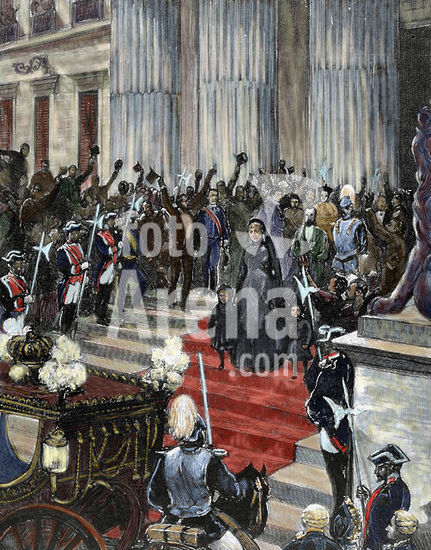
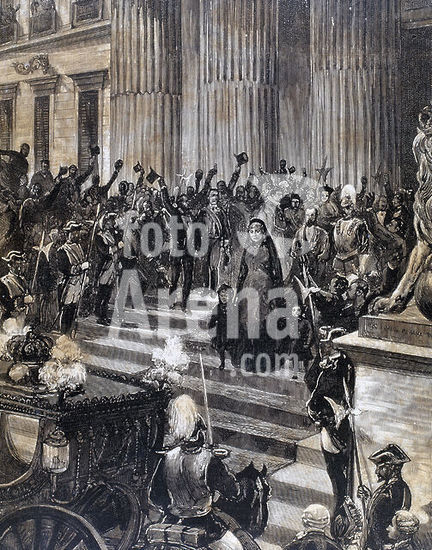
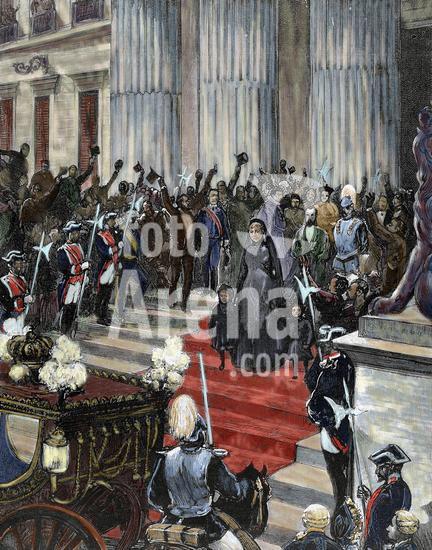
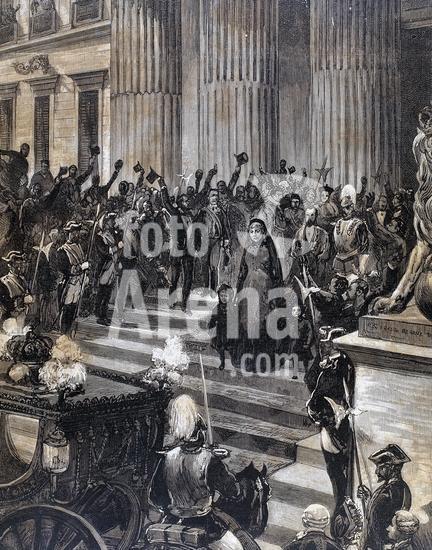
alb1473586 History of Spain. Nineteenth century. Regency of Maria Cristina of Habsburg-Lorraine (1885-1902). The queen regent (1885-1902) out of Congress. Colored engraving of "The Spanish and American Illustration" (1886).
DC
orz150345 ILUSTRACION ESPAÑOLA Y AMERICANA - LLEGADA DE LAS INSIGNIAS REALES AL CONGRESO - JURA DE ALFONSO XIII - 1902. Location: CONGRESO DE LOS DIPUTADOS-BIBLIOTECA. MADRID. SPAIN. ALFONSO XIII (1886-1941).
DC
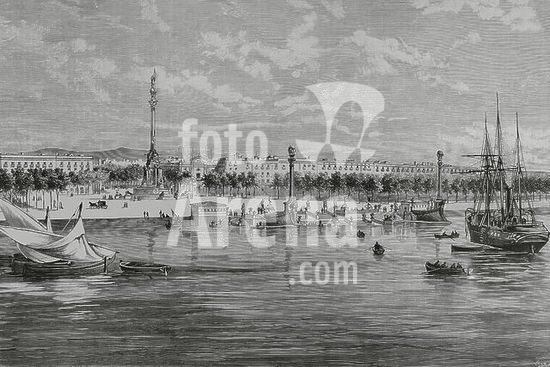
alb4312037 Barcelona, Catalonia, Spain. Improvements of the city. Monument to Christopher Columbus. Open national competition, convened in September 1881 by the Executive Central Commission of the monument. Perspective and preliminary project of honor landing stage and monument to Columbus, according to the project of the Catalan architect Cayetano Buigas Monravá (Gaietà Buïgas i Monravà) (1851-1919), awarded by the jury of the aforementioned competition. The pier is shown divided into three parts, a central one and two lateral ones; each of them advances, like a cutwater, shaped like the prow of a 15th century ship, recalling the Pinta and Niña caravels. Two large lampposts at the most advanced points of both abutments, a balustrade and four statues of celebrated people complete the preliminary project. Drawing by Riudavets. Engraving by Vela. La Ilustración Española y Americana (The Spanish and American Illustration), 22 February 1883. Author: José Riudavets (1840-1902). Spanish cartoonist and illustrator. Eugenio Vela (d. 1895). Spanish engraver.
DC
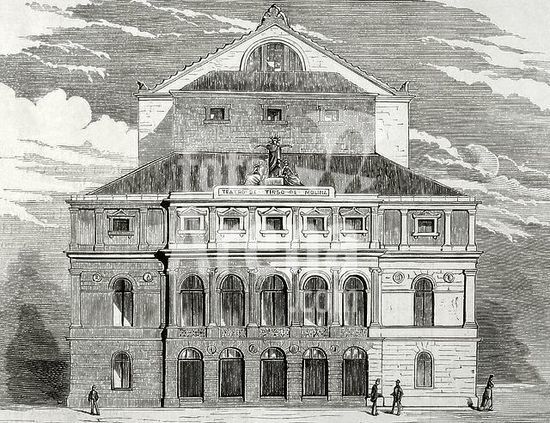
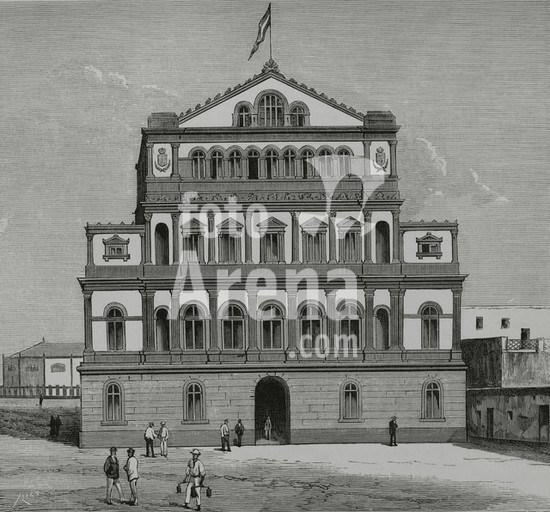
alb3927871 Spain, Canary Islands, Gran Canaria, Las Palmas. Tirso de Molina Theatre or "Teatro Nuevo" (New Theatre). General view of the facade. The architect Francisco Jare–o y Alarcon (1818-1892) was commissioned to take charge of the works art for the project. It was renamed as Perez Galdos Theatre in 1902. Engraving. La Ilustracion Espa–ola y Americana, July 30, 1876.
DC
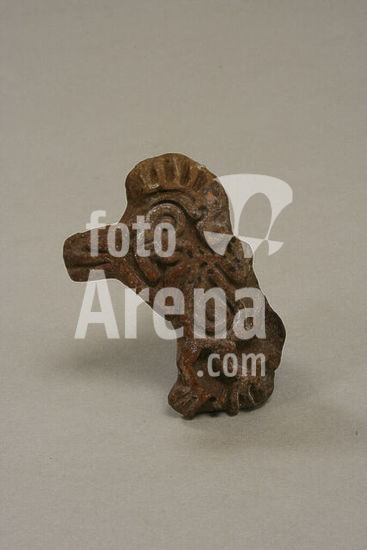
alb3599706 Stamp, Monkey. Culture: Aztec. Dimensions: Overall: 1 3/8 x 1 3/4 in. (3.51 x 4.45 cm)Other: 1 3/8 x 1 1/8 in. (3.51 x 2.79 cm). Date: 14th-early 16th century.This ceramic stamp features the image of a monkey in profile with its arms splayed to either side of its head. The parallel lines radiating out from the monkey's crown resemble the shock of unkempt hair of the Mexican spider monkey. Its upright stance and flexed knees create a sense of movement in the figure--as if it were walking--while its rotund, helical belly is a playful element of abstraction. As the German archaeologist Eduard Seler long ago noted, in ancient Mexico, the spider monkey was connected with the themes of music, dance, and clowning.In Nahuatl, the monkey is called ozomatli and is the eleventh day sign of the ancient Aztec calendar. Unlike our calendar today, which consists of twelve months of approximately thirty days each, the Aztecs and other Mesoamerican peoples used "months" of just twenty days. Each day was given a number and named after a different animal or other natural element--for example, "1 Crocodile," "2 Reed," or "4 Movement (Earthquake)."Monkeys were closely associated with the wind deity Ehecatl, whose teardrop-shaped earrings (epcololli) and split-conch necklaces are often depicted in sculpted images of primates. Almost invariably, artists in the Postclassic period (ca. 900-1521) showed monkeys with large stomachs, animated facial expressions, and attenuated tails that they often hold in their paws.Ceramic stamps were made in Central Mexico from the Early Formative period (ca. 1800-1200 B.C.) and continued into the early sixteenth century. It is assumed that the earliest examples of such objects functioned much as they did among the Aztecs three millennia later: as ornamental devices used to decorate clothing, ceramic vessels, and even the body. They typically feature abstract geometric designs or stylized animal imagery, often in repeating patterns. Commonly found interred with human remains, these stamps were apparently valued as highly in death as they were in life. William T. Gassaway, 2014-15 Sylvan C. Coleman and Pamela Coleman Fellow-----Resources and Additional ReadingBierhorst, John. History and Mythology of the Aztecs: The Codex Chimalpopoca. Tucson: University of Arizona Press, 1992.Miller, Mary E., and Karl Taube. The Gods and Symbols of Ancient Mexico and the Maya: An Illustrated Dictionary of Mesoamerican Religion. London: Thames & Hudson Ltd, 1993.Sahagún, Bernardino de. The Florentine Codex: A General History of the Things of New Spain. 12 vols. Translated and edited by Arthur J. O. Anderson and Charles E. Dibble. Santa Fe: School of American Research, 1950-82. For creation myth, see Bk. 11 ("Earthly Things").Seler, Eduard. Gesammelte Abhandlungen zur Amerikanischen Sprach- und Altertumskunde. 5 vols. Berlin: Ascher, 1902-23. See esp. Vol. 4, pp. 456-59.Taube, Karl. Olmec Art at Dumbarton Oaks. Washington, D.C.: Dumbarton Oaks Research Library and Collection, 2004. Museum: Metropolitan Museum of Art, New York, USA.
DC
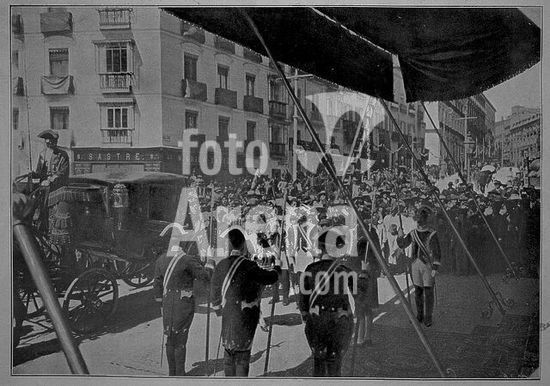
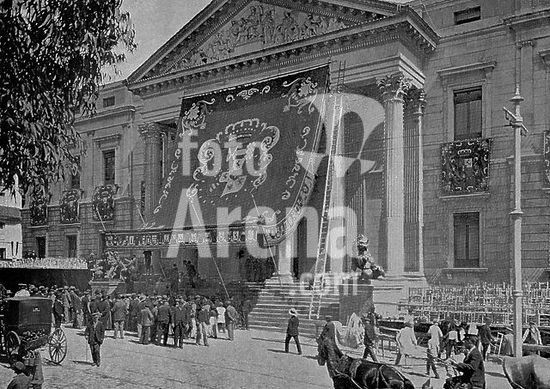
orz150343 ASPECTO CONGRESO DIPUTADOS EL DIA DE LA JURA DE ALFONSO XIII 1902 - LA ILUSTRACION ESPAÑOLA Y AMERICANA. Location: CONGRESO DE LOS DIPUTADOS-BIBLIOTECA. MADRID. SPAIN.
DC
alb1470355 History of Spain. Nineteenth century. Regency of Maria Cristina of Habsburg-Lorraine (1885-1902). The queen regent (1885-1902) out of Congress. Engraving of "The Spanish and American Illustration" (1886).
DC
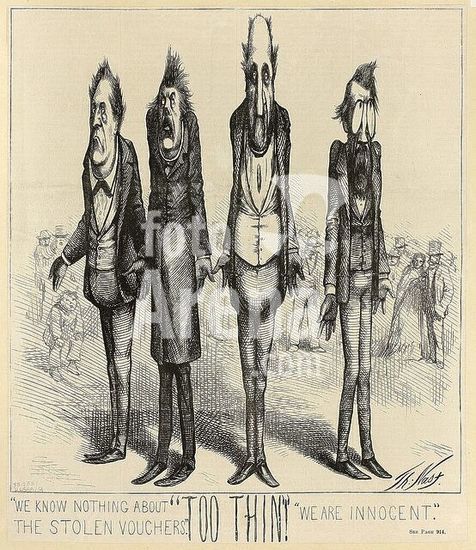
alb4158759 We Know Nothing about the Stolen Vouchers. Thomas Nast; American, 1840-1902. Date: 1871. Dimensions: 278 x 238 mm (plate); 377 x 260 mm (sheet). Lithograph in black on newsprint. Origin: United States. Museum: The Chicago Art Institute, USA.
DC
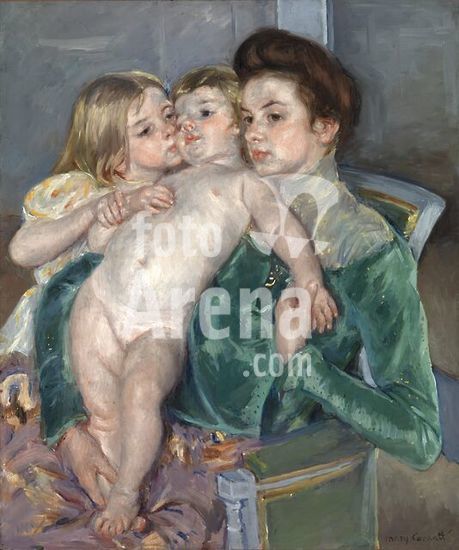
alb9532872 The Caress. Date: 1902. oil on canvas. Museum: Smithsonian American Art Museum.
DC
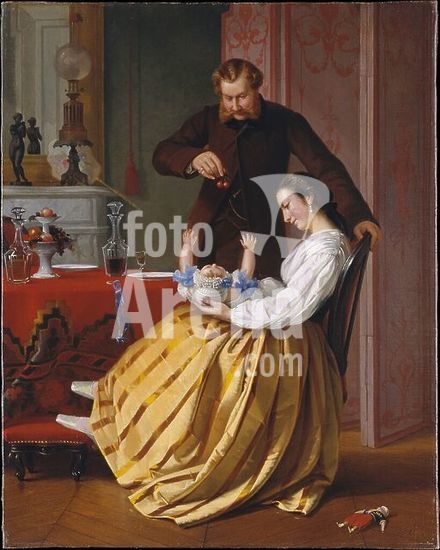
alb3617632 Conversation Piece. Artist: Lilly Martin Spencer (1822-1902). Dimensions: 28 5/16 x 22 5/8 in. (71.9 x 57.5 cm). Date: ca. 1851-52.The only American woman painter of note in the antebellum period, Spencer specialized in domestic scenes. She used herself and her husband as models in many of her narrative works, including this one. The setting for the family group is likely the artist's parlor. Many of the small objects decorating her room, such as the Limoges compote and the Carcel lamp, illustrate the taste of the time as well as Spencer's French heritage. Museum: Metropolitan Museum of Art, New York, USA.
DC
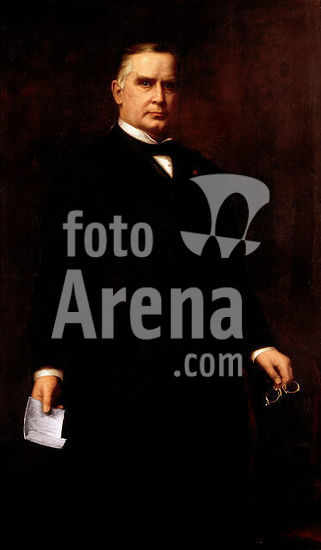
alb3900076 William McKinley. Date/Period: 1902. Painting. Oil on canvas Oil on canvas. Height: 1,530.35 mm (60.25 in); Width: 920.75 mm (36.25 in). Author: Harriet Anderson Stubbs Murphy.
DC
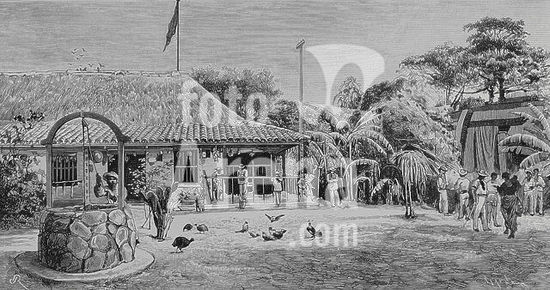
alb4313314 Cuba. The civil governor of Havana, inspired by the success of a charitable work carried out in mid 1883 by the large Asturian colony that lived and worked in Havana, promoted the celebration of another similar event under the name of "Gran Romería de San Cristóbal" in favour of the "Real Casa de Beneficencia y Maternidad de La Habana" (The Royal House of Charity and Maternity of Havana), on the 24th, 25th and 26th of November 1883. It took place in the same location where the popular celebration organised by the Asturians was held, in the field of the "Club Almendares" and on the immediate Paseo de Carlos III. Gran Romería of San Cristóbal: booth of the island of Cuba, in the grounds of the "Club Almendares" Drawing by Riudavets. Engraving by Tomás Carlos Capuz (1852-1903). La Ilustración Española y Americana (The Spanish and American Illustration), January 22, 1884. Author: José Riudavets (1840-1902). Spanish cartoonist and illustrator. Tomás Carlos Capuz (1834-1899). Spanish engraver.
DC
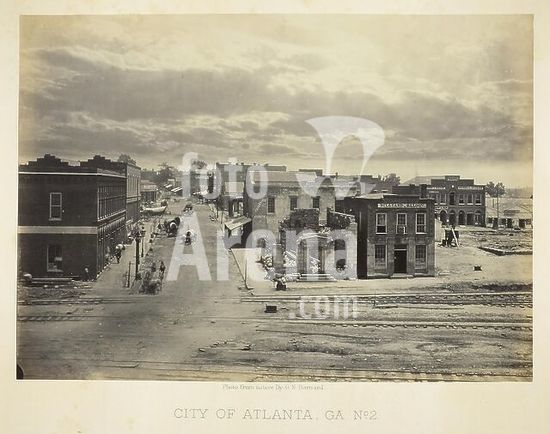
alb4208619 City of Atlanta, GA, No. 2. George N. Barnard; American, 1819-1902. Date: 1866. Dimensions: 25.4 x 36 cm (image/paper); 41 x 50.7 cm (album page). Albumen print, plate 46 from the album "Photographic Views of the Sherman Campaign" (1866). Origin: United States. Museum: The Chicago Art Institute, Chicago, USA.
DC
alb3730437 The Last of the Buffalo. Dated: 1888. Dimensions: overall: 180.3 × 301.63 cm (71 × 118 3/4 in.) framed: 217.17 × 339.09 × 13.97 cm (85 1/2 × 133 1/2 × 5 1/2 in.). Medium: oil on canvas. Museum: National Gallery of Art, Washington DC. Author: Albert Bierstadt.
DC
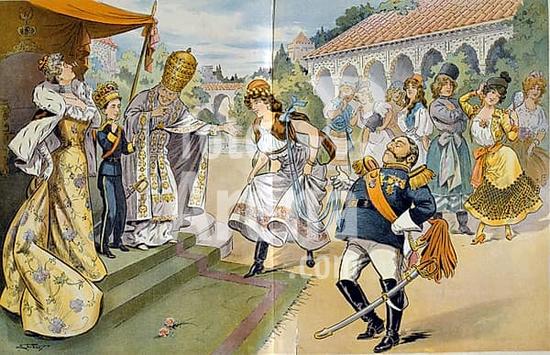
ibxsuc10886742 Alfonso XIII of Spain (1886-1941), who officially came of age in 1902 at the age of 16, is presented to his future brides by the Pope, standing next to his mother. Married Victoria Eugenie von Battenburg in 1906. Print, New York, 1902
RF
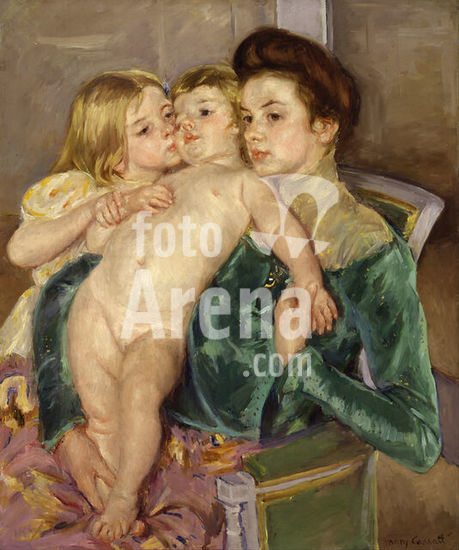
alb3903966 The Caress. Date/Period: 1902. Painting. Oil on canvas Oil on canvas. Height: 835.15 mm (32.87 in); Width: 695.45 mm (27.37 in). Author: Mary Cassatt.
DC
alb4209771 Icebound. John Henry Twachtman; American, 1853-1902. Date: 1884-1894. Dimensions: 64. 2 × 76.6 cm (25 1/4 × 30 1/8 in.). Oil on canvas. Origin: Connecticut. Museum: The Chicago Art Institute, Chicago, USA.
DC
alb4267352 Spain, Canary Islands, Gran Canaria, Las Palmas. Tirso de Molina Theatre or "Teatro Nuevo" (New Theatre). General view of the facade. The architect Francisco Jare–o y Alarcon (1818-1892) was commissioned to take charge of the works art for the project. It was renamed as PŽrez Gald—s Theatre in 1902. Engraving by Bernardo Rico (1825-1894). La Ilustracion Espa–ola y Americana, 1881.
DC
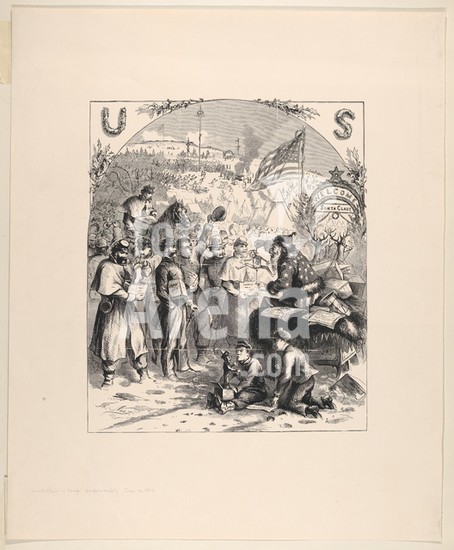
alb3647252 Santa Claus in Camp (published in Harper's Weekly, January 3, 1863). Artist: Thomas Nast (American (born Germany), Landau 1840-1902 Guayaquil). Dimensions: Image: 10 3/4 × 9 1/8 in. (27.3 × 23.1 cm)Sheet: 17 1/4 × 14 1/8 in. (43.8 × 35.9 cm). Date: 1863 (?).Nast's image was published in the 1862 Christmas issue of Harper's Weekly, during days filled with both trials for the Union and rising hope. Santa Claus has arrived by sleigh in a Union army camp to distribute gifts. This was the moment that Nast conceived and introduced our modern image of Santa Claus. Combining European traditions of St. Nicholas with folk images of elves from his native Germany, he created the jolly gift-giver now associated with Christmas that here offers cheer to soldiers far from home. He distributes boxes of necessities such as warm socks, copies of Harper's Weekly, and entertains the crowd with a jumping jack dangling from a noose, its chest lettered "Jeff" in reference to the Confederate President Jefferson Davis. In the background, soldiers chase an escaped hog, roast meat on a spit and play fairground games such as climbing a greased pole. This image on the title page of the journal was supported by a two-page spread within the journal that shows Santa visiting sleeping children in New York (see 33.35.26 and 29.88.4(8)). Museum: Metropolitan Museum of Art, New York, USA.
DC
953_05_353-15932 Regency of Maria Cristina of Habsburg-Lorraine (1885-1902). The queen regent (1885-1902) out of Congress.
DC
953_05_19-2797 Regency of Maria Cristina of Habsburg-Lorraine (1885-1902). The queen regent (1885-1902) out of Congress.
DC
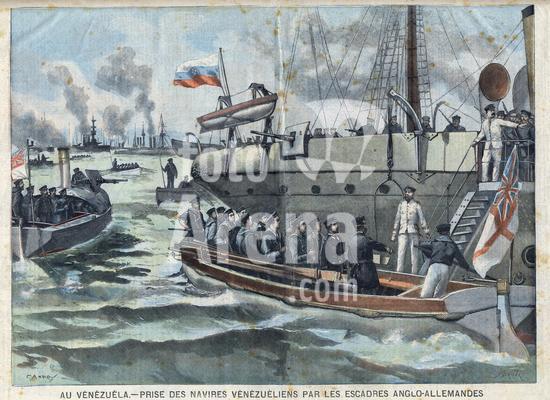
908_05_cor6810 Venezuela Crisis, Capture of Venezuelan vessels by Anglo-German squadrons. Illustration from French newspaper Le Petit Parisien, 1902. Private Collection.
DC
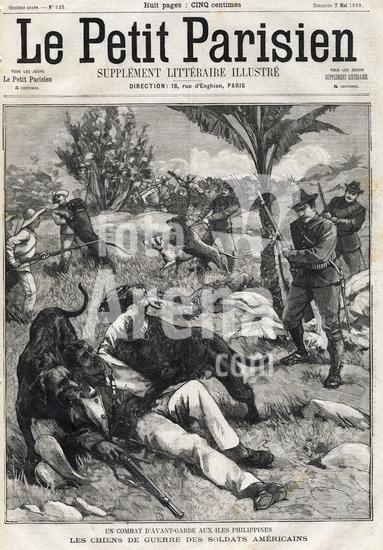
908_05_cor6490 The Philippine-American War (1899-1902), American war dogs attacking soldiers of the Guerilla. Engraving. Frontpage of French newspaper Le Petit Parisien. April 23, 1899. Private Collection.
DC

Total de Resultados: 25

Página 1 de 1