
















































Busque também em nossas outras coleções:

Data da imagem:
Pauta
ver mais opções...
Agência
Fotógrafo
ver mais opções...
Estado
ver mais opções...
Cidade
ver mais opções...
Local
Tipo de licença
Orientação
Coleção
ver mais opções...

Total de Resultados: 10.000

Página 1 de 100

akg8909560 Capt. Thomas Hastings. Ruins of Crewkerne Abbey, May 1833Sketches, Vol. 7: Drawings of Devon, Wales, Lakes, etca , 1833. Graphite and pen and brown ink on medium, slightly textured, cream wove paper, 23.8 × 33 cm. Inv. No. B1977.14.2451. New Haven, Yale Center for British Art.
DC
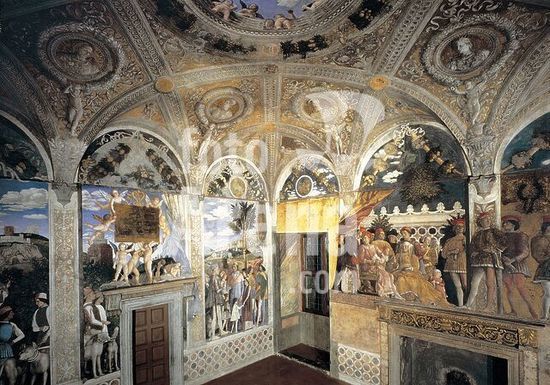
alb8909560 Mantua-Mantova (Lombardy, Italy), Palazzo Ducale, Castello S.Giorgio, Camera degli Sposi (frescos, c.1465-74, by Andrea Mantegna; 1431-1506).-Interior view looking northwest: west wall with "Meeting between Ludovico III Gonazaga and his son Francesco", north wall with "Court of Ludovico III".-Photo.
DC
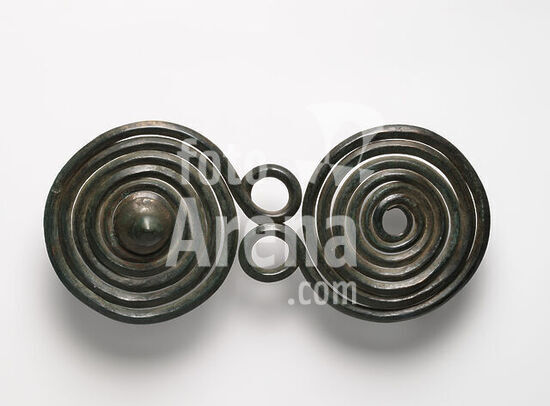
akg090697 Herodot Greek chronicler, Halikarnassos c. 484 BC - c. 425 BC. Portrait Bust. Roman copy of a Grecian original from the 4th Century BC. Naples, National Archaeological Museum. Museum: Naples, Museo archeologico nazionale.
DC
akg1349655 Konarak / Konark (Orissa, Ost-Indien), Surya-Tempel (Tempel in Form eines Sonnenwagens; Östliche Ganga-Dynastie; erbaut während der Regierungszeit Narasimhadevas I. Ganga 1239-1264; UNESCO-Weltkulturerbe), Große Halle ( Jagamohan Mandapa).-Mithuna-Figuren ( Paare beim Liebesspiel).-/ Ausschnitt aus den Relieffriesen der Plinthe. Fo...
DC
akg4452370 Mauro Giuliani GUITAR (1781-1829) musician and composer, wrote various works for solista guitar and orchestra. Portrait in a litografia of Jugel from painting of Stubenrauch.
DC
akg4994533 Calandrucci, Giacinto; 1646-1707. "Studie nach der Gestalt des Herkules Farnese", undatiert. Rote Kreide, weiß gehöht, auf graugrünem Papier, 42 x 26,8 cm. Aus der Sammlung Lambert Krahe. Inv. Nr. KA (FP) 8299, Sammlung der Kunstakademie Düsseldorf, Düsseldorf, Museum Kunstpalast. Museum: Düsseldorf, Museum Kunstpalast.
DC
alb2069729 Hans Memling / 'Nativity. The Adoration of the Magi. Purification', 1479-1480, Flemish School, Oil on panel, 95 cm x 271 cm, P01557. Museum: MUSEO DEL PRADO, MADRID, SPAIN.
DC
alb2068865 Diego Rodríguez de Silva y Velázquez / 'Vulcan's Forge', 1630, Spanish School, Oil on canvas, 223 cm x 290 cm, P01171. Museum: MUSEO DEL PRADO, MADRID, SPAIN.
DC
alb2015916 Édouard Manet / 'The Fife Player', 1866, Oil on canvas, 160 × 97 cm. Museum: MUSEE D'ORSAY, BUDAPEST, France.
DC
alb3716294 The Battle of Love. Dated: c. 1880. Dimensions: overall: 38 x 46 cm (14 15/16 x 18 1/8 in.) framed: 55.9 x 63.5 x 8.9 cm (22 x 25 x 3 1/2 in.). Medium: oil on canvas. Museum: National Gallery of Art, Washington DC. Author: PAUL CEZANNE.
DC
alb3719791 Desdemona's Death-Song. Dated: 1878/1880. Dimensions: overall (frame size): 127 x 101.6 cm (50 x 40 in.). Medium: black chalk over traces of red chalk on two joined sheets of blue-green paper. Museum: National Gallery of Art, Washington DC. Author: Dante Gabriel Rossetti.
DC
alb3716053 La Bretonnerie in the Department of Indre. Dated: 1856. Dimensions: overall: 60.8 x 73.3 cm (23 15/16 x 28 7/8 in.) framed: 81.3 x 94 x 7.6 cm (32 x 37 x 3 in.). Medium: oil on canvas. Museum: National Gallery of Art, Washington DC. Author: GUSTAVE COURBET.
DC
alb3701542 "Faith, Hope and Charity": Stone Figures from Facade of Mission. Dated: 1936. Dimensions: overall: 26.5 x 35.5 cm (10 7/16 x 14 in.) Original IAD Object: Central figure 5'. Medium: watercolor, colored pencil, and graphite on paper. Museum: National Gallery of Art, Washington DC. Author: Edward Jewett.
DC
alb3714391 La Grotte de la Loue. Dated: 1864. Dimensions: overall: 98.4 x 130.4 cm (38 3/4 x 51 5/16 in.) framed: 126.4 x 155.3 cm (49 3/4 x 61 1/8 in.). Medium: oil on canvas. Museum: National Gallery of Art, Washington DC. Author: GUSTAVE COURBET.
DC
alb3709668 The Madonna della Scodella. Dated: 1606. Dimensions: plate: 12.2 x 16.1 cm (4 13/16 x 6 5/16 in.) plate: 13.6 x 17.4 cm (5 3/8 x 6 7/8 in.). Medium: etching with engraving on laid paper. Museum: National Gallery of Art, Washington DC. Author: Annibale Carracci.
DC
alb3707759 Chapel of the Spring in the Beech Tree (Cappella del faggio dell'acqua). Dated: 1612. Dimensions: book: 43.3 × 30 × 1.8 cm (17 1/16 × 11 13/16 × 11/16 in.). Medium: 1 engraved illustration. Museum: National Gallery of Art, Washington DC. Author: Lino Moroni.
DC
alb3709662 Bathsheba at Her Bath. Dated: 1519. Dimensions: sheet: 11.9 x 9.5 cm (4 11/16 x 3 3/4 in.). Medium: woodcut. Museum: National Gallery of Art, Washington DC. Author: Hans Burgkmair I.
DC
alb3735114 The Visitation with Saint Nicholas and Saint Anthony Abbot. Dated: c. 1489/1490. Dimensions: overall: 184.2 x 188.6 cm (72 1/2 x 74 1/4 in.) framed: 235.6 x 250.2 x 12.1 cm (92 3/4 x 98 1/2 x 4 3/4 in.). Medium: oil on panel. Museum: National Gallery of Art, Washington DC. Author: PIERO DI COSIMO.
DC
alb3629558 Plate 37: view of the church of San Bartolomeo all'Isola on Tiber Island, Rome, flanked by bridges, from the series 'Ruins of the antiquity of Rome, Tivoli, Pozzuoli, and other places' (Vestigi della antichità di Roma, Tivoli, Pozzvolo et altri luochi). Artist: Aegidius Sadeler II (Netherlandish, Antwerp 1568-1629 Prague); After Etienne DuPérac (French, ca. 1535-1604). Dimensions: Sheet: 6 13/16 x 11 in. (17.3 x 28 cm). Series/Portfolio: Ruins of the antiquity of Rome, Tivoli, Pozzuoli, and other places (Vestigi della antichità di Roma, Tivoli, Pozzvolo et altri luochi). Date: 1606. Museum: Metropolitan Museum of Art, New York, USA.
DC
alb3605579 Joseph Interpreting the Dreams of Pharaoh. Artist: Attributed to Jörg Breu the Younger (German, Augsburg ca. 1510-1547 Augsburg). Dimensions: 67 5/8 x 57 1/4 in. (171.8 x 145.4 cm). Date: ca. 1534-47.This unfinished painting may have been conceived as part of a series devoted to the story of the Old Testament patriarch Joseph, who is seen here standing in a grand Renaissance palace, interpreting the dreams of Pharaoh (Genesis 41:14-36).The materials and technique employed--a water-based medium on ungrounded fine-weave canvas, called by the German term Tüchlein--account for the picture's subdued tonality and matte surface as well as its worn condition. Such Tüchlein offered a common lightweight and economical alternative to both large-scale panel paintings and tapestries, but their disadvantage was their susceptibility to deterioration and damage. Museum: Metropolitan Museum of Art, New York, USA.
DC
alb3608419 Seated Female Figure. Study for the Figure of the Iliad in: The Apotheosis of Homer. Artist: Jean Auguste Dominique Ingres (French, Montauban 1780-1867 Paris). Dimensions: 12 3/8 x 10 5/8 in. (31.4 x 27 cm). Date: ca. 1827. Museum: Metropolitan Museum of Art, New York, USA.
DC
alb3746851 Young Woman with Peonies. Dated: 1870. Dimensions: overall: 60 x 75 cm (23 5/8 x 29 1/2 in.) framed: 83.8 x 99.4 x 7.6 cm (33 x 39 1/8 x 3 in.). Medium: oil on canvas. Museum: National Gallery of Art, Washington DC. Author: Frederic Bazille.
DC
alb3655670 Celebration of a Circumcision from the frieze Ces Moeurs et fachons de faire de Turcz (Customs and Fashions of the Turks). Artist: After Pieter Coecke van Aelst (Netherlandish, Aelst 1502-1550 Brussels). Dimensions: Sheet: 14 × 27 1/2 in. (35.5 × 69.9 cm). Published in: Antwerp. Publisher: Mayken Verhulst (Netherlandish, 1518-1593/96). Date: 1553. Museum: Metropolitan Museum of Art, New York, USA.
DC
alb3658147 Scenes from the Infancy of Christ. Culture: Flemish. Dimensions: H. 22 x W. 33 in. (55.88 x 83.82 cm). Date: 16th century. Museum: Metropolitan Museum of Art, New York, USA.
DC
alb3654970 Study for the Drapery of Molière in the "Apotheosis of Homer". Artist: Jean Auguste Dominique Ingres (French, Montauban 1780-1867 Paris). Dimensions: 11 15/16 x 9 13/16 in. (30.3 x 24.9 cm). Date: n.d.. Museum: Metropolitan Museum of Art, New York, USA.
DC
alb3600786 Dido and Aeneas (recto); Three Figures Traced in Reverse from Recto and a Study of a Seated Man (verso). Artist: Anonymous, Italian, 16th century (Italian, active Central Italy, ca. 1550-1580). Dimensions: 6-1/4 x 8-11/16 in. (15.8 x 22.1 cm). Date: 16th century. Museum: Metropolitan Museum of Art, New York, USA.
DC
alb3656579 John Henderson, in the Character of Iago (Shakespeare's Othello). Artist: After Gilbert Stuart (American, North Kingston, Rhode Island 1755-1828 Boston, Massachusetts). Dimensions: Sheet: 8 3/4 × 6 1/2 in. (22.3 × 16.5 cm) (clipped impression). Engraver: Francesco Bartolozzi (Italian, Florence 1728-1815 Lisbon). Publisher: John Bell (British, 1745-1831). Sitter: John Henderson (British, baptised 1747-1785). Subject: William Shakespeare (British, Stratford-upon-Avon 1564-1616 Stratford-upon-Avon). Date: 1786.Published shortly after Henderson's death, this engraving shows the actor in a signature role, the villainous Iago in "Othello," which he played to great acclaim at the Covent Garden Theatre between 1780 and 1785. Bartolozzi based the subject's expressive features on a painting by the American painter Gilbert Stuart, who lived in London between 1775 and 1793. Known as "The Bath Roscius," Henderson worked in the latter city until 1778, then moved to London after David Garrick's death (see 17.3.981 for George Romney's conception of Henderson as Macbeth). Museum: Metropolitan Museum of Art, New York, USA.
DC
alb3658205 The Madonna of Humility, the Annunciation, the Nativity, and the Pietà. Artist: Bartolomeo Vivarini (Italian, active Venice 1450-91). Dimensions: Central panel, overall 23 x 18 in. (58.4 x 45.7 cm); left panel, overall 22 3/8 x 9 1/2 in. (56.8 x 24.1 cm); right panel, overall 22 1/4 x 9 3/8 in. (56.5 x 23.8 cm);. Date: ca. 1465.The Vivarini were a family of Venetian painters whose prolific workshop specialized in large multi-tiered altarpieces for churches throughout the Veneto region. This relatively small triptych was likely intended for private devotion. The kneeling nun, dressed as a member of the Dominican Order, probably represents the patron. Bartolomeo's debt to the Paduan master Andrea Mantegna is especially evident in the rendering of the landscape and the figure of the Madonna in the Nativity scene. Although the frame is not original, it conveys the decorative ornamentation typical of the Vivarini. Museum: Metropolitan Museum of Art, New York, USA.
DC
alb3654807 The Monk, from the Dance of Death. Artist: After Hans Holbein the Younger (German, Augsburg 1497/98-1543 London). Dimensions: Sheet: 3 in. × 2 3/16 in. (7.6 × 5.5 cm). Etcher: Wenceslaus Hollar (Bohemian, Prague 1607-1677 London). Series/Portfolio: Dance of Death, after Holbein. Date: 1651.A monk, carrying a collection box and accompanied by a dog, is seizedfrom behind by Death. Museum: Metropolitan Museum of Art, New York, USA.
DC
alb3619346 Saint Anthony Reading. Artist: Albrecht Dürer (German, Nuremberg 1471-1528 Nuremberg). Dimensions: Sheet: 3 7/8 × 5 5/8 in. (9.8 × 14.3 cm). Date: 1519. Museum: Metropolitan Museum of Art, New York, USA.
DC
alb3728665 Banks of the Seine, Vétheuil. Dated: 1880. Dimensions: overall: 73.4 x 100.5 cm (28 7/8 x 39 9/16 in.) framed: 100.3 x 127.6 x 9.5 cm (39 1/2 x 50 1/4 x 3 3/4 in.). Medium: oil on canvas. Museum: National Gallery of Art, Washington DC. Author: CLAUDE MONET.
DC
alb3723963 The Wine Harvest (September). Dated: in or before 1521. Dimensions: overall (diameter): 23.7 cm (9 5/16 in.). Medium: pen and black ink with gray wash on laid paper. Museum: National Gallery of Art, Washington DC. Author: Jorg Breu I.
DC
alb3661320 The Franciscan, Pelbart of Temesvar, Studying in a Garden (Schr. 2876). Artist: Johann Otmar (German, Augsburg, 1502-1514). Date: 1502. Museum: Metropolitan Museum of Art, New York, USA.
DC
alb3662614 The First Fruits of the Earth Offered to Saturn. Artist: Giorgio Vasari (Italian, Arezzo 1511-1574 Florence). Dimensions: 6 3/4 x 15 7/16in. (17.2 x 39.2cm). Date: 1555-56.The drawing, surely from the hand of Vasari himself, is a study for an Allegory of Earth painted by his assistant Cristofano Gherardi in the Sala degli Elementi, Palazzo Vecchio, Florence. There are a number of differences between the preparatory drawing and the finished fresco. Vasari supplied a full description of the complex symbolism of this allegorical composition that is dominated by the figure of Saturn holding up a serpent that bites its own tail. This circular symbol is said to be an Egyptian hieroglyph, symbolic of the rotundity of the heavens among other things. Museum: Metropolitan Museum of Art, New York, USA.
DC
alb3661762 Plate 19: view of the Baths of Caracalla, indicating with inscribed letter 'A' the places from which columns were reportedly taken by Pope Pius IV to be sent to the Grand Duke of Florence, from the series 'Ruins of the antiquity of Rome, Tivoli, Pozzuoli, and other places' (Vestigi della antichità di Roma, Tivoli, Pozzvolo et altri luochi). Artist: Aegidius Sadeler II (Netherlandish, Antwerp 1568-1629 Prague); After Etienne DuPérac (French, ca. 1535-1604). Dimensions: Sheet: 6 3/4 x 10 7/16 in. (17.1 x 26.5 cm). Series/Portfolio: Ruins of the antiquity of Rome, Tivoli, Pozzuoli, and other places (Vestigi della antichità di Roma, Tivoli, Pozzvolo et altri luochi). Date: 1606. Museum: Metropolitan Museum of Art, New York, USA.
DC
alb3661164 Plate 21: view from the west of ruins of the Aventine Hill, Rome, with boats on the river Tiber in the foreground, from the series 'Ruins of the antiquity of Rome, Tivoli, Pozzuoli, and other places' (Vestigi della antichità di Roma, Tivoli, Pozzvolo et altri luochi). Artist: Aegidius Sadeler II (Netherlandish, Antwerp 1568-1629 Prague); After Etienne DuPérac (French, ca. 1535-1604). Dimensions: Sheet: 6 13/16 x 10 15/16 in. (17.3 x 27.8 cm). Series/Portfolio: Ruins of the antiquity of Rome, Tivoli, Pozzuoli, and other places (Vestigi della antichità di Roma, Tivoli, Pozzvolo et altri luochi). Date: 1606. Museum: Metropolitan Museum of Art, New York, USA.
DC
alb3790598 Pierre-Jules Jollivet (Lithographer) (After Velázquez, Diego Rodríguez de Silva y); José de Madrazo y Agudo (Director); Real Establecimiento Litográfico de Madrid (Printer) / 'Vulcan?s Forge'. 1826 - 1829. Lithographic aquatint, Crayon lithography, Scraper on wove paper; 1826 - 1829. Lithographic aquatint, Crayon lithography, Scraper on wove paper. Museum: Museo del Prado, Madrid, España.
DC
alb4210792 Painting with Green Center. Vasily Kandinsky; French, born Russia, 1866-1944. Date: 1913. Dimensions: 43 1/4 × 47 1/2 in. (108.9 × 118.4 cm). Oil on canvas. Origin: Germany. Museum: The Chicago Art Institute, USA. Author: WASSILY KANDINSKY.
DC
alb4156821 Jean-Baptiste Monnoyer (Lille, 1636-Londres, 1699). Basket of Flowers (s.f). Oil on canvas. 77 x 102 cm. Museum: Museo Nacional Thyssen-Bornemisza, Madrid.
DC
alb4138348 The Resting Gypsy Family in Front of a Ruined Inn. Gerrit de Heer; Dutch, 1610-1660. Date: 1629-1660. Dimensions: 353 x 432 mm (plate); 360 x 438 mm (sheet). Etching on ivory laid paper. Origin: Holland. Museum: The Chicago Art Institute, USA. Author: Gerrit de Heer.
DC
alb4150554 Landscape at Chailly. Frédéric Bazille; French, 1841-1870. Date: 1865. Dimensions: 81 × 100.3 cm (31 7/8 × 39 1/2 in.). Oil on canvas. Origin: France. Museum: The Chicago Art Institute, USA.
DC
alb4159219 Stack of Wheat. Claude Monet; French, 1840-1926. Date: 1890-1891. Dimensions: 65.8 × 92.3 cm (25 15/16 × 36 3/8 in.). Oil on canvas. Origin: France. Museum: The Chicago Art Institute, USA.
DC
alb4159180 Stacks of Wheat (End of Summer). Claude Monet; French, 1840-1926. Date: 1891. Dimensions: 60 × 100.5 cm (23 5/8 × 39 9/16 in.). Oil on canvas. Origin: France. Museum: The Chicago Art Institute, USA.
DC
alb4150515 The Races at Longchamp. Édouard Manet; French, 1832-1883. Date: 1866. Dimensions: 44.0 × 84.2 cm (17 5/16 × 33 1/8 in.). Oil on canvas. Origin: France. Museum: The Chicago Art Institute, USA.
DC
alb4159257 Stack of Wheat (Snow Effect, Overcast Day). Claude Monet; French, 1840-1926. Date: 1890-1891. Dimensions: 66 × 93 cm (26 × 36 5/8 in.). Oil on canvas. Origin: France. Museum: The Chicago Art Institute, USA.
DC
alb4102570 La Corniche near Monaco. La Corniche bij Monaco. Dating: 1884. Measurements: h 75 cm × w 94 cm. Museum: Rijksmuseum, Amsterdam. Author: CLAUDE MONET.
DC
alb4141271 The Tribute Money. Rembrandt van Rijn; Dutch, 1606-1669. Date: 1629-1639. Dimensions: 72 x 102 mm (image/plate, sight); 76 x 106 mm (sheet, sight). Etching in black on ivory laid paper. Origin: Netherlands. Museum: The Chicago Art Institute, USA. Author: REMBRANDT HARMENSZOON VAN RIJN.
DC
alb4146987 She Lov'd Me for the Dangers, plate three from Othello. Théodore Chassériau; French, 1819-1856. Date: 1844. Dimensions: 287 × 339 mm (chine); 345 × 364 mm (plate); 395 × 528 mm (sheet). Etching, engraving, roulette and drypoint on ivory China paper, laid down on ivory wove paper. Origin: France. Museum: The Chicago Art Institute, USA.
DC
alb4110610 Triptych with the Assumption of Mary. Draughtsman: Paulus Constantijn la Fargue. After Anthonie Blocklandt. Dating: 1772. Measurements: h 643 mm × w 600 mm. Museum: Rijksmuseum, Amsterdam.
DC
alb4146421 Owake! what ho! Brabantio! thieves! thieves!, plate one from Othello. Théodore Chassériau; French, 1819-1856. Date: 1844. Dimensions: 329 × 237 mm (image); 370 × 265 mm (plate); 360 × 257 mm (primary support); 640 × 490 mm (secondary support). Etching, engraving and drypoint on ivory China paper, laid down on white wove paper. Origin: France. Museum: The Chicago Art Institute, USA.
DC
akg022811 Botany:. Knoblauch / Allium sativum. "Allium sativum L.". Copper engraving, coloured, 1813. From: (Krauss, J. C.), Verfolg op de Afbeeldingen der Artsenijgewassen. Teil 1., Amsterdam, bei I.C. Sepp u. Sohn. Author: ANONYMOUS.
DC
akg094155 Briand, Aristide French politician. Nantes 28.3.1862 - Paris 7.3.1932. Aristide Briand at the Conference in Washington (13 Nov. 1921 - 6 Febr. 1922). Photo.
DC

akg4450025 SECOND WORLD WAR Walter Audisio (Valerio colonel) head partisan, was which arranged the execution of Mussolini and Petacci, like from instructions received from the mlitari authorities, and that he executed it materially. Italy 1945.
DC

akg7069332 Figure tile, blue with standing figure with long cloak or dress and string of garlic in the hand, corner pattern ox head, wall tile tile sculpture ceramic earthenware glaze, baked 2x glazed painted.
DC
akg7549610 Nicholas I. Pavlovich, Emperor of Russia (1825-55). Tsarskoe Selo 6.7.1796 - St. Petersburg 2.3.1855. Nicholas I with his wife Alexandra of Russia (1798-1860) and his son Alexander II (1818-1881). Woodcarving facsimile, 1826, by Thomas Wright (1792-1849) after drawing by the same after painting by George Dawe (1781-1829). Museum: Berlin, Sammlung Archiv für Kunst und Geschichte.
DC

alb2068154 Juan Antonio Ribera y Fernández / 'Wamba renunciando a la corona', ca. 1819, Spanish School, Oil on canvas, 163 cm x 219 cm, P06519. Museum: MUSEO DEL PRADO, MADRID, SPAIN.
DC

alb2069915 Pedro Pablo Rubens / 'Abraham offers tithe to Melchizedek', 1625-1626, Flemish School, Oil on panel, 87 cm x 91,5 cm, P01696. Museum: MUSEO DEL PRADO, MADRID, SPAIN. Author: PETER PAUL RUBENS.
DC
alb2069396 Diego Rodríguez de Silva y Velázquez (Circle of) / 'Portrait of a Buffoon with a Dog', 1640, Spanish School, Oil on canvas, 142 cm x 107 cm, P01203. Museum: MUSEO DEL PRADO, MADRID, SPAIN.
DC
alb3680812 Cylinder seal. Culture: Babylonian. Dimensions: H. 3 cm x Diam. 1.4 cm. Date: ca. 18th-16th century B.C..Although engraved stones had been used as early as the seventh millennium B.C. to stamp impressions in clay, the invention in the fourth millennium B.C. of carved cylinders that could be rolled over clay allowed the development of more complex seal designs. These cylinder seals, first used in Mesopotamia, served as a mark of ownership or identification. Seals were either impressed on lumps of clay that were used to close jars, doors, and baskets, or they were rolled onto clay tablets that recorded information about commercial or legal transactions. The seals were often made of precious stones. Protective properties may have been ascribed to both the material itself and the carved designs. Seals are important to the study of ancient Near Eastern art because many examples survive from every period and can, therefore, help to define chronological phases. Often preserving imagery no longer extant in any other medium, they serve as a visual chronicle of style and iconography.The modern impression of the seal is shown so that the entire design can be seen. This hematite cylinder seal is carved with the images of two deities, identifiable by their horned headgear. The seated deity holds a rod with an emblem or recarving at the top and wears a long dress; the standing god is dressed in a shorter tunic and rests one foot on a horned animal. Based on his attributes, the standing figure on the right may be the god Amurru.Amurru, the eponymous god of the Amorite peoples (Akkadian amurru), began to be represented on cylinder seals in the early second millennium B.C. It is likely that the god was created by the urban elite of southern Mesopotamia as a personification of the semi-nomadic Amorite tribes whose name he shared. The symbols associated with this god - the horned animal, crooked staff, and in some cases distinctive headgear or a stylized mountain - all emphasize his foreignness. On this cylinder, Amurru is shown in an inferior position standing before an enthroned (and traditionally-garbed) deity.Cylinder seals in the ancient Near East served as both a kind of amulet and as a mark of ownership or identification. The representation of Amurru on this cylinder may have appealed to its owner either as a Mesopotamian symbol of Amorite identity or, perhaps more likely, as a protective device, since the god came to be associated with exorcism and healing. Museum: Metropolitan Museum of Art, New York, USA.
DC

alb3716781 Christ on the Mount of Olives. Dated: probably c. 1509/1510. Medium: woodcut. Museum: National Gallery of Art, Washington DC. Author: ALBRECHT DURER.
DC

alb3713308 The Penance of Saint John Chrysostom. Dated: c. 1541/1545. Dimensions: sheet (trimmed to plate mark): 5.3 x 7.7 cm (2 1/16 x 3 1/16 in.). Medium: engraving. Museum: National Gallery of Art, Washington DC. Author: Sebald Beham.
DC
alb3683058 The Sojourn of The Holy Family in Egypt, from The Life of the Virgin, Latin Edition, 1511. Artist: Albrecht Dürer (German, Nuremberg 1471-1528 Nuremberg). Dimensions: sheet: 16 1/2 x 11 3/4 in. (41.9 x 29.8 cm)block: 11 3/4 x 8 1/4 in. (29.8 x 21 cm). Date: 1511. Museum: Metropolitan Museum of Art, New York, USA.
DC
alb3683841 King Lear Casting Out His Daughter Cordelia (Shakespeare, King Lear, Act 1, Scene 1). Artist: After Henry Fuseli (Swiss, Zürich 1741-1825 London). Dimensions: image: 17 3/8 x 23 11/16 in. (44.1 x 60.1 cm)plate: 19 1/2 x 25 1/8 in. (49.5 x 63.8 cm)sheet: 21 3/4 x 27 15/16 in. (55.3 x 71 cm). Engraver: Richard Earlom (British, London 1743-1822 London). Publisher: John & Josiah Boydell (British, 1786-1804). Series/Portfolio: Boydell's Shakespeare Gallery. Subject: William Shakespeare (British, Stratford-upon-Avon 1564-1616 Stratford-upon-Avon). Date: August 1, 1792.In 1792 John and Josiah Boydell published this stipple engraving of a painting Fuseli submitted to the Shakespeare Gallery in 1790. The scene occurs near the beginning of King Lear. At the center of the composition sits the elderly king, who has divested himself of power and ordered his daughters-Goneril, Regan, and Cordelia-to declare their devotion to him in return for a portion of the kingdom. Cordelia's refusal to flatter a father she truly loves now results in her banishment. Fuseli used dramatic gestures to clarify the narrative. Earlom's choice of stipple enabled him to distinguish the varying expressions of the numerous participants, each of whom reacts individually to the central scene. Museum: Metropolitan Museum of Art, New York, USA.
DC
alb3635729 Monserrat, Vista general de la montaña desde Monistrol. Artist: Charles Clifford (Welsh, 1819-1863). Dimensions: Image: 31.7 × 41.5 cm (12 1/2 × 16 5/16 in.)Mount: 42.3 × 58.2 cm (16 5/8 × 22 15/16 in.). Date: 1860.This print is from an album of fifty-six plates entitled "Photographic Memories of the Trip of Their Majesties and Highnesses to the Balearic Islands, Catalonia and Aragon," which originally belonged to Antoine d'Orléans, duc de Montpensier, a great collector and patron of photographers and the brother-in-law of Queen Isabella II. Museum: Metropolitan Museum of Art, New York, USA.
DC
alb3632199 Prospect of the inner part of Tangier. Artist: Wenceslaus Hollar (Bohemian, Prague 1607-1677 London). Dimensions: Sheet: 4 3/4 × 8 3/8 in. (12 × 21.3 cm). Series/Portfolio: Various views of TangierTitle and five plates. Date: ca. 1670.View of Tangier, with Peterborough Tower; horses in the foreground, and various figures in the market place; in the distance, the coast of Spain. Museum: Metropolitan Museum of Art, New York, USA.
DC
alb3639396 Ecco Homo, from The Small Passion. Artist: Albrecht Dürer (German, Nuremberg 1471-1528 Nuremberg). Dimensions: sheet: 5 1/16 x 3 13/16 in. (12.8 x 9.7 cm). Date: ca. 1509. Museum: Metropolitan Museum of Art, New York, USA.
DC
alb3637875 Portrait of a Woman, Possibly a Nun of San Secondo; (verso) Scene in Grisaille. Artist: Jacometto (Jacometto Veneziano) (Italian, active Venice by ca. 1472-died before 1498). Dimensions: Overall 4 x 2 7/8 in. (10.2 x 7.3 cm); recto and verso, painted surface 3 3/4 x 2 1/2 in. (9.5 x 6.4 cm). Date: ca. 1485-95.This exquisite and enigmatic portrait and its pendant (1975.1.86) are most likely the works by the Venetian painter and illuminator Jacometto, recorded by the connoisseur Marcantonio Michiel in the collection of a Venetian patrician in 1543. Michiel, who praised them as "a most perfect work," identified the man as Alvise Contarini and the woman as a "nun of San Secondo" (a Benedictine convent in Venice). The paired portraits and the allusion to fidelity on the verso of the male effigy (a roebuck chained beneath the Greek word AIEI, meaning "forever") would normally suggest a married couple; however, her possible status as a nun makes it difficult to determine their relationship. If the garment is a habit, which seems doubtful given her bare shoulders, she may have led a secular life as a nun or entered the convent as a widow. The portrait may have been commissioned platonically (such cases are known). Alternatively, the wimple-like headdress may represent an entirely secular and contemporary fashion trend. Perhaps the portraits, which probably fit together in a boxlike frame, were designed to hide their clandestine relationship.Illustrating the influence of Netherlandish painting on Venetian portraiture, the portraits are striking for their meticulous detail, highly refined technique, and luminous, atmospheric landscape backgrounds. Museum: Metropolitan Museum of Art, New York, USA. Author: Jacometto (Jacometto Veneziano).
DC
alb3636626 Tobias Leaving the Table, from The Story of Tobias. Artist: Georg Pencz (German, Wroclaw ca. 1500-1550 Leipzig). Dimensions: Sheet: 2 1/2 × 3 7/8 in. (6.4 × 9.8 cm). Series/Portfolio: The Story of Tobias. Date: 1543. Museum: Metropolitan Museum of Art, New York, USA.
DC
alb3701397 Christ before Herod. Dated: 1509. Medium: woodcut. Museum: National Gallery of Art, Washington DC. Author: ALBRECHT DURER.
DC
alb3708593 Joseph Interprets His Dream to Jacob. Dated: 1512. Medium: engraving. Museum: National Gallery of Art, Washington DC. Author: LUCAS VAN LEYDEN.
DC
alb3705354 The Annunciation. Dated: probably c. 1509/1510. Medium: woodcut. Museum: National Gallery of Art, Washington DC. Author: ALBRECHT DURER.
DC
alb3707057 Saint Jerome in His Study. Dated: 1514. Dimensions: sheet (trimmed to plate mark): 25.4 x 19 cm (10 x 7 1/2 in.). Medium: engraving on laid paper. Museum: National Gallery of Art, Washington DC. Author: ALBRECHT DURER.
DC
alb3707781 Christ before Pilate. Dated: probably c. 1509/1510. Medium: woodcut. Museum: National Gallery of Art, Washington DC. Author: ALBRECHT DURER.
DC
alb3706438 The Betrayal of Christ. Dated: probably c. 1509/1510. Medium: woodcut. Museum: National Gallery of Art, Washington DC. Author: ALBRECHT DURER.
DC
alb3704443 The Triumph of Fame. Medium: engraving. Museum: National Gallery of Art, Washington DC. Author: Georg Pencz.
DC
alb3672470 Portrait of a Young Man. Artist: Jacometto (Jacometto Veneziano) (Italian, active Venice by ca. 1472-died before 1498). Dimensions: 11 x 8 1/4 in. (27.9 x 21 cm). Date: 1480s.A brilliant miniature painter, Jacometto was also outstanding at portraits. He was much influenced by the Sicilian painter Antonello da Messina, who worked in Venice in 1475-76, but Jacometto's portraits have a crystalline clarity, enhanced by the black background. The distinctive hairstyle--a zazzera--was fashionable in Venice in the 1480s and 90s. Museum: Metropolitan Museum of Art, New York, USA.
DC
alb3679365 The Presentation of the Virgin in the Temple, from The Life of the Virgin. Artist: Albrecht Dürer (German, Nuremberg 1471-1528 Nuremberg). Dimensions: sheet: 12 1/8 x 8 3/8 in. (30.8 x 21.3 cm)image: 11 5/8 x 8 5/16 in. (29.5 x 21.1 cm). Date: ca. 1503. Museum: Metropolitan Museum of Art, New York, USA.
DC
alb3672419 Saint Christopher. Artist: Albrecht Dürer (German, Nuremberg 1471-1528 Nuremberg). Dimensions: sheet: 8 3/8 x 8 3/8 in. (21.3 x 21.2 cm). Date: 1511. Museum: Metropolitan Museum of Art, New York, USA.
DC
alb3679213 Cylinder seal and modern impression: Ishtar image and a worshiper below a canopy flanked by winged genies. Culture: Assyrian. Dimensions: H. 1 1/4 in. (3.1 cm). Date: ca. 8th-7th century B.C..Seals of the early first millennium B.C. in Babylonia and Assyria were carved in the linear, drilled, cut, and modeled styles. The modeled style illustrated here derives from earlier Middle Assyrian seal carving and from the modeled sculpture in the palace of Sargon II (r. 721-705 B.C.), king of Assyria at Khorsabad. This style was used predominantly on seals showing scenes of contest and worship.On this cylinder seal a statue of the goddess Ishtar stands on a platform within a canopied enclosure. Ishtar is identified by crossed quivers, a starred crown, and stars encircling her body. Two winged genies protect the enclosure, while a kneeling figure worships. Museum: Metropolitan Museum of Art, New York, USA.
DC
alb3731929 The Man of Sorrows Mocked by a Soldier. Dated: probably 1511. Medium: woodcut. Museum: National Gallery of Art, Washington DC. Author: ALBRECHT DURER.
DC
alb3735699 The Last Supper. Dated: probably c. 1509/1510. Medium: woodcut. Museum: National Gallery of Art, Washington DC. Author: ALBRECHT DURER.
DC
alb3730779 The Defeat of Sennacherib. Medium: etching. Museum: National Gallery of Art, Washington DC. Author: Pieter Claesz Soutman after Sir Peter Paul Rubens.
DC
alb3737915 Frontispiece for "Views of Tombs". Dated: 1768. Medium: etching. Museum: National Gallery of Art, Washington DC. Author: Jean-Laurent Legeay.
DC
alb3627370 Furniture plaque carved in relief showing two winged, male figures flanking an infant on a lotus flower. Culture: Assyrian. Dimensions: 3.25 x 3.12 in. (8.26 x 7.92 cm). Date: ca. 9th-8th century B.C..During the early first millennium B.C., ivory carving was one of the major luxury arts that flourished throughout the ancient Near East. Elephant tusks were carved into small decorative objects such as cosmetic boxes and plaques used to adorn wooden furniture. Gold foil, paint, and semiprecious stone and glass inlay embellishments enlivened these magnificent works of art. Based on certain stylistic, formal, and technical characteristics also visible in other media, scholars have distinguished several coherent style groups of ivory carving that belong to different regional traditions including Assyrian, Phoenician, North Syrian and South Syrian (the latter also known as Intermediate).Several ivories in the Metropolitan Museum's collection are from the Aramaean town of Arslan Tash, ancient Hadatu, in northern Syria just east of the Euphrates River, close to the modern Turkish border. French archaeological excavations at the site in 1928 revealed city walls and gates in addition to a palace and temple that were built when the Neo-Assyrian king Tiglath-Pileser III (744-721 B.C.) turned the town into a provincial capital and military outpost. During the excavations, over one hundred ivory furniture inlays that can be attributed to the South Syrian and Phoenician styles were found in a building near the palace. One piece bears a dedicatory inscription in Aramaic to King Hazael, mentioned in the Bible, who ruled Damascus during the second half of the 9th century (ca. 843-806 B.C.), suggesting that this collection of ivory furniture inlays could have been taken by the Assyrian state as tribute or booty from Damascus. The Arslan Tash ivories share an amalgamation of Egyptianizing motifs typical of the Phoenician style and forms characteristic of North Syrian art that may indicate a South Syrian or Damascene origin of this group. Today, these ivories are housed in museums in Paris, Aleppo, Jerusalem, Karlsruhe, and Hamburg, as well as The Metropolitan Museum of Art.This square plaque is carved in low relief and depicts two standing, winged male figures facing each other, set within a thin frame and flanking a central infant sitting on a lotus flower. Both male figures hold lotus buds in each hand and raise one arm and wing to the upper edge of the plaque while lowering the other arm and wing so that their wingtips touch to frame the seated infant. The plaque can be attributed to the South Syrian style, drawing upon elements from both the Phoenician and North Syrian traditions of ivory carving. Aspects of the North Syrian style include large eyes and noses and fringed robes that leave one leg exposed. The Phoenician style incorporates Egyptian features such as the pschent crown (the double crown of Upper and Lower Egypt), short wigs, incised broad collars, and the composition of the figures' bodies: face and feet in profile with a frontal chest. Gold foil survives on the upper wing of the figure on the left. There are two West Semitic letters inscribed into the roughened reverse of the plaque, probably as a guide for the assembly of the piece of furniture to which it originally belonged. The motif of an infant sitting on a lotus flower is known from Egyptian art where it evokes the birth of Horus, the Egyptian sky god, or the birth of Ra, the Egyptian sun god. This imagery became significant in the Nile Valley during the Third Intermediate Period, a time that coincided with Phoenician presence in the Levant. On this plaque, the infant holds the flail, an emblem of Egyptian royalty that resembles the flywhisk. Another ivory plaque in the Metropolitan Museum's collection that was found at the Neo-Assyrian capital of Nimrud bears similar imagery in a more elaborate Phoenician style (MMA 59.107.16). Museum: Metropolitan Museum of Art, New York, USA.
DC
alb3698172 Christ before Annas. Dated: probably c. 1509/1510. Medium: woodcut. Museum: National Gallery of Art, Washington DC. Author: ALBRECHT DURER.
DC
alb3746835 The Baptism of Clovis. Dated: c. 1500. Dimensions: painted surface: 61.5 x 45.5 cm (24 3/16 x 17 15/16 in.) overall (panel): 63.3 x 46.7 cm (24 15/16 x 18 3/8 in.) framed: 82.07 × 66.36 × 9.21 cm (32 5/16 × 26 1/8 × 3 5/8 in.). Medium: oil on panel. Museum: National Gallery of Art, Washington DC. Author: Master of Saint Giles.
DC
alb3744556 The Meeting of Abraham and Melchizedek. Dated: c. 1626. Dimensions: overall: 65.5 x 82.4 cm (25 13/16 x 32 7/16 in.) framed: 96.8 x 113.4 cm (38 1/8 x 44 5/8 in.). Medium: oil on panel. Museum: National Gallery of Art, Washington DC. Author: PETER PAUL RUBENS.
DC
alb3744576 Saint Veronica [obverse]. Dated: c. 1470/1475. Dimensions: painted surface: 30.3 x 22.8 cm (11 15/16 x 9 in.) overall (panel): 31.2 x 24.4 cm (12 5/16 x 9 5/8 in.) framed: 38.9 x 31.8 x 3.8 cm (15 5/16 x 12 1/2 x 1 1/2 in.). Medium: oil on panel. Museum: National Gallery of Art, Washington DC. Author: Hans Memling.
DC
alb3744283 Malachias. Dated: published 1613. Dimensions: plate: 17.5 x 13.4 cm (6 7/8 x 5 1/4 in.) sheet: 24.3 x 19 cm (9 9/16 x 7 1/2 in.). Medium: engraving on laid paper. Museum: National Gallery of Art, Washington DC. Author: Theodor Galle after Jan van der Straet.
DC
alb3602181 The Annunciation, from The Life of the Virgin. Artist: Albrecht Dürer (German, Nuremberg 1471-1528 Nuremberg). Dimensions: sheet: 11 11/16 x 8 1/4 in. (29.7 x 21 cm). Date: ca. 1503. Museum: Metropolitan Museum of Art, New York, USA.
DC
alb3602835 Joseph Telling His Dreams to Jacob (copy). Artist: After Lucas van Leyden (Netherlandish, Leiden ca. 1494-1533 Leiden). Dimensions: sheet: 5 x 6 3/4 in. (12.7 x 17.1 cm). Publisher: Clement de Jonghe (Dutch, Brunsbüttel (Landkreis Dithmarschen) 1624/1625-1677 Amsterdam). Date: 1640-70. Museum: Metropolitan Museum of Art, New York, USA.
DC
alb3604481 The Lady on Horseback and the Lansquenet. Artist: Albrecht Dürer (German, Nuremberg 1471-1528 Nuremberg). Dimensions: Sheet: 4 1/4 × 3 1/16 in. (10.8 × 7.8 cm). Date: ca. 1497. Museum: Metropolitan Museum of Art, New York, USA.
DC
alb3608556 Sardanapal in the Bath. Artist: after Maerten de Vos (Netherlandish, Antwerp 1532-1603 Antwerp); Johann Theodor de Bry (Netherlandish, Strasbourg 1561-1623 Bad Schwalbach); After Crispijn de Passe the Elder (Netherlandish, Arnemuiden 1564-1637 Utrecht). Dimensions: Sheet: 2 1/2 × 2 9/16 in. (6.4 × 6.5 cm). Date: 1576-1623.A scene with the bearded figure of Sardanapal, the Assyrian king, in a bath at center, surrounded by six attending slaves. The scene is framed by a circular ornamental frieze with pairs of animals and groupings of fruit. Copied from a rectangular print by Crispijn de Passe I (Hollstein XV.142.119), after a drawing by Maerten de Vos. Museum: Metropolitan Museum of Art, New York, USA.
DC
alb3605248 The Turkish Family. Artist: Albrecht Dürer (German, Nuremberg 1471-1528 Nuremberg). Dimensions: sheet: 4 x 2 7/8 in. (10.2 x 7.3 cm). Trimmed to platemark.. Date: ca. 1496. Museum: Metropolitan Museum of Art, New York, USA.
DC
alb3603529 The Nativity, from The Little Passion. Artist: Albrecht Dürer (German, Nuremberg 1471-1528 Nuremberg). Dimensions: sheet: 5 x 3 7/8 in. (12.7 x 9.8 cm). Date: n.d.. Museum: Metropolitan Museum of Art, New York, USA.
DC
alb3600167 The Standard Bearer. Artist: Albrecht Dürer (German, Nuremberg 1471-1528 Nuremberg). Dimensions: Sheet: 4 1/2 × 2 3/4 in. (11.5 × 7 cm). Date: ca. 1501. Museum: Metropolitan Museum of Art, New York, USA.
DC
alb3600754 Calvary with the Three Crosses. Artist: Albrecht Dürer (German, Nuremberg 1471-1528 Nuremberg). Dimensions: sheet: 8 3/8 x 5 13/16 in. (21.2 x 14.8 cm). Date: ca. 1503. Museum: Metropolitan Museum of Art, New York, USA.
DC
alb3607705 Achior Pleading with Holofernes for the Israelites, from The Story of Judith and Holofernes. Artist: Maarten van Heemskerck (Netherlandish, Heemskerck 1498-1574 Haarlem); Possibly etched by Dirk Volckertsz Coornhert (Netherlandish, Amsterdam 1519/22-1590 Gouda). Dimensions: Sheet: 9 7/16 x 7 9/16 in. (24 x 19.2 cm). Museum: Metropolitan Museum of Art, New York, USA. Author: Maarten Van Heemskerck. Possibly etched by Dirk Volckertsz Coornhert.
DC
alb3653298 Christ Crowned with Thorns, from The Small Passion. Artist: Albrecht Dürer (German, Nuremberg 1471-1528 Nuremberg). Dimensions: sheet: 5 x 3 13/16 in. (12.7 x 9.7 cm). Date: ca. 1509. Museum: Metropolitan Museum of Art, New York, USA.
DC
alb3653709 Baleares, Aldeanos de Palma y sus alrrededores. Artist: Charles Clifford (Welsh, 1819-1863). Dimensions: Image: 23.9 × 27.6 cm (9 7/16 × 10 7/8 in.)Mount: 42.3 × 58.1 cm (16 5/8 × 22 7/8 in.). Date: 1860.This print is from an album of fifty-six plates entitled "Photographic Memories of the Trip of Their Majesties and Highnesses to the Balearic Islands, Catalonia and Aragon," which originally belonged to Antoine d'Orléans, duc de Montpensier, a great collector and patron of photographers and the brother-in-law of Queen Isabella II. Museum: Metropolitan Museum of Art, New York, USA.
DC

Total de Resultados: 10.000

Página 1 de 100